Sunday Reflections: Dear Blog Readers

Dear Blog Readers:

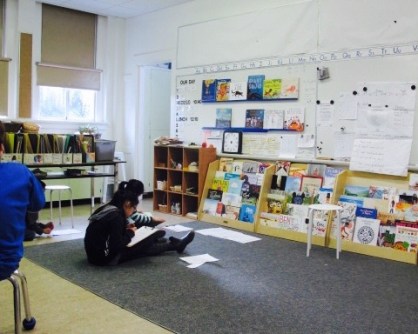
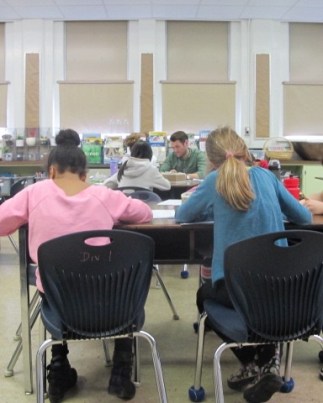
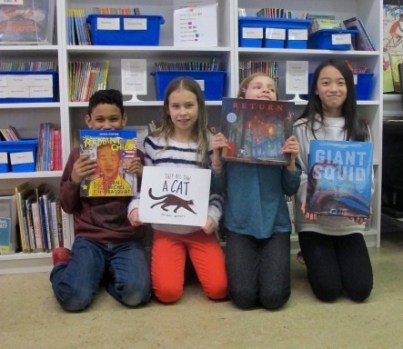
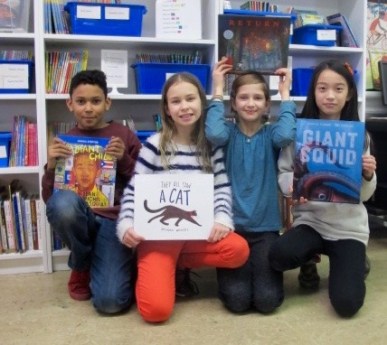
In the next while you might notice a few changes in some of my posts. While this is still a place I will continue to share a LOT of book love (including reviews, author/illustrator interviews, best of lists, weekly sharing of what I’m reading), you will now be getting a larger peek into my classroom.
Sunday Reflections: Dear Blog Readers

What’s ahead? More student book reviews, more classroom photos interspersed into my #IMWAYR posts, sharing of student writing especially in response to what we are reading and various other classroom celebrations of learning. This fall I considered beginning a second blog for classroom related things which felt a little bit overwhelming in terms of time. I then realized that much of our learning is connected to stories and literature and thus, this blog is the ideal location to share both our adventures in learning and our love of reading. I remembered this again reading my own words in this post: Honest truths, metaphorical whales and the “in between” place

” . . . through books we find most of the answers and all of the questions and that these beloved book makers, when they share, help to illuminate both. ”

“The honest truth? I am a reading teacher. And I have important work to do.”

For those of you new to this blog, I am sharing some posts below (follow the links) that give a flavour of my teaching philosophy, my thoughts about reading and what I celebrate in the realm of teaching and learning.

Our words, after all, tell our stories.

Here is mine.

Classroom communities are pretty incredible places. We spend a LOT of time together.

6 hours x 5 days x 10 months

“But when we experience classrooms – as in, occupy classrooms for those 6 hours x 5 days x 10 months, it is mostly about relationships. Because none of that other stuff happens without them. At least not as deeply, meaningfully and wonderfully as it could. And should.”

I believe in the importance of “kid watching” and talk more about it here: The power of observation

 “I need time to watch and interact and notice. I need to trust that I know what I am looking for and that I can make decisions to best guide the learning based on what I see.”

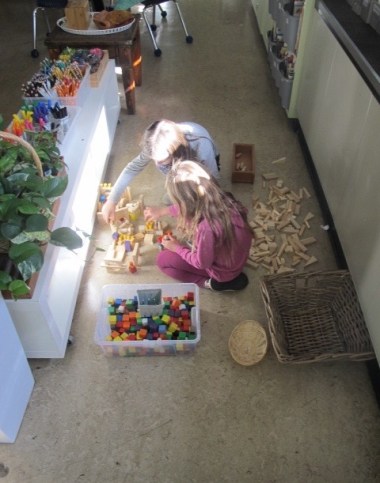
Some of the best observations happen, when there is time for play.

Capturing Play

“There is more and more research to support the benefits of play on the social emotional well being and cognitive development of our learners. In our quest for the most meaningful learning opportunities for our students, we need to make room for play.”

Every child matters.  Every child belongs. Some children especially need us to be welcoming and patient. I feel blessed to have learned from some pretty incredible children over the years.

The Part that is True

“When I look at Harry learning and laughing and taking more risks every day, I know that my job is not to bask in the happiness of his growth and success. My job is to pave the way for more of the same in his future.”

The Kid on the Piano

“I stand there and watch him for a minute.

Shining in the sunshine coming through the windows.

I see the bright energy return under those stormy eyebrows.”

Be Gentle

“Sometimes with all of the busy and all of the rushing and all of the stuff we have to do in schools, we can forget to be gentle. Sometimes gentle is the most important choice we make.”

The more I do this work, the more I realize that there is so much I don’t know. But every so often, I celebrate what I have learned.

20 years, 20 things

“Value community. We are one of many people teaching the children in our classrooms. Students come from varied, interesting and diverse backgrounds. Honour their parents. The extended families. The community that surrounds the school. Make connections to the key players – community centre staff, public library staff, recreation program staff, community health nurses, etc. We are all in this together.”

All my Secrets

“Know that you are present everyday for the amazing of childhood. Don’t try to chase it away or shake it out. Childhood is sad with snotty sobs. Silly with contagious laughter. Angry with stomps and hiding. Wild with wonder and delight. Full with the magic of the world.”

I also need community. Last March, I wrote about realizing I was beginning to find it in my new school.

Finding Community

” Numerous children are nameless to me but we smile at each other each time we pass in the halls. The names will come. The connections will grow. We will make some shared stories.”

Books are my thing. I love the land of stories, words and worlds I find in them.

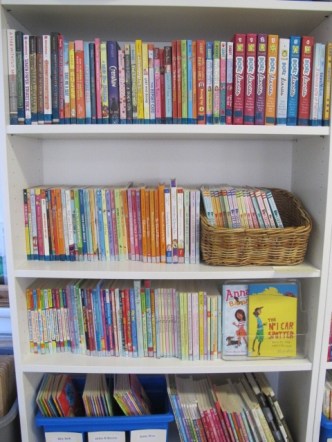
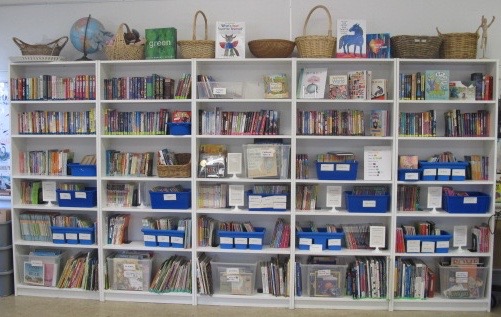
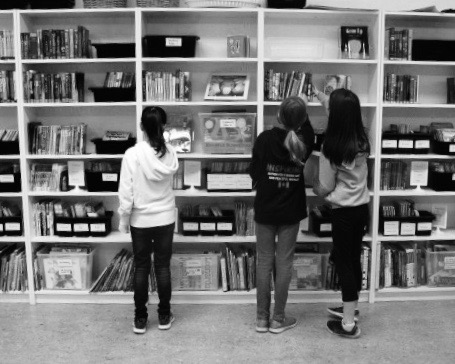
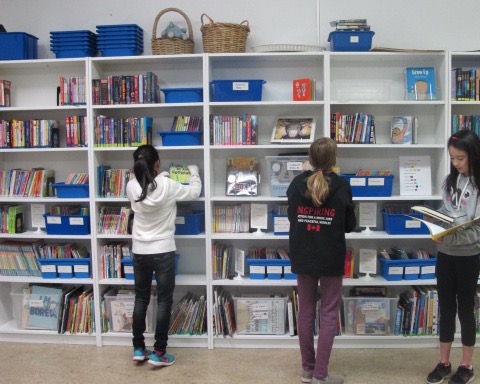
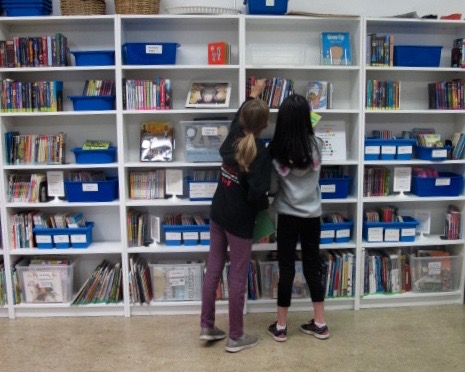
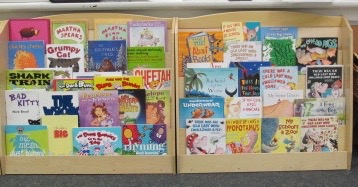
I believe passionately in classroom libraries and blog about this frequently.

Books, books, books – everywhere you look

“Classroom libraries are like a living, breathing, ever-changing creature. They reflect the interests, the questions and the passions of the readers in the room.”

When I packed up and moved schools after 21 years, books grounded me: These Books

“In those times when I look up and remember that it’s all new and not yet home, these books will help me find my balance. Let me place two solid feet in the middle of it all.”

In the month of March, I write every day. Be warned now.

This Writing Thing

“Writing steals time. While you try to capture the world, some of it passes you by. You aren’t where you started. You don’t remember arriving here.”

Happy reading! Happy writing! Happy Sunday!
Summer Maintenance in the Classroom Library. Step 3: Additions

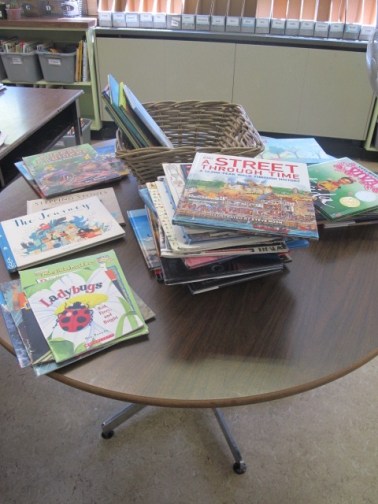
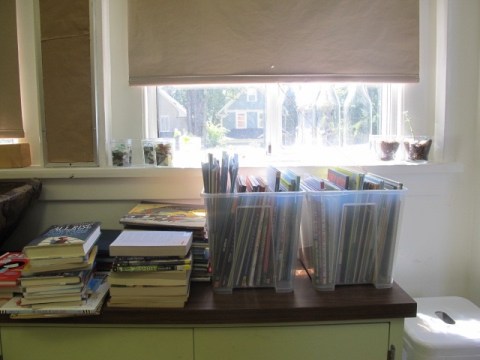
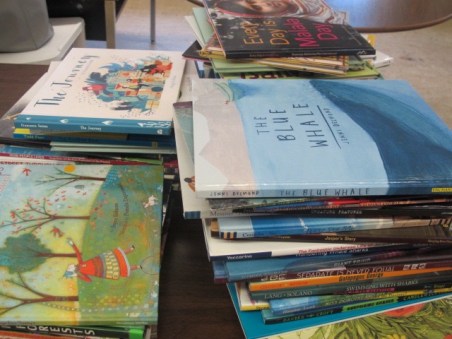
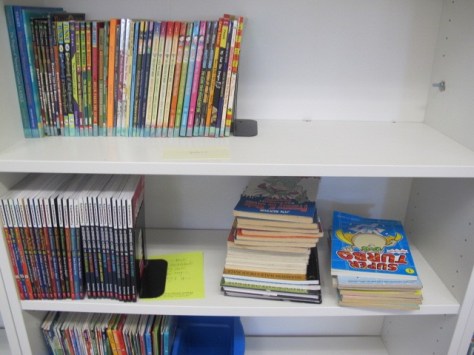
I continue working in my classroom library preparing it for the Grade 3 class I will have this fall. Books that have homes have returned to them. Books that had homes may have lost them as I have reorganized. Books yet to have homes are stacked ready to get labels and stickers and then will find a place. Books have been weeded and are in process of finding new spaces or being temporarily stored. What now? I am thinking about what my current library might need.

Summer Maintenance in the Classroom Library. Step 2: Additions

Note: This is the third post in a series. Missed the previous ones?

Summer Maintenance in the Classroom Library. Step 1: Relocate

Summer Maintenance in the Classroom Library Step 2: Weed

Additions are not simply about a shopping list. Or even a wish list. Additions begin from the noticing. What’s missing? What series do I need to expand? What do I need to be thinking about to best meet the needs of the readers in my classroom? The readers I haven’t even met yet.

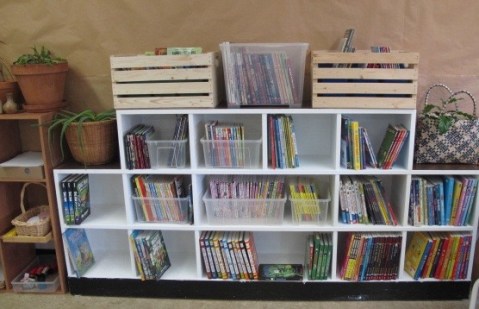
I sit in various sections of my classroom and look at the shelves. I am looking with my eyes and I am looking with the potential eyes of future students.

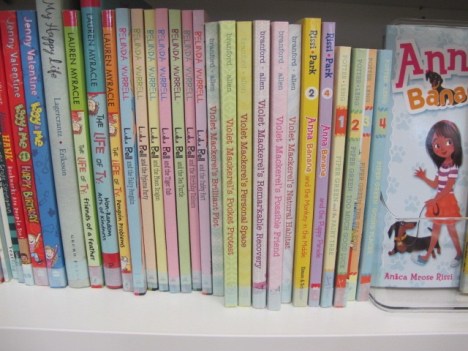
I don’t have #3 of Anna, Banana. When is the next Piper Green title by Ellen Potter going to be released? Do I think this new group will enjoy the Violet Mackerel series?

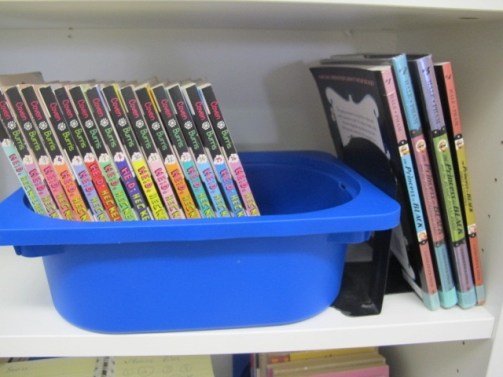
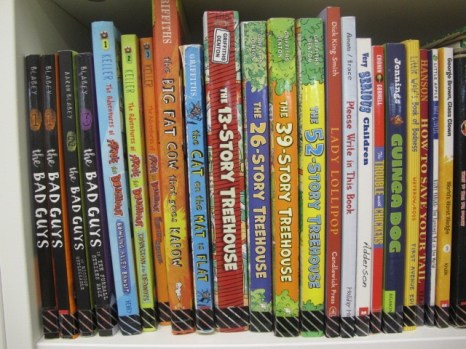
Summer Maintenance in the Classroom Library. Step 2: AdditionsThe Heidi Hecklebeck series has a number of new titles. Should I be expanding the collection? Of course, I need the next Princess and Black titles! What am I missing?Summer Maintenance in the Classroom Library. Step 2: AdditionsDo I know when the next Bad Guys title is out? Is the 65th Story Tree House title in soft cover yet? Arnie and the Donut? Will there be another title?

Summer Maintenance in the Classroom Library. Step 2: AdditionsThese kind of noticings are simple. What series has recently been adored and should I expand it? Am I missing specific numbers in a series so that the gaps will frustrate readers wanting the next book?

The next questions are a little more complicated. I am thinking about questions like the following as I put myself in potential reader shoes:

  • If I am a kid who loves fantasy, are there books for me here? What if I am devouring thick chapter books? What if I am just beginning to read novels? What if I want to stick with picture books?
  • If I like a particular kind of picture book, are there chapter books that I might also like? Can I find them easily?
  • Can I find a bunch of funny books to read?
  • If I am a series reader, are there a range of series at a range of levels about a variety of things for me to get lost in?
  • If I find an author I love, are there more books that he/she wrote in the library?
  • What if I want to read about things I might be experiencing? Like friendship struggles? Or having a new sibling? Or my parents breaking up? Feeling lonely? Different? Discriminated against? Can I find books that will help me understand more about myself? Are there books that can act as mirrors for me?
  • Do I need to read about things that have not yet touched my life? Learn more about the world? Learn more about the lives of my peers? My parents? My neighbours? Are there books here that will be windows into other worlds and lives?

Putting my teacher hat back on, I need to think about questions like:

  • Are my organization systems student friendly?
  • Can children navigate the shelves independently (after some initial instruction and practice)?
  • Can students help keep the library organized so that we can all use it with ease?
  • Is there room for a range of readers in each genre?
  • Are there obvious gaps in specific genres?
  • Am I missing books that might have huge kid appeal but might not attract me? Can I make room for those books in our library?
  • Is there a way for children to tell me, “Can we get books about . . . ?”
  • Does my read aloud collection contain books that will allow us to laugh together? Learn together? Cry together? To be inspired? To be incensed? To shake up our thinking? To allow us to view things from new perspectives?
  • Are there books in the library that tell the history of our country? Of neighbouring countries? About the world? What really happened? There needs to be titles about residential schools. About immigration. About racist policies that have changed or persist. Books that allow us to talk about discrimination. Rights. Fear.
  • Do I have a wide range of picture books? Various genres? Lots of diversity? Short reads? Wordless titles? Longer reads? Great books to share together?
  • Does my nonfiction collection contain books about a wide range of topics? Does the organization system make sense? Are there a variety of formats? Expository?Narrative? Fact books? What are the topic gaps?
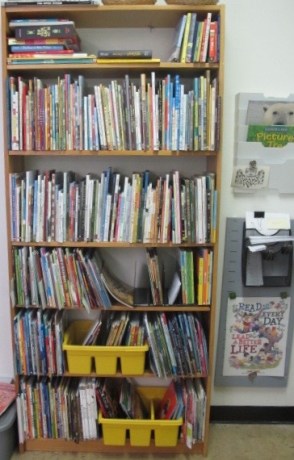
  • Graphic novels? How will we organize these books? Are popular series missing any titles? What is missing at the Grade 3 level? The graphic/comics shelf below is in process of being organized.

Summer Maintenance in the Classroom Library. Step 2: Additions

All books on the shelf should be invitations to read. The shelves need to call: “Hey you reader, you belong here! Have I got something for you!”

This is just the beginning. The start of some lists, of noting gaps, of wondering what else I might need. Further sourcing and list making will come later.

I don’t have endless book buying dollars so lists will remain wishes and over time, hopefully I will fill the gaps as I add to the collection. There needs to be room for the interests, passions and needs of this new class. I am repeating this again – this classroom library is fluid not fixed and will reflect the readers in the room. So there is a big unknown still to come as I get to know my new students. The most important additions I make to the library will happen when I begin to know these children.

But I need to know directions. What might be next? This allows me to find treasures here and there when I visit bookstores or sift through a box of books that a neighbour is giving away. I keep lists and notes about series in this little notebook and throw it in my bag when I remember.

Summer Maintenance in the Classroom Library. Step 2: Additions

My lists have begun.

Up next? How does everything stay organized as it moves into the library? I explain bins, labels, shelves and systems in this next post: Summer Maintenance in the Classroom Library Step 4: The Details

Stay tuned!

Summer Maintenance in the Classroom Library. Step 2: Weed

My classroom library is “in process” right now. It is mid-transformation – from a Grade 4 and 5 classroom library to a Grade 3 classroom library. This is a definite process. The shelves go from full to empty, to temporary stacks and piles to full again before I pull it all apart.

Summer Maintenance in the Classroom Library. Step 2: Weed There's a Book for ThatNote: This is the second post in a series. Missed the first one? Summer Maintenance in the Classroom Library. Step 1: Relocate

I have been going through novels genre by genre and removing books that might not fit this group of readers. Graphic novels teeter in various piles with imagined labels: perfect for primary, too mature, maybe/not sure/appropriatish.

Here’s the thing: I don’t know what this group of readers will need. I can only make an educated guess. I could be mostly right. I could be very wrong. My library is always fluid not fixed. Books line the shelves or get removed from the shelves according to the needs and interests of my readers. I learned this lesson in a big way two years ago. I was going from teaching a Grade 3 and 4 class to a Grade 2 and 3 class. I switched out some books and let many remain, thinking that the books in the collection would meet the needs of the readers. I was so off! So very, very off. Within about three weeks, I binned up a chunk of the library. I wrote about it in this post. My developing readers weren’t ready for many of the titles I thought they might be ready for and it was taking away from their ability to find books they could read and wanted to read. Some of my thinking at the time:

This wasn’t about taking books away. It was about removing titles that are currently not relevant and are actually, distracting. I left about 7/8 of the books still out. There are a lot of books. But now, we can focus on surrounding ourselves with books that we can read or might grow into in the near future. Some people thought this made me sad. Only very briefly. Until I thought about it: I love books because I love that they are read by readers. I adore the readers (and the readers to be) and these readers are my priority. These books will be back. When we’re ready.

I hadn’t messed up in terms of choosing relevant, age appropriate titles for Grade 2s and 3s. I messed up because I put together a library for imagined readers and I hadn’t yet met the readers I would be working with that year. I didn’t know the needs and interests of this particular group of children. And they were the most important readers I would know that year because they were my students. Our classroom library needed to be all about them.

And so, this work I am doing now is tentative. I am making best guesses. I am placing some books away in easy to pull back out bins. I have a stack of bins ready to be filled up if need be once the readers enter the room. This is the weeding for now stage. I hardly feel like I am finishing anything.

I am sifting through books. Pulling out. Putting aside.

Out means books will go to a new space, a new home, or retire. I give these books to other classrooms, to students, to other teachers I might know. Some titles are not up to being passed on. They have been loved enough and are worn out and need to be discarded. I have very few books that I am pulling out of my collection this summer. When I moved schools a year ago, I did this very thoroughly. I was not about to pack any book I wasn’t fully committed to keeping in the collection.

Putting aside – this is all about temporary storage. I am looking at books that might not be right for these readers coming in September. These titles are placed in baskets and bins for now. Maybe I will go reaching for them for one particular reader. Maybe, I will pull titles to lend to my students from last year. These books are kept close but out of the way.

Summer Maintenance in the Classroom Library. Step 2: Weed There's a Book for ThatSome sections of my library now seem like they might be right. I think . . .

Summer Maintenance in the Classroom Library. Step 2: Weed There's a Book for That

In answering the question: Will I keep it in the collection? I am thinking about

  • Are the themes too mature for my learners?
  • Are the story lines possibly too complex?
  • Is the book better suited to a younger classroom?
  • Is the title or series outdated?
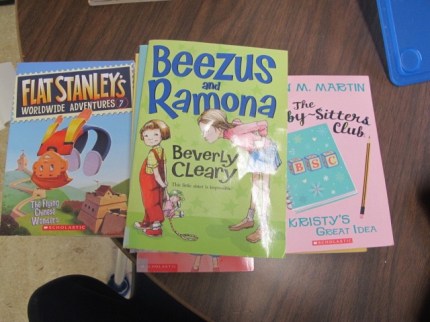
  • Do I think this is a book or series students still want to read? I have a few stacks of series I am not so sure about. (like this stack here)

  • Are the books a format I want to introduce before I make it available? (i.e. novels in verse)
  • Are the characters vastly different from the age of my students? I struggle with this one – are my seven and eight year olds going to be wanting to read about middle school themes like crushes and dating? This is tricky.
  • Does a book or series just not feel like a fit for reasons I can’t quite explain?

I am working at this stage here and there over days as it involves a lot of thinking and decision making. Sometimes, it is much easier to go shopping at Ikea 🙂

As I look through my books, I am also thinking about what my library might be missing. This is what’s next: Summer Maintenance in the Classroom Library Step 3: Additions

Stay tuned!


Summer Maintenance in the Classroom Library. Step 1: Relocate

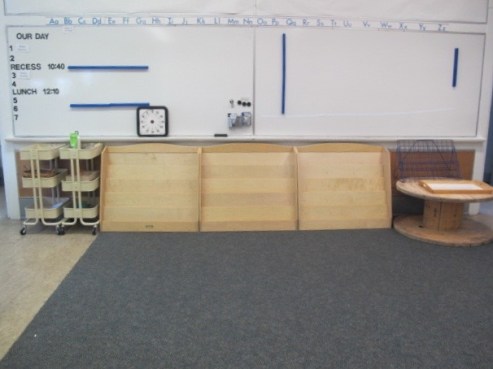
So this section of my classroom library looks ready to go.

Don’t you think?

Summer Maintenance in the Classroom Library. Step 1: RelocateUnfortunately, it isn’t. This mostly fiction area is all set up for Grades 4 and 5 and in September, I have a class full of Grade 3 readers walking in the door.

Add that to the regular summer tasks that happen in the classroom library and I have some work ahead!

This is Part 1 of a blog series about maintaining a classroom library and all of the summer tasks that might be involved. I am using my classroom library as an example but I hope that these reminders will be helpful and/or applicable to your own classroom library.

It all starts with returning items to where they belong and deciding if that is where they are going to stay.

These empty shelves are where all of our picture books that I read aloud rested. All of these (fiction and nonfiction) needed to be returned to their spots on my read aloud shelf. Other books from around the room from book boxes and display shelves also need to find a place.

Summer Maintenance in the Classroom Library. Step 1: RelocateLet the sorting begin!
Summer Maintenance in the Classroom Library. Step 1: Relocate

Returning to a place on the read aloud shelf. Summer Maintenance in the Classroom Library. Step 1: Relocate

As I returned books, I realized I was out of space (there may have been some new books acquired over the year . . . ) and so some of my read aloud titles were put in yet more piles to be relabelled and moved into the classroom collection.

Summer Maintenance in the Classroom Library. Step 1: Relocate

Every book has a home, even if it is getting a new home, each one has a home. This means, organization, space and thinking about how books are used in the classroom.

I differentiate between a read aloud collection and a classroom collection of books (more on this below)

Here are some things to think about:

  • Do you want a place for a read aloud collection where the books are rotated into the classroom for students to access?
  • Do you need a place for mentor texts for writing inspiration?
  • Do you want to have some books organized by theme? For both fiction and nonfiction?
  • What about the general collection of books? How is this organized? Think about picture books (fiction and nonfiction) graphic titles and chapter books.
  • What kind of shelf space do you have? Do you need? Can you source?
  • Do you have space for a read aloud/theme books collection? Can you easily access it?
  • Do you want to/need to rotate books in and out of your classroom collection?

This is my system and works for my collection of books. In order to make something work for your collection of books, you will need to sort books into sections of your room so that all books have a place and you have easy access.

Summer Maintenance in the Classroom Library. Step 1: Relocate

In my read aloud collection I have:

  1. Some shelves filled with bins of books organized by theme. Some of these themes include:
  • Death and Grief
  • Peace and War
  • Mindfulness
  • Emotions
  • Hope
  • Kindness/Generosity
  • Place
  • History
  • Discrimination
  • Refugee experience
  • Moving
  • Relationship
  • Friendship
  • Bully/Bullied/Bystander
  • Literacy (reading)
  • Literacy (writing)
  • Poetry
  1. A tall read aloud shelf divided into fiction books (organized alphabetically by author) and nonfiction books (organized by topic) My nonfiction topics are here along with book lists which I update a few times a year.
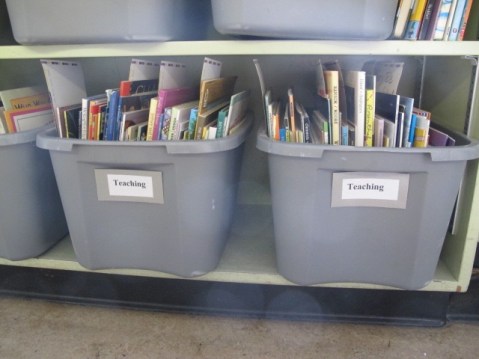
  2. Some bins of teaching books which hold Reading Power themed titles and mentor texts for writing (again organized by themes like word choice).

Summer Maintenance in the Classroom Library. Step 1: Relocate

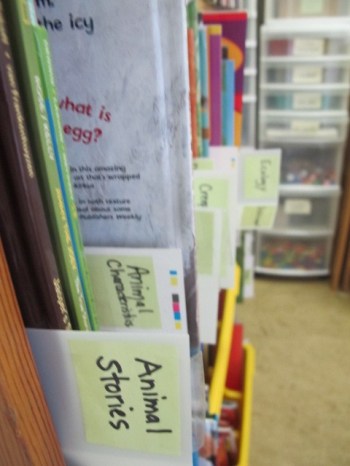
In my picture book collection (in bins or on shelves around the room), books are also organized into themes (and all have coordinating stickers on the back that match the bin) At this point, my bin/shelf  titles include:

  • Rhyme and Repetition
  • Fairy Tale/Myth/Legends
  • Realistic Fiction
  • Poetry
  • Humour
  • Animal Stories
  • Buddy Reading Bin
  • Favourite Authors (which keeps expanding)
  • Picture Book Fiction (for when they don’t fit in another bin!)

I am in the process of changing my nonfiction bins again . . . So more on these later.

I also have a shelf for graphics and comics. Chapter books are organized by genre and series.

At this stage of organizing (the mostly putting all of the books back stage) I am thinking about these things:

  • Does this book belong in the general access or read aloud collection?  Will it get lost in a bin and never looked at? Is this a book that my current students are likely to discover on their own? Is this a book that I want to read for #classroombookaday?
  • Is this a book that needs to be weeded out? Why? Is it beyond the normal wear and tear? Is it damaged? Is it never looked at?
  • What books have I forgotten about? Should I keep a list of a future theme for #classroombookaday? Do I see a book that will inspire a future art project? A science lesson? Is this a must read title?
  • What seems to be missing from the collection? Do the picture books in the classroom represent our learners? Are they windows into other experiences? Do chapter books and transitional titles include enough diverse titles? What’s missing?

This is the easy stage in many ways. Piling. Relocating. Thinking. Musing. List making. I am now moving on to the weeding and the temporary storage stage as titles that are more suited for my Grade 4s and 5s need to be somewhere else when my Grade 3s arrive. A temporary somewhere else as some may make their way back into the collection for specific readers I haven’t yet met.

Summer Maintenance in the Classroom Library. Step 1: RelocateStay tuned for Part 2: Summer Maintenance in the Classroom Library. Step 2: Weed

Please share any questions or ideas in the comments!

Celebration: More Mock Caldecott love

The “after” of our Mock Caldecott has been just as rich as the reading, voting and analysis process. It is with much joy that I continue to celebrate here.

This will be a celebration mostly revealed through tweets and images.

After our voting, of course we had to share.

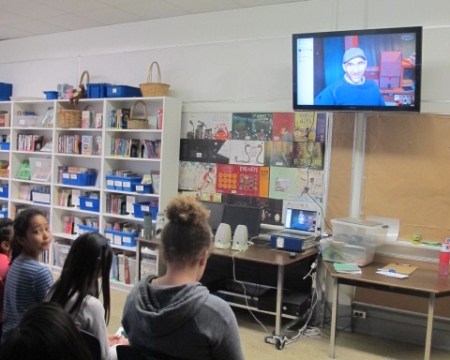
And sharing led to an amazing experience – an opportunity to Skype with Aaron Becker!

Students were beyond excited as we were serious, serious fans.

We visited Aaron’s website and watched videos and book trailers about his books. Students prepared questions and began art projects. I shared them all with Aaron!
The morning of our Skype call began like this:

Many students arrived very early (“So we won’t even be a little bit late!”) They invited others (siblings, students from other classes) into our room to explore Aaron’s books. One determined boy in Grade 6 showed up at ten after 9 announcing that he would be spending the morning with us to meet Aaron Becker. “I am going to be a librarian, I can’t miss this opportunity,” he explained. How can you say no to that? 🙂

Celebration: More Mock Caldecott love

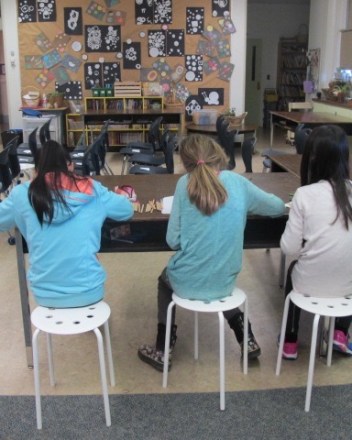
These girls came in an hour early and got started on Aaron Becker art.

Celebration: More Mock Caldecott love

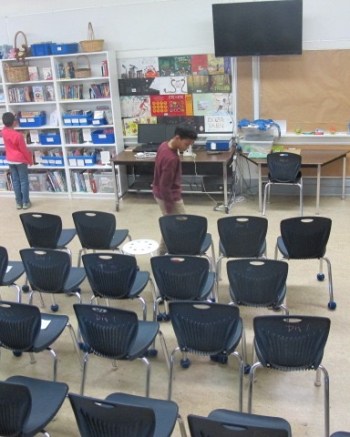
We pulled our room apart to set up chairs for the Skype.

Celebration: More Mock Caldecott love

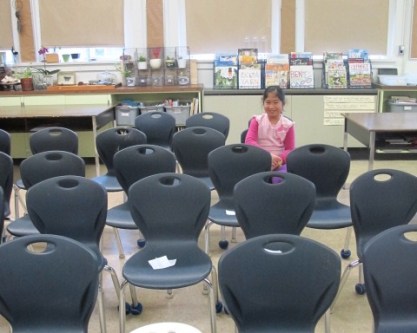
Trying out various seats.

Celebration: More Mock Caldecott love

I don’t think I can possibly capture how incredible the Skype experience was for my students. We had various questions prepared but we didn’t need them – Aaron somehow managed to just have a conversation with us. He was curious about where the students and their families were from and we shared that many of us (or our parents) are from the Philippines, China, Vietnam and Korea. Aaron wanted to know about the languages students spoke. He shared stories of his art, his travels and his process. He told us about what he is currently working on and shared more stories from the trilogy. He held a room full of children (and adults) absolutely spellbound.

Celebration: More Mock Caldecott love

Maybe this exchange will sum it all up:

A few hours after the Skype this happened-

J: “Ms. Gelson, thank you.”

Me: “For what?”

J: “For reading us Journey and Quest and Return. If you didn’t read them to us, then we wouldn’t have loved them and then you wouldn’t have told Aaron Becker that we loved them. So he wouldn’t have wanted to Skype with us. And . . . well that was one of the best things of my life.”

Me: speechless, mushy mess

After the Skype, we took all of that excitement and pulled out our books and found a place to read.

Celebration: More Mock Caldecott love

But the buzz of all things Aaron Becker continued throughout the day.

Aaron Becker’s response was very special. He wrote: “Imagination is strong” in Tagalog. My students from the Philippines were so touched!
In the afternoon, students reflected on the Skype experience. Here are some highlights:

  • I was surprised to see Aaron Becker’s room and how big his printer is! I wish that I could be an author and have a room like that!
  • I can’t believe he told us the back story of the King. Wow, we are so lucky.
  • I like when he told us secrets from the books and showed us cool maps.
  • I love how his books make us think so much. I learned about the girl’s feelings and how Aaron Becker showed her loneliness. He told us that it’s our time to use our imagination because we are special at our age.
  • There are surprises in all of the books. Now I want to study them more. I love his stories that he told us.
  • He was pretty smart to make a model of the book Journey so the publishers would know how great that book is!
  • Aaron Becker told us that we have a lot of imagination at this age because we are not at the age for all of the boring responsibilities. This made us feel really special.
  • Seeing Aaron Becker was very amazing. It’s not everyday that you get to Skype with an author or illustrator like him. I will never forget it!

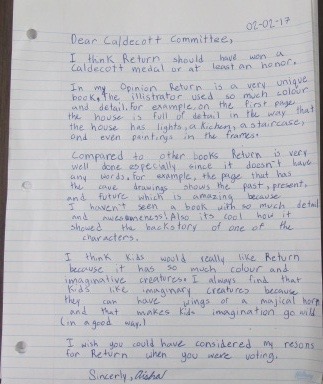
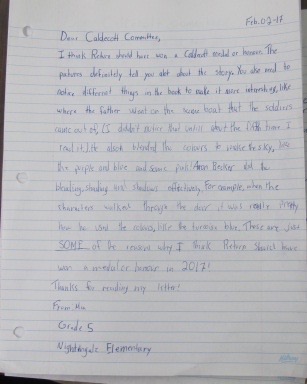
We then decided that we should continue to celebrate all of these books we love so much. We got to work on persuasive letters to the Caldecott Committee either congratulating them for their choices or suggesting that maybe they missed a special book.

The fan art was pretty stupendous!

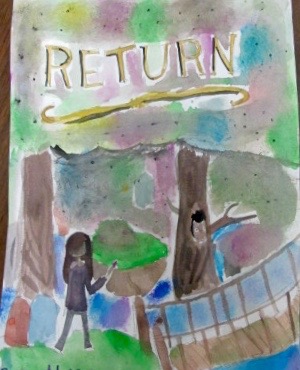
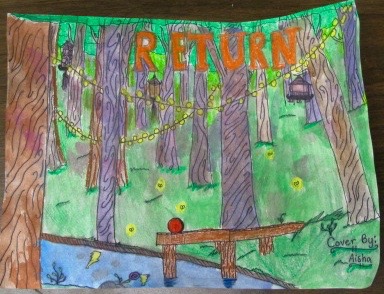
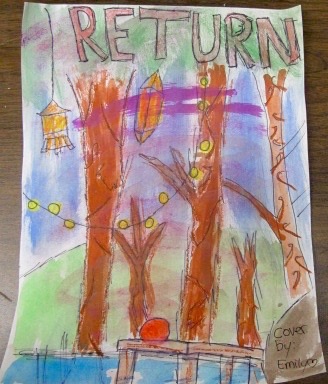
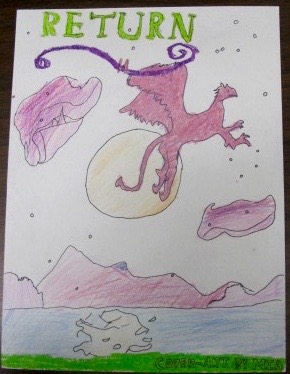
Return art has been everywhere!

Celebration: More Mock Caldecott love Celebration: More Mock Caldecott love Celebration: More Mock Caldecott love Celebration: More Mock Caldecott love

And then there are the persuasive letters!

Advocating for A Hungry Lion or a dwindling assortment of animals by Lucy Ruth Cummins

Celebration: More Mock Caldecott love

Return championing:

Celebration: More Mock Caldecott love Celebration: More Mock Caldecott love

Have our books got a rest on the shelves now that all of the hoopla is over?

Hardly!

These students have reread Giant Squid countless times!

Celebration: More Mock Caldecott love

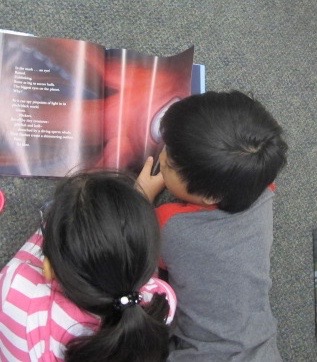
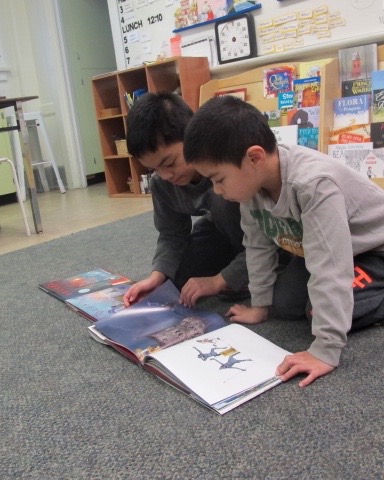
Before school this little K insists his older brother bring him into our classroom so he can look at his favourite books (Journey, Quest and Return) again. “I love these books forever,” he told me yesterday.

Celebration: More Mock Caldecott love

And Aaron Becker – as promised we have some baby name suggestions from a bunch of 9 and 10 year olds in Vancouver, Canada who wish you and your family the very, very best: Violet, Paige, Sky, Florence, Grace, Ida, Cleo, Blossom, Ira, Odessa, Penelope, Alexa, Jacklyn, Jade, Lilly, Gigi and (no surprise) this came up a lot: “Could they name her Journey?”

Next week we have student led conferences and our Mock Caldecott experience will feature big. I can’t wait to watch students share their learning and experiences with their families.

Thank you to Ruth Ayres and the #celebratelu community!

Being part of a community that regularly shares gratitude and celebrations truly transforms my weeks.

celebrate-link-up

Celebration: Mock Caldecott Reflections 2017

Mock Caldecott is one of my very favourite things to do in the classroom! This year, with a Grade 4 and 5 classroom, I was able to stretch the analysis process further and deeper with my students. All around it was a rich and rewarding learning experience. I have much to celebrate!

We started this three-week process by learning about the Caldecott award, working to understand the specific criteria and examining past winners (both medal and honor).

We wrote about what we noticed.

Celebration: Mock Caldecott Reflections 2017 There's a Book for That

Students shared favourite titles together.Celebration: Mock Caldecott Reflections 2017 There's a Book for That

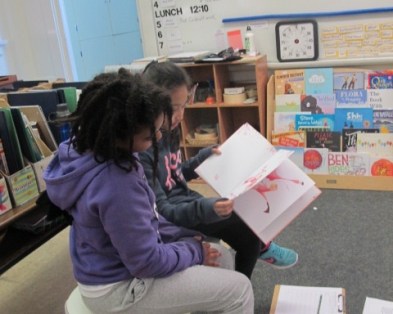
Read together sessions happened all over the room.Celebration: Mock Caldecott Reflections 2017 There's a Book for That

Over about 7 days, I introduced our Mock Caldecott contenders. Reading these books took us in many directions. We wrote detailed responses to some stories. We watched related videos. Some books we read more than once and just giggled.

Celebration: Mock Caldecott Reflections 2017 There's a Book for That

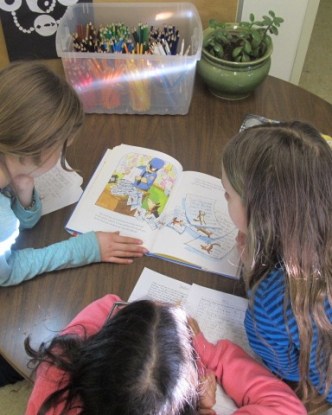
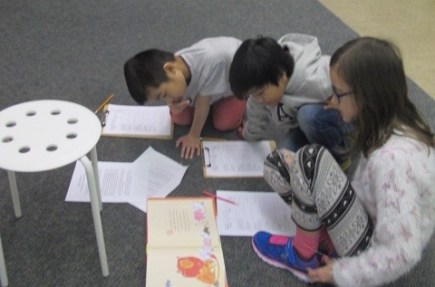
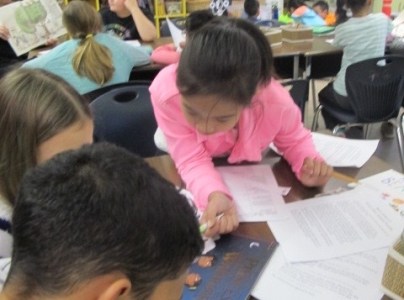
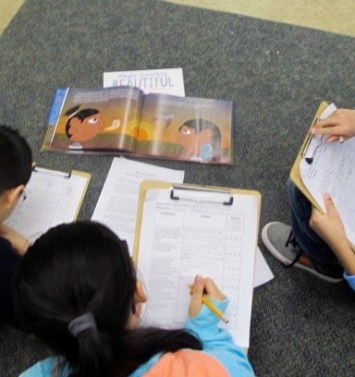
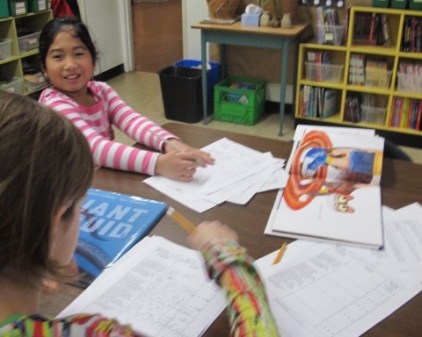
Then in small groups of 3 to 4 students we began the task of rereading each book, talking together about Caldecott criteria, our opinions and all that we loved about each title. Thank you to Jess Lif! Her blog post about her Mock Caldecott unit led me to sheets we could use to record our notes and thinking about how each book met or didn’t meet the criteria.  Like Jess, I used this as an opportunity for my students to learn from each other. I listened in for students’ thoughts about the books, yes. But I also was listening for how we communicated. Some groups needed more support than others to contribute ideas and some groups needed guidance on how to all have voice and how to listen attentively. I was very proud of the growing independence, the progress that happened over the week and how some quiet students stepped up and took on a leadership role in their group.

Carefully rereading the story before going through the illustrations and beginning to talk about what we notice.

Celebration: Mock Caldecott Reflections 2017 There's a Book for That

Sharing details with each other.

Celebration: Mock Caldecott Reflections 2017 There's a Book for That

Taking careful notes about what the group discussed.

Celebration: Mock Caldecott Reflections 2017 There's a Book for That

Enjoying the amusing aspects of a funny book!

Celebration: Mock Caldecott Reflections 2017 There's a Book for That

Looking closely at criteria.

Celebration: Mock Caldecott Reflections 2017 There's a Book for That

Through all of this – lots of joy!

img_4853

And then Friday afternoon came and we spent an hour picking our top 3 titles and filling our Caldecott reflections/self-evaluations.

Celebration: Mock Caldecott Reflections 2017 There's a Book for That

Some students were confident in their choices immediately. Others took a long time to finally submit their top 3. Everyone took a great deal of care filling out the Mock Caldecott Self-Assessment Reflections and Feedback sheet I created.

Celebration: Mock Caldecott Reflections 2017 There's a Book for That

And the winners? I had some eager volunteers ready to celebrate with a few photos!

Celebration: Mock Caldecott Reflections 2017 There's a Book for That

Some dramatic reading!

Celebration: Mock Caldecott Reflections 2017 There's a Book for That

Our medal winner? Return by Aaron Becker

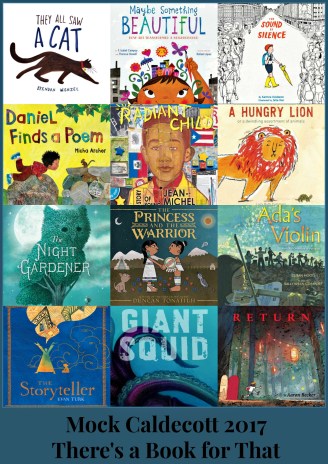
Honor books? They All Saw a Cat by Brendan Wenzel, Radiant Child: The Story of Young Artist Jean-Michel Basquiat by Javaka Steptoe and Giant Squid written by Candace Fleming and illustrated by Eric Rohmann

Celebration: Mock Caldecott Reflections 2017 There's a Book for That

The reflection sheet allowed students to continue to think critically and creatively about the books, self-assess their own contributions, reflect on their learning and rank all 12 titles in 1 to 12 order. Many students carefully studied their notes to help them with this process. These questions also allowed them to move beyond the illustrations and talk about story.

A few highlights of the thinking. Questions are in bold and italics.

Which book do you think K students would enjoy the most? Why?

  • A Hungry Lion because it has messy drawings and kids will think they can be an author too!
  • A Hungry Lion. Little kids like animals.
  • Maybe Something Beautiful because it’s bright and happy.
  • They All Saw a Cat because it’s cute and creative.

What about Grade 7 students? Explain.

  • Giant Squid because it has such cool drawings.
  • Giant Squid because it’s science.
  • Ada’s Violin – the like drama and true stories.
  • Ada’s Violin because it’s inspiring
  • Radiant Child because it tells you a message.
  • Radiant Child because it’s about a dream and soon they will need to accomplish their own dreams

Which book do you think adults would enjoy the most? Name a specific adult if you want.

  • Radiant Child because it’s a beautiful story and has amazing pictures.
  • Radiant Child because it actually happened. It’s a true story!
  • Radiant Child – old people can relate to “me” time.
  • The Night Gardener because it has very calm pictures.
  • My Mom would pick A Hungry Lion because it’s so funny.

Which book made you think the most? List some of your questions/thoughts.

  • Return. I was inspired by all of the imagination in this book. Is he going to write another book? Please!!
  • Ada’s Violin. I never knew people lived like this. How can people live in a pile of garbage.
  • The Sound of Silence. He can’t find silence. It’s hard to find. I can’t find silence in class.
  • Giant Squid. I wonder everything about giant squids now.
  • The Storyteller. It didn’t make sense until I kept reading it.
  • Radiant Child. It made me think about why people use drugs and about who is sad.
  • The Hungry Lion. What’s going to happen to that turtle?

What did you like about our Mock Caldecott process?

  • Participating in all of these things made me think about so much.
  • It’s fun reading it and then reading it again and actually being like a judge!
  • I love looking at so many books and voting!
  • Seeing all of the different art.
  • Getting to share my opinion about picture books.
  • Some really well done details can actually blow someone’s mind.
  • It was an enlightening experience. It made me more critical. It made me think about details and how colours impact me.
  • I liked getting to read so many different kinds of books and then getting to rate them and show my opinion.
  • We didn’t just read pretty books. I got to share my opinion.
  • I liked looking at many illustrations because they are so beautiful.
  • It was so fun because we got to rate books!

What did you learn about your own likes/dislikes/preferences with picture books?

  • I think I have been judging books too fast instead of taking my time.
  • I now know that if I really like it, I can read it all over again and see more.
  • For some reason, I love art with trees!
  • I like things that are realistic with really bold shadows.
  • It’s possible to have too much colour in a book.
  • I didn’t know I liked books with no text so much. I love illustrations that show adventures.
  • I like books even if the drawings aren’t perfect.
  • It seems I like books with a little bit of mystery.
  • Books that are black and white except for some parts will bring your attention to the spot with colour.

What did you learn about illustrations?

  • Some of the smallest illustrations have great details but you hardly notice unless you focus.
  • That they can be anything – there is no best way. Some are collage. Some are messy. Some are weird. Some are super detailed.
  • I really like pencil drawings.
  • Colours affects your mood.
  • There is lots of orange skin.
  • There are so many different ways drawings can be: colourful, bland, collage, paint.
  • A story doesn’t actually need words.
  • Illustrations can touch you.
  • I learned about the different kinds of illustrations. And finally I can spell illustrations!
  • Not every picture has to be perfect to be beautiful.

Why do you think Mock Caldecott is a worthwhile activity to do in a classroom?

  • We learned that illustrators do many unique and special things
  • Just because you are 10, 11, 9 or any age doesn’t mean you are too old to read or listen to a picture book.
  • We can learn new books and also learn from their art and really know the story.
  • Students should know about illustrations and always see new books.
  • It makes you talk to people you might not usually talk with.
  • We were so inspired by the pictures!
  • We all learned that art is so beautiful and important. We want to read even more picture books now.
  • Kids learn how to judge things by having a list [criteria], I learned a lot about what art looks like.
  • Think critically. Slow down and notice.
  • It expands your reading world
  • Picture books need pictures. Pictures can tell a story all on their own.
  • It’s great to actually be able to vote.
  • Doing this let us talk in groups with new people.
  • Picture books teach you so many things. They teach you to dream.

Students also rated themselves on their ability to share ideas, listen to others, learn from other people’s opinions, work cooperatively in a group and refer to criteria when rating books. Each child gave themselves a compliment about their group work and identified an area for improvement.

The most entertaining response was to this question: Which book would you remove from our Mock Caldecott list. Give specific reasons.

A Hungry Lion. Why? Because animals get eaten!

Thank you to Ruth Ayres and the #celebratelu community!

Being part of a community that regularly shares gratitude and celebrations truly transforms my weeks.

celebrate-link-up

Celebration: A special morning read aloud

Yesterday was our last day of school before winter break. It was pyjama day. We had a winter concert in the afternoon. My class brought in some treats to share and we watched part of a Shackleton documentary to celebrate that we finished an in depth read of Shackleton’s Journey by William Grill and spent time studying all things Antarctica and Antarctic exploration.

Students left at the end of the day with candy canes, forgotten lunch containers and their first term report cards. They bustled about in the main hallways tucking PJ pants into snow boots and off they went into the afternoon cold to begin their winter holiday.

But my celebration is not about the end of the day that signified my much needed break. It is about the beginning of my day and what happened in the thirty minutes before our day had even started.

Many students arrived early and leaped about delivering their party treats and admiring each others’ pyjamas. And then the lure of books and reading time happened as it often does.

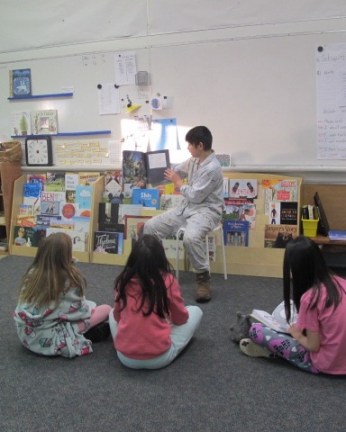
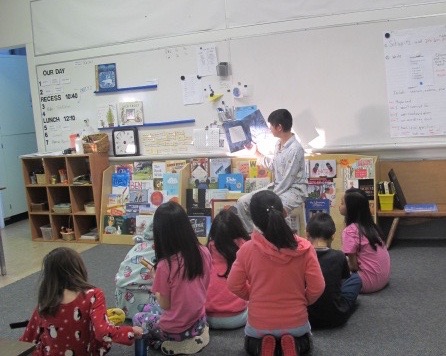
Maybe it was the coziness of being at school in flannel pants and robes. Maybe it was the excitement of the holidays. Maybe it was just the magic of the early light in the room. Yesterday morning, a student from the classroom next door visited. He planted himself on my stool and read aloud Hershel and the Hanukkah Goblins (a title I had shared with the class the day before). He read with beautiful drama and wonderfully hilarious voices.

Celebration: A special morning read aloud

As more students arrived, they joined in with the read aloud experience. Cozy. Quiet. Engrossed.

Celebration: A special morning read aloud

I stood back and just smiled. These moments well before the first bell were a gift. They represented what I have been waiting for. Community. A place for readers. That I belong.

It has been a long journey for me. Searching for “home” after leaving my community of 21 years. I have written about it endlessly in the past eight months. Here and here and here and here and here. I write to process. I write to feel. I write to know.

In those early morning moments yesterday I felt it. I have a new here. This school is now my school. I celebrate this peace. Peace and calm. A room full of books. A room full of students. A room full of reading. A community that is mine.

Happy holidays to all!

Thank you to Ruth Ayres and the #celebratelu community!

Being part of a community that regularly shares gratitude and celebrations truly transforms my weeks.

celebrate-link-up

Celebration: The formula

Th other morning, I had some students arrive at the door early.

“Can we come in?”

I had done all of my running around set up and was going to be in the room until the bell so I welcomed them in. They were fairly quiet but I still could listen in as I caught up on a little bit of marking. These girls were on a mission. A few of them recorded books they finished the night before in their Reading Workshop folders. Then they started talking books.

Celebration: The formula

“What genres do you need to read more?”

“Have you read any historical fiction titles?”

“I have read a lot of fantasy lately.”

Celebration: The formula

“I think I am going to add some more titles to my book box because I am almost finished my library book.”

“I love book shopping!”

“I haven’t read many humour titles.”

“I have read SO many graphics.”

Celebration: The formula

“Have you read this one?”

“Did you see S’s book box. It’s stuffed!”
“Oh, remember Ms. Gelson book talked this?!”

I have had some wonderful reading conferences this week. Our mini-lessons about navigating first chapters have gone well. The books I have book talked have been sought after and quickly disappeared. Things have often felt right.  All of this makes a difference. But sometimes, things don’t feel as right. Some of the lessons that seemed so relevant all of a sudden don’t when we are right in the middle of them. Conferences get interrupted. In those moments, during those weeks, I worry.

But watching these girls at the book shelves one morning this week, helped me remember that what is always working is the formula.

A room full of books + time to read them + daily efforts made to grow book love = a reading community with contagious reading joy.

This is how readers are made. This results in the conversations I witness and don’t start. This means that I can stand back and watch readers on their road to rich reading lives.

Money spent on books. Time shelving and organizing. Pages and pages read so I know what to recommend. Searching for diverse titles so that all kinds of lives and experiences can be found on our shelves.

All of this?

So worth it.

Priceless.

Important to celebrate.

Thank you to Ruth Ayres and the #celebratelu community!

Being part of a community that regularly shares gratitude and celebrations truly transforms my weeks.

celebrate-link-up

Celebration: Building a Community of Learners

It has been such a long time since I have blogged with my usual frequency and fervor. Quite incredible how much time and energy a learning curve needs. My reading pace has slipped. Time runs away from me. I seem to wok constantly and not complete much. I am in full fledged learner mode while tasked with the important role of helping a learning community grow.

New everything – school, grade levels, community and students – after twenty-one years in another position, it’s a lot. I am trying to find my rhythm. Figuring it out step by step. Observing closely. Messing up. Deeply learning even if I don’t have the time to sit and reflect on what exactly feels new and right. This need to reflect – to figure it out word by word- has lured me back to this blog. On the page is where my thinking often happens best.

I have collected what I need on this Saturday morning: a second cup of coffee, a set of photos, some samples of student work and some quiet time. And of course this important question: What needs to be celebrated?

Some simple things that mean a lot as we build a community together of learning, thinking and doing.

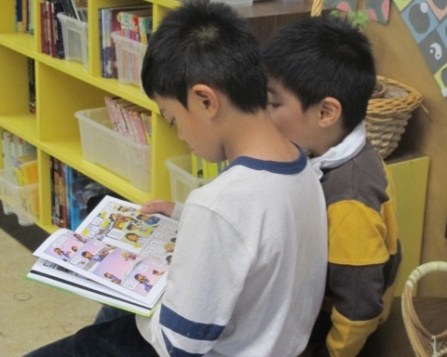
Students bring their siblings into our room in the morning and read to them. Literacy matters here.

Celebration: Building a Community of Learners

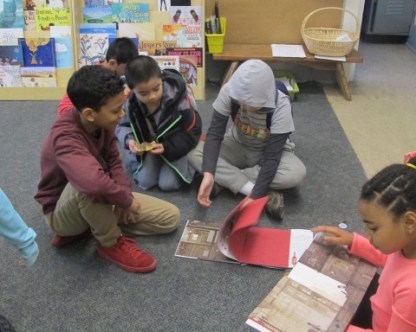
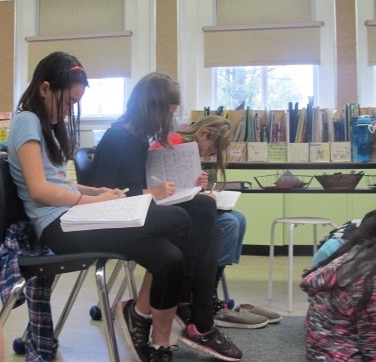
In Writer’s Workshop, some of our best writing happens gathered together – we talk, we write, we think and then we share. The enthusiasm for writing becomes contagious.

Celebration: Building a Community of Learners

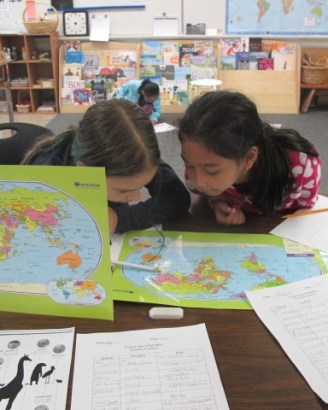
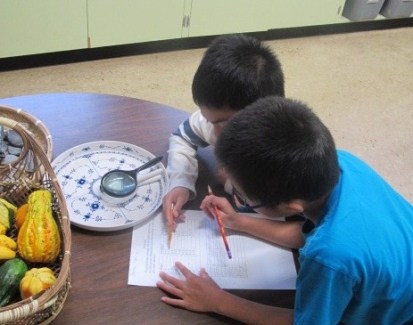
Learning does not have to be solitary. When we discover things together, the learning is deeper. We are all teachers for each other.

Celebration: Building a Community of Learners

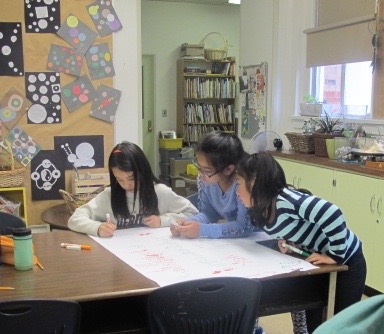
 Learning to listen and share in a group takes time. All of our voices matter.

Celebration: Building a Community of Learners

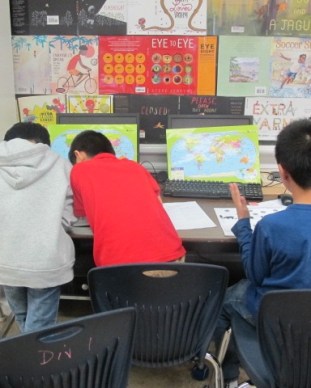
When we have to persevere through challenging tasks, the struggle feels exciting as we work through it together. 

Celebration: Building a Community of Learners

Math teams are a bonus. We learn a lot from listening to someone else reason. Noticing patterns and solving problems is effective as a social process.

Celebration: Building a Community of Learners

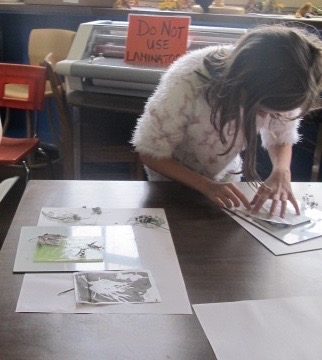
When we learn how to do something amazing and get practice time to create and explore . . . 

Celebration: Building a Community of Learners

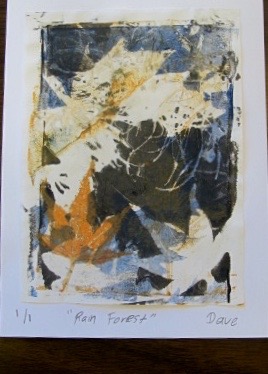
We make beautiful things. And . . . 

Celebration: Building a Community of Learners

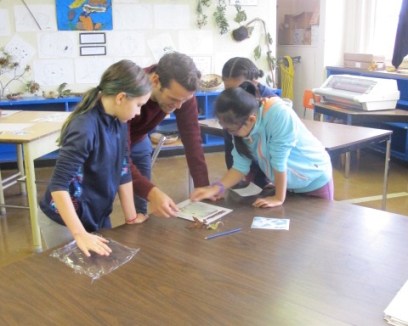
We learn skills to teach others. Even adults!

Celebration: Building a Community of Learners

Note: The art pictures above are taken in the Art and Discovery studio at my school. Every 3 weeks we get to work with Maggie, our amazing Artist in Residence. My students shine during the activities Maggie sets up for us and they love to share what they learn with others. In the photo above they are teaching another teacher about print making with gelatin.

Getting outside when we learn and reason things through is always amazing! Our classroom should extend into our community.

*Here we are figuring out how far 360 meters is and how long it would take to walk on the ice and in the cold of Antarctic waters. We are learning about the Shackleton Expedition and that when the Endurance got stuck in the pack ice, open water was only 400 yards (360 m. away). The crew had to set up winter camp and wait for improved conditions.

Celebration: Building a Community of Learners

Later we came inside and wrote in the role of a crew member stranded on the ice.

Samples of student writing:

Dear Home:

I am sorry to say but I may not make it back home. Shackleton has said that we are stuck and going to set up for winter camp. From here, I can see the open ocean – just 365 meters (a ten minute walk) away.

I hope our family is doing well. I hope that you get this letter. Oh how I wish I could be sitting with you by the warm fire at home.

Every day when I go to the edge of the ice, I think of you. I think of how much I miss you. I even think of you when I am working.

We’ve seen humpback whales, crab eater seals and many types of seabirds. Even ringed penguins! In my spare time, I sometimes go fishing.

And this one:

12-14-1914

Dear home:

I miss you so so much!! Shackleton said we must stay and put up a winter camp. The Endurance is stuck in the pack ice. I wish I were home with you right now. Open water is 365 meters away. Everyday I go to the edge of the water and look in. It’s really, really cold here. I wish you were all here with me. I am really scared we might not make it. I want the Endurace to become unstuck. The animals are really cool. Today I did a cartwheel. Everybody laughed really hard. Love to you all.

Aren’t these powerful? The students wrote these in 15 minutes after our discussion and excursion outside.

Thank you to Ruth Ayres and the #celebratelu community!

Being part of a community that regularly shares gratitude and celebrations truly transforms my weeks.

celebrate-link-up

Celebration: Week One in The Land of New

I just finished the first full week of school with my new students. For me, there is lots of new. New students. New school. New grade combination (Grade 4 & 5). New community. New room. I teach and learn in The Land of New.

Nothing was perfect. But everything was about learning. Sometimes, I was absolutely the biggest learner in the room. Sometimes, I felt the beginning faith in my students that they are both learners and teachers here. I want them to always know this.

Today I celebrate that some wonderful happened. This classroom that I worked on for endless days in the summer feels like so much more with students in it. Together we are building community. It’s exhausting. But it’s fantastic.

And, there is no way I could be doing this alone. My family (parents, children, sister) helped me with set up all summer. My husband has helped me multiple days this week to hang art, affix labels and shift furniture around the room. My new school community has been supportive and willing to answer my endless questions. Things I have needed have been sourced. An iPad charger. A classroom carpet (thank goodness!). Blue markers for the white board.

I am constantly inspired by the PLN I continue to grow. You will see in this celebration that I have borrowed, emulated, utilized, shifted and considered the ideas and work of many incredible educators, authors, illustrators and artists in the work we did this week. I am always bursting with gratitude to be connected with so many creative and thoughtful individuals.

Now to celebrate!

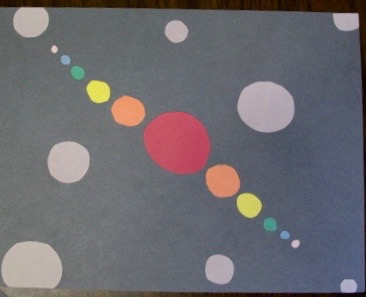
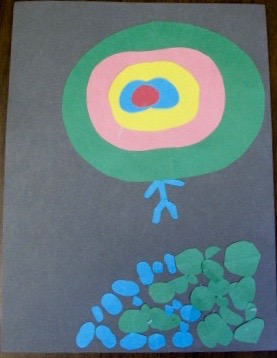
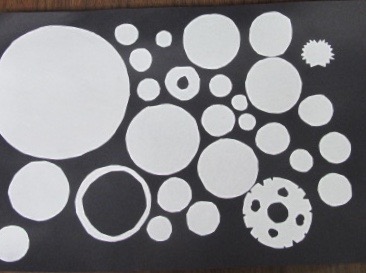
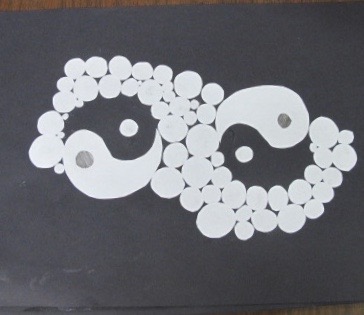
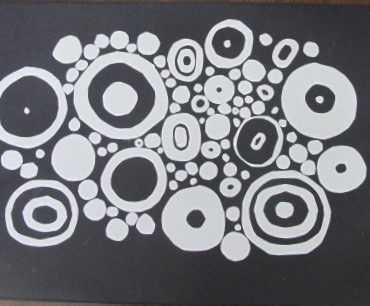
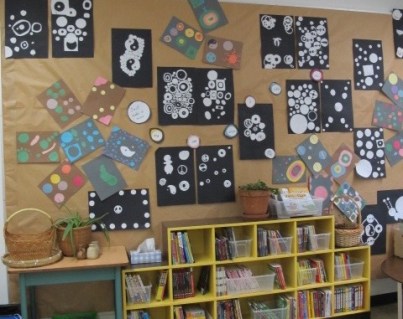
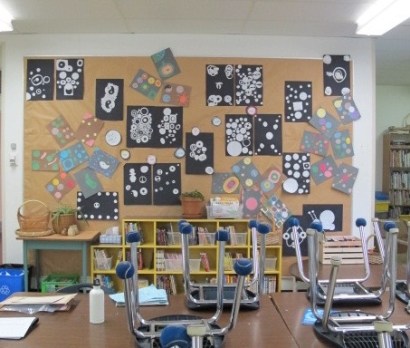
We completed two pieces of art to celebrate International Dot Day. I wanted students to approach their work playfully and to embrace the feeling of no one way to make an art piece. I discovered the wonderful blog of artist Michele Guieu and was blown away by all that she does. After resurfacing from her blog (prepare to spend hours!), I had the inspiration for our Dot Day pieces.

Celebration: Week One in The Land of New Celebration: Week One in The Land of New

Celebration: Week One in The Land of New Celebration: Week One in The Land of New

Celebration: Week One in The Land of New

On one wall – our collective work! Can’t wait for students to walk into this on Monday morning.

Celebration: Week One in The Land of New

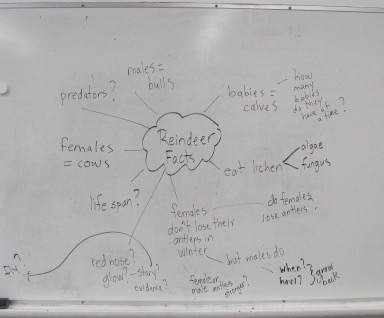
We are learning to think like scientists by waking up our brains to be observant, organized and full of questions. Thank you to Jess Keating and her Animals for Smart People videos. These videos are all under 3 minutes so we watch them twice and then talk about what we learned and the questions the information inspired.

Our first response web was completed together. Students will begin completing their own next week. We talked about jotting down new learning and connecting this to further questions.

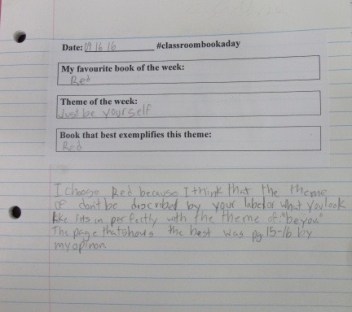
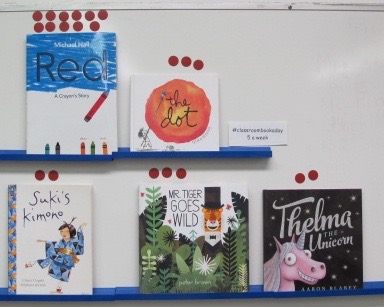
Celebration: Week One in The Land of NewAll last year my students and I participated in #classroombookaday (Follow the link to the presentation that Jillian Heise and Angie Huesgen gave at nErdDcampMI 2016 for more information). Near the end of the year, I started choosing a collection of books around a theme. This year with an intermediate class, I decided to continue this and then have the students respond at the end of the week. What was their favourite book? What did they feel was the theme of the week? Which book best exemplified that theme?

We will be learning more about theme in the weeks to come, including how to think about supporting ideas from the text that confirm/illustrate the theme. What I love about this is the potential for students to be thinking and talking all week about how stories connect and what messages they include.

Celebration: Week One in The Land of New

Celebration: Week One in The Land of New

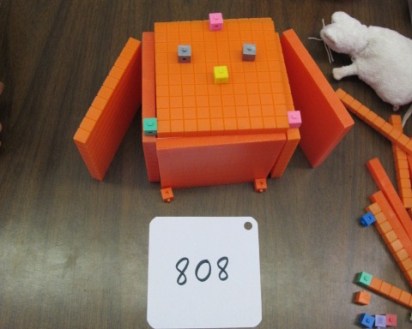
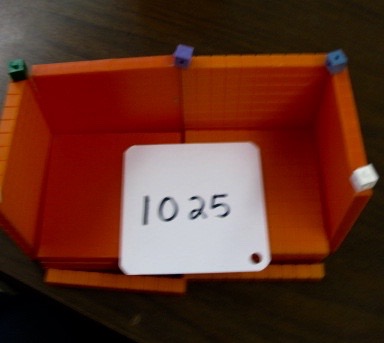
In math, we began our week with representing numbers in interesting ways. While students built and created, I learned about their understanding of place value and ability to “count up” to prove to me that their structure/creature represented the number given.

Celebration: Week One in The Land of New

Celebration: Week One in The Land of New

We have started Reading Workshop in full force. This group happily reads independently for 20-25 minutes and daily asks for more time to read. We have started to learn about genre through our picture book collection. This week we talked about fantasy stories, humour and books with rhyme and repetition. I have been trying to connect with each child to talk about books that are loved and what to read next. One important moment? When the child who told me he did not like to read and had no favourite books (on his reading survey) came to me on Friday and asked for my help in choosing a novel. The power of a reading community in a classroom full of books!

Celebration: Week One in The Land of New

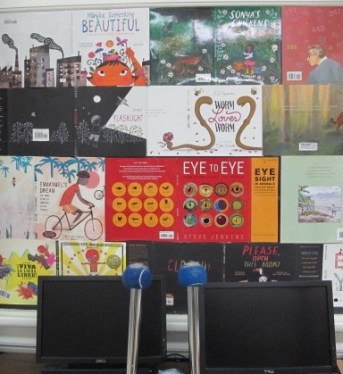
I finally finished covering exposed black board (non magnetic and marked up with tape marks) with book jacket covers. I call this book wall paper 🙂 The covers I selected are favourite titles of mine but I hope that they also convey a few things: we are readers here, we read fiction and nonfiction, stories are important, diversity is celebrated, we will be creative here, we will share laughter, we will learn together . . .

Celebration: Week One in The Land of New

I celebrate turning out the lights on Friday afternoon (okay, early evening) to chairs up, art on the wall, student words in my head. Goodnight to my new classroom community.

Celebration: Week One in The Land of New

Thank you to Ruth Ayres and the #celebratelu community!

Being part of a community that regularly shares gratitude and celebrations truly transforms my weeks.

celebrate-link-up