Unknown's avatar

About carriegelson

Elementary teacher passionate about all things literacy.

Wild Thing!

Really, one doesn’t need a reason to read Where the Wild Things Are by Maurice Sendak. But in case you are looking for one . . .

How about to inspire creative children’s art? Meet our Wild Things!

Wild Thing! There's a Book for that!

This post on Organized Chaos, a fabulous art blog with step by step instructions, provided the spark for this project. As we have been reading this years Caldecott Medal and Honour titles, I have also been sharing favourite Caldecott winners from the past. Sendak’s book is a real favourite of mine. It won the medal in 1964.

First we read Where the Wild Things Are by Maurice Sendak

Wild Thing! There's a Book for that!

Inspired by instructions on the Organized Chaos blog, we really focused our attention on the details of each creature, looking at how they are a compilation of many animals in one. The children were asked to create their own creatures, incorporating body parts from at least five different animals. We brainstormed all of the body parts of potential creatures – thinking beyond body, legs and heads to claws, horns, snouts, beaks, necks, teeth, etc.

Wild Thing! There's a Book for that

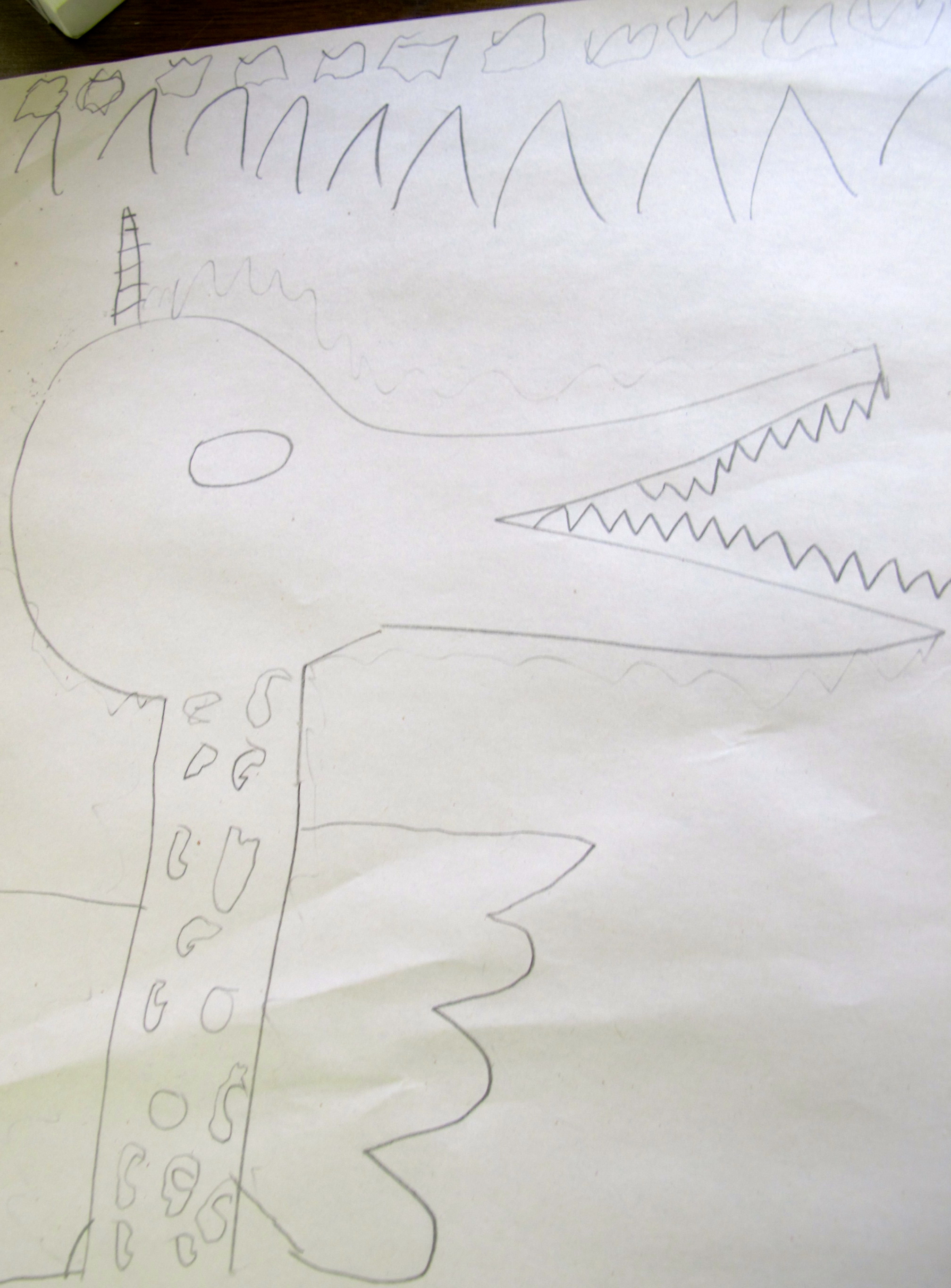
Students drew in pencil to design their creatures and add details for a background landscape.

Wild Thing! There's a Book for That

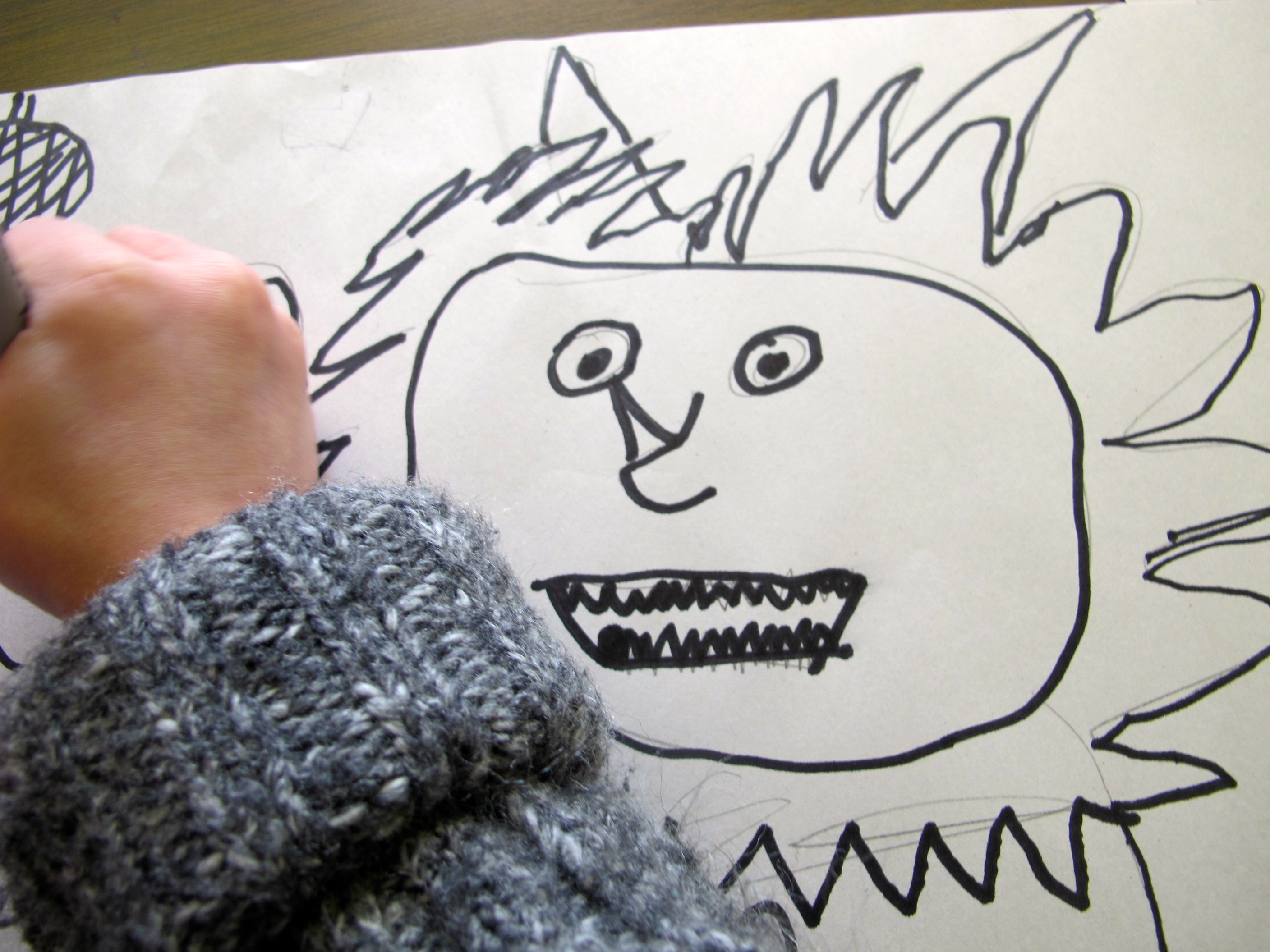
Next students outlined all lines using a black sharpie.

Wild Thing! There's a Book for That

Wild Thing! There's a Book for That

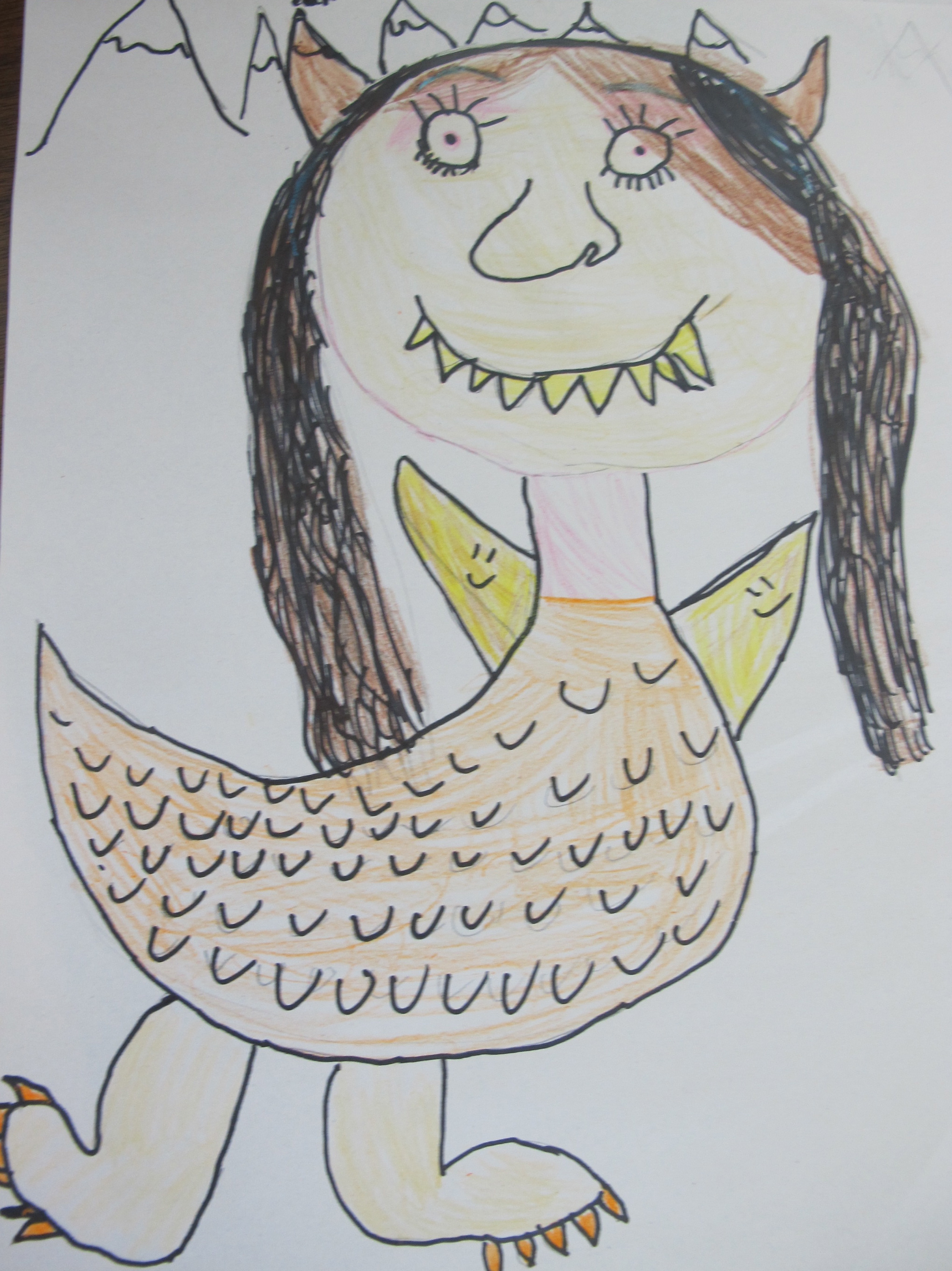
Students then used crayons and pencil crayons to add colour and additional details to their very own Wild Things.

Some were inspired to create faces similar to Sendak’s creatures with the large colourful teeth, expressive eyes and big lumpy noses.

Many students enjoyed adding horns, claws and wings to their creatures.

Some made their creatures look a little more human by adding human looking hair and drawing faces with  expressions of a specific emotion.

Wild Thing! There's a Book for That

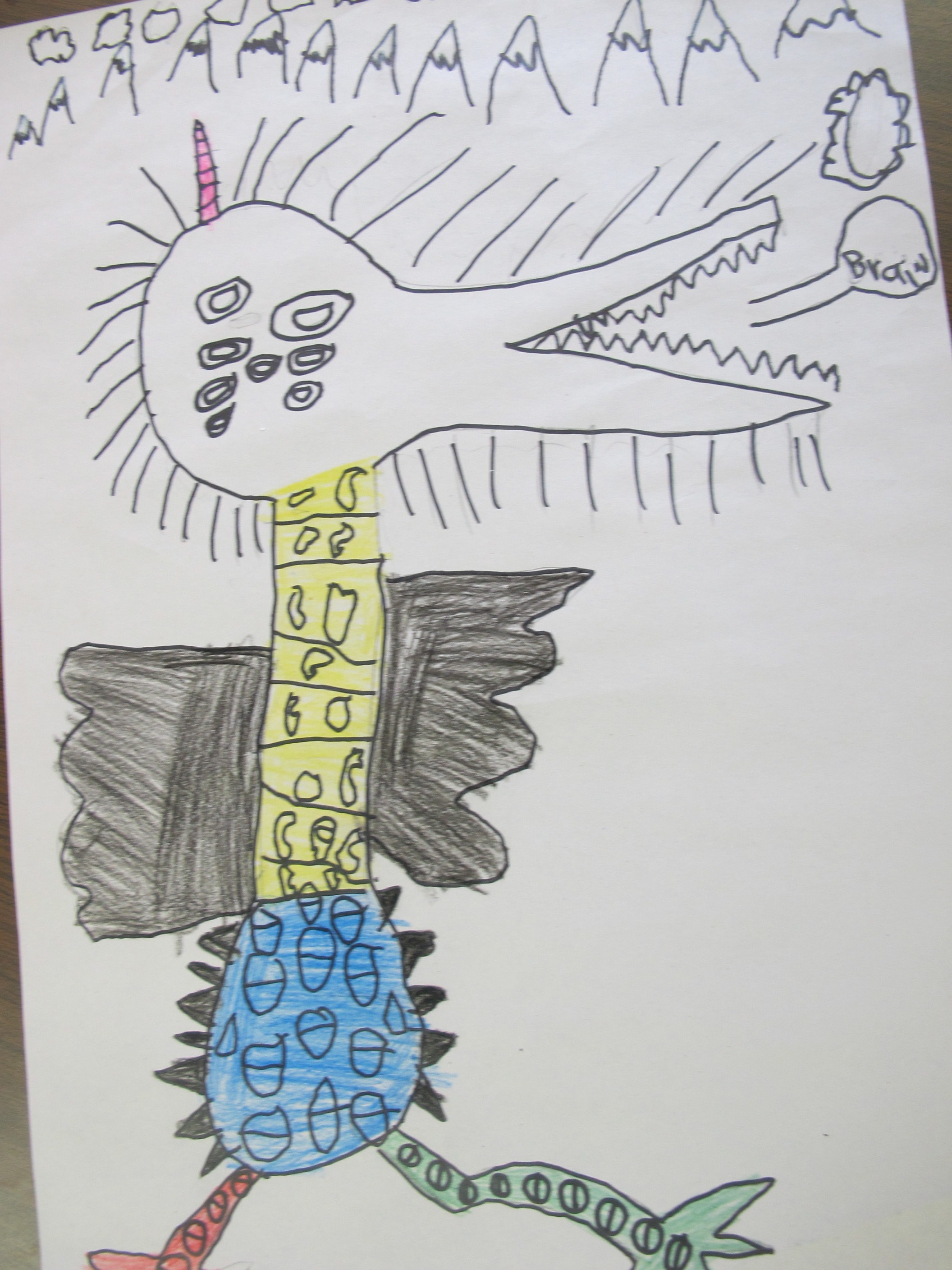
Other Wild Things were much more fantastical!

Some had multiple eyes or bird like or reptile like faces.

There were things like unicorn horns, bat wings and alligator teeth.

Some wild things had body armour and some even breathed fire!

Many students had their wild things just standing around while others had their wild things running or even dancing.

So much creativity was revealed!

IMG_6447After colour was added to the creatures body,  students added paint to their background.

Some focussed on sky, others on a forest feel.

Other students were all about colour and chose a background that highlighted the multiple colours they used in their creature.

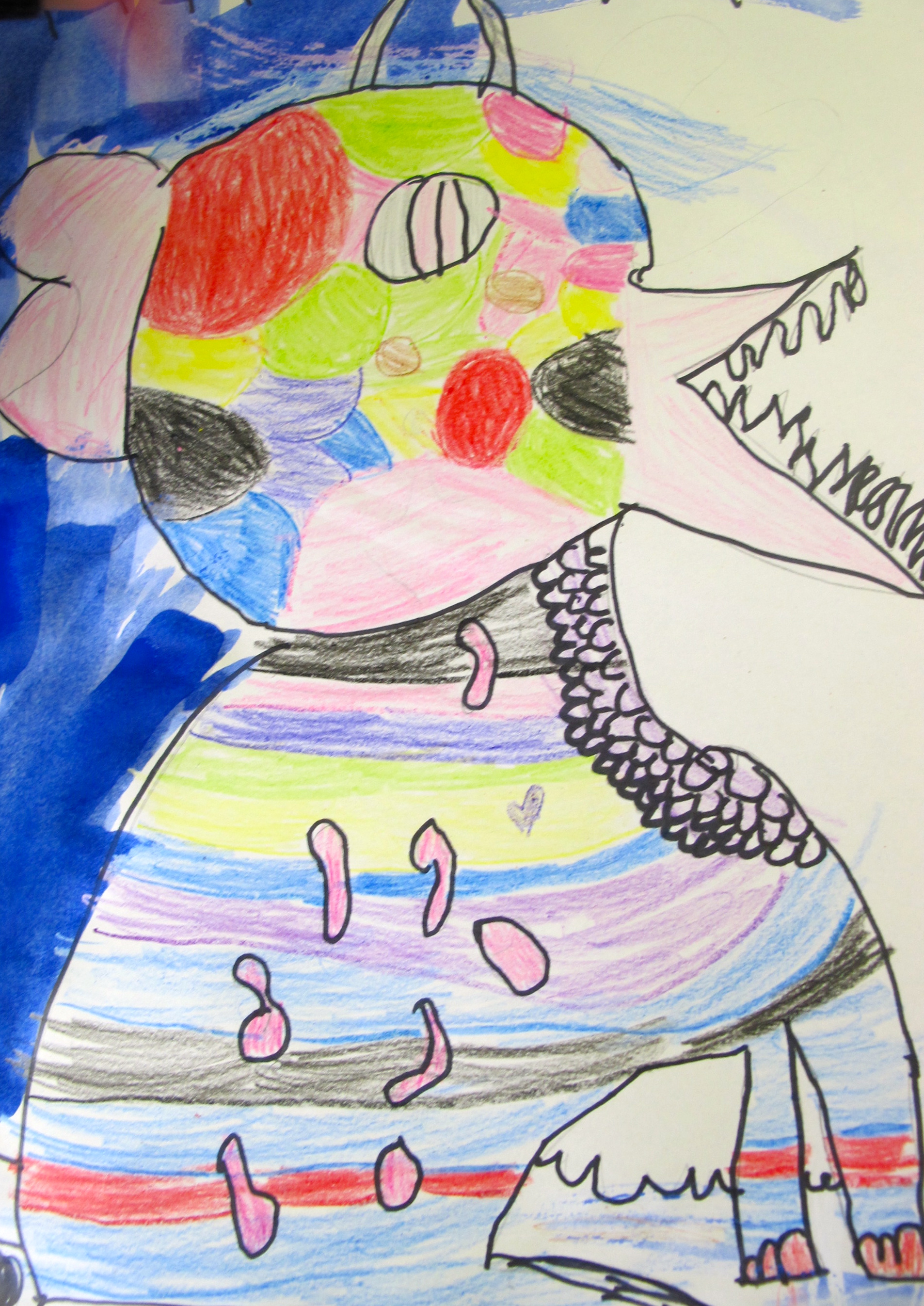
This student is using a bright blue background to highlight the soft pastel stripes and splotches on this creative Wild Thing.

It looks part elephant, part duck, part alligator and . . .

What else can you see?

Meet a few more gorgeous Wild Things!

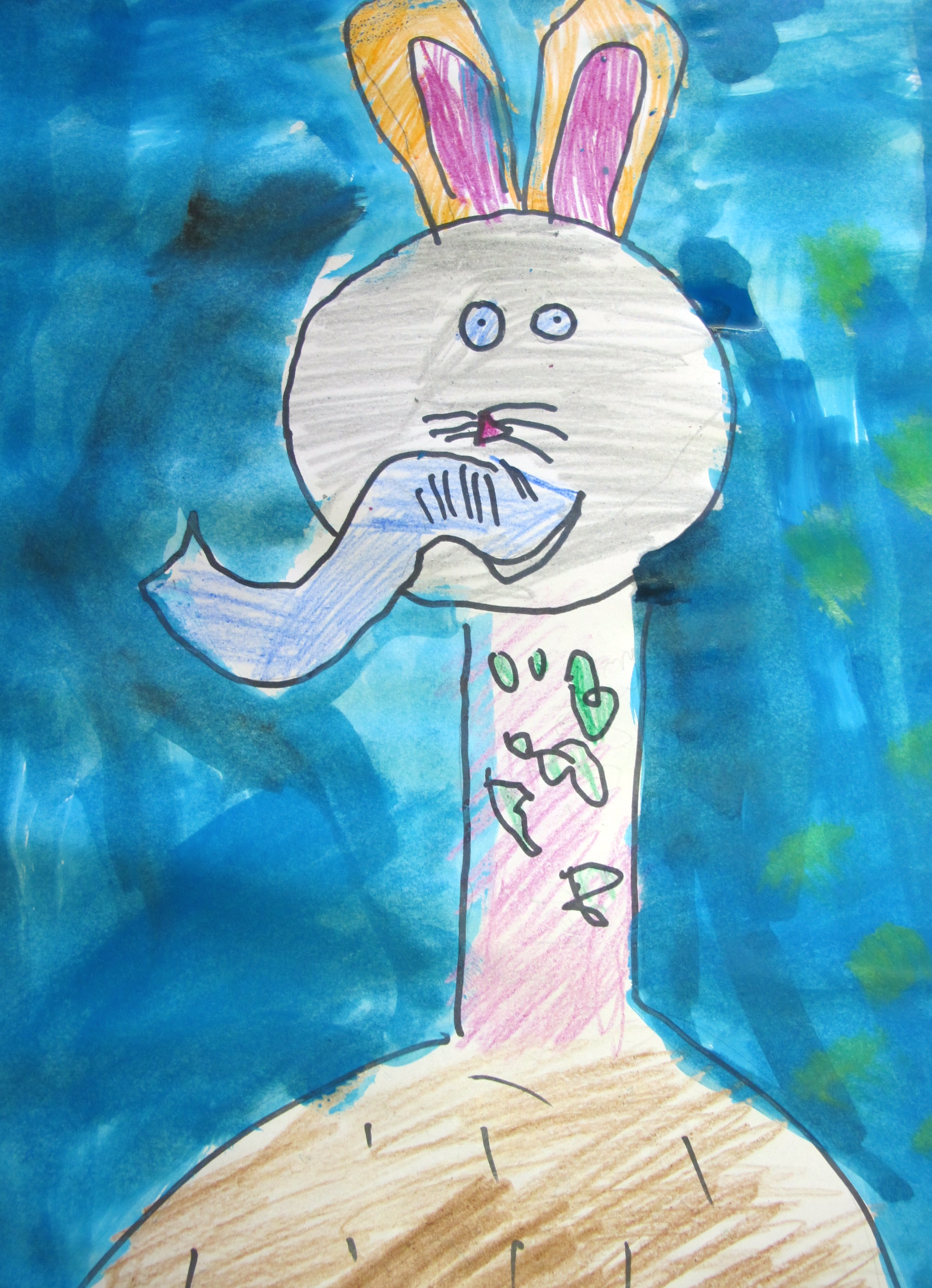
Big ears and a long snout! This wild thing has some super senses!

Wild Thing! There's a Book for That

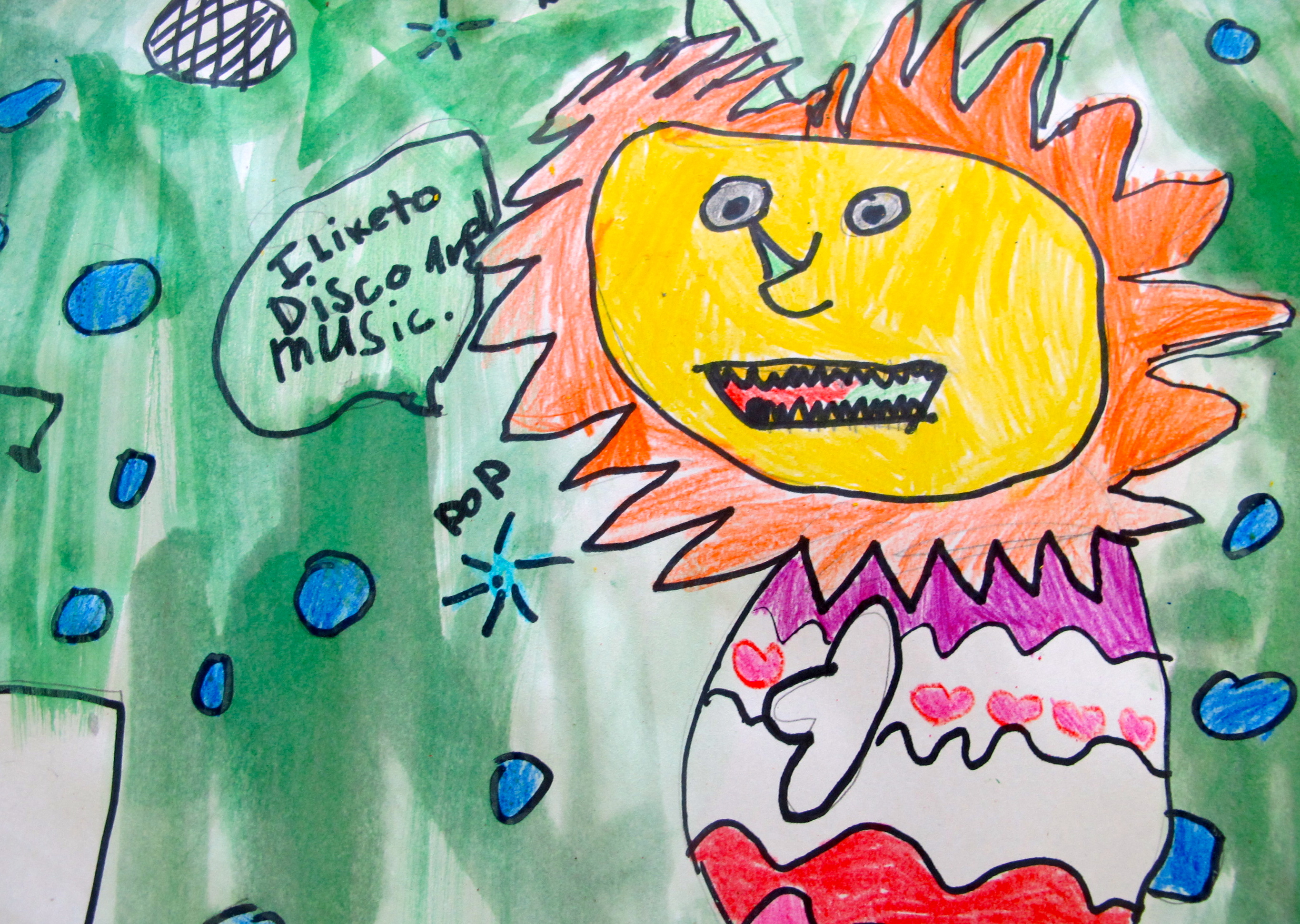
How about taking this one out onto the dance floor?

Wild Thing! There's a Book for That

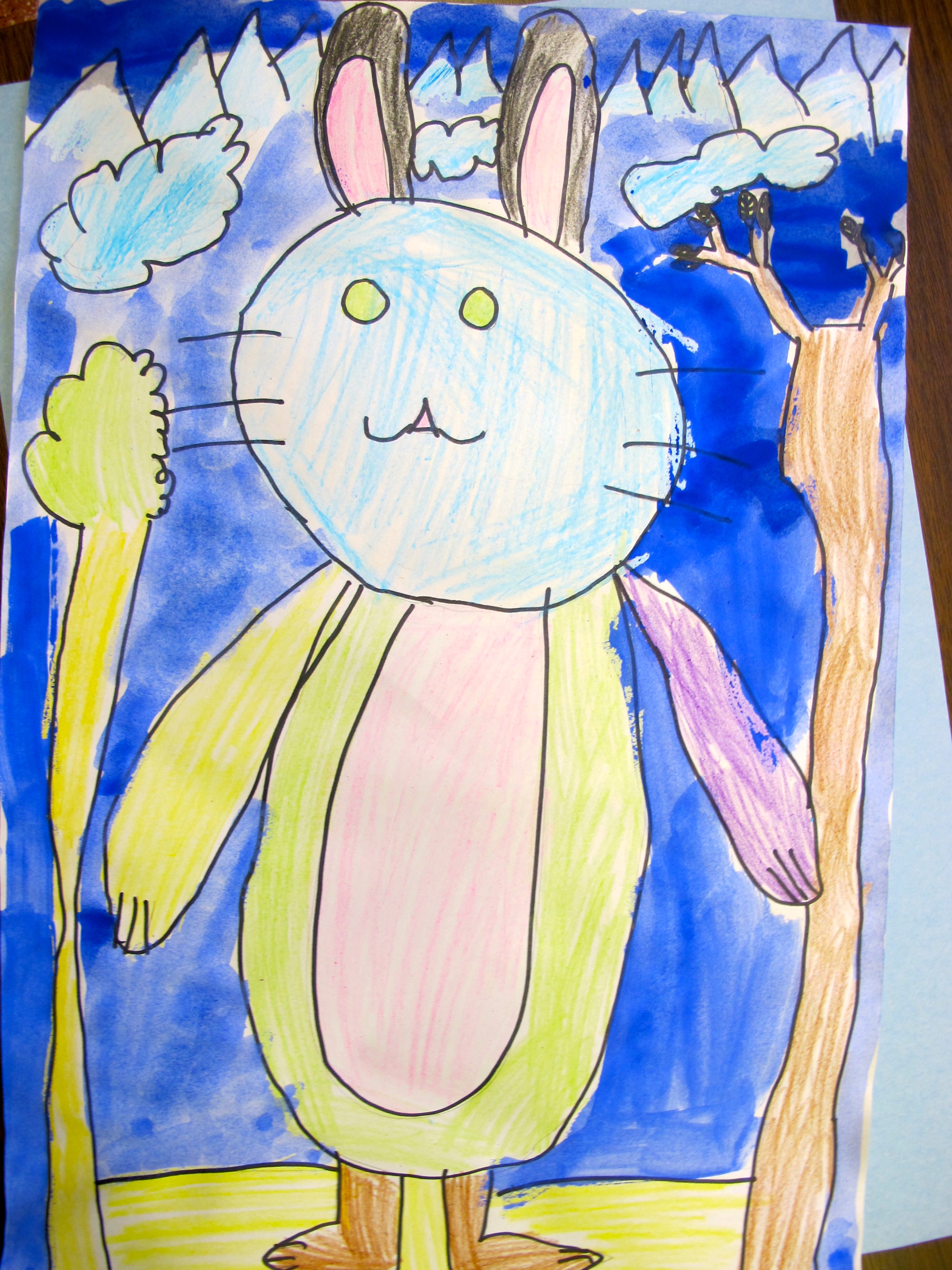
Don’t mess with this Wild Thing. That serious look might be disguising a wilder than usual personality!

Wild Thing! There's a Book for That

Doesn’t this make you want to get out your art supplies and make some Wild Things of your own?!

Monday February 25th, 2013

It’s Monday! What are you Reading?

Mon Reading Button PB to YA

I love Sunday nights when I reflect on my reading over the week and join Kelle and Jen’s meme to share books read from picture books to young adult novels.

Because I am really supposed to be writing report cards, my book descriptions will be shorter than usual. Report card writing has also interfered with my reading time. This week I only finished one novel: Aristotle and Dante Discover the Secrets of the Universe, a Printz title by Benjamin Alire Saenz. But, oh, what a novel it was . . . So much I loved about this book. It was a truly beautiful read. Loved the relationship between mothers and sons. The respect for family. The search for who exactly one might be. I love the contemplative narration. The vulnerability revealed. Oh, did I adore this book . . .

Aristotle and Dante- It's monday What are you reading?

Picture books I read:

Ten Birds by Cybele Young A great book to spark discussion! I personally love the illustrations. They are wonderfully quirky and odd. A counting theme but much more . . .

Ten Birds - It's Monday!

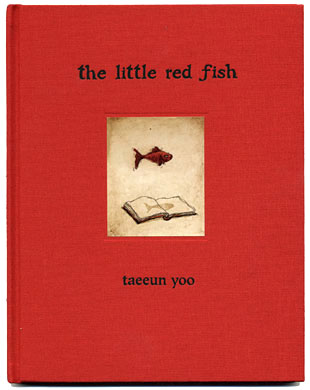
The Little Red Fish by Taeeun Yoo Library love and mixed up feelings of real and unreal as one travels literally, and not, through the pages of a book. Stunning!

littleredfish It's Monday!

These Hands written by Margaret H. Mason and illustrated by Floyd Cooper Such voice in the Grandfather teaching his little grandson what “these hands” can do. And then . . . what “these” hands cannot do because of racist ideas. Beautiful book. I need to own it.

these hands It's Monday!

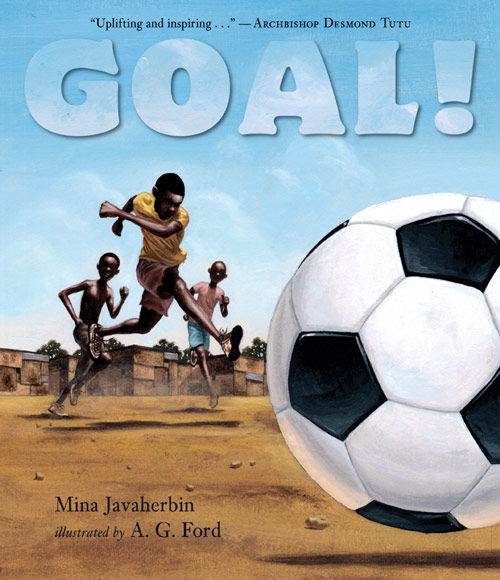
Goal! written by Mina Javaherbin illustrated by A.G. Ford My students adored this book and wrote fantastic reviews. The illustrations are so full of life, the text beautiful to read aloud. I loved the celebration of play. These words in the text were my favourite: “When we play, we forget to worry. When we run, we are not afraid.”

Goal! by Mina Javaherbin

The Monster Returns by Peter McCarty A sequel to Jeremy Draws a Monster – don’t think it would be as cute if read as a stand alone. But as a sequel, charming.

The Monster Returns - It's Monday!

Looking for a Moose written by Phyllis Root and illustrated by Randy Cecil Wonderful combination of energetic playful language and sweet images.

Have you ever seen a moose — a long-leggy moose– a branchy-antler, dinner-diving, bulgy-nose moose?”

Looking for a moose - It's Monday

Kite Day: A Bear and Mole Story by Will Hillenbrand Hillenbrand writes such whimsical, sweet stories. Adventure shared by two friends. Adorable.

Kite Day - It's Monday

Nonfiction titles:

Queen of the Falls by Chris VanAllsburg This was a fantastic read aloud that held my Grade 2 reading group on the edge of their seats. How could a 62 year old woman plan and execute a stunt such as going over Niagara Falls in a barrel? Here is the story of Annie Edson Taylor, determined to make her fortune by being the first person to go over the falls.  A compelling and sad story.

QueenofFalls - It's Monday!

Watch this video of VanAllsburg discussing creating the book:

Oscar and the Frog by Geoff Waring A cute little book that introduces concepts of growing and how different living things begin, grow and develop. I liked the connections between plants and animals.

Oscar and the Frog

I discovered that this book is part of an entire collection of Oscar books to introduce science/nature concepts to young readers. Would love to get all of the titles for my nonfiction collection.

Oscar Collection

Goal!

Goal! written by Mina Javaherbin illustrated by A.G. Ford was our BLG read aloud this week. Thanks to Harpreet for sharing it with us!

Goal! by Mina Javaherbin


Set in South Africa, this book tells the story of good friends, a new soccer ball and the bullies that threaten their freedom to play. Ajani has won a brand new federations sized ball for being the best reader in class. He brings this ball to play with his friends. How thrilled all of the boys are to not have to play with their old plastic ball! However, the streets where they play are not safe and one boy at a time must take a turn standing guard on the roof. When bullies show up, the boys are able to outsmart them, concealing their new ball. Their old ball is taken but when the bullies are gone, the game can continue!

This book is universally appealing because of the celebration of play and, of course, of a favourite sport played all across the world: soccer/football. Kids were instantly connecting to make-shift goals, scoring, racing after the ball and playing with friends.

The illustrations are gorgeous. You can feel the bright African sun, the dusty streets and the joy and concentration as the boys play.

My favourite lines of the book:

When we play, we forget to worry.

When we run, we are not afraid.

Student reviewers respond:

Shereese: I thought it was smart when they hid the football in the bucket so the bullies wouldn’t break the ball. He was pretending to cry but why did they pretend to cry? For the author: Do you like your book?

Kevin: Why do the bullies want to steal the ball? Why do they need to use the buckets as goals? Where did the bullies come from? Some boys have flip flops and some have shoes. My favourite is scoring the goal!

Pheonix: Bullies are so mean.

Andrew: Why did the bullies steal the ball? Why did the bullies didn’t want them to play football? I connected because I play soccer with my friends. In the story the boys use buckets for goals and I use a sweater for goals.

Kala: How come you didn’t make the kid fall down? Is this story true? Why did you make them pretend to cry?

Kassidy: Why did the boy carry a bucket? Why did the bullies steal the balls? Why is the street bad for the boys? I like when the boy pretends to cry. Why did the bullies take the old ball? How did the illustrator make the boys so real? How did you come up with this story

Ashley: My favourite part was that the bully boys were taking the old ball and the good nice boys were happy because they had a new ball with them. I do not like the mean boys. I like that the nice boys were so happy that they can play soccer now. The pictures are so so nice. I am feeling happy that the nice boys can feel happy. I am feeling happy because they can be playing soccer and they still have a soccer ball.

Giovanni: Football is soccer. The kids had fun playing football. They had a new ball.

Heman: My favourite part is when the boys hide the new ball from the bullies. The bullies was riding bikes. The boys were playing football. They used upside down buckets for the net. Some of the boys were wearing flipflips. Why did the bullies steal the ball from the boys?

Arianne: In Africa they play football. We call it soccer. The boy won the new ball for being the best reader.

Kelvin: My favourite part was the kids trick the bullies and take the ball. The kids faked cry. They wait for the bullies to get far far away to play football again.

Vicky: When I listened, I was thinking about the boys playing soccer. In Africa, they call it football. My favourite part was the boy got first prize for reading. I did not like the bullies. Harpreet, did you like this book so you picked this book?

Brian: My favourite part was when the kid scored a goal. Why did the big bullies take their old ball away. My Dad taught me that football means soccer.


Nonfiction 10 for 10 List for 2013!

I’m so excited to participate in the first Nonfiction 10 for 10 event celebrating fantastic nonfiction picture books. Thank you to Cathy Mere from Reflect and RefineMandy Robek of Enjoy and Embrace Learning  and Julie Balen of Write at the Edge for hosting this new meme.

In many cases, I have shared the books on my list with students, often more than once. If I have used a book with my class and blogged about it, I have provided the link (for more information about the book/possible ideas on how to use it).

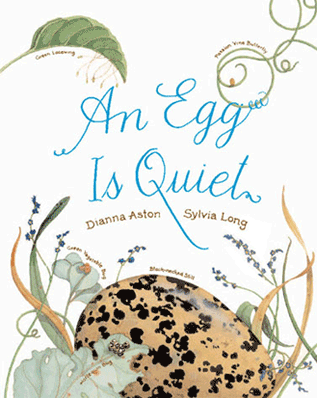
An Egg is Quiet by Dianna Aston and Sylvia Long Shared in my class here. I love all of the Aston/Long titles (there are now four) but I think this is my favourite. Maybe it is that I love birds – my backyard is full of feeders and specific plants to attract them. But it is also the simplicity of an egg and the wonder of what it might contain. In this book we learn about more than bird’s eggs – we see the eggs of frogs, insects and various reptiles. The text is soothing and informative and the illustrations stunning. It is fun just to pore over the end papers trying to match various eggs with the creatures that may have hatched from them. I find this book is as lovely shared in the classroom as it is read aloud to just a few (my own children adored it). It inspires so much inquiry and amazement.

Nonfiction 10 for 10: There's a Book for that

Island: A Story of the Galapagos by Jason Chin A simply gorgeous book detailing the birth of the Galapagos islands over millions of years and the fascinating creatures that inhabit them. Why is this book so great? The illustrations are certainly stunning and detailed but it is much more than that. I also love that big concepts: evolution, natural selection, migration of specific species and environmental changes are made so accessible for young readers. I think this is best introduced as a read aloud and then left for children to visit and revisit. This is a book to return to often to further study the illustrations and explanations. I want to get a hold of Chin‘s other nonfiction titles now too (Redwoods and Coral Reefs)

Nonfiction 10 for 10: There's a Book for that

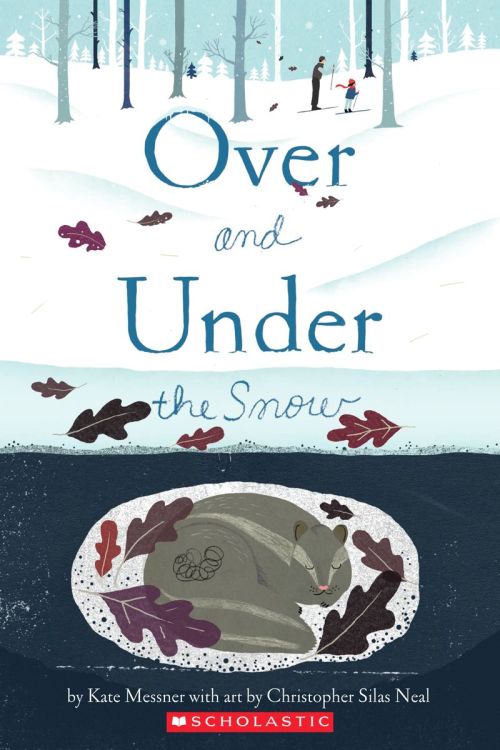
Over and Under the Snow written by Kate Messner and illustrated by Christopher Silas Neal Shared in my class here. This book is truly magical and I would be thrilled to see Kate Messner do another picture book in this genre. Of course, Neal’s illustrations are also stunning – I love the muted colours – the gorgeous blues and white. I have frequently given this book as a gift to young readers especially if they have the opportunity to get out into a snowy wood and imagine all of the life happening under the snow. My students think it is absolutely fascinating that this subnivean zone (the small open spaces and tunnels between the snowpack and the ground) exists and marvelled at the animals that inhabit it. More detail about each animal is located in the back of the book for further reading. The text itself reads beautifully and repeated readings are a must!

Nonfiction 10 for 10: There's a Book for that

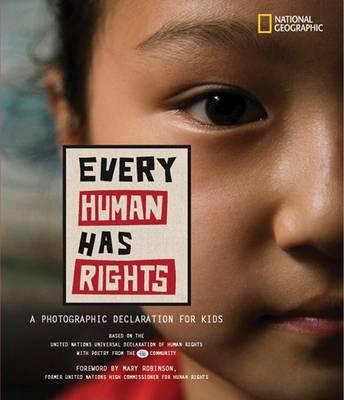
Every Human has RightsA Photographic Declaration for Kids A National Geographic book with a forward by Mary Robinson. I seem to collect books that explore the United Declaration of Human Rights. I have many favourites. What I particularly love about this title is the poetry that accompanies the list of rights. All written by children and teens. The photographs from around the world make the rights so much more powerful, real and worth defending. I would share this book with intermediate students over primary children because of the more mature message in the poems and some of the photos. For books more suitable to younger students, I recommend I Have the Right to be a Child written by Alain Serres, illustrated by Aurelia Fronty and We Are All Born Free: The Universal Declaration of Human Rights in Pictures (with Amnesty International).

Nonfiction 10 for 10: There's a Book for that

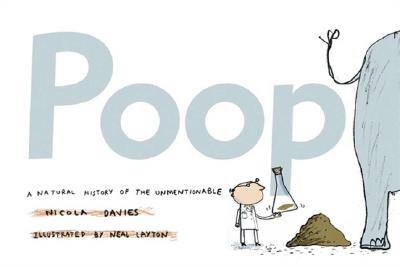
Poop – A Natural History of the Unmentionable written by Nicola Davies and illustrated by Neal Layton. Shared in my class here and here. Really what child is not going to be engaged when you open up a book that is all about poop? There is a lot to learn in this title!   Do you know how often a sloth poops? How about a kind of messy thing that hippos do with their poo? Why is there hair in the poop of some animals? Wonder what follows when there is a title Sloppy or Ploppy? You must read this book! Better yet, you must share it with a group of curious children! And giggle. And oooh and ahhh.

Nonfiction 10 for 10: There's a Book for that

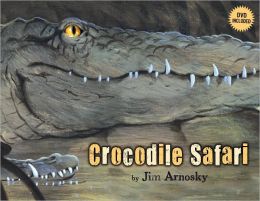
Crocodile Safari by Jim Arnosky Shared in my class here and here. Arnosky has so many wonderful nonfiction titles but this is my favourite. Not only do students learn the important difference between crocodiles and alligators, they learn all kinds of facts about crocodiles. The art is true to life and the colours set the mood to make you feel like you really are out in the swamp. One of the best features of this book is the DVD that is included. See Arnosky out in the mangrove swamp doing research and learn how to draw crocodiles. A step by step drawing lesson is part of this DVD. My students loved this!

Nonfiction 10 for 10: There's a Book for that

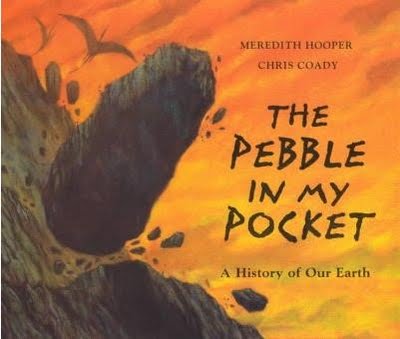
The Pebble in my Pocket written by Meredith Hooper and illustrated by Chris Coady Shared in my class here. This is a lengthy read but so worth sharing- a book that describes a journey of over 480 million years.  Follow a piece of rock that formed as a result of a volcano and travelled through time to end up in a little girl’s pocket. On this amazing journey, learn how the earth has changed in many dramatic ways over time. The back of the book has a geological time line that explains the main periods in Earth’s history. You might never look at a small pebble the same again.

Nonfiction 10 for 10: There's a Book for that

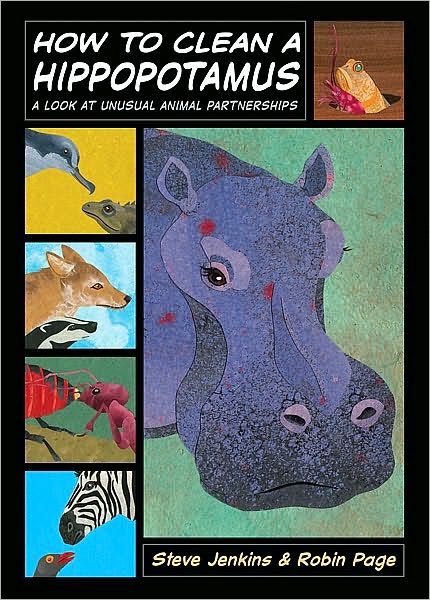
How to Clean a Hippopotamus by Steve Jenkins and Robin Page Shared in my classroom here. How to choose just one Steve Jenkins book as my favourite? Not an easy task. I adore them all. (And there are always more! Just today I read my class part of My First Day) But if I had to pick a favourite, this would have to be it. I learned the most from reading it and my students were completely engaged with the information  Symbiotic relationships between animals are fascinating and this book details many strange animal partnerships. This book’s format is somewhat like a graphic novel and contains, Jenkins’ stunning artwork/collage.

Nonfiction 10 for 10: There's a Book for that

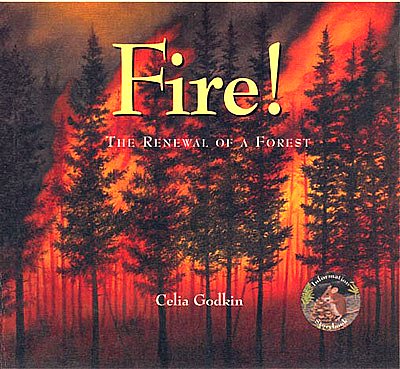
 Fire!  The Renewal of a Forest by Celia Godkin, the queen of information story books 🙂 Have you ever thought of a forest fire as a positive thing? This detailed picture book explains how fires can be a natural and necessary part of the forest’s cycle of life and growth. The pages are typically set up so that the picture is spread over two pages  allowing for more scope and detail. I once did an entire unit on ecology using Godkin’s books and this was a favourite.

Nonfiction 10 for 10: There's a Book for that

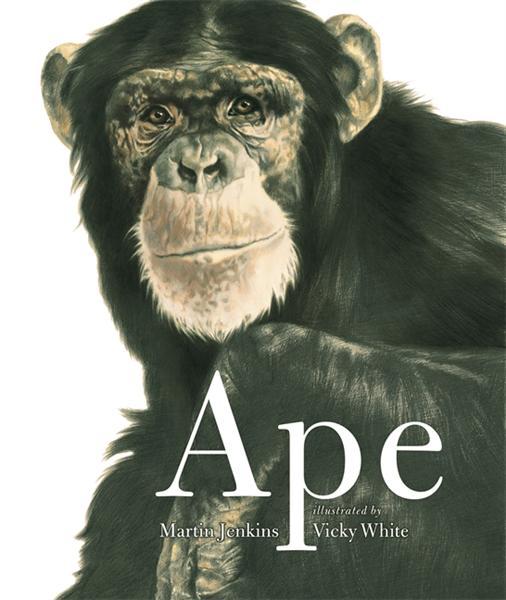
And my favourite nonfiction title? It would have to be Ape written by Martin Jenkins and illustrated by Vicky White Shared in my classroom here.

Ape is a visually stunning book! A book to pore over again and again marvelling at the details – both visual and written. Vicky White’s close up portraits and lifelike illustrations are fascinating while Martin Jenkins’ poetic text provided so much new information it is difficult to turn a page in a classroom of children without endless questions being tossed around the room. Learn about four endangered ape species: Orangutans, Chimps, Bonobos, and Gorillas. The fifth species of ape? Us. Similarities between apes and humans are described – for example, that we usually just have one baby at a time. Read and share the information in this book and then just flip through the pages taking in the pictures – there is so much to notice that a once through won’t do this book justice.

Nonfiction 10 for 10: There's a Book for that

Thanks again to Cathy, Julie and Mandy for the inspiration and hosting this event!

Happy reading and sharing everyone!

Monday February 18th, 2013

It’s Monday! What are you reading? 

Mon Reading Button PB to YA

Join up to Kellee and Jen’s meme and share what you have been reading from picture books to young adult novels.

I enjoyed many picture books this week. It seems many had a theme of friendship. Also dogs graced many a page and the name Hopper kept cropping up. Who knows why these things happen?

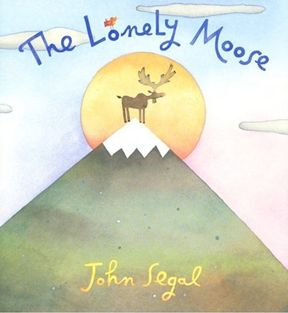
The Lonely Moose by John Segal Sometimes we think we don’t need friends. But once we’ve begun to enjoy the company of another, life can be pretty lonely once we are alone again. This is what this lovely little picture book explores.

the lonely moose

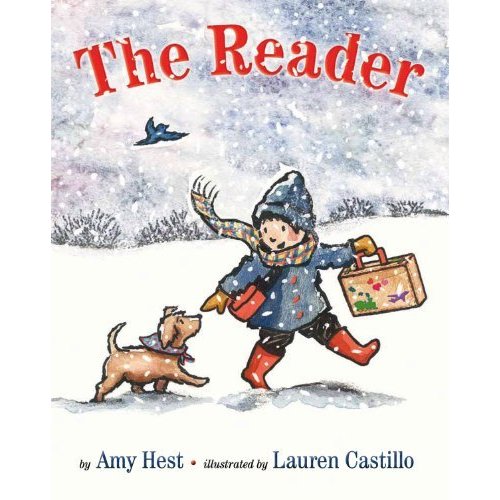
The Reader written by Amy Hest and illustrated by  Lauren Castillo I adore Castillo’s illustrations. Amy Hest never misses. Books, companionship and a snow day. This book is a wonderful nostalgic little read. The most clever thing of all? Calling the little boy the reader throughout the story. It just gives this story a whole other level.

the reader

Hopper and Wilson by Maria Van Lieshout I think there can never be too many picture books about friendship. So I was delighted to find another.

hopper-and-wilson

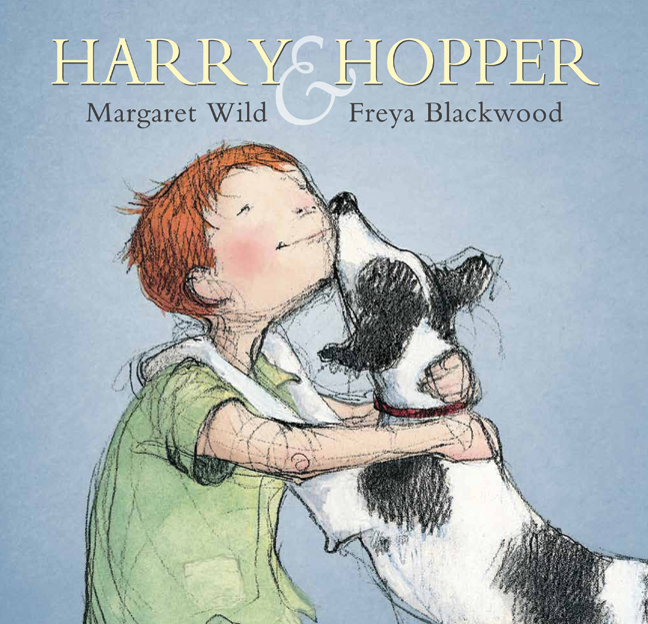
Harry and Hopper written by  Margaret Wild and illustrated by Freya Blackwood I am fast becoming a huge fan of Freya Blackwood’s illustrations. I love the scratchy, loose lines and the mood she creates through shading and colour. This book tackles themes of grief and a pet dying. It is done in a gentle, sweet way that respects everyone’s process.

harry and hopper

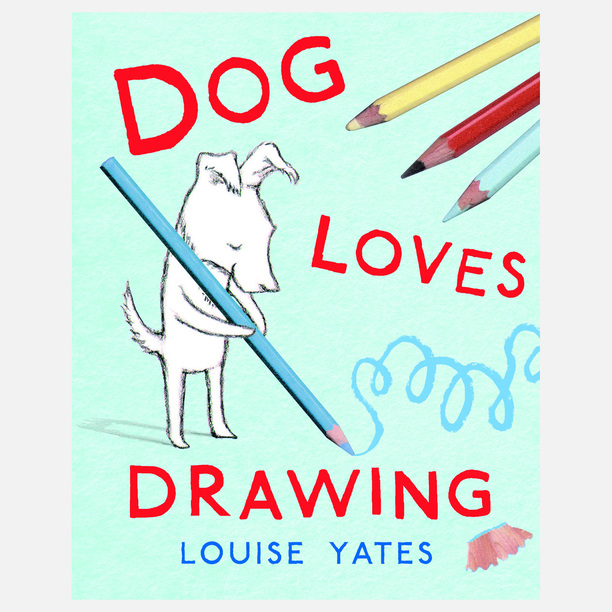
Dog Loves Drawing by Louise Yates Great message – that art, doodling. drawing can tell a story, allow for creativity and challenge the imagination.

dog loves drawing

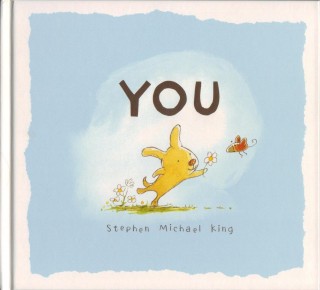
You by Stephen Michael King I have a soft spot for Stephen Michael King’s illustrations. (Leaf is one of my favourites) A book that celebrates all of us.

you

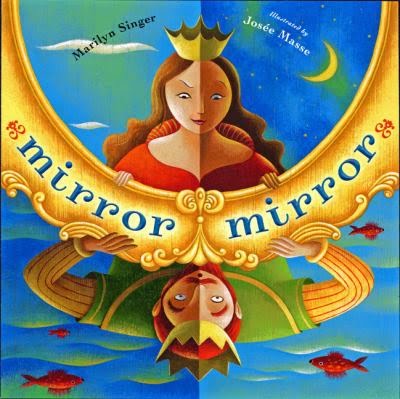
Mirror Mirror written by Marilyn Singer and illustrated by Josee Masse Beyond clever. I have been sharing these poems with my reading group and we read each poem multiple times just being in awe how reversing words and changing phrasing alters everything.

Mirror_Mirror

Some nonfiction titles:

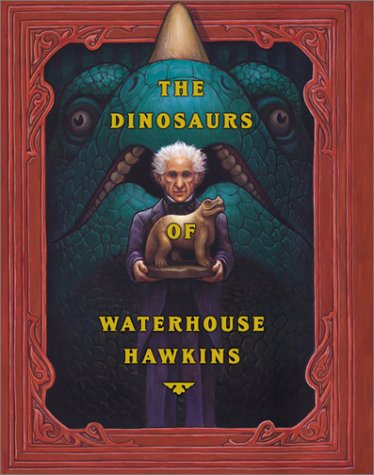
The Dinosaurs of Waterhouse Hawkins written by Barbara Kerley and illustrated by  Brian Selznick I read this title to my own children. We have all read all of Selznick’s books so were excited to see his illustrations here (Caldecott honour worthy and all!) We were intrigued by how Hawkins made models of dinosaurs without having all of the definitive details that would be later discovered. Part of a story about the quest to “recreate” dinosaurs that we just didn’t know.

Waterhouse Hawkins

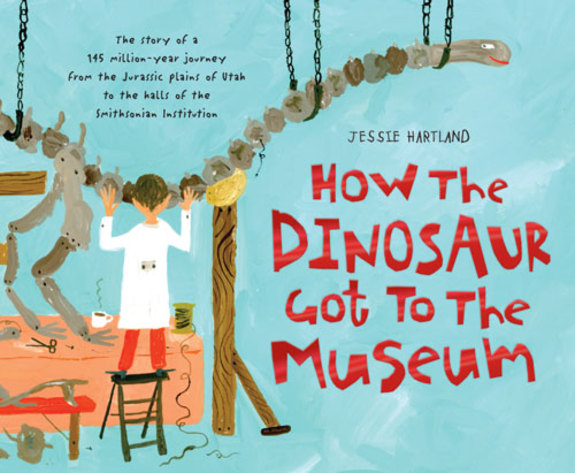
How the Dinosaur got to the Museum by Jessie Hartland We actually read this before The Dinosaurs of Waterhouse Hawkins – it gave us all of the vocabulary to understand what is involved in erecting a dinosaur skeleton. Fascinating! And time consuming! Reading it with my children, we turned it into a memory game 🙂 Each time I got to the by the _______, I would pause and see who remembered the title! An excerpt:

“chiseled from the stone by the EXCAVATORS,
authenticated by the PALEONTOLOGIST,
and searched for by the DINOSAUR HUNTER.”

HowTheDino

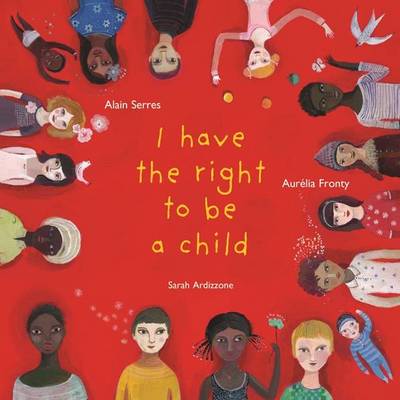
I Have the Right to be a Child written by Alain Serres, illustrated by Aurelia Fronty Such an accessible book for children to learn about the rights of children everywhere. Gorgeously illustrated.

I have the right to be a child

I finished two novels this week:

Anything but Typical written by Nora Raleigh Baskin Is this cover not just absolutely stunning? Loved pausing in this book just to stare at it. A fantastic middle grade read narrated by a boy with autism. Themes of family, friendship and identity. So much to this story. Baskin weaves many stories into this one vulnerable tale. It is challenging enough to fit in as a preteen, what happens when you are autistic and your very reactions to the world guarantee you stand out?

anything-but-typical

Fourmile written by Watt Key This book manages to be both all about the characters and yet it doesn’t scrimp on action. There is always something going on – even under the surface of the simplest and mundane tasks like painting a fence. Sometimes the goings on are dramatic and frightening. Steeped in hurt, pain and longing, this story also reveals the vulnerability and strength in the characters. While, the main character is a twelve year old boy, some of the disturbing scenes might make this more of a young adult read. Or a middle grade . . .  with caution. I continue to love this author after first reading Alabama Moon and being blown away.

Fourmile

Next up? Aristotle and Dante Discover the Secrets of the Universe by Benjamin Alire Saenz

The Fantastic Flying Books of Mr. Morris Lessmore

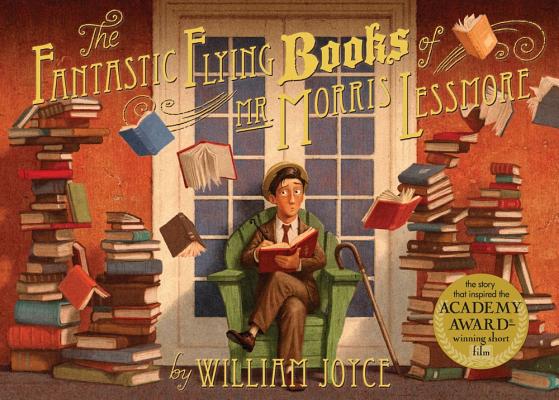
Our BLG book this week was the amazing book by William Joyce, The Fantastic Flying Books of Mr. Morris Lessmore. Thank you to Magnus for sharing it with us! I have a special amount of book love for this book and included it in my 2012 favourites.

fantastic

My students had actually heard this book once before – on the very first day of school because I shared it with them to share what our year was going to be about – a year surrounded by books and reading. And therefore, magic! When Magnus brought the book out of his briefcase, there was instant excitement and one little whispered comment, ” I can’t wait to hear this book again.” It is fitting, I think, to share a book that celebrates books as treasures, as friends, as world changers again and again. I was excited to sit back and be read to – when it was this book in the reader’s hands (and me in the audience)!

This book begins:

Morris Lessmore loved words.

He loved stories.

He loved books.

As soon as Magnus read these words, one of the boys in our class was up on his knees pointing at me. “Hey! Hey! Ms. Gelson loves all of those things! This book really was made for her!” I beamed through the rest of the story, watching my class literally become entangled with the ideas, the images and the love of books. What was fascinating is that they were so hooked into the story that they couldn’t stop debating whether it was true or not. Magnus read and little whispered debates persisted, sometimes becoming quite intense.

Is this a true story?” 

“No because books can’t really fly.”

“Yeah, no. Books don’t have legs.”

“But storms are real.”

“His house could go upside down in a tornado.”

“It went to colour from black and white. That means it’s made up like a movie.”

“This is so not true.”

“Yes, it could be I think.”

Students loved the story. They loved that the books were characters and that the books were Morris’s friends. When Morris got old and passed on, the debates began again.

“Now he is in heaven. And he’s younger.”

“It’s not heaven. It’s just the sky.”

Magnus shared his own love of books with us, that he has books all over his home and that books are his friends. He shared with the students that he loves the feeling of being lost in a book. We all just savoured the feeling of book love and the moments just following a beautiful book shared aloud. I think the reviews this week are particularly wonderful!

Student reviewers (little reviewers with large amounts of book love in their hearts) respond:

Gracie: My favourite part is when he flies on the books. It’s cool. Was that room full of books a library? Why did a big wind come and blow his house away? Did the guy live alone? I also liked when he got lost in the book. It looked fun. I love books !!!!!! And I loved this story!!!!! I also liked when the books read themselves to him. I liked when the little girl came in and it started all over again.

Kevin: I love books because it feels good. My favourite part was when the books read to the boy. Was the book real? The book was very good today. How could the boy be so tiny? I like when the books fly.

Ava: I like when the book took care of the old man. Ms. Gelson loves books. I love Heidi Heckelbeck. I am on number 6.

Giovanni: I love books because you can learn.

Andrew: My favourite part was when the book read to Mr. M. It made me happy. Books make me happy. Was the book real or not because Ms. Gelson reads books to us for learning. She calls them fiction and nonfiction and information story books.

Kala: I like the part when the girl came in. Did he pass away? Did you make a tornado?

Heman: My favourite part is when there was an earthquake. I liked it when Morris Lessmore found the library. It was kind when Morris Lessmore gave books to other people.

Kassidy: It was funny when Morris was upside down and when he was running and jumped. I like that he likes books. I like when the man laid on a big pile of books. I love books because sometimes, you do not know what it looks like and you have to think.

Arianne: I love books because you can learn new words. Because as you grow up, you can read more and more and more.

Kelvin: When the books started to fly was my favourite. My two teachers and Miriam love books. Because they travel in books and see everything.

Vicky: My favourite part was when the books read back to Mr. Morris Lessmore. Is the book real or not? This book made me happy because Mr. Morris Lessmore got lost in books.

Ethan: I love it because I love books. Because it makes you smart.

Ashley: My favourite part was that the book floated. But books don’t float. It’s not for real. I like the book so much. It seems like the book is kind. My teacher loves books so so so so so so so much!!!

Shereese: Is the book real? Where do you live William Joyce? I like this book. When did you make it? Even Ms. Gelson likes the book too! Do you like your book too? And Happy Valentines William Joyce.

Come and see what I celebrate

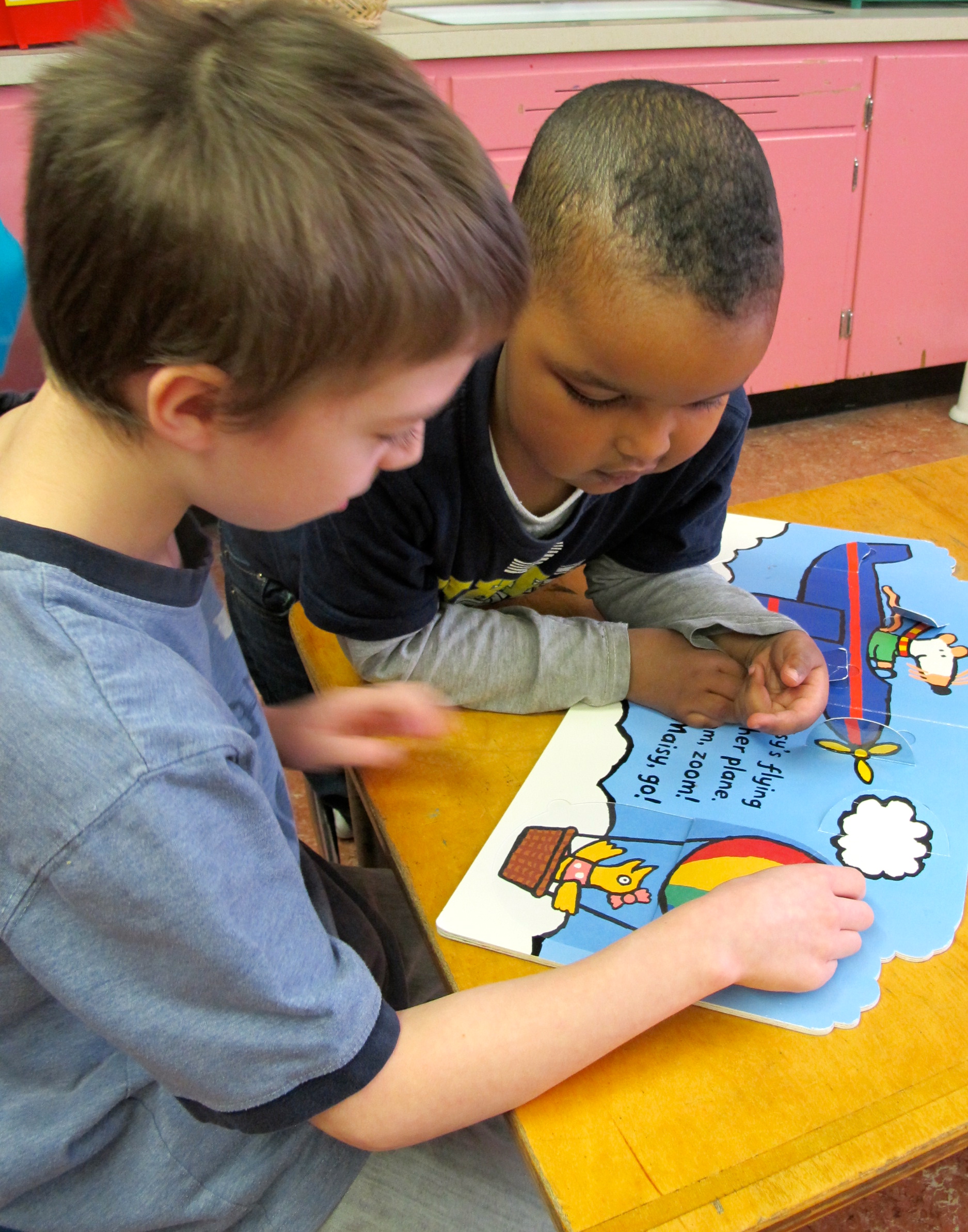
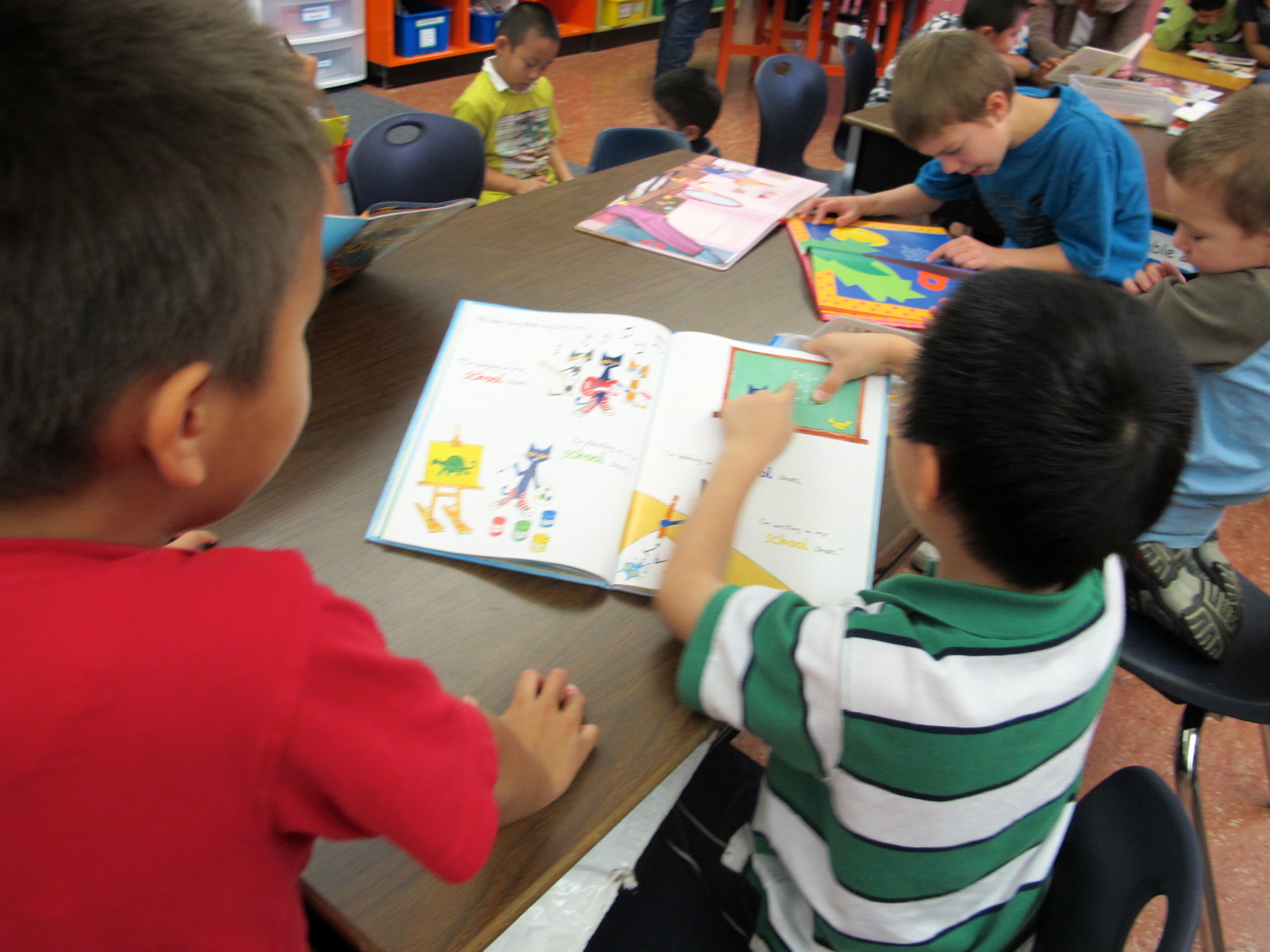
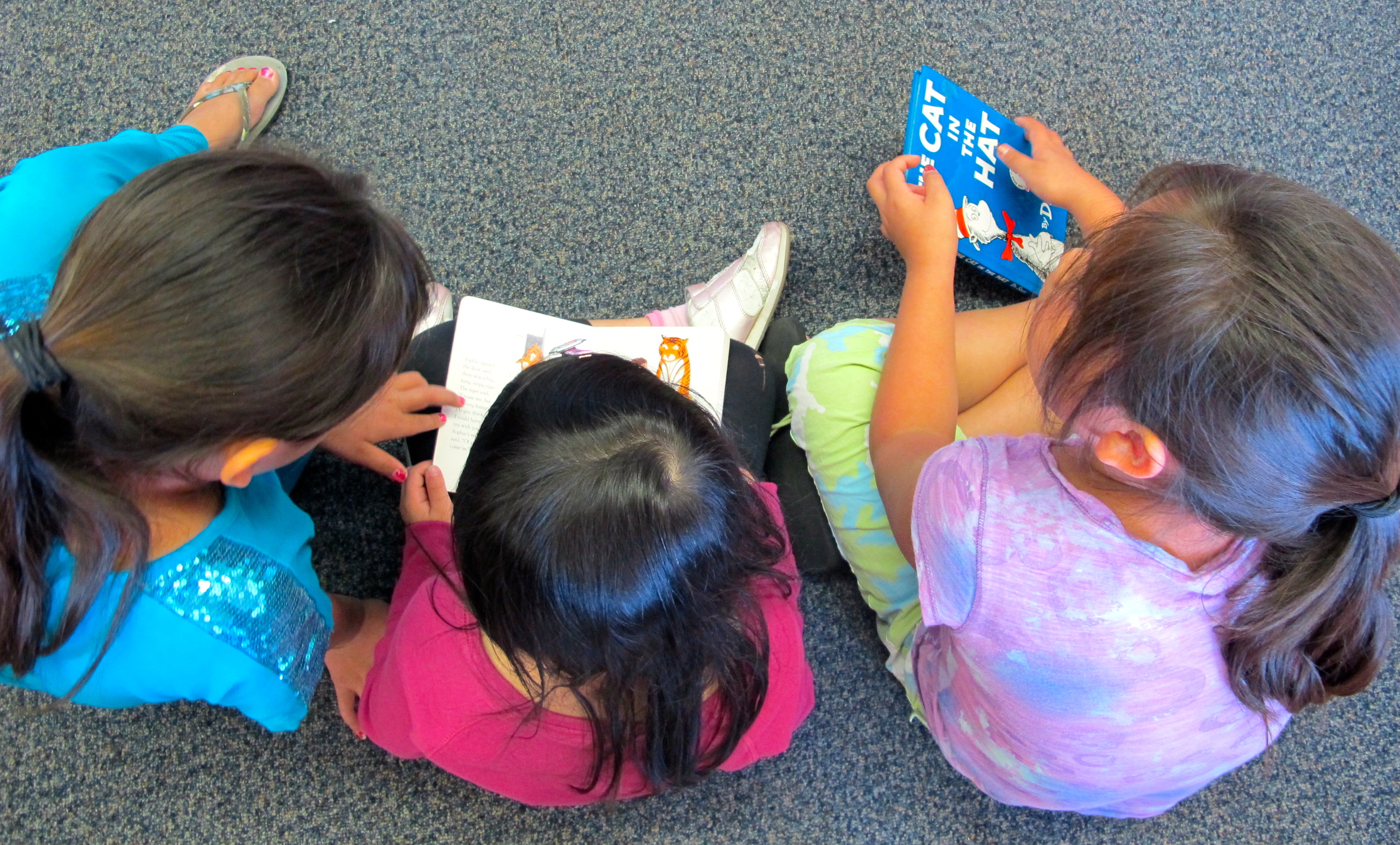
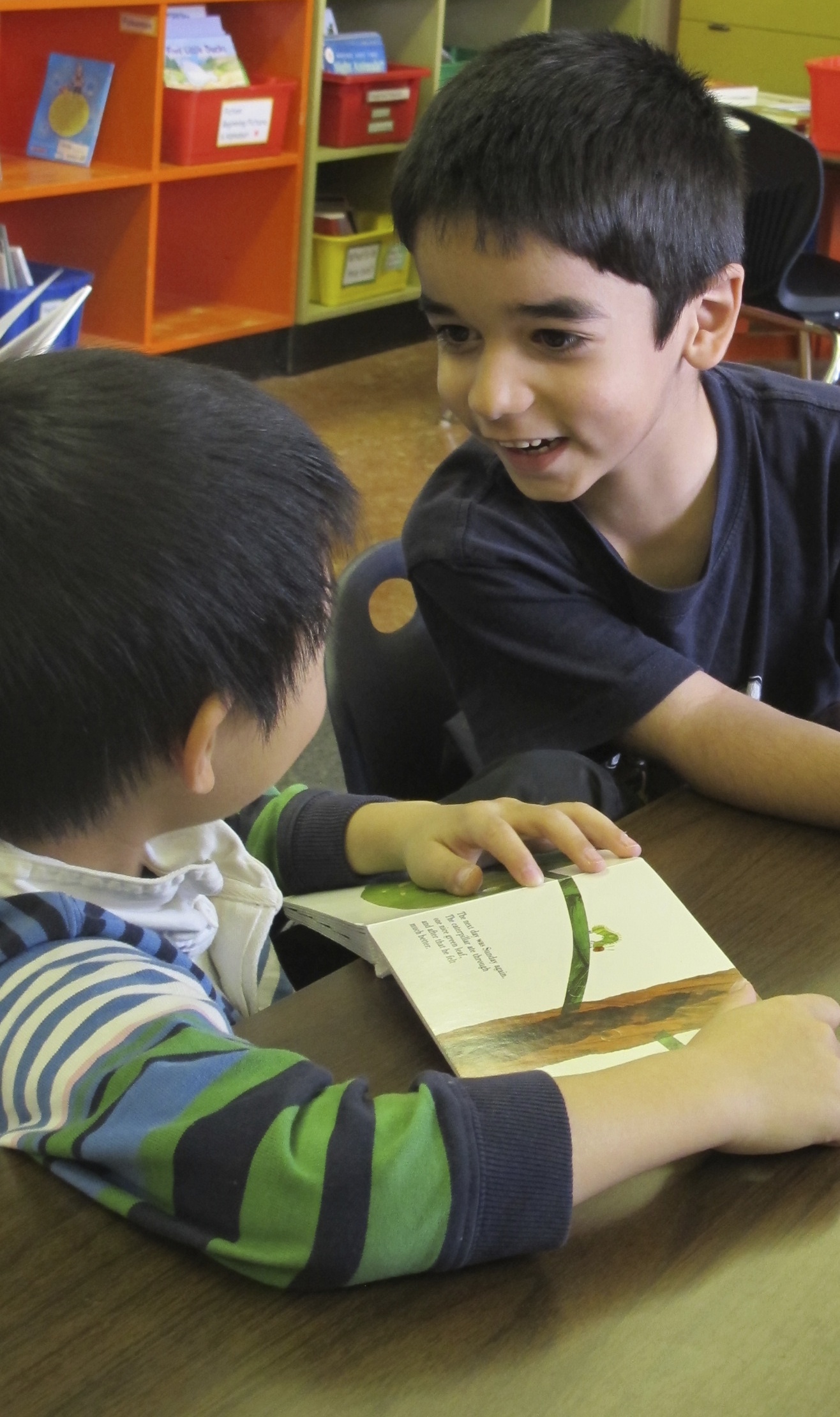
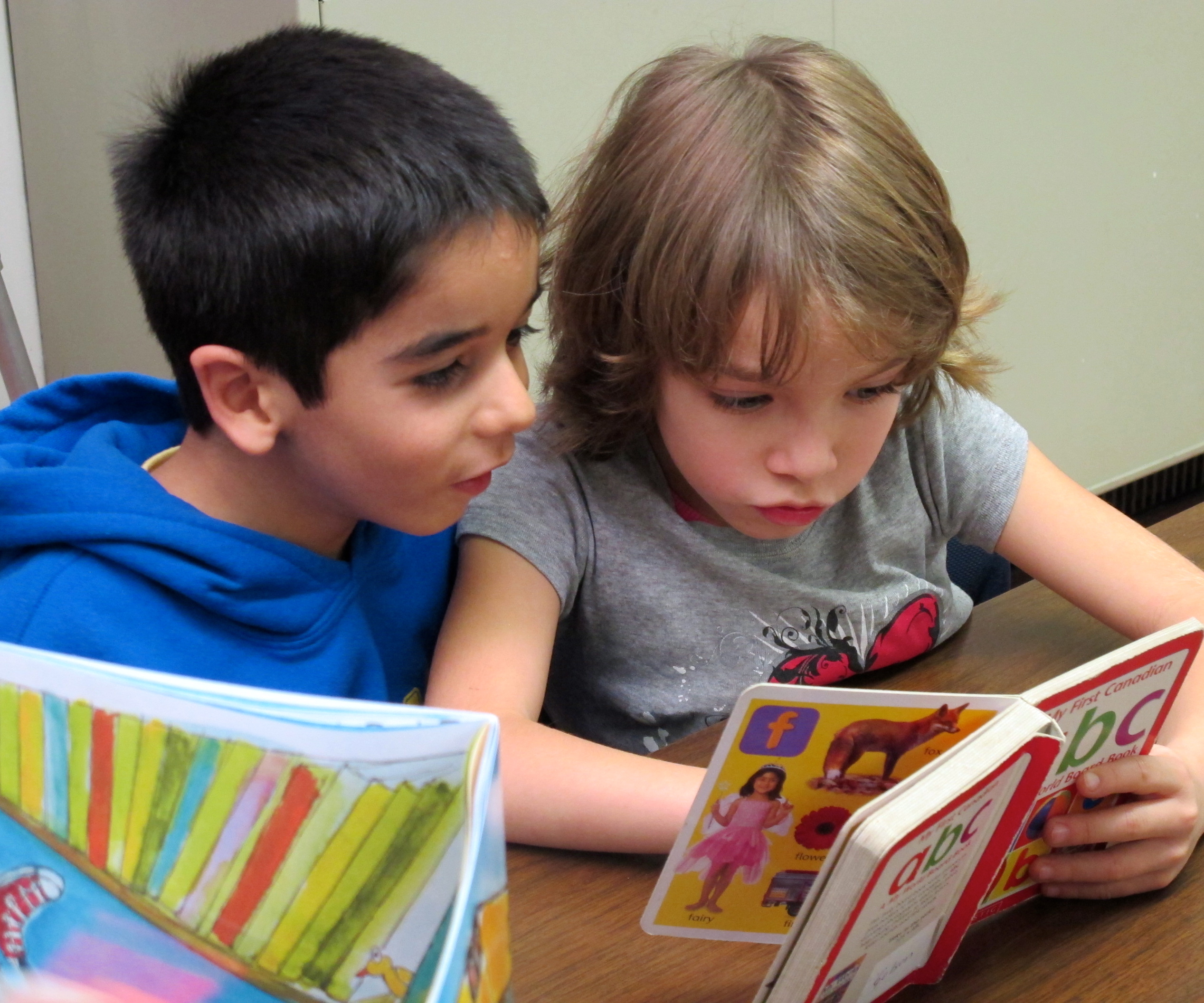
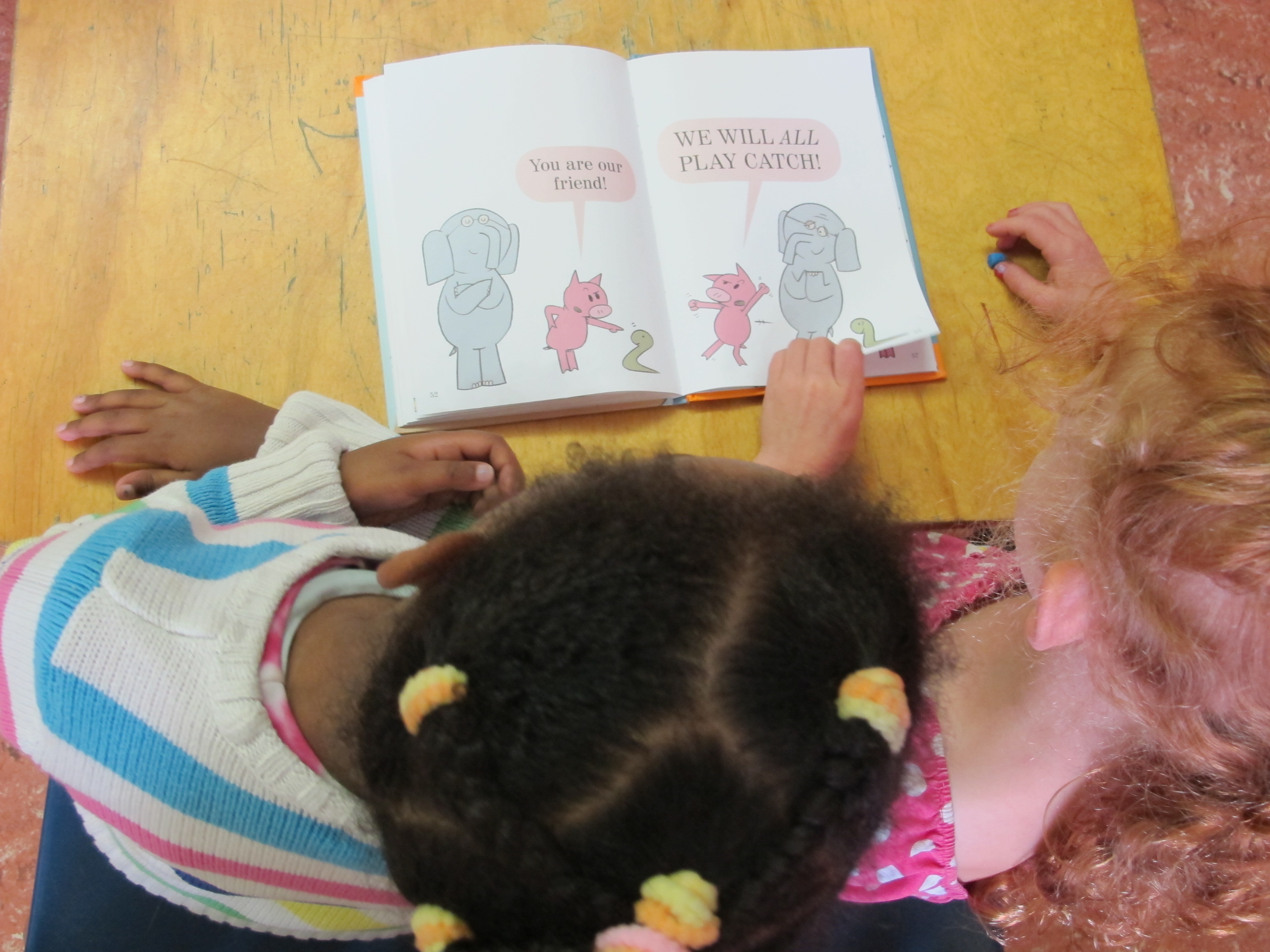
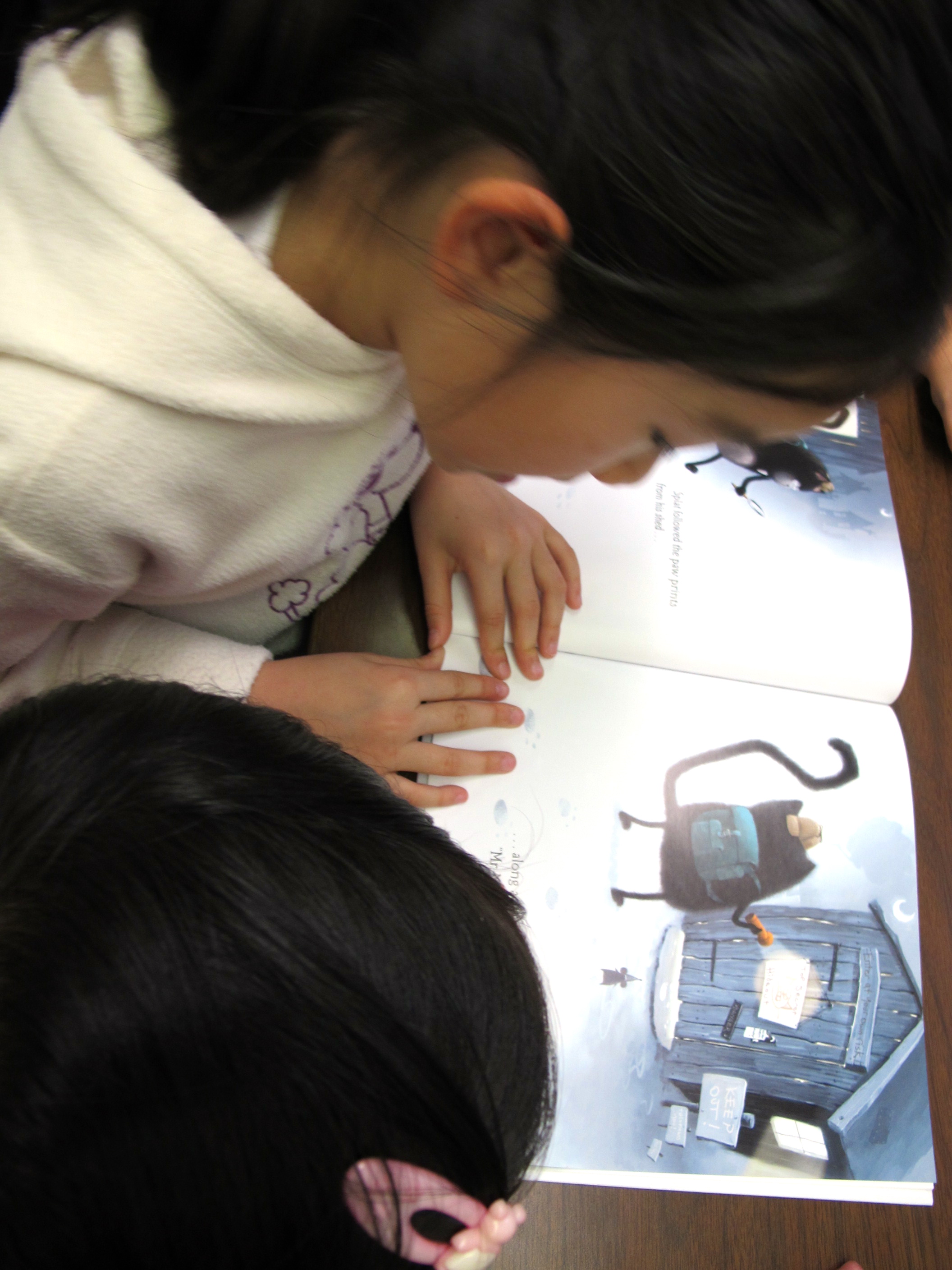
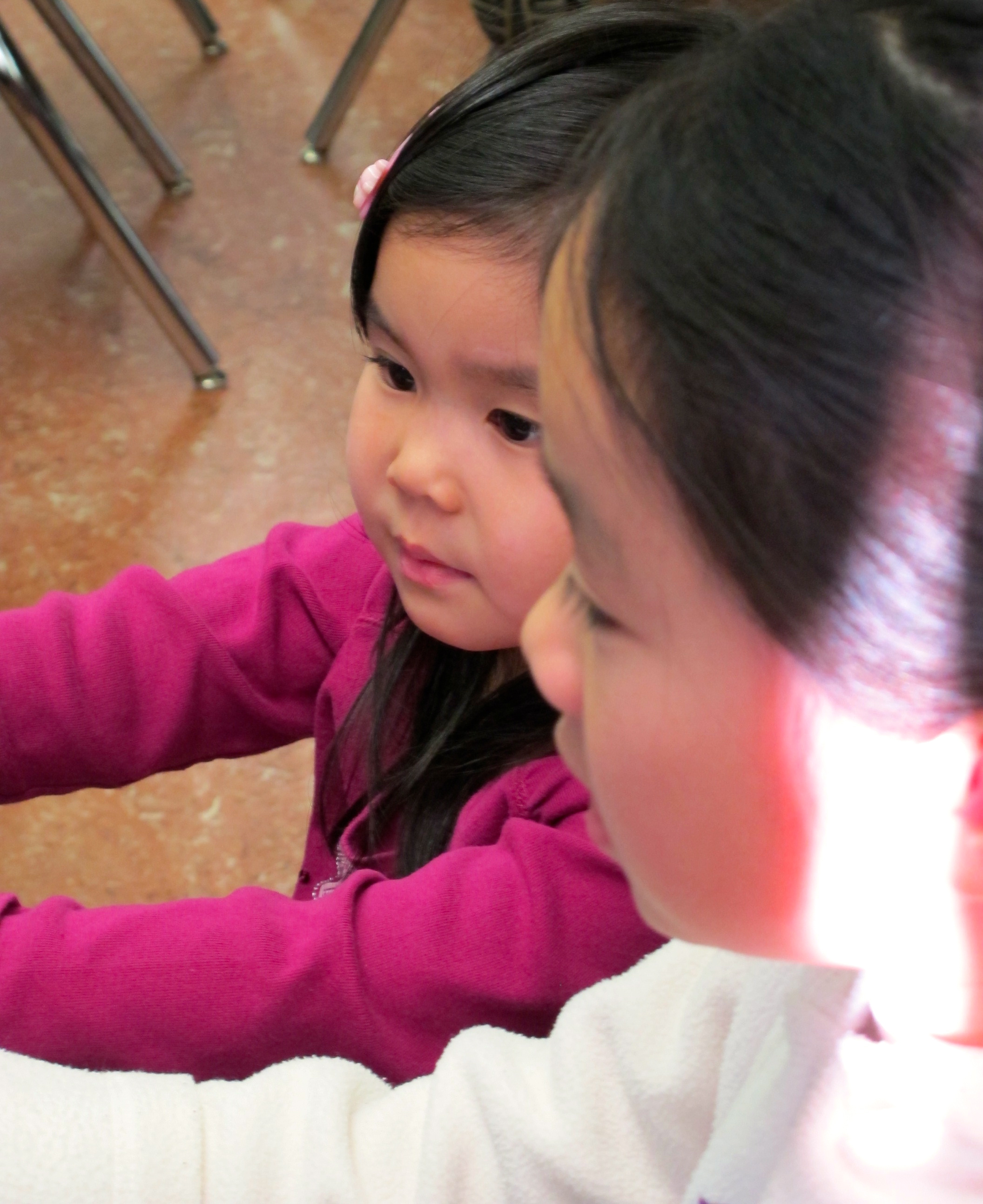
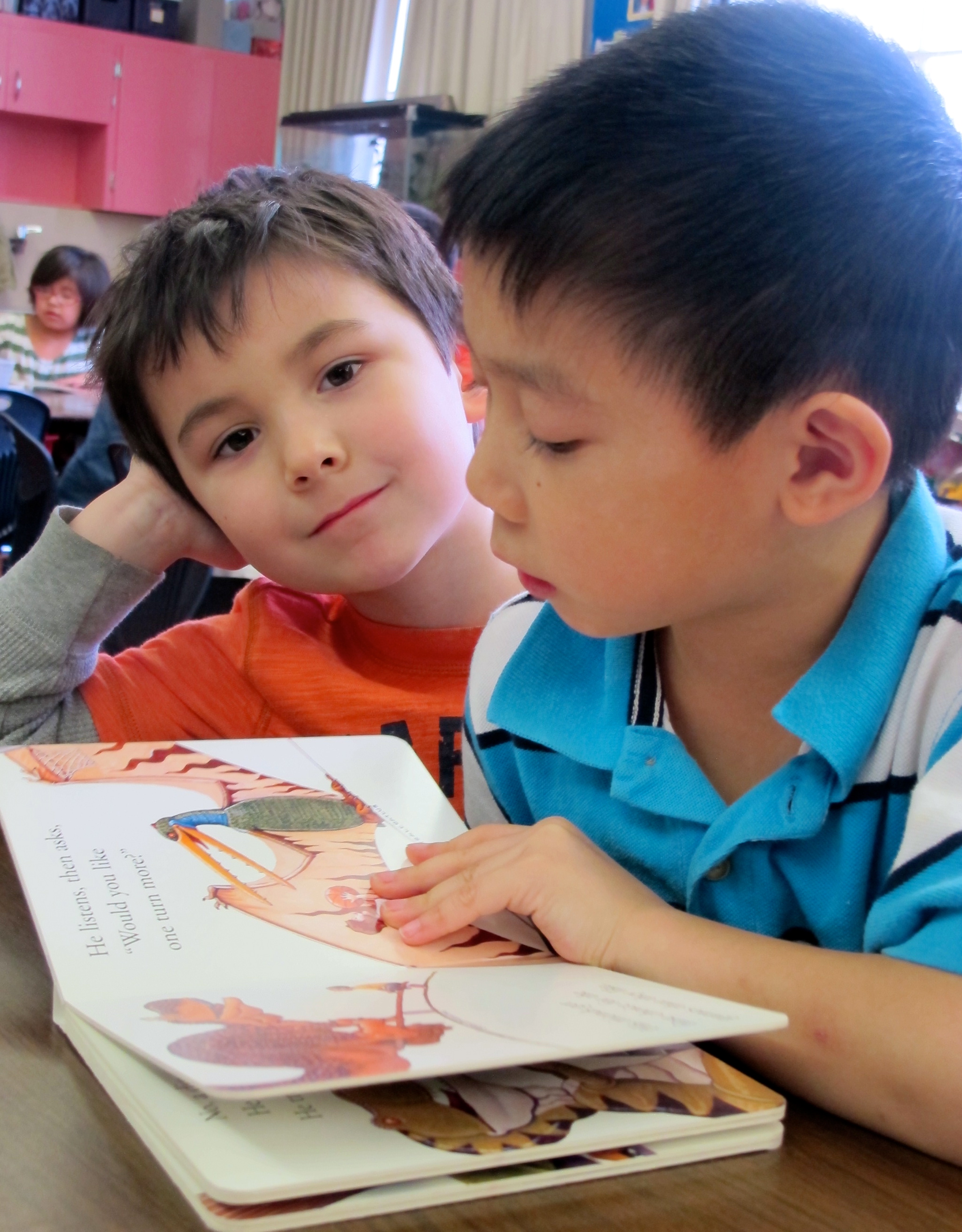
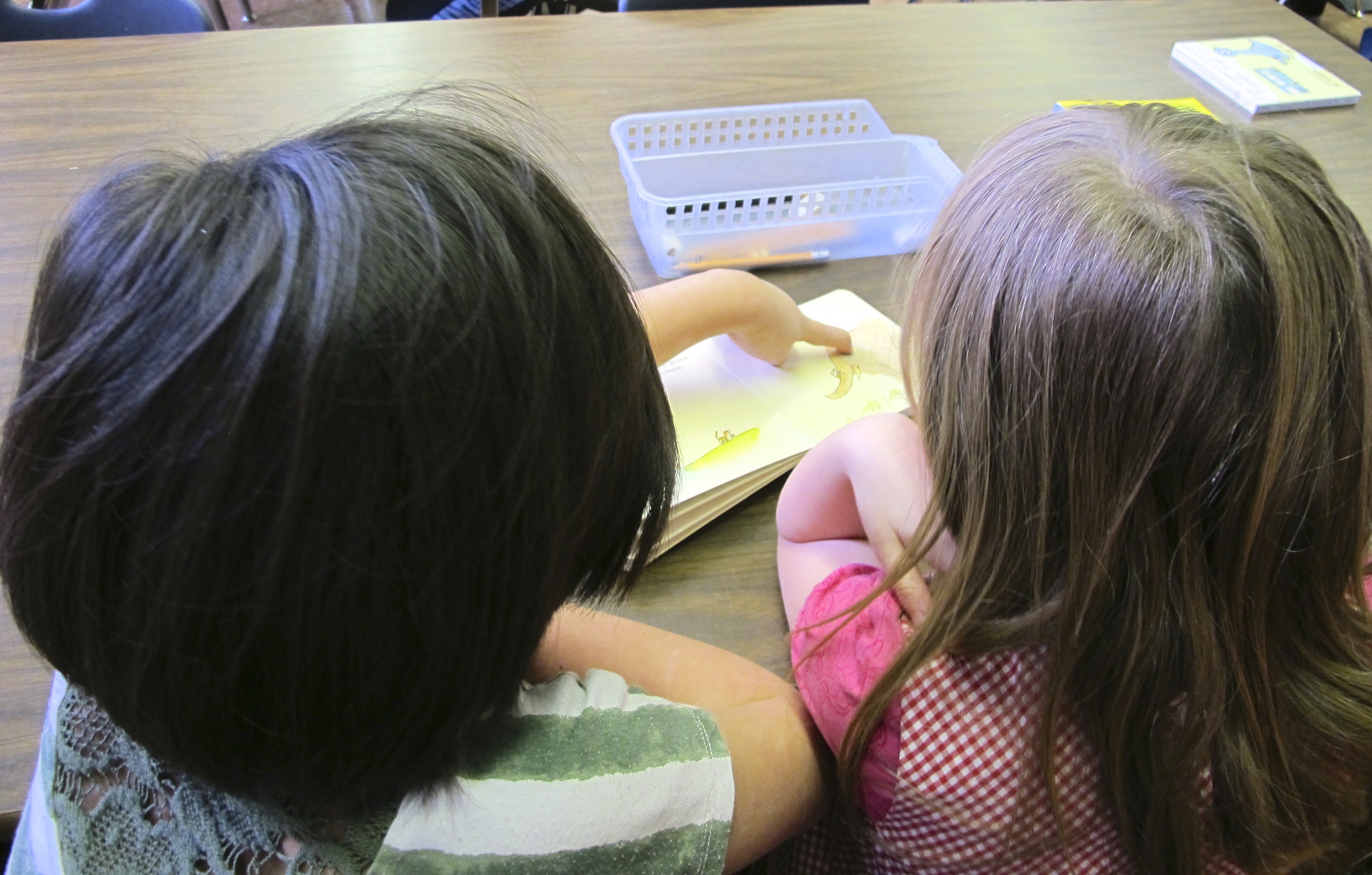
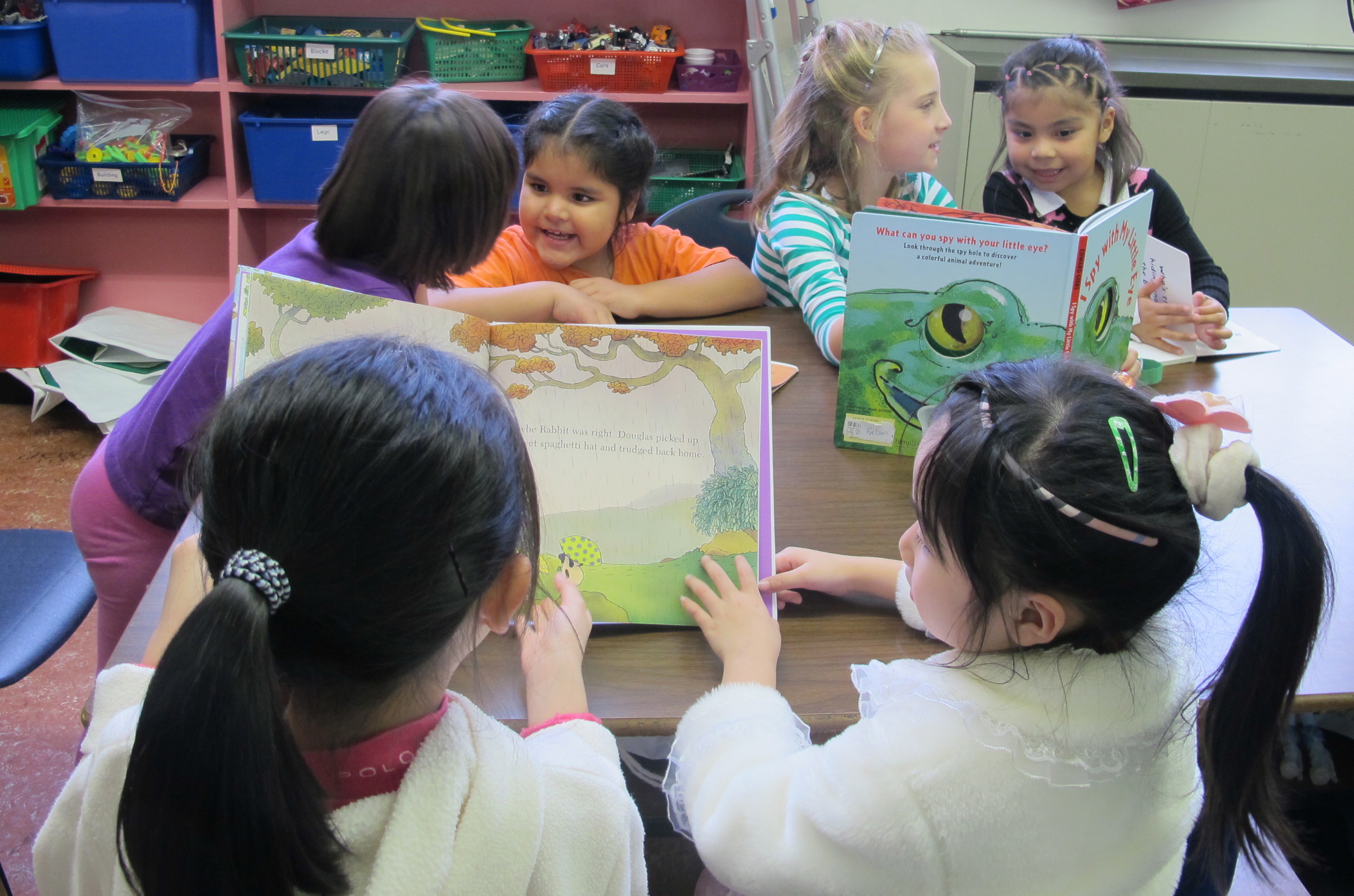
Every Wednesday afternoon the kindergarten class comes to my Grade 2/3 classroom for buddy reading. It is easily one of the highlights of my week. Smiles abound. We share books and spend happy time together reading, talking and learning. A peek at what I see:

  • huge amounts of oral language practice

IMG_6352

  • leadership skills developing

IMG_6332

  • giggling and laughing through a book

IMG_5422

  • playing games with books (Eye Spy, Can you find a . . .?)

IMG_4778

  • spontaneous songs

IMG_5558

  • excitement over books and learning

IMG_5433

  • turn taking, negotiating, working it out

IMG_4866

  • getting lost in a book

IMG_5403

  • growing confidence in reading skills

IMG_5434

  • beautiful fluency and expression

IMG_6146

  • “telling” a book

IMG_6151

  • building relationships

IMG_5152

Recently our kindergarten teacher and other classroom assistants have been absent and so various other adults have been attending buddy reading with the Ks. Some of them have made comments to me that made me think we couldn’t possibly be in the same room.

Well, they don’t really sit in their seats.”

They are jumping around so much, I don’t think they are concentrating.”

“So many of them don’t stick to a book.”

“Those two aren’t really reading the book. They are just talking.”

“They can’t focus for very long.”

Don’t they see what I celebrate? In a room of 5 – 8 year olds, there is energy, noise and movement. But look closely, it is all meaningful. Learning doesn’t look or need to look one way.

Children do so many wonderful things in a day of learning. If you can’t see this because you are looking for something you have decided is more important, wow are you missing out.

Celebrate children. Embace their growing, development and learning styles. Enjoy their smiles.  Notice their new skills. Laugh with them. Be with them where they are. Don’t rush them on to what is “next.” When you stop, slow down and notice what is in the now, it is often pretty great.

And every Wednesday, when I have a front row seat, my view is absolutely joyous.

For those who visited and saw something different. . . I wish, for you, to see what I see.

Monday February 11th, 2013

It’s Monday! What are you reading?

Mon Reading Button PB to YA

Join Kellee and Jen’s meme to share all the reading you have done over the week – everything from picture books to young adult novels! Connecting with the #IMWAYR community is such a great way to hear about fantastic books “new to you.”

I have been sick for 4 days. We all know the yucky things about being sick so I haven’t been thrilled about being ill this weekend. But, for a book lover, sick days mean book days so I happily read some great novels between naps and mint tea breaks.

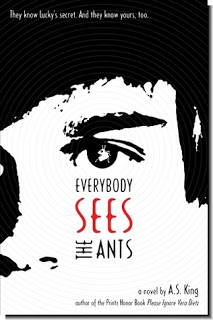
Everybody Sees the Ants by A.S. King This is the second King title I’ve read (Ask the Passengers being the first) and I am fast becoming a fan of how she lays out characters and families and their sometimes strange, challenging but yet, connected dynamics. I sort of feel like I’m spying through a lit window at night into the intimate details of family relationships. Not always pretty. Sometimes all about the ugly and the weak. But so truly real.  A book with a theme of bullying and how it affects an entire family.

everybodyants

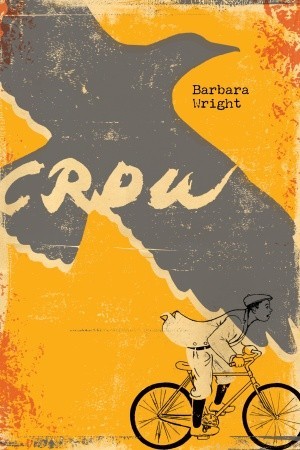
Crow by Barbara Wright This title is another great example of why I love historical fiction to learn about specific events in history I often knew nothing or little about – in this case, the Wilmington Massacre of 1898. This book is very much about Moses and his family. I loved his relationship with his spunky and wise grandmother Boo Nanny. The racial tensions and extreme prejudice are thoroughly explored in this story – going back in time to Moses’  grandparent’s experiences and forward to his father’s dreams for him. Some challenging moments in this book. A middle grade read that might be best as a read aloud where lots of discussion could occur. With room for many questions . . .

Crow

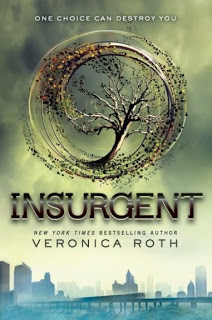
Insurgent by Veronica Roth So first off, I must say that yes, I liked this book. Yes, I’m hooked on the adventure and very curious about what will happen next. But, while I appreciate adventure and fast paced plots, I need breathing room in a story. Time to reflect and ponder. Down time. There is little down time in Roth’s books. Which is probably what makes them favourites for others but not for me. I miss the space to think. Again, like I said with Divergent, it feels like I am reading a movie. With little mood music. Just go, go, go! But I like many of these characters and so yes, count me in as someone who will read the next title in this series!

insurgent

Next up for me? Nothing but Typical by Nora Raleigh Baskin. My children and I are loving The Emerald Atlas by John Stephens. If my voice hadn’t been so rotten this weekend we would have read much more. Such an engaging novel! And for kids, it has it all – suspense, humour, mystery, action . . .

I continue to add board books to my classroom collection for when we have buddy reading with the kindergarten class. Two new titles added this week:

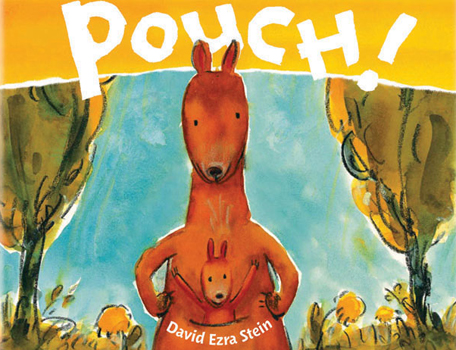
Pouch! by David Ezra Stein A sweet little title about a little joey almost ready to brave the world.


Pouch David Ezra Stein

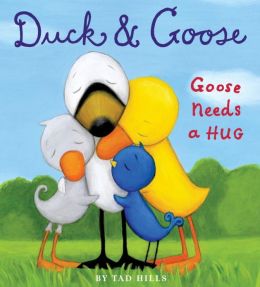
Duck & Goose: Goose Needs a Hug by Tad Hills My students love sharing Duck & Goose titles. So sweet. Messages always so positive. Kids read them and smile.

duck and goose needs

I also read some great nonfiction picture books this week.

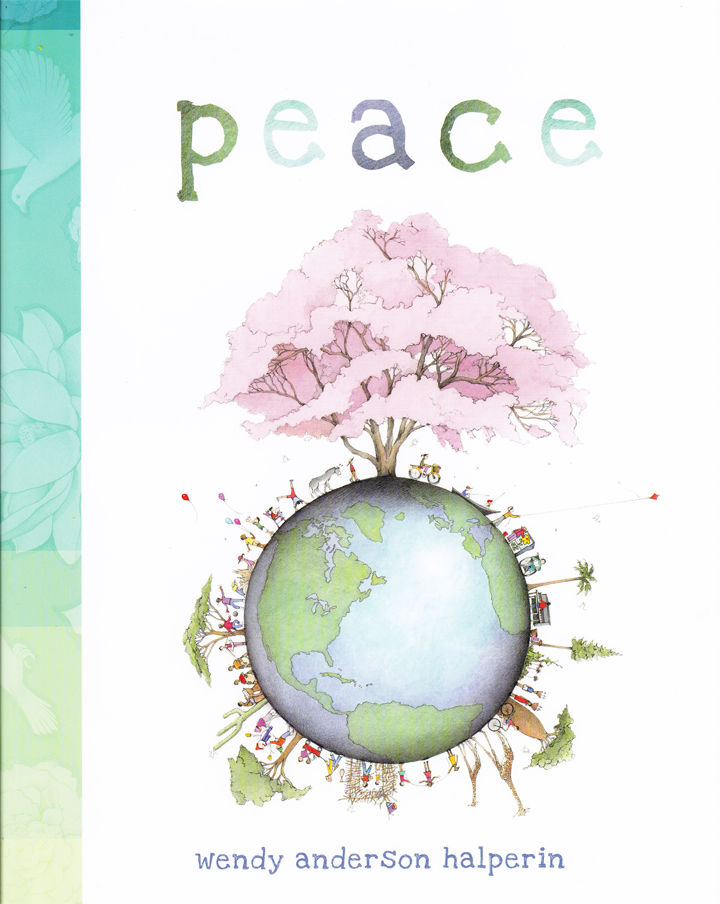
Peace by Wendy Anderson Halperin This book is quietly powerful which is often the very best kind. Full of quotes to read, share and ponder. The artwork is exquisite. And I love the message that peace needs to be everywhere (in our hearts, homes, schools, countries . . .) in order to impact peace everywhere else. A book to own.

peace book cover

Who Lives Here? written by Nicola Davies and illustrated by Marc Boutavant I purchased Who’s Like Me? (read more here) a book in this same format and it quickly became very popular for buddy reading so I am excited to book talk this title next week. In this book, students learn all about different habitats. Very accessible for younger learners and fun lift the flap elements.

who-lives-here-

My favourite picture books of the week were . . .

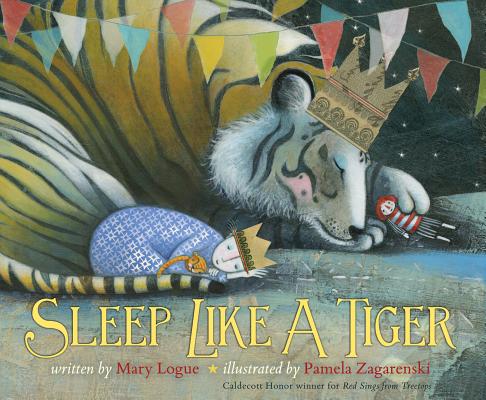
Sleep Like a Tiger written by Mary Logue and illustrated by Pamela Zagarenski This was the only Caldecott honour title for 2013 that I hadn’t read. I was completely smitten when I turned to the page of the whales. Oh, the whales! Such gorgeous pictures. Love the cityscape on the first page with the tiger carrying away the huge orange ball . . . Text and illustrations mesh beautifully. This would be such a beautiful book to give as a gift to those who appreciate the soothing power of bedtime books.

Sleep Like a Tiger

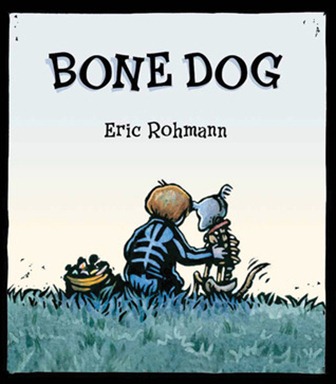
Bone Dog written and illustrated by Eric Rohmann I am a big Rohmann fan. My Friend Rabbit is one of my all time favourites. So I was intrigued by this title. It tackles death (of a pet) which most books shy away from so it gets automatic points. I always think we should talk openly with kids about death as a part of life. I once wrote a post ranting about this very thing. This title also has some very sweet elements to it. And when tested on a child (my son) evoked some giggles (when the proud little dog struts back with bone in mouth after a skeleton chase!)

bone-dog

The First Mosquito written and illustrated by Caroll Simpson. A dramatic First Nations story full of supernatural beings. My students wrote reviews of this book and I shared them here.

the First Mosquito


Have a happy reading week!

The First Mosquito

Our BLG book this week was The First Mosquito written and illustrated by Caroll Simpson. Thanks to Bill for reading us this dramatic tale.

the First Mosquito

Young Yax is upset when he cannot accompany his father to trade on the other side of the mountains. But his mother and sister Sook need him at home. When Yax loses his spear in the forest, he decides to show how brave he is and heads into the forest to look for it.  By evening, Yax has not returned. His mother and sister are very worried and Yax’s Mother vows to rid the forest of the Bloodsucking Monster that Mouse Woman whispered to her about. Sook and her mother set about a plan that will do away with Bloodsucking Monster and save Yax. All of them must be inventive and brave. What happens is very exciting (student comments will give the dramatic ending away :-))

Students loved hearing about all of the Supernatural creatures and beings in this book (there is a detailed description of each in the back of the book) and loved Simpson’s art work. There was mumbling all through the story:

  • Wow. Her pictures are so beautiful.”
  • “I love the art.”
  • She does such nice drawing.”

Also lots of comments about the creatures:

  • I’m a little scared of Creek Woman.
  • “Those Lightening Snakes are powerful.” (This child leaped out of his seat to get a better look!)
  • The Wild Man of the Woods is easily tricked for food!”

Student writing reveals how engaging we found this story!

Student reviewers respond:

Kala: Why did you make the blood sucking monster go to the fire? I like your pictures! But I think they are so real.

Ava: My favourite part was when the bloodsucking monster was pushed into the fire and the ashes turned into mosquitoes. I felt a little bit scared and I felt like, “Yes!”

Shereese: I like when the Mom saved the day! I like the art too. I like Creek woman crouched under the creek. I love those pictures. You are a great artist!

Ashley: My favourite part was when the bloodsucking monster turns into mosquitoes  The sucking monster seems like he is mean!

Kelvin: Bloodsucking monster came to eat their blood. And the bloodsucking monster fell into the fire and turned into one million mosquitoes.

Heman: The best part was when the bloodsucking monster went into the fire and transformed into mosquitoes. I liked it when Yax ran away from the man. I was scared when the blood sucking monster ran to the beach.

Vicky: My favourite part was when the blood sucking monster transformed into some mosquitoes. I want to know what happens next.

Andrew: My favourite part was when the bloodsucking monster went in the fire. What happens when the lightning snake shoots you? What happens now?

Ethan: I know why Bill picked this book because it’s almost Chinese New YEar. I like that book. It’s awesome!

Kevin: My favourite part was when the blood sucking monster transforms into mosquitoes. Where did the thunder snakes shoot? At who?

Brian: You are a good reader Bill. that book was scary. The Mom that push the bloodsucking monster was a super Mom. I felt scared when Yax and Sook was coming to be eaten.

Kassidy: Why did the mother push the monster into the fire? How did you come up with this story? I like your story. I like your pictures. I like when the boy fell on the ground, then one of the nice monsters told the boy to go. How do you make the book from the pictures? How do you do the lightning snakes together? I like the Creek Woman. How do you draw the monsters? I like the part with the monster wild man of the woods and the wild woman of the woods and the woodworm. I like all of them. I love you. Love, Kassidy

Developing visual literacy skills

The CLoud SPinner

What is visual literacy?

As defined by WikipediaVisual literacy is the ability to interpret, negotiate, and make meaning from information presented in the form of an image, extending the meaning of literacy, which commonly signifies interpretation of a written or printed text . Visual literacy is based on the idea that pictures can be “read” and that meaning can be communicated through a process of reading.

So how do we go about teaching students to use observation to notice the details and nuances in illustrated stories? As we learn how to ask questions and to infer to deepen our understanding of stories, I also want my students take time, slow down and really focus on their observation skills with the illustrations in picture books.

What do we see when we look closely at an illustration vs. quickly flipping the page? I remind students that these books are picture books for a reason – the story is told through a partnership between author and illustrator. Both pictures and words are important – together they make the story whole.

Wordless books are great to practice these visual literacy skills with but I wanted to have students use these strategies with picture books with text. The trick? Cover the text! So armed with sticky notes, and some fantastic picture books, we began to practice paying close attention to the illustrations and asking questions, inferring and predicting based on what we noticed.

Note: What is described below is what took place over a series of lessons with my Grade 2 reading group

We started with two picture books that I shared with my reading group and I charted our observations and questions as we discussed what we saw. Then the students went through the same process working with a partner and writing their own questions/predictions/inferences. It is always so interesting to go back and read the text to see how close our predictions were and which questions got answered.

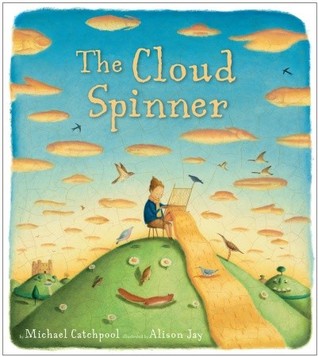
The first picture book we practiced with was The Cloud Spinner by Michael Catchpool, illustrated by Alison Jay. This book has so much going on in the pictures – we could have spent half the class just on the cover. Students wondered about the birds flying in all different directions. They wondered whether the boy was making clouds from his loom or making fabric/material from the clouds themselves. We noticed a castle in the background, birds flying in multiple directions, things looking one way but actually not what they initially seemed (for example the faces on the hillsides that are just objects temporarily grouped a specific way). Students had many questions and each wrote a prediction about the story before we sat down to read the book with both text and illustrations. Many of the children commented that we might have missed some details in the illustrations that were clues had we just read the text.

Next we used Gorilla by Anthony Browne. This title is the perfect book to use when Gorilla Anthoney Brownhaving students practice their ability to infer – even more powerful when we explored just the pictures.
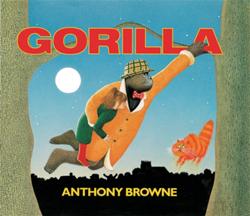
With this story, each student had their own notepads to list their questions as we explored the pictures and we stopped frequently to discuss what we thought might be happening with this story.

For those who don’t know this classic Anthony Browne tale, a quick summary: In this story, Hannah wants to see a real live gorilla at the zoo but her busy father never has time to take her there. He gives her a toy gorilla on the night before her birthday. Hannah is upset and disappointed. But in the middle of the night, Hannah and her “toy” gorilla have an amazing adventure.

Some of the students questions included:

  • Does Hannah have a Mom?
  • Did her Mom die?
  • Does Hannah’s Dad have a job? Is he worried because he doesn’t have one?
  • If he does have a job, does he work too much?
  • Does her Dad never have time for her?
  • Is the gorilla lonely too?
  • Does the gorilla love Hannah?
  • Does the gorilla have magic?
  • Will the Dad freak out if he finds out Hannah is gone all night?
  • Will the gorilla save all of the apes and monkeys at the zoo?
  • Why does the gorilla seem sad?
  • Is this just all a dream?
  • Is it just in Hannah’s imagination?
  • Why are they out dancing in the middle of the night?
  • Did the Dad and Gorilla change places?

At the end, even when we read the story, we realized that the author does not tell us what is actually real. “Well,” one clever child observed, “if the author doesn’t tell us, we can choose. That’s the magic of books.” Again, students felt that we got so much more from the story by focussing first on the details in the pictures, asking questions and talking about what might be happening. Students loved listening to the story after this to see how close their idea of the story was to what actually happened.

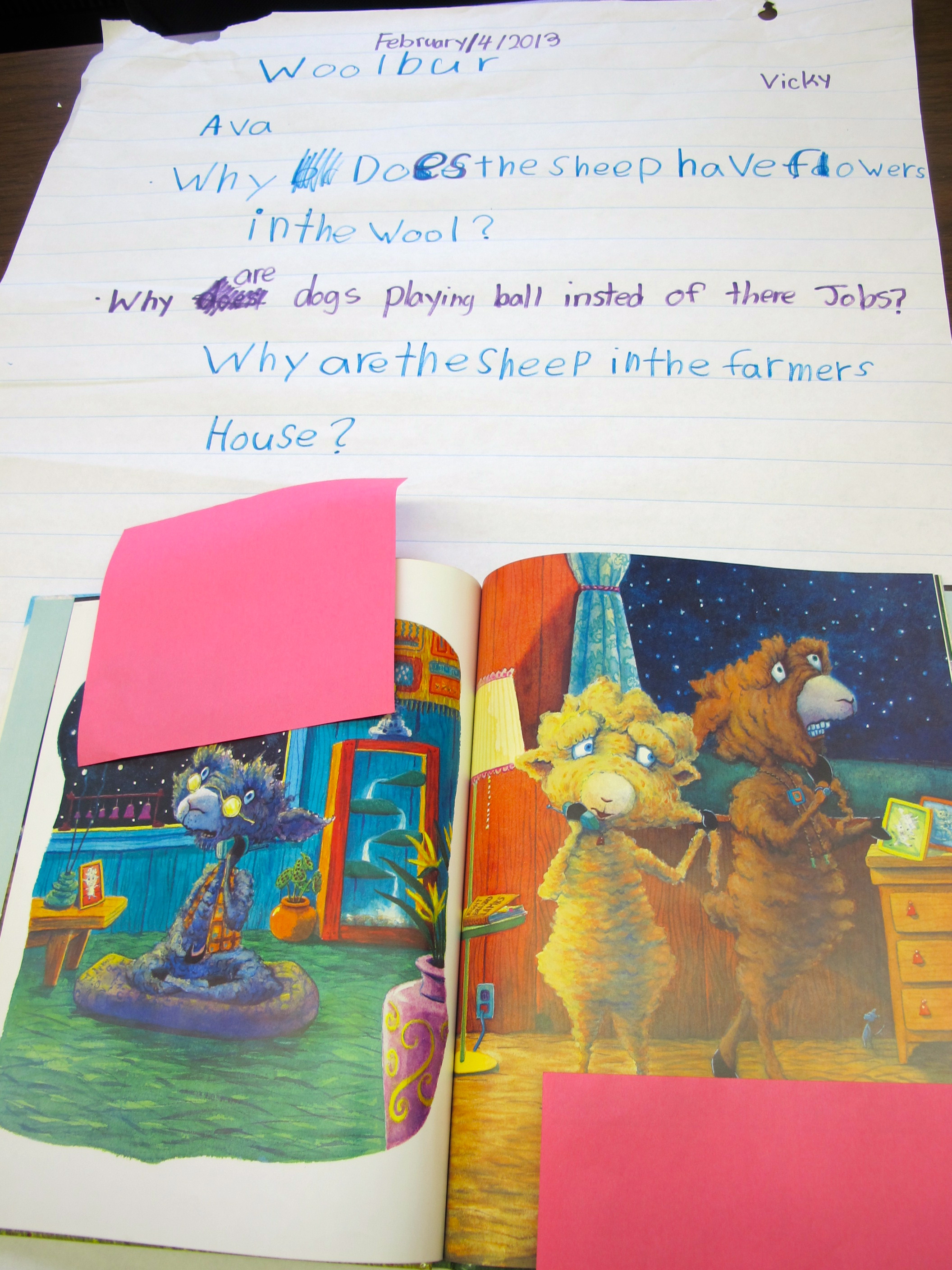
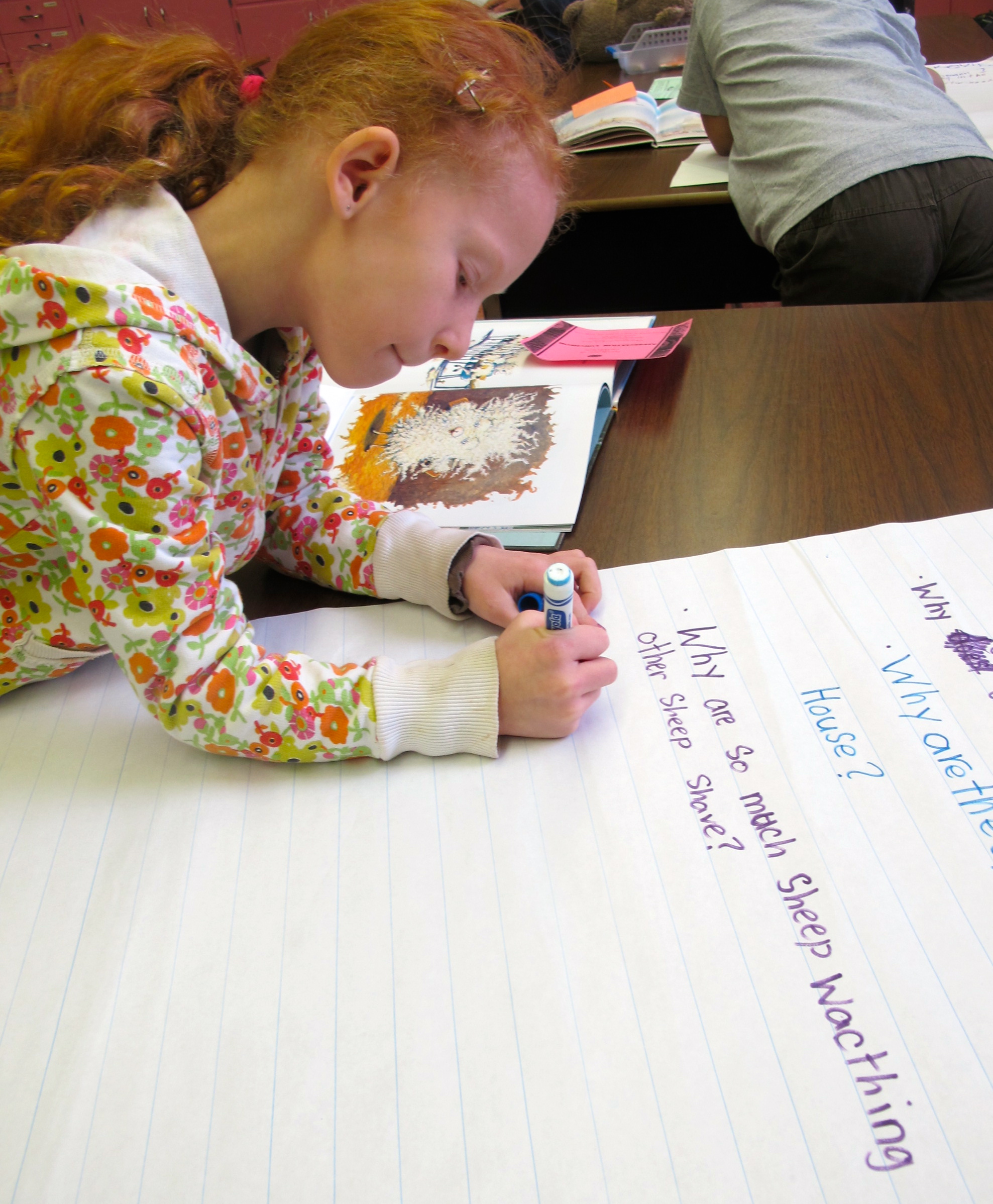
Now we were ready to begin to go through this process with more independence! Working in partners, the students chose a picture book, markers, chart paper and scrap paper to cover the text and got to work exploring just the pictures and noting down their questions. These students used the book Woolbur by Leslie Helakoski and illustrated by Lee Harper.
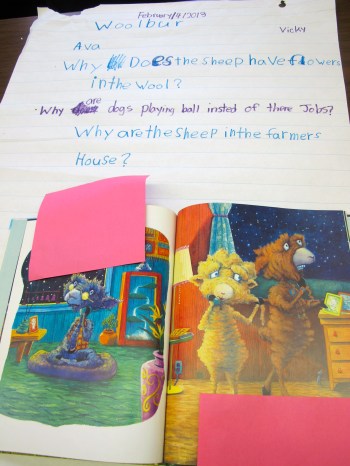
IMG_6284

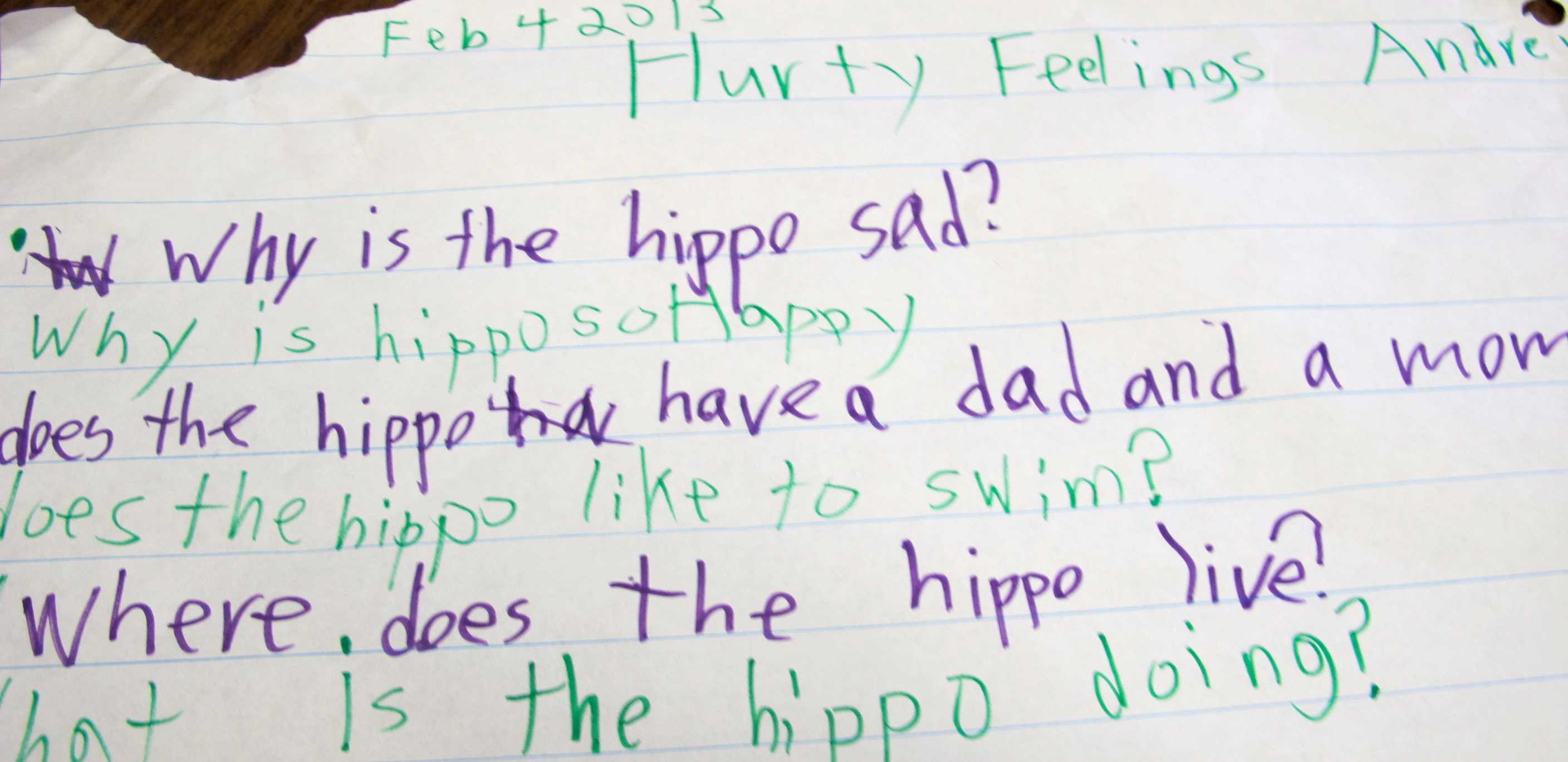
Questions started out quite simple, but as the children began to have a sense of the story, they started asking more complex questions. the questions below are about the book Hurty Feelings by Helen Lester.

IMG_6286

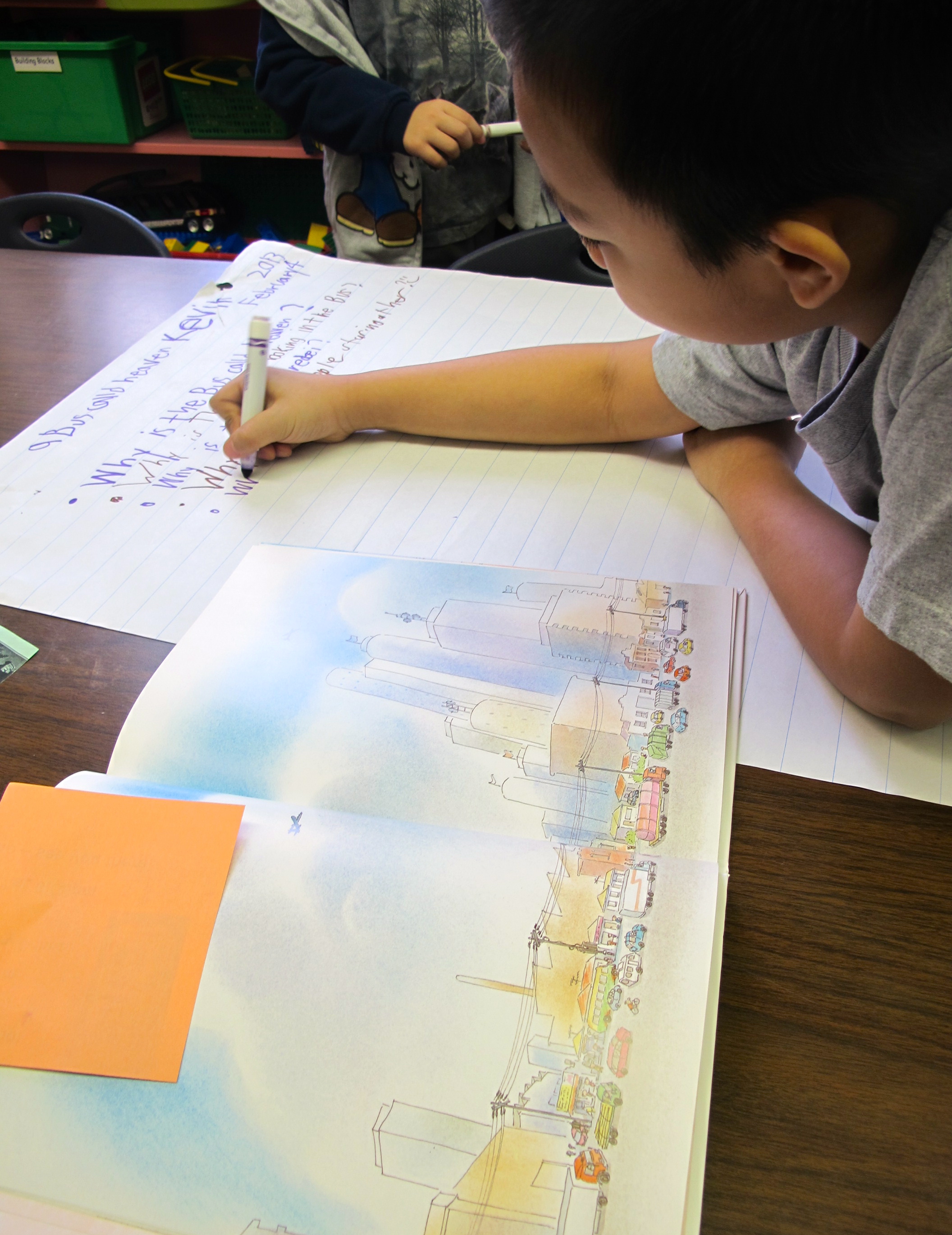
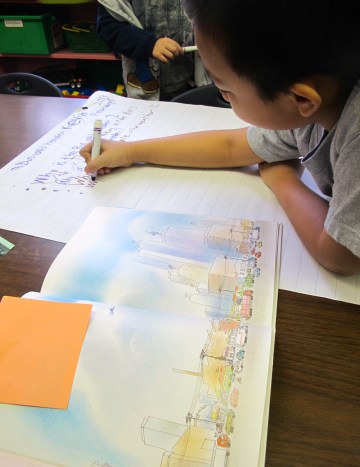
The story A Bus Called Heaven by Bob Graham inspired a lot of questions! There was so much in the details of what was happening inside and outside of this bus. The students who used this book read it two times through after exploring the illustrations.
IMG_6297

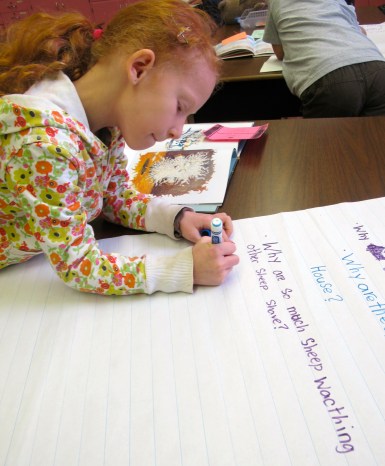
I was impressed by how focussed the students were. All of them were engaged with their books, their partner and the discussions that they were having.
IMG_6299

Snippets of conversations I heard as I circulated:

  • “Quick! Cover the text!”
  • “We have so many questions I can’t believe it.”
  • “We know so much!”
  • “We’re sure predicting so much stuff.”
  • “Look really closely. You will notice more.”
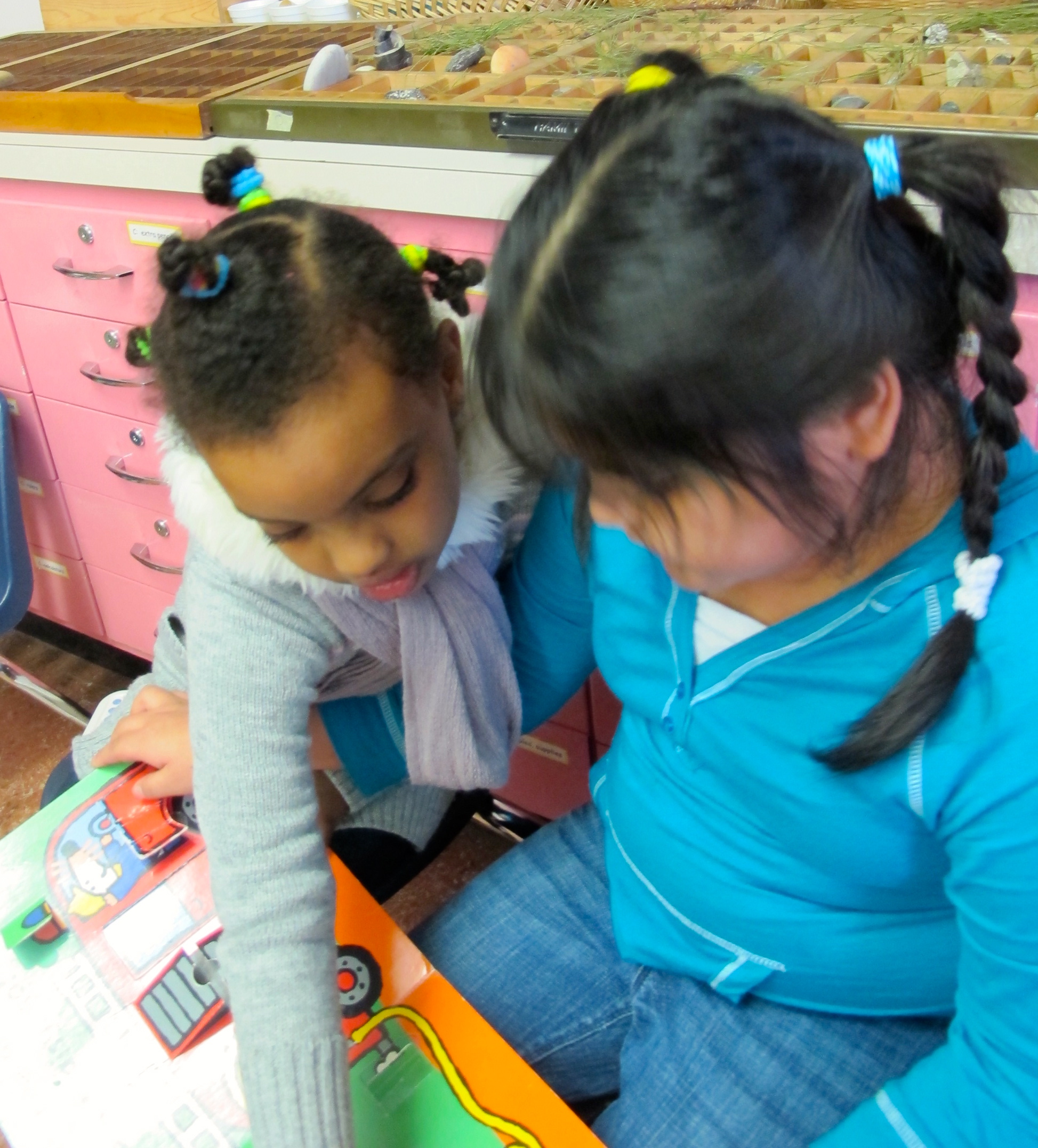
  • “I think I see better when I don’t get distracted by the words.”
  • “I think this makes us smarter.”

Really . . . what more do you want to hear during a lesson?

As I share picture books in whole class lessons, I have noticed that students who are in my reading group are raising their hands to share details they notice in illustrations. This keen attention to detail has become contagious and the whole class has been paying more attention to pictures. We have to stop frequently to share with those around us what we notice and what we predict! I love all of the talking this has inspired!