#1 (One) and One = 2 books (called One)

What happens when you read 2 books called One? A few things . . .

It seems to me that when a book is called One, there must be something within in it that offers us some simplicity – that by the time you are finished reading it, you can clearly articulate at least one thing you learned.  Often with simplicity is weight. A simple message with some power behind it. So let’s see – I tried out two books titled One with my class this morning.

We started with #1 (one) by V. Radunsky: A nice story about an awful braggart. This story is about one of ten little armadillos who is actually called Six but is convinced he is #1. The strongest! The smartest! The bravest! The best! #1! #1! #1! He boasts about his inventions, his height, his speed  . . . He gets the best presents. What does he want? He has a big list including: Three cats plus one more cat. Five altogether. If you aren’t convinced, he will help you by explaining all of the reasons why he is #1. My favourite? His story of why he is the strongest: I saved this horse the other day. Twenty grown armadillos couldn’t even lift this horse but I did. Because I’m #1. The horse was so grateful.

In the end, everyone in his family completely agrees. Yes, # 1 they say. Definitely.

You are the #1 clown, show off, chatterbox, storyteller, dreamer! You are our # !!

Maybe not the reaction this little pink armadillo was looking for, but definitely recognition!

Reactions from my class?

Ricky: “He’s lying about everything. He can’t be that smart or that strong. He can’t be an inventor. Duh.”

Eddy: ” You have to be in college or even higher when you want to invent something.”

Scott: “He’s just dreaming.”

Miami: “He just thinks about himself.”

Alyson: “Selfish.”

I clarified that we actually call this “self-centered.”

Ricky: “He can’t go to college anyway cuz 3 + 1 = 4, not 5.” (remember the cat comment?)

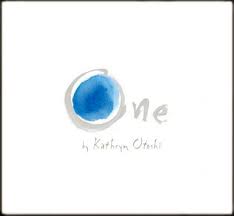
We then read One by Kathyrn Otoshi. This amazing book explores what happens when someone is picked on and nobody steps in to say that it is not okay. All of the colours are in the shadow of the hot-head Red who grows bigger and bigger as he continues to be mean, unchallenged by the other colours. Then One comes on the scene and shows all of the colours how to stand up and count!

We had a lot of reactions to this book as it fits right in with the books we have been reading about bullies, the bullied and the bystander.

Ricky: “The colours are too scared.”

Hands shot in the air. “Oh! Oh! Oooh!”

“They’re like bystanders!”

A collective hands down. Many of us were just about to say the same thing.

Interesting perspectives came next.

Alyson: “If they all teamed up together, they might be bigger than red.” (work together against the bully)

Jena: “Maybe red is mean because no one is his friend.” (show some empathy towards the bully)

Hajhare: “Maybe there’s bigger guys – like brown and black?” (overpower the bully)

Otoshi offers us another perspective. Everyone stands up to be counted and says, “No!” when Red tries again to roll over Blue. Red, seeing the others standing tall, shrinks and is about to roll away when One points out that “Red can count too.” Red becomes Seven, and joins in the fun. Sometimes it just takes One ends the story.

Jena: “If one person stands up, everyone else might join.”

I asked the students. “So how are these two books different?”

Kevin: “One book is teaching and the other is just a story.”

Miami: “No. All are teaching a lesson.”

“Really?” I asked. “What lessons did we learn from this book?” (I held up the Radunsky book)

“#1 wanted to be # 1 but being Six was special.”

“Don’t get your hopes too high.”

“Just be yourself.”

“Don’t be a show off!”

“And this one?” I held up Otoshi‘s One.

“Stand up.”

“Don’t be a bully. It makes it all worse.”

“It just takes one person to make everyone be a community.” (Officially the beautiful comment of the day!)

So there you have it. Read one book (x 2) and savour the learning and thinking it inspires

Our reading of 2 books called One was certainly worth more than one + one is two 🙂

A little taste of Africa

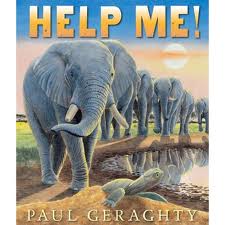
Bill, our BLG reader this week, brought us two very different picture books that allowed us to step into the African savannah for a small part of our day. First he read Help Me written and illustrated (beautifully!) by Paul Geraghty.

Before Bill began the story he read the students an important line from the summary on the back of the book: This extraordinary picture book is based on real, documented animal behaviour. Students were advised to listen carefully with this in mind. Help Me takes place in and around a waterhole in Africa. As a herd of elephants lumbers by in the moonlight, an old thirsty tortoise heads down to the waterhole for a drink. She trips on the steep bank and flips onto her back. When she feels the ground shudder with the movements of the elephants, she hides inside her shell. Yikes! The picture shows our tiny tortoise inside her shell and gigantic elephant feet all around her, one poised to come down right on top of her. “Oh no!” everyone shrieks. The text reads Then a great foot rose up and came down on top of her. . .

Nobody breathes. Bill flips the page and reads  . . . and carefully rolled her over onto her feet “Whoa!” “No way.”  Phew. Relief.

So starts a series of surprising animal interactions. A huge crocodile encloses a little hatchling turtle in its jaws. Amidst the gasps and sighs and covered eyes were mutterings from our new experts on crocodiles (“Are those really crocodiles?” “Check the teeth” “Yep”) The crocodile sets the baby free in the water. “What?” “That’s weird.”

An impala is chased by a pack of wild dogs and stumbles exhausted into the waterhole. The dogs started splashing toward him when a huge hippopotamus steps between them and bellows at the dogs. He comes in closer, jaws over the impala. Why? To help it get warm and strong again.

Someone called out “Why do they all help each other?” Everyone is quiet, thinking.

“Symbiosis!” Miami exclaims knowingly. Heads start to nod as we wonder if what we just experienced in this book is connected to the learning we have been doing as we’ve read Steve Jenkins and Robin Page’s book How to Clean A Hippopotamus. These are the moments we live for as teachers – where you can almost see inside heads and watch the thinking happening!

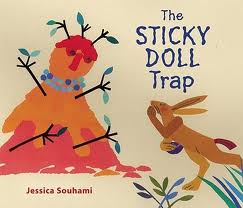
Next Bill read The Sticky Doll Trap by Jessica Souhami. This is a story based on the West African stories of the trickster hare and a sticky doll. The best known version of this tale is the Uncle Remus Story of Brer Rabbit and the Tar Baby told by Joel Chandler Harris. However Harris’ version is based on the stories that came over with the African slaves and it is this African “version” that Souhami honours with her retelling.

This is such a fun story and Souhami’s colours are bright and beautiful. Students were totally engaged from page one. This is the tale of the rascal Hare who is too lazy to help the thirsty animals dig a waterhole to quench their thirst in the midst of a drought. When the animals find the precious water they decide to protect it from thieving animals that did not help dig for it. Every day a different animal will stand guard. Hare hops up with his empty calabash and is told there is no water for him. But utilizing his trickster ways, he manages to fill his calabash and sneak away while the animal, eyes closed, awaits the treat Hare has promised.

What is the Sticky doll trap? The result of the annoyed animals creative thinking – a trap to trick the trickster! The perfect revenge. And how well it works! Yet, in the end that rascal Hare proves himself to be the ultimate trickster! The animals throw him into the spiny thorny bushes as he begs them not to, convinced that they are inflicting the ultimate punishment. Moments later, Hare is taunting them from up on the hill. Off he hopped to continue his tricks!

At the end of the story Ricky clarifies, “Hares can’t be hurt by the thorns?” Bill reiterates that no, the hares are used to the thorns. “Okay,” says Ricky, “So this is kinda nonfiction?”

I love how we are trying to bring meaning to how these stories are created and understanding that facts are interweaved throughout fictional tales. Ah, the wonder of books! Thanks Bill for choosing such great titles this week!

Our student reviewers report:

Jena: I liked the book Help Me because first one of of the animals are in danger by another animal and then a totally different animals comes and saves the animal that was in trouble. It was like they had a symbiotic relationship.

Annie: I like the part in The Sticky Doll Trap where he got stuck when he touched the doll but got away because he was tricky.

Why are we reading about dead things?

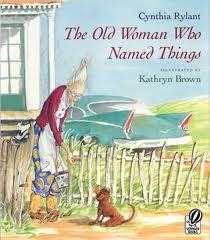
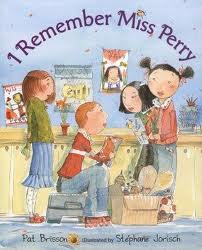
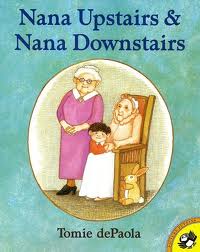
There aren’t a lot of picture books that deal with death, loss, grieving and healing really naturally and really well. There are definitely some (I Remember Miss Perry by Pat Brisson, Nana Upstairs and Nana Downstairs by Tomie dePaola and The Old Woman who Named Things by Cynthia Rylant are favourites of mine on this theme).  As teachers, we like to collect these titles because it is always good to have a book to help explore the feelings that come with having to face losing someone we love. When death somehow touches our classroom or our home, we look for a book that helps us talk about this very difficult subject that we tend to never talk about otherwise. Nobody believes in the power of a book to touch us and heal us more than me but I started thinking about this. What if we read books with this theme just because?
Death is a part of life and maybe if we discussed it a little more easily and often, we would be better equipped to talk about it when it does happen to us? It was with this mindset that I decided to read two recently discovered books with my reading group and see where the responses and discussion took us. I found both at the public library when perusing the picture book collection. They came home with me and sat there in my book pile just asking to be read. I’m very glad I got to share them this week.

I started with All the dear little animals written by Swedish author Ulf Nilsson and illustrated by award winning Eva Eriksson. Translated by Julia Marshall.
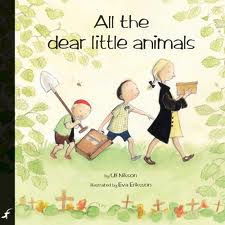
This book is about three children: Esther, the boy who is our narrator and Esther’s little brother Puttie. One day the children have nothing to do and were looking for some fun. Esther finds a dead bee and decides to dig it a little grave. Our narrator confesses that he is afraid of everything, especially of dying but after a few disparaging comments from Esther, decides that he can write things, like about how horrible death is. Off they go, shovel, poem and little coffin in hand to bury the bee. “Poor little bee”, says Esther, “but life must go on.” Then a plan hatches. There must be dead things everywhere – shouldn’t they find these things and bury them all?  Esther decides that this is the unselfish thing to do. Some students thought this was a terrible idea but Alyson’s comment got them thinking: “If you’re dead, do you want someone to bury you and pray for you? Or just be left there?” We all thought about that for a minute and continued on with the story.

The children’s idea grows into an idea for a business. They would call it Funerals Ltd. They would help all the poor dead animals on earth by giving them a funeral. Everyone had a role. Esther would dig the graves. The narrator would write the poems and Puttie, too little for anything else, would cry. They phone all of the neighbours and find a girl with a dead hamster. Esther’s father’s rooster needed to be buried. They found three dead fish in the freezer. (We suspected these were supposed to be dinner) Grandma gave them the mice from her mouse traps. They discovered a squashed hedgehog on the road. Esther was delighted. Then a huge hare. Many, many little graves, many poems. Esther admits the poems are actually quite good.

At this point, Ricky found the words to articulate that nagging feeling he had. “Actually, there’s something wrong here. When they find something dead, they’re happy. They’re supposed to be sad.”

When the children saw a blackbird hit a window and die, things seemed to change. The students noticed that the characters, especially Esther seemed really sad now. “Finally.” The blackbird funeral was their last that day.

The story ends with these words: The next day, we found something else to do. Something completely different. Making this experience seem very normal. Children exploring death and grief. A natural curiousity that brings on a range of emotions. Still a sad, sweet book, but normal.  Not too sentimental. Really, an amazing book.

My students had quiet reactions. “It’s a touching book.” “Emotional.” “Maybe they felt sadder when they actually saw it die?”

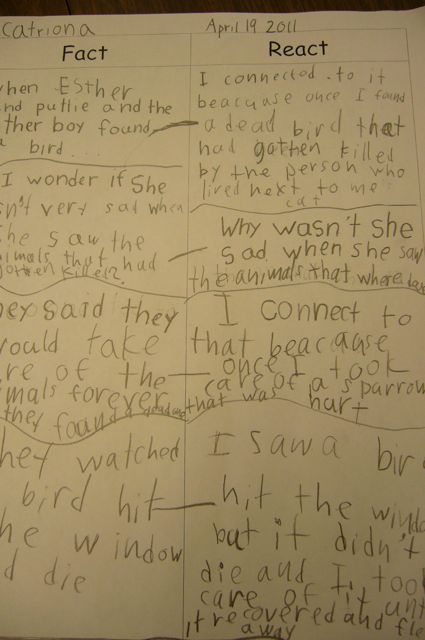
I let kids write about this book by choosing specific parts to respond to using a Fact/React sheet. On one side they recorded a story event and on the other, their connections, questions, thoughts.

Kevin shared:  Fact: They found a dead hare. React: But they were happy. But maybe they were sad inside.

Lisa wrote: Fact: Esther found a box. She put the bee inside the box. React: It’s a good idea to put it in a box.

Hajhare’s thoughts: Fact: In the story a rabbit died and I would be sad if something died, but these people are not sad. React: It reminds me of when a fly died and I wasn’t sad too because I hate flies and bees.

Annie shares: Fact: Esther saw a blackbird hit a window and it was dead. React: I was really sad when the bird was dead. Esther was sad too.
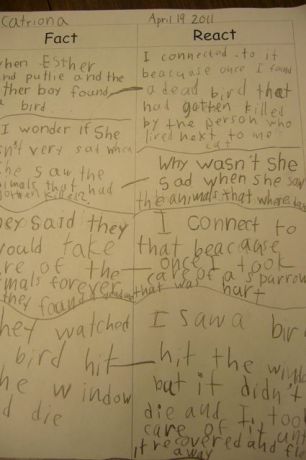
Catriona writes: Fact: They said they would take care of the animals forever when they found a dead one. React: I connect to that because once I took care of a sparrow that was hurt.

Eddy’s ideas: Fact: They found a dead rabbit on the road. React: Why did a rabbit die on a road?

When he shared this question, Catriona gently helped him to see how this could have happened. “A road. Cars go on the road. It was squished . . . .” “Oh.”

Jena‘s opinion: Fact: Puttie, Esther and a friend made graves, coffins and read poems. React: I think they were overdoing it a little too much.

I decided to read the next book because it explored all of the emotions around death and grief. This was something the students really discussed – noticing at times what they thought was the absence of emotions from the characters in All the dear little animals.

Remembering Crystal by Sebastian Loth is a beautiful little book that through simple text (only a sentence or two on each page) and powerful pictures addresses the range of emotions felt when a friend is gone. It celebrates friendship and explores all of the emotions felt in grief – denial, anger, helplessness, sadness and finally coming to a place of peace.
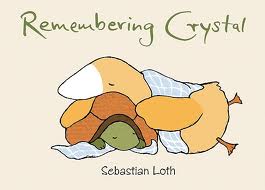
This book had everyone’s full attention from page one. Each time I read a page there was either a comment or some sort of audible response – “Whoa!” “Ahh!”  “Oh!” or an obvious silence as feelings sank in.

Zelda is a young goose and her best friend is an old turtle named Crystal. They do all sorts of things together. Read. Swim. Travel. Talk about everything from their fears to their dreams.  “They are really connected, ” comments Lisa. “Yes,” exclaims Catriona. “Literally on each other’s back!”

Then one day Crystal is not in the garden. The other geese explain to Zelda that Crystal had a long and happy life and it was time for her to die. Zelda won’t belive this. She thinks the geese are hiding Crystal and goes off in search of her. She looks everywhere and can’t find her friend. Then she starts to remember all of the things Crystal taught her – about music, art, the world. She returns home and goes to Crystal’s garden feeling very lonely and very sad. Finally, she accepts that Crystal is gone. She knows that she will always remember Crystal and wherever she goes, Crystal will be with her in her heart.

Students had things to say immediately.

“If one friend passes away, you can still have them in your heart,” Jena commented.

Catriona had a strong reaction, “Why would they put that in a kid’s book?”

Little conversations broke out all over the carpet. I just sat and listened.

Alyson, “But it’s actually kind of good.”

Catriona “Why are we reading about dead things?”

Sergio “We’ll all die.”

Catriona “You’re not old.”

Here I asked the question, “Why do you think this is in a children’s book? Let’s see if we can come up with the answer.”

Jena: “Because if someone in their family passes away, you can learn they are still with you.”

“It helps us think about it.”

Hajhare: “But it’s sad. I was actually going to cry Ms. Gelson.”

Ricky: “It’s like Toy Story 3. Andy gets older and won’t play with the toys anymore. Crystal gets older and leaves. Well, dies.”

“Yeah. It’s like that with life.”

We continued a conversation for a little while realizing that these books do help us think about how it feels when someone dies and also help us by showing us how people might grieve. Although it might have at first seemed strange to discuss this topic, we all kind of felt calm at the end. Calm and okay.

Reach for these books that deal with death when the need is pressing but don’t be afraid to read them at other times so that children have a chance to explore and discuss these feelings and emotions when they aren’t overwhelmed by their own sadness.

Yankovic? That Al Yankovic?

Yes, that “Weird Al” Yankovic has written a children’s book! I wouldn’t have believed it but Sam, our BLG reader this week, showed me the author photo on the back of this week’s book: When I Grow Up. This book celebrates the endless possibilities out there for all of us considering just what we might do when we do in fact, grow up.

This is a rhyming story so kids were joining in when they could predict the next word and it had big time giggle factor. We couldn’t help but laugh at Billy’s (our main character) ideas about haute cuisine – pickled baloney? candied pig’s feet? (This one got a chorus of “Eeews” and one “Awesome!”) So many interesting ideas for future careers. A giraffe milker (“Huh? Do giraffes have milk?”) A gorilla masseuse (“That means a massager right?”) A pickle inspector. A smelly pit-sniffing deodorant tester (“Ugh!”)

Lots of silly. Lots of yucky. Lots of fun.

At the end, Sam told the students they could go home and ask their parents if they know who “Weird Al” is. “We can’t go home now!” Jeremiah corrected. At eight, the world is a pretty literal place. 🙂

Hear Weird Al reading his book.

Our student reviewers report:

Lisa: “I like this book because it rhymes. It was funny when Billy put his hand up and his papers went up too.”

Hajhare: “I liked this book because it was kinda funny. This book reminds me of growing up to be a baseball player. I really like baseball. It’s my favourite sport.”

Jena: “I like this book because it is silly and it tells me all kinds of things I can do when I grow up. It also tells me I can do and be anything I want to be.”

When I Grow Up is illustrated by Wes Hargis

Interruptingitis

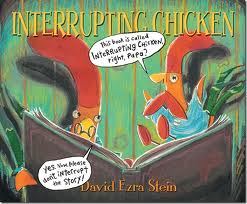
Ms. Jorgensen (our principal from Strathcona school) visited us last week during Camp Read with a book under her arm. She had brought us a copy of Interrrupting Chicken by David Ezra Stein. Would we like to read it?  What a question!

Reading this story to my class was funny for a few reasons.

1. This class is full of active, dynamic, engaged children with chronic and highly contagious cases of Interruptingitis (and we love them for it – sigh, most of the time!) Come in for a visit. Read them a story. Tell them about something. You’ll see that we don’t exaggerate! We could have a book written about us – Interrupting Classroom. So how would we react to a book all about interrupting?

2. This book had a very strange impact on the class. Silence. Big toothy grins. Eyes alight with anticipation. But no talking. No interrupting. At all! This story was so engaging that there was quiet. A miracle! The irony!  A story all about interrupting completely quieted us (temporarily).

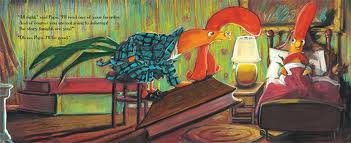
This story is about a little red chicken who begs her Papa for a bedtime story to soothe her to sleep. So Papa pulls out her favourite fairy tales. He starts with Hansel and Gretel. Just as they get to the part where the children begin to follow the old woman into the house, the little chicken leaps up and yells:

Out jumped a little red chicken and she said, “DON’T GO IN! SHE’S A WITCH!” So Hansel and Gretel didn’t. The End

Papa gently reminds her that she should be relaxing. No more interrupting. Little Chicken promises. But she can’t contain herself when the wolf wishes Little Red Riding Hood “Good Morning”

Into the story she jumps: “Don’t talk to strangers!”

More reminding from Papa. More promises from chicken. But how can she help but warn Henny Penny when she is about to tell the whole farm the sky was falling?

Don’t panic! It was just an acorn!”

Papa is frustrated and out of stories. That’s it! But how can little chicken go to sleep without a story? Papa suggests that the little chicken tell him a story. Hmm . .  . So she begins a lovely made up story only to have Papa fall quickly asleep. She snuggles into bed beside him. “Good night Papa” Lovely.

I asked everyone at the end. “So, did the interrupting ruin the story?

“No,” said Hajhare definitively, “I would do it too if I could fit in the book.”

I don’t doubt he would! I have read reviews of this book that talk about this story being great to teach children about not interrupting but this was not where I thought we should go with it. Why do we read aloud? To soothe, to engage, to captivate, to connect, to excite. With familiar stories, we feel like we “own” the characters, and like the little red chicken, we dive right inside. I loved the little chicken’s passion (and her interrupting tendencies). That energy over books, where our comments, questions, connections just spill out is the environment we should strive to create within a classroom. So that what is contagious is excitement over books. Yes, interrupting is often not appropriate. Yes, we need to learn to speak and listen in turn. But not at the expense of turning down the excitement over the reading of stories. So with this book we read, we enjoyed and we celebrated passion for books!


It’s all about the Book

Recently we read Emily’s Art written and illustrated by Peter Catalanotto and he invited the students to send him some art. Well . . . Emily’s Art was such a special book that we wanted to “gift” Peter with something special in return. His paintings are truly majestic and we wanted to make something that might make him have a bit of that “glowy” feeling that he inspires in us as we look at his illustrations.

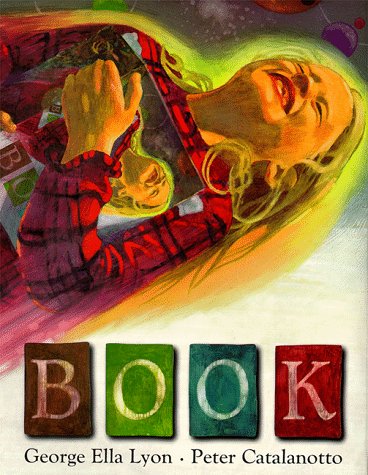
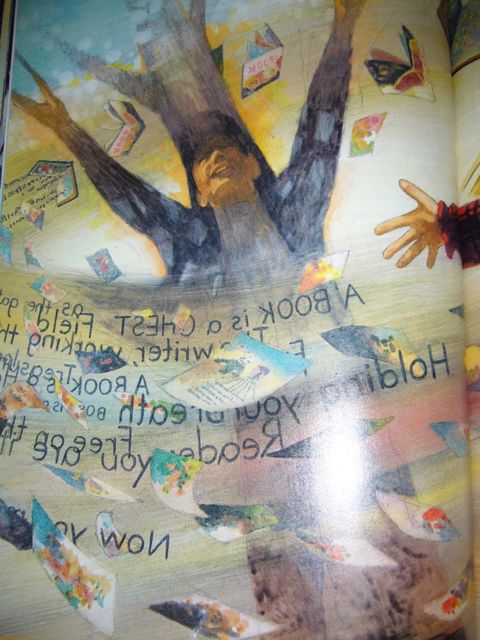
At the library, I found a copy of Book written by George Ella Lyon and illustrated by Peter Catalanotto. Sadly, this gorgeous book is out of print so we were lucky the VPL had a copy! Book is an ode to the magic and power of books. Lyon’s words and Catalanotto’s pictures invite us to escape to the magical place books transport us to simply by opening up the cover and stepping in . . .

book

We read this book a few times, marvelling at the images and savouring the words. We were delighted by the whirling words interacting with the images.  Students then wrote about what reading means to them.

P1020560The next day, inspired by this image (left) in particular, we started creating images.

While the students worked, I called each child up and we looked at their personal writing – selecting a line or a few lines that really captured their relationship to reading.

I typed up the text and then students added their text to their art in a variety of ways – inviting our viewers to celebrate reading, language and learning with us! Framed pieces are on display in the main office and in the library. Enjoy!

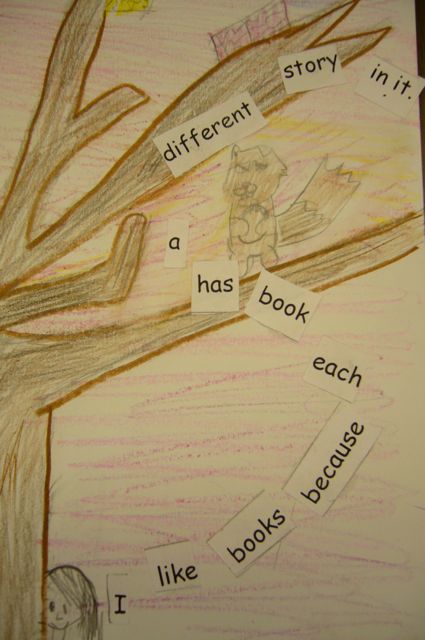
Lisa shared her feelings about books: I like books because each book has a different story in it.

Lisa's work

Many students wrote about the way reading makes them feel. Gary wrote: Reading is fun and calm. When I read, I visualize the pictures.

Kevin shared: “If you get really into the book, you might even dream about it. When my Mom and my teachers read to me, I feel relaxed and happy.”

Alyson is passionate on the subject! “Books change the world and books change us.”

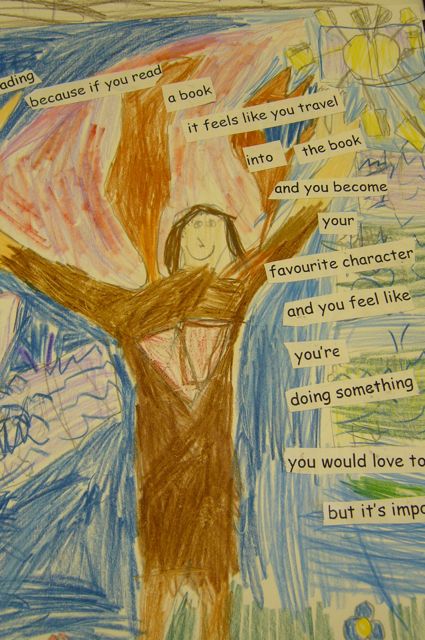
Catriona writes: “I like reading because if you read a book, it feels like you travel into the book and you become your favourite character and you feel like you’re doing something you would love to do but it’s impossible.”

Catriona's piece

Sigh 🙂 Is that not beautiful? And if you look closely at Catriona’s picture, you might notice that she has a book heart.

Josiah shared: “I like reading because I learn new words. I get all emotional when it’s exciting.”

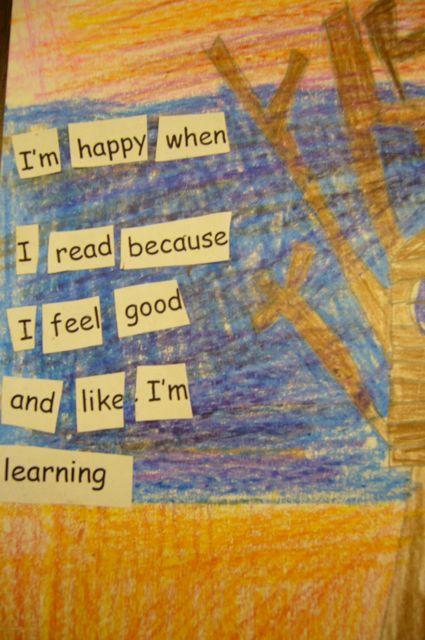
Eddy‘s picture is beautiful and bright and features a tree house up in a tree. He writes: “I’m happy when I read because I feel good and like I’m learning.”

Eddy's words

Learning while we read was a big theme! Jenifer says, “Books are telling things that we can learn.”

Jeremiah shares:” I like reading because it makes you learn stuff you need to learn. When I read, it feels like I’m in it.”

Sergio lays it out like only he can! “You know why I like reading? Because I will be smarter. And you know why I like being read to? Because the people that read to me, they will be smart like me.”

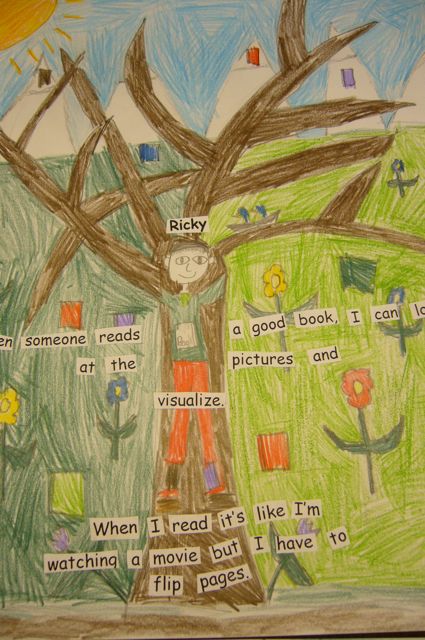
Ricky states: “When I read it’s like I’m watching a movie but I have to flip pages. When someone reads a good book, I can look at the pictures and visualize.”

Ricky's work

Many children wrote about how they love being read to. Always, read aloud times throughout the day are a time to connect, learn and discuss themes and concepts from the books we read.

Hajhare shares: “I like getting read to because the teacher always uses expressions and they talk kinda funny.”

Scott agrees. “I like when someone is reading to me because I could learn more stuff. It feels exciting.”

Truman drew himself happily celebrating reading.

“When someone reads to me, I feel like in the book.”

Truman's piece

This was a common theme.

Annie writes: “Books make you feel like you’re actually inside the book. I like books because they teach you things that you want to learn.”

Jenny’s thoughts are lovely. “Books are my friends and books are like alive to me. Looking at the illustrations gets me ideas.”

This was such an enjoyable way for our reading group to celebrate our relationship to books and reading.

Inspired by Book!

Copies of these gorgeous pieces are on their way to Peter Catalanotto as thanks for the inspiration!

Jena’s words are very special and capture the feeling of the cover image of Book.

“I like reading because I get to think of mystical things. When I finish the book and I like it so much I hold on to it and if it’s really emotional my eyes start to water.”


April and Esme Tooth Fairies

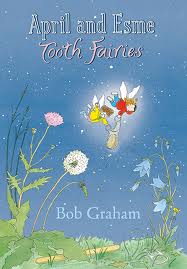
Our BLG reader Bill walked into an eager pyjama wearing audience today. It was a mini Camp Read at Seymour school. Bill might have been dressed in a suit but he had the perfect book to fit right into our pyjama theme! It featured sleeping people, comfortable beds and lots of characters dressed in their PJs! The book? April and Esme Tooth Fairies by Bob Graham.

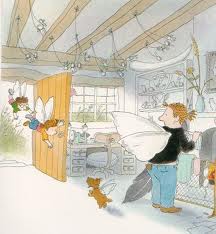
This is a story about two little tooth fairies and their first tooth fetching venture. Graham has created a completely modern setting and feel to the story while at the same time giving us a whimsical sense of magic. We have cell phones, texting fairies and a ponytailed Dad doing the laundry. Yet, this is intermixed with pictures of toadstools, dandelion flowers and floaty white wings.

April and Esme spring the news on Dad

Despite their parents concerns about their “tooth fairy readiness”, April and Esme head off to claim Daniel Dangerfield’s lost tooth. When they find his room, they realize that Daniel has left his tooth in a glass or water and April has to dive down to the bottom to retrieve it. Oh dear – soggy wings! Daniel stirs and the girls panic. April texts Mom for advice! What to do? Whisper in Daniel’s ear: “We’re spirits of the air Daniel. You dreamed us. You did not see us.”

Scott blurted out: “That’s freaky! Is this non-fiction?  I wish it is!”

When Daniel woke up, he was convinced it was a dream. Meanwhile, our little fairies drift off to sleep exhausted from their tooth/coin exchanging adventure.

Such a fun story.

Our student reviewers report:

Kevin: It was a great book! It was funny because everyone had wings – even the dog!

Alyson: I liked the part where they were dreaming. It seemed like they were really doing it. Or . . . was it a dream?

Ricky: That was a great book you read! I always dream of being a fairy. I could make the things I want. Thank- you Bill for reading that book.

Cottonwool Colin – a lesson for Moms

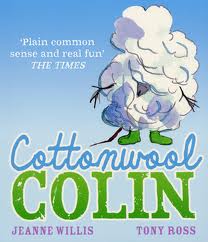
The fabulous team of Jeanne Willis and Tony Ross have brought us a fantastic story to read to our Moms! Yep, our Moms. By the time we finished laughing and gasping through Cottonwool Colin, the consensus was – this is a book for Moms!

This book is all about tiny mouse Colin Smally, the youngest and smallest of ten mouse siblings. So small that his Mom only agrees to allow him outside into the great big world if she can wrap him in cottonwool. Now he would be safe from the elements, from falling, or worse, having something landing on him! All would be well. But when Colin (wrapped in cotton) gets mistaken for a snowball and tossed into a freezing river, everything suddenly seems very dangerous. And it is – he is chased and needs to swim to escape and then chased again . . .

When Colin, (sans cottonwool) ends up back at his mouse cave, his mother is very upset.

“Colin, ” she shrieked. “Anything could have happened to you!

Everything did happen to me, ” he whooped.

Colin’s Mom begins to grant him more freedom to explore the world. And Colin ventures out ready for many more adventures (the fear, the hurt, the risks?  All worth it!!)

So I asked our listeners: “So, what do we think?”

Lisa: “His Mom learned a lesson. His Mom should not worry so much and let him play.”

Oh yes, without hesitation we agreed! “Don’t be scared Moms!” ‘Don’t be too worried!” “Let it go!” “Let them have fun.” “Don’t keep your kids right with you.”

Jena: “Trust them because one day they’ll get older and they won’t know how to take care of themselves.”

Lisa: “Yeah. Kids need to go around in the world to know what’s out there.”

“My mom doesn’t need that book though,” said Scott. “Because I’m bigger than a mouse.” 🙂

I am a teacher but I am also a Mom and I have to admit that, like Colin, my students are probably smarter than me on this one! Breathe, let it go, don’t worry so much . . .

Selecting Picture books to read

Students in our morning reading group continue selecting books based on their background knowledge (schema) – realizing that they will have a better chance of connecting to a book when they have some shared experiences with the theme/topic of the book.

Students quickly selected three books from a huge selection of picture books. Then they ordered their choices #1, #2, #3 . Why did they choose the book they did as their first choice? After reading, students then shared any text to self or text to text connections.

Some book selections:

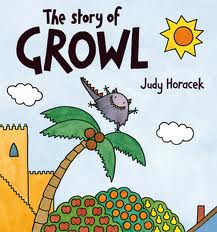
Gary chose The story of GROWL by Judy Horacek. Why was this his first choice? “Sometimes I growl when I’m angry. It makes me feel like a monster.”

After reading the book, did he have any connections?

“I used to hop, skip and jump around my garden. Sometimes I growl for fun. My Dad told me to stop growling because it’s loud. But I still was growling! I stopped one day.”

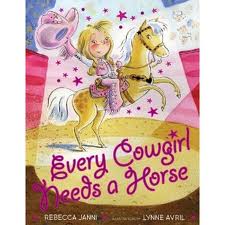
Lisa read Every Cowgirl Needs a Horse by Rebecca Janni. Why was this her first choice? “I know that if a horse wants to say hi, they rub their noses together. I learned that in a chapter book.”

After reading, what were her connections?

It was easy to connect to this book because at home when I’m riding my bike, I reel like I’m riding a horse with the wind blowing in my hair like the girl in the story.”

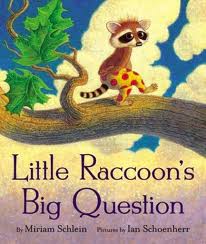
Jenny chose to read Little Raccoon’s Big Question written by Miriam Schlien and illustrated by Ian Schoenherr. This book is all about a little raccoon wanting reassurance about his mother’s love. Jenny chose to read it because: “When I was little I saw a raccoon.  I know a lot about what raccoons do and they are one of my favourite animals.”

Her connections were about much more than what she knows about raccoons.

“When I was little I was thinking how much my mom loves me most. I was thinking does she love me when I eat, sleep or play with her.”

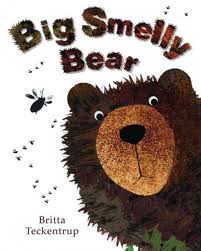
Josiah picked the book Big Smelly Bear by Britta Teckentrup. Why was this his first choice? “Everytime I go to my Mom’s home town, I always see bears and flies buzzing around.”

After reading, what connections did he have?

“When the big fluffy bear scratched the big smelly bear, I connected to it because I always see bears scratching trees and each other on the way to my Mom’s hometown Port Hardy. It is so fun there because I see my uncles, aunties and the big bears.”

Isn’t it great that there are so many picture books out there to interest everyone?


Questions and new learning about the Moon

We continue to study the moon and have been keen to learn new information. However we realize that the more we learn, the more questions we seem to generate. Our wondering seems endless  – kind of like space!

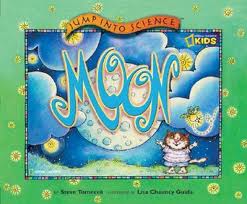
This week we read Moon by Steve Tomecek and illustrated by Liisa Chancy Guida. This is a Jump into Science National Geographic book.

First, we filled out an anticipation guide Ms. Gelson had written based on the book. Did we think a list of statements were true or false. For example: 1. Earth is about four times bigger than the moon. 2. The air surrounding Earth helps protect us from falling meteors because it makes them burn up 3. The sun and the moon are about the same size.

Then we listened to the story to verify which statements were in fact true and which were false. (In case you aren’t sure – with the previous statements 1 and 2 are true and 3 is false 🙂 )

After this, we returned to our desks to work on sheets that summarized some of our learning. What new things were learned from this book? What questions still exist?

P1020522Jena talked about Galileo and his telescope. Students were fascinated that this was the first time people had a sense of what the moon actually looked like. She also noted that the moon is not a star like the sun is. Many people didn’t know the sun is a star.

Her questions centred on space travel. What were the names of the twelve astronauts that visited the moon? Did any animals go to the moon? And a very interesting thing to find out: Were any of the astronauts there when meteors came?

P1020523


Jenny thought it was very interesting that the only way a crater can be filled up on the moon is when dust from a new crater forming (from a falling meteor) fills it up. Many students thought that this was pretty cool.

Jenny had questions about space generally

  • Why is the sun so warm?
  • Why can’t there be air in space?


She also wondered about how the footprints from visiting astronauts could remain on the moon forever. It is pretty hard to fathom a place with no wind and no rain.


P1020525Eddy had some great questions about the moon’s shape and how it formed in the first place.

Many students wondered if the Earth and the moon formed at the same time or different times and why we are so connected. Many thought it was strange to talk about ages of planets, moons and stars and wondered if they had birthdays!

Some other interesting questions students had:

  • If there is no gravity, wouldn’t the planets float away? (Annie)
  • When did the moon appear in space? (Kevin)
  • Is rock the only thing on the moon? (Ricky)
  • Why is the sun so hot when it looks so small? (Edwin)
  • What would happen if you started to dig on the moon? (Gary)
  • Will the moon have volcanoes again? (Manny)
  • Why is the moon grey? (Jenifer)

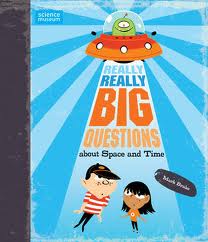
On a quick visit to the library this evening, I found this book: Really, Really BIG Questions about Space and Time by Mark Brake. Illustrated by Nishant Choski.

I plan to read it carefully this weekend to become a space expert! I will also bring it in for students to explore during independent reading. It addresses questions like:

  • When did the universe start?
  • Do stars live forever?
  • Why is the night sky so dark?
  • What’s the difference between me, a planet and a star?
  • Do black holes turn you into spaghetti?