Non fiction Picture Book Wednesday: Gorillas, the Largest of the Apes

It’s Nonfiction Picture Book Wednesday! 

What kid doesn’t love learning more about apes? Gorillas are the largest and strongest of the apes and a fascinating topic!

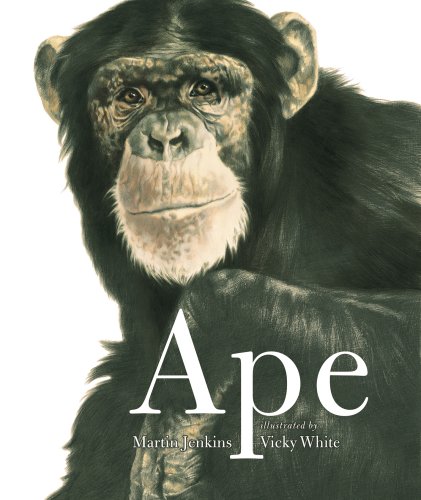
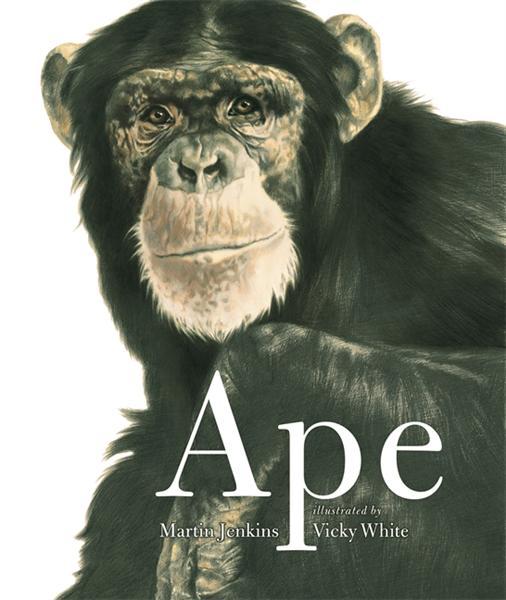
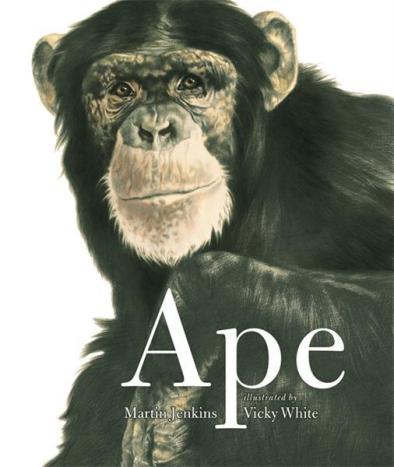
One of my absolute favourite nonfiction titles to introduce children to the great apes is the book Ape written by Martin Jenkins and illustrated by Vicky White (published 2007). Shared in my classroom here. The pictures are gorgeous and the text fascinating. An excellent read aloud for the primary classroom.

ape

A goal I have this year is to fill my classroom with texts that many of my students can manage with independence. Books that will be picked up and read during book choice time or when learning more about a particular animal.  I was so pleased to discover Gorillas by Kate Riggs (published 2012). Here is a book that my Grade 2/3s can read on their own with real success.

gorillas

When my students learn about an animal, they are looking to find answers to some specific questions: How are the babies/young born and raised? What kind of interactions does the animal have with others? How does the animal’s body help it to do things? 

This book – with an almost magazine style format – thin, sleek and full of facts invites the reader in to do a lot of learning. Discover what gorillas eat (lots of wild celery it turns out), how their babies grow and develop and the dynamics of their family groupings. We also learn how these gorillas spend their time – much eating (60 pounds of food a day) and napping (in addition to the 13 to 15 hours of night time sleep). Physical features are described and details of their habitat are outlined.

Features that make this book especially accessible:

  • large full page colourful photographs with relevant captions
  • bold words with definitions at the bottom of the page
  • an index, suggestions for further reading and websites listed at the end of the book

This is a title that I purchased for my class nonfiction collection and I am happy that it was one of four titles in this series that I ordered at the same time. I think this will be a series my students will have a lot of success with! I look forward to reading more of these books by Kate Riggs.

The Amazing Animals titles in my collection:

kateriggs books

My original goal was 60 nonfiction picture books for 2013. Progress: 33/60 complete 🙂

Thanks to Alyson from Kid Lit Frenzy for the inspiration to read and share more nonfiction picture books in 2013!

NFPB2013leaves

Do you have any favourite nonfiction titles about gorillas?

Nonfiction 10 for 10 List for 2013!

I’m so excited to participate in the first Nonfiction 10 for 10 event celebrating fantastic nonfiction picture books. Thank you to Cathy Mere from Reflect and RefineMandy Robek of Enjoy and Embrace Learning  and Julie Balen of Write at the Edge for hosting this new meme.

In many cases, I have shared the books on my list with students, often more than once. If I have used a book with my class and blogged about it, I have provided the link (for more information about the book/possible ideas on how to use it).

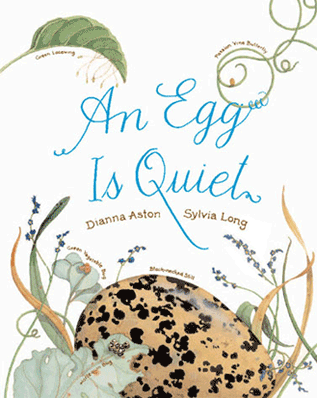
An Egg is Quiet by Dianna Aston and Sylvia Long Shared in my class here. I love all of the Aston/Long titles (there are now four) but I think this is my favourite. Maybe it is that I love birds – my backyard is full of feeders and specific plants to attract them. But it is also the simplicity of an egg and the wonder of what it might contain. In this book we learn about more than bird’s eggs – we see the eggs of frogs, insects and various reptiles. The text is soothing and informative and the illustrations stunning. It is fun just to pore over the end papers trying to match various eggs with the creatures that may have hatched from them. I find this book is as lovely shared in the classroom as it is read aloud to just a few (my own children adored it). It inspires so much inquiry and amazement.
Nonfiction 10 for 10: There's a Book for that

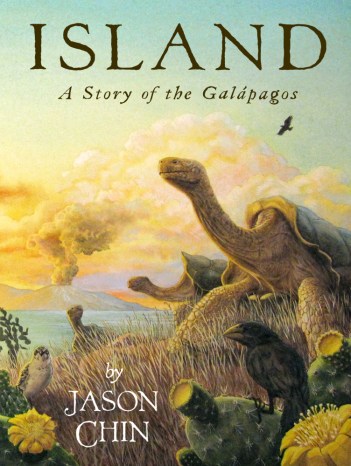
Island: A Story of the Galapagos by Jason Chin A simply gorgeous book detailing the birth of the Galapagos islands over millions of years and the fascinating creatures that inhabit them. Why is this book so great? The illustrations are certainly stunning and detailed but it is much more than that. I also love that big concepts: evolution, natural selection, migration of specific species and environmental changes are made so accessible for young readers. I think this is best introduced as a read aloud and then left for children to visit and revisit. This is a book to return to often to further study the illustrations and explanations. I want to get a hold of Chin‘s other nonfiction titles now too (Redwoods and Coral Reefs)
Nonfiction 10 for 10: There's a Book for that

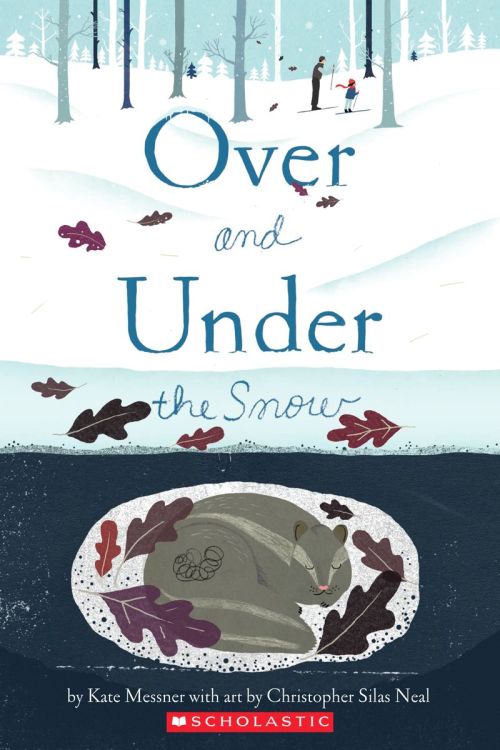
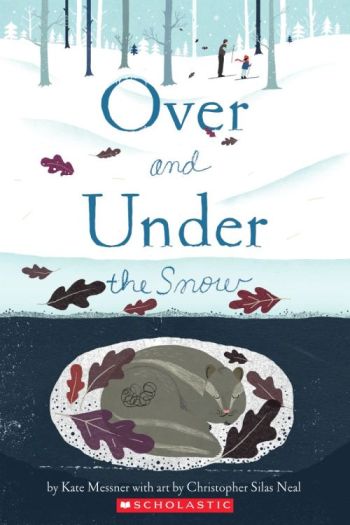
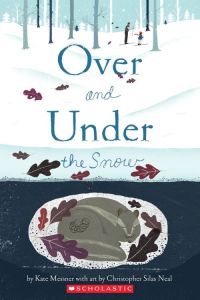
Over and Under the Snow written by Kate Messner and illustrated by Christopher Silas Neal Shared in my class here. This book is truly magical and I would be thrilled to see Kate Messner do another picture book in this genre. Of course, Neal’s illustrations are also stunning – I love the muted colours – the gorgeous blues and white. I have frequently given this book as a gift to young readers especially if they have the opportunity to get out into a snowy wood and imagine all of the life happening under the snow. My students think it is absolutely fascinating that this subnivean zone (the small open spaces and tunnels between the snowpack and the ground) exists and marvelled at the animals that inhabit it. More detail about each animal is located in the back of the book for further reading. The text itself reads beautifully and repeated readings are a must!
Nonfiction 10 for 10: There's a Book for that

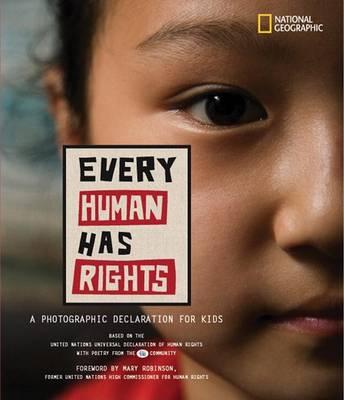
Every Human has RightsA Photographic Declaration for Kids A National Geographic book with a forward by Mary Robinson. I seem to collect books that explore the United Declaration of Human Rights. I have many favourites. What I particularly love about this title is the poetry that accompanies the list of rights. All written by children and teens. The photographs from around the world make the rights so much more powerful, real and worth defending. I would share this book with intermediate students over primary children because of the more mature message in the poems and some of the photos. For books more suitable to younger students, I recommend I Have the Right to be a Child written by Alain Serres, illustrated by Aurelia Fronty and We Are All Born Free: The Universal Declaration of Human Rights in Pictures (with Amnesty International).
Nonfiction 10 for 10: There's a Book for that

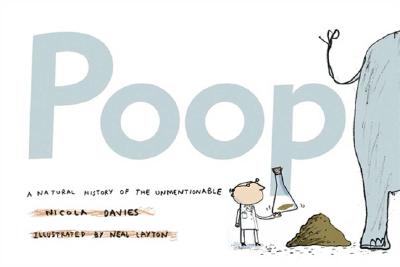
Poop – A Natural History of the Unmentionable written by Nicola Davies and illustrated by Neal Layton. Shared in my class here and here. Really what child is not going to be engaged when you open up a book that is all about poop? There is a lot to learn in this title!   Do you know how often a sloth poops? How about a kind of messy thing that hippos do with their poo? Why is there hair in the poop of some animals? Wonder what follows when there is a title Sloppy or Ploppy? You must read this book! Better yet, you must share it with a group of curious children! And giggle. And oooh and ahhh.
Nonfiction 10 for 10: There's a Book for that

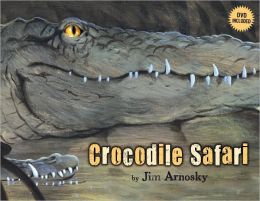
Crocodile Safari by Jim Arnosky Shared in my class here and here. Arnosky has so many wonderful nonfiction titles but this is my favourite. Not only do students learn the important difference between crocodiles and alligators, they learn all kinds of facts about crocodiles. The art is true to life and the colours set the mood to make you feel like you really are out in the swamp. One of the best features of this book is the DVD that is included. See Arnosky out in the mangrove swamp doing research and learn how to draw crocodiles. A step by step drawing lesson is part of this DVD. My students loved this!
Nonfiction 10 for 10: There's a Book for that

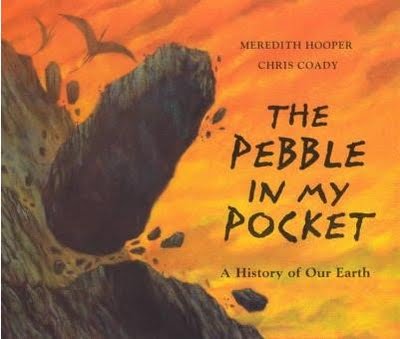
The Pebble in my Pocket written by Meredith Hooper and illustrated by Chris Coady Shared in my class here. This is a lengthy read but so worth sharing- a book that describes a journey of over 480 million years.  Follow a piece of rock that formed as a result of a volcano and travelled through time to end up in a little girl’s pocket. On this amazing journey, learn how the earth has changed in many dramatic ways over time. The back of the book has a geological time line that explains the main periods in Earth’s history. You might never look at a small pebble the same again.
Nonfiction 10 for 10: There's a Book for that

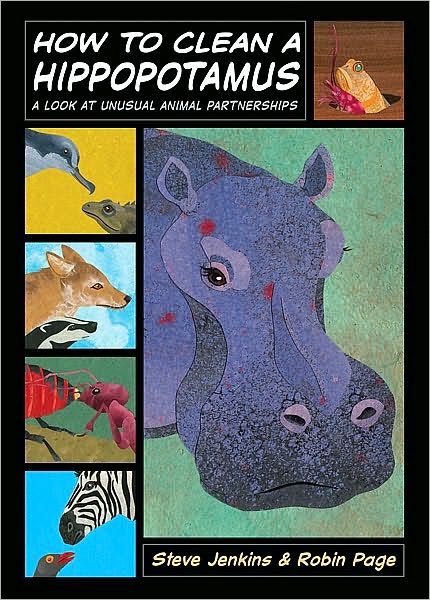
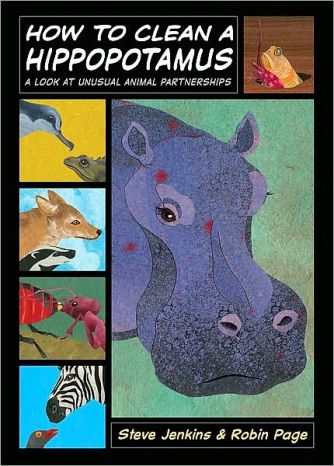
How to Clean a Hippopotamus by Steve Jenkins and Robin Page Shared in my classroom here. How to choose just one Steve Jenkins book as my favourite? Not an easy task. I adore them all. (And there are always more! Just today I read my class part of My First Day) But if I had to pick a favourite, this would have to be it. I learned the most from reading it and my students were completely engaged with the information  Symbiotic relationships between animals are fascinating and this book details many strange animal partnerships. This book’s format is somewhat like a graphic novel and contains, Jenkins’ stunning artwork/collage.
Nonfiction 10 for 10: There's a Book for that

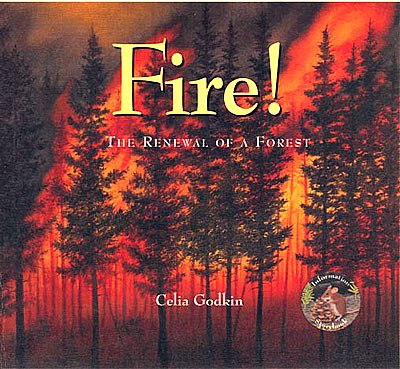
 Fire!  The Renewal of a Forest by Celia Godkin, the queen of information story books 🙂 Have you ever thought of a forest fire as a positive thing? This detailed picture book explains how fires can be a natural and necessary part of the forest’s cycle of life and growth. The pages are typically set up so that the picture is spread over two pages  allowing for more scope and detail. I once did an entire unit on ecology using Godkin’s books and this was a favourite.
Nonfiction 10 for 10: There's a Book for that

And my favourite nonfiction title? It would have to be Ape written by Martin Jenkins and illustrated by Vicky White Shared in my classroom here.

Ape is a visually stunning book! A book to pore over again and again marvelling at the details – both visual and written. Vicky White’s close up portraits and lifelike illustrations are fascinating while Martin Jenkins’ poetic text provided so much new information it is difficult to turn a page in a classroom of children without endless questions being tossed around the room. Learn about four endangered ape species: Orangutans, Chimps, Bonobos, and Gorillas. The fifth species of ape? Us. Similarities between apes and humans are described – for example, that we usually just have one baby at a time. Read and share the information in this book and then just flip through the pages taking in the pictures – there is so much to notice that a once through won’t do this book justice.
Nonfiction 10 for 10: There's a Book for that

Thanks again to Cathy, Julie and Mandy for the inspiration and hosting this event!

Happy reading and sharing everyone!

Nonfiction Picture Book Wednesday: Oh, glorious snow!

It’s Nonfiction Picture Book Wednesday! 

After a glorious day in the snow yesterday, snowshoeing on Cypress Mountain, it seemed the topic of the day should be snow, glorious snow!

Two nonfiction picture books helped us understand how snow forms. I shared both of these with my class this morning. My class is a Grade 2/3 class and we were able to understand the text with lots of support and time for questions. The illustrations, charts and diagrams really helped.

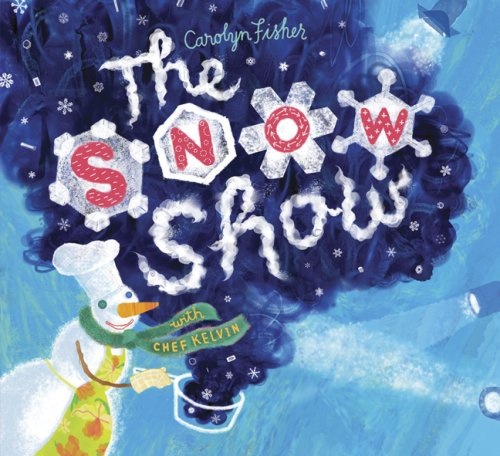
The Snow Show by Carolyn Fisher (published 2008) This book is written like the reader is visiting a set of a cooking show. What’s on the menu? A recipe for snow! Not only did we learn a LOT about snow, the kids loved when I cued “Applause” and they got to clap! Some new information for us:

  • snow begins with a speck (of dirt, dust, or ash) that water vapour sticks to
  • snow crystals can also be in the shape of needles, columns or plates

The Snow Show by Carolyn Fisher

The Story of Snow: the Science of Winter’s Wonder by Mark Cassino with Jon Nelson (published 2009) The close up photographs on these pages are absolutely stunning. The children couldn’t believe that snow looked like this when the crystals were magnified. They loved the pages in the back filled with “snow catching” tips and are wishing hard for a snow day so we can race outside with black heavy paper and magnifying glasses. What amazing facts did we learn?

  • no two snowflakes are alike but also, snow crystals are rarely perfect
  • snow crystals are 6 sided because of the nature of water: water molecules attach themselves in groups of 6
  • snow crystals stop growing once they fall from the clouds

story-of-snow

Of course, a great companion book for these titles would be a favourite title of mine: Snowflake Bentley by Jacqueline Briggs Martin and illustrated by Mary Azarian (published 1998 and a Caldecott winner in 1999).

snowflake bentley

My original goal was to read 60 “new to me” nonfiction picture books for 2013. Progress: 12/60 complete 🙂

Thanks to Alyson from KidLit Frenzy for the opportunity to participate in this challenge.

NFPB2013leaves

Nonfiction Picture Book Wednesday: Mr. Darwin, Mr. Darwin

It’s Nonfiction Picture Book Wednesday! 

ISLAND-cover-web

Island: A Story of the Galapagos by Jason Chin was one of my favourite nonfiction titles of 2012.

I bought a copy for my son for Christmas and he has been examining the detailed drawings and asking me questions about Darwin, his travels, his theories and all of the fascinating animals of the Galapagos.

This prompted me to look for other picture books on the same topic to share with my children and we have been spending our nightly read aloud time reading more about Mr. Darwin, his voyage on the HMS Beagle and his theories of evolution.

Both of the books described below would be best shared as interactive read alouds with an early intermediate class or for independent reading for children in Grade 4 and above. Some vocabulary and concepts would need support.

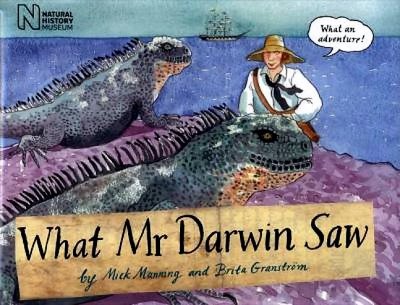
We started with A Natural History Museum selection – What Mr. Darwin Saw by Mick Manning and Brita Granstrom (published 2009). This book is written like a diary and includes amusing thought bubbles and detailed drawings of the animals and the places where Darwin travelled. End pages are a map of Darwin’s route on board the HMS Beagle. The final pages of the book explain Darwin’s theory of evolution with visuals of chalkboard drawings and notes. It offers the beginning of an understanding of Darwin’s complex ideas.   My children had some background knowledge on this topic already and so they were able to ask some informed questions to build on their understanding.

what mr darwin saw

Next we read The Tree of Life: Charles Darwin by Peter Sis (published 2003). I don’t know if read is the best way to describe our experience with this book. Instead we studied, examined and flipped back and forth through the pages learning about Darwin’s life. My children loved the maps, found the illustration with Darwin’s own family tree fascinating (“He had so many children!” “Lots of them died young.” “His wife must of been so tired and sad.”) and liked the lists that outlined his daily routines at different times in his life. (“How did his wife get anything done if she was always reading to him?” my daughter wanted to know after finding out that Emma read to Charles multiple times a day.) We found some of the drawings and text too small – stunning but hard to interact with. Maybe this book needs a magnifying glass!? Many illustrations were perfect though and made the topic so much richer. This book is certainly a biography – we learn much about Darwin’s upbringing and about his later life that Sis divides into the public, private and secret realms. I’m leaving this book out so that we can continue to pore over it.

Tree of Life

Looking to learn more about Charles Darwin? These three titles would be a great place to start!

Interested more in the concept of evolution? This book does a wonderful job of explaining it in a story that allows children to understand the concept.

Charlie and Kiwi. . . an evolutionary adventure – created by Peter H. Reynolds and the NewYork Hall of Science.

Shared in my classroom here.

Charlie and Kiwi

Thanks to Alyson from KidLit Frenzy for the inspiration to participate weekly in this challenge.

NFPB2013leaves

My original goal was 60 nonfiction picture books for 2013. Progress: 7/60 complete 🙂


Nonfiction Picture Book Wednesday: A little guessing

It’s Nonfiction Picture Book Wednesday! Do you have any books to share and discuss? 

I am pleased to participate in Alyson’s (from Kid Lit Frenzy) non-fiction picture book challenge and share the picture books I read this week.

This week I was on the lookout for books that were very interactive and that primary students could read independently. I was also looking for books where students could learn more about animal characteristics including features, habitat and life cycles.

My original goal was 60 nonfiction picture books for 2013. Progress: 5/60 complete 🙂

Who’s Like me? by Nicola Davies and illustrated by Marc Boutavant (published 2012) This is a fun lift the flap book where children try to guess who is like me from a question and a picture clue Like (with a picture of a rabbit) “Who’s like me? Who’s furry and breathes air like me? Is it . . . ” The next page features four flaps with a clue on the outside  If you flip the picture of feathers, there is a picture of a pigeon and text that reads: “I have feathers not fur.” The next page talks about the fox who is like the rabbit and has fur and breathes air. It is explained that a fox and a rabbit are both mammals. they breathe air, give birth to live babies and feed them milk. Children learn about amphibians, fish, birds and reptiles as well. Colourful and very fun to interact with! Nicola Davies for the younger set!

who's like me

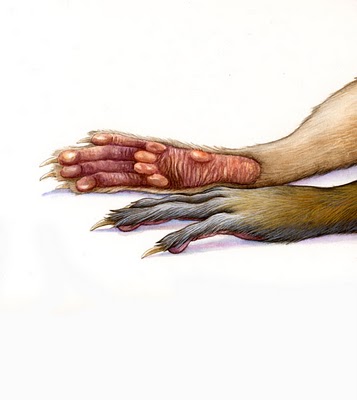
Who Has these feet? by Lara Hulbert and illustrated by Erik Brooks (published 2011) Children love books where they can guess! This title has pictures of different animal feet with the reoccurring question: Who has these feet? When I used this in the classroom this week I had children justify their guess with reasons to back up their answers. When we saw a picture of duck feet, one child guessed it was a chicken because of the skinny legs. Another thought it was a swan because of the skin between the toes. Another student volunteered that that skin was for paddling and so it had to be a bird that swims. One child knew those feet were called webbed feet. A great way to build vocabulary and to sit back and let the students talk and share.

Who_Has_These_Feet1

So . . . who has these feet? Intrigued? Find the book!

FEET18-19

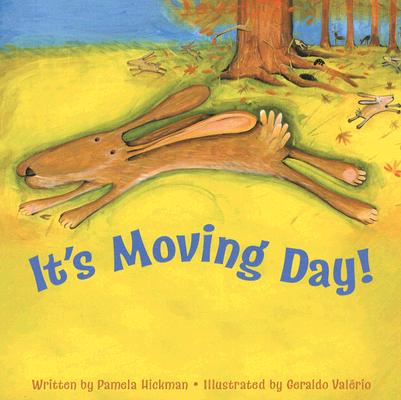
It’s Moving Day by Pamela Hickman and illustrated by Geraldo Valerio (published 2008)  In this book, we “travel” through numerous seasons that focus on a specific hole/burrow under a tree that a variety of animals use for a home. Great introduction to how woodland animals use burrows and change environments during different seasons/when raising young/etc.

It-s-Moving-Day

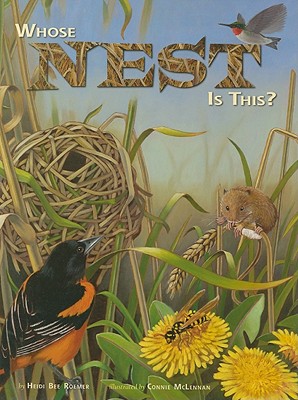
Whose Nest in this? by Heidi Bee Roemer and illustrated by Connie McLennan (published 2009) Another fun book to guess from clues given – this time in a rhyming riddle format. This text is longer and more complicated so would be best used as a read aloud with primary students. Young intermediates/late primaries could read it independently. Lots to learn – certainly nests are very diverse and it is not just birds who build nests!

Whose-Nest-Is-This-

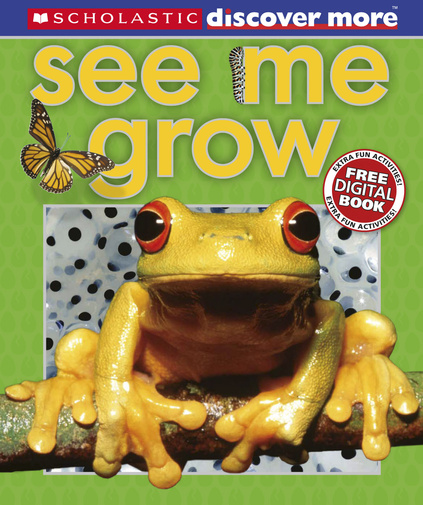
See Me Grow (Scholastic Discover Moreby Penelope Arlon (published 2012) This book has some fantastic nonfiction features like colourful photographs, life cycle charts, an informative glossary, a variety of labelled diagrams, fact boxes, etc. Lots of information about how a variety of animals grow from birth to adulthood. Learn about which animals hatch from an egg, which are born live, how long they stay with their mother/parent, etc. Not too much text on each page makes this perfect for young readers to interact with independently. Part of this Scholastic series.

scholastic title

Thanks to Alyson from Kid Lit Frenzy for the inspiration to read and share more nonfiction picture books in 2013!

NFPB2013leaves

Nonfiction Picture Book Challenge 2013

I’ve been inspired by Alyson Beecher at KidLit Frenzy to participate in the 2013 Nonfiction picture book challenge! Link up here to join in!
NFPB2013leaves

I love sharing nonfiction read alouds with my class and integrate literature with all of my science and social studies themes so I definitely need to ensure that I am staying current and reading a variety of nonfiction titles. It is also my goal to find more nonfiction titles that my students can engage with independently during book choice time.

According to Goodreads, last year I read 44 nonfiction picture books (some I categorized as information story books) so this year my goal is to increase that to 60 books. While I will try and read recently published books, there are a number of books in our school library that I want to read so I am not limiting myself by publication date. When I can I will include favourites and link to Alyson’s Wednesday nonfiction posts (thanks Alyson!)

What I am most excited about is the opportunity to learn about a variety of nonfiction titles shared via the bloggers participating in this challenge! There is nothing like a reading community to inspire new reading choices.

My ten nonfiction favourites read in 2012 (not just published in 2012) included:

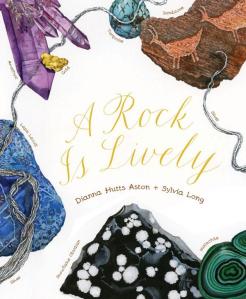
A Rock is Lively by Dianna Hutts Aston and Sylvia Long

a rock is lively

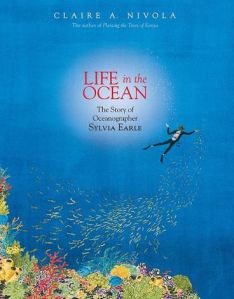
Life in the Ocean (The Story of Oceanographer Sylvia Earle) by Claire A. Nivola 

Life in the Ocean

Island A Story of the Galapagos by Jason Chin

ISLAND-cover-web

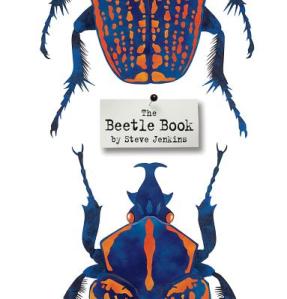
The Beetle Book by Steve Jenkins

beetle book image

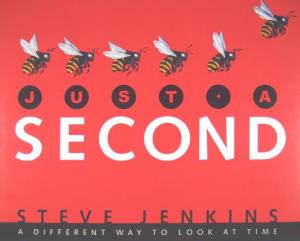
Just a Second by Steve Jenkins

jenkins

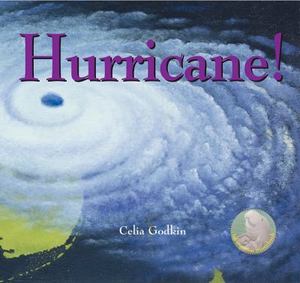
Hurricane by Celia Godkin 

hurricane

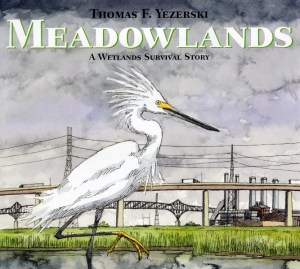
Meadowlands: A Wetlands Survival Story by Thomas F. Yezerski

meadowlands

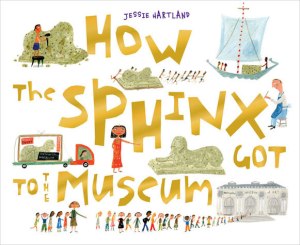
How the Sphinx got to the Museum

sphinx

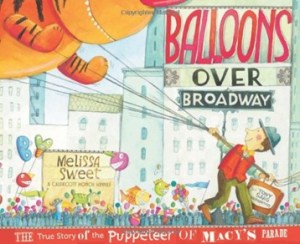
Balloons Over Broadway: The True Story of the Puppeteer of Macy’s Parade by Melissa Sweet

balloons

Over and Under the Snow by Kate Messner

Over_and_Under_the_Snow

Let’s talk!

There is nothing more exciting for me than watching students really talk about their learning. I love the debate, the encouragement, the giggles, and the interrupting. I love watching one student really listen to another and then jump in to share ideas. These type of exchanges happen more and more during our morning reading group. Especially when we have informative non-fiction texts in hand!

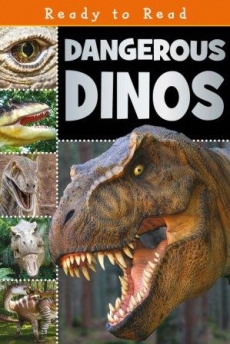
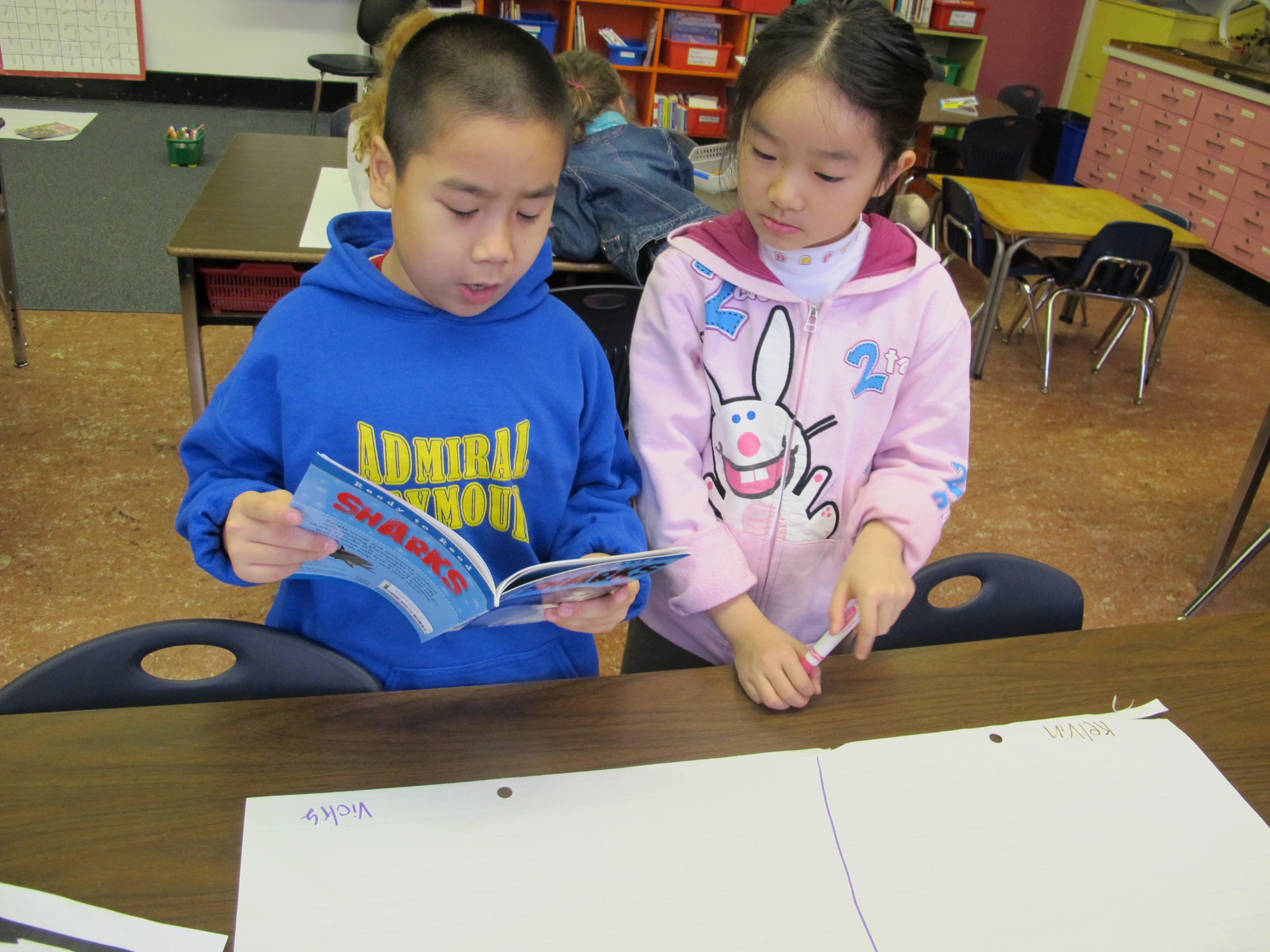
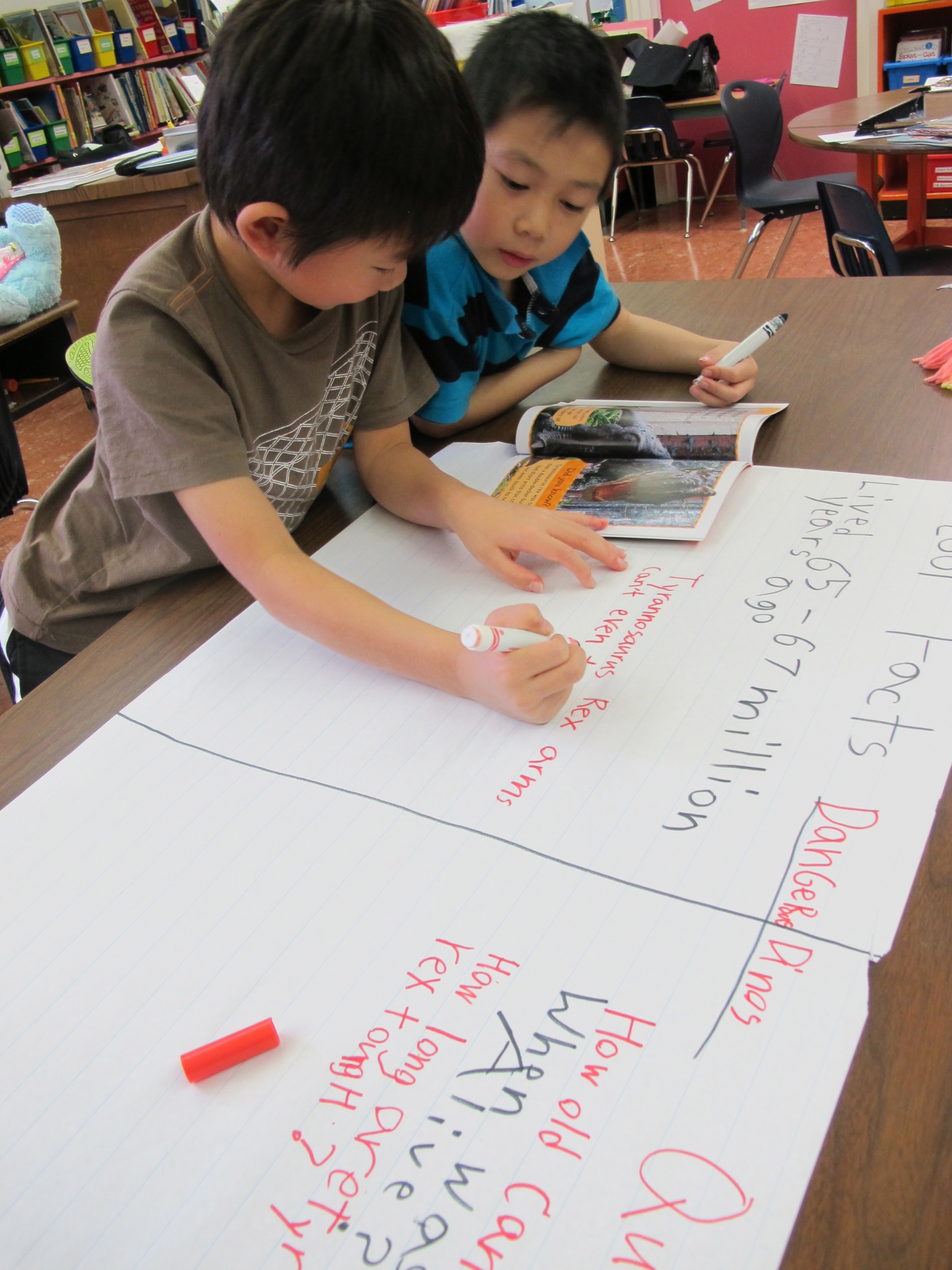
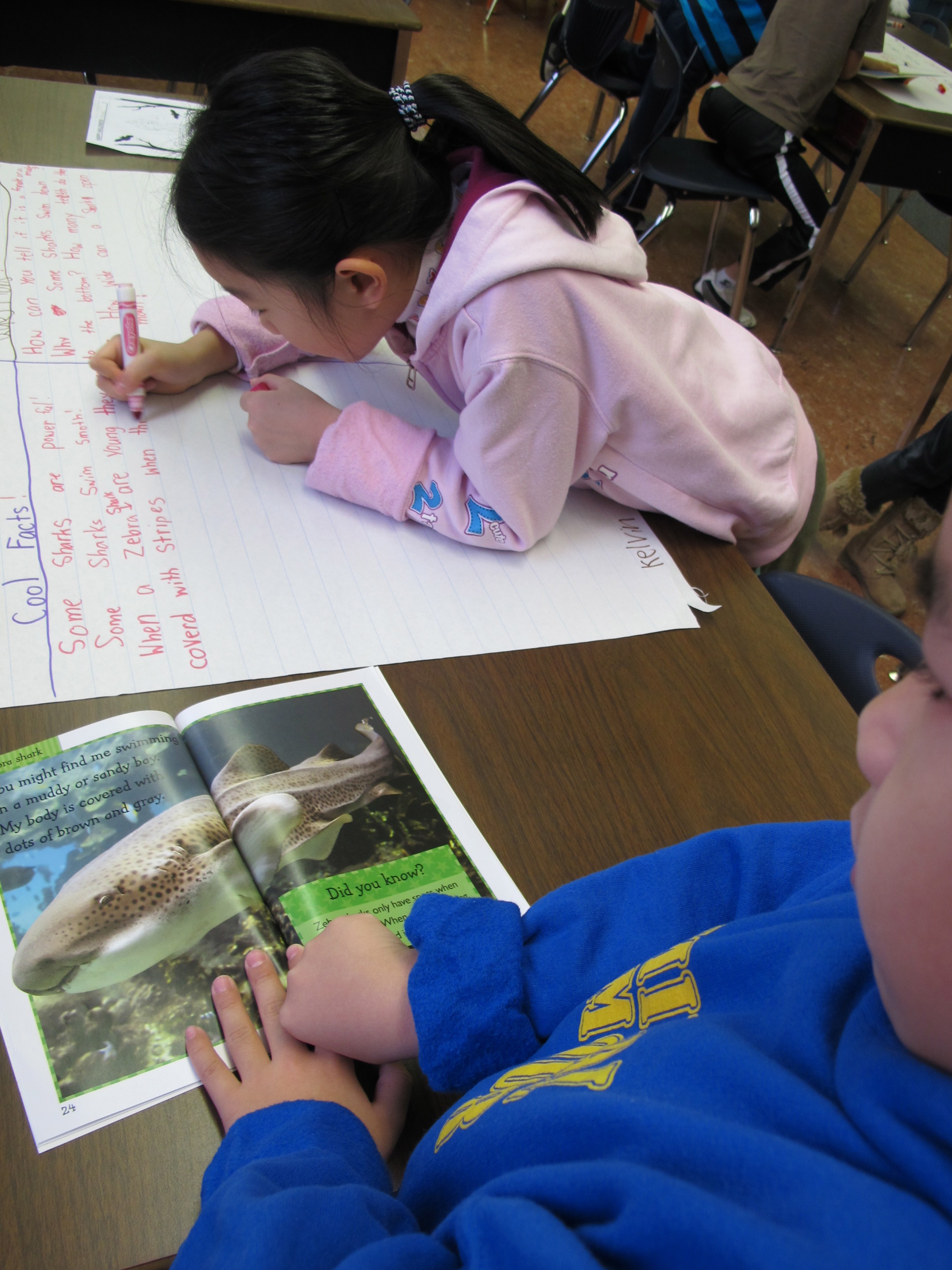
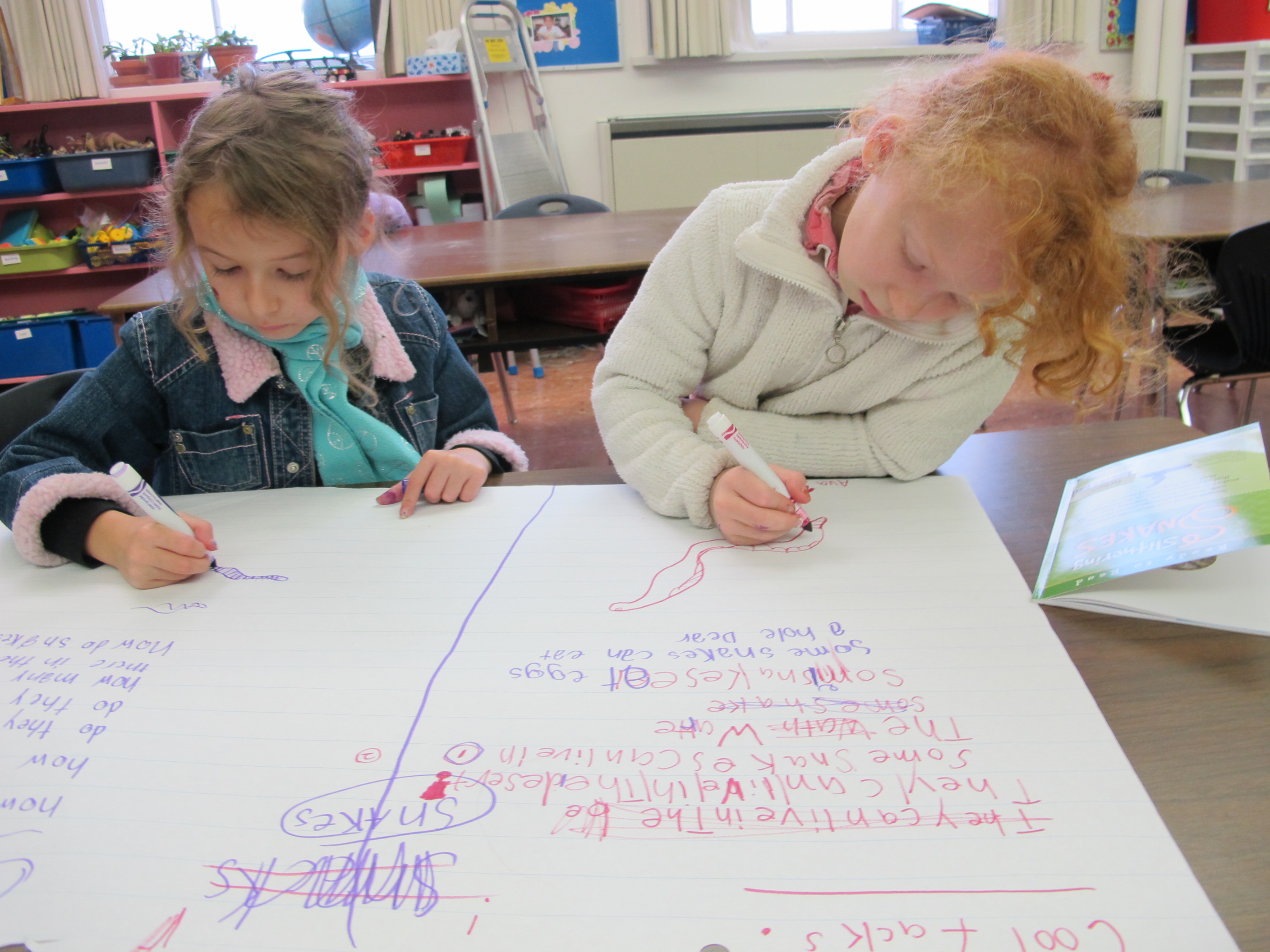
This week I pulled out a selection of non-fiction titles from the Ready to Read series including Dangerous Dinos, Slithering Snakes, Sharks and Bugs. All written by Sarah Creese. (I purchased these titles through Scholastic)

Students were asked to read the book aloud with their partner and to note down cool facts they learned and list any questions they had as they read. We had done this in two small groups (led by me and my teaching partner) the week before so the students were familiar with this process. Today though, they were in charge of the way this process would roll out.

Students took turns reading the text aloud. Some pairs wrote questions and facts as they read. Others read and then came back to the text for a second read through.

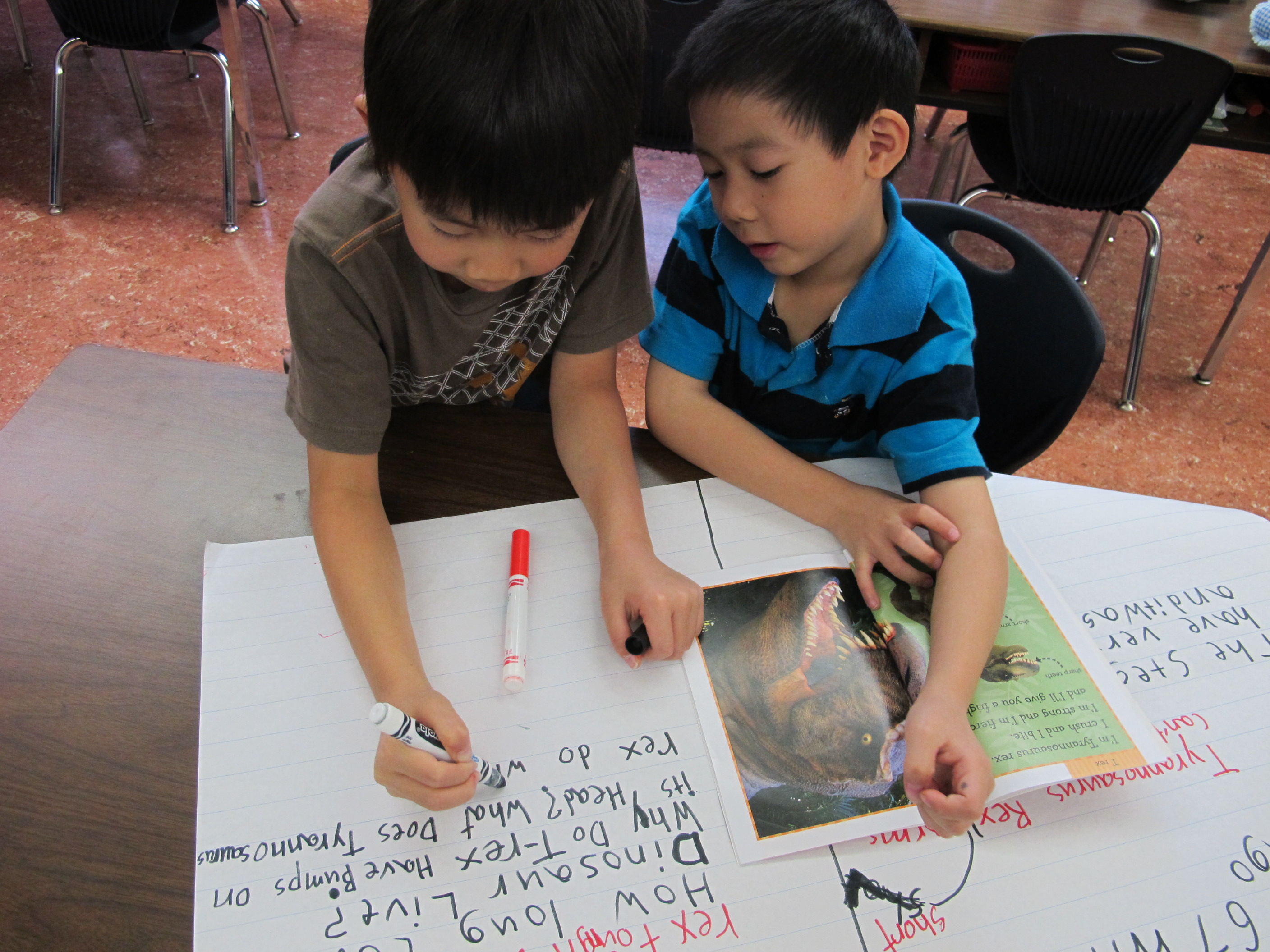
The rich discussions came out of deciding what questions were important and which facts should be noted down. Two boys reading about dinosaurs couldn’t stop laughing about one sentence that stated that a T-Rex had such short little arms that it couldn’t touch its nose. They included this as a cool fact and then went on to write a question about what use T-Rex’s short little arms had.

There was a lot of “Listen to this!” “Should we write that?” “Did you know . . . ?” I also heard “Look for the page that says . . .” “Can you read that again?” Lots of rereading and checking for understanding.

Many went on to add pictures to their chart paper. As they drew, the talking continued, using the vocabulary that they had just been reading about. “Look I’m drawing a shark swimming in the shallows.” Do you think these scales look real?” “I made the sharks jaws open so we could see the rows of teeth.”

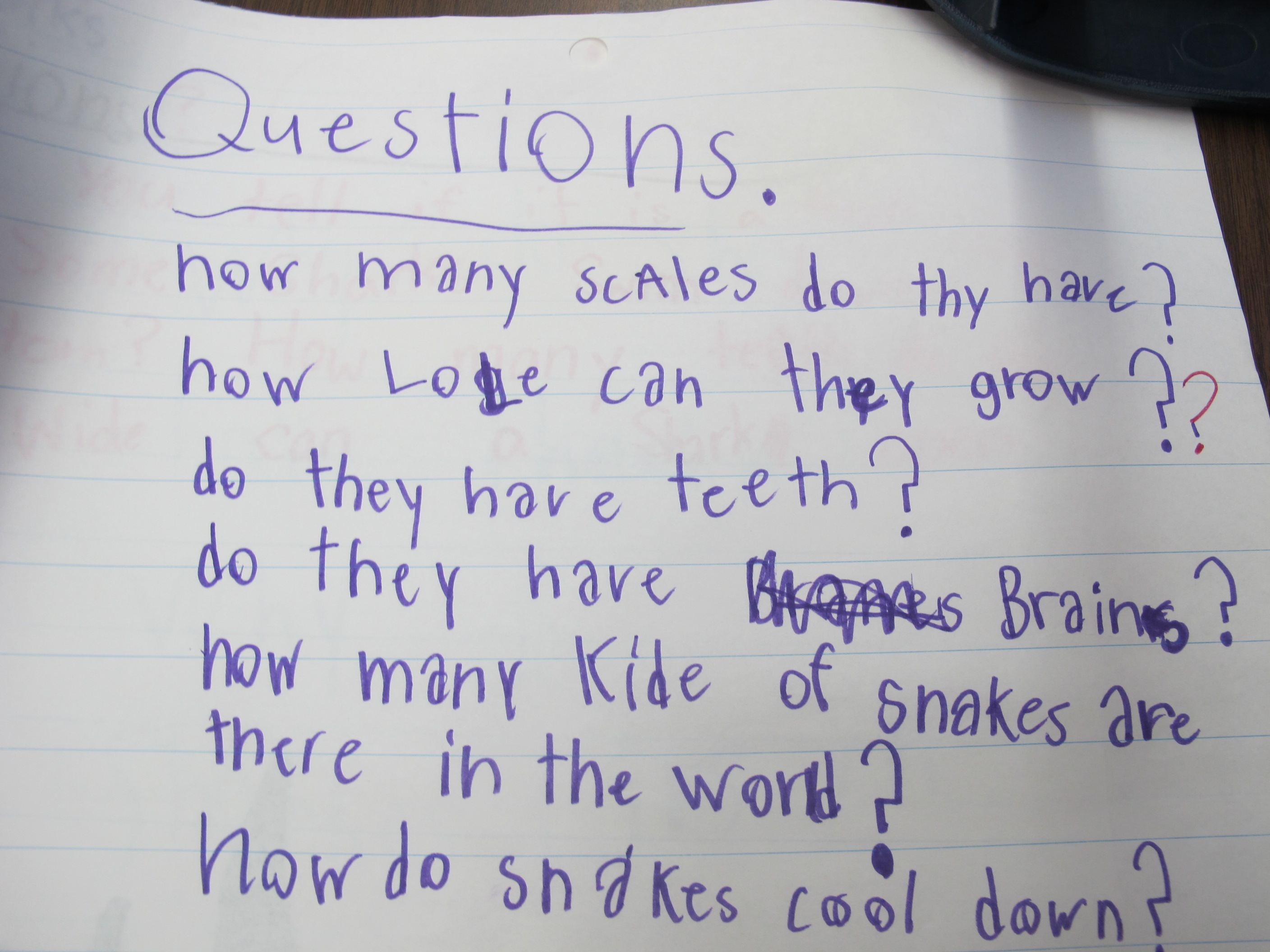
Question lists were interesting and gave me a basis to start conversations with each group.

The best thing about this activity? Lots of discussion, reading and writing all managed by the students themselves. My role was to circulate and enjoy the conversations I joined and to do a little learning too! (Did you know some snakes can eat an entire deer? Eew!)

Did you know that . . . ?

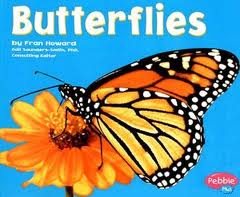
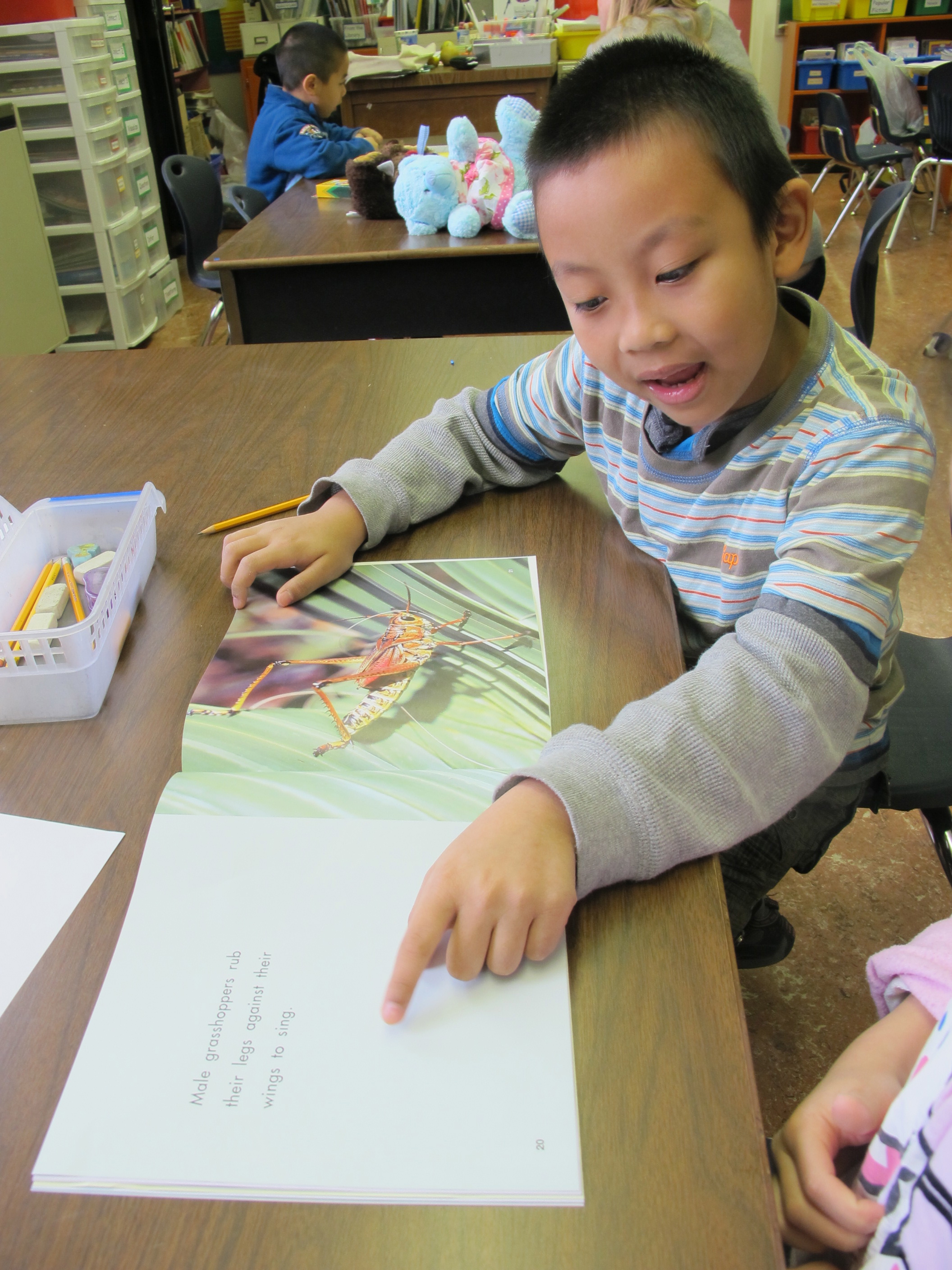
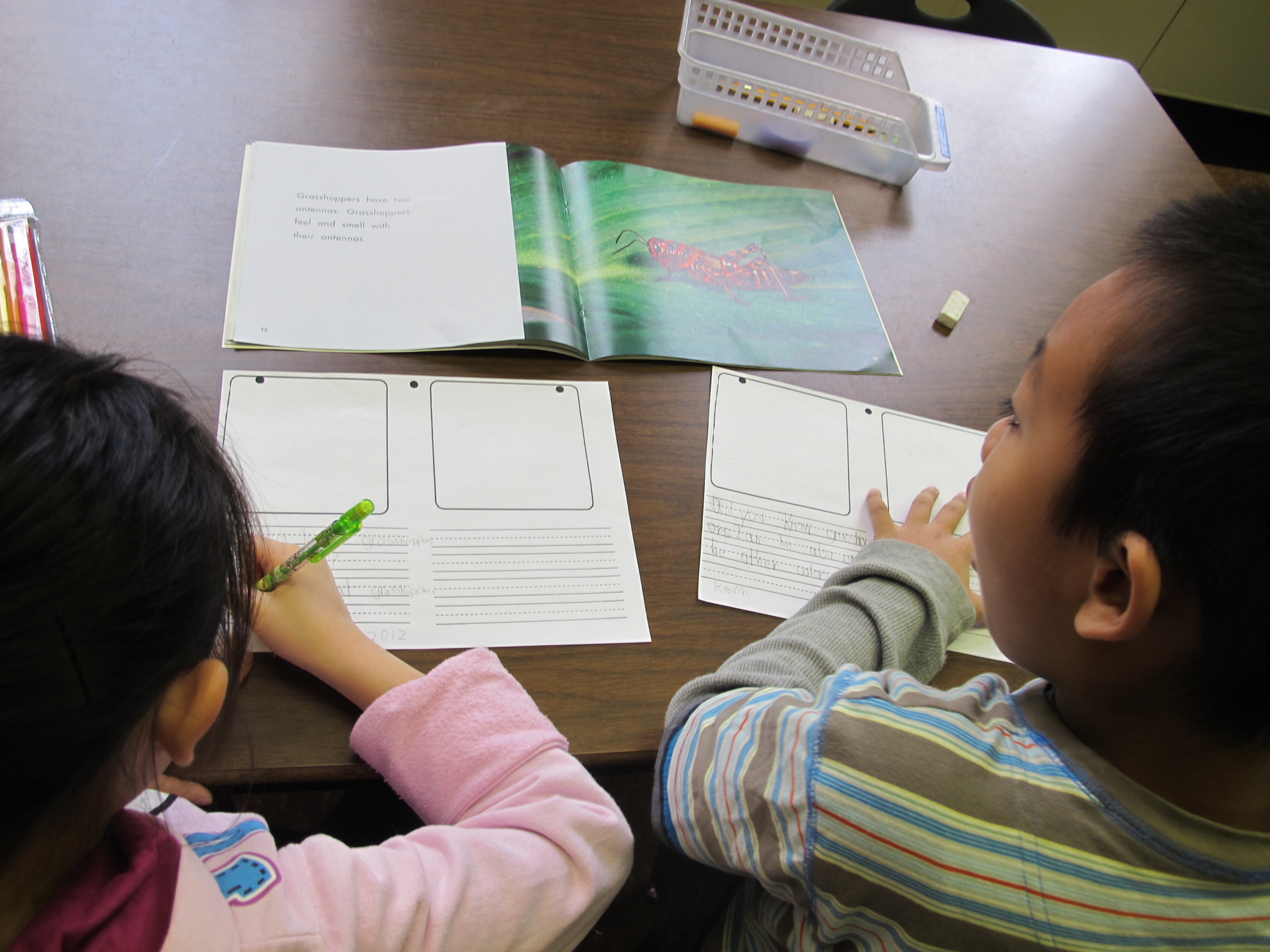
This week when we looked at non-fiction text, I wanted my reading group to think about pieces of information that they deemed important as either new information or information that should be shared. We used a series of insect books from Capstone Press as these little books have gorgeous photographs and simple, meaningful information. I wanted the focus to be on the conversation, not on reading long sections of text.

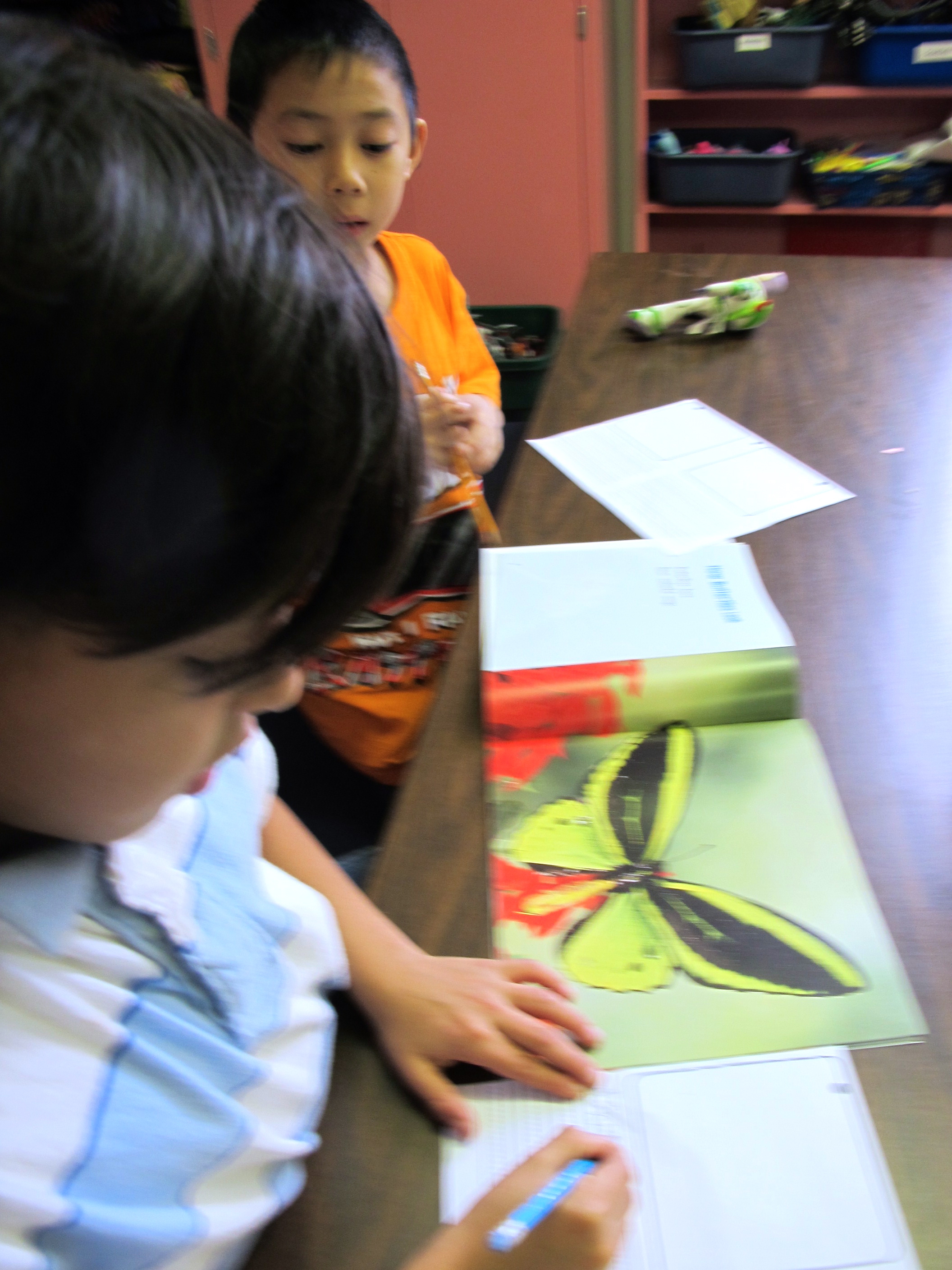
Students worked in partners and took turns reading a page of information. I encouraged students to also talk about what they noticed or wondered about in the photographs. I was pleased to see students referring to the text as they had these conversations, often rereading for clarity.

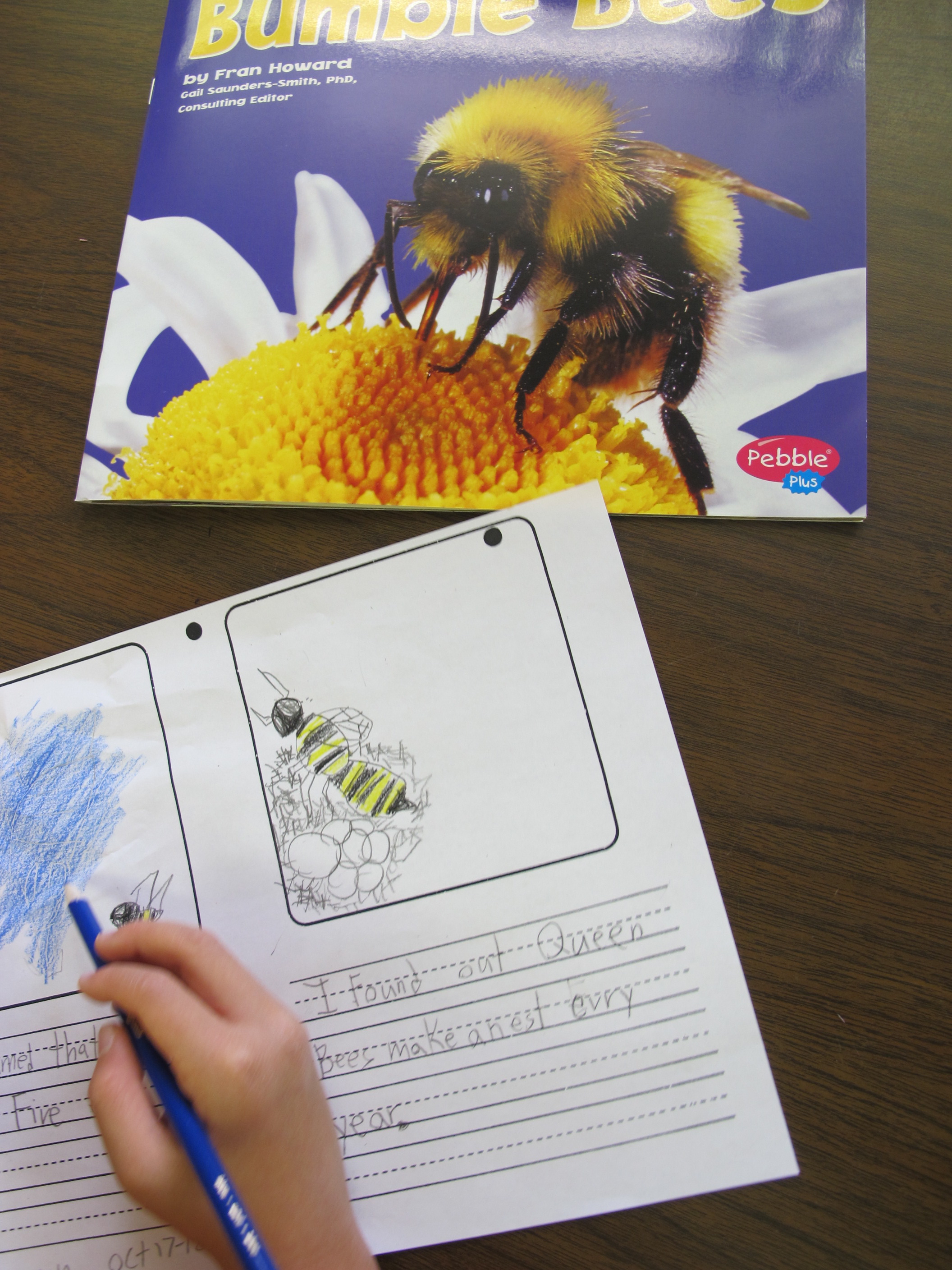
The task was then to each choose two pieces of information to share and draw about on a recording sheet. Some partners focussed on the same facts, others chose very different things. All the while, they were chattering about what they were thinking about what they saw and read.

Students referred to a chart of sentence starts that we had brainstormed together to help organize their thinking:

  • I found out that . . .
  • I discovered . . .
  • I just learned . . .
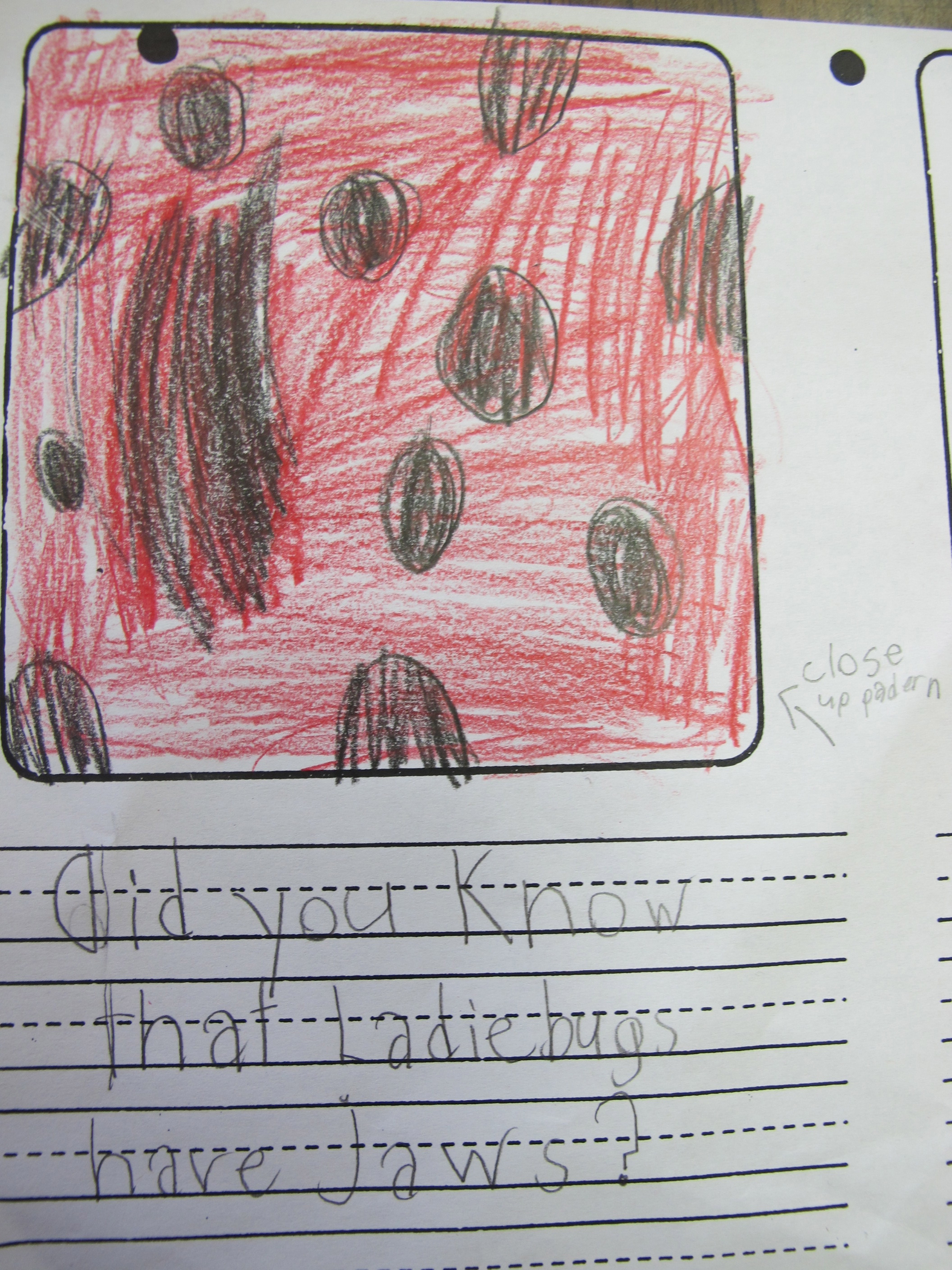
  • Did you know that . . . ?

Having a “Did you know . . ?” phrase honoured those students who did not find out anything new when they read the text. Students also used this phrase because they liked the excitement it generated.

The children studied the photographs carefully and added details to their own pictures to convey things that they were noticing. We have been talking a lot about “reading the pictures” as much as “reading the words” on a page.

What I love about the picture below is the tiny label “close up padern

What learning and experiences happened today? Students had the opportunity to:

  • explore a piece of non-fiction text
  • determine importance
  • distinguish between new information and facts already known
  • read aloud and listen to a peer read aloud
  • talk about information and photographs
  • share their learning in a picture and writing

What do we wonder?

On Thursdays, our Grade 2 reading group is beginning to work with non-fiction texts. There is much to teach about how to interact with non-fiction text so that students best understand all of the text features. But generating excitement and the thrill of wondering and discovering new facts is an essential piece of our learning as well. Over the last few weeks we have been picture walking books and sharing all of the things we wonder.

These Pebble Plus books published by Capstone are fantastic for this picture walking exercise as they feature full colour photographs of animals in their habitats along with simple text to share together. I have the African Animals series and the Animals and Their Homes series and found both through Scholastic.

The great thing about Thursdays is that my partner teacher, Ms. Hibbert is in the room for the morning in a Resource Teacher role so we are able to work with small groups and can encourage lots of sharing and discussion.

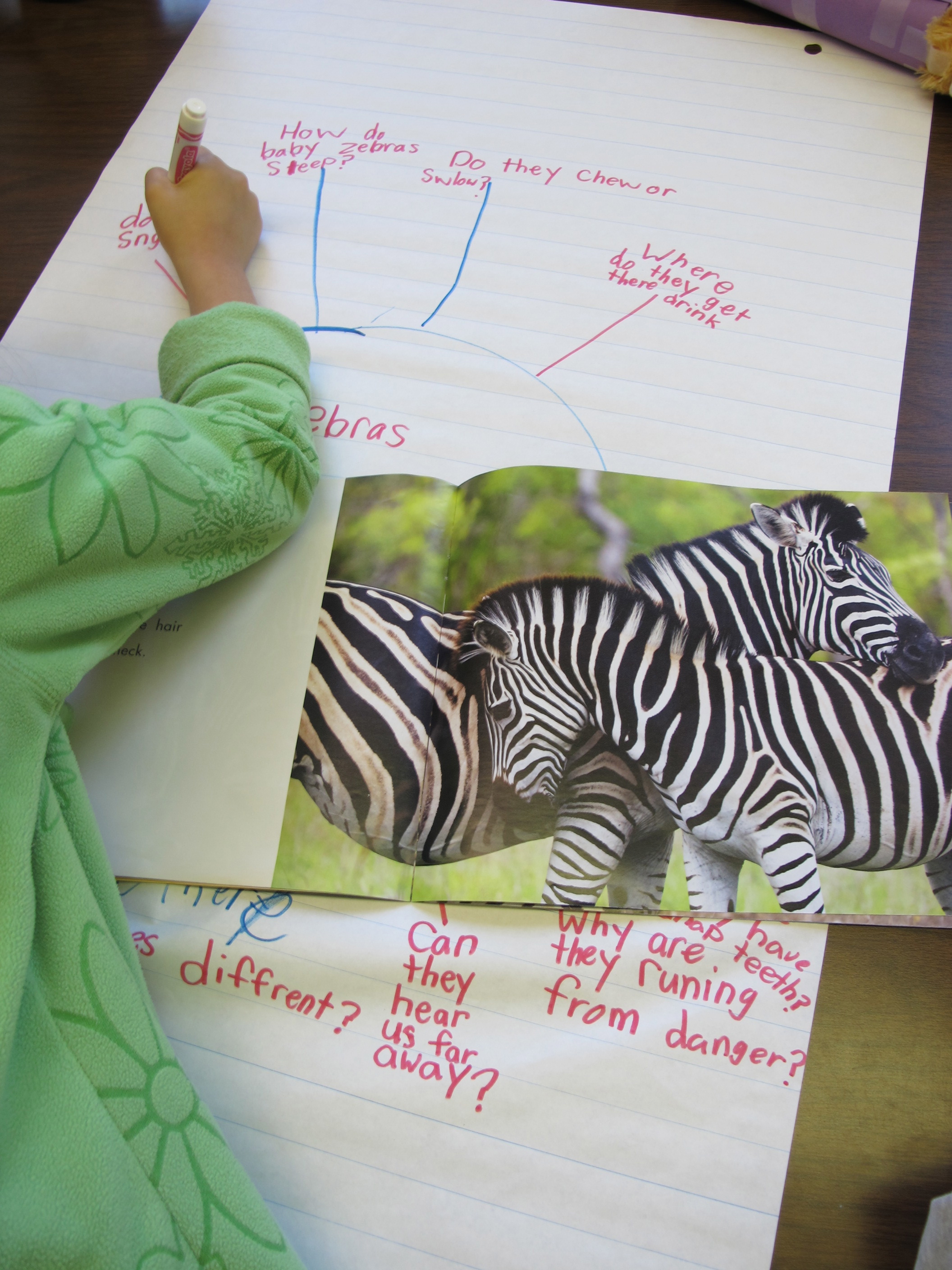
Day 1: On the first day, we split our group into two groups and had them picture walk a book with us and generate questions about the photographs. We used a book about bears and a book about rabbits as key texts. As the students asked questions, we charted them and pointed out when one question led to another or was an extension of another question so that students could think about how to extend their thinking and how their questions connected to someone else’s questions. After 15 minutes, we switched groups and the second group’s task was to look at the questions that had already been charted and as they looked through the text, to try and extend questions or wonder about things that had yet to be asked.

We then looked at both charts as a whole group and highlighted key question words (Who? Why? Could? Do? Is? etc.). We also talked about what questions were on both lists. A popular one? “How can you tell if it is a boy or a girl?” (although one group used the terms male and female so we helped each other extend the vocabulary being used :-))

Day 2: After reviewing and charting question words, we put the students into partners and had each group choose a book about an African animal. Students then studied the photographs in the books and charted their own questions. We circulated and challenged students to extend their thinking wherever possible.

Working with a partner allowed for a lot of great discussion. Often the partners stopped and shared what they thought an answer might be. There were disagreements, connections to background knowledge and lots of encouragement. (And charting on big chart paper with felts was pretty cool!)

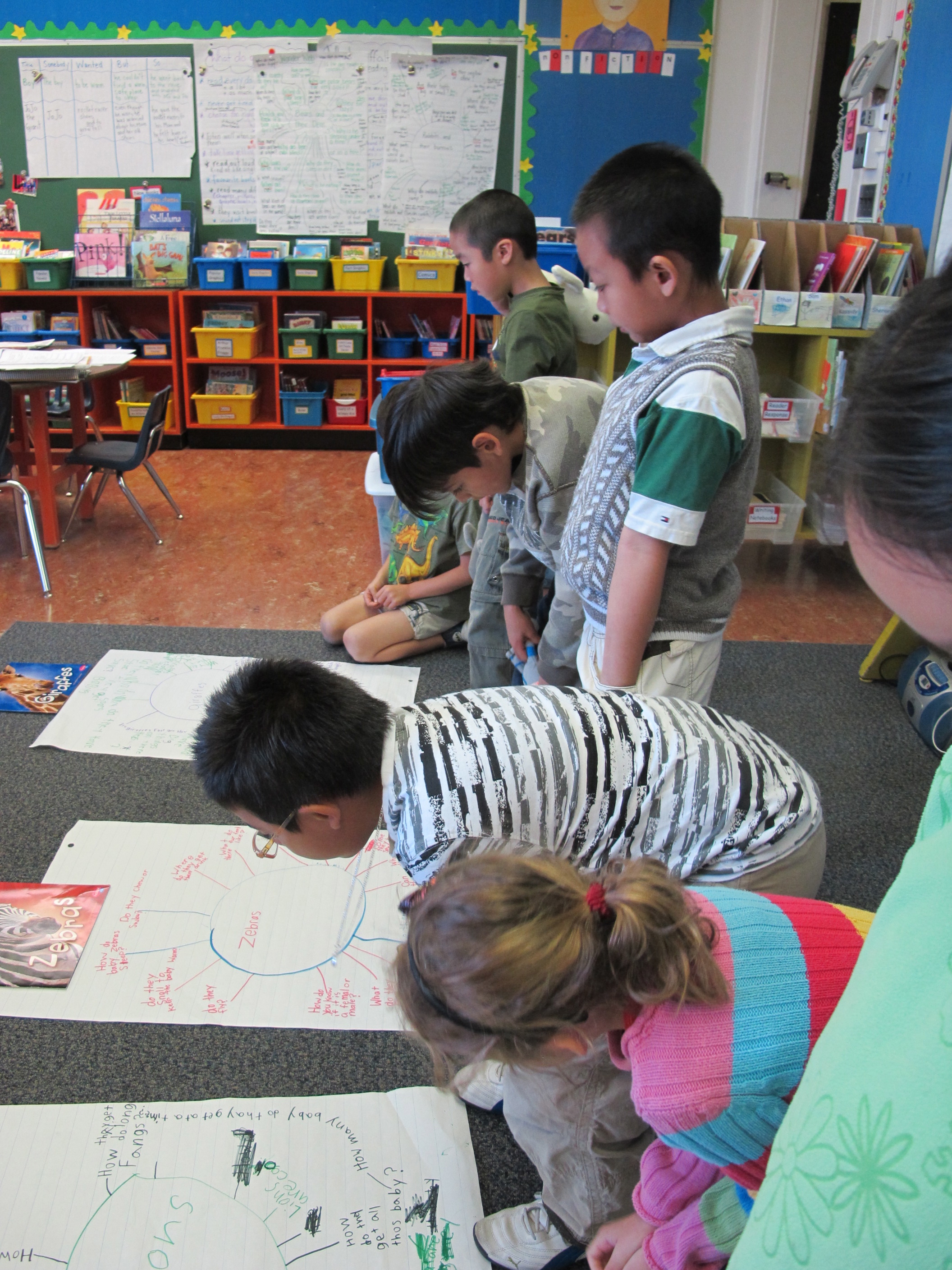
We then had students display their books and charts and partners “travelled along” the display looking at the questions that other groups asked.

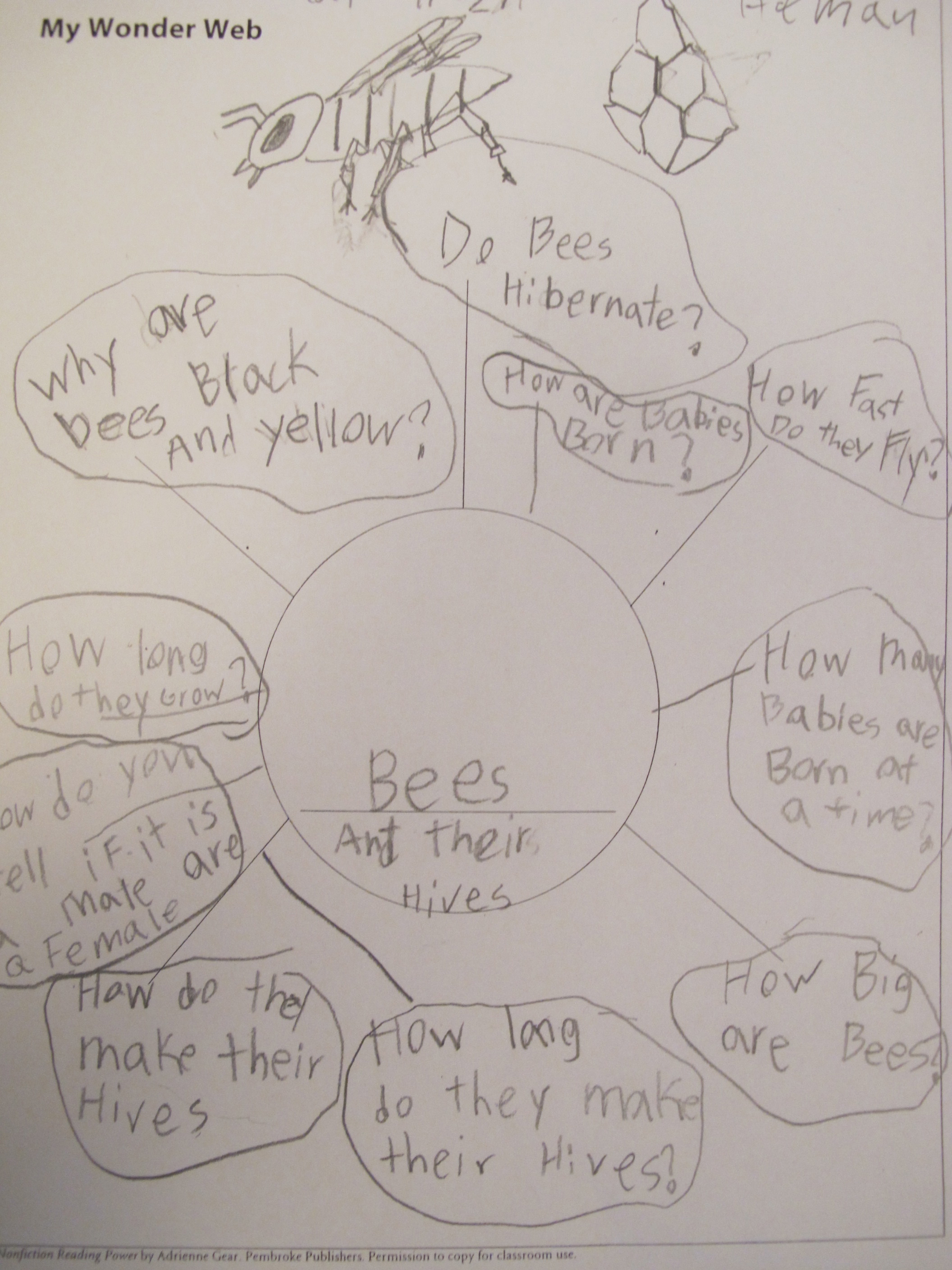
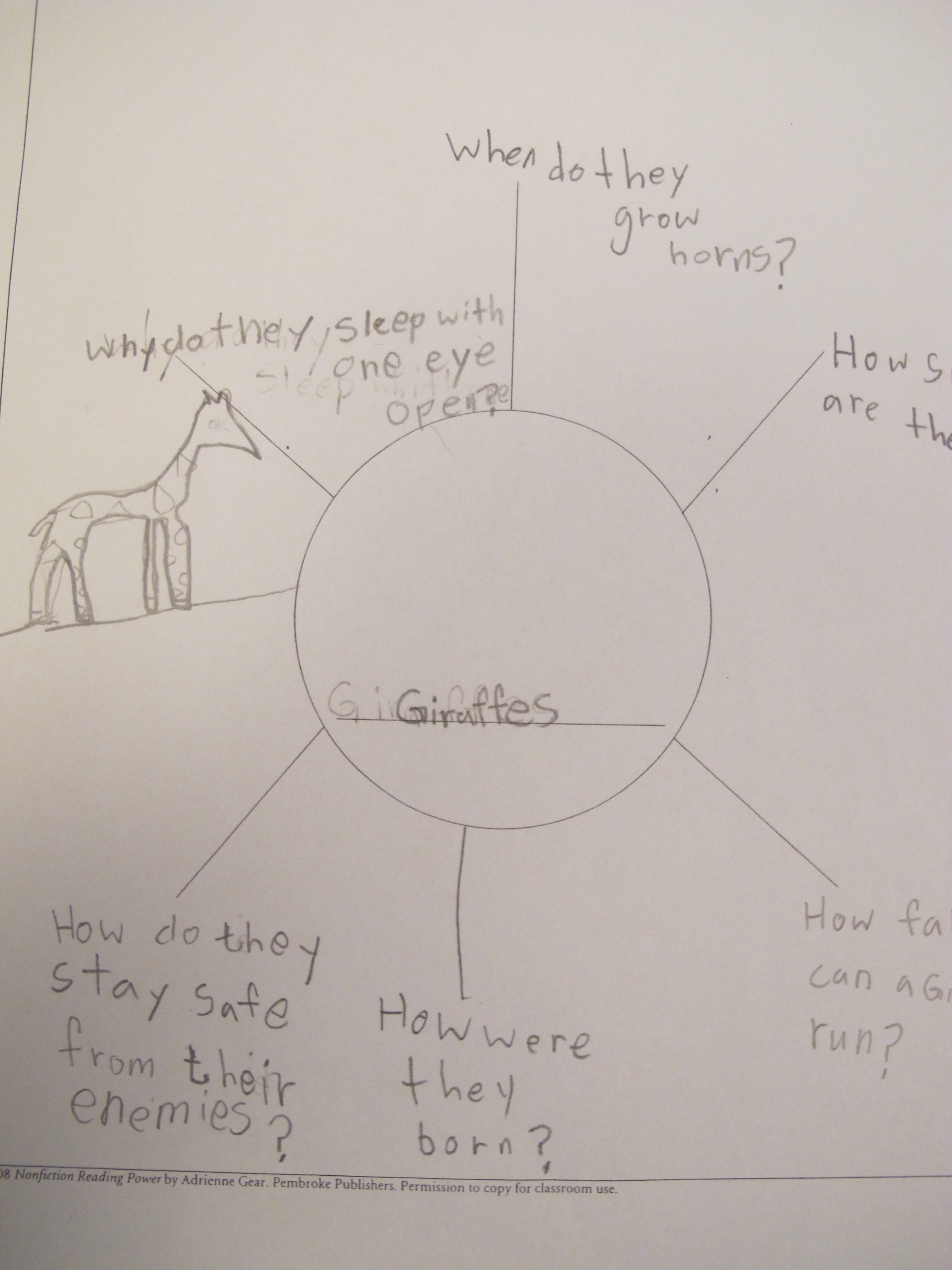
Day 3: On this day, students chose their own books and worked independently creating a wonder web. We reminded students to tap into their curiousity and study the pictures carefully. If they finished early, they went back and read the text and/or shared their questions with a peer. One little voice carried book and paper to a table muttering, “Just me  . . . I wonder how many questions I will wonder?”

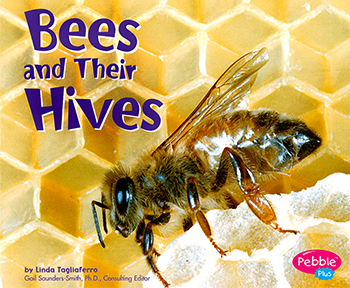
Here is Heman‘s wonder web about bees:

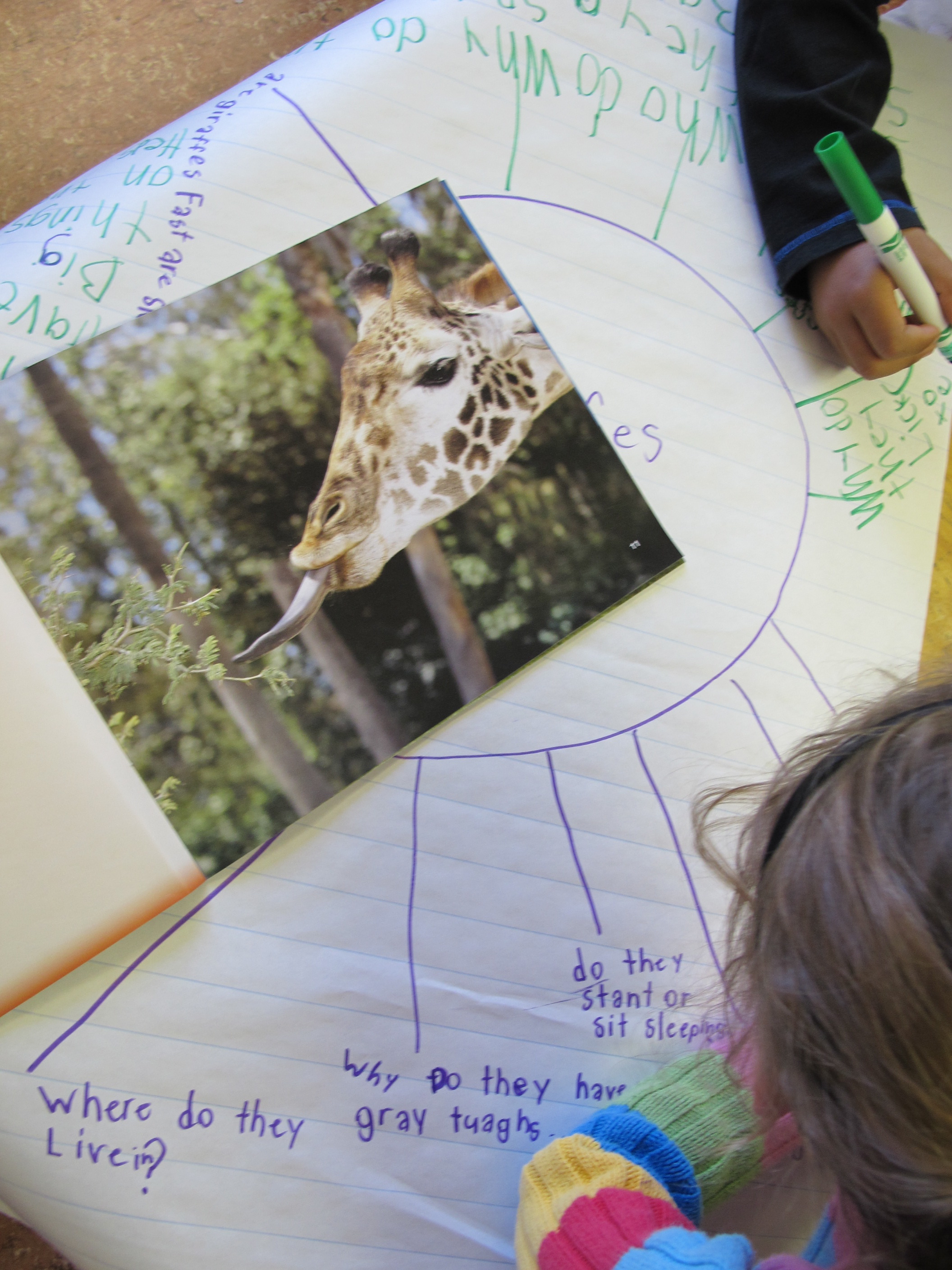
Sam asked some great questions about giraffes.

We have a long road down the non-fiction path ahead of us this year. But students are pretty excited that non-fiction titles can help us with all of those unanswered questions and even inspire more!

How do you generate excitement over non-fiction titles in your primary classroom? Please share!

Monday July 30th, 2012

It’s Monday What are you Reading? Celebrating books read from picture books to young adult reads. Link up with the meme sponsored by Kellee and Jen!

I read some wonderful picture books this week!

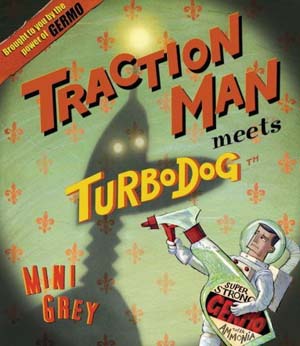
Traction Man Meets Turbo Dog by Mini Grey (who I happen to adore – read more here) There were lots of things I loved in this book – more in the pictures than in the storyline honestly. Love the oppositely stereotypical parents (Dad in apron and Mom with her circular saw). Loved the compost bin as play site. And what could be better than a search down the Grand Sofa Canyon? It did after all uncover a hairy sweet. This book reminds us germophobes not to come between a boy and his toy. Rescues into the slimy trash heap will be attempted!

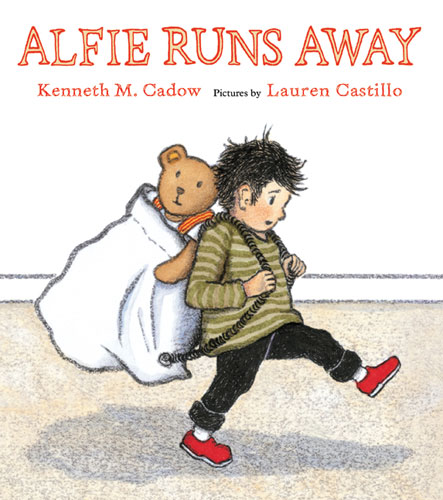
Alfie Runs Away written by Kenneth M. Cadow and illustrated by Lauren Castillo.  Alfie is upset and decides to run away announcing it emphatically. His mother “helps” him get ready. Absolutely captures the sentiments of both mother and child. Love Castillo’s illustrations.

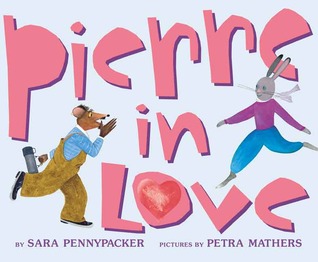
Pierre in Love written by Sara Pennypacker and illustrated by Petra Mathers. A beautiful picture book about being in love and being brave enough to admit it.

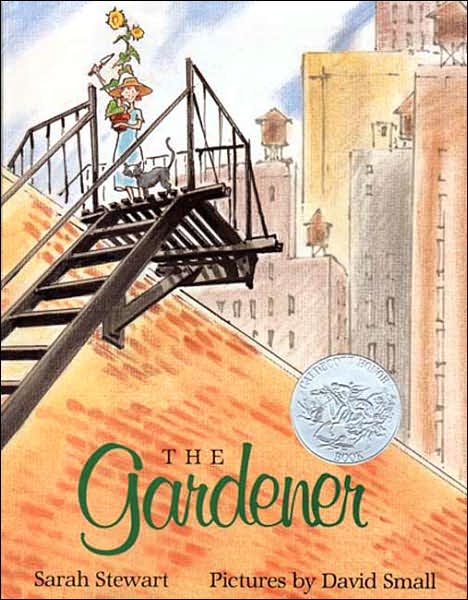
The Gardener written by Sarah Stewart and illustrated by David Small. I so love this author/illustrator team. And the book . . . We read it one night as a read aloud. Then the next day my daughter asked to read it again because she wanted to study the pictures. Lasting impressions – this book makes them! Love historical fiction delivered beautifully in a picture book!

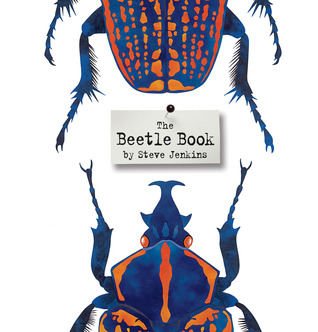
The Beetle Book by Steve Jenkins. I read this with my children as one of our many nightly read alouds (we also have a novel and a book of fairy tales on the go) over a few evenings. We were fascinated, shocked and sometimes disgusted (in the best of ways) as we learned all about beetles. Plan to purchase my own copy of this book and share it in the classroom this fall! Think of the art it will inspire! And since one in four living things happen to be a beetle, they deserve some studious attention!

Middle Grade reads:

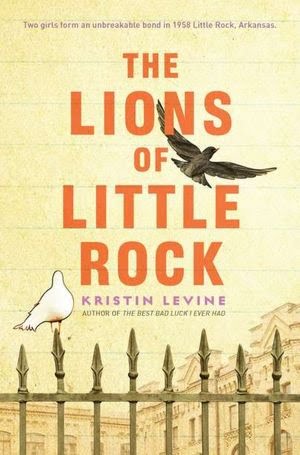
The Lions of Little Rock by Kristin Levine

I am considering this for a book club pick for our student book club. Such an important time in history – would prompt a LOT of discussion. I adored this book!

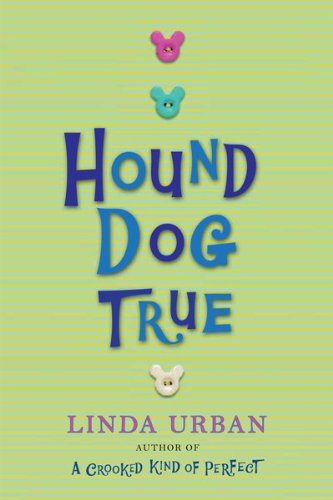
Hound Dog True by Linda Urban. Now I understand why this is  such a beloved book for so many. There are so many students I know who need to read this book. They will find themselves and so much more.

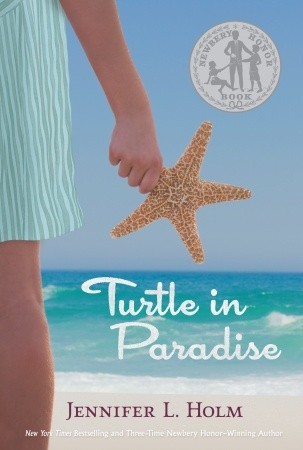
Turtle in Paradise by Jennifer L. Holm Okay, wow! I found one of the books I will read aloud to my new class this fall! Love the family dynamics between Turtle and the boy cousins. So much humour and yet lots of interesting things to discuss in terms of this time in history. Ideal read aloud for an upper primary classroom!