Nonfiction Picture Book Wednesday: Buzzing about Bees

It’s Nonfiction Picture Book Wednesday! 

NFPB 2014

Psst! Bzzz! Buzz! Buzz! 

This week I was fascinated with bees. It started with an information story book about community gardening and then led to a search for more books about bees that I might share alongside this title – one book new to me and one that I have in my nonfiction read aloud collection.

Big City Bees written by Maggie de Vries and illustrated by Renné Benoit (published in 2012)

 #nfpb2014 Buzzing about Bees There's a Book for That

I am a huge fan of the information story books that local author Maggie de Vries writes. I have often gifted these titles to my children, nieces, nephews and friends – love sharing stories about the natural world that are local, relevant and fascinating for children. This title – Big City Bees is a story about siblings Sophie and Matthew, who want to grow pumpkins in their community garden plot with Grandpa’s help. The children know that they need bees to help the pumpkins grow and worry that there won’t be any bees to find their pumpkin flowers in the big city. Grandpa takes them walking in the busy downtown streets looking for “big city bees”. They discover beehives atop a hotel roof and the story then shares all of the details of raising bees in hives.

We learn that bees are essential to the possibility of a pumpkin on a pumpkin vine. Each blossom (some male, some female) bloom for just one day. They must be pollinated by bees in order for a pumpkin to grow. My favourite page is of the two children crouched next to their pumpkin vines on a cold early morning before sunrise, determined to watch for the bees that might come and find their pumpkin flowers on the day that they will bloom. Oh the anticipation as the children wish, “Please come bees.”

The illustrations of the bees dusted with pollen are stunning – they look as if they are wearing gold sparkle. This story highlights both the importance of bees to the garden and the wonder of learning about growing things together in a family. With such a trend towards urban gardening in the city, this is an essential and timely title to share with children.

Follow this link to Maggie’s site to hear about why she was inspired to write this book. This title was inspired by Graeme Evans, who was both head of housekeeping and a beekeeper at the Fairmont Waterfront Hotel in Vancouver. Yes – there really are “big city bees”!

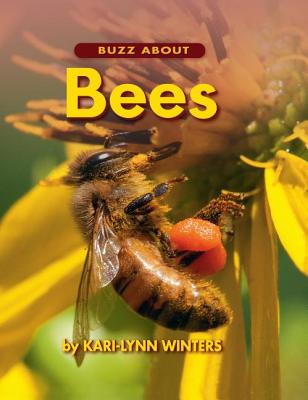
Wanting some more information about bees led me to this title: Buzz about Bees by Kari-Lynn Winters (published in 2013)
 #nfpb2014 Buzzing about Bees There's a Book for That


Organized in chapters with full of full colour photographs, labelled diagrams and many fun true and false quizzes, this book provides much information about bees. Parts I was particularly interested in:

  • a page with close up photographs detailing the differences between bees and wasps (yellow jackets)
  • a two page spread that explains (with step by step photographs), how to build a nesting box for orchard mason bees
  • information about colony collapse disorder and other reasons that bees are seriously endangered like parasites, shrinking habitats, pesticides, pollution and infections (bacterial, viral and fungal)
  • 10 ideas to “BEE the Change the World Needs” – ways to make a difference for bees – some I wasn’t aware of
  • this quote from Albert Einstein mentioned numerous times: “If bees disappeared, humans would have only 4 years left to live.”

I also pulled out a favourite title – The BumbleBee Queen written by April Pulley Sayre and illustrated by Patricia J. Wynne (published in 2005)

Lyrical text, detailed illustrations and additional facts shared on each page – this book about the life of a bumblebee queen reads like a information story book. I love reading this title aloud.

 #nfpb2014 Buzzing about Bees There's a Book for That

Thanks to Alyson from Kid Lit Frenzy for the inspiration to read and share more nonfiction picture books in 2014! Follow the link to Alyson’s blog to read about more nonfiction titles.

My goal is to read 65 nonfiction picture books for 2014. Progress: 12/65 complete!
Nonfiction Picture Book Wednesday: The mysteries of the underwater world

It’s Nonfiction Picture Book Wednesday! 

So excited to be participating in this meme again! I was inspired to read so many more nonfiction titles in 2013 thanks to #nfpb2013 and Alyson Beecher from KidLit Frenzy for the inspiration! I wrote about my favourite nonfiction picture book titles read in 2013 here. All of this reading meant many more fantastic titles being shared with my class! What could be better?

This week, I’m not sharing a recent title but it is one that is new to me and it was so enjoyed by my class that I felt the need to give it some more #booklove (of the nonfiction variety).

My students’ responses will help make the point of how accessible this book is to primary students.

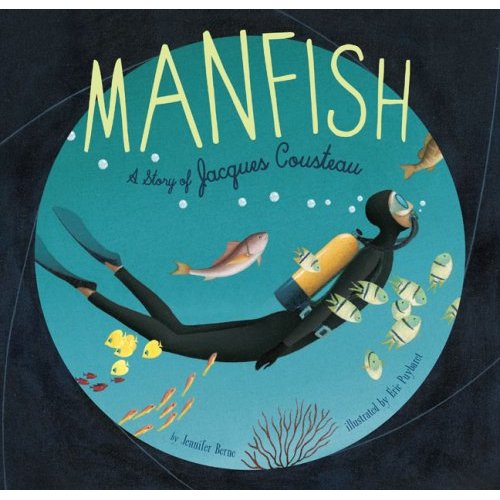
Manfish: A Story of Jacques Cousteau written by Jennifer Berne and illustrated by Éric Puybaret (published 2008)

Manfish NFPB 2014 The Mysteries of the Underwater World There's a Book for That

Picture book biographies, when well done, strike the important balance between inspiration and information. This title does this so well. The illustrations are magical – just the different shades of blue in the water on various pages is worth flipping through to notice. The theme that came through clearly was that Cousteau was fascinated by a world that he couldn’t spend prolonged time in. Without being able to breather underwater, how could Cousteau explore its mysteries? His invention of the aqua lung changed everything for him and for future ocean exploration.

What I loved most about this story is how it depicts the interests and passions of Cousteau at all ages and stages. It helps reinforce the message we want to send to our children – be curious, wonder, figure things out and care for our world. An ideal introduction to Cousteau.

Some student responses:

Ibtihal wrote: The most important thing under water is to breathe. The aqua lung helped Jacques to be a Manfish. When he was young he was curious. He loved to invent and draw things. He did writing and made his own movies. There’s a lot of fish in the water! 

Heman shared: Jacques Cousteau was a person who loved fish. When Jacques was a little boy, he was curious about how rocks sink and boats float. He always wondered how to breathe underwater. So he invented the aqua lung to solve his problem which let him be a Manfish. 

Hyo Min wrote: When Jacques goes deeper it gets colder and darker. He invents things. With his goggles he can go underwater.

Kevin wrote: I wonder how to breathe underwater? I learned that if you go deeper, it gets colder. The flippers made the men go faster and the rubber suits made them warm. Jacques liked to invent, draw and write. He wants to explore under water so he invented an aqua lung. They made an exploring boat. 

Kassidy shared: Jacques was interested in how to breathe underwater. He and his friends were having a race in the water. Who can go the fastest and stay under water longest? But they needed to stay under for longer. 

Andrew shared: Jacques went diving with his friends Didi and Phillipe. He invented the aqua lung/water lung. Just when he went down it was like a new world to Jacques. He felt so good. He saw two worlds together. He was a Manfish! 

We read this title over two days in my classroom and did a lot of talking, wondering and writing. Students asked if we could learn more about how to save the ocean from pollution to be like Jacques Cousteau. There was much upset and talk about how people are throwing their trash in the ocean. We will continue exploring this topic. At the back of Manfish in the author’s note are some suggestions of how to have “more Cousteau” in your life. Caring for our planet is discussed. 

I then shared an IMAX movie (Deep Sea) with the students so that they could get a sense of how incredible life in the ocean can be. They were fascinated by the predator/prey relationships, examples of symbiosis and the somersaulting manta rays! After the movie, students did some wonderful art work and writing.

NFPB 2014 The Mysteries of the Underwater World There's a Book for That

Other titles to share on this topic . . .

Another picture book biography:

Life in the Ocean: The Story of Oceanographer Sylvia Earle by Claire A Nivola (published 2012)

I think this is a wonderful read aloud to share with upper primary (and older) students about finding your passion and making it your life’s work. I love this book for many reasons. The depiction of Earle’s curious childhood in the water, descriptions of moments in her life that truly shaped and changed her, beautiful and enticing illustrations and this very important message: “You can’t care if you don’t know.” In this story, this message applies to ecology and caring for our natural world but it is a message that applies to so many things. One worth thinking a lot about.

Life in the Ocean NFPB 2014 The Mysteries of the Underwater World There's a Book for That

Books to inspire wonder about the ocean world:

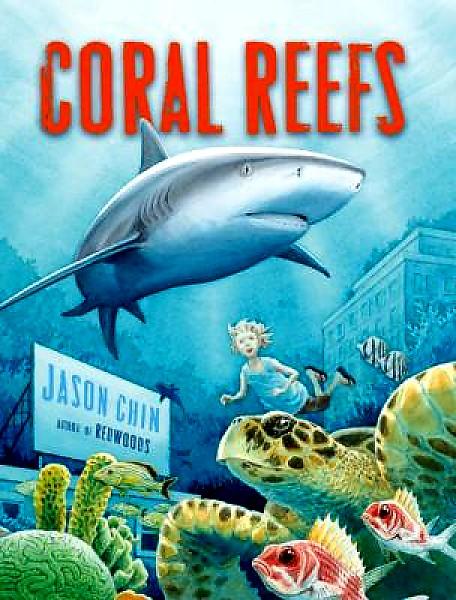
Coral Reefs by Jason Chin (published 2011)

Coral-Reefs NFPB 2014 The Mysteries of the Underwater World There's a Book for That

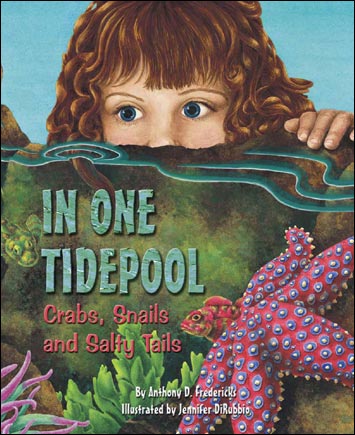
In One Tidepool: Crabs, Snails and Salty Tails By Anthony D Fredericks and illustrated by Jennifer DiRubbio (published in 2002)

In one Tidepool NFPB 2014 The Mysteries of the Underwater World There's a Book for That

My goal is to read 65 nonfiction picture books for 2014. Progress: 5/65 complete!
Thanks to Alyson from Kid Lit Frenzy for the inspiration to read and share more nonfiction picture books in 2014! Follow the link to Alyson’s blog to read about more nonfiction titles.

NFPB 2014

Nonfiction Picture Book Challenge 2014

I’ve been inspired once again by Alyson Beecher at KidLit Frenzy to participate in the 2014 Nonfiction picture book challenge! Link up here to join in!

NFPB 2014

According to Goodreads, last year I read 66 nonfiction picture books – my goal had been 60 titles. I read 44 nonfiction picture books in 2012 so it was wonderful that participating in this challenge allowed me to increase the titles I read by a third! Wonderful for me and wonderful for my students as my passion for these titles has spilled over into some amazing read aloud experiences! And the learning . . . Wow!

This year when I selected my favourite titles of the year, including nonfiction picture books was a priority – I credit this challenge with my new absolute love for this genre. Thank you Alyson and all of the fantastic bloggers sharing favourite reads all year!

I would like to keep reading at the nonfiction pace I read last year – so I am choosing 65 titles as my goal. Again, I will try and read many recently published books, but there are many 2013 (and even older) titles that I really want to get to so I will be reading both new and older titles. When I can, I will include favourites and link to Alyson’s Wednesday nonfiction posts.

One of my most popular posts of the year was for this challenge: Wonder Inducing Nonfiction Read Alouds. I have been using this list to guide which books I share with my students. In my timetable, I have set aside two guaranteed nonfiction read aloud times each week. Often, it is more. We read a lot of nonfiction in my room!

Like last year, I am excited to learn about a variety of nonfiction titles shared via the bloggers participating in this challenge! Reading passion is wonderfully contagious!

My ten nonfiction favourites read in 2013 (not just published in 2013) included:

The final 3 titles on this list were on my Favourites of 2013 list and four of these books were on my Gift Books 2013 list. Testament to the nonfiction love!

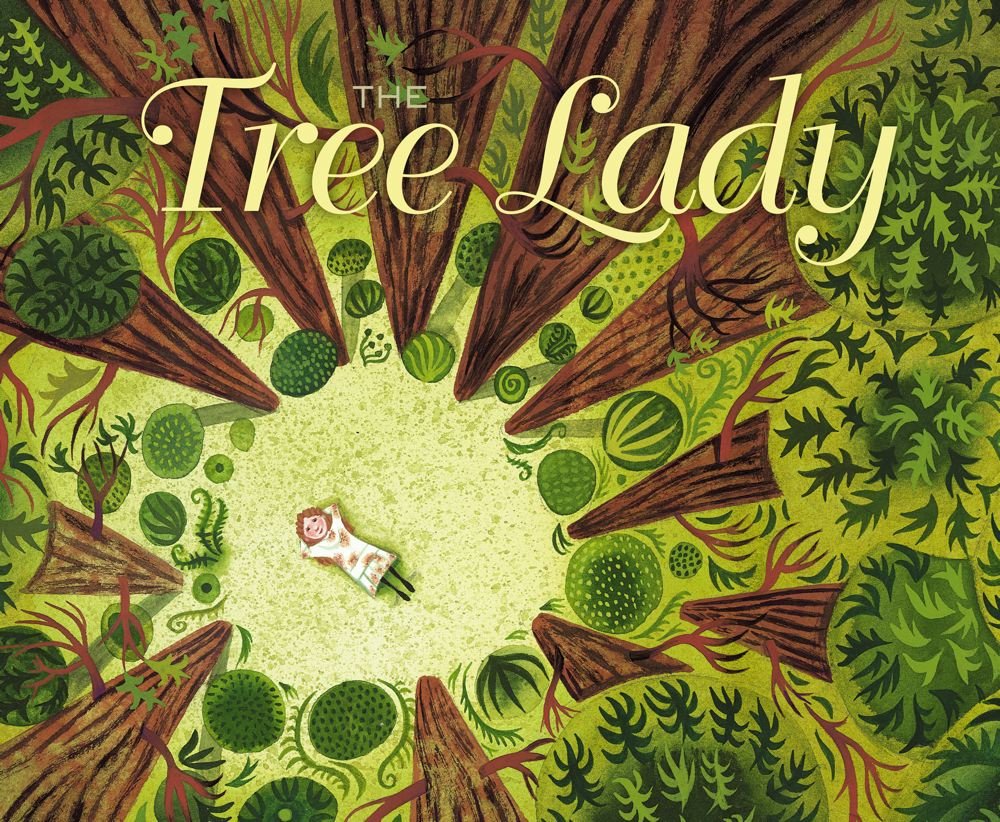
The Tree Lady by H. Joseph Hopkins and illustrated by Jill McElmurry

Tree Lady NF Picture Book Favourites of 2013 There's a Book for That

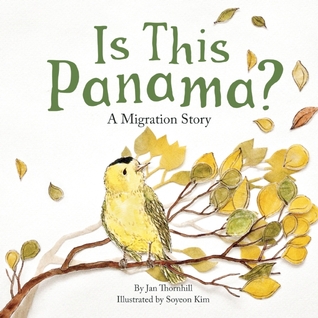
Is This Panama? A Migration Story written by Jan Thornhill and illustrated by Soyeon Kim 

Is this Panama? NF Picture Book Favourites of 2013 There's a Book for That

No Monkeys, No Chocolate written by Melissa Stewart and Allen Young with illustrations by Nicole Wong 

No monkeys, No chocolate NF Picture Book Favourites of 2013 There's a Book for That

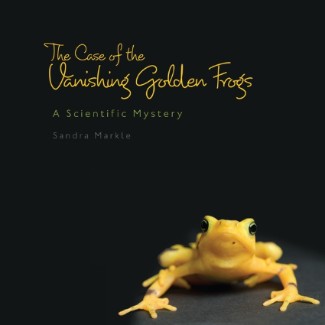
The Case of the Vanishing Golden Frog: A Scientific Mystery by Sandra Markle

The Case of the Vanishing Frogs NF Picture Book Favourites of 2013 There's a Book for That

My First Day by Steve Jenkins and Robin Page

my first day NF Picture Book Favourites of 2013 There's a Book for That

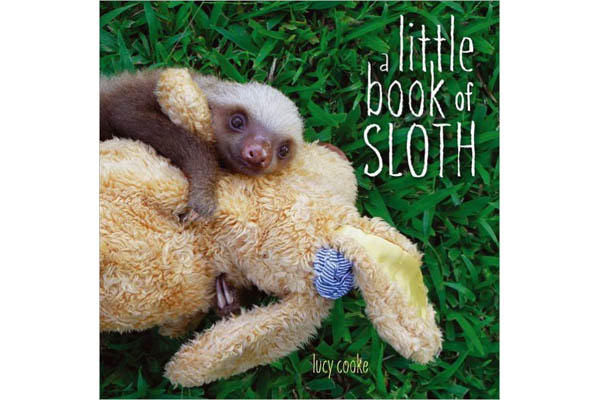
A Little Book of Sloth by Lucy Cooke 

a little book of sloth NF Picture Book Favourites of 2013 There's a Book for That

Even an Octopus Needs a Home by Irene Kelly 

NF Picture Book Favourites of 2013 There's a Book for That

Lifetime: The Amazing Numbers in Animals’ Lives  written by Lola Schaefer and illustrated by Christopher Silas Neal

Lifetime NF Picture Book Favourites of 2013 There's a Book for That

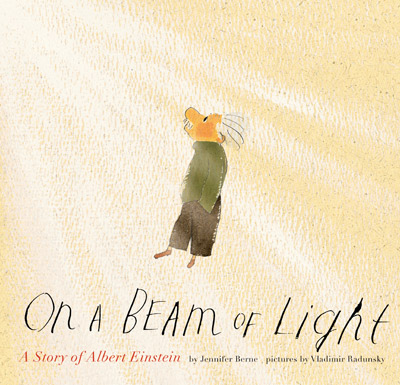
On A Beam of Light- A Story of Albert Einstein by Jennifer Berne and illustrated by Vladimir Radunsky

 On a Beam of Light NF Picture Book Favourites of 2013 There's a Book for That

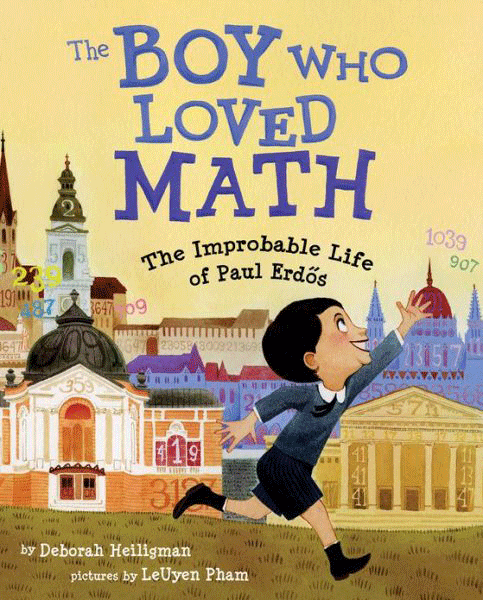
The Boy who Loved Math: The Improbable Life of Paul Erdos written by Deborah Heiligman and illustrated by LeUyen Pham 

 The Boy who Loved Math NF Picture Book Favourites of 2013 There's a Book for That

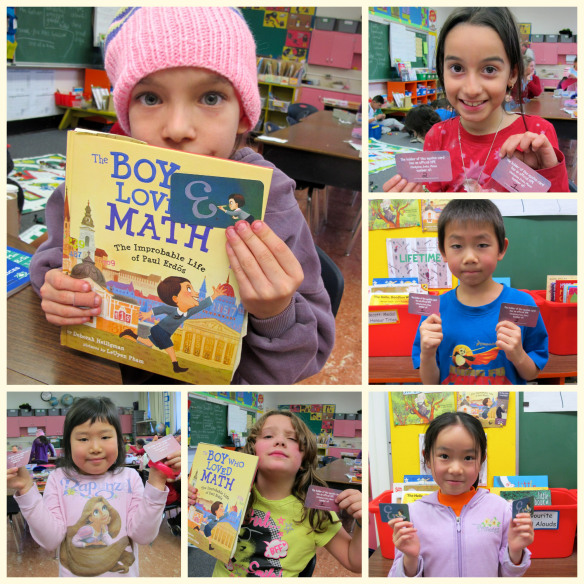
I feel compelled to share this post to highlight all of the love this book had in my classroom: For the Love of Math

NF Picture Book Favourites of 2013 There's a Book for That

Nonfiction Picture Book Wednesday: Preschool animal discoveries

It’s Nonfiction Picture Book Wednesday! 

I am so excited about the number of nonfiction picture books being written ideal for younger readers – from preschool to early primary. Recently I was invited to John Oliver High School‘s Wonder of Reading Event. My task? To read to rotating groups of preschool age children and their parents/caregivers for ten minutes at a time over the morning. What fun! I decided that rather than picking a fiction story, I would bring in a number of nonfiction titles and a basket of animal stuffies and set myself up for an interactive reading experience adventure into the world of animals.

I shared a few pages of different books depending on where the mood took us and the interest level of the group. We ended up talking a lot about ostriches, monkeys and penguins and the fact that none of us had a tail. What was in my bin of books?

Let me share:

From the brilliant Nicola Davies – three titles illustrated by Marc Boutavant. All of these books have a lift the flap and find out component. In my class we have started calling these “flip flap” books inspired by one student who refers to them like this because it makes one smile just to say it! 🙂

Who’s Like Me? (published 2012)

“Who’s like me? Who’s furry and breathes air like me? Is it . . . ?” 

Who's like me? #nfpb2013 Preschool Nonfiction There's a Book for That

Who Lives Here?  (published 2012)

“Who lives here? Who lives in this still, cool pond? Is it . . . ?”

 #nfpb2013 Preschool Nonfiction There's a Book for That

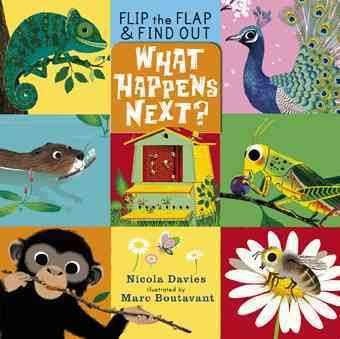
What Happens Next?  (published 2012)

“Here’s a hungry chameleon. Here’s a juicy grasshopper. What happens next?”

What happens next?  #nfpb2013 Preschool Nonfiction There's a Book for That

And even though none of us could find a tail on ourselves, we were sure excited to guess which tail belonged to which animal in Laura Hulbert‘s Who Has This Tail? Illustrated by Erik Brooks (published 2012)

 #nfpb2013 Preschool Nonfiction There's a Book for That

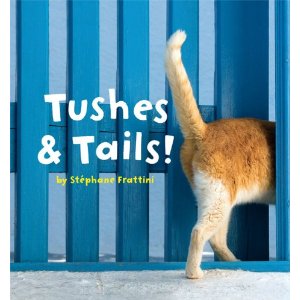
Tushes & Tails! by Stephane Frattini (published 2012) Who belongs to which tush and/or tail? It is not as easy as it many seem to guess. This was a hit with the parents who were as curious as their little ones to find out about each mysterious bottom!

 #nfpb2013 Preschool Nonfiction There's a Book for That

My original goal was 60 nonfiction picture books for 2013. Progress: 56/60 complete!

Thanks to Alyson from Kid Lit Frenzy for the inspiration to read and share more nonfiction picture books in 2013! Follow the link to Alyson’s blog to read about more nonfiction titles.

NFPB2013leaves

Nonfiction Picture Book Wednesday: Migration Stories

It’s Nonfiction Picture Book Wednesday! 

I will admit to being absolutely fascinated by the whole concept of migration – the effort exerted, the distances travelled and the whole idea of living life in different places in different seasons. Animals are amazing.

A new migration favourite: Is This Panama? A Migration Story written by Jan Thornhill and illustrated by Soyeon Kim (published in 2013)

A little Wilson’s warbler wakes up to a colder than usual morning and realizes that it is time to make the journey south to Panama. But, where are all of the other warblers? They must have left without him! How would he make it to Panama alone? So begins this story of Sammy (the warbler) and his quest to find his way to Panama on his own, without knowing the way.

Is this Panama? NFPB Wednesday There's a Book for That

Sammy meets many other animals who are also migrating, adapting for the changing season or planning to sleep away the winter. A ptarmigan explains that he doesn’t need to travel south because his changing white feathers keep him safe from predators while he continues to find lots of food in the north. A flock of sandhill cranes give Sammy a lift further south but not nearly close enough to Panama. They do however teach him that their migration strategy is to search for landmarks that they count on every year. Darner Dragonflies explain to Sammy that they follow the shoreline because flying over open water is much too dangerous. Other warblers (some redstarts, warbler cousins) show Sammy how they follow star maps by flying at night and a sense of knowing awakens in Sammy. Unfortunately, as he sets out with a clearer sense of his destination, he is confused by the bright lights of a city. In a terrible storm, Sammy finds refuge on the backs of a group of social humpback whales on route to warmer waters to calve. They bring him farther south and give him the rest he needs to find some new energy to fly. Finally, Sammy finds himself just where he needs to be. What a journey.

In the back of the book is a map revealing the regular route warblers take from Alaska to Panama and then Sammy’s much longer round about route. All of the creatures Sammy encounters are described as well – with important details about migration routes, reasons for migrating and migration strategies.

Did you know that Hudsonian Godwits can fly almost 10, 000 km in one go? Really! Humpback whales use the position of the sun and Earth’s magnetic field to guide their journey. Caribou migrate farther than any other land animal.

There is also a page titled How Animals Migrate detailing the various strategies animals use to guide their migration, why animals migrate and what are some of the dangers of migration (most happen to be caused by humans).

An amazing story and so much more on the topic of migration, I highly recommend this title. It would be a great read aloud in primary classes and ideal for independent reading for early intermediate students.

Interested in other picture books about migration?

These are also favourites:

Bird, Butterfly, Eel with story and paintings by James Prosek

Bird, Butterfly, Eel NFPB Wednesday There's a Book for That

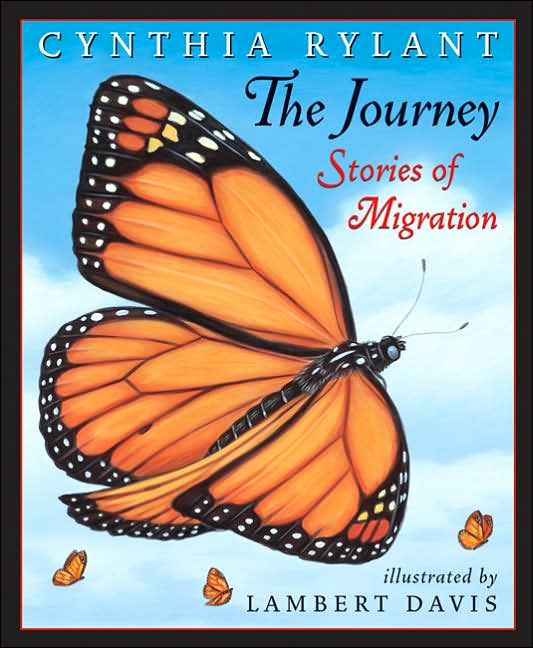
The Journey: Stories of Migration written by Cynthia Rylant and illustrated by Lambert Davis

Stories of Migration NFPB Wednesday There's a Book for That

My original goal was 60 nonfiction picture books for 2013. Progress: 50/60 complete

Thanks to Alyson from Kid Lit Frenzy for the inspiration to read and share more nonfiction picture books in 2013! Follow the link to Alyson’s blog to read about more nonfiction titles.

NFPB2013leaves

Nonfiction Picture Book Wednesday: Farm Animals

It’s Nonfiction Picture Book Wednesday! 

There is something about a farm that is just a one stop shop when it comes to learning and observing nature. Fences, stalls and chicken coops might keep the animals safely in but they don’t keep the learning out! Baby animals. Food production. Farmyards. So many things to see. Many city kids get few opportunities to visit farms. But they are always interested in farm animals and love learning more about farm life. Books about the farm are always popular in my primary classroom.

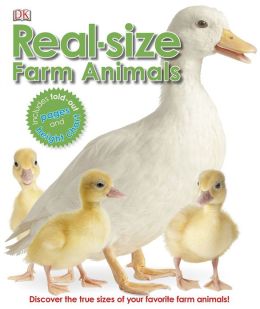
When I discovered Real-size Farm Animals (DK Publishing 2013) at the public library, my family had just been to a farm and spent time with goats, pigs, horses, a donkey and many farm cats. All of these animals and many more are featured in this book.

Nonfiction Picture Book Wednesday: Farm Animals

This title profiles fourteen animals including the fox, the owl and our favourite, the farm cats! Many pages fold out to reveal life size animals or the true size of ‘parts’ of an animal. Each page has various drawings, photographs and headings to organize specific information. There is a fact box on each two page spread with three or four pieces of interesting facts about each animal. There is also a comparison box featuring the image of a four foot tall child next to the animal described.

Nonfiction Picture Book Wednesday: Farm Animals

Some interesting facts I learned:

  • A jersey cow can provide up to 80 glasses of milk a day (6 gallons/20 litres)
  • Only female ducks quack; male ducks make a whispery sound.
  • Sheep have a split in their upper lip which helps them to collect their food when grazing.
  • A donkey’s bray can be heard more than 2 miles/3 k.m. away
  • There are more chickens in the world than any other type of bird!

There is a two page glossary of new words in the back and the book even comes with a pull out height chart to post on the wall. An ideal book about farm animals for preschool/early primary.

My students also love the Farm book – one of Scholastic’s Discover More titles. Farm animals are certainly featured in this book but there are also pages that describe how certain farm equipment works and details about food production such as orchards and grain silos.

Nonfiction Picture Book Wednesday: Farm Animals

These titles have many nonfiction features that make them ideal for independent reading in my Grade 2/3 classroom such as bright colourful photographs, lifecycle diagrams, a detailed glossary and an index. We have all of the Discover More titles in our nonfiction library.

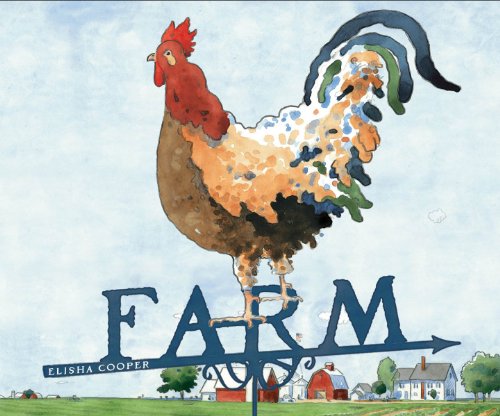
Another beautiful title about life on the farm in Elisha Cooper’s Farm.

Nonfiction Picture Book Wednesday: Farm Animals

What a book! Details of what happens on a farm day in and day out. Who lives there? The farmers, the cattle, the chickens, countless cats, etc. What do we find? Barns, sheds, tractors, trucks, plenty of equipment . . . And what exactly happens? Enough great details to fill a book that you have to really settle into to finish reading. A great read aloud but also a great book to explore with a friend. Elisha Cooper‘s Farm is a must for the primary classroom.

My original goal was 60 nonfiction picture books for 2013. Progress: 45/60 complete

Thanks to Alyson from Kid Lit Frenzy for the inspiration to read and share more nonfiction picture books in 2013! Follow the link to Alyson’s blog to read about more nonfiction titles.

NFPB2013leaves

Nonfiction Picture Book Wednesday: Start with Science series featuring Oscar, the curious kitten

It’s Nonfiction Picture Book Wednesday! 

Sometimes a title doesn’t have to be the “be all, end all” source of information on a topic. Sometimes, it just needs to begin to inspire wonder. These Start with Science titles featuring the curious Oscar and the various friends he meets are ideal for the early primary classroom to begin bigger conversations about a variety of science topics. I introduced my class to this series with Oscar and the Frog and many children later asked me to purchase more of “those Oscar question books.” So I did! Now our classroom collection holds five titles 🙂

 Start with Science The Oscar Books

Oscar and the Bat: A Book About Sound (published 2009) This book introduces the concept of loud and quiet noises and compares close and far away sounds. I like how the beginning of a list is started – what makes no sound when it is still but makes sound when it begins to move? For example, grass in the wind has a swooshing sound, moving water has a sound that still water does not, etc. It would be great to expand on this idea in a classroom brainstorming session. At the back of the book, there is a review of what Oscar learned:

  • When we listen to what is going on around us, it gives us clues to what is happening. Close your eyes and listen!
  • Both living and nonliving things make sounds
  • There are many different kinds of sound – some are considered opposite (i.e. deep vs. high)

Oscar and the Bat:  Start with Science The Oscar Books

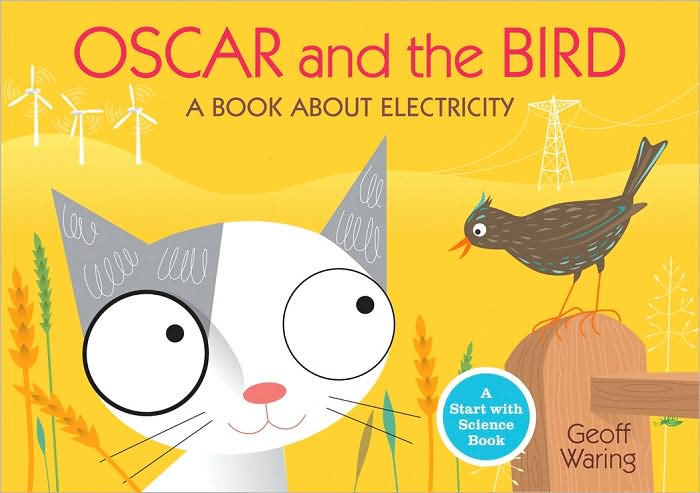
Oscar and the Bird: A Book about Electricity (published 2009) In this title, Oscar learns that electricity is a kind of energy that people use to make things move, light up, make sounds or heat up. The bird who is teaching Oscar explains that electricity might come from a battery or from wires (power lines) or even from lightning – that electricity is all around us. In the final summary, the review includes:

  • what electricity is for
  • how electricity works
  • what electricity is made from (chemicals, burning coal or oil, natural sources such as wind)

Oscar and the Bird:  Start with Science The Oscar Books

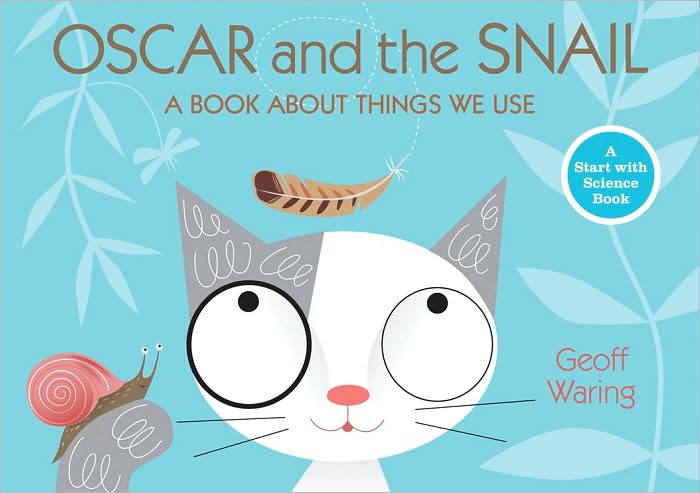
Oscar and the Snail: A Book about Things we use (published 2009) This title feels like it is best suited for the youngest of learners. Learn about where materials come from (i.e. wood is from nature vs glass is made by people, using sand) and how materials have different qualities and different best uses. A book to inspire a discussion about what materials we find in a home or classroom and where they might have come from.

Oscar and the Snail:  Start with Science The Oscar Books

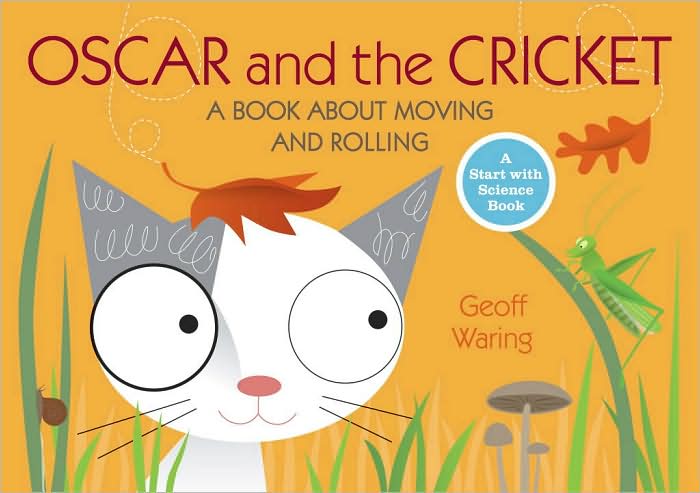
Oscar and the Cricket: A Book about Moving and Rolling (published 2008) This title is a great book to introduce beginning concepts around physics. How do things begin moving, keep moving and what makes them stop? Vocabulary like push, pull, force, and travel are used. Oscar learns that different objects move differently over varied surfaces (rough, smooth, etc.) It is also explained that animals have muscles that make them move and that they don’t require a push or pull to get started.

Oscar and the Cricket:  Start with Science The Oscar BooksOscar and the Frog: A Book about Growing (published 2007) This title introduces concepts of growing and how different living things begin, grow and develop. I liked the connections/comparisons between plants and animals. Children learn about a life cycle.

Oscar and the Frog:  Start with Science The Oscar Books

There is one more title in this collection but I haven’t read it. (Oscar and the Moth: A Book about Light and Dark)

I think all of these titles are well suited to buddy reading or reading to an adult where there is time for discussion and further questions. In a K-2 class, they would be great read alouds to help determine what children might already know about a topic and what else they are wondering. If you are looking for more texts that your primary students can manage independently, these titles would make a nice addition to the nonfiction section of your classroom library.

My original goal was 60 nonfiction picture books for 2013. Progress: 42/60 complete

Thanks to Alyson from Kid Lit Frenzy for the inspiration to read and share more nonfiction picture books in 2013! Follow the link to Alyson’s blog to read about more nonfiction titles.

NFPB2013leaves

Nonfiction Picture Book Wednesday: Healthy Kids all over the world

It’s Nonfiction Picture Book Wednesday! 

Some of the most powerful books to share with kids are books featuring photographs of children doing everyday things around the world. There is a natural fascination to compare. What is different? What is the same? How are things done somewhere else? What does it look like? As children explore these photographs and accompanying text, the huge world seems a little bit smaller and we are happy we share it in such similar and diverse ways.

This week I came across Healthy Kids (A Global Fund for Children book) by Maya Ajmera, Victoria Dunning and Cynthia Pon (published in 2013). This book begins with a forward by Melinda French Gates reminding readers that all children have the right to be healthy .

Healthy Kids Nonfiction Picture Book Wednesday There's a Book for That

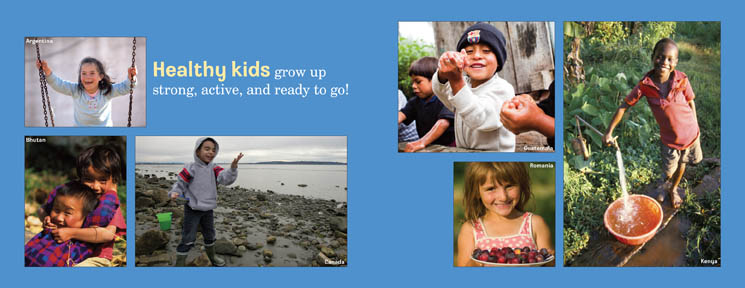
The photographs in this book are lovely. Each full page spread features multiple photographs (each labelled by country) of children engaged in the activity described by the text. The book focuses on clean water, a healthy diet, medical and dental care and adequate exercise. A home that is clean and safe, immunizations and a hygenic place to go to the bathroom are explained as being an essential part of a healthy life.

Healthy Kids Nonfiction Picture Book Wednesday There's a Book for That

Travel around the world and witness a young girl pumping water in India, a group of children brushing their teeth together in Tonga and children whizzing down a hill on toboggans in Greenland. Bike riding in Botswana is great exercise. In Nigeria, children sleep under mosquito nets. Children wash their hands at an outdoor sink in Guatelmala.

The last few pages of the book provide more information on each of the topics covered and also stresses that while healthy kids live all over the world, not all communities and countries have everything they need to ensure the health of their children and citizens. Some suggestions of ways to advocate for better health for children world wide are suggested.

Pair this title with other books – both fiction and nonfiction that celebrate children, their bodies, their feelings, their families, their happiness and their health. Here are just a few of my favourites:

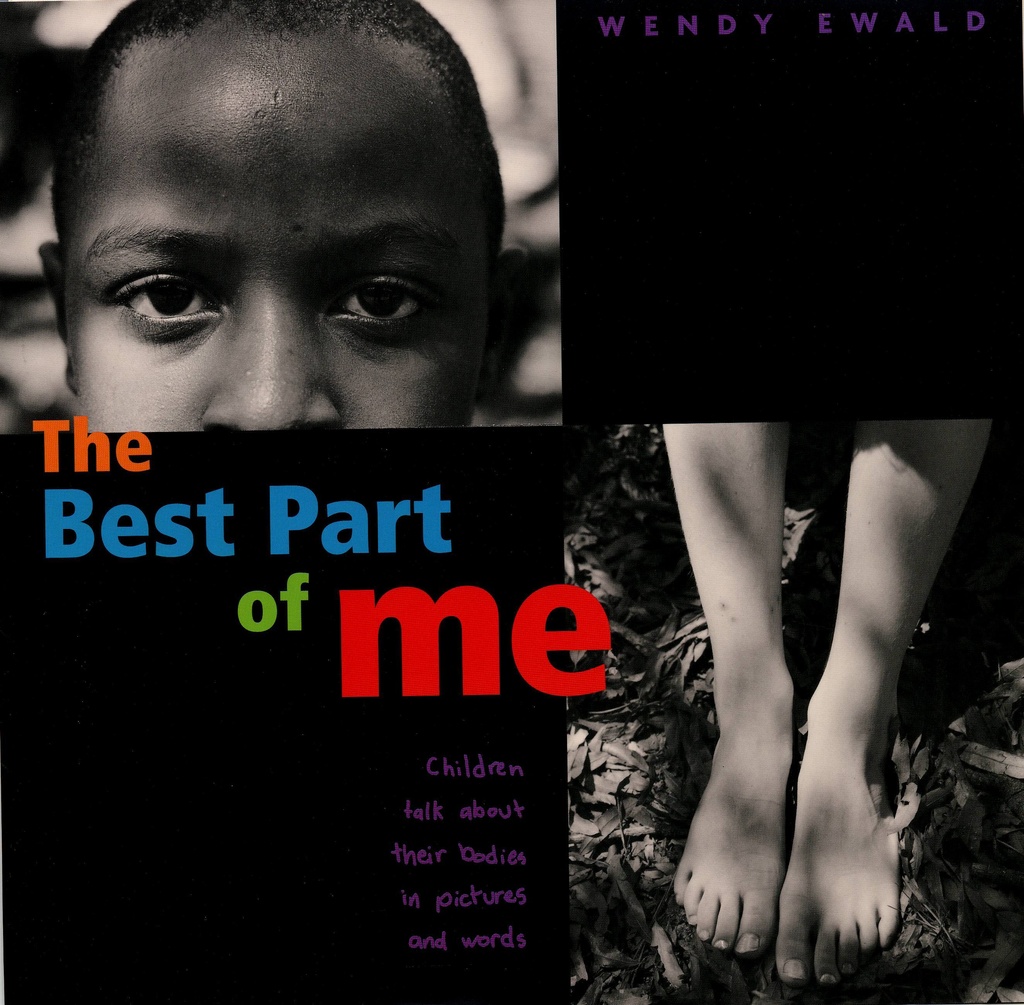
The Best Part of Me: Children talk about their bodies in pictures and words by Wendy Ewald

A beautiful celebration of children’s thoughts and feelings about themselves shared in their writing about a part of their body. Photographs accompany each piece of writing. A beautiful line (there are many to choose from)

I like my hands because they turn the pages of a book slowly and magically. Reading makes me happy.

The Best Part of Me Nonfiction Picture Book Wednesday There's a Book for That

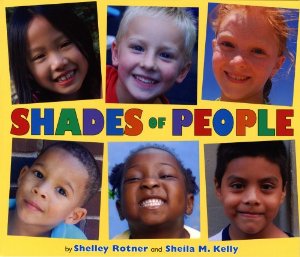
Shades of People by Shelley Rotner and Sheila M. Kelly

In this book, people are not described by their skin colour but rather the shade they come in – creamy, coffee, copper, almond, rose, bronze, brown . . . My favourite lines:

Our skin is our covering, just like wrapping paper. And, you can’t tell what someone is like from the colour of their skin.

Shades of People Nonfiction Picture Book Wednesday There's a Book for That

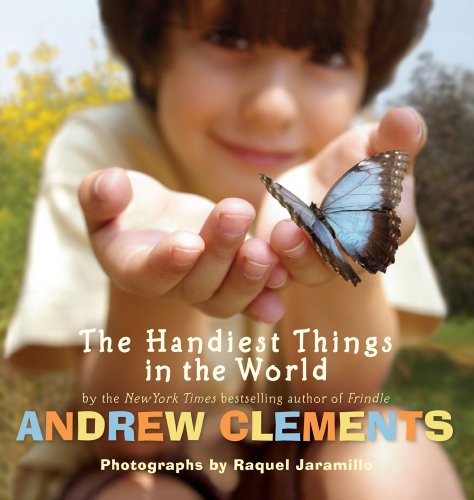
The Handiest Things in the World by Andrew Clements Photographs by Raquel Jarmillo 

While I like the photographs more than the text in this title, it is another beautiful book full of photographs of children doing everyday things. A celebration of all the things we use to make life easier even though our hands have many things all figured out!

The Handiest Things in the World Nonfiction Picture Book Wednesday There's a Book for That

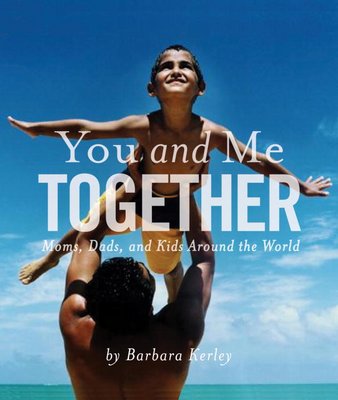
You and Me Together: Moms, Dads and Kids Around the World by Barbara Kerley

A wonderful collection of photos from all over the world of parents interacting with their children – doing the most natural of things – making a mess, telling a tale, taking a nap or catching a bus. Fun to guess where in the world the photograph might have been taken.

You and me together Nonfiction Picture Book Wednesday There's a Book for That

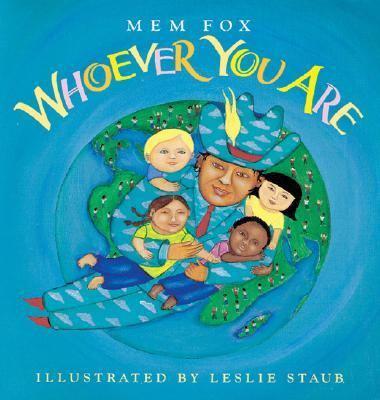
Whoever You Are written by Mem Fox illustrated by Leslie Staub 

Soothing and celebratory, this is one of my favourite titles to introduce diversity and sharing the most important thing about ourselves with everyone – our humanity.

Their lives may be different from yours,

and their words may be very different from yours.

But inside, their hearts are just like yours,

whoever they are, wherever they are,

all over the world.

Whoever-you-are Nonfiction Picture Book Wednesday There's a Book for That

My original goal was 60 nonfiction picture books for 2013. Progress: 37/60 complete

Thanks to Alyson from Kid Lit Frenzy for the inspiration to read and share more nonfiction picture books in 2013!

NFPB2013leavesPlease share your favourite titles on this theme!
Wonder Inducing Nonfiction Read Alouds

It’s funny how one’s focus can change when looking at the classroom library. For a while, I’ve been thinking a lot about the nonfiction titles in my room. Last summer I started to get anxious about whether or not I had enough books in the room that my Grade 2/3s could pick up and read independently. It seemed like my “best” nonfiction titles were books that I needed to read to my students. Which was wonderful because I had some amazing titles to use as we model strategies, but what about when it was independent reading time? Did I have enough titles that students could read by themselves with success? My book shopping focussed on purchasing titles that I knew my students could manage on their own, especially as we built strategies to read nonfiction text over the year. Some of my favourite books that I added?

  • The Discover More Series by Scholastic
  • Nicola Davies Flip the Flap and Find out books which include Who Lives Here? and Who’s Like Me?
  • Laura Hulbert‘s Who Has This Tail? and Who Has These Feet?
  • A huge array of Bobbie Kalman titles
  • The Are you a . . . ? series by Judy Allen and Tudor Humphries
  • The Amazing Animal Series by Kate Riggs

NonfictionText for Independent Reading There's a Book for That

Now, here I am a year later. Again, thinking about the books in my room . . . What is my focus now? That I want some “Oh, wow!” titles to read aloud. I want to make sure that just as I am reading a variety of picture books and some engaging novels, that I have a real variety of excellent nonfiction picture books to read aloud. Sometimes to model/practice a strategy, sometimes to enhance our learning on a particular subject and sometimes just because, the more we read, the more we know and I want my students to be inspired and curious about learning all year long!
I am fortunate to be looping my Grade 2/3 class into Grade 3/4 and so I have a sense of this group of children, what they wonder about and what I think might inspire them. Last year, I noticed that they were intrigued by stories – folklore, Aboriginal tales, stories from around the world and stories about things that really happened. They were very curious about the stories of people and how these stories connected to us in our classroom. It made me realize that I haven’t been reading enough biographies. I also want to focus on places around the world and the wonder of the world around us. Last year, students loved learning about animals from each continent and had endless questions about habitats.  I know we love art and books and music. So, I have some sense of what kinds of books I need to share.

Knowing how busy school can get and knowing how I sometimes need a one stop shop when I am planning, I decided to take advantage of the time summer has to offer to amass a huge list of amazing nonfiction read alouds. I was looking for titles that my Grade 3/4 class would enjoy. Some are favourites from previous years and some I have yet to read myself. Thank goodness for the wonderful book bloggers out there that I used for inspiration. So here is my list of 25 “wonder inducing” nonfiction read alouds. A reference for me and one that I am sharing here.

The book I plan to use to launch my year: On A Beam of Light- A Story of Albert Einstein by Jennifer Berne and illustrated by Vladimir Radunsky This book made my own thoughts whirl and swirl and race around my head. It has all the perfect themes of wonder, curiousity and thinking outside of the box.

 On a Beam of Light

Based on some picture book biographies I already loved, I grew that list to include:

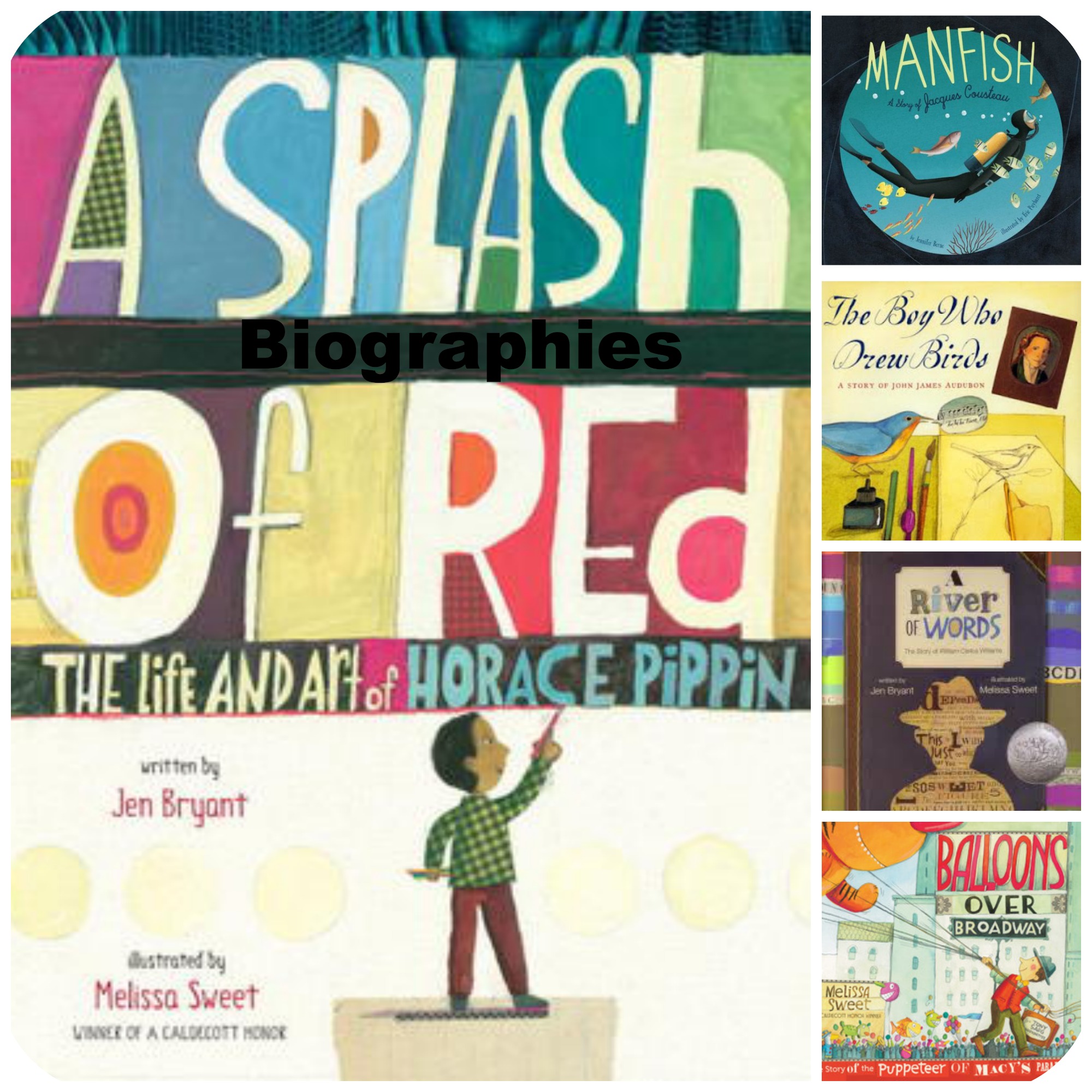
A Splash of Red: The Life and Art of Horace Pippin written by Jen Bryant  and illustrated by Melissa Stewart

Balloons Over Broadway: The True Story of the Puppeteer of Macy’s Parade by Melissa Sweet

A River of Words: The Story of William Carlos Williams written by Jen Bryant and illustrated by Melissa Stewart

Manfish: A Story of Jacques Cousteau by Jennifer Berne and illustrated by Eric Puybaret

The Boy Who Drew Birds: A Story of John James Audubon written by Jaqueline Davies illustrated by Melissa Sweet

Biographies - Wonder Inducing NonFiction Read Alouds There's a Book for That

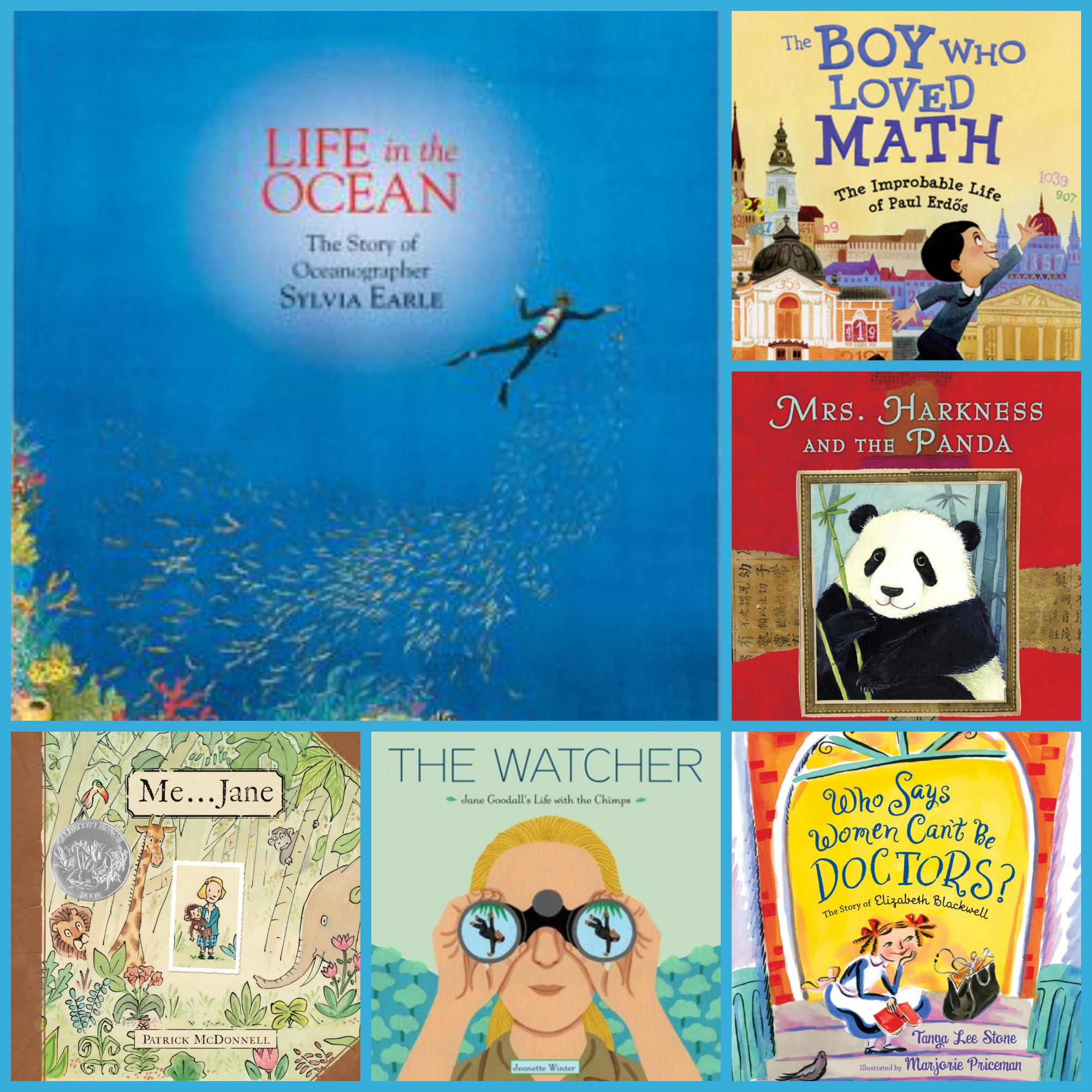
The Watcher: Jane Goodall’s Life with the Chimps by Jeanette Winter

Me . . . Jane by Patrick McDonnell

Mrs. Harkness and the Panda written by Alicia Potter and illustrated by Melissa Sweet 

The Boy Who Loved Math: The Improbable Life of Paul Erdos written by Deborah Heiligman and illustrated by LeUyen Pham

Life in the Ocean: The Story of Oceanographer Sylvia Earle by Claire A Nivola

Who Says Women Can’t Be Doctors?: The Story of Elizabeth Blackwell written by Tanya Lee Stone and illustrated by Marjorie Priceman

Biographies Wonder Inducing NonFiction Read Alouds There's a Book for That

Some titles to explore amazing places and the world around us:

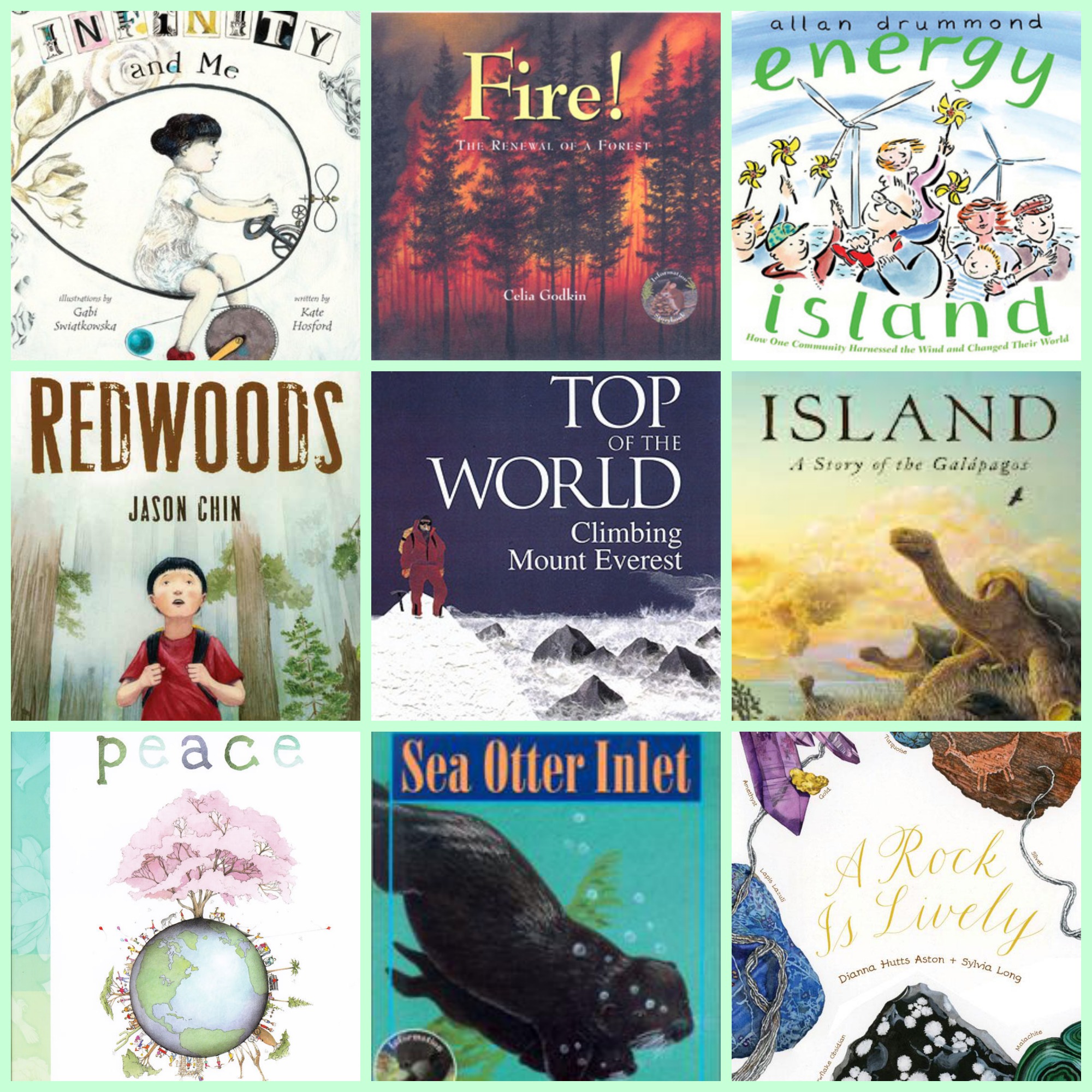
Peace by Wendy Anderson Halperin

Redwoods by Jason Chin

Island: A Story of the Galapagos by Jason Chin

The Top of the World: Climbing Mount Everest by Steve Jenkins

A Rock is Lively written by Diana Hutts Aston and illustrated by Sylvia Long

Sea Otter Inlet by Celia Godkin

Fire! by Celia Godkin

Infinity and Me written by Kate Hosford and illustrated by Gabi Swiatkowska

Energy Island: How one community harnessed the wind and changed their world by Allan Drummond

The World Around us Wonder Inducing NonFiction Read Alouds There's a Book for That

And to learn about creatures great and small:

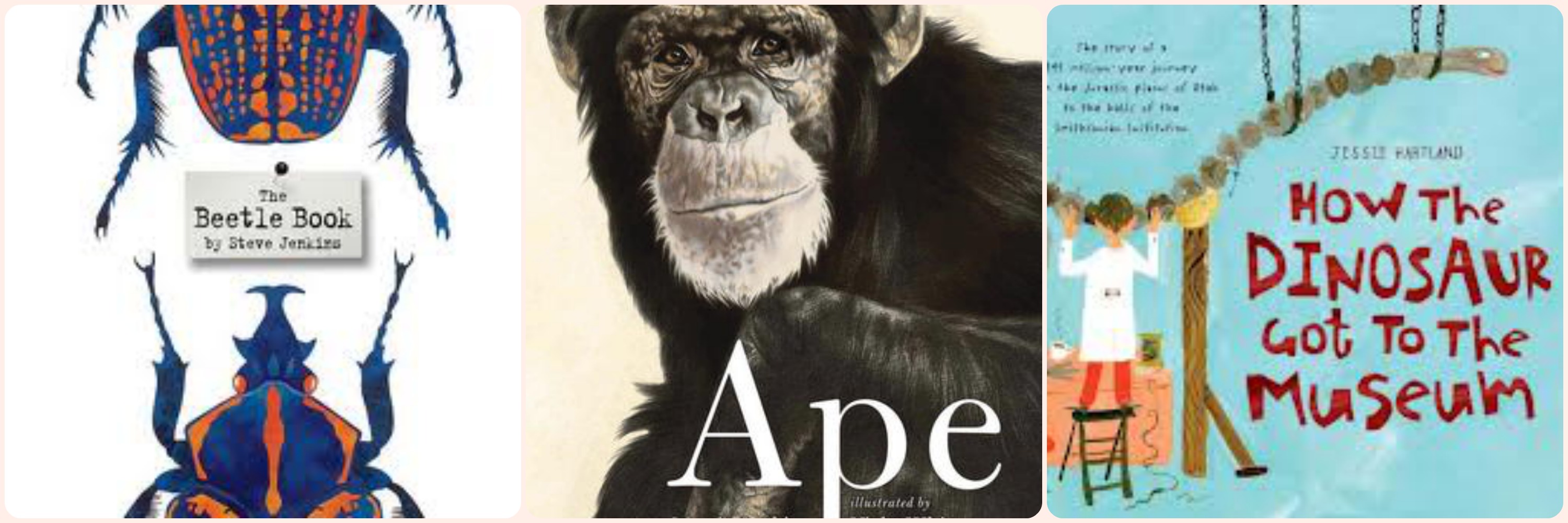
The Beetle Book by Steve Jenkins

Ape written by Martin Jenkins and illustrated by Vicky White

How the Dinosaur Got to the Museum by Jessie Hartland

Wonder Inducing NonFiction Read Alouds There's a Book for That

 And a title to be released this fall:

Is This Panama?: A Migration Story written by Jan Thornhill  and illustrated by Soyeon Kim

Is this Panama?

Will I read all of these titles aloud this year? Maybe not. Perhaps interests and passions will take us in different directions. But this list will help keep me on track to make sure I am sharing lots of books that inspire both learning and thinking in my room!

Do you have some other must share nonfiction titles for Grade 3/4 listeners? Would love to hear your suggestions!

I learn so much by reading all of the blog posts that link to the Nonfiction Picture Book Wednesday event that KidLit Frenzy hosts. Visit Alyson’s blog to see what books are shared this week.

NFPB2013leaves

Nonfiction Picture Book Wednesday: Cheetahs, fast as the wind

It’s Nonfiction Picture Book Wednesday! 

It must be because cheetahs are the fastest land animal that they are so fascinating and heroes of the animal kingdom. Many times I hear children express that their favourite animal is a cheetah.

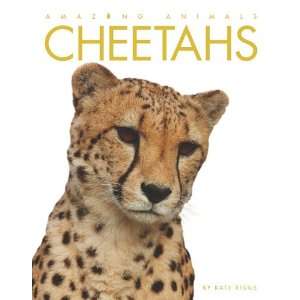
As I continue to explore the Amazing Animal series by Kate Riggs, I read Cheetahs (published in 2011). Like the first book in this series (Gorillas) I appreciated the format of this book. Photographs are full page and colourful and the text is a larger, less intimidating size. The end of the book includes an index, websites for further reading and a fun cheetah tale explaining why cheetahs have tear lines.

 Nonfiction Picture Book Wednesday There is a Book for that

Some interesting facts?

  • While most cheetahs live in Africa, there are some living in Iran.
  • Male cheetahs hunt together in groups called coalitions and these groups stay together for life.
  • Because it is all about speed. . . how fast are they? They can run up to 70 miles/121 kilometers per hour!

I know this book will be very popular once my students discover this series! It will be a book I frequently recommend as I know it can be read independently by most students in my room.

In our school library I found another nonfiction title on cheetahs: My Life in the Wild – Cheetah (A Life Cycle Book) (published in 2011)part of the Animal Planet series. Written by Meridith Costain and illustrated by Mick Posen.

 Nonfiction Picture Book Wednesday There is a Book for that

This book is divided into a narrative illustrated story about a cheetah growing up and back pages full of much more information. The illustrations are so true to life that they are almost kind of creepy – but I’m sure students would just find them very cool. The story is relatively easy to read for young readers and informative enough to hold the attention of little naturalists wanting to learn something new on every page.

“My brothers and I are born. I cannot see my mother yet but I can smell her. I snuggle into her warm tummy, drinking her milk. She licks my wriggly brother clean with her raspy tongue.”

The final pages include a full page glossary, more information and diagrams of other members of the cat family and key facts about cheetahs (scientific name, weight, habitat, etc). There are also four pages of Did you know? facts that accompany each illustration from the story. So, for example, the text above has a picture of a mother cheetah nursing and cleaning her cubs. In the back of the book the Did you know? fact is

“Cheetahs usually give birth to three to five cubs.”

Additional information is included about how the mother makes a nest, when the cubs begin to crawl, when their eyes fully open and how they make sense of the world before this. Other facts focus on how cheetahs hunt, fur markings, and differences between male and female cheetahs.

Other titles in this series that I know would be popular in my class: 

Animal Planet series  Nonfiction Picture Book Wednesday There is a Book for that

My original goal was 60 nonfiction picture books for 2013. Progress: 35/60 complete

Thanks to Alyson from Kid Lit Frenzy for the inspiration to read and share more nonfiction picture books in 2013!

NFPB2013leaves

Anyone have any favourite nonfiction animal series they would like to share?