New Spring books from Scholastic

Our New Books display has had a lot of traffic recently with many students enjoying some recent purchases that I’ve ordered for the class through Scholastic book clubs.

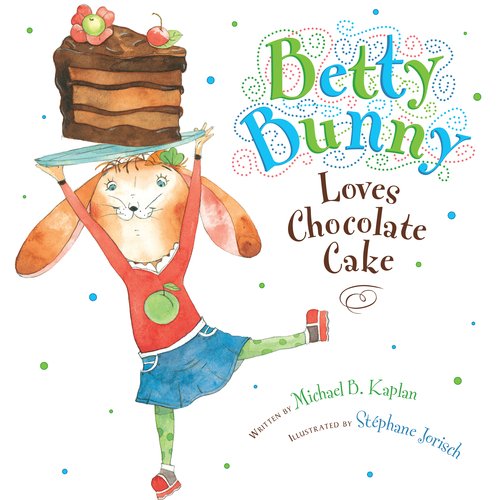
Betty Bunny Loves Chocolate Cake written by Michael B. Kaplan and illustrated by Stephane Jorisch (one of my favourite Canadian illustrators) has been a favourite to read and reread especially with a buddy. Betty Bunny is very dramatic and says some very out there stuff like “I am going to marry chocolate cake!” and “I am a handful and I love chocolate cake.” Comments made all the better when read out loud. With huge sighs, gasps and artistic flair. We appreciated Betty’s chocolate cake obsession, loved her spunk and giggled over her decision to keep her cake in her pocket and the resulting brown, goopy mess! Betty Bunny shows us that you shouldn’t mess with a little bunny and her love for chocolate cake. Go Betty!
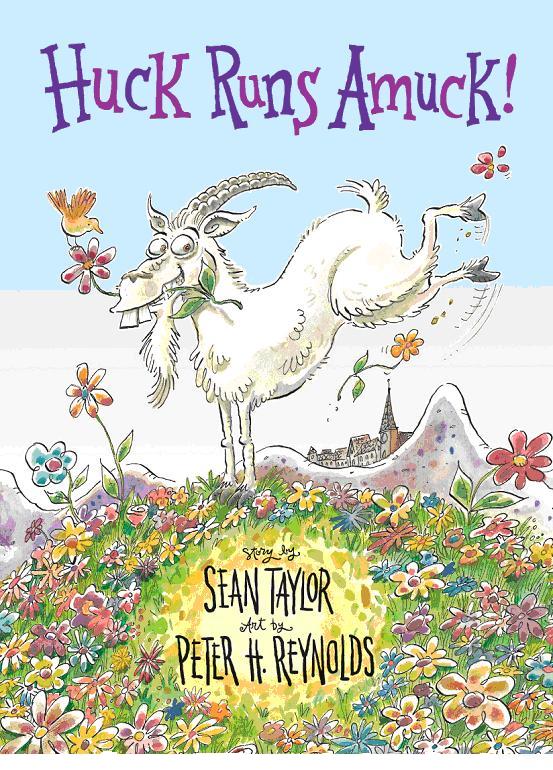
Another favourite story to read and share during buddy reading (also made a fantastic read aloud) is Huck Runs Amuck! This charming story about a flower obsessed goat is written by Sean Taylor and illustrated by Peter H. Reynolds. Poor Huck is a goat of rather discerning tastes. Yes he will eat run of the mill goat things, which means basically anything, but . . . If he had his way, he would eat flowers all day long. But flowers in his end of the world are also readily enjoyed by other goats and in short supply. Thank goodness Huck is a climbing sensation. He can find flowers in the strangest of places, high up places that seem out of reach. But what happens when his stomach and his morals face off? What will a flower loving goat do? A hilarious fast paced story.
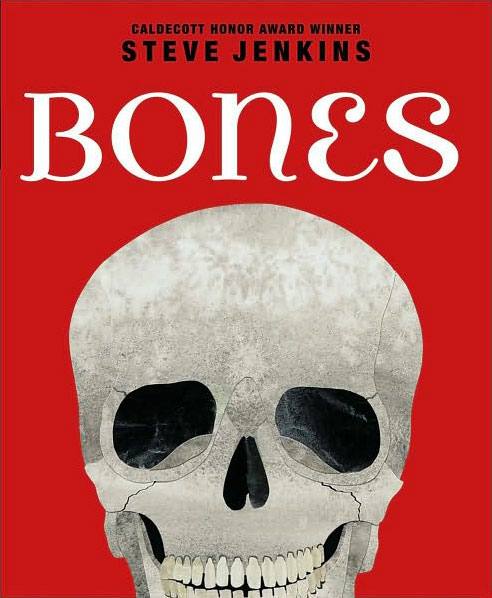
Books by Steve Jenkins never disappoint. Many are favourites in our classroom library. The newest book in our collection is Bones. Not only is it great to look at the illustrations o bones (many of which are actual size) but we also love the comparison of bones from multiples species like all of the skulls pictured in a fantastic pull out page spread. This is also a fun book to fact collect. There is something about learning that a small python has 200 pairs of ribs that makes you want to ask everyone you know: “So how many pairs of ribs do you think a python has?” (Humans have 12 pairs just to give you some perspective) This book frequently has to be coaxed out of someone’s book box to be passed onto the next person who can’t wait to explore it!
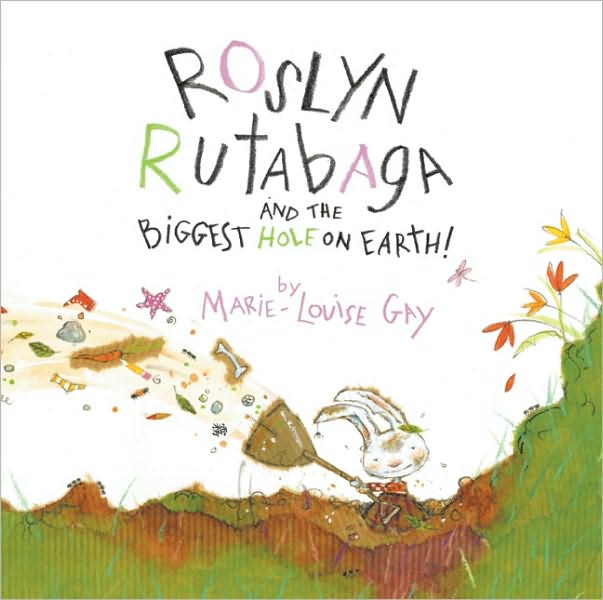
We adore Marie-Louise Gay. Stella, Sam, and Caramba are all well loved characters! So, we were very happy to meet Rosyln Rutabaga and read about her plan to dig an enormous hole in the story: Rosyln Rutabaga and the Biggest Hole on Earth. Some days you just wake up with a plan. So when Rosyln announces her plan to dig an enormous hole and gets a calm, but positive response from her father, this little bunny begins to dig. Her all day digging brings her many interesting interactions, big piles of dirt and an experience about what it is to follow your determination. Wonderfully imaginative illustrations.
New Books for Buddy Reading

Thanks to a generous donation towards books for our classroom and funds matched by Adopt a School, we have some amazing new titles to share when our Grade 2/3 s invite the K/1 class up for buddy reading once a week. It is an important time we all enjoy and now we have some wonderful new books to share together!

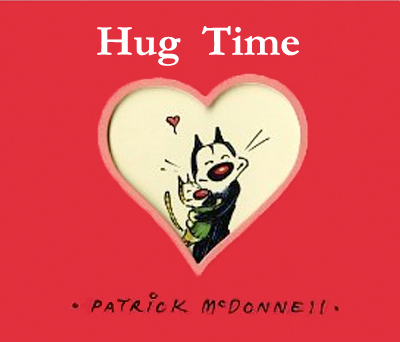
Hug Time by Patrick McDonnell is a tiny little book all about having a huge heart. A little kitten so filled with love decides to give the whole world a hug and sets out with friends and a Hug-To-Do-List to travel the world from pole to pole and do just that – hug every living thing he comes across. My favourite? Hugging a big blue whale!

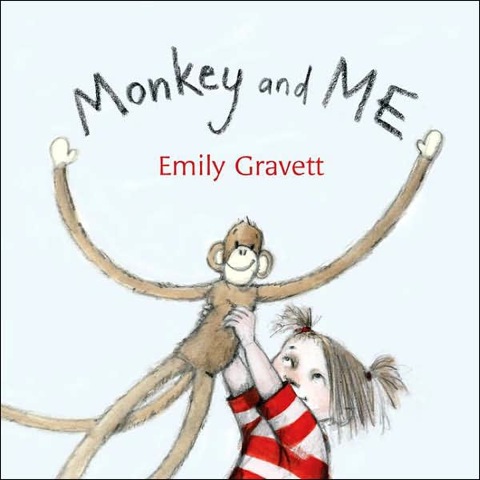
Monkey and Me by Emily Gravett has wonderful rhyming, repetitive text perfect for sharing with our 5 year old little buddies.

Monkey and me, Monkey and me,

Monkey and me, We went to see,

We went to see some . . . .

Flip the page and who knows what you might find? Bat! Elephants! Penguins! All beautifully illustrated in classic Gravett style.

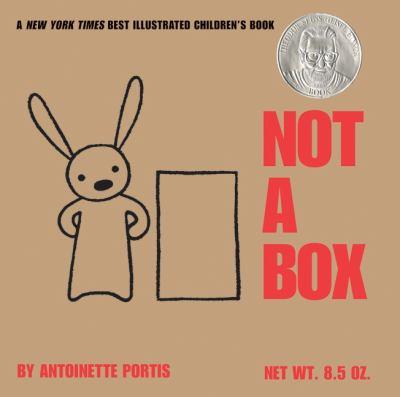
Antoinette Portis created the extremely clever Not a Box. Little Rabbit is in the first picture sitting in what looks like a box. “Why are you sitting in a box?” the text reads. Next picture, little rabbit is in a race car, “It’s not a box,” he explains. And so the book continues. The power of imagination means that a box is really anything a child can make of one. Fun to read and more fun to begin a conversation. What else could a box be?

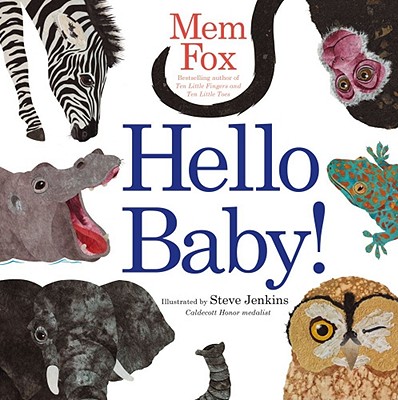
Hello Baby is written by one of my favourite authors for young children, Mem Fox and illustrated by the incredible Steve Jenkins.

Hello, Baby! Who are you?

The book begins with this first question and goes on to ask many more, Are you a . . . ? Everything rhymes, images are striking and often surprising and at the end, you want to go back and read it all over again. Yes, our 5- 8 year olds aren’t babies but many of them are intrigued by animal babies and Fox and Jenkins have created an engaging delight in a tiny little book.

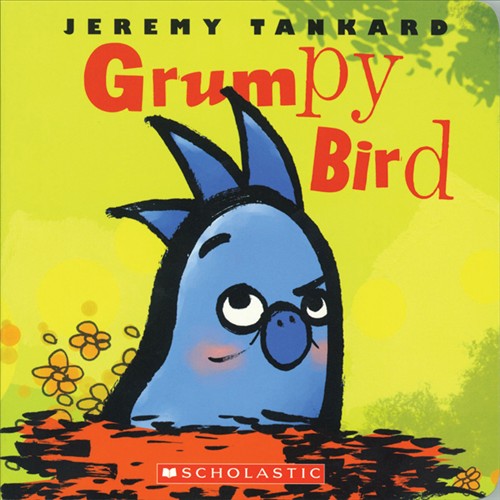
It is hard to resist the humour in Jeremy Tankard‘s Grumpy Bird. Grumpy Bird wakes up, clearly on the wrong side of his nest, too grumpy to do anything. He won’t eat, play or even fly. His grumpy march across the land looks lovely to every other animal who joins him as he trudges along snipping and quipping at everyone he meets.

“WHY DOES EVERYONE WANT TO KNOW WHAT I’M DOING?” shouted Bird.

In the end, as you might guess, Grumpy Bird has found a cure for his grumpiness and he gets to share it with his friends. Lots of fun, especially for those of us that work really hard to stay mad even when we aren’t anymore . . . .

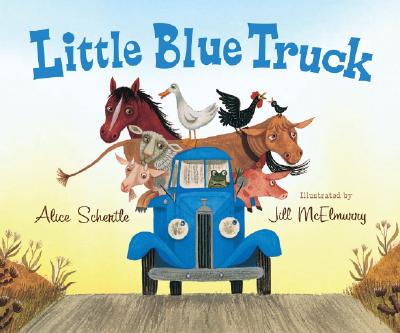
Little Blue Truck is written by Alice Schertle and illustrated by Jill McElmurry. In this sweet little story, Litle Blue Truck shows a Big Dump Truck the power of many helping hands. I think this book will be a favourite as it is full of rhyme, repetition and animal sounds! So fun to read aloud and have a little buddy join in as they are able: Oink! Quack! Baa! Moo! Cluck! Peep! Neigh! Croak! Maa!

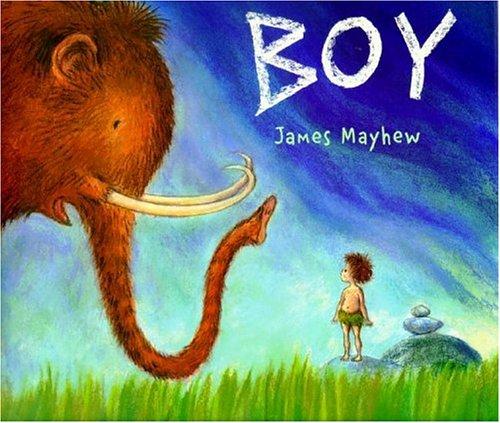
I absolutely adore this book by James Mayhew and now, happily have a copy for the classroom! Saber-toothed tigers. Wooly mammoths. Sleepy dinosaurs. A little boy exploring the world around him. In Boy, author James Mayhew explores a little guy’s yearning for independence while at the same time honouring his deep connections to home (and the happy snuggles from Mom and Dad). Where in the world do we find warmth? In the security and love from our own family.

How fun is this book by Edward Gibbs?! In I Spy with My Little Eye, we turn page after page of eye spy riddles – on each page, we get a clue, the name of a colour and that same colour in a perfect circle that turns into the eye of each creature.

I spy with my little eye . . . something that is gray. I have a very long trunk.

Flip the page and of course you find . . . an elephant! So much fun to look through a spy hole to discover an exciting parade of gorgeously illustrated animals in bright and beautiful colours.

Note: I purchased many of these books in board book version – to give them more lasting power and to be easily held in tiny hands. 🙂

Thanks to our generous donors and the Adopt a School fund for supporting early literacy at Seymour! We are keen to put the remaining funds into other important book purchases to share with our students.

Rocket Art (Finished Pieces)

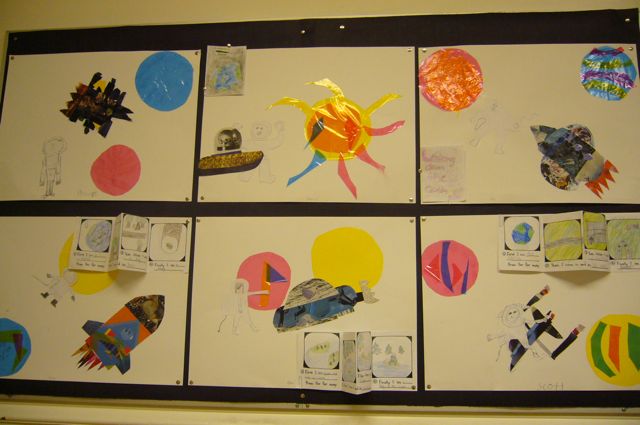
Ms. Chen has posted our finished Rocket Art pieces in the classroom and on the bulletin boards which surround our classroom. Displayed all together, they look amazing! If you haven’t seen our work in process, read more about how these pieces were created here.

P1020879

This week students were able to complete fold out panels about looking back to Earth. Ms. Chen used Steve Jenkins’ book Looking Down to illustrate zooming in to a specific object – from looking at Earth and then zooming in possibly to a specific street, then maybe a particular house and then finally to a single window within the house.

This is such a fantastic book to illustrate zooming in on a particular object – first from far away and then getting closer and closer.

A very interesting journey in looking at the world from a different perspective.

Closer and closer and close

Read about how this book was conceived on Steve Jenkins’ site.

What is amazing about this book is that it is “told” strictly through visual images – as a wordless picture book.

P1020882This is Jena‘s art. Now in addition to her rocket ship, planets and drifting astronaut, she has attached her mini fold out book which depicts looking back to the Earth.

First she drew a portion of the Earth – oceans and land covered by forest. In the subsequent drawings she zooms closer and closer into the forest scene.

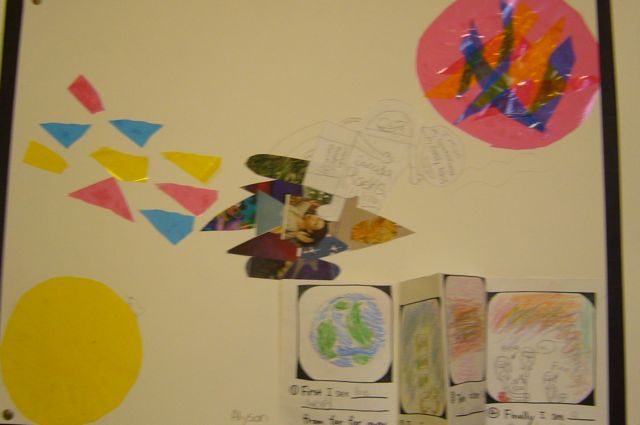
P1020883Here is Alyson’s completed work. We loved how she used the cellophane to represent the emissions coming from her rocket as it zoomed through space.

Her mini booklet zooms in to a single room in her building.

Such a colourful piece!

P1020886Hailey isn’t quite finished her mini zoom in booklet but her art so far, is wonderful.

Her astronaut’s suit is extremely detailed and she was able to create a very efective planet by layering her cellophane pieces.

Beautiful.

Such a fun and successful project. Thank-you Ms. Chen!

Why do you think you should never smile at a monkey?

Wow, did we enjoy interacting with Never Smile at a Monkey (*and 17 other Important Things to Remember) by Steve Jenkins.

never smile at a monkey

We used this book to practice questioning, predicting and inferring – when you encounter some of these creatures, what should you not do? And why exactly?

Jenkins explains that certain large creatures are “well known threats” – of course we aren’t going to get too close to tigers or crocodiles. Sharp teeth. No thanks! We also know to avoid “rattle snakes, black widow spiders, and piranhas” Their danger is well known. But what about the creatures we don’t know so much about. Creatures with “teeth, claws, spines and venom that can be deadly” That’s what this book is all about. A very clever idea brought to us with a combination of Jenkins’ gorgeous torn paper collage animals and just enough text to teach us new information related to this theme.

Jenkins organizes this book with a picture of a creature on each page or 2 page spread, Accompanying this is a Never . . . . warning in larger text and then an explanation of why. At the back of the book, more information is provided about each creature as well as a list of books for further reading. In the example here, we are warned to never collect a cone shell. Why not? Yikes. Well, a cone shell has poisoned barbs that it uses when hunting. They can be launched like harpoons. Potentially deadly if they stab you. Makes one think twice about collecting shells!

How did we use this book in the classroom?

Students brought notepads and pencils to the carpet to listen to the story. I would show them a picture and read the Never . . . warning without showing them the rest of the text. Students then wrote their prediction/inference about why we should never . . . We shared a few out loud and then I read the explanation provided in the book.

Some very funny conversation happened. Amazing predictions. Lots of arguing! “Not everything has venom you know!” “How could it bite you, it doesn’t even have teeth?” “What are you talking about? Be more specific!” My favourite line: “Ms Gelson I’m using my schema!”

So  . . . want to learn something new?

Why should you never smile at a monkey?

Our predictions:

  • it might scratch you when it gets excited
  • it will get really mad
  • it will yell at you and bite you with its sharp teeth
  • it will get loud, jump up and bite you

And the real reason. . .

“If you smile at a rhesus monkey it may interpret your show of teeth as an aggressive gesture and respond violently.”

Why should you never jostle a jellyfish?

Our predictions:

  • it can release venom that can kill you
  • it might shock you
  • it might pop
  • it will start to vibrate and kill you

And the real reason. . .

A box jelly fish is in a class by itself . . . even the smallest contact with its stinging tentacles causes intense pain . . . you can die very quickly.”

Later, students chose one creature, wrote their prediction and the real explanation and included a picture. Sometimes our thinking was very close – other times, not a bit. Which was great – real learning happened! We also liked celebrating when we did have background knowledge about a particular creature and could make an inference that made a lot of sense. At one point, as I was reading a little voice piped up. “This is so fun!

Love, love, love Steve Jenkins’ books! His website includes an interesting explanation of how he makes his books.

Exploring unique animal relationships

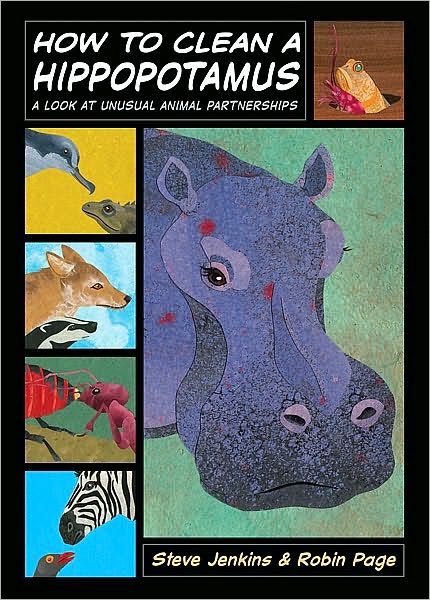
We have been reading this fantastic book by Steve Jenkins and Robin Page called How to Clean a Hippopotamus and are learning all about symbiotic relationships – today we read about the oxpecker, also known as a tickbird and how it hangs out with some pretty large animals doing a very important job.

We drew some pictures of what we learned today and tried to explain how all the animals in a symbiotic relationship benefit.

Gary explains: The giraffe lets the oxpecker on its back because the oxpecker eats the parasite  and the oxpecker warns the giraffe when the giraffe predator is near! The oxpecker likes to go on to the giraffe’s back because it eats the parasites.

Ricky writes: The oxpecker is a really nice bird.  It eats ticks from the giraffe.  Ticks are small small parasites that use your body as a home.  But ticks don’t go only on giraffes! They go on rhinos, buffalos, zebras, giraffes and deers.  So the oxpecker can have lots of food.  These animals can’t get the ticks out of their body because they’re not like us.  So the oxpecker can help by eating. These are African animals.

Scott explains: The oxpecker helps the giraffe by eating the parasites.  Also they scream and flap their wings to warn the giraffe so the giraffe could run away or kick predators with their legs.  Because the oxpecker loves eating parasites, it spends time on large animals.   Scott also provided some definitions: A parasite lives on a host.  They are annoying.  A tick is a parasite.  A predator means that they hunt animals.  They hunt them so they could eat them.

We can’t wait to read about more unique animal relationships in this book!