Books I wish I owned

Our local public library has finally reopened after being closed for months due to a flood. Hooray! So in celebration, I wandered through the stacks and selected some of my favourite books to read again – with my own children and likely they will find their way into the classroom this week. If I had a million dollars and a billion bookshelves these books would hold a special place! I might just have to justify purchasing them anyways because I keep taking them out of the library again and again! They must be meant to be mine!

Clara and Asha written and illustrated by Caldecott Medalist Eric Rohmann is a gorgeous journey into the fantasy world of Clara and her friend Asha, a gigantic fish. Asha may be a child’s imaginary friend, yet Asha feels very real!

Wolves by Emily Gravett is a delightfully eerie book. You know how a book becomes more real as you read it?
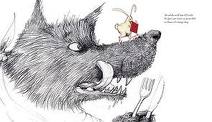
And then you start to feel so connected to a book that you literally feel as though you have fallen into it? Hmm . . . seems to have happened to our little friend rabbit. This book has two endings – one specially designed for those with more sensitive inclinations.

Have you ever been told you are too small to do something? In our house, “small is powerful” is our mantra. In this book, Up, by Jim LaMarche, Daniel (aka Mouse) is a small boy who seems to develop some pretty extraordinary powers. Or at least the power to believe . . . A magical story with absolutely stunning illustrations.
Friends (Mostly)

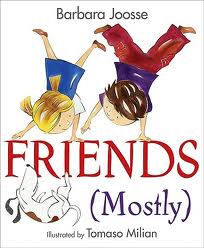
Oh – thank goodness there are so many books written about friendship because friendship struggles are an inevitable part of every elementary school day. Friendships mean everything but they can sure be hard! Bill, our BLG reader today, brought in a sweet little story by Barbara Joose called Friends (Mostly).


Cheerfully illustrated by Tomaso Milian, this book explored the relationship between Henry and Ruby. Best friends –  but like any friends, they have the power to upset the other. Sometimes they are friends and sometimes “unfriends.” Friends worry.

Henry: last night, I had worry thoughts. What if Ruby finds another best friend? Nothing would be funny. Nothing would be regular. What would I do without Ruby?

Apologies soothe upsets and they can get back to being friends – for always and forever!

Our student reviewers report:

Alyson: I like this book because I have a friend in this class and he is nice. But sometimes we get into fights.

Jena: I have a friend and yesterday we got into a fight. But then the next day we forgave each other and found out that there was nobody like best friends!

Hajhare: I like this book because it was about friendship. I have a connection when Henry told a secret. When my friend told my secret, I was very angry so I told his secret. Then he was very mad too and he called me a name so I called him a name. You can sometimes be very mad at a friend.

The Great Apes

Apes. Orangutan, Chimp, Bonobo, Gorilla – these great apes are fascinating. They are so like us!  At this time in the world we need to protect them to ensure they have places free from being hunted and free to live in peace. What did we learn about these great apes today? What are we still wondering? What do we want to research?

ape

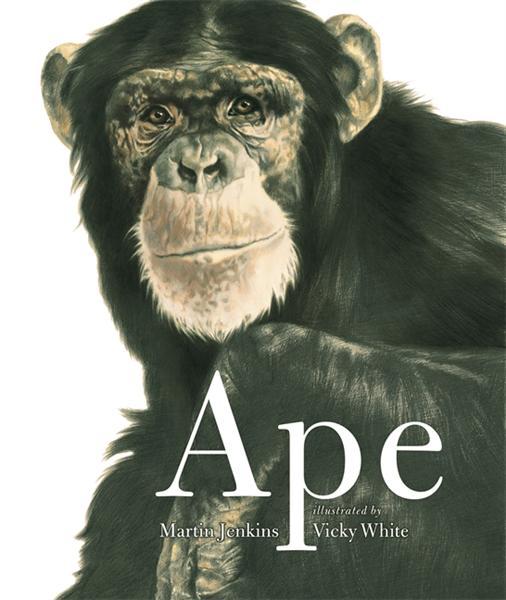
Ape is a visually stunning book! A book to pore over again and again marvelling at the details – both visual and written. Vicky White’s close up portraits and lifelike illustrations fascinated us while Martin Jenkins’ text provided so much new information it was difficult to turn a page without endless questions being tossed around the room.

This was the perfect text to practice questioning with non-fiction text in small groups. First we listened to the story and listed key questions on our individual notepads. Some very fascinating facts that sparked a lot of discussion:

  • Chimpanzees poke a hole into a termite mound with a long blade of grass and then lick off the termites! Some people thought they were using the grass kind of like a straw. Other people wondered if they shared. Many people thought it would be pretty gross to have bugs crawling around in your mouth!
  • Orangutans love to eat the smelly durian fruit!
  • Chimps travel in gangs and hunt down monkeys. “Gangs!?” This seemed very dramatic. “Do they just chase the monkeys or do they actually eat them?” one little horrified voice asked.

We then took our questions to share in a group of four. Each student took turns sharing a question and the group helped decide where to include it on our questioning sheet. Was it a question we found the answer to? Was it a question where we thought we could infer using the schema we already have about animals and the world? Or was it a question where we felt that more research was needed?

Which questions made the lists? A sample below . . .

Questions we had but then found out the answer as we read on:

  • How long do gorillas live? At least 40 or 50 years.
  • Where do the apes sleep? In nests on the ground or in trees
  • What do apes eat? Some eat fruit, some eat termites.
  • Are any of these apes extinct? No!
  • How many species of apes are there? Five species in the world – including us!

Questions that we didn’t find the answers to but we can try to infer:

  • What are the predators of apes? We think humans who hunt them and big cats because they run fast and can catch them.
  • When the chimps fight with other chimps, do they die? We think they might if they get really hurt. Maybe they could get an infection from a bite or bad scratch.
  • What kinds of parasites do they have? Maybe fleas because they have fur.

Questions which need more research:

  • Which of the apes is most aggressive?
  • How are Apes related to people?
  • Can a chimp sense its predators?
  • Can apes swim?
  • What are the differences between males and females?

It was fantastic to see students so engaged with their questions and talking together to make inferences and discuss new learning.

Thank you to BLG who sent in this book to another primary class a few weeks ago. This book will be a very popular book in our library!

How do you show your inner beauty?

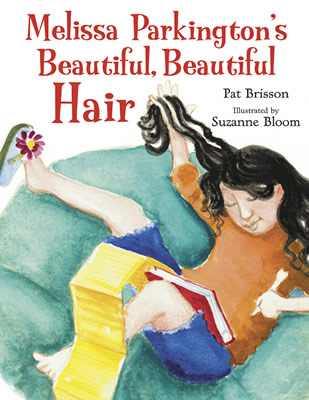
We have been talking a lot lately about qualities we respect – in our friends, in our classmates, in ourselves. Today we read a fantastic picture book written by Pat Brisson and illustrated by Suzanne Bloom. Melissa Parkington’s Beautiful, Beautiful Hair inspired us to talk about the qualities in ourselves that are really important. Who do we want to be? What do we want to be known for?

melissa-parkington1

Melissa Parkington has always been recognized for her gorgeous hair. However, she begins to recognize that she doesn’t want to be recognized for something that just simply grows out of her head. What is really special about her?

This book really affected us! Some beautiful writing below helps tell the story:

Annie: Melissa Parkington had beautiful beautiful hair. Everyone around the neighbourhood noticed her hair. But Melissa wanted people to like her for what she did.

Jenny: A lot of people called Melissa’s beautiful hair gorgeous and stunning and then she thought that she doesn’t want people to just call to her – your hair is beautiful . . . she wants people to compliment her for what she does. She helped Maddy and Jake on something and someone said to her – you are nice. So she thought – I can be a nice girl.

Jena: She decided to be the kindest girl in the whole town and she helped a lot of people. At the mall, there was a beauty salon and it said share your hair. And Melissa cut her hair for children who didn’t have hair.

Gary: She decided to donate her hair to kids. So the lady washed her hair and put it on ponytails and started cutting it and put it in envelopes. Now she is known as beautiful heart.

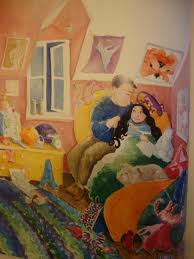
In the end – Melissa’s father changes the way he says goodnight to her. He now says. “Goodnight Melissa of the beautiful, beautiful heart.”

What a wonderful story of generosity, kindness and recognition of true inner beauty.

Let’s Do Nothing . . . (but read?)

Favourite books I found at VPL today. The public library is a perfect place to hide out with one (frozen) child while the other plays soccer (in this snow!!? Only in Vancouver!) What did we find?

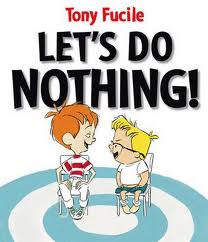
Animator Tony Fucile’s first picture book Let’s Do Nothing has a very alluring title. Nothing? Ah, such a comforting idea after a busy, busy week.

Frankie and Sal are two bored boys. What to do? How about nothing? Great idea! They each sit in a chair committed to exactly that – the act of doing nothing. But, how possible is it?  I read this to my son who hooted at Frankie’s hopeless attempts at doing nothing as his overactive imagination always caused him to do something. (There’s a part about a tree and a dog with a raised leg . . . that was absolutely hilarious to him)  Can’t wait to try this book out on my class. Will they think it is impossible to do nothing? We practice mindful breathing three times a day. Is breathing something or does it count as nothing?  This will be an interesting conversation . . .

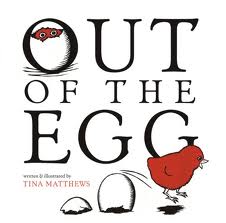
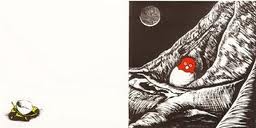
Tina Matthews is the author and illustrator of Out of the Egg, the Little Red Hen story – reinvented. We still have all of our “Not I” animals, too busy being lazy to help out. But in this story our Little Red Hen not only plants and nurtures a beautiful shade giving tree, she also has a lovely little chick hatched out of a perfect white egg.

Out of the egg hatched a little red chick.

And this little chick has something new to offer the story – a dose of forgiveness. My daughter read the book and announced to me, “I thought this was going to be a what comes around, goes around story, but the little chick didn’t let it be.”

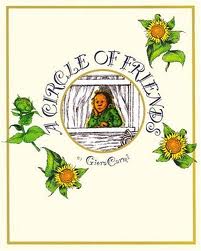
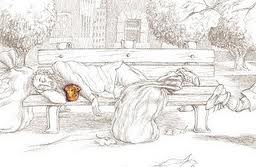
Giora Carmi made a beautiful book – A Circle of Friends – all the more powerful in its simplicity because it is wordless. A little boy shares his snack with a homeless man sleeping on a park bench.

A shared snack for someone who might need it

The man sprinkles crumbs on the bench for the birds nesting in the tree above him. In the end, the little baby bird drops a seed in the window box of the boy. And soon, a beautiful sunflower grows. Each page is sketched in black and white with one highlight of colour.  All about the circle of kindness inspired from one gesture. My daughter commented, “Mama, this is also a what comes around, goes around book, but in a nice way.” Absolutely!

Happy Reading!

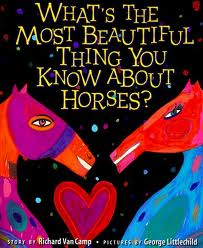
What’s the Most Beautiful Thing you Know about Horses?

We have been reading Aboriginal Literature with our reading group each week. This beautiful book by Richard VanCamp and illustrated by George Littlechild allowed us to learn more about horses while also learning about VanCamp’s Dogrib Nation.

Author Richard VanCamp’s hometown is Fort Smith in the Northwest Territories of Canada. On a cold (forty below!) winter day he decides to ask people he knows What’s the Most Beautiful Thing you Know about Horses? He, himself, doesn’t know much he explains because he is a stranger to horses; his people are not horse people. The people of the Dogrib nation have a great respect for dogs. In this northern land, dogs helped with hunting, protected the food stashes and helped with hauling camp from place to place. But yet in Dogrib the word for horse is big dog. When did dogs grow into horses? When did horses shrink into dogs? he asks.

Oh, the things he learns when he asks: “Horses always find their way home,” his Dad tells him. George Littlechild, who did the amazing illustrations for this book shares, “They stare at you as they breathe. Their soul comes right out.”

We shared some things we know too:

  • They go in running races
  • They are sometimes used in war
  • They are useful
  • They are calm and swish their tails
  • We can see them at the P.N.E.
  • They are in the Chinese Zodiac. Horse people care about their families.

What’s the Most Beautiful thing you Know about Horses?


Pink Day in our classroom!

We have been sharing this lovely book recommended by Ms. Hong at Strathcona Library – You and Me Together – Moms, Dads, and Kids Around the World by Barbara Kerley – a few pages here and there all week. It is a wonderful collection of photos of parents interacting with their children – doing the most natural of things – making a mess, telling a tale, taking a nap or catching a bus. Images from all over the world – make the diversity we can celebrate a truly beautiful and yet everyday thing. Joy within families, in the daily routines of life – just lovely. My students have loved guessing where in the world the photos were taken. Sometimes we are exactly right and sometimes not even close! The text accompanying the photos in the back gives us a little story behind each picture.

I have been waiting for Pink Day to share this amazing book with my students. Spaghetti on a Hot Dog Bun is written by Maria Dismondy and vibrantly illustrated by Kimberly Shaw-Peterson. The picture of Lucy, eyes welling up with tears after she has been bullied is so so powerful! The message of this book is all about courage – courage to stand up for yourself but also courage to forgive and reach out to others. Lucy has been bullied by Ralph in some truly nasty ways. When he gets stuck on the monkey bars, she has the opportunity to get back at him. Instead she realizes, looking at him so full of fear, that just like her Papa Gino told her, Ralph has a heart with feelings. Lucy offers her help, demonstrating courage to do the right thing – treat others the way she wants to be treated.

We used this book as a springboard for our Pink Day writing and discussions.

Hajhare: I learned that words can be strong but you can stand up if you are bullied.

Ricky: If someone bullies you, never bully them back. Paybacks aren’t nice. Bullying and fighting change your body. If someone bullies you, you will need all the courage you have to stand up.

Miami: Why do bullies bully? Do they learn it from someone? Do they do it for a reason? That question I can’t figure out.

Our school paraded around the grounds on a freezing February day holding pink balloons. Our message floated above our heads and rang true in our hearts as we marched to take a stand against bullying together.

Silas’ Seven Grandparents

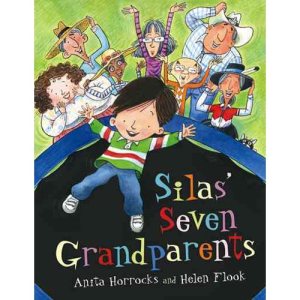
Maria, our BLG reader this week, read us Silas’ Seven Grandparents written by Anita Horrocks and illustrated by Helen Flook.

silas

This sweet little book is about a boy named Silas who is especially loved – times seven!  This can be quite amazing when birthday presents and birthday cakes come his way. But it can also be a little overwhelming. Seven grandparents trying to fuss over you when you are sick is a little much for one small boy. So is having seven grandparents trying to fit into the dressing room at his hockey games. When Silas needs to chose which grandparents he will stay with when his parents go on a trip, how can he possibly choose? He comes up with the perfect solution – all of the grandparents can come and stay with him!  A happy plan!

Poor Maria could barely get through a page today without being interrupted – children were connecting to everything! “Hey that’s like in the book . . .” “That reminds me of. . .” “Something like that happened in the book. . .” My, oh my, you would think all we do is read to these children (okay a little bit true!) But well-read children have lots of text to text connections. It was very exciting! We liked this book! And, oops, once Maria forgot to show the pictures. “The pictures Maria!!” the kids shouted. We were pretty impressed with all of Silas’ adventures and we did not want to miss a detail.

When I commented that I would like to have seven grandparents, Ricky was shocked.

If you did, they would all be so old! Whoa!”

You can’t have an ego and be a teacher 🙂

Our student reviewers report:

Annie: I like the part when they were growing plants. Silas’ Oma made him a quilt. I connected to Oma’s Quilt.

Hajhare: I liked the book because I had lots of connections to other books. This book is a fun book to read and that’s why I like it. I also connect to the book because I have lots of sisters and brothers.

Edwin: This book that Maria reads – I will put it in my diary when I get home. I retell the story so I can remember how good it is.

Thanks Maria – This was an ideal book to read on Pink Day when the theme of the day was celebrating diversity. This book showed us that all families do not look the same. Silas is a lucky boy to have all of this love from his grandparents and step-grandparents.

Simple Books, Little Treasures

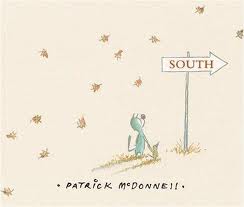
It’s report card writing time: words, words and more words. At the library today I was drawn to books that didn’t contain many (words) at all! These fabulous little finds are all about simplicity – wordless or sparse text. Pages full of ideal illustrations, questions posed and left unanswered and inferences begging to be made. 🙂 South by Patrick McDonnell.

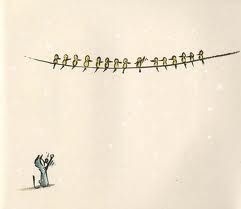
A last fall leaf lands on a lone little bird, asleep. His friends have all left for warmer places. Despair. Mooch, the cat, accompanies him on his journey south through falling snow, falling tears and developing adoration until they happen upon the beautiful sound of birdsong.

Old friends found but reluctant goodbyes to new friends made. South by Patrick McDonnell is a lovely wordless story about being lost and found and having someone sweet enough to help you on your journey to where you need to go.

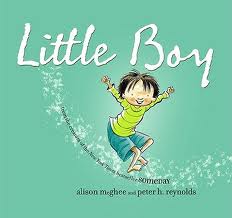
Aren’t we lucky to have children in our lives (like the little boy in this book in his star ship pyjamas and his important cardboard box) to remind us to appreciate the here and now? Kind of why it is great to be a parent and a teacher. My favourite line from Alison McGhee is the last line of the story: Little boy, you remind me how so much depends on days made of now. This book was inspired by the poem The Red Wheelbarrow by William Carlos Williams (a poem that also plays a starring role in Love that Dog by Sharon Creech) Little Boy is illustrated by Peter H. Reynolds.

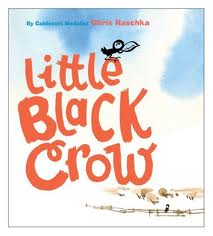
I love books featuring birds, books that ask questions (and inspire more) and books by Caldecott Medalist Chris Raschka. This book was made for me!

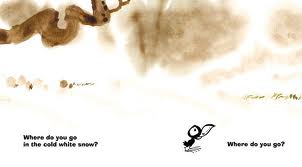
Little Black Crow where do you go?begins the questioning . . . 27 questions make up this book about a little boy wondering about the little black crow he sees in the sky.

Haven’t you also wondered about those birds flying by? Hey! Birds! Are you never afraid? Do you wonder about the stars you see? Might you ever wonder about someone . . . like me?

Happy Reading!

Shades of People

Sometimes it is the quick little read alouds that deliver the biggest message and create the atmosphere for the most dialogue. Thank you to Ms. Hong who we went to visit at Strathcona Library yesterday for recommending Shades of People created by Shelley Rotner and Sheila M. Kelly.

shades_of_people

In this book, people are not described by their skin colour but rather the shade they come in – creamy, coffee, copper, almond, rose, bronze, brown . . . My favourite lines: Our skin is our covering, just like wrapping paper. And, you can’t tell what someone is like from the colour of their skin.

Snippets from our discussion:

“Everyone is not the same.”

“We have different skin, but the same inside like the heart, the brain, the bones.”

“We have the same emotions.”

“Our feelings come from the same place.”

Beautiful photographs capturing our diverse shades and simple text left us with lots to discuss and connect with.

Thanks Ms. Hong!