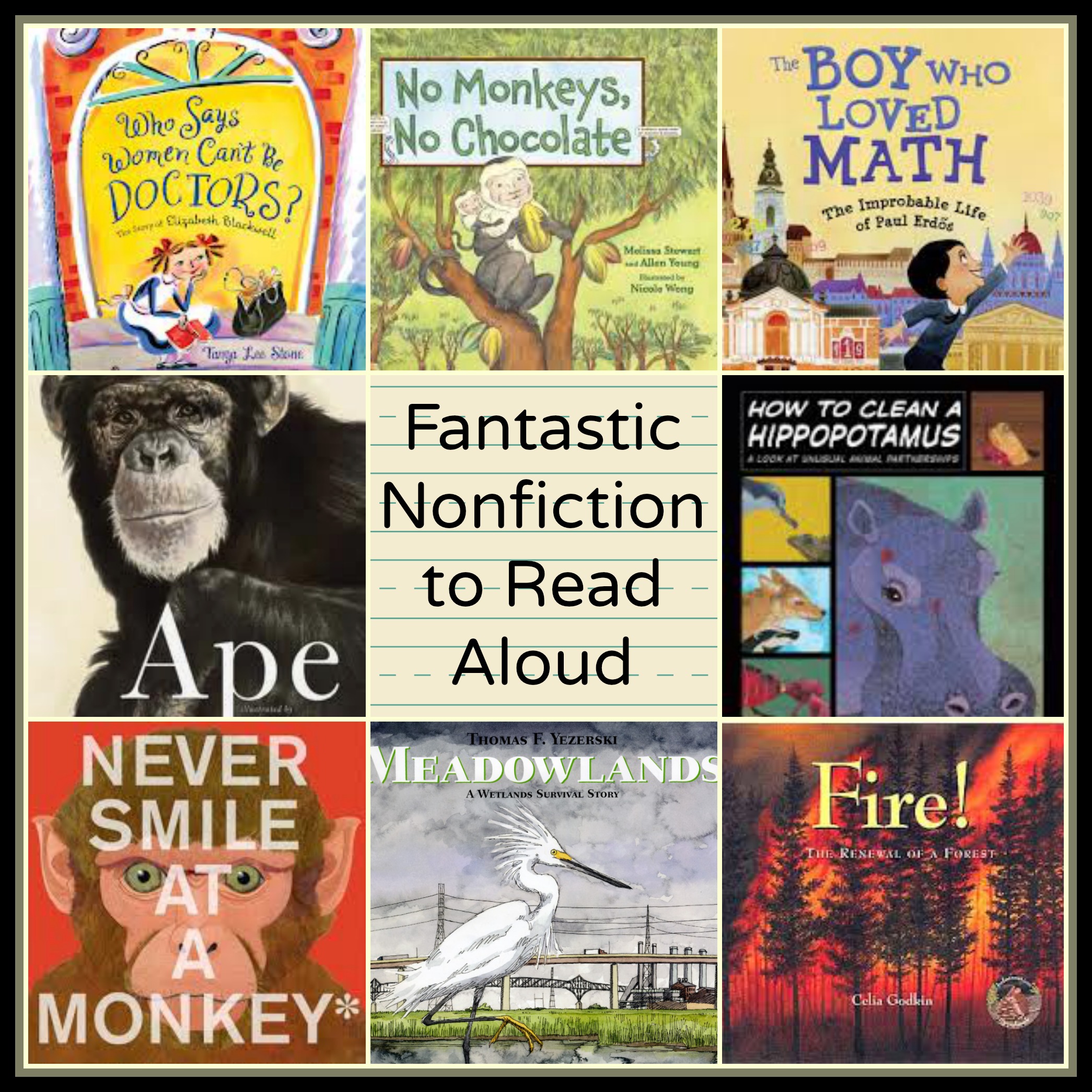
Nonfiction Picture Book Wednesday: Some favourite nonfiction titles for older readers (List 2)

It’s Nonfiction Picture Book Wednesday! 

This is Week 2 of 3 where I will be sharing thirty titles (ten at a time) of my favourite nonfiction books for older readers. The first ten are here.

My post last week goes into more detail of why I wanted to put together these three lists. Basically, I had just written a number of blog posts featuring titles for younger readers (like this one) and had received a comment about older students losing their passion for nonfiction titles. I wanted to share some of my favourite titles that I have read with my own children or on my own that I think will appeal to these intermediate/middle school readers. I hope something catches your eye!

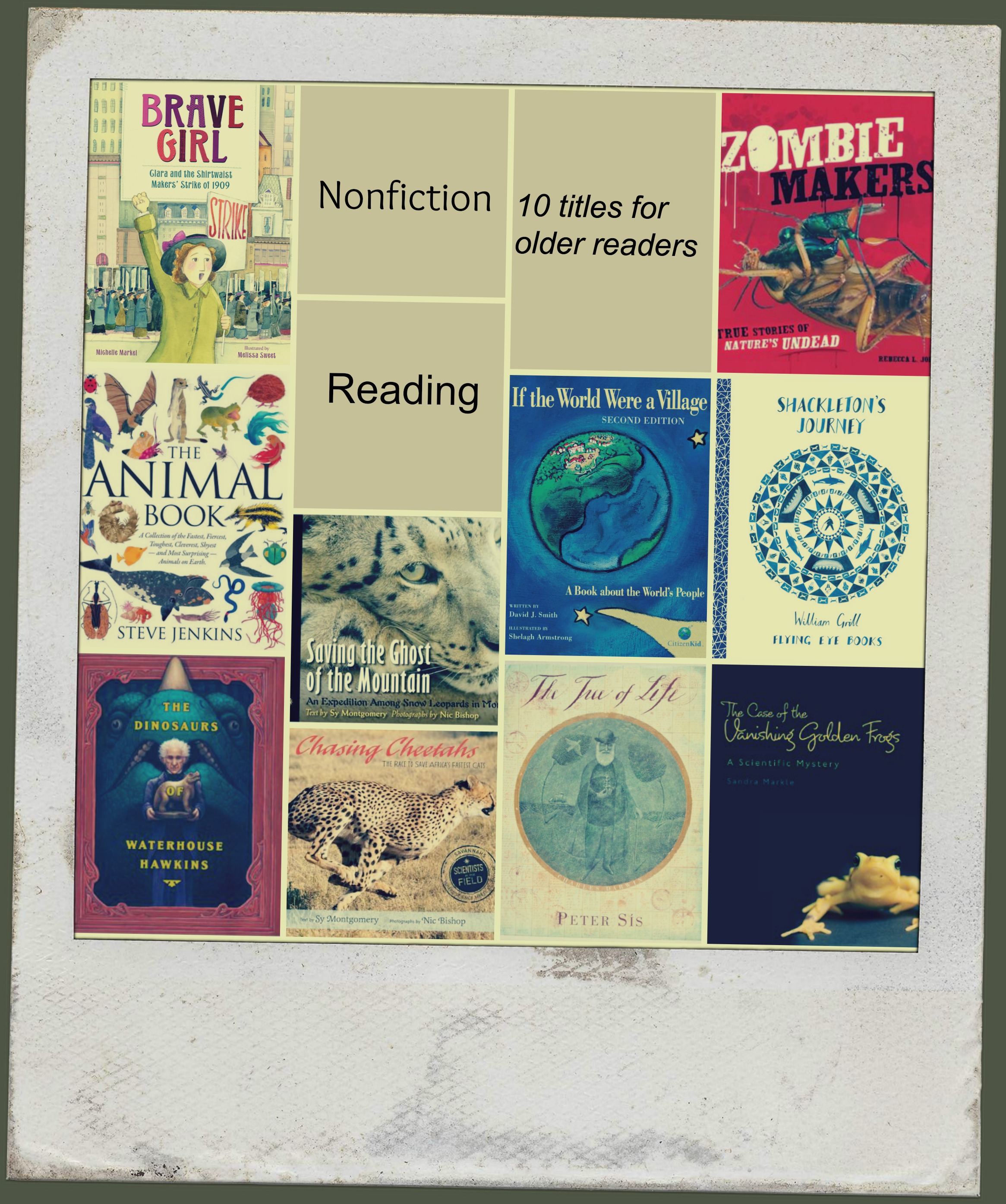
The second ten:

Nonfiction Picture Book Wednesday: Some favourite nonfiction titles for older readers (List 2) There's a Book for That

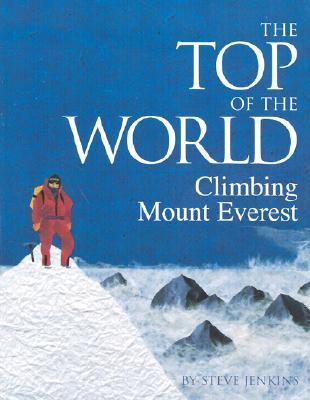
The Top of the World: Climbing Mount Everest by Steve Jenkins (published 1999)

The Top of the World Climbing Mount Everst Nonfiction Picture Book Wednesday: Some favourite nonfiction titles for older readers (List 2) There's a Book for That

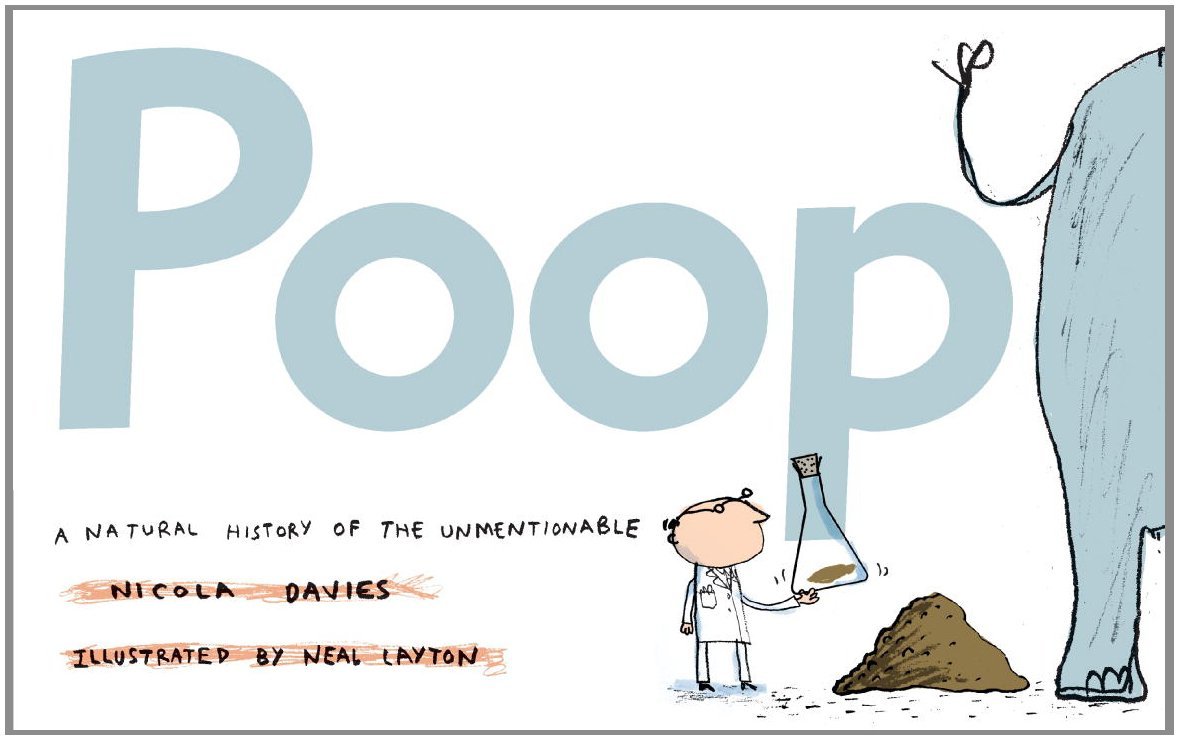
Poop – A Natural History of the Unmentionable written by Nicola Davies and illustrated by Neal Layton (published 2004)

Poop Nonfiction Picture Book Wednesday: Some favourite nonfiction titles for older readers (List 2) There's a Book for That

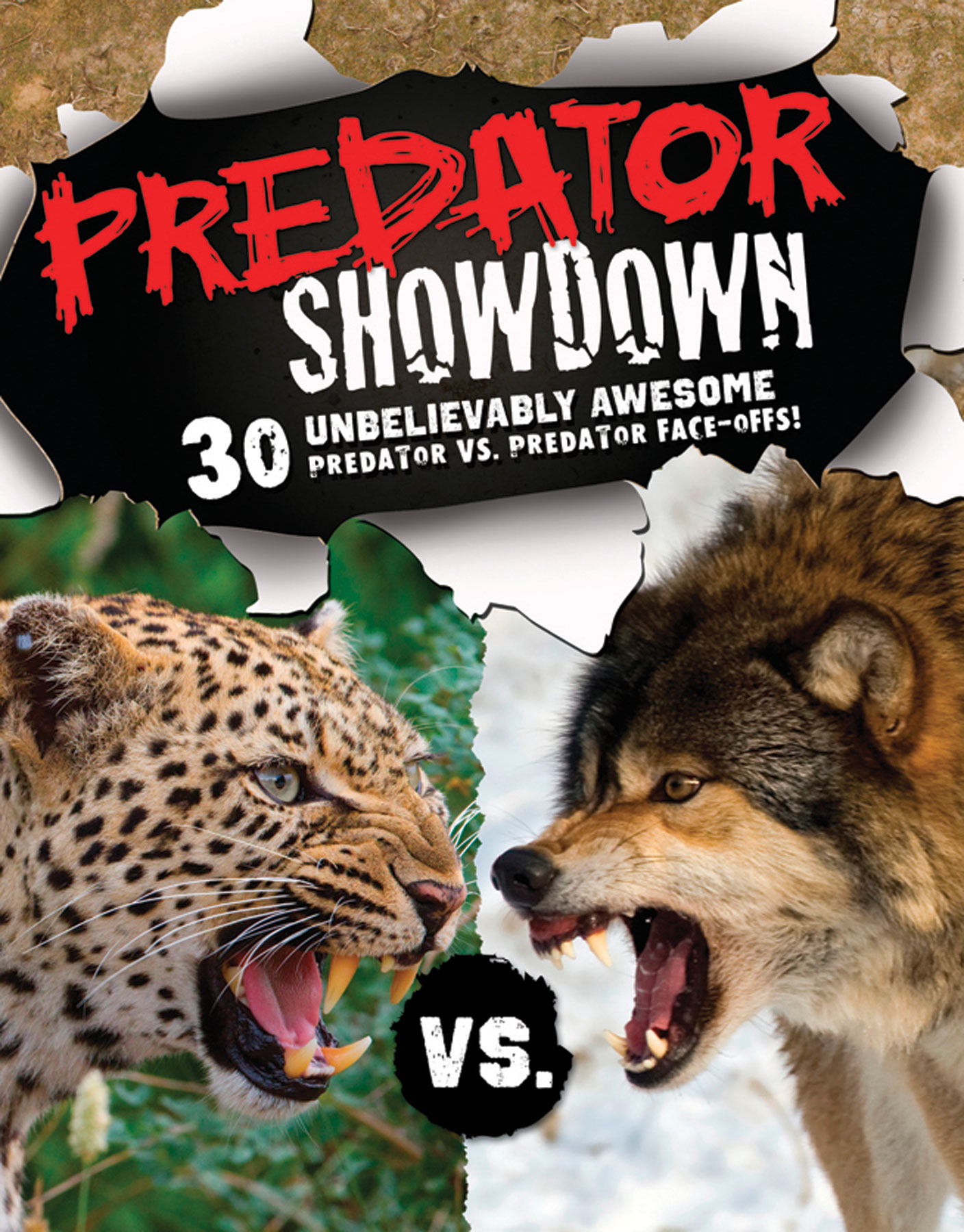
Predator Showdown (30 Unbelievably Awesome Predator vs. Predator Face-offs!) by Lee Martin (published 2011)

Predator-Showdown Nonfiction Picture Book Wednesday: Some favourite nonfiction titles for older readers (List 2) There's a Book for That

Let’s Talk About Race written by Julius Lester and illustrated by Karen Barbour (published 2005)

Let's Talk about Race Nonfiction Picture Book Wednesday: Some favourite nonfiction titles for older readers (List 2) There's a Book for That

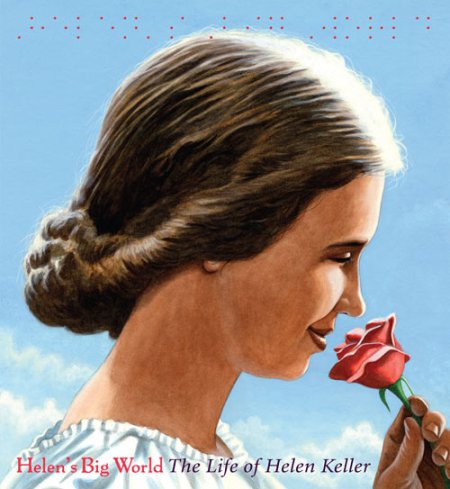
Helen’s Big World The Life of Helen Keller written by Doreen Rappaport and illustrated by Matt Tavares (published 2012)

 Helen's Big World Nonfiction Picture Book Wednesday: Some favourite nonfiction titles for older readers (List 2) There's a Book for That

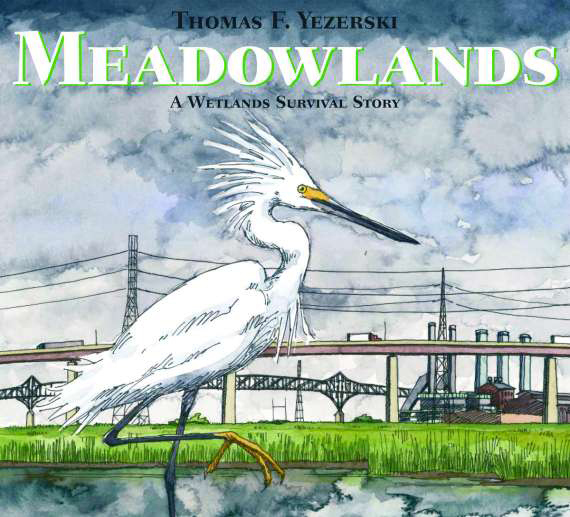
Meadowlands – A Wetlands Survival Story by Thomas F Yezerski (published 2011)

Meadowlands Nonfiction Picture Book Wednesday: Some favourite nonfiction titles for older readers (List 2) There's a Book for That

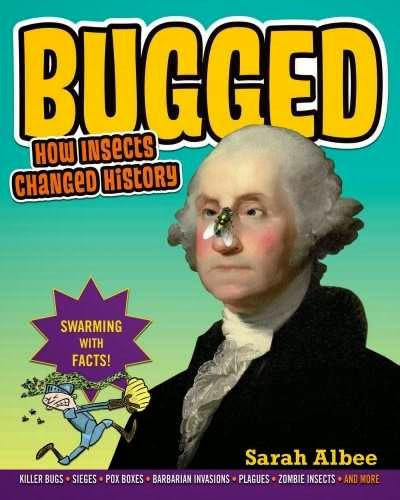
Bugged: How Insects Changed History written by Sarah Albee and illustrated by Robert Leighton (published 2014)

Bugged Nonfiction Picture Book Wednesday: Some favourite nonfiction titles for older readers (List 2) There's a Book for That

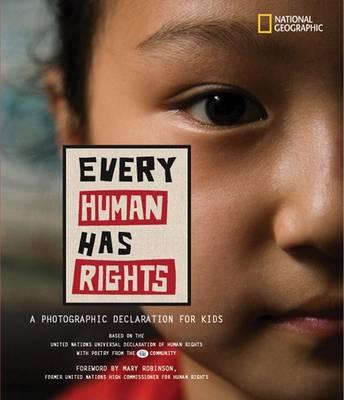
Every Human has Rights – A Photographic Declaration for Kids A National Geographic book with a forward by Mary Robinson. (published 2008)

Nonfiction Picture Book Wednesday: Some favourite nonfiction titles for older readers (List 2) There's a Book for That

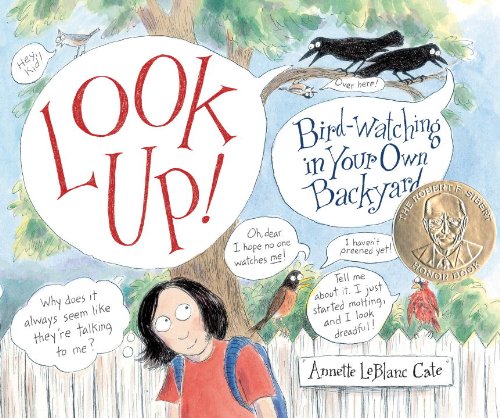
Look Up! Bird Watching in Your Own Backyard by Annette LeBlanc Cate (published 2013)

Look up! Nonfiction Picture Book Wednesday: Some favourite nonfiction titles for older readers (List 2) There's a Book for That

One Well: The Story of Water on Earth written by Rochelle Strauss and illustrated by Rosemary Woods (published 2007)

One Well Nonfiction Picture Book Wednesday: Some favourite nonfiction titles for older readers (List 2) There's a Book for That

Thanks to Alyson from Kid Lit Frenzy for the inspiration to read and share more nonfiction picture books in 2014. Follow the link to Alyson’s blog to read about more nonfiction books you need to read!

My goal is to read 65 nonfiction picture books for 2014. Progress: 102/65 complete!

klf_nonfiction2014_medium (1)

Monday August 25th, 2014

It’s Monday! What are you reading?

imwayr

Join Jen from Teach Mentor Texts and Kellee and Ricki from Unleashing Readers and share all of the reading you have done over the week from picture books to young adult novels. Follow the links to read about all of the amazing books the #IMWAYR community has read. You are guaranteed to find something new to add to your list.

I thought I would have finished many more books this week. Problem is I can’t sit still. If I am still, I think. I think about how we are still on strike. How September is going to begin with us in limbo here in B.C. No teaching, no learning. Just sad. So I spent time I would usually be reading, doing other things. Sorting. Organizing. Puttering about to keep moving. And less reading was the result. Ridiculous really because reading is one of my favourite things but it’s been a hard week knowing that there is no resolution in sight. Taking a deep breath and trying to dive back into books.

Still, I read some great titles!

The picture books I loved:

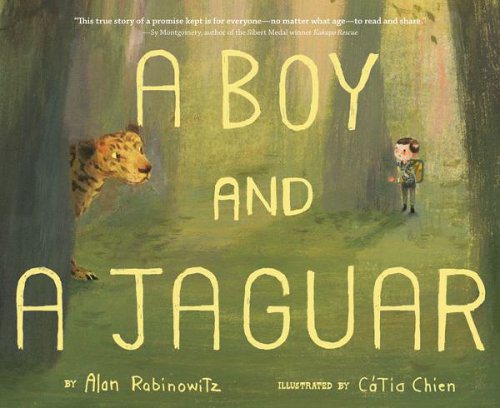
 A Boy and A Jaguar written by Alan Rabinowitz and illustrated by Cátia Chien 

Oh wow. This book. It’s gorgeous. It’s special. It’s a must own and must share. A story of a boy who finds his voice and shares it in the best of ways.

 A Boy and a Jaguar #IMWAYR There's a Book for That August 25th, 2014

Hooray for Hat! by Brian Won

This book was sent to me by the wonderful Alyson Beecher and it marched into my hands and begged to be read. Delightful. Charming. It whispers, “Hey, there is an art project just begging to happen here don’t you think?” Yep!

Hooray for Hat  #IMWAYR There's a Book for That August 25th, 2014

The Long,  Long Journey The Godwit’s Amazing Migration written by Sandra Markle and illustrated by Mia Posada

I am always fascinated by migration stories. This title highlights the journey of the godwit’s migration. Almost unbelievable. Beautifully illustrated.

 The Long, Long Journey  #IMWAYR There's a Book for That August 25th, 2014

Chamelia and the New Kid in Class by Ethan Long

Perfect read aloud for little ones – addresses feelings of jealousy, wanting attention, accepting the new kid. Always relevant.

  #IMWAYR There's a Book for That August 25th, 2014

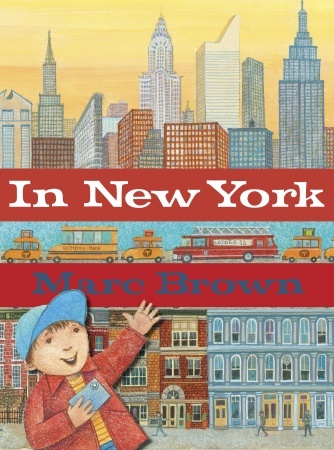
In New York by Marc Brown

A great introduction to an incredible city.

In New York  #IMWAYR There's a Book for That August 25th, 2014

I also finished

A Snicker of Magic by Natalie Lloyd

Reading this book was kind of like stumbling into an eclectic antique store and picking up interesting items to examine. Stacks of sentimental. Little bowls of charm. Artifacts full of whimsy. Sorrow. Longing. Joy. Magic. What a book.

a snicker of magic  #IMWAYR There's a Book for That August 25th, 2014

Up next? I am now reading Okay for Now by Gary D. Shmidt with my children and plan to start Revolution by Deborah Wiles later today.

Reading Goal Updates: 

2014 Chapter Book Challenge: 60/100 novels complete

Goodreads Challenge: 394/650 books read

#MustReadin2014: 20/30 complete

Nonfiction Picture Book Challenge: 100/65 complete

Nonfiction Picture Book Wednesday: Some favourite nonfiction titles for older readers (List 1)

It’s Nonfiction Picture Book Wednesday! 

In July, I published a series of posts about using more nonfiction titles in the classroom. I included numerous recommendations of book titles geared to the primary/early intermediate classroom.  In case you missed them, here are the links:

Part 1: Everywhere you look . . . let there be nonfiction!

Part 2: The importance of the nonfiction read aloud

3A: Generating excitement, making choices and having time to read

3 B: Reading and working with the texts 

Through twitter and from a few comments, I heard from some teachers that their middle school students (Grades 5-8) have lost their passion for nonfiction reading. Linda Baie from Teacher Dance addressed this here with some great book suggestions. At first, I thought that this was not something that I could talk about since my students are younger and I don’t have first hand experience working with these older readers. But the more I thought about it, I realized that my own children (boy/girl twins) are eleven and we share a lot of nonfiction together. And I started another list . . .

For the next few weeks, I will share thirty of my favourite nonfiction books for older readers – ten at a time. If you are an intermediate teacher, I hope you have students eager to read nonfiction! If not, maybe some of these titles can persuade them to spend some time with this genre.

The first ten:

Nonfiction Picture Book Wednesday: Some favourite nonfiction titles for older readers (List 1) There's a Book for That

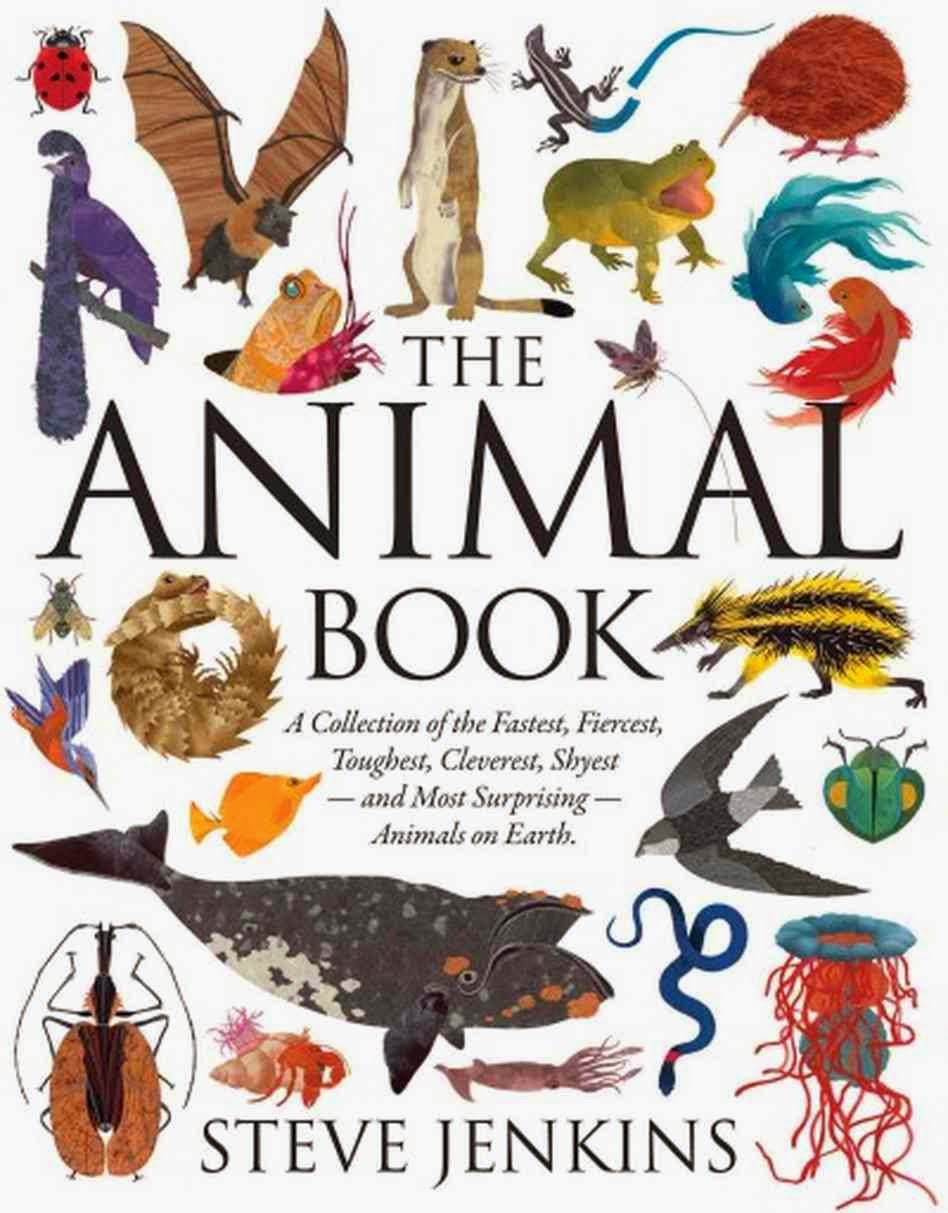
The Animal Book: A Collection of the Fiercest, Toughest, Cleverest, Shyest – and Most Surprising – Animals on Earth by Steve Jenkins (published 2013)

 The Animal Book Nonfiction Picture Book Wednesday: Some favourite nonfiction titles for older readers (List 1) There's a Book for That

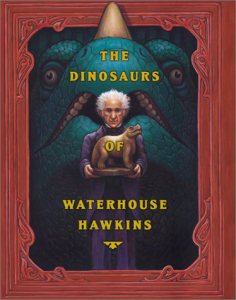
The Dinosaurs of Waterhouse Hawkins written by Barbara Kerley and illustrated by  Brian Selznick (published 2001)

 The Dinosaurs of Waterhouse Hawkins Nonfiction Picture Book Wednesday: Some favourite nonfiction titles for older readers (List 1) There's a Book for That

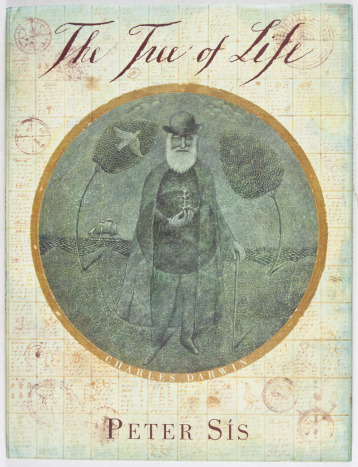
The Tree of Life: Charles Darwin by Peter Sis (published 2003)

 The Tree of Life Nonfiction Picture Book Wednesday: Some favourite nonfiction titles for older readers (List 1) There's a Book for That

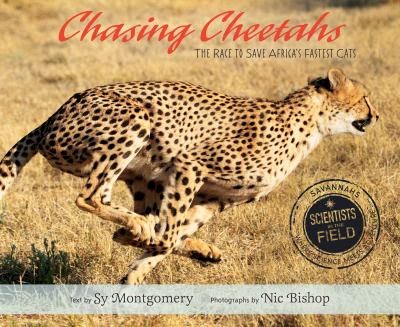
Chasing Cheetahs: The Race to Save Africa’s Fastest Cats written by Sy Montgomery with photographs by Nic Bishop (published 2014)

 Chasing Cheetahs Nonfiction Picture Book Wednesday: Some favourite nonfiction titles for older readers (List 1) There's a Book for That

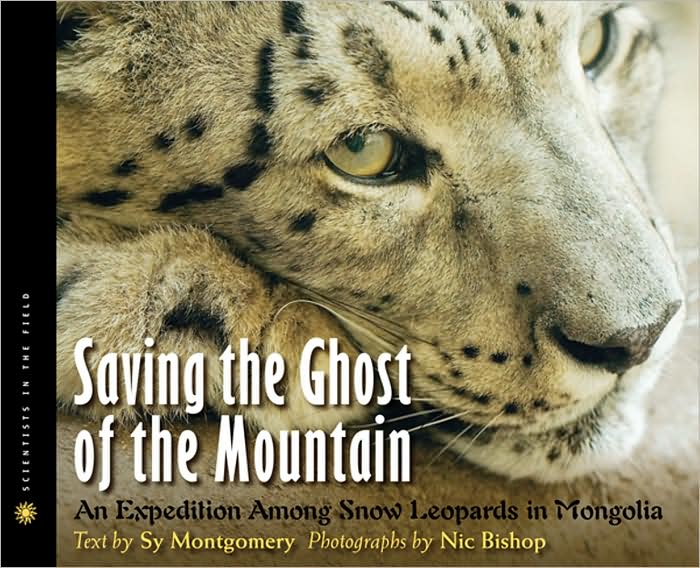
Saving the Ghost of the Mountain: An Expedition Among Snow Leopards in Mongolia written by Sy Montgomery with photographs by Nic Bishop (published 2009)

 Nonfiction Picture Book Wednesday: Some favourite nonfiction titles for older readers (List 1) There's a Book for That

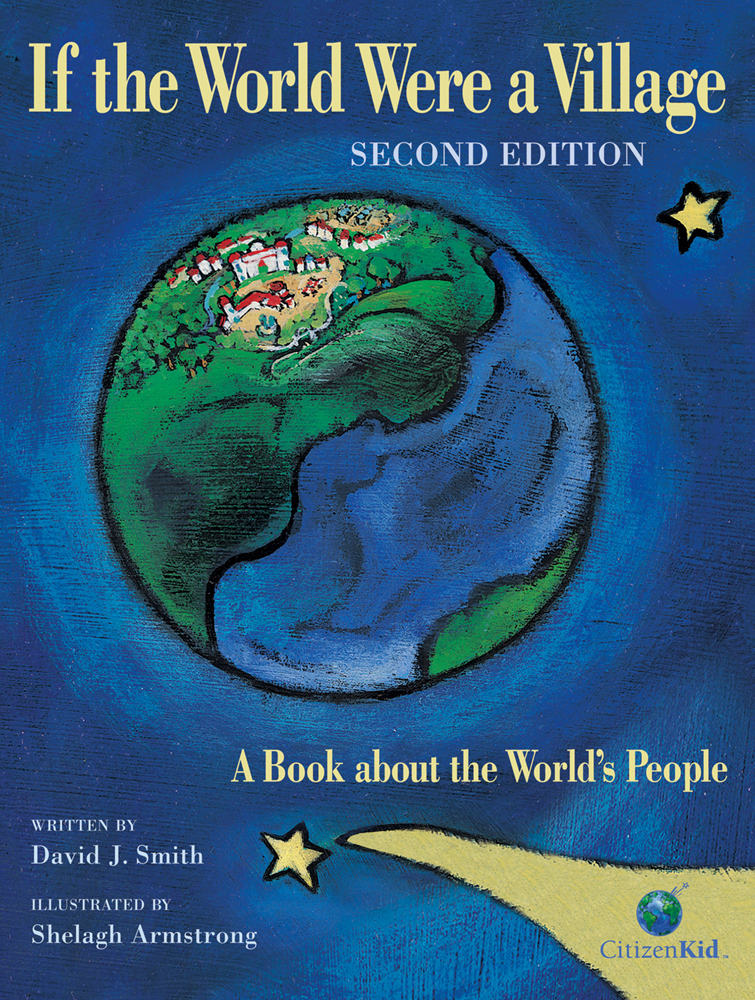
If the World Were a Village: A Book about the World’s People by David J. Smith and illustrated by Shelagh Armstrong (first published in 2002, second edition 2011)

 If the World were a Village Nonfiction Picture Book Wednesday: Some favourite nonfiction titles for older readers (List 1) There's a Book for That

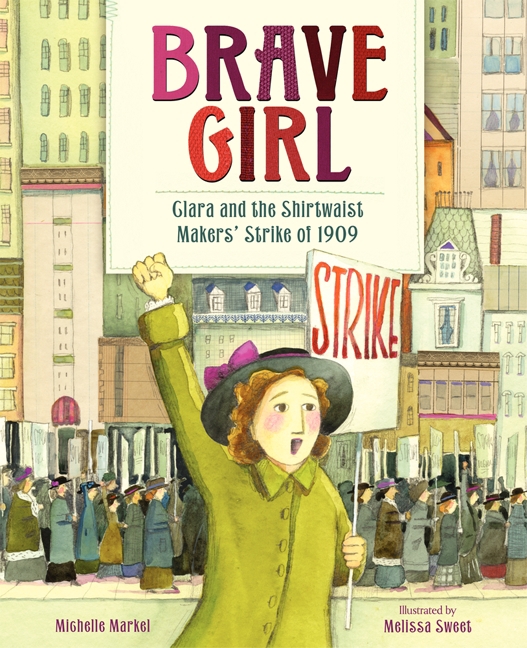
Brave Girl: Clara and the Shirtwaist Maker’s Strike of 1909 written by Michelle Markel and illustrated by Melissa Sweet (published 2013)

 Brave Girl Nonfiction Picture Book Wednesday: Some favourite nonfiction titles for older readers (List 1) There's a Book for That

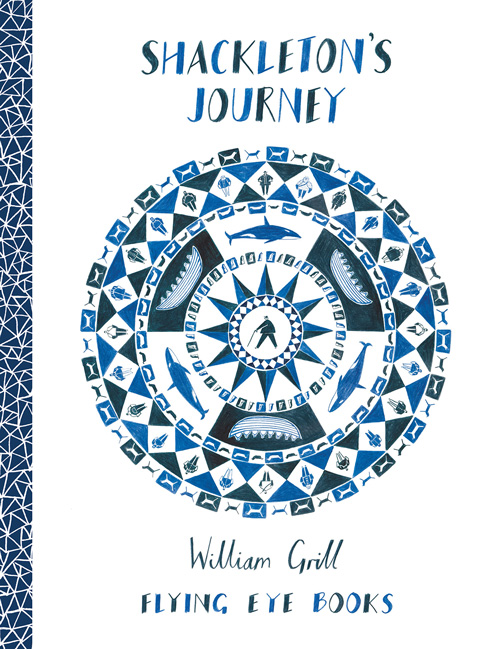
Shackleton’s Journey by William Grill (published 2014)

Shackleton's Journey Nonfiction Picture Book Wednesday: Some favourite nonfiction titles for older readers (List 1) There's a Book for That

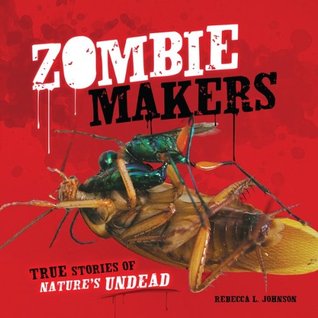
Zombie Makers True Stories of Nature’s Undead by Rebecca L. Johnson (published 2012)

Zombie Makers  Nonfiction Picture Book Wednesday: Some favourite nonfiction titles for older readers (List 1) There's a Book for That

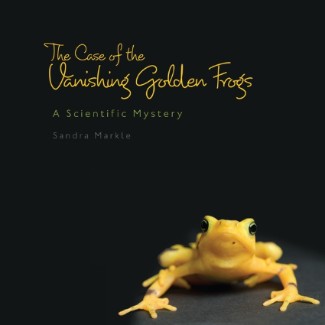
The Case of the Vanishing Golden Frogs: A Scientific Mystery by Sandra Markle (published 2011)

 The Case of the Vanishing Golden Frogs Nonfiction Picture Book Wednesday: Some favourite nonfiction titles for older readers (List 1) There's a Book for That

Thanks to Alyson from Kid Lit Frenzy for the inspiration to read and share more nonfiction picture books in 2014. Follow the link to Alyson’s blog to read about more nonfiction books you need to read!

My goal is to read 65 nonfiction picture books for 2014. Progress: 99/65 complete!

klf_nonfiction2014_medium (1)

Monday August 11th, 2014

It’s Monday! What are you reading?

imwayr

Join Jen from Teach Mentor Texts and Kellee and Ricki from Unleashing Readers and share all of the reading you have done over the week from picture books to young adult novels. Follow the links to read about all of the amazing books the #IMWAYR community has read. You are guaranteed to find something new to add to your list.

The picture books I loved this week include some nonfiction titles. I won’t be posting for Nonfiction Picture Book Wednesday (away on holiday) so sharing some wonderful nonfiction here today.

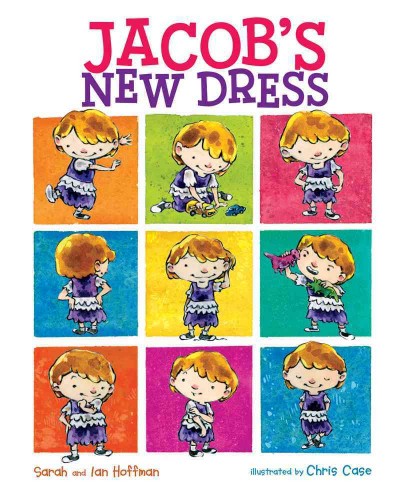
Jacob’s New Dress written by Sarah and Ian Hoffman and illustrated by Chris Case

Really a must have title for those of us trying to build a library that represents all of the diversity in our classrooms. This picture book touches on gender non-conforming children and sends a beautiful message: “There are lots of different ways to be a boy.” Little Jacob’s interactions with his parents are emotional as he waits to see their reactions to his requests to wear a dress to school. A brave little character. A must have book.

Jacob's New Dress #IMWAYR Monday August 11th, 2014 There's a Book for That

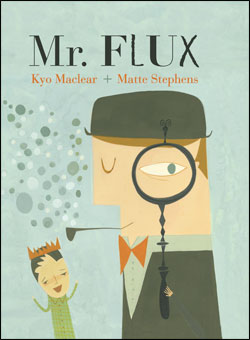
Mr. Flux written by Kyo Maclear and illustrated by Matte Stephens 

I have said it before – I embrace the odd and quirky in picture books and this title is all about just that. Eccentric, yes. Embracing change, it’s here. A book you will either like or not but worth checking out!

Mr. Flux #IMWAYR Monday August 11th, 2014 There's a Book for That

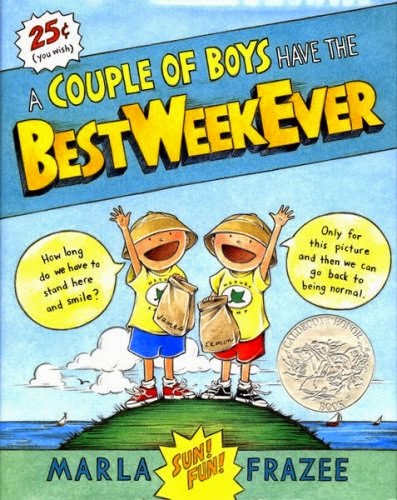
A Couple of Boys Have the Best Week Ever by Marla Frazee

I am really not sure how I haven’t read this book. I knew about this book. I have held it in my hand at the library. But, I only finally read it now. Huh? Marla Frazee, my favourite! A book about connections between generations, which I love. So asking again, how did I miss this? Maybe because I needed the perfect summer day to read and savour it. Loved everything about this title – the humour, the boy energy and whims, the awesome grandparents and the big and small adventures.

A Couple of Boys have the Best Week Ever  #IMWAYR Monday August 11th, 2014 There's a Book for That

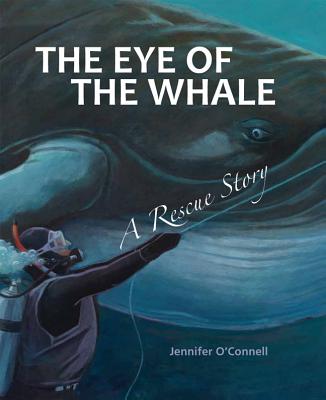
The Eye of the Whale: A Rescue Story by Jennifer O’Connell

This book made me cry. Just a gorgeous picture book based on a real life rescue. There is magic and hope here.

The Eye of the Whale  #IMWAYR Monday August 11th, 2014 There's a Book for That

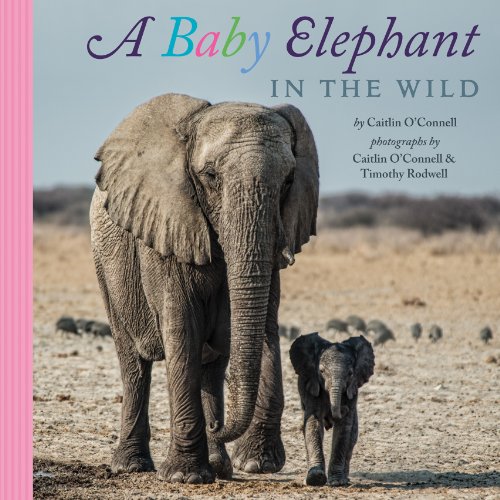
A Baby Elephant in the Wild written by Caitlin O’Connell with photographs by Timothy Rodwell and Caitlin O’Connell

My students aren’t to read Scientist in the Field titles yet so books like this (written by the author of The Elephant Scientist, a Scientist in the Field title are perfect. Lots of learning about elephants in a book younger students can manage.

 A Baby Elephant in the Wild  #IMWAYR Monday August 11th, 2014 There's a Book for That

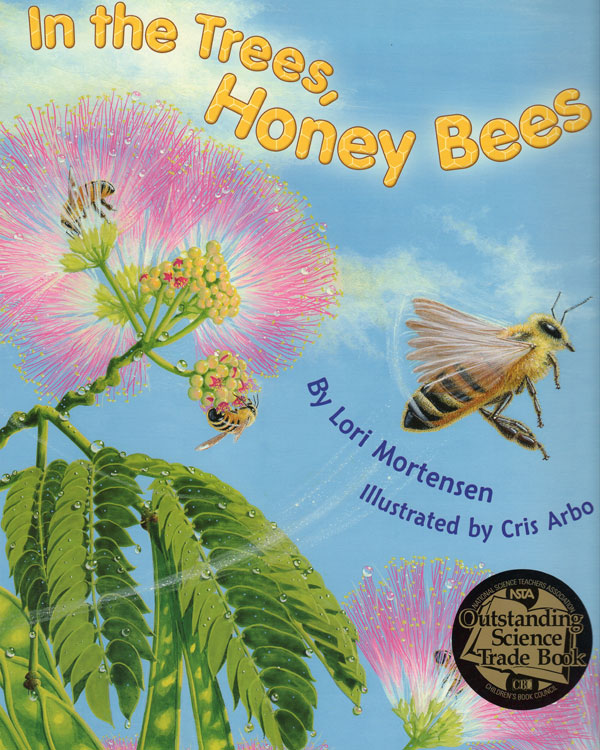
In the Trees, Honey Bees written by Lori Mortensen and illustrated by Cris Arbo

The illustrations in this book are just incredible. They look almost like photographs. This book reads like a poem with more information on each page so it can be read in many different ways. Lots of learning about bees and how they interact in this title.

 In the Trees, Honey Bees  #IMWAYR Monday August 11th, 2014 There's a Book for That

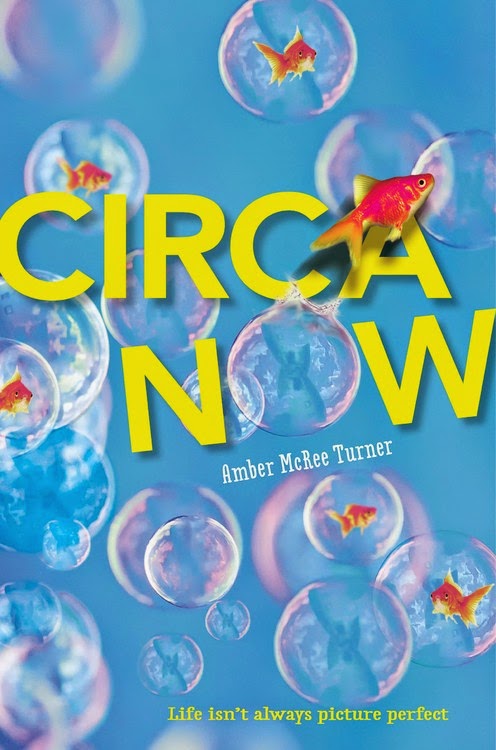
I also finished Circa Now by Amber McRee Turner

This is a very special title. Themes of grief, friendship and family are interwoven through a story that makes us believe in magic or at least “meant to be”.  This would be the perfect middle grade book club selection. There is so much to talk about.

 Circa Now  #IMWAYR Monday August 11th, 2014 There's a Book for That

Next up? I have a large pile of titles to take on my holiday. I am hoping for a book a day! Reading, the ocean and family time! Hurrah!

Reading Goal Updates: 

2014 Chapter Book Challenge: 55/100 novels complete

Goodreads Challenge: 383/650 books read

#MustReadin2014: 20/30 complete

Nonfiction Picture Book Challenge: 97/65 complete

Nonfiction Picture Book Wednesday: Some titles to book talk #1

It’s Nonfiction Picture Book Wednesday! 

klf_nonfiction2014_medium (1)

So often, I discover amazing nonfiction that I just can’t wait to read aloud. But it is equally exciting to find titles that will become part of our class nonfiction collection. Some Wednesdays, I’ve decided to share some titles that I will be adding to our nonfiction bins and some of the features I will highlight when I share them with the students.

I think our guiding questions and the information we point out when introducing books really helps our students have more success when reading the texts independently.

Thanks to Alyson from Kid Lit Frenzy for the inspiration to read and share more nonfiction picture books in 2014. Follow the link to Alyson’s blog to read about more nonfiction books you need to read!

My goal is to read 65 nonfiction picture books for 2014. Progress: 95/65 complete!

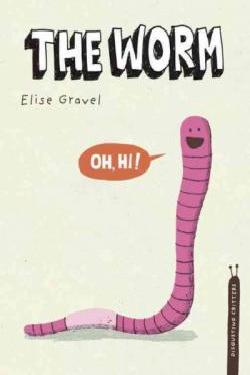
The Worm by Elise Gravel (published 2014)

This Disgusting Critters series is something I am very excited to share with my students this fall. There is guaranteed kid appeal in the humour, the yucky facts and the conversational narration. Lots of bold text, speech bubbles and silly pictures. But, this is not a nonfiction title where you will find the features we often expect in a nonfiction title. There is no table of contents, glossary or index to organize facts. In fact the facts are found within the text – sometimes with bolded words and sometimes with diagrams that illustrate a point. No guarantees. A sample of the text:

“An earthworm is basically a long digestive tract with inside a muscle tube. It’s that muscle tube that’s slimy and disgusting.”

This is what I would highlight when I book talked this title:

  • Notice that some of the new vocabulary is in bold
  • Discover new facts by asking yourself at the end of the page, “Did I just learn something new?” “Was there a fact I could note on this page?”
  • Appreciate the amusing way that the author communicates new information
  • Choose another book on the same topic for further reading

 The Worm Nonfiction Picture Book Wednesday: Some titles to book talk #1

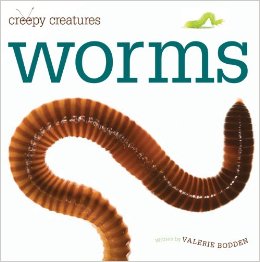
I would pair Worms (part of the Creepy Creatures series) by Valerie Bodden with this book. This series is very popular in my classroom and the ideal reading level for primary students.

Worms Nonfiction Picture Book Wednesday: Some titles to book talk #1

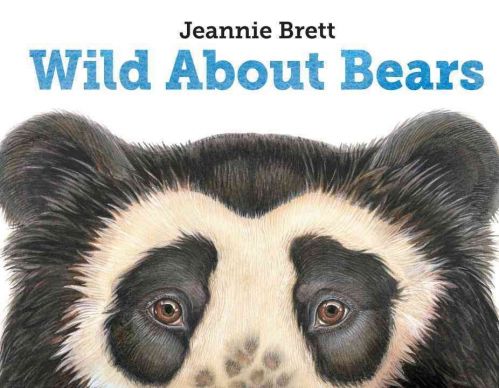
Wild about Bears by Jeannie Brett (published 2014)

This book highlights information about each of the eight species of bears on earth today. Can you name the specific eight? I couldn’t! There are some things that I really like about this title but a few things that might make it a little challenging for children to navigate. I would highlight each of these things in sharing this book.

  • Check out the main headings on each two page spread that introduce us to one of the eight bear species. The common name is also included and may be the name you know. For example, Moon bears (the term I was familiar with) are actually part of the Asiatic Black Bears species. The weight range of each bear is also included here.
  • Notice the habitat glossary in the back of the book that gives more information about the habitats where each bear species lives
  • Refer often to the colour coded world map in the back to see where you can find each bear species
  • Make sure you read some of the smaller text next to the diagrams for more information. Be aware though that these are not all captions – just additional information about each of the bear species. You might not see what the text is talking about in the picture.
  • How do we learn new vocabulary in nonfiction text? Often our learning is reinforced and enhanced through bolded words, a glossary and an index. Notice that these things are missing in this text so you may need to look specific words up in other sources for more information.
  • Would you have appreciated colour photographs of the bears – maybe in the back of the book to see what they looked like in the wild? Where could you go to find real life photographs of each species in their habitats?

 Wild About Bears Nonfiction Picture Book Wednesday: Some titles to book talk #1

Monday August 4th, 2014

It’s Monday! What are you reading?

imwayr

Join Jen from Teach Mentor Texts and Kellee and Ricki from Unleashing Readers and share all of the reading you have done over the week from picture books to young adult novels. Follow the links to read about all of the amazing books the #IMWAYR community has read. You are guaranteed to find something new to add to your list.

I didn’t get as much reading finished this week, but books were certainly on my mind. Over the last week and a half, I have published a blog series about using more nonfiction books in the classroom called Teaching with a Passion for Nonfiction books. It is a four part series. This link takes you to the fourth post and if you are interested, you can follow the rest of the links there to visit the other posts. I teach a Grade 2/3/4 class so the book suggestions and strategies are geared toward a late primary classroom. If you are looking to add more nonfiction titles in your teaching, some of the ideas might be helpful. I welcome any feedback.

My favourite picture books of the week are a mixture of fiction and nonfiction titles.

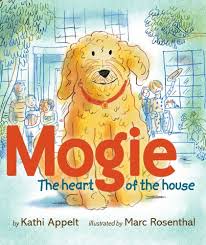
Mogie: The heart of the house written by Kathi Appelt and illustrated by Marc Rosenthal 

A very special book about a dog that is perfectly placed to connect to the children who need him most. This book is based on the real-life Mogie, a Labradoodle who lives at the Ronald McDonald House in Houston.

Mogie The heart of the house #IMWAYR There's a Book for That

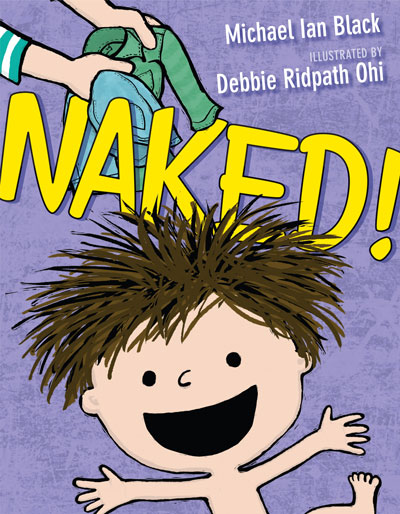
Naked! written by Michael Ian Black and illustrated by Debbie Ridpath Ohi

If this book had existed when my children were younger, we would have had to read it over and over and over! Running around naked is pure joy for toddlers and this book perfectly captures the enthusiasm for the sensation of racing about the house without a thing on!. Delightful.

Naked!  #IMWAYR There's a Book for That

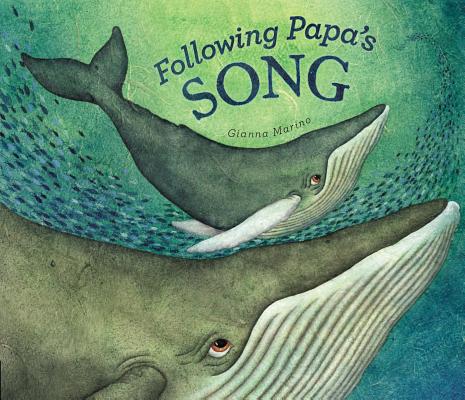
Following Papa’s Song by Gianna Marino 

Gorgeous whales. And I have a thing for beautifully done whales in picture books. Dreamy illustrations and a sweet story for younger listeners. I was so lost in the pictures, I had to go back and reread the story.

 Following Papa's Song  #IMWAYR There's a Book for That

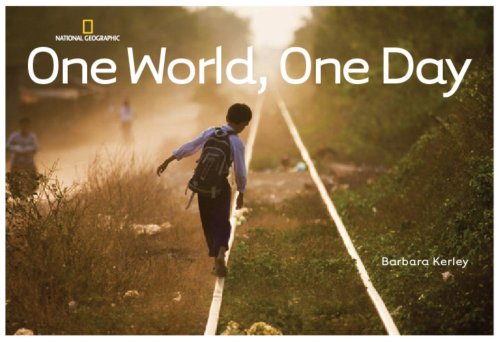
One World, One Day by Barbara Kerley

I really like all of the titles Barbara Kerley has published through National Geographic – the photographs of people around the world are always spectacular. But I think this book is my absolute favourite. Maybe it is the simple aspect of showcasing the daily routines that many of us share – all a little different in different places but yet, so much the same. The back pages have additional information about each photograph. I can see sharing a photo a day with students. It would spark so much discussion and reflection.

One World, One Day  #IMWAYR There's a Book for That

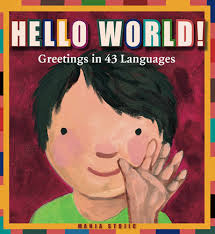
Hello World! Greetings in 43 Languages by Manja Stojic

Illustrations with big kid appeal. Literally how to say “hello” in 43 languages – each page a smiling child and a greeting with a pronunciation guide. Of course, I tried them all!

Hello World  #IMWAYR There's a Book for That

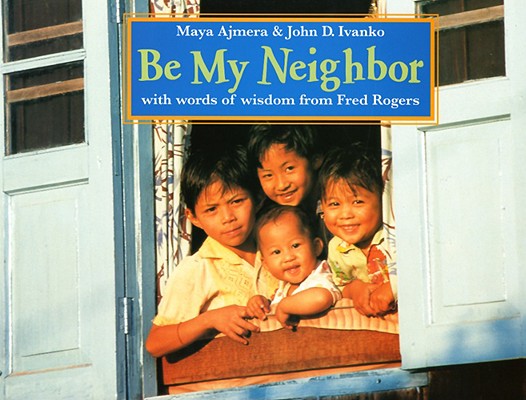
Be My Neighbor by Maya Ajmera and John D Ivanko with words of wisdom from Fred Rogers

Another fascinating book full of photographs of children all over the world. This one focuses on the concept of neighbourhood and community. A map in the back lets children locate all of the places mentioned in the book.

Be-My-Neighbor  #IMWAYR There's a Book for That

The Worm by Elise Gravel 

Another title in the Disgusting Critters series. Really silly. Very amusing. And full of information. Will lead children off to find out even more and then back to read and reread. And giggle.

The Worm  #IMWAYR There's a Book for That

Look Up! Bird Watching in Your Own Backyard by Annette LeBlanc Cate

I read this book by the river after a long hike through the forest. All I could hear were shouts from my children and their friends as they played in the water and the sound of birds. Could it have been more perfect? Don’t think so. So much to learn in this book. Written in conversational, humorous style.

Look up! Bird Watching in Your Own Backyard  #IMWAYR There's a Book for That

I also finished

Winger written by Andrew Smith (YA)

This book was just so very good. Although, I finished it and couldn’t function properly for hours. Raw. Funny. Honest. Beautiful. Made me numb. Buying a copy for my son to read when he is a little older because I want him to meet Ryan Dean West. If this character instantly materialized in front of me, I would adopt him. What a kid. Such a story.

Winger #IMWAYR There's a Book for That

Up Next? I am reading Circa Now by Amber McRee Turner

Reading Goal updates:

2014 Chapter Book Challenge: 54/100 novels complete

Goodeads Challenge: 374/650 books read

#MustReadin2014: 20/30 complete

Nonfiction Picture Book Challenge: 92/65 complete

Teaching with a Passion for Nonfiction Books: Part 3 B

This is the fourth post in a three four post series highlighting how to use more nonfiction in the primary/early intermediate classroom. The first three posts can be found here:

Part 1: Everywhere you look . . . let there be nonfiction!

Part 2: The importance of the nonfiction read aloud

Part 3: Interacting with nonfiction: getting students reading, thinking and talking together 

3A Generating excitement, making choices and having time to read

Here is the the 3B of Part #3 (Yes, really Part 4, I know!)

3B Reading and working with the texts 
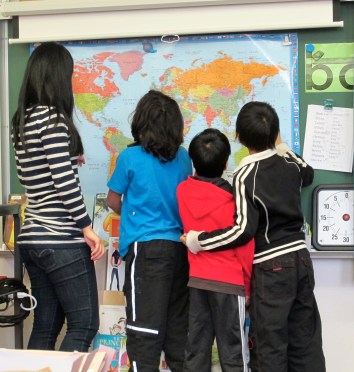
 Teaching with a Passion for Nonfiction Books: Reading and Working with the Texts There's a Book for That

This post will address these questions:

  • How to begin locating and recording facts from nonfiction text
  • What kinds of activities can students do in pairs or small groups with nonfiction text?
  • Which books are great for students beginning to read and interact with nonfiction text independently?

While I am going to share a number of activities you can use to have students interact with nonfiction texts, I do want to gently remind teachers that we need to ensure there is a balance between independent free choice reading of nonfiction texts and using nonfiction to begin learning research skills and other skills involved in finding and reacting to information in nonfiction books. Yes, it is important that our students know that nonfiction books are a place to go to find information. But, we also need to make sure students associate nonfiction reading with pleasure reading. Don’t overdo the “work” with nonfiction at the expense of the pure enjoyment and time to just explore!

While I do additional work in small groups to give students more practice, I teach a lot of information about the structure of nonfiction texts as a whole group while I book talk nonfiction books and share read alouds. It is something that we work on all year. So when I am launching the activities that I describe below, we have already been learning about:

  • how to navigate a nonfiction book
  • different ways to read nonfiction books i.e. not needing to start at the beginning
  • what are the text features
  • how to use the text features
  • various nonfiction genres

I find that if we launch right into activities where students are expected to find specific information, some students who need more time to explore, become discouraged. A more self-paced activity works better where students can look at a variety of texts or one text in more depth. One of the first things I do when we begin interacting with nonfiction text is what I call “fact search blitzes.”

I make a sheet for students to fill in that has a frame that looks like this (repeated down the page:

On page __________ of  ____________________ (title), I found out that __________________________________________________________.

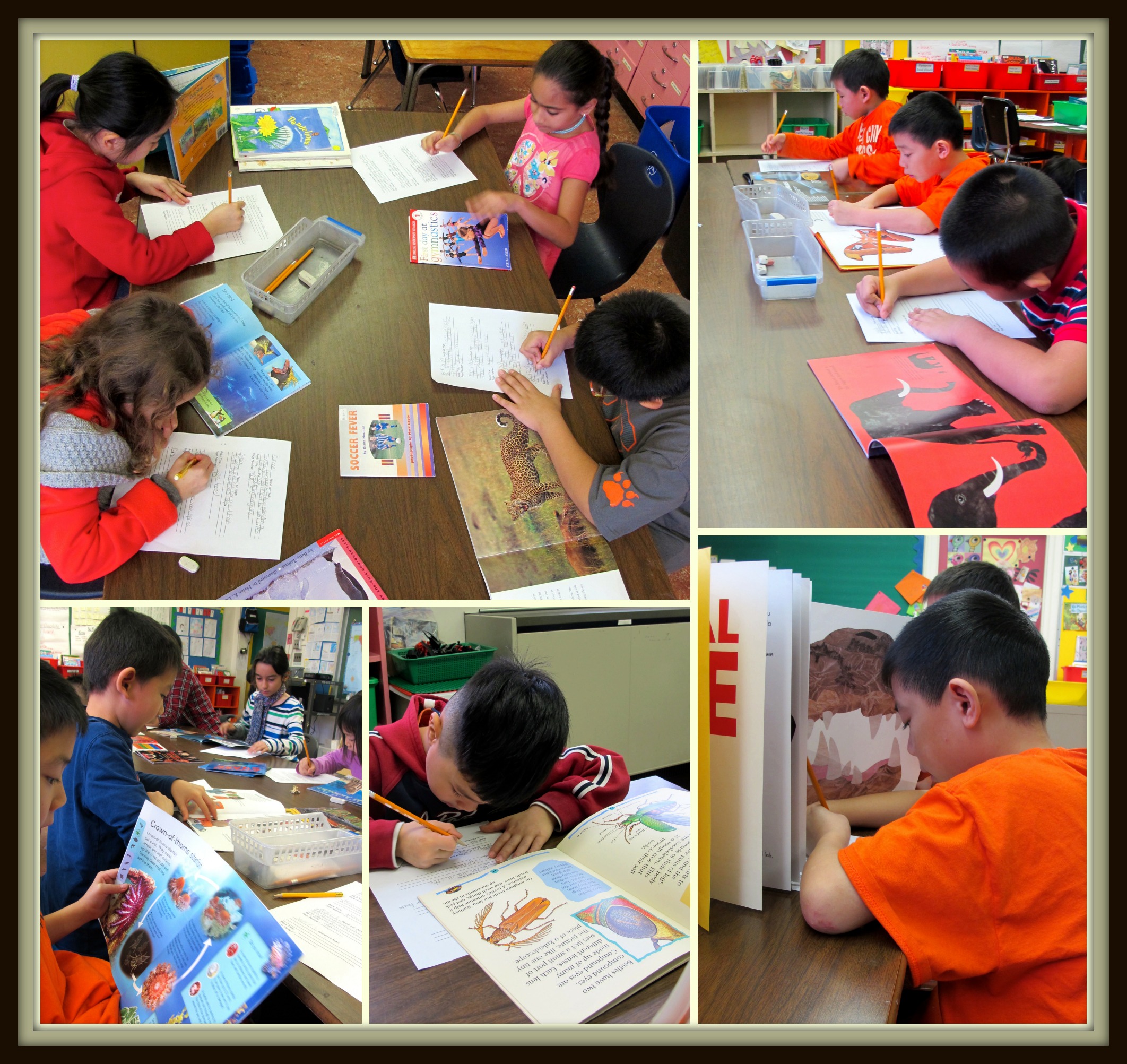
We put out bins and displays of books and the children select a title and search through for an interesting fact. Some students are very independent and work without much support recording multiple facts. Other students need a lot of guidance finding titles and selecting information to share. I try to have lots of adults in the room when we first do this activity so everyone feels successful. There is usually quite a buzz of excitement and students who want to share their learning instantly. I love the chatter as they work. Sometimes we cut up our sheet and separate the facts into categories on large chart paper like Animal Facts, Facts about our World, etc.

What is great about this activity is that there is no right answer and everyone can work at his or her own pace. Students get to really explore the nonfiction titles in the classroom collection and dive in to some books in more detail. They also begin to learn to extract interesting information from the page. And, everyone gets talking about what is learned!
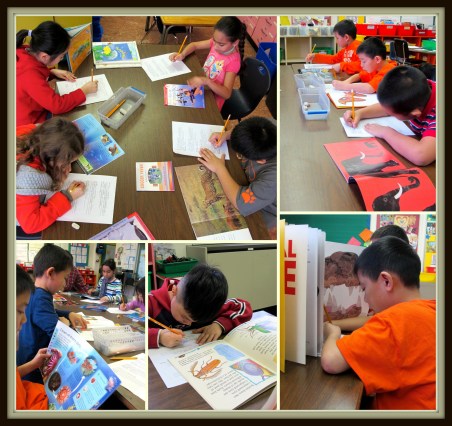
 Teaching with a Passion for Nonfiction Books: Reading and Working with the Texts There's a Book for That

Small Group Work:

Our Teacher Librarian, Ms. S works with my class everyday during Reading Workshop. I also try to organize some of my Resource Teacher support to happen at this time. This allows one of us to work with small groups to practice working more independently with nonfiction text on specific days of the week. We work in the hallway, the library or a different area of the classroom.

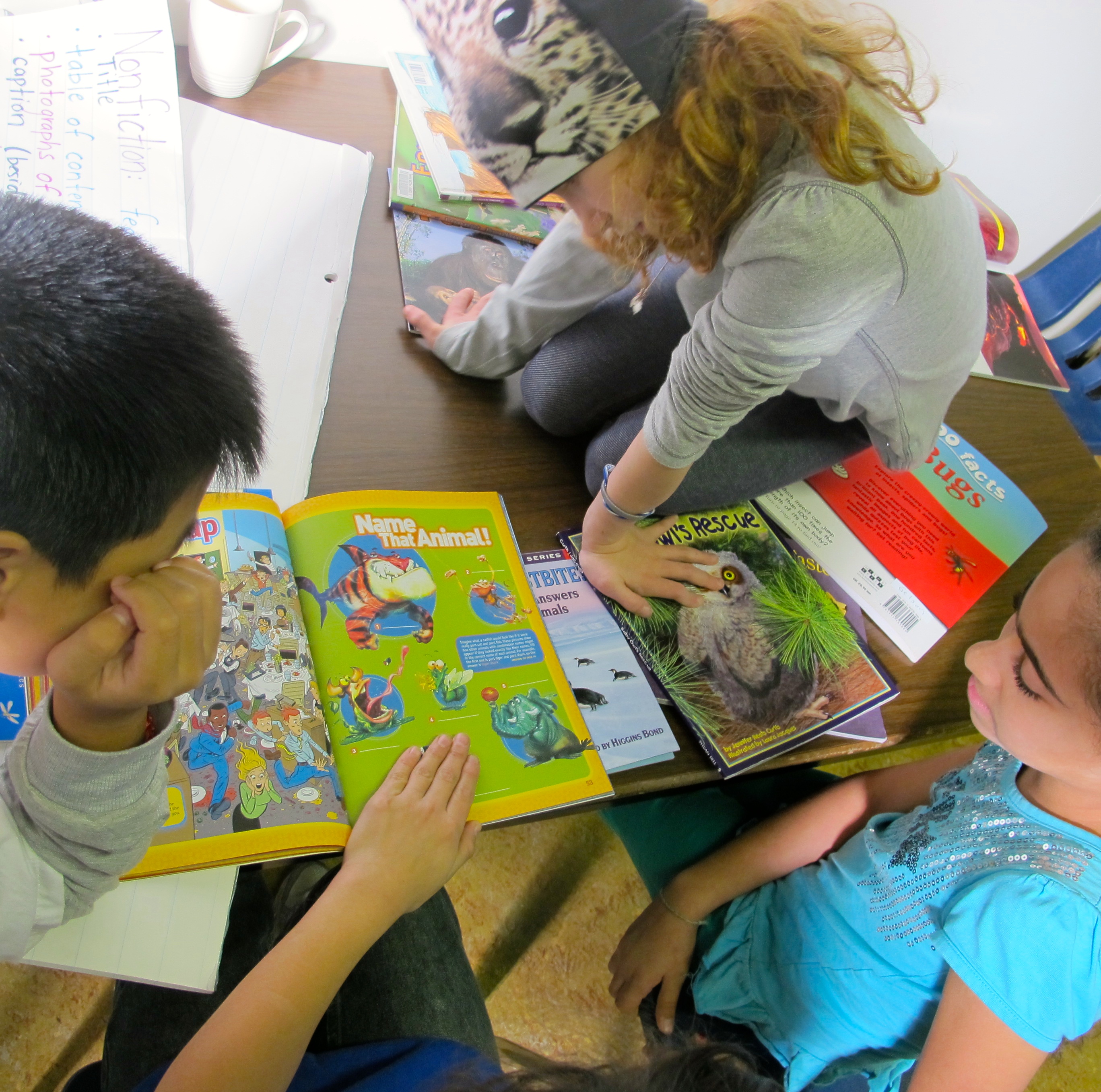
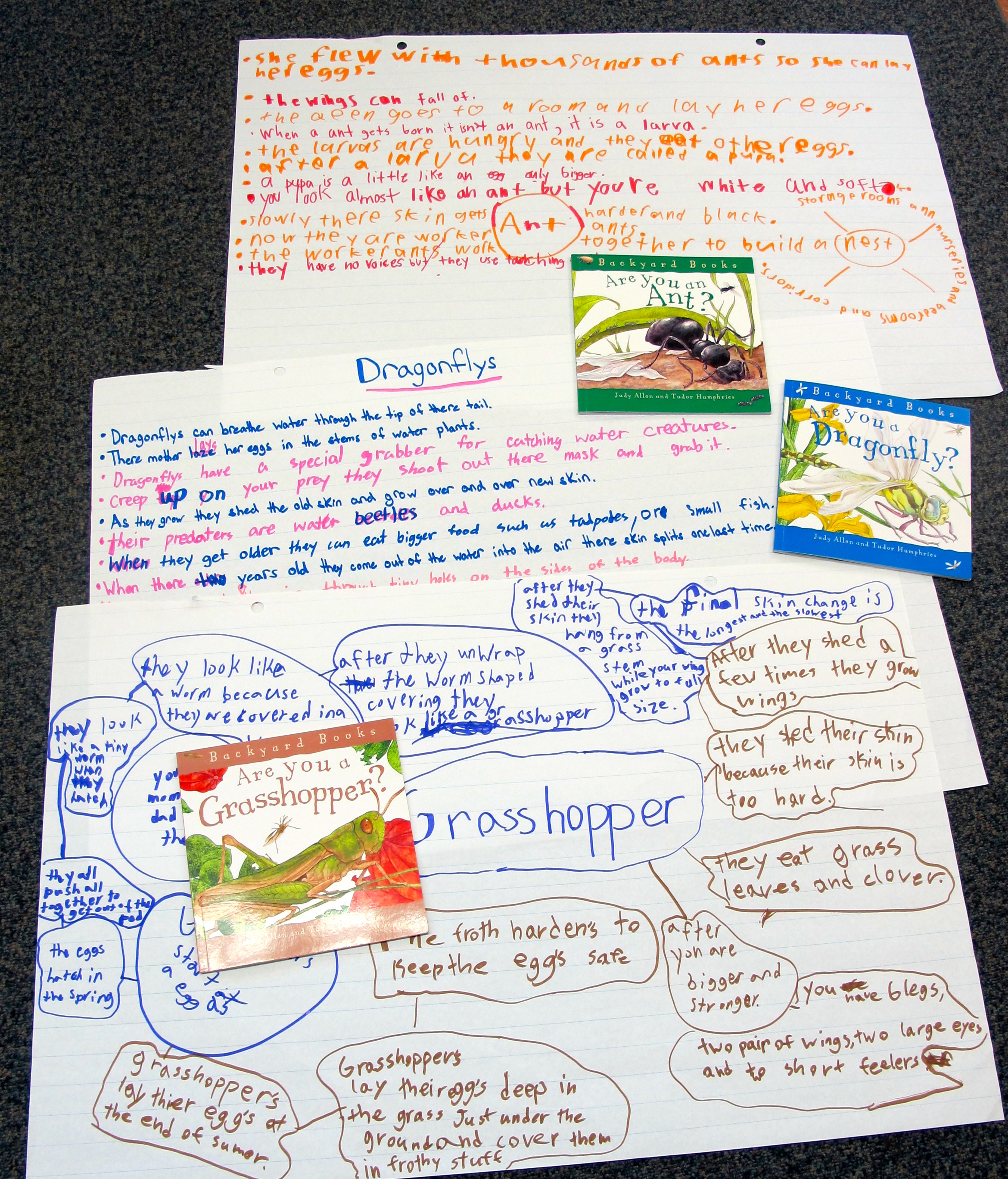
Here students are looking for nonfiction features from  a variety of texts and discussing purposes of the features in the book. This group was delighted that some nonfiction books have quizzes, jokes and puzzles!
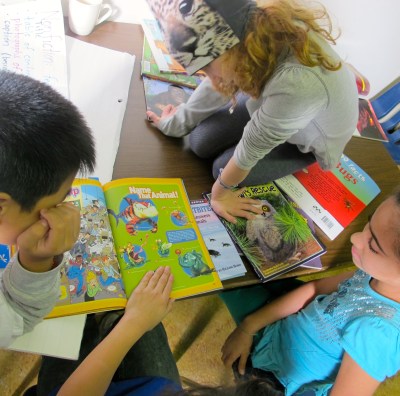
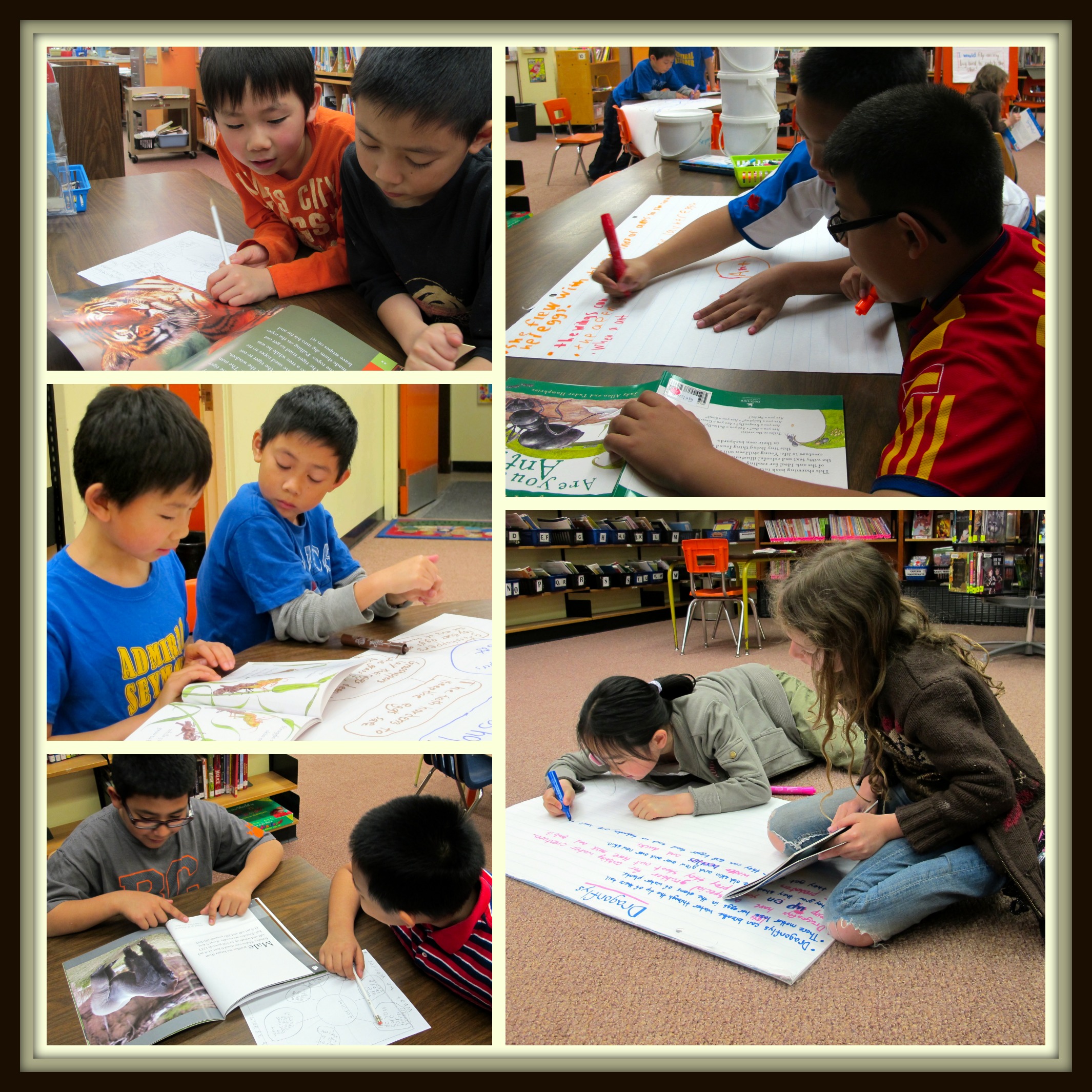
 Teaching with a Passion for Nonfiction Books: Reading and Working with the Texts There's a Book for ThatStudents enjoy working with a partner to explore specific texts. After I worked through this process with the small group, students worked with a partner and a specific text to go through the same process. Working with a partner with lots of time to discuss the topic and share the reading made the experience much more interesting. With less time, I have the pairs do step one and two orally. Note – this process takes a few class periods.

  1. Before you start reading, list everything you know about this specific creature (could be any topic but we were reading books about animals and insects)
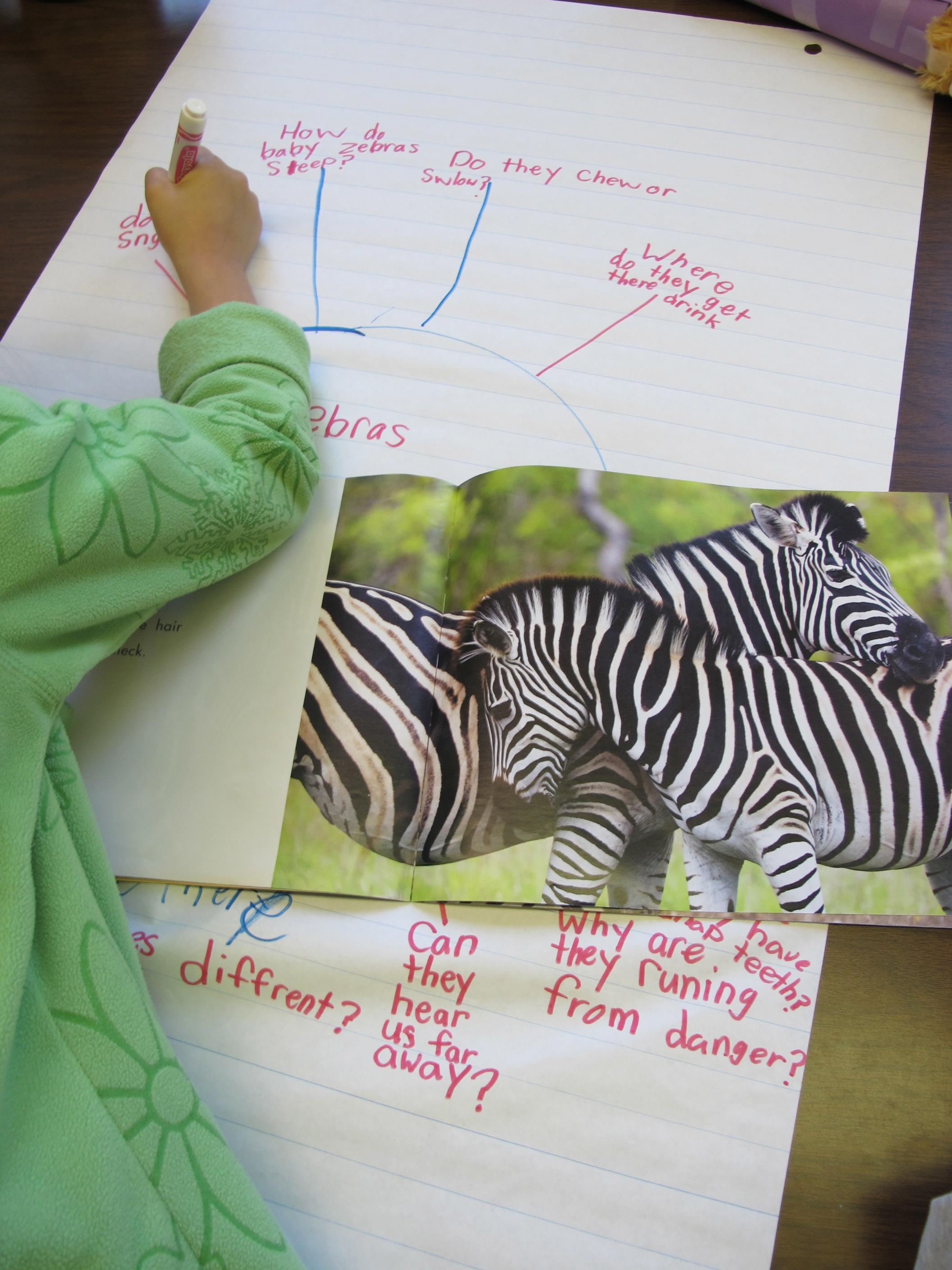
  2. Next, make a Wonder Web to record all the questions that you have.
  3. Now read the text and chart important facts (I tell them that this is part of being a “fact detective”)
  4. Go back to your questions and check off the ones that you answered.
  5. What is left on your list? How could you find out more information to your unanswered questions?
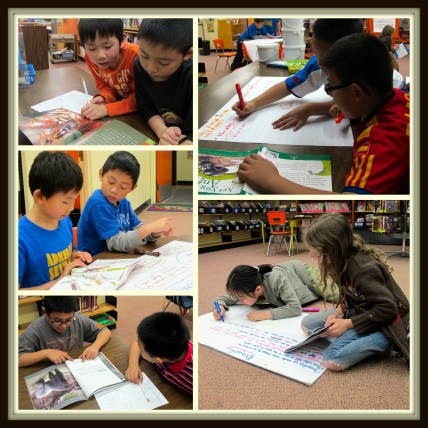
 Teaching with a Passion for Nonfiction Books: Reading and Working with the Texts There's a Book for ThatI shared some of the “talk” I overheard while these students worked with these Backyard Book titles in this post. I am a firm believer in discussion and sharing both learning and thinking when working with nonfiction books!
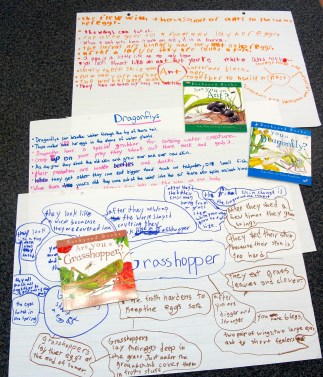
 Teaching with a Passion for Nonfiction Books: Reading and Working with the Texts There's a Book for That

Another activity I have students do when working with magazine articles or specific nonfiction titles allows them to practice a number of skills: accessing prior knowledge, generating questions, reading for information and determining importance.

First students talk about and chart what they know about a particular topic.
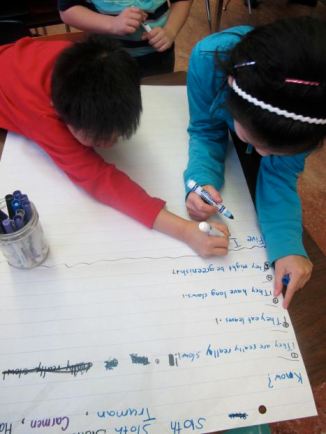
 Teaching with a Passion for Nonfiction Books: Reading and Working with the Texts There's a Book for That

They share all of the things that they wonder in a large web.
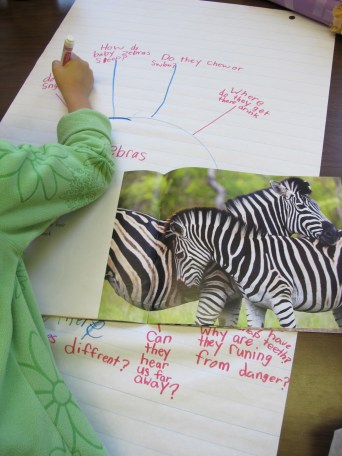
 Teaching with a Passion for Nonfiction Books: Reading and Working with the Texts There's a Book for That

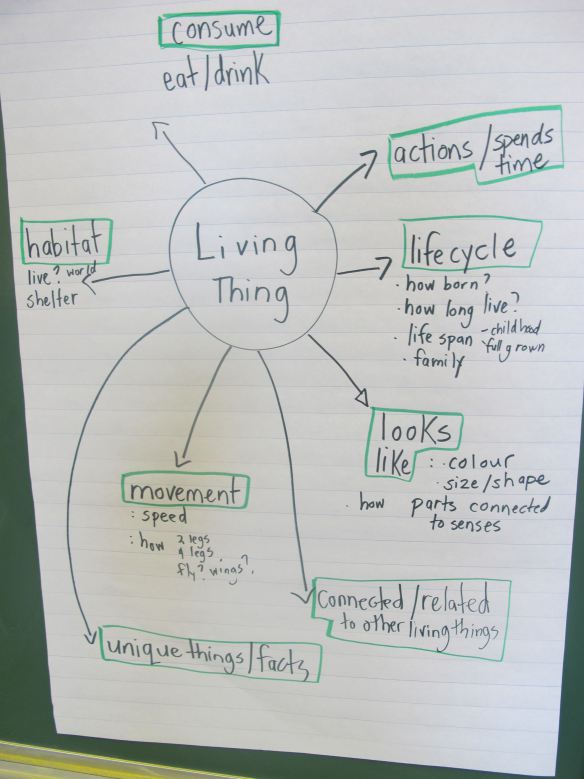
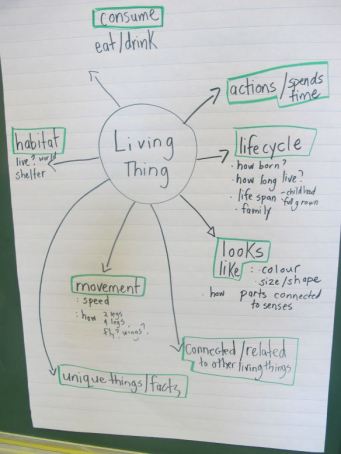
This is a chart we created together to help us think about what kinds of questions we might want to ask and also to help with determining important facts (see below).
 Teaching with a Passion for Nonfiction Books: Reading and Working with the Texts There's a Book for That

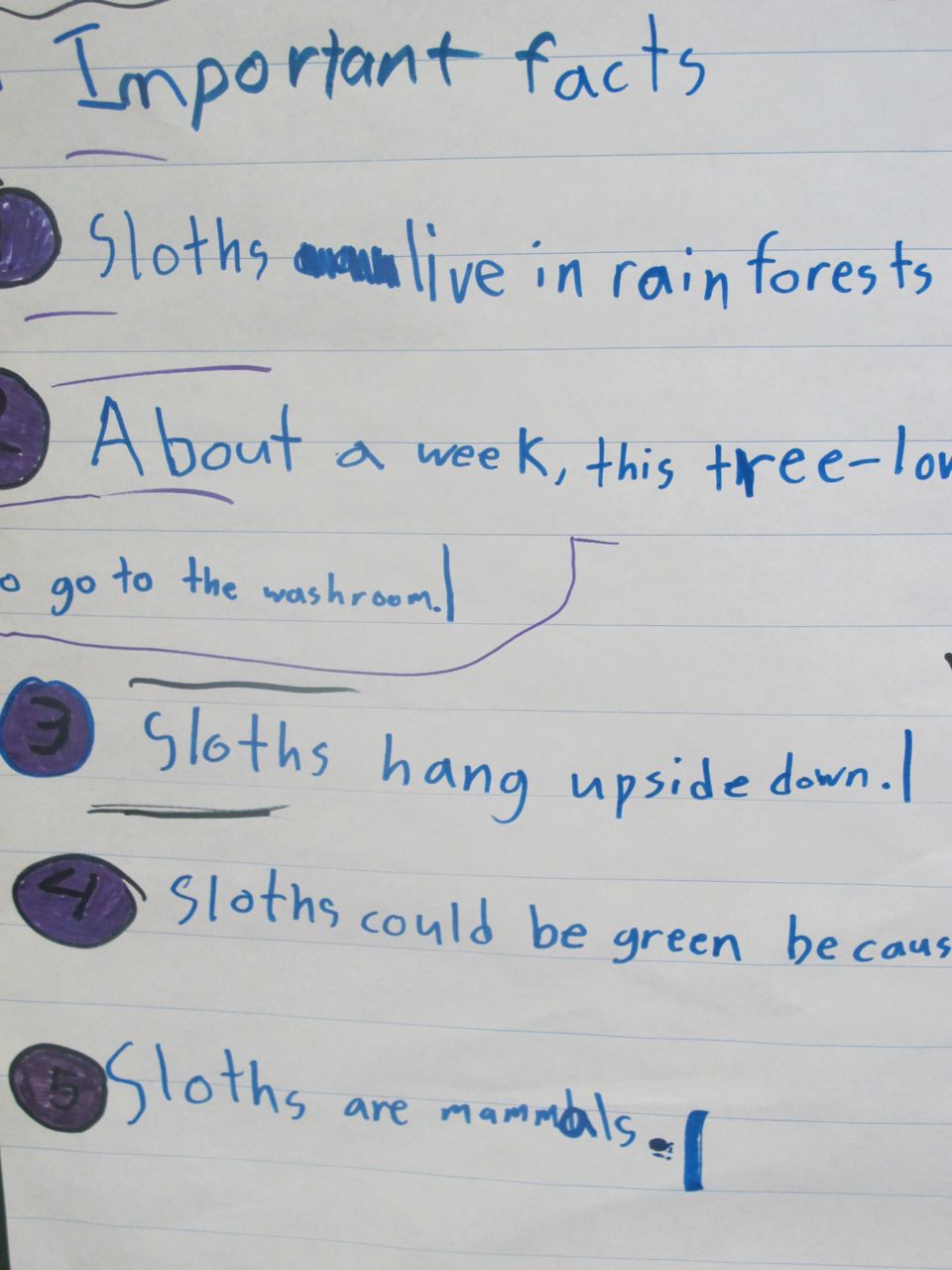
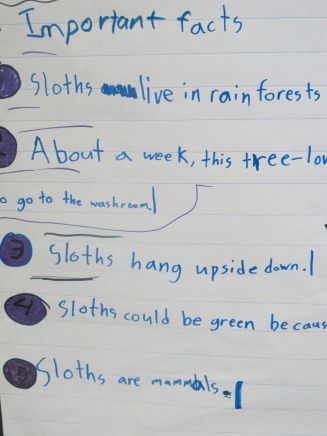
After the group (or pair) read through the article/book, their task is to decide on what they think are the five most important facts. I love the arguments  discussions that occur. The “talk” is where the most learning happens, I always think.
 Teaching with a Passion for Nonfiction Books: Reading and Working with the Texts There's a Book for That

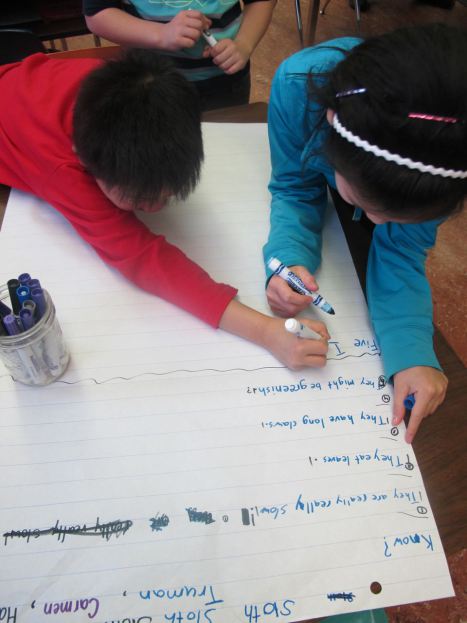
I mentioned using the Knew/New chart format in the second post in this series. This idea is from Adrienne Gear and her Nonfiction Reading Power book and it is something I use frequently with my students.

Here, students spent time reading titles from our National Geographic Readers collection. With their partner they noted down information on their charts – under new for something new they learned and under knew for information that they already knew. We then did a Gallery Walk to explore the information shared on all of the charts.

 Teaching with a Passion for Nonfiction Books: Reading and Working with the Texts There's a Book for That

After working with nonfiction books and doing these kind of activities multiple times, students are more comfortable moving into small research projects, collecting information to do specific kinds of nonfiction writing and searching for information to support their learning on a particular topic. At this age (late primary) it is all about practice, practice, practice!

Selecting books for students to read for independent/partner work with text:

I look for the following things when I am searching for titles for independent practice:

  • full colour interesting photographs and/or realistic, engaging illustrations
  • labelled diagrams and close up photos with labels
  • easy to use features like maps, life cycle charts, comparison charts
  • navigation ease via table of contents, index and headings
  • new words defined on the page or easy to find in the glossary
  • fact boxes for skimming and scanning
  • text complexity – words on the page, organization, easy to follow headings
  • “interest meter” for students this age (changes with each group of children)
  • is it part of a series or a collection so familiarity of structure can be a bridge to other books in same series

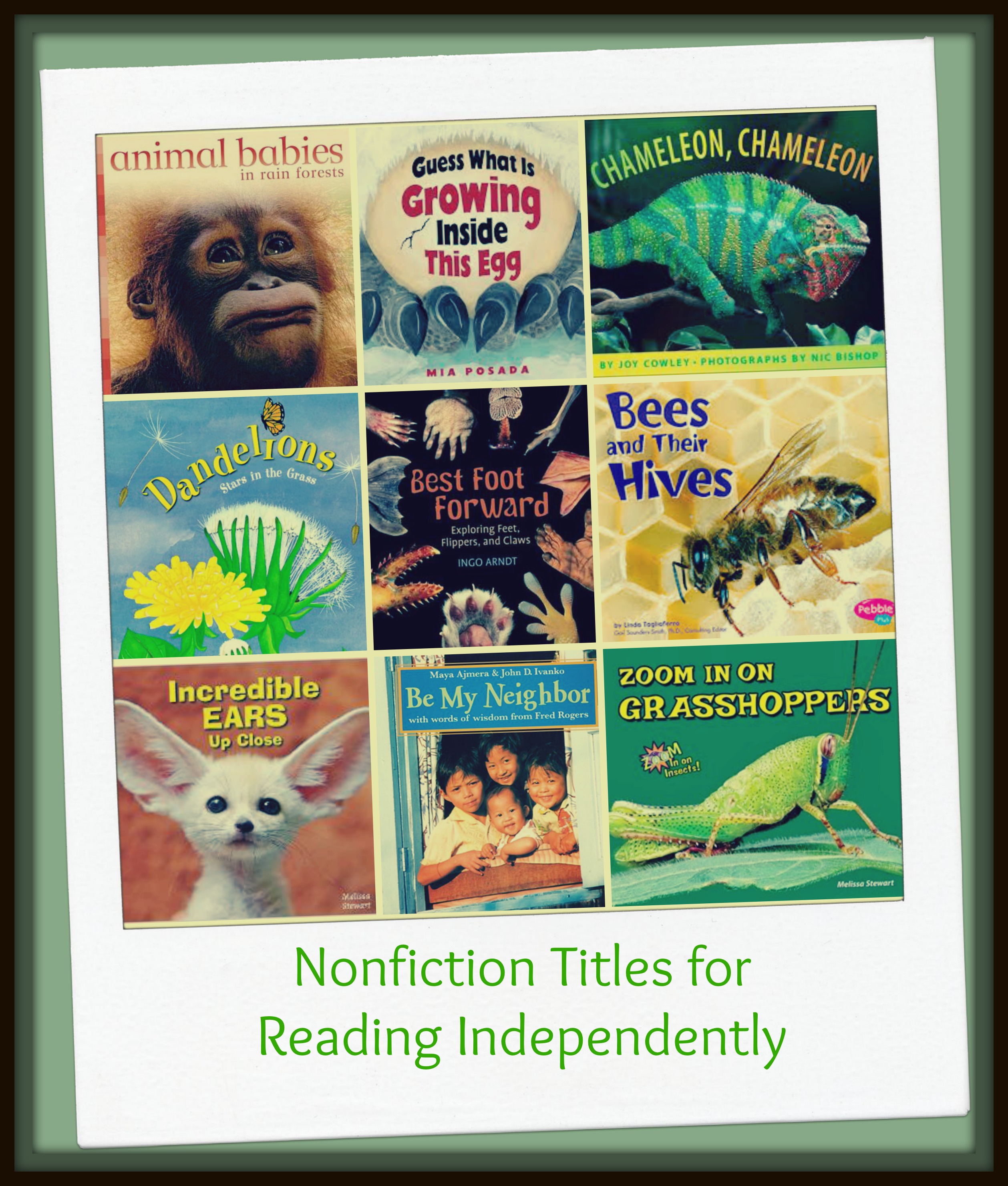
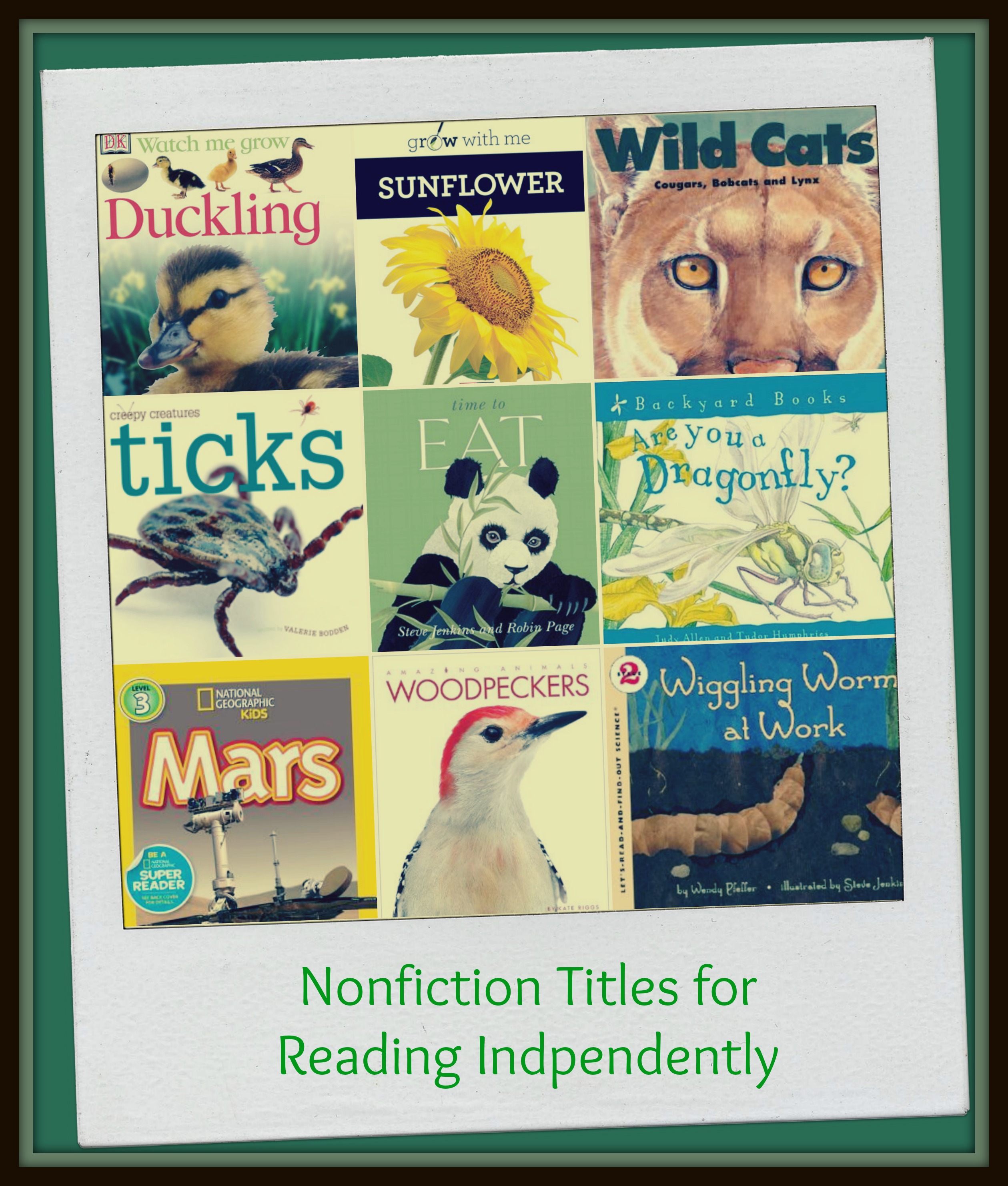
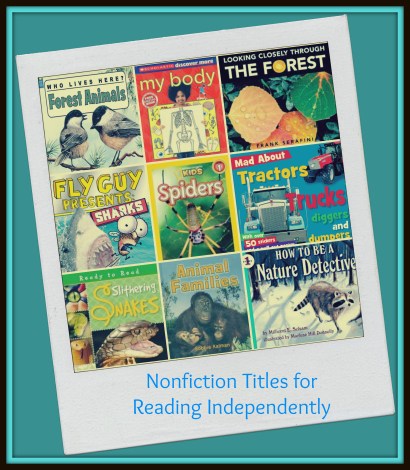
Here are a number of titles that my students can manage on their own when working with the text to pull information. A note – I have been teaching mostly Grades 2 and 3 for the last 15 years and many of my students are English Language Learners. These books are great for partner work, buddy reading and individual practice. I also often use magazines from the Owl Kids family: Owl, Chickadee and Chirp. I’m sure there is a similar magazine series in the U.S. and other countries. My students love these magazines and I have bins of back issues discarded from the library or donated to the school.

Many of these titles are part of a series or nonfiction collection. I have only showcased one or two titles. If there are any questions about any of these titles, please ask in the comment section or contact me via twitter @CarrieGelson I know how challenging it can be to find books that our primary students can manage on their own – especially for readers who are just building their confidence. Many of these titles have great images and text features to help support successful reading.
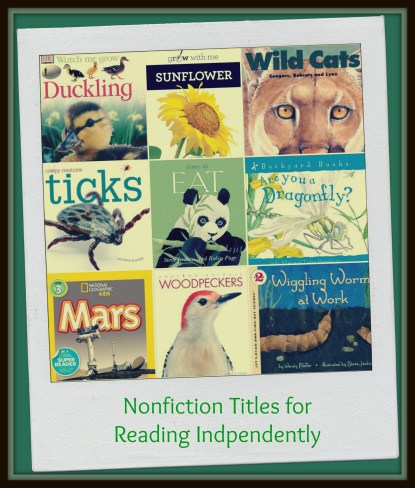
Nonfiction Titles for Reading Independently  -  Reading and Working with the Texts

Nonfiction Titles for Reading Independently  -  Reading and Working with the Texts

Nonfiction Titles for Reading Independently  -  Reading and Working with the Texts

Are there any titles your primary students manage well independently? Please share in the comment section!

Teaching with a Passion for Nonfiction Books: Part 3 A

This is the third post in a three four post series highlighting how to use more nonfiction in the primary/early intermediate classroom. The first two posts can be found here:

Part 1: Everywhere you look . . . let there be nonfiction!

Part 2: The importance of the nonfiction read aloud

The intention with each of these posts is to share a practical “how to” list of how to read more, celebrate more and use more nonfiction picture books in our classrooms. For reference, last year I taught a Grade 2/3/4 class.

Teaching with a passion for nonfiction picture books:

Part 3: Interacting with nonfiction: getting students reading, thinking and talking together

3 A: Generating excitement, making choices and having time to read This post will touch on these questions:

  • How to generate excitement about nonfiction texts?
  • What are some ways to get students reading more nonfiction books?

 Teaching with a Passion for Nonfiction books: Interacting with nonfiction: getting students reading, thinking and talking together There's a Book for That

One of the best ways to create a buzz about nonfiction texts is to make authentic connections with the authors, illustrators and photographers that are making the books we love to read! We read a lot of nonfiction titles in my classroom and its is always exciting for the children to be able to communicate with the people behind the books that we have loved and shared together.

I would like to share three of our important connections here.

FirstNic Bishop.

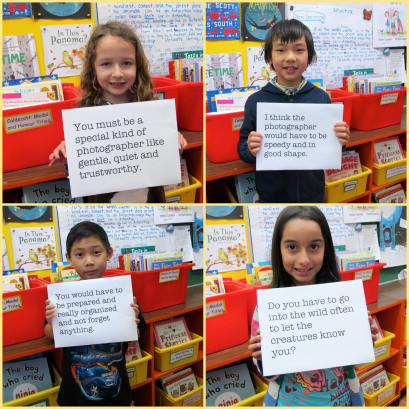
When I had the opportunity (thanks Adam Shaffer) to introduce author and photographer Nic Bishop at this year’s Western Washington’s Children Literature ConferenceI knew that my students had to be part of the presentation. We spent time with Nic Bishop books (titles like Butterflies and Moths, Lizards, Spiders, Frogs, and Snakes). I asked the children to explore the books with these questions in mind:

  • How were these photographs taken?
  • What skills (besides photography) would the photographer need?
  • What would be the rewards in this kind of work?
  • What would be the challenges?

I then made a slide show that showcased some of their answers. The children were thrilled that they had “come with me” to help with the introduction! Here are a few photos that were part of the slide show.

 Teaching with a Passion for Nonfiction books: Interacting with nonfiction: getting students reading, thinking and talking together There's a Book for That

Second, with author Melissa Stewart.

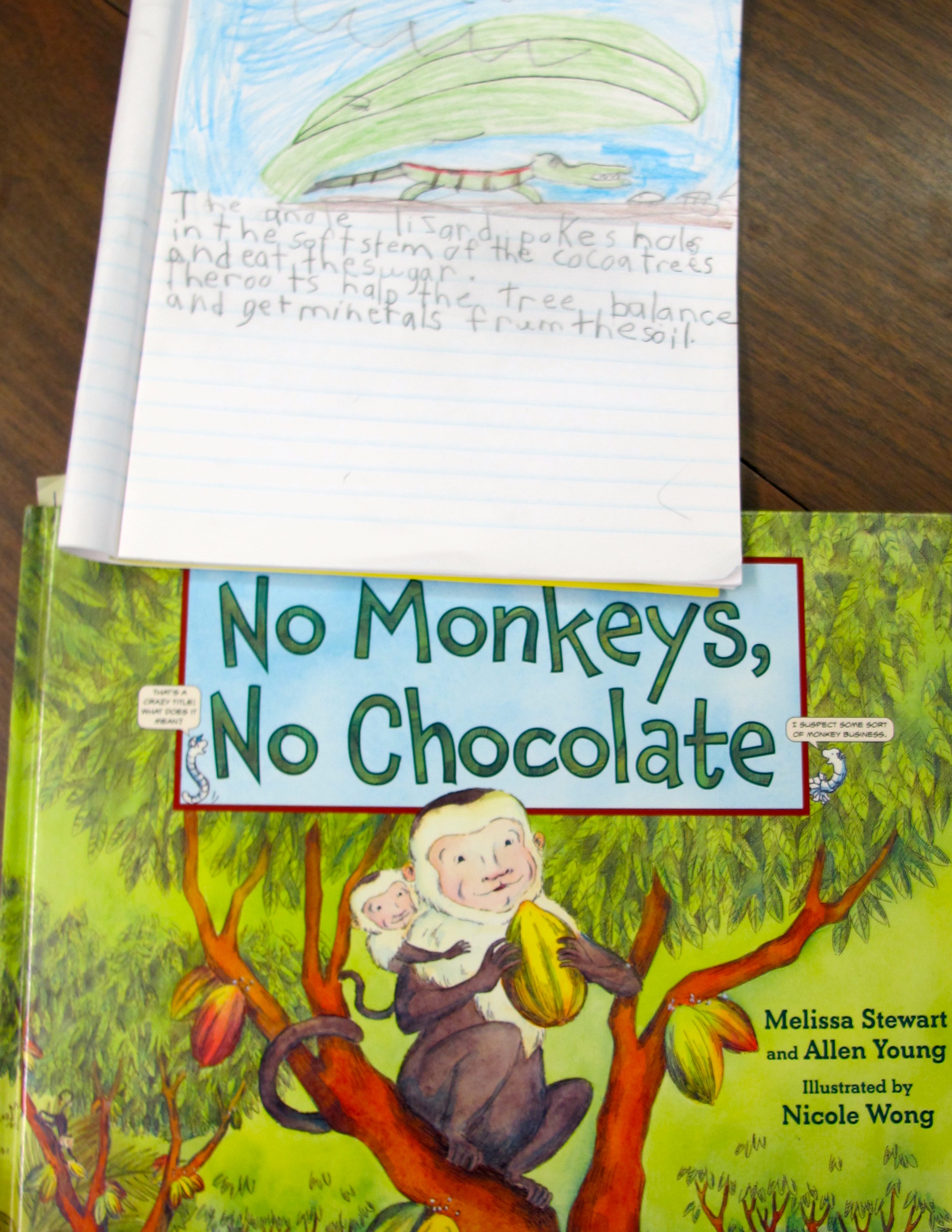
We took forever to read No Monkeys, No Chocolate written by Melissa Stewart and Allen Young (with illustrations by Nicole Wong) We had to stop to talk, to write, to talk some more. So much learning in this book! It was one of our favourite read alouds of the year! A very special thing happened when I tweeted a picture of one child’s picture and writing to Melissa. She shared this on her blog, Celebrate Science. One little boy now has dreams of being an illustrator for nonfiction picture books!

 Teaching with a Passion for Nonfiction books: Interacting with nonfiction: getting students reading, thinking and talking together There's a Book for That Students were so excited to see a classmate’s work on a real author’s blog! It was such a surprise to see his work up on the big screen!

 Teaching with a Passion for Nonfiction books: Interacting with nonfiction: getting students reading, thinking and talking together There's a Book for That

And third, with author Deborah Heiligman.

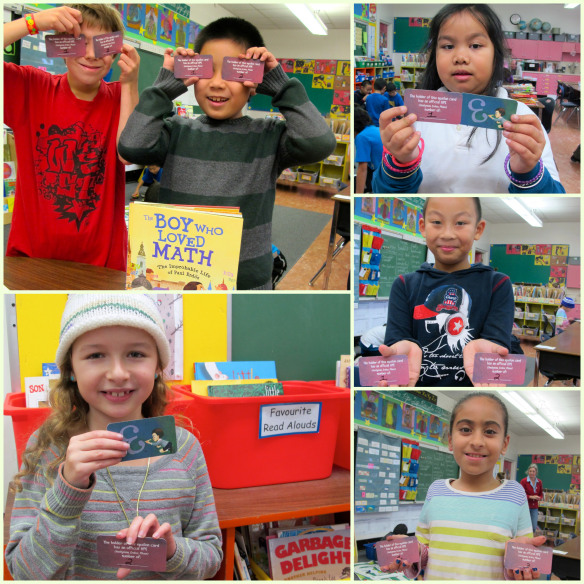
Another one of our very favourite read alouds this year was The Boy Who Loved Math: The Improbable Life of Paul Erdos written by Deborah Heiligman and illustrated by LeUyen Pham. I shared all of our learning and connections with Deborah in this post on my classroom blog Curiosity Racers: For the Love of Math It is worth reading to see how very engaged my students were with this book and to figure out just what those cards they are holding are all about!

 Teaching with a Passion for Nonfiction books: Interacting with nonfiction: getting students reading, thinking and talking together There's a Book for That

Provide time to read nonfiction books

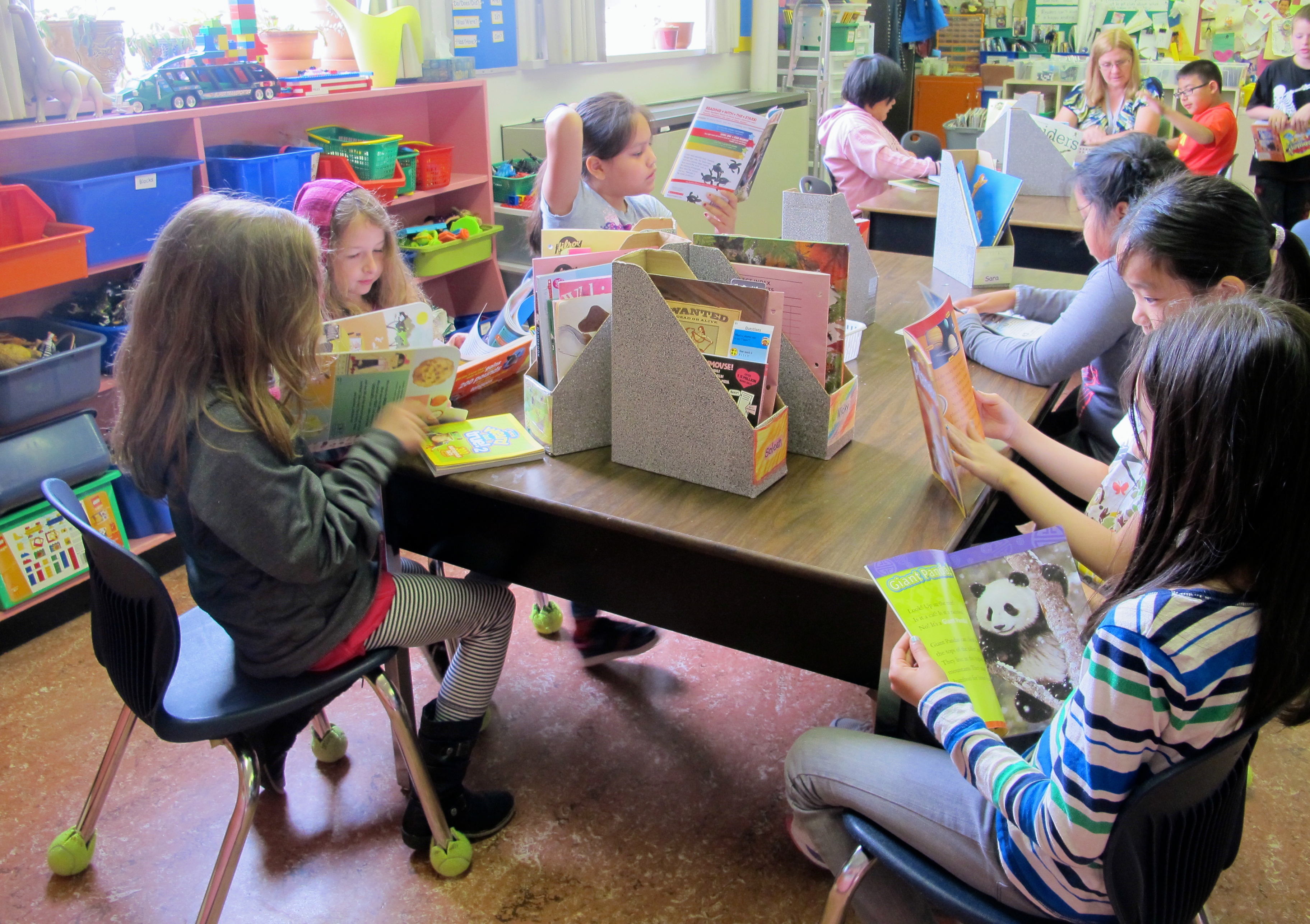
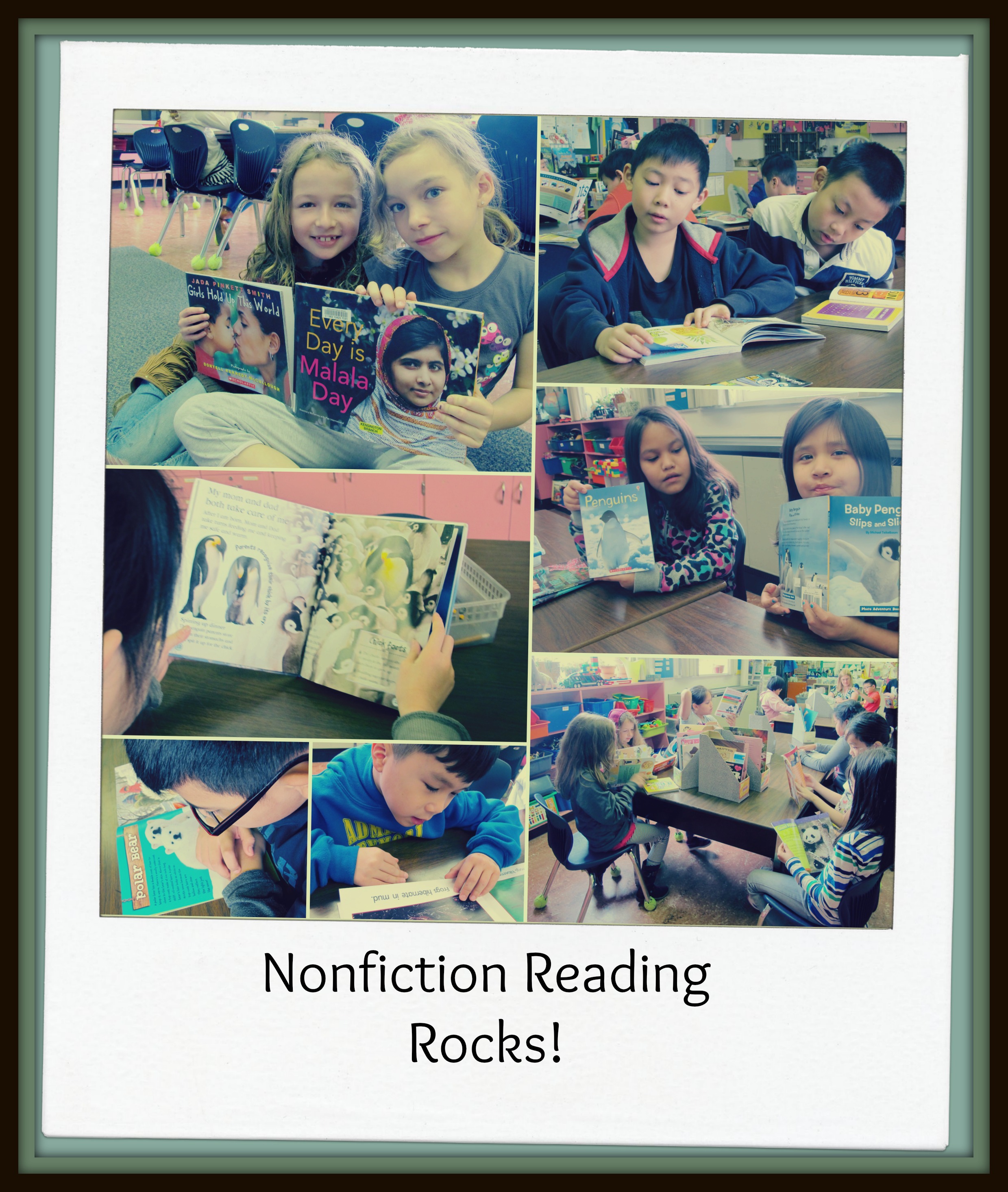
Of course, with many nonfiction books in the room and lots of book talking highlighting nonfiction texts, many students are already reading nonfiction books.  To ensure that all students were having the opportunity to be making nonfiction a choice and having guidance in choosing nonfiction texts, we decided to set aside a specific amount of time once a week (we grew it to 20 minutes and some kids read longer) and called it Nonfiction Reading Day. Of course, many children read nonfiction daily. But after a few weeks of honouring nonfiction reading with a special time, more children began choosing nonfiction more often throughout the week.

On Tuesday (the day we chose) I made sure to book talk nonfiction titles and my Teacher Librarian (who is in the room with me for every Reading Workshop)and I help students select nonfiction books that are a good match for them in terms of reading and interest level.

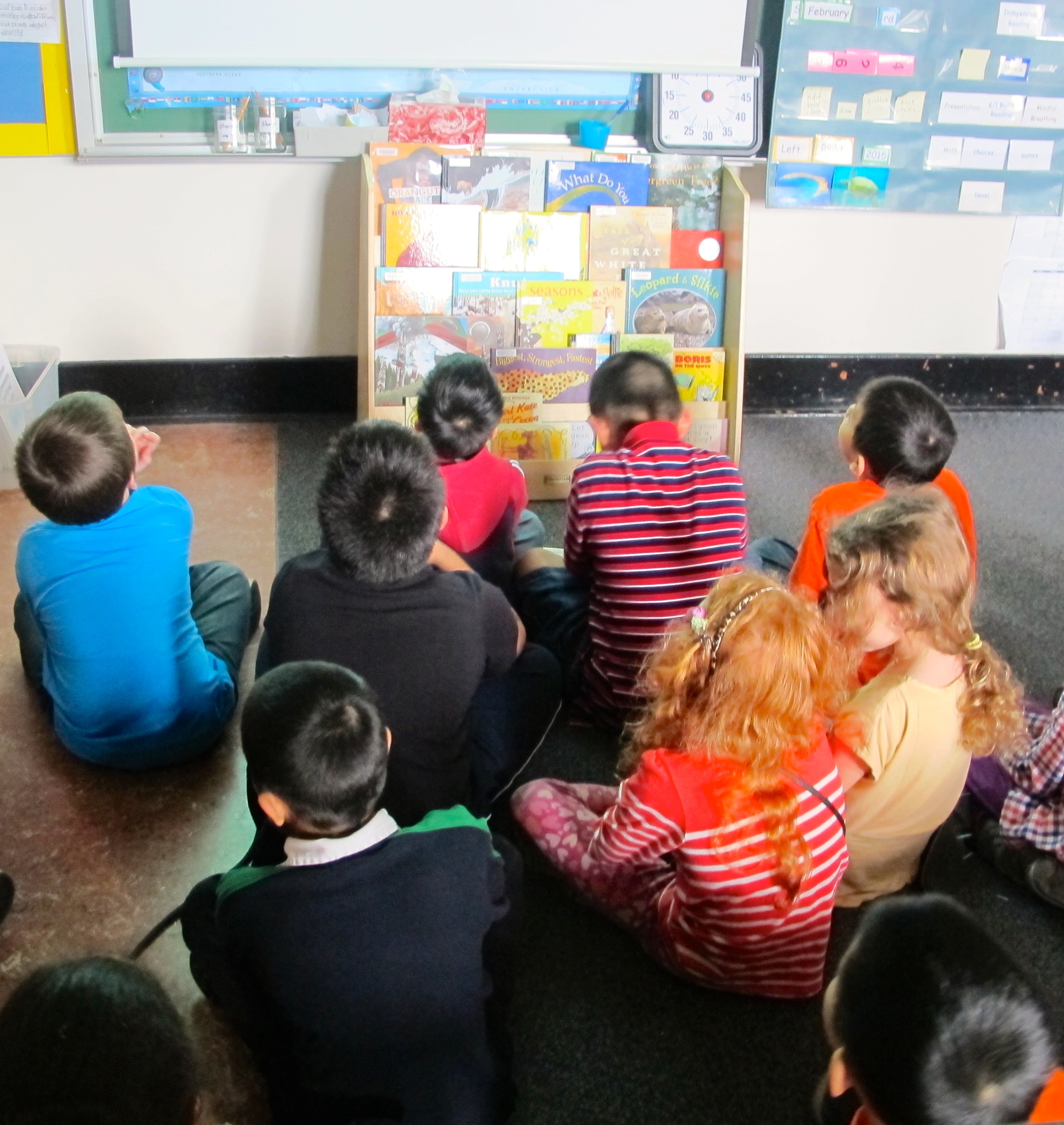
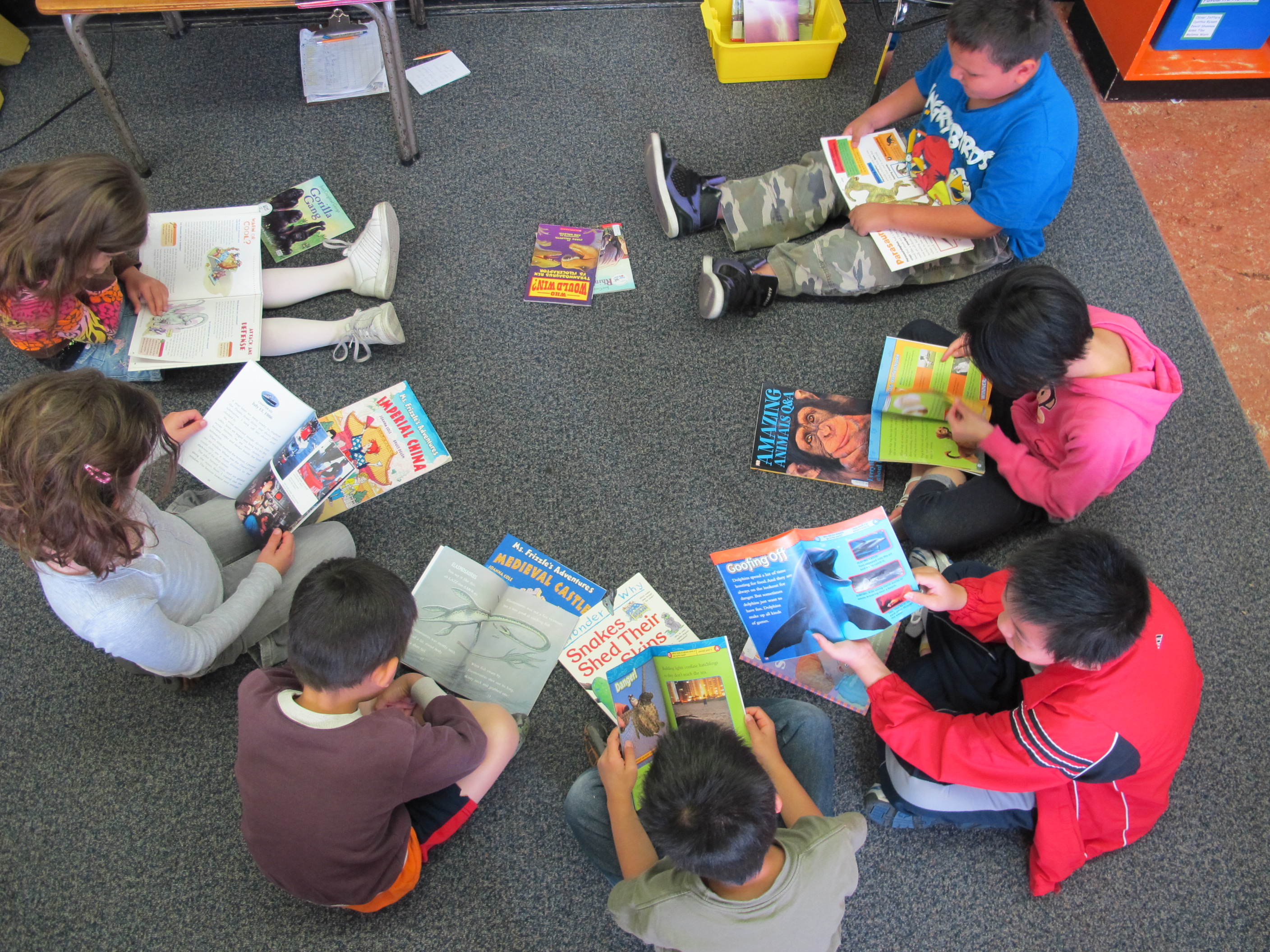
A great way to introduce more titles is also through book sharing circles. I group children into small groups of 6-8 students and have enough for 2-3 books per child. Every few minutes, we pass the books to our left and have a small amount of time to explore the titles just passed to us. At the end, we place all of the books in the center of the circle and students have a chance to share which books would be their first choices to read “next.” These conversations help to further promote the excitement about the books and invariably, many of these books are nabbed as students head off to read.

 Teaching with a Passion for Nonfiction books: Interacting with nonfiction: getting students reading, thinking and talking together There's a Book for That

On Nonfiction Reading Day, we acknowledge that the volume in the room will be noisier than our usual independent reading. It is hard to stay quiet when we read nonfiction because there is just too much that is too tempting to share. Many students also love buddy reading with a nonfiction text. I do specific mini-lessons with some ideas about how to make this go well.

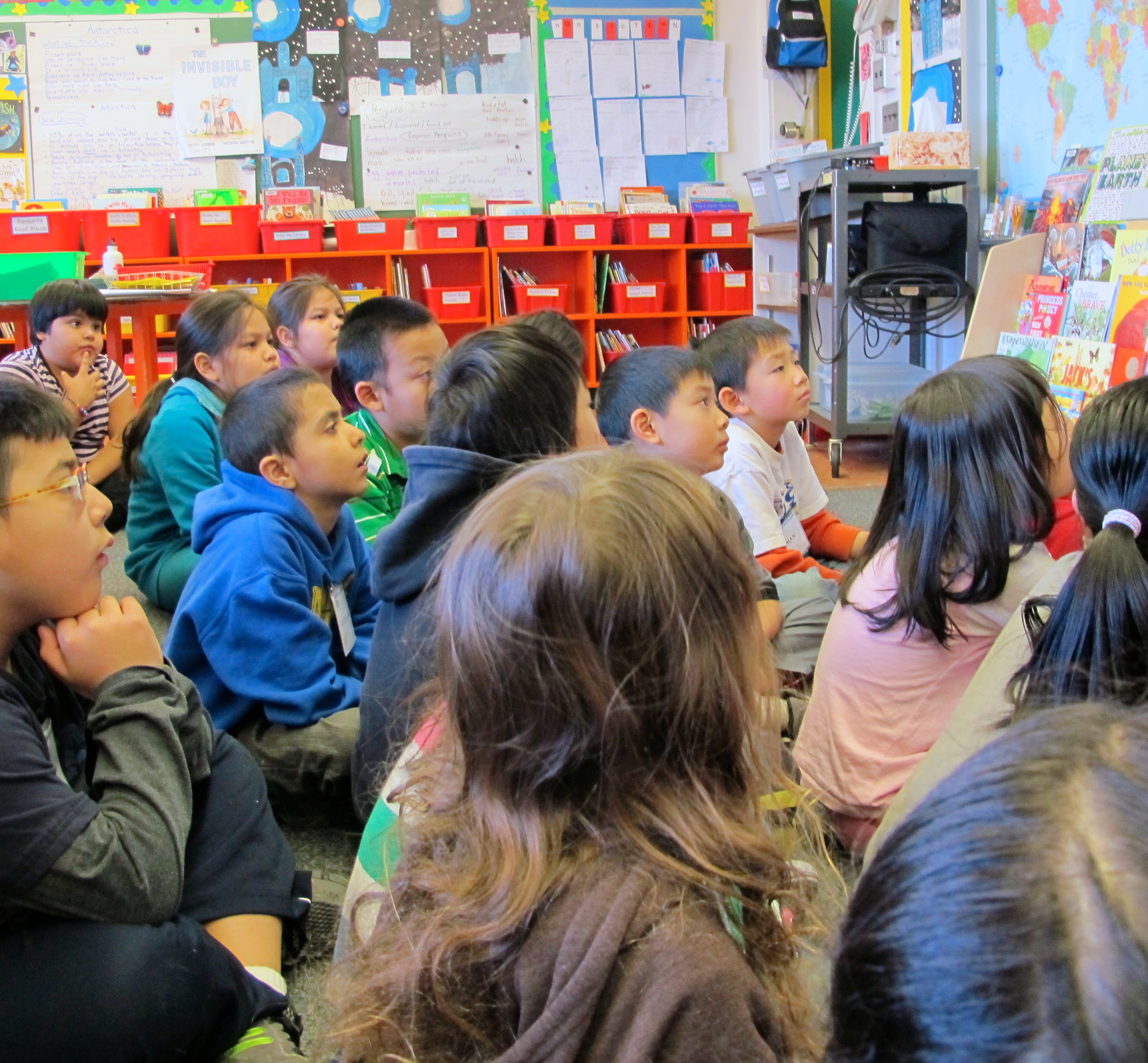
Many days, we gather back to the carpet and sit knee to knee with a partner or a trio and share highlights from our nonfiction reading that day. Students are encouraged to ask questions and share their learning. We have a chart that we have created together in the room with some prompts to help out. A few examples:

  • Share a favourite illustration or photograph and explain what is significant about it
  • Read aloud a particularly interesting part and ask your partner if they have any questions about what you read.
  • Share something new that you learned.
  • Share a fact that was confirmed for you.
  • Talk about something you still don’t understand or have further questions about.
  • Give some reasons why someone might be interested in this title.

Time to read is a huge piece of generating excitement about nonfiction texts. Without this time to self-select titles, explore a variety of texts, talk about what we are reading and actually sustained time to read, our love for nonfiction won’t grow at the rate it does with all of these things in place.

 Teaching with a Passion for Nonfiction books: Interacting with nonfiction: getting students reading, thinking and talking together There's a Book for That

Share the #NFbooklove!

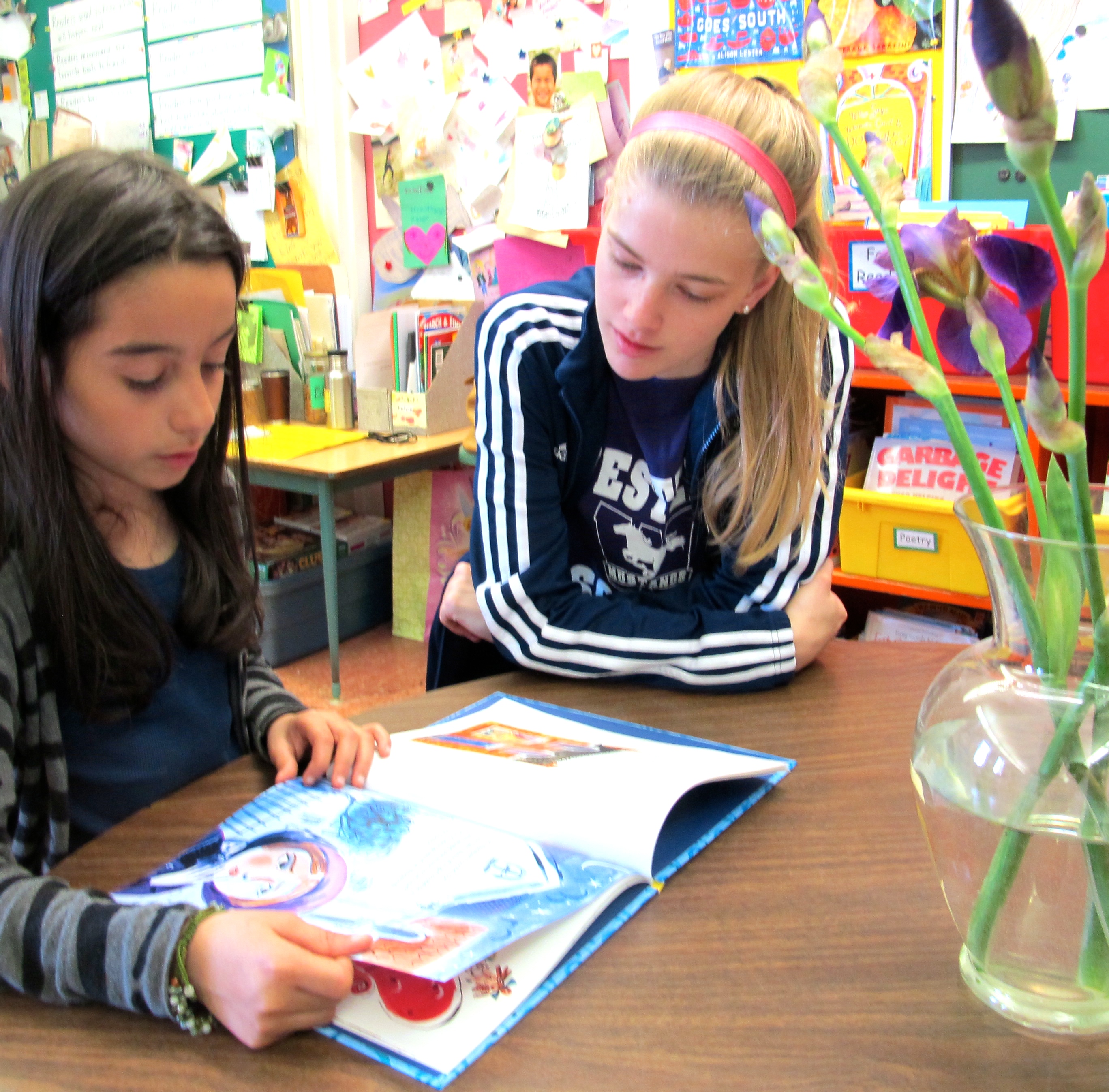
I love to welcome volunteers into my classroom during Reading Workshop. Often, when students get to choose which book to read to a volunteer, they choose a nonfiction text we have shared together!  This picture below is very special. My student, who dreams of becoming a doctor is reading Who Says Women Can’t Be Doctors?: The Story of Elizabeth Blackwell written by Tanya Lee Stone and illustrated by Marjorie Priceman to our volunteer who is currently applying to medical schools. I shared highlights of the conversations about this book in my classroom here.

 Teaching with a Passion for Nonfiction books: Interacting with nonfiction: getting students reading, thinking and talking together There's a Book for That

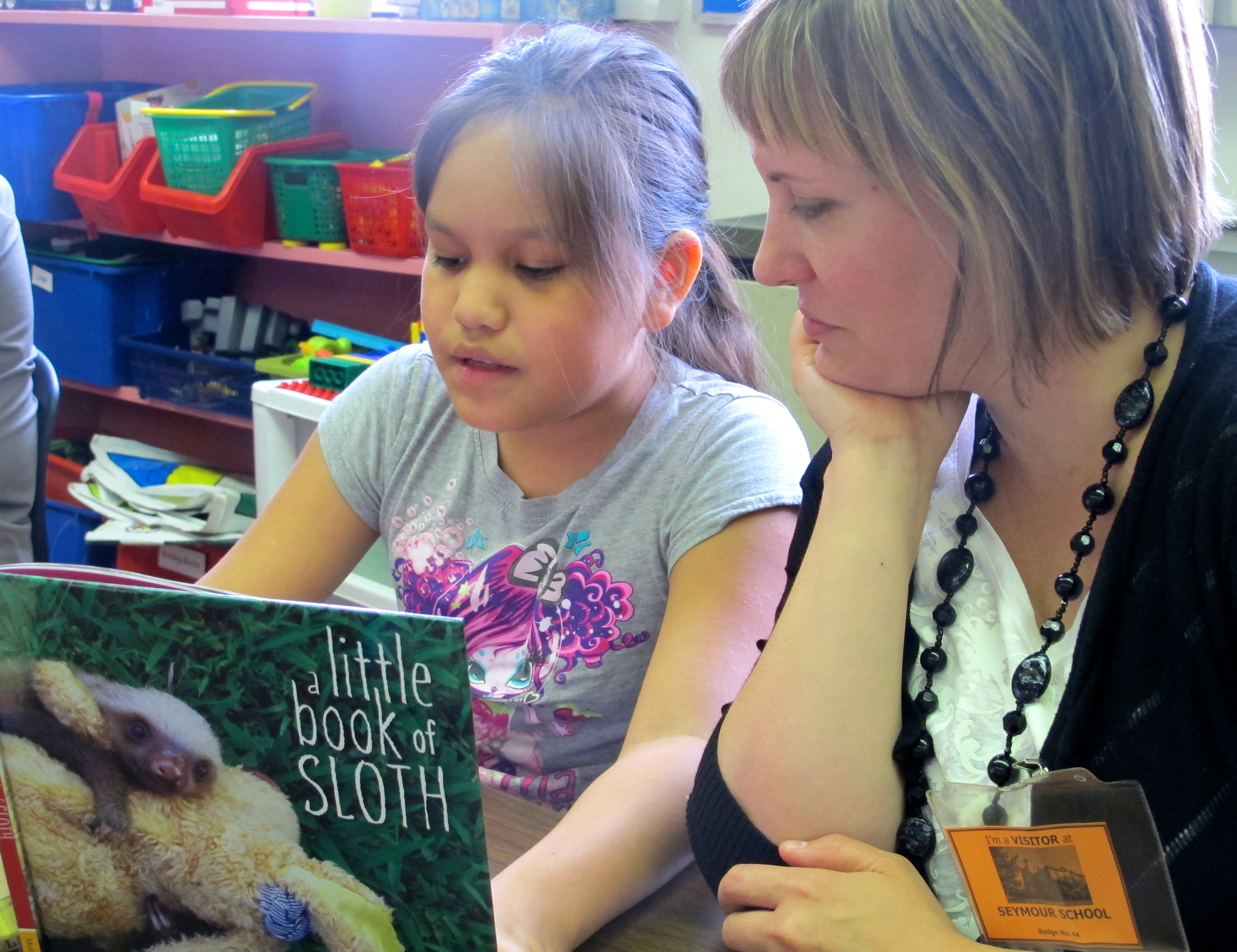
This picture was taken during the last week of school. My student is reading A Little Book of Sloth by Lucy Cooke to a guest visiting our room. She chose this from our Favourite Read Alouds bin. Why so significant? This was the first nonfiction read aloud I shared with my class back in September! Truly a testament to the joy these books bring to us.

 Teaching with a Passion for Nonfiction books: Interacting with nonfiction: getting students reading, thinking and talking together There's a Book for That

Up next? Part 3: Interacting with nonfiction: getting students reading, thinking and talking together – – > 3 B: Reading and working with the texts 

Please continue the nonfiction conversation with me. I welcome any questions or feedback in the comments section 🙂

Nonfiction Picture Book Wednesday: Four “finally found” titles

It’s Nonfiction Picture Book Wednesday! 

NFPB 2014This week I want to share four titles that have nothing in common beyond their nonfiction status except that all four of them are books I have been dying to read and have, finally, FOUND!

If you haven’t discovered these titles yet, I pass on high recommendations! These are must reads.

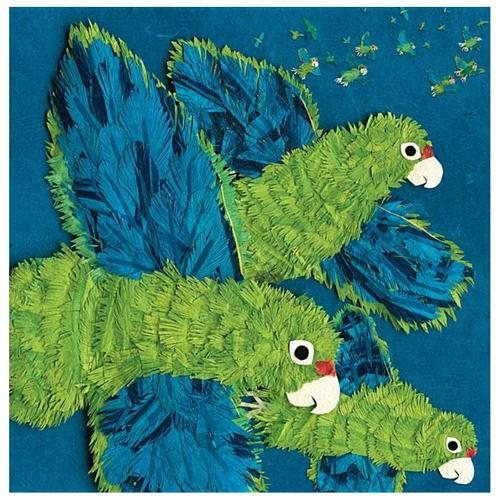
Parrots Over Puerto Rico by Cindy Trumbore and Susan L. Roth (published in 2013) Winner of the 2014 Sibert Medal

My local bookstore seemed to always be out of copies of this beautiful title but I finally found it at my local public library. Now I see not only why this was an award winning title, but also why so many raved about how amazing it is! Susan L. Roth‘s collage images are stunning and I love the alternate orientation of the book – it is shared vertically rather than horizontally. But, it is, of course, the story that is so important. So often when we hear about animals on the brink of extinction, there is no happy ending story to share. Here, we have a story of hope and promise. Through much hard work the endangered parrots of Puerto Rico are once again flying through the treetops. Both captive bred parrots and wild flocks are being supported by the Puerto Rican Parrot Recovery Program.

This book has many extras in the final pages to support further learning:

  • an extensive Afterward with full colour photographs of the different birds discussed in this book and more information about the recovery program.
  • a timeline of important dates
  • a list of the author’s sources

 Parrots over Puerto Rico  NonFiction Picture Book Wednesday: Four "finally found" titles

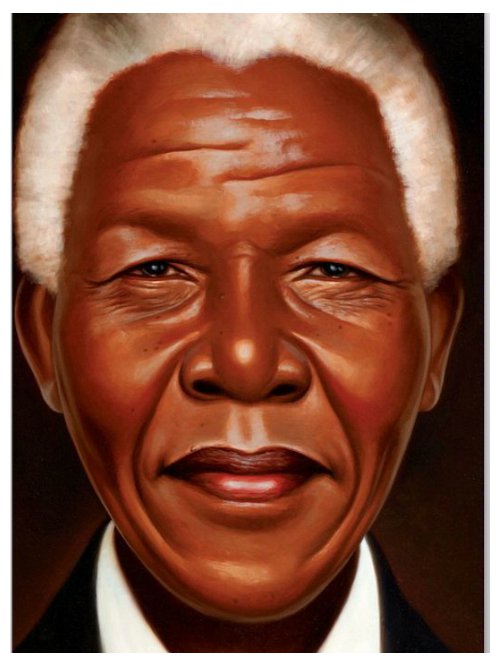
Nelson Mandela by Kadir Nelson (published in 2013)

This cover has been staring at me from various book lists and blogs and finally, just recently, my requested copy arrived from the library! I immediately included it on this list of Swoon Worthy Nonfiction titles because the illustrations beautifully narrate a story all their own. Brief and lyrical text tells the story of Mandela’s life and his determination to see his people live in a free South Africa where apartheid was abolished. Kadir Nelson‘s back pages flush out details of the story he shared. A book guaranteed to get students talking about Mandela, his inspiration and his leadership.

Nelson Mandela NonFiction Picture Book Wednesday: Four "finally found" titles

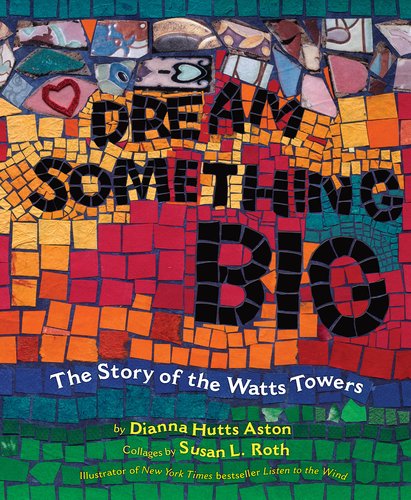
Dream Something Big: The Story of the Watts Towers by Dianna Hutts Aston with collages by Susan L. Roth (published in 2011)

This book recently came onto my radar. This was a title by Dianna Aston that I didn’t know and art by Susan L. Roth? I had to find it. Luckily our public library had a copy for me to request! I knew nothing of this story of Simon Rodia (called Uncle Sam) and his big dream that resulted in the spectacular Watts Towers (up to 100 feet high in parts) in Los Angeles. Absolutely stunning folk art that you can’t imagine until you see it. More information can be found on this website. It’s worth taking a peek to see what the towers actually look like.

The end pages include close up photographs of tower sections. There is also an author’s note that gives more details about Simon Rodia and his work. Building these towers took thirty-four years and was done completely alone without even a ladder or any drawings/plans. There is also a step by step guide to creating your own Watts Towers for children to try.

Dream Something Big NonFiction Picture Book Wednesday: Four "finally found" titles

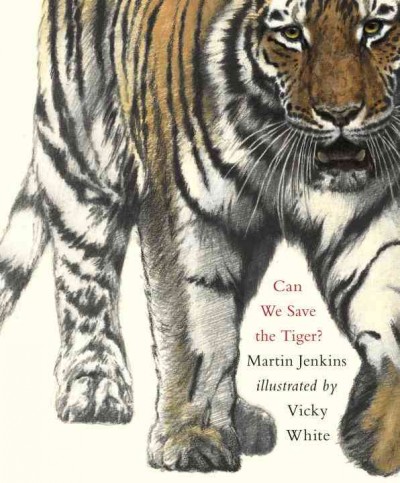
Can We Save the Tiger? written by Martin Jenkins and illustrated by Vicky White (published in 2011)

Ape by this author/illustrator team is one of my all time favourite nonfiction read alouds. Next year, I am looping my Grade 2/3/4 class into a Grade 3/4 class and will have many of the same students. Students expressed a lot of curiosity and interest about endangered animals and threats to animal populations which is related to the habitat and communities strand of the Grade 4 Science curriculum.

This book by Jenkins and White introduces students to a huge variety of endangered and extinct animals. With some creatures, like the tiger, more details are provided about the animal including reasons for its vulnerable status. Definite themes come through about why certain populations are threatened: lack of space, destruction of habitat, invasive non-native predators, climate change and exposure to medicine administered to another species. Again, there is hope. Stories are shared of animals that were close to extinction and now have healthy populations – like the American bison. There is an index in the back and a list of online resources to find out more about what animals are endangered and what organizations exist that are trying to protect them.

This is a title I will be purchasing for our class collection.

Can we Save the Tiger? NonFiction Picture Book Wednesday: Four "finally found" titles

Thanks to Alyson from Kid Lit Frenzy for the inspiration to read and share more nonfiction picture books in 2014. Follow the link to Alyson’s blog to read about more nonfiction books you need to read!

My goal is to read 65 nonfiction picture books for 2014. Progress: 87/65 complete! If I were counting (and I am), I would announce that that is 22 books over my goal and it’s still July!

This week, I have had some wonderful conversations via twitter with Alyson Beecher who blogs at Kid Lit Frenzy and author Melissa Stewart about sharing nonfiction with our students. This inspired me to write a series of posts sharing my passion for nonfiction books. The first two of three posts are complete and linked here if you haven’t had a chance to check them out. I would love any feedback from this #nfpb2014 community who shares such #NFbooklove!

Teaching with a passion for nonfiction picture books:

Part 1: Everywhere you look . . . let there be nonfiction!

Part 2: The importance of the nonfiction read aloud

Coming soon: Part 3: Interacting with nonfiction: getting students reading, thinking and talking together


Teaching with a Passion for Nonfiction Books: Part 2

This post is part of a 3 part series about using more nonfiction titles in our Elementary classrooms. A link to the first post is included here:

Part 1: Everywhere you look . . . let there be nonfiction!

The intention with each of these posts is to share a practical “how to” list of how to read more, celebrate more and use more nonfiction picture books in the late primary/early intermediate classroom. For reference, last year I taught a Grade 2/3/4 class.

Teaching with a passion for nonfiction picture books:

Part 2: The importance of the nonfiction read aloud

The message of this post is simple: read more nonfiction titles aloud more often!

Wanting to do that is the easy part. Finding the time in our busy schedules is another thing! Here is how I have managed to find more time to share more nonfiction in my classroom.

 Teaching with a Passion for Nonfiction Books: Part 2  The importance of the nonfiction read aloud There's a Book for That

Set aside designated time to read nonfiction titles 

Block nonfiction read aloud into your weekly schedule. Don’t trust that you will alternate fiction and nonfiction read alouds. Sharing picture books and poetry and novels needs designated time as well. If you are already doing those things well, you see many benefits to reading fiction aloud and you won’t want to give it up. When you actually schedule time to read aloud nonfiction, it won’t be instead of anything else. Nonfiction can play the starring role. I have two 40 minute blocks of time a week for nonfiction read aloud. This is at minimum – I often fit more time in during other parts of the week.

Of course, that still doesn’t answer this question: What are things you might give up in your schedule to fit in more nonfiction time? I always think we can be strategic to find time for things that we value. Thinking about some of these things might help.

  • Build oral language skills (listening, speaking, retelling, summarizing, asking questions, etc. ) during your read aloud session. The listening and speaking component of Language Arts needs dedicated time in our schedules. Why not build a lot of these skills while sharing nonfiction titles? We often use nonfiction read aloud time to really develop these skills. This is when we do much of our “turn and talk” time with a partner or a small group. Students have the chance to share out to the whole group, listen attentively, build on other comments or questions and practice predicting and inferring. We also work on summarizing, listening for specific information and asking questions. All of this talk time to review makes a huge difference in how much information students recall. I have the students do some of the following things with their “turn and talk” partner or small group as we work through a nonfiction title over multiple read aloud sessions:
  1. Share what you already know about this topic. Sometimes I have the students share facts (questions are okay too) back and forth one fact at a time to really practice turn taking. For example, if we are going to read a book about elephants, the exchange might sound something like “They are huge” “They live in Africa” “They have a trunk” “They use their trunk to drink” “Is their trunk like a nose? Do they even have a nose?” “Their skin is wrinkly and grey” “I think they eat leaves”
  2. Talk about some things you are wondering.
  3. Answer specific questions based on an image on the page i.e. Look at this picture of the hippo in the water, why do you think hippos spend so much time in the water?
  4. List at least 3 (or more) new facts we learned yesterday about __________ (refer to specific section of the book)
  5. What is the most interesting thing you have learned so far?
  6. Explain _________ to your partner. Partners, was any important part missed? For example: Explain the differences we have learned about crocodiles and alligators.
  7. What are you hoping we will still find out?
  8. Listen to the next heading (or chapter title) what do you think we might read about in this section?
  9. Which of our questions never got answered?
  • Use your nonfiction read alouds to support curricular themes in science and social studies. This is huge. I launch every unit/theme with a book, often multiple books! Enhance the rich learning that nonfiction titles help us support through discussion, reflection writing, vocabulary building and opportunities to retell and summarize our new learning in a variety of ways.

Here are some examples of the “work” we do with nonfiction titles in my classroom. We are reading great books and covering curriculum!

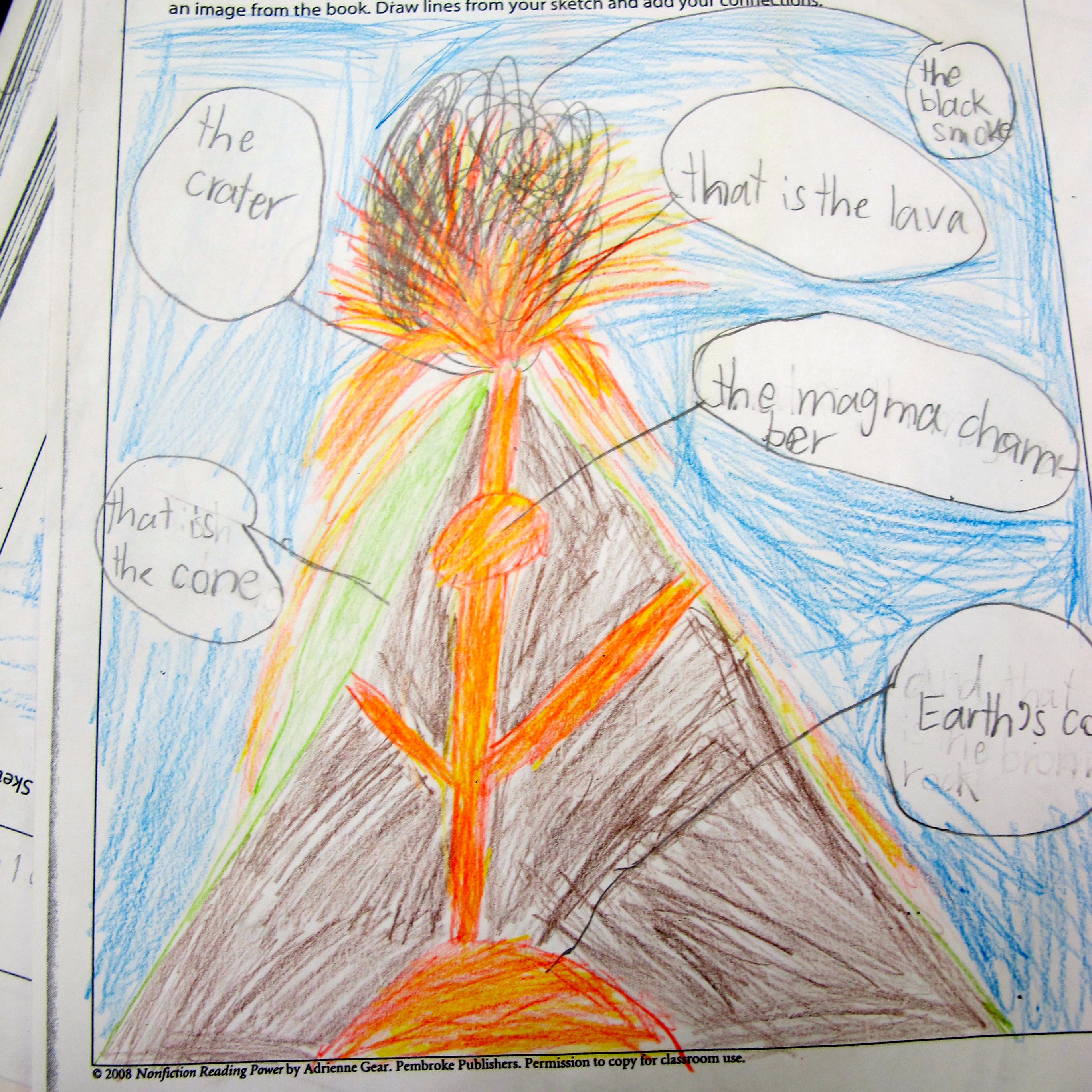
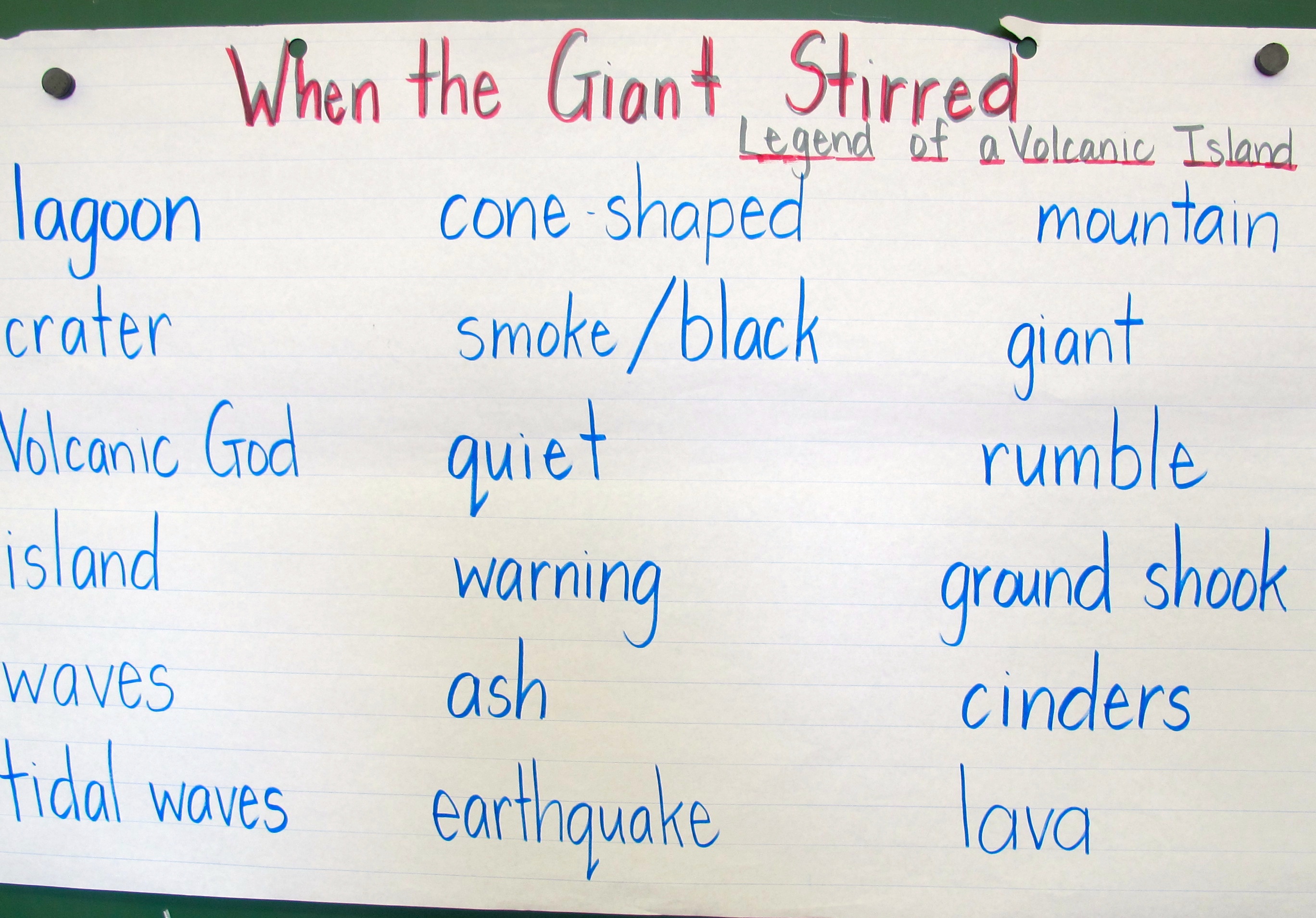
After reading When the Giant Stirred: Legend of a Volcanic Island by Celia Godkin and some sections from a variety of nonfiction books about volcanoes, students completed a labelled diagram of the parts of the volcano.

Teaching with a Passion for nonfiction: Part 2 The importance of the nonfiction read aloud There's a Book for That

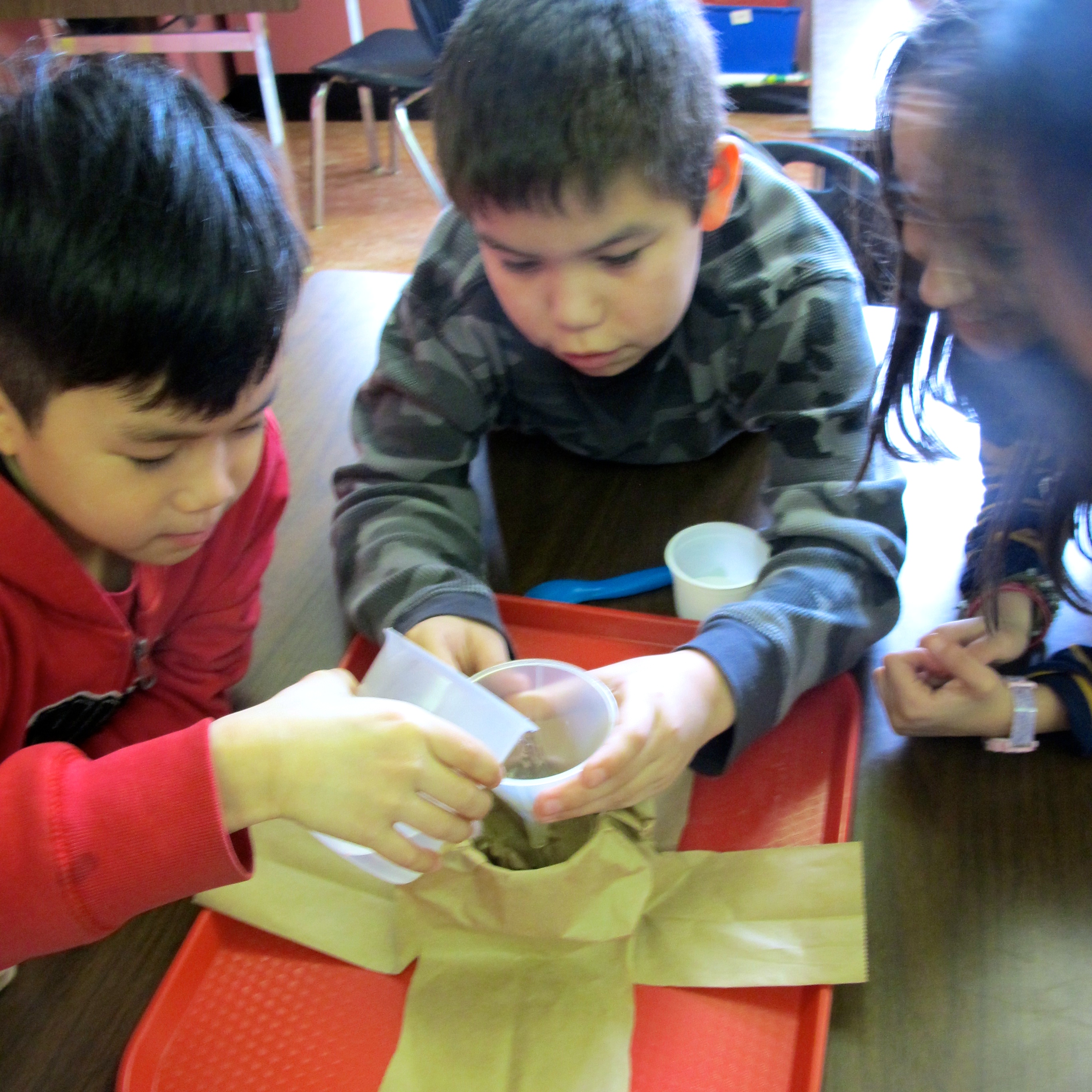
We then completed a paper bag volcano experiment where small groups had to follow a series of oral and posted instructions.

Teaching with a Passion for nonfiction: Part 2 The importance of the nonfiction read aloud There's a Book for That

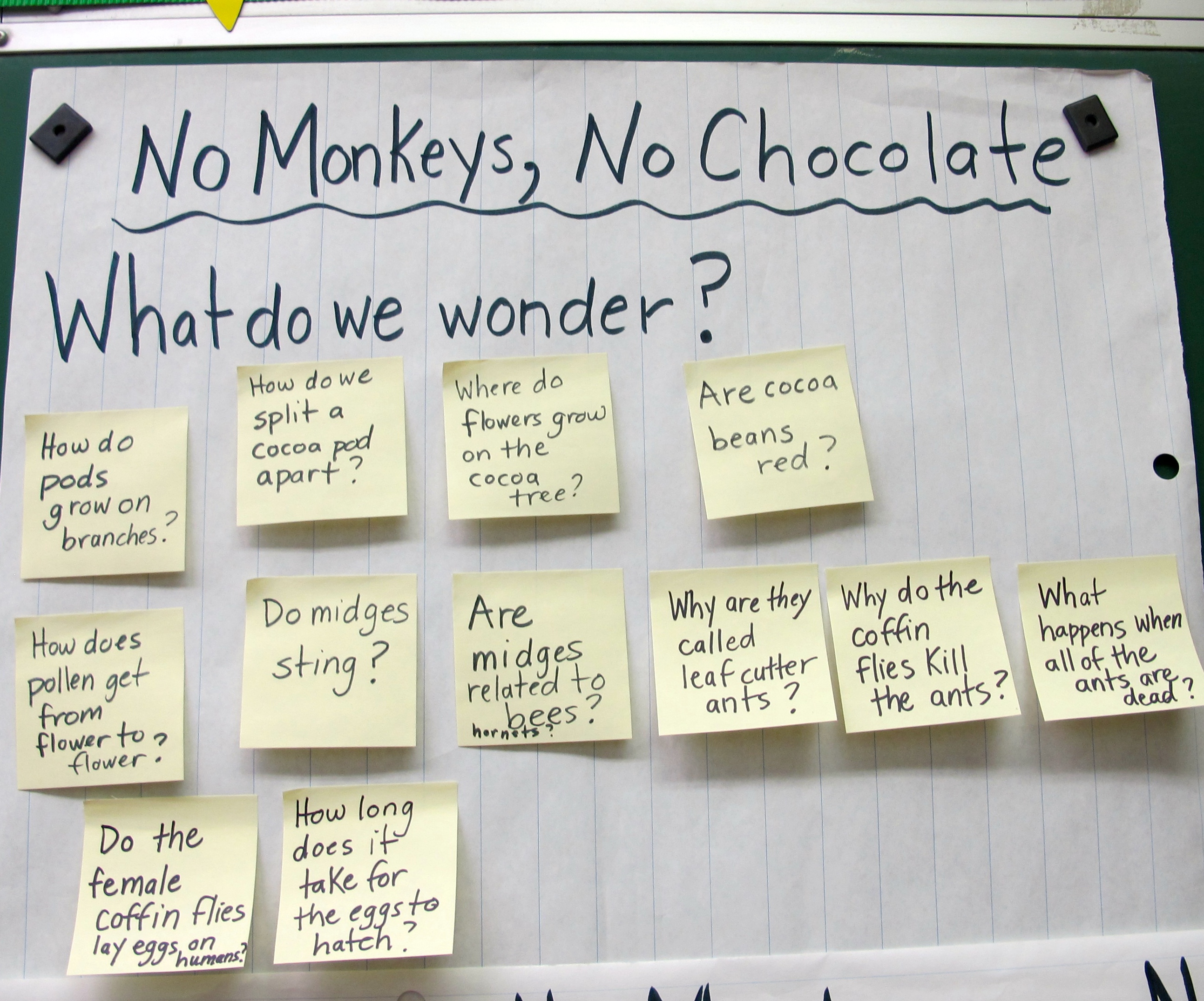
As we read, we keep track of questions we are wondering so we can revisit as we read and when we are finished the story. Students love to notice, “Now we know the answer to that one!” Reading No Monkeys, No Chocolate written by Melissa Stewart and Allen Young (with illustrations by Nicole Wong) took us multiple read aloud sessions. There was so much to learn in this book!

Teaching with a Passion for nonfiction: Part 2 The importance of the nonfiction read aloud There's a Book for That

I love when another adult can work collaboratively in the room with me. As we read aloud, we ask the children to provide us with any key words from the text after every few pages and one of us notes them down on chart paper. Both of us can then circulate during “turn and talk time” instead of one person trying to balance all of the pieces of guiding the lesson. These key words help the students when they are doing reflective or summary writing.

Teaching with a Passion for nonfiction: Part 2 The importance of the nonfiction read aloud There's a Book for That

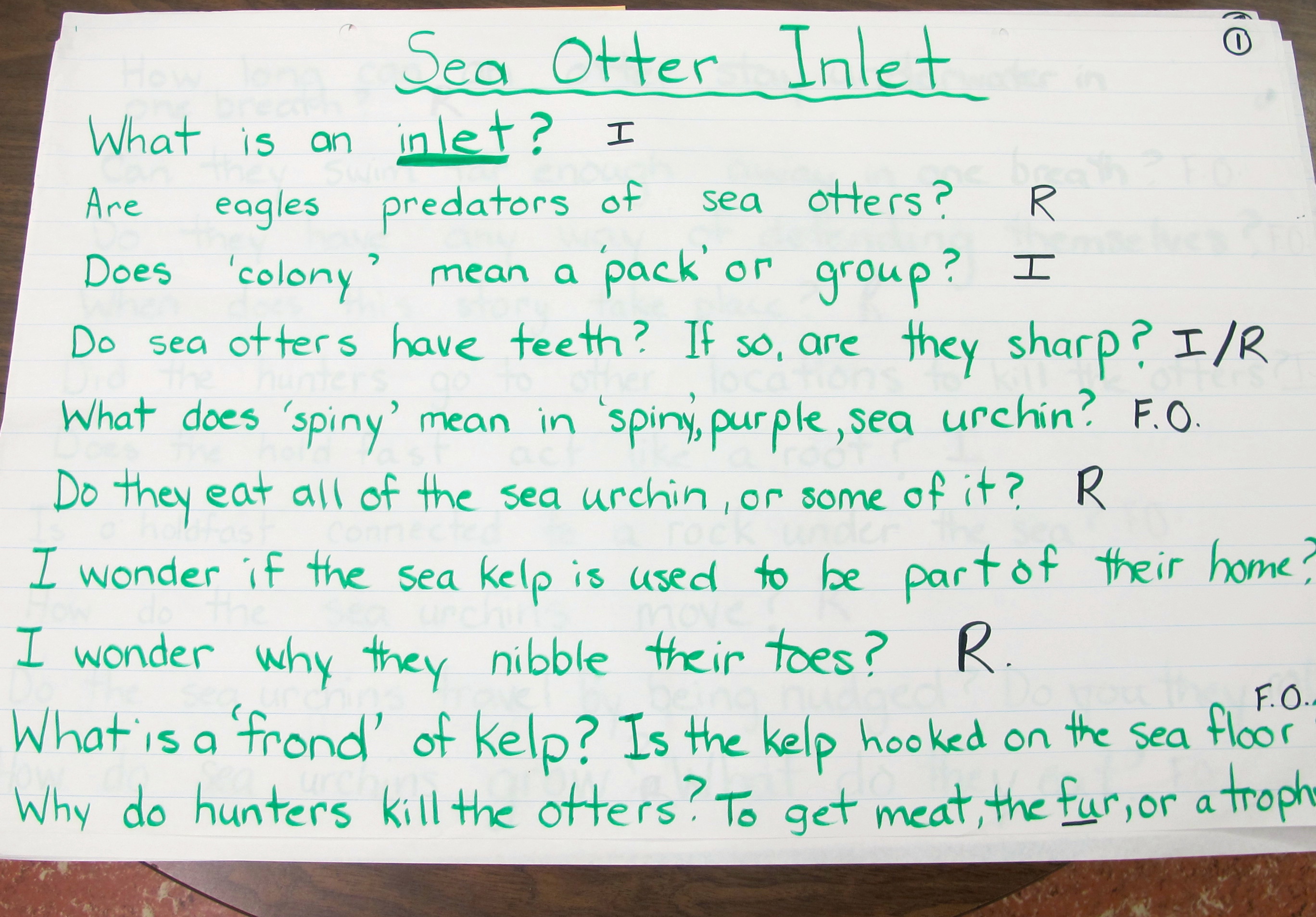
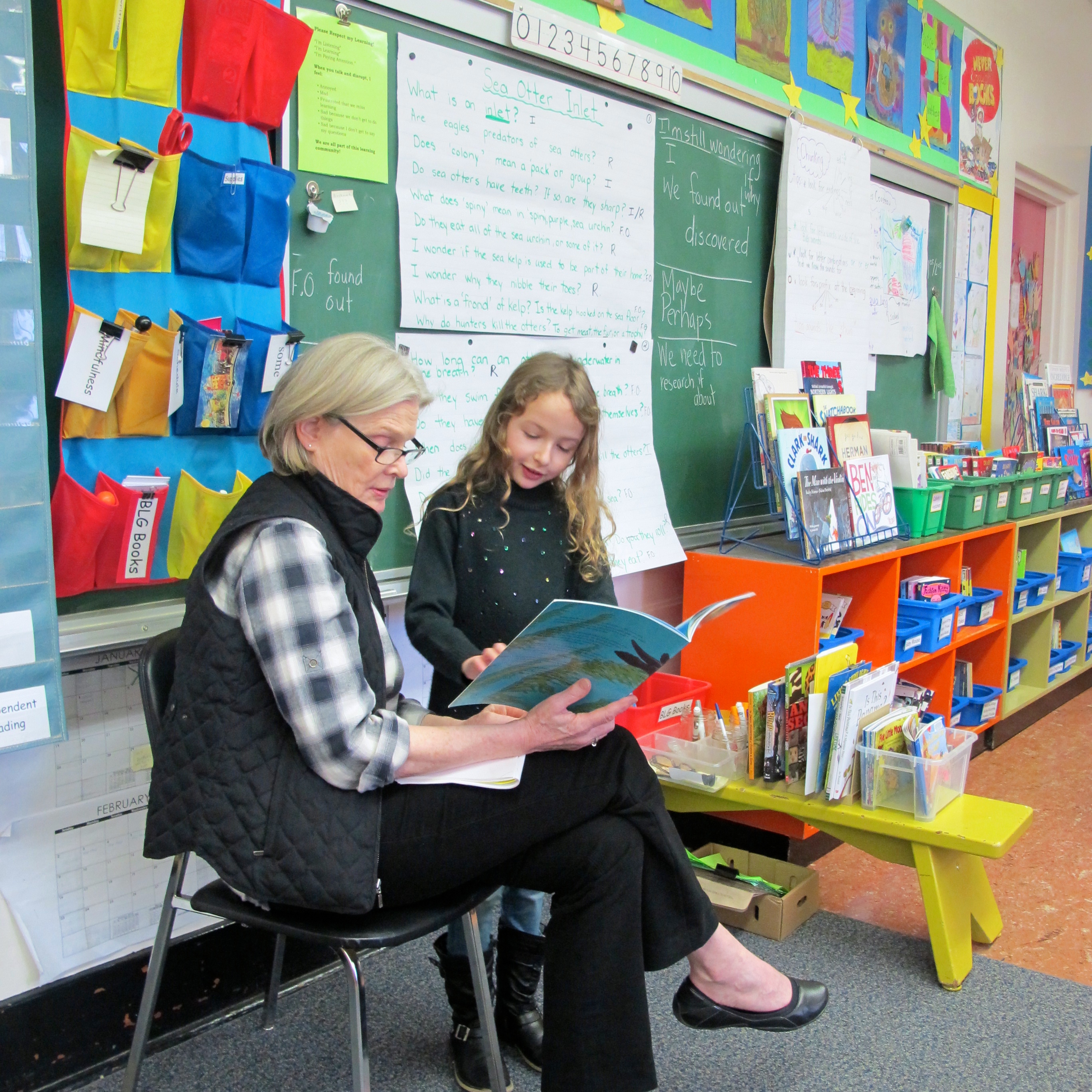
We also often list questions from the students during the read aloud and then code them when we are finished reading. Did our questions get answered? Do we need to do some research? Or can we infer to figure out the answer. R = Research I = Infer FO= Found Out If we want students to do writing, we might provide prompts like those listed below and have them look at our questions on chart paper to help guide their responses.

  • I discovered . . .
  • We found out that . . .
  • Now that I know _________, I think ___________
  • I am still wondering . . .
  • I still have some questions.

Teaching with a Passion for nonfiction: Part 2 The importance of the nonfiction read aloud There's a Book for That

Sometimes, my Resource Teacher (RT) comes into support writing when we have already read a story aloud and done a lot of the thinking work. I have different students take turns summarizing what happened in the book. This allows the RT to be caught up with the information and provides the opportunities for different students to practice summarizing and sharing key points.

Teaching with a Passion for nonfiction: Part 2 The importance of the nonfiction read aloud There's a Book for That

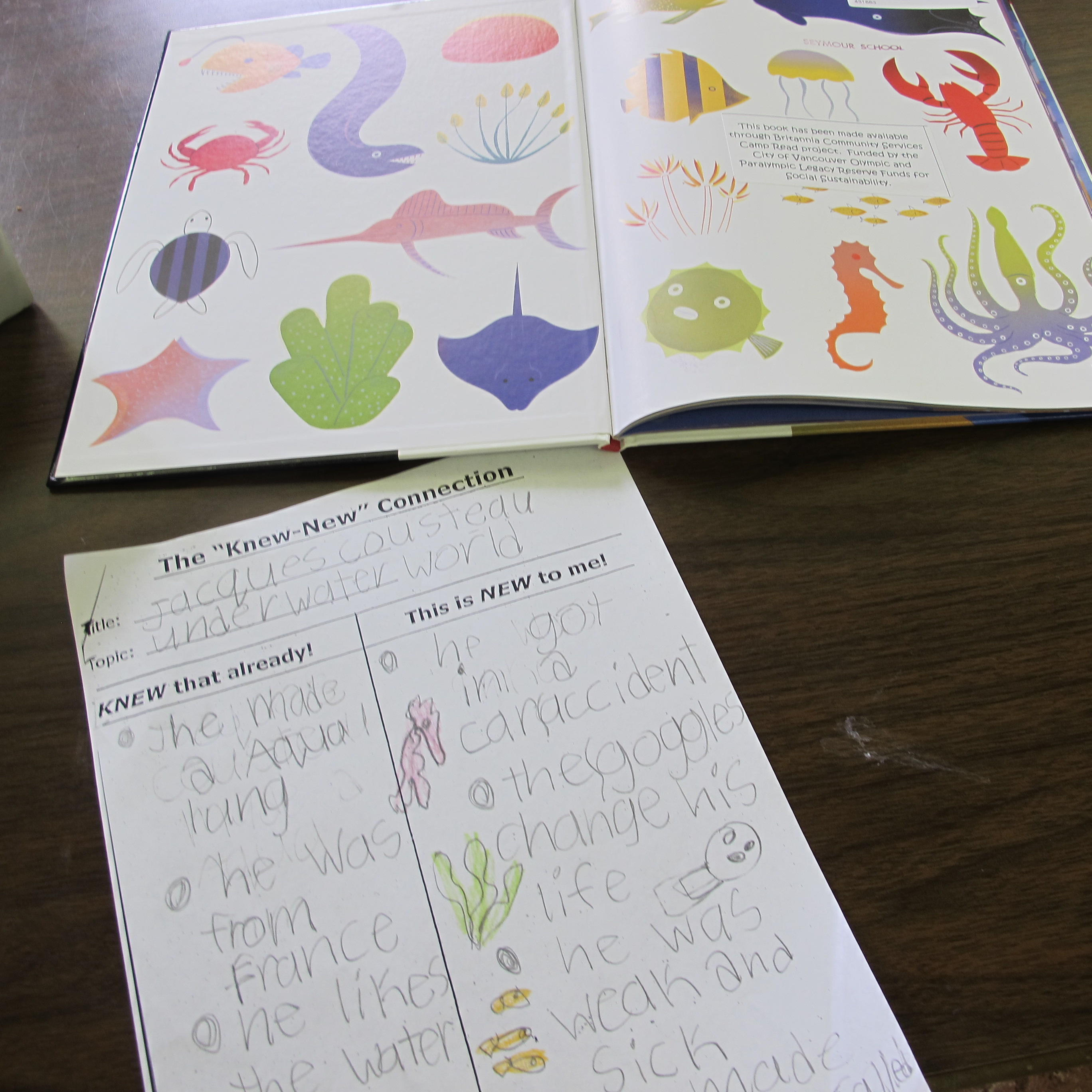
One of our favourite activities to do with nonfiction titles (especially if we are reading more than one text on the topic) is to fill out a Knew/New Chart. This idea is from Adrienne Gear and her Nonfiction Reading Power book (which is amazing if you don’t have it!) We filled out this chart after reading both Manfish: A Story of Jacques Cousteau written by Jennifer Berne and illustrated by Éric Puybaret and The Fantastic Undersea Life of Jaques Cousteau by Dan Yaccarino.

Teaching with a Passion for nonfiction: Part 2 The importance of the nonfiction read aloud There's a Book for That

Read aloud some more!

Get creative about using nonfiction titles throughout your week. It’s easy to find ways to share more nonfiction titles to support things you are already doing.

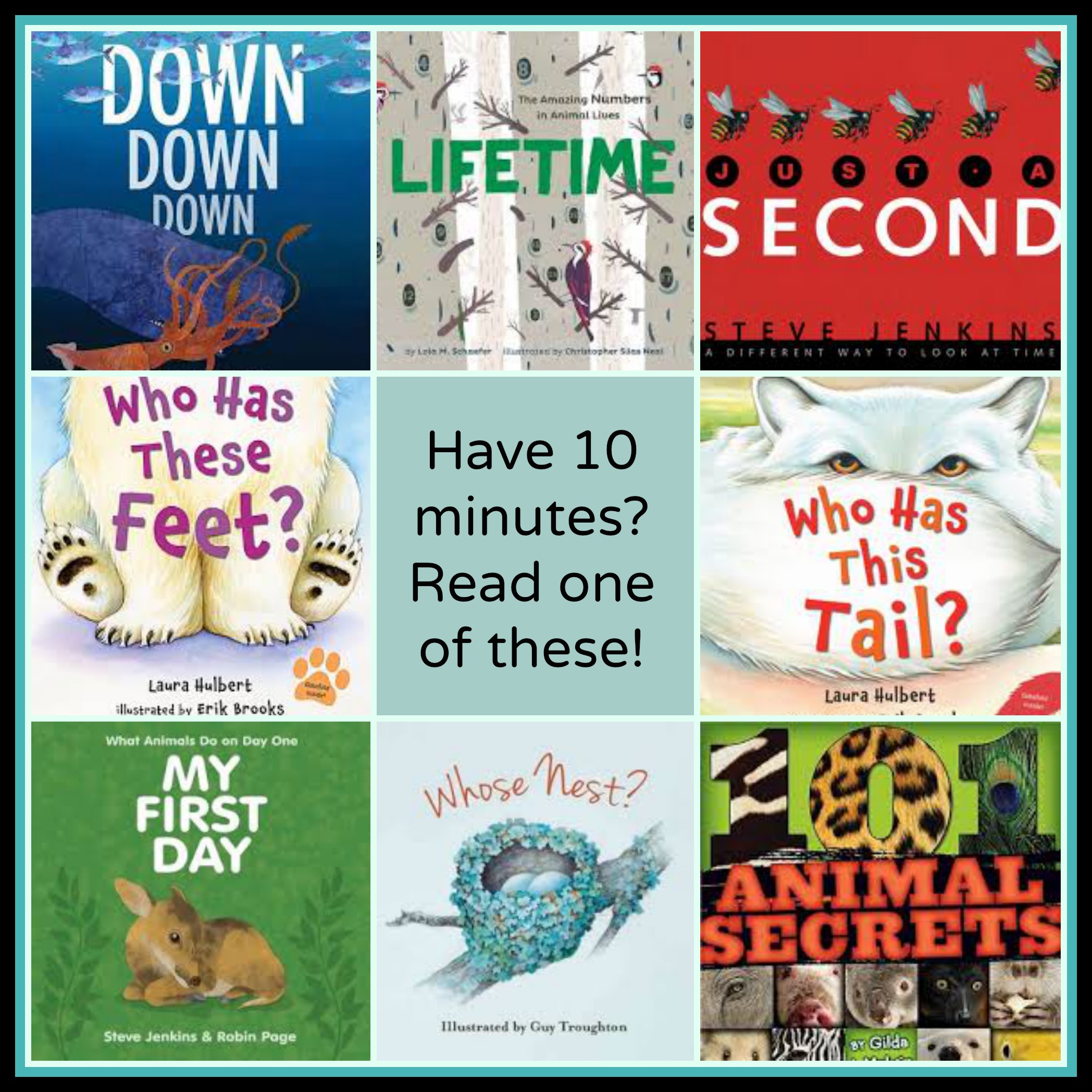
  • Use specific nonfiction titles for those ten to fifteen minute times that happen upon you in the classroom. Kids actually cleaned up and are ready before the bell? The presentation is late in the gym? The play finished early? Use that “found time” to share nonfiction titles. I always have two or three titles in a bin beside our carpet area ready to do just that. Many of these books can be shared a page at a time with lots of success. Some of my favourites for this purpose? Titles by Steve Jenkins feature big here!

Found Time? Read some nonfiction! The importance of the nonfiction read aloud There's a Book for That

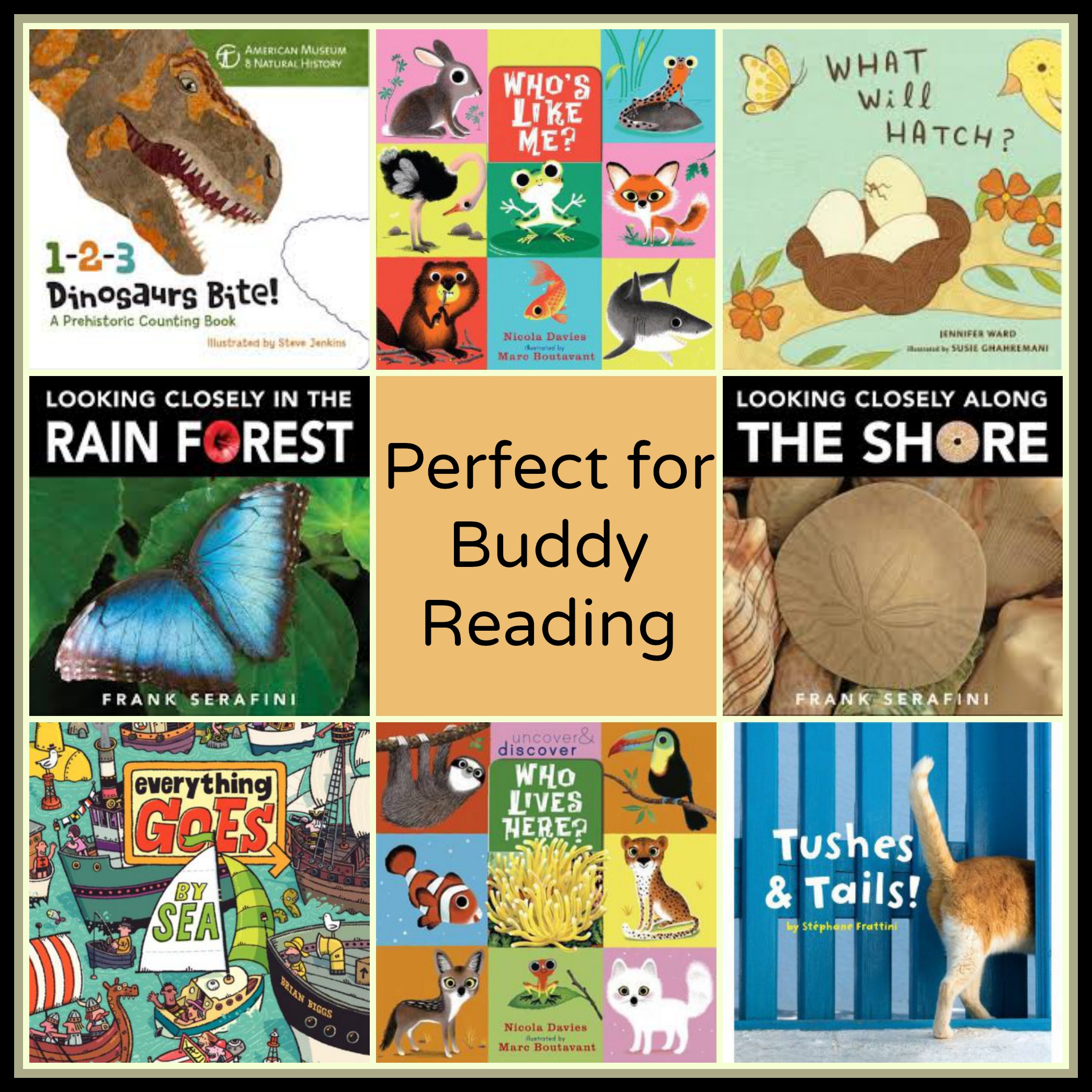
  • Model ways to buddy read with nonfiction titles. Are your kids big buddy readers to a younger class? I like to model how to share various books with my students so their buddy reading time is more successful and fun. I often choose nonfiction titles to do this. First, I get to share these as read alouds and then my students, in turn, share them. My favourites for this purpose?

Nonfiction Titles perfect for buddy reading The importance of the nonfiction read aloud There's a Book for That

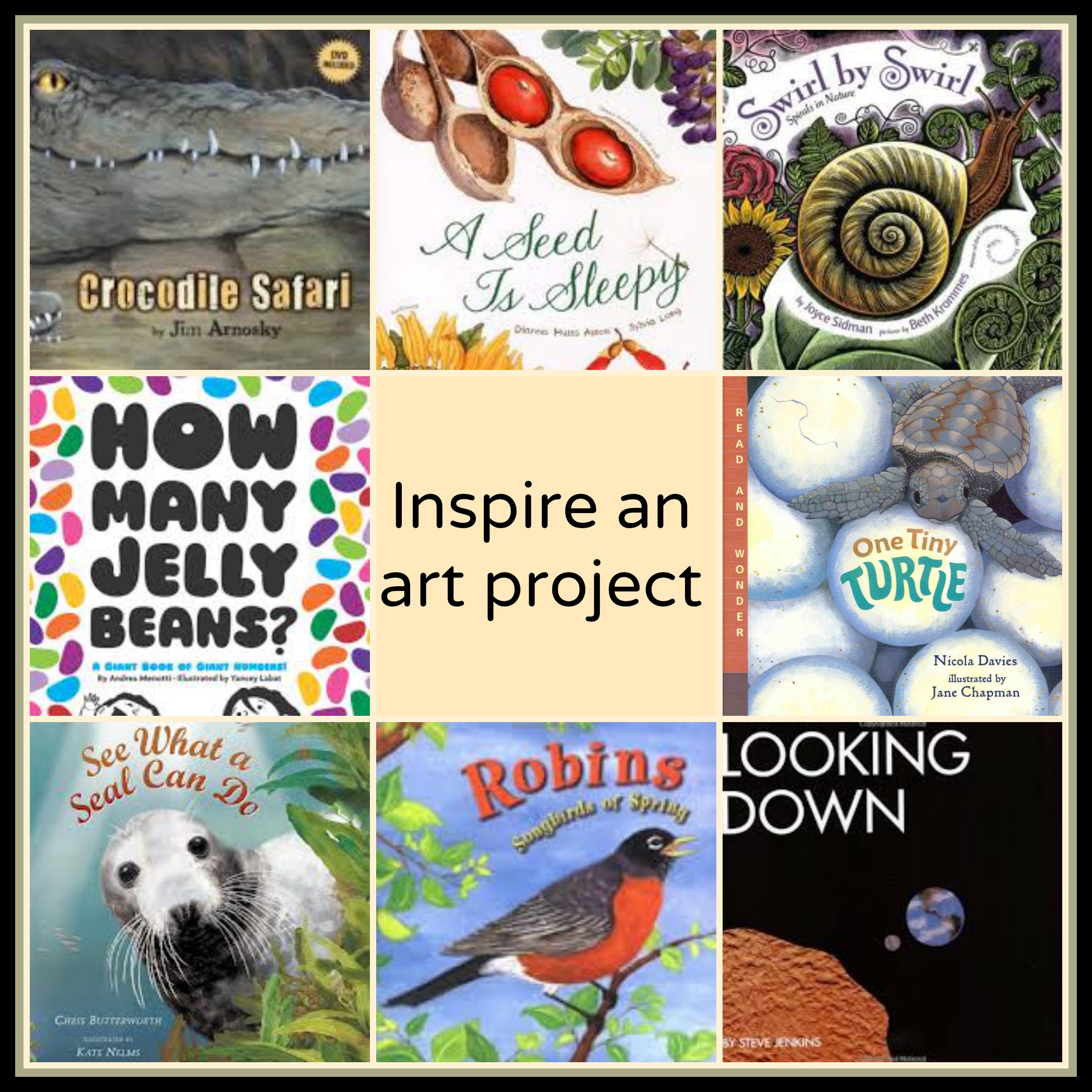
  • Inspire an art project! Launch an art project with a nonfiction title. Some of my favourite books to do just that:

Use nonfiction to inspire an art project The importance of the nonfiction read aloud There's a Book for That

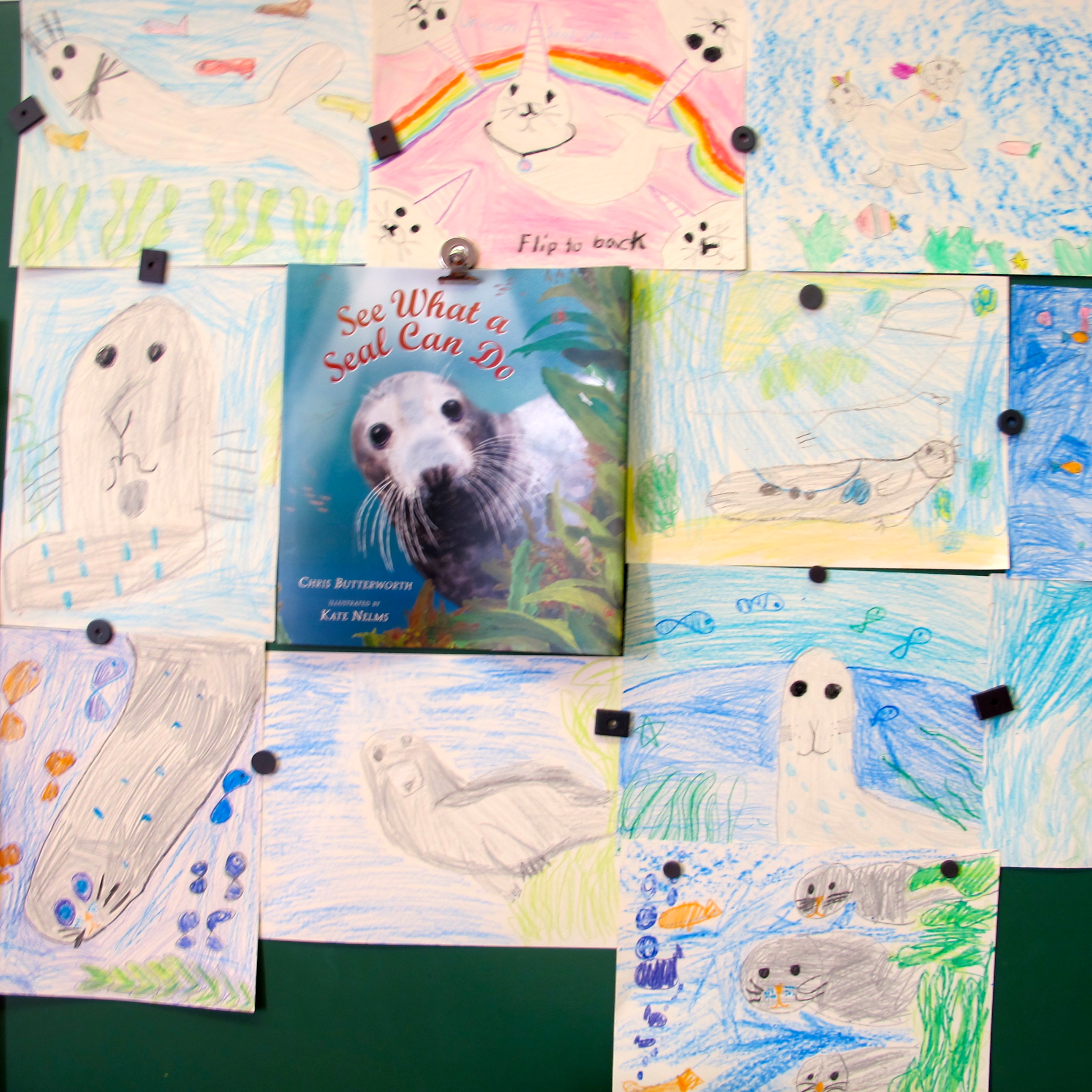
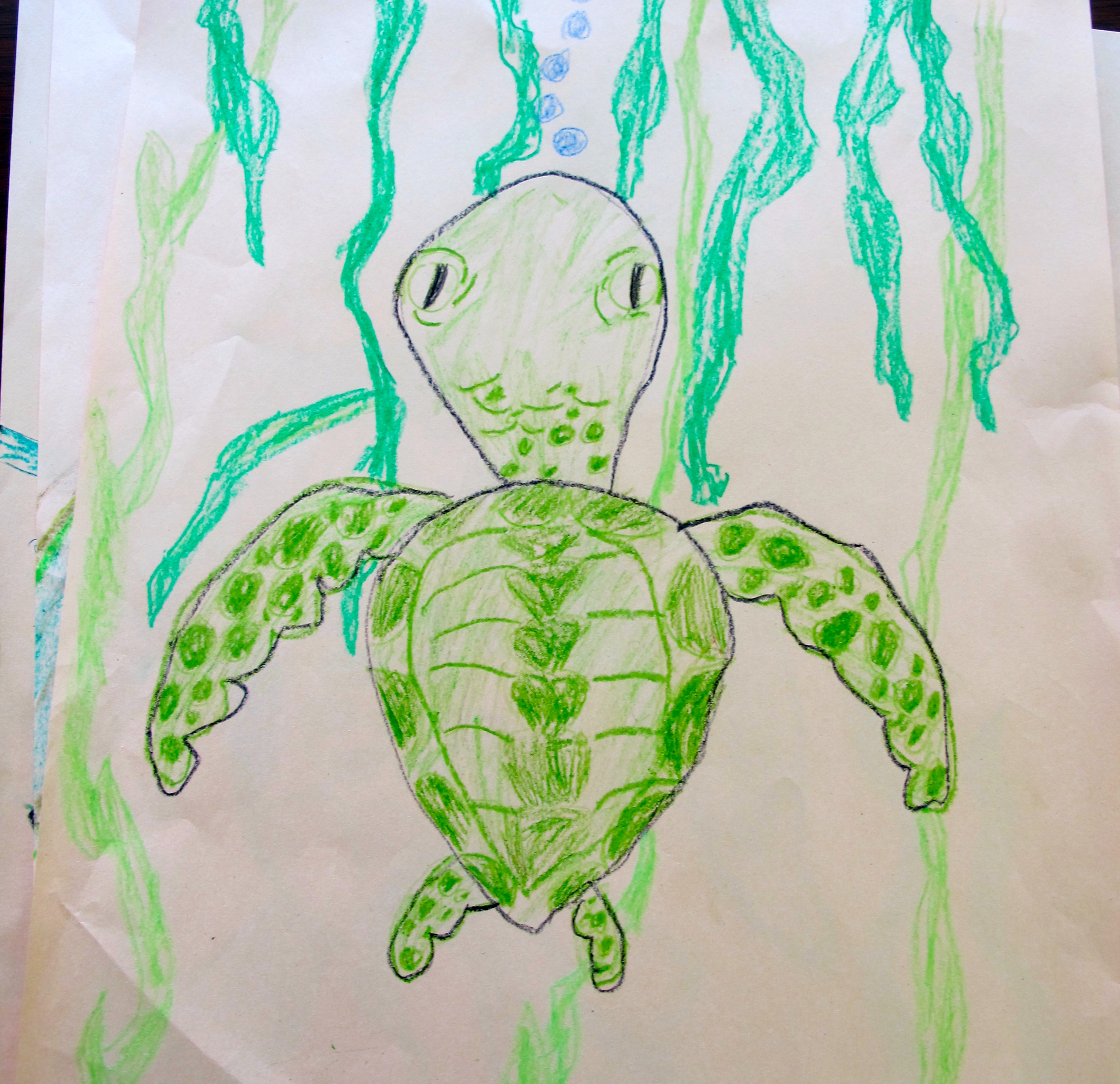
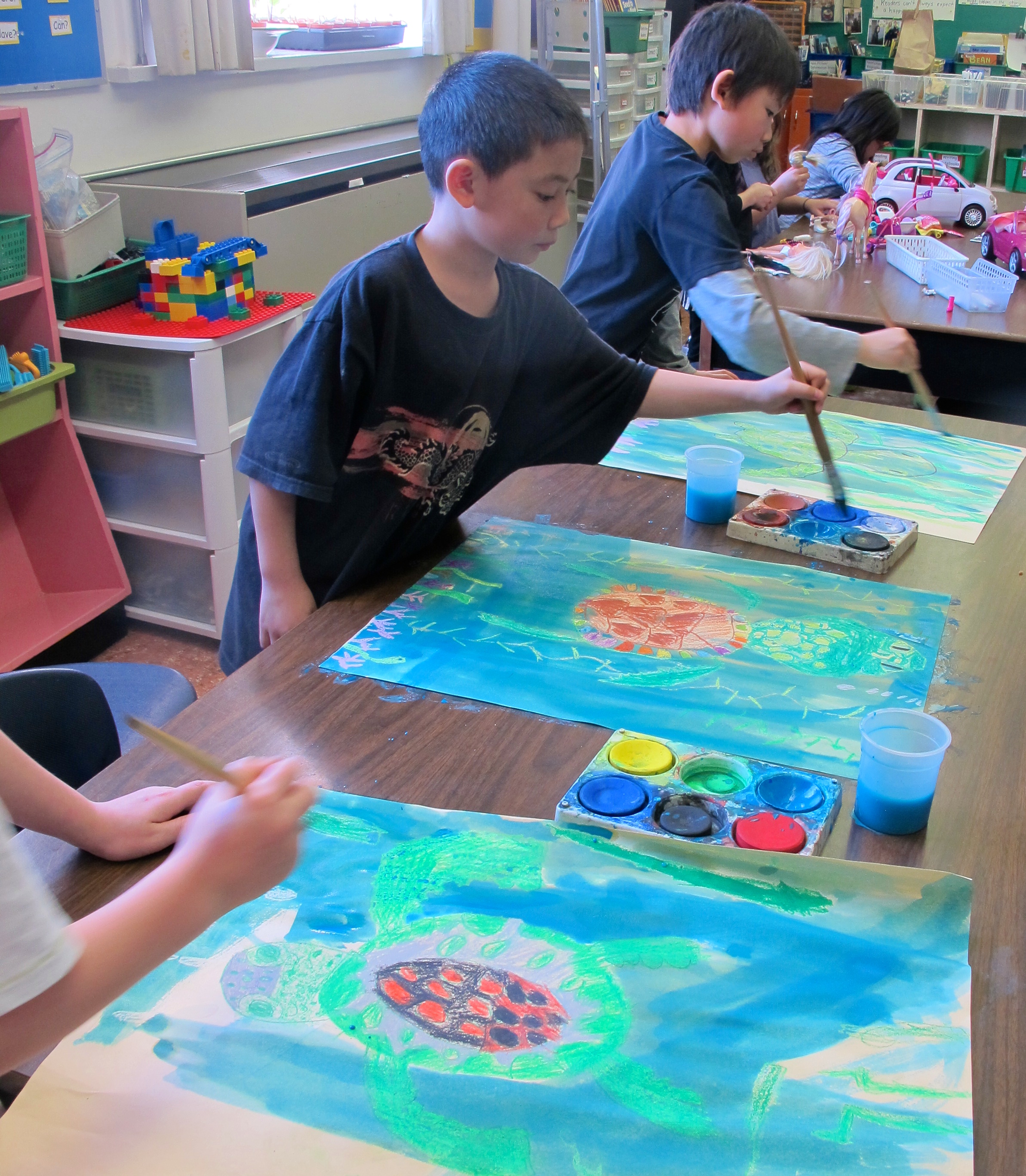
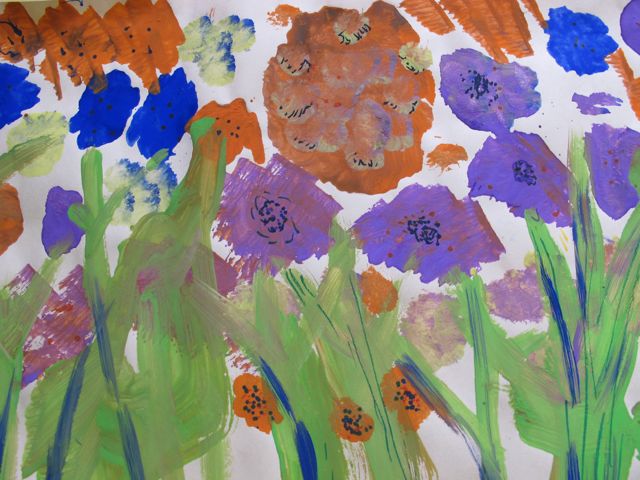
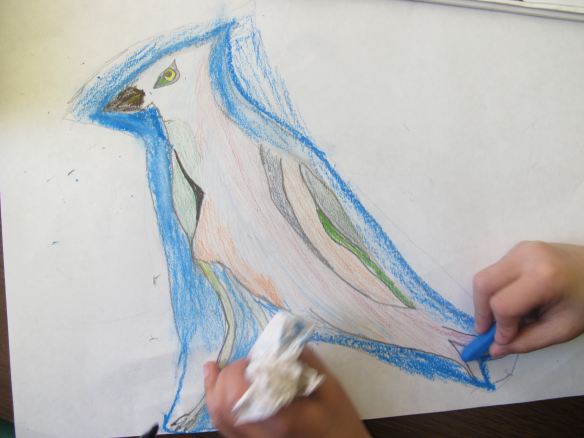
A few recent of art projects inspired by nonfiction books.

Teaching with a Passion for nonfiction: Part 2 The importance of the nonfiction read aloud There's a Book for That

Teaching with a Passion for nonfiction: Part 2 The importance of the nonfiction read aloud There's a Book for That

This image (above) was complimented by Nicola Davies author of One Tiny Turtle (that inspired this book) Below some students are painting their turtles.

Teaching with a Passion for nonfiction: Part 2 The importance of the nonfiction read aloud There's a Book for That Teaching with a Passion for nonfiction: Part 2 The importance of the nonfiction read aloud There's a Book for That

Teaching with a Passion for nonfiction: Part 2 The importance of the nonfiction read aloud There's a Book for That

And how can I end this post without sharing some of my very favourite nonfiction to read aloud? Here are some titles that I have used with a lot of success in my primary/early intermediate classroom. Rich, rich learning opportunities!

 Fantastic Nonfiction to read aloud Part 2 The importance of the nonfiction read aloud There's a Book for That

I know there are many teachers out there doing amazing things with nonfiction texts in their classroom. This post is hardly a comprehensive list of everything that can be done with the read aloud and is not intended to touch on how to teach specific nonfiction genres. Please share your own ideas and links in the comment section! Let’s continue the nonfiction conversation.

Next post? Part 3: Interacting with nonfiction: getting students reading, thinking and talking together 

3A: Generating excitement, making choices and having time to read

3 B: Reading and working with the texts