“Stereotypes shrink your brain!”

IMG_2703

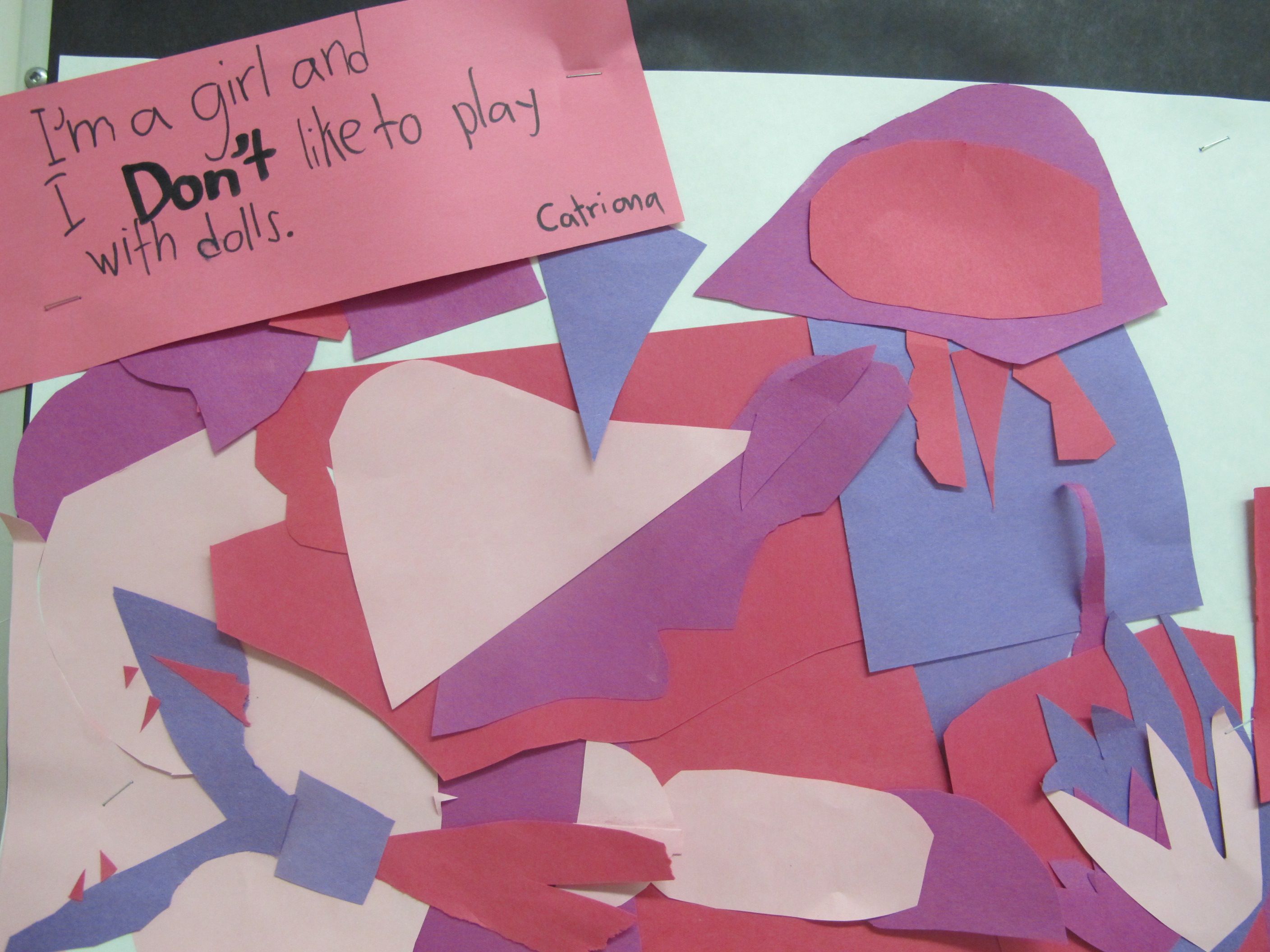
In preparation for Pink Shirt Day, we have been having discussions about bullying, stereotypes and how cruel and ignorant people can be. These discussions have  been inspired by many picture books that have helped us understand and explore stereotypes – particularly gender stereotypes. Over the past two days we have been making pink day collages based in part on Henri Matisse‘s collages. We have also been writing banners that question stereotypes.

The overall effect posted up on our hallway bulletin board is very powerful!
IMG_2709

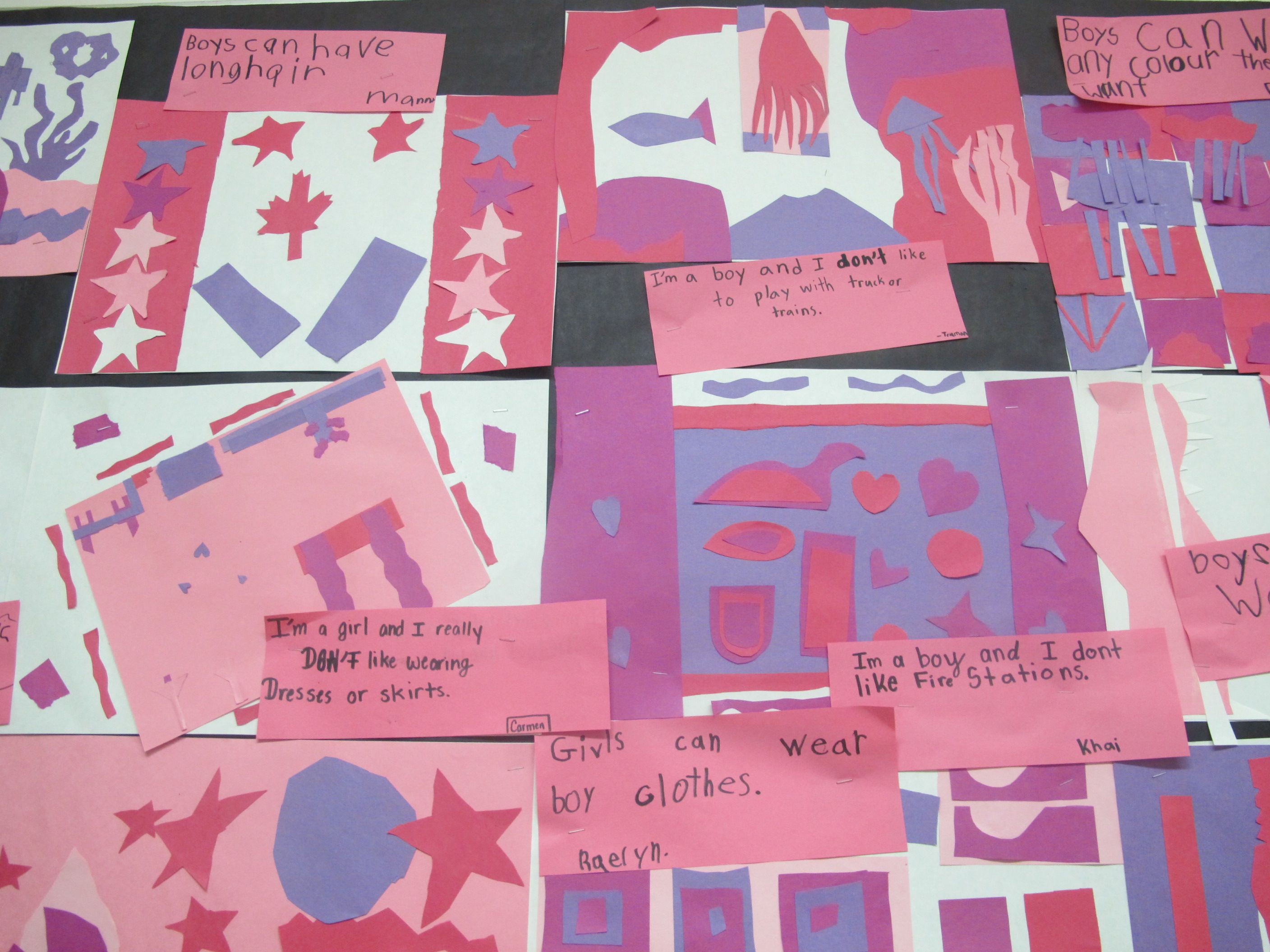
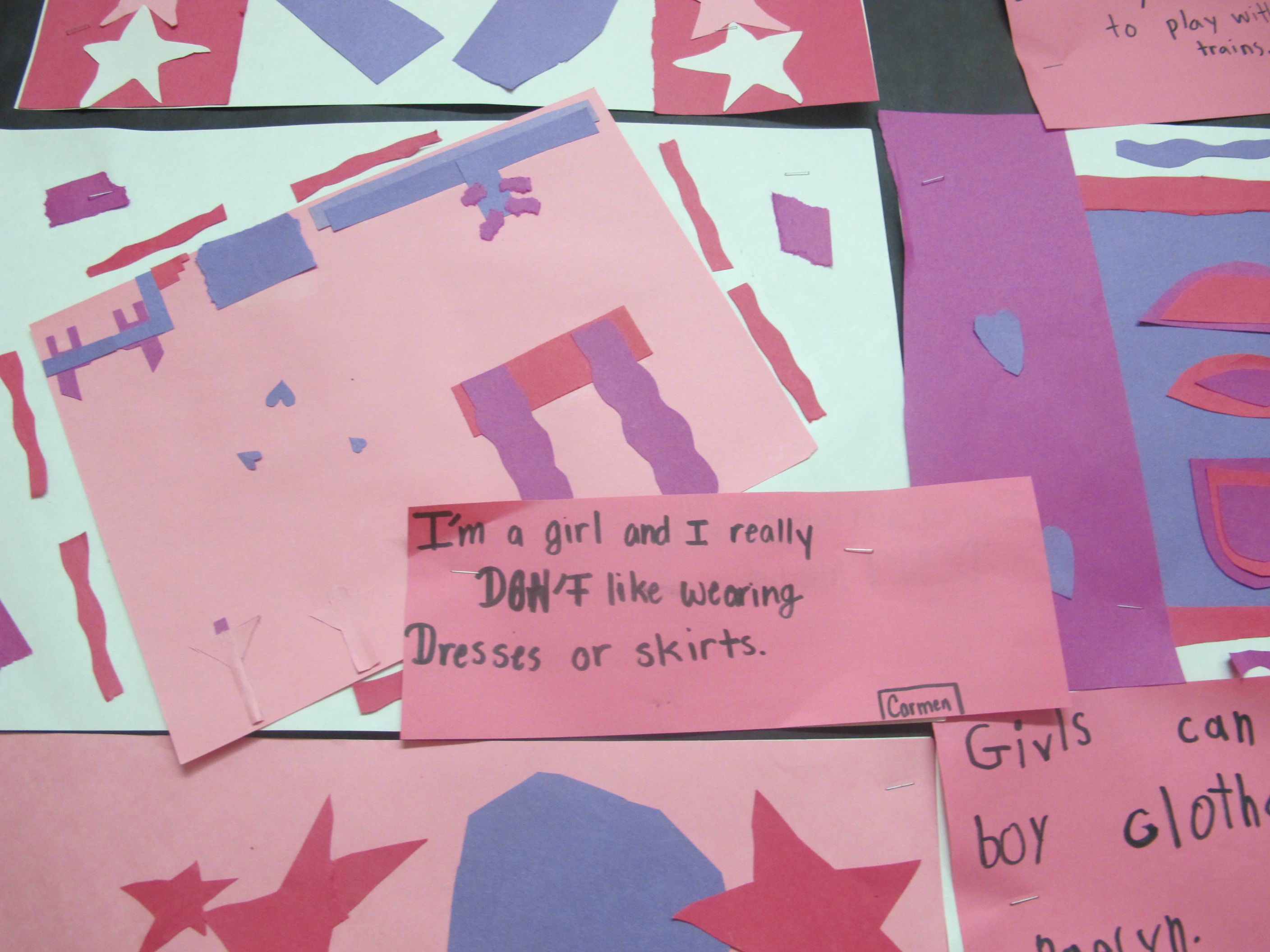
Some girls really wanted to point out that generalizations about girls did NOT apply to them! Carmen explains that she doesn’t like wearing dresses or skirts!
IMG_2728

Catriona is also very clear:

IMG_2705

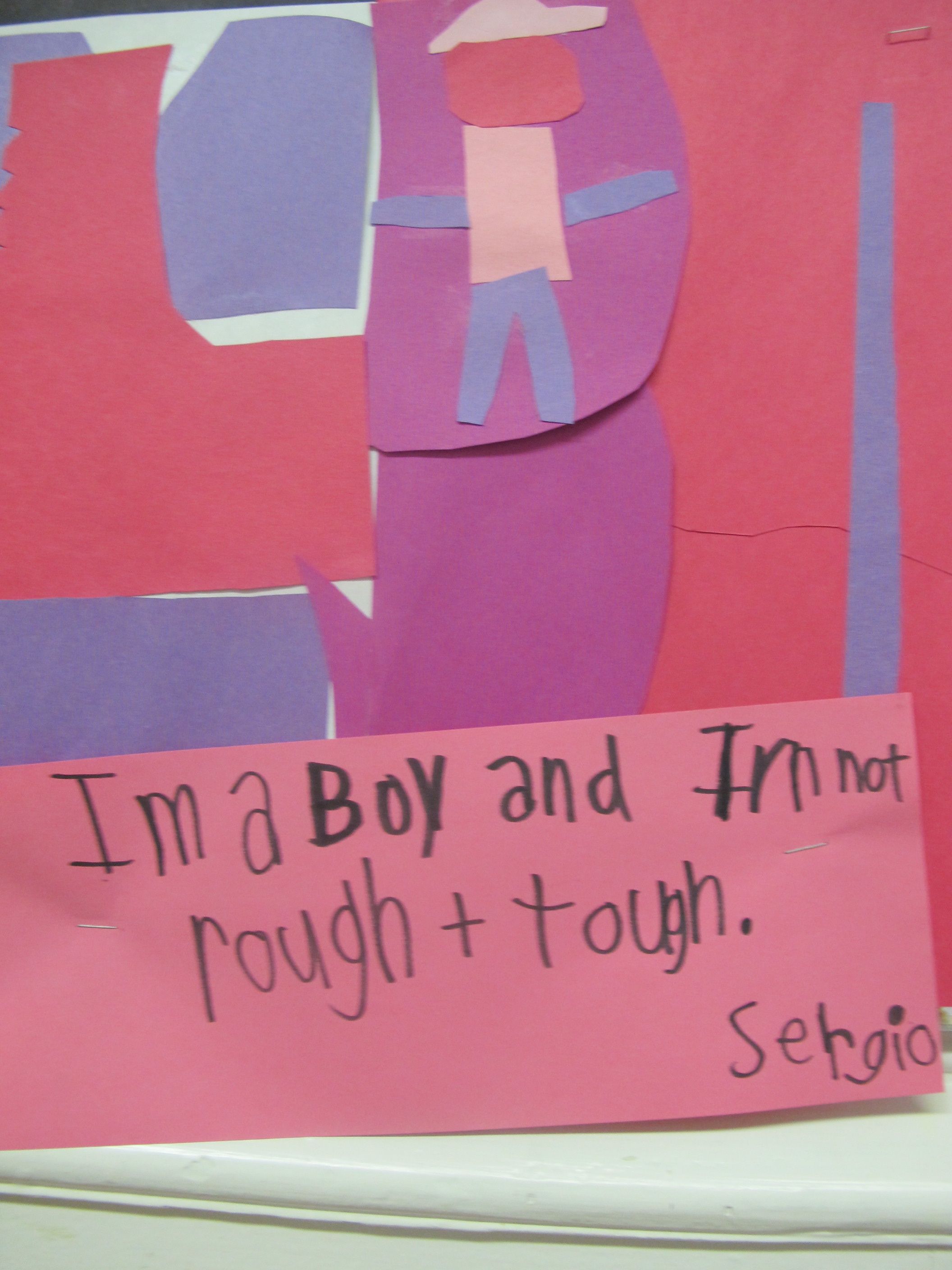
Boys also wanted people to understand that there shouldn’t be stereoptypes based on their gender. Sergio‘s words are powerful.
IMG_2708

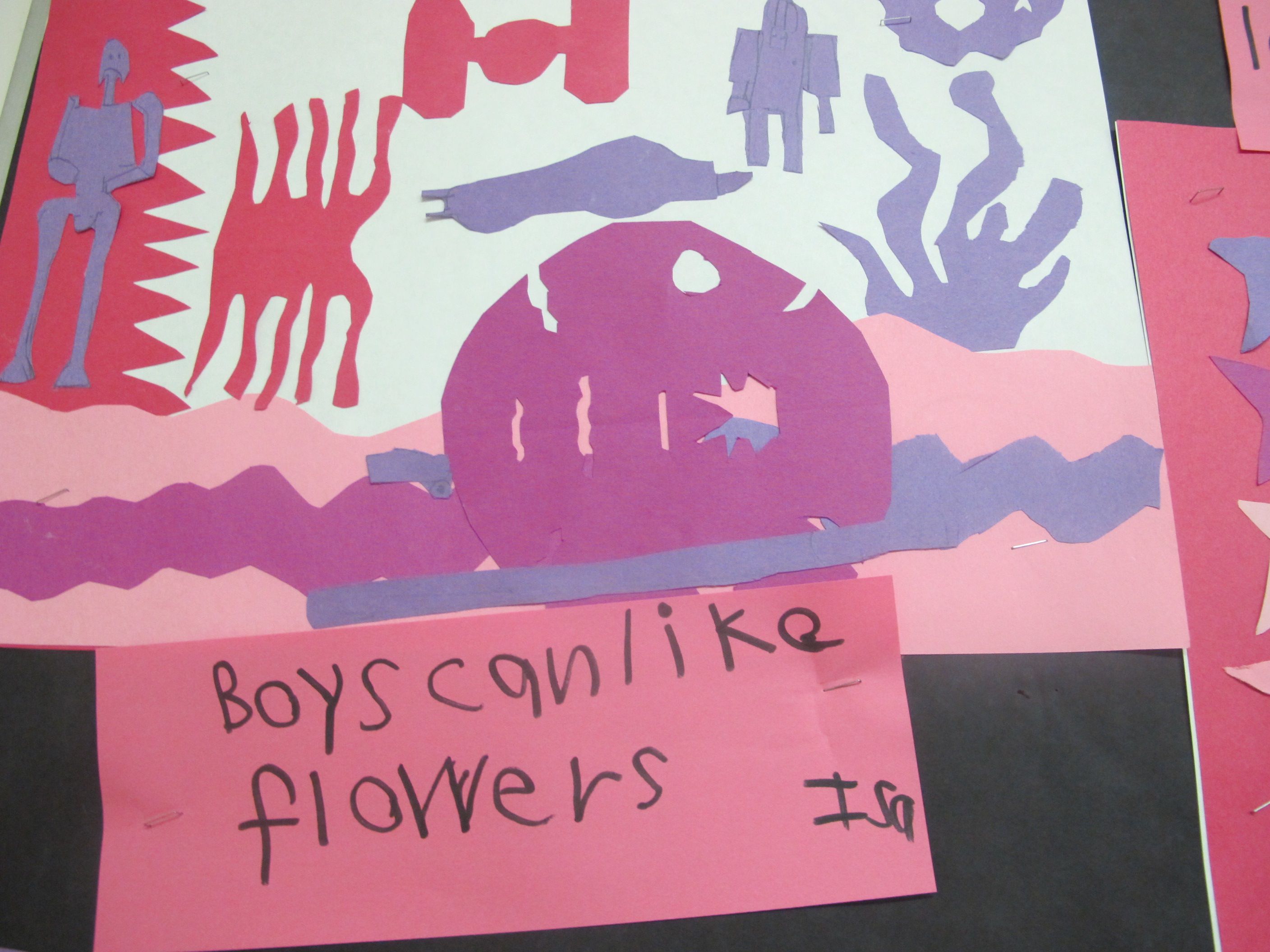
Isa always sees the beauty in the natural world that many of us miss. His statement is an important one!
IMG_2713

Deandra reminds us that it is never too early to talk about our appearance and question the value we put on it. None of us have to be perfect but it is certainly sad when girls feel that pressure to look a certain way because they’re supposed to be “pretty.”
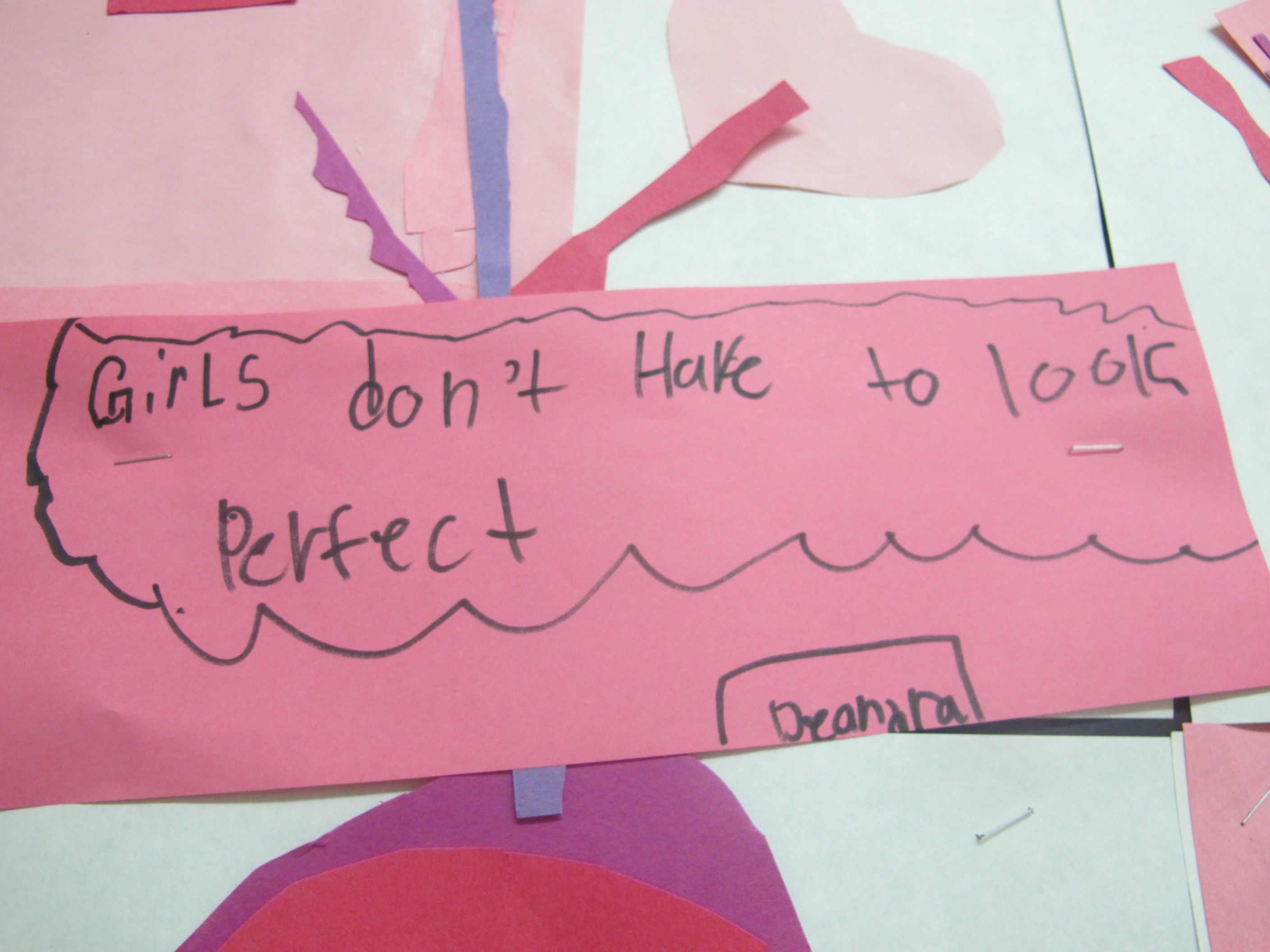
IMG_2712

These pieces were inspired by three great stories we read and talked about today.

William’s Doll by Charolette Zolotow. Illustrated by William Pene Du Bois.
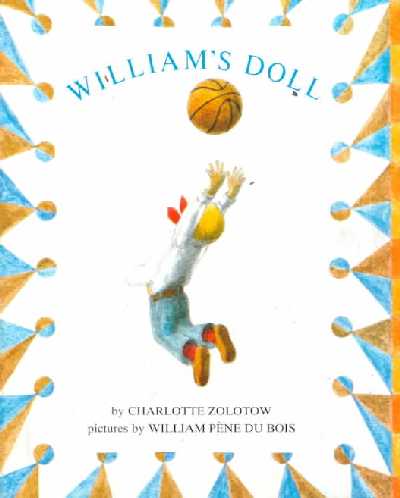
William really wants a doll. His Dad thinks he should have a basketball. The boy next door calls him a “sissy” and his brother thinks he’s a creep. But William desperately wants a doll to care for and love. When Grandma comes to visit, she understands. She buys William a doll and makes his father understand that he is thinking of the whole thing in a limited way. William wants a doll to love, but also to “play” at being a father – learning to do all of the things he will need to do one day for his own child. Such a lovely timeless story that shakes up the stereotype that dolls are just for girls!

Oliver Button is a Sissy by Tomie dePaola
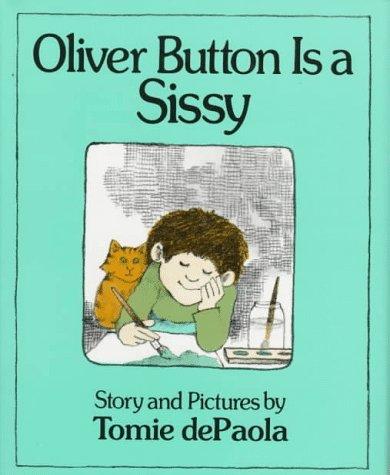
Everyone in Oliver’s life seems to struggle with the fact that he wants to dance instead of doing boy things like “. . . any kind of ball!” The boys from school are particularly cruel, writing hurtful things on the wall at school.
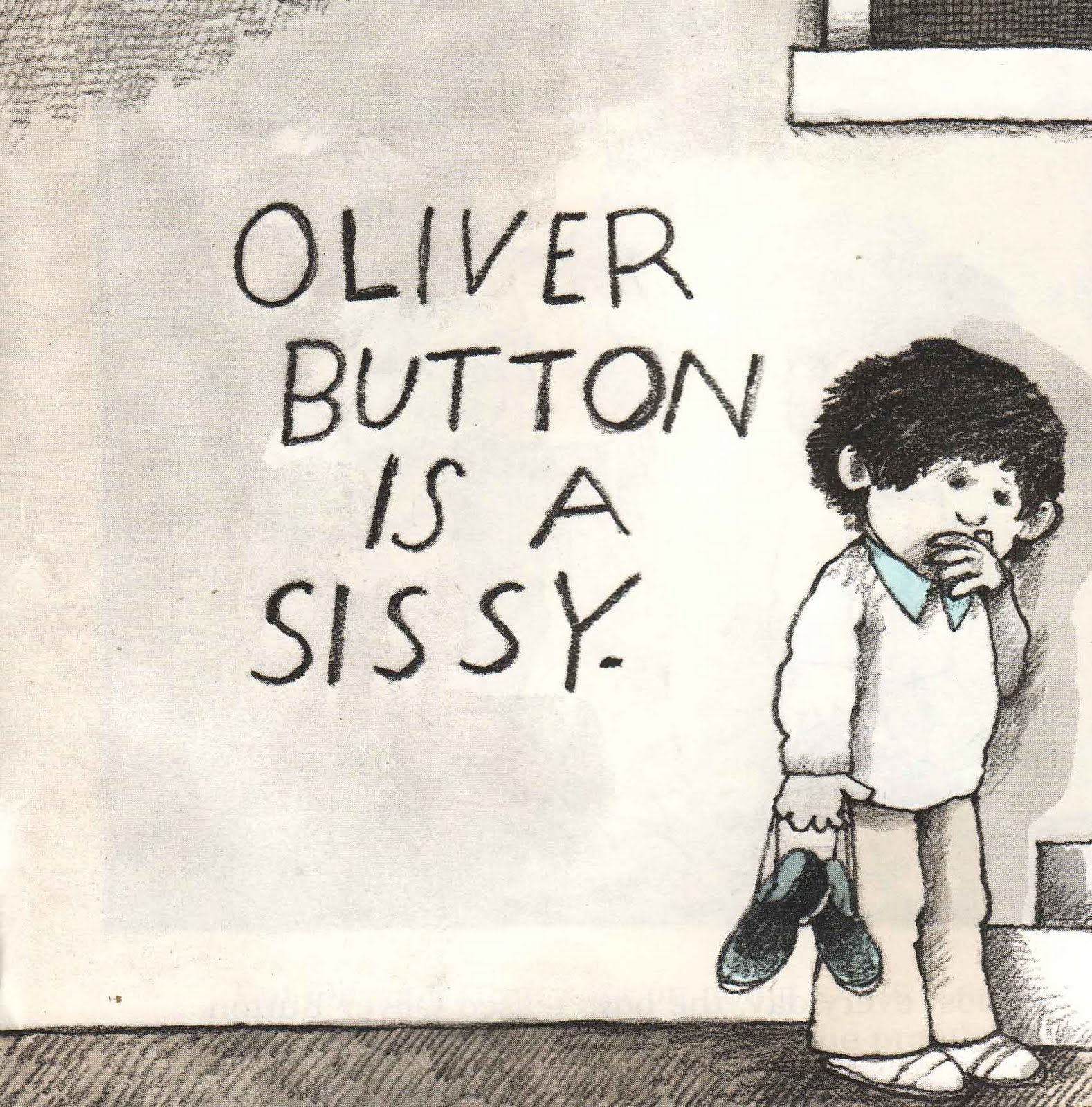
oliverinside

Oliver never gives up his passion and shows everyone, even those boys, that someone who is true to themselves is a real star!

The Only Boy in Ballet Class by Denise Gruska and illustrated by Amy Wummer is a more recently published book addressing the same theme.
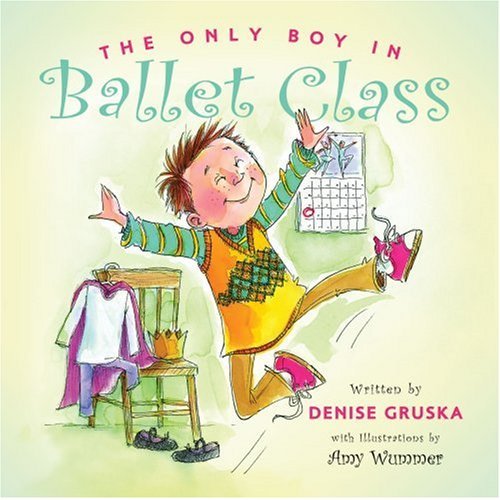
Tucker loves to dance. Lives to dance. Dances through life! This should be something to celebrate but of course the boys his age tease him for being different. His Uncle Frank is convinced he should be playing football. When Tucker is approached by the boys to be on the team for the championship game because they must have one more player, his Uncle agrees for him. Tucker manages to bring the team to victory by using his dance agility and grace to avoid being tackled. What is great about this book is that it doesn’t end here. The next page shows Tucker walking to his dance studio door and finding a pile of running shoes. The football boys who teased him have realized that ballet moves are pretty awesome and have come to join his class. Ballet becomes something cool and not stereotypically just a girl’s thing!

Our discussions were fantastic today. A few more important points:

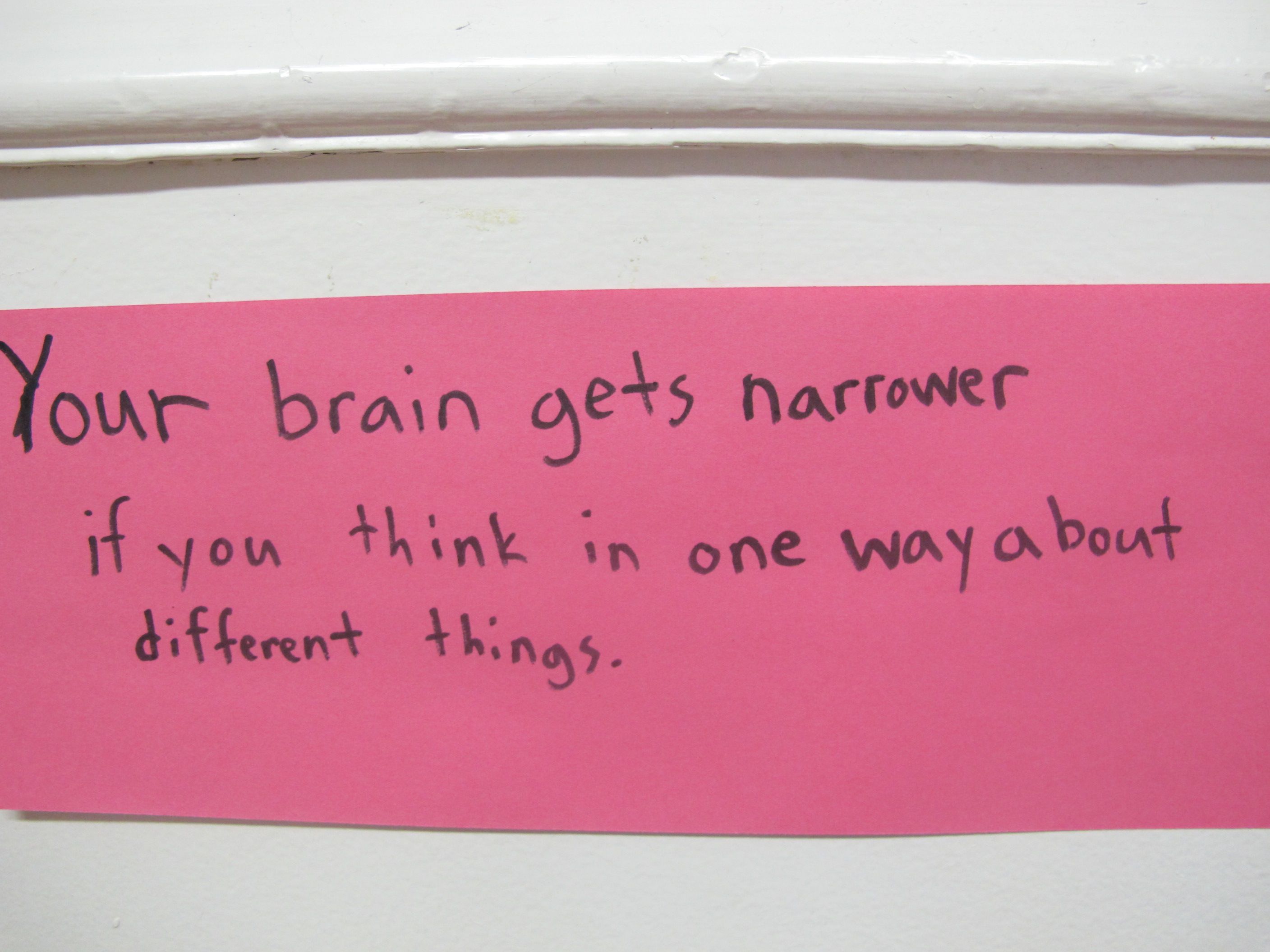
* The title of this post was inspired by Catriona who wrote, “Your brain shrinks when you do steroetypes.”

*We had a very interesting conversation about why lego would market pink lego when girls already like lego!? They’ll like pink lego more? What’s with that?

*We did talk about why each of the books we read today featured a boy character being teased for doing a so called “girl” thing. What about girls who do “boy” things? Great question and on our “to read” pile tomorrow is Princess Knight but . . . It does seem that often girls liking/doing “boy” things is more generally tolerated than boys liking/doing “girl” things.

*The great thing I noticed? Stereotypes are not ingrained in these children’s brains like they were when I was a child! “Of course boys can dance,” they would comment easily. “Boys can like dolls and girls don’t have to! It’s just who you are!” Yes, we need to explore stereotypes. Yes, we need to talk about how ignorance leads to cruelty/bullying. But we can also be grateful that these children don’t just celebrate diversity. Diversity is, for the most part, what they know and expect.  Hoorah!
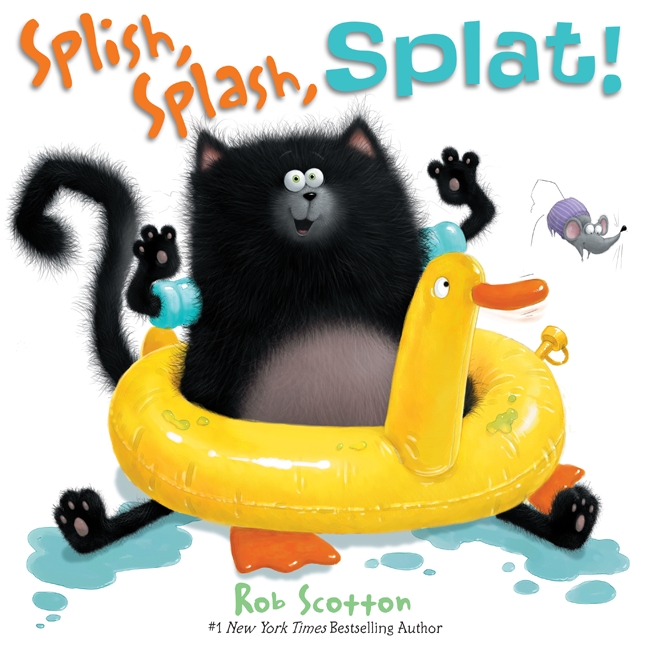
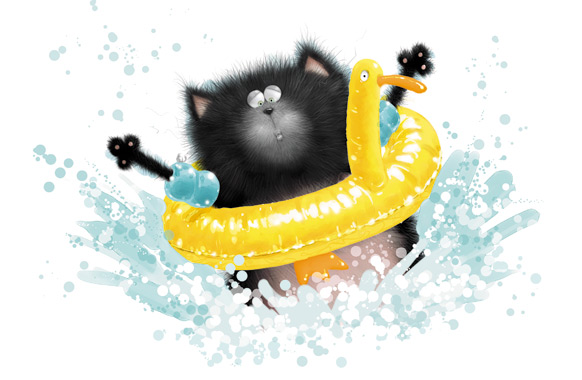
Splish, Splash, Splat!

Maria, our BLG reader this week, brought in a new Splat book by beloved author/illustrator Rob Scotton. As soon as she revealed the cover there was a collective cry, “Splat!” We were excited! Splish, Splash, Splat! did not disappoint.

Do you have a fear of water? Does swimming seem more horrible than fun filled? Remember learning to swim and the fear around it? Well then this is a book for you! Many of us shared connections as Maria read the story.

Scotton explores the fear of learning to swim and makes it completely normal, all the while making us giggle as Splat gets up to his usual silly escapades. I found the picture of Splat perched gingerly above a full tub of bath water particularly amusing. That has happened in my house!

When Splat finally leaps into the water after the equally scared Spike, we celebrate the two water phobic cats facing their fears and discovering that water is not horrible and wet but that it tickles and is full of fun. And wow, those are some pretty cool swimshorts Splat acquires on the last page! 🙂

Our student reviewers report:

Khai: This was a funny book. Splat was so scared of water!

Truman: Splat and Spike were both scared of water and hid behind each other. I liked the book.

The Lion & The Mouse

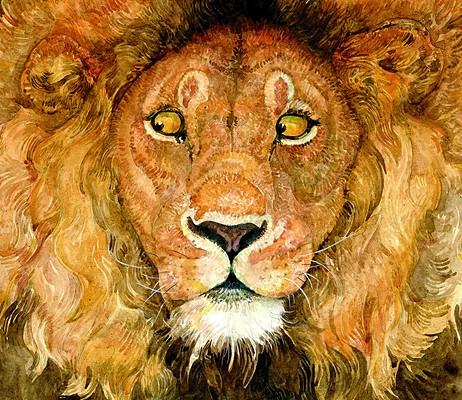
The Lion & The Mouse by Caldecott medal winner Jerry Pinkney is another book we have shared together as we continue to explore a theme of kindness through picture books.

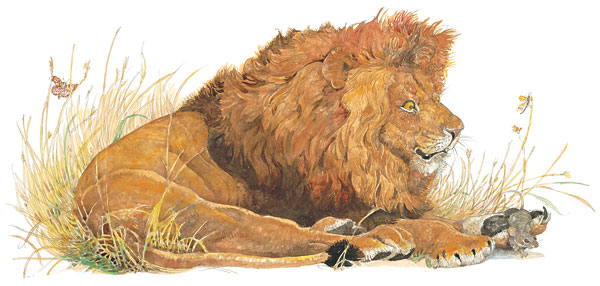
Pinkney’s story is an adaptation of the Aesop fable of the lion and the mouse who exchange an important gift – that of setting one another free. This gorgeously illustrated book is basically wordless, the only text are a few sound effects. Each page is so detailed, we found ourselves studying each image closely for clues as to what was happening in the story. We see a humongous lion being disturbed in sleep by the tiny mouse. Despite his irritation, he lets the tiny mouse go free. The mouse races back to her nest and her young. When the lion is trapped in ropes set by poachers, the tiny little mouse repays the kindness offered to her by the lion and gnaws through the ropes, setting the  king of beasts free.

Pinkney sets his version in the African Serengeti of Tanzania and Kenya. Students were fascinated by all of the animals depicted in the background as much as the close up pictures of our two heroes – the lion and the mouse.

Setting the little mouse free

How does this book continue to teach us about kindness? Students are clearly understanding that kindness is a choice, articulating that each main character had to decide what to do and chose to be kind to the other. We also spoke about how such a small decision to be kind can have far reaching effects. Students pointed out that not only did the lion save the mouse by setting her free, he also saved her family who was dependent on her. Students connected this story to other stories about the “golden rule” – treat others the way you want to be treated and spoke about karma (that all good done comes back to you.) What a powerful discussion this beautiful wordless story inspired.

Over and Under the Snow

Oh, how I have been waiting for snow to share this book with a group of children. So our temperamental Vancouver weather finally delivered some snow to city streets!  It was falling as I gathered our reading group together to read Over and Under the Snow written by the talented Kate Messner and illustrated (so beautifully) by Christopher Silas Neal. Reading the book I got to glance down at entranced little faces and look up to see snow swirling and whirling outside the windows. Magical.

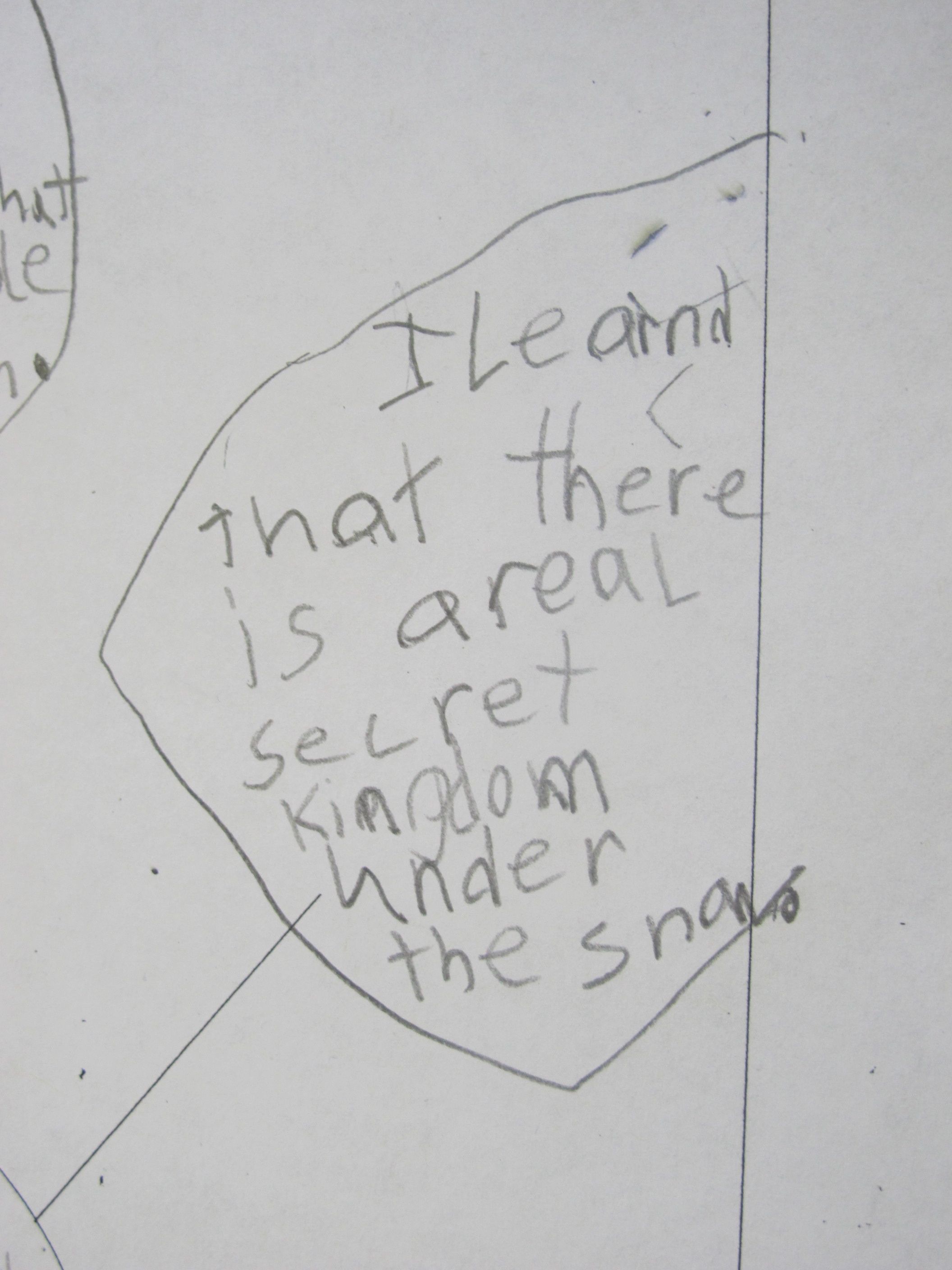
We loved the Author’s Note at the back of the book where we found out that this “secret kingdom under the snow” has a very impressive name: the subnivean zone (the small open spaces and tunnels between the snowpack and the ground). We also liked reading more information about each of the animals we had questions about in the back section that provided more details.

Students were asked to web out some of their new learning and eagerly sat down and got to work detailing what they had discovered.

Some fascinating new facts:

IMG_2333

This is a lovely image!

IMG_2324

Wow!

IMG_2318

The idea of a secret kingdom made every list! Such a magical image.

IMG_2322

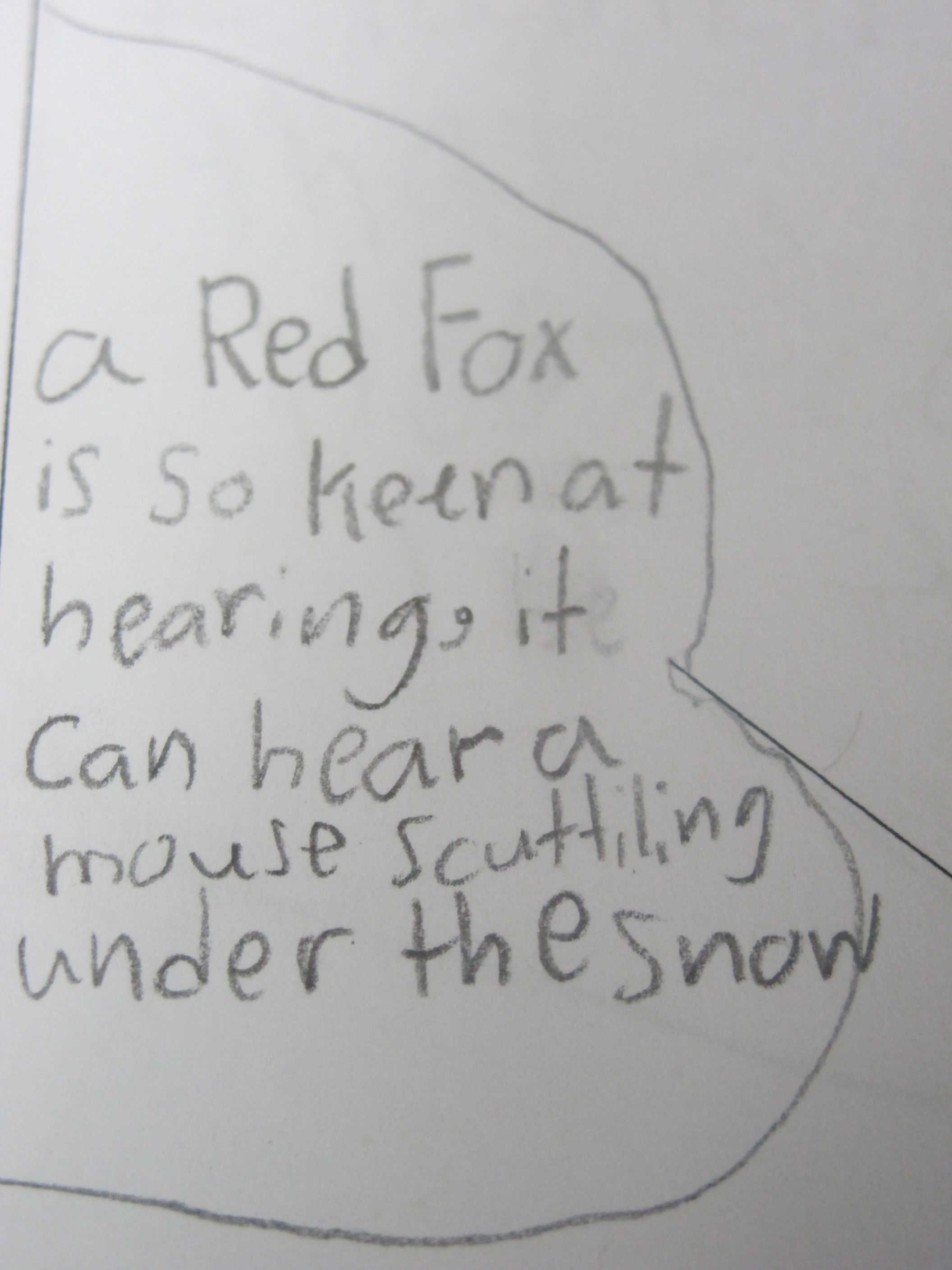
If you read the book, you might be most impressed as we were with the red fox and its keen hearing. Check out this link on Kate Messner’s blog where she shares a video of a real red fox listening for its prey under the snow.

The perfect book to share with city children who don’t get many opportunities to be out in a snowy world. Makes our upcoming field trip to go snowshoeing even more exciting! We now know what is happening under the snow! Wonderful how books really do open up new worlds but also allow us to look more intently at places that surround us that we don’t always get to explore.

Those Shoes

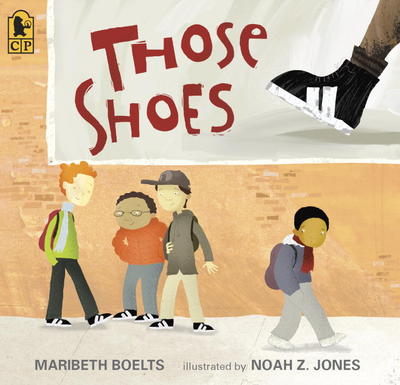
We have started reading and discussing picture books with a theme of kindness. Those Shoes written by Maribeth Boelts and illustrated by Noah Z. Jones was an ideal book with which to start.

This book helped us to explore the difference between our needs and our wants and how to come to terms with the understanding that sometimes we have to give up something we really want when it just doesn’t make sense despite our strong feelings. Jeremy wants those shoes –the shoes he sees advertised on a billboard and walking around him everywhere he looks. Black high tops with two white stripes. Perfection. He wants them especially a lot when his own shoes wear out and the guidance counsellor roots around in a box to find him shoes that fit. Blue velcro shoes with a cartoon animal on the side. Nothing like those shoes he dreams about. Shoes he needs but doesn’t want.

Grandma invites Jeremy to go check out the shoes, those shoes, at the store. She has a little bit of money set aside. But at the store, she discovers the price.

When she sees it, she sits down heavy.

Silence in our class. Students had just commented how kind Grandma was being to take Jeremy shopping for the shoes he really wanted. Now what? I asked, “Can we only show kindness if we have money to buy something?” Well no, of course not but we all had to sit there and feel Jeremy’s disappointment for a while. What next? Jeremy suggests they go looking in the thrift stores for those shoes and in Lucky Store # 3, he finds them. However, squished toes and held breath tell us that these shoes are too small. Still Jeremy buys them because he wants them that much.

Jeremy’s new shoes are unbearable and unwearable. One day he notices a classmate’s shoes are taped up – worn out. Antonio seems to have smaller feet than him. The thought that he might have in his possession shoes that could fit Antonio, those shoes, eats at Jeremy.

I’m not going to do it.

He repeats this thought in his head and out loud. No way. No how. But after a sleepless night, Jeremy runs his shoes, those shoes over to Antonio’s door and leaves them there for him. Jeremy is not fully happy – when he looks down at his own blue shoes that aren’t those shoes he feels upset but Antonio’s face brings him joy.

“He gave up those shoes from the kindness of his heart,” commented Shae-Lynn.

“And he’ll get kindness back,” said Catriona.

Jeremy learned a lot in this book. Sometimes kindness wins but it isn’t completely easy. Our emotions can be mixed. Sometimes we learn that when we have what we need (new snowboots thanks to Grandma) we can appreciate other things (a new snow day). Sometimes our wants bring us unhappiness and giving them up is where we grow. Sometimes kindness is simply giving other people what they need.  So much to discuss in this gem of a picture book.

Some snippets of written responses:

Truman: Jeremy gave kindness to Antonio by giving his too small shoes to Antonio.

Khai: Jeremy saw Antonio’s shoes and they were broken. Jeremy wondered and wondered and went to Antonio’s house and left the shoes on the porch. Jeremy did it even though he got nothing back.

Markus: The Grandma was nice in the story. She tried to get shoes for her grandson.

Purity: Jeremy gave the shoes to Antonio even though he really liked them. They didn’t fit Jeremy so he gave them to Antonio because Antonio needed them.

Scaredy Squirrel at Night

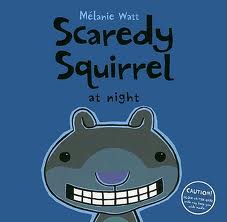
As we explore what it means to be courageous, we thought it was time again to talk about our own fears. Scaredy Squirrel was just the character to give us inspiration!

Melanie Watt gives us the cautious, worried and fearful Scaredy Squirrel. My students also thought that Scaredy Squirrel had some other important character traits: organized, creative and persistent. Important to recognize his strengths of character! Early on in this story we realized that Scaredy Squirrel is not sleeping because of worries about what he might dream about. What can happen when you don’t get enough sleep? “You die, you actually do,” insisted one student. Others included things like “Your run out of energy”, “You need to have a nap” and “You get very hurt, red eyes.” You definitely get obsessed about what worries you!

Our response to this book today was to include our own bad dream anxieties. What do we want to avoid in our sleep?

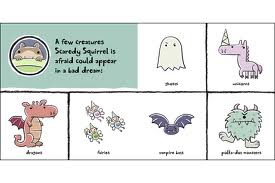
We used this page as the inspiration:

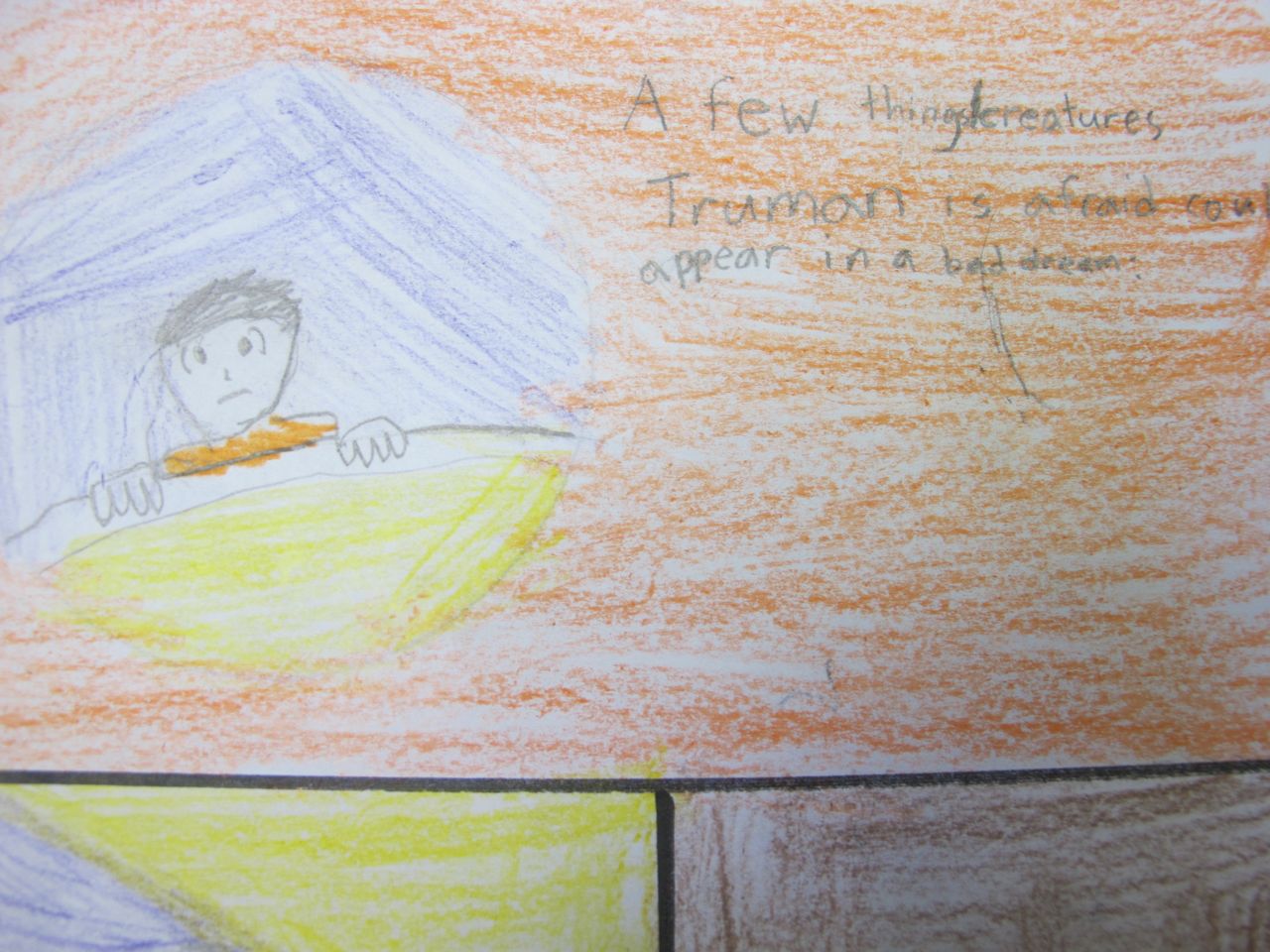
And created our own “page” – Truman decided that he was afraid of both things and creatures.

IMG_1716

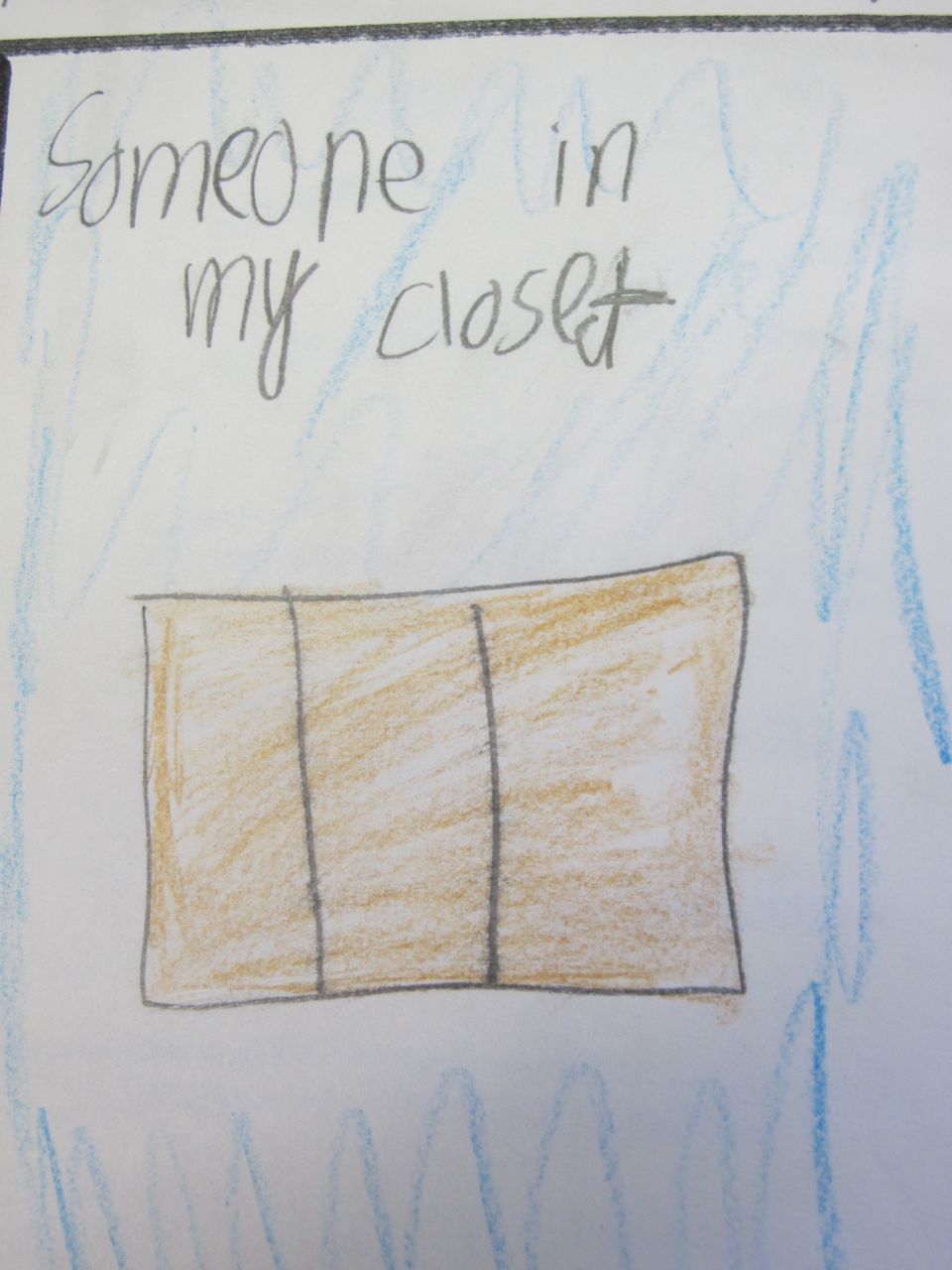
Who isn’t afraid of that closet lurking across the room?

IMG_1719

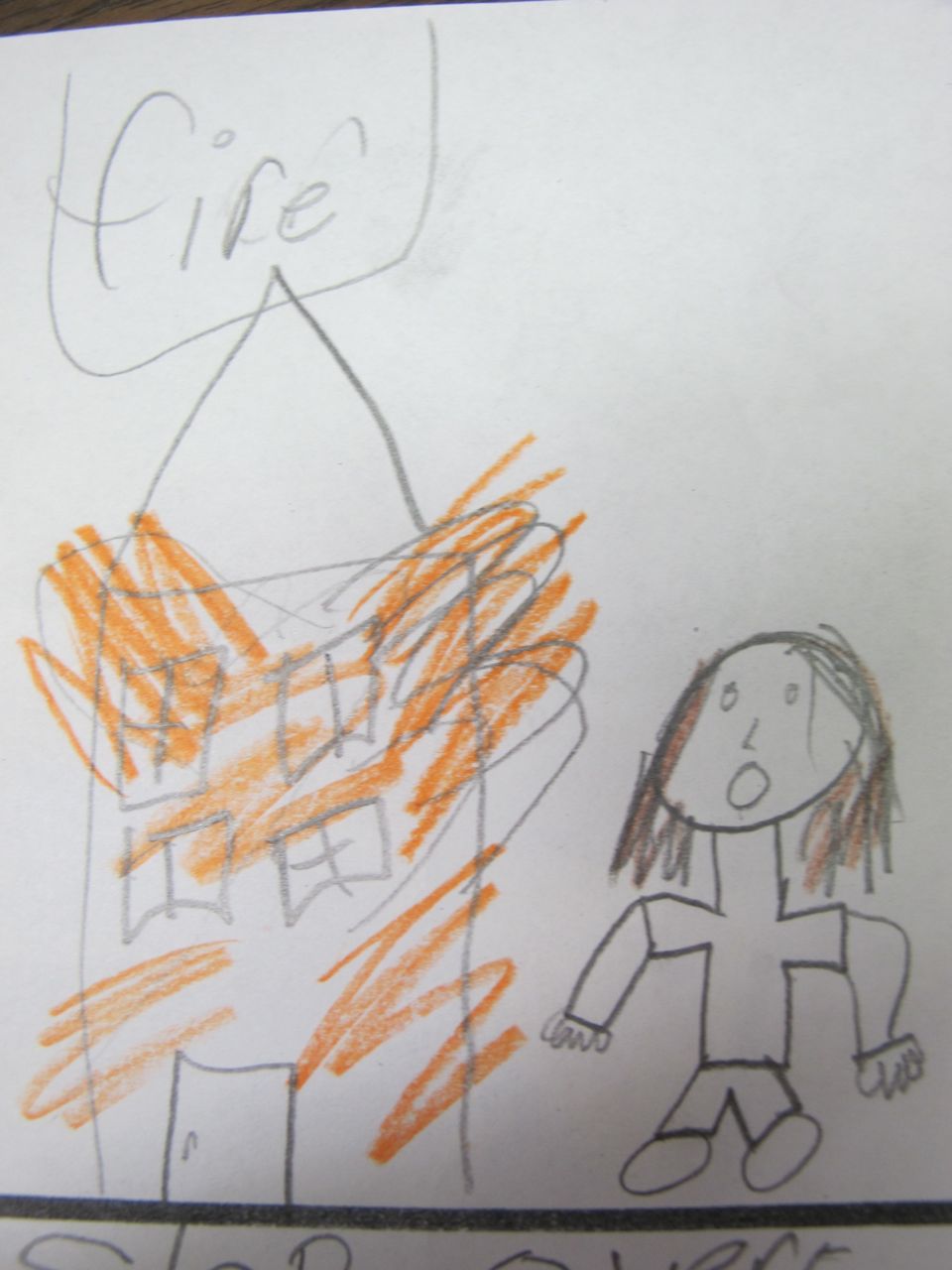
And how about fire? This made a lot of lists.

IMG_1725

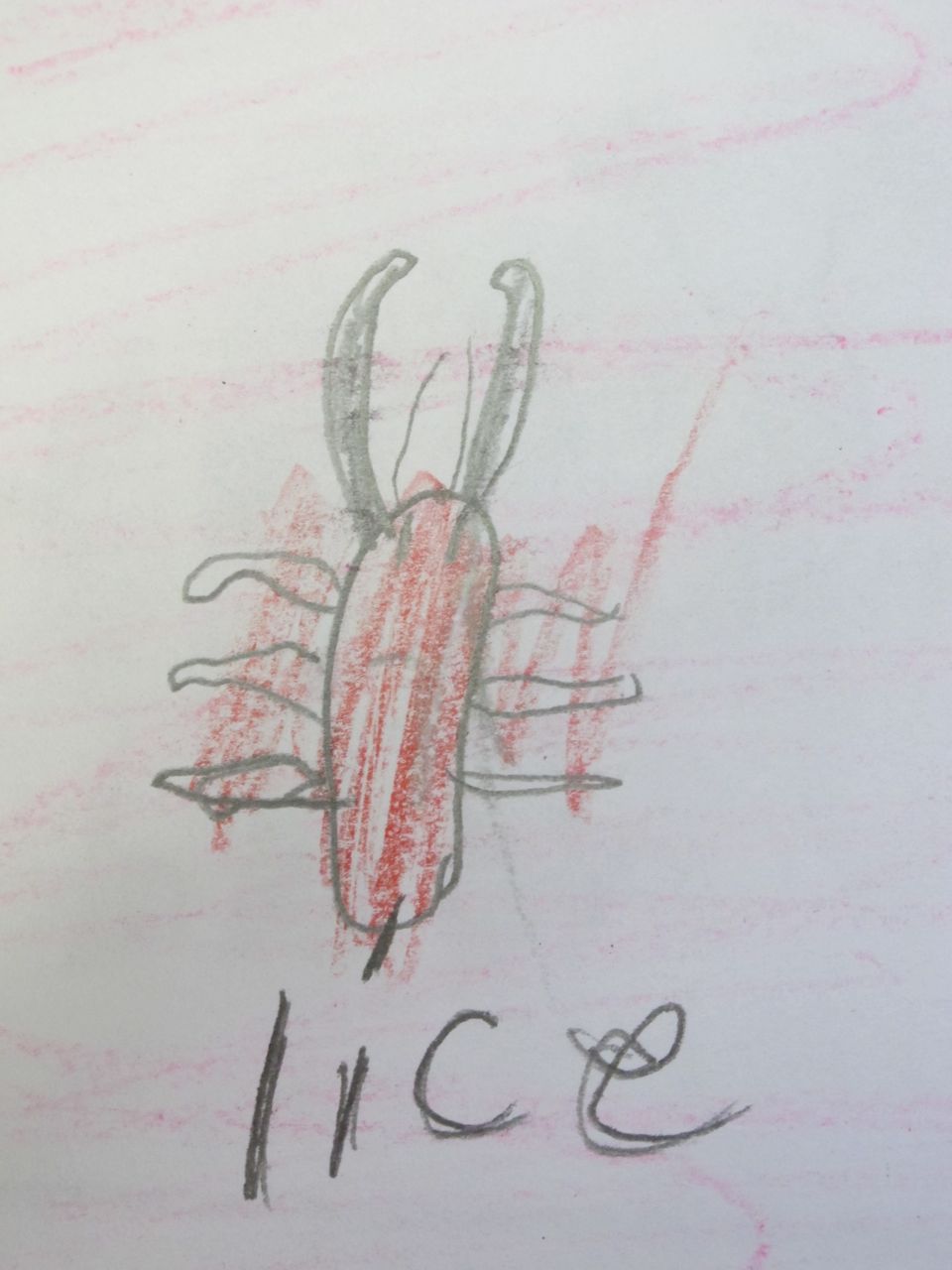
Big fear in our class? Lice! Even though we have quite a few of these critters making their way through our tresses! We fear they might not leave!

IMG_1718

Like Scaredy Squirrel though, we realize that a good sleep is a great cure for an overactive imagination! Feeds our energy and calms our fears. Everything looks better in the morning! Sometimes what we need to feel brave is new perspective.

Huge words, huge feelings

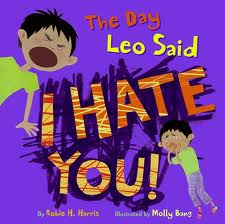
Last week I read The Day Leo Said I Hate you! written by Robie H. Harris and illustrated by Molly Bang (famous in my world for When Sophie gets Angry, Really, Really Angry.) We read it because some days there are lots of strong feelings and strong words flying around our classroom and so my belief is we need to embrace what’s going on and explore it.

This book lets us explore how we feel when we get mad. What do we do with those frustrated feelings? What happens when our feelings explode and we say something that is hurtful? Can you take back words once they are spoken? Where do you go from the terrible words to get back to the care and connection that a relationship is made out of?

Leo tells his Mom, “I hate you!” Then the two of them discuss how those words made them each feel.

Did my class react? Oh my yes! One student pointed out, “__________ shouted those words at you last week, Ms. Gelson!” Very true. Now we had another way to look at that situation since we had been able to explore it through a well told story. Those words have big power, but there is also power in calming down, reconnecting and moving on. Talking about it lets it all be normal.

One student burst into tears when our story ended. This story hit close to home and before she could continue with her day, she needed to write a letter to a family member to apologize for some strong words used that very morning. The book was a gift – it allowed her to give words to her sad feelings and move on with her day.

I believe strongly in the healing power of books. When we talk about the stories, connect to the strong feelings, we learn about ourselves and our place in our world. Using powerful literature allows us to reach in and grab a hold of hidden feelings and shake them up. Doing that in a caring, calm classroom builds community along with strong emotional learners. Books have the ability to connect us through stories and our conversations allow us to strengthen those connections even further.

Louder, Lili

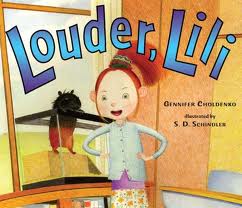
We have continued to read books that help us explore what it is to be brave. Louder,  Lili written by Gennifer Choldenko and illustrated by S. D. Schindler was the perfect book to help us talk about what motivates us to stand up and be brave.

Lily has a voice that is so soft, it just doesn’t ask to be heard. Lili often gets missed and often feels alone. Some students connected to her immediately. Shae-Lynn commented, “I used to be like Lily in my old school. It’s a scary feeling. I learned now that I don’t have to be shy.”

In the story, Cassidy begins selecting Lili to be her partner for everything but Cassidy’s version of sharing doesn’t seem very fair. She has Lili do the work and she takes the credit. When they share, Cassidy takes the cake and gives Lili all the carrots. My students were on to Cassidy pretty quickly!

Purity commented, “I think Cassidy is using Lili. She takes stuff and gives nothing back.”

Catriona pointed out, “Lili doesn’t say no to her.”

Shae-Lynn had a prediction. “Maybe, Cassidy might make Lili so mad that she might yell so she will realize that she can be loud.”

Jacky wondered, “Maybe Cassidy will use her and blame her.”

When Cassidy took Lois the guinea pig out of her cage and gave her a hair cut, everyone was very upset.

This story really had Shae-Lynn thinking. “I don’t think Cassidy has respect for anyone which means she doesn’t have respect for herself.”

When Cassidy suggested putting glue in Lois’ water bottle, Lili yelled. So loud that everyone stopped. In the classroom, all of us also quieted too and just let the moment of Lili’s outrage resonate.

Then all hands were up wanting to share how Lili had been courageous.

“She was courageous to take care of the guinea pig.”

“Courageous to talk so loudly finally!”

“Lily learned that she could be loud when she wanted to be.”

“Sometimes it takes love to make you courageous.”

And after that, what else needed to be said?

Little buddies and big smiles

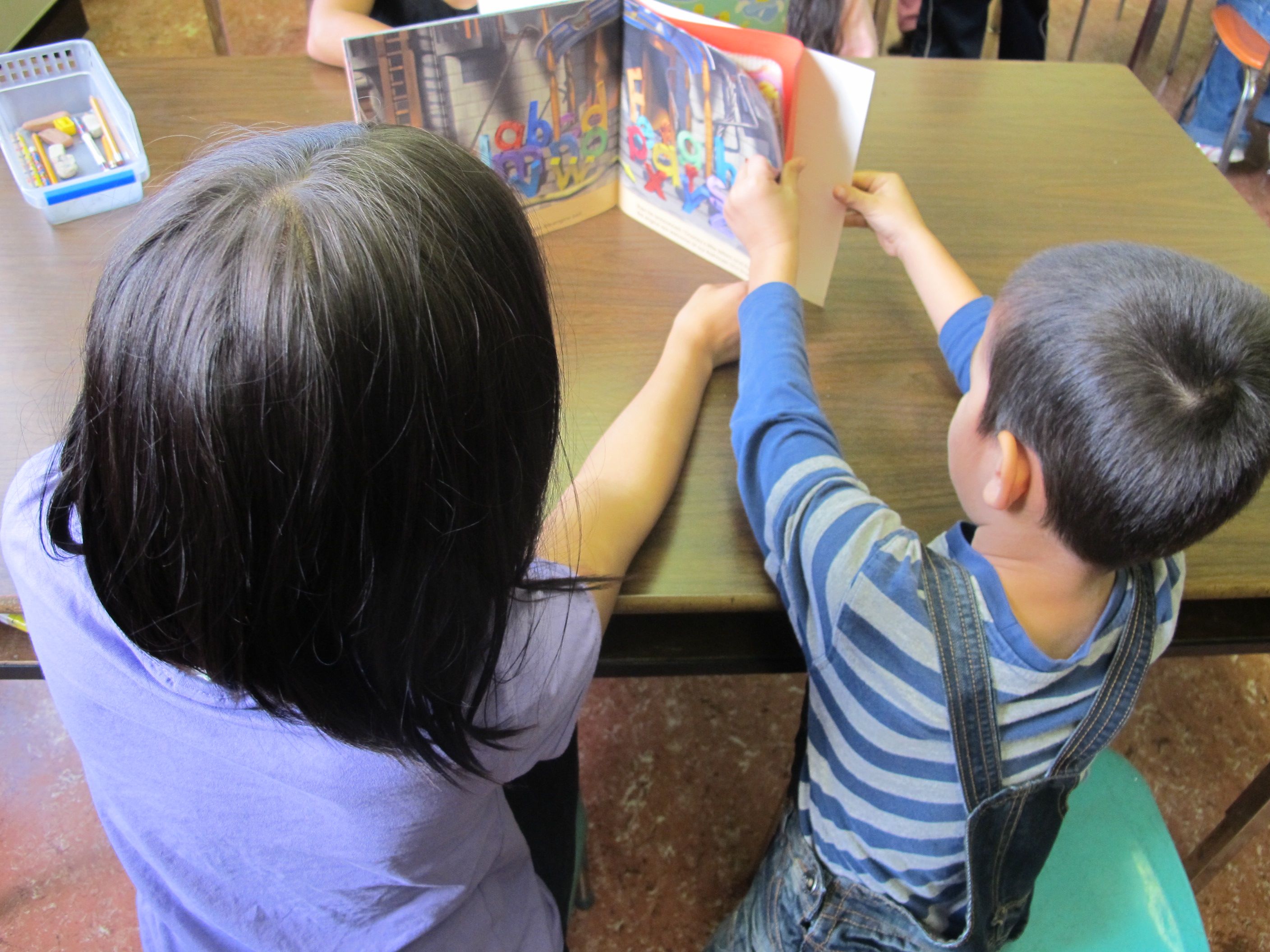
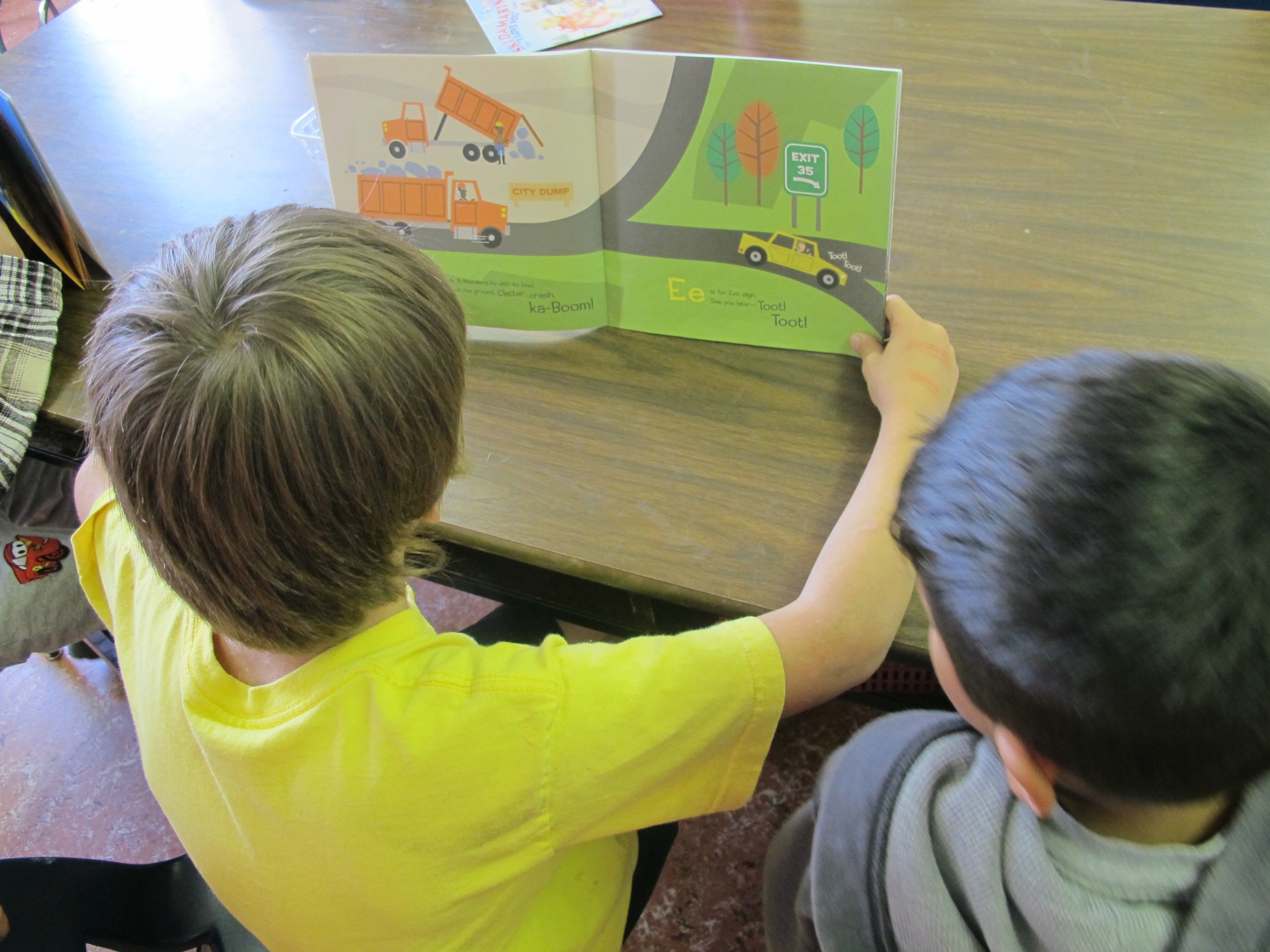
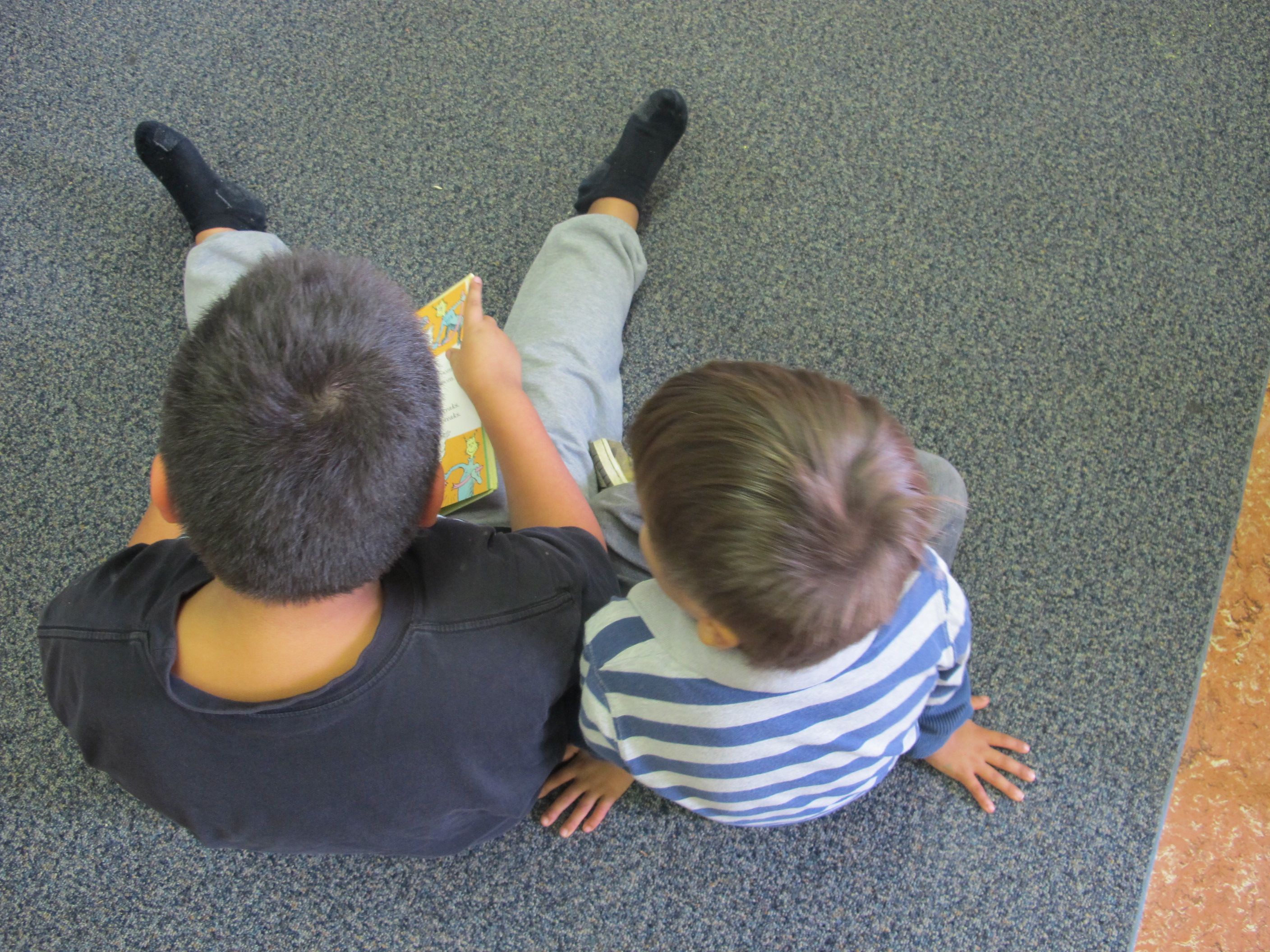
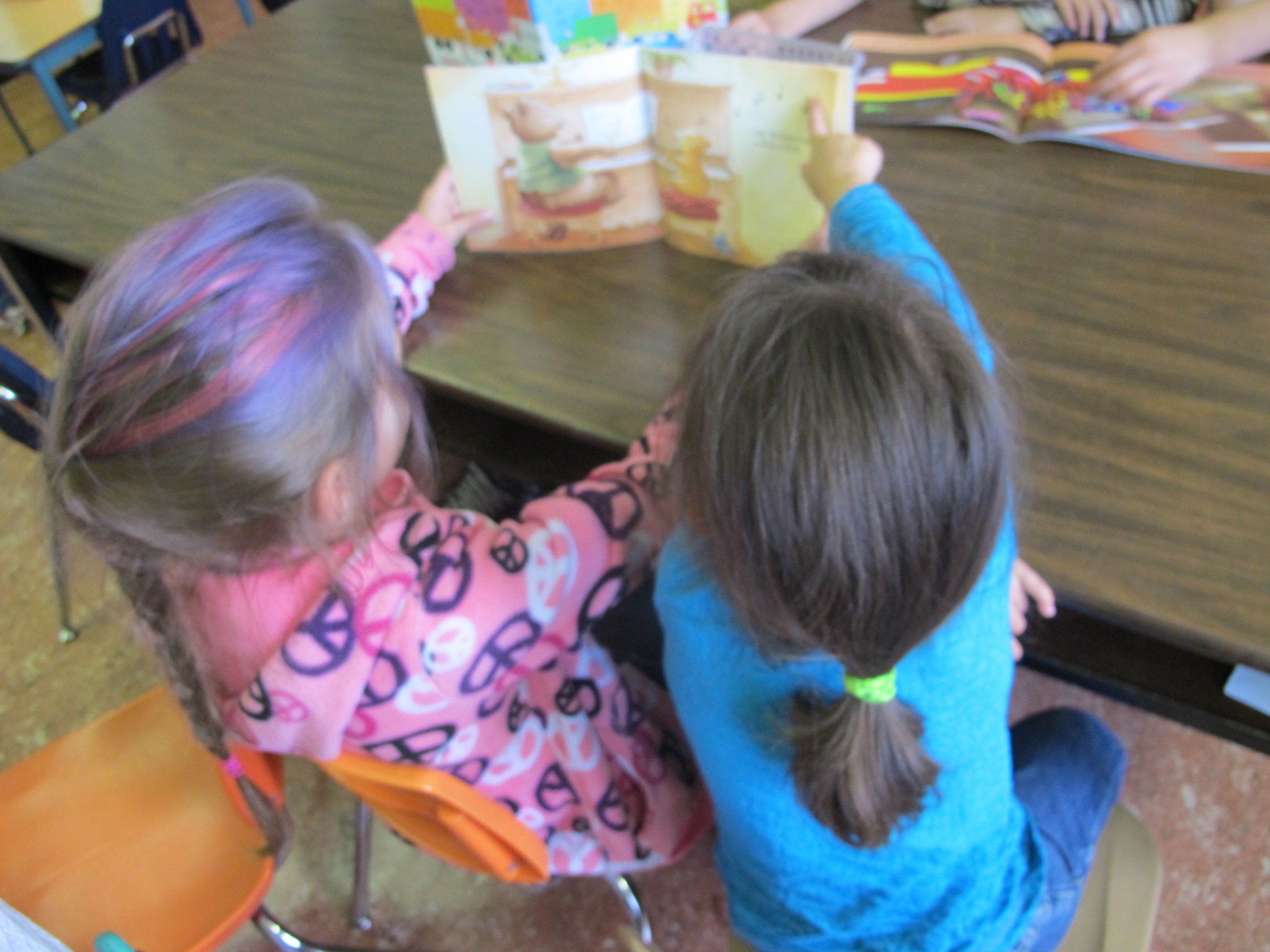
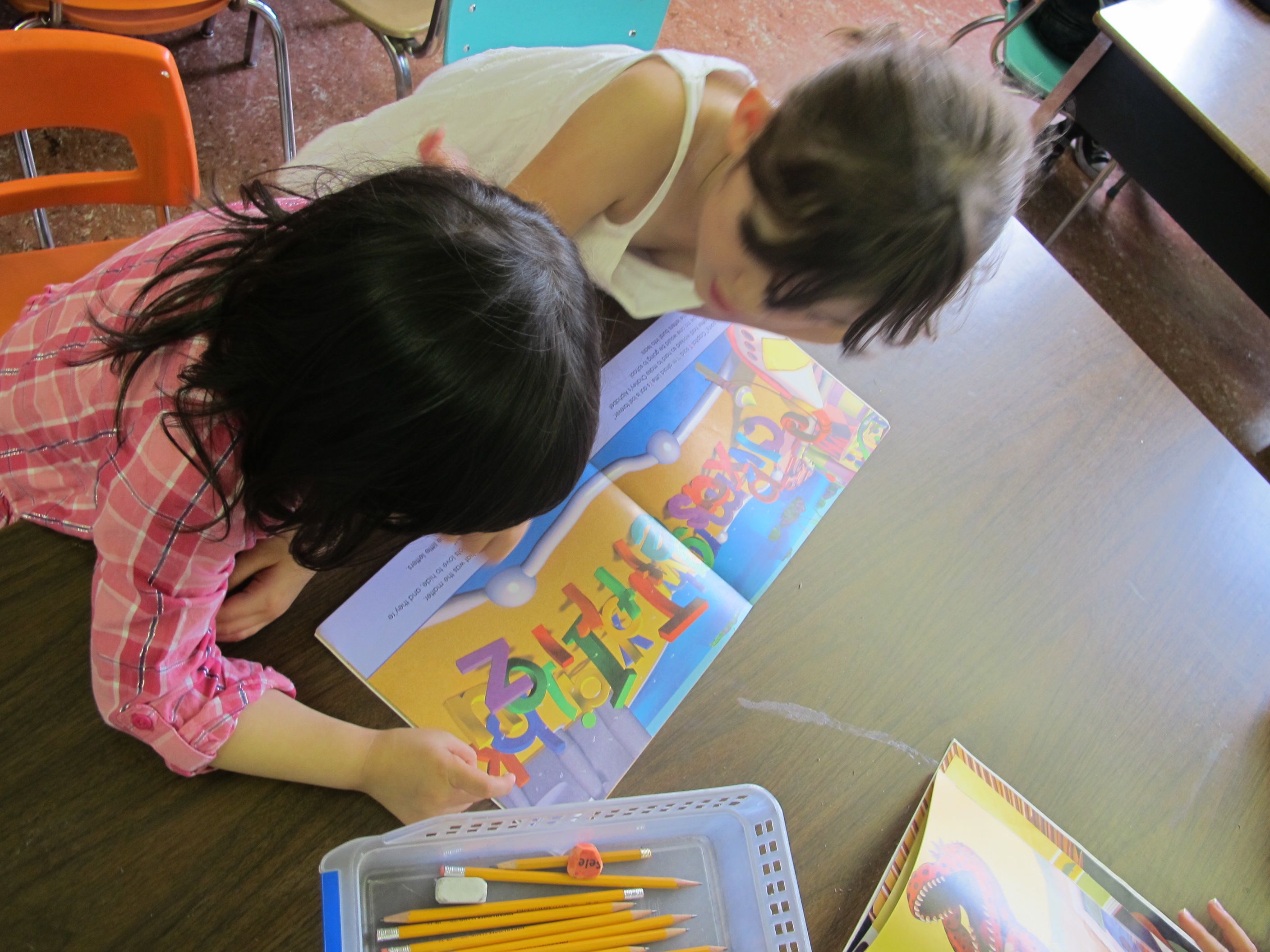
Today we invited our little buddies in K/1 up for some actual book sharing! We read favourites like:

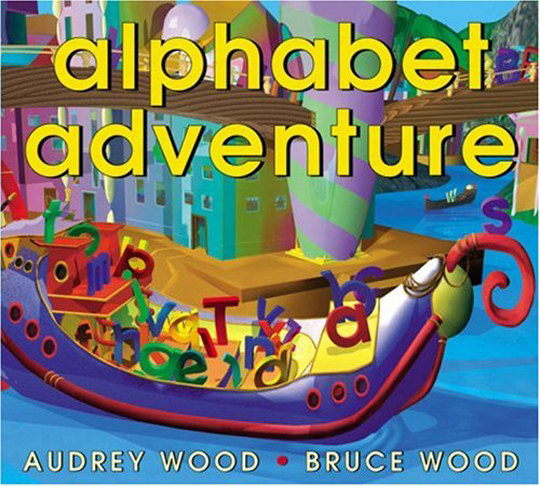
Alphabet Adventure by Audrey and Bruce Wood

alphabet-adventure-image


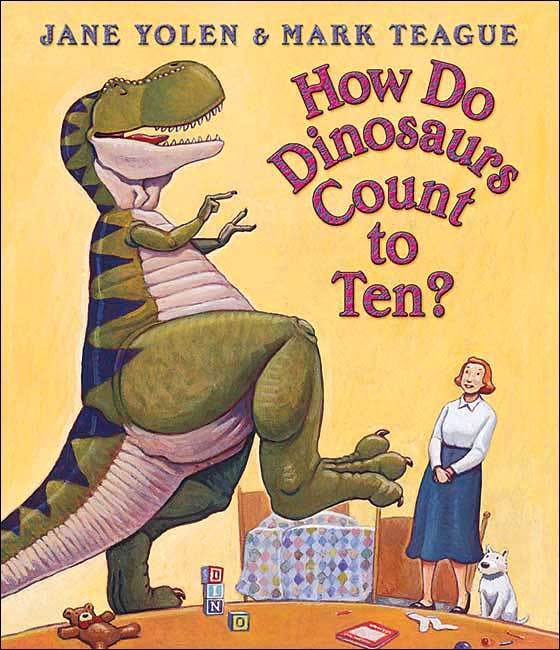
How do Dinosaurs Count to Ten by Jane Yolen and Mark Teague

how-do-dinosaurs-count-to-tenjpg-e03137f9d5e4bf21

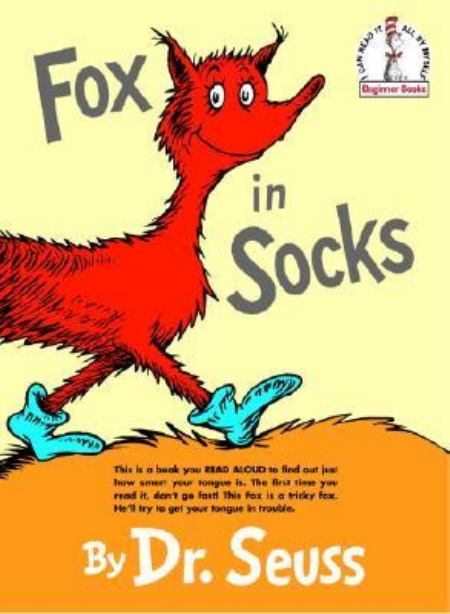
Fox in Socks by Dr. Seuss

fox2

The engagement, the smiles and the chattering said it all! What a fun experience! We can’t wait until next week 🙂

Reading an alphabet adventure story.

IMG_1204

Reading about dump trucks and zooming cars.

IMG_1208

A quiet few minutes on the carpet

IMG_1220

Time to stop and discuss what is happening.

IMG_1218

Searching for letters!

IMG_1221

The Deep

Many of us have fears about swimming. The deep end can be a scary place until it isn’t anymore. What if you lived by the sea and your whole family swam daily in the deep water? What if you were the youngest and even though not much scared you (not the classics like snakes, spiders or the dark), you were afraid to swim in that beautiful greeny-blue water? Even though you longed to? This is what Alice deals with in Tim Winton‘s The Deep (illustrated by Karen Louise).

Many students connected – some of us quietly admitting that the deep water was kind of scary – even when we had previously claimed nothing frightened us. In Alice, we witnessed how our fears can hold us hostage and make us miserable. There is a scene in the story where Alice tries to conquer her fears and swim in the deep and yet, she quickly turns back ending up on the shore, curled up and crying. Heartbreaking

She hated being small. Being stuck in the shallows. She could swim, couldn’t she? So why couldn’t she swim in the deep?

It is so challenging to be courageous when our fear seems to paralyze us. This story really helped us explore this. Some important thoughts from students:

  • If we don’t notice we’re doing something we’re afraid of, it can be fun
  • It’s still just water. Even if it is deeper. If you can swim, you can swim anywhere (Here is the logic our fear defies)
  • It seems like the fear is just in our heads (Something we need to explore further)
  • If anyone else can face their fears, then we all can. (Let’s hope we can recall the images and feelings from this story when we face our next big fear)

This book would be particularly helpful for children dealing with their fear of learning to swim.