Books by Peter Brown

On my last visit to the library I picked up two new titles by Peter Brown. His books have big time kid appeal and I must admit, reading them out loud is pretty delightful.

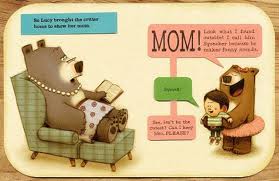
Children Make Terrible Pets is a lovely twist on the “Look what I found Mom and can I keep it?” story. In this story the “it” is a boy who Lucy the Bear names Squeaker because of the strange sounds he utters. Those children quick to infer realized that probably the boy was actually speaking but Lucy couldn’t understand his human language. Squeaker is lovely to play with, eat with and nap with but “potty training” him doesn’t go so well. When Squeaker goes missing, Lucy follows his scent and discovers that he has his own family and his own home. This leads her to do a lot of thinking and to finally conclude that yes, children DO make terrible pets!

Can I keep him PLEASE?

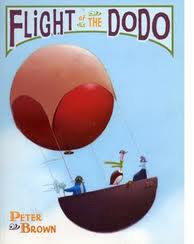
Brown’s Flight of the DoDo is an extremely amusing tale about a group of flightless birds (The Waddlers) who dream of being Flappers (birds that can fly). Why is it so delightful? Well, watching a penguin, an ostrich, a cassowary and a kiwi bird try to invent a flying machine is quite funny. Cassowary attempting to eat the fluffy white clouds brings a lot of smiles. But it is penguin’s determined (and then necessary) target pooping that steals the show. The DoDo is certainly one amazing flying machine. But it is really fantastic with a bunch of birds poised on its edge with bottoms aiming carefully at the ground below!

The Ice Bear

This past week, Bill read us The Ice Bear by Jackie Morris. The illustrations in this book beg to be looked at over and over. Absolutely gorgeous! When Bill showed the first picture there was a collective “Whoa!’ and Hajhare exclaimed, “Now that’s what you call Art!”

This book begins with a mother polar bear and her two cubs. They snuggle close to keep out the icy cold. Then trickster raven steals one cub and leaves him in a bundle of white fur for a hunter to find. When the hunter unwraps the bundle, he and his wife discover a baby boy. They were a childless couple who had longed for a baby and they treasured this child, a gift found in the snow. Raven always kept a close watch from above. At the end of the boy’s seventh year, he was lured away from home by a trail of shining amber in the snow. He thought the amber pieces were fallen stars and followed them until he was lost and alone. He was discovered by a group of polar bears who carried him to the mother bear who had once lost a cub. This boy was her stolen son. The curious idea of the boy/bear appealed to the students and they were hard pressed to think of where this boy should truly belong. A loved little boy with his heart pulled in two directions. In the end, he makes a decision that seems exactly right. Jackie Morris pulled us into this magical Arctic world – what a beautiful journey.

Student reviewers report:

Annie: It was sad when the baby bear got caught by the raven.

Hajhare: I like this book because it is interesting. This book is great! I like it because it is one of those books that are fantasy. I like fantasy books because they always have beautiful pictures.

Josiah: I liked this book and it was kind of an Aboriginal story. It was cool how the polar bear turned to a boy.

Scott: I have a question. How did the bear turn to a human? This book is the best. I love the drawings.

More on Poop

Well, yes, it is true we are addicted to Poop (the book Poop of course!) Every page of this little book is full of fascinating facts on poop. We have been reading and learning in every spare minute and just have to share our new learning. (For Poop Part 1 read here) Nicola Davies and Neal Layton have created a book to keep you busy learning, reading and stopping to say “Really? Wow!” all on the topic of poop.

We learned that many predators use poop as clues to where to find their prey. So many animal parents get rid of their young’s poop to keep their babies safe and hidden. Jenny had a connection. “So it’s just like you can follow footprints, poop can be like a trail to lead them to the prey.”

We learned that golden moles in Africa stay underground all of the time to avoid being eaten. So they make one chamber in their large burrow just for pooping in. This prompted much discussion.

Ricky wondered, “But if that chamber gets full . . . do they just make a new one?”  Jena suggested that the moles could fill that chamber, close it off and then dig a new one. Kevin pointed out “This is just like we make a bathroom place in our houses.” (Unfortunately moles don’t have that flush feature that is so handy for us!) Miami asked, “Do they eat their poop to get rid of it?” This is not a farfetched questions as we had just read about rabbits eating their feces to get more nutrients out of it.

We then read about latrines (animal toilets) of the giant otters in South America. They use their latrines as more than just a toilet. They make a large flat area on the riverbank and poop all over it. This big smelly area is like a sign that says stay away: we made all of this poop, it is our area! The students found this quite amusing. “Like a big sign to say stay away!” “It’s a poop shield. You can’t get to us!”

We continued to read more intersting poop facts and Ricky piped up. “Scientists want to know things and they learn a lot of them from poop. They even studied dinosaur poop – prehistoric poop!” “I want to be a poop scientist,” said Eddy. “A poopologist,” suggested Josiah.

We then read about sloths and how they climb down their tree and poop every four days. Jenny wondered if they poop really slowly too. Good question!

At the end of our reading I asked students to share their new learning. Here is some of what they said.

Miami “Sloths eat lots and lots of leaves.”

Lisa “If sloths poo, they go down the tree to do it in a big pile and then back up every 4 days.”

Kevin “Sloths sniff other sloths poo to see what’s happening.”

Edwin “It’s weird that sloths have poo piles near each other. If they made them together, it would be huge.”

Jena “Some animals sniff other animals poo to know what is going on like who is pregnant.”

Ricky “Male hippos wiggle their tail when they poo to tell other hippos they are fierce and strong. The poo sprays everywhere.”

Have we tempted you yet to go and read this book?

So Many Days

Sometimes I read a book and I don’t know what to do. Sigh and savour? Read it again instantly? Pack it into my school bag to share? Just stop and think . . .?

So Many Days by Alison McGhee and illustrated by Taeeun Yoo is exactly that book.

I want to read it again. But I might cry. Or maybe not. Maybe I will just smile. This book is all about potential. Possibilities. Choosing a path and following it. Being loved. Succeeding. Falling flat. Who will you be and where will you go?

I found this book at the library. But I think I need to own it. A book to give as a gift. To someone graduating from something. Someone on the eve of parenthood. Someone who needs to be reminded: You are loved more than you know.

Lovely.

Argus

Maria, our BLG reader this week, brought in Argus written by Michelle Knudsen and illustrated by Andrea Wesson. When Maria sat down, holding the book to her, students spied the back cover and started oooing and oh, oh, oh – ing! They had spotted a picture of 3 little chicks crawling around a classroom floor. “Maria we have chicks! 3 of them! Just like the picture!”

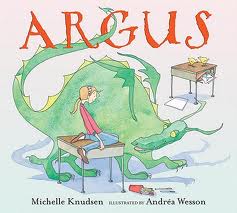
This is a story about Sally and her charge, a “little” egg that was supposed to be a fluffy little chick but turns out to be a green scaly dragon. Right from the beginning when Mrs. Henshaw hands out eggs to all of the children to begin their science projects, Sally’s egg looks different. The children kept the eggs in their desk top incubators. Little beaks begin to poke through the cracked shells. But Sally’s egg splits open to reveal a scaly green back. Mrs. Henshaw keeps assuring Sally that some chicks look a little different but Sally wasn’t so sure. She tries to go along with it, names her “chick” Argus and begins to document his growth and development in graphs and pictures just like all of the other children. Our students kept grinning big knowing smiles – they had also weighed and measured and charted our little chickens and their growth. So much connecting!

Sally needs to be an active guardian of Argus. The other chicks peck for seeds or beetles and Argus tries to eat the other chicks! This behaviour ended when he grew bigger and attempted to eat the children instead! Sally worries that her “chick” is not working out. She is envious of the others who can pet the heads of their little chicks. She can’t even reach Argus’ head unless he is lying down. Then Argus goes missing. Sally panicked and then stopped herself. Wasn’t this a good thing maybe? Now she could share another chick and stop being so different. She should be happy, she thought. But happiness never reahed her. Sadness did. And worry. And anxiety. Where could Argus be? Ricky suggested he might have gone to a meat store! Soon Sally could contain her emotions no longer and her classmates help her search for Argus.

This story has a very lovely ending and the students were glued to the final few pages. Then somebody looked over at our little chicks who were snuggled together in their brooder, asleep. “It’s a bedtime story for the chicks!”

A wonderful story about accepting diversity and celebrating friendship even with things big and green.

Our student reviewers report:

Scott: I have a connection when we have three chicks just like the book. I like this book because I really like the dragon.

Jena: I like this book because Sally lost Argus which is a dragon. But everybody else had chickens. When Argus is gone, Sally thinks she will share a chicken. But really she misses Argus.

Alyson: I like this book because it was funny and sad. It was the best book ever!

Hajhare: I like this book. It connects to this book called Clifford where a girl loses her huge dog and her friends help her find it. I like this book because it’s about chicks and we have chicks!

Eddy: Why did the teacher think Argus the dragon was a chick?

Josiah: I like BLG. No!! I LOVE them. I liked Argus and I felt sad for him because he didn’t fit in with the chicks. How can he eat a whole block of grass?

Poop. Everything you ever wanted to know. And then some

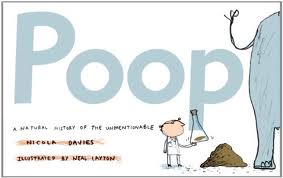
Our current read aloud is a non-fiction title. On a kind of gross but okay, let’s admit it, kind of a lot of fun to talk about topic: Poop – A Natural History of the Unmentionable written by Nicola Davies and illustrated by Neal Layton.

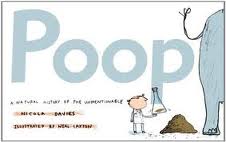
How can you not love this book? The cover shows a huge elephant behind with a pile of dung and a little scientist carefully examining the specimen. Open up the cover and notice that it is all brown and smeary coloured. “Eww! Is that real poo on there?” someone asked. (No, it’s artistic suggestion 🙂 )And then on the first page you get to learn that feces is the proper name of poop and that if we were speaking scientifically, we would know that all animals defecate (meaning to poo). So it seems that reading this book will make us into scientific experts on poop. Excellent!

Today we decided to use Adrienne Gear‘s Questions and Inferences sheet from Nonfiction Reading Power to record some of our questions and what we were inferring as we listened to the text.

The level of engagement was pretty high. Poop is an interesting topic! Near the end of the lesson, Jena commented, “Who knew poo could be so interesting?” Indeed.

We practiced asking some questions/inferring together when we looked at the first few pages titled – A Tour of Poop

We noticed that tapir poop seemed to have hair in it. Nobody knew what a tapir was so it seemed to be the perfect question to do some inferring.

Question:  Why does some poop have hair in it?

Our inferences:

Jenny: It must mean they are predators. The hair is from their prey.

Eddy: Maybe they have furry bums. When the poo comes out, it gets covered in their own fur.

Miami: I’m thinking that – perhaps, they licked their babies’ fur to clean them and stuff. So that’s how hair got into the poop.

Manny: Maybe it’s not hair. Maybe it is grass and they eat grass. Maybe it just looks like poop. If it is hair, why doesn’t the stomach acid eat the hair?

As we read on, we found out that meat eating animals (carnivores) have poop that contains hair, fur, feathers and bones. But I love all of the thinking we were doing to come up with different possibilities!

Most conversation and discussion was related to the text but as I read and we shared our thinking some students just couldn’t help sharing. A few hilarious statements I overheard: “I feel better when I poop.” “Do you think everyone pees a bit when they poop?” “Do you think we would explode if we never pooped?” “My Dad got diarrhea when he ate spicy pork.” Poop is a great topic of conversation! Maybe not to use at your next dinner party but when hanging out with primary students, it rates pretty high!

During our sharing someone asked this question: “Why do we fart?”

Kevin happily shared his thinking. “Maybe when your body has no more poop in it, there are still poo smells that need to get out so you need to fart.”

This was a very popular suggestion. One student responded. “Oh! Oh! Kevin may I write that down on my sheet?” “Yeah me too,” someone else said. We love to share our thinking! 🙂

Some other questions/inferences from our sheets:

Hajhare: Does poo have food in it? I think it does because the food all combines together to make it brown.

Edwin: Why is animal poo smaller? Maybe the animals don’t have big tummies like people.

Kevin: What happens if you poop a lot? I think you live longer.

The students can’t wait to learn more about poop! Stay tuned!


The Raft

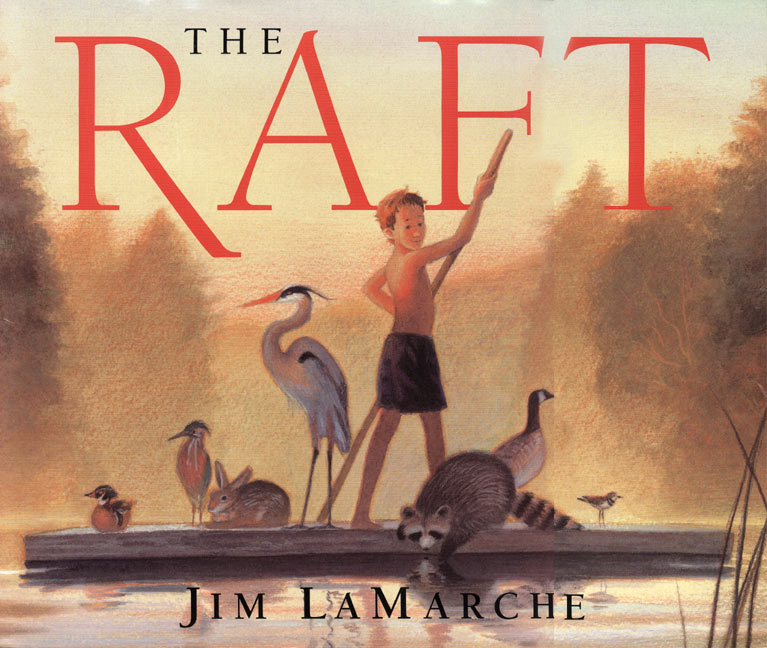
This week we read The Raft by Jim LaMarche and practiced asking deep thinking questions vs. quick questions (inspired by Adrienne Gear‘s Reading Power). We know that a quick question is quick to ask and usually we find the answer in the text. With deep thinking questions, we are often inspired to ask new questions and our thinking goes on long after we have closed the book.

the raft

The Raft tells the story of Nicky who has come to spend the summer with his grandmother. He isn’t very eager to do this (bemoaning being away from television and any kids all summer) but it doesn’t take long before Nicky finds himself fascinated by his summer locale. A raft covered in leaves and branches floats up and bumps against the dock Nicky is fishing on. It is covered in drawings of animals and it completely captures Nicky’s imagination. Where did it come from? Who painted the animals? What does it mean? Soon he and his grandmother are spending lazy days poling down the river. An array of animals keep Nicky company – foxes following him along the shore, birds hitching a ride, a great blue heron snacking on crayfish. Nicky often takes the raft out alone and sketches all of the animals he sees. Somehow the raft seems to draw the creatures to him.

The students noticed the changes in Nicky.

Miami: “He’s been transformed. He was so grumpy when he came to his Grandma’s and now he’s not.”

Hajhare: “I think he was set up. Do you know what I mean Ms. Gelson? His Dad tricked him into liking his summer. His Dad knew he was going to like it all along.”

Finally,  Nicky adds his own animal to the raft for a very special reason. Students were lulled by the beauty and magic of this book and eagerly wrote down questions as I read.

I then gave the students a task: Choose 2-5 of your deep thinking questions and list them in your notebook. Choose one and try to answer it (You will need to infer)

Kevin put his hand up. “But I can’t just put 5. Each question leads to another question so I’ll need to write 10. I “inferenced” as I thought them so I included them when I did my writing.” (Yippee! Learning!)

Some samples of student thinking.

Jena: Are all of the drawings adventures of how people saved animals? Maybe yes and the raft was made and passed on from generation to generation.

Lisa: One of my questions before was that are the animals from the raft going to come alive. Maybe if Nicky visualizes, they will come alive to him.

Ricky: Who drew all of these animals on the raft? Why is Nicky’s Grandma called a river rat? Did she also save an animal on the river? Maybe a rat? Is Grandma part of nature?

At the end of the book, Scott sat back and said, “That book was awesome.” When I asked him why, Eddy piped up. “It’s really making me think thinking stuff.”

I think this should be our new measure of success when we judge a reading experience – did we think thinking stuff? Does book really inspire our thinking voice? The Raft did and then some. It left us talking with each other, following a question into an inference and going back into the story to try and find clues, having “but what if. . . ” discussions all around the room. A wonderful book.

Those Darn Squirrels and the Cat Next Door

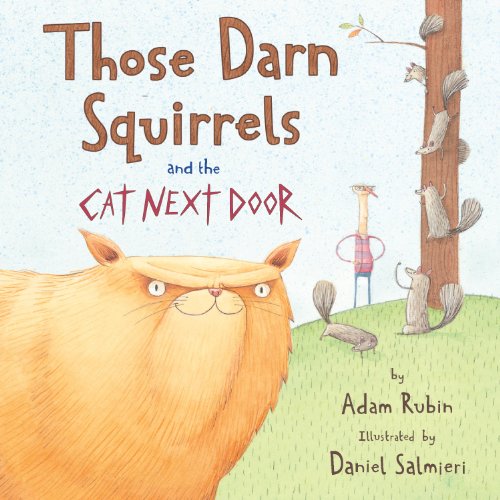
Bill, our BLG reader this week, brought in a very amusing book – Those Darn Squirrels and the Cat Next Door. This book is written by Adam Rubin and illustrated by Daniel Salmieri who collaborated on an earlier title Those Darn Squirrels.

cat


This book starts out with Old Man Fookwire, a grumpy bird enthusiast who is sitting in his living room waiting for winter to pass so he can get out into his garden and paint the beautiful birds that visit his yard. He is harassed by a group of pesky, but extremely clever squirrels who sneak into his house, eat his food and generally annoy him. When a new neighbour moves in next door (Little Old Lady Hu) with her cat Muffins, it seems that things may change in the neighbourhood. Squirrels may be champions of the forest but perhaps in Muffins, they have met their match.

My confession? I’m rooting for the cat! Is that terrible? I was silently cheering when the squirrels got ambushed. I was more than amused when Muffins gave them wedgies (you need the illustration to understand the wrapped around and twisted tails) But, I have good reason. My backyard is inhabitated by a bunch of squirrels – they chase away birds, fight in my flowers and try heroic gymnastics to leap onto the bird-feeders and eat my expensive seed. I don’t like these squirrels.  At all.  So basically I don’t like squirrels in general. In this book, I was really hoping that Muffins would show them who was boss. But let’s just say that the squirrel brain power was more of a factor in this story than I had hoped it to be . . .

Adam Rubin tells a very funny tale (check out his interesting blog Tickling the Brain) and the illustrations by Salmieri are hilarious. Old Man Fookwire’s nose, a soggy Muffins the cat, squirrels with wedgies . . . Daniel Salmieri engages his viewers with clever details. The perfect book to read when you need to laugh a few times over.

Our student reviewers report:

Hajhare: I liked this book because it reminds me of Chester the Cat. This cat in this book is really funny!

**Hajhare is referring to Melanie Watt’s fictitious feline.

Alyson: I like the part when the cat got karma and H2O spilled on him.

Ricky: This was a very funny book. It made me laugh out loud in myself. Bill what made you read this book? I really liked it.

Kevin: There was karma in that book that Bill read because the cat always scared the squirrels away. One day they decided to make a plan to get rid of the cat. They used yarn and tied it on to the birds. They used really cold water and put it in a bucket and put it on three branches and tied it onto the bucket. The next day the cat came to the birds and scared them. The cold water spilled on the cat and the cat turned wet, soggy, skinny, scared and mad. The cat went home and never came back. I liked that book!

Sunday Musings

Sunday afternoons, for teachers, are often a bit of a place of limbo. It is still the weekend and there is time for relaxation and family but a little place in the back of our brains starts asking “What about Monday morning. . . ?” For me, part of the Sunday routine is often filling up my school bag with recent treasures from the library that I am excited to share with my students. Often there are more books than my schedule will allow but it is always a priority to find a place for books.

Why?

I believe that the two most powerful things I can do in my classroom each day are reading aloud to my students and providing time for them to read independently. Nothing else exposes them to new vocabulary, new ideas or new perspectives as quickly, as easily and as powerfully as a book. Reading aloud to a class pulls all of us into a magical place, an intimate learning community where words and visual images help us make meaning of our world. We discover something new. We think differently about something. We question ideas. We find support for a perspective. We are changed, often dramatically, by a few pages. Our interactions with these books shape us, constantly. How lovely that I can have this experience be part of my life daily just by reading to children?

Sometimes, it is hard to remember that not everyone shares this philosophy. In educational climates that measure student learning in test scores vs. engagement, reading aloud has no place in the everyday of classroom life. I came across this article on read aloud champion, Jim Trelease’s site. Seems impossible to imagine! More fuel to support the argument that an educational system characterized by high stake’s testing has no place in B.C.’s schools.
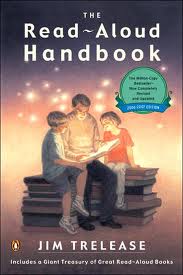
Read Aloud Handbook

My copy of The Read Aloud Handbook, discovered in a used book store is probably the book, of all the books I own, that I have read and reread most often. I quote sections of it to anyone sitting near me. I shake my head as study after study and story after story is described that makes the book’s main point again and again:

Reading aloud to a child is the single most important factor in raising a reader.

And it doesn’t stop when they can read by themselves!

Why doesn’t everyone know this!??

An ode to books, to libraries, to reading. A must read for every parent and every teacher. Jim Trelease‘s website contains a lot of interesting information. But owning his book for constant reference is a must.

But back to Sunday. And my pile of books. Because it is always all about the books . . .

Books that might make their way to school with me this week:
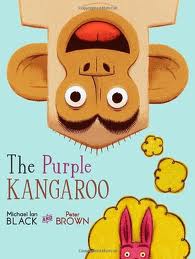
The Purple Kangaroo is written by Michael Ian Black and illustrated by Peter Brown. This book is narrated by a clever monkey that asserts he can read minds – your mind, dear reader, in fact. And he is pretty sure that you are thinking about a purple kangaroo. If you weren’t thinking about a purple kangaroo, you certainly will be by the time this book is finished. One that blows rainbow bubble gum out of his nose. A delightful journey with a book that you can’t help but interact with.

I imagine some very noisy listening to this story. Possibly some shouting! A lot of giggles.
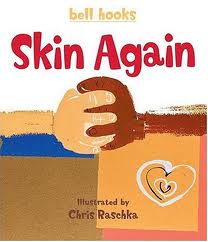
The first line of this book says so much: The skin I’m in is just a covering. It cannot tell my story.

But with this book, every line is a line to read, savour and repeat. How about this one:

Be with me inside the me of me, all made up of stories present, past, future . . .

Skin Again by Bell Hooks is brilliant. And Chris Raschka illustrates! Perfection.
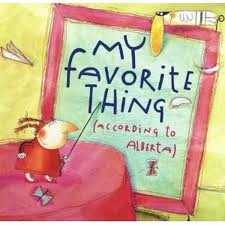
My Favourite Thing (According to Alberta) is written by Emily Jenkins and illustrated by AnnaLaura Cantone. This book is all about Alberta, a little girl of particular tastes. She has some very specific opinions. Her favourite ice-cream? Peppermint. Favourite vegetable? Potato chip. 🙂 And you must read to the end to find out exactly what her actual favourite thing is. This book goes on my must use as a springboard for writing list. I have big plans for this book.
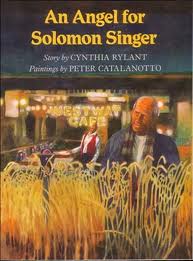
I picked this book off the library shelves because it is illustrated by one of my new very favourite illustrators Peter Catalanotto. He doesn’t illustrate books, he paints amazing scenes which accompany text. Then I saw that it was written by Cynthia Rylant. This book just had to be great. An Angel for Solomon Singer did not disappoint.

A book about dreams. About yearning. About finding comfort in a big bustling city. Finding happiness when things are not really the way they ought to be.

A small treasure to inspire big discussion.

So as I move from Sunday, into Monday I take the cozy comfort of reading and books with me and keep it all through the week. It’s all about the books . . .

If I could go to Kindergarten . . .

I love reading to the Ks at Seymour. I get to do it at least a few times a month at our primary Social Responsibility Gatherings. The Ks sit right up in front, eyes wide, serious expressions, taking it all in. They listen intently, little hands raise in the air to tell me connections and ideas. Then when they leave, they wave, they smile, they whisper, “I’ll miss you.” One of my favourite things to do is to read to the Kindergarten class.

So I got to thinking what if I could go to Kindergarten everyday? And read? What would I read?  During my last few visits to the public library I found some wonderful possibilities.

Saber-toothed tigers. Wooly mammoths. Sleepy dinosaurs. A little boy exploring the world around him. Boy by James Mayhew explores a little guy’s yearning for independence while at the same time honouring his deep connections to home (and the happy snuggles from Mom and Dad). Where in the world do we find warmth? In the security and love from our own family.

A beautifully illustrated story inspired by the author’s love of his own son.

Marie-Louise Fitzpatrick wrote There – as a series of questions. A story about growing up and celebrating the journey as much as the destination. When will I get there? How will I know? And will I know everything, There? The little girl then wonders Can I change my mind and go Elsewhere instead? She then decides that she will go There tomorrow – after she does all the things she needs to do.

A book that begs to be explored with children. Winner of the Bistro Awards in 2010.

I think this book by Mara Bergman and illustrated by Cassia Thomas Lively Elizabeth is especially appropriate for kindergarten. Life when you come to school is all of a sudden a lot about lining up. Going here, going there, hands to yourself, “shh!” Several times a day. What happens when you have a little extra energy and it kinda spills over into a push? Well in a kindergarten line, it is full on domino effect! Bergman does a lovely job of playing out the whole scenario – from upset to apology and then forgiveness and moving on (and quickly – after all, little ones have the important business of play to get back to)! Cassia Thomas’ illustrations are absolutely delightful! A book, I predict, that will get many “Read it again!” requests.

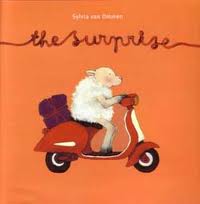
Okay who doesn’t love surprises? And guessing what will happen next? Little ones do especially. What a treasure is The Surprise by Sylvia van Ommen! Wordless so there is a lot of space for interactions. Predictions. Inferring. Questions.  Sheep zips here and there on her moped on a mission. She dyes her wool, when it seems long enough, a brilliant red. Then she brings it to poodle who spins it into yarn. She then knits something special and wraps it up and delivers it to . . .  Well, not going to spoil the surprise here but how fun would this be to do with a class of Ks?

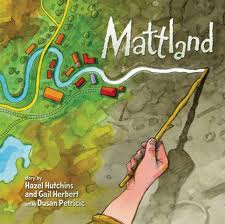
Mattland coauthored by Hazel Hutchins and Gail Herbert and illustrated by Dusan Petricic is a wonderful book to explore with children stressed by moving. The scary sadness of someplace new followed by the gentle, spontaneous introduction of new playmates and new activities. But this book is also ideal to celebrate imaginative, outdoor play. Building a place – roads, rivers, houses, prickly trees and getting some quiet help from someone with their own treasure trove of discoveries – a flattened penny, some popsicle sticks, four pine cones . . . To be fair, you can only read this book with intended outside play planned next. Lots of it. And it should probably involve some mud!

Now I just need a plan to sneak in and share some of these with the Ks!