So Many Days

Sometimes I read a book and I don’t know what to do. Sigh and savour? Read it again instantly? Pack it into my school bag to share? Just stop and think . . .?

So Many Days by Alison McGhee and illustrated by Taeeun Yoo is exactly that book.

I want to read it again. But I might cry. Or maybe not. Maybe I will just smile. This book is all about potential. Possibilities. Choosing a path and following it. Being loved. Succeeding. Falling flat. Who will you be and where will you go?

I found this book at the library. But I think I need to own it. A book to give as a gift. To someone graduating from something. Someone on the eve of parenthood. Someone who needs to be reminded: You are loved more than you know.

Lovely.

Sophie Simon Solves Them All

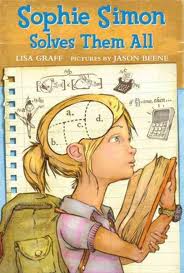
Ms. Gelson is currently reading Sophie Simon Solves Them All, a novel by Lisa Graff. Illustrated by Jason Beene.

Our class has been quite intrigued by the character, Sophie Simon. Her parents absolutely do not understand her and keep calling her strange food names as terms of endearment. Her classmates who try to befriend her, baffle her. All she wants is an expensive ($100) graphing calculator and for everyone to leave her to her thick textbooks on calculus or civil disobedience. When her classmates, who are also hopelessly misunderstood by their parents, ask for her help, she agrees. She will help if they pay her – she really wants that graphing calculator. Her plan seems foolproof. One that will help everyone get what they want. But . . . things, as they often do, turn out a little differently.

Sophie’s plans involve a hilarious sit in at a ballet recital, an observant student journalist and a ring tailed lemur who (with Sophie’s help) destroys a birthday party (a poolside adventure involving diving boards, salt water taffy and grasshoppers).

Lots of laughing in this book. Especially at adults and their ridiculous ways. Sophie’s teacher, Mr. St. Cupid,  has more rules than you can possibly imagine and is constantly adding to his list. (No sighing! No reading books fatter than your head! No dropping three things at once!) Parents also come across as clueless. But when you are 6-9 years old (the intended audience of this book), this is pretty cool.

A short read. Perfect for June! But also perfect for students wanting a great book to kick off their summer reading. Themes of resourcefulness, teamwork and friendship.

The Raft

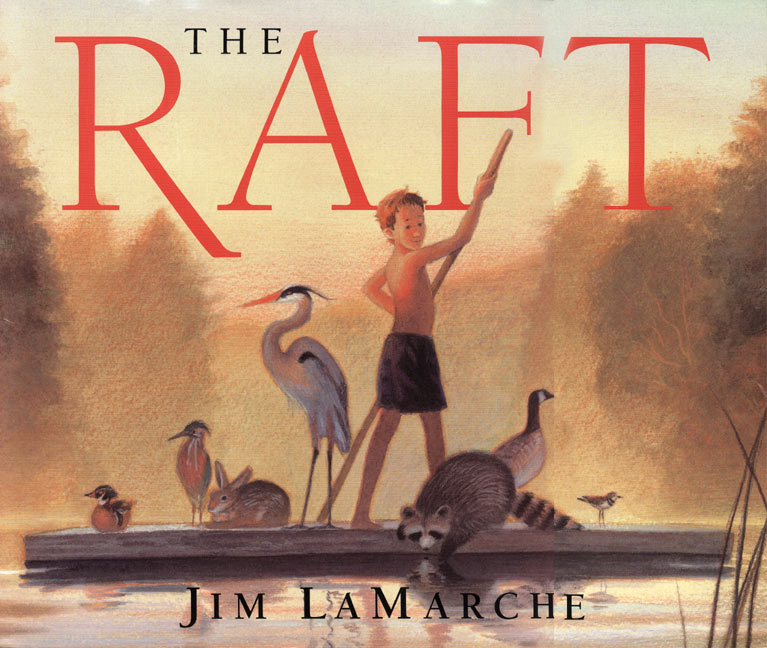
This week we read The Raft by Jim LaMarche and practiced asking deep thinking questions vs. quick questions (inspired by Adrienne Gear‘s Reading Power). We know that a quick question is quick to ask and usually we find the answer in the text. With deep thinking questions, we are often inspired to ask new questions and our thinking goes on long after we have closed the book.

the raft

The Raft tells the story of Nicky who has come to spend the summer with his grandmother. He isn’t very eager to do this (bemoaning being away from television and any kids all summer) but it doesn’t take long before Nicky finds himself fascinated by his summer locale. A raft covered in leaves and branches floats up and bumps against the dock Nicky is fishing on. It is covered in drawings of animals and it completely captures Nicky’s imagination. Where did it come from? Who painted the animals? What does it mean? Soon he and his grandmother are spending lazy days poling down the river. An array of animals keep Nicky company – foxes following him along the shore, birds hitching a ride, a great blue heron snacking on crayfish. Nicky often takes the raft out alone and sketches all of the animals he sees. Somehow the raft seems to draw the creatures to him.

The students noticed the changes in Nicky.

Miami: “He’s been transformed. He was so grumpy when he came to his Grandma’s and now he’s not.”

Hajhare: “I think he was set up. Do you know what I mean Ms. Gelson? His Dad tricked him into liking his summer. His Dad knew he was going to like it all along.”

Finally,  Nicky adds his own animal to the raft for a very special reason. Students were lulled by the beauty and magic of this book and eagerly wrote down questions as I read.

I then gave the students a task: Choose 2-5 of your deep thinking questions and list them in your notebook. Choose one and try to answer it (You will need to infer)

Kevin put his hand up. “But I can’t just put 5. Each question leads to another question so I’ll need to write 10. I “inferenced” as I thought them so I included them when I did my writing.” (Yippee! Learning!)

Some samples of student thinking.

Jena: Are all of the drawings adventures of how people saved animals? Maybe yes and the raft was made and passed on from generation to generation.

Lisa: One of my questions before was that are the animals from the raft going to come alive. Maybe if Nicky visualizes, they will come alive to him.

Ricky: Who drew all of these animals on the raft? Why is Nicky’s Grandma called a river rat? Did she also save an animal on the river? Maybe a rat? Is Grandma part of nature?

At the end of the book, Scott sat back and said, “That book was awesome.” When I asked him why, Eddy piped up. “It’s really making me think thinking stuff.”

I think this should be our new measure of success when we judge a reading experience – did we think thinking stuff? Does book really inspire our thinking voice? The Raft did and then some. It left us talking with each other, following a question into an inference and going back into the story to try and find clues, having “but what if. . . ” discussions all around the room. A wonderful book.

If I could go to Kindergarten . . .

I love reading to the Ks at Seymour. I get to do it at least a few times a month at our primary Social Responsibility Gatherings. The Ks sit right up in front, eyes wide, serious expressions, taking it all in. They listen intently, little hands raise in the air to tell me connections and ideas. Then when they leave, they wave, they smile, they whisper, “I’ll miss you.” One of my favourite things to do is to read to the Kindergarten class.

So I got to thinking what if I could go to Kindergarten everyday? And read? What would I read?  During my last few visits to the public library I found some wonderful possibilities.

Saber-toothed tigers. Wooly mammoths. Sleepy dinosaurs. A little boy exploring the world around him. Boy by James Mayhew explores a little guy’s yearning for independence while at the same time honouring his deep connections to home (and the happy snuggles from Mom and Dad). Where in the world do we find warmth? In the security and love from our own family.

A beautifully illustrated story inspired by the author’s love of his own son.

Marie-Louise Fitzpatrick wrote There – as a series of questions. A story about growing up and celebrating the journey as much as the destination. When will I get there? How will I know? And will I know everything, There? The little girl then wonders Can I change my mind and go Elsewhere instead? She then decides that she will go There tomorrow – after she does all the things she needs to do.

A book that begs to be explored with children. Winner of the Bistro Awards in 2010.

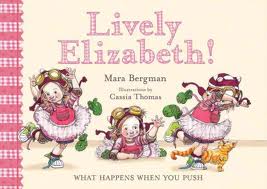
I think this book by Mara Bergman and illustrated by Cassia Thomas Lively Elizabeth is especially appropriate for kindergarten. Life when you come to school is all of a sudden a lot about lining up. Going here, going there, hands to yourself, “shh!” Several times a day. What happens when you have a little extra energy and it kinda spills over into a push? Well in a kindergarten line, it is full on domino effect! Bergman does a lovely job of playing out the whole scenario – from upset to apology and then forgiveness and moving on (and quickly – after all, little ones have the important business of play to get back to)! Cassia Thomas’ illustrations are absolutely delightful! A book, I predict, that will get many “Read it again!” requests.

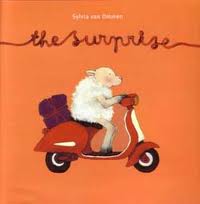
Okay who doesn’t love surprises? And guessing what will happen next? Little ones do especially. What a treasure is The Surprise by Sylvia van Ommen! Wordless so there is a lot of space for interactions. Predictions. Inferring. Questions.  Sheep zips here and there on her moped on a mission. She dyes her wool, when it seems long enough, a brilliant red. Then she brings it to poodle who spins it into yarn. She then knits something special and wraps it up and delivers it to . . .  Well, not going to spoil the surprise here but how fun would this be to do with a class of Ks?

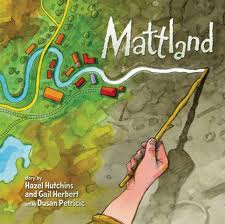
Mattland coauthored by Hazel Hutchins and Gail Herbert and illustrated by Dusan Petricic is a wonderful book to explore with children stressed by moving. The scary sadness of someplace new followed by the gentle, spontaneous introduction of new playmates and new activities. But this book is also ideal to celebrate imaginative, outdoor play. Building a place – roads, rivers, houses, prickly trees and getting some quiet help from someone with their own treasure trove of discoveries – a flattened penny, some popsicle sticks, four pine cones . . . To be fair, you can only read this book with intended outside play planned next. Lots of it. And it should probably involve some mud!

Now I just need a plan to sneak in and share some of these with the Ks!

Spilling Pickles (Idioms Division 5 style)

We have continued to learn about new idioms using the fantastic series of Idiom Tales published by Scholastic. Yesterday, we finished Over the Moon (Sayings about Feelings) written by Justin McCory Martin and illustrated by Kelly Kennedy.

I recorded the new idioms we had learned: happy as a clam; pleased as punch and green with envy on cards to tack up on top of the board. Students love trying to insert these idioms into everyday speech as often as possible and feel quite delighted when someone manages to use an idiom in the appropriate context.  It is quite fun! So as I was writing, students were reading various idioms to each other and giggling at how funny some are.

Don't spill the beans!

A few Grade 3 students were in our class last year when we also studied idioms. Every so often they remember one they learned and want to share it. Suddenly Hajhare got all exctied and called out:

“Ms. Gelson, tell me a secret and I will spill the pickles!”

Obviously, his memory didn’t quite serve him right as he was searching for the expression spill the beans. But said so excitedly and so earnestly this was pretty funny. Well, actually hilarious. Everyone, including Hajhare, burst out laughing.

I was probably laughing most of all and someone called “Ms. Gelson is in stitches!” Yes, idiom success – used correctly in context – yet, somehow we all laughed even more!

Then Catriona (looking at my red face from laughing) shouts out, “Ms. Gelson really is tickled pink!”

Such joyful moments sharing laughter, word play and connections.

Sergio had walked in during all of this quite tired and was a few beats behind.

“So what is it then – Spill the onions?”

Oh how I love these kids!

Frog Girl

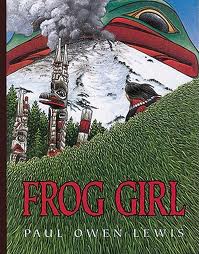
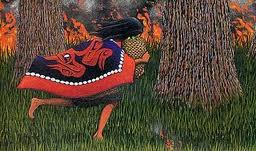
When our librarian, Ms. Sheperd-Dynes, found out how much our reading group liked Storm Boy she brought us Frog Girl, also by Paul Owen Lewis. This is another title that represents the rich oral traditions of the Native people of the Northwest Coast of North America.

This story is an adventure that introduces us to Volcano Woman (also known as Frog Woman). She has the power to destroy villages if the people do not show proper respect for living creatures. (Lewis provides a detailed author’s note in the back of the book that provides very interesting information about how this story has Northwest Coast motifs of Separation, Initiation and Return. He explains that like other world mythologies, this tale has elements of what renowned scholar Joseph Campbell described as rites of passage (referring to separation, initiation and return) in the Adventure of the Hero)

In this story, the Chief’s daughter spies on two boys capturing frogs at the lakeshore. She finds one lone frog in the grass who leads her to a mysterious village under the lake. Here she meets Grandmother who is crying over her missing children. Her sadness seems to power rumblings and shaking in this underwater world. The chief’s daughter returns to the forest and her own village to find it empty but threatened by an erupting volcano. She finds a basket of frogs and races them to the lakeshore – home to Grandmother. Then the rains come and her people return. The girl tells her story as the frogs sing in the background.

Guided by Lewis’ notes in the back, I asked the students to be listening for some key elements in the story:

  • disrespectful/cruel behaviour
  • encountering animals who speak
  • performing a heroic deed
  • encountering mythological beings

Students listened incredibly attentively, pulled into the story’s powerful text and detailed visual images.

The chief’s daughter races through the burning forest to return the stolen frogs to the lake

In their written responses, some students retold favourite parts, some responded to the elements I asked them to listen for and some asked questions. Some excerpts:

Jenny: The two boys left and the girl heard a voice. She went to that voice and it was a frog that said follow me. The shore opened up and the girl went inside. Then the frog turned to like a person and the girl saw a beautiful village.

Jeremiah: My favourite part of the story was when the girl saved the frogs. The two boys were being disrespectful of the frogs.

Kevin: Frog Girl and Storm Boy are quite similar because they both have a secret village.

Catriona: I’m still wondering . . . Why did the frog transform into a frog on land but transform into a woman in the water? Why did the two boys capture all the frogs?

Eddy: How can the frogs talk and transform into a human but green? How could the girl run to the lake in time to save the frogs when the volcano almost destroyed the whole forest?

Truman: Two boys were capturing frogs. This is cruel behaviour. There was a frog that spoke. That is encountering animals who speak. There was a girl who saved the frogs. That is called performing a heroic deed. There are frog people. They are called encountering mythological beings. I liked it when the girl went to another world. I am still wondering how the frog turn into people and how the people turn into frogs.

Such inspired writing! Pretty amazing for Grades 1, 2 and 3!


#1 (One) and One = 2 books (called One)

What happens when you read 2 books called One? A few things . . .

It seems to me that when a book is called One, there must be something within in it that offers us some simplicity – that by the time you are finished reading it, you can clearly articulate at least one thing you learned.  Often with simplicity is weight. A simple message with some power behind it. So let’s see – I tried out two books titled One with my class this morning.
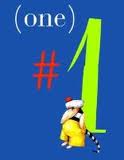
We started with #1 (one) by V. Radunsky: A nice story about an awful braggart. This story is about one of ten little armadillos who is actually called Six but is convinced he is #1. The strongest! The smartest! The bravest! The best! #1! #1! #1! He boasts about his inventions, his height, his speed  . . . He gets the best presents. What does he want? He has a big list including: Three cats plus one more cat. Five altogether. If you aren’t convinced, he will help you by explaining all of the reasons why he is #1. My favourite? His story of why he is the strongest: I saved this horse the other day. Twenty grown armadillos couldn’t even lift this horse but I did. Because I’m #1. The horse was so grateful.

In the end, everyone in his family completely agrees. Yes, # 1 they say. Definitely.

You are the #1 clown, show off, chatterbox, storyteller, dreamer! You are our # !!

Maybe not the reaction this little pink armadillo was looking for, but definitely recognition!

Reactions from my class?

Ricky: “He’s lying about everything. He can’t be that smart or that strong. He can’t be an inventor. Duh.”

Eddy: ” You have to be in college or even higher when you want to invent something.”

Scott: “He’s just dreaming.”

Miami: “He just thinks about himself.”

Alyson: “Selfish.”

I clarified that we actually call this “self-centered.”

Ricky: “He can’t go to college anyway cuz 3 + 1 = 4, not 5.” (remember the cat comment?)
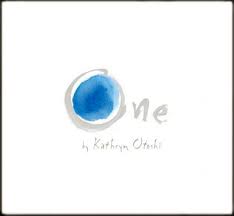
We then read One by Kathyrn Otoshi. This amazing book explores what happens when someone is picked on and nobody steps in to say that it is not okay. All of the colours are in the shadow of the hot-head Red who grows bigger and bigger as he continues to be mean, unchallenged by the other colours. Then One comes on the scene and shows all of the colours how to stand up and count!

We had a lot of reactions to this book as it fits right in with the books we have been reading about bullies, the bullied and the bystander.

Ricky: “The colours are too scared.”

Hands shot in the air. “Oh! Oh! Oooh!”

“They’re like bystanders!”

A collective hands down. Many of us were just about to say the same thing.

Interesting perspectives came next.

Alyson: “If they all teamed up together, they might be bigger than red.” (work together against the bully)

Jena: “Maybe red is mean because no one is his friend.” (show some empathy towards the bully)

Hajhare: “Maybe there’s bigger guys – like brown and black?” (overpower the bully)

Otoshi offers us another perspective. Everyone stands up to be counted and says, “No!” when Red tries again to roll over Blue. Red, seeing the others standing tall, shrinks and is about to roll away when One points out that “Red can count too.” Red becomes Seven, and joins in the fun. Sometimes it just takes One ends the story.

Jena: “If one person stands up, everyone else might join.”

I asked the students. “So how are these two books different?”

Kevin: “One book is teaching and the other is just a story.”

Miami: “No. All are teaching a lesson.”

“Really?” I asked. “What lessons did we learn from this book?” (I held up the Radunsky book)

“#1 wanted to be # 1 but being Six was special.”

“Don’t get your hopes too high.”

“Just be yourself.”

“Don’t be a show off!”

“And this one?” I held up Otoshi‘s One.

“Stand up.”

“Don’t be a bully. It makes it all worse.”

“It just takes one person to make everyone be a community.” (Officially the beautiful comment of the day!)

So there you have it. Read one book (x 2) and savour the learning and thinking it inspires

Our reading of 2 books called One was certainly worth more than one + one is two 🙂