Times (x) they are a changing . . .

Times Tables

Multiplication facts

No matter what you call them, knowing them helps as we move up the math concept ladder. I use multiplication facts frequently in the “real world” and knowing my facts helps make my problem solving faster. At the grocery store – 3 kiwis for $1.00 I have $5.00 with me So . . . I want about a dozen. If I buy 12 (3 x 4) then I’m going to have enough money (4 x $1.00) Yes, I need to understand a few things to do this mathematically but knowing 3 x 4 and the rule about multiplying things by multiples of 10 and 100 helped me solve this much more quickly.

In the primary grades we begin to explore the concept of multiplication. I often start the unit with a game of Noodles and Plates (Math to the Max Grade 3 Number Operations) I don’t tell students how to solve the equations. I just explain the rules of the game and let them get started.

P1020690The game is lots of fun. You need dice (I like the soft foam ones to cut down on the noise), pencil and paper. Player 1 rolls one die and draws that many circles for plates (if you roll a 4,  draw 4 plates) Player 2 then rolls and draws his/her plates. Then player 1 rolls again and this role determines how many noodles go on each plate (some kids drew tally marks, some drew numbers) Player 2 does the same. Then write a math sentence to represent your turn. (i.e. 2 x 6 = 12) Whoever has the higher total wins a point. Start again. We could have played all day. Everyone was on task, partners were helping each other solve the equations. Lots of math talking! Full on engagement.

To make this more complicated for higher grades, roll both die!

By the time we have played this game for a math period, many kids totally “get” groups of (which is how we read the math statement 4 x 2 is 4 groups of 2) and have started applying repeated addition and skip counting without me telling them to. We then practice more – linking repeated addition (5 x 3 is 5 + 5+ 5) , skip counting (5, 10, 15), working with arrays, understanding that 2 x 3 is the same as 3 x 2, understanding that 4 x 3 is the same as 3 x 3 + 3  etc. Building strategies and understanding through hands on activities, drawing models, looking at pictures, etc.

But how do I help them start committing these facts to memory? Next year’s teachers want them to know their facts. Knowing their facts helps make more complicated problem solving easier (well at least faster). Yes, there are calculators and computers and all but sometimes we won’t be carrying a device with us. What to do?  I had been doing drills – many kids loved them! Math drills. Yippee! These are the kids that have “number sticky” brains. They just know math facts – they stick in their brains and don’t leave. I was one of these kids. I still remember correcting my Grade 3 teacher’s math drills on the board (“You already put 5 x 6 for question 3“) She always gave me that Aren’t you a delightfully annoying child? smile and got up from her desk to fix it. (How did she ever have time to sit at a desk?) But not everyone has those sticky brains that facts just stick to . . .

The other kids tolerated them. We would answer 16 questions in 90 seconds – each child working at his/her level (once you had 3 16/16s in a row you would move on) So some kids had worked their way up to the 7s and 8s. Some were still on the 2s and that was okay. There was progress. We did math drill corrections. We trudged along.

But this year a few things changed. We started this process and it didn’t go so smoothly. I still had the celebrators and the tolerators but now I had a few rebellors (is that a word?) Some kids just wouldn’t do it with the timed aspect etc. And you know? I kind of respected them for it. Then I lost my timer (or maybe it walked away?) This was a sign. It just didn’t feel right. So we stopped for a few weeks.

But I got back to thinking about it. Do we need to memorize? Isn’t process as important as product. Don’t I need to allow students to begin developing and shaping their own learning?

The answer? Not sure. Here is what I am trying. We are going to still work on these 16 questions a day at our individual levels. But I’m removing the timed component and therefore the “drill” aspect. Instead, I pass out the sheets early in the day and students try to finish them by day’s end. Some finish in 16 seconds truthfully because they have “math fact sticky brains” Others take all day (working on the questions at various down times). They are noticing patterns, they are applying strategies, they are talking to others and asking for help (yes that’s okay and even encouraged) math peer tutors (self-appointed) are talking them through it (“Remember you can skip count” “You already did 3 x 6 so 6 x 3 is . . . “) Then I ask them to tell me when they are ready for the next level. Because, (really what was I thinking before?) they know better than me. Self directed learning. Student ownership. And what do I do? Guide, mark, respect, give feedback, smile and count up my celebrators 2, 4, 6, . . . 14, 16 🙂

P1020712Working on questions together allows for all of that fantastic “talk” time that is necessary in math. Not talking by me but talking by students. I can confirm “Ms. Gelson, if I want to answer 7 x 2 – that’s like 7 + 7 right?”

“Yep.” and move on. The child is on a roll, I am not needed.

Peer teaching is some of the most powerful teaching in the room!

P1020708So I asked the students what they think of this new system.

They were happy to share.

“When you are rushed, it confuses you. When you take your time, you learn it better.” That timer will not be coming back!

I don’t feel so much pressure. It’s better.”

“Now we have time to draw out the ones we don’t know.”

Look what happens when you ask!!
Self-reflection

Self-reflection

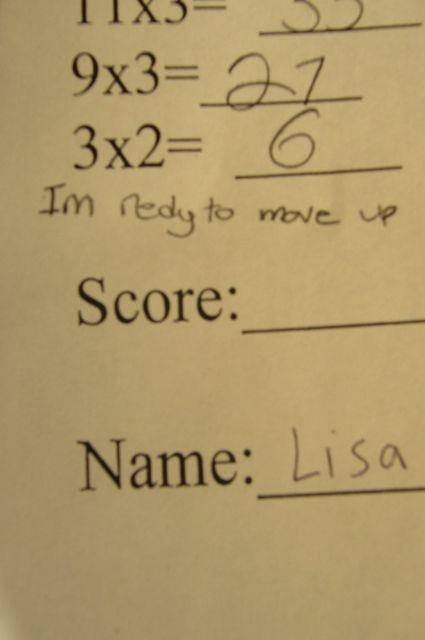
So now I am getting drill sheets handed in with little notes like the one on the right: “I’m redy to move up.”

“Can I move up?”

“I wanna move up.”

“I can do the next.”

If they are writing me these notes and still making errors, I let them know and we practice a few more times. If they are consistently getting perfect scores and don’t tell me they are ready, I offer encouragement.

The big thing here that I’ve learned – communicate with your students about their learning. Watch for the signs they are giving you. Listen . . . and you will learn.
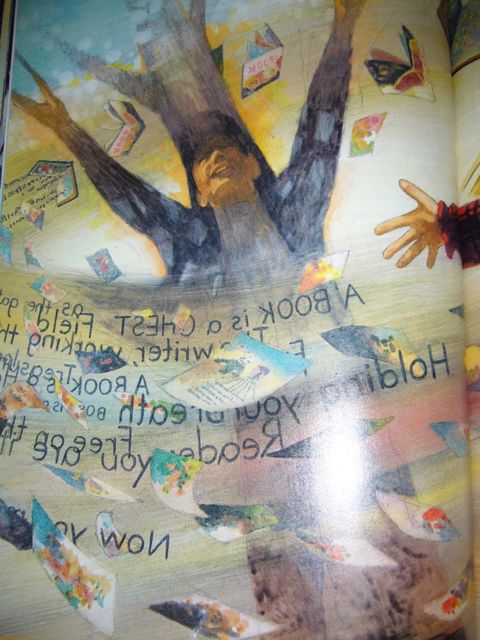
It’s all about the Book

Recently we read Emily’s Art written and illustrated by Peter Catalanotto and he invited the students to send him some art. Well . . . Emily’s Art was such a special book that we wanted to “gift” Peter with something special in return. His paintings are truly majestic and we wanted to make something that might make him have a bit of that “glowy” feeling that he inspires in us as we look at his illustrations.

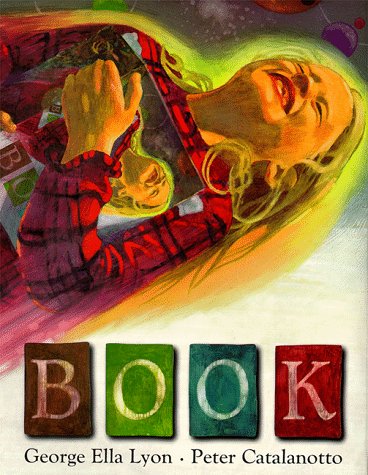
At the library, I found a copy of Book written by George Ella Lyon and illustrated by Peter Catalanotto. Sadly, this gorgeous book is out of print so we were lucky the VPL had a copy! Book is an ode to the magic and power of books. Lyon’s words and Catalanotto’s pictures invite us to escape to the magical place books transport us to simply by opening up the cover and stepping in . . .

book

We read this book a few times, marvelling at the images and savouring the words. We were delighted by the whirling words interacting with the images.  Students then wrote about what reading means to them.

P1020560The next day, inspired by this image (left) in particular, we started creating images.

While the students worked, I called each child up and we looked at their personal writing – selecting a line or a few lines that really captured their relationship to reading.

I typed up the text and then students added their text to their art in a variety of ways – inviting our viewers to celebrate reading, language and learning with us! Framed pieces are on display in the main office and in the library. Enjoy!

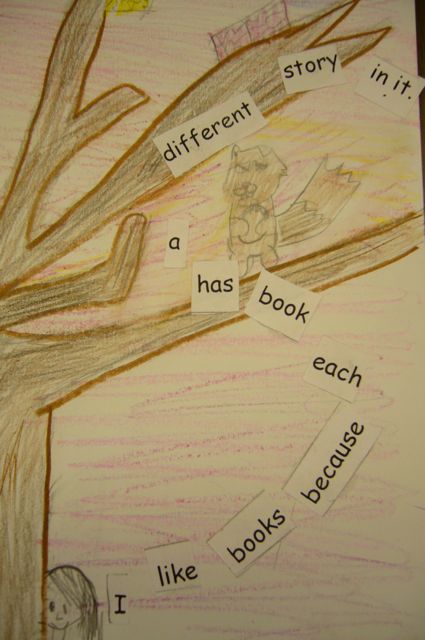
Lisa shared her feelings about books: I like books because each book has a different story in it.

Lisa's work

Many students wrote about the way reading makes them feel. Gary wrote: Reading is fun and calm. When I read, I visualize the pictures.

Kevin shared: “If you get really into the book, you might even dream about it. When my Mom and my teachers read to me, I feel relaxed and happy.”

Alyson is passionate on the subject! “Books change the world and books change us.”

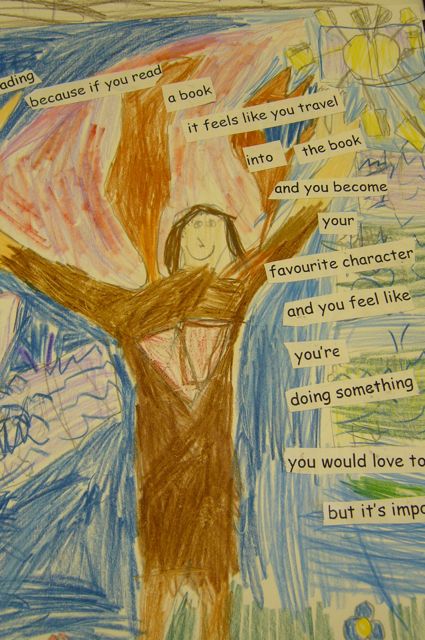
Catriona writes: “I like reading because if you read a book, it feels like you travel into the book and you become your favourite character and you feel like you’re doing something you would love to do but it’s impossible.”

Catriona's piece

Sigh 🙂 Is that not beautiful? And if you look closely at Catriona’s picture, you might notice that she has a book heart.

Josiah shared: “I like reading because I learn new words. I get all emotional when it’s exciting.”

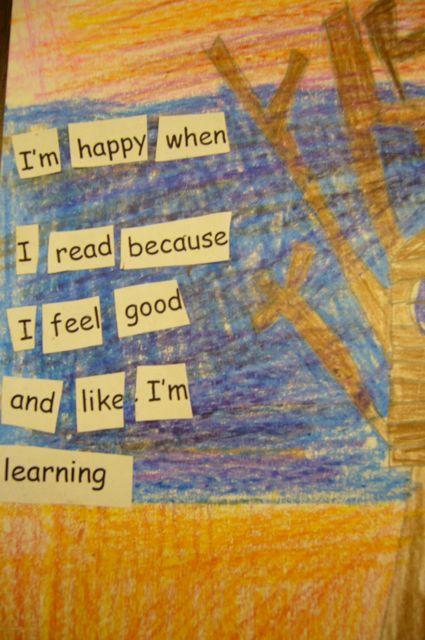
Eddy‘s picture is beautiful and bright and features a tree house up in a tree. He writes: “I’m happy when I read because I feel good and like I’m learning.”

Eddy's words

Learning while we read was a big theme! Jenifer says, “Books are telling things that we can learn.”

Jeremiah shares:” I like reading because it makes you learn stuff you need to learn. When I read, it feels like I’m in it.”

Sergio lays it out like only he can! “You know why I like reading? Because I will be smarter. And you know why I like being read to? Because the people that read to me, they will be smart like me.”

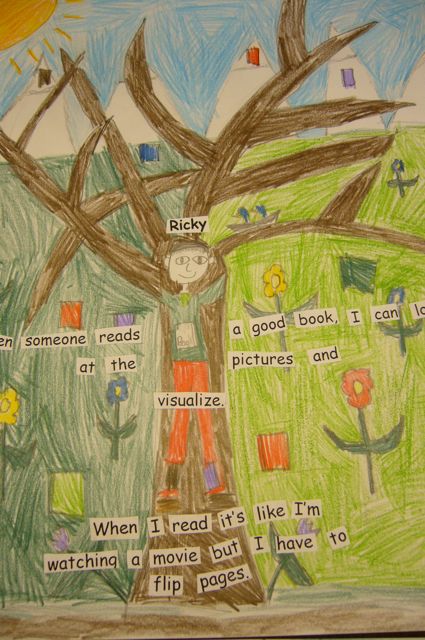
Ricky states: “When I read it’s like I’m watching a movie but I have to flip pages. When someone reads a good book, I can look at the pictures and visualize.”

Ricky's work

Many children wrote about how they love being read to. Always, read aloud times throughout the day are a time to connect, learn and discuss themes and concepts from the books we read.

Hajhare shares: “I like getting read to because the teacher always uses expressions and they talk kinda funny.”

Scott agrees. “I like when someone is reading to me because I could learn more stuff. It feels exciting.”

Truman drew himself happily celebrating reading.

“When someone reads to me, I feel like in the book.”

Truman's piece

This was a common theme.

Annie writes: “Books make you feel like you’re actually inside the book. I like books because they teach you things that you want to learn.”

Jenny’s thoughts are lovely. “Books are my friends and books are like alive to me. Looking at the illustrations gets me ideas.”

This was such an enjoyable way for our reading group to celebrate our relationship to books and reading.

Inspired by Book!

Copies of these gorgeous pieces are on their way to Peter Catalanotto as thanks for the inspiration!

Jena’s words are very special and capture the feeling of the cover image of Book.

“I like reading because I get to think of mystical things. When I finish the book and I like it so much I hold on to it and if it’s really emotional my eyes start to water.”


Selecting Picture books to read

Students in our morning reading group continue selecting books based on their background knowledge (schema) – realizing that they will have a better chance of connecting to a book when they have some shared experiences with the theme/topic of the book.

Students quickly selected three books from a huge selection of picture books. Then they ordered their choices #1, #2, #3 . Why did they choose the book they did as their first choice? After reading, students then shared any text to self or text to text connections.

Some book selections:

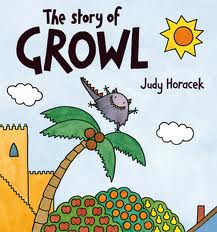
Gary chose The story of GROWL by Judy Horacek. Why was this his first choice? “Sometimes I growl when I’m angry. It makes me feel like a monster.”

After reading the book, did he have any connections?

“I used to hop, skip and jump around my garden. Sometimes I growl for fun. My Dad told me to stop growling because it’s loud. But I still was growling! I stopped one day.”

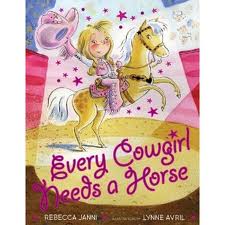
Lisa read Every Cowgirl Needs a Horse by Rebecca Janni. Why was this her first choice? “I know that if a horse wants to say hi, they rub their noses together. I learned that in a chapter book.”

After reading, what were her connections?

It was easy to connect to this book because at home when I’m riding my bike, I reel like I’m riding a horse with the wind blowing in my hair like the girl in the story.”

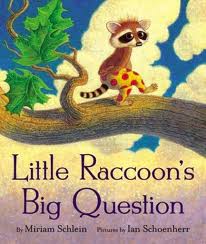
Jenny chose to read Little Raccoon’s Big Question written by Miriam Schlien and illustrated by Ian Schoenherr. This book is all about a little raccoon wanting reassurance about his mother’s love. Jenny chose to read it because: “When I was little I saw a raccoon.  I know a lot about what raccoons do and they are one of my favourite animals.”

Her connections were about much more than what she knows about raccoons.

“When I was little I was thinking how much my mom loves me most. I was thinking does she love me when I eat, sleep or play with her.”

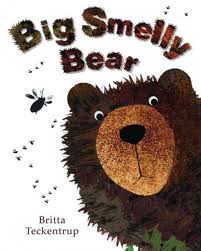
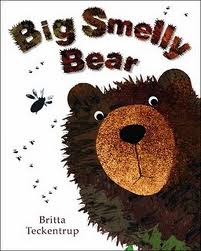
Josiah picked the book Big Smelly Bear by Britta Teckentrup. Why was this his first choice? “Everytime I go to my Mom’s home town, I always see bears and flies buzzing around.”

After reading, what connections did he have?

“When the big fluffy bear scratched the big smelly bear, I connected to it because I always see bears scratching trees and each other on the way to my Mom’s hometown Port Hardy. It is so fun there because I see my uncles, aunties and the big bears.”

Isn’t it great that there are so many picture books out there to interest everyone?


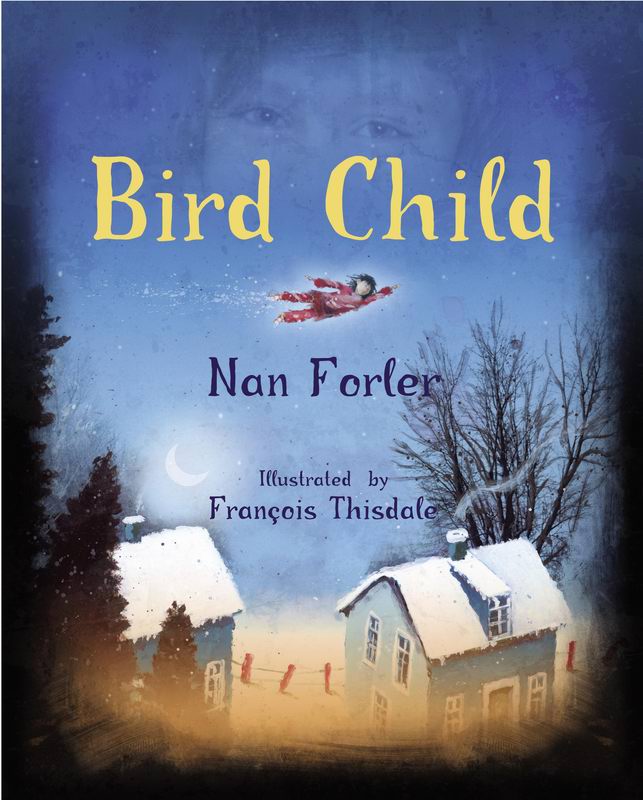
Bird Child

Today we read Bird Child by Canadian teacher, parent and writer Nan Forler. I came across this book at the public library and was thrilled to discover that it also touched on the active role of the bystander in the bully/bullied/bystander dynamic. We have been talking about this topic a lot using  powerful literature to inspire our discussion.

bird-2

Eliza is a tiny girl – skin and bones with hair as black as a raven. She was raised in a very special way – she was taught to fly. Wow! There were hands in the air instantly.”Is this true?” “Really?” When I asked the students what they thought, I got some very interesting answers:

Alyson: “It said her hair was black like a raven so maybe she got that skill from birds.”

Kevin: “Maybe she can fly because her bones are hollow.”

Hajhare: “Maybe she can turn back and forth between a bird and an animal like Eagle Boy.” (We have been reading a lot of Aboriginal literature lately with this theme)

I suggested that maybe the author was implying that she could fly in her mind. “Oh like visualizing,” said Kevin. “Yeah, she means it like an expression,” Ricky agreed. As we read further, we hear the words that Eliza’s mother always tells her, “Look down and see what is. Now, look up and see what can be.” Thoughtful words to always encourage Eliza to focus on possibility and with a positive perspective, to take an active role in changing situations to make them better.

A new girl, Lainey, starts school and rides the bus each day with Eliza. Lainey quickly becomes the target of teasing and exclusion. My students explored reasons that she might be bullied: Were others jealous of her beautiful drawings? Her hair?Are they making fun of her because she is new? Because of what she wears? Why are they so mean?

Soon the teasing escalates to stealing Lainey’s hat and burying it in the snow. A boy smushes snow into her face “wiping away what was left of the smile she’d had on her first day of school.” Silence in my classroom. Silence in the story. “Eliza said nothing. She stood like a statue her boots sinking deeper and deeper into the snow, her voice dry as a mouthful of wool. and watched it happen.” Such a heavy emotional scene. Illustrator Francois Thisdale makes the mood even more sad and somber with the smirking children laughing at Lainey, frozen Eliza in the background and Lainey with her eyes squished shut all alone in the wintery schoolyard with the barren trees and a pink skyline behind. There was a little bit more silence in my class and then the “Oh! Oh! Oh!’s and the waving hands started. We had things to say about this.

Jena: “Eliza is like a bystander and kind of like bullying her too. If she doesn’t tell, the bullying won’t stop. It’s like the Juice Box Bully.”

Alyson: “Eliza should stand up for Lainey.”

Lisa: “Eliza might be worried – that people would think she was a tattler.”

Miami: “This is like something that happened to me. My Grandma fell and people just walked by her. Nobody helped. Two men were sitting on a bench and they just kept sitting. I felt so bad.”

Children see everything we do and everything we don’t do. Sometimes it is not so much our actions but when we fail to act that haunts us. Eliza felt shame. She told her Mom everything and her Mom listened. “It sounds like Lainey needs someone to help her fly.” Eliza knew what she had to do. Alyson commented thoughtfully, “Maybe flying means helping her get through it.”

The next time Lainey is bullied, Eliza acts. She “reached down inside herself and found her wings” When she shouts at a boy to return Lainey’s hat, other children join in “Yeah give it back.” The bullies’ power bubble is popped and they walk away.

Scott: “She’s taking care of Lainey now.”

Miami: “You know what I think? I think she couldn’t stand watching her be bullied anymore so she just yelled.”

Jena: “Maybe Eliza did that thing – you know, putting herself in her shoes?”

Lisa: “It’s like the Juice Box Bully – maybe they will have a rule, that everyone needs to help others.”

Alyson: “Oh I know! It’s like a chain reaction – helping it to stop, standing up.”

Kevin: “It’s like that dance we saw on the movie at Pink Day (referring to the flash mob anti bullying video)

In the end, Eliza and Lainey play together building a snow castle to the sky. I ask: Why do you think this book was witten?

Ricky: “It’s a lesson to stand up for each other!”

Alyson: “Don’t be a bystander! Just stand up!”

Emilio: “Probably they made this book so people won’t copy other bullies and be mean.”

Bird Child: so much beautiful writing and visually, it is absolutely gorgeous. This book should have a special place on the shelf in every school library and should be read and discussed with students again and again. There are not enough picture books that so thoughtfully explore the active role of the bystander in changing the way a bully might act and the way a peer is treated.


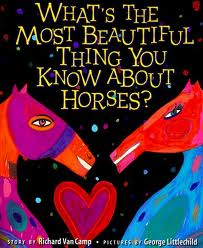
What’s the Most Beautiful Thing you Know about Horses?

We have been reading Aboriginal Literature with our reading group each week. This beautiful book by Richard VanCamp and illustrated by George Littlechild allowed us to learn more about horses while also learning about VanCamp’s Dogrib Nation.

Author Richard VanCamp’s hometown is Fort Smith in the Northwest Territories of Canada. On a cold (forty below!) winter day he decides to ask people he knows What’s the Most Beautiful Thing you Know about Horses? He, himself, doesn’t know much he explains because he is a stranger to horses; his people are not horse people. The people of the Dogrib nation have a great respect for dogs. In this northern land, dogs helped with hunting, protected the food stashes and helped with hauling camp from place to place. But yet in Dogrib the word for horse is big dog. When did dogs grow into horses? When did horses shrink into dogs? he asks.

Oh, the things he learns when he asks: “Horses always find their way home,” his Dad tells him. George Littlechild, who did the amazing illustrations for this book shares, “They stare at you as they breathe. Their soul comes right out.”

We shared some things we know too:

  • They go in running races
  • They are sometimes used in war
  • They are useful
  • They are calm and swish their tails
  • We can see them at the P.N.E.
  • They are in the Chinese Zodiac. Horse people care about their families.

What’s the Most Beautiful thing you Know about Horses?


Shades of People

Sometimes it is the quick little read alouds that deliver the biggest message and create the atmosphere for the most dialogue. Thank you to Ms. Hong who we went to visit at Strathcona Library yesterday for recommending Shades of People created by Shelley Rotner and Sheila M. Kelly.

shades_of_people

In this book, people are not described by their skin colour but rather the shade they come in – creamy, coffee, copper, almond, rose, bronze, brown . . . My favourite lines: Our skin is our covering, just like wrapping paper. And, you can’t tell what someone is like from the colour of their skin.

Snippets from our discussion:

“Everyone is not the same.”

“We have different skin, but the same inside like the heart, the brain, the bones.”

“We have the same emotions.”

“Our feelings come from the same place.”

Beautiful photographs capturing our diverse shades and simple text left us with lots to discuss and connect with.

Thanks Ms. Hong!

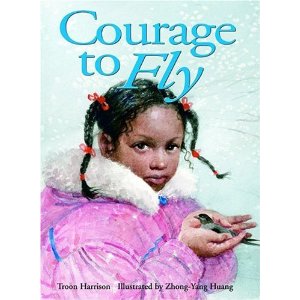
Courage to Fly

This week I read Troon Harrison’s picture book Courage to Fly to our Reading group. We continue to practice actively using the comprehension strategies we have been taught in Reading Power lessons: making connections, visualizing, asking questions and inferring while we listen to stories. Students loved this beautifully illustrated book (Zhong-Yang Huang is the illustrator) about Meg, an anxious and lonely little girl in a big city in a brand new country.

courage

Meg finds a tiny swallow that was brought down in a snowstorm. She nurses it back to health and then begins to wonder if she should set it free. She is reluctant to do so – but is encouraged to give the bird its chance to fly. Who really finds the courage to fly?  By the end of the book, we were convinced that Meg had been transformed by her experience and that after taking a risk to let the bird go free, could find the courage to open up her heart to new friendships.

Some thoughts from the students:

I think New York is not a great place for Meg (Ricky)

Why is Meg so shy? Is she lonely? Is she scared of the snow? (Truman)

I think the old man is also trying to tell Meg to find courage. (Jena)

I think the message of the book is to let things be free (Jenny)

Meg gets the courage to be free! (Josiah)

Birds and children must have been on my mind this week when I took my children to the public library – I found two more books involving a child and a hurt bird that needed to be cared for. So much learning happens from these experiences. Lovely stories that touch on the themes of hope, courage, relationships, perseverance, transformation, freedom . . .

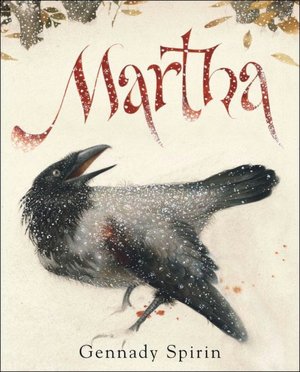
martha

Martha is Gennady Spirin’s story about his own son Ilya who discovered a crow with a broken wing. The veterinarian insisted the bird should be put to sleep as it would never fly. Ilya convinced his parents otherwise and the crow they named Martha made her home with the family. Eventually Martha surprised them all and flew again. Is she the bird that returns the next year and nests in their tree?

fly pigeon fly

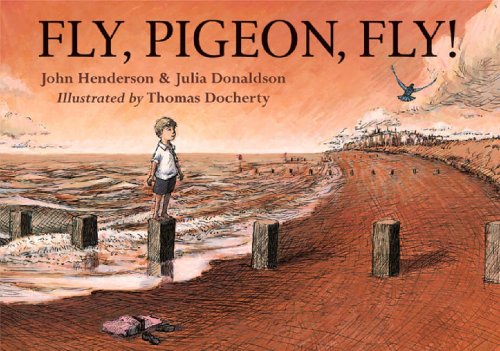
Fly, Pigeon, Fly! is coauthored by John Henderson and Julia Donaldson and illustrated by Thomas Docherty. Set in Glasgow, this is the story of a young boy who discovers a half-starved pigeon in a run down warehouse and takes him home to care for him. The pigeon recovers but the boy cannot bear to set him free. The relationships between the boy and the bird and the boy and his Da are gently explored. In a lovely way, as the boy is able to let the pigeon go, his connection to his Da becomes stronger.

The Last Polar Bear

the last polar bear

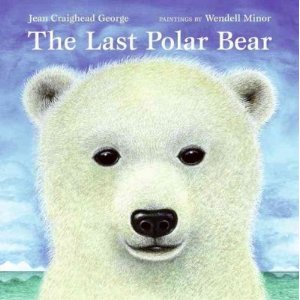
Tigluk looks out his window and sees a polar bear in the distance. It is Nanuk. She looks straight at him and seems to speak to him “Follow me.” Tigluk and his grandmother paddle out in the ocean searching the ice floes for the bear. They discover, not Nanuk but her cub and Tigluk names him Pilluk (meaning to suvive). “With the melting of the ice, he is the last polar bear,” says Tigluk and cradles the bear in his arms.

This sad story by Jean Craighead George forces us to confront the serious issue of how climate change is affecting the polar bear habitat.

We used this powerful book to practice asking questions as we read and then looked at our questions critically – Did we find an answer in the text? By inferring, can we answer the question? Do we need to do more research? After discussing things, are we left with more questions?

Some of the questions we examined further:

How many bears are in the Arctic? Someone answered this quickly: “It was in the story: Just one left.” Then we talked further and realized we would have to do more research to find out the actual population. Questions were asked about whether polar bears are considered endangered?

If nobody found the polar bear, would he survive? Most people thought that we needed to do more research to answer questions like: How long do they nurse? What exactly do they need to survive? before we could infer because we don’t have enough background knowledge.

Why would the cub be all alone? To answer this question, we needed to use our own thinking and our background knowledge. Some students reminded us about what we had learned about polar bears in the book Winston of Churchill which was that polar bears could drown if the ice floes were too far apart. So we decided that maybe the mother had drowned while hunting for food because the ice was melting and she had too far to swim back to the ice floe where her cub was waiting.

Why did Nanuk choose a boy to look after her cub? For this question, we decided that we should infer. A suggestion was made that maybe Nanuk chose Tigluk because he was young and would have many years to care for the bear and maybe even help change things. Everyone thought that this made a lot of sense

Our questions and thoughts after discussing the book:

If there is only one bear, how will it mate? How will any more polar bears be born?

Is the world really getting too hot?

If the polar bear became used to humans and human food, could it ever go into the wild again?

How will the people in the village survive without polar bears? If other animals in the Arctic are also becoming endangered won’t this be hard on the people in the North who hunt them and use their furs and skins?

So much to wonder and think about from one very special book.


Just . . . How big is the world . . . anyway?

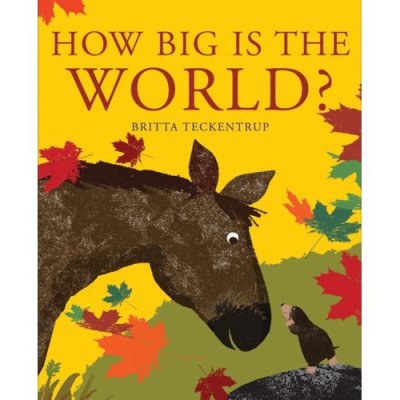
Britta Teckentrup’s How Big is the World? certainly inspired us to ask that question and many more as we followed little mole on his journey to discover just how big the world is by asking all of the creatures he meets on his important journey to find his answer. From spiders to whales, all of the creatures give him an answer but each one is different.

how big is the world

Some questions we began to wonder as we read this book:

Does everyone have their own thoughts about the world and how big it is? (Jena)

Will the little mole ever find out? (Truman)

Will the mole have another big question after this question? (Lisa)

Does the world ever end? (Sergio)

I wonder if you want the world to end, if you have to go off the world? (Jenny)

Well then how big is space? (Jeremiah)

Litle Mole does have an answer for his Papa when he returns.

“How big is the world?” whispered Papa. “As big as you want it to be,” said Little Mole quietly and he went to sleep.

This made lots of sense to some of us.  “That’s because each animal had a different answer!” “It depends on who you ask!” “The animals could only talk about what they knew.” But Catriona wasn’t satisfied. “That isn’t true,” she said shaking her head. “It is a specific size.”

Britta Teckentrup is also the author/illustrator of Grumpy Cat and Big Smelly Bear which are very popular books in our picture book bins.

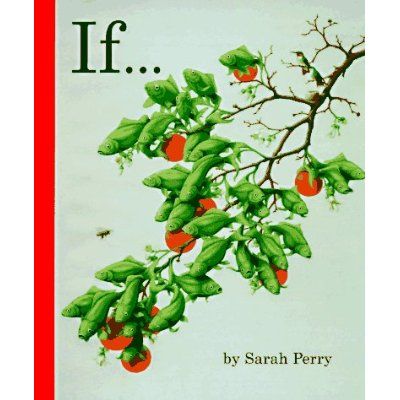
Sarah Perry’s If inspires

Our reading group explored the book If by Sarah Perry.  This is the classic book to introduce the concept that one simple question can lead us to deeper questions and endless wondering.  Each page features an amazing visual with an If phrase such as If music could be held . . . ,  If mice were hair . . . (a pretty creepy idea!) If toes were teeth. . . (gives a whole new image to wiggly teeth we decided :)) We lingered on each page- shouting out questions as someone else wondered something that made our thinking bigger and our wondering even broader.

If

Some truly great questions shared in wonder webs (inspired from specific pages in the story).

If leaves were fish . . .

Would we have to rake up fallen fish? (Jena)

Would there be fish flying around on a windy day? (Catriona)

Would they be smelly? (Lisa)

Will they change colour? (Kevin)

Would they still use chlorophyll? (Alyson)

Then what would the caterpillars eat? (Ricky)

Can the fish breathe? (Annie)

If hummingbirds told secrets . . .

Would they tell secrets to their predators?  Can the animals understand? Would the ears get poked? (Gary)

How would it say the same language as me?  wondered Truman. He then added little drawings of people asking: “What did you say?” “What does it mean?” “What would it be?”

A book to pick up again and again. Let the wondering begin!