Mammoths

Our reading group has continued to practice strategies to handle unknown vocabulary in text. See the strategy list that we came up with earlier this month here. We spent part of a few reading classes with this great text: Wooly Mammoth by Mick Manning and Brita Granstrom. (A Natural History Museum Selection)

This book reads as an information story book: rhyming text accompanies the large pictures on each two page spread while black and white drawings and information reads in a column down one side of each page. You can read this book as just a storybook, concentrate primarily on the information or focus on both. Students enjoyed the mammoth time line at the end of the book and reviewing what they had learned by quizzing each other on the glossary words.

We then read Kali’s Song by Jeanette Winter.

We started by comparing the covers of Kali’s Song with a Wooly Mammoth. All year we have been talking about the different text features of fiction and non-fiction books. It would be interesting to see what we noticed when looking at Wooly Mammoth because it has both fiction and non-fiction elements (what we like to call an information story book). Students observed that even though both covers had illustrations rather than photographs, the mammoth on the cover of Wooly Mammoth looked more realistic. We talked about fur colour and the shape of the tusks. We also discussed how one mammoth was standing in the snow and another on grass/ground next to a little boy and a dog. “How could they stand so close?” someone wondered.

Before we began reading Kali’s Song, I asked the students, “Even though this is clearly a fiction text, do you think we will be able to link some of our learning from Wooly Mammoth to what we read?” We were ready to look for any text to text connections. Would our sense of the story be enhanced by our newly acquired background knowledge? (schema)

Immediately students were excited to see Kali’s mother painting animals on the cave’s wall. “We learned about how they did that in the other book! In the future some people might discover those paintings to see what animals looked like!” 

We also appreciated that a work of fiction had beautiful elements of story telling and images that a non-fiction book wouldn’t have. When Kali plays the bow string, Winter writes: The stars came close to listen. Such a wonderful image that makes the story more powerful. We liked how Kali’s Song challenged our imaginations and had us think about things differently.

Kali’s music lures the mammoths to him and fascinated, all of the other hunters lay down their weapons. Kali must be a shaman they decide. Winter leaves us wondering – do the hunters not kill any of the mammoths? Or do they eventually resume their hunt? In Wooly Mammoth we had learned that the people’s survival depended on the hunt and that they used all parts of the mammoth (meat, fur, tusks, bone) for things that they needed. Our discussion was intense. Kali had the skill to lure the animals and he seemed to love them. But he loved his people. Wouldn’t his skill help the hunt? What would he do? The students decided that Winter left us thinking on purpose. We would have to come to our own decisions.

Because the mammoths seemed so majestic and wonderful we wanted to think they wouldn’t be hunted but now that our knowledge included information about how people who lived thousands of years ago depended on the hunt, we had some different ideas about the outcome. Students were able to make text to text connections and this furthered their thinking.

Kali’s Song is a beautiful book. Highly recommended.

How do you help students make text to text connections? Recognize that their background knowledge influences their thinking? 

The Magic Beads

In our reading group we have been exploring different genres. Today was day three of looking at realistic fiction. Last week what kept coming up on our list of what makes a book realistic fiction was that many people would find things to connect to easily in the story. Today we read a story together and our writing focused on possible connections.

The story that we read today had a lot to it and our discussion and subsequent writing was rich. In fact, I don’t think I can think of a time all year where the group was so quietly engrossed in their writing. When I read notebooks at recess, I was blown away by the maturity and thought that was shared. The Magic Beads written by Susin Nielsen-Fernlund and illustrated by Genevieve Cote is an important story addressing the emotions of a young girl starting school while her life is full of change.

Lillian begins Grade 2 at a new school after she and her Mom have had to move to a shelter to escape her abusive father. They have left everything behind and Lillian is feeling a range of emotions from anxiety to anger. A part of her misses her father even though her memories of his bad moods are difficult to think about. She loves her Mom and knows why they had to leave but she also feels angry that her Mom was the one that took them away. When she is asked to share at Show and Tell on Friday, Lillian’s upset grows. She no longer has her pesonal possessions with her. What could she share? The butterflies in her tummy turn into grasshoppers, donkeys and eventually buffalos as Friday approaches and she has nothing to share.

Finally as she stands before the class on Friday, Lillian talks about her plastic beads, terming them magic beads and explaining that with just a little imagination, the beads can be all kinds of things. Lillian’s inventive imagination intrigues her classmates and provides a way for friendships to begin.

Student writing ranged from personal connections to ideas of what events or emotions readers might feel connected to in the story. Here are excerpts:

Carmen writes: Some people might connect to being sad because of leaving your Dad all alone since you might have played with your Dad and you might miss your favourite happiness. 

Truman shared: I connected to when I first went to this school and I felt scared and shy. Some people might connect to their feelings on the first day of school. I connected to when I didn’t bring my Chinese homework and felt nervous.

Catriona wrote: People could connect to being mad at a person when the person you’re really mad at isn’t there. 

Heman shared: When I first went to this school, I felt like I had a tummy ache just like Lillian. 

Khai made a list of possible connections: using your imagination to feel better, feeling anxious at school on the first day, having a Dad with some anger problems, having to move somewhere when you don’t really want to, . . .


Over and Under the Snow

Oh, how I have been waiting for snow to share this book with a group of children. So our temperamental Vancouver weather finally delivered some snow to city streets!  It was falling as I gathered our reading group together to read Over and Under the Snow written by the talented Kate Messner and illustrated (so beautifully) by Christopher Silas Neal. Reading the book I got to glance down at entranced little faces and look up to see snow swirling and whirling outside the windows. Magical.

We loved the Author’s Note at the back of the book where we found out that this “secret kingdom under the snow” has a very impressive name: the subnivean zone (the small open spaces and tunnels between the snowpack and the ground). We also liked reading more information about each of the animals we had questions about in the back section that provided more details.

Students were asked to web out some of their new learning and eagerly sat down and got to work detailing what they had discovered.

Some fascinating new facts:

IMG_2333

This is a lovely image!

IMG_2324

Wow!

IMG_2318

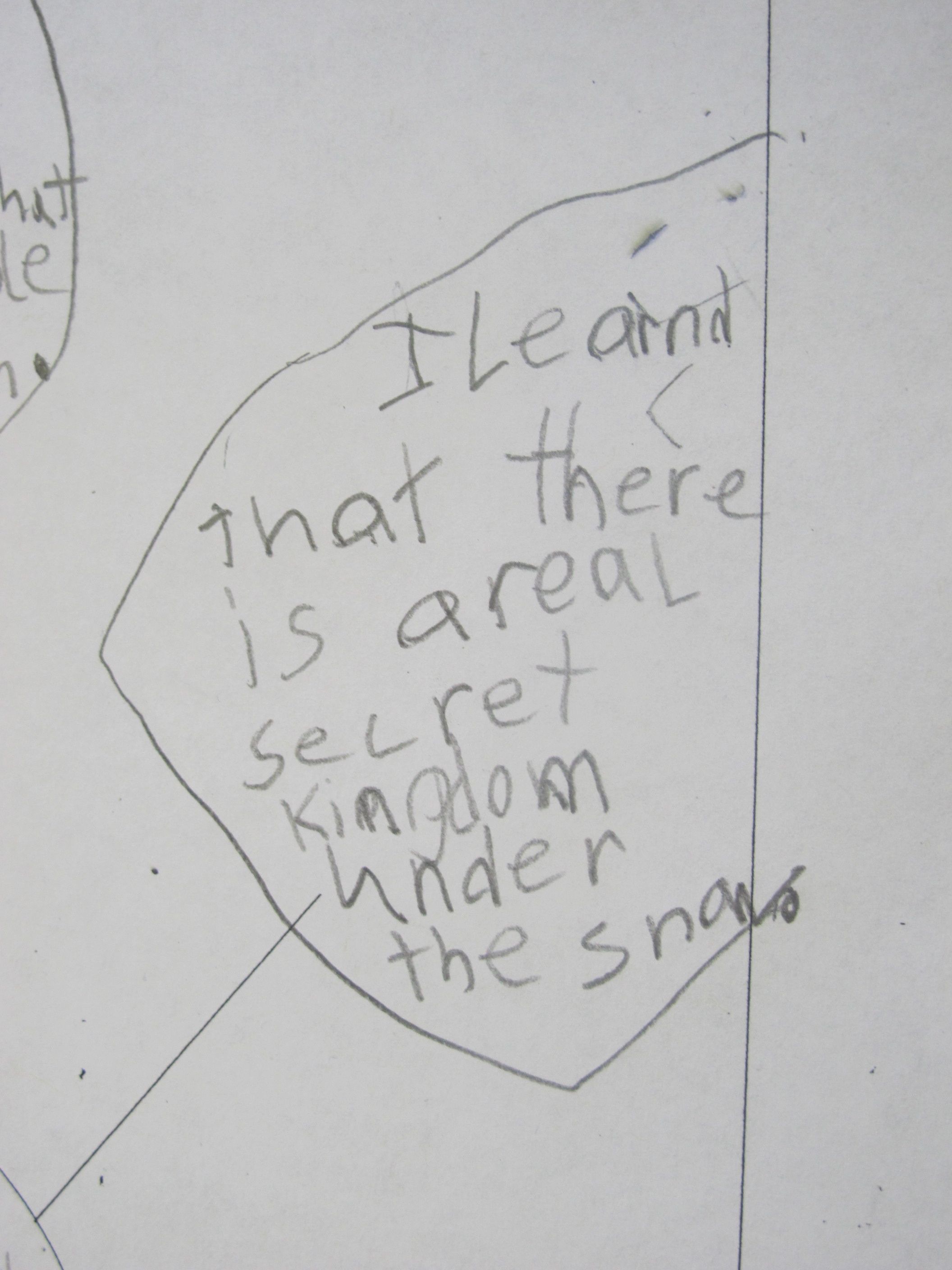
The idea of a secret kingdom made every list! Such a magical image.

IMG_2322

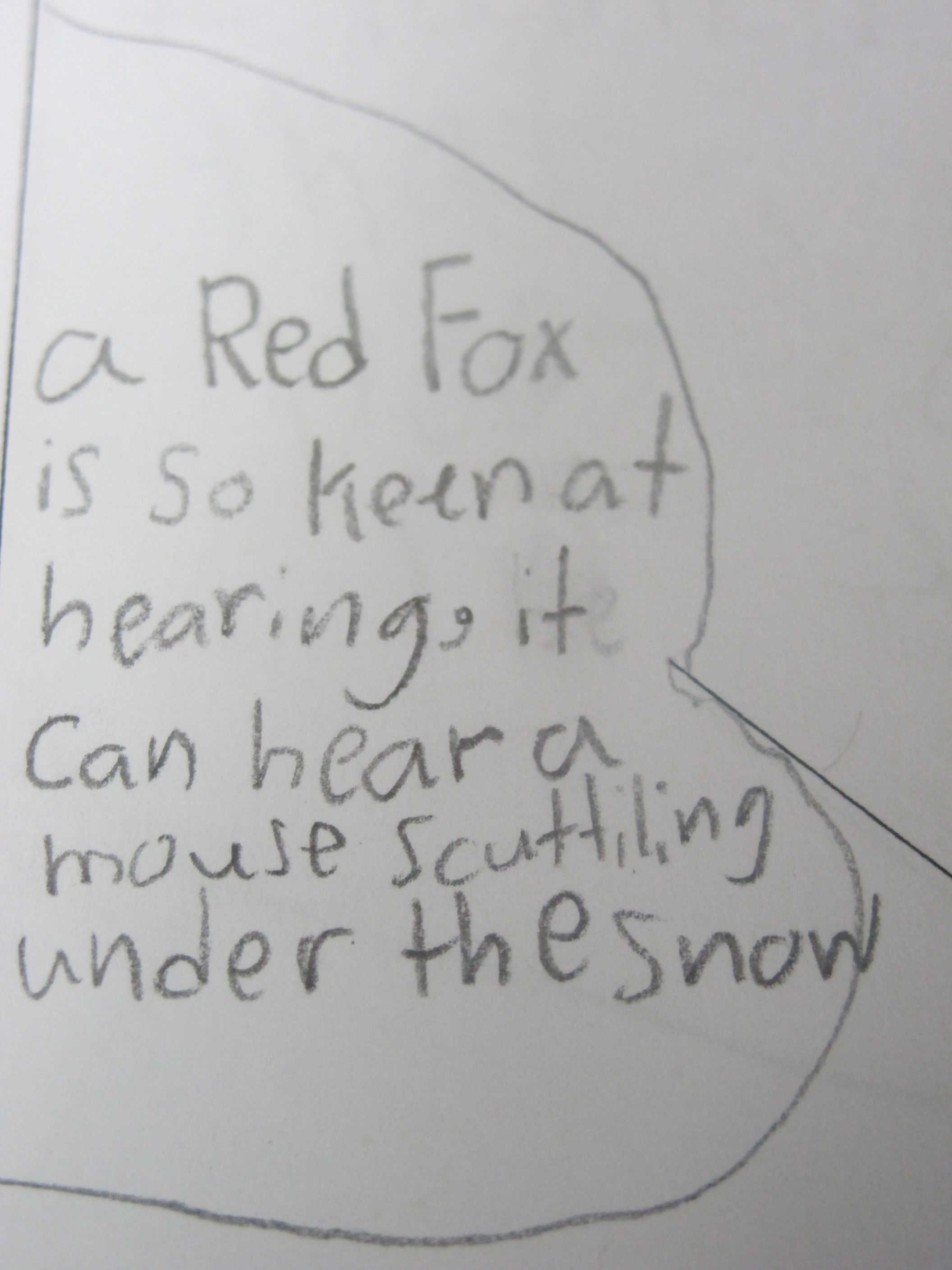
If you read the book, you might be most impressed as we were with the red fox and its keen hearing. Check out this link on Kate Messner’s blog where she shares a video of a real red fox listening for its prey under the snow.

The perfect book to share with city children who don’t get many opportunities to be out in a snowy world. Makes our upcoming field trip to go snowshoeing even more exciting! We now know what is happening under the snow! Wonderful how books really do open up new worlds but also allow us to look more intently at places that surround us that we don’t always get to explore.

Ermines? Huh? What are they?

Our reading group has continued to work on interacting with non-fiction text, making meaning together and determining importance. What this means? Talking, listening, sharing ideas, extending a thought, making and defending a position, and did we mention talking and listening? Because those things turn out to be the most important and most challenging skills we are working on!

Reading about Ermines

Today our task looked like this:

Step 1: List what we can predict about an ermine (Huh? A what? We had no idea what an ermine was!!) based on the limited information Ms. Gelson gave us: 1. Their fur is different colours depending on the time of year 2. They have very sharp claws 3. They live in the northern parts of the world.

One groups' predictions

The interesting thing about the discussion from the group that produced this chart above was their debate on whether or not questions could be predictions. In the end, it was decided that yes they could because they were linked to what information we were going to find out and made us want to read more. We were going to verify both predictions and answers to questions. Great thinking!

Predictions about ermines from another group

Step 2: Read the article in Chickadee Magazine about Ermines together

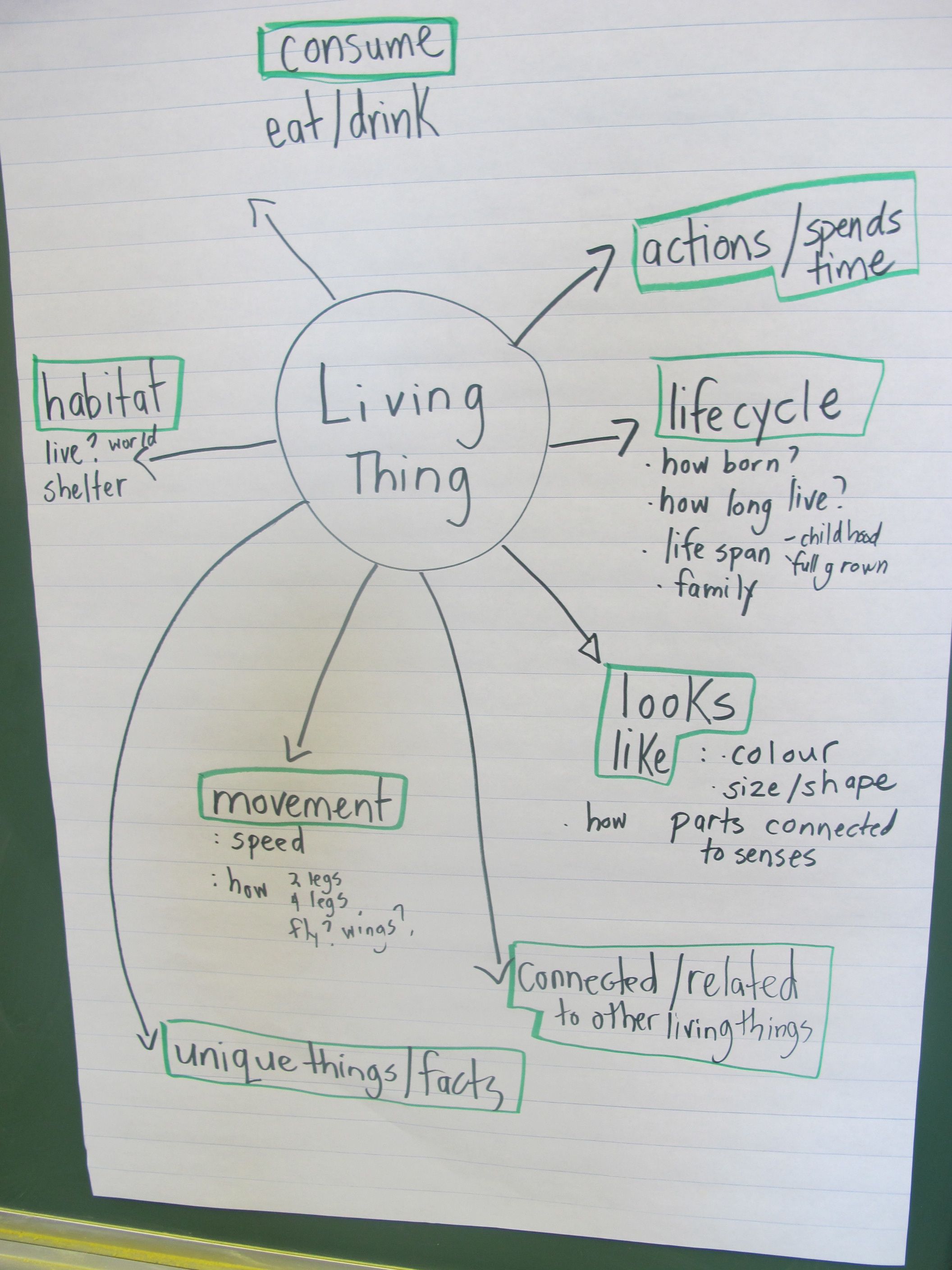
A chart we made together to help us determine what might be important when learning about a living thing

A chart we made together to help us determine what might be important when learning about a living thing

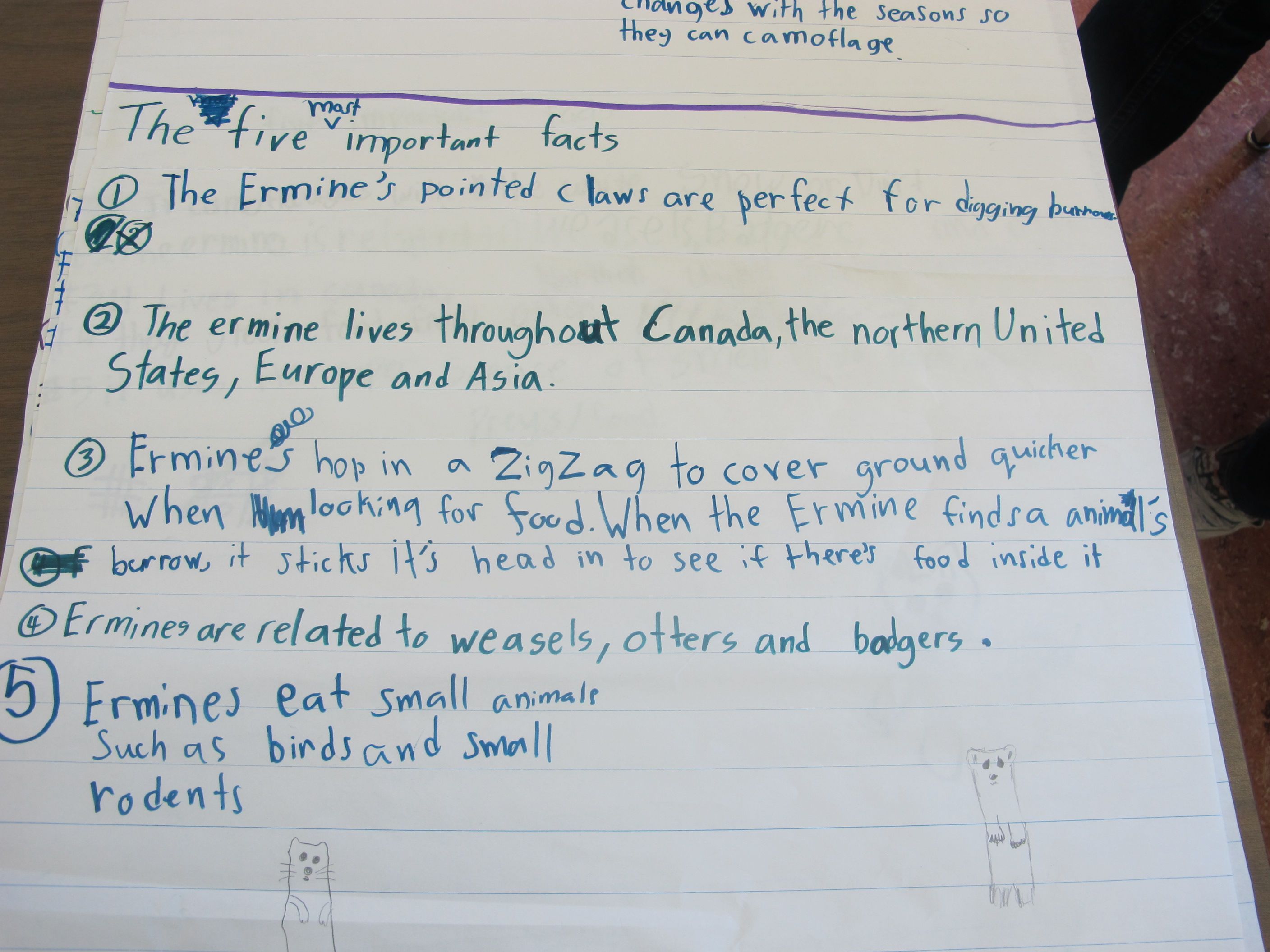
Step 3: Keeping in mind the chart we created (see above) decide on what are the 5 most important facts about ermines your group wants to include on your chart.

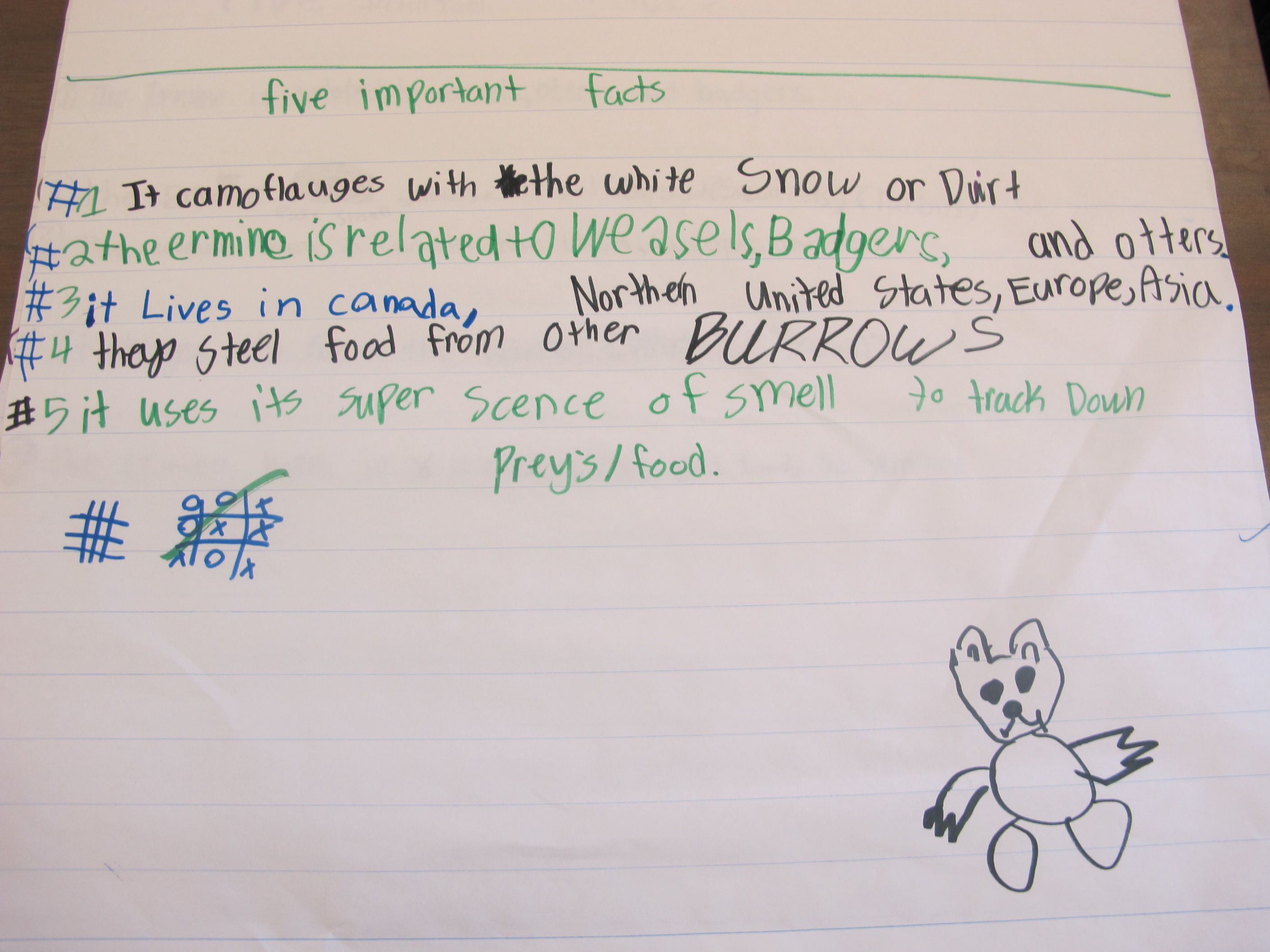
Important facts about Ermines

Important facts about Ermines

Not all groups included the same facts but all groups used the chart we made to help them make decisions.

Another list of 5 important facts

Another list of 5 important facts

Final Group list

At this point, this task does require some guidance from adults (Thanks to my patient and encouraging volunteers Miles and Nicole!) but our role is always listening, reflecting back what we hear and refocussing the group. Students are making excellent progress on developing these skills! We just started on activities like this in late December. We are well on our way!

As a teacher, what I love about these sessions, is that it is students interacting with text and each other to determine what is important.

Slowly learning about sloths (And how to work together!)

Group work. It’s an important skill. One that we need a lot of practice with – it is much harder than it first appears. There is listening to others, negotiating, turn taking, asserting an opinion, making a point, explaining your thinking, staying on task, having patience, agreeing, disagreeing, remaining polite . . . Wow! Not easy to do!

But on the last day before winter break, our Reading Group got brave and tried a new task that involved working together in a small group. Yes, there was a lot of encouragement needed to work productively and politely within our group (“No, you can’t be in a group by yourself,” “No you can’t change groups part way through the activity,” “Yes, you all have to talk together and agree.”) But, in the end, we made it and there was lots of  learning along the way – learning about the topic and about working together. 🙂

The task:

Step 1. The topic is sloths. In your small group, write down everything you know or think you know about sloths.

Compiling a list of what we know

Step 2: Read the article in Chickadee Magazine about sloths.

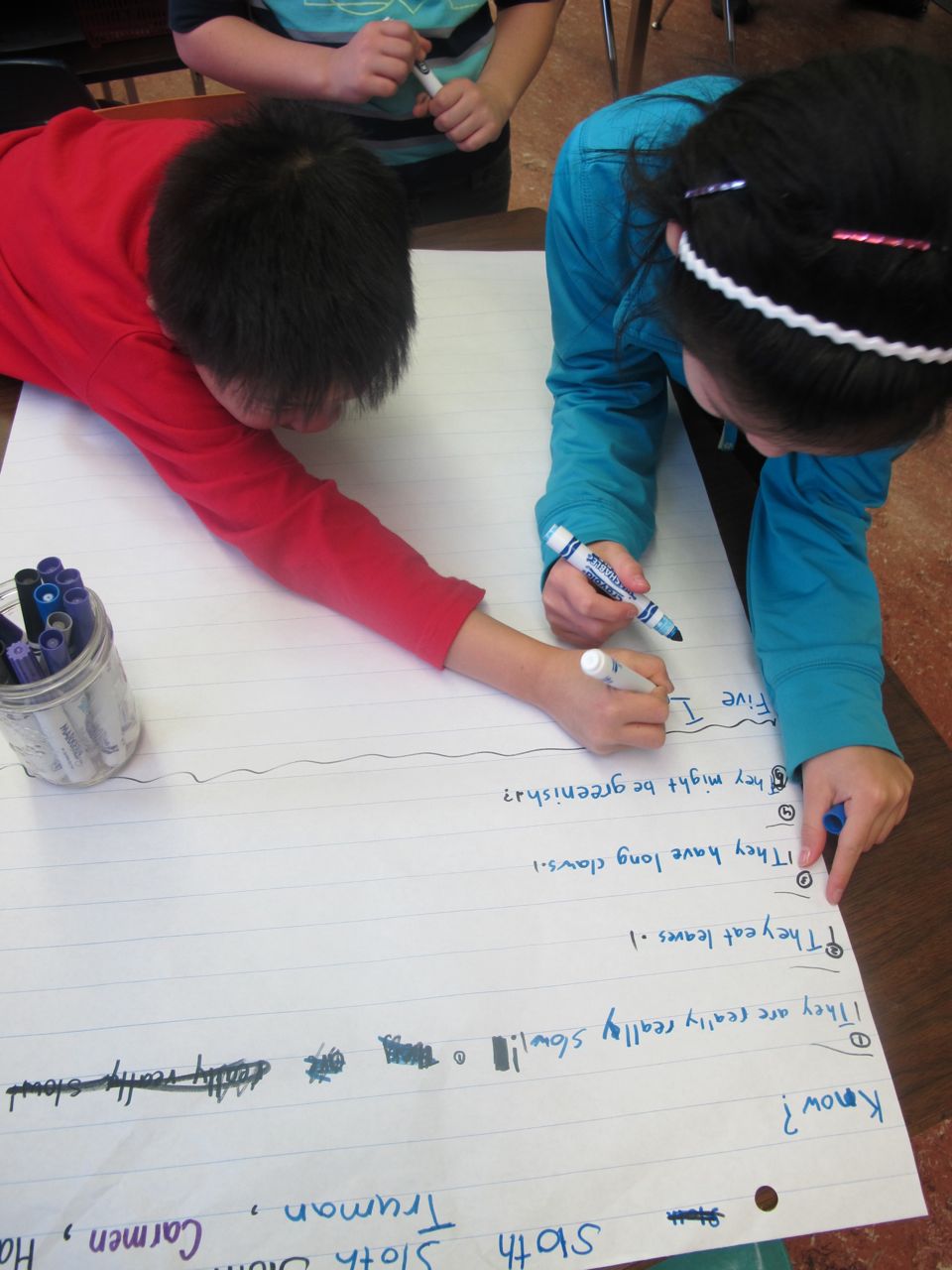
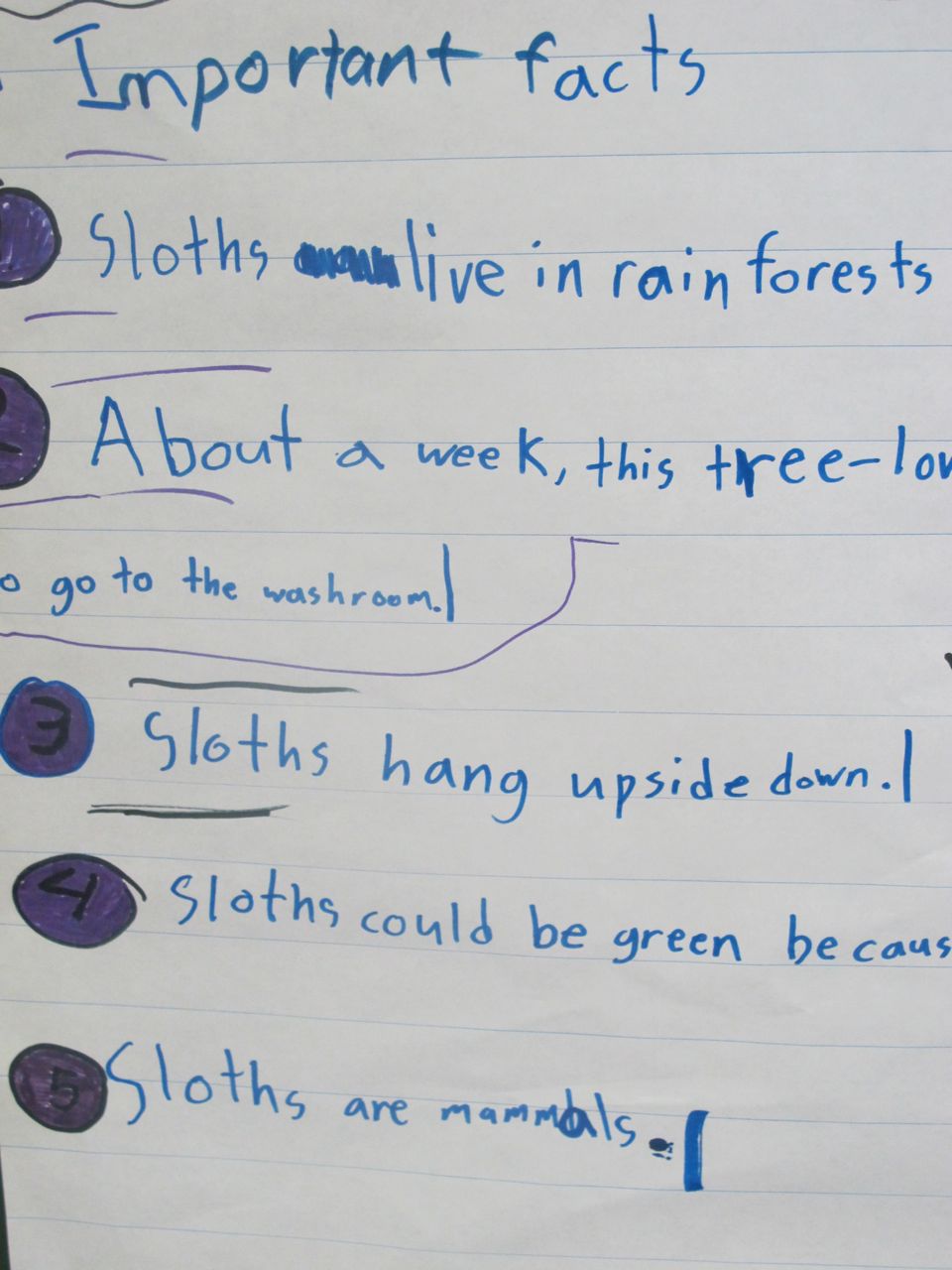
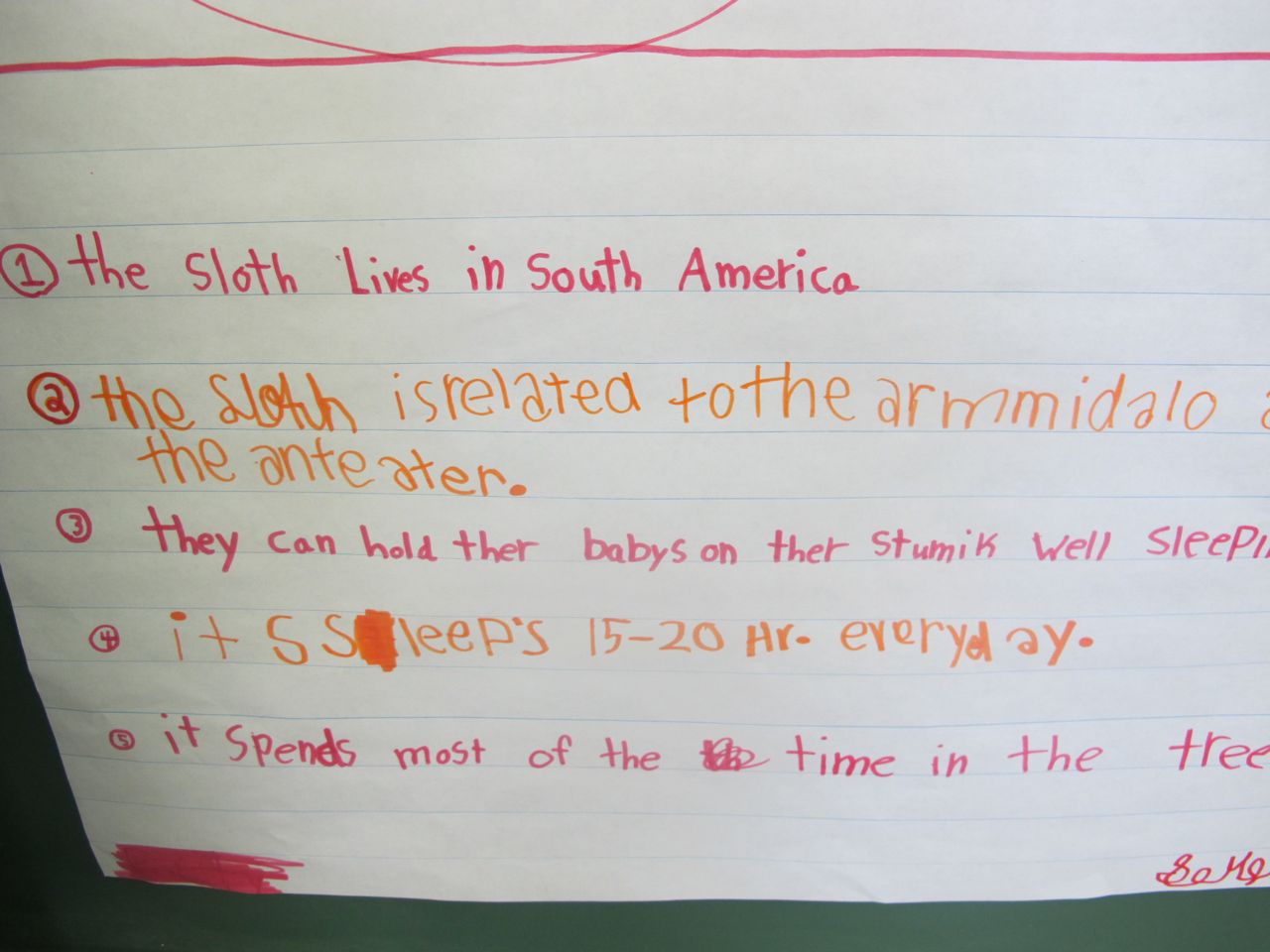
Step 3: In your small group, decide what are the 5 most important things you learned and list them.

One group's list

Another group added detailed pictures when they completed their list

Working together

Step 4: Post your lists and look for common (on at least 2 out of 3 lists) facts deemed important

Another list

Step 5: Discuss what we learned.

Students noticed that some things were on many of the lists: where the sloths lived, how long they slept each day and that they hung upside down. Other facts were different. We decided that we needed to come up with criteria about what is important to know about an animal so that we could figure out what are the most important facts. This will be for next time! We are off along the road to learn how to determine importance!

I was pleased that students got into the rhythm of sharing and listening and that after an initial bumpy start, all groups met with success. The really wonderful thing – so much emphasis on students talking and leading. Each group naturally took turns reading sections out loud. Everyone did a little writing. Everyone talked and listened. Other than setting the task and helping the transition into a small group activity, my role was in the background. I asked a few questions, encouraged successful collaboration and watched students take charge of their learning. Well done reading group!

The Wild Christmas Reindeer

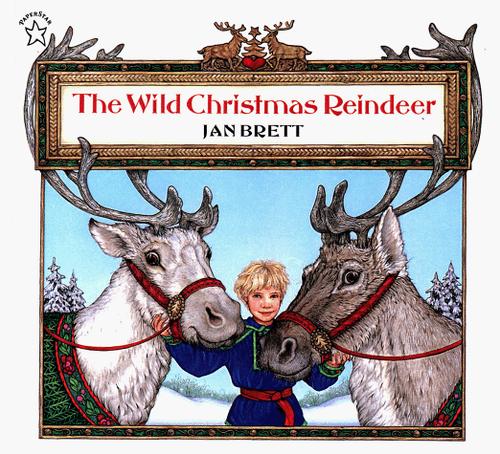
Today we read Jan Brett‘s The Wild Christmas Reindeer in our reading group.

Jan Brett is a favourite author for beautiful winter books. My home collection has many of her books and it was lovely to share this book with a small group today. In this story, Teeka is given the big responsibility of preparing the wild reindeer to pull Santa’s sleigh Christmas Eve. She approaches this task seriously and sternly and quickly learns that she needs to change her style to be able to work with the reindeer. A gentler, kinder approach is what makes a difference!

We are working on making observations about the story and asking questions about what we are still wondering.

Some observations:

  • Teeka wasn’t very good at her job at first
  • The reindeer didn’t like it when Teeka used a mean tone of voice
  • Teeka felt embarrassed about how hard she found her job
  • The reindeer forgave Teeka when she was kinder and more gentle
  • The reindeer were ready for Santa and Teeka was proud

Some questions:

  • Will Teeka do this job again next year?
  • Does a different elf take on this job every year?
  • Will Teeka train another elf to do it?
  • Were her jobs difficult? Carrying water? Brushing the reindeer?

Our week in pictures

Life has been busy at Seymour School! But lots of great learning and working together has been going on. Some highlights of the past week!

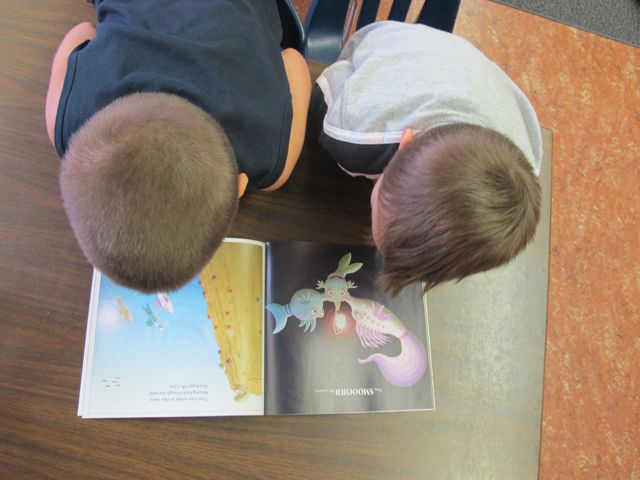
Buddy reading with our little buddies in Division 7 (K/1) is always a highlight of our week. This week we broke out the rhyme and repetition bin and enjoyed the repeating parts of stories we could share together.

Sometimes books call to you, "Come into the story!"

Sometimes books call to you, “Come into the story!”

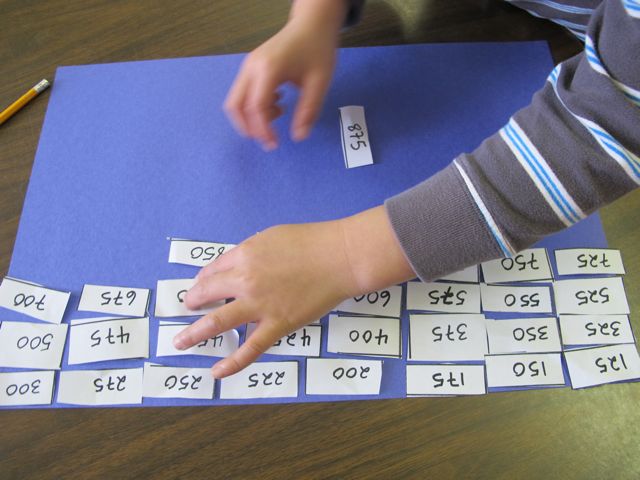
In math we have been working on skip counting. We find that physically moving numbers into sequence helps us practice the patterns really well. With 25s, we chanted “25, 50, 75, double zero!”

Follow the pattern!

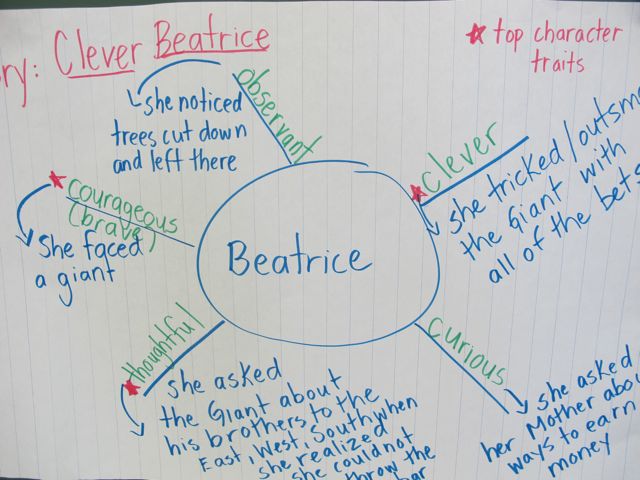
Our reading group shared a fantastic book called Clever Beatrice written by Margaret Willey and illustrated by Heather Solomon.

Clever Beatrice

As we read, we charted the character traits we noticed in Beatrice and at the end of the story, took turns sharing examples from the text that illustrated each point. Soon, we will be doing this with a partner and then eventually, on our own,  as we read a picture book.

Character Web

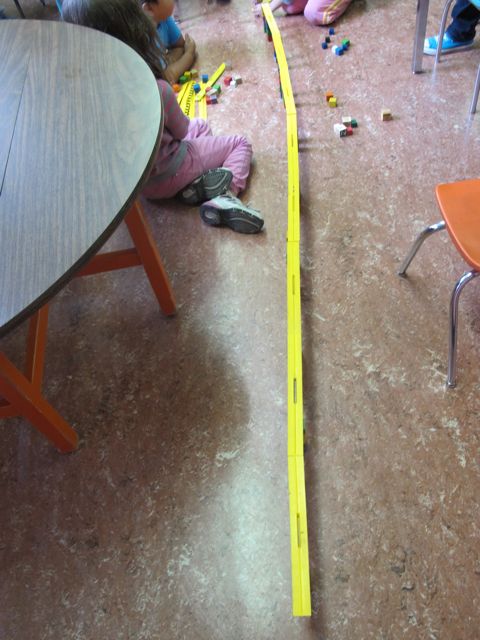
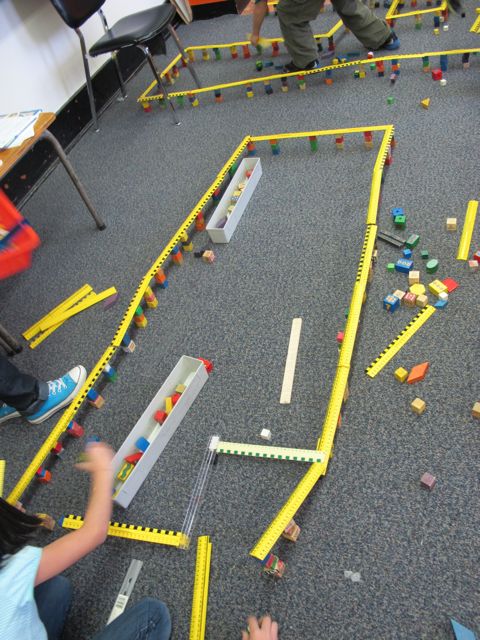
In Science, we have been studying structures. Today we learned some new vocabulary to help us talk about bridges: approaches, foundation, supports and span. The task was then to build a bridge using just blocks and rulers.

This group attempted to make the longest bridge possible and even test drove matchbox cars up the approaches and along the bridge.

Straight and long!

Another group wasn’t interested in the longest bridge, they were all about interesting! This bridge had multiple approaches and reinforced supports. (And options for multilane traffic)

IMG_1482

All over the classroom, bridge construction and team work could be observed. The adults loved listening to small group presentations about bridge design and how the groups worked together. One self assessment: “Next time, I will work harder at team work.” We really do depend on each other!

Bridges everywhere you look!

Great writers read (and take some inspiration!)

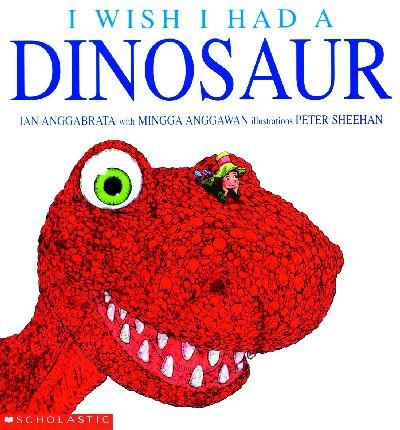
Today we read I wish I had a Dinosaur. This little title written by Ian Anggabrata (with Mingga Anggawan) and illustrated by Peter Sheehan provided lots of inspiration.

i-wish-i-had-a-dinosaur

It begins simply: I wish I had a dinosaur and goes on to tell us all of the ways life might be changed if a dino really did take up residence. A dino could make you braver, stronger and faster. But would everything be perfect? Hmm. . .

We did some of our own writing in response to this book.

Khai wrote a mini story called I wish I had an Elephant.

My elephant could clean the house and my car. It could spray my garden so no more hose for me! It could guard my house. It could give me a ride to school. But he would go in the mud and get dirty and then I got to spend all my time giving it baths!

Catriona’s mini story was called I wish I had a Horse.

My horse could give me rides whenever I wanted. When I go to my aunt and uncle’s I ride horses. I could practice riding my horse. I could ride to school and I could have a lot of time on the playground. But I wouldn’t have anywhere to keep him. My backyard isn’t big enough and it would eat all the grass! I couldn’t keep it in the house – he would knock over everything over. And how would I feed it? I guess I won’t have a horse after all.

How to Teach a Slug to Read (and maybe improve your own skills in the process)

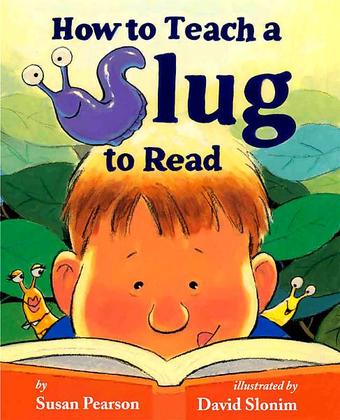
Do you know this book? How to Teach a Slug to Read by Susan Pearson and illustrated by David Slonim.

How to Teach a Slug to Read

Find a copy and appreciate. Ms. Sheperd-Dynes, Seymour’s Teacher-Librarian passed it on to me. I was delighted and knew it had to be shared and quick!

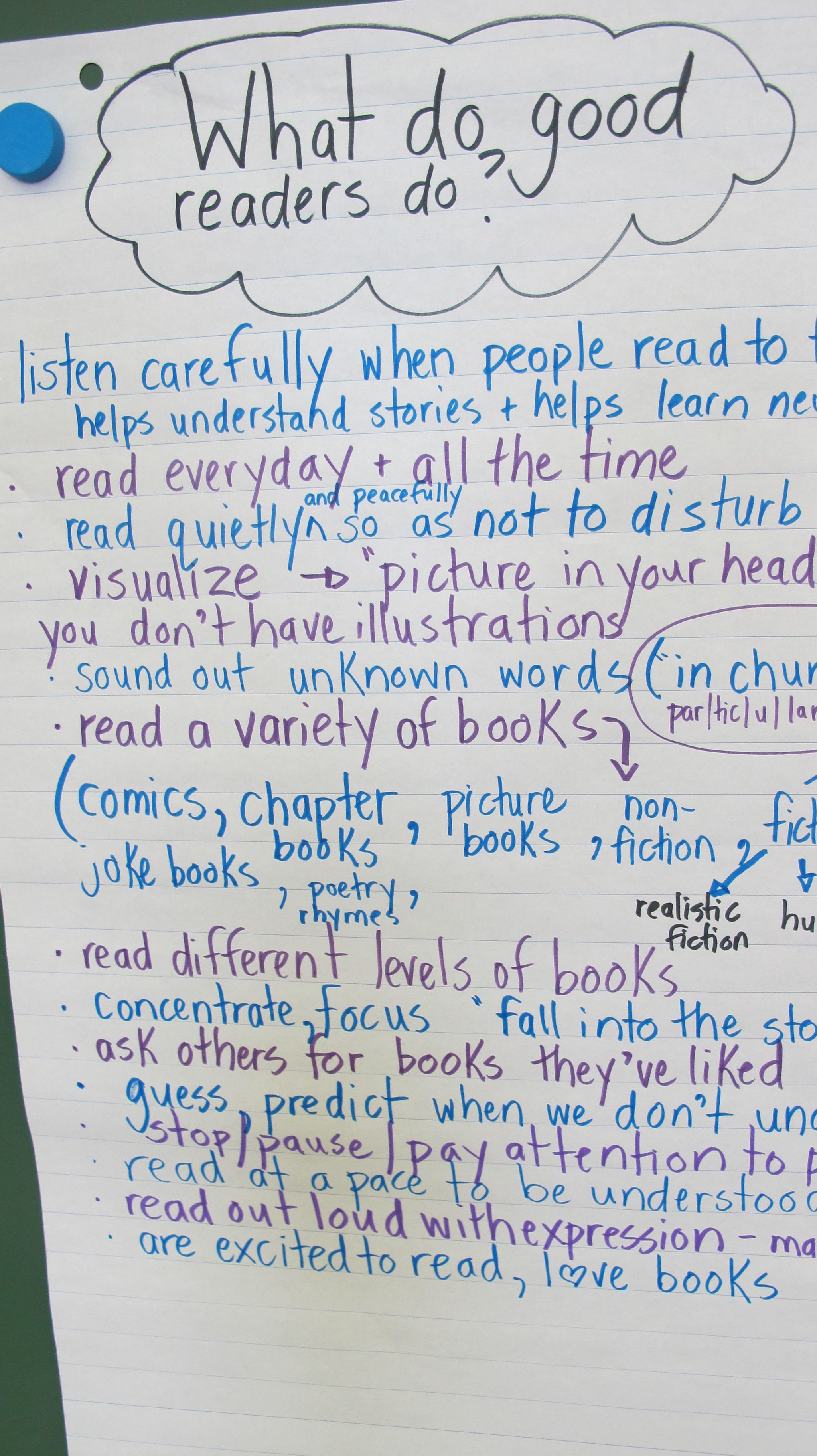
My reading group had been busy brainstorming a list about what good readers do. It is important to reflect on things we might not even be aware of but also, a good time to check in – are there things on the list I could be doing?
IMG_1072What do good readers do?

We certainly had some great ideas. I love that daily, enthusiastic reading made it on there.

Good readers love to read after all and the more they read, the better they get at it!!

We also knew that we needed to use a variety of strategies: sounding words out, visualizing, and paying attention to context clues. Good readers also read from a variety of levels and a variety of genres.

A balanced diet of books.

My daughter saw this list and had something to add: “Good readers feel the emotions of the characters so they can feel what the author wants them to feel.”

Yes, she’s brilliant.

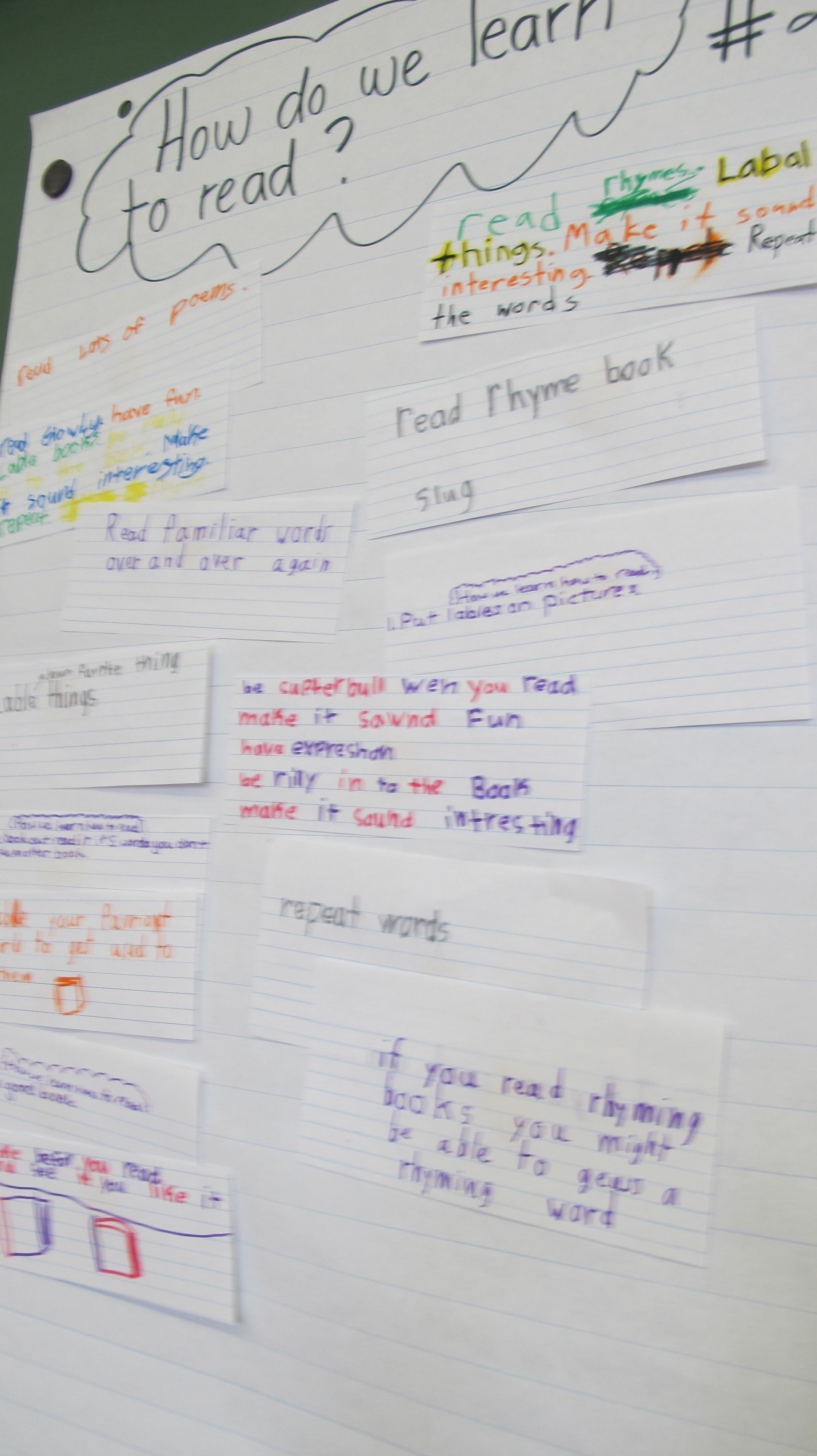
I then asked them to think about how they learned to read. I gave them strips of paper and felts and 10 minutes. Go write down everything you remember!

IMG_1068

Some more great ideas

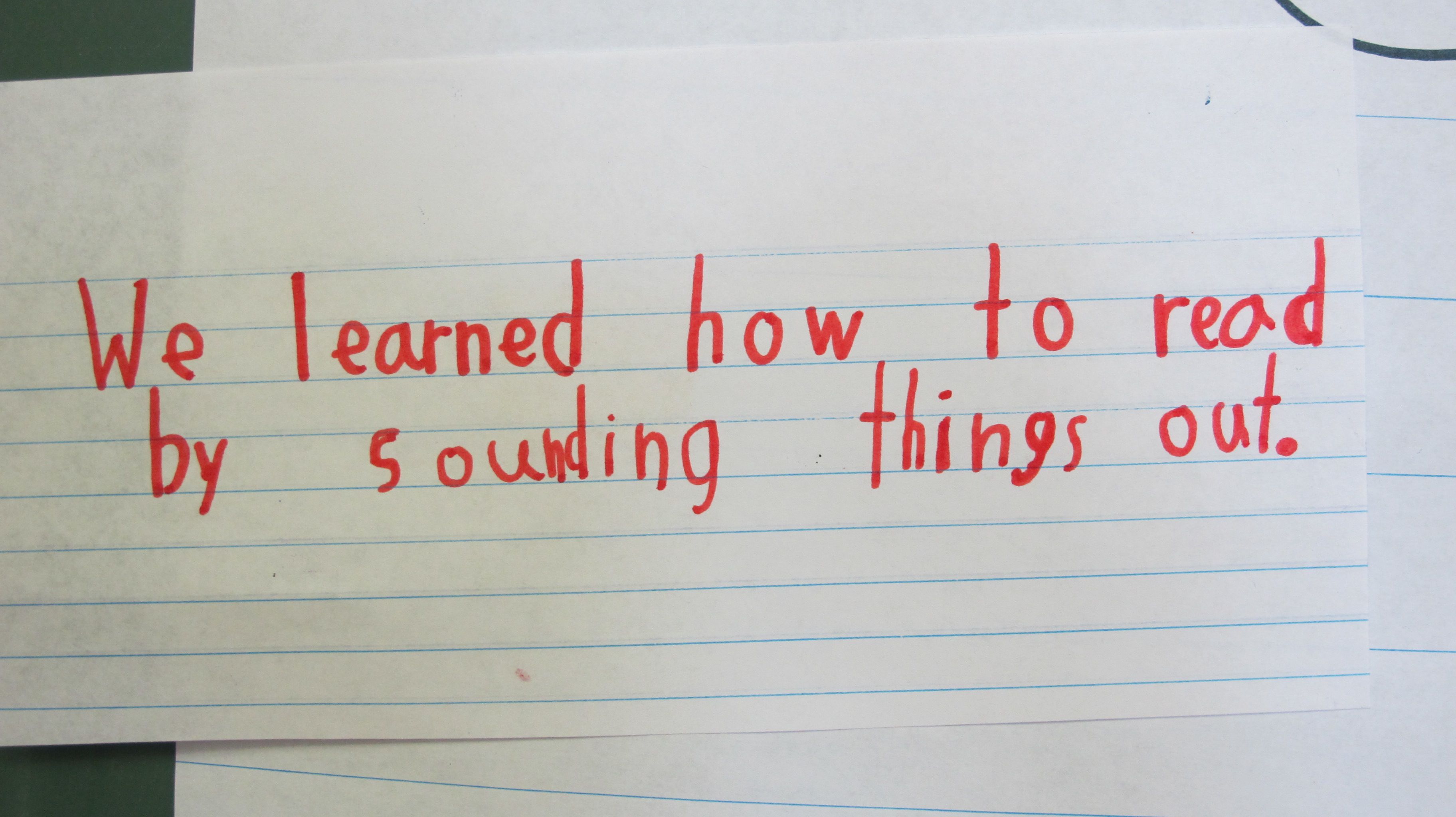
 I then read them the very clever and delightfully simple How To Teach a Slug to ReadYes, it is all about how Mama Slug teaches her little slug to read, but it is not much of a stretch to apply it to early readers and developing readers everywhere. When we finished the story, I gave the students 10 more minutes to write any more “How to learn to read tips,” that they might have thought of after hearing this story. Here is what happened second time around:

IMG_1076

Some specifics

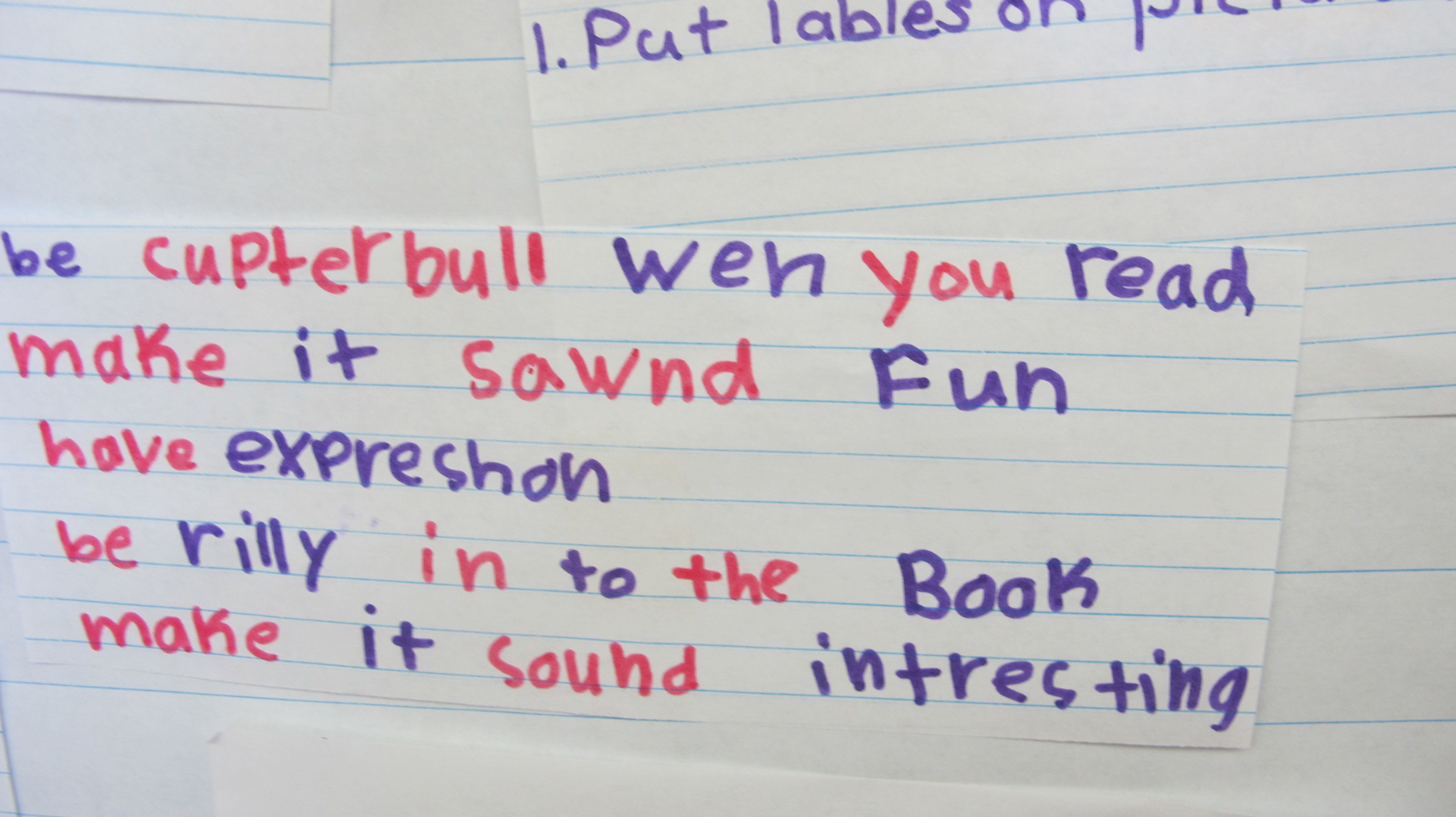
Be careful when you read.

Make it sound fun.

Have expression.

Be really into the book.

Make it sound interesting.


Another great idea

Other great ideas included: repeat favourite words, point out words in the text, label words in your world, learn from your mistakes, read poems, make it interesting, choose fun books, etc.

All in all some great learning and some careful summarizing of  important reading advice. We’re going to have great a year of reading.

“Why did we do this today?” I asked my students. “Well Ms. Gelson,” said Catriona, “It’s not like we know everything. There is still room for improvement! We have to keep thinking of ways to get better.”

They also told me that I should give this book to the Kindergarten teacher so she could use these ideas with her students.

Nick Bruel – we’re fans!

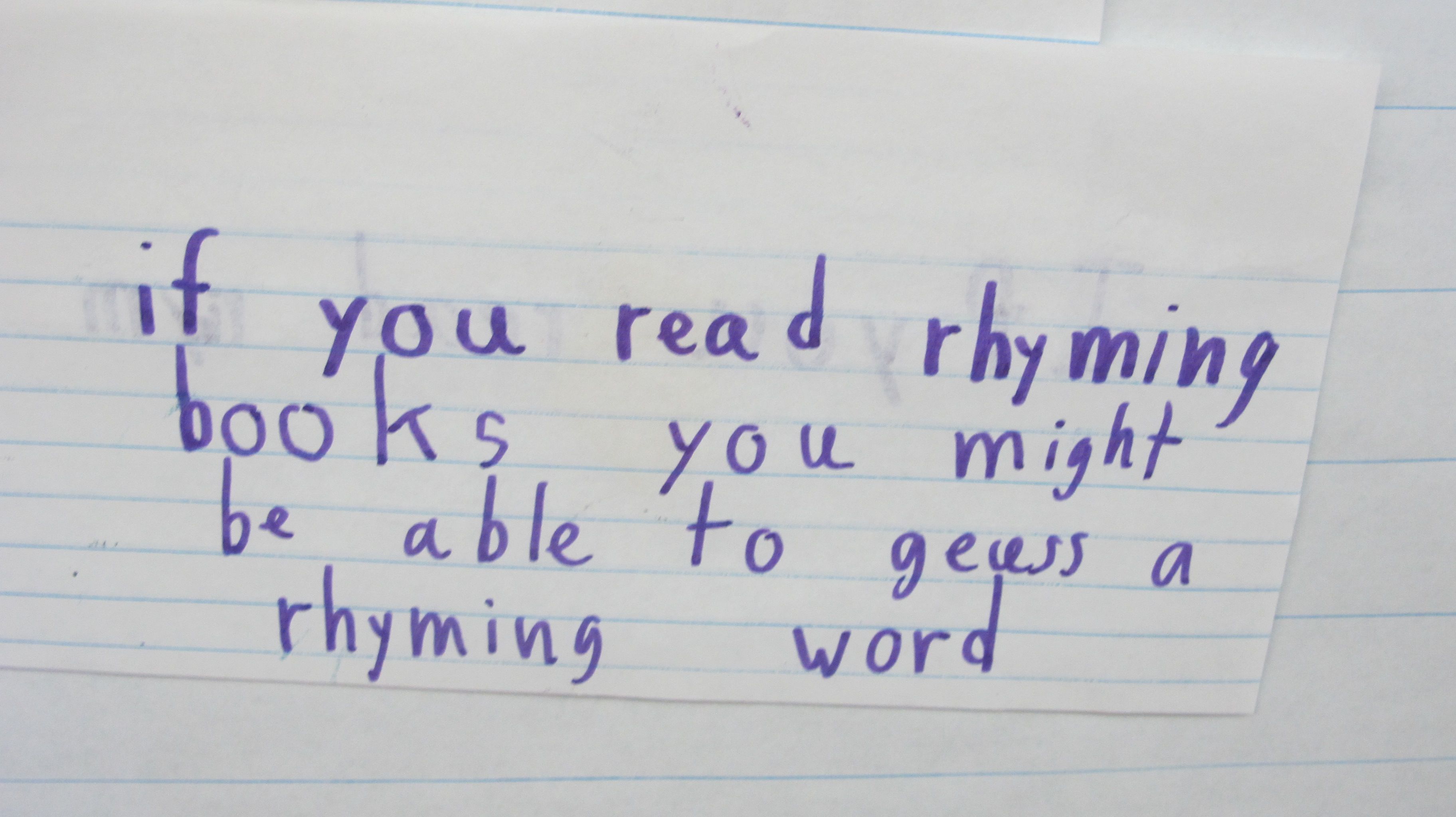
Our reading groups started this week. Everyone is very excited to build new skills and to reflect on the many skills we have. We started with a rhyming book by Nick Bruel, recommended to us by Ms. Morden. Students realized that they could fill in the blanks as I read aloud by paying attention to both the rhyming words and the context clues (a new term for many of us). This is one of the many skills that good readers (like us!!) possess.

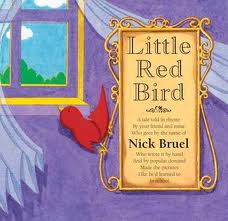
Little Red Bird is written and illustrated by Nick Bruel. A lovely story about choices, freedom and unexplored places.

Nick Bruel is popular in our class. His books Bad Kitty and Poor Puppy are picture book favourites.

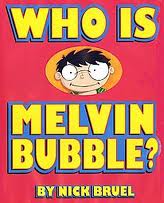
Who is Melvin Bubble? is a fantastic read aloud and the perfect inspiration for creative writing.