Owl Moon and inspired Owl Artists

One of my favourite books to read aloud in the cold dark days leading up to winter is Owl Moon, the 1988 Caldecott Medal winner written by Jane Yolen and illustrated by John Schoenherr. This book fits in with our theme of Courage that we are exploring through various picture books but also allowed us to have a wonderful springboard for some gorgeous owl art.
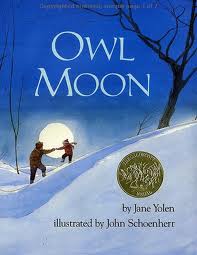
A little girl goes owling with her father for the very first time and we, the readers, get to creep along with this pair over hard packed snow illuminated by the moon. We breathe the cold air, feel our own cheeks burn and marvel at the wonderful sound of crying out “Whoo-whoo-whowho-who-whoooo,” and then feeling the silence (heavy and full of wonder) surround us. Yolen’s text is poetic and the illustrations magical. A treat for the senses! When an owl is finally discovered, all of us gasped at the huge wing span and bright yellow eyes depicted in the pictures. A gorgeous book and one I never tire of reading with a class.

We discussed why the little girl in the picture was so courageous even though she was out on a dark night deep in the forest. Some insightful suggestions from the group:

  • She was too excited to feel fear
  • Being with her Dad made her feel safe and secure
  • Watching and listening for the owl distracted her
  • She pushed her fear away because she was doing something (going owling) that she had been waiting a long time to do

After the story, Ms. Gelson led a mini “how to draw an owl” lesson inspired by this wonderful blog post from Art Lessons for Kids.

And wow, did students get engaged with making beautiful owl scenes to fill up our room!

First we drew owls on plain paper and added details and colour. Hailey did a lovely job of filling up her whole page with an adorable looking owl and baby.
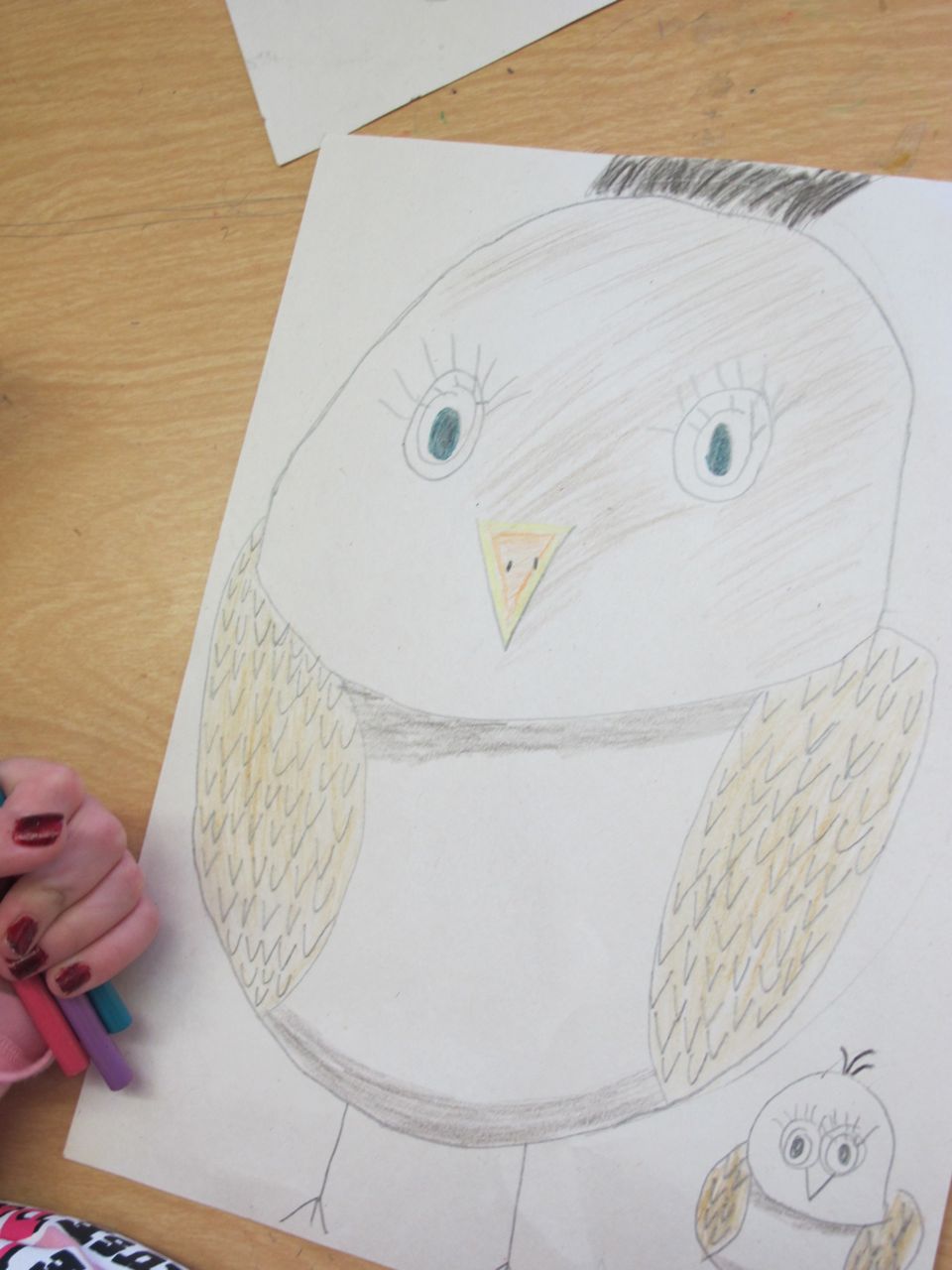
IMG_1658

Catriona drew her owl in flight!

IMG_1655

Some owls seemed to be waiting to jump into a picture book as the main character of an exciting story. Purity‘s owl is very dramatic.

IMG_1662

Students then cut out their owl (s) and glued them to black paper making a scene. Khai made a whole family of owls perched on a branch.
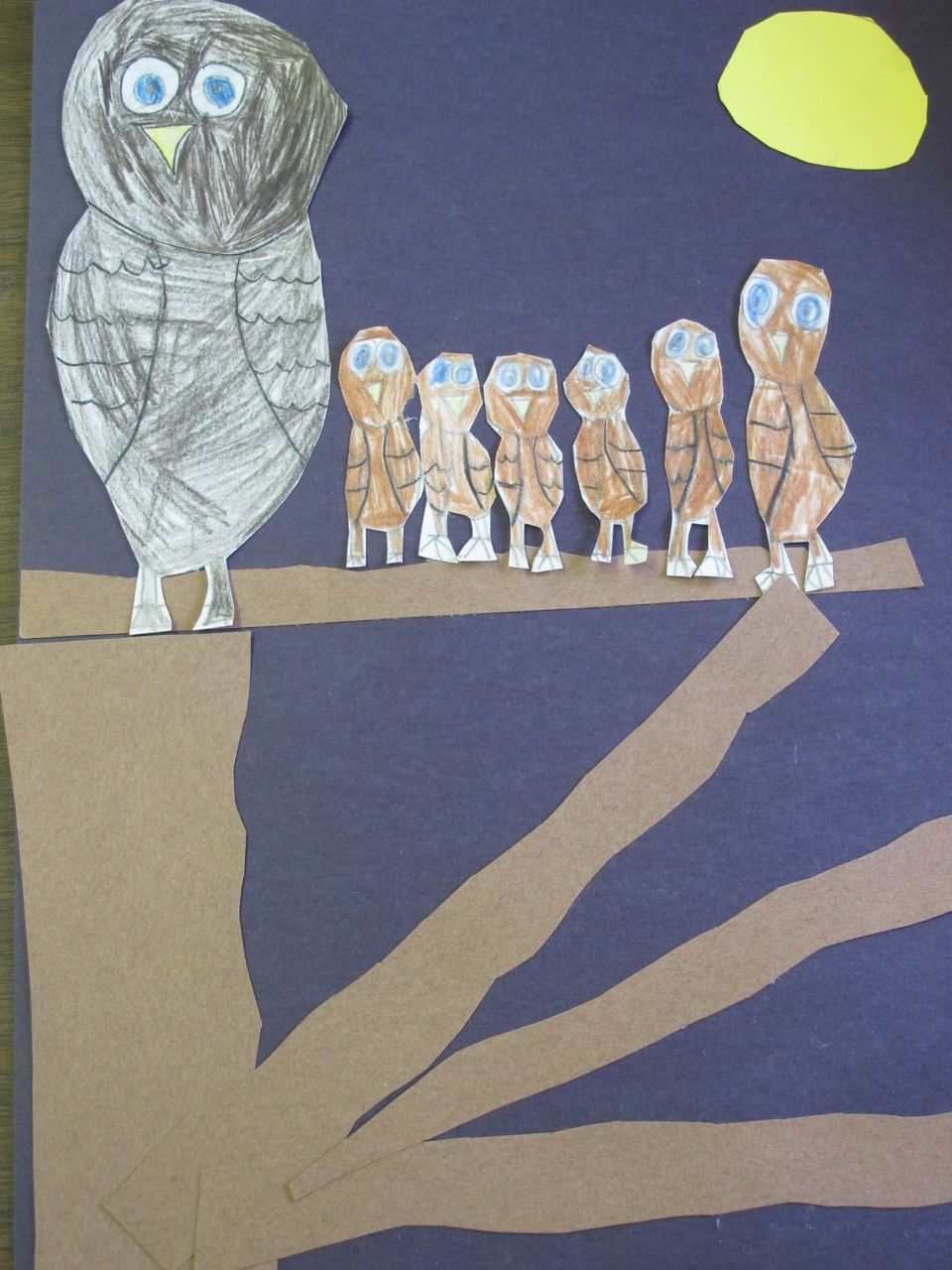
IMG_1657

Carefully positioning owls on the page.
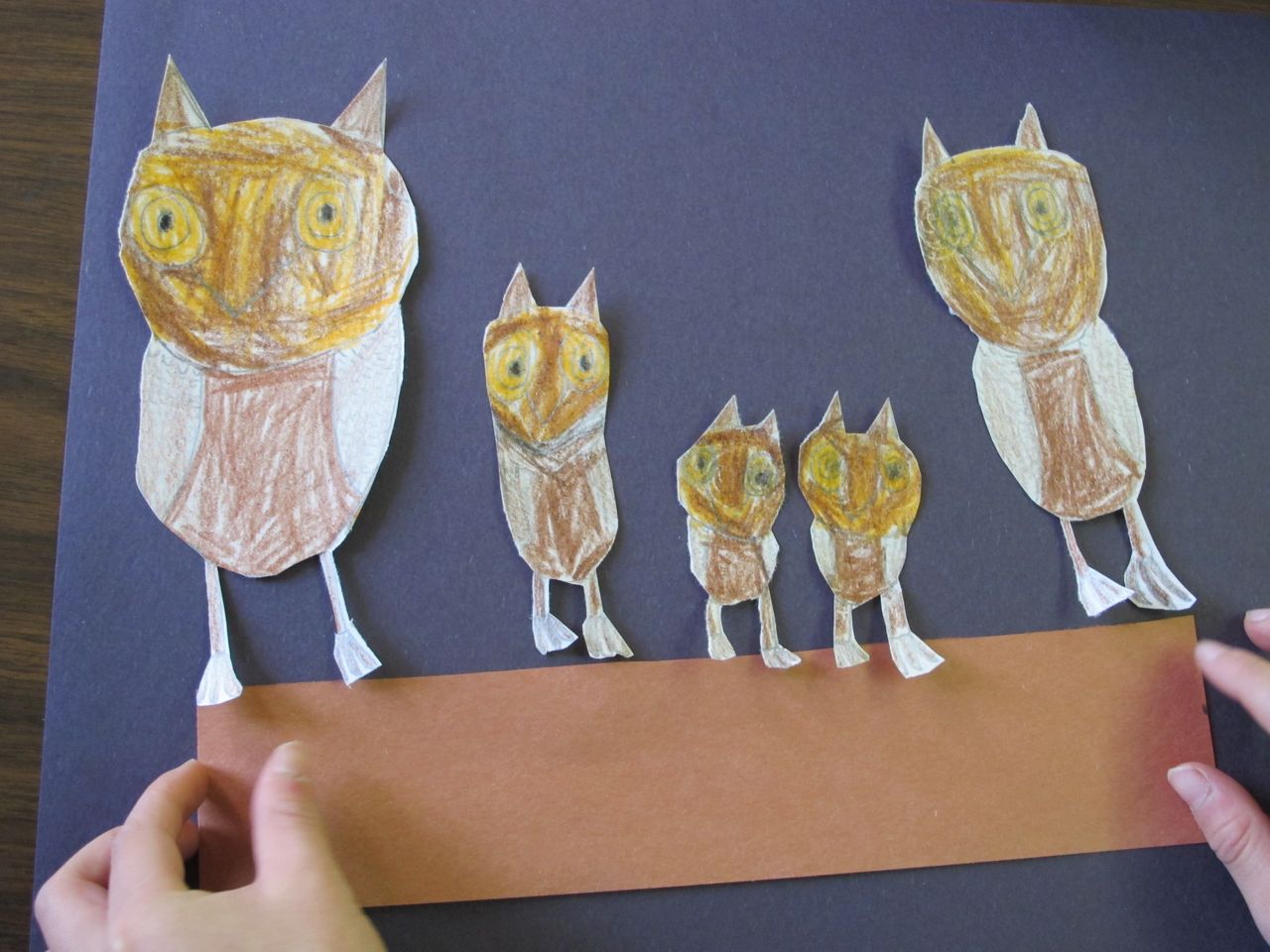
IMG_1660

Sergio was very clear that his owl was pregnant and put an awaiting nest on the branch. Many debates began whether an owl could be pregnant if it lay eggs. Some people thought an owl should be called “ready to lay eggs” and not pregnant. Sergio made it clear he liked his idea best and made a label on his picture pointing to the owl’s belly “pregnent” 🙂
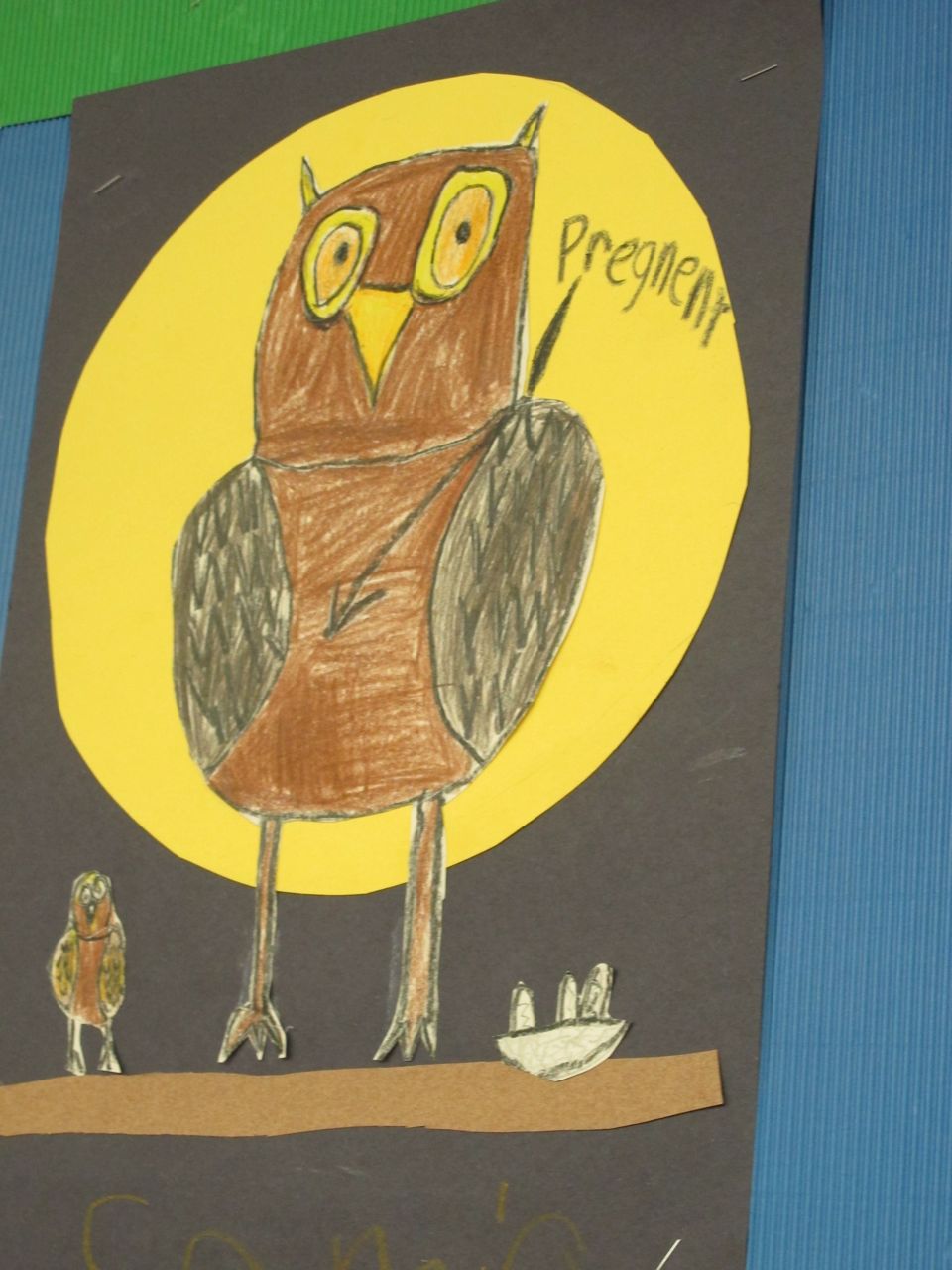
IMG_1666

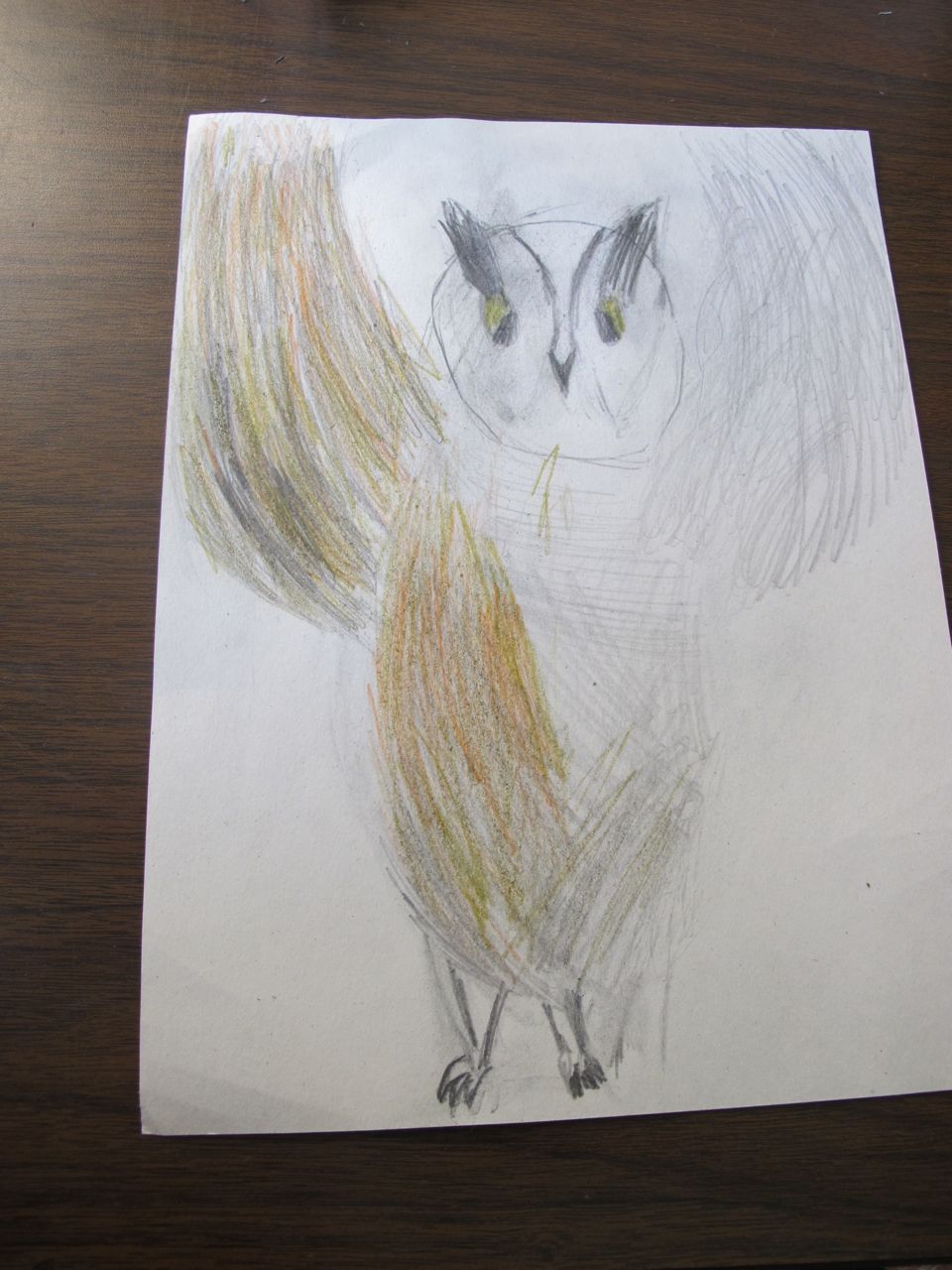
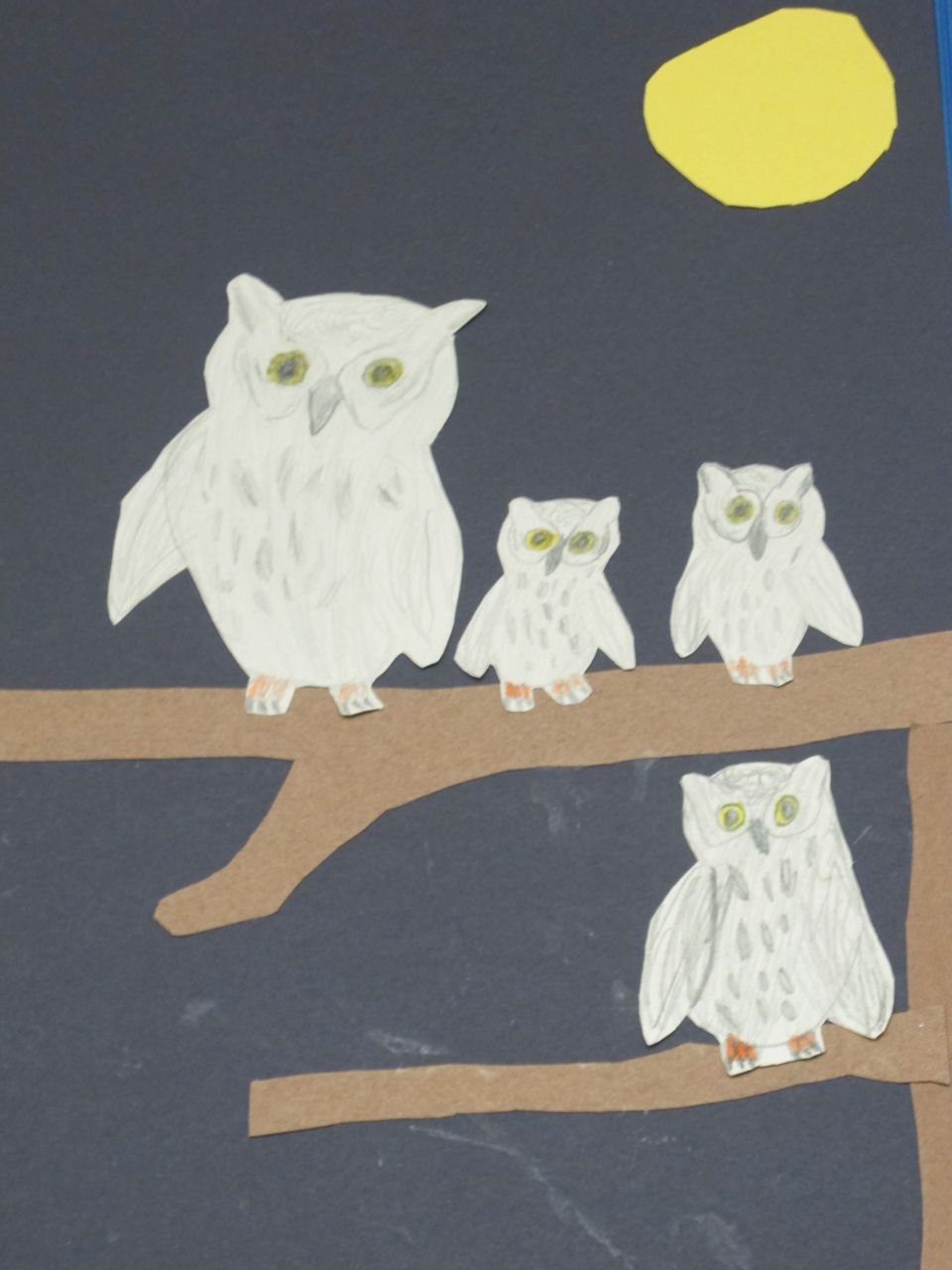
Truman made lightly grey owls with beautiful ear tufts. Striking against the black background and yellow moon.
IMG_1663

Huge words, huge feelings

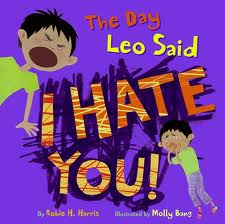
Last week I read The Day Leo Said I Hate you! written by Robie H. Harris and illustrated by Molly Bang (famous in my world for When Sophie gets Angry, Really, Really Angry.) We read it because some days there are lots of strong feelings and strong words flying around our classroom and so my belief is we need to embrace what’s going on and explore it.

This book lets us explore how we feel when we get mad. What do we do with those frustrated feelings? What happens when our feelings explode and we say something that is hurtful? Can you take back words once they are spoken? Where do you go from the terrible words to get back to the care and connection that a relationship is made out of?

Leo tells his Mom, “I hate you!” Then the two of them discuss how those words made them each feel.

Did my class react? Oh my yes! One student pointed out, “__________ shouted those words at you last week, Ms. Gelson!” Very true. Now we had another way to look at that situation since we had been able to explore it through a well told story. Those words have big power, but there is also power in calming down, reconnecting and moving on. Talking about it lets it all be normal.

One student burst into tears when our story ended. This story hit close to home and before she could continue with her day, she needed to write a letter to a family member to apologize for some strong words used that very morning. The book was a gift – it allowed her to give words to her sad feelings and move on with her day.

I believe strongly in the healing power of books. When we talk about the stories, connect to the strong feelings, we learn about ourselves and our place in our world. Using powerful literature allows us to reach in and grab a hold of hidden feelings and shake them up. Doing that in a caring, calm classroom builds community along with strong emotional learners. Books have the ability to connect us through stories and our conversations allow us to strengthen those connections even further.

One Horse Farm

Our BLG reader this week was a new reader for us. Welcome Radica! Radica brought a very special book: One Horse Farm written and illustrated by the amazing Maine artist Dahlov Ipcar.

This book was first published in 1950. It tells the story of a boy and a horse that grow up together on a farm and gives us a lovely sense of daily farm life through the seasons. Simple, soothing and all in repeated colours – turquoise, orange, black, white and brown. The boy Johnny and the horse Betty age in different ways – my students were fascinated that Johnny was an adult but Betty was an old horse. Why? Great discussions on life span and rates of growth and how they differ between humans and various animals.

To learn more about Dahlov Ipcar, go here.

Her artwork is amazing. Wildebeests and Zebras (at left)  is just one of many pieces that feature animals. More art work is featured here. Ipcar is 94 years old and still painting!  She has paintings in the permanent collection of the Metropolitan Museum of Art and the Whitney Museum of American Art.

Jack and the FlumFlum Tree

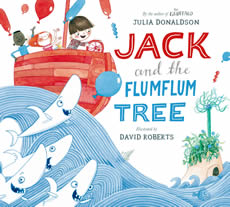
BLG reader Deborah brought us a fabulous book to read together: Jack and the FlumFlum Tree written by Julia Donaldson and illustrated by David Roberts.

How much do we love to read rhyming text together? A whole lot! Add in some quirky repetitive phrases like,

“Don’t get your knickers in a twist,” said Jack.

“Let’s have a look in the patchwork sack.”

and well, we know we have an energizing, engaging book to jump into!

Jack’s granny had great big purple spots (lots and lots). The diagnosis: the moozles! Oh no! But . . . there is a cure – the fruit that grows on the flumflum tree on the faraway Isle of Blowyernose!  So Jack sets off with Rose and Stu and a patchwork sack full of an odd assortment of items (careful readers should pay attention to what is in the sack!) The journey to the Isle of Blowyernose is not an easy one. Circling sharks, a leaking boat, and Stu overboard are some obstacles that the crew must overcome. Those items in the sack are very handy and the three adventurers complete their mission successfully. Such a fun read aloud! Students were repeating reoccurring lines quickly and loved to guess which item from the sack the children might need to solve each problem. There is nothing like a room full of shrieks of  “Ohhh!” and “Ahhh!” and children shouting out answers in unison. Verdict: This book is a winner! Perfect for buddy reading and sharing again and again!

Our student reviewers report:

Truman: I like the part when they sailed to Blowyernose and they blew their noses!

Khai: I really liked the illustrations because they were nice and bright!

This is a fabulous author/illustrator pair and we enjoyed another of their books – Tyrannosaurus Drip last spring with a BLG reader.

Julia Donaldson has a fantastic website to check out with information about all of her books. Exciting news?! Julia is the new Children’s Laureate. Read about her goals and passions here.

David Roberts is one of my very favourite illustrators. His website is wonderful to explore.

Farley and the Lost Bone

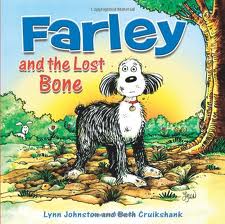
Our BLG reader Bill brought us Farley and the Lost Bone by Lynn Johnston and Beth Cruikshank, well known for the cartoon “For Better of Worse.” I think Bill was quite excited to share the talent of these cartoonists with Division 5!

Poor Farley has lost his bone and can’t remember where he buried it! Well, truth be told, he can’t even remember that he lost it to begin with – he just has a longing and a nagging feeling when he sees Elly digging in her flower bed. When he realizes that he has misplaced his important bone, he digs up many corners of the yard in an attempt to find it. The family is not too happy and he gets yelled at and chased multiple times. But Farley perseveres and finally discovers his bone! The family forgives his incessant digging attempts when they realize he was just after his bone all along. A lovely story for dog lovers and for those that find remembering important things a little challenging at times :).

Our student reviewers report:

Jacky: He should just put signs where the bone was. Then he wouldn’t have so much problems.

Khai: I like it how in every illustration there is a bone! The book is colourful and funny.

Carmen: In this book, all the pages have a bone. Farley even forgot where he put his bone so then Farley went to his people friends but they told him to go away. After Farley ran off, he felt soft soil and he dug and found his bone!

Searching every illustration for a hidden bone is a lovely interactive feature between readers and listeners if this book is read aloud.

Deborah Hodge visits Division 5!

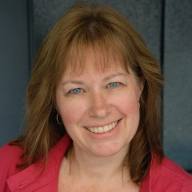
On November 15th, 2011, local author Deborah Hodge visited Division 5 to share her books, her process and her knowledge with us.

Author Deborah Hodge

Deborah Hodge has a fantastic blog to check out and even wrote about her visit with us at Seymour! Students were very excited when I let them know that we had an author coming to visit. When Deborah came to the door just before the recess bell, she was greeted by a huge hug from Sergio who looked up at her and said: “Hi Deborah. I really like to read books.” During recess, Deborah set up all of her books around the classroom and when students returned, Shae-Lynn exclaimed, “Did you really write all of those books?” It was a very impressive display!

Deborah explained that when she had been a teacher, many of her students wanted to read non-fiction books but the text and language was just not at their level. She was motivated to create non-fiction titles that were much more accessible – full of fabulous non-fiction features like labelled diagrams, a glossary, fact boxes and interesting facts! Each book contains something life sized in a drawing at the back of each book.

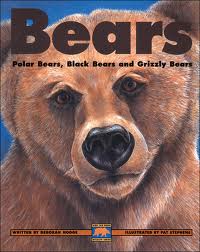
Deborah’s first book was Bears, a popular title in our classroom.

Deborah began sharing the steps in making a non-fiction book like doing the research, writing the text, revising and editing, working with an illustrator, etc. She shared examples of each step as she described it. At one point about mid-way through the series of steps, one student let out a big sigh. “Wow! There really are a lot of steps in making a non-fiction book!

Deborah also shared some cool facts she learned as she researched her various books. A few favourites of ours:

  • An anaconda is as long as a bus and as heavy as two big men
  • When a polar bear cub is born, it is as small as the palm of your hand
  • A mother deer leaves the fawn alone when it is first born so that her scent won’t attract predators.

Deborah also brought in animal fur and animal skulls to show us. Very interesting and fun to interact with!

IMG_1511

IMG_1528

Deborah left us with more than a great learning experience – about how non-fiction books are made, about animals, and about furs and skulls. She left us with some lovely gifts.

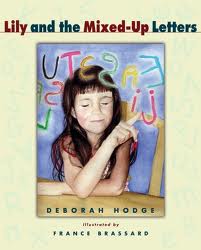
First she signed our classroom copy of  Lily and the Mixed up Letters. This wonderful book about a little girl who struggles learning to read is of course written by Deborah and illustrated by France Brassard. It is a favourite of both Ms. Gelson and Ms. Hibbert.

Then Deborah gifted our classroom with two of her latest and greatest books! We plan to delve into these books in the Spring when we can learn more about growing food in different places.

Then, last but not least, Deborah gave each student a copy of one of her non-fiction titles.

I am a big believer of children owning their own books and having their own book collections – the power of “books in hand and in home.” Deborah signed each book for each child and in the last week I have heard students making comments like, “Did you read about . . . . in our book?” Thank you Deborah for such an amazing morning and such generosity!

Our week in pictures

Life has been busy at Seymour School! But lots of great learning and working together has been going on. Some highlights of the past week!

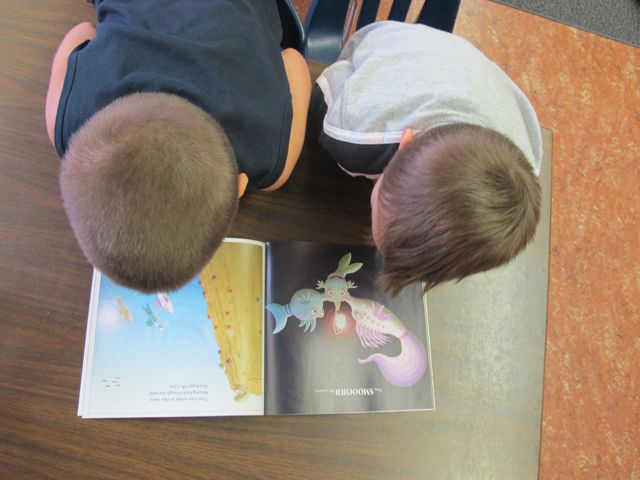
Buddy reading with our little buddies in Division 7 (K/1) is always a highlight of our week. This week we broke out the rhyme and repetition bin and enjoyed the repeating parts of stories we could share together.

Sometimes books call to you, "Come into the story!"

Sometimes books call to you, “Come into the story!”

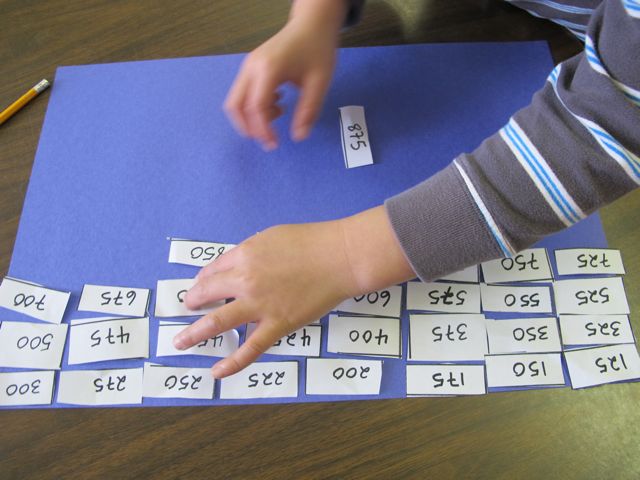
In math we have been working on skip counting. We find that physically moving numbers into sequence helps us practice the patterns really well. With 25s, we chanted “25, 50, 75, double zero!”

Follow the pattern!

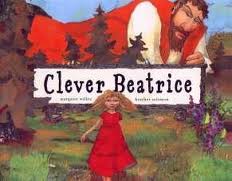
Our reading group shared a fantastic book called Clever Beatrice written by Margaret Willey and illustrated by Heather Solomon.

Clever Beatrice

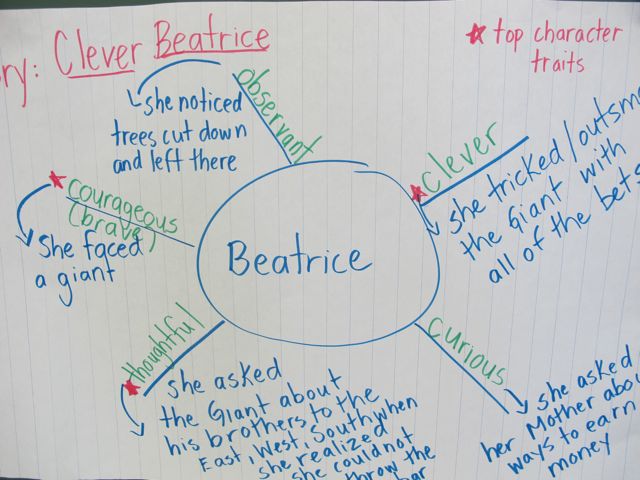
As we read, we charted the character traits we noticed in Beatrice and at the end of the story, took turns sharing examples from the text that illustrated each point. Soon, we will be doing this with a partner and then eventually, on our own,  as we read a picture book.

Character Web

In Science, we have been studying structures. Today we learned some new vocabulary to help us talk about bridges: approaches, foundation, supports and span. The task was then to build a bridge using just blocks and rulers.

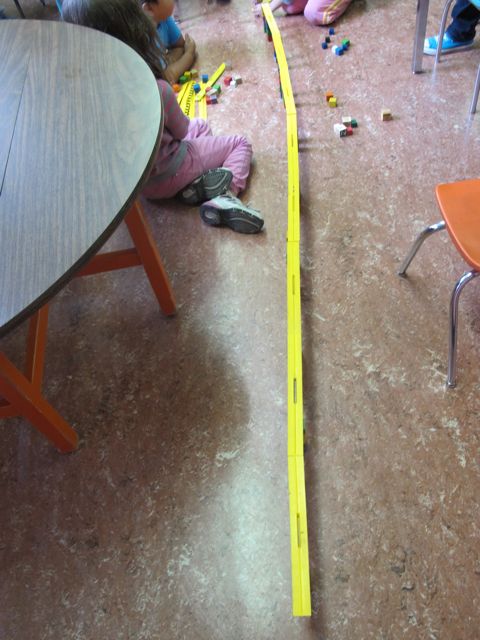
This group attempted to make the longest bridge possible and even test drove matchbox cars up the approaches and along the bridge.

Straight and long!

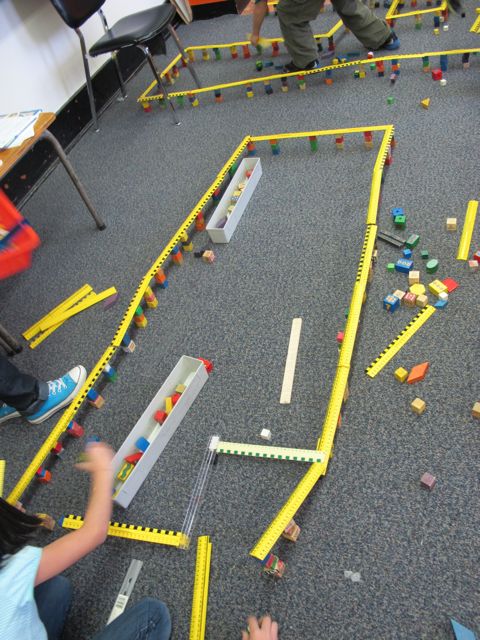
Another group wasn’t interested in the longest bridge, they were all about interesting! This bridge had multiple approaches and reinforced supports. (And options for multilane traffic)

IMG_1482

All over the classroom, bridge construction and team work could be observed. The adults loved listening to small group presentations about bridge design and how the groups worked together. One self assessment: “Next time, I will work harder at team work.” We really do depend on each other!

Bridges everywhere you look!

Sneaky Sheep

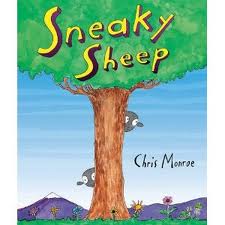
This week our BLG reader Maria brought in a fun read aloud –  Sneaky Sheep written and illustrator by the talented Chris Monroe.

Rocky and Blossom are two sheep among 147 others who are all watched over by Murphy the sheepdog in a large meadow. Rocky and Blossom are determined to explore the meadow on the mountain far away. Despite their sneakiest attempts at escape from Murphy’s supervision, Murphy always seems able to bring them home. One day however, they do manage to get away and are threatened by a wolf. Murphy turns up at a critical moment and helps them to safety.

This story had lots of drama and funny bits but our classroom experience brought even more humour to the story. Early on in the story, there was a page that showed our two sneaky sheep juggling fire. Jacky in our class was convinced that the picture showed wrestling chickens. The rest of the story seemed to take on a completely bizarre twist as Jacky wondered if the wrestling chickens would come back. It was a kind of “you had to be there to understand” experience but I don’t know if any of us will ever pick up this book again without thinking about the wrestling chickens!

Our Student Reviewers report:

Khai: I like the designs and drawings because it was colourful and really nice. I liked the part where the wolf comes and scares them because it was kind of funny.

Catriona: The drawings were good but their sheep dog Murphy, does not look like a sheep dog should. Otherwise, it was a very funny and good book.


Thunder Cake

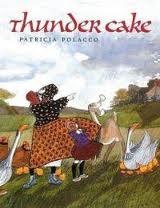
I am a huge fan of author/illustrator Patricia Polacco. Her book Thunder Cake helped us continue our discussion about how to be courageous and how to manage our fears.

The little girl in this story is very afraid of thunderstorms – hide under the bed afraid. Grandma soothes her explaining that summer storms full of thunder and lightning are made for baking Thunder Cake. The mention of ThunderCake gets some attention and Grandma is able to explain how to count seconds when you see lightning and stop counting when you hear the thunder to help figure out how far away the storm is.

My students loved counting along and then laughing when I read out Polacco’s different versions of thunder:

“BAROOOOOOM”

“CRACKLE, CRACKLE BOOOOM, KA-BOOOM”

“KA-BANG BOOOOOOAROOOOM”

It was all very exciting and almost like a storm was descending on us as we read through the pages.

This whole Thunder Cake idea seemed quite intriguing. I asked what magical ingredient it might contain that would take away fear? We had watched our little character collect eggs from the mean Peck-Hen and milk from Kick Cow and then chocolate, sugar and flour from the dry shed. What was going to be the magic fear dissolver? Well, maybe it was something else entirely going on? It didn’t take long for someone to talk out their thoughts on this:

It is really just a normal cake but because she had to go get the ingredients from things that scared her (the hen and the cow) she started to realize that she is actually brave

“Yeah,” someone else agreed. “She is trusting herself to be brave.”

“The ingredients aren’t special! It is making the cake that helps her realize that thunder is just a sound because she stops worrying about it. She wants to ice the cake!”

We had a great discussion about how once we don’t hide from our fears, we can face them and realize they don’t have power over us. Sometimes being brave isn’t doing some amazingly courageous act. Sometimes being brave is just being calm and thinking about something else.

An ideal book to let us look at something that is often very scary and remove the “fear” by watching our character have success in celebrating her ability to be brave. And saying KABOOOOOOOOM in a really loud booming voice sure is satisfying!


Dog in Boots

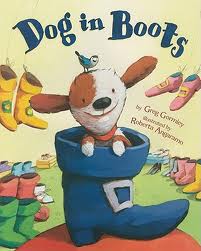
Bill, our BLG reader this week brought in a fun and engaging story, ideal for reading aloud: Dog in Boots written by Greg Gormley and illustrated by Roberta Angaramo. And yes, you are right to be thinking,  “Hey this reminds me of another story . . .” The dog in Dog in Boots is reading a story about a cat who wore a pair of “truly magnificent boots” and it inspires him to take a trip to his local shoe store.

Dog first finds some absolutely magnificent boots just like the ones in the book but finds out that when digging, the boots got muddy and looked quite awful. Rain boots seemed great but filled up with water and made him sink to the bottom of the pond. Next he tried flippers (not so great for scratching), then high heels (“Oh I would like those,” commented one student), then skis (not practical) until the shopkeeper finally pointed out to him that paws were the perfect thing he needed for everything! Dog was thrilled! Then later when reading a book, a lovely red hood on the main character of his storybook caught his eye . . .

Our student reviewers report:

Truman: I like it when the dog kept changing shoes. I wonder if the dog is going to go to a coat shop and keep changing coats?

Catriona: It was very funny about a dog who wanted boots to do one thing and then finds out they can’t do another. So he gets boots to do that instead. The lesson was sometimes what you have is best.