Canadian Railroad Trilogy

Our BLG reader Bill brought in an amazing book today!  Canadian Railroad Trilogy illustrated by award winning artist Ian Wallace is the illustrated version of Gordon Lightfoot’s song Canadian Railroad Trilogy. “We weren’t even born then!” the students exclaimed when told that this song was performed on New Years Day in 1967 in honour of Canada’s centennial.

CanadianRailroadTrilogy-cover-400

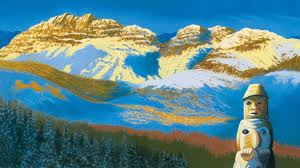
This is a physically heavy book – the song travels through each page of “striking, catch your breath, sigh” kind of art by Ian Wallace. It also contains the song lyrics, the music, the illustrator’s notes and a brief history of the Canadian Pacific Railway.
There was a time in this fair land when the railroad did not run . . .

Lightfoot wrote this classic song in just 3 days! Artist Ian Wallace took 21 months to complete the illustrations for this book and used a medium new to him – chalk pastels. We see the truly stunning Canadian landscapes and pictures of the many people involved in building the railroad.

But time has no beginnings and history has no bounds

Bill read us the story and then played us the song and flipped through the pages again following along.  The room was completely silent, all eyes on the book. A few little fingers skimming under the text. A magical few moments!  Thanks Bill for sharing this book with us today!

Our student reviewers report:

Ricky (who plays the piano :)): I like this book because the book is written by a special author – Gordon Lightfoot. He wrote a poem in the book and you can actually play it on the piano. The book has a piano song in it. The book also talks about the pictures of the book. That’s what I really like about the book.

Kevin: My favourite picture is page 21 and 22. I like that page because I like snow. It made me visualize me in the snow.

Jena: All the art in the book is too beautiful for me to choose which one is my favourite. Oh and one more thing to say: “I LOVE THIS BOOK!”

Edwin: The book was the calmest book I been read by a reader. It was special to me and the book had the beautiful pictures and the beautiful songs.
What is a real friend?

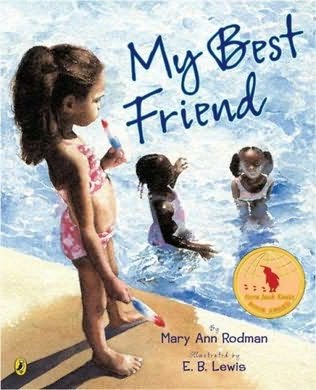
Today we read My Best Friend written by Mary Ann Rodman and illustrated by E. B. Lewis. What a fantastic friendship book!

my best friend

It is summertime and Wednesdays are spent at the pool. Lily has picked out her new best friend and it is Tamika. Tamika, though, already has a best friend and no matter what Lily does, Tamika is not impressed. Lily feels rejected and yet keeps trying to find something that will make Tamika take notice. Taunts by Tamika and her friend Shanice don’t seem to dissuade her from trying to get Tamika to like her best.

This book inspired us to ask: What really makes a friend?  Our discussion throughout the story centered on the choices we make when choosing friends. As soon as we looked at the cover, hands were up – making connections and predictions, sharing stories and asking questions.  The intensity of reactions lasted through each page and then everyone settled down with their Response and Ideas books and did some writing. As a teacher, I appreciated that this book allowed the children to come to their own conclusions. All of them deal with friendship issues daily and need chances to reflect on their choices and struggles. Students connected easily to the characters in this story and did some independent thinking on something that they regularly confront in their school and personal lives.

A sample of reactions:

Gary: Tamika was mean to Lily but not to Shanice.  When Shanice was away, Lily got to play with Tamika, but when Shanice was back, Tamika was mean again. When Lily learned to dive, Tamika wasn’t looking. Keesha was. Now Lily is Keesha’s best friend. A real friend doesn’t be mean or make fun of you.

Annie: A real friend is not insulting another person. Friendship is about giving compliments when someone does something. Don’t wear of do something just to make someone like you. Be friends with someone who is nice to you.

Jenny: A real friend would share with you, play with you and stand up for you. I think the message of the book is you can’t just pick a friend to be your friend without knowing them because they might be mean to you.

Jena: A real friend is somebody who likes you for who you are not somebody who uses you when they don’t have a friend. A real friend plays with you all of the time, not just sometimes. A real friend doesn’t stick their tongue out at you, they don’t ignore you and they don’t tell secrets behind your back. I think the message of this book is that friends are nice to you all the time and they like you for who you are.

Spooky suspense on Saturday afternoon

We did our weekly trip to the library and came back home with piles of books as usual.  Everyone is sick and wanting to be entertained so we pulled the blinds, turned on a little reading light and settled in with some scary books. All we needed was a tiny light in a dark room, a whisper voice used here and there, some well written suspense and dramatic illustrations and things got scary fast!

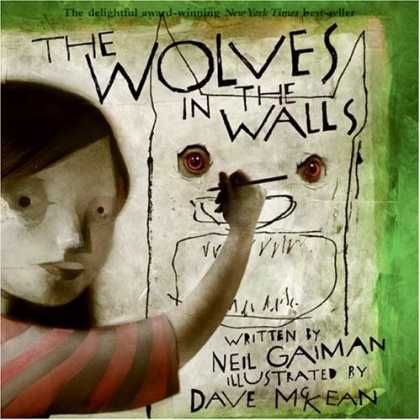
Wolves in the Walls

Neil Gaiman and illustrator Dave McKean teamed up again (they also brought us Coraline) to create this dramatic, quirky and quite scary tale.  Lucy heard noises . . . coming from inside the walls . . . and is sure there are wolves.

By the end of the book – some things change – Who lives where? Who scares who? Who is living in the walls now? It is quite the adventure to find out.

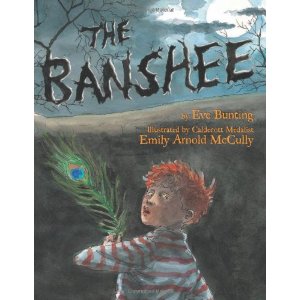
the banshee

Eve Bunting takes us on a “catch your breath, feel your heart beat faster” journey through the pages of The Banshee (spookily illustrated by Caldecott Medalist Emily Arnold McCully). What makes the “Scree  Scree” sound that wakes Terry in the middle of the night? Does he really have to go out into the garden to find out?

“I open the back door. The kitchen heat rushes out, and the night rushes in. I can’t go into that dark yard. Where she is. I can’t. I go.”

These two books allow us to explore some big questions in the minds of young readers:

What is it to be brave?

What is superstition? legend? folklore?

Do we believe what people tell us?

How do we confront our fears?

And the scariest one . . . “Is there really a . . . ?”

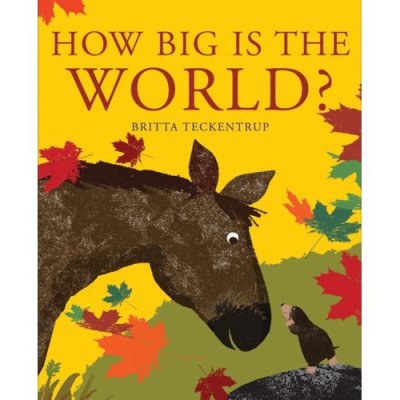
Just . . . How big is the world . . . anyway?

Britta Teckentrup’s How Big is the World? certainly inspired us to ask that question and many more as we followed little mole on his journey to discover just how big the world is by asking all of the creatures he meets on his important journey to find his answer. From spiders to whales, all of the creatures give him an answer but each one is different.

how big is the world

Some questions we began to wonder as we read this book:

Does everyone have their own thoughts about the world and how big it is? (Jena)

Will the little mole ever find out? (Truman)

Will the mole have another big question after this question? (Lisa)

Does the world ever end? (Sergio)

I wonder if you want the world to end, if you have to go off the world? (Jenny)

Well then how big is space? (Jeremiah)

Litle Mole does have an answer for his Papa when he returns.

“How big is the world?” whispered Papa. “As big as you want it to be,” said Little Mole quietly and he went to sleep.

This made lots of sense to some of us.  “That’s because each animal had a different answer!” “It depends on who you ask!” “The animals could only talk about what they knew.” But Catriona wasn’t satisfied. “That isn’t true,” she said shaking her head. “It is a specific size.”

Britta Teckentrup is also the author/illustrator of Grumpy Cat and Big Smelly Bear which are very popular books in our picture book bins.

Clever Jack Takes the Cake

Clever Jack Takes the Cake

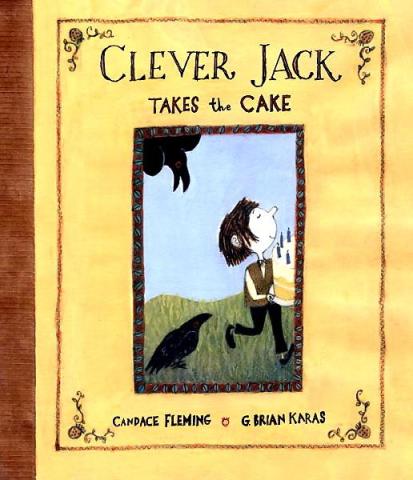
I introduced Clever Jack Takes the Cake by Candace Fleming by telling the class that I chose the book at the library because it is illustrated by G. Brian Karas, one of my favourite illustrators.  Eddy piped up, “Ms Gelson – lots of times you pick a book because you like the illustrator. Why do you always do that?” I explained that picture books to me are very much a partnership of great illustrations and a really good story – when each are great, the other is even stronger.  Sometimes, if I don’t really like the illustrations they interfere with my enjoyment of a great story.  Not in this case!  This book tells an excellent, highly engaging story with illustrations that add to the drama and fun.

Jack decides to bake a cake to take to the princess on her tenth birthday when he realizes he has nothing to give her and no money to buy a present. On the way to the castle he needs to contend with a flock of blackbirds, a troll, a dark spooky forest and an unfortunate food allergy.  He arrives at the feet of the princess with nothing to give her except the telling of his amazing adventure of trying to bring his cake to the castle.  The princess is delighted with this meaningful gift and we celebrated Jack’s positive outlook and clever strategies all along the way.

Because kids say it best:

“When you have nothing else, you still have your story.” (Kevin)

“You don’t always need a present. Just coming to a party is already a gift.” (Alyson)

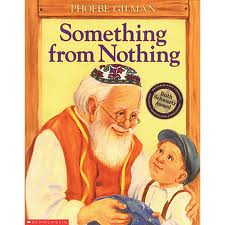
We had some great text to text connections to this story.  The gift of a story reminded us of Something from Nothing by Phoebe Gilman where in the end there is nothing left for Joseph’s Grandfather to stitch up into something new.  But there is enough material to make . . . a wonderful story!

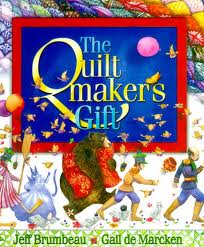
When the princess was bored and unimpressed by the lavish gifts of jewels and treasures from all of the party guests, we were reminded of The Quiltmaker’s Gift by Jeff Brumbeau. The King demands present after present but none have any meaning to him until he discovers the beautiful gift of giving.


Brownie Groundhog and the February Fox

How lucky are we to have a reader from BLG law firm come in every week and read to us! The volunteer readers in our room are a big part of every Wednesday morning. This is the first book review of a new BLG book. Check back weekly for the newest titles introduced to Division 5!

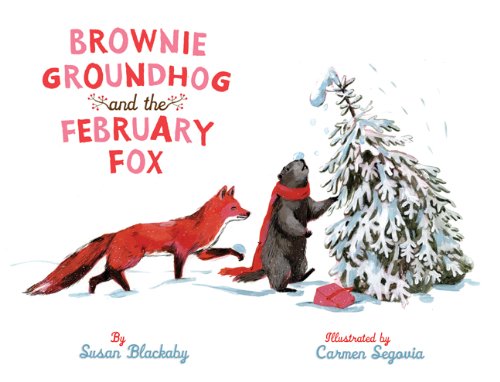
Our book this past week was read by Deborah.  Brownie Groundhog and the February Fox by Susan Blackaby is a lovely book about the impatient wait for spring. Beautifully illustrated by Carmen Segovia, an artist from Barcelona who had exhibited the sketches of our little groundhog at the Bologna Children’s Book Fair Illustrators Exhibition.The paintings in this book actually inspired the story which was written in order to bring these characters to life!

Brownie groundhog

There is a charming interaction between the fox and the groundhog in this story. Brownie needs to keep the fox busy and distracted enough to forget about trying to eat her.

“You can’t eat yet,” she said. “You haven’t worked up an appetite.”

“I feel appetitey,” said the fox.

“Well, you aren’t,” said Brownie. “Why don’t you clear the snow off the pond? That might do the trick.”

Our student reviewers report:

Ricky: I liked when the fox was trying to eat the groundhog but the groundhog kept tricking the fox.  At first, I thought the groundhog didn’t know that the fox wanted to eat him but she actually did. I thought she was just playing.

Jena: I liked how Brownie the Groundhog distracted the fox so he wouldn’t eat him – like taking him skating on the pond.

Old Mother Bear inspires lots of questions

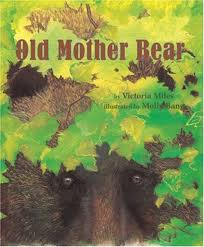
Division 5 has been practicing asking questions as we listen to a story.  Armed with our pencils and mini notebooks, we gather at the carpet to listen to great information story books like Old Mother Bear by Victoria Miles and illustrated by Molly Bang.

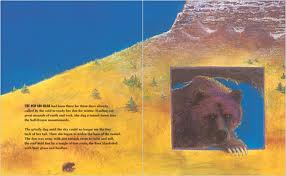
So far we have read about how the mother Grizzly tunnelled a den out of the mountainside to sleep through the winter and birth her cubs.  The cubs are born and nurse and snuggle with their mother until they all emerge from the den in the spring and begin searching for food.

A sample of the great questions we had (and who asked them) as we read the first half of the book:

How do bears dig the den? (Manny)

Does it hurt when the mother feeds? (Miami)

How do the mother bears make milk? (Hajhare)

How do they feed from their mother if they can’t see? (Josiah)

How many babies do they have at one time? (Lisa)

Where is the Dad? (Hailey)

When do they leave their Mom? (Jeremiah)

How do the cubs know not to hurt each other when they play fight? (Edwin)

How long can a bear survive without food? (Ricky)

We look forward to finishing the story this week!


Picture Books we read this week


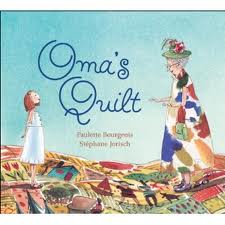
While searching through the library for interesting picture books, I came across Oma’s Quilt. I pulled it off the shelf because it is illustrated by Stephane Jorisch (who also illustrated Suki’s Kimono – one of my favourite books). Then I noticed it was written by Canadian author, Paulette Bourgeois (author of the Franklin books and Big Sarah’s Little Boots) This book was bound to be a good one!  I tried it out with our reading group.  The story:  Emily’s Oma (grandmother) has to move to a retirement home and she is very reluctant to do so.  What about her precious things? Her neighbours? Cooking apple strudel? Even the bowling alley at the home doesn’t change her mind (smelly shoes!) While Emily and her mother are sorting through Oma’s possessions, Emily has a wonderful idea. Why not make a memory quilt for Oma!? Some students made text to text connections to Eve Bunting‘s The Memory String.  This book received a big round of applause.  Look for it in the library!

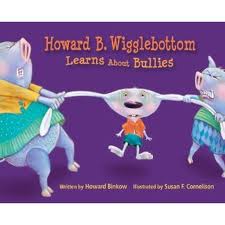
We have been reading a lot of Howard B Wigglebottom books to help us learn about ourselves and our relationships. Howard B. Wigglebottom Learns about Bullies teaches us about the importance of asking for help when bullying doesn’t stop. Howard has a little voice inside his head that tells him Be brave, Be bold, A teacher must be told. But it isn’t always easy to trust our intuition and Howard suffers many unpleasant interactions with the Snorton twins before he finally decides to report their behaviour. Finally, he can sleep easily, knowing that he was brave, he was bold when his teacher was finally told. “I am okay. I am safe.” he assures himself at the end.  Such an important book!

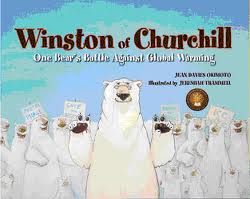
This book tells us about Winston, the bear from Churchill, Manitoba who decides to mobolize a group of polar bears to teach the tourists who come to see the polar bears about the effects of global warming on the melting ice in the Arctic.  “Ice is nice!” the bears chant during their protest march. We learn that we must all do our part to protect the Earth. “Recycle!”  “Walk, Bike, Ride!” “Solar Power!”  “Turn down the furnace!” Winston of Churchill by Jean Davies Okimoto was the winner of the Green Earth Book Award. This book is also in Seymour’s library.

Happy Reading!

The power of a lie!

Our reading group has been busy writing and talking about connections we have to the books we are reading. This title had big connecting power!

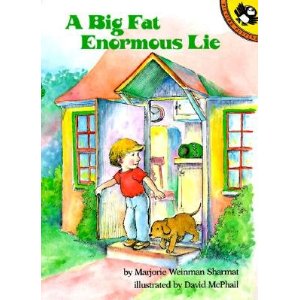
A Big, Fat Enormous Lie by Marjorie Weinman Sharmat and illustrated by David McPhail (one of my favourite illustrators!) is a book we can all relate to easily.  A little boy lies over one small thing and his lie comes alive in the form of a monster, following him everywhere, bothering him, sitting on his stomach. The monster keeps growing and growing and growing until it can only be escaped by . . . telling the truth. Phew! The relief! This little book sure inspired some powerful writing from our reading group. We all recognized that lies can be pretty powerful but not as powerful as the truth 🙂

Sergio writes: “When I lie, I get bad luck and I crash into everything and my stomach hurts. Oww! Oww! Oww! Ouch that hurts.”

Ricky explains: “Lying is a bad thing. If you lie, you will have bad feelings and your tummy will feel like it’s hurt. When you have a nap, it makes you feel better. But when you wake up, you still have to tell the truth. So if you tell the truth, everything will be okay.”

Annie summarizes the story, “The message of the book is that you should never lie to anyone. You have to admit it. When you don’t tell the truth, you’ll feel like the lie is lying in your stomach. After you tell the truth, the lie is gone.”

Lisa writes, “If you tell a lie, you feel guilty because you just want it to go away. If you did something wrong, you should tell, don’t lie. If you lie, you need to tell someone.  If you don’t tell, it is going to get bad, then worst. You feel guilty if you lie. It feels good if you tell the truth.”

Recent books I’ve read to my own children

Sometimes, I discover books to read to the class when I read great books with my own children – although they are in Grade 3 and love to read independently, I still read to them everyday!  Check out some of the books we’ve read this fall – maybe one will interest you!

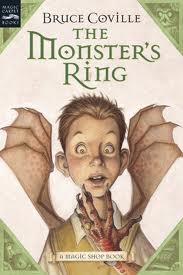
This is one of the Magic Shop Books by Bruce Coville. Last year I read Jeremy Thatcher Dragon Hatcher to my class and our book club read The Skull of Truth also engaging, hard to put down books in the Magic Shop series. In The Monster’s Ring, Russel Crannaker buys a “monster’s ring” from a strange magic shop he stumbles upon.  He follows the instructions that come with the ring – whispering a magic chant and twisting the ring on his finger.  All of a sudden, he is sprouting horns, growing claws and speaking in a husky, snarling voice. He realizes that with the ring, he has the power to turn back and forth between boy and monster.  Will he be cautious and follow the special instructions to not use it on the night of a full moon or will the urge to outpower Eddie, the school bully be too much for Russell? Every chapter ends in a cliff hanger urging you to read on.  If you dare . . .

Ms. Hong has many of the Magic Shop titles in our school library.

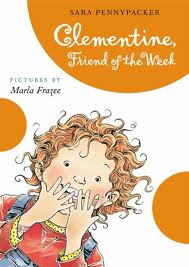
We love Sara Pennypacker’s Clementine books and delight in the fun illustrations by Marla Frazee. So when the latest Clementine book was released, we had to read it!  In Clementine, Friend of the Week, Clementine is thrilled to finally have her turn as Friend of the Week in her classroom.  She gets to do special jobs like be the line leader, feed the fish and collect the lunch money but what she is really excited about is the book her class is going to write about her.  But then, as she thinks about it, she begins to get a little nervous.  What will her classmates say?  How will she get everyone to say amazing things?  In typical Clementine fashion, she has some very interesting ideas about how to get the best Friend of the Week booklet ever.  But then, something happens that just might spoil her plans. . .

This book is in my collection at home but we have the other three Clementine books in our classroom collection.

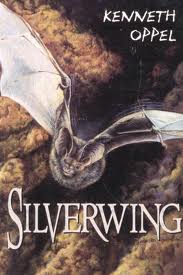
When I was pregnant with my children I read my Grade 3 class Silverwing. They loved it!  In fact, many went on to read the next book in the series Sunwing which was at the Scholastic Book fair that year.  I remember thinking – when my children are in Grade 3, I am going to read them Silverwing . . . So the night before the first day of this school year, we started.  And . . . they loved it too!  For me, it was just as great on the second reading.  The main characters are Shade, a young Silverwing bat and Marina, a Brightwing bat Shade befriends on his journey to find his colony after he was lost in a storm on the winter migration south to Hibernaculum. On their way they meet Goth and Throbb, two huge, bat eating,  jungle bats who threaten Shade’s chances of ever finding his colony again.  This book is an award winning fantasy that is impossible to put down.  Perfect for readers and listeners eight years old and up! And the first in a series – look for all of these books in the school library.

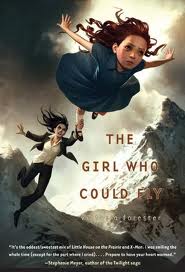
This is the book we have just started.  After reading the first chapter, we are hooked. In the first eighteen pages of this book,  Piper McCloud a nine year old girl who lives with her Ma and Pa on a farm, decides to take a running leap off of her roof and discovers that she can fly!  This isn’t a big surprise since she has been able to float and hover in the air all of her life. But actually flying is a whole new experience!  We can’t wait to find out what is going to happen next.

Happy reading!