One Cool Friend

Dan, our BLG reader this week, brought us One Cool Friend written by Toni Buzzeo and illustrated by David Small. It was the first time all year that some of the students had seen a BLG book before (I had read this title (borrowed from our VP) to a group about 2 months ago). Well, this book really proved that some books truly improve with re-reading!
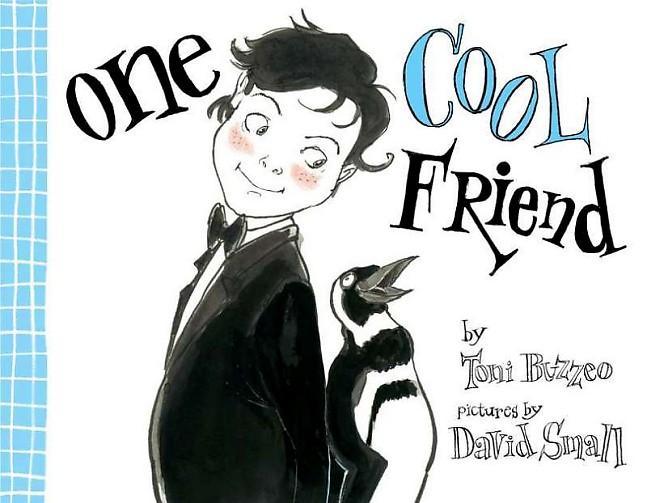
First of all, Elliot, the main character of this delightful book, is one dapper young man. And we took note. We liked his tuxedo. His pink cheeks. The smattering of freckles. And his prance about shiny black shoes. And my, oh my, did he have polite manners. This is a boy to keep an eye on. Keep an eye we did, as Elliot moved through the pages finding himself at the penguin display at the Aquarium where he was quite delighted to discover a number of penguins who looked quite a bit like him – proper in black and white with an air of importance. He decided that he needed a penguin of his own and his father obliviously agrees. So Elliot heads home from the Aquarium with his new friend Magellan the penguin in his backpack. How wonderful!


Life with a penguin means adjusting your routines some. Air conditioners need to work at maximum power. Ice rinks need to be fashioned. Frozen seafood should be rationed! And the bathtub often needs to be a swimming pool for diving practice. When Elliot’s father discovers Magellan, Elliot discovers that his eccentric father has his own secrets!

Please read and then reread this book. Many times. On the first run through one might miss how the clever illustrations hint at a very interesting ending. But it all begins to make sense when we notice these details. Like pj patterns. Colour schemes. Foot rests. A must own book!

Our student reviewers report: (spoiler alert!)

Khai: I like how Elliot was dressed like the penguins when he got him (from the Aquarium).

Catriona: It’s very funny at the end when the father has a strange pet too!

Truman: I like the book because the Dad really had a real tortoise and Elliot thought it was a fake!

Book Magic

Often I have much to say on the magic of a book. Today I cheat and literally let a picture tell a thousand. And then I’ll just add a few . . .

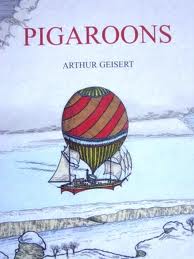
Buddy Reading with the K/1 class happens every Wednesday afternoon. There is real joy in watching my Grade 2/3s bring the magic of books alive for their younger buddies. The boys above are sharing the story of Pigaroons by Arthur Geisert that I read to the class yesterday. Ice sculpting. Air ships. Popcorn balls. Pirate Pigs. Thwarting sabotage attempts. Adventure. Wit. It really couldn’t be much better.

Reading. Talking. Questions. Sharing. Engagement. Not much better at all!

Extra Yarn

Our BLG reader Bill walked in with two books today and gave me a look that asked,  “Which one?” I had already spotted Extra Yarn written by Mac Barnett and illustrated by Jon Klassen in his hand. That other book, whatever it was (and it might have been wonderful) didn’t stand a chance. Extra Yarn delighted us!

This story is set in a dreary little town. Cold invades and everything is black with soot or white with snow. When Annabelle finds a box filled with multi-coloured yarn, she is quite inspired. Soon she has knit herself and her dog Mars cozy sweaters perfect for brisk walks outside.

Strangely, there is still extra yarn. so Annabelle begins to outfit her whole town, even the naysayers (like Nate who turned out to be jealous until he possessed a knitted sweater of his own). “Wow,” someone commented. “They sure look warm to me!” Somebody else sugested Nate would look good if Annabelle knit him skinny pants. Maybe . . . ? But Annabelle had turned her attention to her classmates and teacher. When she had knit a sweater for everyone, there was still extra yarn. The pictures began to illicit many comments.

Oh my gosh they kind of do look ridiculous. But I like it.”

“Hey they are all stringed together. They need to snip!”

“Little Louis! He really is little!”

The yarn supply did not diminish and neither did Annabelle’s creativity. She knit sweaters for the animals. And sweaters for things that might seem to not need sweters. Birdhouses. Trees. Mailboxes. This was incredible!

What . . . .?”

“Oh my gosh! Even a bear? Even a house? That’s a lot of yarn!”

“I think she’s getting a little carried away!”

When an archduke from far across the sea sailed to Annabelle’s shore and offered Annabelle millions for her box of yarn, she politely but assertively refused.

“Oh! Oh! She’s making a mistake! What if her family is poor? She should take the money and run!”
But the archduke had his ways. He sent in three robbers to steal the box of yarn and bring it to him. When he opened the box on the other side of the ocean, it was empty. He was furious! He cursed Annabelle! “Little girl, I curse you with my family’s curse! You will never be happy again!” Students leaped up, caught in the excitement and quoted him! But we weren’t worried.
“Curses are not for real!”

In the end, the box of yarn ends up where it is supposed to be and . . . not empty at all.

Our student reviewers report:

Truman:I like the part when the Archduke didn’t get any yarn. But when it got back to Annabelle, it still had more.

Isa: This book was so good I have to write about it. That pirate guy (the Archduke) said, “You’re never going to be happy again.” But that actually didn’t happen. The curse didn’t work. She was sewing sweaters for everything in the town. That was so funny! She couldn’t make it for ice cream though. It would melt!

Carmen: I can’t believe that this little girl Annabelle knitted a sweater and house, tree, sweaters for everyone except Mr. Crabtree. He wears shorts with snow up to his knees and never wears sweaters. So Annabelle knitted him a hat.

Khai: I like how she filled the whole city with yarn. It was cool.

Using Wordless Books in the Classroom

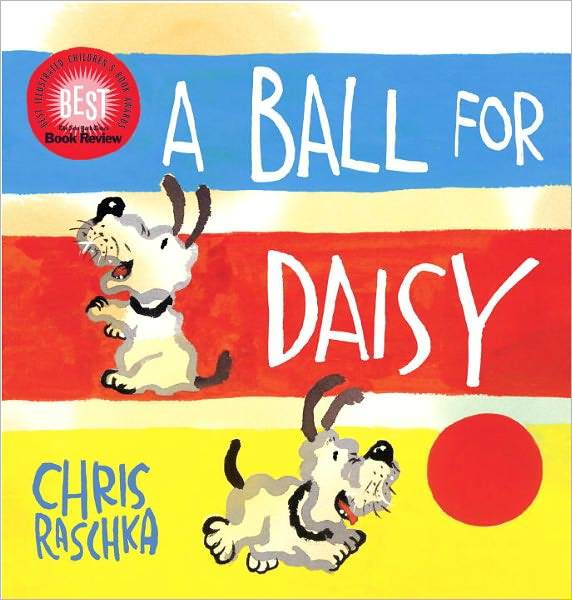
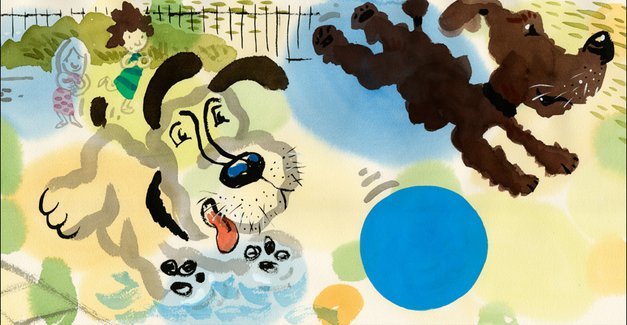
I have been using wordless books with a lot of success in my primary classroom this month. The next book I plan to share with the class is A Ball for Daisy which won Chris Raschka the 2012 Caldecott Medal.

How are wordless books used in our classroom?

Every morning we start our day at the carpet and “read” a wordless book together. Of course there is no text so we tell the story as a group as we turn the pages. Before we begin, we review our strategies for reading wordless books. This is what students typically share:

“We need to infer.”

“We look at the pictures for clues.”

“We pretend that we are the author/illustrator and think like he/she does.”

“We have to use what we already know about stories.”

“We use our background knowledge.”

As we turn the pages, students share their observations. I find this is such a fantastic opportunity to build oral language skills. Students need to listen to others and build on ideas. They have the chance to disagree and offer alternative suggestions. They extend their thinking as the class offers sugestions. My role is different from what it usually is as I sit with a book in my hand and children at my feet. I am completely guided by their pace. I repeat specific statements and ask for more thinking. I ask probing questions like, “What made you think that?” “Do you see something on the page that made you suggest . . .?” I also rephrase certain comments so as to correct grammar, extend vocabulary and provide positive feedback. Many childen that don’t often share in discussions about books have been avidly participating. It has been a very exciting and creative process.

I then leave the wordless book of the day on display with other recent ones we have shared. This is what I see at different points of the day:

*Books are shared when reading volunteers come in to listen to children read. Children who have often asked the volunteers to read to them, choose a wordless book and “tell” the story. Volunteers have made comments to me about the child’s confidence, his/her use of interesting vocabulary and about the engagement with the story.

*Wordless books are selected when our little K/1 buddies come up to read with us on Wednesday afternoons. Because our Grade 2/3 class has more students than the K/1 class, often two of my students read with one little buddy. This week I saw a little boy in kindergarten sandwiched between two of my Grade 3 boys and all of them took turns talking about and telling the story as they turned the pages. My boys were even modelling my questions, i.e. “So why do you think he’s sad?”

*Children are choosing wordless books off the shelf during quiet time and sitting with a classmate and whispering as they turn the pages. I see lots of flipping back and forth as they turn back looking for a specific picture, verify information and then resume the story. Also during quiet time I have two girls who are making their own wordless book. They sit side by side drawing pictures and talking about their story.

*There is also a transfer of “attentiveness to detail” as we read other picture books in class. Many comments and questions are about the illustrations and details noticed in the pictures.

As we celebrate illustrations and study them for additional information, I am reminded of a blog post by author Shannon Hale called Let them Eat Pictures. Hale stated:

“Our world is full of visual cues. Illustrations are symbols, just like letters are symbols. We look, we read to understand, to decode the world. Literacy, I think, is the ability to glean understanding from printed information. In order to navigate this world successfully, kids (and adults) will need to be literate in words and pictures.”

Wordless books give us the opportunity to practice inferring and looking for evidence to support an idea – comprehension strategies that we use with any kind of book – from picture books to novels.  I am excited to continue using this beautiful genre of books in my room.

For more wordless picture book titles, check out more posts on this blog.

Wonders of Wordless Magic and Few Words on Five Wordless Books

The Magic Beads

In our reading group we have been exploring different genres. Today was day three of looking at realistic fiction. Last week what kept coming up on our list of what makes a book realistic fiction was that many people would find things to connect to easily in the story. Today we read a story together and our writing focused on possible connections.

The story that we read today had a lot to it and our discussion and subsequent writing was rich. In fact, I don’t think I can think of a time all year where the group was so quietly engrossed in their writing. When I read notebooks at recess, I was blown away by the maturity and thought that was shared. The Magic Beads written by Susin Nielsen-Fernlund and illustrated by Genevieve Cote is an important story addressing the emotions of a young girl starting school while her life is full of change.

Lillian begins Grade 2 at a new school after she and her Mom have had to move to a shelter to escape her abusive father. They have left everything behind and Lillian is feeling a range of emotions from anxiety to anger. A part of her misses her father even though her memories of his bad moods are difficult to think about. She loves her Mom and knows why they had to leave but she also feels angry that her Mom was the one that took them away. When she is asked to share at Show and Tell on Friday, Lillian’s upset grows. She no longer has her pesonal possessions with her. What could she share? The butterflies in her tummy turn into grasshoppers, donkeys and eventually buffalos as Friday approaches and she has nothing to share.

Finally as she stands before the class on Friday, Lillian talks about her plastic beads, terming them magic beads and explaining that with just a little imagination, the beads can be all kinds of things. Lillian’s inventive imagination intrigues her classmates and provides a way for friendships to begin.

Student writing ranged from personal connections to ideas of what events or emotions readers might feel connected to in the story. Here are excerpts:

Carmen writes: Some people might connect to being sad because of leaving your Dad all alone since you might have played with your Dad and you might miss your favourite happiness. 

Truman shared: I connected to when I first went to this school and I felt scared and shy. Some people might connect to their feelings on the first day of school. I connected to when I didn’t bring my Chinese homework and felt nervous.

Catriona wrote: People could connect to being mad at a person when the person you’re really mad at isn’t there. 

Heman shared: When I first went to this school, I felt like I had a tummy ache just like Lillian. 

Khai made a list of possible connections: using your imagination to feel better, feeling anxious at school on the first day, having a Dad with some anger problems, having to move somewhere when you don’t really want to, . . .


Wonders of Wordless magic

I have a kind of love affair going on with wordless books. There is something magical about getting to the end of one feeling like you have read a very detailed story. Yet, not one word graced the page. Such potential for oral language and retelling . . . Some more of my favourite wordless books – both old and new. ( A recent post on wordless books: Few words on five wordless books can be found here)

Mirror by Suzy Lee

Fascination with our mirror image – from joy to despair.

Chalk by Bill Thomson

Does every piece of chalk hold amazing potential? What is really real?

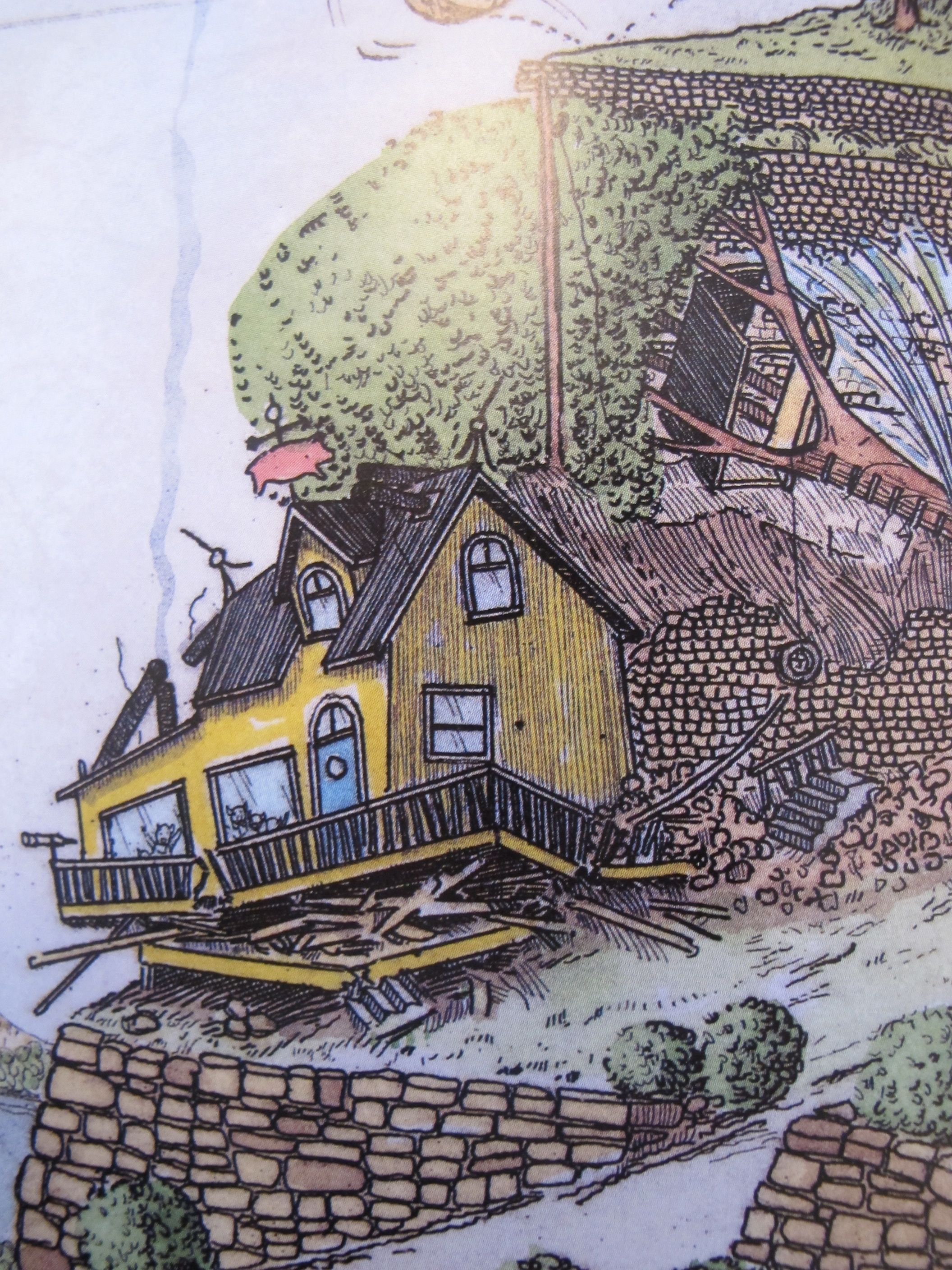
Oops by Arthur Geisert

One disaster inevitably leads to another. Note to self: House built on a cliff? Maybe not the best idea!

IMG_2828

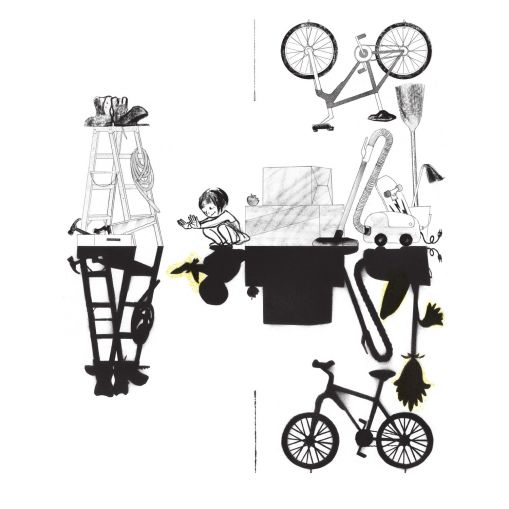
Shadow by Suzy Lee

A lightbulb, a child and a beautiful imagination create wonder.

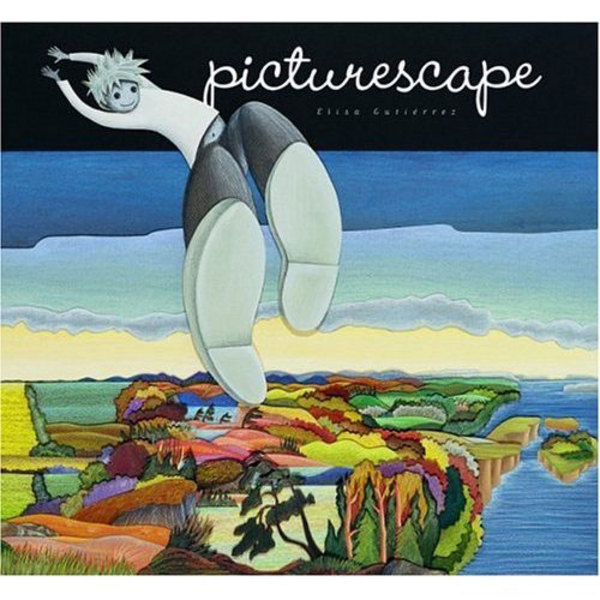
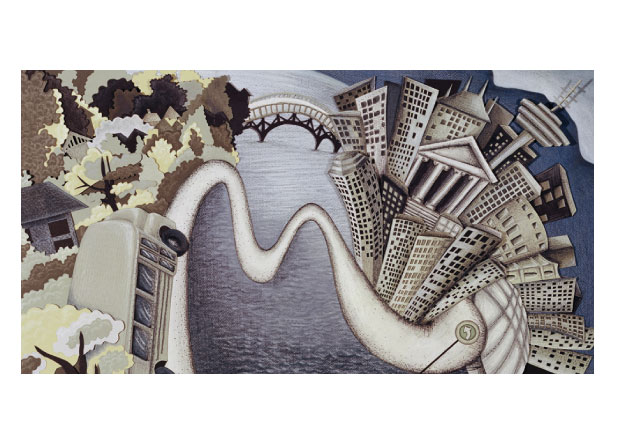
Picturescape by Elisa Gutierrez

Let Canadian Art take you anywhere and everywhere!

The next two wordless picture books were sourced by my husband from used book stores and given to me over 15 years ago. They hold an important place on my book shelves! Unfortunately, it is as challenging to find images of these books as it is to find the books themselves!

The Yellow Umbrella by Henrik Drescher


Where in the world can a yellow umbrella take two monkeys?

Mighty Mizzling Mouse by Friso Henstra

The ultimate mouse chase. And the winner? Do you need to ask?

IMG_2825

Tom’s Tweet

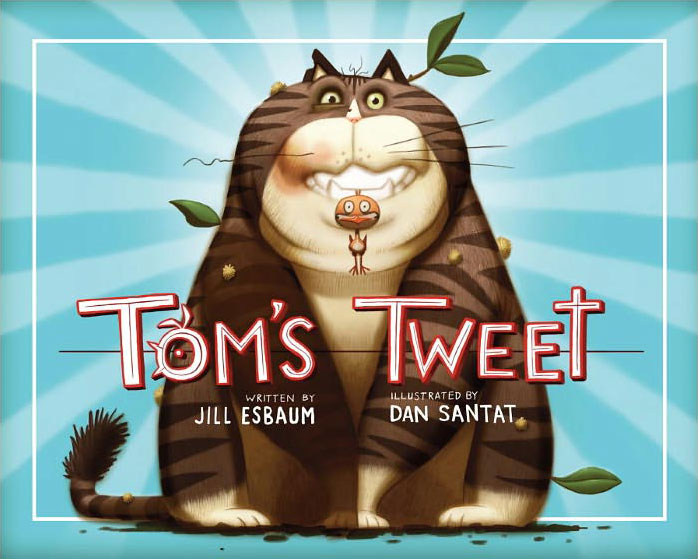
Maria, our BLG reader brought us a very funny story this week. When we spied a cat on the back cover, the shouting started, “It’s Chester!” “No, Splat!” Obviously we have a thing for quirky cat characters. And with Tom’s Tweet, written by Jill Esbaum and illustrated by Dan Santat, we have a new feline to add to our list of endearing, funny cats!

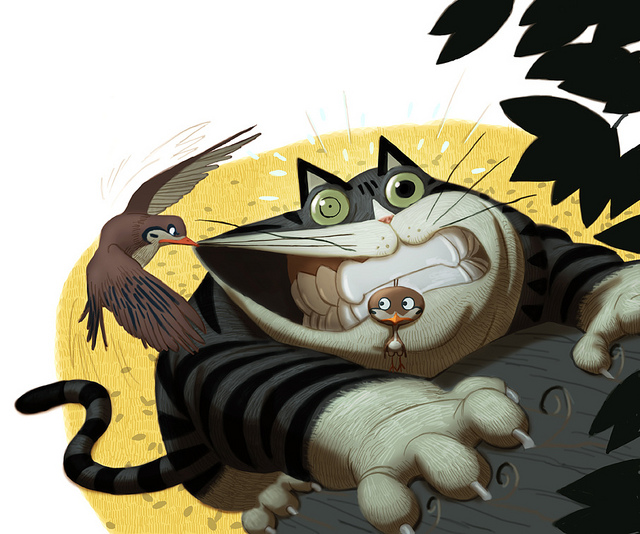
What’s a poor cat to do when a potential treat turns out to be a shivering tweet? He can’t in good conscious eat a little thing that is just “feather and bone” even if it is a bird and he is a cat . . . And how exactly did Tom end up with a tweet between his lips on route to return it to its nest while being pecked at by an angry Mama Bird? Could this cat have a soft spot for the little Tweet? It seems so. And it makes for quite a hilarious story.

One of my students kept whispering to me as Maria read, “It will be about kindness.” “It’s going to be about kindness.” “Really, just wait, this will be a kindness book!” We have been reading many picture books on this theme and he saw through Tom the Cat’s bravado early on in the story. This cat was a goner for the little Tweet. There is even snuggling! Even though Tom insists he is “not that kind of cat.” In the end, even Mama Tweet realizes Tom’s true nature and emplys him to do some “tweety -sitting.” Dan Santat’s illustrations are superbly animated and our read aloud was full of giggles and smiles. A wonderful book for happy sharing!

Our student reviewers report:

Truman: I really like the illustrations and the part where Tom gets pecked! Funny!

Isa: I liked the part when Tom was dreaming about the birds. He couldn’t help it. That was so funny.

Khai: It was funny when Tom had to babysit the tweets!

Stars

I had been waiting for an afternoon where we weren’t in the middle of anything to share this book with my students. I wanted calm time to savour the illustrations and the lovely poetic text. And then we would need some time to talk stars. And do some art of course!

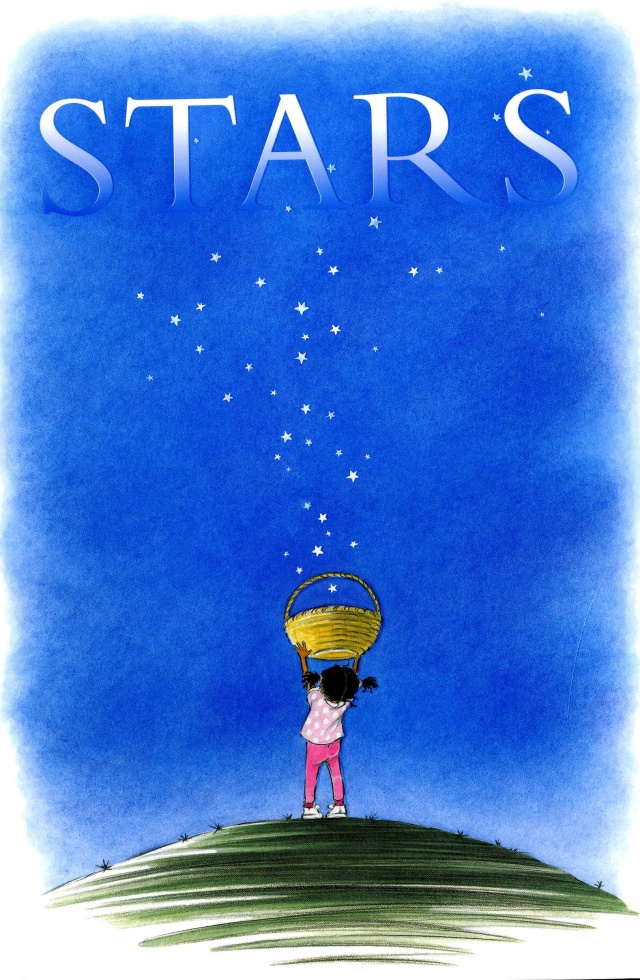
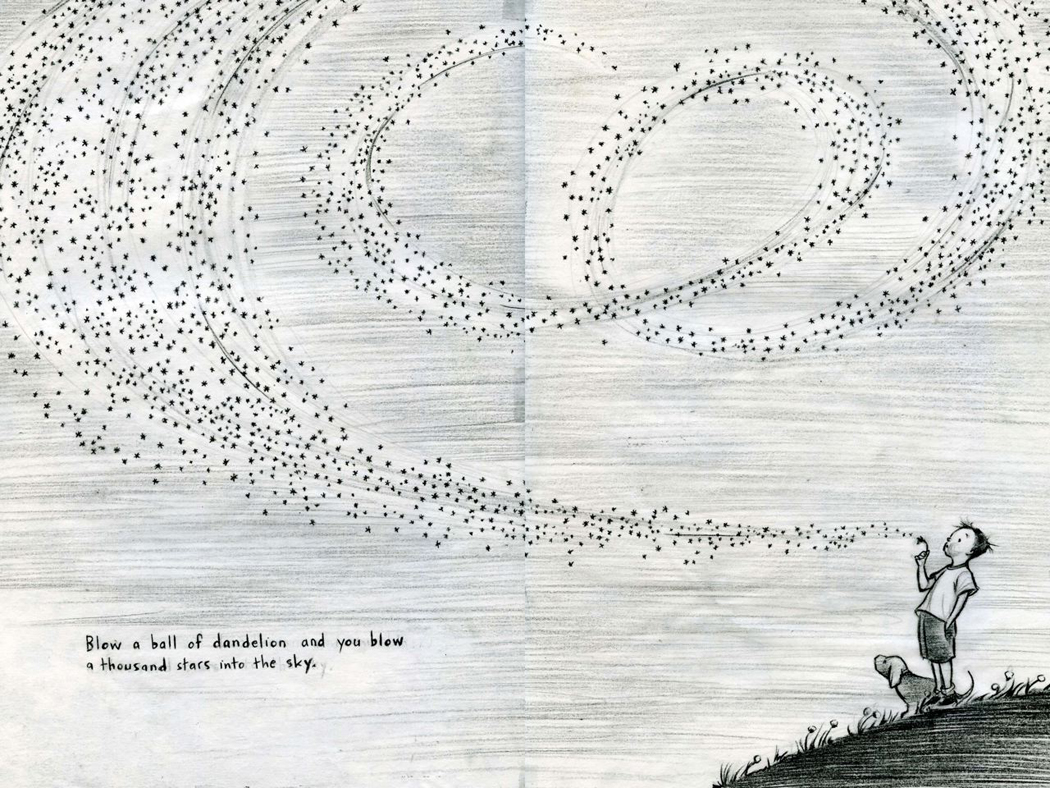
The first day back after Spring Break proved to be the perfect day. We were easing back into routines and needed an afternoon of a beautiful book and some time to create. Stars (written by Mary Lyn Ray and illustrated by Marla Frazee) is one of my new favourite picture books. A book that celebrates stars and all that they might mean and represent. A book that asks us to think what if we could collect stars . . . have one? gather a bunch? Imagine. Stars are about magic. And wishing. And possibilities. About nature – snowflakes,  flower blossoms, dandelion seeds on the wind.

Blow a ball of dandelion and you blow a thousand stars into the sky.

I love the simplicity and the power behind Ray’s text.

But stars that come with night- for those you have to wait for night. You need some dark to see them.

And the illustrations. Well. . . Frazee’s pictures always capture such joy.

inside art stars

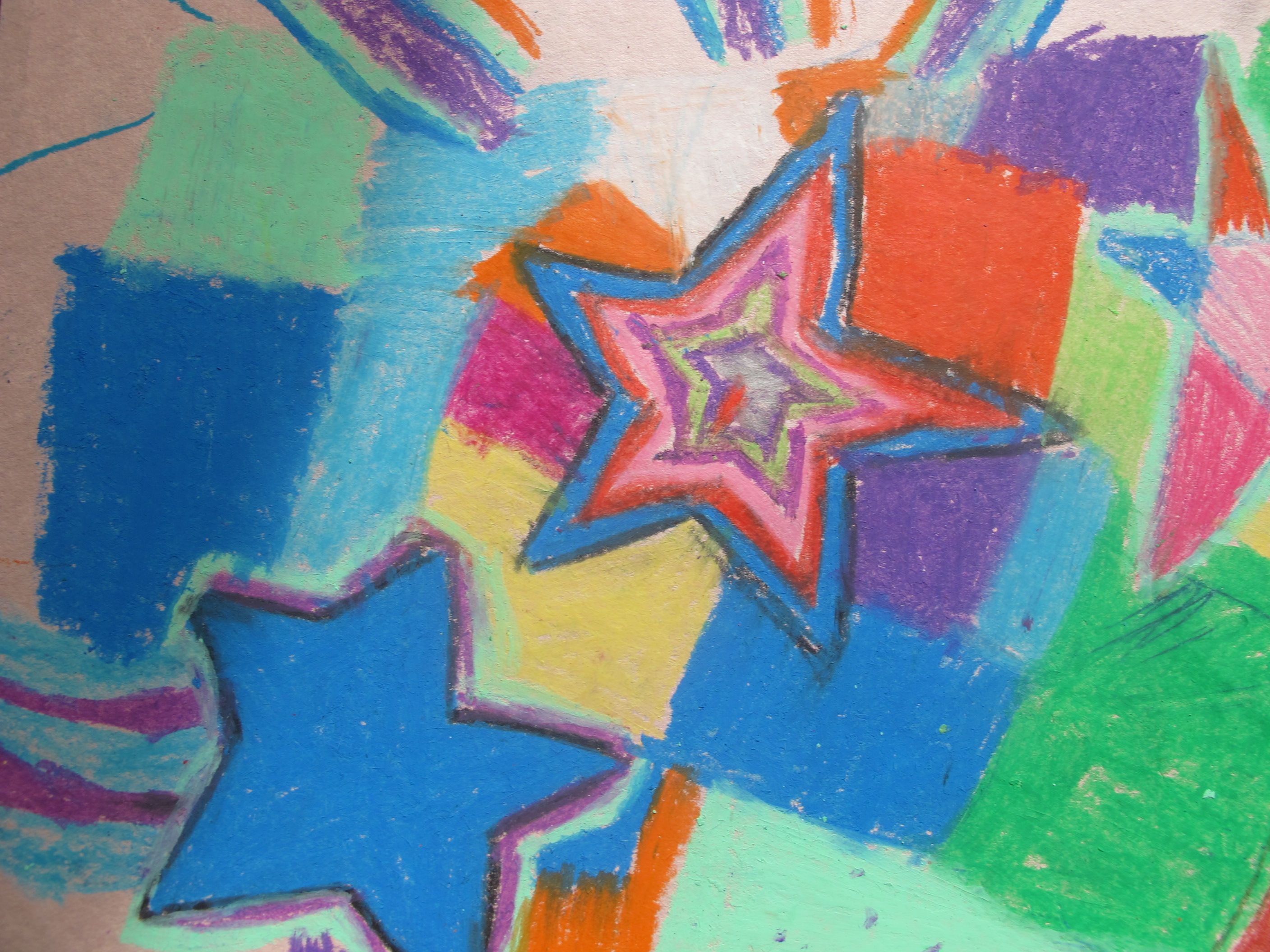
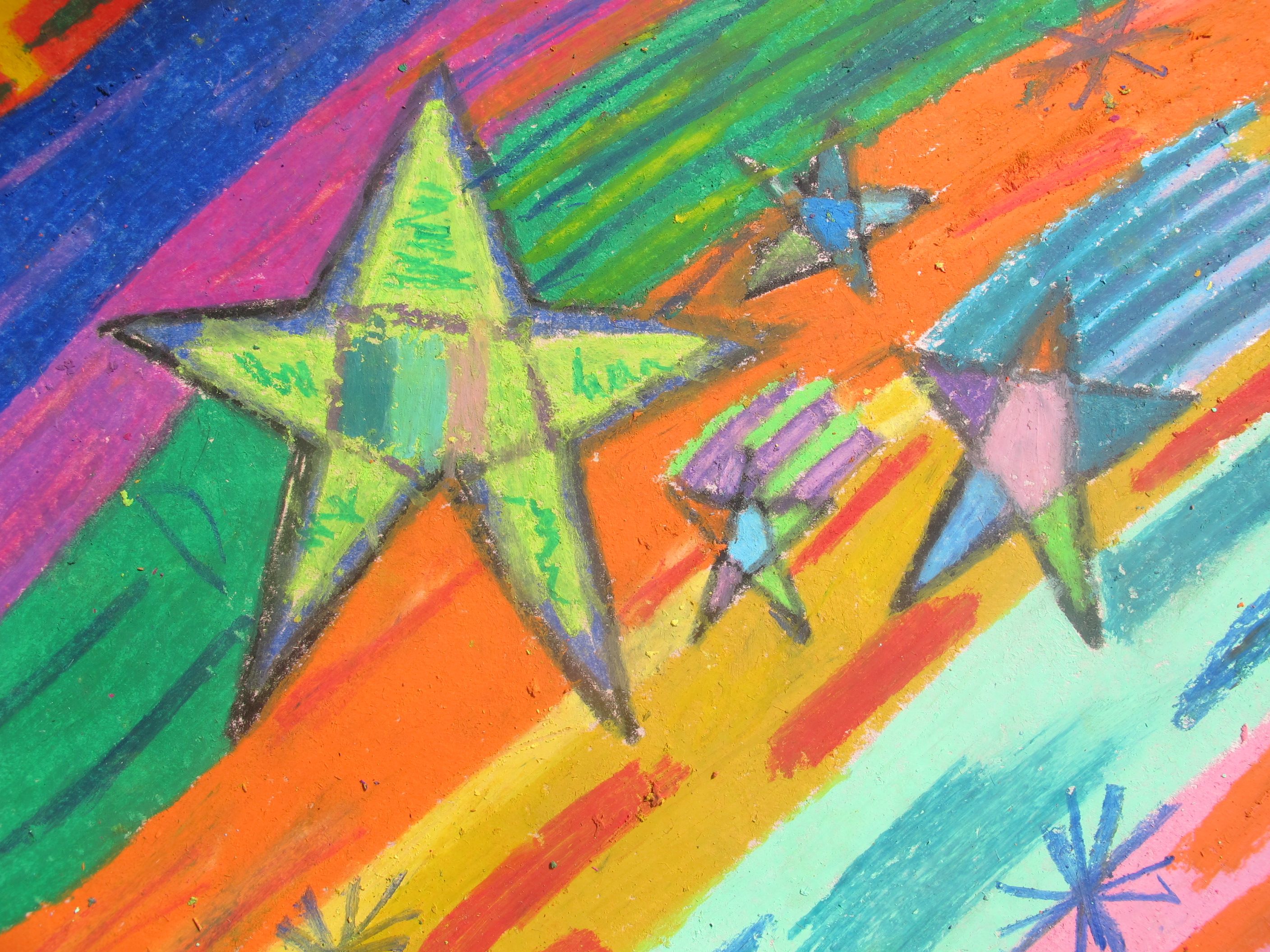
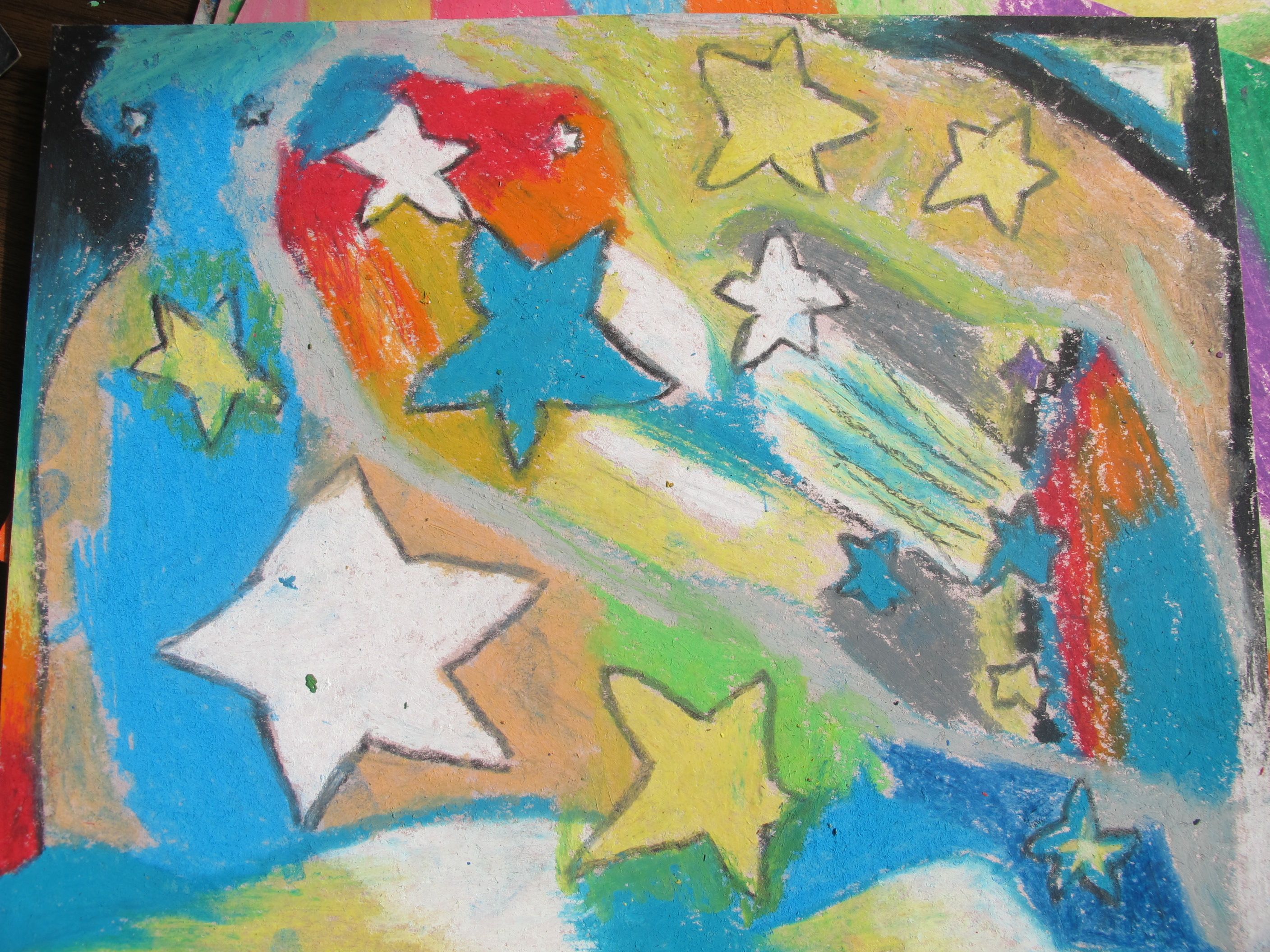
Inspired by colourful, vibrant heart art of Jim Dine we used oil pastels to make our stars.

Raelyn is almost finished surrounding her stars with blocks of colour.

IMG_2805

Carmen worked to create a feeling of movement.

IMG_2809

Truman worked to make his picture feel like space including shooting stars!

IMG_2812

Blackout

Picture Book Love #4: Celebrating picture books that are just too good not to gush over.

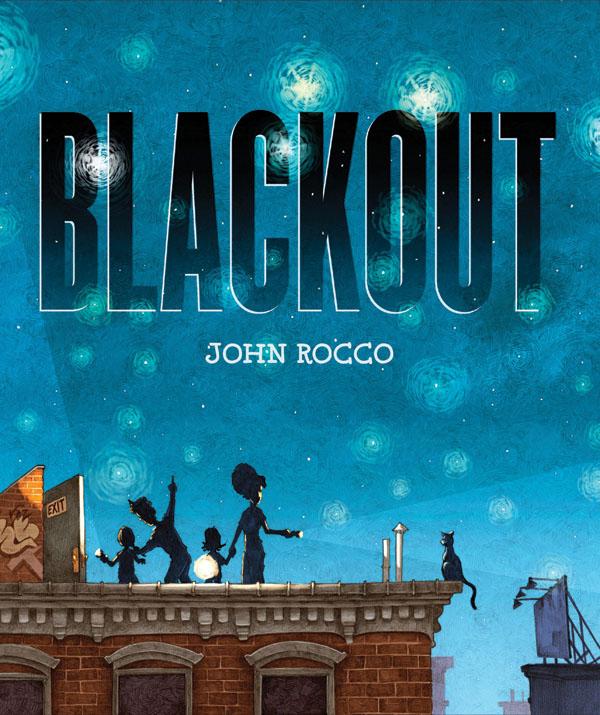
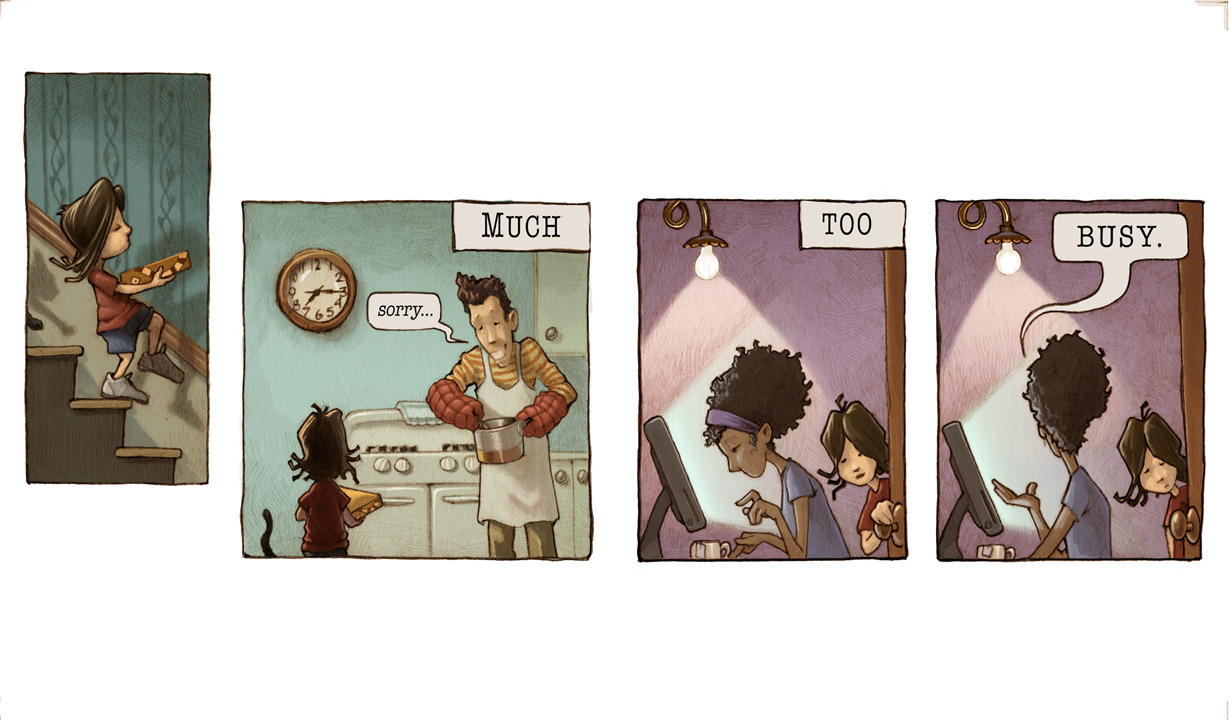
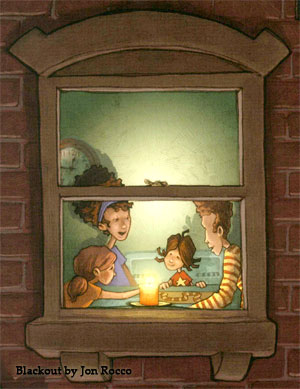
Blackout by John Rocco is not just visually gorgeous (It is a 2011 Caldecott Honour Book after all), it also reads bearing gifts. It reminds us to take and honour the gift of time, the gift of family, the gift of slowing down and being in the moment. And it does this without being preachy, sappy or judgemental. It just shows us that busy often gets in the way of family time and removing ourselves from the busy world can be possible, right at our own kitchen table.

Blackout_spread

The story starts out letting us peek into the windows of a family’s apartment. Everyone busy. Computers. Cooking. Chatting on the phone. Don’t disturb. Leave me alone. No time for a game that the youngest family member wants to play. And then . . . A blackout. No power. No lights. Nothing works but . . .  time. Flashlights and candles make the dark, quiet world go from scary to cozy. But the muggy summer heat soon leads the family to the rooftop where starlight creates an art filled sky of wonder. Now nobody is busy and the family revels in time together.

When the lights come on again, the family is not ready to give up the special closeness the blackout created. Family game time by candlight is first on the “to do” list.

This book reminds us to look for wonder in the simple and everyday and to treasure family time above all else. Because everything can get in the way. But only if you let it . . .

Mini Grey Adoration

Mini Grey has been on my radar recently. I have been odering her books, doing a little excited leap when I find one of her titles in the library and scanning beloved blogs for talk of her illustrations/books. I have not been disappointed!

jim

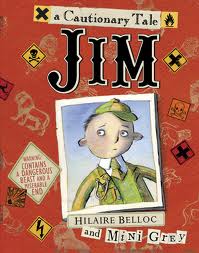
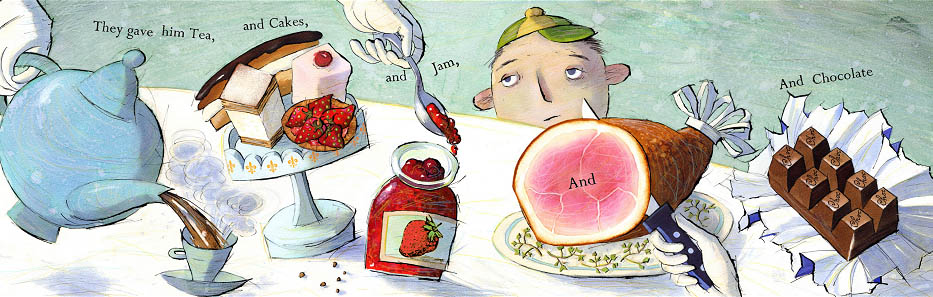
I found Jim (A Cautionary Tale) at the public library and brought it into class the very next day to read aloud. “This,” I promised my students, “you will love. Gruesome. Guts and gore! And the text rhymes!” (This group of kids love rhyming text!) With Hilaire Belloc‘s original text and Grey‘s wonderful illustrations, Jim (one of Belloc’s Cautionary Tales for children first published in 1907) certainly delivered! Our lovely Jim has it good. All sorts of lovely things to eat. Tricycles to ride on. Stories read to him. Even trips to the zoo.

But then Jim does what he has explicitly been told not to do . . . He runs away from his nurse/guardian! And, well, there is no sense easing into this . . . Jim is eaten by a lion! (Starting with his toes) Grey’s illustrations are delightful. As in the format of the book: lift the flap, fold down sections, panels and fold out pages. We couldn’t quite believe that there was a picture of just Jim’s head edged in red. (“That’s blood!” “He is really dead!” “Blood!”) For seven, eight and nine year olds, discovering this in a picture book is highly appealing because it borders on maybe “not quite appropriate for children.” And what could be better than that? As soon as I finished the book, I was begged to read it again. Many times throughout the day. 🙂 My favourite picture? The lion (caught eating a boy by the zookeeper) slinking away in a dissapointed, very guilty, rage.

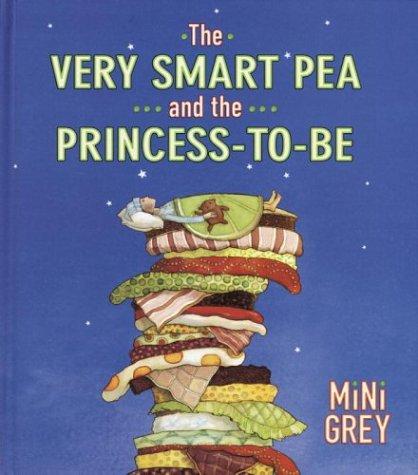
I purchased Mini Grey‘s The Very Smart Pea and the Princess to be for our class collection. One, because we love fractured fairy tales. Two, what a great example of an unexpected narrator- in this story, the pea tells the story. And three? Mini Grey! At first this version of the classic Princess and the Pea story doesn’t seem all that far away from the original (except maybe for the creepy fact that many characters have pea green eyes).

But soon, the reader begins to realize, something else is going to be delivered in this story.

What . . .  you might wonder?

Well, finally, an explanation for how a teeny tiny pea is felt through all of those mattresses. Hint: more about the power of suggestion than true princess special sensitivity. But, a wedding does happen. The prince happily marries the gardener and the promise of a very productive life awaits.

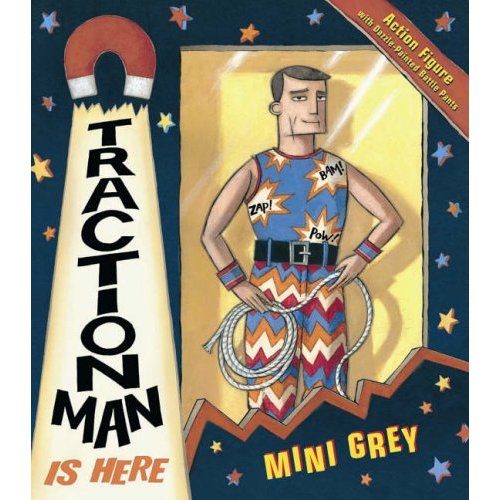
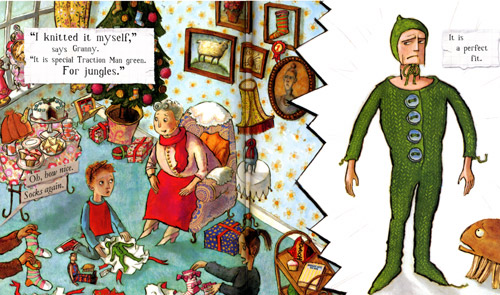
How I have missed Traction Man is Here is beyond me. This book is hilarious and has the uncanny ability to totally appeal to adults and children alike. Traction Man is an action figure. His trusty sidekick? Scrubbing brush. As in the scrubbing brush you use to scour the dishes or scrub your toes. So, I’ve done some research. My nine year old finds this hilarious. An unsuspecting five year old test case who came for dinner found this hilarious. And. . . an adult friend (whose age starts with a 4) read this book cover to cover twice. Laughed through it both times. And then returned to the scrubbing brush pages for some extra giggles. This book is beyond delightful! It is absurd. Vulnerable. Quirky. I love it! And who can resist our hero Traction Man in the green knitted outfit Granny made for him? Specially for jungles. Of course!

Celebrating the wonder and splendor of imaginative play, Traction Man is Here is a must read!

So, if you haven’t discovered Mini Grey . . . what are you waiting for?