What do our little thinkers think of Little Ant Big Thinker?

I love when I have so many books in my “must read” pile, that when we have a spare 5 or 10 minutes, I know just the book to choose!  Today it was Little Ant Big Thinker or Where does the Ocean End? by Andre Usatschow and illustrated by Alexandra Junge.

little-ant-big-thinker

As we’ve been working on asking questions as we read, I thought this would be a great time to read this book about a little ant with some very big questions. The book begins with the little ant wondering if the ocean ever ends and if so, where? He begins to get anxious – how can he ever know, if he never can see the end? An elephant happens along and despite their attempts at peering out over the water on tiptoe and climbing a tree for a better view, the two of them cannot see the end of the ocean. A fish swims up and scoffs at their worry: “The ocean ends right here!” he explains. Okay, problem solved. Until of course the question pops into the ant’s head: “But where does the ocean begin?”

We quite liked this book.

Catriona, always summarizes so nicely: “It begins at the end and ends at the beginning!”

Alyson notes: “Wondering is a great thing. Little people can think big too!”

Jeremiah has his own question about the little ant: “What if his brain gets so big from all of that wondering, and he tips over?!”

Hmm, what if . . . ?
Old Mother Bear inspires lots of questions

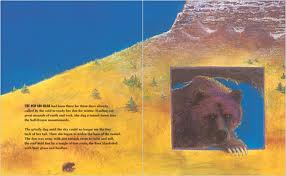
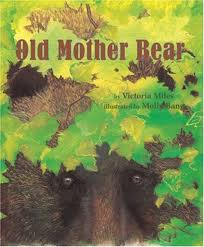
Division 5 has been practicing asking questions as we listen to a story.  Armed with our pencils and mini notebooks, we gather at the carpet to listen to great information story books like Old Mother Bear by Victoria Miles and illustrated by Molly Bang.

So far we have read about how the mother Grizzly tunnelled a den out of the mountainside to sleep through the winter and birth her cubs.  The cubs are born and nurse and snuggle with their mother until they all emerge from the den in the spring and begin searching for food.

A sample of the great questions we had (and who asked them) as we read the first half of the book:

How do bears dig the den? (Manny)

Does it hurt when the mother feeds? (Miami)

How do the mother bears make milk? (Hajhare)

How do they feed from their mother if they can’t see? (Josiah)

How many babies do they have at one time? (Lisa)

Where is the Dad? (Hailey)

When do they leave their Mom? (Jeremiah)

How do the cubs know not to hurt each other when they play fight? (Edwin)

How long can a bear survive without food? (Ricky)

We look forward to finishing the story this week!


Tales, Tails and Tadpoles

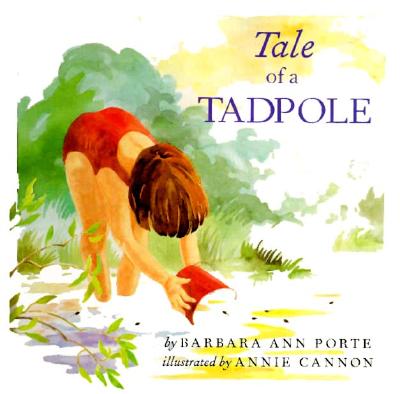
We read an interesting information story book called Tale of a Tadpole by Barbara Ann Porte. Illustrations by Annie Cannon.

Before we read, we peeked at some of the pictures and wrote some questions about tadpoles in our Wonder web:

Kevin wondered:

What do they eat? How fast can they swim? What are their predators? Do they have parasites?

Emily also had some questions:

Why is their tail so long? Why are they brown? How do they swim? Why are they so small?

Some other great questions from Jena:

How come they transform? Do they have gills? How do they get out of their eggs? Do they eat fish?

As we read, we asked more questions and read on to see if we could find out the answers. At the end of the story, we found out that we had learned a lot and everyone chose one of the key questions to answer in more detail. One surprise for everybody was that the tadpole in this story turned into a toad, not a frog. The grandfather in the story explained the differences between frogs and toads and we were all eager to discover what these were.

Many people explained some of the differences between frogs and toads in their writing. Jeremiah wrote: “Toads have bumps on their back but frogs don’t. Frogs have smooth skin.” Eddy explained, “Toads live in the woods and frogs live in ponds.”

Another topic that many people chose to write about was why the tadpole’s tail got smaller. Hajhare writes, “Frogs get energy from their tails.” Jenifer gave us a few more details: “All the nutrients from the tail go into the body, this makes the tail small.”

Information storybooks such as a Tale of a Tadpole are a great way to learn a lot of new information while enjoying a great story. We find that when we ask lots of questions before we read, we are even more eager to read and see what new information we can find out.


A beautiful book to inspire hope on Remembrance Day

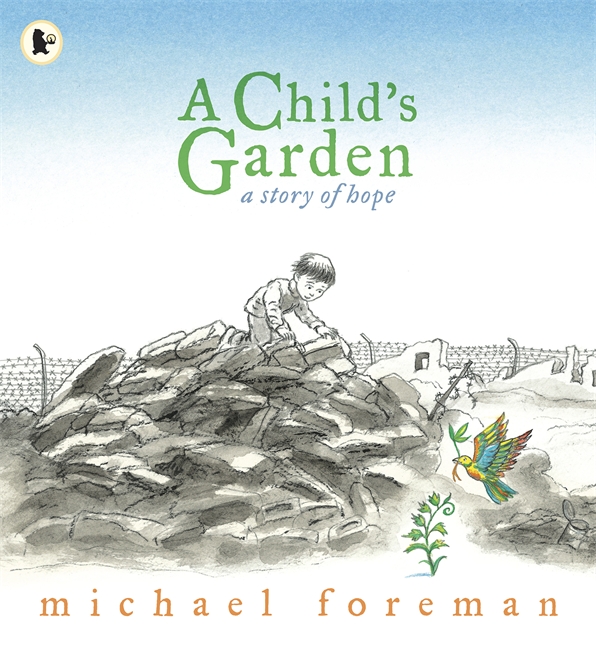
We read this beautiful book by Michael Foreman on the eve of Remembrance Day.

Both the text and illustrations are simple and beautiful.  As a read aloud, it is perfect. Each page brings exclamations, predictions, connections, sighs, expressions of joy and anger! The story? A boy finds a tiny plant in a pile of rubble next to a barbed wire fence – he nurtures it and it grows into a grape vine, spreading to cover the fence and bringing birds and butterflies and children to play.  Then the soldiers tear out the plant and throw it over the fence. “Huh? No! Why?” – the class erupted in outrage!

The boy is sad and troubled and suffers a miserable winter with his family in his war torn home.  Then in the spring he notices the vine is growing on the other side of the fence and soon seeds also sprout again on his side.  With more watering and care the vine soon grows and the green tendrils become entwined as they grow up either side of the fence to meet together at the top.  Again, the children have their beautiful garden.  This time on both sides of the fence. The subtitle of this book is A Story of Hope and it certainly is.  The discussion continued as we went for our afternoon walk outside.  Questions, connections and thoughts still to be shared.  How lucky we were to have a beautiful afternoon walk in the sunshine, talking about hope and peace and community.  Books like this work their magic! How do we talk about war and conflict with children? How do we honour peace?  Sometimes all we need is the perfect book to get us started.

Let’s Read and Find out Science Books

Our reading group has been exploring many books in the classroom.  This past week, they really enjoyed reading some of the books in the Let’s Read and Find out Science bin.  In pairs or on their own they selected a book, wrote down some questions before reading, took turns reading out loud to their partner and wrote down some of the most interesting facts in a web.  We all learned so much about a wide variety of topics.  Living things were a popular thing to study:  frogs and tadpoles, fireflies, night animals, and dolphins.  Others explored different science topics such as what makes a magnet, thunder and lightning and the sun. Check out some of our work!

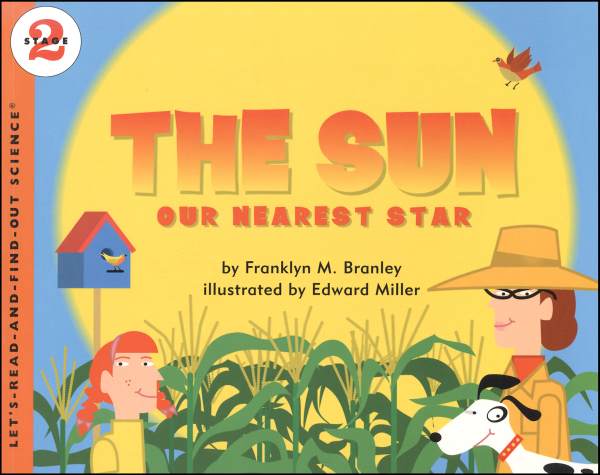
Josiah’s choice was The Sun, Our Nearest Star

sun

His questions before he read:

  • If you walk on the sun, will you crumble?
  • How far is the sun?
  • What is the sun made of?

Some of the interesting facts he included in his web:

  • Other stars are farther than the sun
  • A spaceship will turn into gasses if it gets too near the sun
  • It will take more than 3 years to reach the sun

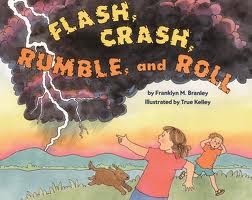
Jenny and Scott chose to read this book:

Jenny and Scott’s questions when they looked at the cover:

  • What is lightning made of?
  • When does lightning come?
  • What happens when lightning zaps you?

Some facts from their web:

  • People used to think lightning was the fiery finger of an angry God
  • Watch storms from a safe place
  • A car is safe because when lightning hits it, the electricity goes through the car and not through you

We have many more of the Let’s Read and Find out Science titles in our class and predict that they will be popular books to choose during independent reading time!