Unknown's avatar

About carriegelson

Elementary teacher passionate about all things literacy.

Just . . . How big is the world . . . anyway?

Britta Teckentrup’s How Big is the World? certainly inspired us to ask that question and many more as we followed little mole on his journey to discover just how big the world is by asking all of the creatures he meets on his important journey to find his answer. From spiders to whales, all of the creatures give him an answer but each one is different.
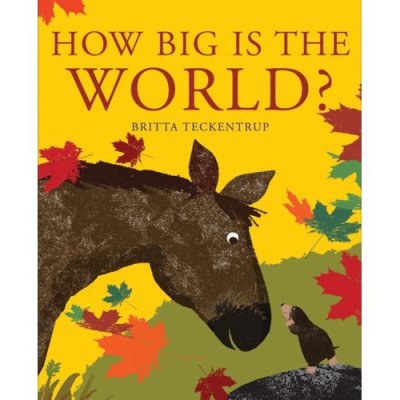
how big is the world

Some questions we began to wonder as we read this book:

Does everyone have their own thoughts about the world and how big it is? (Jena)

Will the little mole ever find out? (Truman)

Will the mole have another big question after this question? (Lisa)

Does the world ever end? (Sergio)

I wonder if you want the world to end, if you have to go off the world? (Jenny)

Well then how big is space? (Jeremiah)

Litle Mole does have an answer for his Papa when he returns.

“How big is the world?” whispered Papa. “As big as you want it to be,” said Little Mole quietly and he went to sleep.

This made lots of sense to some of us.  “That’s because each animal had a different answer!” “It depends on who you ask!” “The animals could only talk about what they knew.” But Catriona wasn’t satisfied. “That isn’t true,” she said shaking her head. “It is a specific size.”

Britta Teckentrup is also the author/illustrator of Grumpy Cat and Big Smelly Bear which are very popular books in our picture book bins.
A Smelly Bill Story just in time for Valentines

Today our BLG reader, Maria, read us the silly rhyming story Smelly Bill –  Love Stinks written and illustrated by Daniel Postgate.

SmellyBillLoveStinks

Smelly Bill the dog is inspired to take a bath to impress Peachy Snugglekins (a perfect white poodle).  Fresh out of his bath, he prances off to the dog show to try and win Peachy’s heart.

” What creature was it, can you tell? Why, it was Bill without the smell. He’d come to prove he was as fine As any fancy-pants canine.”

Fancy-pants canine! Can’t read that out loud without giggling!

Peachy’s owner, Aunt Bleach,  is horrified at the prospect of Bill as a potential suitor for her Peachy until Bill saves her from a boggy swamp.

Bleach hugged Bill to her grateful chest. “I think we know which dog’s the best . . .         Bill stinks, but he is brave and bold. And has a heart of solid gold!”

The story ends with Smelly Bill and Peachy Snugglekins perched atop the garden shed watching the evening sun go down – appropriately supervised by Aunt Bleach of course.


Our student reviewers report:

Edwin: Bill is helpful,  and respectful for helping the girl from the yucky mud puddle.

Annie: I like the part where Bill was in love with another dog and the owner was mad and making a face.

Josiah: I like it when Bill went in the mud and saved Peach. I love the title! It was funny because when Bill jumped in, he splashed them both.

Clever Jack Takes the Cake

Clever Jack Takes the Cake

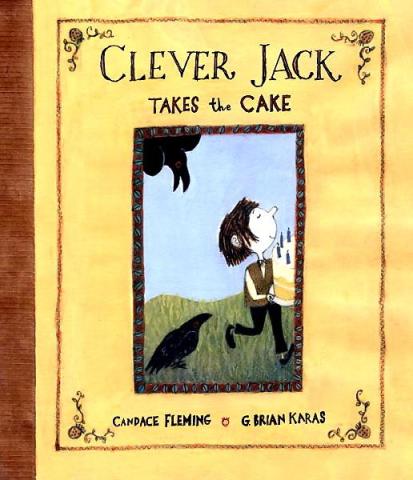
I introduced Clever Jack Takes the Cake by Candace Fleming by telling the class that I chose the book at the library because it is illustrated by G. Brian Karas, one of my favourite illustrators.  Eddy piped up, “Ms Gelson – lots of times you pick a book because you like the illustrator. Why do you always do that?” I explained that picture books to me are very much a partnership of great illustrations and a really good story – when each are great, the other is even stronger.  Sometimes, if I don’t really like the illustrations they interfere with my enjoyment of a great story.  Not in this case!  This book tells an excellent, highly engaging story with illustrations that add to the drama and fun.

Jack decides to bake a cake to take to the princess on her tenth birthday when he realizes he has nothing to give her and no money to buy a present. On the way to the castle he needs to contend with a flock of blackbirds, a troll, a dark spooky forest and an unfortunate food allergy.  He arrives at the feet of the princess with nothing to give her except the telling of his amazing adventure of trying to bring his cake to the castle.  The princess is delighted with this meaningful gift and we celebrated Jack’s positive outlook and clever strategies all along the way.

Because kids say it best:

“When you have nothing else, you still have your story.” (Kevin)

“You don’t always need a present. Just coming to a party is already a gift.” (Alyson)

We had some great text to text connections to this story.  The gift of a story reminded us of Something from Nothing by Phoebe Gilman where in the end there is nothing left for Joseph’s Grandfather to stitch up into something new.  But there is enough material to make . . . a wonderful story!

When the princess was bored and unimpressed by the lavish gifts of jewels and treasures from all of the party guests, we were reminded of The Quiltmaker’s Gift by Jeff Brumbeau. The King demands present after present but none have any meaning to him until he discovers the beautiful gift of giving.


Brownie Groundhog and the February Fox

How lucky are we to have a reader from BLG law firm come in every week and read to us! The volunteer readers in our room are a big part of every Wednesday morning. This is the first book review of a new BLG book. Check back weekly for the newest titles introduced to Division 5!

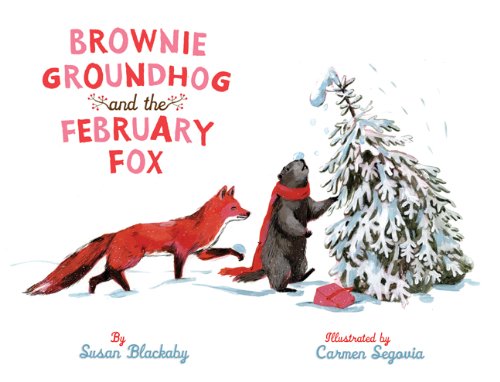
Our book this past week was read by Deborah.  Brownie Groundhog and the February Fox by Susan Blackaby is a lovely book about the impatient wait for spring. Beautifully illustrated by Carmen Segovia, an artist from Barcelona who had exhibited the sketches of our little groundhog at the Bologna Children’s Book Fair Illustrators Exhibition.The paintings in this book actually inspired the story which was written in order to bring these characters to life!

Brownie groundhog

There is a charming interaction between the fox and the groundhog in this story. Brownie needs to keep the fox busy and distracted enough to forget about trying to eat her.

“You can’t eat yet,” she said. “You haven’t worked up an appetite.”

“I feel appetitey,” said the fox.

“Well, you aren’t,” said Brownie. “Why don’t you clear the snow off the pond? That might do the trick.”

Our student reviewers report:

Ricky: I liked when the fox was trying to eat the groundhog but the groundhog kept tricking the fox.  At first, I thought the groundhog didn’t know that the fox wanted to eat him but she actually did. I thought she was just playing.

Jena: I liked how Brownie the Groundhog distracted the fox so he wouldn’t eat him – like taking him skating on the pond.

What did we learn about baby sea otters?

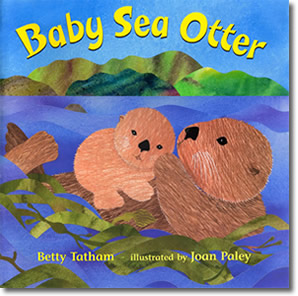
Our information story book this week was Baby Sea Otter by Betty Tatham.  We continued to practice asking questions as we worked our way through the story.  What was exciting was how students are beginning to connect their learning from different books to their wondering about new topics. From the questions below you can tell we have been learning about symbiotic relationships, the characteristics of mammals, etc

baby-otter

Betty Tatham’s story delighted and thrilled the students as they learned about how mother otters serve meals on their belly and how they have to protect their pups from diving eagles.

Some interesting questions as we read:

*Do they have any parasites? (Hajhare)

*Do they have gills to breathe underwater? (Kevin)

*Do they migrate? (Ricky)

*What happens if there are no more sea urchins where they live? (Lisa)

*Do otters have symbiotic relationships with other animals? (Jena)

*How do they clean themselves? (Annie)

*How do you know if they are male or female? (Jenny)

What did we learn?

Annie tells us: Sea otters dive underwater to protect their babies from eagles

Jena writes: The Mom ties the pup to a kelp bed when she goes to get food. She uses her chest as a table to feed the baby.

Kevin explains about what they eat: I discovered that they eat crabs, clams, sea urchins and they use stones to crack open the shells.

Ricky tells us: Sea otters are waterproof. They stay waterproof by blowing their fur with warm air.

A visit to the public library uncovers. . .

I went to the library and what did I find?  Some “new to me books”! Exactly why public libraries are such lovely places.  You can walk in empty handed and walk out with a bag bursting full of undiscovered treasures.  For free!  At least that’s what happens to me.

Some books I found today that I have to share – first here and then this week, in the classroom! Excited at the possibilities . . . These will need to be more than book talks – all are simple and quick to read – but like a lovely sweet treat – something to savour for some time afterwards . . .

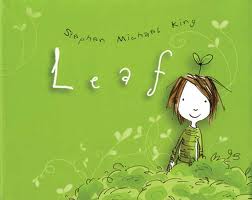
In Leaf by Stephen Michael King, a little boy escapes his Mom’s intentions to give his hair a trim.  While hiding out with his his adorable little dog, a bird drops a seed on his head. A shoot pops up and grows a leaf. Now he needs to carefully tend to this living thing on top of his head. Simple, sweet, endearing. The best thing about this book? It is nearly wordless – the only text  – sound effects – Whooosh, Boing, Sploosh, Glurg glurg . . .

Kathryn Otoshi has created a wonderful book called Zero all about finding value in yourself. I can see this book fitting in wonderfully with extension lessons with the Mindup curriculum where we explore looking at things from a different perspective. Is Zero empty inside?  Or is she open and full of possibilities?

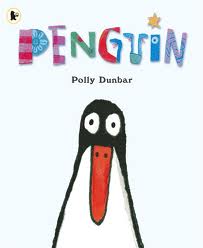
This book is pretty funny,” announces my son. And it is but also a little bit more . . . Penguin by Polly Dunbar lets us look at a child’s frustration when he can’t communicate in the way he wants to with a new friend. And my, my, the things we tend to do as we get frustrated!

Happy Reading!

We’ve created some new Eva Ibbotson fans!

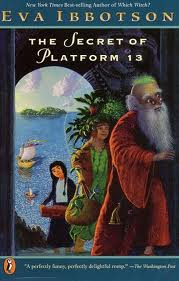
We finally finished the very popular Secret of Platform 13 by Eva Ibbotson. Students were happily surprised at the ending (the details of which we can’t disclose here as we don’t want to ruin the surprise for anyone who hasn’t read this book yet).  But we can share that there were cheers, big smiles and celebrating in our room as we read aloud  the last two chapters 🙂 We had lots of laughter and some dramatic moments along the way but were very pleased to get a happy ending!

Eva Ibbotson wrote many books in her career. Sadly, she just passed away in October 2010 at the age of 85.

I think many students will be searching for new titles of hers to read on their own.  The two I want to read next:

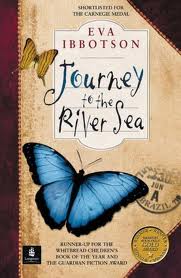
Award winning, Journey to the River Sea is said to be a dramatic adventure about a lonely orphan named Maia who sails into the jungle to live with relatives she has never met. Living in the Amazon seems to have affected them in some very odd ways. . . . And why was it that they wanted Maia to live with them in the first place?

In The Star of Kazan, we meet Annika who is abandoned at birth and brought up in the house of three eccentric professors and their two servants. Then one day a woman arrives claiming that Annika is her long lost daughter and she is whisked away to live in a mansion in Germany. But soon Annika becomes suspicious about this new life . . .

Sarah Perry’s If inspires

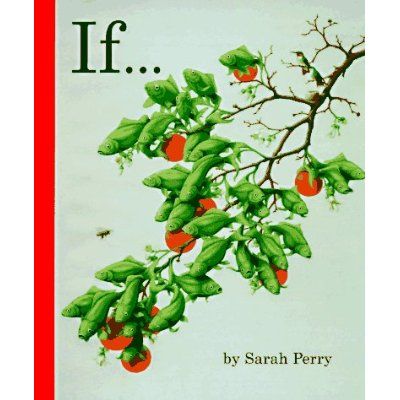
Our reading group explored the book If by Sarah Perry.  This is the classic book to introduce the concept that one simple question can lead us to deeper questions and endless wondering.  Each page features an amazing visual with an If phrase such as If music could be held . . . ,  If mice were hair . . . (a pretty creepy idea!) If toes were teeth. . . (gives a whole new image to wiggly teeth we decided :)) We lingered on each page- shouting out questions as someone else wondered something that made our thinking bigger and our wondering even broader.

If

Some truly great questions shared in wonder webs (inspired from specific pages in the story).

If leaves were fish . . .

Would we have to rake up fallen fish? (Jena)

Would there be fish flying around on a windy day? (Catriona)

Would they be smelly? (Lisa)

Will they change colour? (Kevin)

Would they still use chlorophyll? (Alyson)

Then what would the caterpillars eat? (Ricky)

Can the fish breathe? (Annie)

If hummingbirds told secrets . . .

Would they tell secrets to their predators?  Can the animals understand? Would the ears get poked? (Gary)

How would it say the same language as me?  wondered Truman. He then added little drawings of people asking: “What did you say?” “What does it mean?” “What would it be?”

A book to pick up again and again. Let the wondering begin!


Kidsbooks sale – so some new books to our class!

Vancouver Kidsbooks just had its annual sale so a little book shopping was necessary!

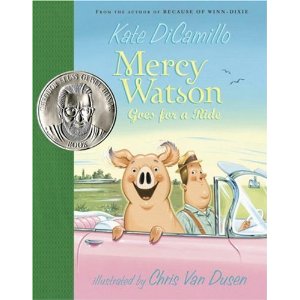
Kate DiCamillo is a favourite author (Because of Winn Dixie, The Tale of Despereaux). Her beginning chapter book series (about  Mercy Watson, an adored pet pig) was an instant hit in our classroom.  So much so I had to choose numbers between 1 and 100 to pass out the first 3 books in the series to eager little hands during quiet reading this morning. And the books each have an understood “I’m next” list attached to them.

mercy watson

We also got the new Binky book by Ashley Spires! Binky the Space Cat has been a very popular book in our Graphics bin.

The newest Binky (Binky to the Rescue) flew off the new book ledge as well!

Happy reading everyone!

What do our little thinkers think of Little Ant Big Thinker?

I love when I have so many books in my “must read” pile, that when we have a spare 5 or 10 minutes, I know just the book to choose!  Today it was Little Ant Big Thinker or Where does the Ocean End? by Andre Usatschow and illustrated by Alexandra Junge.

little-ant-big-thinker

As we’ve been working on asking questions as we read, I thought this would be a great time to read this book about a little ant with some very big questions. The book begins with the little ant wondering if the ocean ever ends and if so, where? He begins to get anxious – how can he ever know, if he never can see the end? An elephant happens along and despite their attempts at peering out over the water on tiptoe and climbing a tree for a better view, the two of them cannot see the end of the ocean. A fish swims up and scoffs at their worry: “The ocean ends right here!” he explains. Okay, problem solved. Until of course the question pops into the ant’s head: “But where does the ocean begin?”

We quite liked this book.

Catriona, always summarizes so nicely: “It begins at the end and ends at the beginning!”

Alyson notes: “Wondering is a great thing. Little people can think big too!”

Jeremiah has his own question about the little ant: “What if his brain gets so big from all of that wondering, and he tips over?!”

Hmm, what if . . . ?