What happens when you read 2 books called One? A few things . . .
It seems to me that when a book is called One, there must be something within in it that offers us some simplicity – that by the time you are finished reading it, you can clearly articulate at least one thing you learned. Often with simplicity is weight. A simple message with some power behind it. So let’s see – I tried out two books titled One with my class this morning.
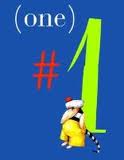 We started with #1 (one) by V. Radunsky: A nice story about an awful braggart. This story is about one of ten little armadillos who is actually called Six but is convinced he is #1. The strongest! The smartest! The bravest! The best! #1! #1! #1! He boasts about his inventions, his height, his speed . . . He gets the best presents. What does he want? He has a big list including: Three cats plus one more cat. Five altogether. If you aren’t convinced, he will help you by explaining all of the reasons why he is #1. My favourite? His story of why he is the strongest: I saved this horse the other day. Twenty grown armadillos couldn’t even lift this horse but I did. Because I’m #1. The horse was so grateful.
In the end, everyone in his family completely agrees. Yes, # 1 they say. Definitely.
You are the #1 clown, show off, chatterbox, storyteller, dreamer! You are our # !!
Maybe not the reaction this little pink armadillo was looking for, but definitely recognition!
Reactions from my class?
Ricky: “He’s lying about everything. He can’t be that smart or that strong. He can’t be an inventor. Duh.”
Eddy: ” You have to be in college or even higher when you want to invent something.”
Scott: “He’s just dreaming.”
Miami: “He just thinks about himself.”
Alyson: “Selfish.”
I clarified that we actually call this “self-centered.”
Ricky: “He can’t go to college anyway cuz 3 + 1 = 4, not 5.” (remember the cat comment?)
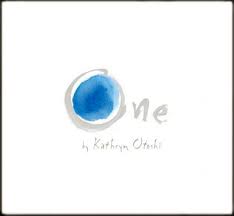 We then read One by Kathyrn Otoshi. This amazing book explores what happens when someone is picked on and nobody steps in to say that it is not okay. All of the colours are in the shadow of the hot-head Red who grows bigger and bigger as he continues to be mean, unchallenged by the other colours. Then One comes on the scene and shows all of the colours how to stand up and count!
We had a lot of reactions to this book as it fits right in with the books we have been reading about bullies, the bullied and the bystander.
Ricky: “The colours are too scared.”
Hands shot in the air. “Oh! Oh! Oooh!”
“They’re like bystanders!”
A collective hands down. Many of us were just about to say the same thing.
Interesting perspectives came next.
Alyson: “If they all teamed up together, they might be bigger than red.” (work together against the bully)
Jena: “Maybe red is mean because no one is his friend.” (show some empathy towards the bully)
Hajhare: “Maybe there’s bigger guys – like brown and black?” (overpower the bully)
Otoshi offers us another perspective. Everyone stands up to be counted and says, “No!” when Red tries again to roll over Blue. Red, seeing the others standing tall, shrinks and is about to roll away when One points out that “Red can count too.” Red becomes Seven, and joins in the fun. Sometimes it just takes One ends the story.
Jena: “If one person stands up, everyone else might join.”
I asked the students. “So how are these two books different?”
Kevin: “One book is teaching and the other is just a story.”
Miami: “No. All are teaching a lesson.”
“Really?” I asked. “What lessons did we learn from this book?” (I held up the Radunsky book)
“#1 wanted to be # 1 but being Six was special.”
“Don’t get your hopes too high.”
“Just be yourself.”
“Don’t be a show off!”
“And this one?” I held up Otoshi‘s One.
“Stand up.”
“Don’t be a bully. It makes it all worse.”
“It just takes one person to make everyone be a community.” (Officially the beautiful comment of the day!)
So there you have it. Read one book (x 2) and savour the learning and thinking it inspires
Our reading of 2 books called One was certainly worth more than one + one is two 🙂

 I recorded the new idioms we had learned: happy as a clam; pleased as punch and green with envy on cards to tack up on top of the board. Students love trying to insert these idioms into everyday speech as often as possible and feel quite delighted when someone manages to use an idiom in the appropriate context. It is quite fun! So as I was writing, students were reading various idioms to each other and giggling at how funny some are.
 There's a Book for That