More fabulous picture books with a Garden theme

As we continue to learn about plants, seeds and gardens, it feels like there are garden themed books blooming everywhere we look.

See our first list here which includes many more titles.

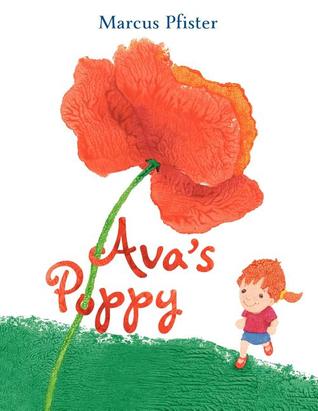
Ava’s Poppy by Marcus Pfister

We read this book today and students were inspired to create a list of all the great reasons this book should be shared: we can learn how to grow a flower, it teaches us about life cycles, we learn how to take care of a flower, there is lots of information about seeds,  and it has important themes of kindness and friendship. Lovely little Ava makes friends with a gorgeous red poppy in a field of green and cares for it in changing weather and over time. When she buries a seed capsule, she has no idea that the next spring her poppy will return to her!

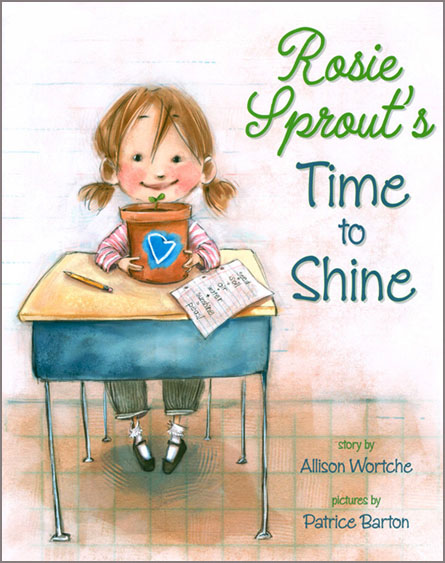
 Rosie Sprout’s Time to Shine written by Allison Wortche and illustrated by Patrice Barton

Students loved this story about a little girl who learns about friendship, kindness and surviving competition while tending pea plants in her classroom. Shared in our classroom here.

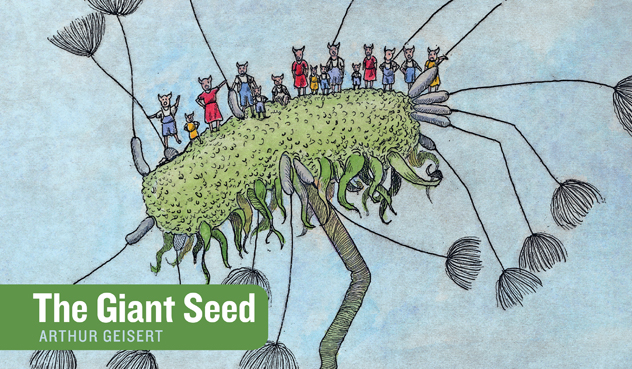
The Giant Seed by Arthur Geisert

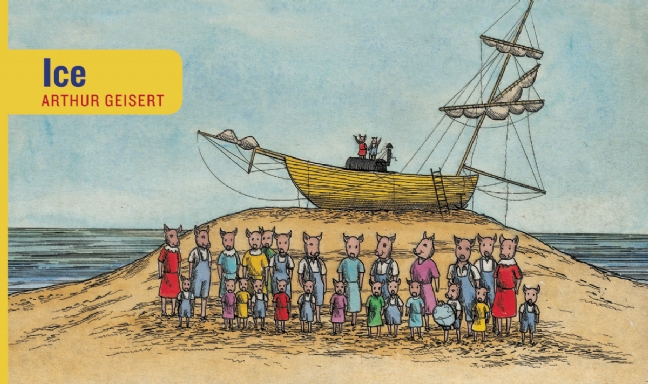
Another wordless book by the brilliant Geisert and a follow up to the equally wonderful Ice (reviewed here) Explore the concept of seed dispersal and how seeds travel in this fantasy story. How the pigs happen to be saved from volcanic disaster is a reason to share this story many times.

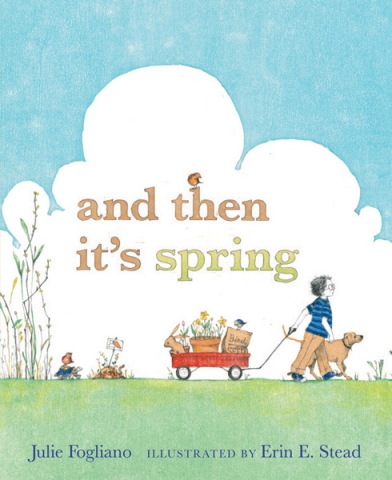
And then it’s Spring written by Julie Fogliano and illustrated by Erin E. Stead 

Explore the magic of the transformation from brown and boring to the wonder of green that comes in spring. What treasures lay buried deep waiting for the sun, warm temperatures and the power of spring showers?

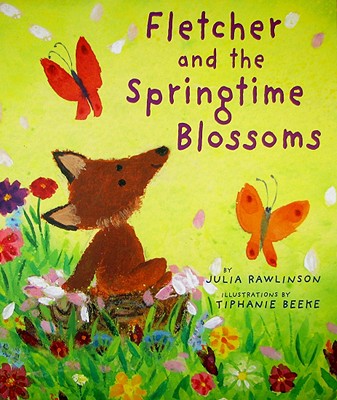
Fletcher and the Springtime Blossoms written by Julia Rawlinson and illustrated by Tiphanie Beeke

Is that snow in the middle of spring? Fletcher certainly thinks so. But he learns that blossoms can cover the earth in a blanket during the spring just like snow does in the winter. A beautiful celebration of spring.

Using Wordless Books in the Classroom

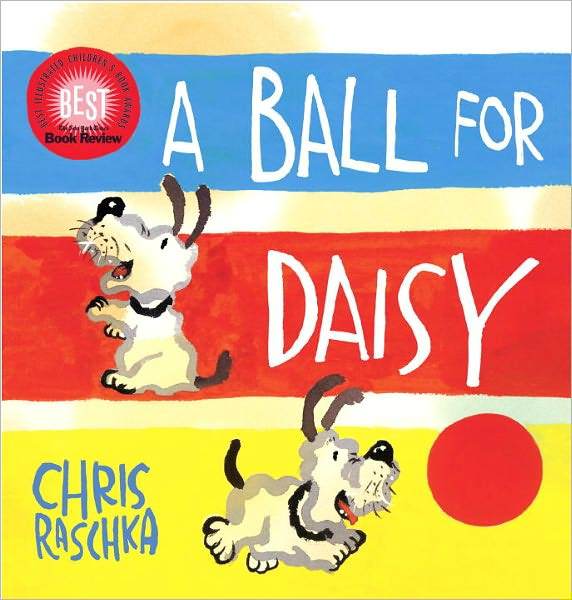
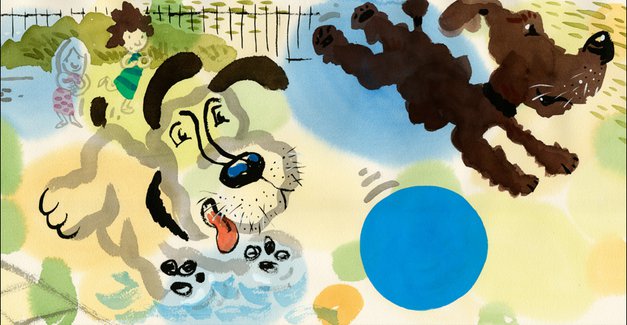
I have been using wordless books with a lot of success in my primary classroom this month. The next book I plan to share with the class is A Ball for Daisy which won Chris Raschka the 2012 Caldecott Medal.
How are wordless books used in our classroom?

Every morning we start our day at the carpet and “read” a wordless book together. Of course there is no text so we tell the story as a group as we turn the pages. Before we begin, we review our strategies for reading wordless books. This is what students typically share:

“We need to infer.”

“We look at the pictures for clues.”

“We pretend that we are the author/illustrator and think like he/she does.”

“We have to use what we already know about stories.”

“We use our background knowledge.”

As we turn the pages, students share their observations. I find this is such a fantastic opportunity to build oral language skills. Students need to listen to others and build on ideas. They have the chance to disagree and offer alternative suggestions. They extend their thinking as the class offers sugestions. My role is different from what it usually is as I sit with a book in my hand and children at my feet. I am completely guided by their pace. I repeat specific statements and ask for more thinking. I ask probing questions like, “What made you think that?” “Do you see something on the page that made you suggest . . .?” I also rephrase certain comments so as to correct grammar, extend vocabulary and provide positive feedback. Many childen that don’t often share in discussions about books have been avidly participating. It has been a very exciting and creative process.

I then leave the wordless book of the day on display with other recent ones we have shared. This is what I see at different points of the day:

*Books are shared when reading volunteers come in to listen to children read. Children who have often asked the volunteers to read to them, choose a wordless book and “tell” the story. Volunteers have made comments to me about the child’s confidence, his/her use of interesting vocabulary and about the engagement with the story.

*Wordless books are selected when our little K/1 buddies come up to read with us on Wednesday afternoons. Because our Grade 2/3 class has more students than the K/1 class, often two of my students read with one little buddy. This week I saw a little boy in kindergarten sandwiched between two of my Grade 3 boys and all of them took turns talking about and telling the story as they turned the pages. My boys were even modelling my questions, i.e. “So why do you think he’s sad?”

*Children are choosing wordless books off the shelf during quiet time and sitting with a classmate and whispering as they turn the pages. I see lots of flipping back and forth as they turn back looking for a specific picture, verify information and then resume the story. Also during quiet time I have two girls who are making their own wordless book. They sit side by side drawing pictures and talking about their story.

*There is also a transfer of “attentiveness to detail” as we read other picture books in class. Many comments and questions are about the illustrations and details noticed in the pictures.
As we celebrate illustrations and study them for additional information, I am reminded of a blog post by author Shannon Hale called Let them Eat Pictures. Hale stated:

“Our world is full of visual cues. Illustrations are symbols, just like letters are symbols. We look, we read to understand, to decode the world. Literacy, I think, is the ability to glean understanding from printed information. In order to navigate this world successfully, kids (and adults) will need to be literate in words and pictures.”

Wordless books give us the opportunity to practice inferring and looking for evidence to support an idea – comprehension strategies that we use with any kind of book – from picture books to novels.  I am excited to continue using this beautiful genre of books in my room.

For more wordless picture book titles, check out more posts on this blog.

Wonders of Wordless Magic and Few Words on Five Wordless Books

Wonders of Wordless magic

I have a kind of love affair going on with wordless books. There is something magical about getting to the end of one feeling like you have read a very detailed story. Yet, not one word graced the page. Such potential for oral language and retelling . . . Some more of my favourite wordless books – both old and new. ( A recent post on wordless books: Few words on five wordless books can be found here)
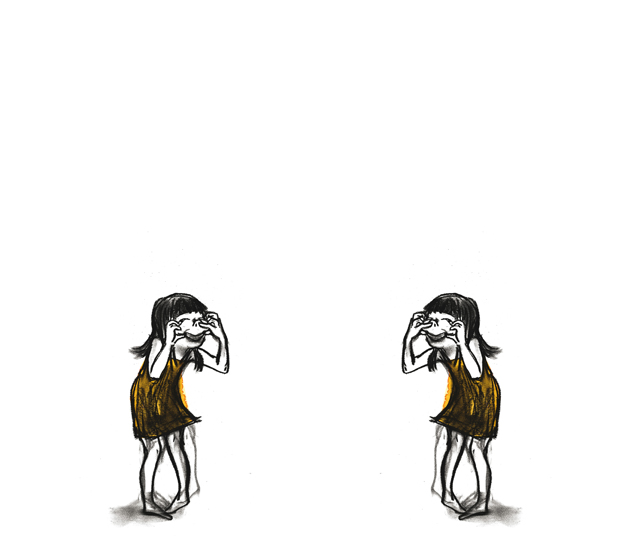
Mirror by Suzy Lee

Fascination with our mirror image – from joy to despair.

Chalk by Bill Thomson

Does every piece of chalk hold amazing potential? What is really real?

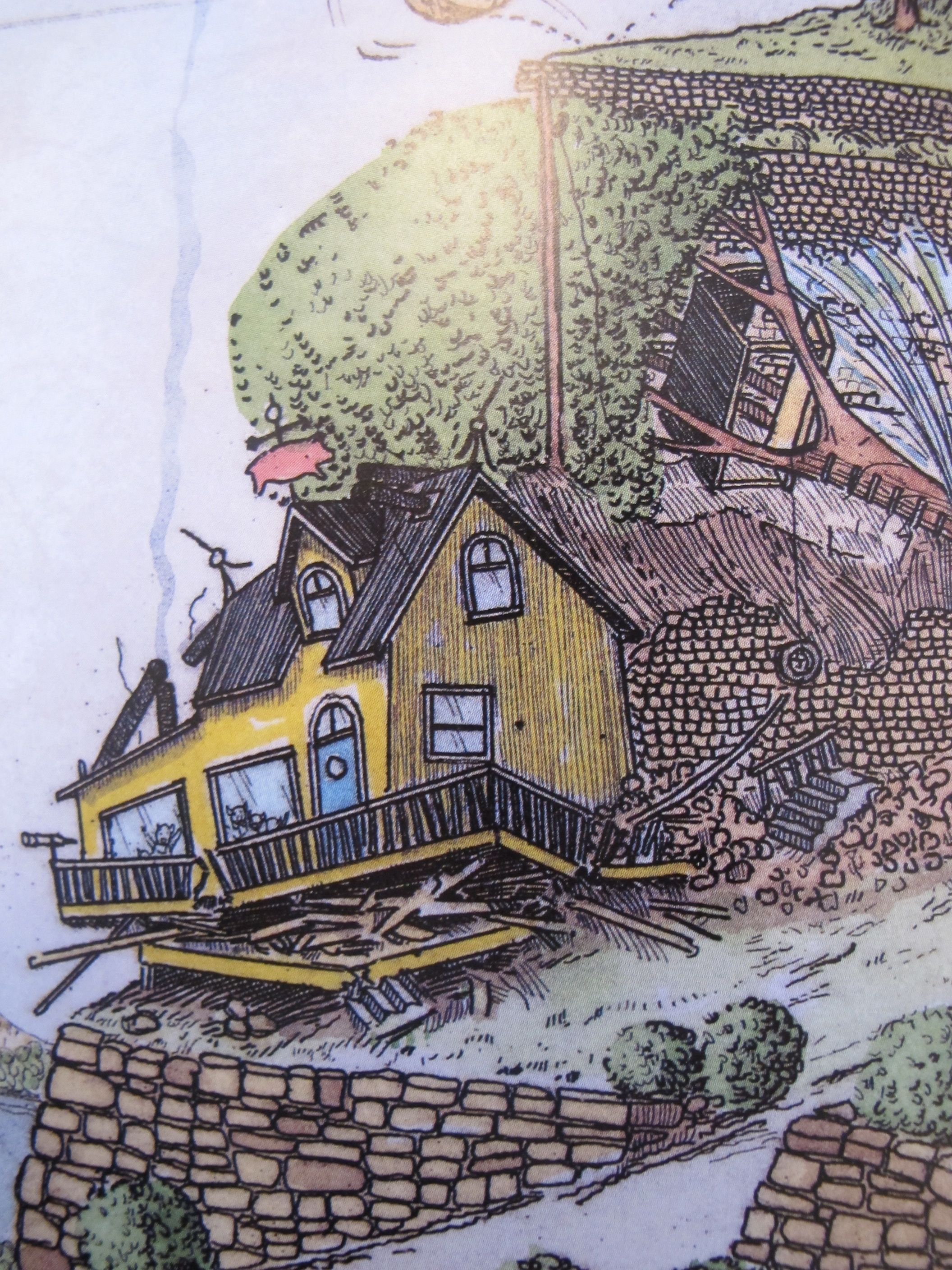
Oops by Arthur Geisert

One disaster inevitably leads to another. Note to self: House built on a cliff? Maybe not the best idea!

IMG_2828

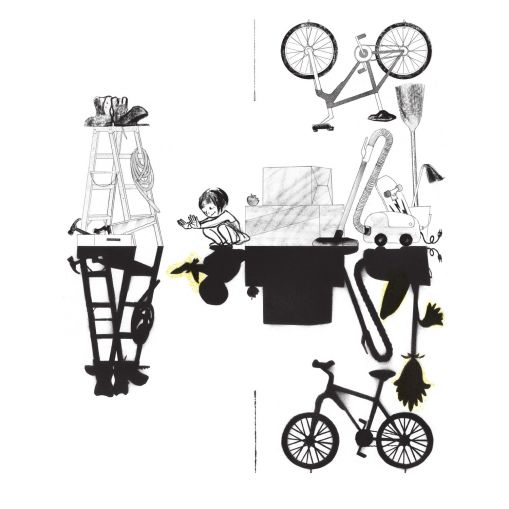
Shadow by Suzy Lee

A lightbulb, a child and a beautiful imagination create wonder.

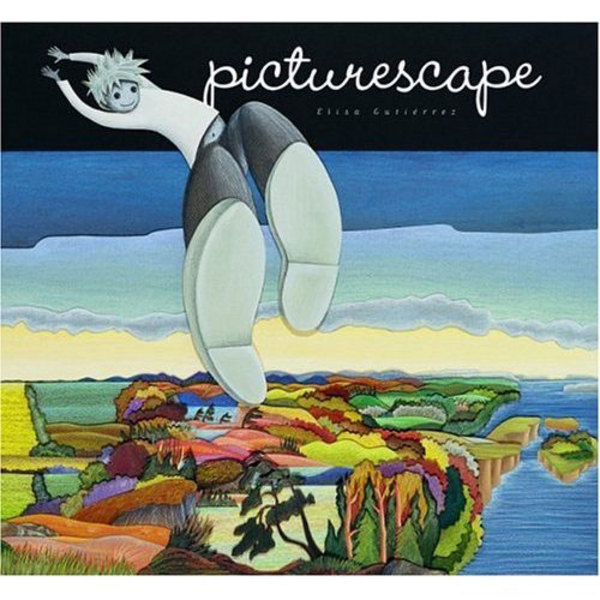
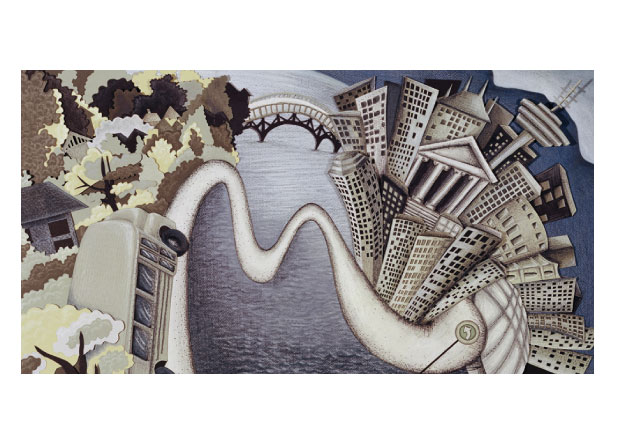
Picturescape by Elisa Gutierrez

Let Canadian Art take you anywhere and everywhere!

The next two wordless picture books were sourced by my husband from used book stores and given to me over 15 years ago. They hold an important place on my book shelves! Unfortunately, it is as challenging to find images of these books as it is to find the books themselves!
The Yellow Umbrella by Henrik Drescher


Where in the world can a yellow umbrella take two monkeys?

Mighty Mizzling Mouse by Friso Henstra

The ultimate mouse chase. And the winner? Do you need to ask?

IMG_2825

Ice

Picture Book Love #3: Celebrating picture books that are just too good not to gush over.

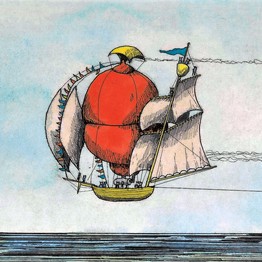
Such an intriguing premise for a picture book. A community of pigs live on an unbearably hot, treeless island. Life is focussed on sheltering themselves from the unforgiving sun. It is not really working. The island water supply will soon be in dangerously short supply. Meetings happen. Plans are made and a group of pigs sail off. Sail off, it must be noted, on a gorgeous flying airship: part hot air balloon, part sailboat. Completely beautiful.

The ship drifts around the globe and locates icebergs. The pigs attach their ship via an anchor in the ice and then begin to celebrate their luck. Dancing pigs by firelight. Simply delightful. And then by attaching a sail to the iceberg, the pigs manage to navigate the iceberg back to their hot, dry island and then the real work begins.

Scaffolds are built. Ice saws utilized. Pulleys, ladders, assembly lines. These pigs have it all worked out! Large chunks of ice are added to the almost dry island reservoir turning it into part water storage, part water/ice adventure land.

The hardworking pigs celebrate with satisfying swims, make shift waterslides and high dives from iceblocks into the cool deep water! Then ice chunks are hauled to home water sources and the pigs can finally indulge in cool relief from the island’s heat.

Arthur Geisert‘s wonderfully wordles book Ice appeals to me on so many levels. First of all it celebrates industriousness. Hardworking pigs one and all, old and young pitch in to make a poor situation (unbearable heat) better. I love that these pigs plan carefully and then, in completely unexpected ways (via a flying sailship), execute this plan. And finally these pigs again sit together and celebrate their mutual success. I also love these pigs. Pigs. It should seem absurd but these pigs are highly relatable in their simple dresses or overalls and communal committment to a task. In witnessing the pig’s inventiveness and high adventure, one comes away with a satisfied feeling. So much happens in just a few pages. Problem. Idea. Execution. Solution. Satisfaction. If only every problem could be approached with such creativity and success.

Few words on five wordless books

Because the creators of wordless books can say so much with no words at all, I decided to use sparse words to express my awe for each of these titles and let their gorgeous covers invite you in.

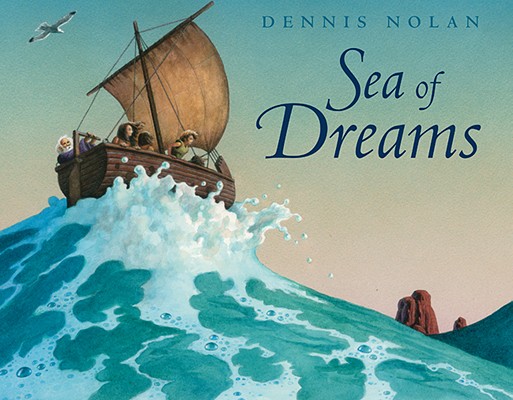
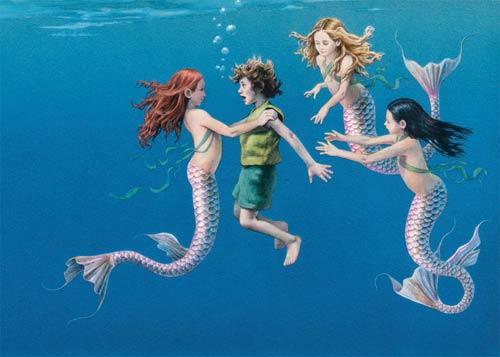
#1 Sea of Dreams by Dennis Nolan

Adventure over and under the sea . . .

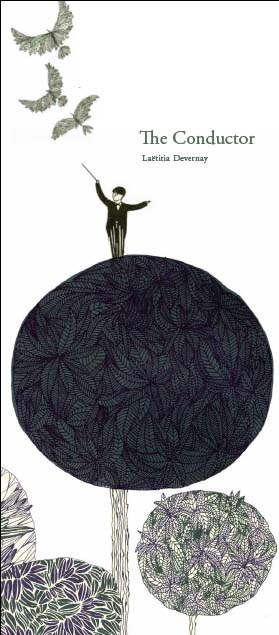
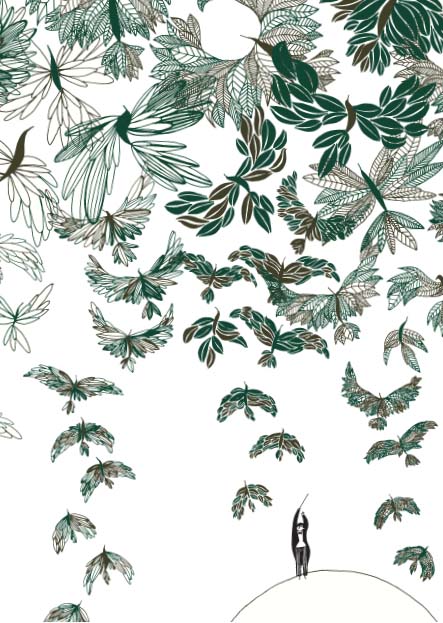
#2 The Conductor by Laetitia Devarney

Swirl, whirl, leaves take flight . . .

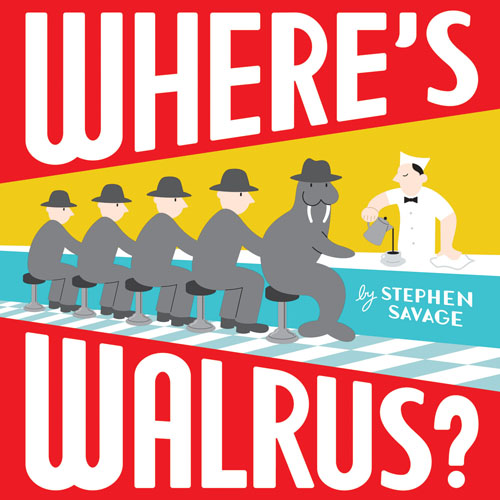
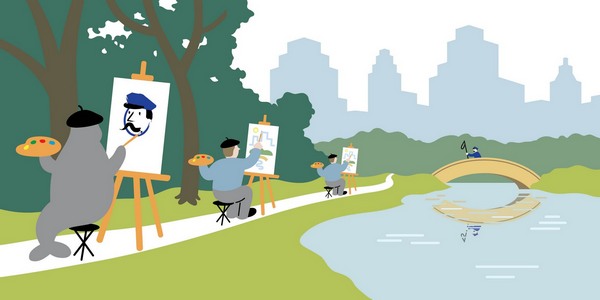
#3 Where’s Walrus by Stephen Savage

Where is that wacky walrus?

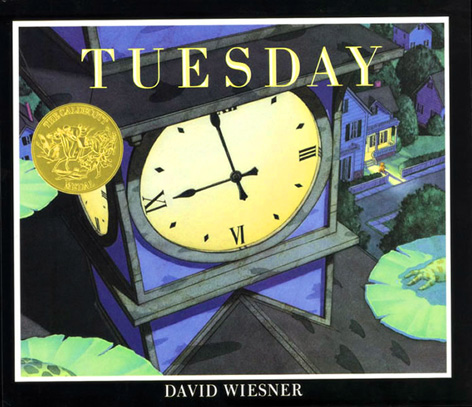
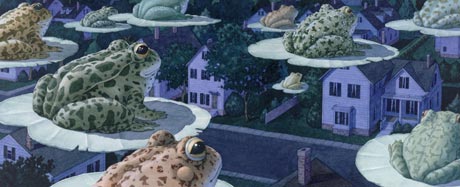
#4 Tuesday by David Wiesner

And what if frogs floated by?

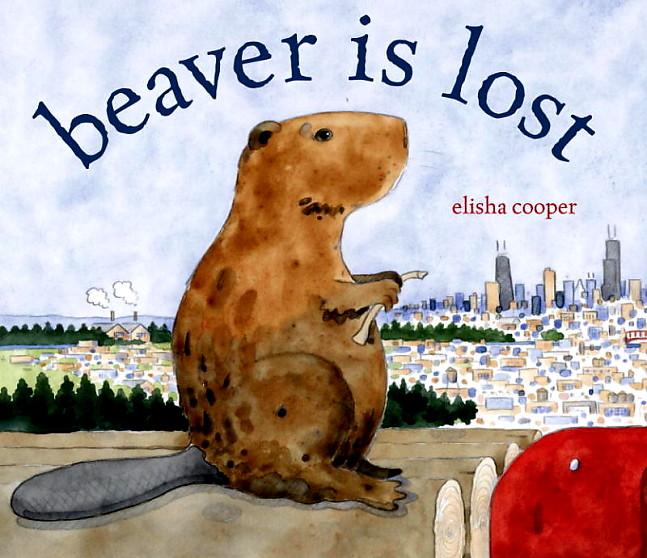
#5 Beaver is Lost by Elisha Cooper

Beaver travels to a bustling city and back.

Thanks to Adopt a School Funds which purchased #1 and #2 for our classroom wordless (or nearly) collection. Wordless books allow us to practice using picture clues and background knowledge to infer meaning. They are also lovely to share together or to ponder over alone.


The Lion & The Mouse

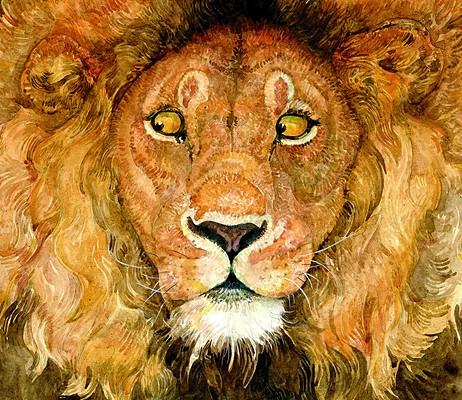
The Lion & The Mouse by Caldecott medal winner Jerry Pinkney is another book we have shared together as we continue to explore a theme of kindness through picture books.

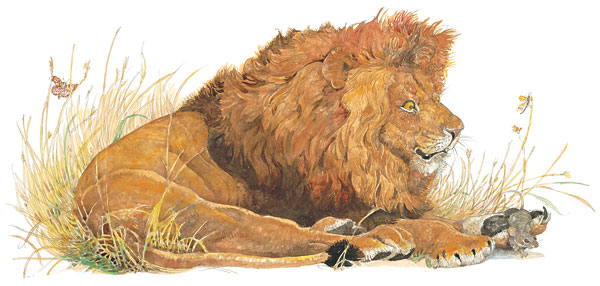
Pinkney’s story is an adaptation of the Aesop fable of the lion and the mouse who exchange an important gift – that of setting one another free. This gorgeously illustrated book is basically wordless, the only text are a few sound effects. Each page is so detailed, we found ourselves studying each image closely for clues as to what was happening in the story. We see a humongous lion being disturbed in sleep by the tiny mouse. Despite his irritation, he lets the tiny mouse go free. The mouse races back to her nest and her young. When the lion is trapped in ropes set by poachers, the tiny little mouse repays the kindness offered to her by the lion and gnaws through the ropes, setting the  king of beasts free.

Pinkney sets his version in the African Serengeti of Tanzania and Kenya. Students were fascinated by all of the animals depicted in the background as much as the close up pictures of our two heroes – the lion and the mouse.

Setting the little mouse free

How does this book continue to teach us about kindness? Students are clearly understanding that kindness is a choice, articulating that each main character had to decide what to do and chose to be kind to the other. We also spoke about how such a small decision to be kind can have far reaching effects. Students pointed out that not only did the lion save the mouse by setting her free, he also saved her family who was dependent on her. Students connected this story to other stories about the “golden rule” – treat others the way you want to be treated and spoke about karma (that all good done comes back to you.) What a powerful discussion this beautiful wordless story inspired.

Rocket Art (Finished Pieces)

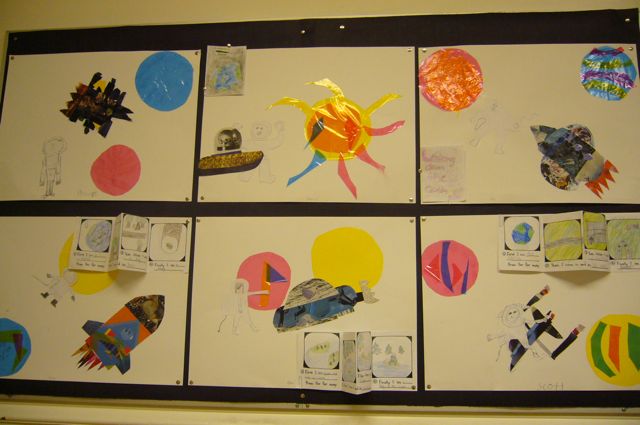
Ms. Chen has posted our finished Rocket Art pieces in the classroom and on the bulletin boards which surround our classroom. Displayed all together, they look amazing! If you haven’t seen our work in process, read more about how these pieces were created here.

P1020879

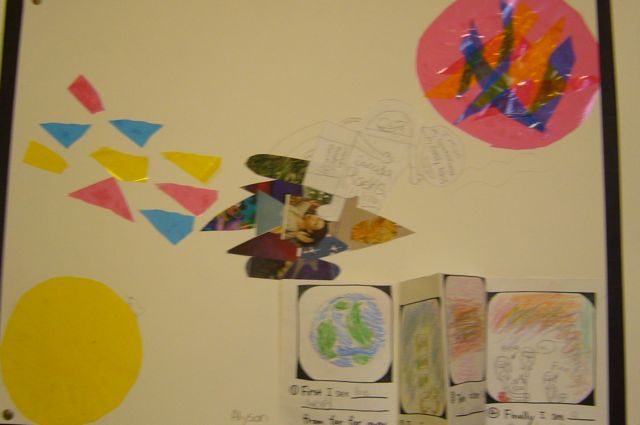
This week students were able to complete fold out panels about looking back to Earth. Ms. Chen used Steve Jenkins’ book Looking Down to illustrate zooming in to a specific object – from looking at Earth and then zooming in possibly to a specific street, then maybe a particular house and then finally to a single window within the house.

This is such a fantastic book to illustrate zooming in on a particular object – first from far away and then getting closer and closer.

A very interesting journey in looking at the world from a different perspective.

Closer and closer and close

Read about how this book was conceived on Steve Jenkins’ site.

What is amazing about this book is that it is “told” strictly through visual images – as a wordless picture book.

P1020882This is Jena‘s art. Now in addition to her rocket ship, planets and drifting astronaut, she has attached her mini fold out book which depicts looking back to the Earth.

First she drew a portion of the Earth – oceans and land covered by forest. In the subsequent drawings she zooms closer and closer into the forest scene.

P1020883Here is Alyson’s completed work. We loved how she used the cellophane to represent the emissions coming from her rocket as it zoomed through space.

Her mini booklet zooms in to a single room in her building.

Such a colourful piece!

P1020886Hailey isn’t quite finished her mini zoom in booklet but her art so far, is wonderful.

Her astronaut’s suit is extremely detailed and she was able to create a very efective planet by layering her cellophane pieces.

Beautiful.

Such a fun and successful project. Thank-you Ms. Chen!

If I could go to Kindergarten . . .

I love reading to the Ks at Seymour. I get to do it at least a few times a month at our primary Social Responsibility Gatherings. The Ks sit right up in front, eyes wide, serious expressions, taking it all in. They listen intently, little hands raise in the air to tell me connections and ideas. Then when they leave, they wave, they smile, they whisper, “I’ll miss you.” One of my favourite things to do is to read to the Kindergarten class.

So I got to thinking what if I could go to Kindergarten everyday? And read? What would I read?  During my last few visits to the public library I found some wonderful possibilities.

Saber-toothed tigers. Wooly mammoths. Sleepy dinosaurs. A little boy exploring the world around him. Boy by James Mayhew explores a little guy’s yearning for independence while at the same time honouring his deep connections to home (and the happy snuggles from Mom and Dad). Where in the world do we find warmth? In the security and love from our own family.

A beautifully illustrated story inspired by the author’s love of his own son.

Marie-Louise Fitzpatrick wrote There – as a series of questions. A story about growing up and celebrating the journey as much as the destination. When will I get there? How will I know? And will I know everything, There? The little girl then wonders Can I change my mind and go Elsewhere instead? She then decides that she will go There tomorrow – after she does all the things she needs to do.

A book that begs to be explored with children. Winner of the Bistro Awards in 2010.

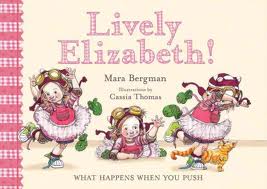
I think this book by Mara Bergman and illustrated by Cassia Thomas Lively Elizabeth is especially appropriate for kindergarten. Life when you come to school is all of a sudden a lot about lining up. Going here, going there, hands to yourself, “shh!” Several times a day. What happens when you have a little extra energy and it kinda spills over into a push? Well in a kindergarten line, it is full on domino effect! Bergman does a lovely job of playing out the whole scenario – from upset to apology and then forgiveness and moving on (and quickly – after all, little ones have the important business of play to get back to)! Cassia Thomas’ illustrations are absolutely delightful! A book, I predict, that will get many “Read it again!” requests.

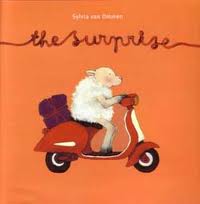
Okay who doesn’t love surprises? And guessing what will happen next? Little ones do especially. What a treasure is The Surprise by Sylvia van Ommen! Wordless so there is a lot of space for interactions. Predictions. Inferring. Questions.  Sheep zips here and there on her moped on a mission. She dyes her wool, when it seems long enough, a brilliant red. Then she brings it to poodle who spins it into yarn. She then knits something special and wraps it up and delivers it to . . .  Well, not going to spoil the surprise here but how fun would this be to do with a class of Ks?

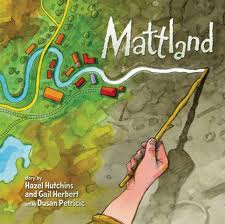
Mattland coauthored by Hazel Hutchins and Gail Herbert and illustrated by Dusan Petricic is a wonderful book to explore with children stressed by moving. The scary sadness of someplace new followed by the gentle, spontaneous introduction of new playmates and new activities. But this book is also ideal to celebrate imaginative, outdoor play. Building a place – roads, rivers, houses, prickly trees and getting some quiet help from someone with their own treasure trove of discoveries – a flattened penny, some popsicle sticks, four pine cones . . . To be fair, you can only read this book with intended outside play planned next. Lots of it. And it should probably involve some mud!

Now I just need a plan to sneak in and share some of these with the Ks!

Fairy tales, Anthony Browne style

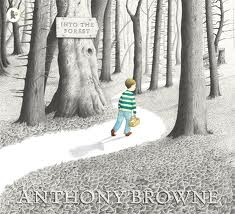
Recently I read our class Into the Forest by award winning author/illustrator Anthony Browne.

into the forest

A boy is awakened by a terrible sound and so some upsetting days begin. Dad is missing from the breakfast table, Grandma is sick and he must take a cake to her. “Don’t go into the forest,” his mother warns. But anxious not to miss his father’s return, the boy decides to take a shortcut through the forest and his strange adventures begin. We certainly connected to the anxiety and suspense along the way to Grandmother’s house. The students expressed feeling worried. Someone said that his tummy felt weird. There was a lot of gasping and held breath. Such suspense. As we came across oddly familiar fairy tale characters, students were eager to shout out their connections. “That must be Goldilocks!”, “That’s not that candy one where the witch takes them is it? It is?!” One student described the feeling the book gave her as a “tingling in your brain” because it seemed like we knew the story but we kept worrying about what might happen. Finally, all is well. Our happy ending finds Dad and a recovered Grandma and boy and father return home to Mom.

Watching the students connect, predict and infer, I was reminded about how important it is to develop rich story schema with our students. They need to know their fairy tales, fables, favourite rhymes and be exposed to literature from a variety of genres. When they bring this rich experience to “new to them” books, they are able to interact with the book on a much deeper level as they pick up on nuances, allusions and references to other stories. As parents and teachers, we must read, read read and then read some more!

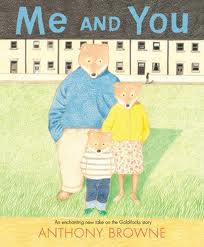
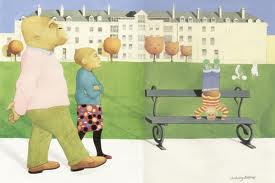
A few days later, I found another (new to me) Anthony Browne book at the public library – also giving a new twist to a well known fairy tale, Goldilocks and the Three Bears. Me and You does an amazing job of telling simultaneous stories, letting us into the world of Goldilocks while at the same time we revisit the familiar story about the bears.

As we flip through this book, we find two stories. On the left, sepia images of the little girl, out on an errand with Mom and then suddenly, lost.

Her story is wordless, told just through the images. Lost. Afraid. Alone. Finding a cozy home, a snack, a warm bed. Being discovered and racing away. Walking through rain, empty streets and then finally, into the arms of a searching Mom.

On the right, we follow little bear and his Mummy and Daddy as they head out for a walk and then return home to find a stranger in their home. A version of the Goldilocks story that we are very familiar with. Full of comforting colours. Lots of happy yellow, soothing blues, calm greens. I love the last line of the book. Little bear looks out of his window, thinking about the girl. “I wonder what happened to her.” This story definitely blurs the absolutes of fairy tale right and wrong and introduces a lovely element of empathy.

I am a big, big fan of Anthony Browne!

Let’s Do Nothing . . . (but read?)

Favourite books I found at VPL today. The public library is a perfect place to hide out with one (frozen) child while the other plays soccer (in this snow!!? Only in Vancouver!) What did we find?

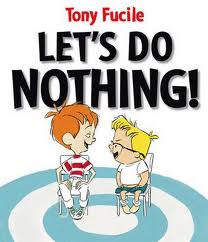
Animator Tony Fucile’s first picture book Let’s Do Nothing has a very alluring title. Nothing? Ah, such a comforting idea after a busy, busy week.

Frankie and Sal are two bored boys. What to do? How about nothing? Great idea! They each sit in a chair committed to exactly that – the act of doing nothing. But, how possible is it?  I read this to my son who hooted at Frankie’s hopeless attempts at doing nothing as his overactive imagination always caused him to do something. (There’s a part about a tree and a dog with a raised leg . . . that was absolutely hilarious to him)  Can’t wait to try this book out on my class. Will they think it is impossible to do nothing? We practice mindful breathing three times a day. Is breathing something or does it count as nothing?  This will be an interesting conversation . . .

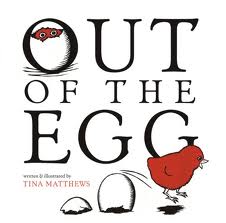
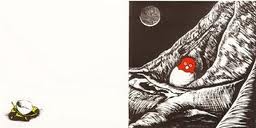
Tina Matthews is the author and illustrator of Out of the Egg, the Little Red Hen story – reinvented. We still have all of our “Not I” animals, too busy being lazy to help out. But in this story our Little Red Hen not only plants and nurtures a beautiful shade giving tree, she also has a lovely little chick hatched out of a perfect white egg.

Out of the egg hatched a little red chick.

And this little chick has something new to offer the story – a dose of forgiveness. My daughter read the book and announced to me, “I thought this was going to be a what comes around, goes around story, but the little chick didn’t let it be.”

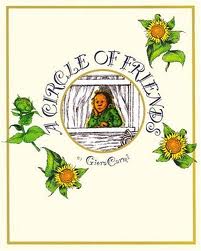
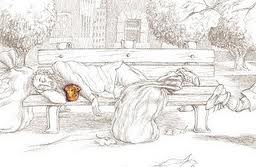
Giora Carmi made a beautiful book – A Circle of Friends – all the more powerful in its simplicity because it is wordless. A little boy shares his snack with a homeless man sleeping on a park bench.

A shared snack for someone who might need it

The man sprinkles crumbs on the bench for the birds nesting in the tree above him. In the end, the little baby bird drops a seed in the window box of the boy. And soon, a beautiful sunflower grows. Each page is sketched in black and white with one highlight of colour.  All about the circle of kindness inspired from one gesture. My daughter commented, “Mama, this is also a what comes around, goes around book, but in a nice way.” Absolutely!

Happy Reading!