Predator Showdown

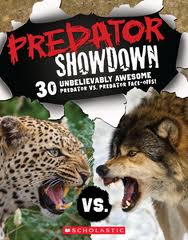
Yes, of course we know that predators have few reasons to fight each other. They are too busy hunting for prey to ensure their survival. But if they did battle each other . . . Well, wouldn’t we all just love to know what would happen? Lucky for us, Scholastic has published this very cool book about exactly that: Predator Showdown (30 Unbelievably Awesome Predator vs. Predator Face-offs!)

We are currently exploring this book with our Reading Group. It allows us to interact with non-fiction text features such as bar graphs to compare stats about speed, strength, defence, brains, etc or charts that tell us about predator style, range and sample prey. Students are asked to decide between two predators – First Instinct: Who would win? Justify. Some students are very familiar with the predators and find this easy, others are guessing just by looking at the pictures. Either way, it’s okay. There will be an opportunity to read more and make a more informed decision.

Today Catriona was thinking about a battle between a lion and a spotted hyena. Her first instinct? Who would win? She wrote:  “A hyena because male lions are lazy. Female lions do all of the work. And this is a picture of a male lion.”  She shared this thinking with me and then went on to explain, “I happen to know this. I’m taking my background knowledge and putting it into the paper.” (How much do I love when students are able to articulate exactly what they are thinking like this?)

We have been looking at three Predator Showdowns in more detail.

  • The Lion vs. Spotted Hyena
  • The Raccoon vs. North American River Otter
  • Tasmanian Devil vs. Dingo

After students have a chance to read the information page, they answer specific questions. Some questions have answers easily found on the page like: Look at the Stats section. Where is the raccoon superior? Other questions ask the students to include their own thinking. Can you think of a real life situation where these two animals might actually battle each other? Explain why you think this might happen?

We are also asking students to read a section and identify what was important to them about what they just read. For example, What is something you found particularly interesting about otters? Student answers varied. Some were intrigued that otters can stay underwater for up to 8 minutes. Others thought it was interesting that otters could dive up to 60 feet in search of prey.

After reading, students are asked to again think about who would win in a showdown. Many students changed their initial answers and provided lots of evidence from the text to support their thinking.

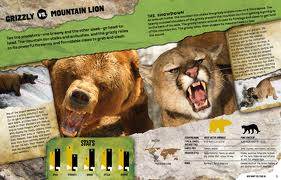
An inside page from Predator Showdown

Such a great book to engage children in learning and discussions. Answering questions allowed the students to build their confidence about forming an opinion based on evidence. Everyone wants to read this book when I put it out on the new non-fiction shelf! It will be a battle – a Student vs Student Showdown. Who will win and get to read it first?

Frog Girl

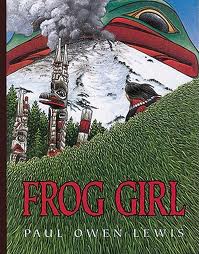
When our librarian, Ms. Sheperd-Dynes, found out how much our reading group liked Storm Boy she brought us Frog Girl, also by Paul Owen Lewis. This is another title that represents the rich oral traditions of the Native people of the Northwest Coast of North America.

This story is an adventure that introduces us to Volcano Woman (also known as Frog Woman). She has the power to destroy villages if the people do not show proper respect for living creatures. (Lewis provides a detailed author’s note in the back of the book that provides very interesting information about how this story has Northwest Coast motifs of Separation, Initiation and Return. He explains that like other world mythologies, this tale has elements of what renowned scholar Joseph Campbell described as rites of passage (referring to separation, initiation and return) in the Adventure of the Hero)

In this story, the Chief’s daughter spies on two boys capturing frogs at the lakeshore. She finds one lone frog in the grass who leads her to a mysterious village under the lake. Here she meets Grandmother who is crying over her missing children. Her sadness seems to power rumblings and shaking in this underwater world. The chief’s daughter returns to the forest and her own village to find it empty but threatened by an erupting volcano. She finds a basket of frogs and races them to the lakeshore – home to Grandmother. Then the rains come and her people return. The girl tells her story as the frogs sing in the background.

Guided by Lewis’ notes in the back, I asked the students to be listening for some key elements in the story:

  • disrespectful/cruel behaviour
  • encountering animals who speak
  • performing a heroic deed
  • encountering mythological beings

Students listened incredibly attentively, pulled into the story’s powerful text and detailed visual images.

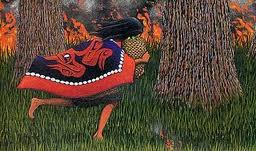
The chief’s daughter races through the burning forest to return the stolen frogs to the lake

In their written responses, some students retold favourite parts, some responded to the elements I asked them to listen for and some asked questions. Some excerpts:

Jenny: The two boys left and the girl heard a voice. She went to that voice and it was a frog that said follow me. The shore opened up and the girl went inside. Then the frog turned to like a person and the girl saw a beautiful village.

Jeremiah: My favourite part of the story was when the girl saved the frogs. The two boys were being disrespectful of the frogs.

Kevin: Frog Girl and Storm Boy are quite similar because they both have a secret village.

Catriona: I’m still wondering . . . Why did the frog transform into a frog on land but transform into a woman in the water? Why did the two boys capture all the frogs?

Eddy: How can the frogs talk and transform into a human but green? How could the girl run to the lake in time to save the frogs when the volcano almost destroyed the whole forest?

Truman: Two boys were capturing frogs. This is cruel behaviour. There was a frog that spoke. That is encountering animals who speak. There was a girl who saved the frogs. That is called performing a heroic deed. There are frog people. They are called encountering mythological beings. I liked it when the girl went to another world. I am still wondering how the frog turn into people and how the people turn into frogs.

Such inspired writing! Pretty amazing for Grades 1, 2 and 3!


National Geographic Kids

We’ve been able to pick up some fantastic non-fiction titles through Scholastic Books this year. Published through the National Geographic Society, these books include all the non-fiction features necessary to make navigating through the pages a wonderful experience. Hundreds of full colour photos, maps, labelled diagrams, comparisons, an interactive glossary and more! Recently, we used Everything Big Cats to practice asking questions before we read and to answer questions about the text by interacting successfully with the features.

This past week our Reading group learned about the differences between the big cats, what the big cats eat and how they hunt and how the bodies of big cats are built to survive.

Some of our pre-reading questions:

  • Do big cats hunt together in a pack? (Jena)
  • Do they have super smell for food? (Jenifer)
  • Why do cheetahs have dots? (Hajhare)
  • Do they eat human beings? (Truman)
  • Why do tigers need whiskers? (Sergio)
  • Do they eat in groups? (Lisa)
  • Does their fur keep them warm? (Eddy)
  • How big is their brain? (Jeremiah)
  • How strong is the force of a big cat’s bite? (Ricky)

Students answered questions about what the big cats eat using a chart called What’s For Lunch? Some surprising discoveries? Jaguars eat small crocodiles (large crocodiles would be too dangerous). Leopards hunt (very carefully) porcupines! We also discovered that tigers can eat the equivalent of 80 pounds (36 kg) of meat in one sitting. Wow!

P1020694

Students also found it interesting to compare the bodies and fur patterns of the four big cats by reading Who’s Who? The largest of the big cats? The tiger who can weigh up to 660 pounds (300 kg)! We also learned that the stripes on a tiger are like fingerprints. No two stripe patterns are the same. And what about black panthers? They are actually either jaguars or leopards with dark fur. Who knew?


Why are we reading about dead things?

There aren’t a lot of picture books that deal with death, loss, grieving and healing really naturally and really well. There are definitely some (I Remember Miss Perry by Pat Brisson, Nana Upstairs and Nana Downstairs by Tomie dePaola and The Old Woman who Named Things by Cynthia Rylant are favourites of mine on this theme).  As teachers, we like to collect these titles because it is always good to have a book to help explore the feelings that come with having to face losing someone we love. When death somehow touches our classroom or our home, we look for a book that helps us talk about this very difficult subject that we tend to never talk about otherwise. Nobody believes in the power of a book to touch us and heal us more than me but I started thinking about this. What if we read books with this theme just because?
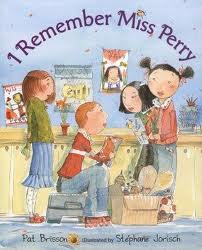
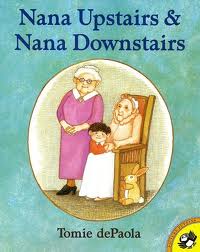
Death is a part of life and maybe if we discussed it a little more easily and often, we would be better equipped to talk about it when it does happen to us? It was with this mindset that I decided to read two recently discovered books with my reading group and see where the responses and discussion took us. I found both at the public library when perusing the picture book collection. They came home with me and sat there in my book pile just asking to be read. I’m very glad I got to share them this week.

I started with All the dear little animals written by Swedish author Ulf Nilsson and illustrated by award winning Eva Eriksson. Translated by Julia Marshall.
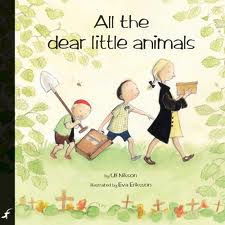
This book is about three children: Esther, the boy who is our narrator and Esther’s little brother Puttie. One day the children have nothing to do and were looking for some fun. Esther finds a dead bee and decides to dig it a little grave. Our narrator confesses that he is afraid of everything, especially of dying but after a few disparaging comments from Esther, decides that he can write things, like about how horrible death is. Off they go, shovel, poem and little coffin in hand to bury the bee. “Poor little bee”, says Esther, “but life must go on.” Then a plan hatches. There must be dead things everywhere – shouldn’t they find these things and bury them all?  Esther decides that this is the unselfish thing to do. Some students thought this was a terrible idea but Alyson’s comment got them thinking: “If you’re dead, do you want someone to bury you and pray for you? Or just be left there?” We all thought about that for a minute and continued on with the story.

The children’s idea grows into an idea for a business. They would call it Funerals Ltd. They would help all the poor dead animals on earth by giving them a funeral. Everyone had a role. Esther would dig the graves. The narrator would write the poems and Puttie, too little for anything else, would cry. They phone all of the neighbours and find a girl with a dead hamster. Esther’s father’s rooster needed to be buried. They found three dead fish in the freezer. (We suspected these were supposed to be dinner) Grandma gave them the mice from her mouse traps. They discovered a squashed hedgehog on the road. Esther was delighted. Then a huge hare. Many, many little graves, many poems. Esther admits the poems are actually quite good.

At this point, Ricky found the words to articulate that nagging feeling he had. “Actually, there’s something wrong here. When they find something dead, they’re happy. They’re supposed to be sad.”

When the children saw a blackbird hit a window and die, things seemed to change. The students noticed that the characters, especially Esther seemed really sad now. “Finally.” The blackbird funeral was their last that day.

The story ends with these words: The next day, we found something else to do. Something completely different. Making this experience seem very normal. Children exploring death and grief. A natural curiousity that brings on a range of emotions. Still a sad, sweet book, but normal.  Not too sentimental. Really, an amazing book.

My students had quiet reactions. “It’s a touching book.” “Emotional.” “Maybe they felt sadder when they actually saw it die?”

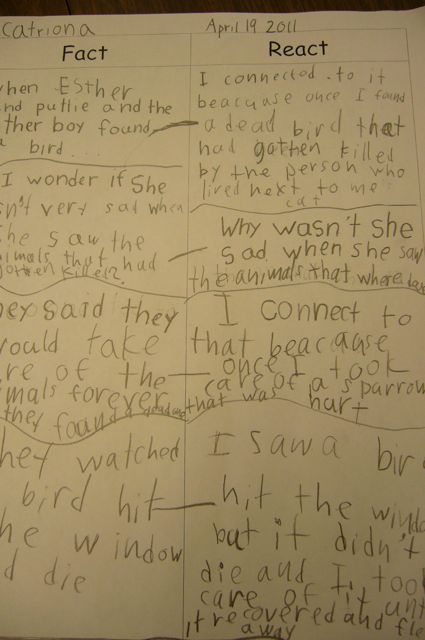
I let kids write about this book by choosing specific parts to respond to using a Fact/React sheet. On one side they recorded a story event and on the other, their connections, questions, thoughts.

Kevin shared:  Fact: They found a dead hare. React: But they were happy. But maybe they were sad inside.

Lisa wrote: Fact: Esther found a box. She put the bee inside the box. React: It’s a good idea to put it in a box.

Hajhare’s thoughts: Fact: In the story a rabbit died and I would be sad if something died, but these people are not sad. React: It reminds me of when a fly died and I wasn’t sad too because I hate flies and bees.

Annie shares: Fact: Esther saw a blackbird hit a window and it was dead. React: I was really sad when the bird was dead. Esther was sad too.
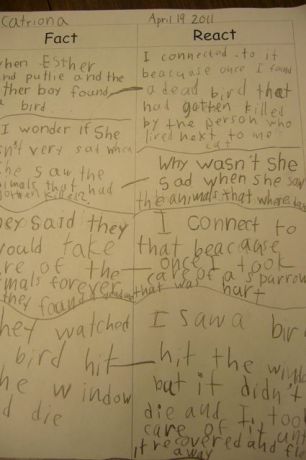
Catriona writes: Fact: They said they would take care of the animals forever when they found a dead one. React: I connect to that because once I took care of a sparrow that was hurt.

Eddy’s ideas: Fact: They found a dead rabbit on the road. React: Why did a rabbit die on a road?

When he shared this question, Catriona gently helped him to see how this could have happened. “A road. Cars go on the road. It was squished . . . .” “Oh.”

Jena‘s opinion: Fact: Puttie, Esther and a friend made graves, coffins and read poems. React: I think they were overdoing it a little too much.

I decided to read the next book because it explored all of the emotions around death and grief. This was something the students really discussed – noticing at times what they thought was the absence of emotions from the characters in All the dear little animals.

Remembering Crystal by Sebastian Loth is a beautiful little book that through simple text (only a sentence or two on each page) and powerful pictures addresses the range of emotions felt when a friend is gone. It celebrates friendship and explores all of the emotions felt in grief – denial, anger, helplessness, sadness and finally coming to a place of peace.
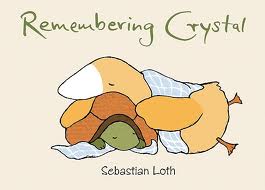
This book had everyone’s full attention from page one. Each time I read a page there was either a comment or some sort of audible response – “Whoa!” “Ahh!”  “Oh!” or an obvious silence as feelings sank in.

Zelda is a young goose and her best friend is an old turtle named Crystal. They do all sorts of things together. Read. Swim. Travel. Talk about everything from their fears to their dreams.  “They are really connected, ” comments Lisa. “Yes,” exclaims Catriona. “Literally on each other’s back!”

Then one day Crystal is not in the garden. The other geese explain to Zelda that Crystal had a long and happy life and it was time for her to die. Zelda won’t belive this. She thinks the geese are hiding Crystal and goes off in search of her. She looks everywhere and can’t find her friend. Then she starts to remember all of the things Crystal taught her – about music, art, the world. She returns home and goes to Crystal’s garden feeling very lonely and very sad. Finally, she accepts that Crystal is gone. She knows that she will always remember Crystal and wherever she goes, Crystal will be with her in her heart.

Students had things to say immediately.

“If one friend passes away, you can still have them in your heart,” Jena commented.

Catriona had a strong reaction, “Why would they put that in a kid’s book?”

Little conversations broke out all over the carpet. I just sat and listened.

Alyson, “But it’s actually kind of good.”

Catriona “Why are we reading about dead things?”

Sergio “We’ll all die.”

Catriona “You’re not old.”

Here I asked the question, “Why do you think this is in a children’s book? Let’s see if we can come up with the answer.”

Jena: “Because if someone in their family passes away, you can learn they are still with you.”

“It helps us think about it.”

Hajhare: “But it’s sad. I was actually going to cry Ms. Gelson.”

Ricky: “It’s like Toy Story 3. Andy gets older and won’t play with the toys anymore. Crystal gets older and leaves. Well, dies.”

“Yeah. It’s like that with life.”

We continued a conversation for a little while realizing that these books do help us think about how it feels when someone dies and also help us by showing us how people might grieve. Although it might have at first seemed strange to discuss this topic, we all kind of felt calm at the end. Calm and okay.

Reach for these books that deal with death when the need is pressing but don’t be afraid to read them at other times so that children have a chance to explore and discuss these feelings and emotions when they aren’t overwhelmed by their own sadness.

It’s all about the Book

Recently we read Emily’s Art written and illustrated by Peter Catalanotto and he invited the students to send him some art. Well . . . Emily’s Art was such a special book that we wanted to “gift” Peter with something special in return. His paintings are truly majestic and we wanted to make something that might make him have a bit of that “glowy” feeling that he inspires in us as we look at his illustrations.

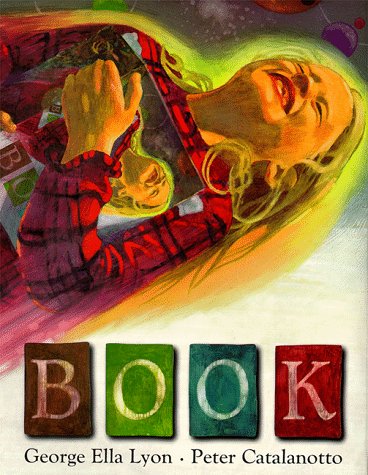
At the library, I found a copy of Book written by George Ella Lyon and illustrated by Peter Catalanotto. Sadly, this gorgeous book is out of print so we were lucky the VPL had a copy! Book is an ode to the magic and power of books. Lyon’s words and Catalanotto’s pictures invite us to escape to the magical place books transport us to simply by opening up the cover and stepping in . . .

book

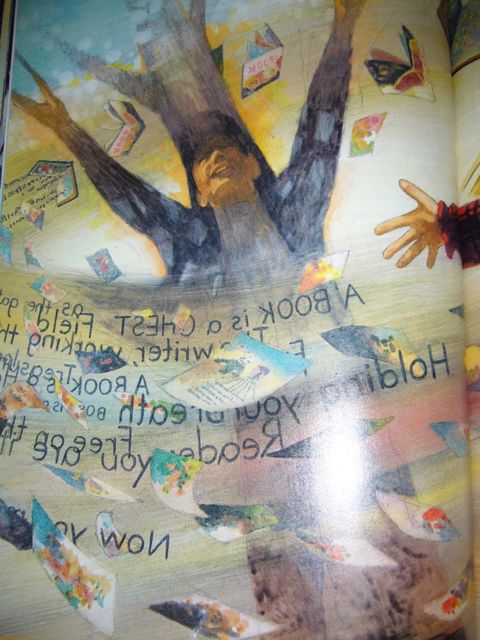
We read this book a few times, marvelling at the images and savouring the words. We were delighted by the whirling words interacting with the images.  Students then wrote about what reading means to them.

P1020560The next day, inspired by this image (left) in particular, we started creating images.

While the students worked, I called each child up and we looked at their personal writing – selecting a line or a few lines that really captured their relationship to reading.

I typed up the text and then students added their text to their art in a variety of ways – inviting our viewers to celebrate reading, language and learning with us! Framed pieces are on display in the main office and in the library. Enjoy!

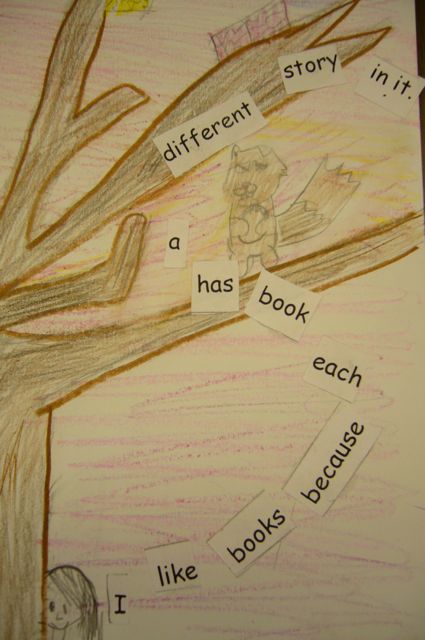
Lisa shared her feelings about books: I like books because each book has a different story in it.

Lisa's work

Many students wrote about the way reading makes them feel. Gary wrote: Reading is fun and calm. When I read, I visualize the pictures.

Kevin shared: “If you get really into the book, you might even dream about it. When my Mom and my teachers read to me, I feel relaxed and happy.”

Alyson is passionate on the subject! “Books change the world and books change us.”

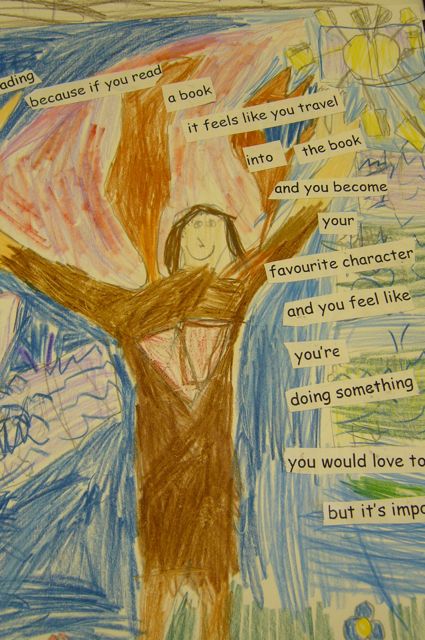
Catriona writes: “I like reading because if you read a book, it feels like you travel into the book and you become your favourite character and you feel like you’re doing something you would love to do but it’s impossible.”

Catriona's piece

Sigh 🙂 Is that not beautiful? And if you look closely at Catriona’s picture, you might notice that she has a book heart.

Josiah shared: “I like reading because I learn new words. I get all emotional when it’s exciting.”

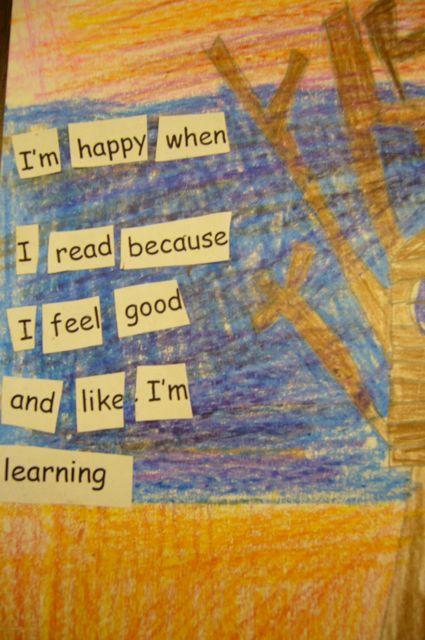
Eddy‘s picture is beautiful and bright and features a tree house up in a tree. He writes: “I’m happy when I read because I feel good and like I’m learning.”

Eddy's words

Learning while we read was a big theme! Jenifer says, “Books are telling things that we can learn.”

Jeremiah shares:” I like reading because it makes you learn stuff you need to learn. When I read, it feels like I’m in it.”

Sergio lays it out like only he can! “You know why I like reading? Because I will be smarter. And you know why I like being read to? Because the people that read to me, they will be smart like me.”

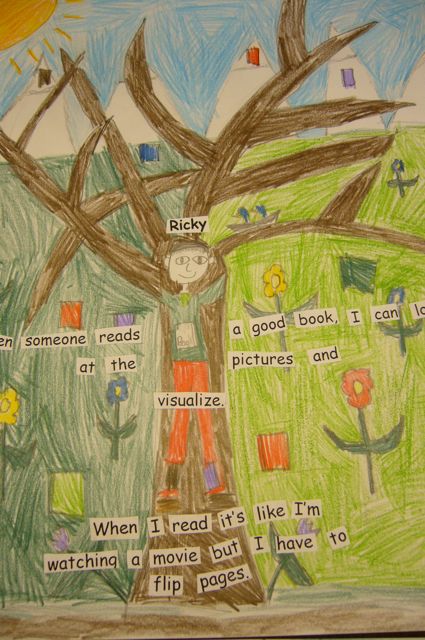
Ricky states: “When I read it’s like I’m watching a movie but I have to flip pages. When someone reads a good book, I can look at the pictures and visualize.”

Ricky's work

Many children wrote about how they love being read to. Always, read aloud times throughout the day are a time to connect, learn and discuss themes and concepts from the books we read.

Hajhare shares: “I like getting read to because the teacher always uses expressions and they talk kinda funny.”

Scott agrees. “I like when someone is reading to me because I could learn more stuff. It feels exciting.”

Truman drew himself happily celebrating reading.

“When someone reads to me, I feel like in the book.”

Truman's piece

This was a common theme.

Annie writes: “Books make you feel like you’re actually inside the book. I like books because they teach you things that you want to learn.”

Jenny’s thoughts are lovely. “Books are my friends and books are like alive to me. Looking at the illustrations gets me ideas.”

This was such an enjoyable way for our reading group to celebrate our relationship to books and reading.

Inspired by Book!

Copies of these gorgeous pieces are on their way to Peter Catalanotto as thanks for the inspiration!

Jena’s words are very special and capture the feeling of the cover image of Book.

“I like reading because I get to think of mystical things. When I finish the book and I like it so much I hold on to it and if it’s really emotional my eyes start to water.”


Selecting Picture books to read

Students in our morning reading group continue selecting books based on their background knowledge (schema) – realizing that they will have a better chance of connecting to a book when they have some shared experiences with the theme/topic of the book.

Students quickly selected three books from a huge selection of picture books. Then they ordered their choices #1, #2, #3 . Why did they choose the book they did as their first choice? After reading, students then shared any text to self or text to text connections.

Some book selections:

Gary chose The story of GROWL by Judy Horacek. Why was this his first choice? “Sometimes I growl when I’m angry. It makes me feel like a monster.”

After reading the book, did he have any connections?

“I used to hop, skip and jump around my garden. Sometimes I growl for fun. My Dad told me to stop growling because it’s loud. But I still was growling! I stopped one day.”

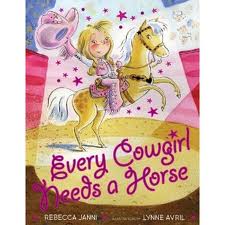
Lisa read Every Cowgirl Needs a Horse by Rebecca Janni. Why was this her first choice? “I know that if a horse wants to say hi, they rub their noses together. I learned that in a chapter book.”

After reading, what were her connections?

It was easy to connect to this book because at home when I’m riding my bike, I reel like I’m riding a horse with the wind blowing in my hair like the girl in the story.”

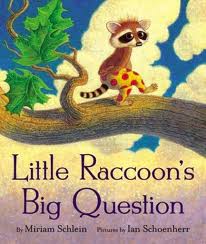
Jenny chose to read Little Raccoon’s Big Question written by Miriam Schlien and illustrated by Ian Schoenherr. This book is all about a little raccoon wanting reassurance about his mother’s love. Jenny chose to read it because: “When I was little I saw a raccoon.  I know a lot about what raccoons do and they are one of my favourite animals.”

Her connections were about much more than what she knows about raccoons.

“When I was little I was thinking how much my mom loves me most. I was thinking does she love me when I eat, sleep or play with her.”

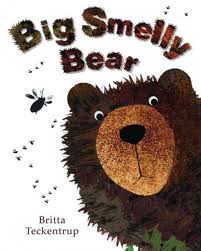
Josiah picked the book Big Smelly Bear by Britta Teckentrup. Why was this his first choice? “Everytime I go to my Mom’s home town, I always see bears and flies buzzing around.”

After reading, what connections did he have?

“When the big fluffy bear scratched the big smelly bear, I connected to it because I always see bears scratching trees and each other on the way to my Mom’s hometown Port Hardy. It is so fun there because I see my uncles, aunties and the big bears.”

Isn’t it great that there are so many picture books out there to interest everyone?


Storm Boy

Ms. Hong (now at Strathcona Library) recommended this title when our reading group started reading Aboriginal Literature. Storm Boy by Paul Owen Lewis is a definite favourite that sparked lots of discussion, questions and great writing.

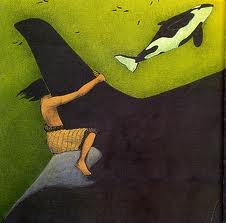
We loved how this book was so mysterious. We had as many questions at the end as we did throughout the pages, yet we seemed to know something more. Such a visually powerful book that has won many awards including Best Book of the Year from the Pacific Northwest Book Award. Storm Boy introduces us to the Killer Whale people who seem to inhabit an undersea world. This book follows the tradition of the people of the Pacific Northwest Coast (Haida, Tlingit and others). Stories from this area tell of individuals in parallel worlds where animals seem to live in human form.

I provided some sentence starts to assist students in organizing their written responses. We had such a dramatic story to respond to!

  • I was impressed when . . .
  • I was shocked by . . .
  • I am still wondering . . .
  • It was incredible when . . .

Some excerpts from out written responses that needs to be shared:

Ricky: I was shocked when I saw the boy get carried by a storm. Then he was in a nation’s island. There were four killer whales. The chief one was big. They ate fish that weren’t cooked or cut. The killer whales could talk. Then the boy missed his original home. I was surprised because the killer whales knew that he missed his home.

Gary: I was impressed when he went on the whale to get back home and when he got back, his Mom said: “You’ve been gone a year!” Then they celebrated because of his return.

Catriona: I am still wondering if time goes slower in the Killer Whale people’s village.

Truman: I am wondering if the chief’s son can turn into an orca whale because he went to the orca people’s place

Storm Boy by Jenny

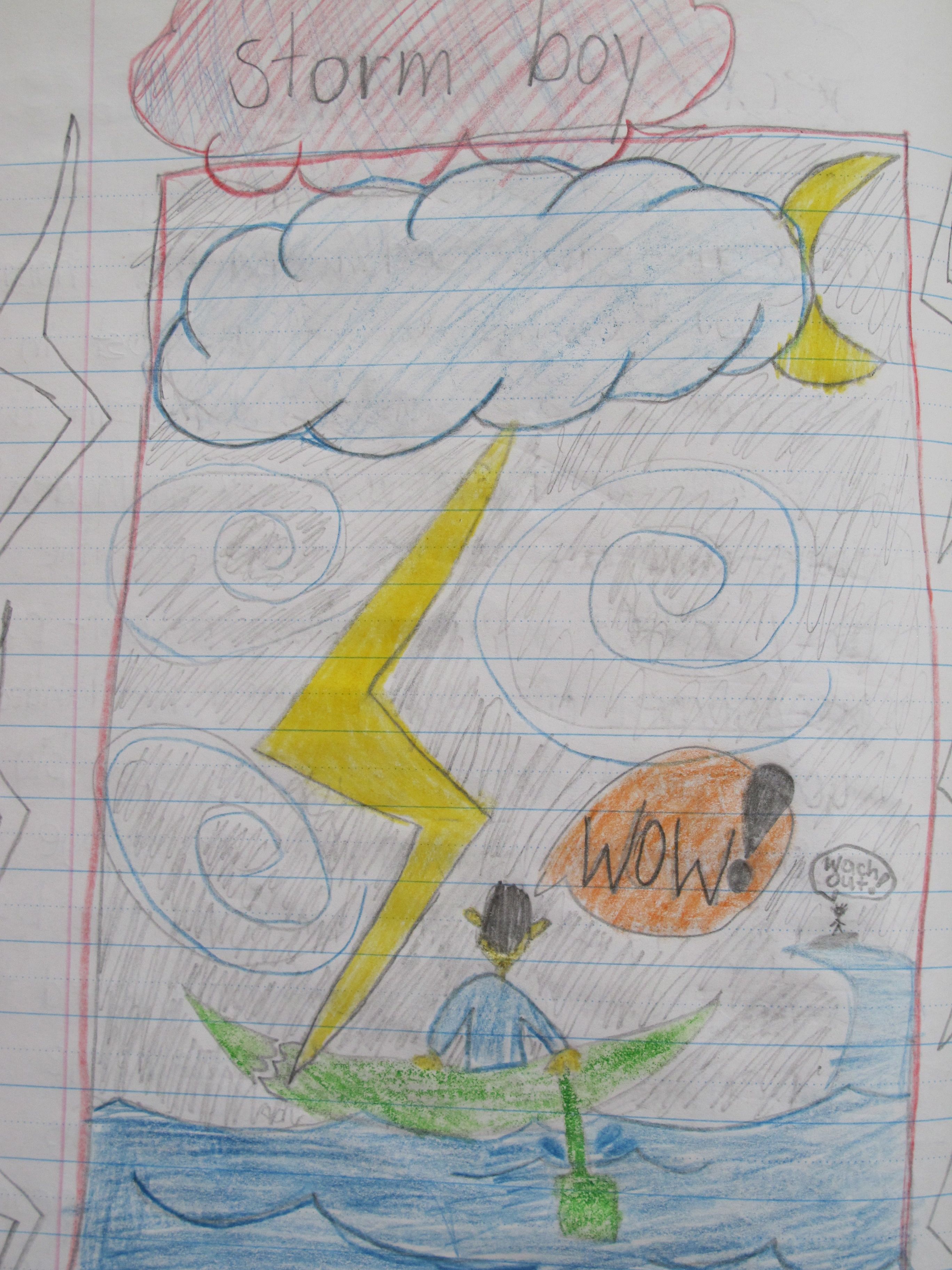
Jenny was inspired to draw this gorgeous picture.

She writes: “There was a boy that went fishing and then a storm came and hitted the boy and he got pushed away from his village. He landed in another village and he saw big people. They invited the boy and they danced around the fire and did their welcome song. Then the boy missed his mom and dad and the big people made the boy appear back in his village.”

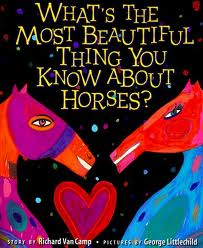
What’s the Most Beautiful Thing you Know about Horses?

We have been reading Aboriginal Literature with our reading group each week. This beautiful book by Richard VanCamp and illustrated by George Littlechild allowed us to learn more about horses while also learning about VanCamp’s Dogrib Nation.

Author Richard VanCamp’s hometown is Fort Smith in the Northwest Territories of Canada. On a cold (forty below!) winter day he decides to ask people he knows What’s the Most Beautiful Thing you Know about Horses? He, himself, doesn’t know much he explains because he is a stranger to horses; his people are not horse people. The people of the Dogrib nation have a great respect for dogs. In this northern land, dogs helped with hunting, protected the food stashes and helped with hauling camp from place to place. But yet in Dogrib the word for horse is big dog. When did dogs grow into horses? When did horses shrink into dogs? he asks.

Oh, the things he learns when he asks: “Horses always find their way home,” his Dad tells him. George Littlechild, who did the amazing illustrations for this book shares, “They stare at you as they breathe. Their soul comes right out.”

We shared some things we know too:

  • They go in running races
  • They are sometimes used in war
  • They are useful
  • They are calm and swish their tails
  • We can see them at the P.N.E.
  • They are in the Chinese Zodiac. Horse people care about their families.

What’s the Most Beautiful thing you Know about Horses?


Courage to Fly

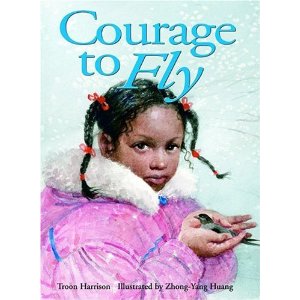
This week I read Troon Harrison’s picture book Courage to Fly to our Reading group. We continue to practice actively using the comprehension strategies we have been taught in Reading Power lessons: making connections, visualizing, asking questions and inferring while we listen to stories. Students loved this beautifully illustrated book (Zhong-Yang Huang is the illustrator) about Meg, an anxious and lonely little girl in a big city in a brand new country.

courage

Meg finds a tiny swallow that was brought down in a snowstorm. She nurses it back to health and then begins to wonder if she should set it free. She is reluctant to do so – but is encouraged to give the bird its chance to fly. Who really finds the courage to fly?  By the end of the book, we were convinced that Meg had been transformed by her experience and that after taking a risk to let the bird go free, could find the courage to open up her heart to new friendships.

Some thoughts from the students:

I think New York is not a great place for Meg (Ricky)

Why is Meg so shy? Is she lonely? Is she scared of the snow? (Truman)

I think the old man is also trying to tell Meg to find courage. (Jena)

I think the message of the book is to let things be free (Jenny)

Meg gets the courage to be free! (Josiah)

Birds and children must have been on my mind this week when I took my children to the public library – I found two more books involving a child and a hurt bird that needed to be cared for. So much learning happens from these experiences. Lovely stories that touch on the themes of hope, courage, relationships, perseverance, transformation, freedom . . .

martha

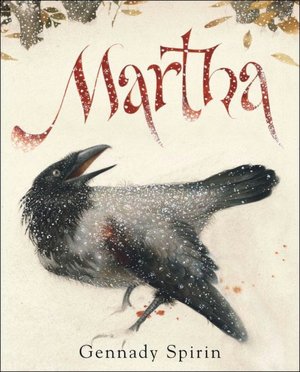
Martha is Gennady Spirin’s story about his own son Ilya who discovered a crow with a broken wing. The veterinarian insisted the bird should be put to sleep as it would never fly. Ilya convinced his parents otherwise and the crow they named Martha made her home with the family. Eventually Martha surprised them all and flew again. Is she the bird that returns the next year and nests in their tree?

fly pigeon fly

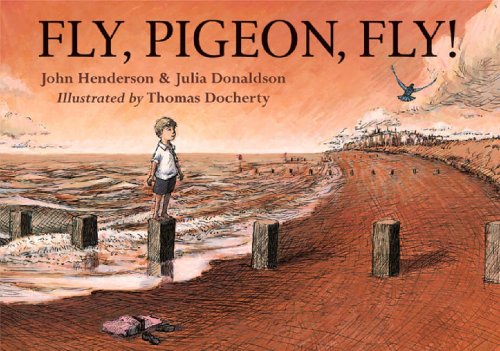
Fly, Pigeon, Fly! is coauthored by John Henderson and Julia Donaldson and illustrated by Thomas Docherty. Set in Glasgow, this is the story of a young boy who discovers a half-starved pigeon in a run down warehouse and takes him home to care for him. The pigeon recovers but the boy cannot bear to set him free. The relationships between the boy and the bird and the boy and his Da are gently explored. In a lovely way, as the boy is able to let the pigeon go, his connection to his Da becomes stronger.

Just . . . How big is the world . . . anyway?

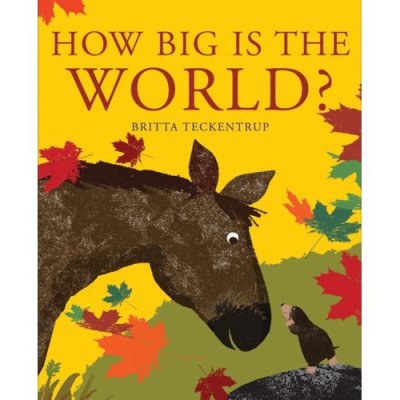
Britta Teckentrup’s How Big is the World? certainly inspired us to ask that question and many more as we followed little mole on his journey to discover just how big the world is by asking all of the creatures he meets on his important journey to find his answer. From spiders to whales, all of the creatures give him an answer but each one is different.

how big is the world

Some questions we began to wonder as we read this book:

Does everyone have their own thoughts about the world and how big it is? (Jena)

Will the little mole ever find out? (Truman)

Will the mole have another big question after this question? (Lisa)

Does the world ever end? (Sergio)

I wonder if you want the world to end, if you have to go off the world? (Jenny)

Well then how big is space? (Jeremiah)

Litle Mole does have an answer for his Papa when he returns.

“How big is the world?” whispered Papa. “As big as you want it to be,” said Little Mole quietly and he went to sleep.

This made lots of sense to some of us.  “That’s because each animal had a different answer!” “It depends on who you ask!” “The animals could only talk about what they knew.” But Catriona wasn’t satisfied. “That isn’t true,” she said shaking her head. “It is a specific size.”

Britta Teckentrup is also the author/illustrator of Grumpy Cat and Big Smelly Bear which are very popular books in our picture book bins.