Why are we reading about dead things?

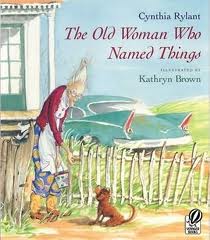
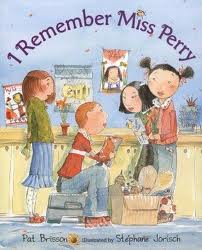
There aren’t a lot of picture books that deal with death, loss, grieving and healing really naturally and really well. There are definitely some (I Remember Miss Perry by Pat Brisson, Nana Upstairs and Nana Downstairs by Tomie dePaola and The Old Woman who Named Things by Cynthia Rylant are favourites of mine on this theme).  As teachers, we like to collect these titles because it is always good to have a book to help explore the feelings that come with having to face losing someone we love. When death somehow touches our classroom or our home, we look for a book that helps us talk about this very difficult subject that we tend to never talk about otherwise. Nobody believes in the power of a book to touch us and heal us more than me but I started thinking about this. What if we read books with this theme just because?
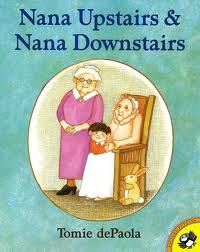
Death is a part of life and maybe if we discussed it a little more easily and often, we would be better equipped to talk about it when it does happen to us? It was with this mindset that I decided to read two recently discovered books with my reading group and see where the responses and discussion took us. I found both at the public library when perusing the picture book collection. They came home with me and sat there in my book pile just asking to be read. I’m very glad I got to share them this week.

I started with All the dear little animals written by Swedish author Ulf Nilsson and illustrated by award winning Eva Eriksson. Translated by Julia Marshall.
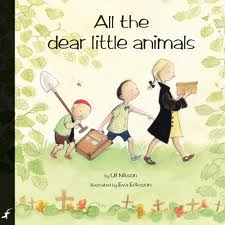
This book is about three children: Esther, the boy who is our narrator and Esther’s little brother Puttie. One day the children have nothing to do and were looking for some fun. Esther finds a dead bee and decides to dig it a little grave. Our narrator confesses that he is afraid of everything, especially of dying but after a few disparaging comments from Esther, decides that he can write things, like about how horrible death is. Off they go, shovel, poem and little coffin in hand to bury the bee. “Poor little bee”, says Esther, “but life must go on.” Then a plan hatches. There must be dead things everywhere – shouldn’t they find these things and bury them all?  Esther decides that this is the unselfish thing to do. Some students thought this was a terrible idea but Alyson’s comment got them thinking: “If you’re dead, do you want someone to bury you and pray for you? Or just be left there?” We all thought about that for a minute and continued on with the story.

The children’s idea grows into an idea for a business. They would call it Funerals Ltd. They would help all the poor dead animals on earth by giving them a funeral. Everyone had a role. Esther would dig the graves. The narrator would write the poems and Puttie, too little for anything else, would cry. They phone all of the neighbours and find a girl with a dead hamster. Esther’s father’s rooster needed to be buried. They found three dead fish in the freezer. (We suspected these were supposed to be dinner) Grandma gave them the mice from her mouse traps. They discovered a squashed hedgehog on the road. Esther was delighted. Then a huge hare. Many, many little graves, many poems. Esther admits the poems are actually quite good.

At this point, Ricky found the words to articulate that nagging feeling he had. “Actually, there’s something wrong here. When they find something dead, they’re happy. They’re supposed to be sad.”

When the children saw a blackbird hit a window and die, things seemed to change. The students noticed that the characters, especially Esther seemed really sad now. “Finally.” The blackbird funeral was their last that day.

The story ends with these words: The next day, we found something else to do. Something completely different. Making this experience seem very normal. Children exploring death and grief. A natural curiousity that brings on a range of emotions. Still a sad, sweet book, but normal.  Not too sentimental. Really, an amazing book.

My students had quiet reactions. “It’s a touching book.” “Emotional.” “Maybe they felt sadder when they actually saw it die?”

I let kids write about this book by choosing specific parts to respond to using a Fact/React sheet. On one side they recorded a story event and on the other, their connections, questions, thoughts.

Kevin shared:  Fact: They found a dead hare. React: But they were happy. But maybe they were sad inside.

Lisa wrote: Fact: Esther found a box. She put the bee inside the box. React: It’s a good idea to put it in a box.

Hajhare’s thoughts: Fact: In the story a rabbit died and I would be sad if something died, but these people are not sad. React: It reminds me of when a fly died and I wasn’t sad too because I hate flies and bees.

Annie shares: Fact: Esther saw a blackbird hit a window and it was dead. React: I was really sad when the bird was dead. Esther was sad too.
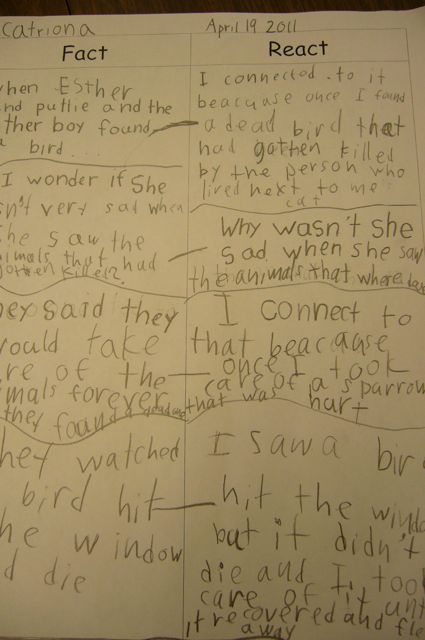
Catriona writes: Fact: They said they would take care of the animals forever when they found a dead one. React: I connect to that because once I took care of a sparrow that was hurt.

Eddy’s ideas: Fact: They found a dead rabbit on the road. React: Why did a rabbit die on a road?

When he shared this question, Catriona gently helped him to see how this could have happened. “A road. Cars go on the road. It was squished . . . .” “Oh.”

Jena‘s opinion: Fact: Puttie, Esther and a friend made graves, coffins and read poems. React: I think they were overdoing it a little too much.

I decided to read the next book because it explored all of the emotions around death and grief. This was something the students really discussed – noticing at times what they thought was the absence of emotions from the characters in All the dear little animals.

Remembering Crystal by Sebastian Loth is a beautiful little book that through simple text (only a sentence or two on each page) and powerful pictures addresses the range of emotions felt when a friend is gone. It celebrates friendship and explores all of the emotions felt in grief – denial, anger, helplessness, sadness and finally coming to a place of peace.
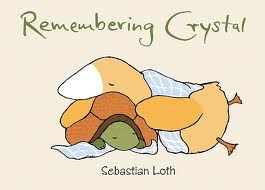
This book had everyone’s full attention from page one. Each time I read a page there was either a comment or some sort of audible response – “Whoa!” “Ahh!”  “Oh!” or an obvious silence as feelings sank in.

Zelda is a young goose and her best friend is an old turtle named Crystal. They do all sorts of things together. Read. Swim. Travel. Talk about everything from their fears to their dreams.  “They are really connected, ” comments Lisa. “Yes,” exclaims Catriona. “Literally on each other’s back!”

Then one day Crystal is not in the garden. The other geese explain to Zelda that Crystal had a long and happy life and it was time for her to die. Zelda won’t belive this. She thinks the geese are hiding Crystal and goes off in search of her. She looks everywhere and can’t find her friend. Then she starts to remember all of the things Crystal taught her – about music, art, the world. She returns home and goes to Crystal’s garden feeling very lonely and very sad. Finally, she accepts that Crystal is gone. She knows that she will always remember Crystal and wherever she goes, Crystal will be with her in her heart.

Students had things to say immediately.

“If one friend passes away, you can still have them in your heart,” Jena commented.

Catriona had a strong reaction, “Why would they put that in a kid’s book?”

Little conversations broke out all over the carpet. I just sat and listened.

Alyson, “But it’s actually kind of good.”

Catriona “Why are we reading about dead things?”

Sergio “We’ll all die.”

Catriona “You’re not old.”

Here I asked the question, “Why do you think this is in a children’s book? Let’s see if we can come up with the answer.”

Jena: “Because if someone in their family passes away, you can learn they are still with you.”

“It helps us think about it.”

Hajhare: “But it’s sad. I was actually going to cry Ms. Gelson.”

Ricky: “It’s like Toy Story 3. Andy gets older and won’t play with the toys anymore. Crystal gets older and leaves. Well, dies.”

“Yeah. It’s like that with life.”

We continued a conversation for a little while realizing that these books do help us think about how it feels when someone dies and also help us by showing us how people might grieve. Although it might have at first seemed strange to discuss this topic, we all kind of felt calm at the end. Calm and okay.

Reach for these books that deal with death when the need is pressing but don’t be afraid to read them at other times so that children have a chance to explore and discuss these feelings and emotions when they aren’t overwhelmed by their own sadness.
It’s all about the Book

Recently we read Emily’s Art written and illustrated by Peter Catalanotto and he invited the students to send him some art. Well . . . Emily’s Art was such a special book that we wanted to “gift” Peter with something special in return. His paintings are truly majestic and we wanted to make something that might make him have a bit of that “glowy” feeling that he inspires in us as we look at his illustrations.

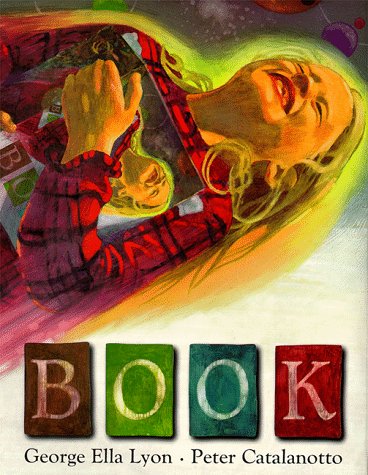
At the library, I found a copy of Book written by George Ella Lyon and illustrated by Peter Catalanotto. Sadly, this gorgeous book is out of print so we were lucky the VPL had a copy! Book is an ode to the magic and power of books. Lyon’s words and Catalanotto’s pictures invite us to escape to the magical place books transport us to simply by opening up the cover and stepping in . . .

book

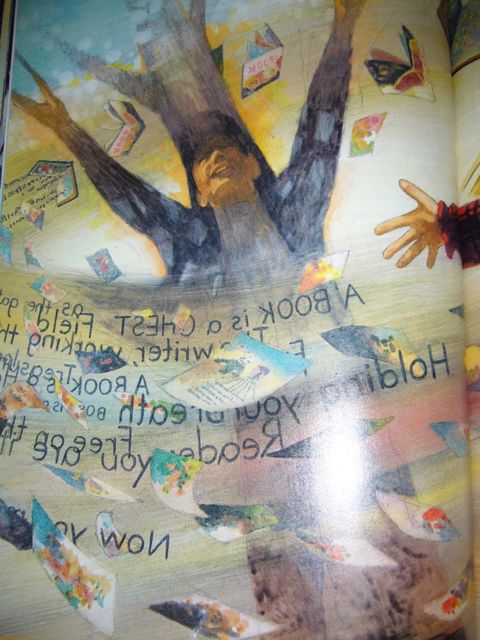
We read this book a few times, marvelling at the images and savouring the words. We were delighted by the whirling words interacting with the images.  Students then wrote about what reading means to them.

P1020560The next day, inspired by this image (left) in particular, we started creating images.

While the students worked, I called each child up and we looked at their personal writing – selecting a line or a few lines that really captured their relationship to reading.

I typed up the text and then students added their text to their art in a variety of ways – inviting our viewers to celebrate reading, language and learning with us! Framed pieces are on display in the main office and in the library. Enjoy!

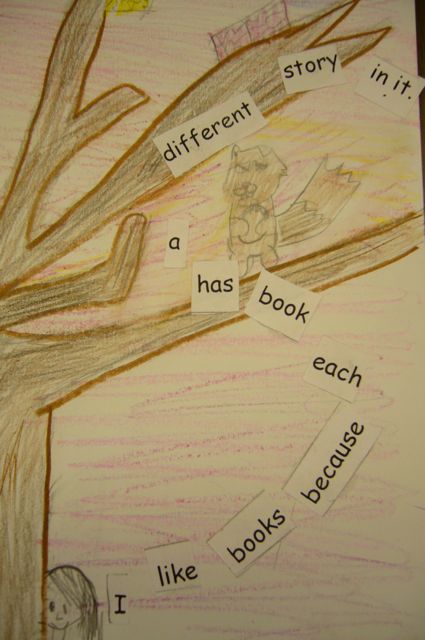
Lisa shared her feelings about books: I like books because each book has a different story in it.

Lisa's work

Many students wrote about the way reading makes them feel. Gary wrote: Reading is fun and calm. When I read, I visualize the pictures.

Kevin shared: “If you get really into the book, you might even dream about it. When my Mom and my teachers read to me, I feel relaxed and happy.”

Alyson is passionate on the subject! “Books change the world and books change us.”

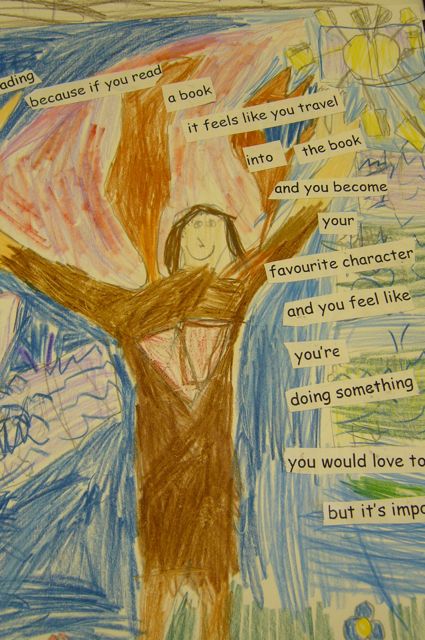
Catriona writes: “I like reading because if you read a book, it feels like you travel into the book and you become your favourite character and you feel like you’re doing something you would love to do but it’s impossible.”

Catriona's piece

Sigh 🙂 Is that not beautiful? And if you look closely at Catriona’s picture, you might notice that she has a book heart.

Josiah shared: “I like reading because I learn new words. I get all emotional when it’s exciting.”

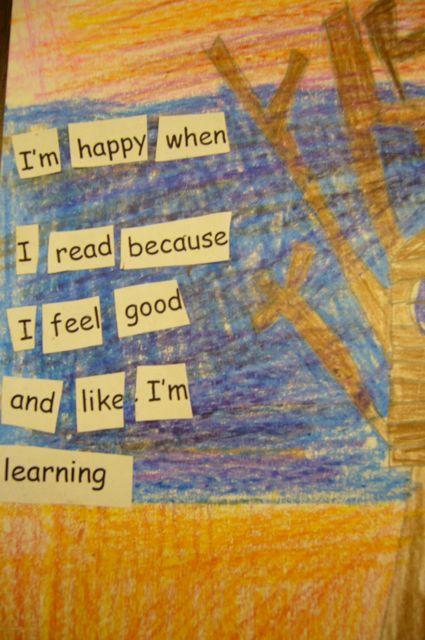
Eddy‘s picture is beautiful and bright and features a tree house up in a tree. He writes: “I’m happy when I read because I feel good and like I’m learning.”

Eddy's words

Learning while we read was a big theme! Jenifer says, “Books are telling things that we can learn.”

Jeremiah shares:” I like reading because it makes you learn stuff you need to learn. When I read, it feels like I’m in it.”

Sergio lays it out like only he can! “You know why I like reading? Because I will be smarter. And you know why I like being read to? Because the people that read to me, they will be smart like me.”

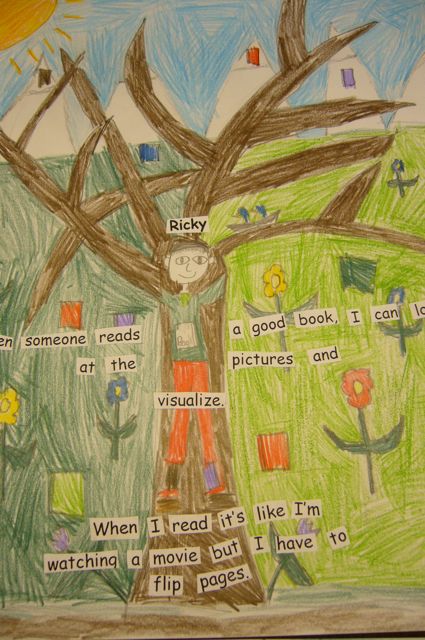
Ricky states: “When I read it’s like I’m watching a movie but I have to flip pages. When someone reads a good book, I can look at the pictures and visualize.”

Ricky's work

Many children wrote about how they love being read to. Always, read aloud times throughout the day are a time to connect, learn and discuss themes and concepts from the books we read.

Hajhare shares: “I like getting read to because the teacher always uses expressions and they talk kinda funny.”

Scott agrees. “I like when someone is reading to me because I could learn more stuff. It feels exciting.”

Truman drew himself happily celebrating reading.

“When someone reads to me, I feel like in the book.”

Truman's piece

This was a common theme.

Annie writes: “Books make you feel like you’re actually inside the book. I like books because they teach you things that you want to learn.”

Jenny’s thoughts are lovely. “Books are my friends and books are like alive to me. Looking at the illustrations gets me ideas.”

This was such an enjoyable way for our reading group to celebrate our relationship to books and reading.

Inspired by Book!

Copies of these gorgeous pieces are on their way to Peter Catalanotto as thanks for the inspiration!

Jena’s words are very special and capture the feeling of the cover image of Book.

“I like reading because I get to think of mystical things. When I finish the book and I like it so much I hold on to it and if it’s really emotional my eyes start to water.”


Albert

Last night I read a really wonderful picture book to my children: Albert, written by Donna Jo Napoli (her first picture book after many award winning novels including one of my favourites The Prince of the Pond and illustrated by Jim La Marche.

Albert is an interesting man. Everyday, he eats his breakfast, reads the comics, gets dressed and thinks about going outside. Everyday, something convinces him it is not the day to venture out. It might be the damp weather. It might be the noises – the not good noises like arguing or rumbling garbage trucks. If we really want to call it, I think Albert experiences some quite serious anxiety about the outside world. Not an easy place to be.

The lovely thing about this book is that Napoli arranges the outside world to come to Albert.  In the form of a twig, that becomes a nest, that hosts little eggs and a perching cardinal all on his outstretched hand. For Albert, who finds the outside world too overwhelming, he is gently (but insistently) forced to get one foot firmly planted on the ground – in the form of a hand carefully suspended in the air. Albert keeps his hand with a bird’s nest on it stretched outside his window because . . .  how can he not? For days and days. Really! Of course my adult brain wonders how does he go to the bathroom? How does he not drop the nest when sleeping? How does he survive without food or drink? (This is addressed actually when father bird starts dropping berries in his mouth) My children though just got caught up in the magic of it. “He’s so kind!” my son exclaims. My daughter is a little worried. “Mama, Albert doesn’t have a job. How can he get money?”

In the end, the birds fly away and Albert who has been interacting (through the birds) with the outside world realizes that the world is a wonderful place – full of all kinds of noises and experiences. He puts on his hat and goes for a walk.

I asked: “What do you think the birds taught him?”

My daughter had lots to say: “Helping others helps youYou should go outside and fly your heart away!”

Yes, indeed.

What a beautiful world!

Spring! Finally! In Vancouver, spring sunshine is often chased away by rain showers so all the more reason to delve into books which help transport us into nature and wonder with just a flip of a page, a beautiful illustration or a perfect written image. We found three perfect books which do just this on our library visit Saturday.

alltheworldcover-1-13

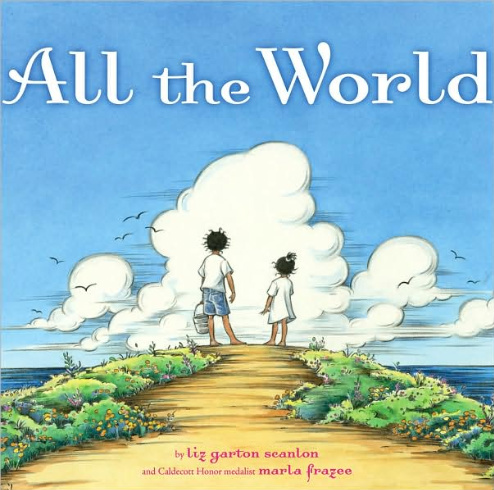
I adore this book. All the World is a Caldecott Honour Book illustrated by Marla Frazee and written by Liz Garton Scanton. Simple rhyming text pays tribute to the small simple things our world has to offer like a tomato blossom or a fire to take away a chill. But it also celebrates through Frazee’s absolutely gorgeous illustrations, the majestic purply sky at the edge of the ocean or a thunderous downpour that comes out of nowhere. The images are comforting, saturated with details and evoke our own memories attached to the experiences suggested by each picture. These pictures are so easy to connect to, I felt like I had taken a journey through some of my own most happiest of memories. Climbing a tree in childhood. Visiting a farmer’s market and eating plump berries with my children. Racing through a rainstorm on a summer’s day in search of shelter.

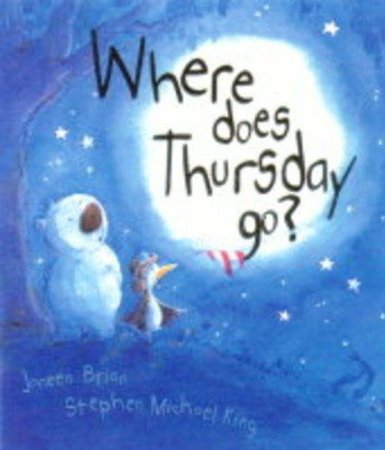
Janeen Brian and Stephen Michael King, the author and illustrator of Where does Thursday go? have created a lovely little tale of wonder and whimsy. An important question is posed, if Friday is coming, where does Thursday go? What happens to it during the night?

Where Thursday

Bruno doesn’t want his wonderful birthday day to end. He wants to say goodbye to it. He finds his friend Bert and they traipse through a blue star filled night looking for Thursday to say goodbye. When the moon rises up big, round and bright like Bruno’s birthday balloons, the two friends feel like they have found Thursday. They creep back into bed until the sun brings Friday. Sweet, illustrations on blue filled pages. Lovely. I especially like the image of the two friends on the beach at the edge of the sea where ocean and sky meet in swirly blues and whites.

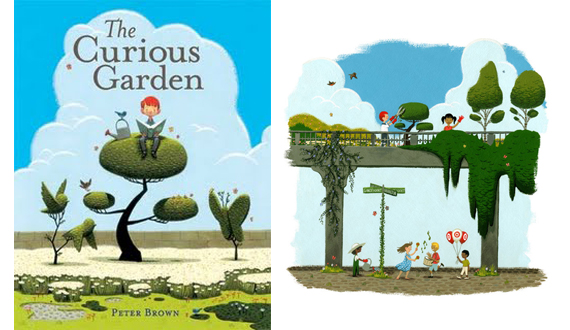
the_curious_gardenThis book appeals to the urgency I feel when spring flowers begin poking through the earth. Tend. Nurture. Clip back. Transplant. Compost. Appreciate. Wow, can I connect to the main character in this story who nurtures a struggling garden into a majestic green world.  Liam, the little boy in Peter Brown‘s The Curious Garden resides in a dreary city where everyone stays inside. Not Liam. On one of his rainy day walks he finds a few wildflowers and tiny plants on some abandoned railroad tracks. He cares for this garden over several seasons – appreciating its natural tendencies to spread and travel and helping it along a bit too (hooray for guerilla gardening). Years later he can appreciate an entire green city, tended by a multitude of gardeners.

Peter Brown includes an author’s note at the end of the story which explains his inspiration for the book.

Escape into Spring with a poking about walk to the library and discover all the places you can find signs of Spring.

Fairy tales, Anthony Browne style

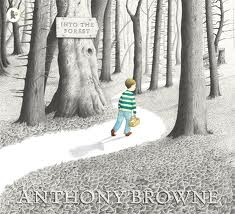
Recently I read our class Into the Forest by award winning author/illustrator Anthony Browne.

into the forest

A boy is awakened by a terrible sound and so some upsetting days begin. Dad is missing from the breakfast table, Grandma is sick and he must take a cake to her. “Don’t go into the forest,” his mother warns. But anxious not to miss his father’s return, the boy decides to take a shortcut through the forest and his strange adventures begin. We certainly connected to the anxiety and suspense along the way to Grandmother’s house. The students expressed feeling worried. Someone said that his tummy felt weird. There was a lot of gasping and held breath. Such suspense. As we came across oddly familiar fairy tale characters, students were eager to shout out their connections. “That must be Goldilocks!”, “That’s not that candy one where the witch takes them is it? It is?!” One student described the feeling the book gave her as a “tingling in your brain” because it seemed like we knew the story but we kept worrying about what might happen. Finally, all is well. Our happy ending finds Dad and a recovered Grandma and boy and father return home to Mom.

Watching the students connect, predict and infer, I was reminded about how important it is to develop rich story schema with our students. They need to know their fairy tales, fables, favourite rhymes and be exposed to literature from a variety of genres. When they bring this rich experience to “new to them” books, they are able to interact with the book on a much deeper level as they pick up on nuances, allusions and references to other stories. As parents and teachers, we must read, read read and then read some more!

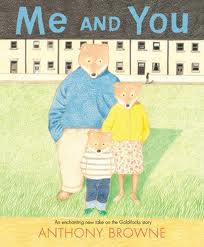
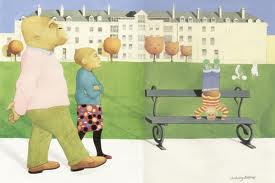
A few days later, I found another (new to me) Anthony Browne book at the public library – also giving a new twist to a well known fairy tale, Goldilocks and the Three Bears. Me and You does an amazing job of telling simultaneous stories, letting us into the world of Goldilocks while at the same time we revisit the familiar story about the bears.

As we flip through this book, we find two stories. On the left, sepia images of the little girl, out on an errand with Mom and then suddenly, lost.

Her story is wordless, told just through the images. Lost. Afraid. Alone. Finding a cozy home, a snack, a warm bed. Being discovered and racing away. Walking through rain, empty streets and then finally, into the arms of a searching Mom.

On the right, we follow little bear and his Mummy and Daddy as they head out for a walk and then return home to find a stranger in their home. A version of the Goldilocks story that we are very familiar with. Full of comforting colours. Lots of happy yellow, soothing blues, calm greens. I love the last line of the book. Little bear looks out of his window, thinking about the girl. “I wonder what happened to her.” This story definitely blurs the absolutes of fairy tale right and wrong and introduces a lovely element of empathy.

I am a big, big fan of Anthony Browne!

What’s it like to be sister number three?

We seemed to be all about girl power this weekend at the library – maybe because it was just my daughter and I, but our big stack of books seemed to include a lot of books about very cool girls – some books new to us and some old favourites.

Two books to talk about featured the youngest sister in a family of three girls. Not fairy tale stories where everything comes in threes including sisters – but books from the here and now that explored themes of identity, self-esteem, and acceptance.

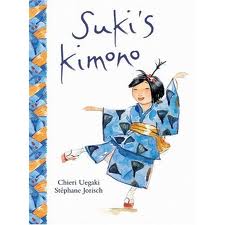
Award winning, Suki’s Kimono is a family favourite at our house. We love how Suki possesses a joyful inner spirit and how she lives in the moment not worrying about what the world might think.  Suki adores her blue cotton kimono – for the memories that it holds and the way it makes her feel. She vows to wear it on her first day of school despite the disapproval of her older sisters and manages to maintain the magical happy feeling of wearing this special kimono throughout her day even when questioned and taunted by classmates.  Written by Chieri Uegaki and illustrated by Stephane Jorisch.

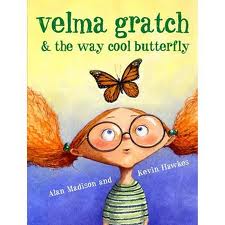
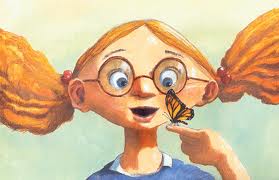
Look at that cover. Aren’t you just rooting for Velma before you even know her issues or struggles? Kevin Hawkes, illustrator, helps create a wonderfully unique character in Alan Madison’s Velma Gratch & the way cool butterfly. Velma arrives in first grade in the shadow of her two older sisters known for their seemingly perfect qualities – athletic abilities, spectacular spelling and marvelous math. Velma wanted to be noticed but for what? She chooses some quite foolish ways to stand out: running the slowest, singing the loudest, muddling her math . . . None bring quite the effect she is hoping for. Slowly, Velma learns to recognize a passion – science. When her class begins to learn about butterflies she twists wonderfully new words around in her mouth – metamorphosis, conservatory, migration. Not only does Velma come into her own as a butterfly expert, but on the class field trip to the conservatory, Velma is noticed by a monarch who lands on her finger and doesn’t leave for days.

Velma releases her monarch with the others from the conservatory a few days later, waving goodbye as they begin their journey south. Velma has gained a little power of flight herself as she floats home between her sisters, happy and confident.

Isn’t it wonderful when the youngest members of a family can teach everyone a thing or two?

Books I wish I owned

Our local public library has finally reopened after being closed for months due to a flood. Hooray! So in celebration, I wandered through the stacks and selected some of my favourite books to read again – with my own children and likely they will find their way into the classroom this week. If I had a million dollars and a billion bookshelves these books would hold a special place! I might just have to justify purchasing them anyways because I keep taking them out of the library again and again! They must be meant to be mine!

Clara and Asha written and illustrated by Caldecott Medalist Eric Rohmann is a gorgeous journey into the fantasy world of Clara and her friend Asha, a gigantic fish. Asha may be a child’s imaginary friend, yet Asha feels very real!

Wolves by Emily Gravett is a delightfully eerie book. You know how a book becomes more real as you read it?

And then you start to feel so connected to a book that you literally feel as though you have fallen into it? Hmm . . . seems to have happened to our little friend rabbit. This book has two endings – one specially designed for those with more sensitive inclinations.

Have you ever been told you are too small to do something? In our house, “small is powerful” is our mantra. In this book, Up, by Jim LaMarche, Daniel (aka Mouse) is a small boy who seems to develop some pretty extraordinary powers. Or at least the power to believe . . . A magical story with absolutely stunning illustrations.

Let’s Do Nothing . . . (but read?)

Favourite books I found at VPL today. The public library is a perfect place to hide out with one (frozen) child while the other plays soccer (in this snow!!? Only in Vancouver!) What did we find?

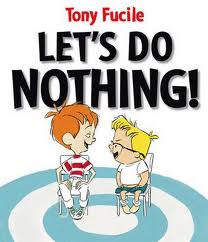
Animator Tony Fucile’s first picture book Let’s Do Nothing has a very alluring title. Nothing? Ah, such a comforting idea after a busy, busy week.

Frankie and Sal are two bored boys. What to do? How about nothing? Great idea! They each sit in a chair committed to exactly that – the act of doing nothing. But, how possible is it?  I read this to my son who hooted at Frankie’s hopeless attempts at doing nothing as his overactive imagination always caused him to do something. (There’s a part about a tree and a dog with a raised leg . . . that was absolutely hilarious to him)  Can’t wait to try this book out on my class. Will they think it is impossible to do nothing? We practice mindful breathing three times a day. Is breathing something or does it count as nothing?  This will be an interesting conversation . . .

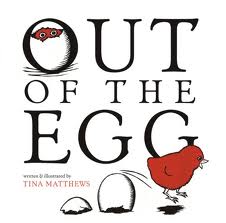
Tina Matthews is the author and illustrator of Out of the Egg, the Little Red Hen story – reinvented. We still have all of our “Not I” animals, too busy being lazy to help out. But in this story our Little Red Hen not only plants and nurtures a beautiful shade giving tree, she also has a lovely little chick hatched out of a perfect white egg.

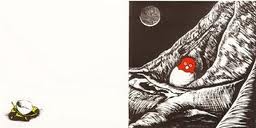
Out of the egg hatched a little red chick.

And this little chick has something new to offer the story – a dose of forgiveness. My daughter read the book and announced to me, “I thought this was going to be a what comes around, goes around story, but the little chick didn’t let it be.”
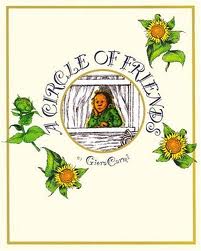
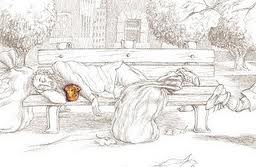
Giora Carmi made a beautiful book – A Circle of Friends – all the more powerful in its simplicity because it is wordless. A little boy shares his snack with a homeless man sleeping on a park bench.
A shared snack for someone who might need it

The man sprinkles crumbs on the bench for the birds nesting in the tree above him. In the end, the little baby bird drops a seed in the window box of the boy. And soon, a beautiful sunflower grows. Each page is sketched in black and white with one highlight of colour.  All about the circle of kindness inspired from one gesture. My daughter commented, “Mama, this is also a what comes around, goes around book, but in a nice way.” Absolutely!

Happy Reading!

Simple Books, Little Treasures

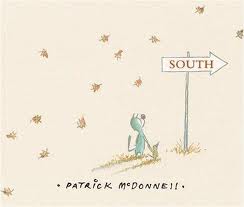
It’s report card writing time: words, words and more words. At the library today I was drawn to books that didn’t contain many (words) at all! These fabulous little finds are all about simplicity – wordless or sparse text. Pages full of ideal illustrations, questions posed and left unanswered and inferences begging to be made. 🙂 South by Patrick McDonnell.

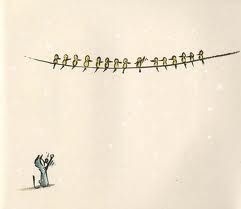
A last fall leaf lands on a lone little bird, asleep. His friends have all left for warmer places. Despair. Mooch, the cat, accompanies him on his journey south through falling snow, falling tears and developing adoration until they happen upon the beautiful sound of birdsong.

Old friends found but reluctant goodbyes to new friends made. South by Patrick McDonnell is a lovely wordless story about being lost and found and having someone sweet enough to help you on your journey to where you need to go.

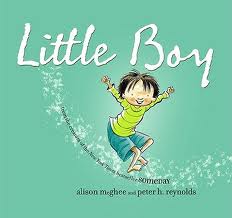
Aren’t we lucky to have children in our lives (like the little boy in this book in his star ship pyjamas and his important cardboard box) to remind us to appreciate the here and now? Kind of why it is great to be a parent and a teacher. My favourite line from Alison McGhee is the last line of the story: Little boy, you remind me how so much depends on days made of now. This book was inspired by the poem The Red Wheelbarrow by William Carlos Williams (a poem that also plays a starring role in Love that Dog by Sharon Creech) Little Boy is illustrated by Peter H. Reynolds.

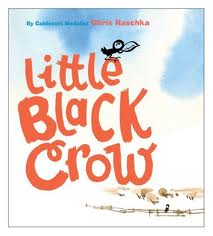
I love books featuring birds, books that ask questions (and inspire more) and books by Caldecott Medalist Chris Raschka. This book was made for me!

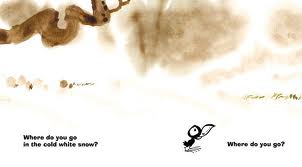
Little Black Crow where do you go?begins the questioning . . . 27 questions make up this book about a little boy wondering about the little black crow he sees in the sky.

Haven’t you also wondered about those birds flying by? Hey! Birds! Are you never afraid? Do you wonder about the stars you see? Might you ever wonder about someone . . . like me?

Happy Reading!

Courage to Fly

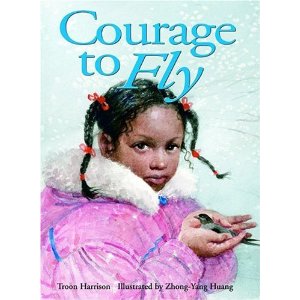
This week I read Troon Harrison’s picture book Courage to Fly to our Reading group. We continue to practice actively using the comprehension strategies we have been taught in Reading Power lessons: making connections, visualizing, asking questions and inferring while we listen to stories. Students loved this beautifully illustrated book (Zhong-Yang Huang is the illustrator) about Meg, an anxious and lonely little girl in a big city in a brand new country.

courage

Meg finds a tiny swallow that was brought down in a snowstorm. She nurses it back to health and then begins to wonder if she should set it free. She is reluctant to do so – but is encouraged to give the bird its chance to fly. Who really finds the courage to fly?  By the end of the book, we were convinced that Meg had been transformed by her experience and that after taking a risk to let the bird go free, could find the courage to open up her heart to new friendships.

Some thoughts from the students:

I think New York is not a great place for Meg (Ricky)

Why is Meg so shy? Is she lonely? Is she scared of the snow? (Truman)

I think the old man is also trying to tell Meg to find courage. (Jena)

I think the message of the book is to let things be free (Jenny)

Meg gets the courage to be free! (Josiah)

Birds and children must have been on my mind this week when I took my children to the public library – I found two more books involving a child and a hurt bird that needed to be cared for. So much learning happens from these experiences. Lovely stories that touch on the themes of hope, courage, relationships, perseverance, transformation, freedom . . .

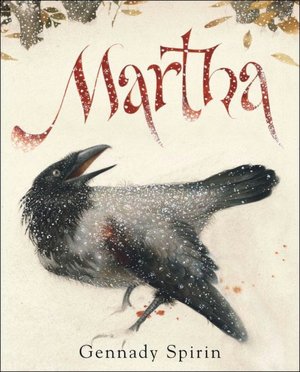
martha

Martha is Gennady Spirin’s story about his own son Ilya who discovered a crow with a broken wing. The veterinarian insisted the bird should be put to sleep as it would never fly. Ilya convinced his parents otherwise and the crow they named Martha made her home with the family. Eventually Martha surprised them all and flew again. Is she the bird that returns the next year and nests in their tree?

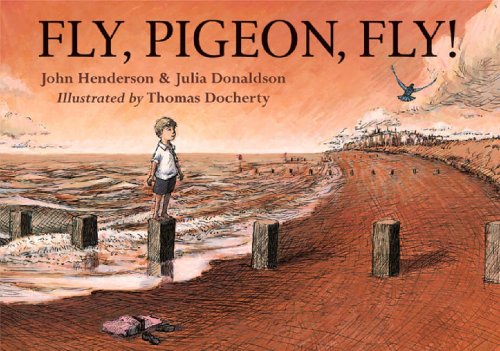
fly pigeon fly

Fly, Pigeon, Fly! is coauthored by John Henderson and Julia Donaldson and illustrated by Thomas Docherty. Set in Glasgow, this is the story of a young boy who discovers a half-starved pigeon in a run down warehouse and takes him home to care for him. The pigeon recovers but the boy cannot bear to set him free. The relationships between the boy and the bird and the boy and his Da are gently explored. In a lovely way, as the boy is able to let the pigeon go, his connection to his Da becomes stronger.