Salmon Creek

Salmon Creek, written by Annette LeBox and illustrated by Karen Reczuch mesmerized us this week.

Nothing is quite as amazing as the life cycle of the Pacific salmon. I still remember the sounds of rushing water, the visuals of a stream bed of red and the smell of cool, damp earth as I stood watching the salmon spawn in my own childhood. We aren’t studying salmon right now but we have been reading from a large variety of information picture books with themes of Canadian animals and endangered species to practice questioning and inferring and this book seemed an ideal pick. I couldn’t have predicted its powerful effect in the classroom. The poetic text and gorgeous illustrations lured us quick and fast into the amazing journey of Sumi from the beginning stirrings in her egg to her life as a fry, then a smolt and eventually to her own return journey to the spawning grounds of her birth creek as an adult female.

We learned about how Sumi laid thousands of eggs and the male salmon fertilized them. “Sumi flicked her tail, and the gravel drifted into the nest, covering her eggs like secrets.”

Sumi circled the creek, guarding her eggs. She bared her curved teeth, slapped her tail, scared off pairs of spawners from her redd.”

And later, as she drifted gently downstream, Sumi sang to her eggs . . .

Home is the scent of cedar and creek. Home is the journey’s end.

We manage the sadness when Sumi dies as LeBox does such a wonderful job of explaining the full circle of life and with our new understanding of the amazing salmon life cycle, we feel peaceful and wise. This book includes a glossary in the back to help with new vocabulary, more information about threats to Pacific salmon and suggestions for further reading and viewing.

Some of our unanswered questions from our very long lists!

  • How fast does a salmon travel? Especially when they are travelling against the current?
  • Are salmon fry see through?
  • Do salmon ever interact with their siblings?
  • How many eggs survive when the mother lays them?
  • If salmon are now endangered, how many are left?
  • What is in the yolk sac?
  • How could they survive if the water freezes?
  • Do they eat different things at different ages?
  • When salmon are injured in the rapids, how do they heal?

This book is one of my new favourites in the information story book category.
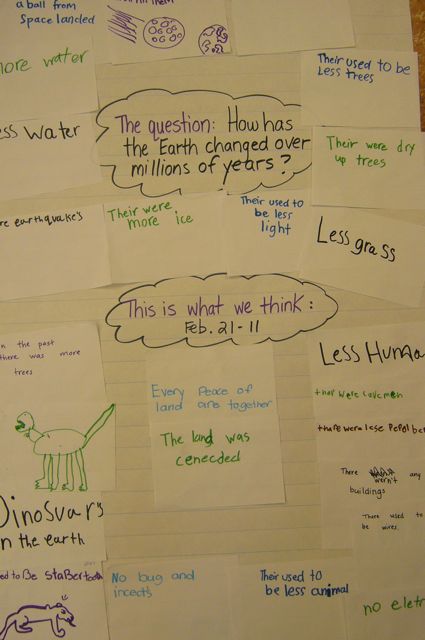
Do you know how the Earth has changed over millions of years?

What do we know about how the Earth has changed over time?  Do we have the background knowledge (schema) to talk about these changes or do we need to do a lot of new learning? Let’s find out!

The question:  How has the Earth changed over millions of years?

The task: take paper and felts and go write down what you know!

So here is what we think we know as of today.

Some definite themes and big discussion about:

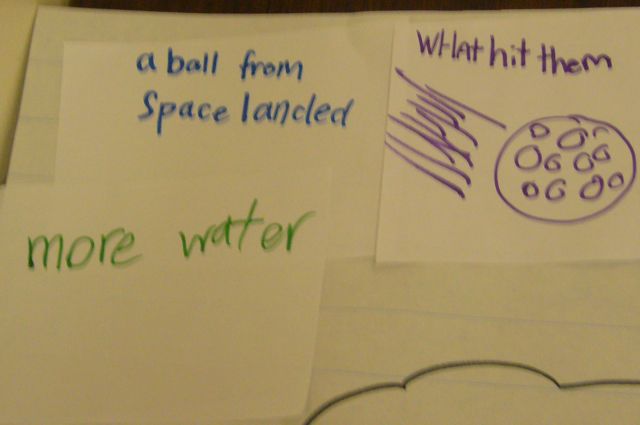
“Something came crashing to Earth and killed the dinosaurs!” “Yeah! It was a ball!” “Not a ball! A meteor.” “No, an asteroid!” “Huh?’

earth 1

Some people had a vague idea that the continents were not the same shape as they are today.

Every piece of land are together

The land was connected.

Spelling was not a priority in this exercise!

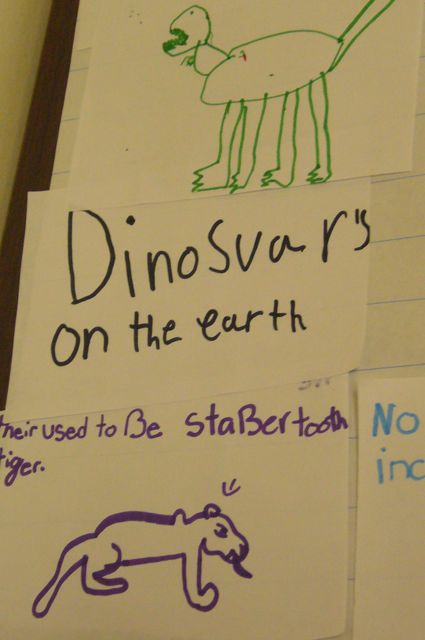
We definitely knew that some creatures have roamed the Earth that are not here today.

earth2

Other interesting discussion: Is there more water now? Or less? What about trees? Animals? When did people get here exactly? Is there more light now?

So we need some more information! We need a great book!

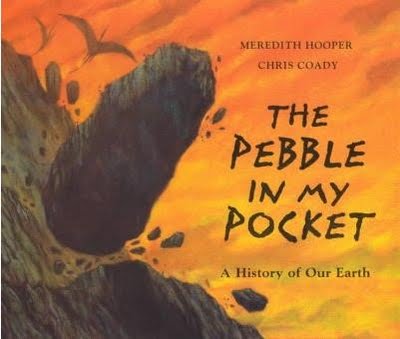
Pebble in My Pocket

My son came home from school talking about a great book (you’ve got to love that as a Mom and a teacher!) that his teacher had read to him (thanks Ms. Conklin!) . This is how I came across The Pebble in my Pocket – A History of our Earth written by Meredith Hooper and illustrated by Chris Coady. This is a long book and took several sittings to complete it  – especially because we had to stop frequently for great questions and discussion. My students loved this book and I loved reading it to them as they were so passionate with their comments and questions. It is pretty serious business when we go back millions and millions of years!

This book takes us on a 480 million year journey.  We follow a piece of rock that formed as a result of a volcano and travelled through time to end up in a little girl’s pocket. On this amazing journey we learn how the earth has changed in many dramatic ways over time.

Great comments and questions I just have to share:

Kevin interrupted a few pages in, after finding out that rocks become smoother as they slide down mountains, travel through rivers, get battered by waves etc.

Wait! I’m going to infer something! If a rock is bumpy it’s not from many years ago because the smooth ones are from long ago.”

We read about how there were no plants or trees at one point and Jeremiah wondered: “Back then, if you were in space, what would the Earth have looked like, what colours would you see?” (Is this not the most brilliant question?)

Miami was worried. “Ms. Gelson, you told us that trees give oxygen so if there were no trees, how could there be oxygen? Nothing could live!”

Kevin jumped in, “Wait Miami I’ve got something for you! There were little green plants and they could have given oxygen!”

Eddy started thinking as we discussed why the dinosaurs might be extinct. Some people thought a meteor hitting the Earth was the reason. “So if a meteor hit, and smoke didn’t let the sun through, the plants would die and the dinosaurs would die because they had nothing to eat and they would be too cold right?”

And the big, big question we had over and over again. “I know there were cave people but just how did those cave people get there?”

When we finished the book, we did a timeline exercise – sorting when different life existed on Earth. (i.e. 155 mya Small running Dinosaur Compsognathus) Then we grabbed felts and paper again and tried to write down new things we learned.

Now we have a better idea of how the Earth has changed.

Students included many things on their lists, including:

  • land was formed by volcanoes
  • fish became land creatures
  • many ice ages occurred
  • flowers grew after plants and trees
  • many creatures are now extinct like mammoths
  • the same land was sometimes frozen

So much to still learn, but we have a richer understanding thanks to this fantastic book!


Stories that came our way today

Our classroom read aloud mid morning was an information story book to practice asking questions and inferring from our background knowledge.

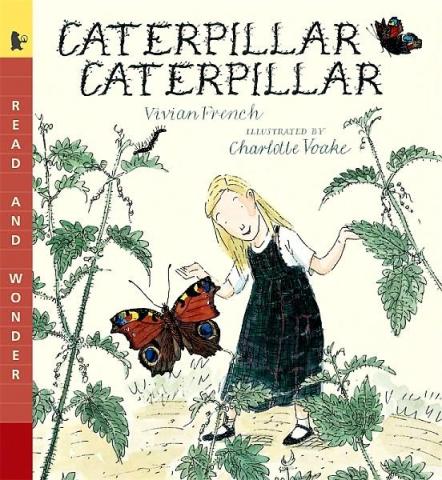
Caterpillar Caterpillar

Written by Vivian French (author of many favourite information story books) and illustrated by Charlotte Voake, Caterpillar Caterpillar is all about a little girl learning about the caterpillar’s development through the help of her patient and knowledgeable grandfather. We realized our background knowledge related to insects has really grown because of all of our research about walking sticks (our classroom pets). We had lots of questions about the caterpillars shedding their skin and wondered if like stick bugs, they ate their skin? Do they have suction cups on their legs to be able to travel on the underside of leaves? Are the butterfly eggs sticky to stay stuck to the leaves? They must be because they don’t fall off in the rain. But then somebody else pointed out that maybe the eggs are only laid on the underside of leaves to protect them. Can caterpillars spray a substance to keep enemies away like some stick bugs can? Great questions and discussion today!

In the afternoon, we walked to Strathcona Library to visit Ms. Hong and have a story time at our public library! What a great way to fit our daily 30 minutes of physical activity into the school day! And . . . what a wonderful story!

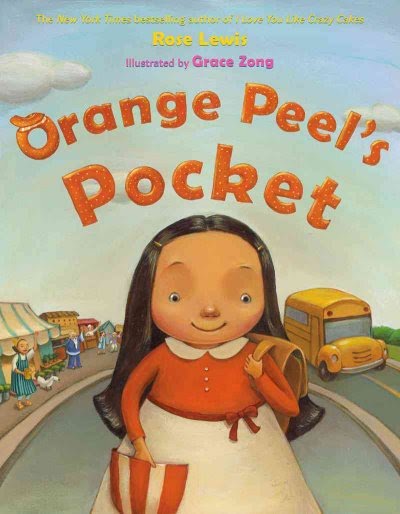
orange

Ms. Hong read us Orange Peel’s Pocket written by Rose Lewis and cheerfully illustrated by Grace Zong. Chang Ming goes in search of answers to the question – What is China like? by wandering into shops and businesses where she can learn more about her cultural heritage. Everyone slips something mysterious into her pocket (how fun to guess what each item might be when Ms. Hong read aloud!) – a poem, a peony, a recipe for noodle soup, etc. Now Orange Peel (Chang Ming) can share her heritage with her classmates.

A lovely end to our day. . . When we returned to class, Edwin shared a drum given to him by his grandfather and showed us a rattle carved from a special tree where eagles nested and gifted to him by his uncle. Sharing of his stories and culture – thank you Edwin!

Canadian Railroad Trilogy

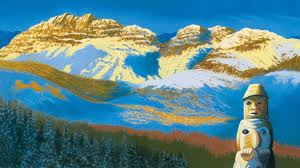
Our BLG reader Bill brought in an amazing book today!  Canadian Railroad Trilogy illustrated by award winning artist Ian Wallace is the illustrated version of Gordon Lightfoot’s song Canadian Railroad Trilogy. “We weren’t even born then!” the students exclaimed when told that this song was performed on New Years Day in 1967 in honour of Canada’s centennial.

CanadianRailroadTrilogy-cover-400

This is a physically heavy book – the song travels through each page of “striking, catch your breath, sigh” kind of art by Ian Wallace. It also contains the song lyrics, the music, the illustrator’s notes and a brief history of the Canadian Pacific Railway.

There was a time in this fair land when the railroad did not run . . .

Lightfoot wrote this classic song in just 3 days! Artist Ian Wallace took 21 months to complete the illustrations for this book and used a medium new to him – chalk pastels. We see the truly stunning Canadian landscapes and pictures of the many people involved in building the railroad.

But time has no beginnings and history has no bounds

Bill read us the story and then played us the song and flipped through the pages again following along.  The room was completely silent, all eyes on the book. A few little fingers skimming under the text. A magical few moments!  Thanks Bill for sharing this book with us today!

Our student reviewers report:

Ricky (who plays the piano :)): I like this book because the book is written by a special author – Gordon Lightfoot. He wrote a poem in the book and you can actually play it on the piano. The book has a piano song in it. The book also talks about the pictures of the book. That’s what I really like about the book.

Kevin: My favourite picture is page 21 and 22. I like that page because I like snow. It made me visualize me in the snow.

Jena: All the art in the book is too beautiful for me to choose which one is my favourite. Oh and one more thing to say: “I LOVE THIS BOOK!”

Edwin: The book was the calmest book I been read by a reader. It was special to me and the book had the beautiful pictures and the beautiful songs.

The Last Polar Bear

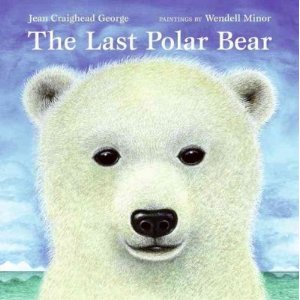
the last polar bear

Tigluk looks out his window and sees a polar bear in the distance. It is Nanuk. She looks straight at him and seems to speak to him “Follow me.” Tigluk and his grandmother paddle out in the ocean searching the ice floes for the bear. They discover, not Nanuk but her cub and Tigluk names him Pilluk (meaning to suvive). “With the melting of the ice, he is the last polar bear,” says Tigluk and cradles the bear in his arms.

This sad story by Jean Craighead George forces us to confront the serious issue of how climate change is affecting the polar bear habitat.

We used this powerful book to practice asking questions as we read and then looked at our questions critically – Did we find an answer in the text? By inferring, can we answer the question? Do we need to do more research? After discussing things, are we left with more questions?

Some of the questions we examined further:

How many bears are in the Arctic? Someone answered this quickly: “It was in the story: Just one left.” Then we talked further and realized we would have to do more research to find out the actual population. Questions were asked about whether polar bears are considered endangered?

If nobody found the polar bear, would he survive? Most people thought that we needed to do more research to answer questions like: How long do they nurse? What exactly do they need to survive? before we could infer because we don’t have enough background knowledge.

Why would the cub be all alone? To answer this question, we needed to use our own thinking and our background knowledge. Some students reminded us about what we had learned about polar bears in the book Winston of Churchill which was that polar bears could drown if the ice floes were too far apart. So we decided that maybe the mother had drowned while hunting for food because the ice was melting and she had too far to swim back to the ice floe where her cub was waiting.

Why did Nanuk choose a boy to look after her cub? For this question, we decided that we should infer. A suggestion was made that maybe Nanuk chose Tigluk because he was young and would have many years to care for the bear and maybe even help change things. Everyone thought that this made a lot of sense

Our questions and thoughts after discussing the book:

If there is only one bear, how will it mate? How will any more polar bears be born?

Is the world really getting too hot?

If the polar bear became used to humans and human food, could it ever go into the wild again?

How will the people in the village survive without polar bears? If other animals in the Arctic are also becoming endangered won’t this be hard on the people in the North who hunt them and use their furs and skins?

So much to wonder and think about from one very special book.


What did we learn about baby sea otters?

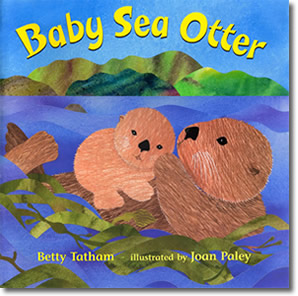
Our information story book this week was Baby Sea Otter by Betty Tatham.  We continued to practice asking questions as we worked our way through the story.  What was exciting was how students are beginning to connect their learning from different books to their wondering about new topics. From the questions below you can tell we have been learning about symbiotic relationships, the characteristics of mammals, etc

baby-otter

Betty Tatham’s story delighted and thrilled the students as they learned about how mother otters serve meals on their belly and how they have to protect their pups from diving eagles.

Some interesting questions as we read:

*Do they have any parasites? (Hajhare)

*Do they have gills to breathe underwater? (Kevin)

*Do they migrate? (Ricky)

*What happens if there are no more sea urchins where they live? (Lisa)

*Do otters have symbiotic relationships with other animals? (Jena)

*How do they clean themselves? (Annie)

*How do you know if they are male or female? (Jenny)

What did we learn?

Annie tells us: Sea otters dive underwater to protect their babies from eagles

Jena writes: The Mom ties the pup to a kelp bed when she goes to get food. She uses her chest as a table to feed the baby.

Kevin explains about what they eat: I discovered that they eat crabs, clams, sea urchins and they use stones to crack open the shells.

Ricky tells us: Sea otters are waterproof. They stay waterproof by blowing their fur with warm air.

Old Mother Bear inspires lots of questions

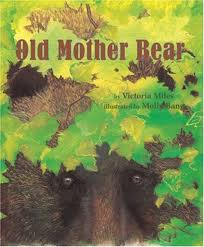
Division 5 has been practicing asking questions as we listen to a story.  Armed with our pencils and mini notebooks, we gather at the carpet to listen to great information story books like Old Mother Bear by Victoria Miles and illustrated by Molly Bang.

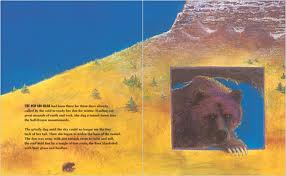
So far we have read about how the mother Grizzly tunnelled a den out of the mountainside to sleep through the winter and birth her cubs.  The cubs are born and nurse and snuggle with their mother until they all emerge from the den in the spring and begin searching for food.

A sample of the great questions we had (and who asked them) as we read the first half of the book:

How do bears dig the den? (Manny)

Does it hurt when the mother feeds? (Miami)

How do the mother bears make milk? (Hajhare)

How do they feed from their mother if they can’t see? (Josiah)

How many babies do they have at one time? (Lisa)

Where is the Dad? (Hailey)

When do they leave their Mom? (Jeremiah)

How do the cubs know not to hurt each other when they play fight? (Edwin)

How long can a bear survive without food? (Ricky)

We look forward to finishing the story this week!


Picture Books we read this week


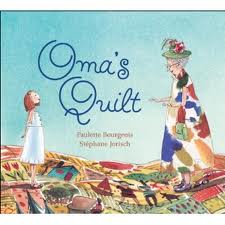
While searching through the library for interesting picture books, I came across Oma’s Quilt. I pulled it off the shelf because it is illustrated by Stephane Jorisch (who also illustrated Suki’s Kimono – one of my favourite books). Then I noticed it was written by Canadian author, Paulette Bourgeois (author of the Franklin books and Big Sarah’s Little Boots) This book was bound to be a good one!  I tried it out with our reading group.  The story:  Emily’s Oma (grandmother) has to move to a retirement home and she is very reluctant to do so.  What about her precious things? Her neighbours? Cooking apple strudel? Even the bowling alley at the home doesn’t change her mind (smelly shoes!) While Emily and her mother are sorting through Oma’s possessions, Emily has a wonderful idea. Why not make a memory quilt for Oma!? Some students made text to text connections to Eve Bunting‘s The Memory String.  This book received a big round of applause.  Look for it in the library!

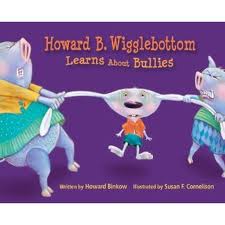
We have been reading a lot of Howard B Wigglebottom books to help us learn about ourselves and our relationships. Howard B. Wigglebottom Learns about Bullies teaches us about the importance of asking for help when bullying doesn’t stop. Howard has a little voice inside his head that tells him Be brave, Be bold, A teacher must be told. But it isn’t always easy to trust our intuition and Howard suffers many unpleasant interactions with the Snorton twins before he finally decides to report their behaviour. Finally, he can sleep easily, knowing that he was brave, he was bold when his teacher was finally told. “I am okay. I am safe.” he assures himself at the end.  Such an important book!

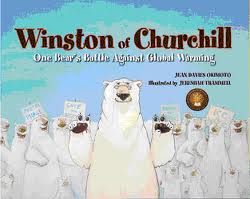
This book tells us about Winston, the bear from Churchill, Manitoba who decides to mobolize a group of polar bears to teach the tourists who come to see the polar bears about the effects of global warming on the melting ice in the Arctic.  “Ice is nice!” the bears chant during their protest march. We learn that we must all do our part to protect the Earth. “Recycle!”  “Walk, Bike, Ride!” “Solar Power!”  “Turn down the furnace!” Winston of Churchill by Jean Davies Okimoto was the winner of the Green Earth Book Award. This book is also in Seymour’s library.

Happy Reading!

Tales, Tails and Tadpoles

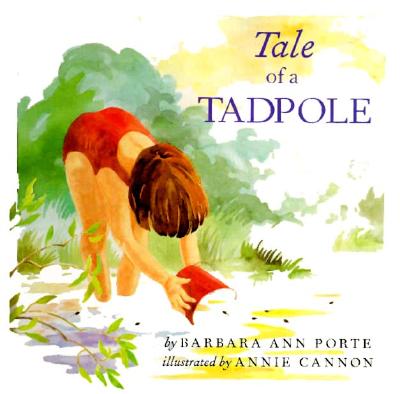
We read an interesting information story book called Tale of a Tadpole by Barbara Ann Porte. Illustrations by Annie Cannon.

Before we read, we peeked at some of the pictures and wrote some questions about tadpoles in our Wonder web:

Kevin wondered:

What do they eat? How fast can they swim? What are their predators? Do they have parasites?

Emily also had some questions:

Why is their tail so long? Why are they brown? How do they swim? Why are they so small?

Some other great questions from Jena:

How come they transform? Do they have gills? How do they get out of their eggs? Do they eat fish?

As we read, we asked more questions and read on to see if we could find out the answers. At the end of the story, we found out that we had learned a lot and everyone chose one of the key questions to answer in more detail. One surprise for everybody was that the tadpole in this story turned into a toad, not a frog. The grandfather in the story explained the differences between frogs and toads and we were all eager to discover what these were.

Many people explained some of the differences between frogs and toads in their writing. Jeremiah wrote: “Toads have bumps on their back but frogs don’t. Frogs have smooth skin.” Eddy explained, “Toads live in the woods and frogs live in ponds.”

Another topic that many people chose to write about was why the tadpole’s tail got smaller. Hajhare writes, “Frogs get energy from their tails.” Jenifer gave us a few more details: “All the nutrients from the tail go into the body, this makes the tail small.”

Information storybooks such as a Tale of a Tadpole are a great way to learn a lot of new information while enjoying a great story. We find that when we ask lots of questions before we read, we are even more eager to read and see what new information we can find out.