Celebrating students, celebrating books

Having time off from the day to day of teaching gives us space to reflect back on all that we treasure. Highlights of the last calendar year for me and picture books that exemplified these important themes:

1. Lots of laughter.

This was one of the favourite non-fiction read alouds I read with a class.

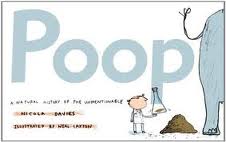
Poop – A Natural History of the Unmentionable written by Nicola Davies and illustrated by Neal Layton. This was the discussion. Theories of why some animal poop seems to have hair on it and why do we fart anyway. Hard to keep a straight face.

2. Moments of awe

Sometimes in sharing a powerful piece of literature, the learning in the room just surrounds us. The book or the important conversations are not soon forgotten.

Nan Forler‘s Bird Child was one of the most beautiful books I have ever shared with a class.

We learned about the power in all of us to stand up for each other. Recounting our conversations in this post was important. As a group, we shared something big.

3. Experiencing vulnerability

Some books produce such strong reactions. In our responses, we are vulnerable and need discussion and support to make sense of our feelings.

This book reduced some of us to tears: The Day Leo Said I Hate you! written by Robie H. Harris and illustrated by Molly Bang
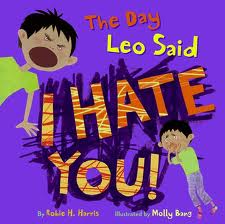
What happens when our feelings explode and we say something hurtful? How do we navigate our way back? We talked about this book here.

4. Honouring the power of books

We were inspired by the beautiful Book written by George Ella Lyon and illustrated byPeter Catalanotto. to talk about what reading means to us.
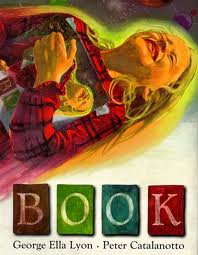
This post details the beautiful art and writing we did in response. Students talked about how reading transported them into the book and about how much they love to be read to.

5. Celebrating wonder

I love to use information storybooks to inspire student questions. This book The Last Polar Bear written by Jean Craighead George motivated students not only to ask questions but to explore answers.
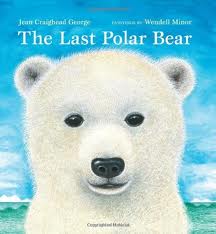
In this post we talked about how climate change is affecting the habitat of the polar bears. We found we were left with more questions than when we started.

Looking forward to what books will bring to us in 2012!
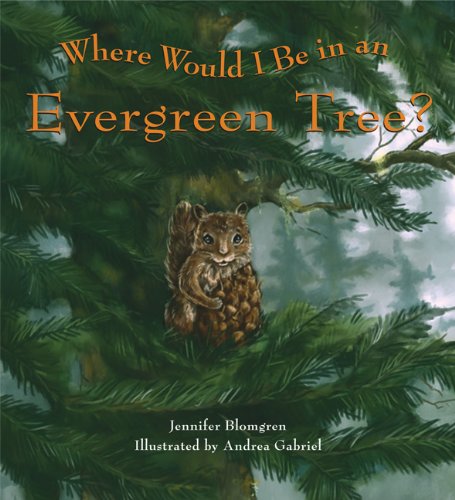
Where Would I Be in an Evergreen Tree?

Our BLG reader this week was Bill. He read us Where Would I Be in an Evergreen Tree? written by Jennifer Blomgren and illustrated by Andrea Gabriel.

evergreen tree

There was lots to learn from the text of this book: all about nurse logs, the life cycle of trees, the amazing creatures that inhabit the forest and the wonder of every layer. The book ends with an invitation to come into the forest and discover more for yourself. But it is the illustrations that pull you deeper – the lush vibrant greens, the dripping rain, the spotted wingspan of the owl . . . Wow!

Such a gorgeously illustrated book. Students also kept referring to the pictures and how beautiful they were.

Would love to use this before a forest walk. Or after and connect our learning . . . .

Our student reviewers report:

Catriona: Its illustrations were very very interesting because they were probably painted and they looked real. I could easily connect to it.

Truman: I like the drawings and the rhymes and the details. I like the page that has the pine martin on it because of the snow and how the pine martin is jumping.

Khai: The illustrations are great because they were nice and colourful. They reminded me of another book about a forest.

Deandra: It was really cool. I saw a squirrel gliding to a big tree. I liked it so much I loved it.

One Horse Farm

Our BLG reader this week was a new reader for us. Welcome Radica! Radica brought a very special book: One Horse Farm written and illustrated by the amazing Maine artist Dahlov Ipcar.

This book was first published in 1950. It tells the story of a boy and a horse that grow up together on a farm and gives us a lovely sense of daily farm life through the seasons. Simple, soothing and all in repeated colours – turquoise, orange, black, white and brown. The boy Johnny and the horse Betty age in different ways – my students were fascinated that Johnny was an adult but Betty was an old horse. Why? Great discussions on life span and rates of growth and how they differ between humans and various animals.

To learn more about Dahlov Ipcar, go here.

Her artwork is amazing. Wildebeests and Zebras (at left)  is just one of many pieces that feature animals. More art work is featured here. Ipcar is 94 years old and still painting!  She has paintings in the permanent collection of the Metropolitan Museum of Art and the Whitney Museum of American Art.

The Prince of the Pond

We started out first (novel) read aloud today. I am so excited to introduce this class to one of my all time favourite books to read aloud – The Prince of the Pond written by Donna Jo Napoli and illustrated by Judith Byron Schachner.

I explained that Napoli is wonderful at taking well known tales and giving them a unique twist. Some students were able to figure out from the cover and the title that this story would be based on the story about the prince who gets turned into a frog by a witch and must be kissed by a princess to regain his human form.

Today we met the curious frog who can’t seem to hop very well or communicate in any way that makes much sense. We met the horrid hag who transformed the Prince into a very confused frog. Do we think we know where this story is going? Maybe. . .

I happen to know we are well on our way to being entertained by a master story teller and to learning all kinds of amazing facts about frogs. I also know that my students are in store for a lot of laughing and many surprises. Let our story begin . . .

More on Poop

Well, yes, it is true we are addicted to Poop (the book Poop of course!) Every page of this little book is full of fascinating facts on poop. We have been reading and learning in every spare minute and just have to share our new learning. (For Poop Part 1 read here) Nicola Davies and Neal Layton have created a book to keep you busy learning, reading and stopping to say “Really? Wow!” all on the topic of poop.

We learned that many predators use poop as clues to where to find their prey. So many animal parents get rid of their young’s poop to keep their babies safe and hidden. Jenny had a connection. “So it’s just like you can follow footprints, poop can be like a trail to lead them to the prey.”

We learned that golden moles in Africa stay underground all of the time to avoid being eaten. So they make one chamber in their large burrow just for pooping in. This prompted much discussion.

Ricky wondered, “But if that chamber gets full . . . do they just make a new one?”  Jena suggested that the moles could fill that chamber, close it off and then dig a new one. Kevin pointed out “This is just like we make a bathroom place in our houses.” (Unfortunately moles don’t have that flush feature that is so handy for us!) Miami asked, “Do they eat their poop to get rid of it?” This is not a farfetched questions as we had just read about rabbits eating their feces to get more nutrients out of it.

We then read about latrines (animal toilets) of the giant otters in South America. They use their latrines as more than just a toilet. They make a large flat area on the riverbank and poop all over it. This big smelly area is like a sign that says stay away: we made all of this poop, it is our area! The students found this quite amusing. “Like a big sign to say stay away!” “It’s a poop shield. You can’t get to us!”

We continued to read more intersting poop facts and Ricky piped up. “Scientists want to know things and they learn a lot of them from poop. They even studied dinosaur poop – prehistoric poop!” “I want to be a poop scientist,” said Eddy. “A poopologist,” suggested Josiah.

We then read about sloths and how they climb down their tree and poop every four days. Jenny wondered if they poop really slowly too. Good question!

At the end of our reading I asked students to share their new learning. Here is some of what they said.

Miami “Sloths eat lots and lots of leaves.”

Lisa “If sloths poo, they go down the tree to do it in a big pile and then back up every 4 days.”

Kevin “Sloths sniff other sloths poo to see what’s happening.”

Edwin “It’s weird that sloths have poo piles near each other. If they made them together, it would be huge.”

Jena “Some animals sniff other animals poo to know what is going on like who is pregnant.”

Ricky “Male hippos wiggle their tail when they poo to tell other hippos they are fierce and strong. The poo sprays everywhere.”

Have we tempted you yet to go and read this book?

Poop. Everything you ever wanted to know. And then some

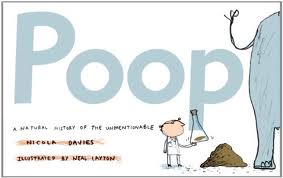
Our current read aloud is a non-fiction title. On a kind of gross but okay, let’s admit it, kind of a lot of fun to talk about topic: Poop – A Natural History of the Unmentionable written by Nicola Davies and illustrated by Neal Layton.

How can you not love this book? The cover shows a huge elephant behind with a pile of dung and a little scientist carefully examining the specimen. Open up the cover and notice that it is all brown and smeary coloured. “Eww! Is that real poo on there?” someone asked. (No, it’s artistic suggestion 🙂 )And then on the first page you get to learn that feces is the proper name of poop and that if we were speaking scientifically, we would know that all animals defecate (meaning to poo). So it seems that reading this book will make us into scientific experts on poop. Excellent!

Today we decided to use Adrienne Gear‘s Questions and Inferences sheet from Nonfiction Reading Power to record some of our questions and what we were inferring as we listened to the text.

The level of engagement was pretty high. Poop is an interesting topic! Near the end of the lesson, Jena commented, “Who knew poo could be so interesting?” Indeed.

We practiced asking some questions/inferring together when we looked at the first few pages titled – A Tour of Poop

We noticed that tapir poop seemed to have hair in it. Nobody knew what a tapir was so it seemed to be the perfect question to do some inferring.

Question:  Why does some poop have hair in it?

Our inferences:

Jenny: It must mean they are predators. The hair is from their prey.

Eddy: Maybe they have furry bums. When the poo comes out, it gets covered in their own fur.

Miami: I’m thinking that – perhaps, they licked their babies’ fur to clean them and stuff. So that’s how hair got into the poop.

Manny: Maybe it’s not hair. Maybe it is grass and they eat grass. Maybe it just looks like poop. If it is hair, why doesn’t the stomach acid eat the hair?

As we read on, we found out that meat eating animals (carnivores) have poop that contains hair, fur, feathers and bones. But I love all of the thinking we were doing to come up with different possibilities!

Most conversation and discussion was related to the text but as I read and we shared our thinking some students just couldn’t help sharing. A few hilarious statements I overheard: “I feel better when I poop.” “Do you think everyone pees a bit when they poop?” “Do you think we would explode if we never pooped?” “My Dad got diarrhea when he ate spicy pork.” Poop is a great topic of conversation! Maybe not to use at your next dinner party but when hanging out with primary students, it rates pretty high!

During our sharing someone asked this question: “Why do we fart?”

Kevin happily shared his thinking. “Maybe when your body has no more poop in it, there are still poo smells that need to get out so you need to fart.”

This was a very popular suggestion. One student responded. “Oh! Oh! Kevin may I write that down on my sheet?” “Yeah me too,” someone else said. We love to share our thinking! 🙂

Some other questions/inferences from our sheets:

Hajhare: Does poo have food in it? I think it does because the food all combines together to make it brown.

Edwin: Why is animal poo smaller? Maybe the animals don’t have big tummies like people.

Kevin: What happens if you poop a lot? I think you live longer.

The students can’t wait to learn more about poop! Stay tuned!


Why Do I Have to Make My Bed?

Our BLG reader this week Deborah brought us the informative, engaging and very funny story – Why Do I Have to Make My Bed? (Or a History of Messy Rooms) written by teacher and playwright Wade Bradford and illustrated by Johanna van der Sterre.

We were connecting with this book right from the cover. Ahh kids and messy rooms! In my house this question sometimes sounds a little different: Why do I have to make your bed? (That would be me, the Mom, asking it)

We start with a little boy asking his Mom why he has to make his bed. He lists the chores he just completed and bemoans, “So why do I have to make my bed? It’s just going to get messed up again.”

“Yes.” “That’s true!” students shouted out.

The little boy’s mother tells her son that this reminds her of a story about his grandmother when she was a little girl and asked that exact same question (but her chore list was slightly different and included putting away Hula-hoops and dusting her rock’ n’ roll records) This little girl’s mother said “That reminds me of a story about your grandfather when he was a little boy. And . . .”

Miami predicts: “Oh! I think this book is going to go on and on and on until they get to the dinosaurs!”

We move back in time – learning about different chores completed by children at different times in history (from fetching water from the pump to dusting a printing press to picking out rats hiding in the pickle barrel . . . ) We also learn funny expressions through the ages:  “cantankerous as an old sea dog” “more thunderous than Thor” “ill-tempered as a caged lion” etc. Students delighted in searching for the date woven into the illustrations and noticed “It’s a boy, then a girl, then a boy. A pattern.” Everyone joined in with Deborah on the lines that repeated “That reminds me of a story about . . .” and “So why do I have to make my bed?”

Meeting the Vikings was very exciting (as were the chores! This little girl had to stoke the fire for a sword maker, dust off the sacred blowing horn, pick up broken spears and patch her father’s war wounds) “Whoa the Vikings!” “Vikings! Are you serious?”

Seeing children from the Roman times was also pretty dramatic in our room.

“121!”

“That’s a billion years ago!”

“That’s Heavens time.”

And then Egyptians, cave people . . . Oh my!

Finally, we do learn why these children do have to make their beds: “Because I said so.”

Of course!

At the back of the book is a section titled Chores Through the Ages which tells us about both the chores children had to do in each time period but also about children’s play. For example, in Ancient Egypt, children might build toy boats to sail along the irrigations canals. Deborah didn’t read this whole section but pointed out that students could read it independently at a later time. Plans were quickly made: “I’m totally reading that.” “Me too” “Cool”

This book was a big hit!

Our student reviewers report:

Alyson: I like when the story went on and on and on!

Josiah: I like the book because it kept repeating: Why do I have to make my bed to the year 40,000 B.C. to cave men. It was funny.

Hajhare: My favourite part was when they were in the Vikings. It was funny how the boy talked. The Egyptians were cool too. I don’t like making my bed either. I hate it!

Ricky: This was a very long book. It’s the longest BLG book read I think. I liked that it was so long. This book was just like karma.

Five Fantastic Fictional (mostly) Frogs

Lately I’ve had quite the thing for fictional frogs – not the frogs who turn into princes or have just been princes, although those guys are pretty great too.  But no, a thing for the hoppy, happy, stretchy, leapy unpredictable green frogs that make the books they jump into particularly delightful.

My top 5: Books about frogs

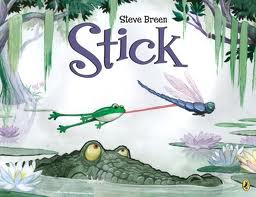
1. Stick by Steve Breen

I just found this book at my local library. Stick is Steve Breen’s first picture book (but his talent for words and visual images has not been missed – he won the Pulitzer Prize for his editorial cartoons twice!) How far can one little frog travel? And how? Find out what happens when little Stick happens to get his long tongue stuck to a dragonfly. Up, up and away . . . Silly, delightfully preposterous and gorgeous bird’s (in this case frog!) eye view of town, city and swamp.

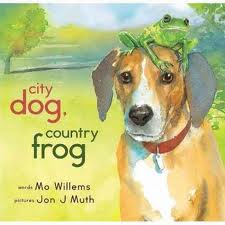
2. City Dog, Country Frog written by Mo Willems and illustrated by Jon J Muth

I kept eyeing this book at the library, noticing names Mo Willems and John J Muth and thinking to myself, “I have got to read this book.” Something about the cover picture spoke dog to me and I kept missing the frog, even when I eyed the title I saw dog instead of frog. Finally, I looked a little closer and spotted the frog so perfectly plopped on the dog’s head and I pulled the book off the shelf.  How could I have missed this? I was missing so much! Inside illustrations are mellow, gentle and ahh, what greens. Together with Willems’ simple text, pictures and words tell the tender story of  friendship, the passage of time, young curiousity and calm wisdom. To make up for the months I haven’t been reading this book, I need to read it over and over and over again.

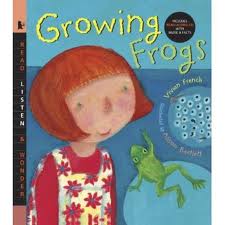
3. Growing Frogs written by Vivian French and illustrated by Alison Bartlett

Such an amazing book to teach about how frogs grow from tadpoles and how exciting this change can be to watch. I call a book like this an “information storybook” – a definite fictional story yet so much factual information it bridges into the non-fiction category. A little girl and her Mom collect frog spawn from the pond and carefully tend to the tadpoles, then frogs who grow. This book took me right back to my eight year old self and my ice cream bucket full of pond water and tadpoles. How I loved it and how sad I was to return my little frogs to their pond again. I love that French points out how carefully you must care for your growing frogs – always using pond water, changing it regularly etc. Allowing children to have important nature experiences respectfully.

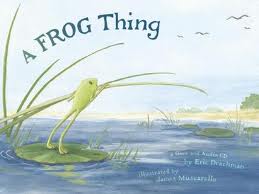
4. A Frog Thing written by Eric Drachman and illustrated by James Muscarello

frog thingI have a real soft spot for Frankie the frog in this story. Told by his parents that he can do anything, he sets his mind to flying. Ahem, darling, “that’s a bird thing” explain his parents. He does try very hard to soar through the air but to no avail. One day he sees a baby bird fall helplessly into the pond and swims to its rescue. The grateful mother demands – “How can I repay you?” Well . . . We soon see Freddy flying through the air clutching a twig held by two birds. Finally flying! Exciting, yes. But Freddy realizes that doing the frog thing will suffice for him after all. Beautifully illustrated. A wonderful read aloud to share.

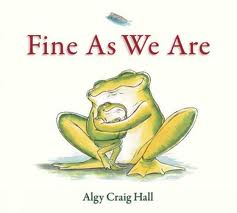
5. Fine As We Are by Algy Craig Hall

Wow, is it great to be a little frog. Having Mama frog all to yourself. Sigh. . . happiness. So what are all of these black spotted blogs in the water? Why do they have tails? Now legs? Oh my! Little frogs. All belonging to Mama. Life with many new siblings is quite the adjustment for our little frog. Annoying at first – how much leaping and tumbling about can these little frogs do? But then, oddly “just right.” The perfect book to explore how life changes when a new sibling (or siblings) arrives.

Jealousy is just a stage, right?

Hop through some frog books this Spring!


If you Decide to Go to the Moon

We have been reading If you Decide to Go to the Moon, written by Faith McNulty and illustrated by Steven Kellogg. It begins: If you decide to go to the moon in your own rocket ship, read this book before you start.

if-you-decide-to-go-to-the-moon

We are taken on a journey (on a rocket ship 🙂 ) to the moon and back and learn all kinds of cool things about travelling in space and important facts about the moon along the way.

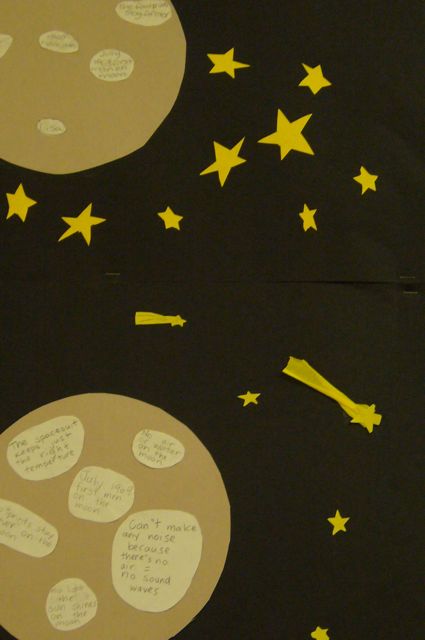
We represented our learning with large space pictures including stars, rockets and the sun.

art1

Facts and questions about the moon were included as fact craters or question craters and glued onto our pictures (inside the moons).

Some key facts we learned today?

  • there is no water on the moon
  • there is no sound on the moon because there is no air to carry sound waves
  • the moon is scorching from the sun’s heat or freezing when out of the sun’s heat
  • the moon has no light
  • the moon is covered in dust
  • craters on the moon are holes made by meteors that have landed on the moon throughout time

art 2

We also learned some pretty neat things about what it is like for astronauts to travel to the moon. Did you know it takes two and a half days to get there (by rocket)? Many people think it would be fun to try and walk on the moon where there is such little gravity. We found it fascinating that astronauts’ footprints stay on the moon forever because there is no wind or rain to wear them away. Most of all though, everyone wanted to look back to Earth from the moon and see what it would look like. Maybe some of us are future astronauts and will get that opportunity . . . .?

A fantastic book as an introduction to the moon and space travel.


Some great new books from Scholastic

Some popular picture books in our new book displays – purchased through Scholastic book orders.

Mouse was Mad by Linda Urban and illustrated by Henry Cole. How is little mouse going to express his anger? His stomping can’t shake the trees like Bear. His screaming doesn’t echo through the woods like Bobcat. This makes him so mad that he stands perfectly still. He breathes. The other animals join in, breathing too. Suddenly mouse is no longer mad. Hmm. . . Look what breathing can do for you! For a MindUp classroom, this book made a whole lot of sense!

The Very Itchy Bear by Nick Bland is very amusing. The Very Cranky Bear returns – this time bothered by a troublesome little flea.

Biting high and biting low,

This is flea biting Bear under here and over there

Absolutely annoying until Bear flicks flea into the ocean and finds himself all alone and flea finds himself almost dinner for a hungry bird. In the end, these two become appreciative friends.

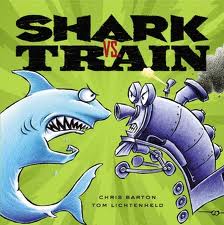
Chris Barton and Tom Lichtenheld bring us the award winning bestseller Shark vs. Train. This book is pulled off the shelf almost daily. It is pretty hilarious. In the hands of little toy box raiding boys, shark and train come to life to battle. Who will win in these very imaginative scenarios? In a hot air balloon? Roasting marshmallows? (hint – shark is all wet!) Giving rides at a carnival? Playing hide and seek? (Really they both fail miserably on this one – steam and fins are just too obvious!) Who wins in the end? The call for lunch!

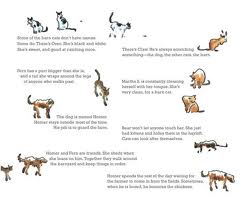
What a book! Details of what happens on a farm day in and day out. Who lives there? The farmers, the cattle, the chickens, countless cats, etc. What do we find? Barns, sheds, tractors, trucks, plenty of equipment . . . And what exactly happens? Enough great details to fill a book that you have to really settle into to finish reading. A great read aloud but also a great book to explore with a friend. Elisha Cooper‘s Farm is a must for the primary classroom.

Today it was a book to read and chase me with, recounting new facts learned. “Ms. Gelson did you know that cats eat grasshoppers? “Ms. Gelson, dirt can look like dark chocolate!” On and on!

I love new books! Happy reading!