Five Reasons I love Audio Books

In the summer,  our family often borrows unabridged books on CD –  recorded books that entertain us all.

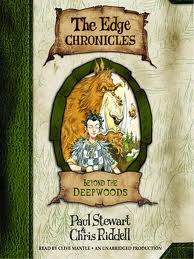
Last summer we listened to Beyond the Deep Woods (the Edge Chronicles Book 1) created by Paul Stewart and Chris Riddell. The audio book read by Clive Mantle. We were transported to the Deep Woods,  a mysterious place full of odd creatures and many dangers as we followed the adventures of Twig on a quest to discover his true identity.

A thrilling fantasy!

Why are these recorded stories so wonderful? My top 5 reasons:

1. We have discovered many great authors through this process and have gone on to read other titles they have written (i.e. This is how we met the character Clementine and quickly went on to devour all of the Clementine books by Sara Pennypacker)

2. An audio book is a great way to introduce the first in a series and have your child read  the rest of the series independently. My son read all of Cornelia Funke‘s Ghosthunters after we listened to Book 1 as an audio book.

3. A story becomes a shared family experience. We still read aloud to our children but it is usually one of us reading to them while the other parent finishes dinner clean up etc. While it is lovely to have a story just shared between a few of us it is equally lovely to all listen to a story together – lots of conversations happen throughout the day when we are listening to a story together. Predictions, debates, questions. We have enjoyed many stories together and we all get the references if we talk about the book in the future.

4. Think about long hours in a car or even short hours in a car with arguing children . . . Press play and all of the bickering instantly ends as the story takes over. What could be better?

5. I love reading aloud but sometimes it is really great to let someone else do it! And usually they are really awesome narrators, often with very cool accents and they have the dramatic pause down to an art.

Some of our favourites:

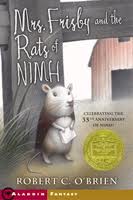
Mrs. Frisby and the Rats of NIHM written by Robert C. O’Brien (winner of the Newbery Medal in 1972)

We just finished listening to this audio book narrated by Barbara Caruso (who has more than 100 recorded books to her credit). Enter the world of Mrs. Frisby, a widowed fieldmouse who needs to move her family to their summer house but her youngest son Timothy, has pneumonia and is too weak to travel. Mrs. Frisby must enlist help from the mysterious rats of NIHM. She gets much more than help from these brilliant rats.

A wonderful adventure story.

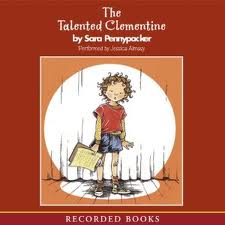
The Talented Clementine written by Sara Pennypacker

This story is narrated by Jessica Almasy who has the ideal voice to read this story – full of energy, young and perfectly animated. Read more about her here

Highly humorous, Clementine’s second adventure is well worth a listen. Clementine is convinced that she is the only untalented student in her third grade class and she is panicking as the evening of Talentpaloosa: Night of the Stars approaches. Laugh out loud funny. We highly enjoyed this story.

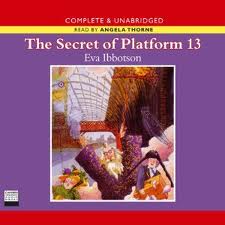
The Secret of Platform 13 written by Eva Ibbotson.

This story was narrated by Angela Thorne, possibly our absolute favourite narrator. We could have listened to Ibbotson’s magical tale forever. In this magical fantasy, the beloved baby prince of the Island is kidnapped and cannot be rescued for nine long years until the gump opens again between London and the Island, a magical place inhabited by delightful creatures. The rescue party faces many obstacles – the most difficult perhaps – tolerating the nine year old prince, raised and horribly spoiled by the awful Mrs. Trottle.

After listening to this story last summer, I went on to read the book to my class and it was a favourite.

Head off to your local library and check out some audio titles. Happy listening!


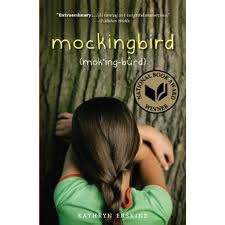
Mockingbird

We just returned from a week away where I did a lot of reading – starting with Mockingbird by Kathryn Erksine – the final book on one of my summer reading lists.

This is a difficult book – difficult in that it forces you to confront some challenging topics – grief, violence in a community (a tragic school shooting) and finding closure. At the same time, this book looks at the difficult aspects of seemingly simple things – forming friendships, demonstrating empathy, forgiveness. All of it all the more challenging as we live this story through the eyes and thoughts of Caitlin, an eleven year old girl with Asperger’s syndrome who has just lost the brother who has always helped her navigate the world.

Yet, difficult as the subject matter might be, I found this book very readable and Caitlin extremely likeable. Her confusion about social interactions and her uncomfortably blunt manner allow us to rethink social conventions and really consider the qualities we want to exude.  Intersting that the person who “gets” Caitlin best is Michael, a little boy she befriends during the less intimidating little kid recess. Michael is – as children are –  not so encumbered with the drive to behave appropriately and is just open and honest with Caitlin asking and answering questions in a totally natural way. Caitlin and Michael learn a lot from each other. Erskine did a lovely job of communicating Caitlin’s struggles to show her emotions and the courage she demonstrated as she helped her community begin to heal.

A wonderful read. This would be a fantastic read aloud as there is much to discuss but also for more mature readers, a book to really fall into.

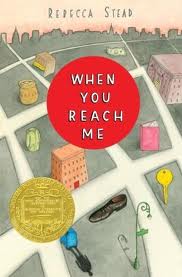
When You Reach Me

When You Reach Me by Rebecca Stead has quickly become one of those books that I know I will recommend (in my not so subtle you have to read this kind of way) again and again. I am also looking for any excuse to revisit this book – perhaps it should become a book club selection? I will definitely read it to my own children in the next few years (when they hit about 10 years old I think).

It is difficult to categorize this book – it blurs many genres – mystery, fantasy, science fiction (with elements of time travel and frequent references to Madeleine L’Engle‘s A Wrinkle in Time) but really, it reads mostly as realistic fiction (although set a few years back – 1979) This book explores the life of sixth grade Miranda and focuses on her relationships and her understanding of how others struggle with life and interactions all in their own ways. This book tells the story of mysterious notes relaying information to Miranda that no one could possibly know because they have yet to happen. The first note is both thrilling and scary:

I am coming to save your friend’s life, and my own. I ask two favours. First, you must write me a letter. Second please remember to mention the location of your house key. The trip is a difficult one. I will not be myself when I reach you.

Miranda struggles to make sense of who is sending these notes and why. How everything plays out in the end is absolutely fantastic and Stead is able to tie up many loose ends even if the reader has to work to follow the threads and not tangle them up. But don’t try too hard – just let them weave together – as the character Marcus points out:

Einstein says common sense is just the habit of thought. It’s how we’re used to thinking about things, but a lot of time it just gets in the way.

I love how there is a sub plot of Miranda and Richard (Mom’s boyfriend) helping Miranda’s Mom prepare for the show The $20,000 Pyramid. There is so much emphasis on giving the appropriate clues and thinking fast to figure things out. Miranda spends the book figuring things out in a much more organic, subtle way. It is very clever of Stead.

There are so many layers to this novel. The storyline is interwoven with mystery and clues – turns and full stops – but not hugely dramatic – just calm and lovely. The characters are interesting and likeable – even those that don’t feature hugely in the story. I love Miranda’s Mom – her intense love for Miranda, her challenges about committing to her boyfriend and how her level of job dissatisfaction is conveyed by how many office supplies make their way (permanently) into her home.  Anne Marie’s Dad has lovely quirky elements – elaborate food making when procrastinating but a deeply protective nature over his daughter. The children in this book have many more freedoms – it being 1979 and not 2011 but the parents are portrayed as very solid figures. Many more interesting characters inhabit this book- the laughing man, Wheelie, the school’s secretary, Alice Evans who is not brave enough to excuse herself to go to the bathroom and compulsive Jimmy who owns the sandwich shop. All play important roles as Miranda navigates her way through the complicated puzzle of friendships, forgiveness and truly heroic deeds.

Highly recommended! On my Middle Grade favourites list.

We’re on a Barbara O’Connor roll

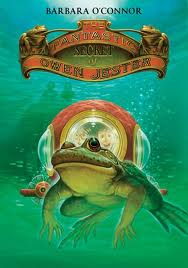
I just finished reading another Barbara O’Connor novel to my children. We were quickly hooked. The Fantastic Secret of Owen Jester is an ideal summer read – all about having time on your hands and deep woods, mucky ponds and fantastic secrets to explore.

We worried about Tooley the big green bullfrog who just seemed too sad. We were delightfully irritated by Viola and her know it all ways (and also impressed by what she did actually know!) And we rooted for Owen and his plans for the very special and mysterious item he heard tumble (tumble, tumble, tumble) off the train. Small town Carter Georgia. Big days of summer. Life lessons to learn. We love the endearing characters and simple days described in Barbara O’Connor’s novels.


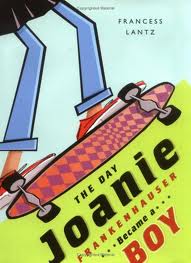
The Day Joanie Frankenhauser Became a Boy

My daughter found this book at the library and recommended it to me. I had seen it on the Young Reader’s Choice shelf (it was a Junior selection for 2008) and have had it on my radar as a book I might recommend to students moving on into Grade 4. The day Joanie Frankenhauser Became a Boy written by Francess Lantz is well suited to students in Grades 3-6.

Joanie is the youngest child in her family with two rough and tumble older brothers. At ten years old, she is hyper aware of the different expectations for boys and girls and wishes her mom wasn’t so concerned with her wearing a skirt or trying out lipgloss when she really just wants to play football. When the family moves to a new town and her name is misspelled as John instead of Joan on the class list, Joanie jumps at the chance to “try out” life as a boy. Joanie a.k.a. John soon realizes that being a boy is more challenging than just looking the part (a haircut and skater shorts help pull off the transformation). Lantz explores themes of friendship, loyalty, bravery and the social dynamics of this age group. A quick read that leaves one thinking about gender stereotypes and embracing who you really are.

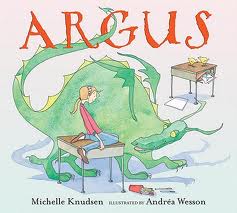
Argus

Maria, our BLG reader this week, brought in Argus written by Michelle Knudsen and illustrated by Andrea Wesson. When Maria sat down, holding the book to her, students spied the back cover and started oooing and oh, oh, oh – ing! They had spotted a picture of 3 little chicks crawling around a classroom floor. “Maria we have chicks! 3 of them! Just like the picture!”

This is a story about Sally and her charge, a “little” egg that was supposed to be a fluffy little chick but turns out to be a green scaly dragon. Right from the beginning when Mrs. Henshaw hands out eggs to all of the children to begin their science projects, Sally’s egg looks different. The children kept the eggs in their desk top incubators. Little beaks begin to poke through the cracked shells. But Sally’s egg splits open to reveal a scaly green back. Mrs. Henshaw keeps assuring Sally that some chicks look a little different but Sally wasn’t so sure. She tries to go along with it, names her “chick” Argus and begins to document his growth and development in graphs and pictures just like all of the other children. Our students kept grinning big knowing smiles – they had also weighed and measured and charted our little chickens and their growth. So much connecting!

Sally needs to be an active guardian of Argus. The other chicks peck for seeds or beetles and Argus tries to eat the other chicks! This behaviour ended when he grew bigger and attempted to eat the children instead! Sally worries that her “chick” is not working out. She is envious of the others who can pet the heads of their little chicks. She can’t even reach Argus’ head unless he is lying down. Then Argus goes missing. Sally panicked and then stopped herself. Wasn’t this a good thing maybe? Now she could share another chick and stop being so different. She should be happy, she thought. But happiness never reahed her. Sadness did. And worry. And anxiety. Where could Argus be? Ricky suggested he might have gone to a meat store! Soon Sally could contain her emotions no longer and her classmates help her search for Argus.

This story has a very lovely ending and the students were glued to the final few pages. Then somebody looked over at our little chicks who were snuggled together in their brooder, asleep. “It’s a bedtime story for the chicks!”

A wonderful story about accepting diversity and celebrating friendship even with things big and green.

Our student reviewers report:

Scott: I have a connection when we have three chicks just like the book. I like this book because I really like the dragon.

Jena: I like this book because Sally lost Argus which is a dragon. But everybody else had chickens. When Argus is gone, Sally thinks she will share a chicken. But really she misses Argus.

Alyson: I like this book because it was funny and sad. It was the best book ever!

Hajhare: I like this book. It connects to this book called Clifford where a girl loses her huge dog and her friends help her find it. I like this book because it’s about chicks and we have chicks!

Eddy: Why did the teacher think Argus the dragon was a chick?

Josiah: I like BLG. No!! I LOVE them. I liked Argus and I felt sad for him because he didn’t fit in with the chicks. How can he eat a whole block of grass?

Sophie Simon Solves Them All

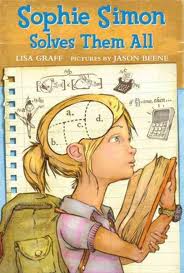
Ms. Gelson is currently reading Sophie Simon Solves Them All, a novel by Lisa Graff. Illustrated by Jason Beene.

Our class has been quite intrigued by the character, Sophie Simon. Her parents absolutely do not understand her and keep calling her strange food names as terms of endearment. Her classmates who try to befriend her, baffle her. All she wants is an expensive ($100) graphing calculator and for everyone to leave her to her thick textbooks on calculus or civil disobedience. When her classmates, who are also hopelessly misunderstood by their parents, ask for her help, she agrees. She will help if they pay her – she really wants that graphing calculator. Her plan seems foolproof. One that will help everyone get what they want. But . . . things, as they often do, turn out a little differently.

Sophie’s plans involve a hilarious sit in at a ballet recital, an observant student journalist and a ring tailed lemur who (with Sophie’s help) destroys a birthday party (a poolside adventure involving diving boards, salt water taffy and grasshoppers).

Lots of laughing in this book. Especially at adults and their ridiculous ways. Sophie’s teacher, Mr. St. Cupid,  has more rules than you can possibly imagine and is constantly adding to his list. (No sighing! No reading books fatter than your head! No dropping three things at once!) Parents also come across as clueless. But when you are 6-9 years old (the intended audience of this book), this is pretty cool.

A short read. Perfect for June! But also perfect for students wanting a great book to kick off their summer reading. Themes of resourcefulness, teamwork and friendship.

If I could go to Kindergarten . . .

I love reading to the Ks at Seymour. I get to do it at least a few times a month at our primary Social Responsibility Gatherings. The Ks sit right up in front, eyes wide, serious expressions, taking it all in. They listen intently, little hands raise in the air to tell me connections and ideas. Then when they leave, they wave, they smile, they whisper, “I’ll miss you.” One of my favourite things to do is to read to the Kindergarten class.

So I got to thinking what if I could go to Kindergarten everyday? And read? What would I read?  During my last few visits to the public library I found some wonderful possibilities.

Saber-toothed tigers. Wooly mammoths. Sleepy dinosaurs. A little boy exploring the world around him. Boy by James Mayhew explores a little guy’s yearning for independence while at the same time honouring his deep connections to home (and the happy snuggles from Mom and Dad). Where in the world do we find warmth? In the security and love from our own family.

A beautifully illustrated story inspired by the author’s love of his own son.

Marie-Louise Fitzpatrick wrote There – as a series of questions. A story about growing up and celebrating the journey as much as the destination. When will I get there? How will I know? And will I know everything, There? The little girl then wonders Can I change my mind and go Elsewhere instead? She then decides that she will go There tomorrow – after she does all the things she needs to do.

A book that begs to be explored with children. Winner of the Bistro Awards in 2010.

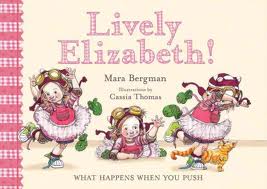
I think this book by Mara Bergman and illustrated by Cassia Thomas Lively Elizabeth is especially appropriate for kindergarten. Life when you come to school is all of a sudden a lot about lining up. Going here, going there, hands to yourself, “shh!” Several times a day. What happens when you have a little extra energy and it kinda spills over into a push? Well in a kindergarten line, it is full on domino effect! Bergman does a lovely job of playing out the whole scenario – from upset to apology and then forgiveness and moving on (and quickly – after all, little ones have the important business of play to get back to)! Cassia Thomas’ illustrations are absolutely delightful! A book, I predict, that will get many “Read it again!” requests.

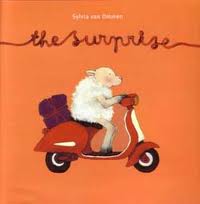
Okay who doesn’t love surprises? And guessing what will happen next? Little ones do especially. What a treasure is The Surprise by Sylvia van Ommen! Wordless so there is a lot of space for interactions. Predictions. Inferring. Questions.  Sheep zips here and there on her moped on a mission. She dyes her wool, when it seems long enough, a brilliant red. Then she brings it to poodle who spins it into yarn. She then knits something special and wraps it up and delivers it to . . .  Well, not going to spoil the surprise here but how fun would this be to do with a class of Ks?

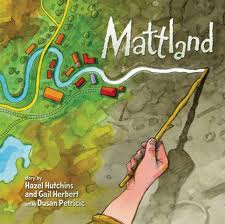
Mattland coauthored by Hazel Hutchins and Gail Herbert and illustrated by Dusan Petricic is a wonderful book to explore with children stressed by moving. The scary sadness of someplace new followed by the gentle, spontaneous introduction of new playmates and new activities. But this book is also ideal to celebrate imaginative, outdoor play. Building a place – roads, rivers, houses, prickly trees and getting some quiet help from someone with their own treasure trove of discoveries – a flattened penny, some popsicle sticks, four pine cones . . . To be fair, you can only read this book with intended outside play planned next. Lots of it. And it should probably involve some mud!

Now I just need a plan to sneak in and share some of these with the Ks!

Why are we reading about dead things?

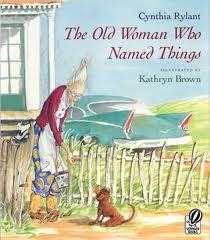
There aren’t a lot of picture books that deal with death, loss, grieving and healing really naturally and really well. There are definitely some (I Remember Miss Perry by Pat Brisson, Nana Upstairs and Nana Downstairs by Tomie dePaola and The Old Woman who Named Things by Cynthia Rylant are favourites of mine on this theme).  As teachers, we like to collect these titles because it is always good to have a book to help explore the feelings that come with having to face losing someone we love. When death somehow touches our classroom or our home, we look for a book that helps us talk about this very difficult subject that we tend to never talk about otherwise. Nobody believes in the power of a book to touch us and heal us more than me but I started thinking about this. What if we read books with this theme just because?
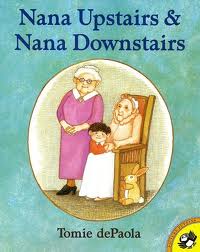
Death is a part of life and maybe if we discussed it a little more easily and often, we would be better equipped to talk about it when it does happen to us? It was with this mindset that I decided to read two recently discovered books with my reading group and see where the responses and discussion took us. I found both at the public library when perusing the picture book collection. They came home with me and sat there in my book pile just asking to be read. I’m very glad I got to share them this week.

I started with All the dear little animals written by Swedish author Ulf Nilsson and illustrated by award winning Eva Eriksson. Translated by Julia Marshall.
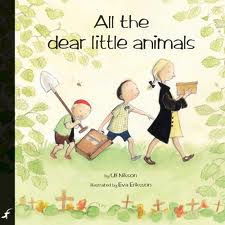
This book is about three children: Esther, the boy who is our narrator and Esther’s little brother Puttie. One day the children have nothing to do and were looking for some fun. Esther finds a dead bee and decides to dig it a little grave. Our narrator confesses that he is afraid of everything, especially of dying but after a few disparaging comments from Esther, decides that he can write things, like about how horrible death is. Off they go, shovel, poem and little coffin in hand to bury the bee. “Poor little bee”, says Esther, “but life must go on.” Then a plan hatches. There must be dead things everywhere – shouldn’t they find these things and bury them all?  Esther decides that this is the unselfish thing to do. Some students thought this was a terrible idea but Alyson’s comment got them thinking: “If you’re dead, do you want someone to bury you and pray for you? Or just be left there?” We all thought about that for a minute and continued on with the story.

The children’s idea grows into an idea for a business. They would call it Funerals Ltd. They would help all the poor dead animals on earth by giving them a funeral. Everyone had a role. Esther would dig the graves. The narrator would write the poems and Puttie, too little for anything else, would cry. They phone all of the neighbours and find a girl with a dead hamster. Esther’s father’s rooster needed to be buried. They found three dead fish in the freezer. (We suspected these were supposed to be dinner) Grandma gave them the mice from her mouse traps. They discovered a squashed hedgehog on the road. Esther was delighted. Then a huge hare. Many, many little graves, many poems. Esther admits the poems are actually quite good.

At this point, Ricky found the words to articulate that nagging feeling he had. “Actually, there’s something wrong here. When they find something dead, they’re happy. They’re supposed to be sad.”

When the children saw a blackbird hit a window and die, things seemed to change. The students noticed that the characters, especially Esther seemed really sad now. “Finally.” The blackbird funeral was their last that day.

The story ends with these words: The next day, we found something else to do. Something completely different. Making this experience seem very normal. Children exploring death and grief. A natural curiousity that brings on a range of emotions. Still a sad, sweet book, but normal.  Not too sentimental. Really, an amazing book.

My students had quiet reactions. “It’s a touching book.” “Emotional.” “Maybe they felt sadder when they actually saw it die?”

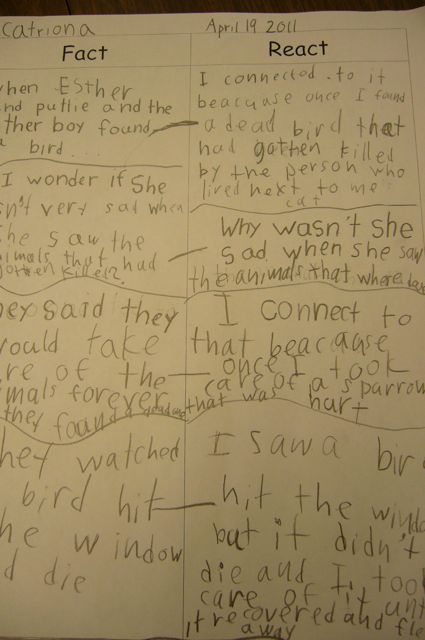
I let kids write about this book by choosing specific parts to respond to using a Fact/React sheet. On one side they recorded a story event and on the other, their connections, questions, thoughts.

Kevin shared:  Fact: They found a dead hare. React: But they were happy. But maybe they were sad inside.

Lisa wrote: Fact: Esther found a box. She put the bee inside the box. React: It’s a good idea to put it in a box.

Hajhare’s thoughts: Fact: In the story a rabbit died and I would be sad if something died, but these people are not sad. React: It reminds me of when a fly died and I wasn’t sad too because I hate flies and bees.

Annie shares: Fact: Esther saw a blackbird hit a window and it was dead. React: I was really sad when the bird was dead. Esther was sad too.
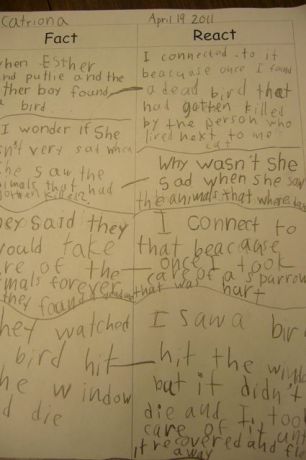
Catriona writes: Fact: They said they would take care of the animals forever when they found a dead one. React: I connect to that because once I took care of a sparrow that was hurt.

Eddy’s ideas: Fact: They found a dead rabbit on the road. React: Why did a rabbit die on a road?

When he shared this question, Catriona gently helped him to see how this could have happened. “A road. Cars go on the road. It was squished . . . .” “Oh.”

Jena‘s opinion: Fact: Puttie, Esther and a friend made graves, coffins and read poems. React: I think they were overdoing it a little too much.

I decided to read the next book because it explored all of the emotions around death and grief. This was something the students really discussed – noticing at times what they thought was the absence of emotions from the characters in All the dear little animals.

Remembering Crystal by Sebastian Loth is a beautiful little book that through simple text (only a sentence or two on each page) and powerful pictures addresses the range of emotions felt when a friend is gone. It celebrates friendship and explores all of the emotions felt in grief – denial, anger, helplessness, sadness and finally coming to a place of peace.
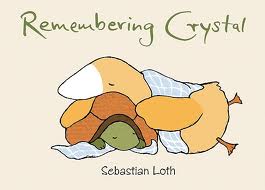
This book had everyone’s full attention from page one. Each time I read a page there was either a comment or some sort of audible response – “Whoa!” “Ahh!”  “Oh!” or an obvious silence as feelings sank in.

Zelda is a young goose and her best friend is an old turtle named Crystal. They do all sorts of things together. Read. Swim. Travel. Talk about everything from their fears to their dreams.  “They are really connected, ” comments Lisa. “Yes,” exclaims Catriona. “Literally on each other’s back!”

Then one day Crystal is not in the garden. The other geese explain to Zelda that Crystal had a long and happy life and it was time for her to die. Zelda won’t belive this. She thinks the geese are hiding Crystal and goes off in search of her. She looks everywhere and can’t find her friend. Then she starts to remember all of the things Crystal taught her – about music, art, the world. She returns home and goes to Crystal’s garden feeling very lonely and very sad. Finally, she accepts that Crystal is gone. She knows that she will always remember Crystal and wherever she goes, Crystal will be with her in her heart.

Students had things to say immediately.

“If one friend passes away, you can still have them in your heart,” Jena commented.

Catriona had a strong reaction, “Why would they put that in a kid’s book?”

Little conversations broke out all over the carpet. I just sat and listened.

Alyson, “But it’s actually kind of good.”

Catriona “Why are we reading about dead things?”

Sergio “We’ll all die.”

Catriona “You’re not old.”

Here I asked the question, “Why do you think this is in a children’s book? Let’s see if we can come up with the answer.”

Jena: “Because if someone in their family passes away, you can learn they are still with you.”

“It helps us think about it.”

Hajhare: “But it’s sad. I was actually going to cry Ms. Gelson.”

Ricky: “It’s like Toy Story 3. Andy gets older and won’t play with the toys anymore. Crystal gets older and leaves. Well, dies.”

“Yeah. It’s like that with life.”

We continued a conversation for a little while realizing that these books do help us think about how it feels when someone dies and also help us by showing us how people might grieve. Although it might have at first seemed strange to discuss this topic, we all kind of felt calm at the end. Calm and okay.

Reach for these books that deal with death when the need is pressing but don’t be afraid to read them at other times so that children have a chance to explore and discuss these feelings and emotions when they aren’t overwhelmed by their own sadness.

Bird Child

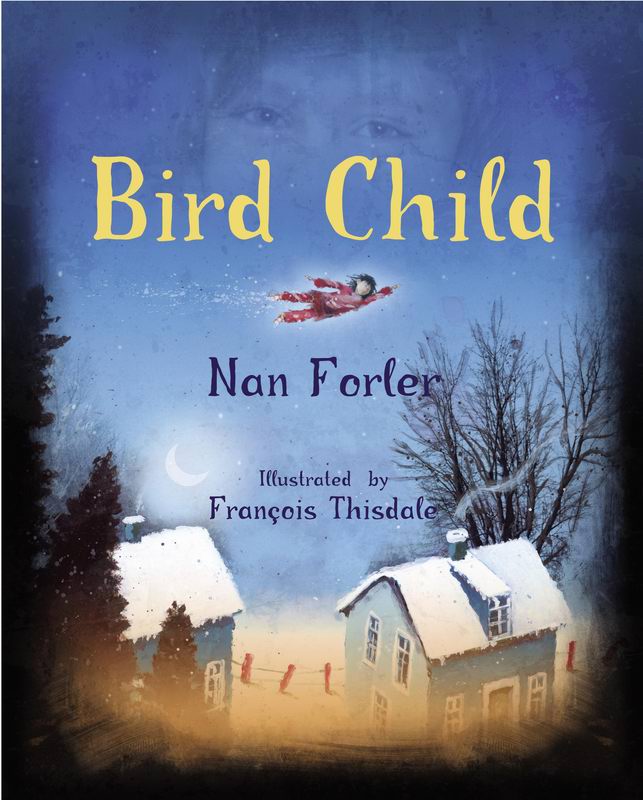
Today we read Bird Child by Canadian teacher, parent and writer Nan Forler. I came across this book at the public library and was thrilled to discover that it also touched on the active role of the bystander in the bully/bullied/bystander dynamic. We have been talking about this topic a lot using  powerful literature to inspire our discussion.

bird-2

Eliza is a tiny girl – skin and bones with hair as black as a raven. She was raised in a very special way – she was taught to fly. Wow! There were hands in the air instantly.”Is this true?” “Really?” When I asked the students what they thought, I got some very interesting answers:

Alyson: “It said her hair was black like a raven so maybe she got that skill from birds.”

Kevin: “Maybe she can fly because her bones are hollow.”

Hajhare: “Maybe she can turn back and forth between a bird and an animal like Eagle Boy.” (We have been reading a lot of Aboriginal literature lately with this theme)

I suggested that maybe the author was implying that she could fly in her mind. “Oh like visualizing,” said Kevin. “Yeah, she means it like an expression,” Ricky agreed. As we read further, we hear the words that Eliza’s mother always tells her, “Look down and see what is. Now, look up and see what can be.” Thoughtful words to always encourage Eliza to focus on possibility and with a positive perspective, to take an active role in changing situations to make them better.

A new girl, Lainey, starts school and rides the bus each day with Eliza. Lainey quickly becomes the target of teasing and exclusion. My students explored reasons that she might be bullied: Were others jealous of her beautiful drawings? Her hair?Are they making fun of her because she is new? Because of what she wears? Why are they so mean?

Soon the teasing escalates to stealing Lainey’s hat and burying it in the snow. A boy smushes snow into her face “wiping away what was left of the smile she’d had on her first day of school.” Silence in my classroom. Silence in the story. “Eliza said nothing. She stood like a statue her boots sinking deeper and deeper into the snow, her voice dry as a mouthful of wool. and watched it happen.” Such a heavy emotional scene. Illustrator Francois Thisdale makes the mood even more sad and somber with the smirking children laughing at Lainey, frozen Eliza in the background and Lainey with her eyes squished shut all alone in the wintery schoolyard with the barren trees and a pink skyline behind. There was a little bit more silence in my class and then the “Oh! Oh! Oh!’s and the waving hands started. We had things to say about this.

Jena: “Eliza is like a bystander and kind of like bullying her too. If she doesn’t tell, the bullying won’t stop. It’s like the Juice Box Bully.”

Alyson: “Eliza should stand up for Lainey.”

Lisa: “Eliza might be worried – that people would think she was a tattler.”

Miami: “This is like something that happened to me. My Grandma fell and people just walked by her. Nobody helped. Two men were sitting on a bench and they just kept sitting. I felt so bad.”

Children see everything we do and everything we don’t do. Sometimes it is not so much our actions but when we fail to act that haunts us. Eliza felt shame. She told her Mom everything and her Mom listened. “It sounds like Lainey needs someone to help her fly.” Eliza knew what she had to do. Alyson commented thoughtfully, “Maybe flying means helping her get through it.”

The next time Lainey is bullied, Eliza acts. She “reached down inside herself and found her wings” When she shouts at a boy to return Lainey’s hat, other children join in “Yeah give it back.” The bullies’ power bubble is popped and they walk away.

Scott: “She’s taking care of Lainey now.”

Miami: “You know what I think? I think she couldn’t stand watching her be bullied anymore so she just yelled.”

Jena: “Maybe Eliza did that thing – you know, putting herself in her shoes?”

Lisa: “It’s like the Juice Box Bully – maybe they will have a rule, that everyone needs to help others.”

Alyson: “Oh I know! It’s like a chain reaction – helping it to stop, standing up.”

Kevin: “It’s like that dance we saw on the movie at Pink Day (referring to the flash mob anti bullying video)

In the end, Eliza and Lainey play together building a snow castle to the sky. I ask: Why do you think this book was witten?

Ricky: “It’s a lesson to stand up for each other!”

Alyson: “Don’t be a bystander! Just stand up!”

Emilio: “Probably they made this book so people won’t copy other bullies and be mean.”

Bird Child: so much beautiful writing and visually, it is absolutely gorgeous. This book should have a special place on the shelf in every school library and should be read and discussed with students again and again. There are not enough picture books that so thoughtfully explore the active role of the bystander in changing the way a bully might act and the way a peer is treated.