Cottonwool Colin – a lesson for Moms

The fabulous team of Jeanne Willis and Tony Ross have brought us a fantastic story to read to our Moms! Yep, our Moms. By the time we finished laughing and gasping through Cottonwool Colin, the consensus was – this is a book for Moms!
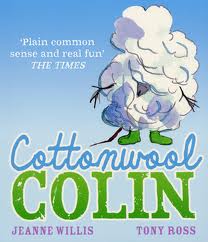
This book is all about tiny mouse Colin Smally, the youngest and smallest of ten mouse siblings. So small that his Mom only agrees to allow him outside into the great big world if she can wrap him in cottonwool. Now he would be safe from the elements, from falling, or worse, having something landing on him! All would be well. But when Colin (wrapped in cotton) gets mistaken for a snowball and tossed into a freezing river, everything suddenly seems very dangerous. And it is – he is chased and needs to swim to escape and then chased again . . .

When Colin, (sans cottonwool) ends up back at his mouse cave, his mother is very upset.

“Colin, ” she shrieked. “Anything could have happened to you!

Everything did happen to me, ” he whooped.

Colin’s Mom begins to grant him more freedom to explore the world. And Colin ventures out ready for many more adventures (the fear, the hurt, the risks?  All worth it!!)

So I asked our listeners: “So, what do we think?”

Lisa: “His Mom learned a lesson. His Mom should not worry so much and let him play.”

Oh yes, without hesitation we agreed! “Don’t be scared Moms!” ‘Don’t be too worried!” “Let it go!” “Let them have fun.” “Don’t keep your kids right with you.”

Jena: “Trust them because one day they’ll get older and they won’t know how to take care of themselves.”

Lisa: “Yeah. Kids need to go around in the world to know what’s out there.”

“My mom doesn’t need that book though,” said Scott. “Because I’m bigger than a mouse.” 🙂

I am a teacher but I am also a Mom and I have to admit that, like Colin, my students are probably smarter than me on this one! Breathe, let it go, don’t worry so much . . .
Selecting Picture books to read

Students in our morning reading group continue selecting books based on their background knowledge (schema) – realizing that they will have a better chance of connecting to a book when they have some shared experiences with the theme/topic of the book.

Students quickly selected three books from a huge selection of picture books. Then they ordered their choices #1, #2, #3 . Why did they choose the book they did as their first choice? After reading, students then shared any text to self or text to text connections.

Some book selections:

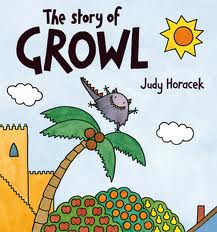
Gary chose The story of GROWL by Judy Horacek. Why was this his first choice? “Sometimes I growl when I’m angry. It makes me feel like a monster.”

After reading the book, did he have any connections?

“I used to hop, skip and jump around my garden. Sometimes I growl for fun. My Dad told me to stop growling because it’s loud. But I still was growling! I stopped one day.”

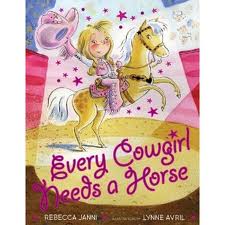
Lisa read Every Cowgirl Needs a Horse by Rebecca Janni. Why was this her first choice? “I know that if a horse wants to say hi, they rub their noses together. I learned that in a chapter book.”

After reading, what were her connections?

It was easy to connect to this book because at home when I’m riding my bike, I reel like I’m riding a horse with the wind blowing in my hair like the girl in the story.”

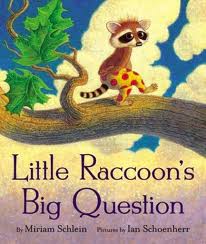
Jenny chose to read Little Raccoon’s Big Question written by Miriam Schlien and illustrated by Ian Schoenherr. This book is all about a little raccoon wanting reassurance about his mother’s love. Jenny chose to read it because: “When I was little I saw a raccoon.  I know a lot about what raccoons do and they are one of my favourite animals.”

Her connections were about much more than what she knows about raccoons.

“When I was little I was thinking how much my mom loves me most. I was thinking does she love me when I eat, sleep or play with her.”

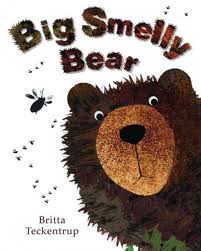
Josiah picked the book Big Smelly Bear by Britta Teckentrup. Why was this his first choice? “Everytime I go to my Mom’s home town, I always see bears and flies buzzing around.”

After reading, what connections did he have?

“When the big fluffy bear scratched the big smelly bear, I connected to it because I always see bears scratching trees and each other on the way to my Mom’s hometown Port Hardy. It is so fun there because I see my uncles, aunties and the big bears.”

Isn’t it great that there are so many picture books out there to interest everyone?


So few of me

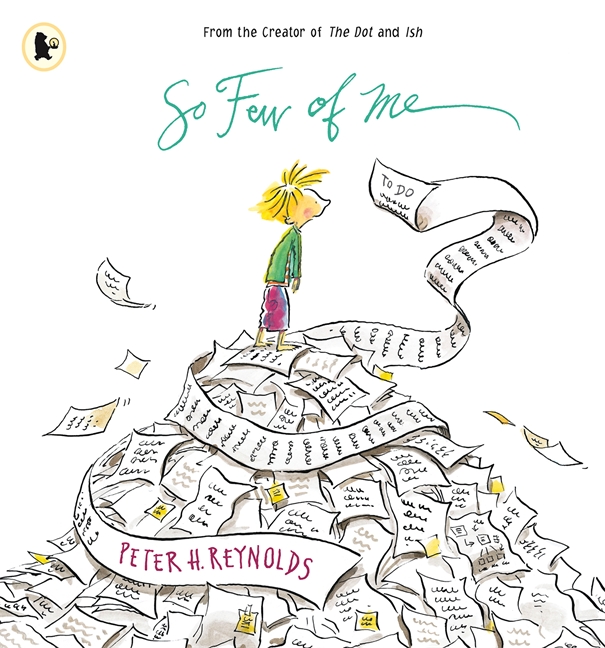
Oh – the never ending to do list! The reader doesn’t need to move past the inside cover and the overwhelming feeling sets in – that big long list that never ever seems to get shorter . . . The one here has some doozies on it – fix leaks, go to dentist, wash the windows, put dishes away, cancel Saturday (??!) Sigh, aren’t you tired already? And then we meet Leo. Leo has that problem that many of us share – no matter how hard he worked, there was always more to do. As his list expanded, he wished there were two of him to better handle things. And poof! There were.

When Leo opened the door and found “another him” we were pretty impressed in Division 5. “Awesome!” “Is that his clone?” “Wha. . . he must be dreaming!” “It’s fiction!” “Yep, it’s a book.”

(Now, this is the one time I don’t need to wish there were more of me. When responding to books – my students have it covered – they have the most brilliant things to say. I just need to do my part and read!)

The strange thing is two Leos doesn’t seem to make it better, there just seems more to do. So what about three? Four? Five? As more Leos come on the scene, the workload seems to increase. Hmm . . . of course! More people means more laundry, more cleaning, more organizing, more strategizing about being better organized. By the time nine Leos arrived on the scene, I had students with their mouths hanging open in amazement.

“This is soo fiction!” someone exclaimed. (Were we believing it up to this point?)

Ten Leos on the scene. Cooking, list making, brewing tea, grocery shopping, sweeping, climbing ladders, it doesn’t stop.

One student got that hold on here look suddenly, “Wait! Wouldn’t a Mom do this stuff?”

I was about to retort, “Hey, are you kidding with ten kids? No way.” But then I realized that this child comes from a family with children in the double digits! And he is asking that question? Oh poor Mom!

“Hey, if there’s more of you, you can’t get smarter!” someone ( quite a smart someone, I might add) shouted.

The last pages show us a lesson that so many of us keep forgetting. Do less. Leave time to dream. You really can’t do it all, so pick and choose and do what you love really well!

A lovely excuse to ignore the laundry pile and go read a book. Thank you Peter H. Reynolds!

Gilbert the Hero

Deborah, our BLG reader this week, read us Gilbert the Hero – a sweet little story exploring sibling dynamics, written by Jane Clarke and illustrated by Charles Fuge.

Having to look after his little brother Finn is a real nuisance for Gilbert the shark. Finn is too small for everything! Too light to weigh down the sea-saw (an  old oar). Too small to leap out of the water without “splash” landing. Too tiny to flick the sea urchin for a game of finball. Just a bother. So Gilbert and his friends decide to put Finn in a seaweed swing and play their own adventurous games. Oh . . . don’t you just know this is going to lead to something bad? A student piped up, “Remember at the beginning – the Mom said don’t leave your little brother!”

When a large orca bursts out of nowhere with a mouth full of fish, Gilbert realizes that Finn is vulnerable. Instantly, he is a protective older brother zooming into action – reminding us that underneath all of that sibling rivalry, the connections are strong!

Our student reviewers report:

Eddy: I liked the part when Gilbert and Finn were playing on the sea saw and Gilbert hit the ground because he was big and heavy.

Kevin: I was scared when orcas came. I was afraid if the orca will eat Finn up.

Annie: It was scary when the orca was about to eat the baby shark who was strapped on a swing but Gilbert saved him. I was relieved.


Off along the road to learn

It’s been a two week break and we will all return to school tomorrow ready again – to learn. A perfect evening to read John Burningham’s John Patrick Norman McHennessy – the boy who was always late. This book has been a favourite of mine for many years and every time I read it again, it establishes itself as one of the best books ever (according to my list!)

The premise of this book is a simple one: John Patrick Norman McHennessy is often very late for school and his teacher never ever believes the reasons (dramatic as they are) that explain his tardiness.  The teacher gets quite distraught – shouting, becoming red in the face, leaping about as he doles out ridiculous punishments. Standing in the corner. Writing out lines. Repeating “I must not tell lies about. . . ” On and on. Finally, when John Patrick manages to arrive on time, his teacher is being held up on the roof by a big hairy gorilla. Hmm . . .

I must not . . . .

Lines, lines and more lines. This must be the answer for deceptive little boys with overactive imaginations! What I love about this book is that it is not actually simple at all. What a delightful boy to come to school each day with stories of trouser tearing lions, sweep you off your feet tidal waves and crocodiles who play tug of war with your school satchel. And yet, he is punished day after day after day.

But, each morning he gets up and sets off on the road to learn. What exactly is he learning, one might ask?

On the road to learn. . .

I look forward to third term in the classroom. Celebrating imaginations. Inspiring ideas. Thinking outside of the box! Off along the road to learn!

Storm Boy

Ms. Hong (now at Strathcona Library) recommended this title when our reading group started reading Aboriginal Literature. Storm Boy by Paul Owen Lewis is a definite favourite that sparked lots of discussion, questions and great writing.

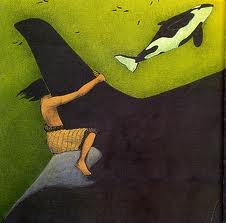
We loved how this book was so mysterious. We had as many questions at the end as we did throughout the pages, yet we seemed to know something more. Such a visually powerful book that has won many awards including Best Book of the Year from the Pacific Northwest Book Award. Storm Boy introduces us to the Killer Whale people who seem to inhabit an undersea world. This book follows the tradition of the people of the Pacific Northwest Coast (Haida, Tlingit and others). Stories from this area tell of individuals in parallel worlds where animals seem to live in human form.

I provided some sentence starts to assist students in organizing their written responses. We had such a dramatic story to respond to!

  • I was impressed when . . .
  • I was shocked by . . .
  • I am still wondering . . .
  • It was incredible when . . .

Some excerpts from out written responses that needs to be shared:

Ricky: I was shocked when I saw the boy get carried by a storm. Then he was in a nation’s island. There were four killer whales. The chief one was big. They ate fish that weren’t cooked or cut. The killer whales could talk. Then the boy missed his original home. I was surprised because the killer whales knew that he missed his home.

Gary: I was impressed when he went on the whale to get back home and when he got back, his Mom said: “You’ve been gone a year!” Then they celebrated because of his return.

Catriona: I am still wondering if time goes slower in the Killer Whale people’s village.

Truman: I am wondering if the chief’s son can turn into an orca whale because he went to the orca people’s place

Storm Boy by Jenny

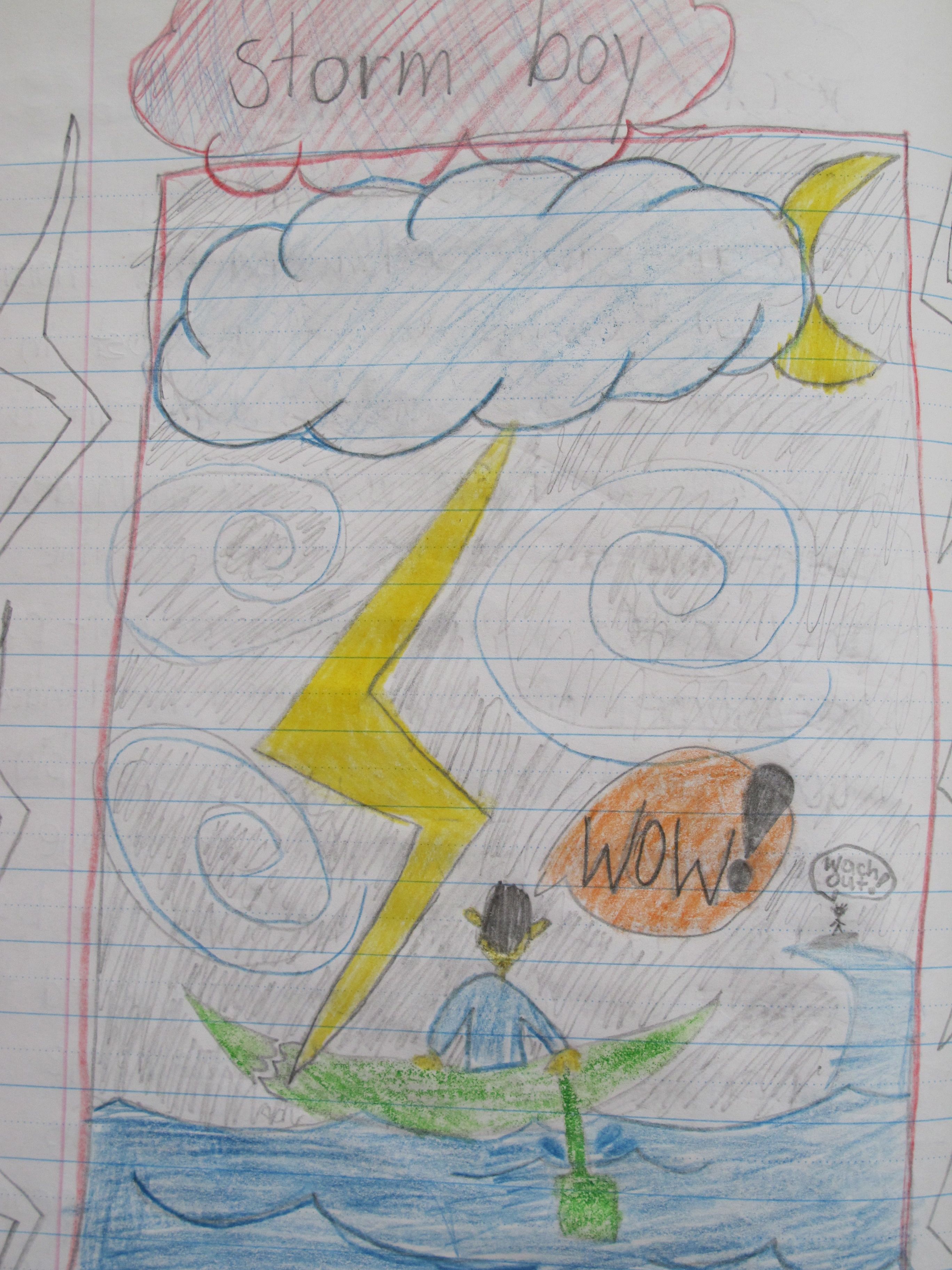
Jenny was inspired to draw this gorgeous picture.

She writes: “There was a boy that went fishing and then a storm came and hitted the boy and he got pushed away from his village. He landed in another village and he saw big people. They invited the boy and they danced around the fire and did their welcome song. Then the boy missed his mom and dad and the big people made the boy appear back in his village.”

Albert

Last night I read a really wonderful picture book to my children: Albert, written by Donna Jo Napoli (her first picture book after many award winning novels including one of my favourites The Prince of the Pond and illustrated by Jim La Marche.

Albert is an interesting man. Everyday, he eats his breakfast, reads the comics, gets dressed and thinks about going outside. Everyday, something convinces him it is not the day to venture out. It might be the damp weather. It might be the noises – the not good noises like arguing or rumbling garbage trucks. If we really want to call it, I think Albert experiences some quite serious anxiety about the outside world. Not an easy place to be.

The lovely thing about this book is that Napoli arranges the outside world to come to Albert.  In the form of a twig, that becomes a nest, that hosts little eggs and a perching cardinal all on his outstretched hand. For Albert, who finds the outside world too overwhelming, he is gently (but insistently) forced to get one foot firmly planted on the ground – in the form of a hand carefully suspended in the air. Albert keeps his hand with a bird’s nest on it stretched outside his window because . . .  how can he not? For days and days. Really! Of course my adult brain wonders how does he go to the bathroom? How does he not drop the nest when sleeping? How does he survive without food or drink? (This is addressed actually when father bird starts dropping berries in his mouth) My children though just got caught up in the magic of it. “He’s so kind!” my son exclaims. My daughter is a little worried. “Mama, Albert doesn’t have a job. How can he get money?”

In the end, the birds fly away and Albert who has been interacting (through the birds) with the outside world realizes that the world is a wonderful place – full of all kinds of noises and experiences. He puts on his hat and goes for a walk.

I asked: “What do you think the birds taught him?”

My daughter had lots to say: “Helping others helps youYou should go outside and fly your heart away!”

Yes, indeed.

Greetings from Nowhere

I love novels by Barbara O’Connor. How to Steal a Dog made my Top 10 Read Alouds list. And I am longing to read her newest: The Fantastic Secret of Owen Jester Now, that I’ve discovered her blog, I adore her all the more!

I picked up Greetings from Nowhere at the library the other day and read it in one luxurious sit down and read session.

Greetings from Nowhere

This book is about many things. Struggling parent/child relationships (Kirby and his Mom & Willow and her Dad) Moving on and letting go (Willow, Aggie, Clyde) Yearning for loved ones away or never really known (Willow’s Mom, Loretta’s Other Mother) Change (new homes, new schools, new lives) Memories. Love. So many things in such a well told story.

For me, what this book was about was something more – something related to the spilling your secrets to a stranger on the plane syndrome and then feeling in a tiny cramped space above the clouds like you have found a new friend. This book is all about how we are always collecting friendships. That a shared history is not necessary when things in common will do. Things like hard times, pinned hope, worry . . . The sharing of stories and the working towards one goal (fixing up the motel) forms new bonds and a connectedness that forms quick and solid.

I love the significance of the Great Smoky Mountains in this story. Many things can be lost and found, packed and revisited but these mountains are a constant. I also love Willow’s thinking on page 189 – how she gets to the place of knowing how to ask her Dad if Aggie can stay. So much love in the last bit of her plea “And Harold is in the tomato garden!”

Yes, this book is a work of fiction for children. And yes, I can’t wait to read this to a class of students but this book can have such a wide audience. My Mom would love this book. Because the friendships span generations, it is widely appealing.

Friends are where you find them and family is how you make it. Thank you Barbara O’Connor for delivering us this message in such a lovely book.

Last Night’s Story

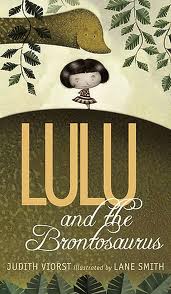
You know a book is an ideal read aloud when the reactions to it are as amusing as the story itself. Last night I read my children (8 years old x 2) Lulu and the Brontosaurus written by Judith Viorst and illustrated by Lane Smith. They easily could have read this book themselves but this book shines as a shared read aloud experience.

Judith Viorst writes books where characters have a very appealing voice – connectable, frank, amusing. In this book, it is not the main character Lulu that has the powerful voice (although her screeches are pretty loud) but rather the narrator, Viorst herself. As author of the book, she has taken certain liberties – yes, she knows that Lulu, a human girl couldn’t possibly go out into the forest to find a dinosaur (especially a brontosaurus that technically didn’t even ever exist as it has been renamed the apatosarus) but this is her story, so that’s just how it is going to be. Lulu decides that she wants a brontosaurus and when her parents refuse to give in (a rarity in and of itself) to her tantrums and pleas, she marches into the forest, with her small suitcase to find one herself.

Accompanying her are her Don’t mess with me attitude and her theme song:

I’m gonna, I’m gonna, I’m gonna, gonna get A bronto-bronto-bronto Brontosaurua for a pet. I’m gonna, I’m gonna, I’m gonna, gonna get A bronto-bronto-bronto Brontosaurua for a pet.

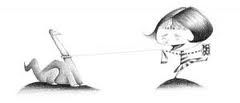
I got it! A brontosaurus!

Lulu faces down huge snakes, ferocious tigers and grumpy bears. She is a girl on a mission. She is going to find a brontosaurus. She trudges on, frequently singing her song until sleep overtakes her. After hearing this song about three times, my children leaped out of bed, grabbed board games off the shelf as make shift suitcases and marched around the room chanting “I’m gonna, I’m gonna, I’m gonna, gonna get A bronto-bronto-bronto Brontosaurua for a pet. . . ” Maybe not the best book to be reading before bed? More inspiring than calming!

When Lulu awakes, it is to a tree trunk with toes. A brontosaurus! The answer to her dreams. But it turns out, actually not! This brontosaurus is not going to take no for an answer to his dream – He wants Lulu for his pet! Pages and pages pass. He is not changing his mind. Lulu has no choice – she runs away! She makes her way back through the forest, encountering those very same creatures she challenged along the way. Something in Lulu seems to have changed. She has new strategies. Gift giving. Complimenting. Saying please! Lulu?! I won’t give any more of the story away. It’s hard to tell it to its end anyway because there are actually three endings to choose from. Depending on your style and your story ending needs. (We were unanimous – ending three got our vote) Very considerate of Ms. Viorst!

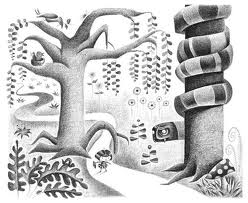
Lulu encountered a snake

Lane Smith, is the author/illustrator or illustrator of many books. His art is unique. Quirky. Odd. Eerie. Hilarious. In this book, the drawings are done in pencil on pastel paper. Amazing shading. So much mood conveyed without a hint of colour. We loved Lulu in her stripy dress, her persnickety pout, her sleek little bob. . . This book is a visual treat, strangely shaped – long and narrow and polka dotted new chapter pages. Never too much text on a page. A book you want to own. And treasure.

When the book ended (at 113 pages, we were able to finish it in one sitting) My children were completely energized! “Awesome,” cried my daughter. “That book was all about friendship, good manners and how you don’t always get what you want.” “And Foo on you! ” squealed my son. (You will have to read the book to find out why this is absolutely hilarious to an eight year old!)

Love this book! Reading books by Judith Viorst is always a delightful experience.

What a beautiful world!

Spring! Finally! In Vancouver, spring sunshine is often chased away by rain showers so all the more reason to delve into books which help transport us into nature and wonder with just a flip of a page, a beautiful illustration or a perfect written image. We found three perfect books which do just this on our library visit Saturday.

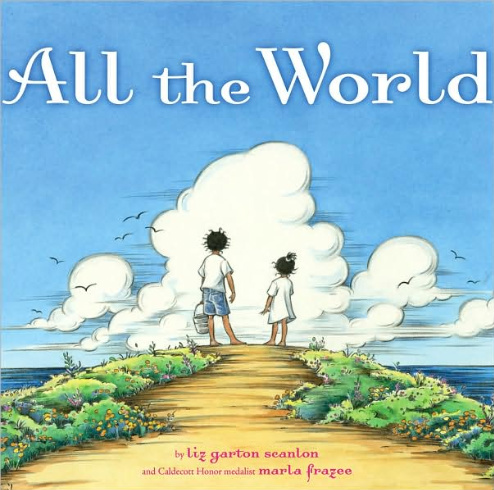
alltheworldcover-1-13

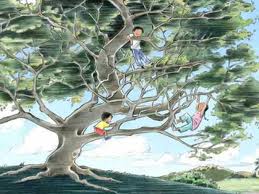
I adore this book. All the World is a Caldecott Honour Book illustrated by Marla Frazee and written by Liz Garton Scanton. Simple rhyming text pays tribute to the small simple things our world has to offer like a tomato blossom or a fire to take away a chill. But it also celebrates through Frazee’s absolutely gorgeous illustrations, the majestic purply sky at the edge of the ocean or a thunderous downpour that comes out of nowhere. The images are comforting, saturated with details and evoke our own memories attached to the experiences suggested by each picture. These pictures are so easy to connect to, I felt like I had taken a journey through some of my own most happiest of memories. Climbing a tree in childhood. Visiting a farmer’s market and eating plump berries with my children. Racing through a rainstorm on a summer’s day in search of shelter.

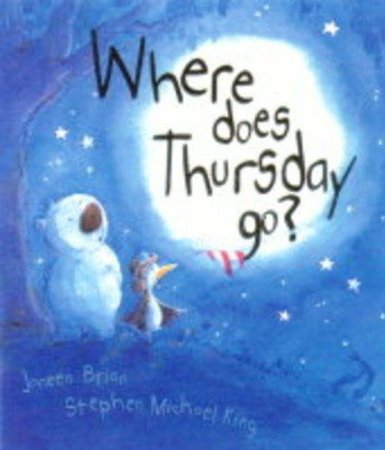
Janeen Brian and Stephen Michael King, the author and illustrator of Where does Thursday go? have created a lovely little tale of wonder and whimsy. An important question is posed, if Friday is coming, where does Thursday go? What happens to it during the night?

Where Thursday

Bruno doesn’t want his wonderful birthday day to end. He wants to say goodbye to it. He finds his friend Bert and they traipse through a blue star filled night looking for Thursday to say goodbye. When the moon rises up big, round and bright like Bruno’s birthday balloons, the two friends feel like they have found Thursday. They creep back into bed until the sun brings Friday. Sweet, illustrations on blue filled pages. Lovely. I especially like the image of the two friends on the beach at the edge of the sea where ocean and sky meet in swirly blues and whites.

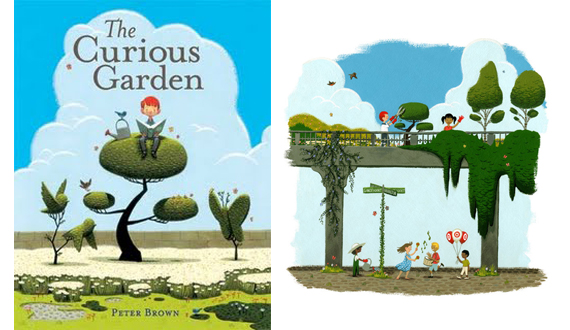
the_curious_gardenThis book appeals to the urgency I feel when spring flowers begin poking through the earth. Tend. Nurture. Clip back. Transplant. Compost. Appreciate. Wow, can I connect to the main character in this story who nurtures a struggling garden into a majestic green world.  Liam, the little boy in Peter Brown‘s The Curious Garden resides in a dreary city where everyone stays inside. Not Liam. On one of his rainy day walks he finds a few wildflowers and tiny plants on some abandoned railroad tracks. He cares for this garden over several seasons – appreciating its natural tendencies to spread and travel and helping it along a bit too (hooray for guerilla gardening). Years later he can appreciate an entire green city, tended by a multitude of gardeners.

Peter Brown includes an author’s note at the end of the story which explains his inspiration for the book.

Escape into Spring with a poking about walk to the library and discover all the places you can find signs of Spring.