Zoomer’s Summer Snowstorm

BLG readers are back!! Deborah was in today with a fun book – Zoomer’s Summer Snowstorm written and illustrated by Ned Young (who brought us Zoomer) Read more about Ned Young on his blog.

In this Zoomer adventure, our silly dog has a bit of a snow-cone machine mishap. As more and more “snow” flows from the machine, summer seems to turn to winter and the snow sculpting begins. Readers won’t believe their eyes!

Our student reviewers report:

Raymond: I like the castle because it is big and large. I like the train and the animals. I will build a large snowman!

Catriona: A very funny book. In the whole book it was bright, colourful and fun (though short).

Truman: I like the book because Zoomer made a big palace and made a wonderland.

Khai: I like the book because it was funny. The funniest part was when the machine exploded!

Little buddies and big smiles

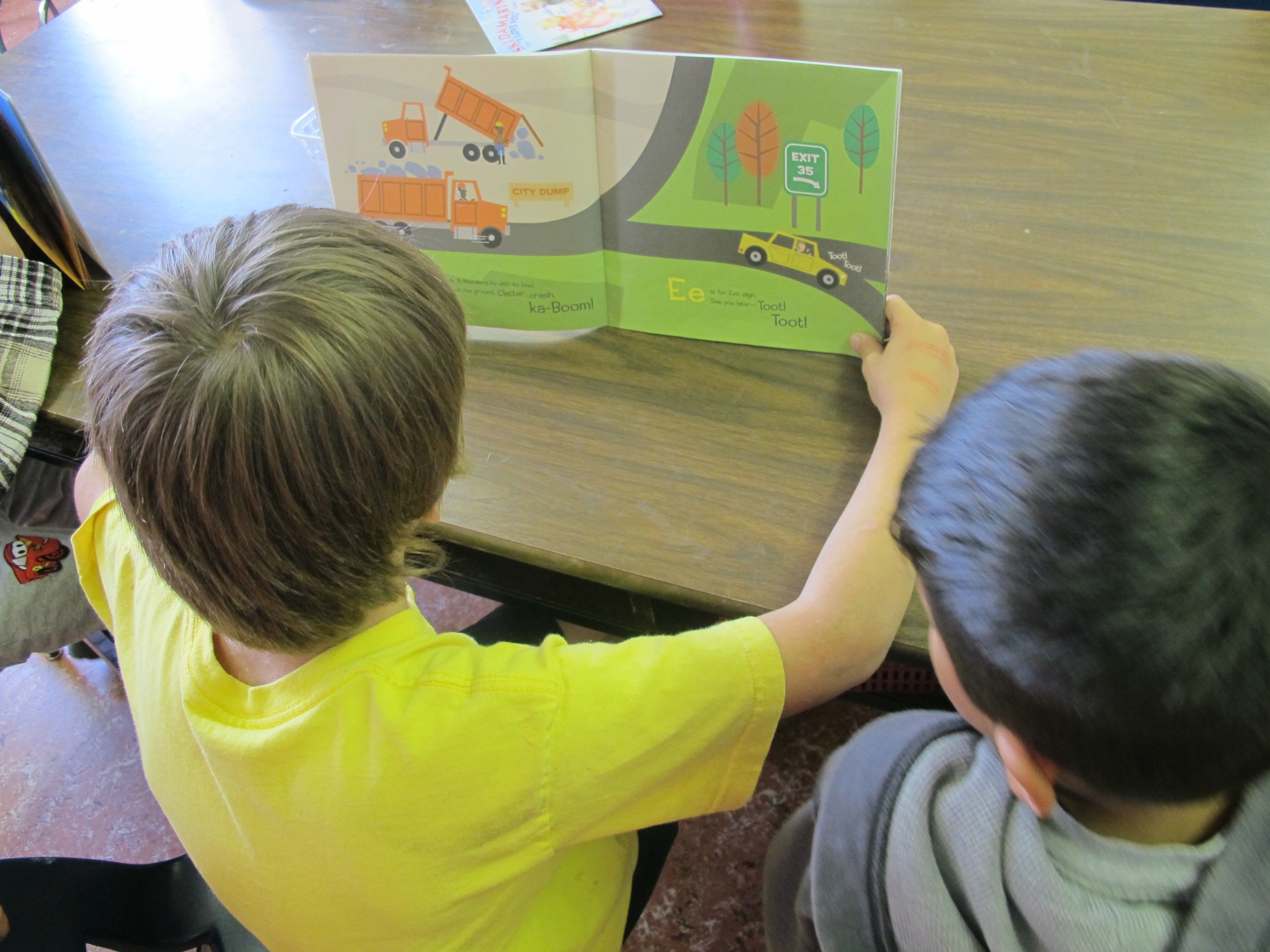
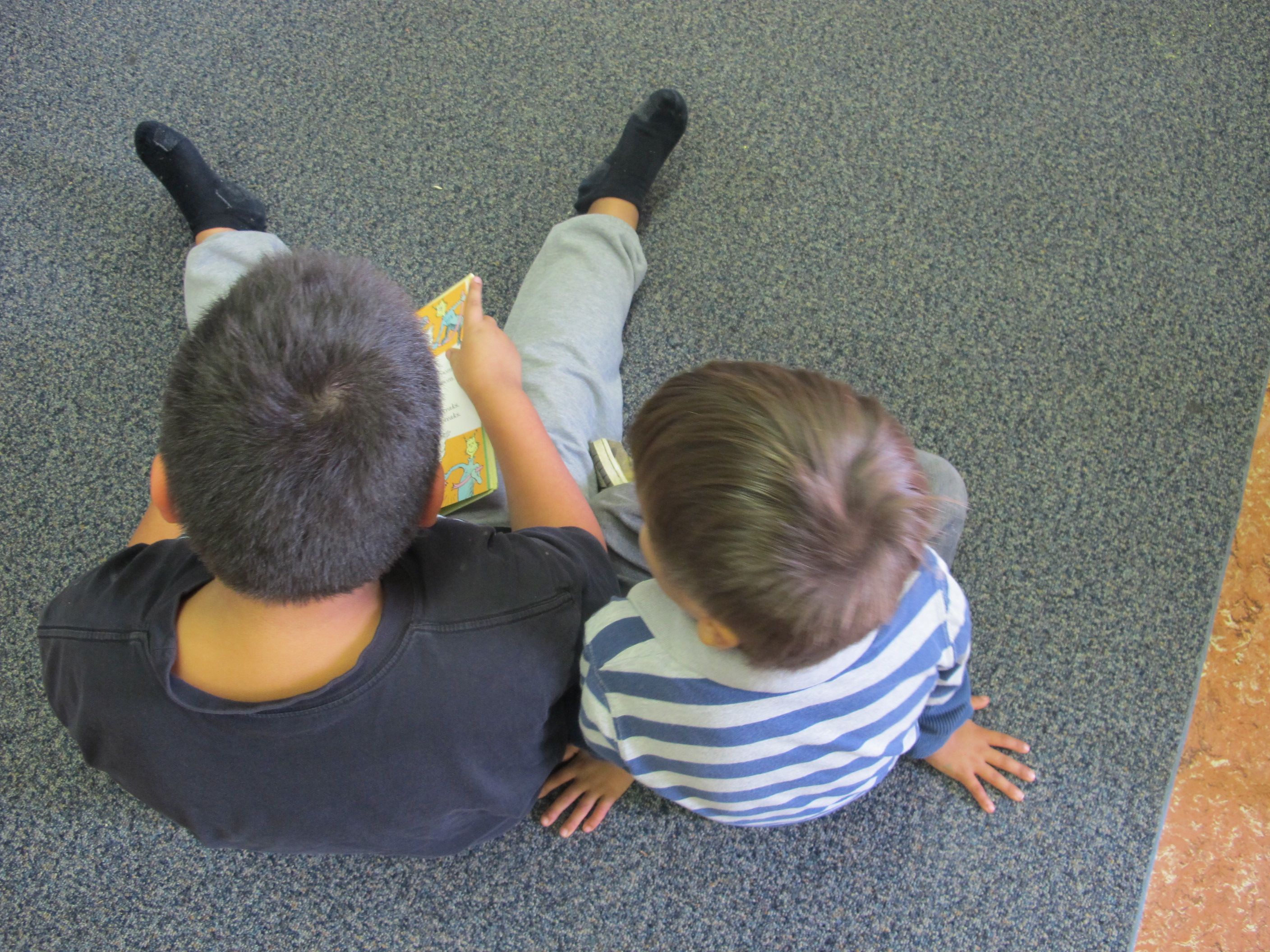
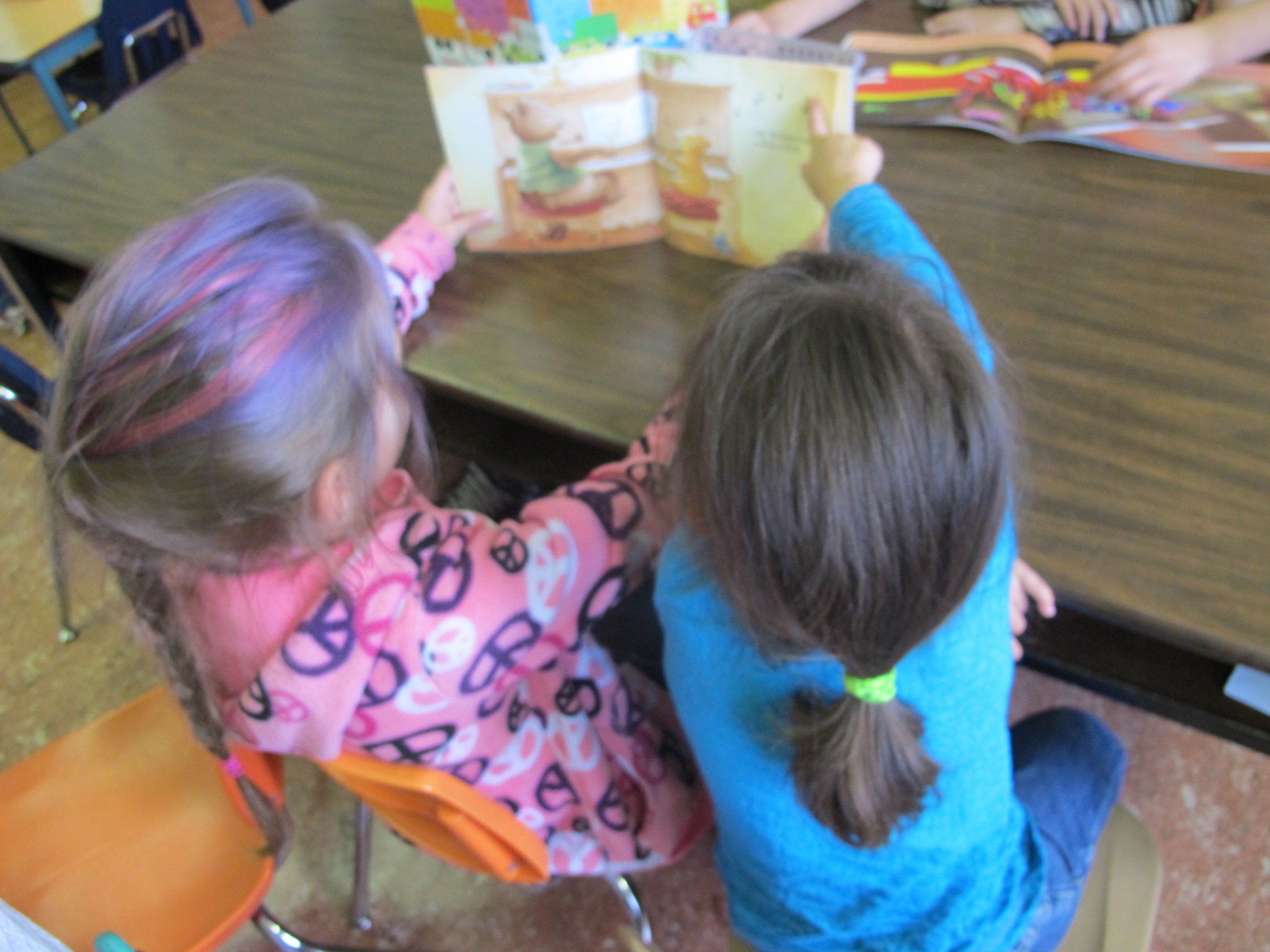
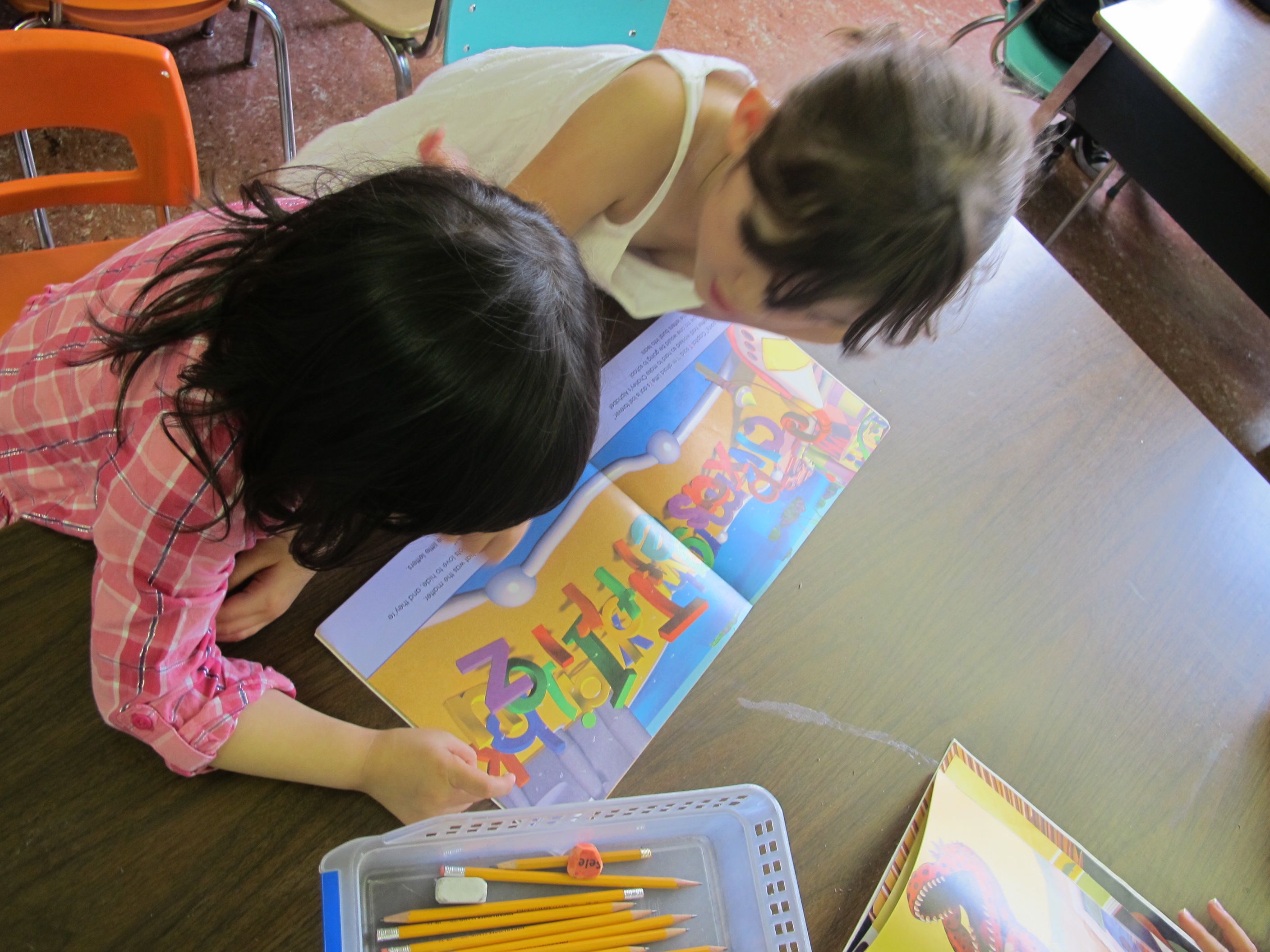
Today we invited our little buddies in K/1 up for some actual book sharing! We read favourites like:

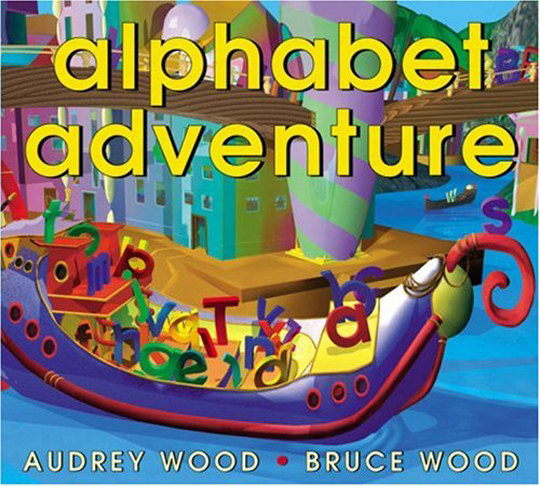
Alphabet Adventure by Audrey and Bruce Wood

alphabet-adventure-image


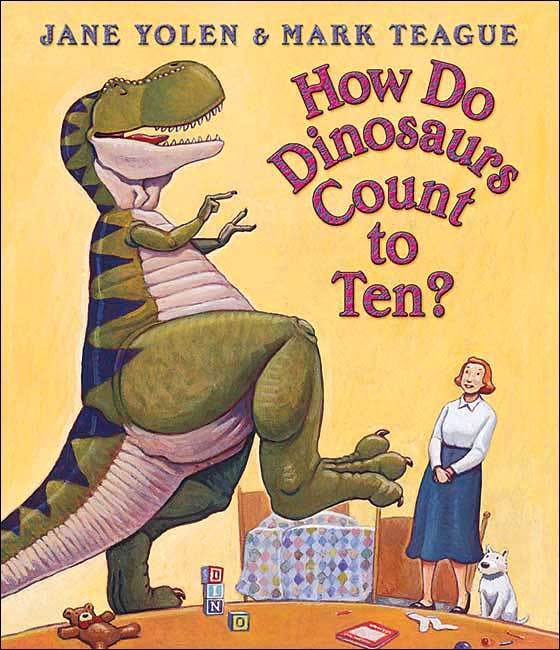
How do Dinosaurs Count to Ten by Jane Yolen and Mark Teague

how-do-dinosaurs-count-to-tenjpg-e03137f9d5e4bf21

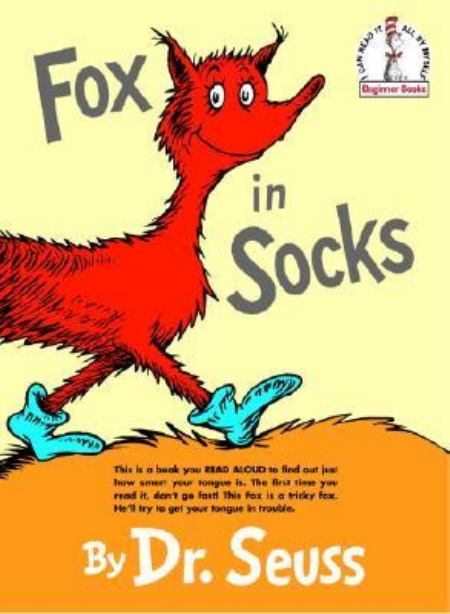
Fox in Socks by Dr. Seuss

fox2

The engagement, the smiles and the chattering said it all! What a fun experience! We can’t wait until next week 🙂

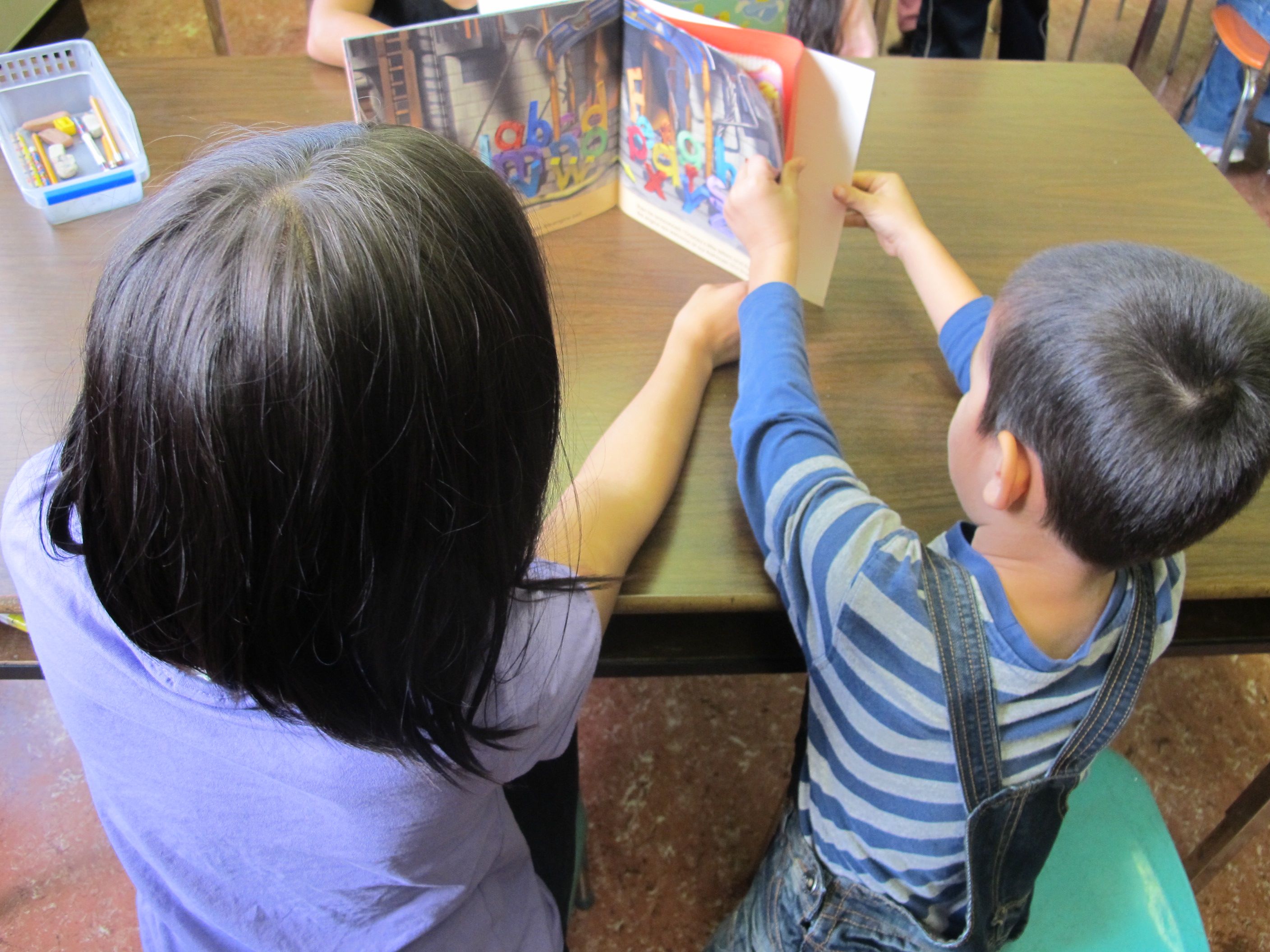
Reading an alphabet adventure story.

IMG_1204

Reading about dump trucks and zooming cars.

IMG_1208

A quiet few minutes on the carpet

IMG_1220

Time to stop and discuss what is happening.

IMG_1218

Searching for letters!

IMG_1221

Great writers read (and take some inspiration!)

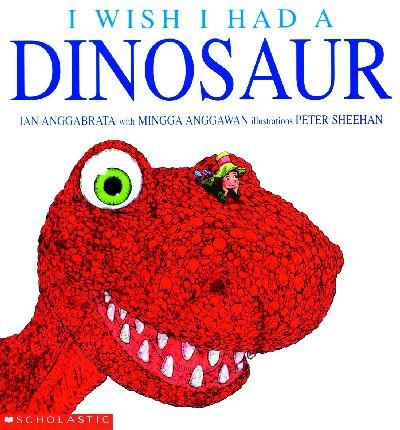
Today we read I wish I had a Dinosaur. This little title written by Ian Anggabrata (with Mingga Anggawan) and illustrated by Peter Sheehan provided lots of inspiration.

i-wish-i-had-a-dinosaur

It begins simply: I wish I had a dinosaur and goes on to tell us all of the ways life might be changed if a dino really did take up residence. A dino could make you braver, stronger and faster. But would everything be perfect? Hmm. . .

We did some of our own writing in response to this book.

Khai wrote a mini story called I wish I had an Elephant.

My elephant could clean the house and my car. It could spray my garden so no more hose for me! It could guard my house. It could give me a ride to school. But he would go in the mud and get dirty and then I got to spend all my time giving it baths!

Catriona’s mini story was called I wish I had a Horse.

My horse could give me rides whenever I wanted. When I go to my aunt and uncle’s I ride horses. I could practice riding my horse. I could ride to school and I could have a lot of time on the playground. But I wouldn’t have anywhere to keep him. My backyard isn’t big enough and it would eat all the grass! I couldn’t keep it in the house – he would knock over everything over. And how would I feed it? I guess I won’t have a horse after all.

Kindergarten/Grade One Buddies

Well, well, well. We might not be that old yet ourselves in Grade 2/3 but we have little buddies! Ms. McFarlane brought her K/1 class up to our room today to see the class and share a story. This is the start of our weekly buddy reading time. How exciting!

Ms. Gelson read us Me Hungry! by Jeremy Tankard

This is a fabulous little book with very little text about a ravenous “cave boy” who decided to catch his own dinner when everyone was too busy to feed him. However, his prey aren’t all that keen on being eaten!

We shared some laughs today and lots of excitement about our future buddy reading.

Some different reactions from my class:

“You mean really we are going to be the BIG buddies?” (Yup!)

“But I can’t even really read.” (You know – not a problem – looking through a picture book and talking counts!)

Can’t wait for next week!

How to Teach a Slug to Read (and maybe improve your own skills in the process)

Do you know this book? How to Teach a Slug to Read by Susan Pearson and illustrated by David Slonim.
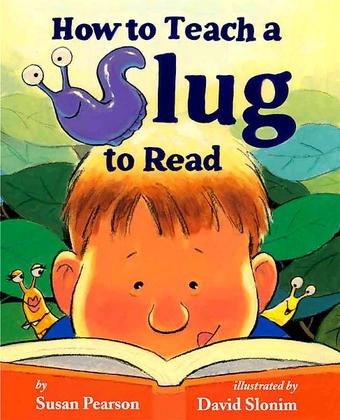
How to Teach a Slug to Read

Find a copy and appreciate. Ms. Sheperd-Dynes, Seymour’s Teacher-Librarian passed it on to me. I was delighted and knew it had to be shared and quick!

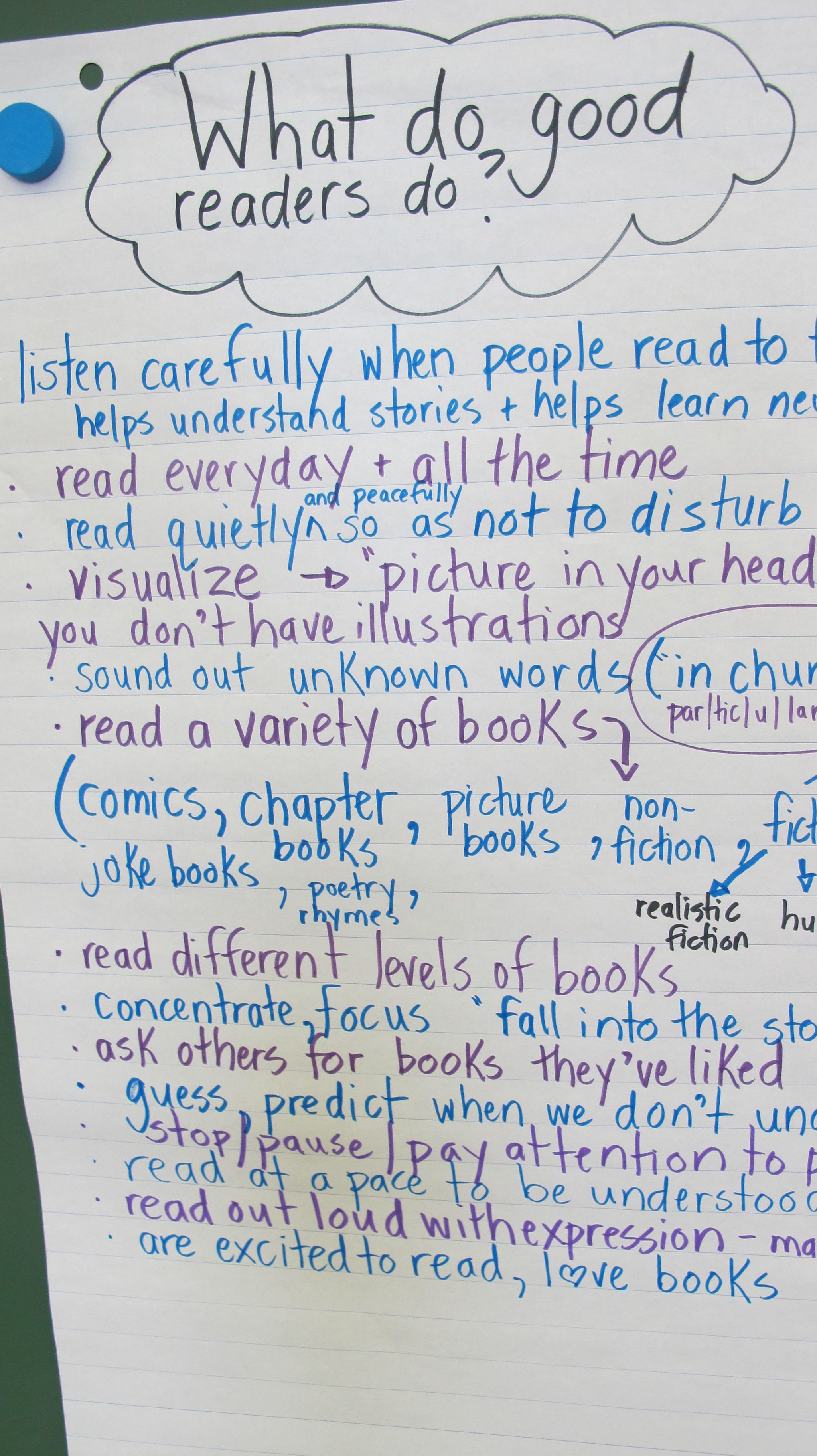
My reading group had been busy brainstorming a list about what good readers do. It is important to reflect on things we might not even be aware of but also, a good time to check in – are there things on the list I could be doing?
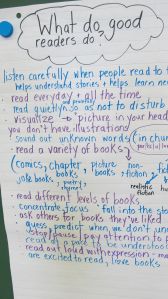
IMG_1072What do good readers do?

We certainly had some great ideas. I love that daily, enthusiastic reading made it on there.

Good readers love to read after all and the more they read, the better they get at it!!

We also knew that we needed to use a variety of strategies: sounding words out, visualizing, and paying attention to context clues. Good readers also read from a variety of levels and a variety of genres.

A balanced diet of books.

My daughter saw this list and had something to add: “Good readers feel the emotions of the characters so they can feel what the author wants them to feel.”

Yes, she’s brilliant.

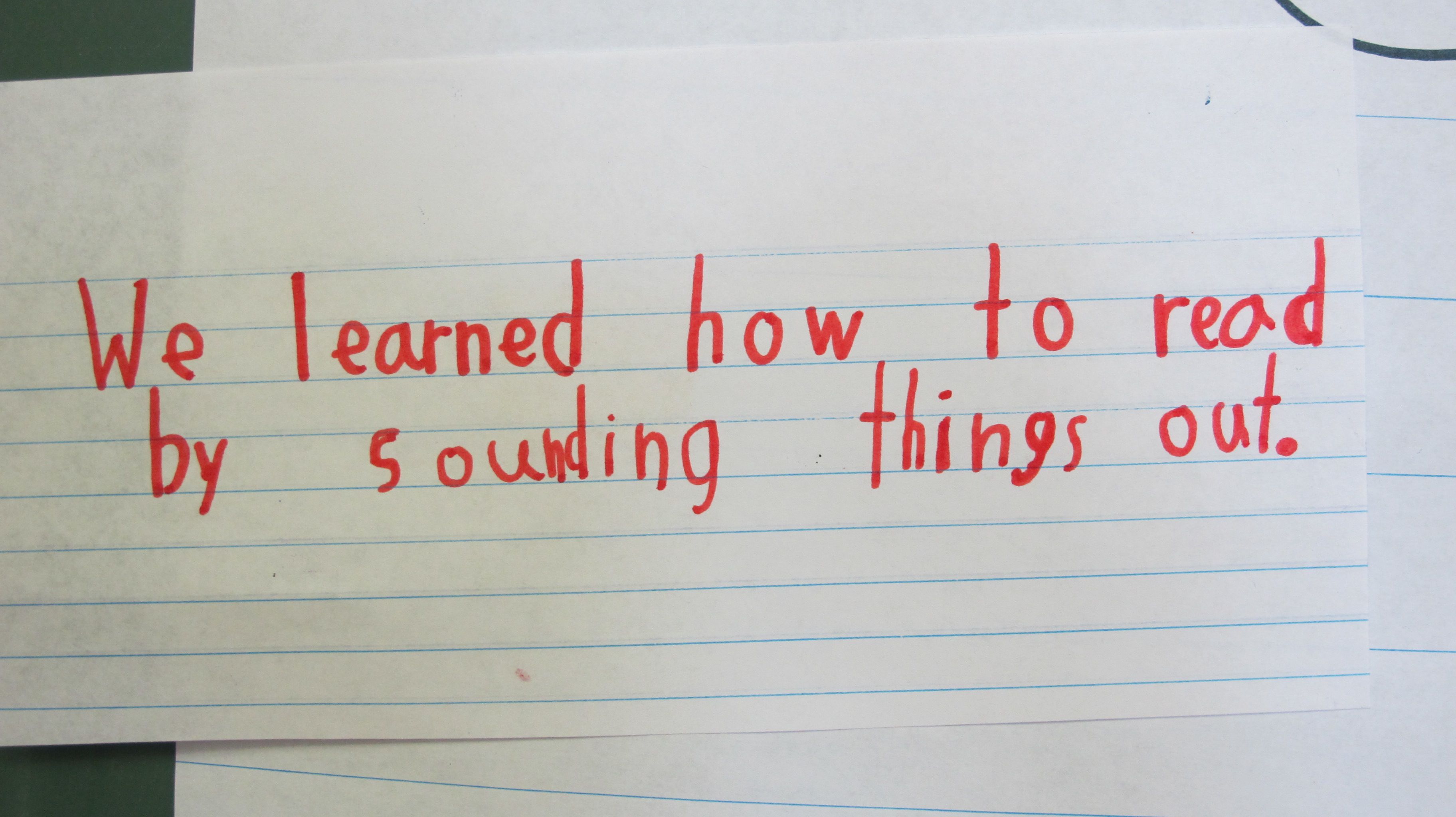
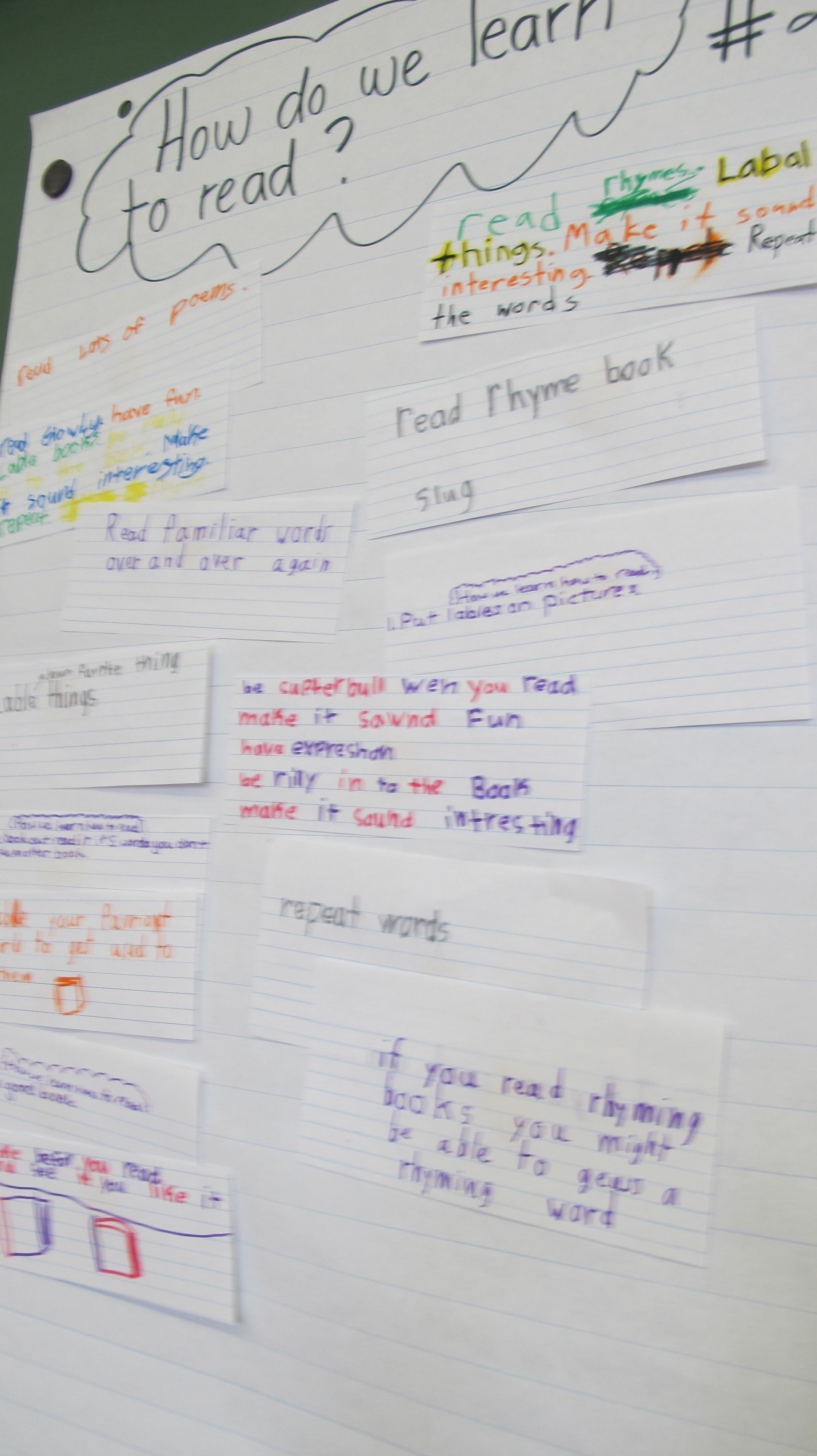
I then asked them to think about how they learned to read. I gave them strips of paper and felts and 10 minutes. Go write down everything you remember!
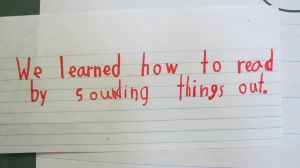
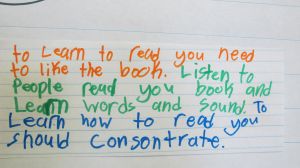
IMG_1068

Some more great ideas

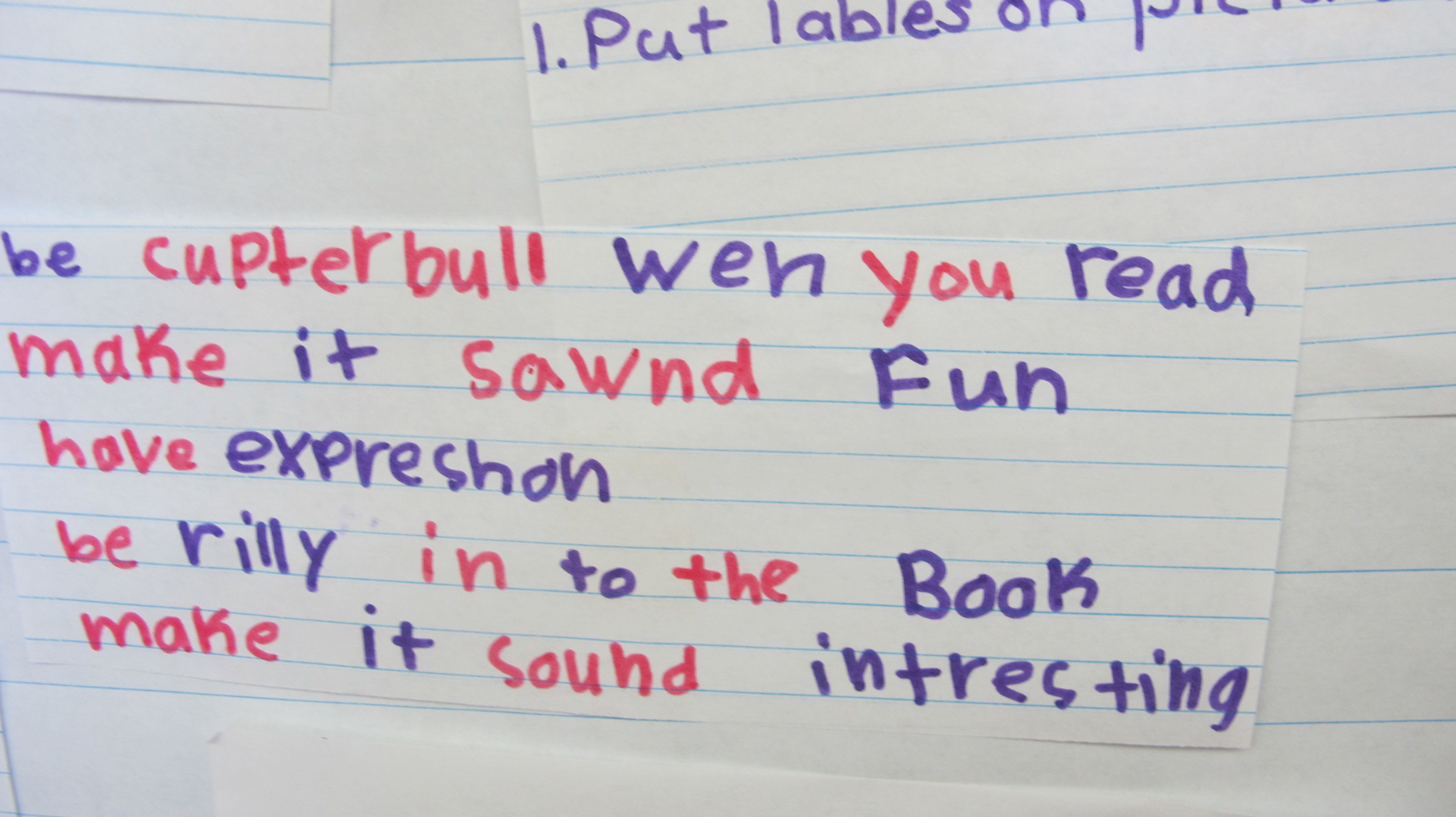
 I then read them the very clever and delightfully simple How To Teach a Slug to Read. Yes, it is all about how Mama Slug teaches her little slug to read, but it is not much of a stretch to apply it to early readers and developing readers everywhere. When we finished the story, I gave the students 10 more minutes to write any more “How to learn to read tips,” that they might have thought of after hearing this story. Here is what happened second time around:
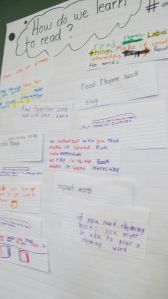
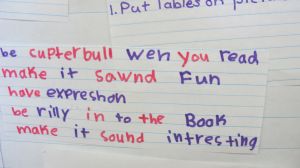
IMG_1076

Some specifics

Be careful when you read.

Make it sound fun.

Have expression.

Be really into the book.

Make it sound interesting.
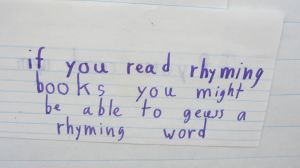
 

Another great idea

Other great ideas included: repeat favourite words, point out words in the text, label words in your world, learn from your mistakes, read poems, make it interesting, choose fun books, etc.

All in all some great learning and some careful summarizing of  important reading advice. We’re going to have great a year of reading.

“Why did we do this today?” I asked my students. “Well Ms. Gelson,” said Catriona, “It’s not like we know everything. There is still room for improvement! We have to keep thinking of ways to get better.”

They also told me that I should give this book to the Kindergarten teacher so she could use these ideas with her students.

Nick Bruel – we’re fans!

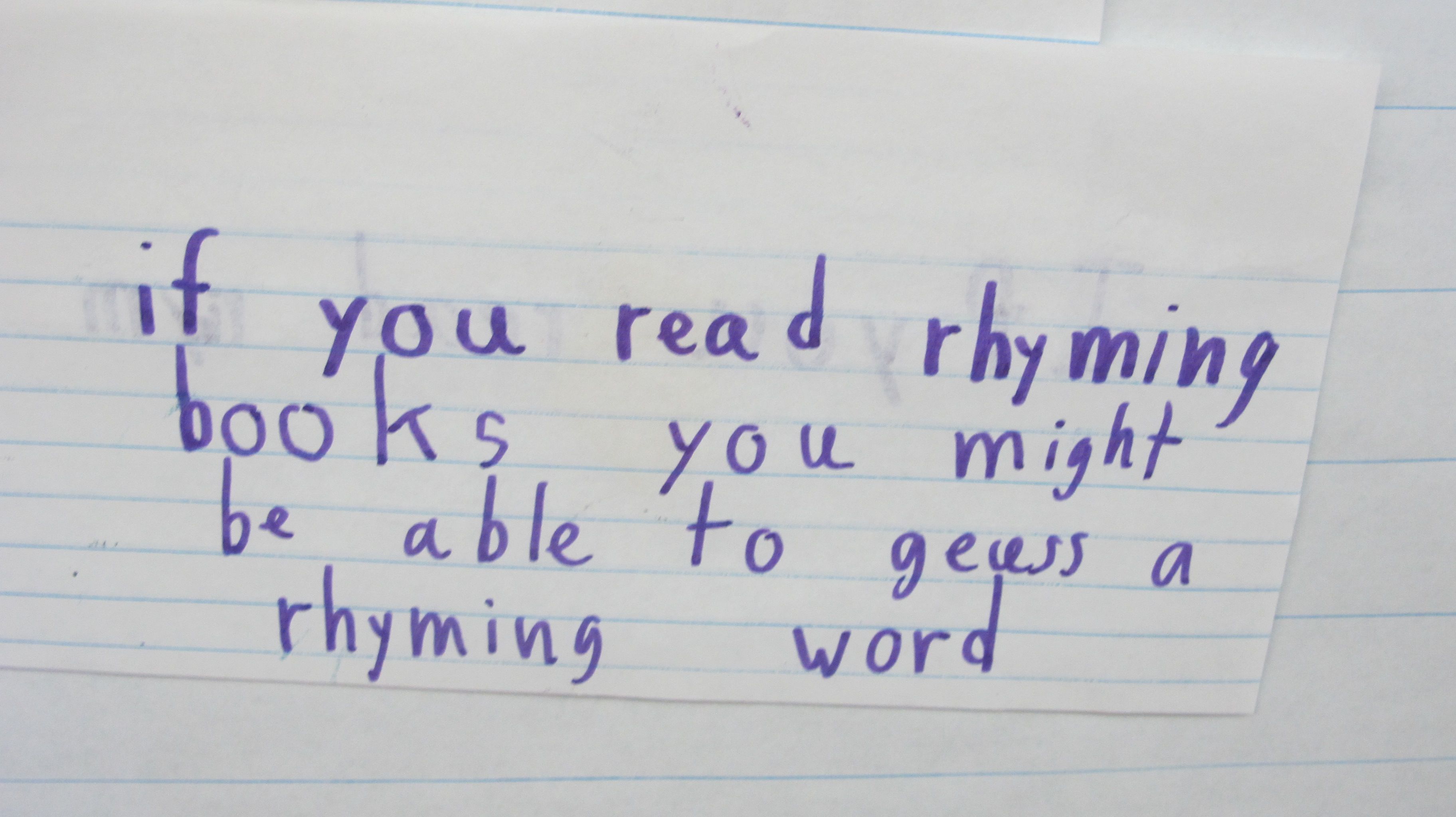
Our reading groups started this week. Everyone is very excited to build new skills and to reflect on the many skills we have. We started with a rhyming book by Nick Bruel, recommended to us by Ms. Morden. Students realized that they could fill in the blanks as I read aloud by paying attention to both the rhyming words and the context clues (a new term for many of us). This is one of the many skills that good readers (like us!!) possess.

Little Red Bird is written and illustrated by Nick Bruel. A lovely story about choices, freedom and unexplored places.

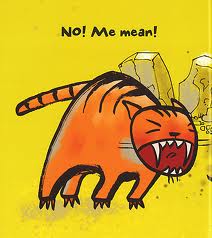
Nick Bruel is popular in our class. His books Bad Kitty and Poor Puppy are picture book favourites.

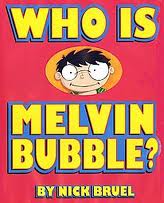
Who is Melvin Bubble? is a fantastic read aloud and the perfect inspiration for creative writing.

The Deep

Many of us have fears about swimming. The deep end can be a scary place until it isn’t anymore. What if you lived by the sea and your whole family swam daily in the deep water? What if you were the youngest and even though not much scared you (not the classics like snakes, spiders or the dark), you were afraid to swim in that beautiful greeny-blue water? Even though you longed to? This is what Alice deals with in Tim Winton‘s The Deep (illustrated by Karen Louise).

Many students connected – some of us quietly admitting that the deep water was kind of scary – even when we had previously claimed nothing frightened us. In Alice, we witnessed how our fears can hold us hostage and make us miserable. There is a scene in the story where Alice tries to conquer her fears and swim in the deep and yet, she quickly turns back ending up on the shore, curled up and crying. Heartbreaking

She hated being small. Being stuck in the shallows. She could swim, couldn’t she? So why couldn’t she swim in the deep?

It is so challenging to be courageous when our fear seems to paralyze us. This story really helped us explore this. Some important thoughts from students:

  • If we don’t notice we’re doing something we’re afraid of, it can be fun
  • It’s still just water. Even if it is deeper. If you can swim, you can swim anywhere (Here is the logic our fear defies)
  • It seems like the fear is just in our heads (Something we need to explore further)
  • If anyone else can face their fears, then we all can. (Let’s hope we can recall the images and feelings from this story when we face our next big fear)

This book would be particularly helpful for children dealing with their fear of learning to swim.

A little fish in the deep blue sea

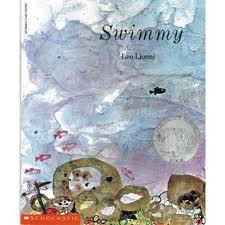
I LOVE Leo Lionni‘s books. Swimmy is a perfect read aloud to share as we read and talk about what is courageous.

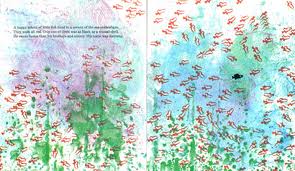
Swimmy is a little black fish who manages to escape when a large tuna fish swims up and devours all of his brothers and sisters. He swims off – sad, lonely and afraid. His solitary swim through the ocean takes him past many beautiful sights: a forest of seaweed, a medusa made of rainbow jelly, and sea anemones who looked like pink palm trees swaying in the wind. (Lionni’s images depicted visually and in text are just amazing)

Swimmy surrounded by all of his brothers and sisters

Swimmy eventually comes across a school of little fish just like his own hiding amongst the rocks and weeds. They are too afraid of the big fish to come out and play and explore. Swimmy could not accept that they would just hide forever. “We must think of something,” he insisted. Eventually he had a very clever idea. The fish would swim together like a big fish with Swimmy being the black eye. All together as one, they chased away the big fish and reclaimed the freedom to swim in the sea back for themselves.

What did we learn from this story? The answers were very thoughtful.

  • If you lose your friends and family, you can move on and find others.
  • To lead, you need to be courageous
  • Being brave sometimes means being a leader and teaching others
  • Helping people not only makes you brave, it makes you helpful (Indeed!)

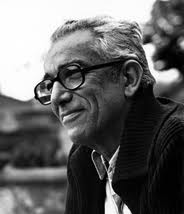
Leo Lionni - photo courtesy of Random House

Leo Lionni was a prolific writer of beautiful children’s books. To learn more about his life and works, check out this site from Random House Children’s Books.

What can we learn from Sheila Rae?

Sheila Rae wasn’t afraid of anything.

That’s the first line of Sheila Rae, the Brave written and illustrated by Kevin Henkes. “Hey everyone,” I said, “Isn’t this just like some of you? No fears at all?” (This came out in our discussion yesterday) We decided to read and find out just how brave Sheila Rae really is.

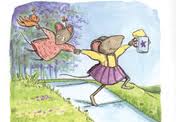
Well, the dark didn’t spook her. Neither did thunderstorms, principals or closets supposedly full of monsters. She approached life brandishing her bravery. She rode her bicycle no handed. She walked backwards with her eyes closed. She bared her teeth at stray cats. Fearless and determined to show it! When her little sister Louise marvelled at her decision to walk home from school a new way (“You’re too brave for me.”),  Sheila Rae called her a scaredy-cat.

But when Sheila Rae suddenly finds herself lost, her bravado melts away. She sits on a rock and wails. Louise pops down out of a tree where she has been secretly spying and carefully leads Sheila Rae back home.

Phew! Home is in sight!

Sheila Rae is thrilled to get home and turns to her sister.

“Louise, you are brave. You are fearless.”

“We both are,” said Louise.

Our class talked about what Sheila Rae learned in this gem of a story. Some pretty thoughtful responses were volunteered.

  • It’s okay to be brave but you don’t have to be mean
  • Everybody can be brave
  • Everybody has some fears.
  • Brave people sometimes aren’t.

Stay tuned for more stories on this theme as we try to figure out just what it means to be courageous.

When is it brave . . . ?

We had an interesting discussion about courage today. Is it courageous to do something scary if it actually doesn’t scare you? Does being brave mean facing your fears? Is courage a personal thing depending on your own individual qualms? Hmm . . . We decided that we should start with figuring out and writing down some of our own fears. I started and shared some of mine – losing my children in a public place (the classic Mommy nightmare). Mice. In my house. Being in a small motorized boat on the open sea – the speed, what lurks in that deep dark water, being stranded far from land, ahhh! Scary!

Many students were able to share fears easily – fire, the dark, robbers, rats, dogs, getting lost, a family member getting sick. Lots of honesty, lots of discussion. Some students claimed they are not afraid of anything. At all. Not the dentist? Monsters? Talking in front of a crowd? Nope. Nothing. Interesting. This makes me wonder about the fear of admitting our fears and about the posturing denying it involves.

Are the bravest of us those who confess all of our fears readily? Are some of us truly fearless?

We read a book to remind us that there are all kinds of scary things.

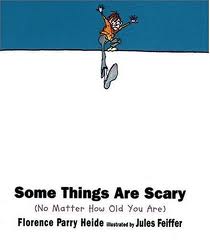
Some Things are Scary (No Matter How Old You Are) written by Florence Parry Heide and illustrated by Jules Feiffer is full of examples of everyday potentially frightening things. Super easy to connect to – the class was full of “Eeews” and “Ahhs” and “Oh yeah, scary” as they listened.

From the story:

“Roller skating down hill when you haven’t figured out how to stop – is scary”

“Finding out your best friend has a best friend – who isn’t you – is scary.”

“Telling a lie – is scary.”

Heide’s simple statements and Feiffer’s delightful illustrations allow us to fill in the blanks and really imagine how scary some of these things might be. Yes, we are reminded of many fears but also reassured that we all have some. (Well, except, a few students of mine who are apparently fearless!)

The first of many books we will be reading on the theme of courage.