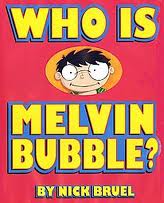
Nick Bruel – we’re fans!

Our reading groups started this week. Everyone is very excited to build new skills and to reflect on the many skills we have. We started with a rhyming book by Nick Bruel, recommended to us by Ms. Morden. Students realized that they could fill in the blanks as I read aloud by paying attention to both the rhyming words and the context clues (a new term for many of us). This is one of the many skills that good readers (like us!!) possess.

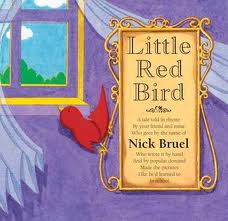
Little Red Bird is written and illustrated by Nick Bruel. A lovely story about choices, freedom and unexplored places.

Nick Bruel is popular in our class. His books Bad Kitty and Poor Puppy are picture book favourites.

Who is Melvin Bubble? is a fantastic read aloud and the perfect inspiration for creative writing.

Are we all going to get along?

Sometimes we’re friends. Sometimes we find ourselves annoyed by those around us. But no matter what – we are a school community for the 2011/2012 year. So look around everyone, we better figure out how to work together!

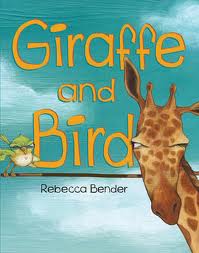
I appreciate Rebecca Bender‘s book Giraffe and Bird as it illustrates that being together is not always smooth and easy.

Giraffe and Bird irk each other and make no secrets about it.

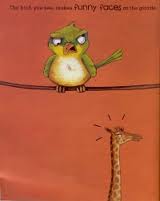
Bird makes funny faces at Giraffe. Giraffe invades Bird’s personal space. There is unwanted sharing of bad breath, frequent poops, annoying manners and swatting and pecking.

Eventually these two shout at each other “Scram, Bird!” and “Get Lost, Giraffe!”

Hajhare made a prediction. “Ms. Gelson I guarantee what will happen. By the end they will be friends. Everytime we read a book where they hate each other, they are friends by the end.”

Was he correct? Well . . .  A storm happened and Giraffe and Bird found themselves longing for each other to hide near. “Oh Yeah. Oh Yeah. Was I right or what?” Hajhare started chanting. But then there is a big fight scene Tweet! Swat! Peck! Thudd! It wasn’t looking good. In the end, the author suggests that even though Giraffe and Bird assert they can’t stand each other, we, the readers, know better.

Ricky summarized. “They’re friend-enemies. Sometimes it’s like that.” Sometimes it is.

Bird Child

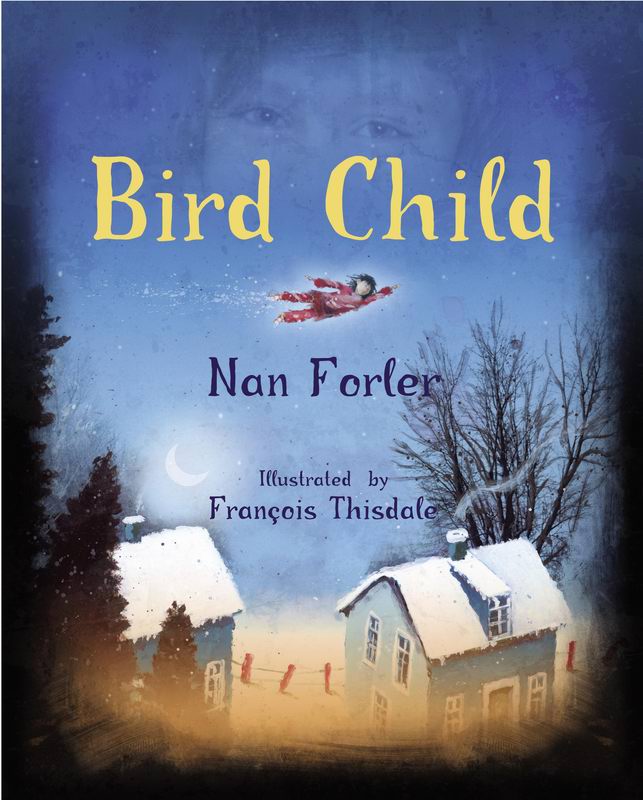
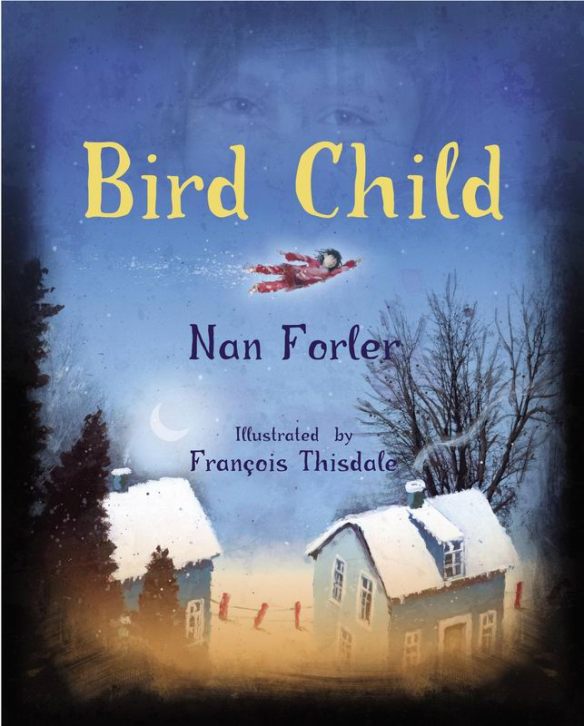
Today we read Bird Child by Canadian teacher, parent and writer Nan Forler. I came across this book at the public library and was thrilled to discover that it also touched on the active role of the bystander in the bully/bullied/bystander dynamic. We have been talking about this topic a lot using  powerful literature to inspire our discussion.
bird-2

Eliza is a tiny girl – skin and bones with hair as black as a raven. She was raised in a very special way – she was taught to fly. Wow! There were hands in the air instantly.”Is this true?” “Really?” When I asked the students what they thought, I got some very interesting answers:

Alyson: “It said her hair was black like a raven so maybe she got that skill from birds.”

Kevin: “Maybe she can fly because her bones are hollow.”

Hajhare: “Maybe she can turn back and forth between a bird and an animal like Eagle Boy.” (We have been reading a lot of Aboriginal literature lately with this theme)

I suggested that maybe the author was implying that she could fly in her mind. “Oh like visualizing,” said Kevin. “Yeah, she means it like an expression,” Ricky agreed. As we read further, we hear the words that Eliza’s mother always tells her, “Look down and see what is. Now, look up and see what can be.” Thoughtful words to always encourage Eliza to focus on possibility and with a positive perspective, to take an active role in changing situations to make them better.

A new girl, Lainey, starts school and rides the bus each day with Eliza. Lainey quickly becomes the target of teasing and exclusion. My students explored reasons that she might be bullied: Were others jealous of her beautiful drawings? Her hair?Are they making fun of her because she is new? Because of what she wears? Why are they so mean?

Soon the teasing escalates to stealing Lainey’s hat and burying it in the snow. A boy smushes snow into her face “wiping away what was left of the smile she’d had on her first day of school.” Silence in my classroom. Silence in the story. “Eliza said nothing. She stood like a statue her boots sinking deeper and deeper into the snow, her voice dry as a mouthful of wool. and watched it happen.” Such a heavy emotional scene. Illustrator Francois Thisdale makes the mood even more sad and somber with the smirking children laughing at Lainey, frozen Eliza in the background and Lainey with her eyes squished shut all alone in the wintery schoolyard with the barren trees and a pink skyline behind. There was a little bit more silence in my class and then the “Oh! Oh! Oh!’s and the waving hands started. We had things to say about this.

Jena: “Eliza is like a bystander and kind of like bullying her too. If she doesn’t tell, the bullying won’t stop. It’s like the Juice Box Bully.”

Alyson: “Eliza should stand up for Lainey.”

Lisa: “Eliza might be worried – that people would think she was a tattler.”

Miami: “This is like something that happened to me. My Grandma fell and people just walked by her. Nobody helped. Two men were sitting on a bench and they just kept sitting. I felt so bad.”

Children see everything we do and everything we don’t do. Sometimes it is not so much our actions but when we fail to act that haunts us. Eliza felt shame. She told her Mom everything and her Mom listened. “It sounds like Lainey needs someone to help her fly.” Eliza knew what she had to do. Alyson commented thoughtfully, “Maybe flying means helping her get through it.”

The next time Lainey is bullied, Eliza acts. She “reached down inside herself and found her wings” When she shouts at a boy to return Lainey’s hat, other children join in “Yeah give it back.” The bullies’ power bubble is popped and they walk away.

Scott: “She’s taking care of Lainey now.”

Miami: “You know what I think? I think she couldn’t stand watching her be bullied anymore so she just yelled.”

Jena: “Maybe Eliza did that thing – you know, putting herself in her shoes?”

Lisa: “It’s like the Juice Box Bully – maybe they will have a rule, that everyone needs to help others.”

Alyson: “Oh I know! It’s like a chain reaction – helping it to stop, standing up.”

Kevin: “It’s like that dance we saw on the movie at Pink Day (referring to the flash mob anti bullying video)

In the end, Eliza and Lainey play together building a snow castle to the sky. I ask: Why do you think this book was witten?

Ricky: “It’s a lesson to stand up for each other!”

Alyson: “Don’t be a bystander! Just stand up!”

Emilio: “Probably they made this book so people won’t copy other bullies and be mean.”

Bird Child: so much beautiful writing and visually, it is absolutely gorgeous. This book should have a special place on the shelf in every school library and should be read and discussed with students again and again. There are not enough picture books that so thoughtfully explore the active role of the bystander in changing the way a bully might act and the way a peer is treated.

Albert

Last night I read a really wonderful picture book to my children: Albert, written by Donna Jo Napoli (her first picture book after many award winning novels including one of my favourites The Prince of the Pond and illustrated by Jim La Marche.

Albert is an interesting man. Everyday, he eats his breakfast, reads the comics, gets dressed and thinks about going outside. Everyday, something convinces him it is not the day to venture out. It might be the damp weather. It might be the noises – the not good noises like arguing or rumbling garbage trucks. If we really want to call it, I think Albert experiences some quite serious anxiety about the outside world. Not an easy place to be.

The lovely thing about this book is that Napoli arranges the outside world to come to Albert.  In the form of a twig, that becomes a nest, that hosts little eggs and a perching cardinal all on his outstretched hand. For Albert, who finds the outside world too overwhelming, he is gently (but insistently) forced to get one foot firmly planted on the ground – in the form of a hand carefully suspended in the air. Albert keeps his hand with a bird’s nest on it stretched outside his window because . . .  how can he not? For days and days. Really! Of course my adult brain wonders how does he go to the bathroom? How does he not drop the nest when sleeping? How does he survive without food or drink? (This is addressed actually when father bird starts dropping berries in his mouth) My children though just got caught up in the magic of it. “He’s so kind!” my son exclaims. My daughter is a little worried. “Mama, Albert doesn’t have a job. How can he get money?”

In the end, the birds fly away and Albert who has been interacting (through the birds) with the outside world realizes that the world is a wonderful place – full of all kinds of noises and experiences. He puts on his hat and goes for a walk.

I asked: “What do you think the birds taught him?”

My daughter had lots to say: “Helping others helps youYou should go outside and fly your heart away!”

Yes, indeed.

Let’s Do Nothing . . . (but read?)

Favourite books I found at VPL today. The public library is a perfect place to hide out with one (frozen) child while the other plays soccer (in this snow!!? Only in Vancouver!) What did we find?

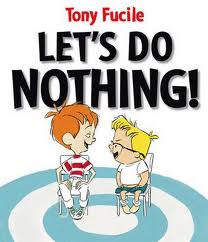
Animator Tony Fucile’s first picture book Let’s Do Nothing has a very alluring title. Nothing? Ah, such a comforting idea after a busy, busy week.

Frankie and Sal are two bored boys. What to do? How about nothing? Great idea! They each sit in a chair committed to exactly that – the act of doing nothing. But, how possible is it?  I read this to my son who hooted at Frankie’s hopeless attempts at doing nothing as his overactive imagination always caused him to do something. (There’s a part about a tree and a dog with a raised leg . . . that was absolutely hilarious to him)  Can’t wait to try this book out on my class. Will they think it is impossible to do nothing? We practice mindful breathing three times a day. Is breathing something or does it count as nothing?  This will be an interesting conversation . . .

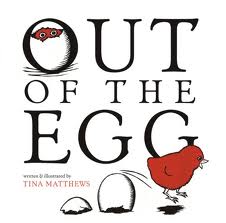
Tina Matthews is the author and illustrator of Out of the Egg, the Little Red Hen story – reinvented. We still have all of our “Not I” animals, too busy being lazy to help out. But in this story our Little Red Hen not only plants and nurtures a beautiful shade giving tree, she also has a lovely little chick hatched out of a perfect white egg.

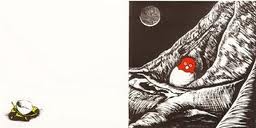
Out of the egg hatched a little red chick.

And this little chick has something new to offer the story – a dose of forgiveness. My daughter read the book and announced to me, “I thought this was going to be a what comes around, goes around story, but the little chick didn’t let it be.”

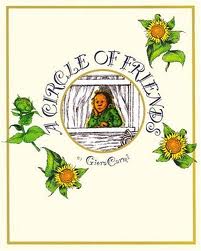
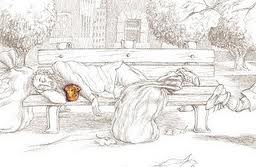
Giora Carmi made a beautiful book – A Circle of Friends – all the more powerful in its simplicity because it is wordless. A little boy shares his snack with a homeless man sleeping on a park bench.

A shared snack for someone who might need it

The man sprinkles crumbs on the bench for the birds nesting in the tree above him. In the end, the little baby bird drops a seed in the window box of the boy. And soon, a beautiful sunflower grows. Each page is sketched in black and white with one highlight of colour.  All about the circle of kindness inspired from one gesture. My daughter commented, “Mama, this is also a what comes around, goes around book, but in a nice way.” Absolutely!

Happy Reading!

Simple Books, Little Treasures

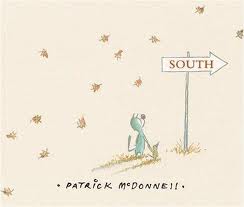
It’s report card writing time: words, words and more words. At the library today I was drawn to books that didn’t contain many (words) at all! These fabulous little finds are all about simplicity – wordless or sparse text. Pages full of ideal illustrations, questions posed and left unanswered and inferences begging to be made. 🙂 South by Patrick McDonnell.

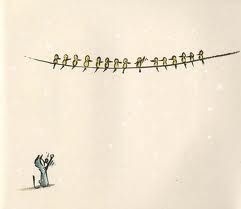
A last fall leaf lands on a lone little bird, asleep. His friends have all left for warmer places. Despair. Mooch, the cat, accompanies him on his journey south through falling snow, falling tears and developing adoration until they happen upon the beautiful sound of birdsong.

Old friends found but reluctant goodbyes to new friends made. South by Patrick McDonnell is a lovely wordless story about being lost and found and having someone sweet enough to help you on your journey to where you need to go.

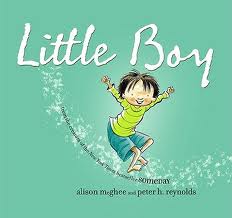
Aren’t we lucky to have children in our lives (like the little boy in this book in his star ship pyjamas and his important cardboard box) to remind us to appreciate the here and now? Kind of why it is great to be a parent and a teacher. My favourite line from Alison McGhee is the last line of the story: Little boy, you remind me how so much depends on days made of now. This book was inspired by the poem The Red Wheelbarrow by William Carlos Williams (a poem that also plays a starring role in Love that Dog by Sharon Creech) Little Boy is illustrated by Peter H. Reynolds.

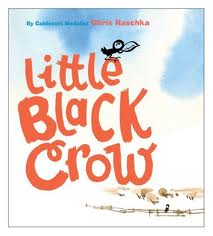
I love books featuring birds, books that ask questions (and inspire more) and books by Caldecott Medalist Chris Raschka. This book was made for me!

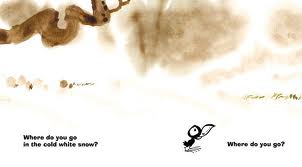
Little Black Crow where do you go?begins the questioning . . . 27 questions make up this book about a little boy wondering about the little black crow he sees in the sky.

Haven’t you also wondered about those birds flying by? Hey! Birds! Are you never afraid? Do you wonder about the stars you see? Might you ever wonder about someone . . . like me?

Happy Reading!

Courage to Fly

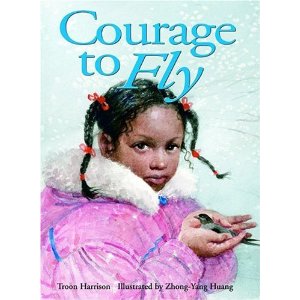
This week I read Troon Harrison’s picture book Courage to Fly to our Reading group. We continue to practice actively using the comprehension strategies we have been taught in Reading Power lessons: making connections, visualizing, asking questions and inferring while we listen to stories. Students loved this beautifully illustrated book (Zhong-Yang Huang is the illustrator) about Meg, an anxious and lonely little girl in a big city in a brand new country.

courage

Meg finds a tiny swallow that was brought down in a snowstorm. She nurses it back to health and then begins to wonder if she should set it free. She is reluctant to do so – but is encouraged to give the bird its chance to fly. Who really finds the courage to fly?  By the end of the book, we were convinced that Meg had been transformed by her experience and that after taking a risk to let the bird go free, could find the courage to open up her heart to new friendships.

Some thoughts from the students:

I think New York is not a great place for Meg (Ricky)

Why is Meg so shy? Is she lonely? Is she scared of the snow? (Truman)

I think the old man is also trying to tell Meg to find courage. (Jena)

I think the message of the book is to let things be free (Jenny)

Meg gets the courage to be free! (Josiah)

Birds and children must have been on my mind this week when I took my children to the public library – I found two more books involving a child and a hurt bird that needed to be cared for. So much learning happens from these experiences. Lovely stories that touch on the themes of hope, courage, relationships, perseverance, transformation, freedom . . .

martha

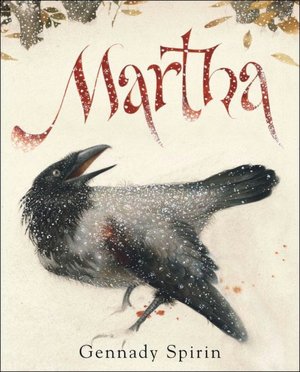
Martha is Gennady Spirin’s story about his own son Ilya who discovered a crow with a broken wing. The veterinarian insisted the bird should be put to sleep as it would never fly. Ilya convinced his parents otherwise and the crow they named Martha made her home with the family. Eventually Martha surprised them all and flew again. Is she the bird that returns the next year and nests in their tree?

fly pigeon fly

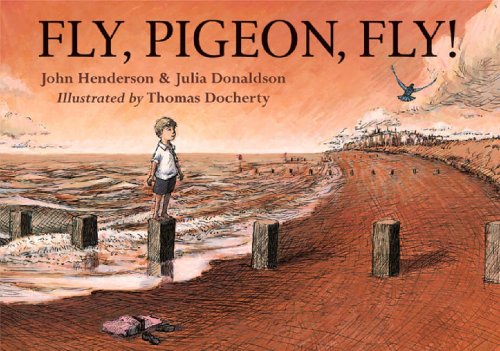
Fly, Pigeon, Fly! is coauthored by John Henderson and Julia Donaldson and illustrated by Thomas Docherty. Set in Glasgow, this is the story of a young boy who discovers a half-starved pigeon in a run down warehouse and takes him home to care for him. The pigeon recovers but the boy cannot bear to set him free. The relationships between the boy and the bird and the boy and his Da are gently explored. In a lovely way, as the boy is able to let the pigeon go, his connection to his Da becomes stronger.