Nonfiction Picture Book Wednesday: Cloth Lullaby

Sometimes a book is just too beautiful to be believed. Such is the case with this biography of Louise Bourgeois.

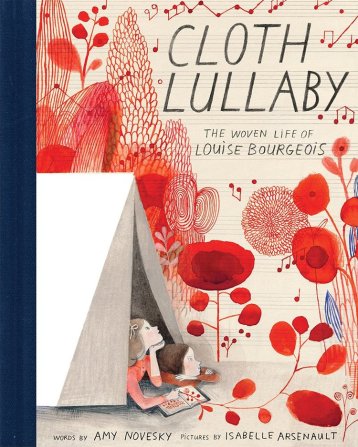
Cloth Lullaby: The Woven Life of Louise Bourgeois written by Amy Novesky and illustrated by Isabelle Arsenault (Abrams Books for Young Readers March 2016)

Cloth Lullaby Nonfiction Picture Book Wednesday: Cloth Lullaby There's a Book for That

Everything about this book is beauty. The navy fabric feeling spine detail. The colours and patterns throughout the book. Red has never seemed so delicate. The blues. The lines. The depiction of Bourgeois’ art. Arsenault is brilliant.

And then there is the story. I think this might well be my favourite picture book biography of the year. Novesky writes in such a lyrical way that reading the text truly feels like being lulled by a lullaby. The reader is pulled into the story of a young girl on the meandering road by a river that leads her to life as an artist. We learn about her strong connection and devotion to her mother (Maman). Her growing skill as an expert weaver in the family business. Her aptitude for mathematics.

Louise’s greatest pieces – huge sculptures made of steel, bronze and marble were of spiders and were woven into being from the grief she felt at losing her beloved mother.

The connection between weaving and repairing, weaving and creating, weaving and healing are literally woven through the story.

So often we hear how artists create art in response to strong emotions. This book reveals how sadness and grief are transformed into powerful and stunning pieces.

A detailed author’s note is included in the back of the book

Highly recommended.

Thanks to Alyson from Kid Lit Frenzy for the inspiration to read and share more nonfiction picture books in 2016. Follow the link to Alyson’s blog to read about more nonfiction books you need to read!

nfpb2016logo

Nonfiction Picture Book Wednesday: Tooth by Tooth

Recently, we went to dinner at my husband’s parents. My son had just been to the orthodontist. My father in law had just had dental surgery. I had just visited the bookstore that afternoon on route to dinner and I was thrilled to see that the latest Sara Levine book I had ordered had arrived. Of course, while waiting for dinner to finish cooking, I had to read this book aloud to my family. Of course! It was a meant to be moment – a must read book about teeth while we all had teeth on the brain. Achy teeth and bruised mouths, some of us. This book was the perfect distraction.

Because don’t you just want to know answers to some questions like these:

  • What would you be if your top canine teeth grew almost all the way down to your feet?
  • What kind of animal would you be if your teeth were long enough to stick out of your mouth, even when it was closed?
  • What kind of mammal would you be if you had really tall molars?

I am not going to tell you any of these answers! Go! Get the book! Some of these questions are challenging to figure out. This title is a fantastic resource in the elementary classroom: a fun and interactive read aloud with interesting guess and find out questions/answers. My entire family from the teenagers to the over eighty crowd was completely engaged!

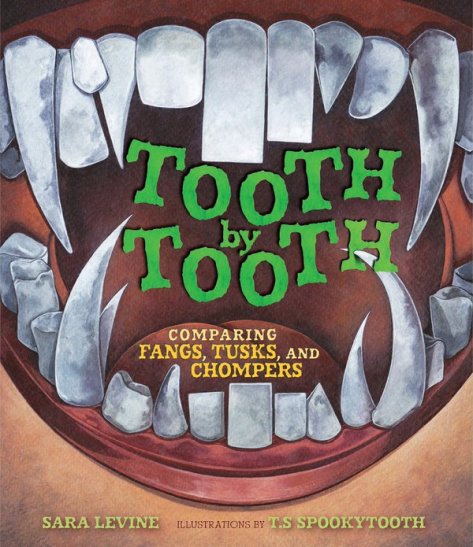
Tooth by Tooth: Comparing Fangs, Tusks, and Chompers written by Sara Levine and illustrated by T.S. Spookytooth (Millbrook Press (Lerner) 2016)

Nonfiction Picture Book Wednesday: Tooth by Tooth

Learn about the different kinds of teeth you have in your mouth: incisors, canines and molars. Quick, think fast – how many molars do you have? Now count them. Were you right? (Your answer should fall in the 8-20 range depending on your age) Find out how other mammals use their teeth and why they are different sizes and shapes. How are human teeth similar and different compared to other mammals? How do the teeth of herbivores, omnivores and carnivores differ?

Information in the final pages includes further reading, a detailed glossary and more about mammal teeth.

Ideal for K-7 students as a read aloud (for K-3) or read alone (Grades 4-7) .

I also highly recommend bringing it along to share at dinner parties. . . even if nobody has recently been to the dentist! 🙂

Levine and Spookytooth also collaborated on Bone by Bone: Comparing Animal Skeletons

Thanks to Alyson from Kid Lit Frenzy for the inspiration to read and share more nonfiction picture books in 2016. Follow the link to Alyson’s blog to read about more nonfiction books you need to read!

nfpb2016logo

Nonfiction Picture Book Wednesday: One Day on our Blue Planet . . . In the Antarctic

If you shouldn’t fall in love with a book by its cover . . . how about its end pages? Because these are truly stunning! The front pages feature all of the animals you might find above the ice in Antarctica and the final end pages reveal many of the creatures who live below the Antarctic waters.

One Day on our Blue Planet . . . In the Antarctic by Ella Bailey (Flying Eye Books 2016)

Nonfiction Picture Book Wednesday: One Day on our Blue Planet . . . In the Antarctic

Wander (or waddle) through the day of an Adélie penguin chick in her Antarctic home. Through the story of her day we are introduced to elements of the Antarctic landscape, penguin habits, their predators and the creatures who share their home.

Perfect for younger listeners, this is a beautiful read aloud to introduce children to the continent of Antarctica and it is sure to spark further reading and research. This would also be a wonderful mentor text for older readers to share their research on an animal as a “day in the life” format.

This book begs you to consider art projects. It is stunning on every page. Like all Flying Eye Books, the pages are high quality and the colour palette, so attractive.

Pair this title with these titles about Antarctica:

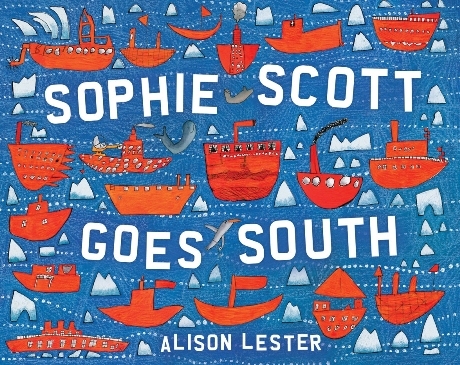
Sophie Scott Goes South by Alison Lester (published in 2012)

 Sophie Scott Goes South  There's a Book for That

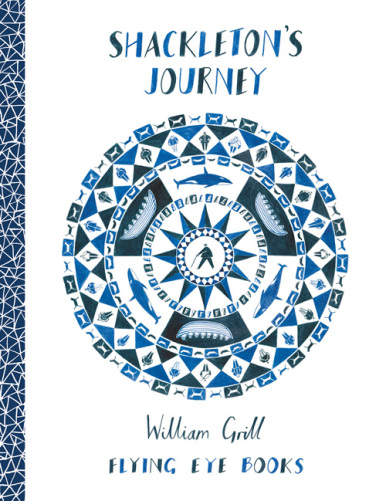
Shackleton’s Journey by William Grill, a stunning Flying Eye book published in 2014.

Nonfiction Picture Book Wednesday: There's a Book for That

Thanks to Alyson from Kid Lit Frenzy for the inspiration to read and share more nonfiction picture books in 2016. Follow the link to Alyson’s blog to read about more nonfiction books you need to read!

nfpb2016logo

Nonfiction Picture Book Wednesday: Pink is for Blobfish

It’s Wednesday – the day to share some love for a nonfiction picture book.

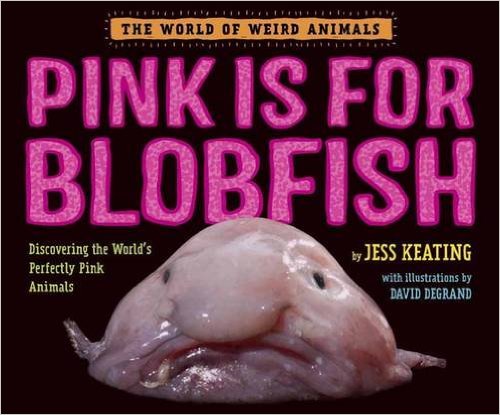
Pink is for Blobfish: Discovering the World’s Perfectly Pink Animals written by Jess Keating with illustrations by David DeGrand (Knopf Books for Young Readers February 2016)

This book! That cover! That gelatinous blob? I really didn’t even believe this creature on the cover was real – or at least looked like this. So I looked up images of blobfish. Yep, they really are this challenged in the aesthetically pleasing department. Author Jess Keating shares that they were voted ugliest animal in the world and I would have to agree, they are worthy of top prize. But there is a lot more to this fish than its not pretty face!

I will also say that I had a really, really hard time reading this book. Honestly, I couldn’t sit in one place and just read it because I had to keep stopping and leaping up to write down ideas of how to use this book in class. Wow, does this book have crazy amounts of classroom potential. Although, I am sure you could just put it out on display and say nothing and that cover would sell itself! I could imagine within moments it would be passed around and marvelled at in the classroom. Mr. Blobfish, you are such a cover model!

Nonfiction Picture Book Wednesday: Pink is for Blobfish

But because it is spring break and I have no children to use this book with for at least another week, I have decided to share in an enthusiastic (and maybe not so organized) way all of the ideas I had while reading it. The irony of this “blob” on the cover and all of the energy this book gave me, did not go unnoticed.

This title features a number of “pink” creatures from around the world and shares some of the wild and wacky facts about each one. Every page also includes specific information under these headings: Name, Species name, Size, Diet, Habitat, Predators and threats. Back matter is fantastic including: a colour coded map of where to find each creature featured in the book, a glossary of useful words, more resources if you want to learn more and some scientist careers to aspire to (i.e. Want to learn more about reptiles? You can be a herpetologist)

How I might/should/could/will use this book in the classroom:

Pre-reading:

  • Brainstorm: What are all the pink animals we can think of. (I will admit I didn’t get much further than flamingo and earth worm (are they even considered pink?))
  • Ask: What colours do we normally associate with animals? In our local environment? Why is that? What about in different habitats around the world? Different biospheres? Where do we see more colours? Fewer colours?
  • Brainstorm in small groups: Can we think of some colours and try and name a number of animals under each colour category?
  • Read and ask: On the inside jacket flap it begins: “Some people think pink is a pretty color. A fluffy, sparkly, princessy color.” What are your associations with the colour pink. (chart these to compare to later)

During reading:

  • Notice and ask: What organization do we see on each page in terms of structure, headings, lay out?
  • Turn and talk: After we know structure, reveal name and photograph and have students predict in turn and talk partners/small groups about information they will learn. For example: “Here is the Pinktoe Tarantula, with your turn and talk partner think about and predict: Where would we find these creatures? Who would there predators be? What do you think they eat? When we share, be prepared to support your predictions.” After student discussion and sharing, read the page and talk about what was learned, what was surprising, what was confirmed.
  • Turn and talk: After certain pages ask: “With your turn and talk partner, share what was the most interesting fact about this creature? What surprised you the most? What are you still wondering?”
  • Chart: Create a chart with these headings: Creature, Natural Predators, Threats For each page, fill this in and look at trends as you go. How many of these creatures have many predators vs few? How many are threatened because of deforestation? Pollution? Habitat loss?

After reading:

  • Ask: What is your favourite of all the pink animals in this book? Why do you think Jess Keating decided to use blobfish in the title Pink is for ________ Would another animals have sounded as interesting? Think about the cover with another animal. The way it would sound, the image, etc. Was blobfish the best choice?
  • Look again: Do we have any new words we would associate with the colour pink after reading this book? Don’t share the back cover until this time and compare your list to this list.
  • Look closely: Look at the map in the back pages. Where do we see the most pink creatures? What do we notice? Why?
  • Mini research project: Choose an animal and make a (Colour) is for __________ page using same structure as Jess Keating did in her book (with same headings, etc.) This could become a class book. Orange is for fox, White is for arctic hare, etc.
  • Research: What is the status of each of these creatures. Endangered? Threatened?

This title has so much potential in the classroom and I am beyond excited that it appears to be the first in a series: The World of Weird Animals. Jess Keating is just kind of generally amazing – visit her site here. And if you didn’t know . . . she has a Youtube channel: Animals for Smart People See? Amazing!

Thanks to Alyson from Kid Lit Frenzy for the inspiration to read and share more nonfiction picture books in 2016. Follow the link to Alyson’s blog to read about more nonfiction books you need to read!

nfpb2016logo

Nonfiction Picture Book Wednesday: The Way to School

The Way to School

I walk to school (which is also my work) everyday. One of our school engineers, now retired, used to ask me the same question every time the weather was miserable. “Today? Even today you walked?” My answer always sounded the same as well: “Yes, sunshine, rain, sleet, snow, I walk.”

I walk for exercise, for my mental health, for the chance to be outside and experience the world. Yes, my way to school could be faster if I drove or took transit, but I treasure this daily walk and feel fortunate that I have the opportunity to make it each day. Thirty-five minutes that is all mine.

Not all walks to school are so pleasurable or welcome. But they are necessary. Each step speaks to serious intent and commitment to education. That is what this book of sparse text and wonderful full colour photographs depicts.

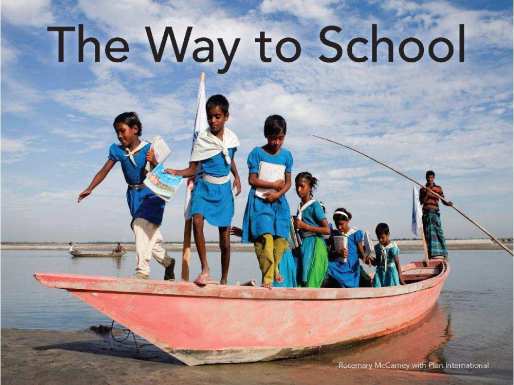
The Way to School by Rosemary McCarney with Plan International was published in September 2015 by Second Story Press. Its message is important – what matters most is that you get there. School is necessary. School is transformative. School is non-negotiable. If children have the opportunity to go to school, they will go to great lengths: wading through rivers, balancing on collapsed bridges, trailing down a mountain path . . .

This book allows us to open up some meaningful conversations with our students and ask key questions.

  • Do children all over the world attend school?
  • Can every child in a community attend?
  • Are there countries where some children go to school and others don’t? Why?
  • What might prevent them from attending?
  • What is the daily commute like?
  • If the journey is long, what can’t fit in a child’s day?
  • Are there dangers on a daily walk to school?
  • Why is education so important?
  • Does this make you think about school in new ways?

Proceeds form the sale of this book are donated to the I am a Girl Fund. I took this book out from the library but will be buying my own copy.

Thanks to Alyson from Kid Lit Frenzy for the inspiration to read and share more nonfiction picture books in 2016. Follow the link to Alyson’s blog to read about more nonfiction books you need to read!

nfpb2016logo

Nonfiction Picture Book Wednesday: B is for Bear

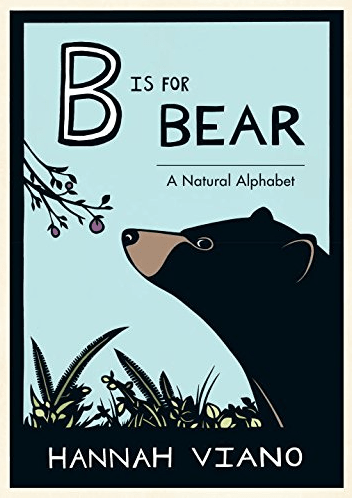
This week I found B is for Bear: A Natural Alphabet by Hannah Viano (October 2015) and was absolutely charmed by it. Striking art work and all things lovely and wonderful from the natural world of North America. Part alphabet book, part celebration of nature, many parts simple beauty.

B is for Bear

Each page holds an upper case word for the letter represented and a simple, descriptive sentence of additional information along with a stunning image (these are paper cuttings!)

For example:

“Standing still on one leg, an EGRET watches the water closely, waiting for his dinner to swim by.”

Some wonderful things selected P for PEBBLE, Q for QUEEN ANNE’s LACE, R for RAINSTORM

I particularly loved this book because it got me thinking about how to use it in the classroom. Last week Melissa Stewart wrote a post wondering about doing research with elementary students. “Is there a fun way to do research?” she asks. She has more posts to come (yippee!) but I have been thinking about this question a lot. I’ve been thinking about letting research first be part of a discovery, expressive process. Something that involves art, creativity, poetry, creating images while being a part of the process of wondering and finding new information. And then, what to do with it?

I love the idea of some simple pieces – like art work inspired by a book like this. Create an image of something, share a fact discovered by a little bit of reading or exploring a website or . . . Think about what fact feels the most important and how to share it.

Wouldn’t you like to create an alphabet book linked to a particular place – a country, a province (or state), a city, a neighbourhood? And include a number of interesting pieces of art with extra information. A piece of beautiful art and a simple, carefully crafted sentence. Seems like the ideal marriage of beginning fact finding and information honouring.

Already thinking of a book like this for my class to do on our neighbourhood . . . And about where we might find more information about things we might want to highlight . . .

I love books that both enrich and inspire – accessible and lovely mentor texts to imitate. This is a beautiful one indeed.

Thanks to Alyson from Kid Lit Frenzy for the inspiration to read and share more nonfiction picture books in 2016. Follow the link to Alyson’s blog to read about more nonfiction books you need to read!

nfpb2016logo

Nonfiction Picture Book Wednesday: The nonfiction effect

While nonfiction titles are read and shared all year in my room, I often do a specific “push” of nonfiction titles in January of each school year and make sure that one day a week in Reading Workshop, we spend some quality time exploring nonfiction titles. This year, our Reading Workshop routines are a little different to match this group of readers and I wasn’t sure how to launch our nonfiction celebrations.

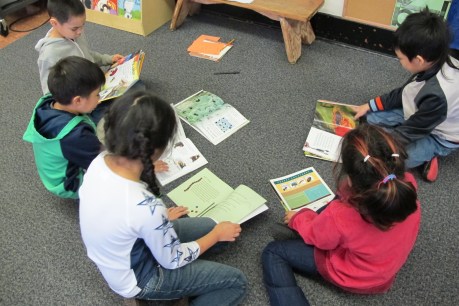
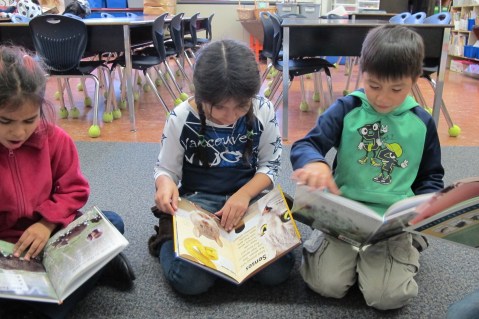
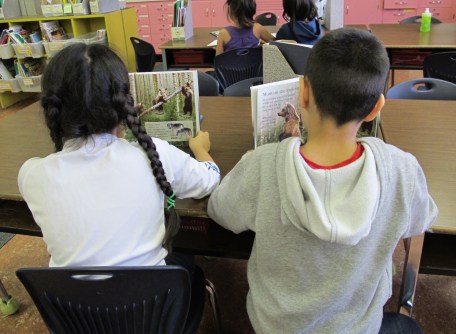
At the end of January I realized the best thing to do would be to begin sharing nonfiction titles in an already routine way: through our Wednesday a.m. book sharing circles. So . . . last week, I pulled some tried and true titles and these books travelled child to child in three sharing circles.

Nonfiction Picture Book Wednesday: the nonfiction effect

This post is all about celebrating the nonfiction effect in the room!

Nonfiction Picture Book Wednesday: the nonfiction effect

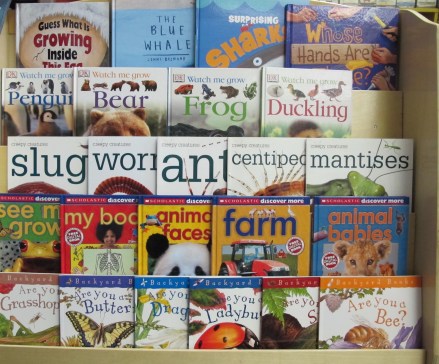
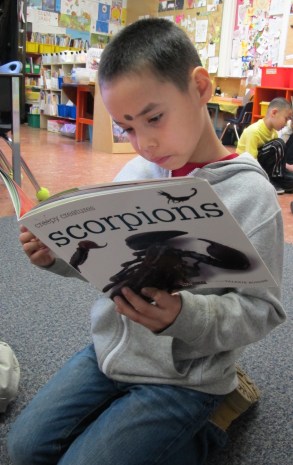
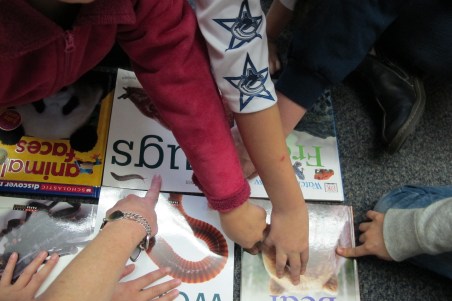
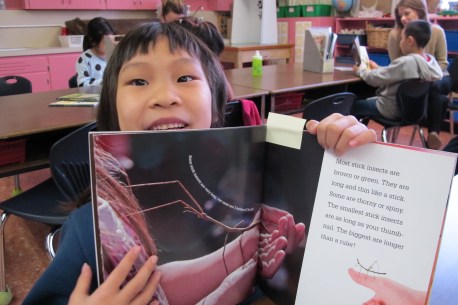
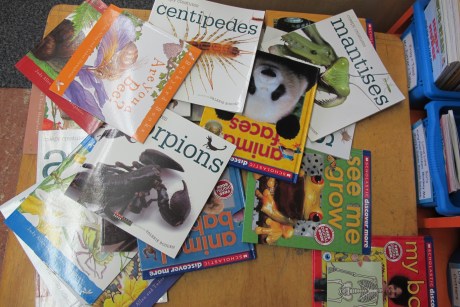
I gathered a number of titles with lots of interesting drawings and photographs about animals, birds and insects to share with the children. After modelling how to interact with the titles (look at the front and back covers, skim and scan through the text, read interesting captions of photographs that catch your eye, look at the table of contents for sections of interest, notice the size of the text on the page) we broke into 3 small groups and passed a title every minute.

Nonfiction Picture Book Wednesday: the nonfiction effect

Listening in, this is what I overheard:

  • “Whoa!”
  • “Wow!”
  • “Look at this!”
  • “So, so cool.”
  • “Oh my God.”
  • “I can’t believe it.”
  • “Eew, yuck!”
  • “Is that a close up?”
  • “Hey I know that!”
  • “What is that?!”

The wonderful thing is that most of this was just spontaneously uttered. The children were not talking to each other, although lots of back and forth peeking happened. They just couldn’t keep their reactions inside.

Nonfiction Picture Book Wednesday: the nonfiction effect

After we had explored all of the books in our circles, we placed them in the center of our group and talked about which title we would love to read and why.

Nonfiction Picture Book Wednesday: the nonfiction effect

For this little group of Grade 2/3s, their comments reflect where they are – the “in awe, want to read more” stage:

“We saw lots of gross stuff but it was cool.”

“It’s all about the world and things we don’t know.”

“I think I know some of the things and not some of the things in that book.”

“Do we also have books about . . . .?”

One child held a book close and announced to me. “Ms. Gelson, I can actually read this book all by myself.”

The nonfiction effect

The books we shared were placed on a table and children began sorting through the piles taking titles off to read.

The nonfiction effect

Some titles were shared with a friend. “Let’s look for stuff to learn.”

The nonfiction effect

My learning and current thinking for this group:

  • these learners are going to need lots of series (this book is like this one) so that once they have a format understood they can take off with the reading and learning
  • we need to do a lot more sharing circles to generate interest and curiosity
  • very brief mini lessons on nonfiction features will be necessary with lots and lots of repetition as this group of readers is not used to navigating nonfiction texts
  • our reading needs to be connected to talk and sharing time
  • in about a month, we can introduce recording facts and beginning research concepts but for now, it is all about developing passion for nonfiction texts
  • students need accessible texts that support what we are learning about in the classroom – finding and sharing these will be priority number one

I have written about these sharing circles with nonfiction titles before – read here for how they worked with my Grade 3/4 class last year.

Thanks to Alyson from Kid Lit Frenzy for the inspiration to read and share more nonfiction picture books in 2016. Follow the link to Alyson’s blog to read about more nonfiction books you need to read!

nfpb2016logo


Nonfiction Picture Book Wednesday: Mock Sibert

For the past 3 years, Alyson Beecher has hosted a Mock Sibert on her blog as part of the Nonfiction Picture Book Wednesday meme. Mock Sibert has grown! First Alyson from Kid Lit Frenzy and Kellee from Unleashing Readers wrote posts and made predictions. In 2015, I was invited to join in and in 2016 Alyson opened it up to anyone who wanted to participate. Here are links to these posts:

Kid Lit Frenzy: 2016 Mock Sibert

There’s a Book for That: 2016 Mock Sibert

Kid Lit Frenzy: 2015 Mock Sibert

Unleashing Readers: 2015 Mock Sibert

There’s a Book for That: 2015 Mock Sibert

Kid Lit Frenzy: 2014 Mock Sibert

Unleashing Readers: 2014 Mock Sibert

This year, Kellee proposed expanding the Mock Sibert discussion even further by moving it to a year long conversation. She put feelers out to our little book loving PLN about  expanding the Mock Sibert to a Book Group on GoodReads.  By doing this, we get to discuss books all year long.

And . . . you can join in too!

Our plan for the group is for group members to start discussions about any nonfiction books that they feel are 2017 Sibert Award contenders. Then within those discussion boards, we will discuss the books we each “nominate.” At the end of December, we will vote for the books we feel need to be looked at again. We’ll then have a FINALISTS discussion board where we look closer at each of the books with an eye specifically towards the Sibert criteria. Following our discussions, we will vote for what we believe will be the finalists. We’ll then have a WINNER discussion board where we look again at the books we voted as finalists and discuss who we think will win. About a week before the 2017 ALA Media Awards, with enough time to blog about our winner and finalists if participants would like, we’ll vote for the winner.

Personally, I love reading about titles that others love. Their passion often sells me or at least lets me look at books with new perspective and new eyes!

Come join us on Goodreads at the Mock Sibert Book Club!

First, go to GROUPS at the top of the Goodreads home page.

You can search for the book club in the search bar at the top of the groups page.

Please make sure to answer our new member’s question, and we will approve you to jump into our conversation!

Hope you will come join us!

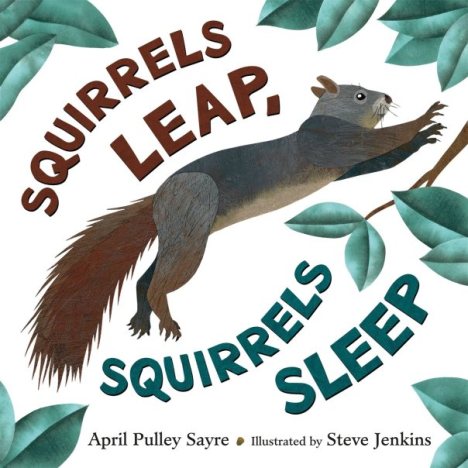
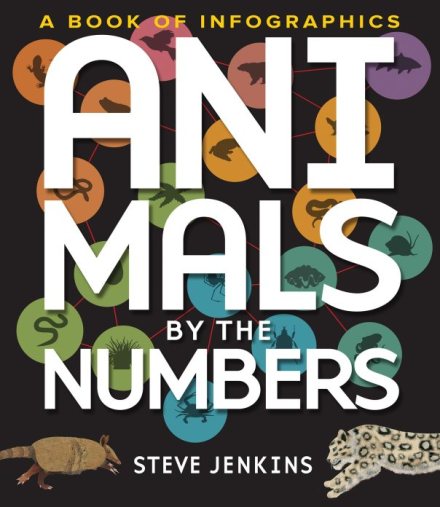
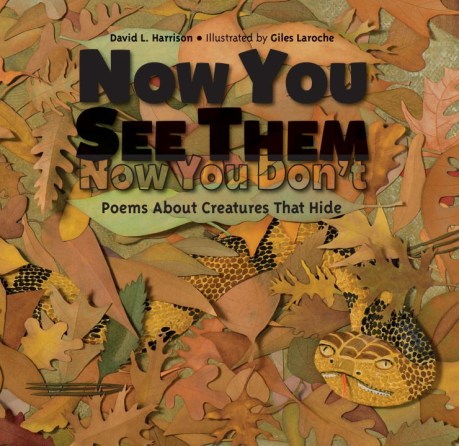
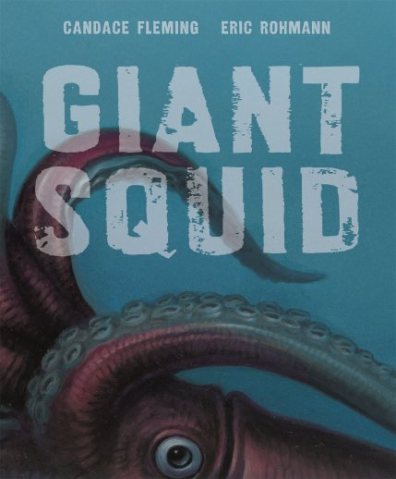
I have only read one 2016 nonfiction title so far. But there are a few I have my eye on (published at various times this year). Will they be Mock Sibert contenders? Who knows? The fun is in the reading! I can’t wait to discover more 2016 titles as the year unfolds.

Squirrels Leap, Squirrels Sleep (November 2016)

Squirrels Leap, Squirrels Sleep

Animals by the Numbers (November 2016)

Animals by the Numbers

Now You See Them, Now You Don’t: Poems about Creatures that Hide (February 2016)

Now You See Them Now You Don't

Giant Squid (September 2016)

Giant Squid

Thanks to Alyson from Kid Lit Frenzy for the inspiration to read and share more nonfiction picture books in 2016. Follow the link to Alyson’s blog to read about more nonfiction books you need to read!

nfpb2016logo


Nonfiction Picture Book Wednesday: Whose Hands Are These?

There are a few things I know to be true about working with primary classes. Especially primary classes with more fidget than focus. When wiggles and squirms abound, students need us to deliver energy, excitement and a little bit of drama. Sometimes that’s easy to do. Good sleeps and strong coffee help. Some days it’s harder. By afternoon, it’s harder. With some lessons, it sure helps if the material itself can leap in and lend a hand (come on, how could I resist?)

When it is afternoon after a lunchtime of “not so good” out on the play ground and gathering everyone together feels extra hard, I need to lean on my read aloud to help out.

This book jumped right in! It delivered what I like to call the “squish closer, oh! oh! oh!” noisy read aloud experience. When everyone is leaning in, sitting close, oohing to be called on, joining in with the text, rising up off their bottoms and generally trying to basically climb into the book, well, teachers, we have a winner!

What a pleasure it is to share this book today.

Whose Hands Are These? A Community Helper Guessing Book written by Miranda Paul and illustrated by Luciana Navarro Powell (Millbrook Press January 2016)
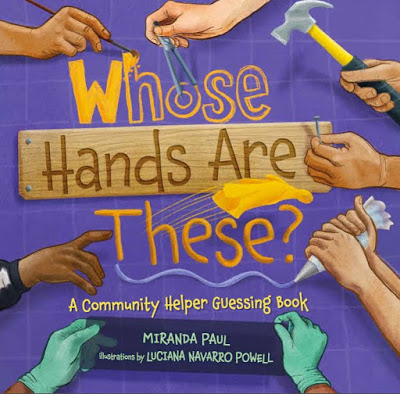
Whose Hands are these?

Some of the many reasons why this book works so beautifully in the primary classroom:

  • First, there is the obvious. It supports our primary curriculum (community helpers, career options, helpers in the community). New engaging material to use in our lessons on these units? Always so very appreciated!
  • This is a guessing book! Kids love to guess. They love to be right. They don’t want it to be too easy but it has to be accessible so that most of them are getting most of it right most of the time, New learning happens surrounded by confidence. It’s an ideal balance. This book has that.
  • The clues are revealed through both bright, interesting pictures and the text – our visual learners and our auditory learners are all supported
  • The rhythm of the language and the rhymes make things predictable and successful for each little listener.
  • The illustrations embrace diversity and don’t reinforce stereotypes. Hurrah! We have a male teacher, female doctors, male and female mechanics, scientists and farmers of all ages, characters with different skin tones, adults and children depicted in the pictures

Lots of kid appeal in this book. Instant feedback from my class?

“I like guessing! And we mostly got it right!”

“It rhymes! The words are interesting.”

“I Think I could read it by myself. Mostly. Can I Ms. Gelson?”

“The pictures are so colourful.”

“I like all the people.”

“How did they make those hands on the back cover?”

How did I share the book? Beyond letting it do its noisy read aloud, fully engaged magic?

We started with the end pages and looked at all of the tools we saw. I asked, “What do you see that you can name?” And then: “Who would use this in their job? What do you think?” All of this predicting and building shared knowledge was a wonderful warm up for the story.

When we read the book, we talked about all of the details we noticed in both the text and illustrations, we focussed on the word that was our clue – the one that would rhyme with the profession being named.

Quest and test, these hands are turning.

Test again- these hands are learning!

Weigh and count, their work persists

These hands belong to . . .

Repeat persists – stretch out the word, repeat it again, look at the clues in the pictures, watch for nodding, signs of confirmation of the guesses . . .

Get ready to tell me!”

Flip

“Scientists!”

So much fun.

The final pages contain more information about each job and is provided in child friendly descriptions.

A perfect book to talk about people in our community or to inspire brainstorming and writing about future job possibilities and choices.

Highly recommended for the primary classroom.

Thanks to Alyson from Kid Lit Frenzy for the inspiration to read and share more nonfiction picture books in 2016. Follow the link to Alyson’s blog to read about more nonfiction books you need to read!
nfpb2016logo

Mock Sibert 2016

The Sibert Award is given annually to the most distinguished informational book published during the preceding year. Although the Sibert Award is not just for picture books, that is where I am focussing my predictions.

Honestly, I believe that the Sibert medal may go to a longer text and I don’t believe I have read that book. I am very excited to see what the announcement will be next week!

I read a lot of fantastic nonfiction last year but I focussed on texts suitable for younger readers because of switching grades this year (from a 3/4 with mostly Grade 4s to a 2/3 with mostly Grade 2s). Looking over some of the best of nonfiction lists, I think that there is a lot that I missed.

To be honored/win the Sibert Award, the book must include these important elements and qualities:

  • Excellent, engaging, and distinctive use of language.
  • Excellent, engaging, and distinctive visual presentation.
  • Appropriate organization and documentation.
  • Clear, accurate, and stimulating presentation of facts, concepts, and ideas.
  • Appropriate style of presentation for subject and for intended audience.
  • Supportive features (index, table of contents, maps, timelines, etc).
  • Respectful and of interest to children.

Based on this criteria, I have chosen 3 titles that I think may be honored when the Sibert titles are announced.

What I am really thinking about when making these selections are supportive features or documentation included somewhere in the text and that the books are really engaging for children. I am also very swayed by illustrations and I felt that each of these had a very unique and interesting style. Definitely the illustrations contributed in large ways to the appeal of the book.

Mesmerized: How Ben Franklin Solved a Mystery that Baffled all of France  by Mara Rockliff with illustrations by Iacopo Bruno (March 2015 Candlewick Press)

I love the connection here to the importance of the scientific method. And it is also quite the story! The back pages include much additional information. Big kid appeal: mind control, magic forces, money making, Kings and Queens . . . Doesn’t get much better! Of course the ultimate power turns out to be science!

 Mesmerized Mock Sibert 2016

Tricky Vic: The Impossibly True Story of the Man who Sold the Eiffel Tower by Greg Pizzoli (March 2015 Viking Books)

There is something about swindlers and con artists that are immensely interesting! A con associated with something as well known and famous as the Eiffel Tower? Well! There are many stories within stories here and plenty of other historical and place specific information throughout the text. If I had an older grade, I would love to read this aloud!

Tricky Vic- The Impossilby True Story of the Man who Sold the Eiffel Tower by Greg Pizzoli Mock Sibert 2016

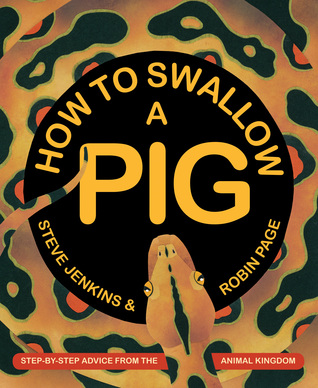
How to Swallow a Pig: Step-by-Step Advice from the Animal Kingdom by Steve Jenkins and Robin Page (September 2015 HMH Books for Young Readers)

I love everything that Jenkins and Page do I will admit. That doesn’t make me biased, just constantly impressed. This title is particularly interesting because of the “how to” aspect. Of course it is also a great model for instructional writing – amazingly interesting instructional writing. Additional information is always rich in Jenkins/Page titles. Perfect for further reading.

How to Swallow a Pig Mock Sibert 2016

I looked back at past medal and honor titles and usually winners are longer picture books or middle grade illustrated texts taking a variety of formats. If brief texts with incredible visuals (illustrations or photographs) and strong back matter were to be considered, I think these 2015 titles could also be contenders. Who knows? Maybe they will be!

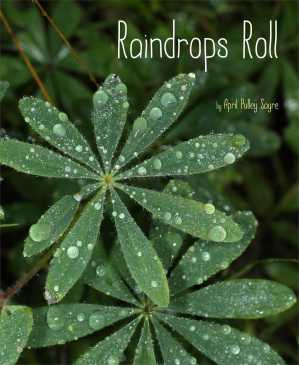
Raindrops Roll by April Pulley Sayre (January 2015 Beach Lane Books)

Raindrops Roll Mock Sibert 2016

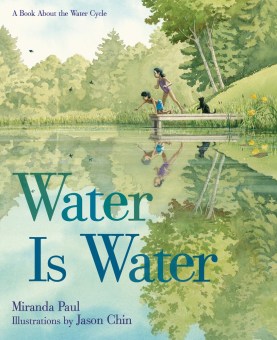
Water Is Water: A Book About the Water Cycle written by Miranda Paul and illustrated by Jason Chin (May 2015 Roaring Book Press)

Water is Water 2015 Gift Books

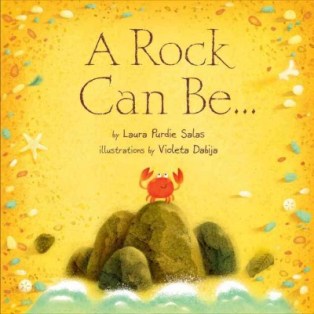
A Rock Can Be . . . by Laura Purdie Salas with illustrations by Violeta Dabija (March 2015 Millbrook Press)

A Rock Can Be Mock Sibert 2016

What are your #MockSibert choices?

I am excited to once again join the Nonfiction Picture Book Challenge. My goal is to read 100 nonfiction titles this year. Most will be picture books but I will also read some longer texts. Many, but not all will be published recently (2014-2016). There are some older titles I have missed that I want to catch up on.

Thanks to Alyson from Kid Lit Frenzy for the inspiration to read and share more nonfiction picture books in 2016. Follow the link to Alyson’s blog to read about more nonfiction books you need to read!

nfpb2016logo