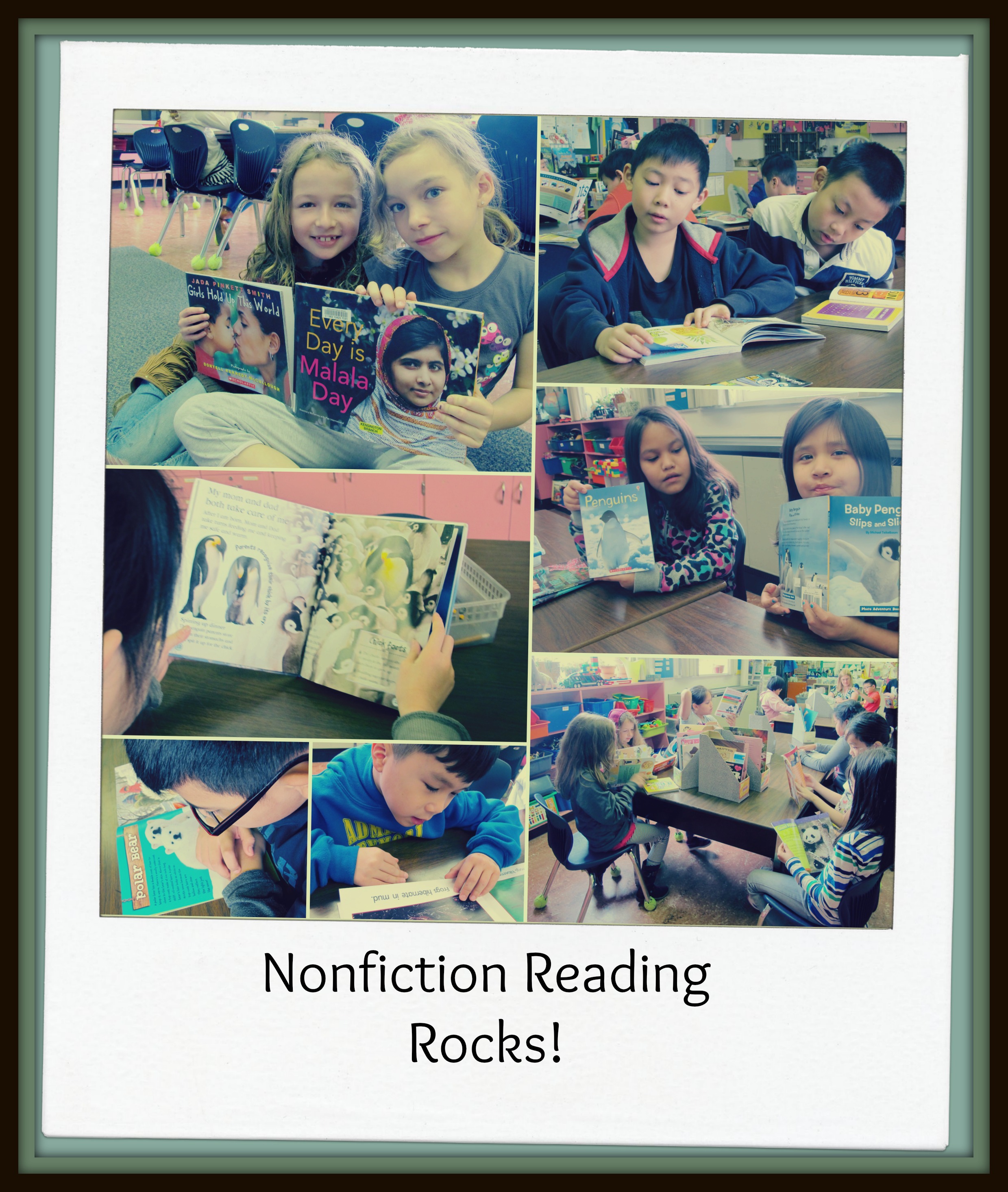
Nonfiction conversations: Book sharing circles – what nonfiction titles are we drawn to and why?

How do we get children more interested in reading nonfiction titles? I so often hear that students don’t gravitate to nonfiction or that they aren’t interested in reading nonfiction titles in the same way that they are fiction titles.

Nonfiction conversations: Book sharing circles - what nonfiction titles are we drawn to and why?

Nonfiction reading is a priority in my classroom. I want my students to benefit from the rich reading experiences nonfiction books provide. I do my best to keep up with great new nonfiction releases. I purchase a number of nonfiction books. But, beyond filling my room with titles, I do certain things to ensure that these books are being read, understood and enjoyed. Like:

  • book talk, book talk, book talk
  • lots of nonfiction read alouds that are “stretched out” to include talk time, written responses and various activities
  • book displays that highlight nonfiction reads
  • one day a week that has a specific nonfiction focus during Reading Workshop

When I feel that students need to branch out and experience other nonfiction books and think more deeply about their nonfiction choices, we take some time to do nonfiction book sharing circles.

Nonfiction conversations: Book sharing circles - what nonfiction titles are we drawn to and why?

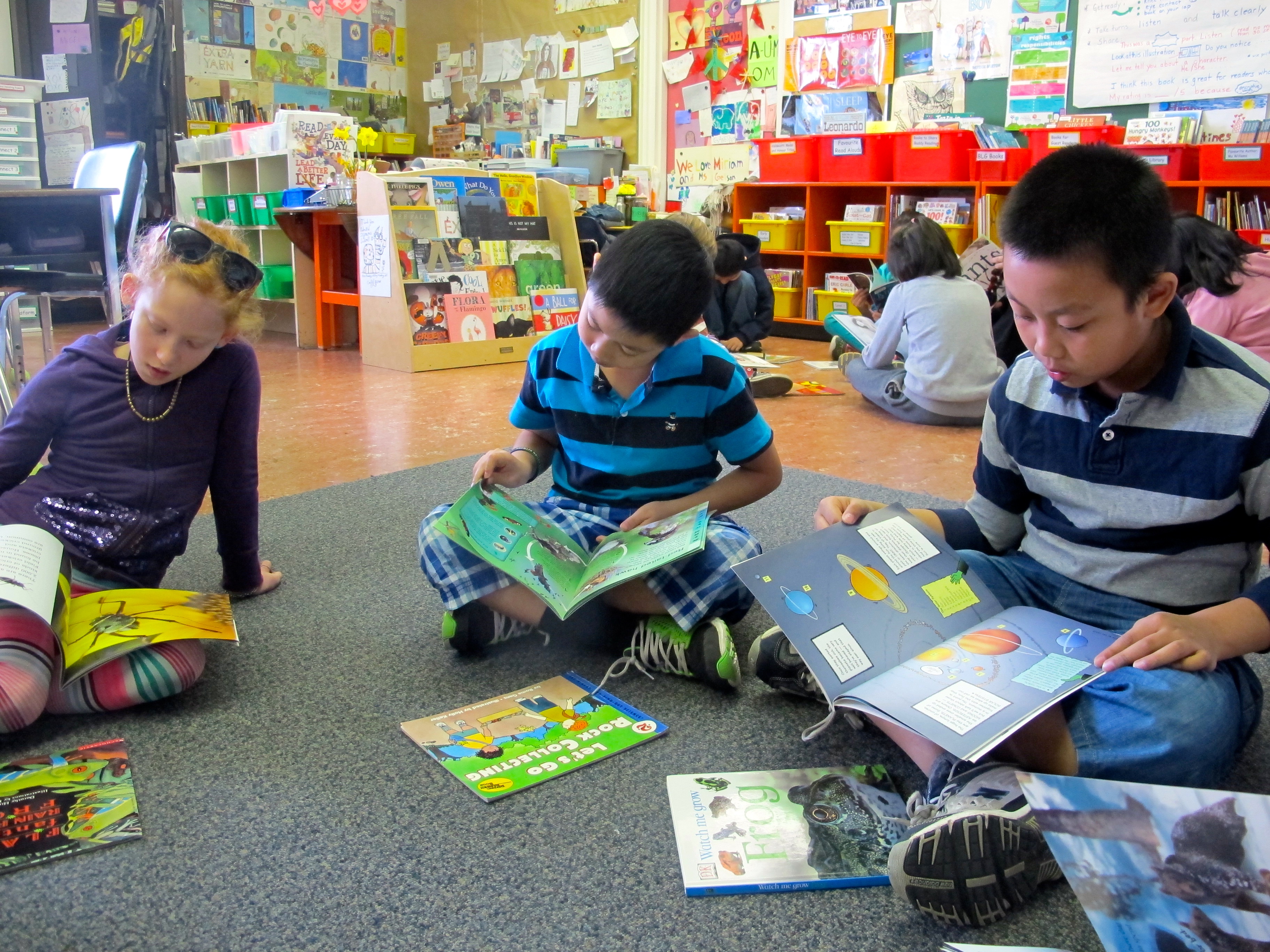
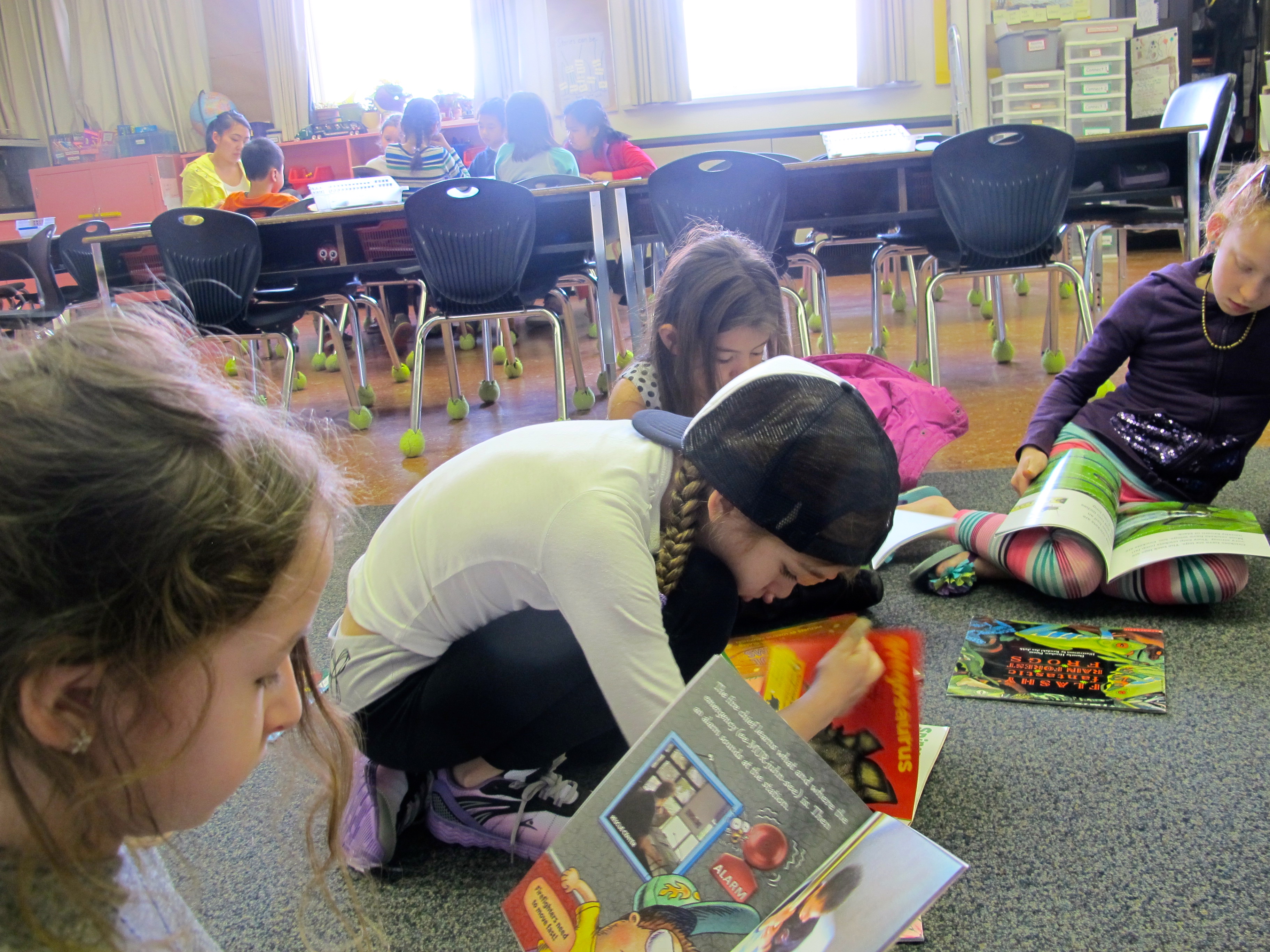
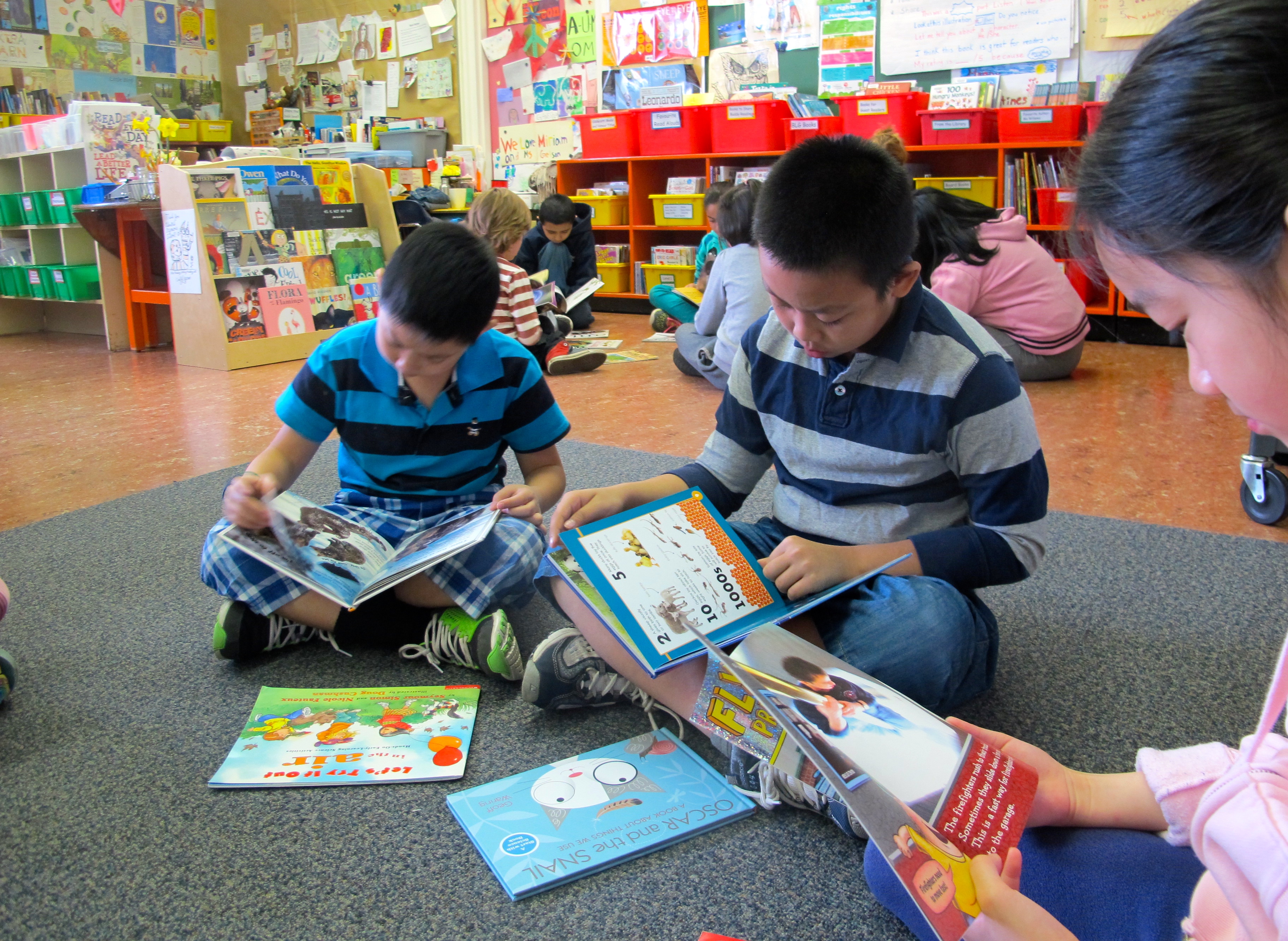
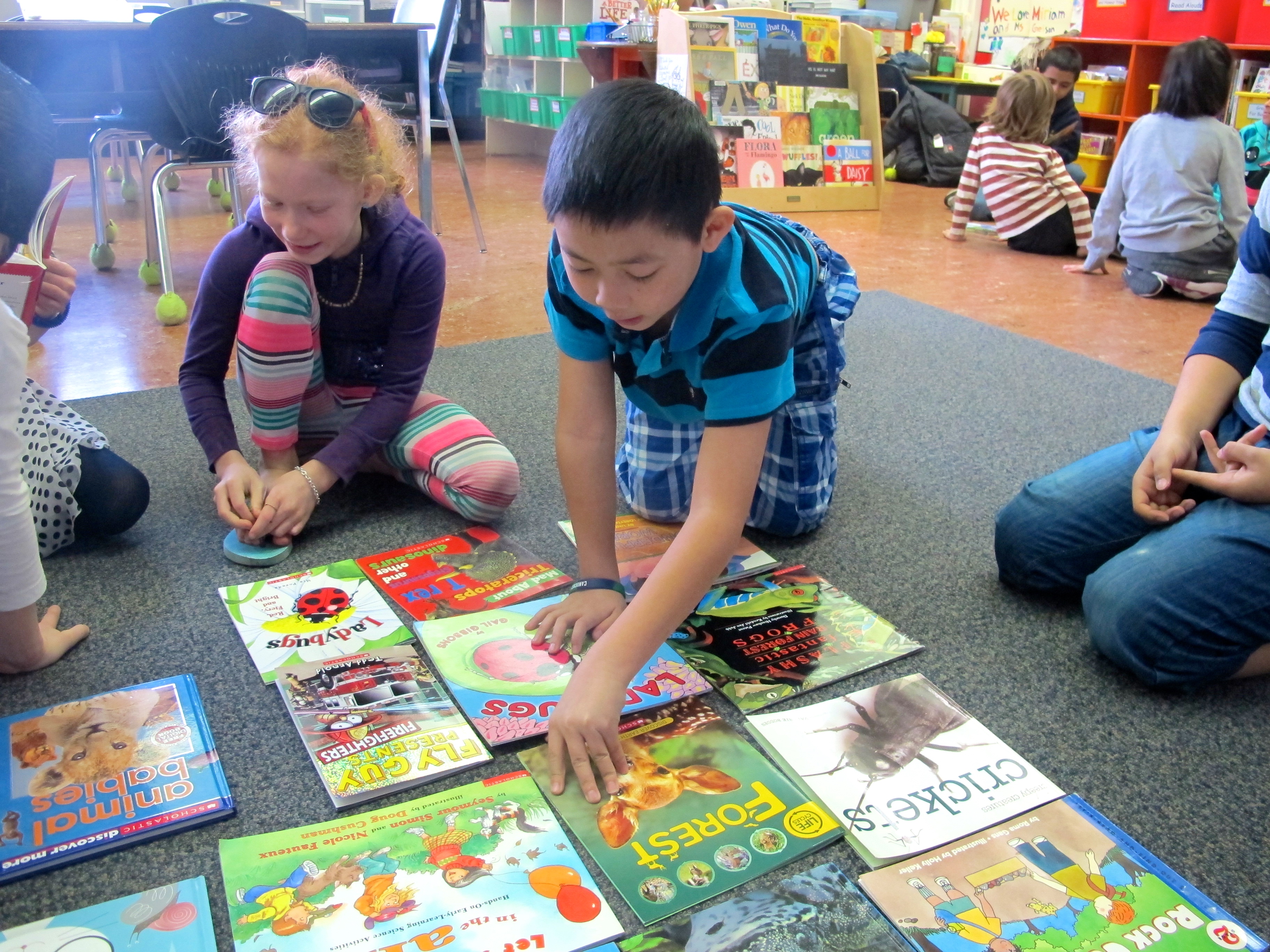
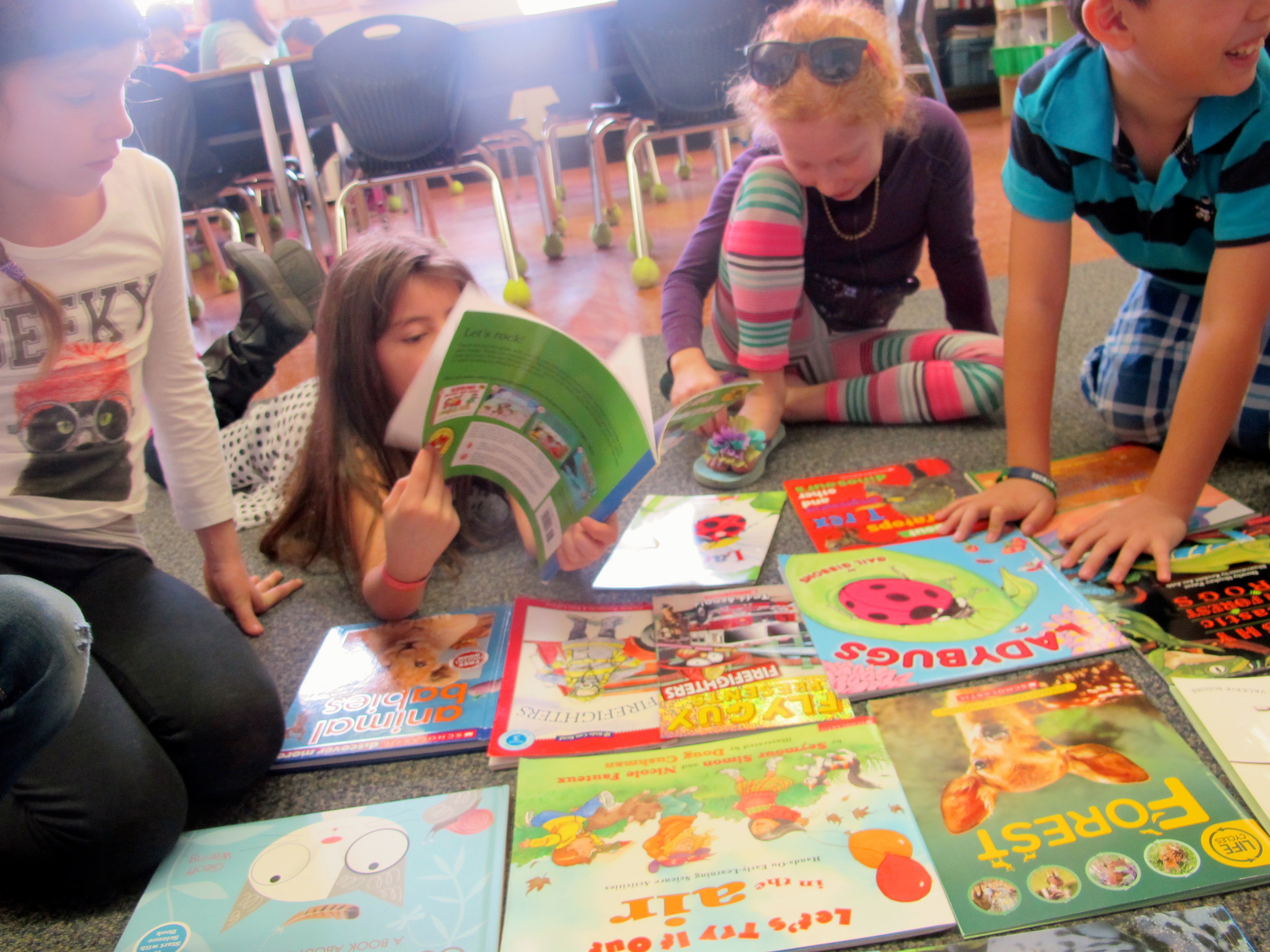
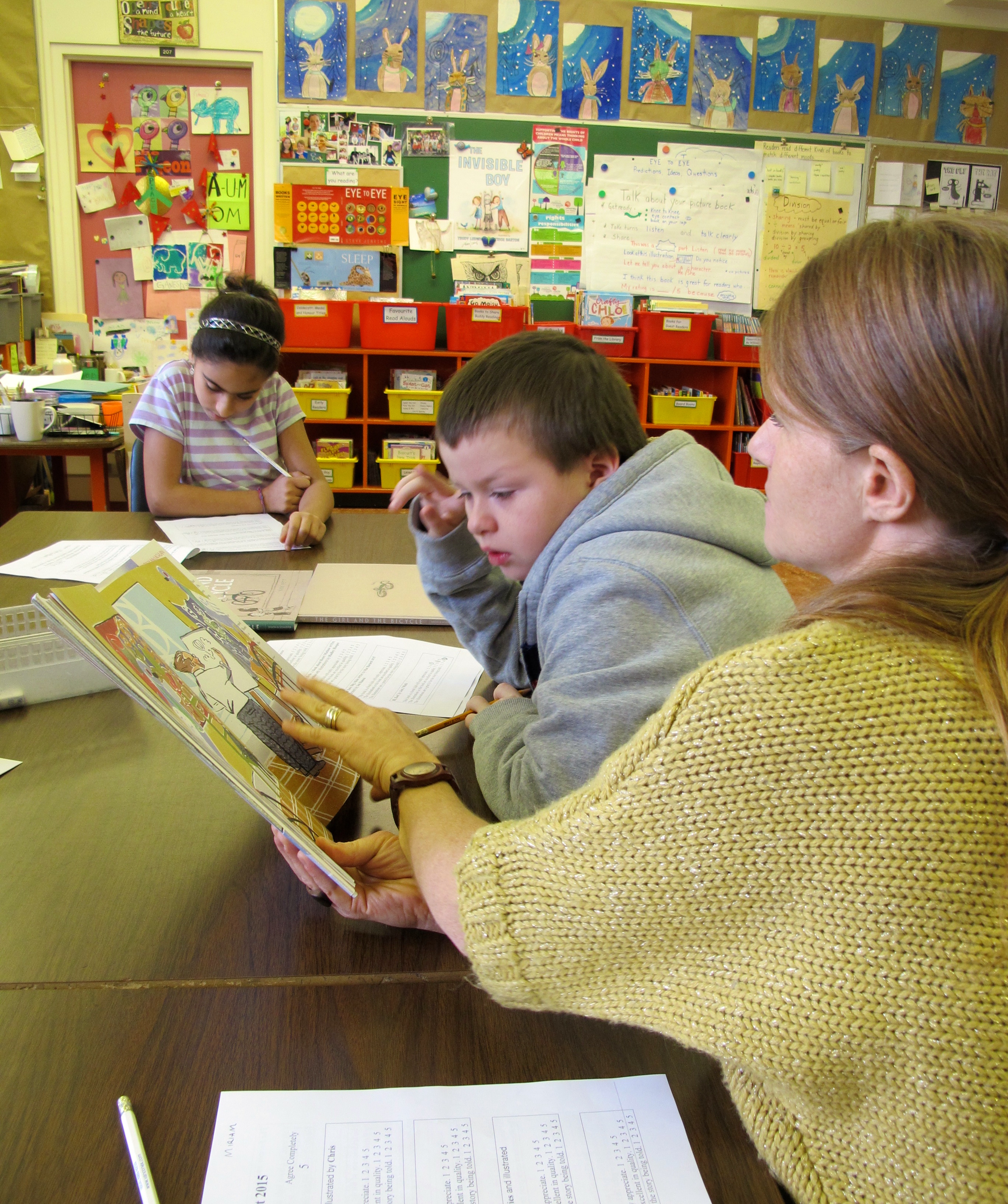
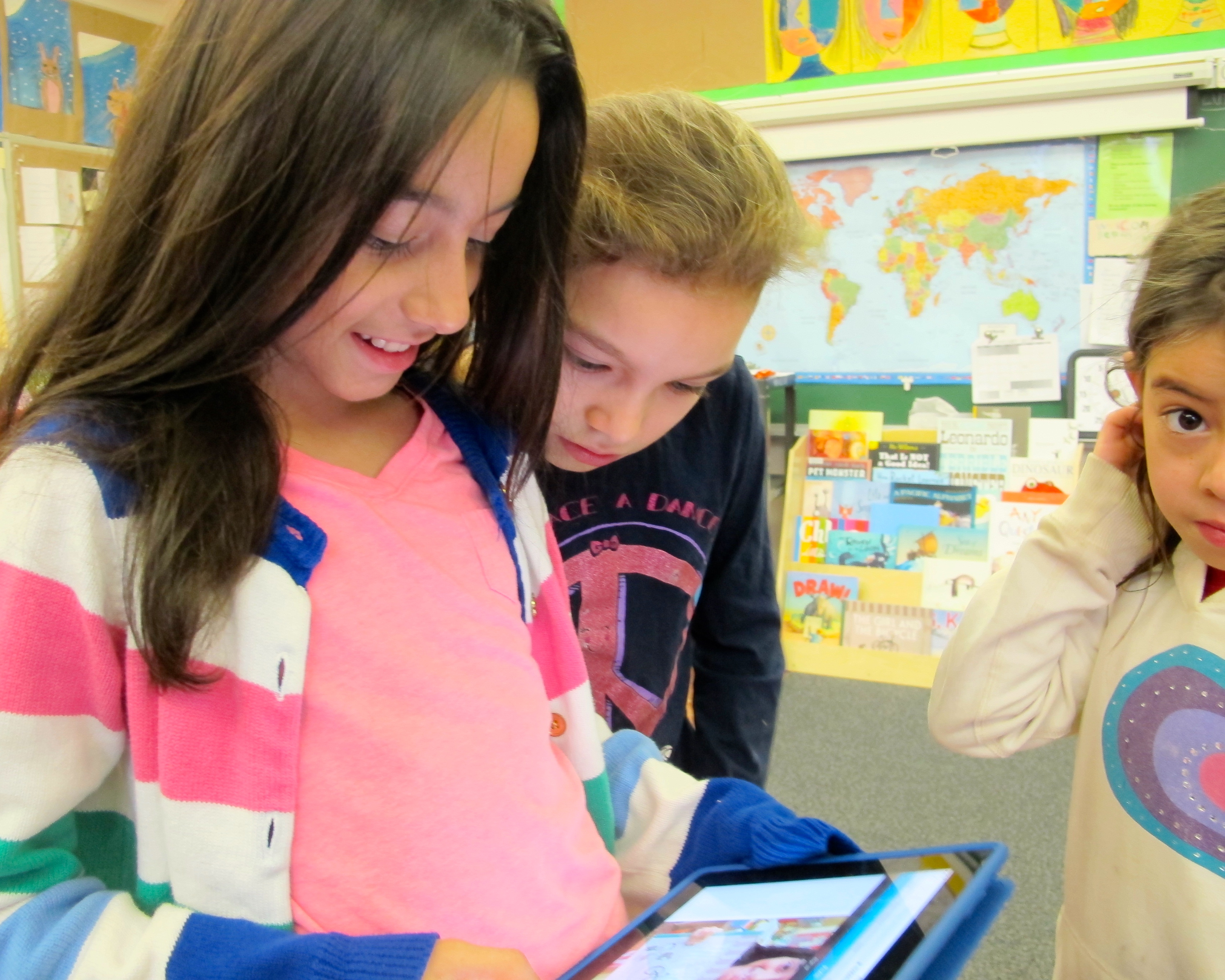
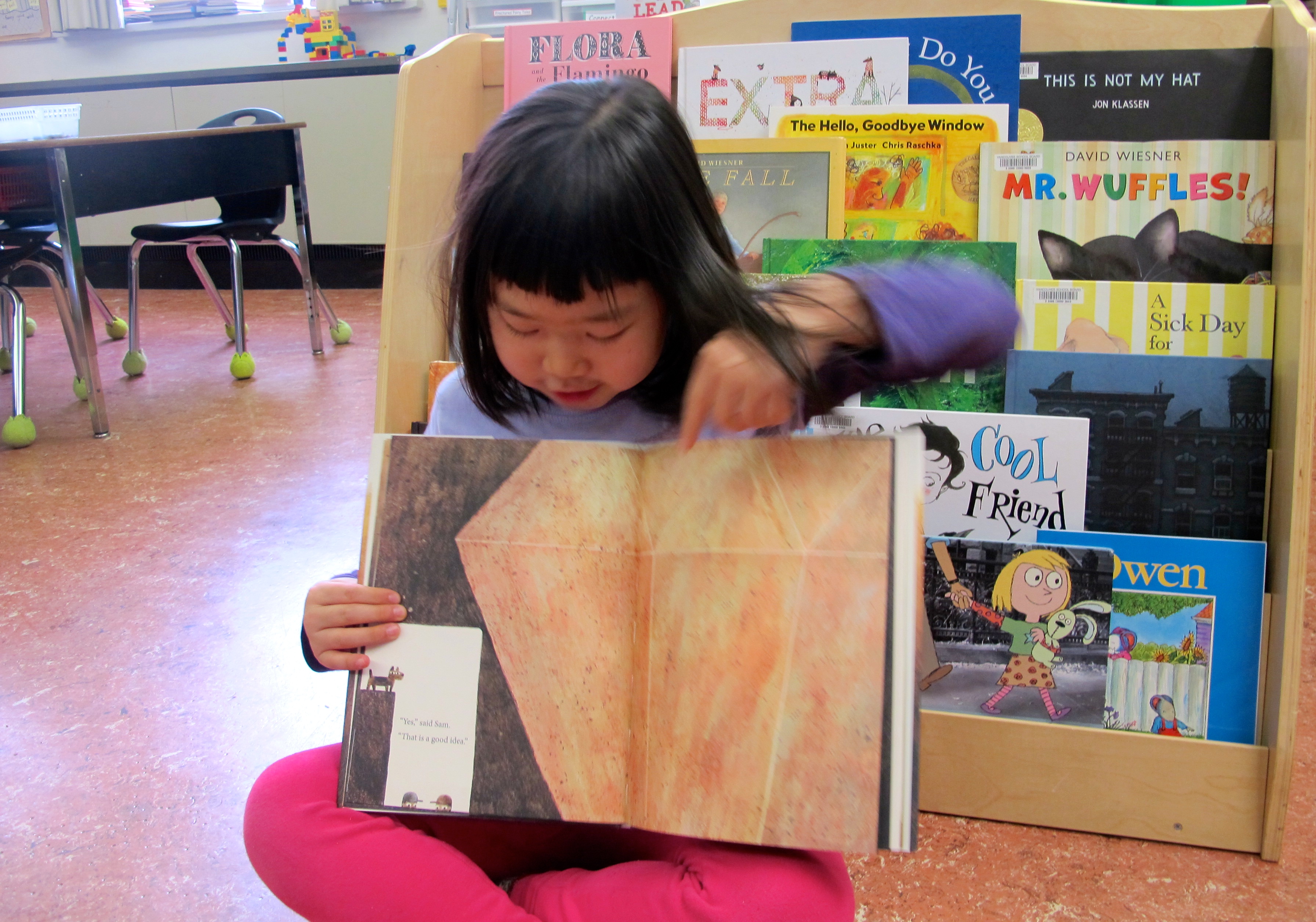
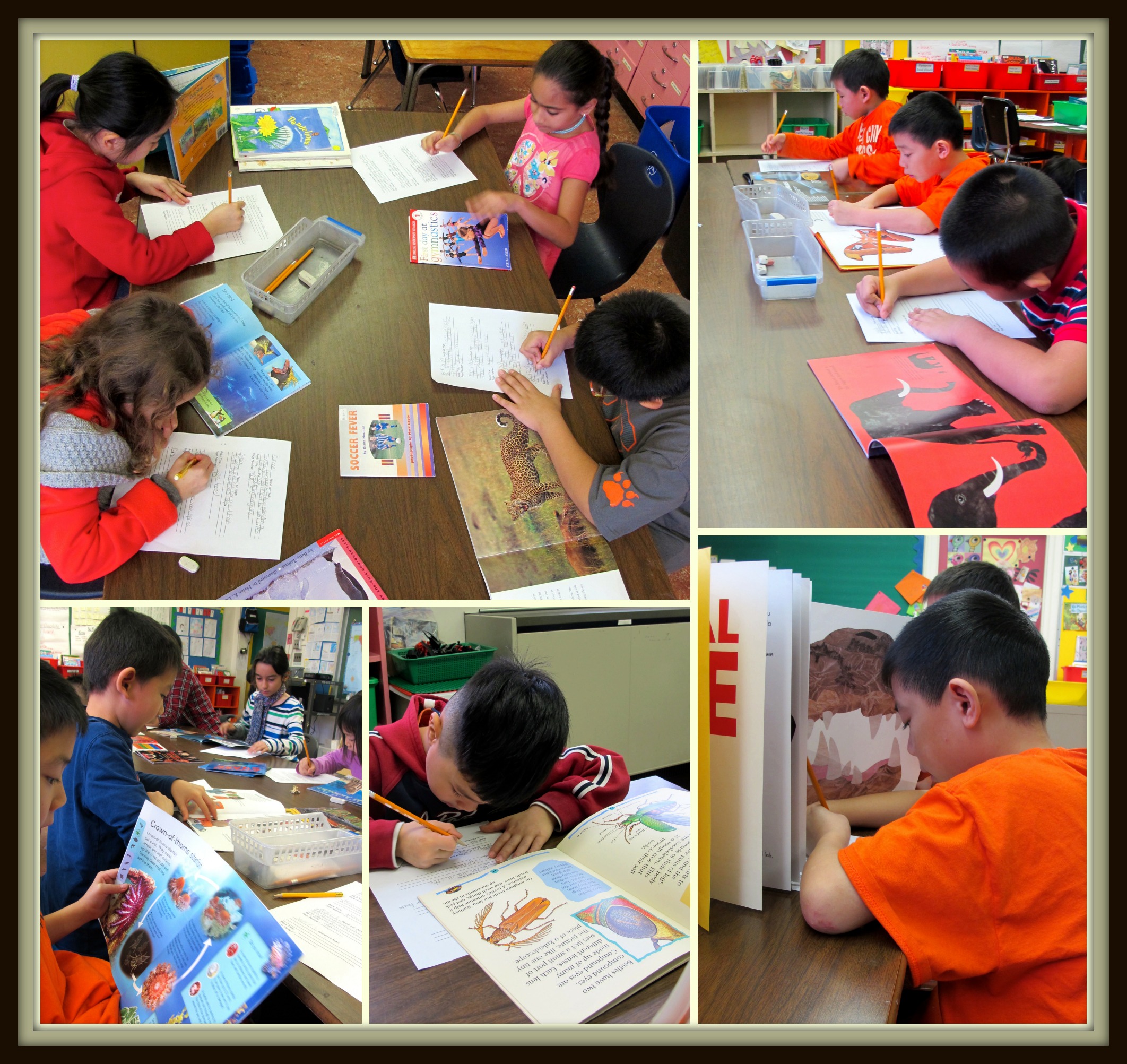
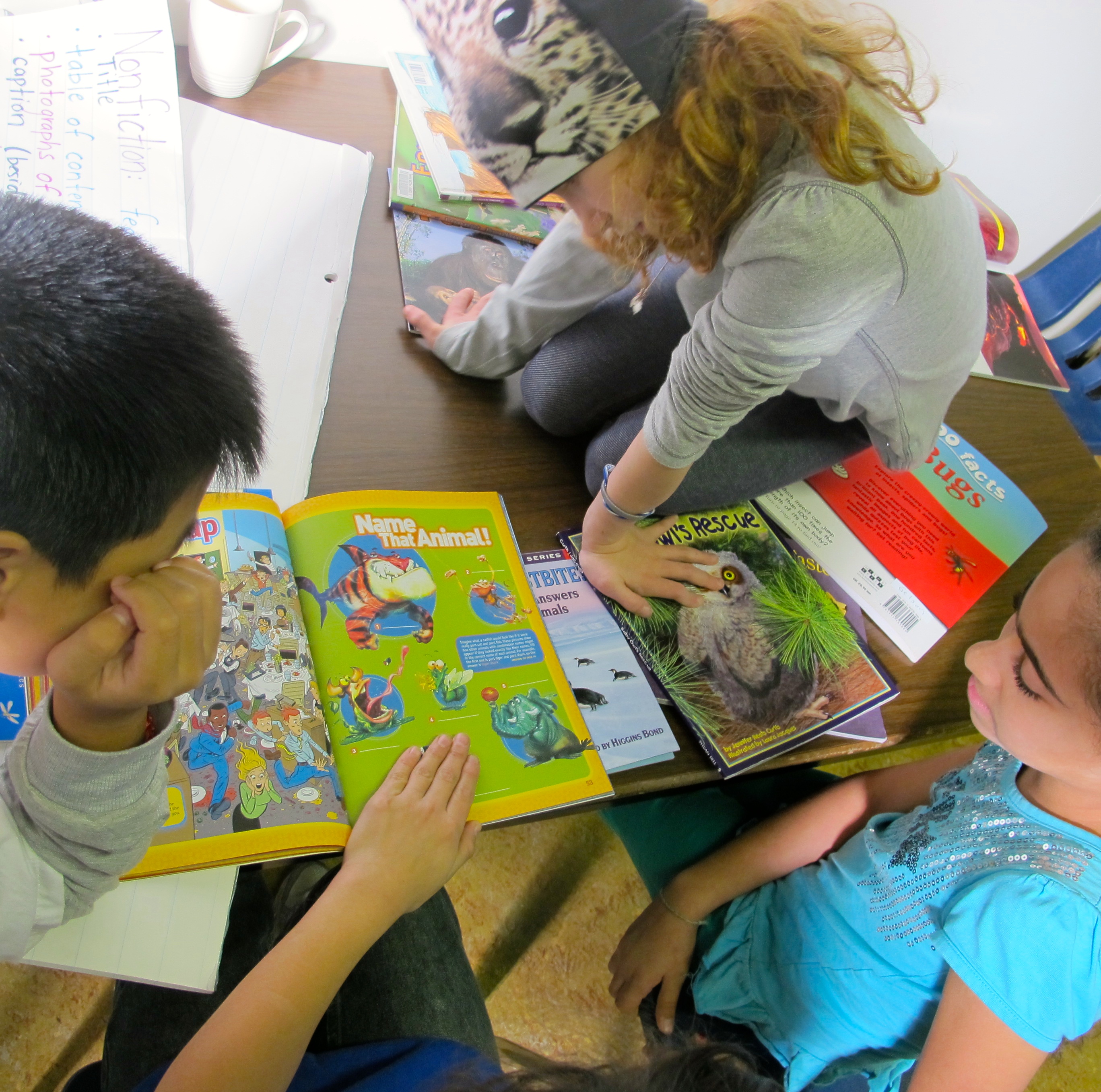
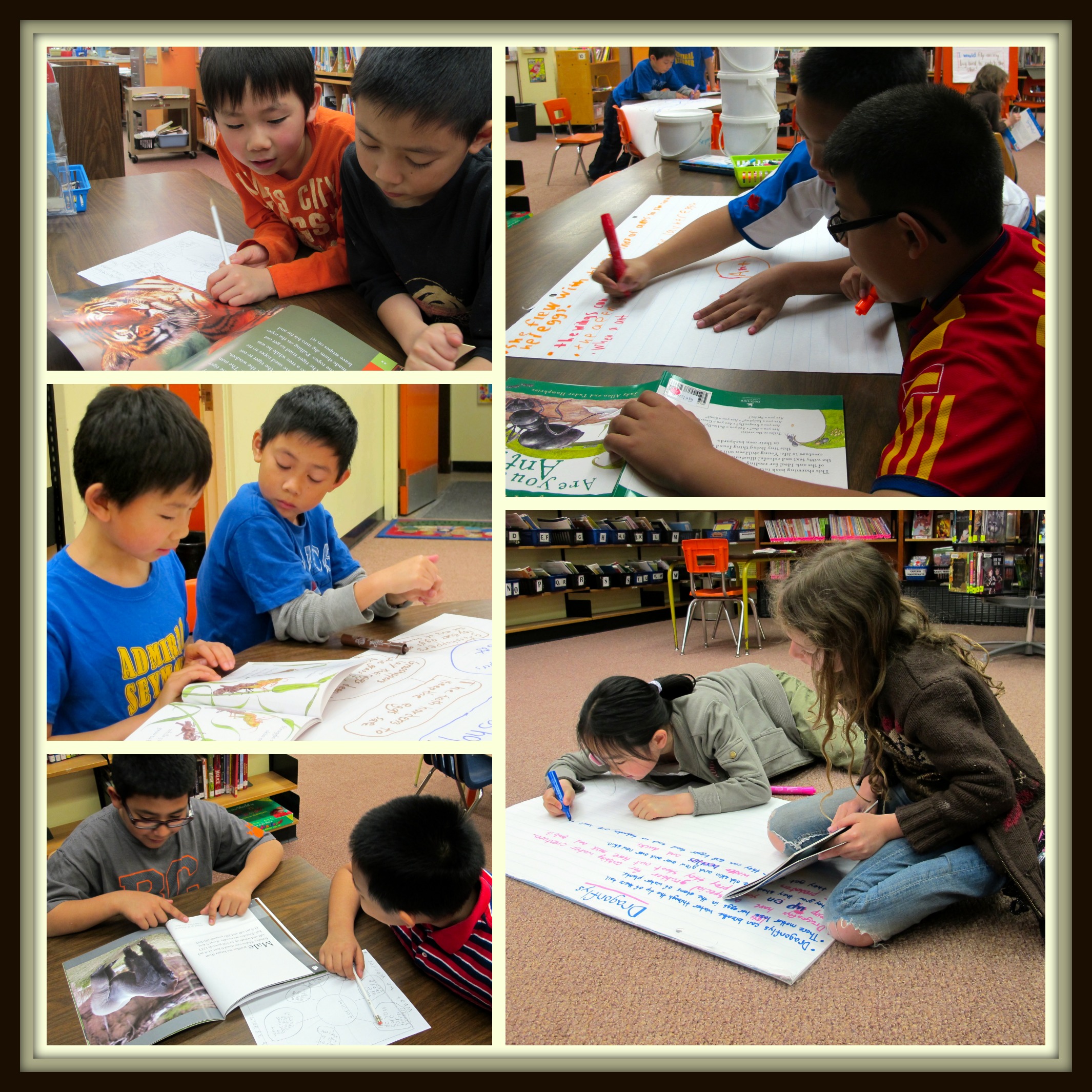
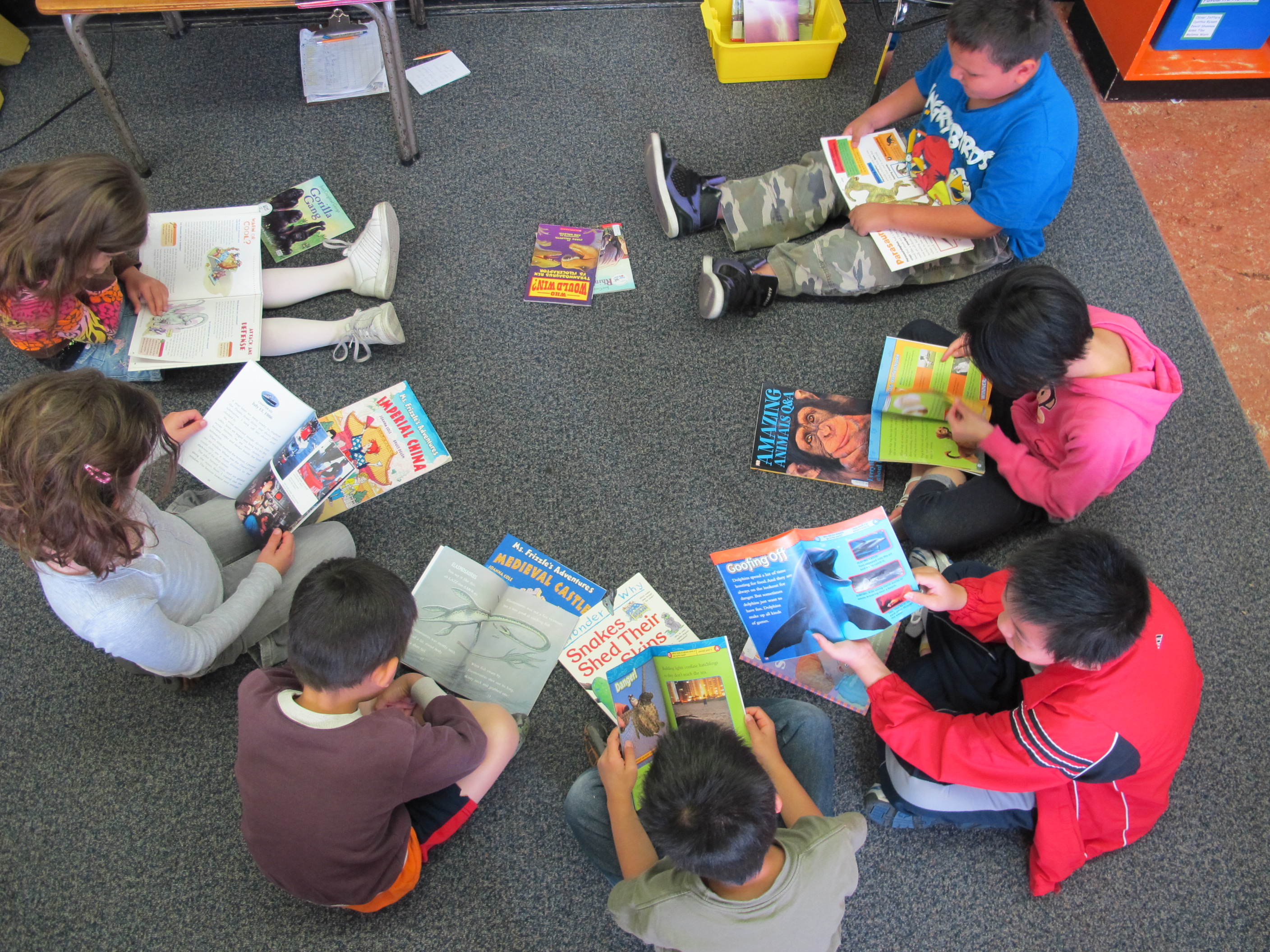
I break my students into groups of 6-8 children and provide enough books so that each child has two books to look at for a two minute period. I literally set a timer and when it “dings” we pass our books to the next person in the circle. Every two minutes switch.

Nonfiction conversations: Book sharing circles - what nonfiction titles are we drawn to and why?

Before we begin the “looking at” and checking out books, I model. How can I spend a minute with a nonfiction picture book? What would I look at? How do I skim through the book, stopping for a closer look at things that interest me? What features am I looking for in a book? What is important to me?

Nonfiction conversations: Book sharing circles - what nonfiction titles are we drawn to and why?

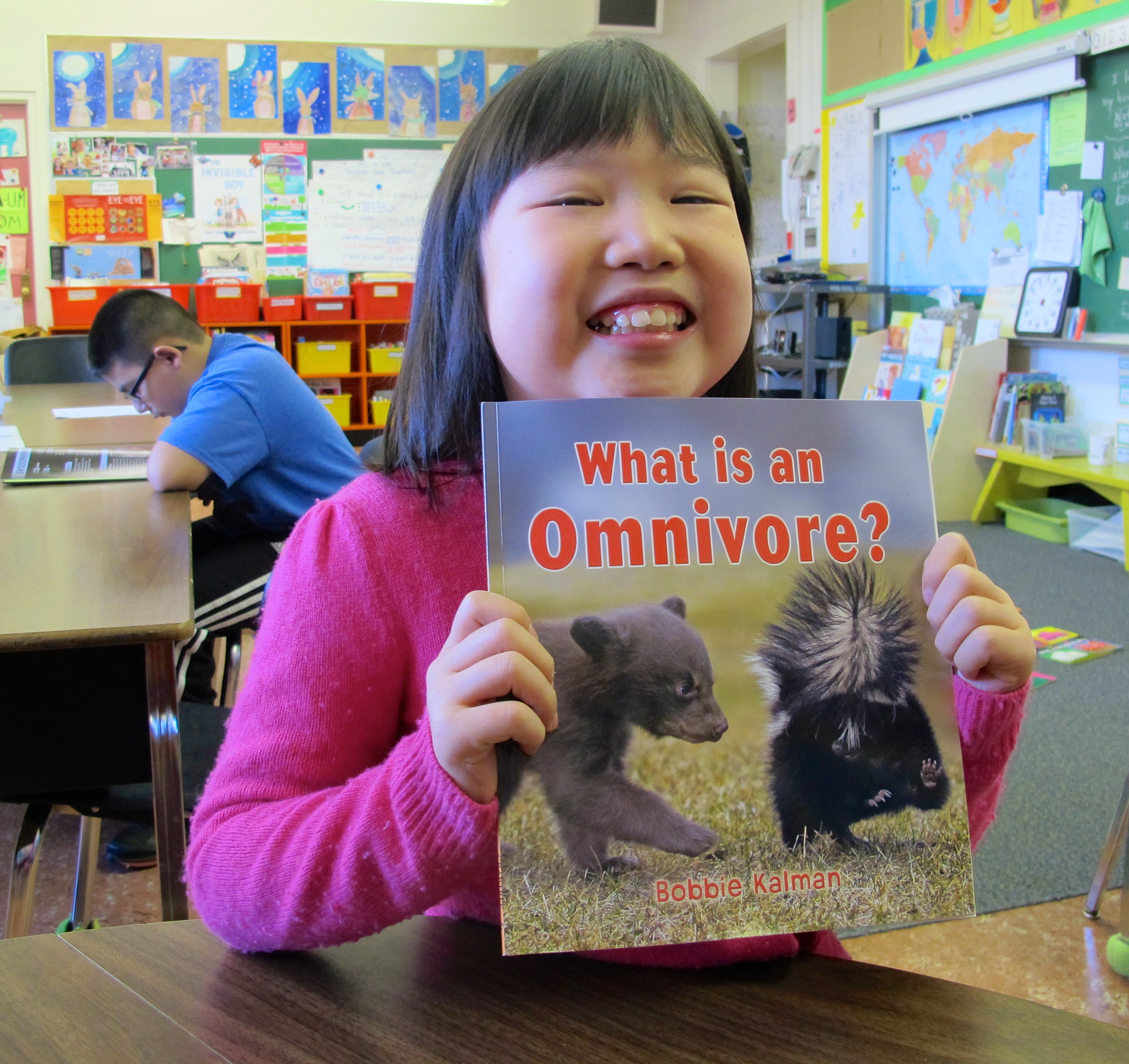
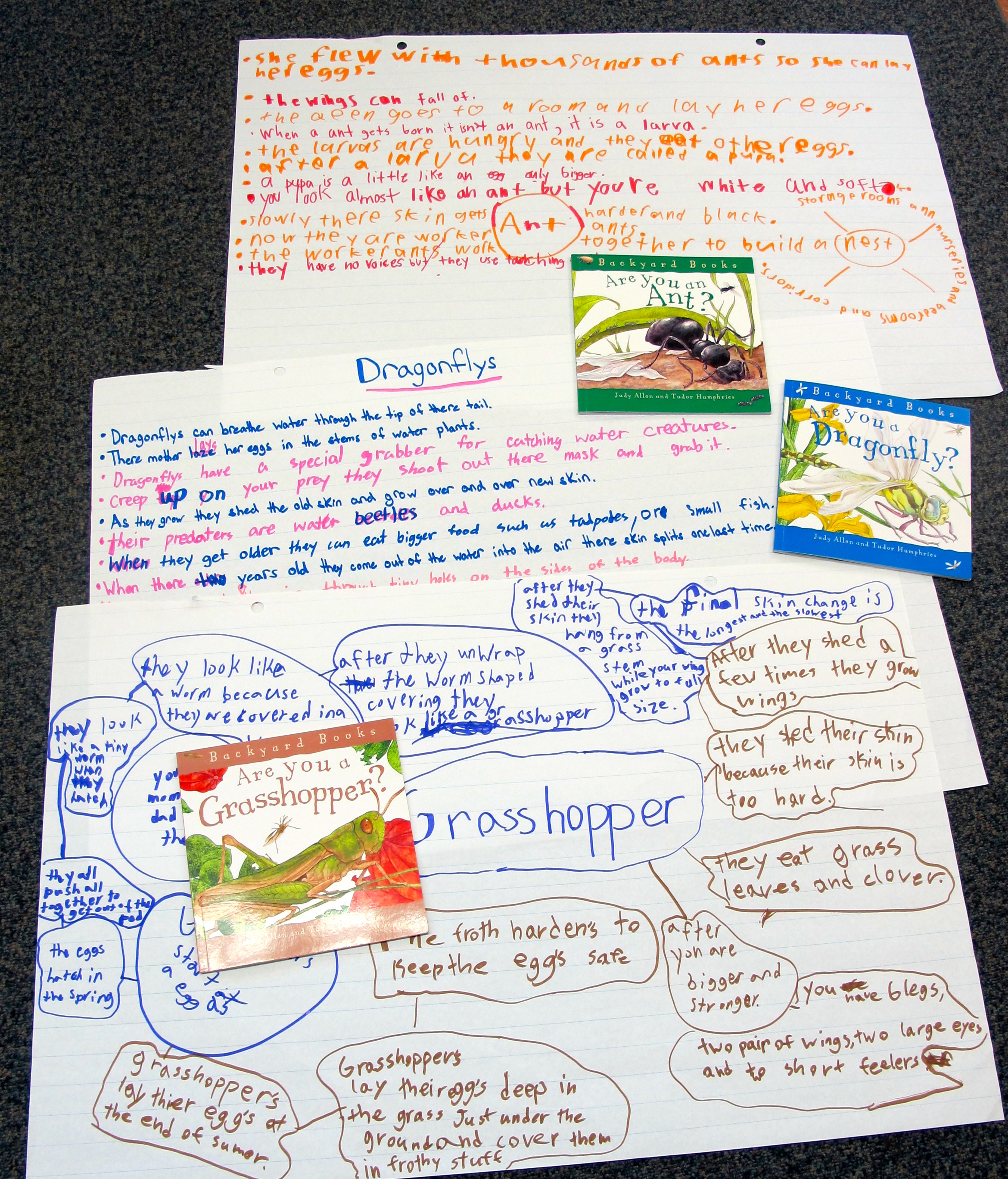
At the end of a full circle of sharing, I have the kids place all of the books in the centre and we talk. What books were favourites? What books were not appealing? What title would you like to put in your book box right now? Why?

Nonfiction conversations: Book sharing circles - what nonfiction titles are we drawn to and why?What came out of our discussions today? Here are the students’ responses.

Books that we wanted to keep reading:

  • “had answers to questions I was wondering”
  • “have lots of different information and it is easy to find on the page”
  • “have great real life photographs or interesting illustrations”
  • “are about a topic that I really like”
  • “told me something I didn’t already know.”
  • “made me wonder stuff.”

Books that we might not pick up again:

  • “have too basic facts”
  • “have too much text on a page and no boxes or charts or labels”
  • “the illustrations aren’t interesting”
  • “are about something I already know lots about”
  • “they don’t make sense like I don’t know where to start reading’

Nonfiction conversations: Book sharing circles - what nonfiction titles are we drawn to and why?

As adults leading the groups we noticed

  • Illustrations/Photographs are key.
  • Two minutes at a time was the perfect time for focus and attention.
  • Certain books needed more direction – how to navigate, highlighting certain features, etc. and then interest increased.
  • Kids did judge a book by its cover but changed their minds after spending a minute flipping through.
  • The expectation of quiet with sharing at the end helped children focus.
  • Particular series are tried and trusted.
  • Certain topics were particularly interesting (space, weather, etc.) and our nonfiction collection needs more titles on these topics that students can read independently.

I am now thinking of all of these things as I make a few new purchases for the classroom and am hoping the children are excited to make some new choices in their nonfiction reading tomorrow!

Celebration: Mock Caldecott Results and Feedback

This week I celebrate the winding up of our #MockCaldecott process. The books are read. The voting complete. The winners selected. The evaluations written. Now these titles are read, reread and treasured. They are pieces of our reading lives.

I can’t quite figure out how to share just how much this entire process exceeded my expectations. There is normally a LOT of picture book love in my classroom. This took it over the top. In the very best of ways.

 Celebration: Mock Caldecott Results and Feedback There's a Book for That

We read each book together as a class over a two week period. Talking. Noticing. Savouring. Rereading.

And then it was time to vote. A rich and thoughtful process. Students revisited many of the titles and carefully considered their votes.

 Celebration: Mock Caldecott Results and Feedback There's a Book for That

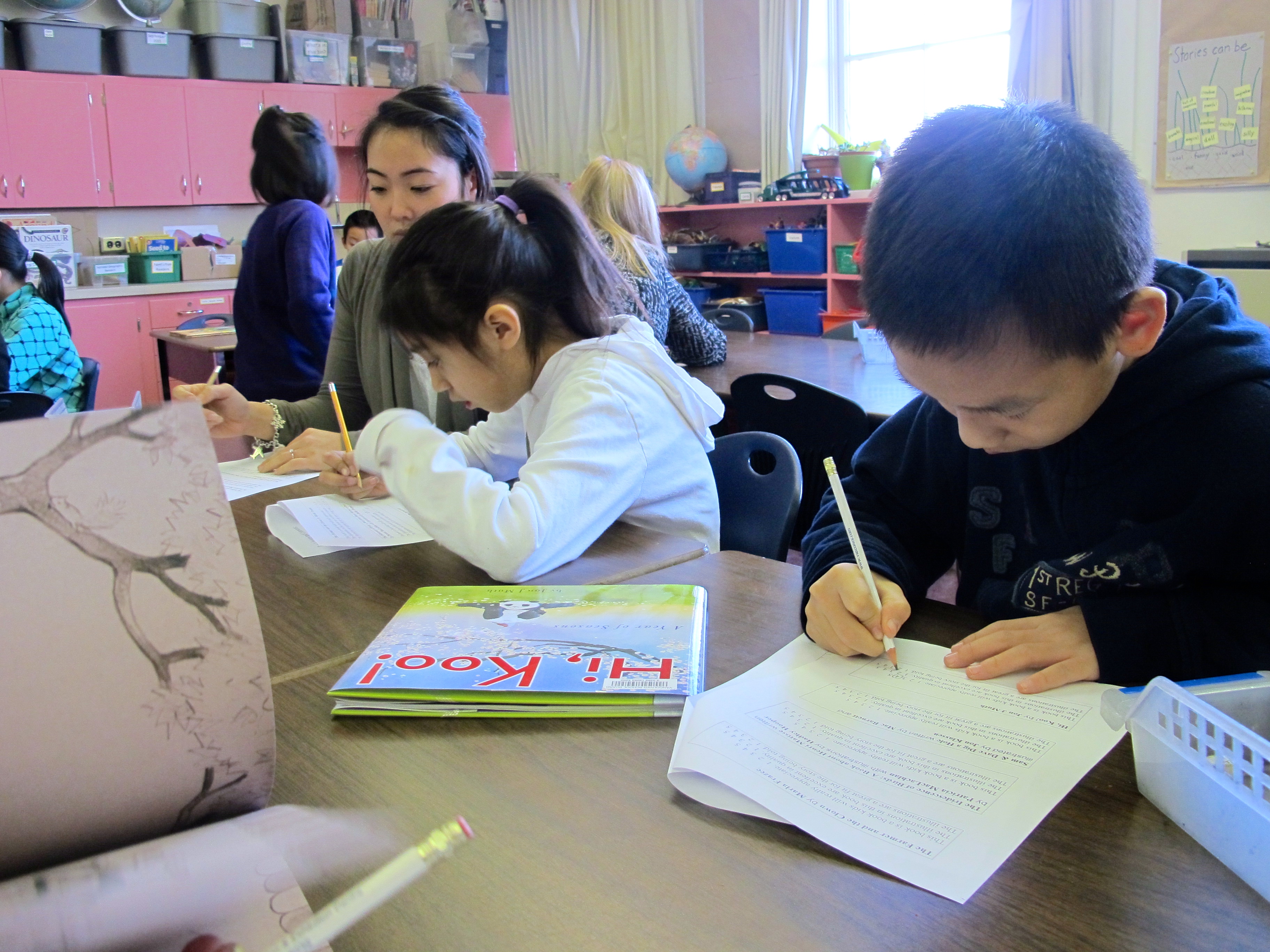
Students rated each of our eleven titles on a scale of 1-5 for 3 questions:

This book is a book kids will really appreciate. 1  2  3  4  5

The illustrations in this book are excellent in quality. 1  2  3  4  5

The illustrations are a great fit for the story being told. 1  2  3  4  5

I loved watching students and adults talk together and share what they noticed.

 Celebration: Mock Caldecott Results and Feedback There's a Book for That

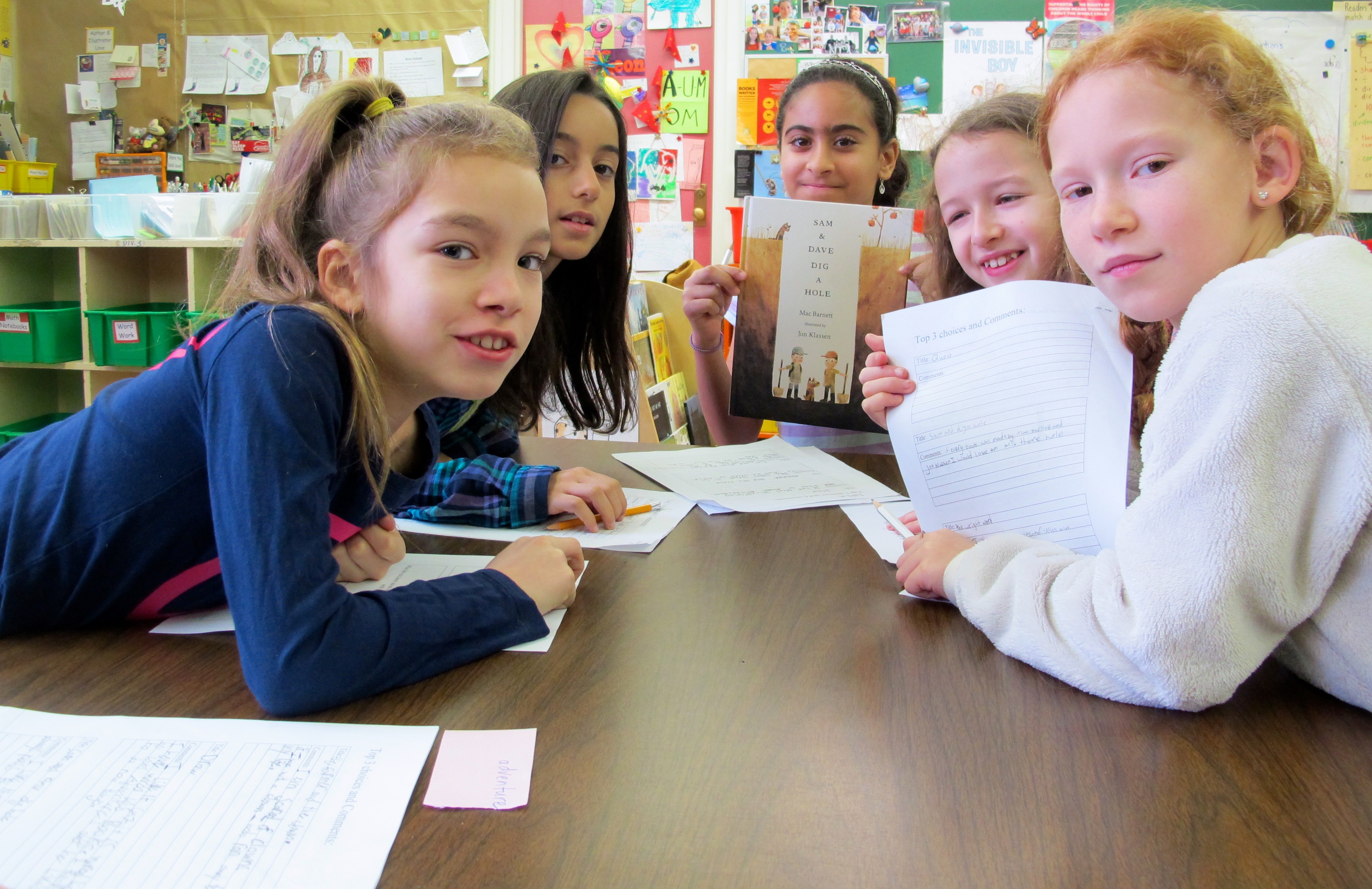
As students each selected 3 favourites to write more about, I witnessed collaboration and celebration.

 Celebration: Mock Caldecott Results and Feedback There's a Book for That

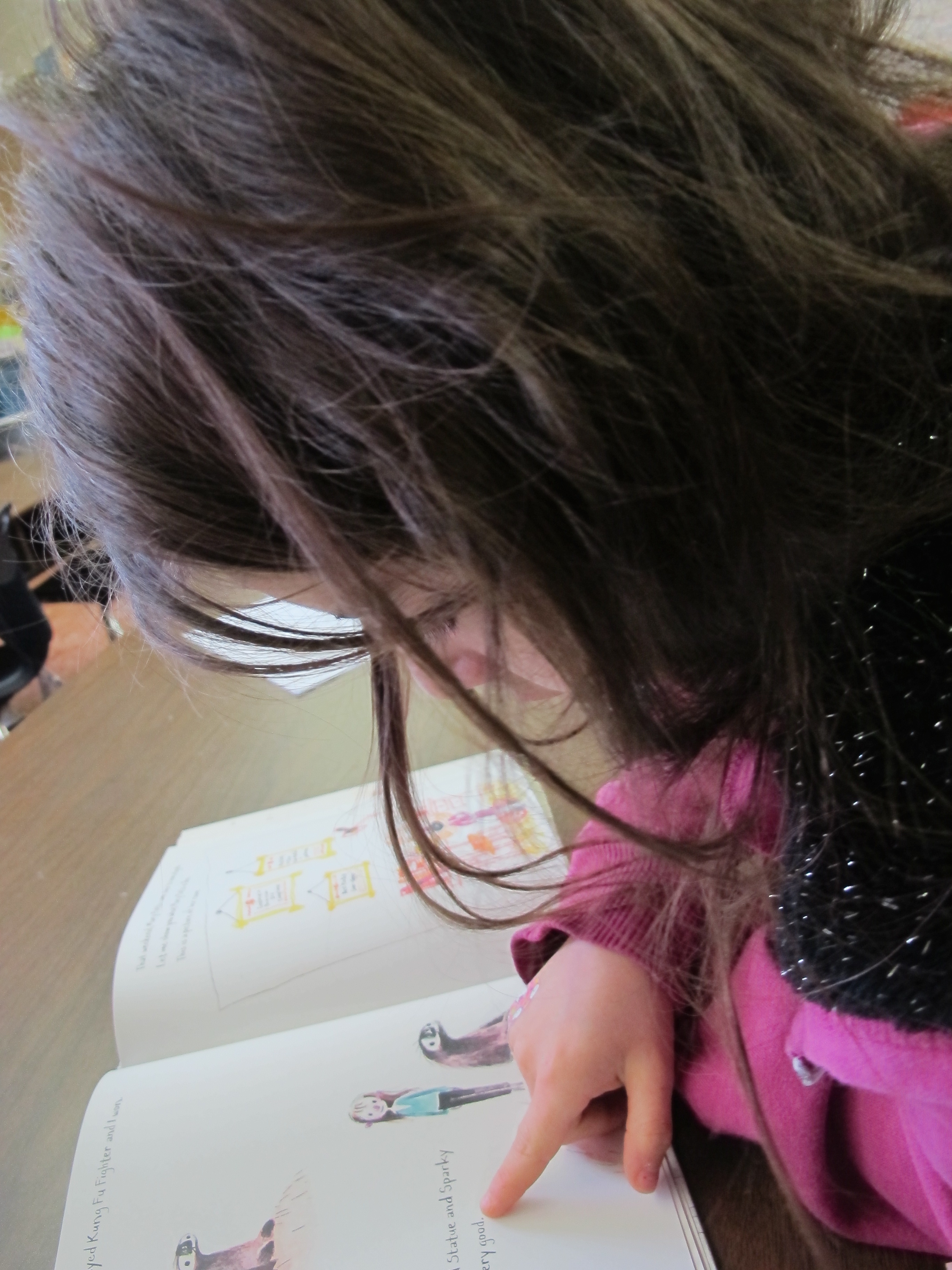
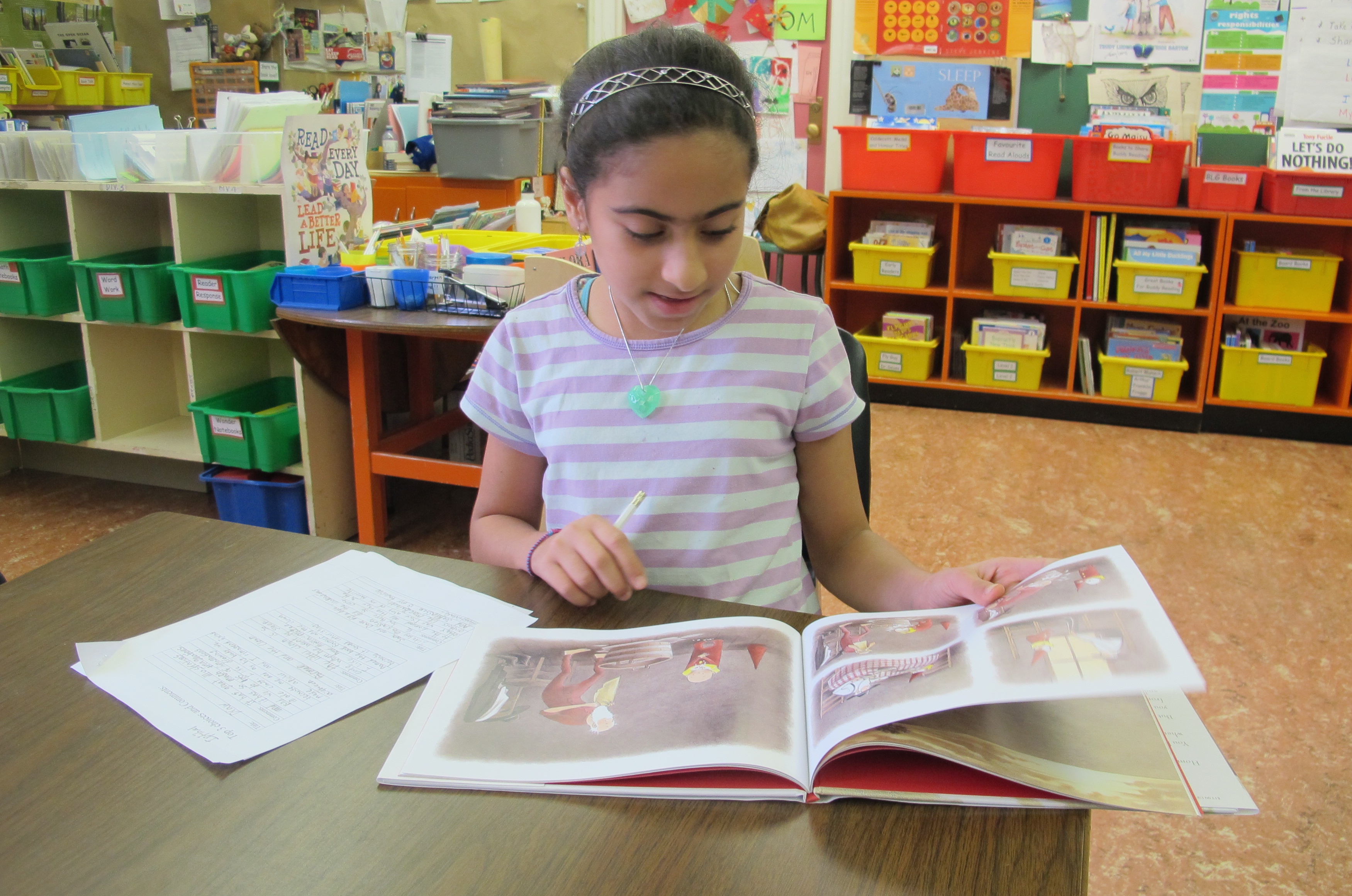
And . . . quiet independent reflection and rereads.

 Celebration: Mock Caldecott Results and Feedback There's a Book for That

 Celebration: Mock Caldecott Results and Feedback There's a Book for That

Our actual winners were as follows:

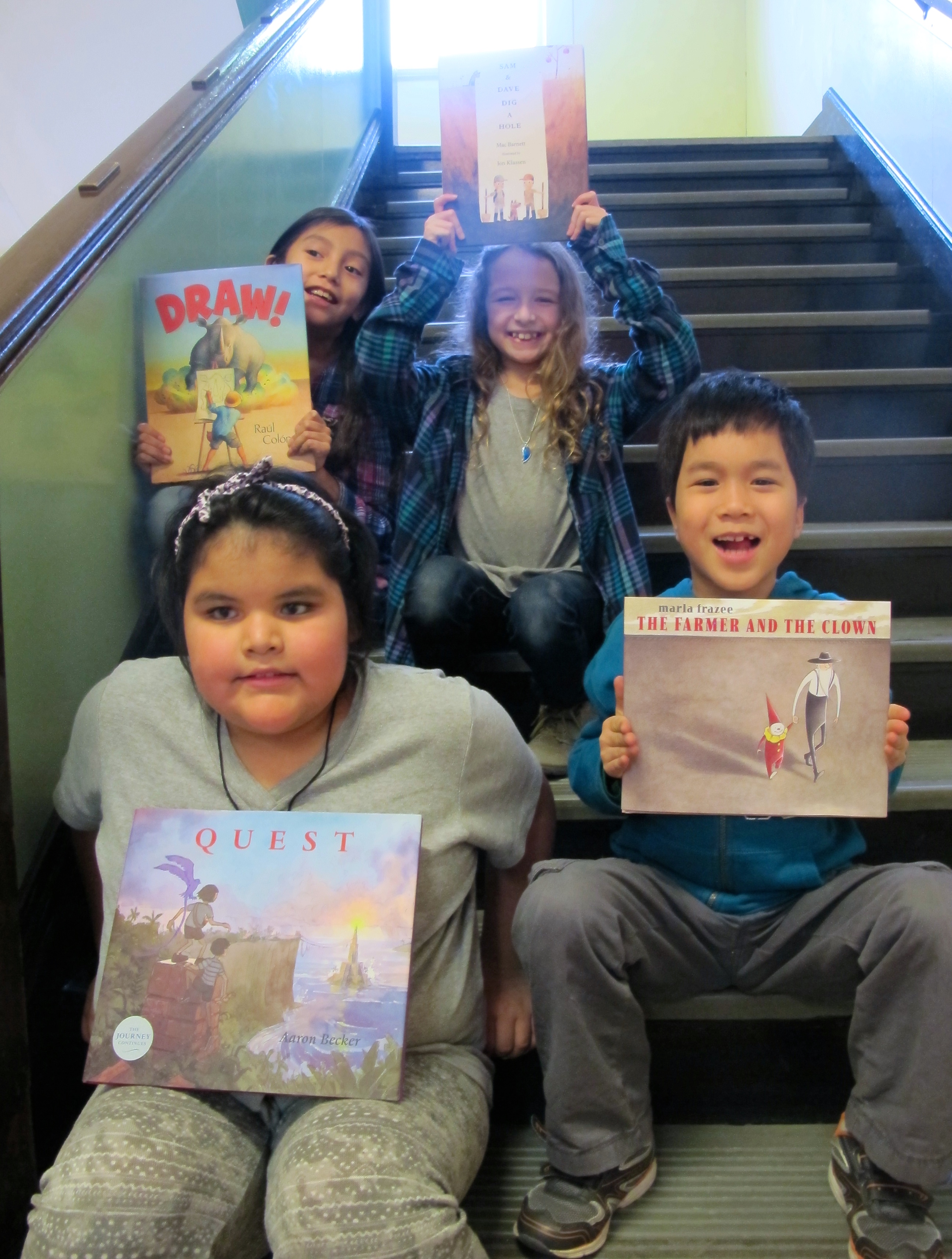
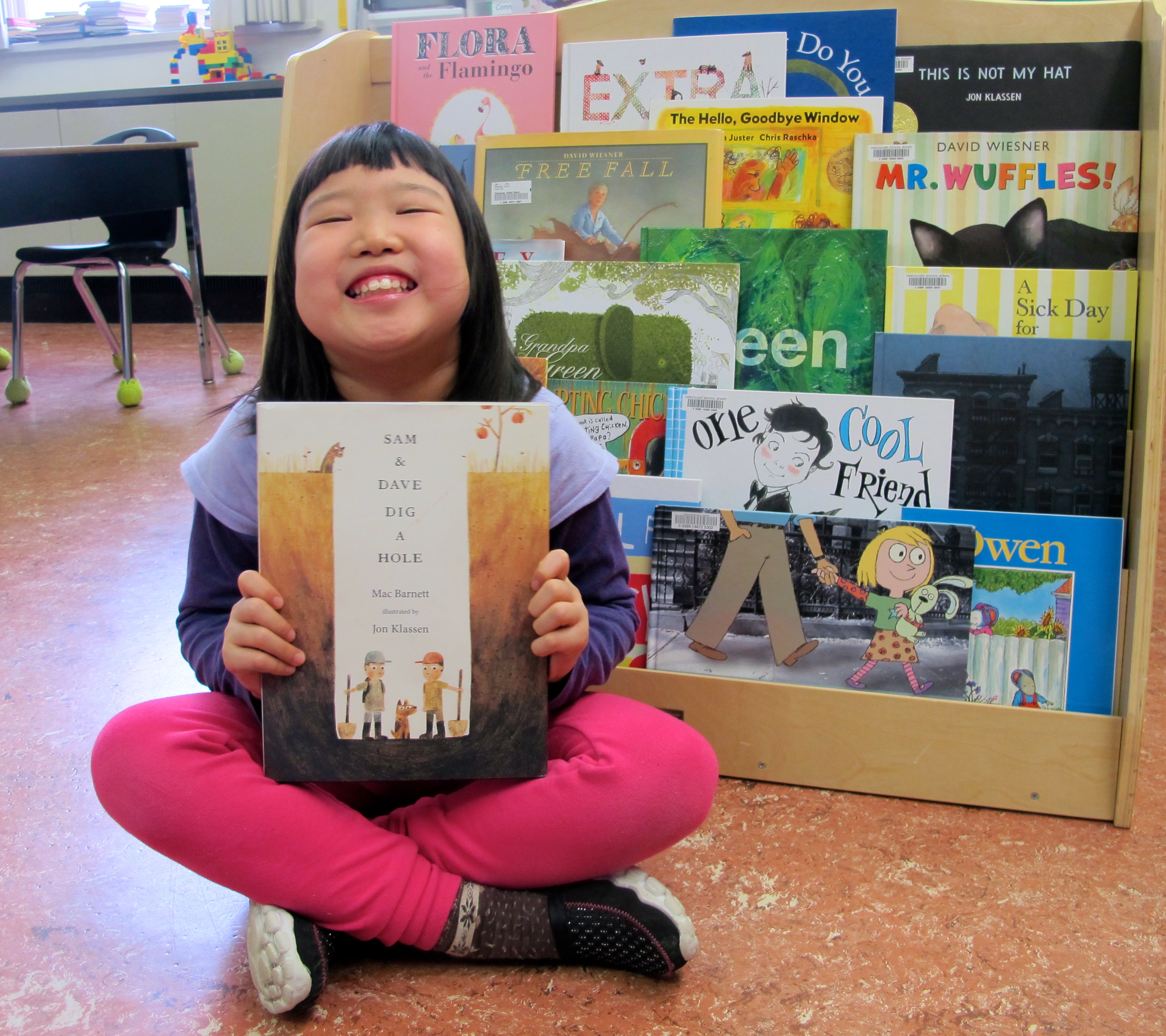
Same & Dave Dig a Hole took the medal. We awarded honor status to The Farmer and the Clown, Quest and Draw!

 Celebration: Mock Caldecott Results and Feedback There's a Book for That

These titles received a LOT of love. Like the biggest smile of approval EVER! 🙂

 Celebration: Mock Caldecott Results and Feedback There's a Book for That

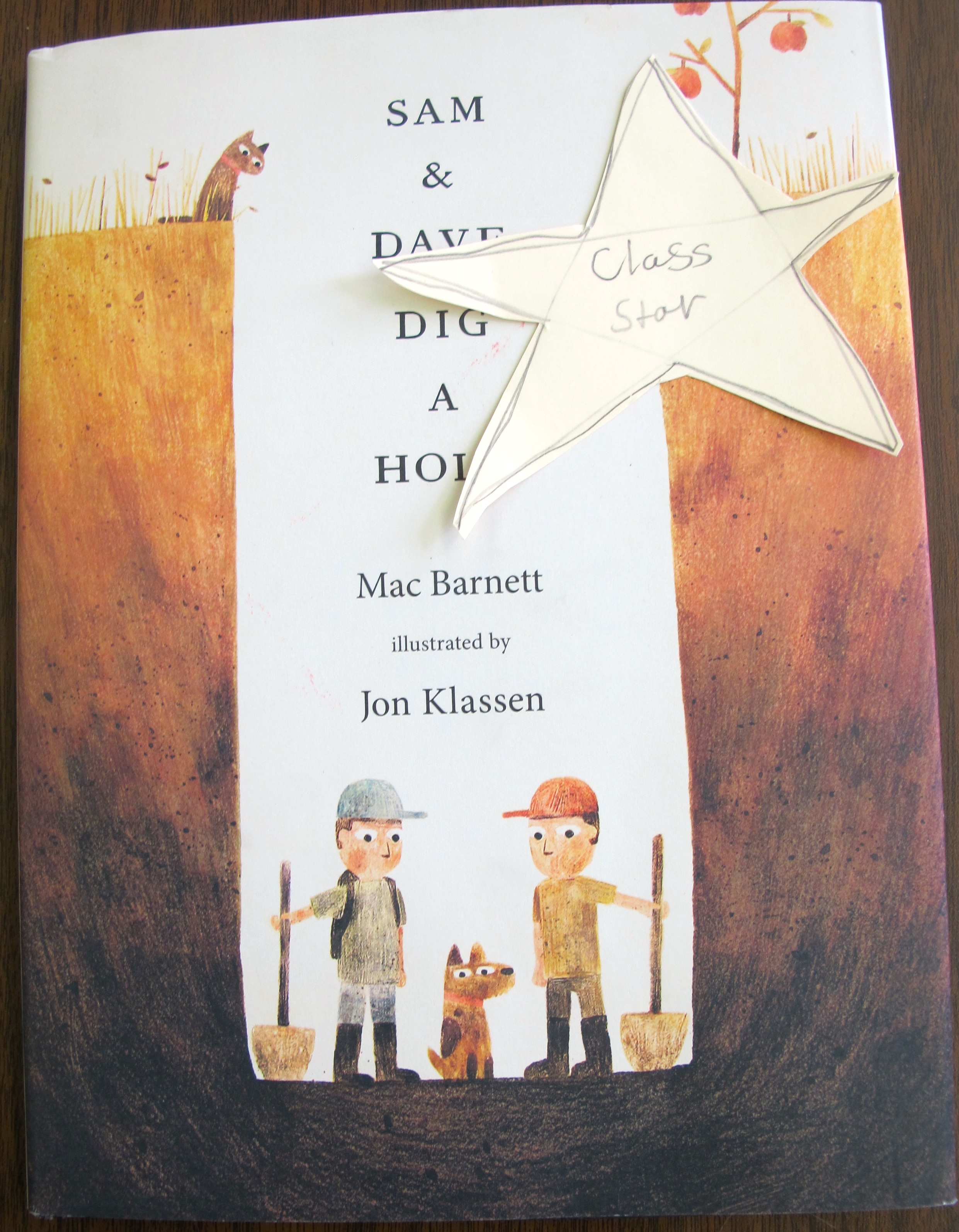
And student created stickers . . .

 Celebration: Mock Caldecott Results and Feedback There's a Book for That

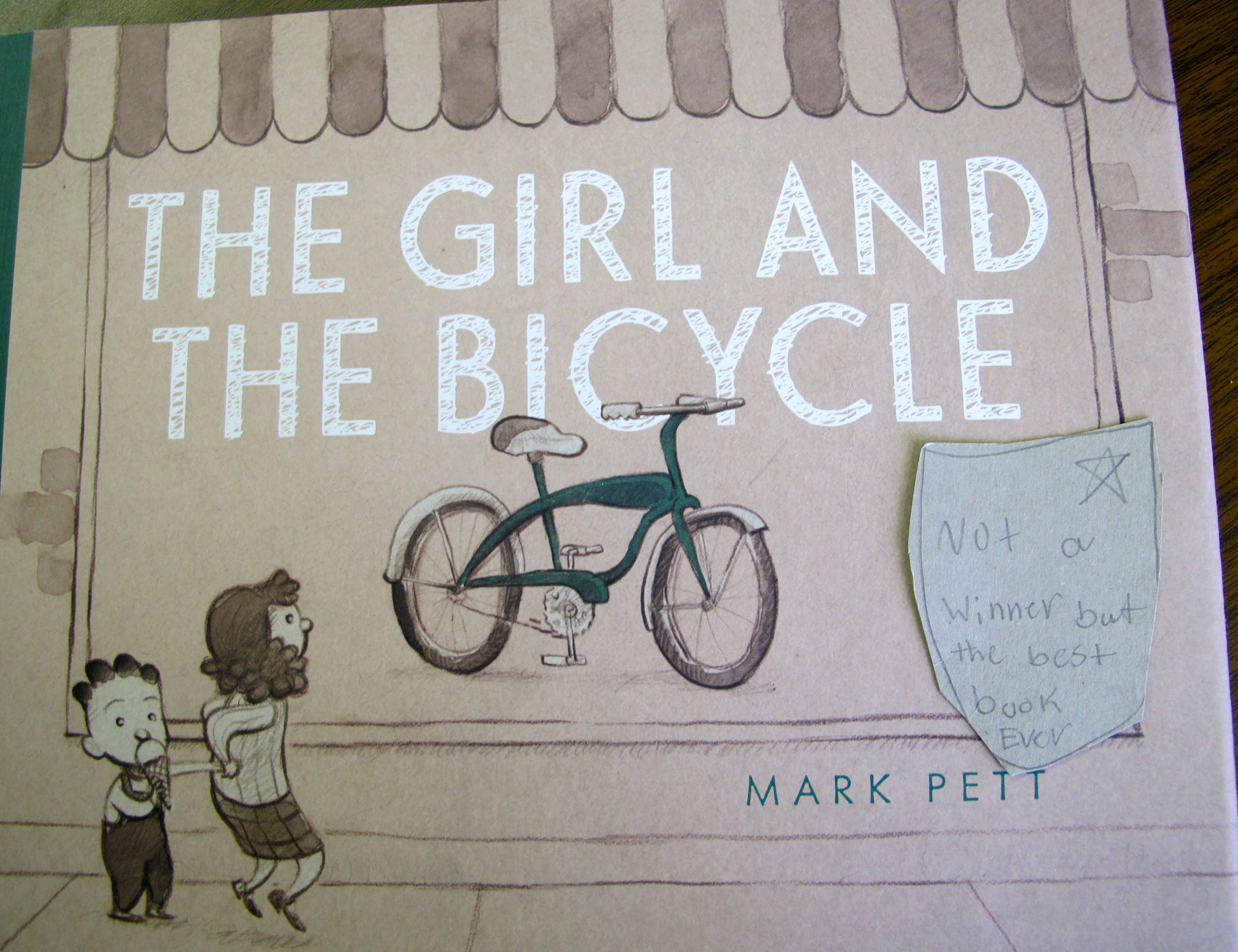
Titles that didn’t receive medal/honor status got another kind of love and devotion:

 Celebration: Mock Caldecott Results and Feedback There's a Book for That

And when author/illustrators communicated with us via twitter, it was pretty magical!

 Celebration: Mock Caldecott Results and Feedback There's a Book for That

Comments about favourite titles ranged from favourite parts to insightful observations. Some highlights:

Same & Dave Dig a Hole

“I like the part when they always pass by the big diamonds. Maybe they are too lazy to dig for a long time.”

“I really like when they dig straight down but they miss the pink diamond. The book had very good details. It’s like Sam and Dave fell in a new galaxy. Or like time travel.”

“I love how the dog could smell the diamond.”

“Sam and Dave is a great digging book because the dog can smell gems: one small, two medium three big, four enormous!!”

“That was the biggest diamond that I ever seen in a book!”

Draw!

“I like it because it is wordless. I love wordless books. I think he likes adventures and to do new things.”

“It has great illustrations and so much imaginations! We do lots of imaginations in our class.”

The Farmer and the Clown

“My favourite part is the friendship between the farmer and the clown.”

“My favourite part is when the clown washes his face and then he looks like a cute little baby.”

“My favourite part was when the clown needed to go and the farmer switched hats with him. It showed that on the next page.”

Quest

“This book is awesome! It has so many colours. I like how they draw something and then it comes true.”

“I choose Quest because the illustrations goes with the book. It’s a continuation of the book Journey and this time, they’re working together.”

The Girl and the Bicycle

“My favourite part is when the girl buyed the bicycle for her brother. I like when the girl dropped her bike and hugged the old lady.”

The Right Word

“I really like how the illustrator uses a lot of collage and nothing gets wasted.”

Sparky!

“Sparky was so lazy. He only knew how to sleep. He was an odd pet.”

“All the pictures are about cute and lazy. The pictures really fit with the plot. Sparky is very cute. I like how Sparky is always sleeping. The girl plays games but Sparky always loses.”

“I like the part when the sloth just sat there.”

The Promise

“I wouldn’t appreciate the colours in the ending as much if it didn’t have those dull colours to compare the bright colours to. It was a very good story.”

Reflecting on our learning was taken as seriously as exploring book details.

 Celebration: Mock Caldecott Results and Feedback There's a Book for That

I asked students to think about three questions. I shared some of their answers under each question.

What did you like about our Mock Caldecott process?

  • Some of the books kept me thinking
  • We got to vote on our favourite books (it’s very hard).
  • I like when we looked at the details
  • It is like a treasure hunt with books!
  • We noticed amazing things!
  • How we got to be judges and that is awesome.
  • I liked listening to all of the stories.
  • I get to rate all of the books!
  • We got to see new books that we haven’t seen before.
  • That we got to be learners and thinkers. I hope we do it again.

What did you learn about your own likes/dislikes/preferences with picture books?

  • I used to like books that were only black white but Quest made me change my mind.
  • I like when there’s a happy ending.
  • I like when they surprise us.
  • I like when there are muted colours and then the next page everything is bright.
  • You can learn a lot with just one picture book.
  • I used to dislike wordless books. Now, I like wordless books.
  • I like bright picture books more than plain picture books.

What did you learn about illustration and illustration styles?

  • Some books – you have to notice the small details.
  • Some illustrators do spotlights of do a small picture and leave a big white page
  • The illustrations have to fit with the plot.
  • They are very creative in books. They do that so kids will think about it.

My favourite response might be this one: “I noticed that all the kids had fun!” this is my celebration – the joy the Mock Caldecott process brought to our room. We are, more than ever, a reading community.

celebrate-link-up

Thank you to Ruth Ayres and the #celebratelu community! Being part of a community that regularly shares gratitude and celebrations truly transforms my weeks. Read all of the celebrations by following the links shared here.

Nonfiction Picture Book Wednesday: What nonfiction title do you want to read next & why?

This week, instead of profiling any of my recent nonfiction reading or highlighting a book, I decided to share the responses in my Grade 3/4 classroom when I asked this question:

“Look around our classroom library. What nonfiction title do you want to read next & why?”

This was a very useful exercise. In about 20 minutes, I learned a lot. Which books are popular? What topics are students interested in? How are book choices being made?

It also helped me to think about things like:

  • student purposes for reading
  • books to book talk
  • our nonfiction library (organization, display, etc.)
  • future book purchases
  • exposure to specific genres

There are many nonfiction titles in our classroom – both books that I read aloud and titles that the students choose to read independently that are kept in our nonfiction bins. These titles below were chosen from the bins.

Answers under each photo answer the question: What nonfiction title do you want to read next & why?

 Nonfiction Picture Book Wednesday: What nonfiction title do you want to read next & why? There's a Book for That

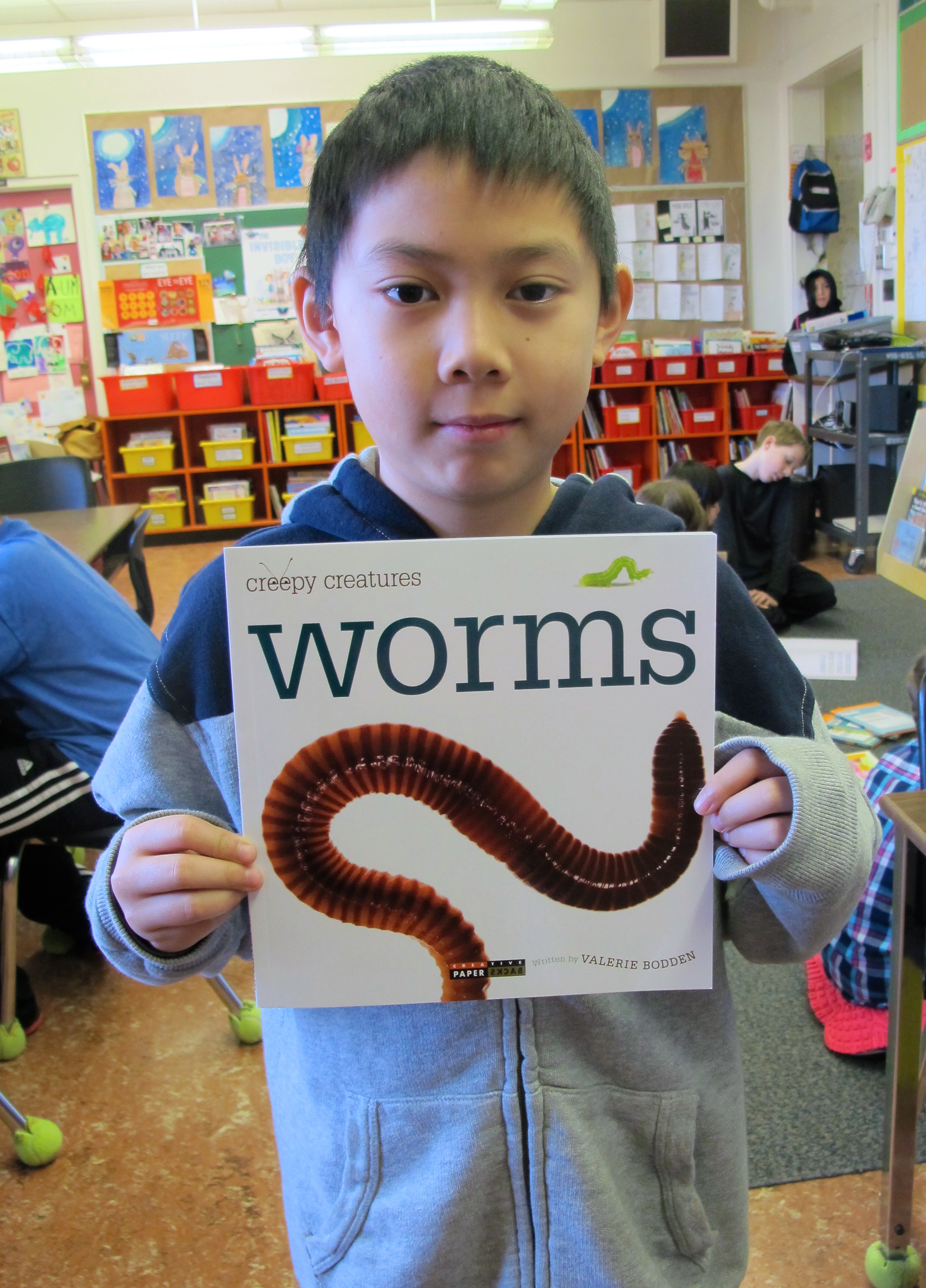
“I’ve read all of the books in this series. When you book talked this one today, I wanted to read it because I like all of these creepy creatures.”

 Nonfiction Picture Book Wednesday: What nonfiction title do you want to read next & why? There's a Book for That

“It looks interesting from the cover. I want to know more about which animals hibernate. I don’t think I know them all.”

 Nonfiction Picture Book Wednesday: What nonfiction title do you want to read next & why? There's a Book for That

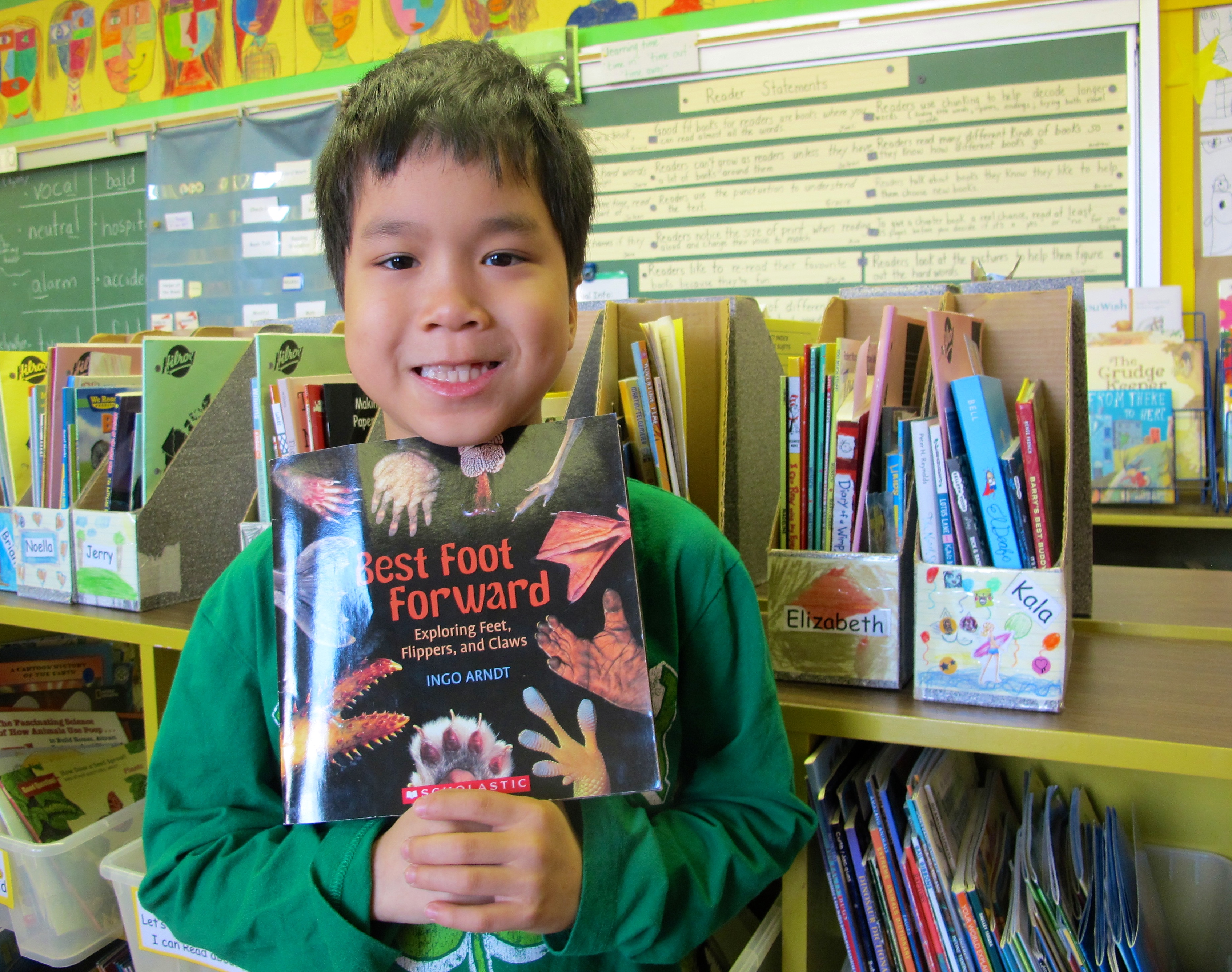
“I want to know what all of these feet are. I like the cover.”

 Nonfiction Picture Book Wednesday: What nonfiction title do you want to read next & why? There's a Book for That

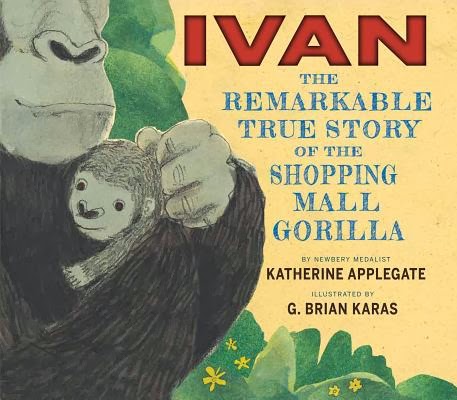
“I like gorillas. They are really cute. And after we read about Ivan, I want to know more.”

 Nonfiction Picture Book Wednesday: What nonfiction title do you want to read next & why? There's a Book for That

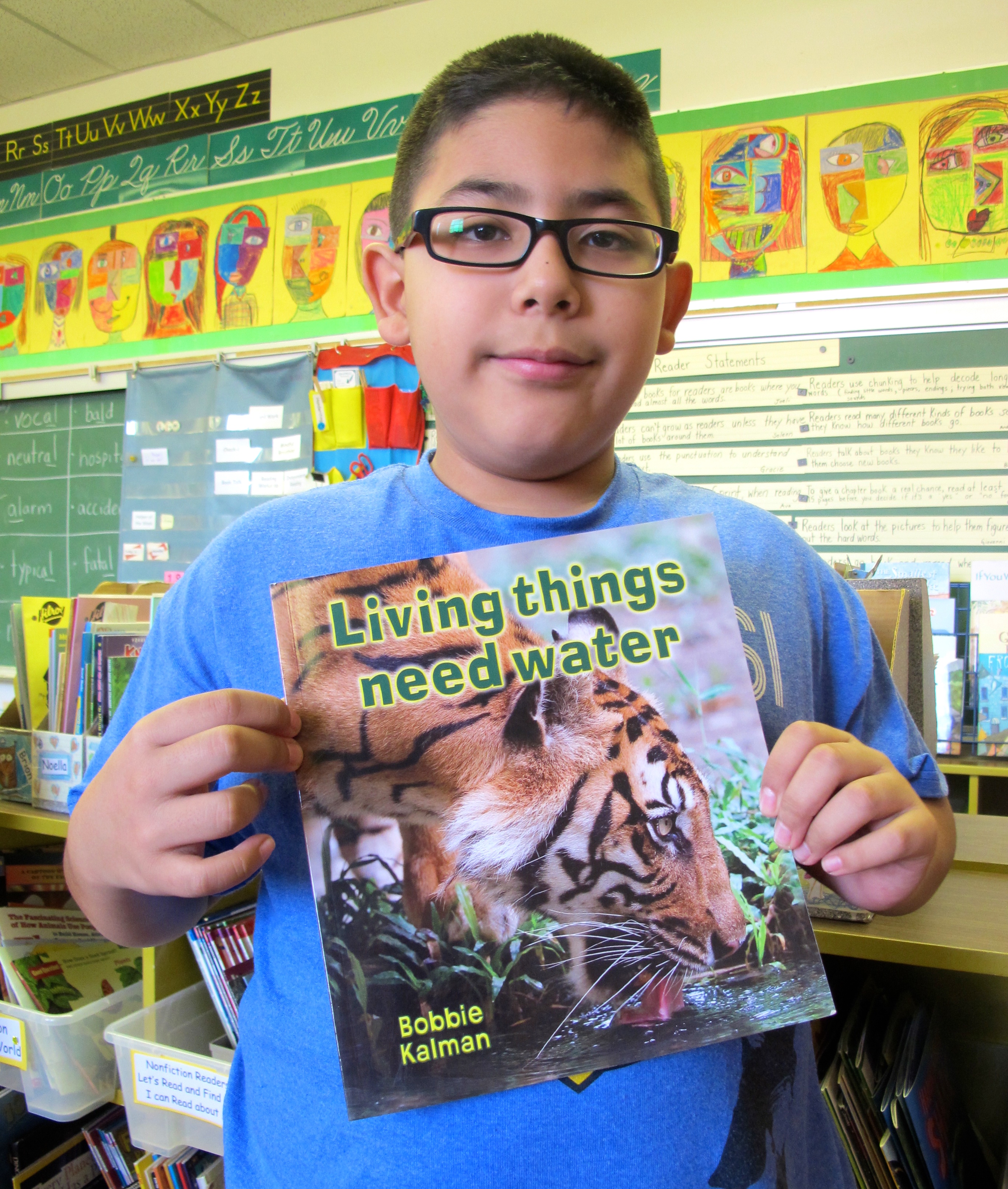
“I want to know more about how animals might get dehydrated and how to save animals. The cover has a really great close up photo.”

 Nonfiction Picture Book Wednesday: What nonfiction title do you want to read next & why? There's a Book for That

I like baby animals a lot. They’re so cute. I’ve read this series before. I like all of the photographs and that it tells me more about animals.”

 Nonfiction Picture Book Wednesday: What nonfiction title do you want to read next & why? There's a Book for That

 “I want to learn about dirt. The picture looks like it shows what’s inside of it.”

 Nonfiction Picture Book Wednesday: What nonfiction title do you want to read next & why? There's a Book for That

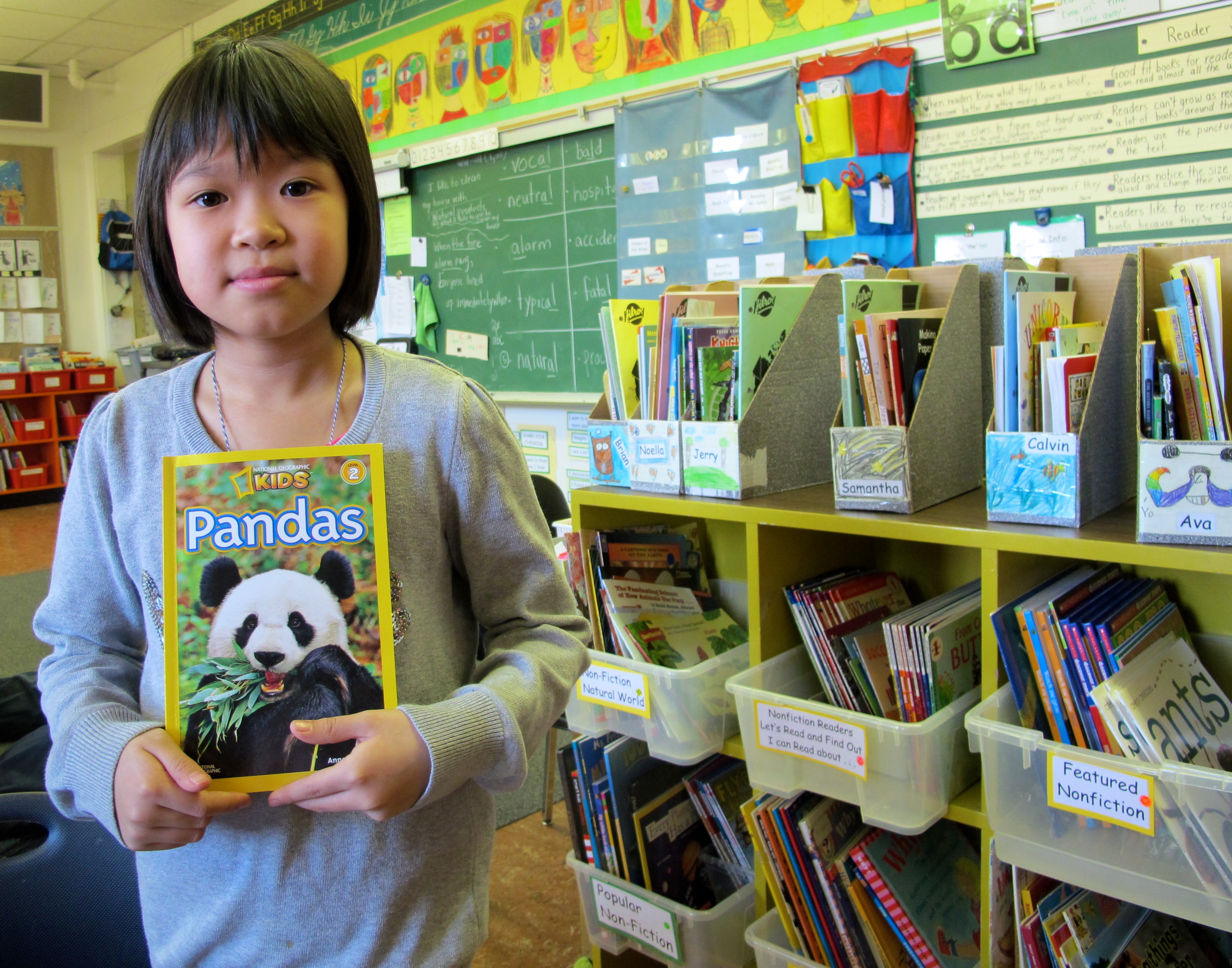
“I want to know more about pandas. I know this series and I like the photos.”

 Nonfiction Picture Book Wednesday: What nonfiction title do you want to read next & why? There's a Book for That

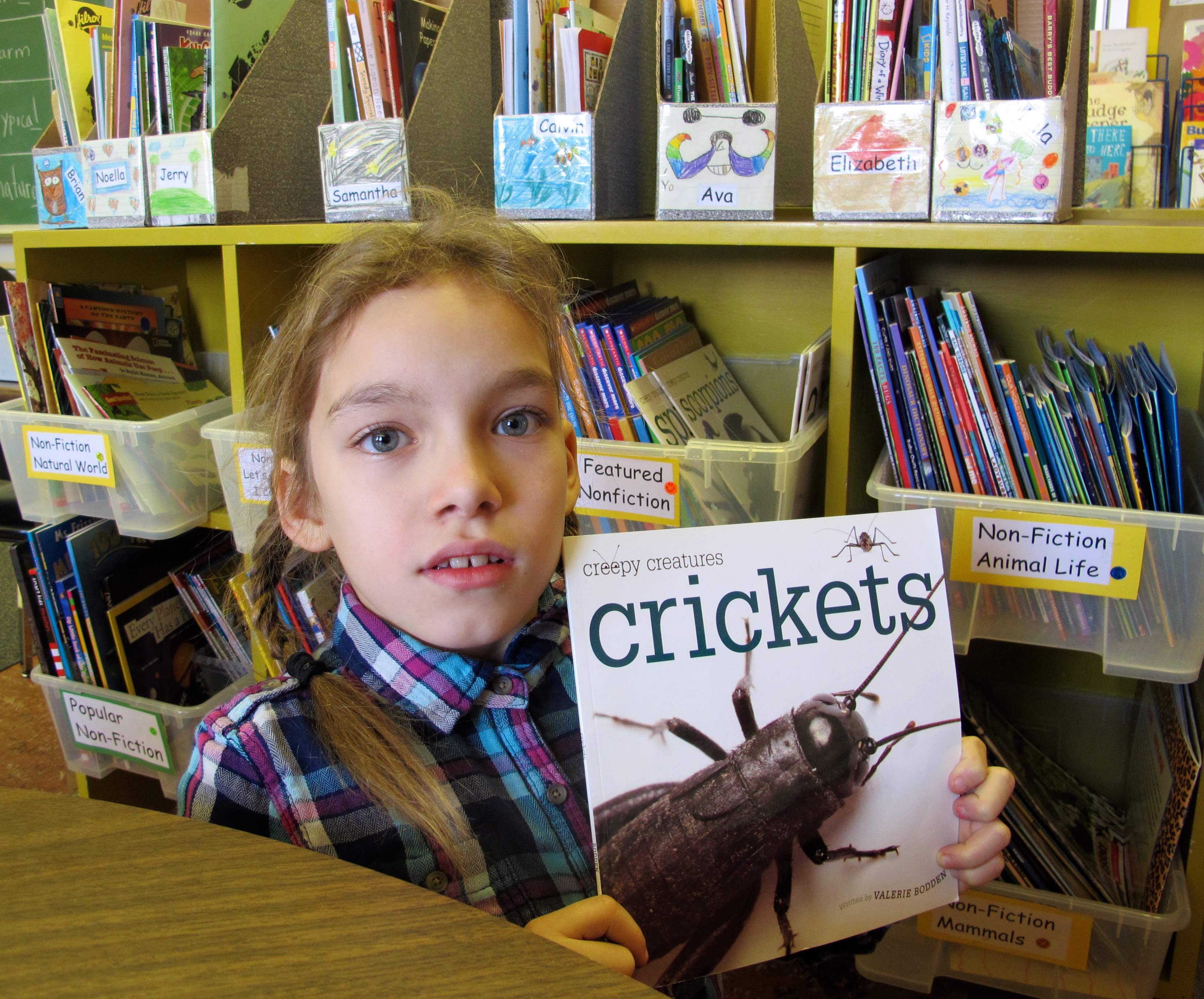
“Because I’m scared of crickets. If I read it, I’ll get used to crickets. I read this series before and I like it because it’s easy to read and it tells about the life cycle and stuff.”

 Nonfiction Picture Book Wednesday: What nonfiction title do you want to read next & why? There's a Book for That

I think it’s going to show lots of details about sharks. I know some things about a tiger shark already.”

Nonfiction Picture Book Wednesday: What nonfiction title do you want to read next & why? There's a Book for That

 “I love this series. I like reading about the animals that I don’t know lots of things about. Yet.” 

 Nonfiction Picture Book Wednesday: What nonfiction title do you want to read next & why? There's a Book for That

 “I like the photographs and the close up pictures. I want to learn more about mantises.”

 Nonfiction Picture Book Wednesday: What nonfiction title do you want to read next & why? There's a Book for That

“I want to find out more about how different animals eat. I like this photo on the cover a lot.”

A few themes seemed to emerge in terms of book choices:

Students were choosing to read books that might

  • help them to answer specific questions
  • be similar to other books they had read and enjoyed (similar series, author, topic)
  • have connections to their background knowledge
  • have connections to other learning we have done during the year
  • be like a book they have had success with in the past

Some choices are being made purely based on the cover. Engaging full colour photographs are appealing. Other choices have more to do with a sense of the inside content. Students are also choosing books that will be a good fit in terms of reading level. A wide variety of texts at different difficulty levelss in essential. Series in nonfiction are popular just like series in fiction.

What books do your students gravitate to? What trends do you notice?

And, now I am thinking/confirming . . .

  • Book talk. Book talk. Book talk. Lots of exposure to what we know and love and new titles, genres, topics.
  • Make sure I know student interest. I need to keep asking these questions about preferences and picks. It will help me with supporting a variety of book choices and topics for future read alouds.
  • The more I read aloud from the extensive nonfiction collection I have amassed, the more wonder, curiosity and knowledge I will help build. This will lead students to a wider variety of book choices for independent reading.

How I love nonfiction picture books! Thanks to Alyson from Kid Lit Frenzy for the inspiration to read and share more nonfiction picture books in 2015. Follow the link to Alyson’s blog to read about more nonfiction books you need to read!

Thanks also to Alyson for all of the wonderful conversations about nonfiction reading and teaching with nonfiction books. A conversation with her inspired me to start thinking about what draws my students to certain books. I am so very glad that I asked this question this week.

#nfpb2015

Mock Caldecott 2015

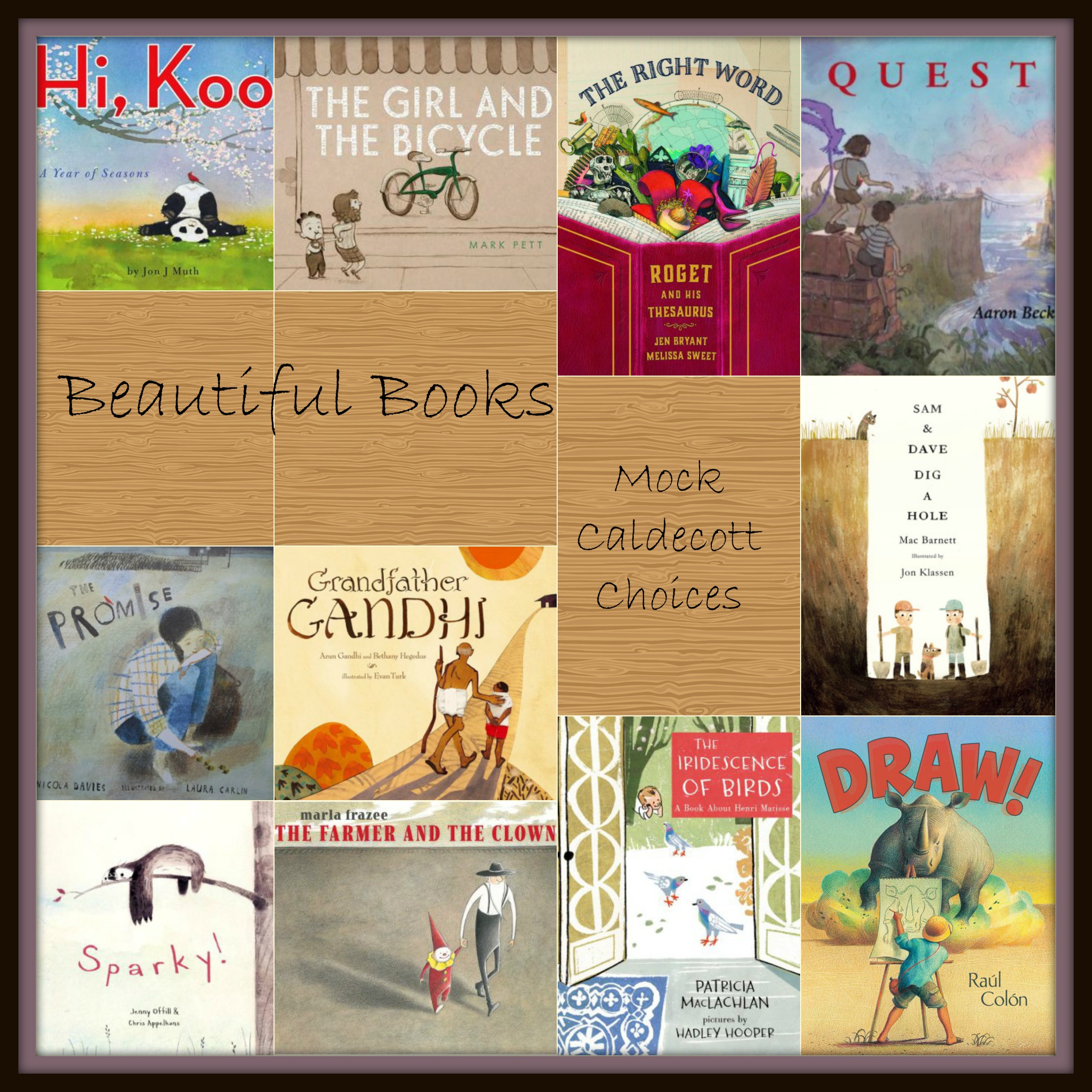
While every year I celebrate Caldecott winners with my students, this is the first year we are having our own Mock Caldecott competition. After perusing numerous other Mock Caldecott lists and lists of Caldecott predictions, I narrowed it down to eleven titles to share with my class. There was a LOT of rethinking and eliminating titles. In the end, I tried to choose a varied list that conveyed different moods, feelings and responses.

Mock Caldecott Choices 2015 There's a Book for That

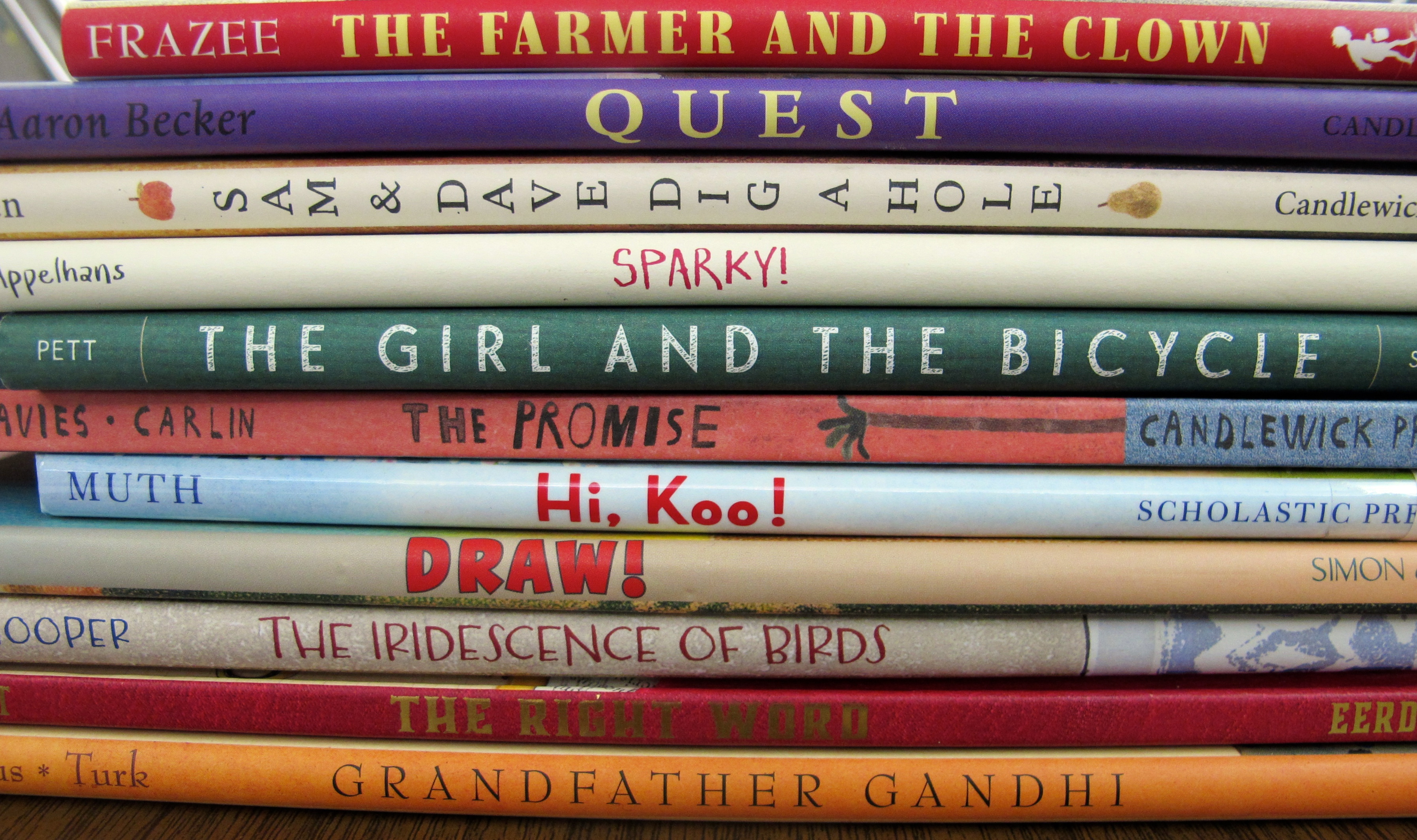
Here are the books we are sharing, reading and swooning over – shared alphabetically by illustrator:

Sparky! written by Jenny Offill and illustrated by Chris Appelhans

Quest by Aaron Becker

The Promise written by Nicola Davies and illustrated by Laura Carlin

Draw! by Raúl Colón

The Farmer and the Clown by Marla Frazee

The Iridescence of Birds: A Book about Henri Matisse written by Patricia MacLachlan with illustrations by Hadley Hooper

Sam & Dave Dig a Hole written by Mac Barnett and illustrated by Jon Klassen

Hi, Koo! by Jon J Muth

The Girl and the Bicycle by Mark Pett

The Right Word: Roget and His Thesaurus written by Jen Bryant and illustrated by Melissa Sweet

Grandfather Gandhi written by Arun Gandhi and Bethany Hegedus and illustrated by Evan Turk

Our process is simple. We read and talk about each book individually, enjoying the interactive read aloud experience. Then, I hide the book away until we bring them all out again and spend some time looking closer at each title with Caldecott criteria in mind.

Like others who are running a Mock Caldecott with their classrooms, I adapted the criteria into a child friendly rubric.

Each child will have an opportunity to rate each book using a 1 – 5 scale (with 1 being not at all to 5 being agree absolutely) responding to these three statements:

This book is a book kids will really appreciate. 

The illustrations in this book are excellent in quality.

The illustrations are a great fit for the story being told. 

An opportunity to comment on favourites will also be available.

By next week, we should have shared all of the titles and will be prepared to rate each book. We will do this over a morning where we can reread, look more closely at the actual criteria and have lots of discussions with other students and the adults we have invited to participate in this process with us. More details on our class blog: Curiosity Racers.

We will then announce our medal winner and 3 honour titles.

I am not sure if it is the children or the adults who are more excited but our room is buzzing even more with picture book love. At times I am sure I can hear the hum 🙂

Nonfiction conversations: Talking nonfiction picture book biographies with kids

When I read aloud nonfiction titles to my class, it takes a long time. Often, we stretch a read aloud over weeks. Lots of reading aloud is happening in our room – a novel, various picture books, selections from titles we are book talking and always, always, one or more nonfiction titles.

No, my students don’t forget what was happening between read aloud sessions. Connections are made in the days between. We pick the title up and we loop back into our previous wonders, observations and learning. We bring more to the next time we read because there has been space for more thinking, more questions. And always, our nonfiction read alouds are titles we use to talk and share our thinking.

Turn and Talk. Share out. Repeat. Repeat. Repeat.

Lots and lots and lots of talk.

We retell. We predict. We infer. We look for evidence. We list questions. We share observations.

The talking is rich so the learning is rich.

It sounds like:

“I noticed that . . . ”

“But we are still wondering why. . . ”

“Last time we learned _______ so .  . . ”

“My partner and I have a question still.”

“Oh! Now I get how . . . ”

“This is connected to what _____ just said: . . .”

So when I finish a nonfiction title, the book has become part of our classroom community. Our shared knowledge. Our shared thinking. Our layers of learning. Often, when I read the last page, the students clap. They jiggle about. We have come out the other side a little more enriched with knowing more about our world. We are celebrating.

Am I reading a variety of nonfiction titles aloud? I think so. I am so very conscious of this thanks to the conversations I have had via twitter and blogs with authors and educators who read, write and share nonfiction titles. I am particularly indebted to author Melissa Stewart and educator Alyson Beecher for stretching my thinking. When I think back to titles we have read deeply and meaningfully, I find narrative non fiction like biographies and nature themed books feature big. But I also read a lot of expository titles. And I often share snippets from what Melissa Stewart calls Fast Facts titles. See her Pinterest pages for specific examples.

So if I am exposing my students to a variety of styles, what do they think? Are they enjoying the genres we are reading? Starting with picture book biographies, I asked 🙂

 The Tree Lady  Nonfiction conversations: Talking nonfiction picture book biographies with kids

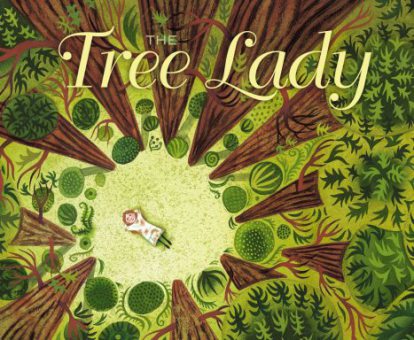
Yesterday, we finished The Tree Lady by H. Joseph Hopkins and illustrated by Jill McElmurry. When I closed the book, there was the reaction I love. The big smiles. The big breath in. The sitting up straighter. The perfect time to grab their thinking while the reactions were fresh. I asked questions and wrote down all of these thoughtful responses. Sharing here:

Me: “So what words describe how we are feeling right now?”

Class: “Hopeful.” “Energized.” “Joy” “Like standing up and connecting to the Earth.” “Smarter.” “I like Kate so much. It happened a long time ago but her soul probably still speaks for trees.” “She was one person who did so much.”

Me: “This is one of many picture book biographies we have shared together. Last year we read Me . . . Jane (by Patrick McDonnell), Who Says Women Can’t Be Doctors?: The Story of Elizabeth Blackwell (written by Tanya Lee Stone and illustrated by Marjorie Priceman), The Boy Who Loved Math: The Improbable Life of Paul Erdos (written by Deborah Heiligman and illustrated by LeUyen Pham), and many others. Why biographies? Why do you think I share these with you? Why do you like these titles? What are you thinking?”

Class: “I like to know about what other people did.” “I like those books that tell the story of someone who can’t but then they did.” “Kids can learn a lot.” “It inspires us.” “I respect people who helped us in the past.” “I feel grateful.”

Me: “Why do you think authors keep writing biographies?”

Class: “We are really interested. They know we will be.” “People can know about the past.” “It’s so we can know that one person can change things.” “So we will know history.” “Kids should know how things have transformed.”

Me: “How do these books make you feel?”

Class: “They show me not to be scared.” “They make me feel happy and inspired.” “Yeah, lots of inspired.” “People can do big things.” “I am learning history. About people who changed a city, or a country or the world!” “I like learning so much.” “This book also teaches us about community and dreams. We should think about that.” “Yeah. Cuz we will grow up and be adults. So we need to learn lots now.”

Me: “Okay. But here’s the thing, I usually read these titles to you. Then, a lot of you read them again. Or take them out from the library. But . . . would you choose to read these books on your own?”

Class: “Yes! Because I get to know facts and share them with other people.” “I don’t know where to find them in all libraries.” “Yes, because now I know there is lots of science in them.” “The librarians should make a big sign and an arrow – learn about interesting people in these books!” “It’s books that inspire you. We like that.” “It’s all new stuff. It’s nonfiction. I love nonfiction!”

Me: “But what if I had never read any picture book biographies to you? Would you choose to read them on your own?”

Class: A pause happened.

Then everyone started talking at once and I couldn’t write down specific comments. But I can summarize. Most students said that teachers need to show their students about these books. My language/their sentiment: Lots of exposure to this genre as classroom read alouds (where you get to talk and write and think together) will hook kids on this genre. Many expressed that they like that these books are written like a story that they can just settle in and at the same time, learn facts and be inspired. Some said they wouldn’t like to read a biography organized like other nonfiction titles with fact boxes, etc. because it would distract them from the person’s story. Some pointed out that some of the language would be too hard for some kids to read on their own. So these titles could first be read alouds and then be books they could read on their own when they were older. “Because we won’t forget about them,” one student added.

Me: “Should we read more picture book biographies this year?”

Class: “Yes!” “Six thumbs up!” “Like next week?”

My learning? It is still settling in. But a few things stand out.

  • It is imperative that we expose children to a variety of nonfiction genres
  • We need to name the genre. Talk about its purpose. Discuss how we feel and what we have learned.
  • Stories hook us. Stories that are full of learning and one particular personal story touch us deeply.
  • Conversation with children about what we are reading and talking about is so very rich

I wrote a series of blog posts in the summer about teaching with nonfiction titles. This post: Part 3: Interacting with nonfiction: getting students reading, thinking and talking together highlights some of what I am trying to emphasize here.

I plan to engage in conversations with my students about other nonfiction genres and share their thinking. Please let me know if this is helpful or interesting to you as you think about read aloud choices, nonfiction purchases, instruction around reading and sharing nonfiction titles.

*Note, my class is a Grade 3/4 class that I looped from a Grade 2/3/4 last year.

Nonfiction Picture Book Wednesday: Little Fans of Disgusting Critters

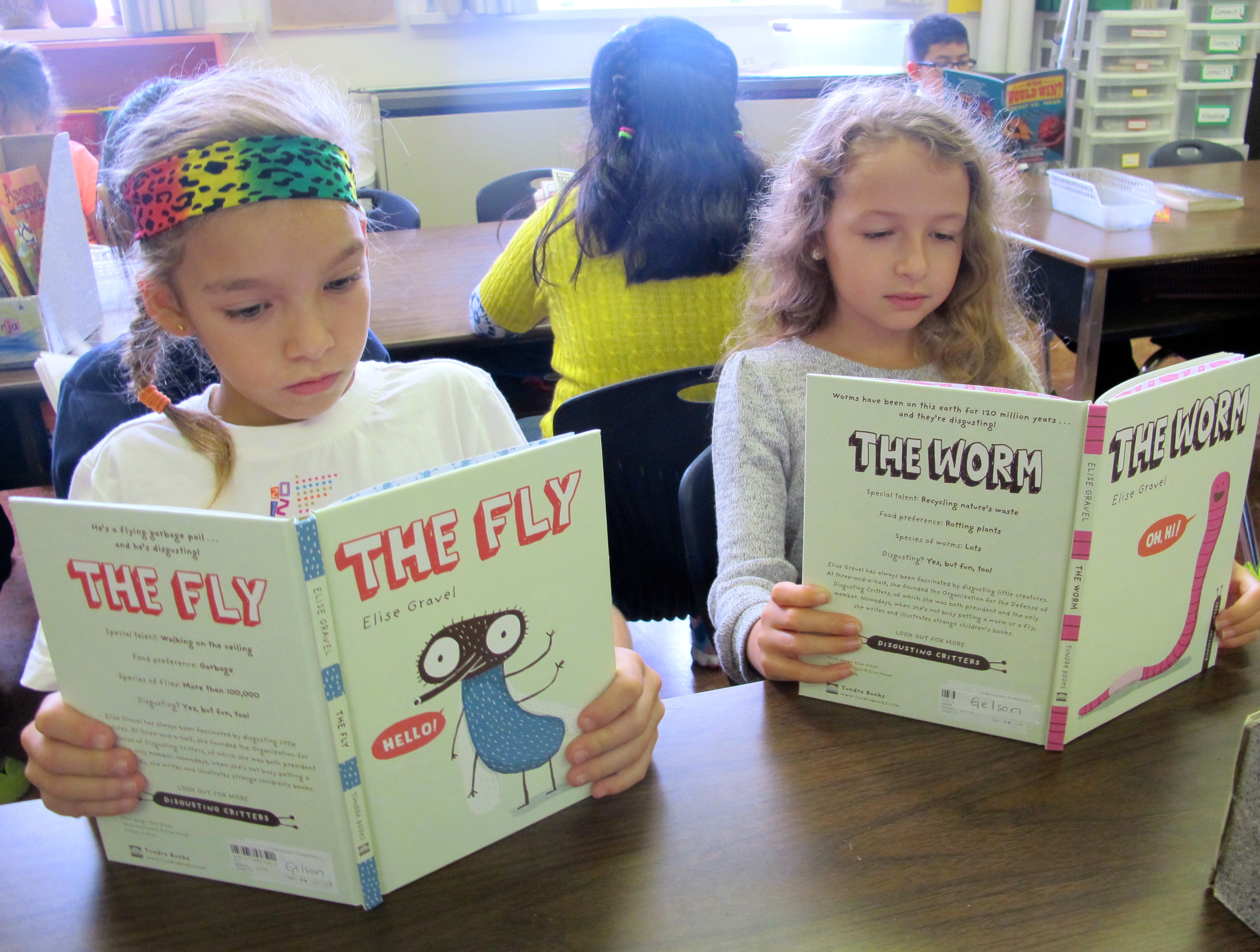
It has been such a pleasure to introduce my students to the Disgusting Critters series by Elise Gravel. These titles are written partly like a graphic or comic style early reader and partly as a nonfiction picture book. So far, there are four titles published including The Worm, The Fly, The Slug and The Rat. I think The Rat might be my favourite because I feel bravest when I read it. Oh how I despise rats . . .

The Rat: Nonfiction Picture Book Wednesday: Little Fans of Disgusting Critters

When I first read The Fly in the summer, I knew. I knew these books would be such a hit in my classroom. I had all kinds of ideas:

  • pair them with a more traditional nonfiction series to allow students to continue gathering facts
  • have pairs of students read through and list facts discovered (go on a “fact hunt”) and also list parts of the books that are included for other purposes like humour, story line, etc.
  • make lists of other disgusting critters that might need to have a book devoted to them

Day one and we started with Disgusting Critters.

Independent reading time included a lot of reading devotion to these books.

Nonfiction Picture Book Wednesday: Little Fans of Disgusting Critters

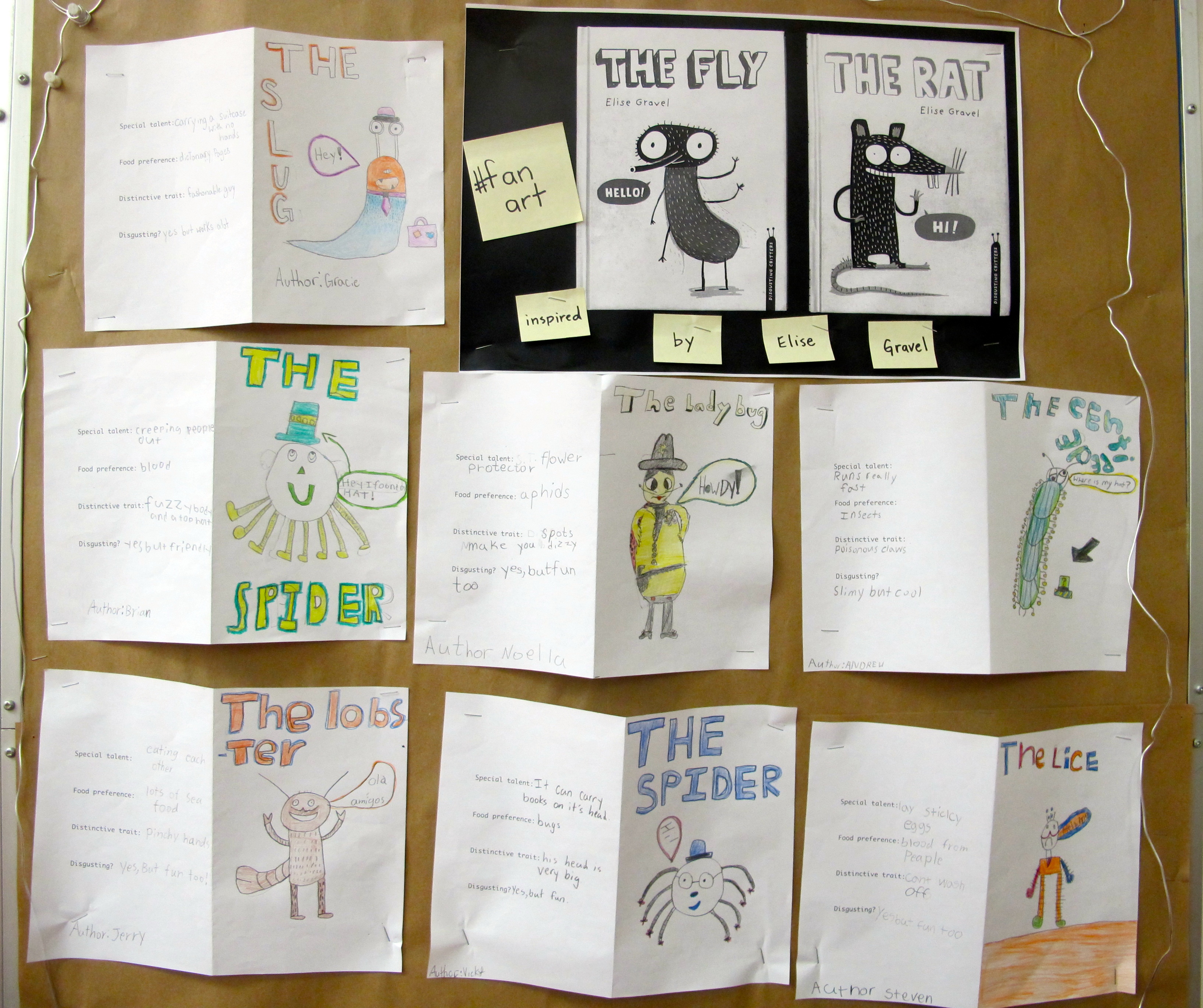
Then I thought . . . what if we made our own “fan art” and designed a Disgusting Critter book jacket? I used some of the terms on the back covers for students to answer for the “back” of their cover:

Special Talent:

Food preference:

Distinctive Trait:

Disgusting?

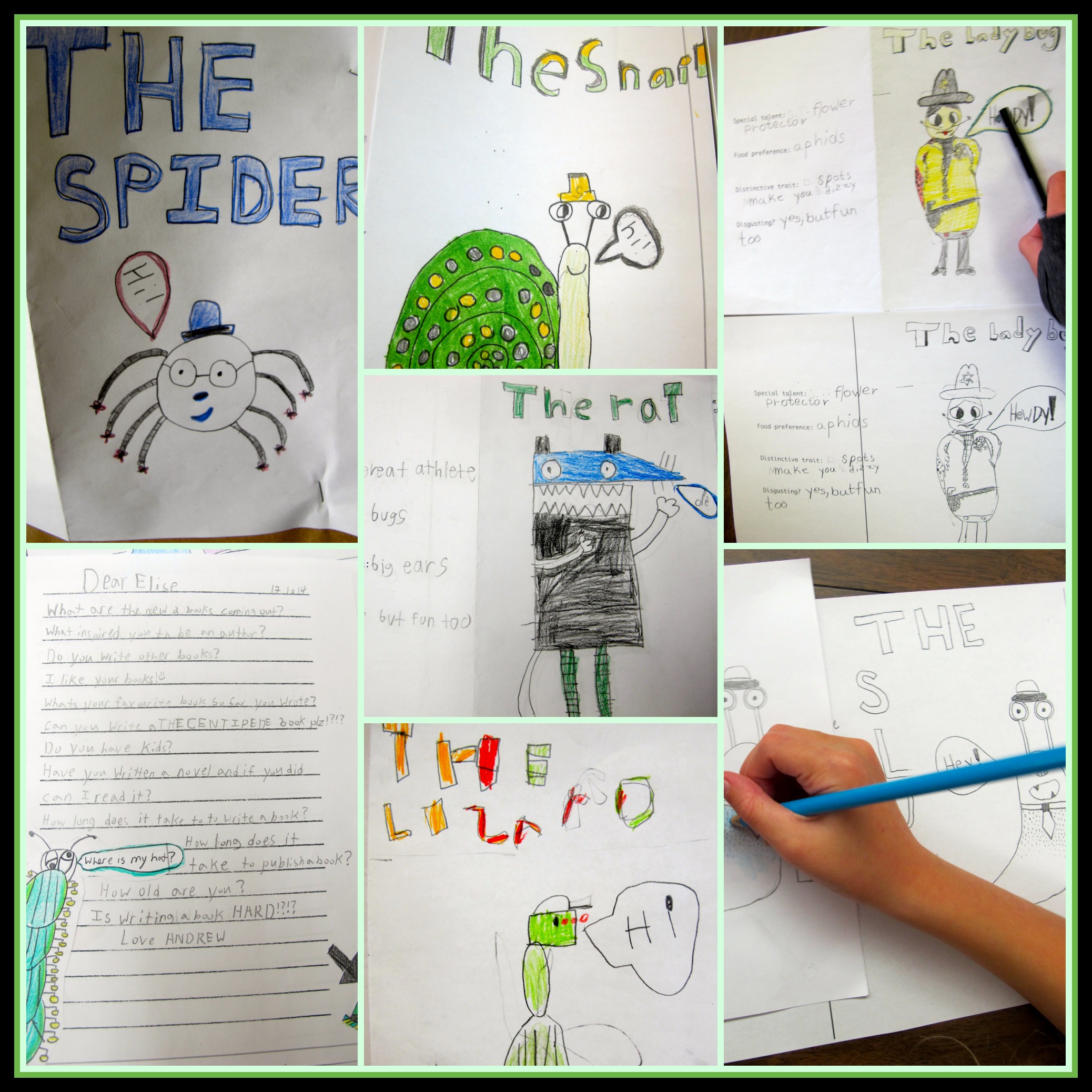
We drew pencil sketches. I made a photocopy. We added colour. One for our bulletin board and one for Elise Gravel. We had lots of interesting “critters” including snails, centipedes, ladybugs, lizards, lobsters and lots of spiders. And many more 🙂

Nonfiction Picture Book Wednesday: Little Fans of Disgusting Critters

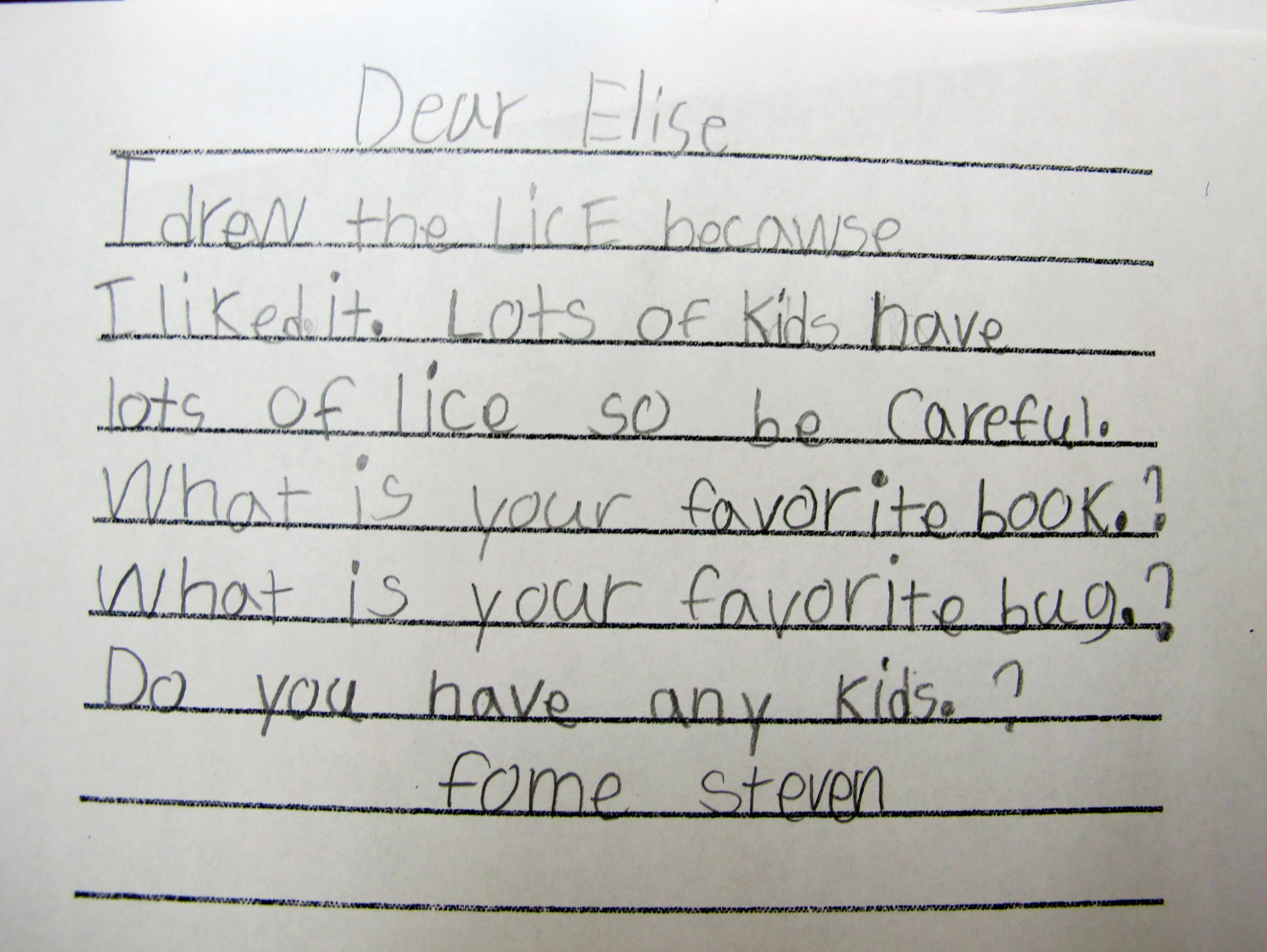
We wrote Elise letters full of questions and things we wanted her to notice. Some favourite lines from different letters:

  • I drew the lice because I liked it. Lots of kids have lots of lice, so be careful.
  • Mine is a spider. Did you notice my spider’s eyelashes?
  • I love your art Elise.
  • I hate spiders but I like your art. Can you write about lizards and crabs?
  • I love how you mixed humour and nonfiction.
  • Is writing a book hard?

We wrote thoughtfully . . .

Nonfiction Picture Book Wednesday: Little Fans of Disgusting Critters

We got some help editing for meaning and clarity:

Nonfiction Picture Book Wednesday: Little Fans of Disgusting Critters

Lots of hard work and creativity by all to complete these projects. Some art, some writing, a little research and a bit of creative license.
Nonfiction Picture Book Wednesday: Little Fans of Disgusting Critters   I shared much of this with Elise along the way via twitter.

A package of “fan art” and letters is on route to her in Montreal!

So much buzz about these books. Nonfiction that is exciting and engaging? That leads to reading more nonfiction about certain creatures? More Disgusting Critters please Elise Gravel!!

NFPB 2014

Thanks to Alyson from Kid Lit Frenzy for the inspiration to read and share more nonfiction picture books in 2014. Follow the link to Alyson’s blog to read about more nonfiction books you need to read!

My goal is to read 65 nonfiction picture books for 2014. Progress: 111/65 complete!

Celebration: Disgusting Critters, Favourite Authors, Pass it on

Oh, how I love my class! I love the talk, the writing, the words, the questions . . . All of it.

I celebrate this long and winding conversation with my students:

Me: “I’m so excited I’m going to see an author/illustrator this weekend!”

A student: “Do we know who it is?”

Me: Gives various clues

Eventually . . . .

Various students: “Marie-Louise Gay!”

Me: “Yes. I hope to get her new book signed at the author breakfast I am going to.”

A student: “Signed to us right?”

Me: “Of course.”

A student: “Do you know Elise Gravel or are we just writing to her?

Celebration: Disgusting Critters, Favourite Authors, Pass it on

Me: “We are getting to know her. She’ll know you better after we send our letters and fan art.”

A student: “Did you send them already?”

Me: “Well, we are still working on everything. I will send it this weekend when we finish.”

Celebration: Disgusting Critters, Favourite Authors, Pass it on

A student: “Why don’t you just tweet it all?”

Me: “I have sent her some photos. But, I think she will like getting the package in the mail.”

Celebration: Disgusting Critters, Favourite Authors, Pass it on

A student: “Do you know Katherine Applegate?

Me: “We know her work but no, I haven’t met her.”

A student: “Go meet her. You should. And tell her about how we love her books.”

Me: “I shared some of our letters in a blog post and tweeted it to her. So she knows we love them.”

Celebration: Disgusting Critters, Favourite Authors, Pass it on

A student: “But you are going to meet Kate DiCamillo right?

Another student: “Can we come?”

Me: “I am going to a conference in the spring and she will be speaking. I will get our copy of Flora & Ulysses signed.”

A student: “You forgot The Illuminated Adventures part”

A student: “And you just met Raina Telgemeier right?”

Me: “Yes, and she signed books to our class. People are reading them right now.”

Many students: “I am.” “And then me.” “I’m next!” “Me!”

A student: “So, who are you going to meet next? Someone we like right?”

🙂

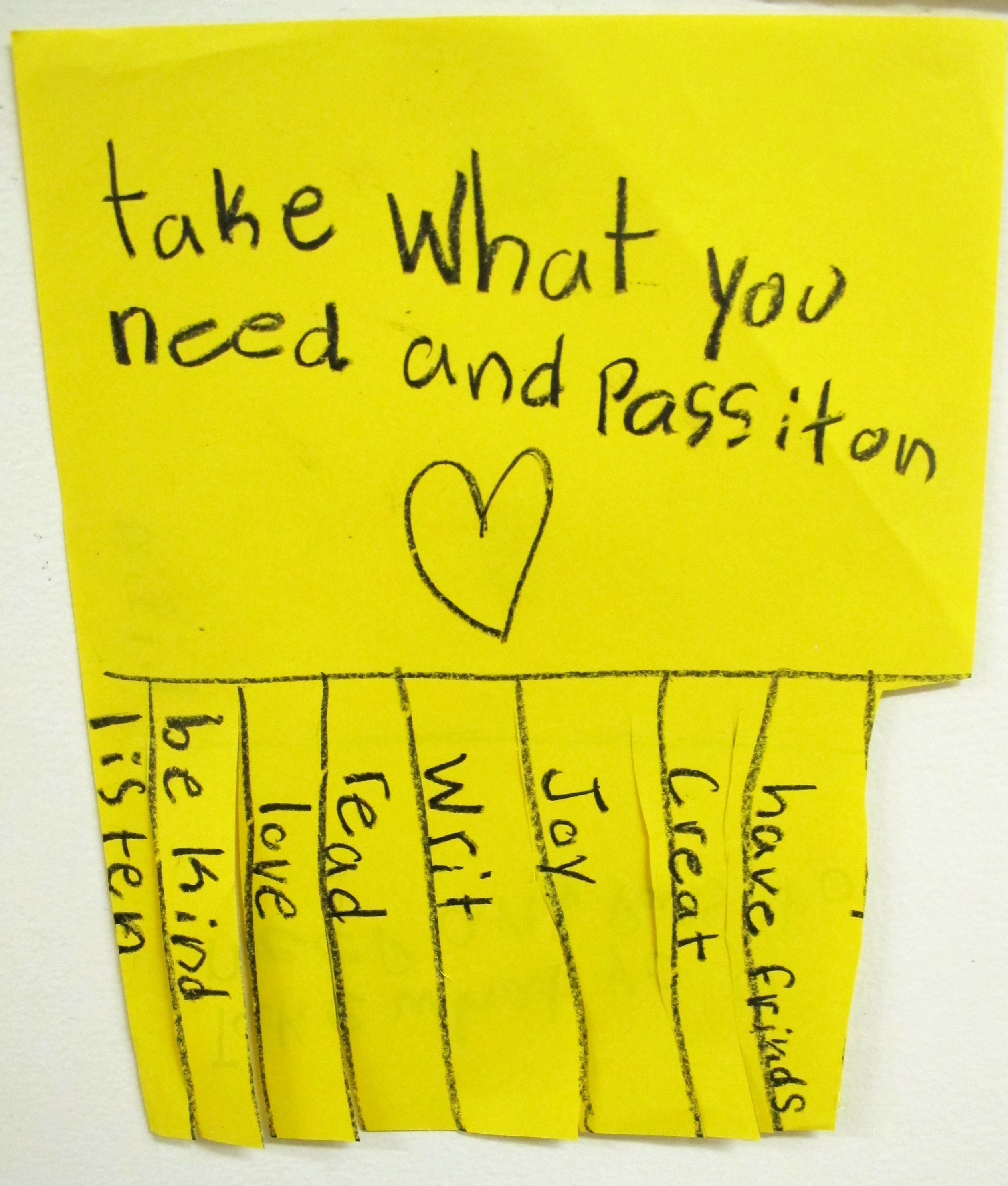
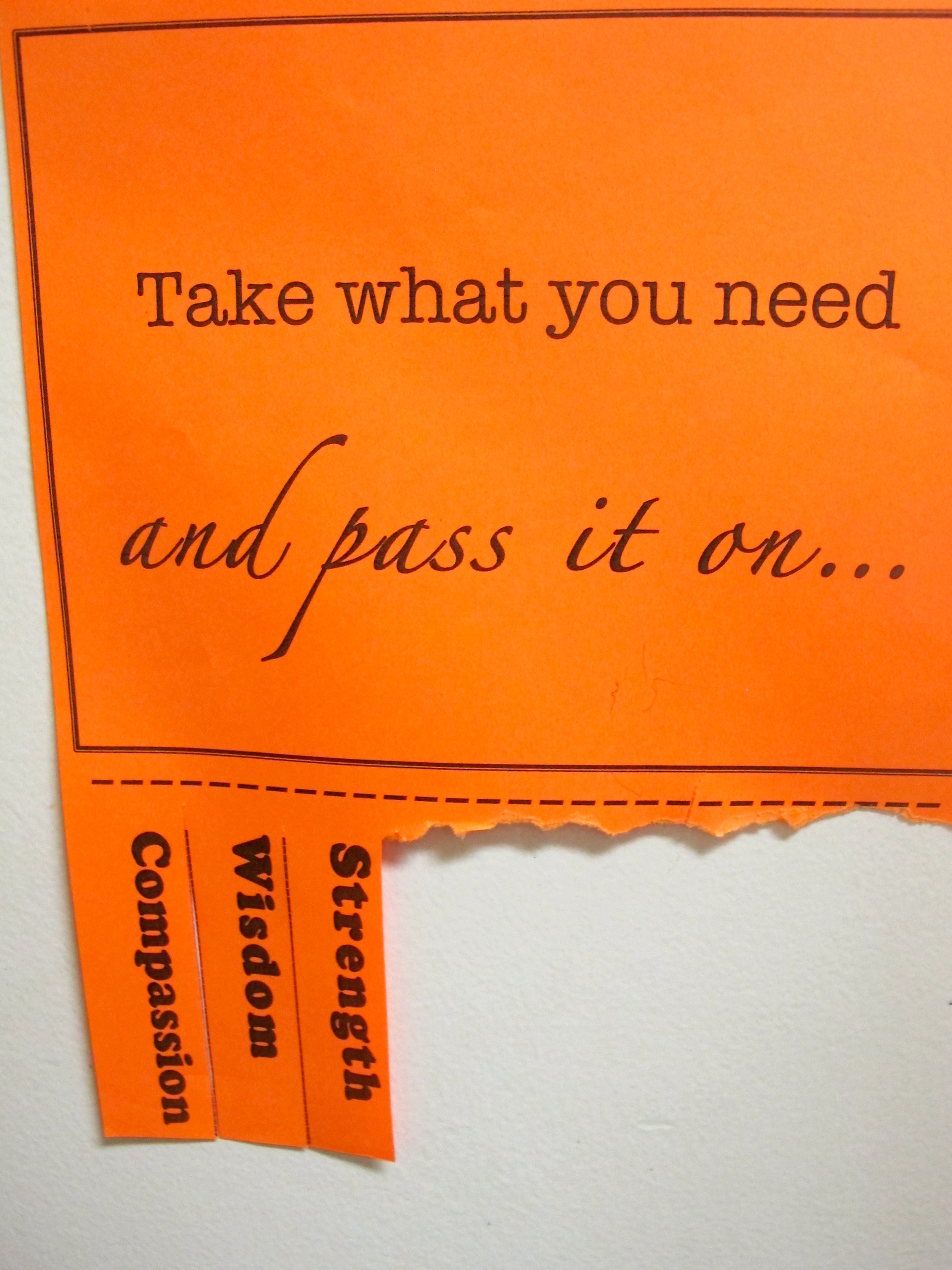
I also celebrate this – – > The lovely Miriam who works with me created these sheets and plastered the room and the school. In our room, we were gifting these words to each other with messages. I received “wisdom” with a comment from one child, “You are always really smart to us.”

Celebration: Disgusting Critters, Favourite Authors, Pass it on

One of our little learners was inspired and made her own. We found it outside our room at the end of the day – taped up in the hallway.

Pass it on. 

Celebration: Disgusting Critters, Favourite Authors, Pass it on

Conversations about authors and illustrators. Book love. Words with weight. These things I celebrate.

Thank you also to Ruth Ayres, for the inspiration and her Celebration Link up that she hosts each week. I love how being a part of this #celebratelu community reminds us weekly to look for the positive and take some time for gratitude.

celebrate-link-up

Dear Ivan

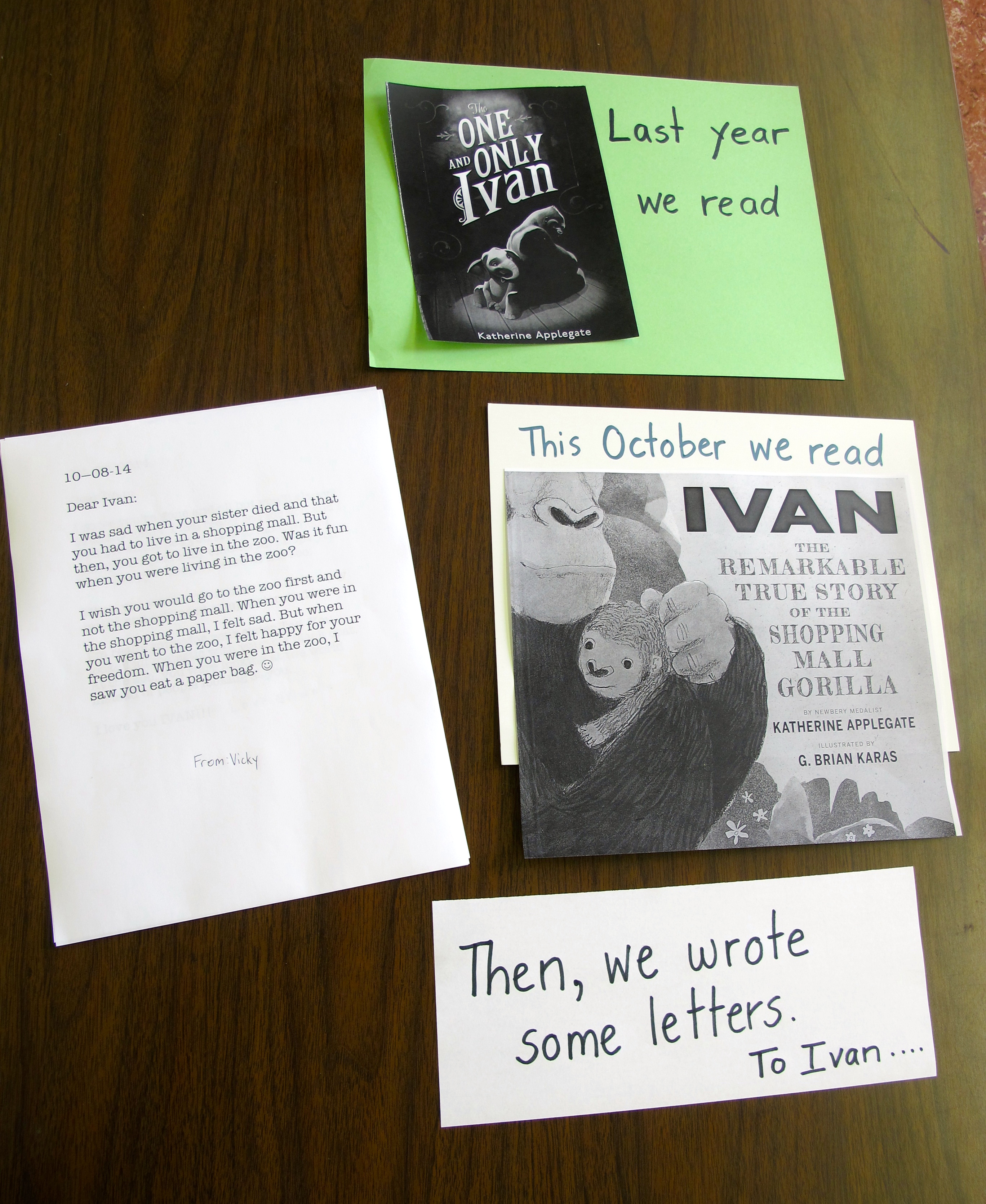
Last year I read my class Katherine Applegate‘s The One and Only Ivan. We fell in love. Ivan’s words (via Katherine) and his story had such an impact. When I heard that there was a picture book to be published in the fall written by Katherine and illustrated by G. Brian Karas, I showed my students the book trailer. Well, . . .

“You have to buy that book!”

“Will you read it to us?”

“Even if we aren’t in your class?”

“Promise?!”

This year I have been able to keep 80% of the students I had last year – looping a Grade 2/3/4 into a 3/4. When Ivan: The Remarkable True Story of the Shopping Mall Gorilla written by Katherine Applegate and illustrated by G. Brian Karas was released, I made a special trip to the bookstore. I read this gorgeous picture book to my students multiple times. We have certain lines memorized.

 Dear Ivan There's a Book for That

We then watched the video of Ivan in the shopping mall that I found on Mr. Schu’s blog.

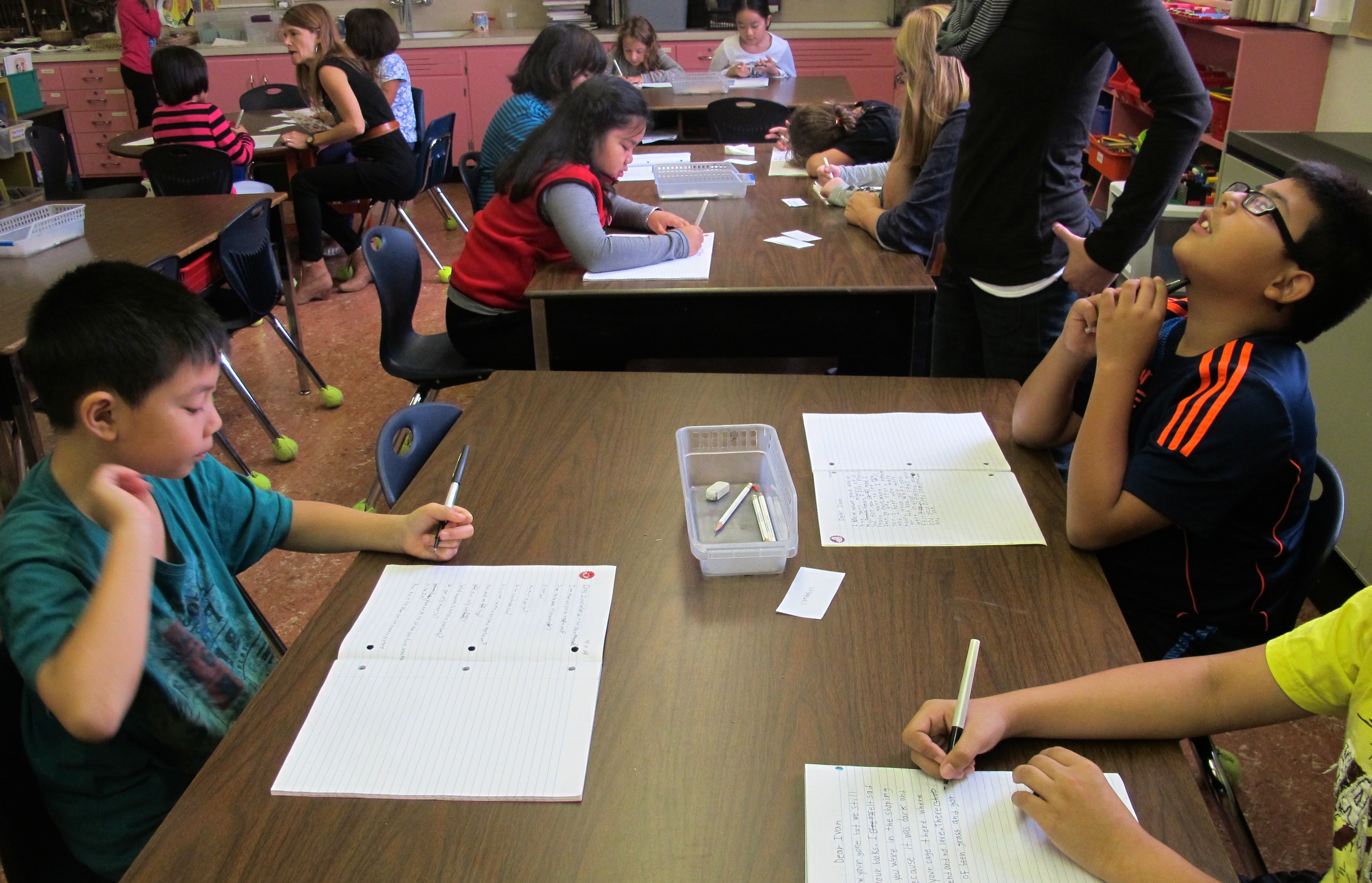
Some of us cried. We read the story again. We started writing letters to Ivan. I showed the children a video of Ivan at Zoo Atlanta. We watched it more than once. We added to our letters.

Yes, we know that Ivan passed away in 2012. But Ivan has sat with us in our room. He has made us laugh and made us pause. We have sat in silences thinking. He has been our hero and we have wanted to protect him. His story has prompted discussions of animals in captivity, of human cruelty, of just “why?” Lots of conversations. Thanks To Katherine Applegate and all of those who have loved Ivan, we love Ivan too.

Writing to him felt like the right thing to do. Reading the letters later? Well, wow. It was certainly the right thing to do.

 Dear Ivan There's a Book for That

Portions of my students’ letters:

Ava writes:

Dear Ivan: I wish I could actually see you in real life and your silver back. I’m sorry that you spent 27 years in a shopping mall all alone.

Noella writes:

Dear Ivan: Were you sad in the shopping mall? Was your cage rusty? Were you sad for your sister? Were you happy in the zoo?

From Andrew:

Ivan, what did the zoo feel like? How much did you eat? What did you feel like when you first went to the zoo? How did it feel to be trapped in a cage? How dark was your cage? How did it feel to have no one to protect? How did it feel to be lonely?

From Rebecca:

Dear Ivan: I really liked your painting Ivan. I am so sorry for your sister. You were so smart Ivan. I am impressed of the things that you do. I am happy that you are in a zoo. I am happy for your freedom.

Jorja writes:

Dear Ivan: Your cage was grey and the jungle was green. There were other gorillas and you looked happy. You looked happy in the zoo too. You looked calm and relaxed. I was sad when you died.

From Kevin:

Dear Ivan: I know you’re gone but we still have your books. I felt sad when you were in the shopping mall because it was dark and there were no friends and no love. There should have been grass and gorillas to play.

Brian writes:

Dear Ivan: I feel really sad for you and I really want to see you face to face. When I miss you, I get really emotional and I hope you were happy when you were in the zoo. When you were in your cage you felt empty inside and you need compassion and love. I’m really sorry for your sister Tag. You looked all majestic with your big black coat at the zoo. You were looking at the world instead of people looking at you. I love you Ivan

From Gracie:

Dear Ivan: I didn’t realize how empty and alone it was in your cage until I watched the real video. I love art and I wanna be an artist. You’re the most interesting and fantastic artist I’ve ever seen. I hope you had a good life Ivan. When I watched you at the zoo, I was filled with joy. Here’s what I saw: You looking around like you were impressed with the world. I know that it is hard to read a gorilla’s emotions but I bet you were very happy. Did you think you wasted your life or did you know you were gonna live happy every after?

Even though this post doesn’t talk in detail about this gorgeous nonfiction picture book by Katherine Applegate and G. Brian Karas, I hope it calls to you (if you have yet to read it) to experience Ivan’s story. Then, of course, find someone to read it to. This story is meant to be shared.

NFPB 2014

Thanks to Alyson from Kid Lit Frenzy for the inspiration to read and share more nonfiction picture books in 2014. Follow the link to Alyson’s blog to read about more nonfiction books you need to read!

My goal is to read 65 nonfiction picture books for 2014. Progress: 111/65 complete!

Teaching with a Passion for Nonfiction Books: Part 3 B

This is the fourth post in a three four post series highlighting how to use more nonfiction in the primary/early intermediate classroom. The first three posts can be found here:

Part 1: Everywhere you look . . . let there be nonfiction!

Part 2: The importance of the nonfiction read aloud

Part 3: Interacting with nonfiction: getting students reading, thinking and talking together 

3A Generating excitement, making choices and having time to read

Here is the the 3B of Part #3 (Yes, really Part 4, I know!)

3B Reading and working with the texts 
 Teaching with a Passion for Nonfiction Books: Reading and Working with the Texts There's a Book for That

This post will address these questions:

  • How to begin locating and recording facts from nonfiction text
  • What kinds of activities can students do in pairs or small groups with nonfiction text?
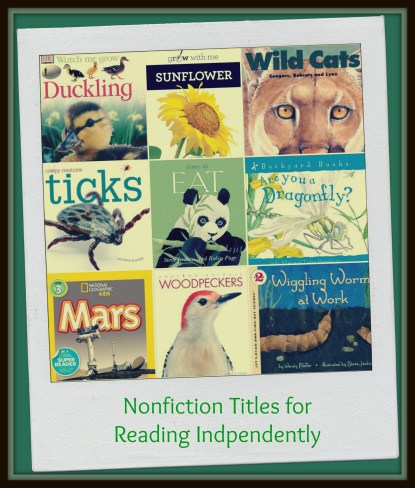
  • Which books are great for students beginning to read and interact with nonfiction text independently?

While I am going to share a number of activities you can use to have students interact with nonfiction texts, I do want to gently remind teachers that we need to ensure there is a balance between independent free choice reading of nonfiction texts and using nonfiction to begin learning research skills and other skills involved in finding and reacting to information in nonfiction books. Yes, it is important that our students know that nonfiction books are a place to go to find information. But, we also need to make sure students associate nonfiction reading with pleasure reading. Don’t overdo the “work” with nonfiction at the expense of the pure enjoyment and time to just explore!

While I do additional work in small groups to give students more practice, I teach a lot of information about the structure of nonfiction texts as a whole group while I book talk nonfiction books and share read alouds. It is something that we work on all year. So when I am launching the activities that I describe below, we have already been learning about:

  • how to navigate a nonfiction book
  • different ways to read nonfiction books i.e. not needing to start at the beginning
  • what are the text features
  • how to use the text features
  • various nonfiction genres

I find that if we launch right into activities where students are expected to find specific information, some students who need more time to explore, become discouraged. A more self-paced activity works better where students can look at a variety of texts or one text in more depth. One of the first things I do when we begin interacting with nonfiction text is what I call “fact search blitzes.”

I make a sheet for students to fill in that has a frame that looks like this (repeated down the page:

On page __________ of  ____________________ (title), I found out that __________________________________________________________.

We put out bins and displays of books and the children select a title and search through for an interesting fact. Some students are very independent and work without much support recording multiple facts. Other students need a lot of guidance finding titles and selecting information to share. I try to have lots of adults in the room when we first do this activity so everyone feels successful. There is usually quite a buzz of excitement and students who want to share their learning instantly. I love the chatter as they work. Sometimes we cut up our sheet and separate the facts into categories on large chart paper like Animal Facts, Facts about our World, etc.

What is great about this activity is that there is no right answer and everyone can work at his or her own pace. Students get to really explore the nonfiction titles in the classroom collection and dive in to some books in more detail. They also begin to learn to extract interesting information from the page. And, everyone gets talking about what is learned!
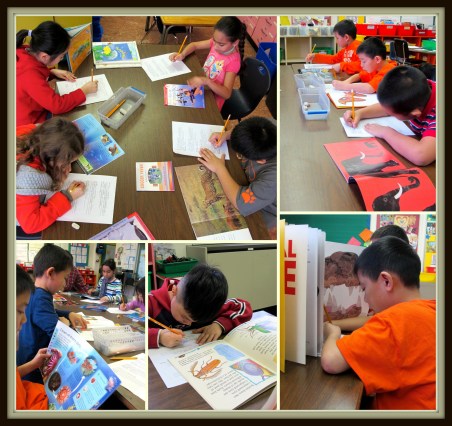
 Teaching with a Passion for Nonfiction Books: Reading and Working with the Texts There's a Book for That

Small Group Work:

Our Teacher Librarian, Ms. S works with my class everyday during Reading Workshop. I also try to organize some of my Resource Teacher support to happen at this time. This allows one of us to work with small groups to practice working more independently with nonfiction text on specific days of the week. We work in the hallway, the library or a different area of the classroom.

Here students are looking for nonfiction features from  a variety of texts and discussing purposes of the features in the book. This group was delighted that some nonfiction books have quizzes, jokes and puzzles!
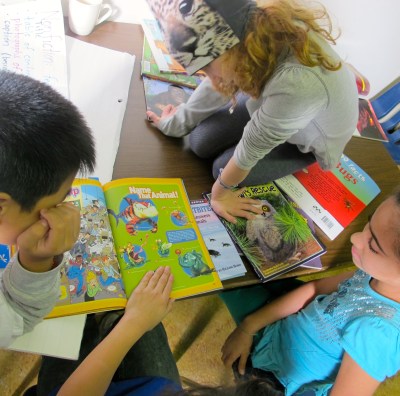
 Teaching with a Passion for Nonfiction Books: Reading and Working with the Texts There's a Book for ThatStudents enjoy working with a partner to explore specific texts. After I worked through this process with the small group, students worked with a partner and a specific text to go through the same process. Working with a partner with lots of time to discuss the topic and share the reading made the experience much more interesting. With less time, I have the pairs do step one and two orally. Note – this process takes a few class periods.

  1. Before you start reading, list everything you know about this specific creature (could be any topic but we were reading books about animals and insects)
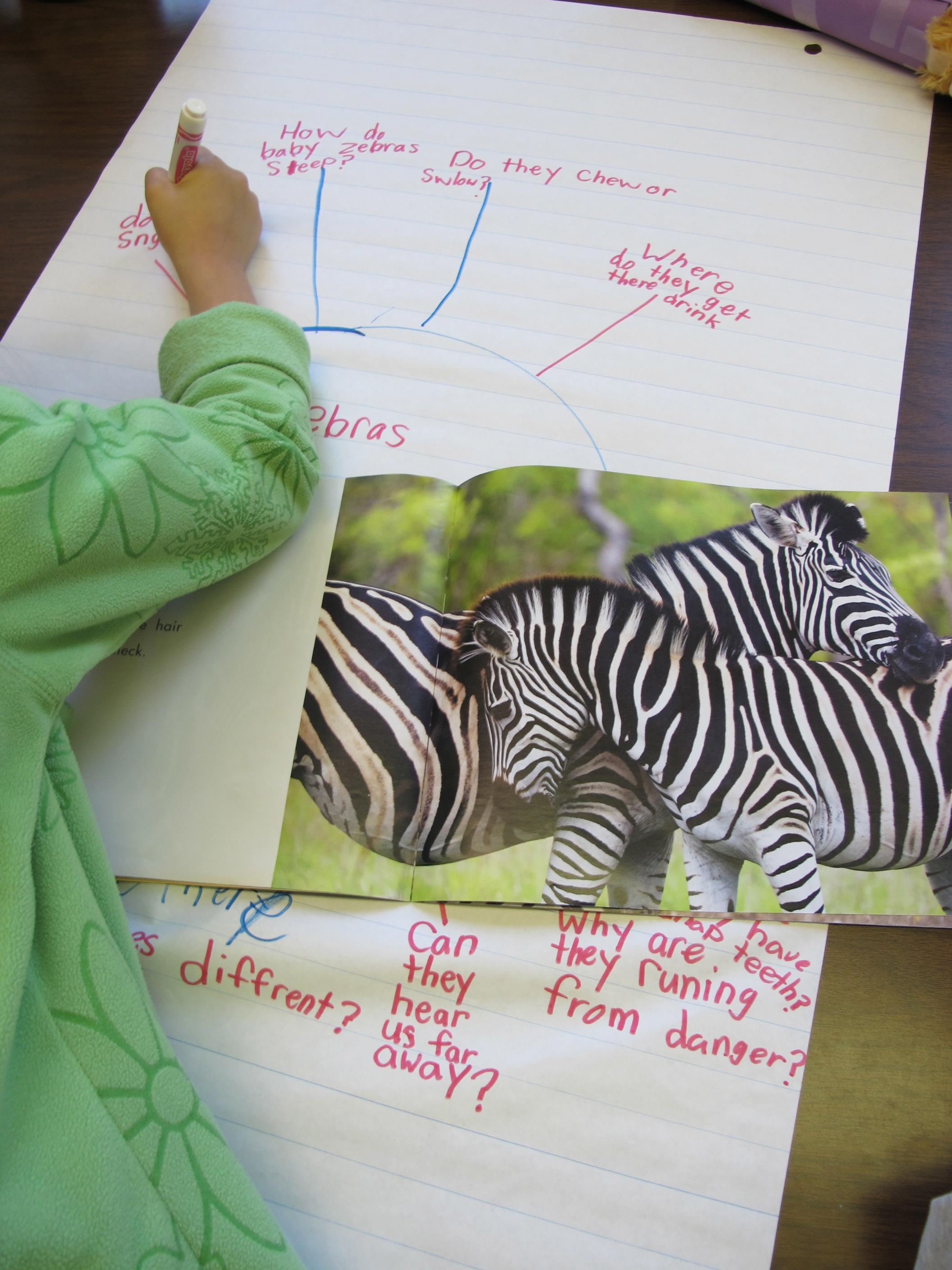
  2. Next, make a Wonder Web to record all the questions that you have.
  3. Now read the text and chart important facts (I tell them that this is part of being a “fact detective”)
  4. Go back to your questions and check off the ones that you answered.
  5. What is left on your list? How could you find out more information to your unanswered questions?
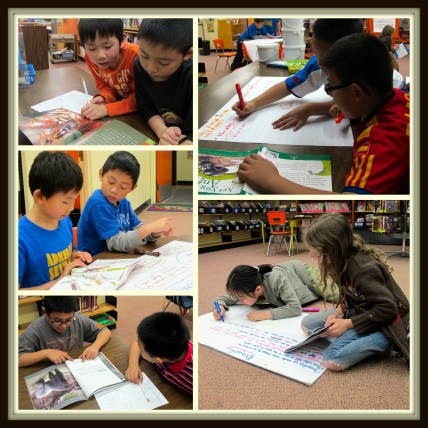
 Teaching with a Passion for Nonfiction Books: Reading and Working with the Texts There's a Book for ThatI shared some of the “talk” I overheard while these students worked with these Backyard Book titles in this post. I am a firm believer in discussion and sharing both learning and thinking when working with nonfiction books!
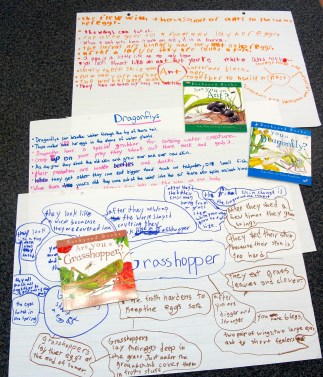
 Teaching with a Passion for Nonfiction Books: Reading and Working with the Texts There's a Book for That

Another activity I have students do when working with magazine articles or specific nonfiction titles allows them to practice a number of skills: accessing prior knowledge, generating questions, reading for information and determining importance.

First students talk about and chart what they know about a particular topic.
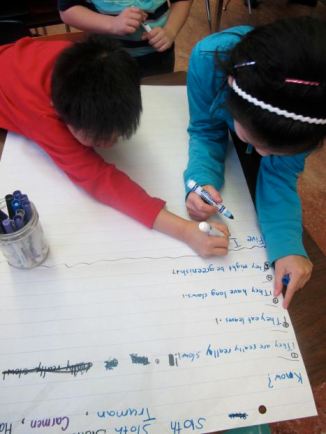
 Teaching with a Passion for Nonfiction Books: Reading and Working with the Texts There's a Book for That

They share all of the things that they wonder in a large web.
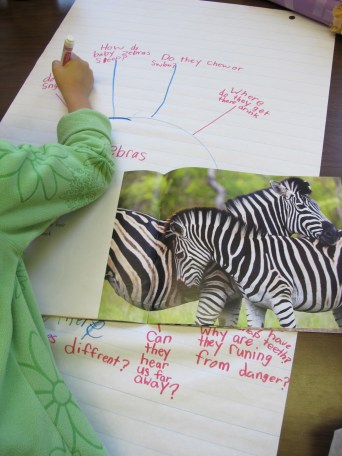
 Teaching with a Passion for Nonfiction Books: Reading and Working with the Texts There's a Book for That

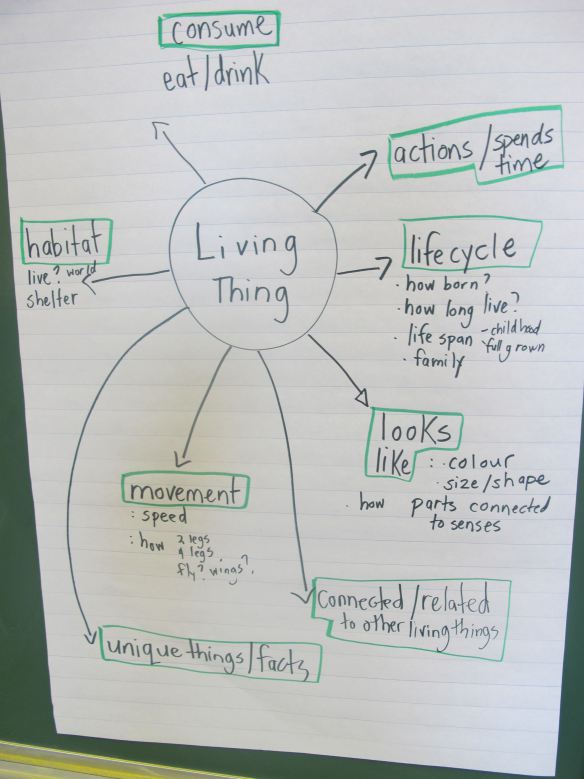
This is a chart we created together to help us think about what kinds of questions we might want to ask and also to help with determining important facts (see below).
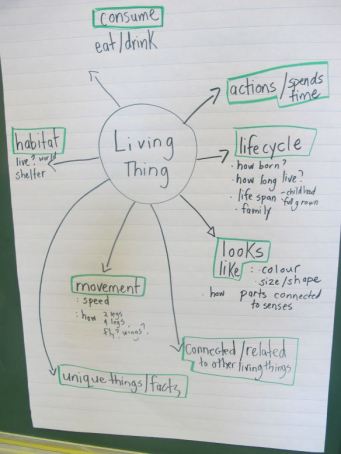
 Teaching with a Passion for Nonfiction Books: Reading and Working with the Texts There's a Book for That

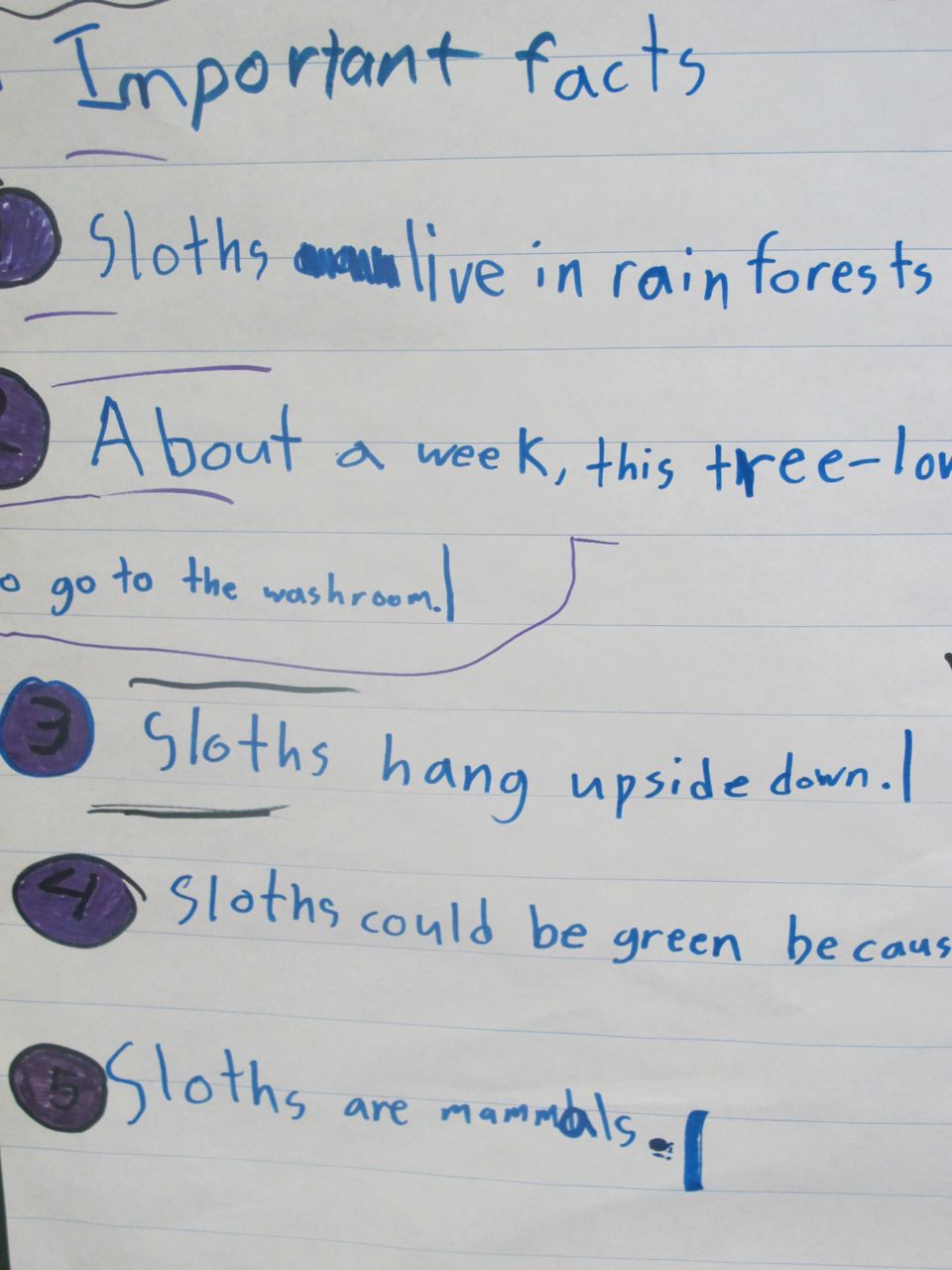
After the group (or pair) read through the article/book, their task is to decide on what they think are the five most important facts. I love the arguments  discussions that occur. The “talk” is where the most learning happens, I always think.
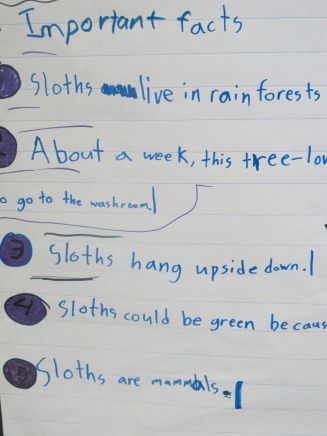
 Teaching with a Passion for Nonfiction Books: Reading and Working with the Texts There's a Book for That

I mentioned using the Knew/New chart format in the second post in this series. This idea is from Adrienne Gear and her Nonfiction Reading Power book and it is something I use frequently with my students.

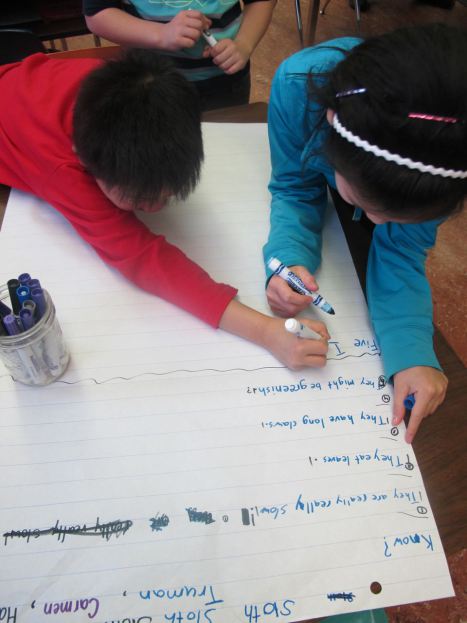
Here, students spent time reading titles from our National Geographic Readers collection. With their partner they noted down information on their charts – under new for something new they learned and under knew for information that they already knew. We then did a Gallery Walk to explore the information shared on all of the charts.

 Teaching with a Passion for Nonfiction Books: Reading and Working with the Texts There's a Book for That

After working with nonfiction books and doing these kind of activities multiple times, students are more comfortable moving into small research projects, collecting information to do specific kinds of nonfiction writing and searching for information to support their learning on a particular topic. At this age (late primary) it is all about practice, practice, practice!

Selecting books for students to read for independent/partner work with text:

I look for the following things when I am searching for titles for independent practice:

  • full colour interesting photographs and/or realistic, engaging illustrations
  • labelled diagrams and close up photos with labels
  • easy to use features like maps, life cycle charts, comparison charts
  • navigation ease via table of contents, index and headings
  • new words defined on the page or easy to find in the glossary
  • fact boxes for skimming and scanning
  • text complexity – words on the page, organization, easy to follow headings
  • “interest meter” for students this age (changes with each group of children)
  • is it part of a series or a collection so familiarity of structure can be a bridge to other books in same series

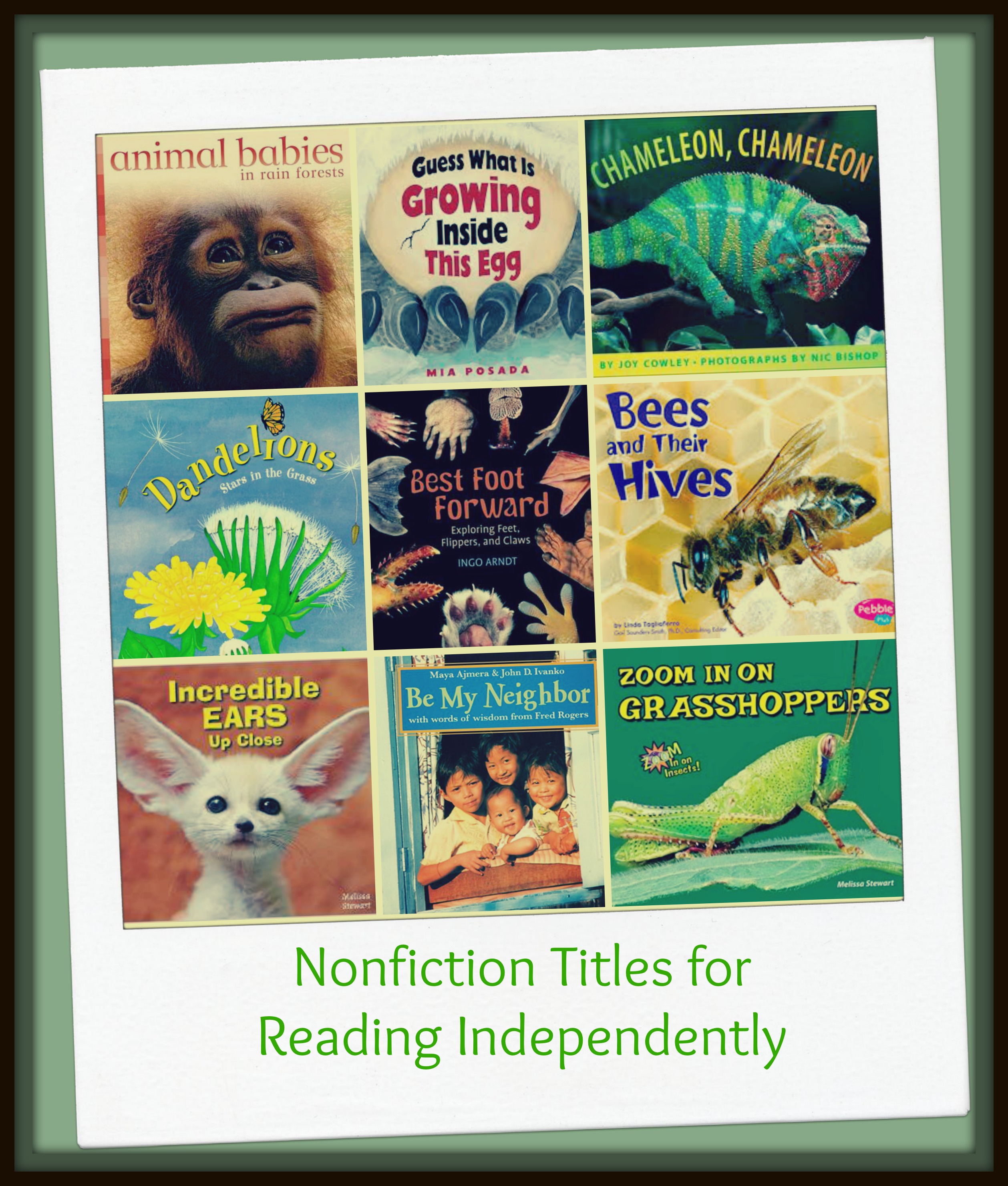
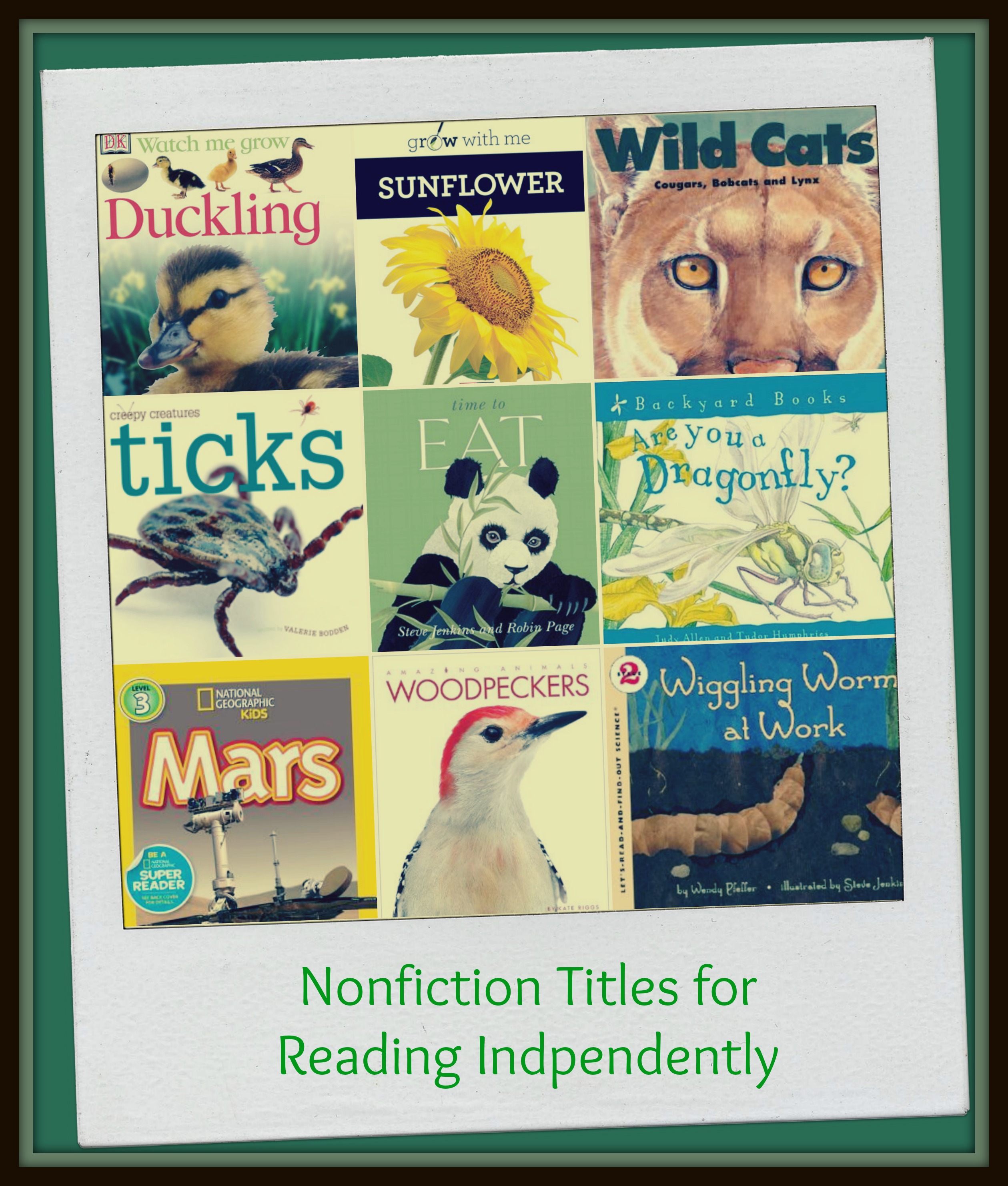
Here are a number of titles that my students can manage on their own when working with the text to pull information. A note – I have been teaching mostly Grades 2 and 3 for the last 15 years and many of my students are English Language Learners. These books are great for partner work, buddy reading and individual practice. I also often use magazines from the Owl Kids family: Owl, Chickadee and Chirp. I’m sure there is a similar magazine series in the U.S. and other countries. My students love these magazines and I have bins of back issues discarded from the library or donated to the school.

Many of these titles are part of a series or nonfiction collection. I have only showcased one or two titles. If there are any questions about any of these titles, please ask in the comment section or contact me via twitter @CarrieGelson I know how challenging it can be to find books that our primary students can manage on their own – especially for readers who are just building their confidence. Many of these titles have great images and text features to help support successful reading.
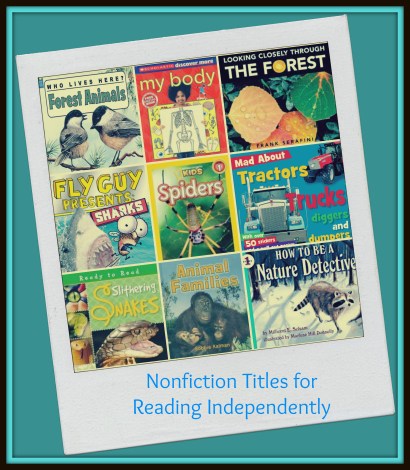
Nonfiction Titles for Reading Independently  -  Reading and Working with the Texts

Nonfiction Titles for Reading Independently  -  Reading and Working with the Texts

Nonfiction Titles for Reading Independently  -  Reading and Working with the Texts

Are there any titles your primary students manage well independently? Please share in the comment section!

Teaching with a Passion for Nonfiction Books: Part 3 A

This is the third post in a three four post series highlighting how to use more nonfiction in the primary/early intermediate classroom. The first two posts can be found here:

Part 1: Everywhere you look . . . let there be nonfiction!

Part 2: The importance of the nonfiction read aloud

The intention with each of these posts is to share a practical “how to” list of how to read more, celebrate more and use more nonfiction picture books in our classrooms. For reference, last year I taught a Grade 2/3/4 class.

Teaching with a passion for nonfiction picture books:

Part 3: Interacting with nonfiction: getting students reading, thinking and talking together

3 A: Generating excitement, making choices and having time to read This post will touch on these questions:

  • How to generate excitement about nonfiction texts?
  • What are some ways to get students reading more nonfiction books?

 Teaching with a Passion for Nonfiction books: Interacting with nonfiction: getting students reading, thinking and talking together There's a Book for That

One of the best ways to create a buzz about nonfiction texts is to make authentic connections with the authors, illustrators and photographers that are making the books we love to read! We read a lot of nonfiction titles in my classroom and its is always exciting for the children to be able to communicate with the people behind the books that we have loved and shared together.

I would like to share three of our important connections here.

FirstNic Bishop.

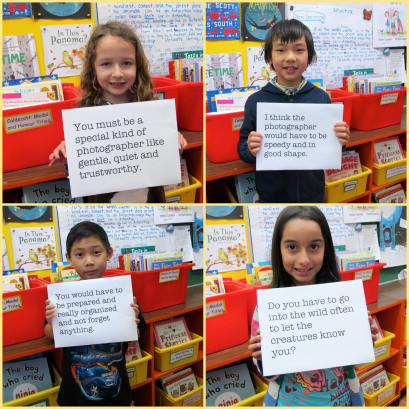
When I had the opportunity (thanks Adam Shaffer) to introduce author and photographer Nic Bishop at this year’s Western Washington’s Children Literature ConferenceI knew that my students had to be part of the presentation. We spent time with Nic Bishop books (titles like Butterflies and Moths, Lizards, Spiders, Frogs, and Snakes). I asked the children to explore the books with these questions in mind:

  • How were these photographs taken?
  • What skills (besides photography) would the photographer need?
  • What would be the rewards in this kind of work?
  • What would be the challenges?

I then made a slide show that showcased some of their answers. The children were thrilled that they had “come with me” to help with the introduction! Here are a few photos that were part of the slide show.

 Teaching with a Passion for Nonfiction books: Interacting with nonfiction: getting students reading, thinking and talking together There's a Book for That

Second, with author Melissa Stewart.

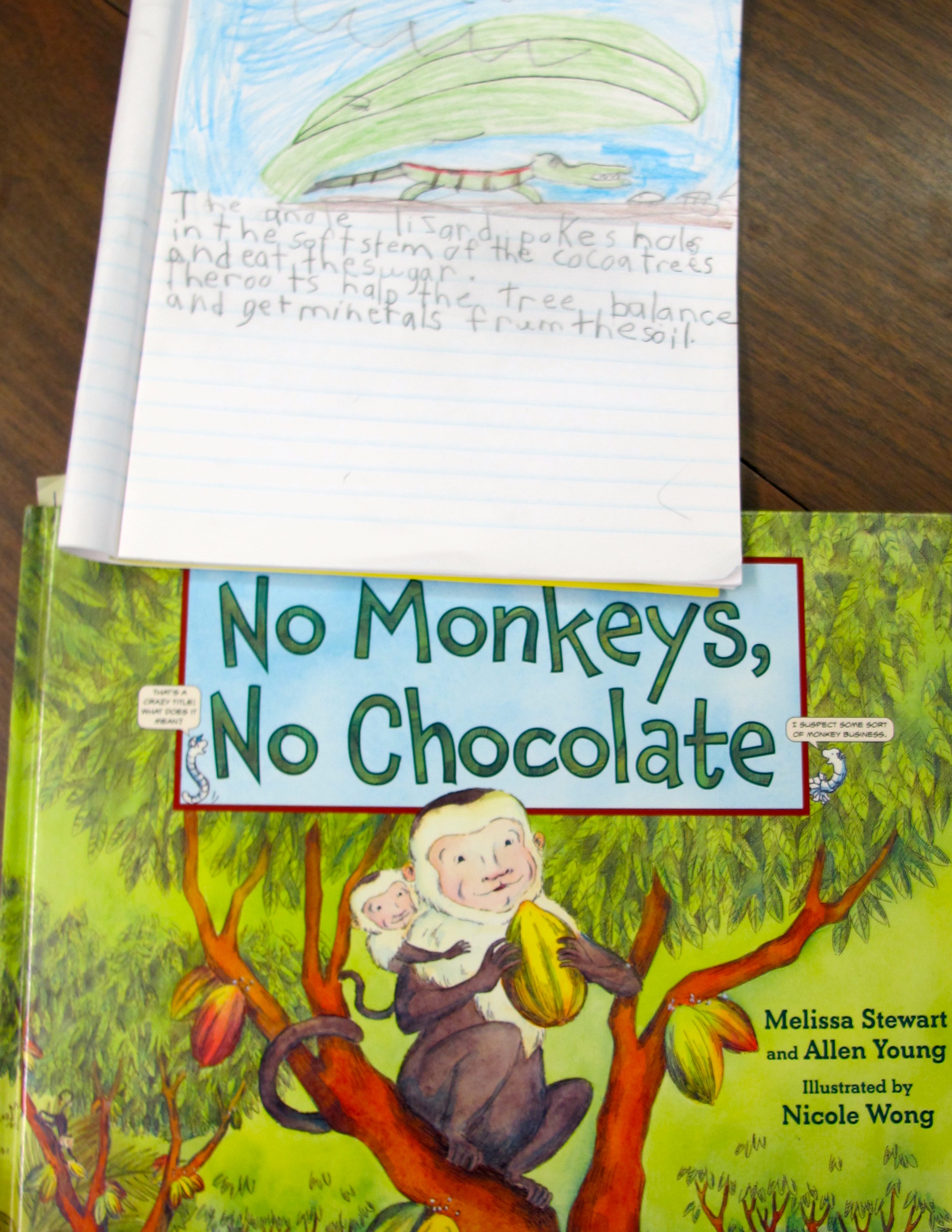
We took forever to read No Monkeys, No Chocolate written by Melissa Stewart and Allen Young (with illustrations by Nicole Wong) We had to stop to talk, to write, to talk some more. So much learning in this book! It was one of our favourite read alouds of the year! A very special thing happened when I tweeted a picture of one child’s picture and writing to Melissa. She shared this on her blog, Celebrate Science. One little boy now has dreams of being an illustrator for nonfiction picture books!

 Teaching with a Passion for Nonfiction books: Interacting with nonfiction: getting students reading, thinking and talking together There's a Book for That Students were so excited to see a classmate’s work on a real author’s blog! It was such a surprise to see his work up on the big screen!

 Teaching with a Passion for Nonfiction books: Interacting with nonfiction: getting students reading, thinking and talking together There's a Book for That

And third, with author Deborah Heiligman.

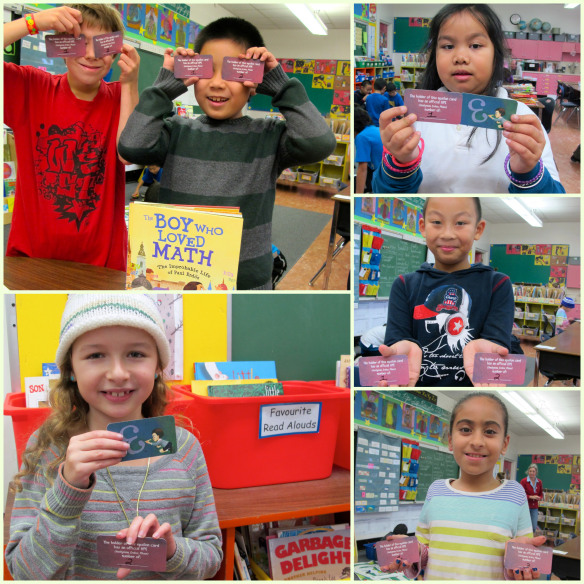
Another one of our very favourite read alouds this year was The Boy Who Loved Math: The Improbable Life of Paul Erdos written by Deborah Heiligman and illustrated by LeUyen Pham. I shared all of our learning and connections with Deborah in this post on my classroom blog Curiosity Racers: For the Love of Math It is worth reading to see how very engaged my students were with this book and to figure out just what those cards they are holding are all about!

 Teaching with a Passion for Nonfiction books: Interacting with nonfiction: getting students reading, thinking and talking together There's a Book for That

Provide time to read nonfiction books

Of course, with many nonfiction books in the room and lots of book talking highlighting nonfiction texts, many students are already reading nonfiction books.  To ensure that all students were having the opportunity to be making nonfiction a choice and having guidance in choosing nonfiction texts, we decided to set aside a specific amount of time once a week (we grew it to 20 minutes and some kids read longer) and called it Nonfiction Reading Day. Of course, many children read nonfiction daily. But after a few weeks of honouring nonfiction reading with a special time, more children began choosing nonfiction more often throughout the week.

On Tuesday (the day we chose) I made sure to book talk nonfiction titles and my Teacher Librarian (who is in the room with me for every Reading Workshop)and I help students select nonfiction books that are a good match for them in terms of reading and interest level.

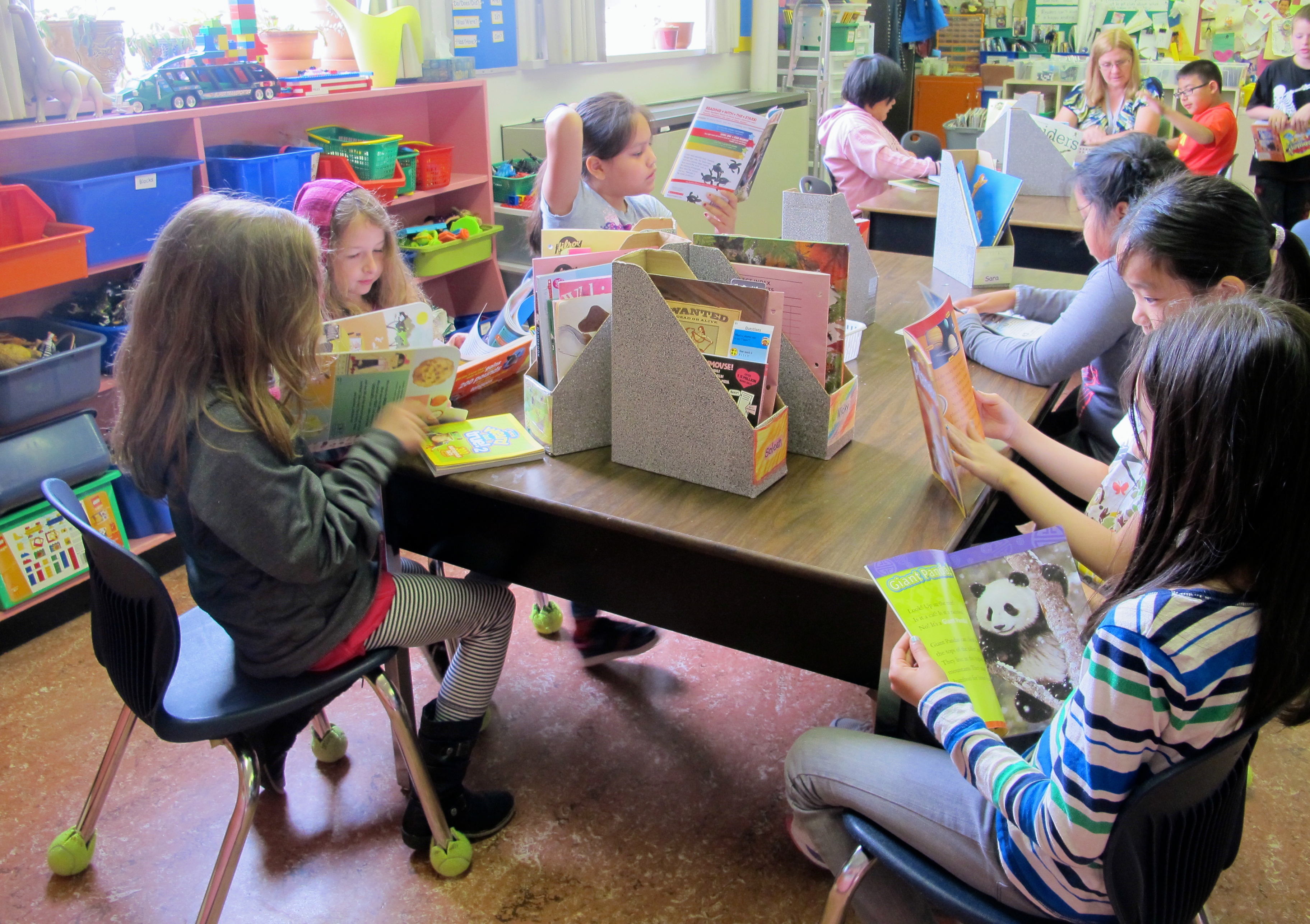
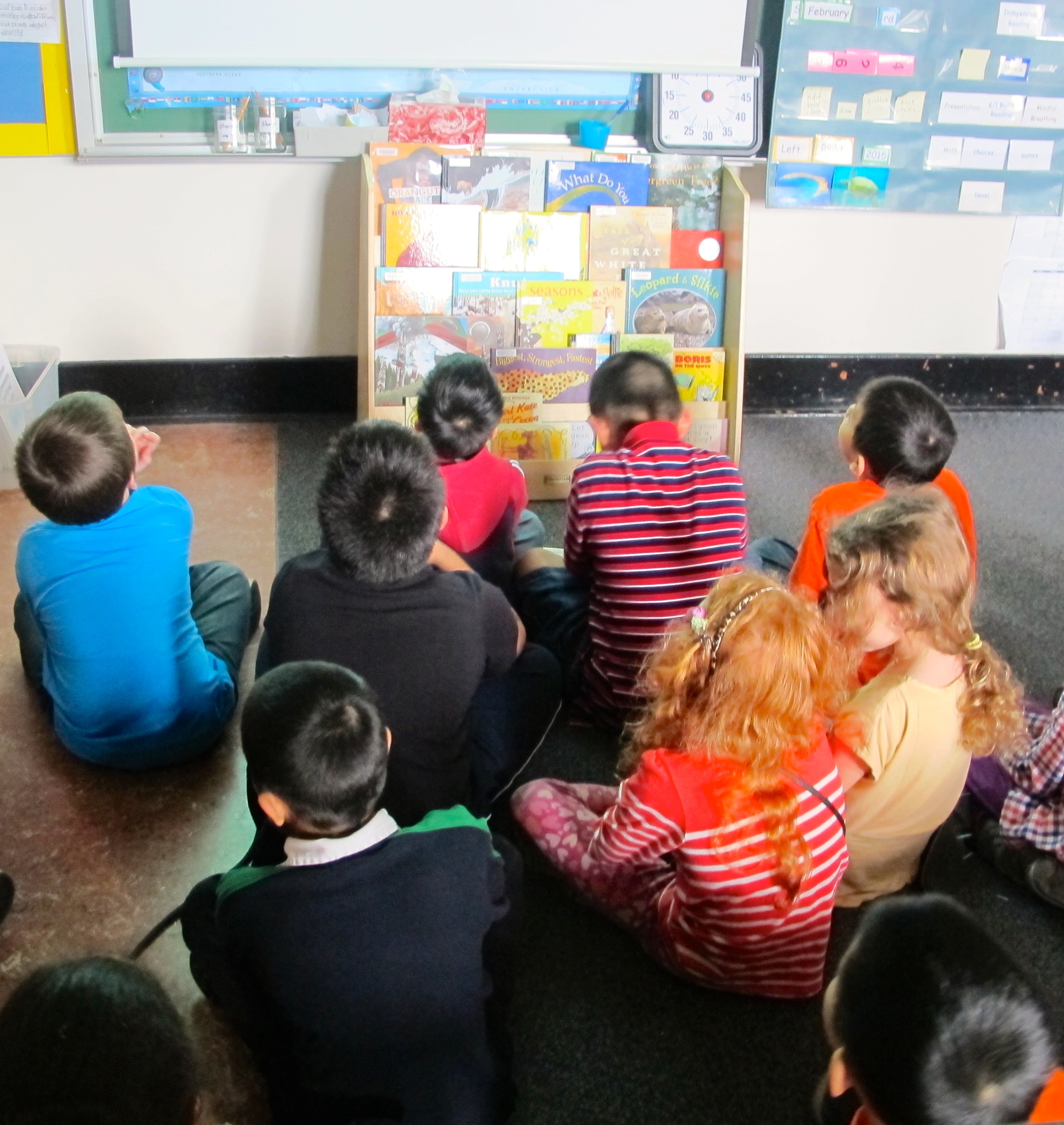
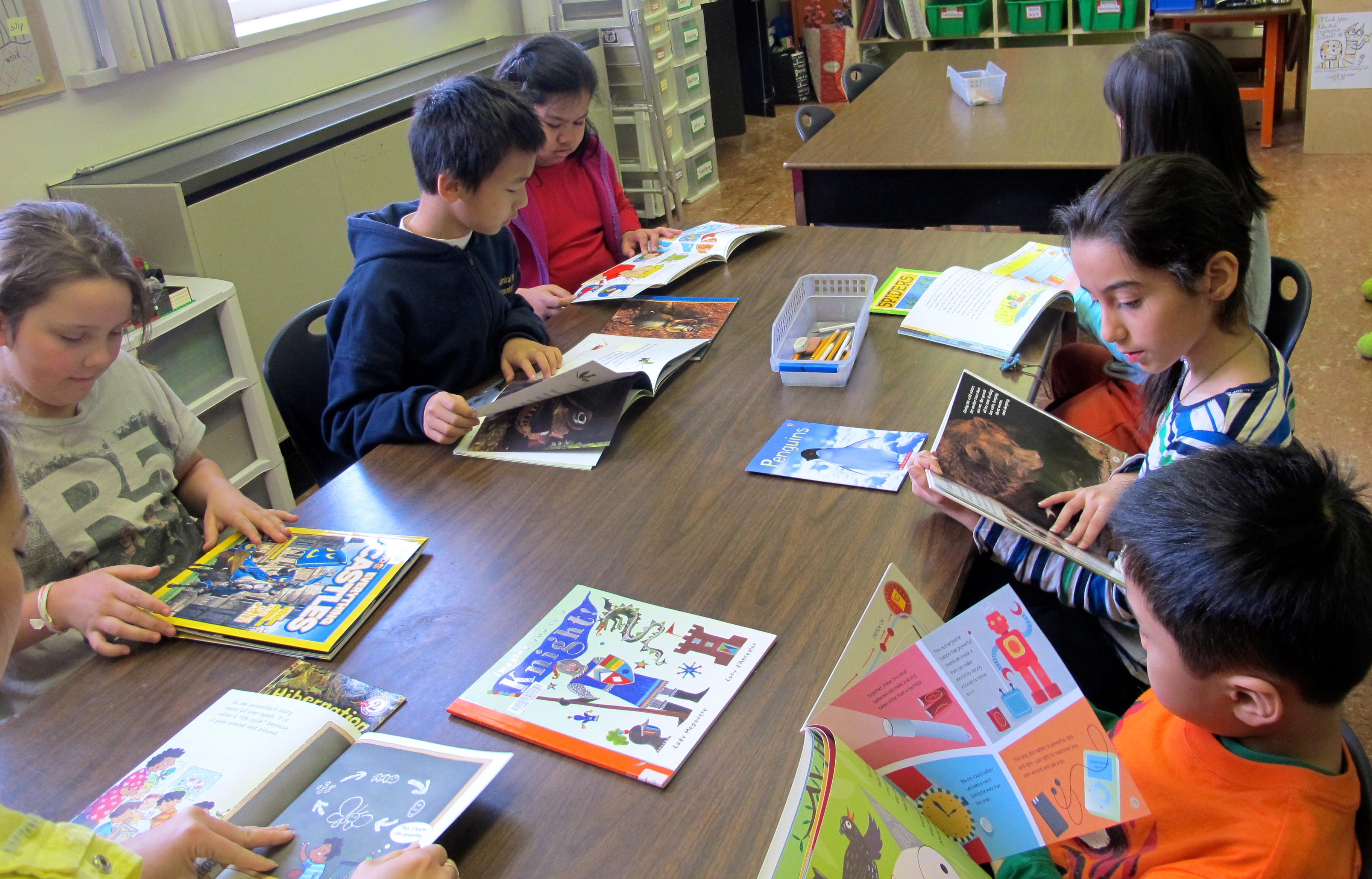
A great way to introduce more titles is also through book sharing circles. I group children into small groups of 6-8 students and have enough for 2-3 books per child. Every few minutes, we pass the books to our left and have a small amount of time to explore the titles just passed to us. At the end, we place all of the books in the center of the circle and students have a chance to share which books would be their first choices to read “next.” These conversations help to further promote the excitement about the books and invariably, many of these books are nabbed as students head off to read.
 Teaching with a Passion for Nonfiction books: Interacting with nonfiction: getting students reading, thinking and talking together There's a Book for That

On Nonfiction Reading Day, we acknowledge that the volume in the room will be noisier than our usual independent reading. It is hard to stay quiet when we read nonfiction because there is just too much that is too tempting to share. Many students also love buddy reading with a nonfiction text. I do specific mini-lessons with some ideas about how to make this go well.

Many days, we gather back to the carpet and sit knee to knee with a partner or a trio and share highlights from our nonfiction reading that day. Students are encouraged to ask questions and share their learning. We have a chart that we have created together in the room with some prompts to help out. A few examples:

  • Share a favourite illustration or photograph and explain what is significant about it
  • Read aloud a particularly interesting part and ask your partner if they have any questions about what you read.
  • Share something new that you learned.
  • Share a fact that was confirmed for you.
  • Talk about something you still don’t understand or have further questions about.
  • Give some reasons why someone might be interested in this title.

Time to read is a huge piece of generating excitement about nonfiction texts. Without this time to self-select titles, explore a variety of texts, talk about what we are reading and actually sustained time to read, our love for nonfiction won’t grow at the rate it does with all of these things in place.

 Teaching with a Passion for Nonfiction books: Interacting with nonfiction: getting students reading, thinking and talking together There's a Book for That

Share the #NFbooklove!

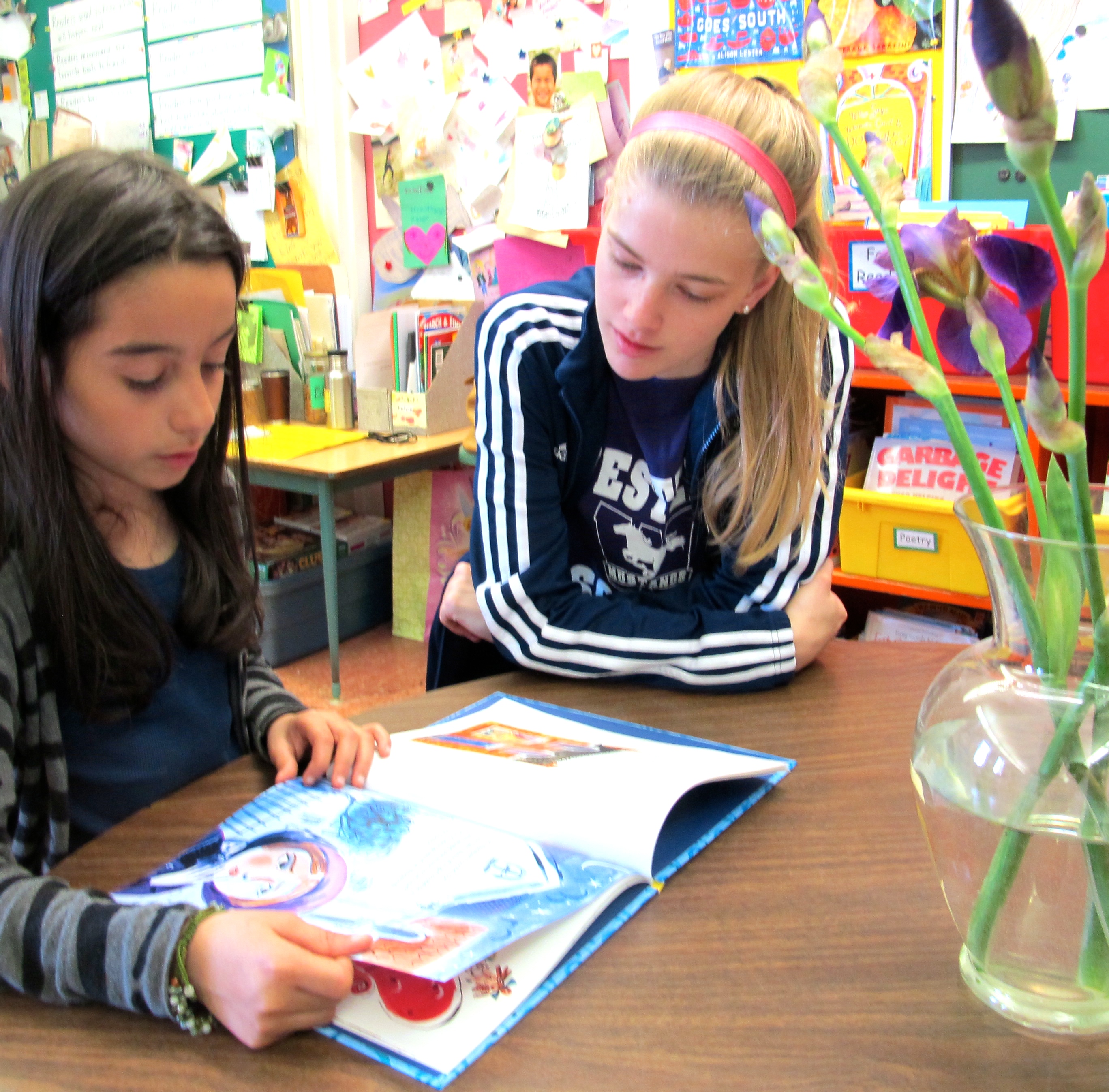
I love to welcome volunteers into my classroom during Reading Workshop. Often, when students get to choose which book to read to a volunteer, they choose a nonfiction text we have shared together!  This picture below is very special. My student, who dreams of becoming a doctor is reading Who Says Women Can’t Be Doctors?: The Story of Elizabeth Blackwell written by Tanya Lee Stone and illustrated by Marjorie Priceman to our volunteer who is currently applying to medical schools. I shared highlights of the conversations about this book in my classroom here.

 Teaching with a Passion for Nonfiction books: Interacting with nonfiction: getting students reading, thinking and talking together There's a Book for That

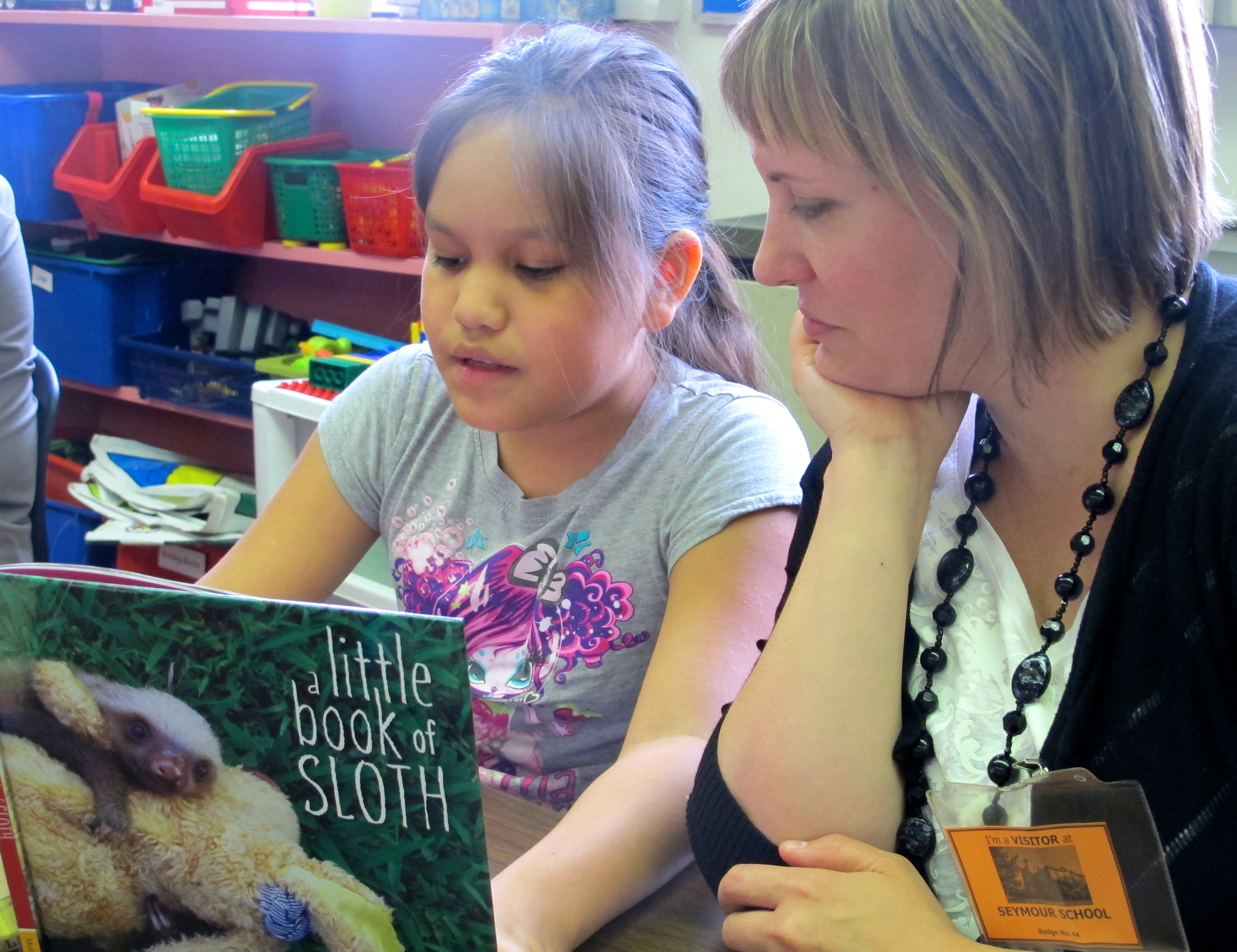
This picture was taken during the last week of school. My student is reading A Little Book of Sloth by Lucy Cooke to a guest visiting our room. She chose this from our Favourite Read Alouds bin. Why so significant? This was the first nonfiction read aloud I shared with my class back in September! Truly a testament to the joy these books bring to us.

 Teaching with a Passion for Nonfiction books: Interacting with nonfiction: getting students reading, thinking and talking together There's a Book for That

Up next? Part 3: Interacting with nonfiction: getting students reading, thinking and talking together – – > 3 B: Reading and working with the texts 

Please continue the nonfiction conversation with me. I welcome any questions or feedback in the comments section 🙂