A Love of Reading Starts Between Us

This post was originally published on the Nerdy Book Club blog on February 24th 2012.  Next week my Grade 2/3 class begins reading with their Kindergarten buddies for the 2012/2013 school year and I am excited about the magic bound to happen once again!

A Love of Reading Starts Between Us

I teach at a tiny inner city school, located in Vancouver’s downtown eastside. The school is located in what some have described is the country’s poorest postal code. Looking at factors from census statistics like parents’ educational attainment and the number of families living below the poverty line, our school is described as vulnerable even amongst schools who also have inner city status.  So, like all teachers my mission is to teach children to read and hope that I can also make them passionate life long readers. But I know the statistics that link poverty to limited access to books and limited access to books to levels of school achievement. So I feel an urgency to create a community of readers in the classroom. And . . . I want that community to extend into children’s homes and futures.

We do a lot of fabulous things at my school to ensure that our children read and have access to fantastic books. What I am particularly passionate about this year is the buddy reading between my Grade 2/3 class and the K/1 class. (“Really? We’re the big buddies? Wow!” my students marveled when I revealed our buddy reading plan) We meet together Wednesday afternoons for forty minutes but my class spends time everyday making sure this weekly reading is as successful as possible.
My role is collecting books, modeling reading aloud, nurturing the joy and providing feedback. I have raided my home bookshelves for early picture books I read to my children. Beautiful alphabet books so letters can be chased all over the page, Thanks to Audrey Wood for the popular Alphabet Adventure.  I brought in lots of rhyme and repetition like Phoebe Gilman’s feisty Jillian Jiggs, Mem Fox’s Where is the Green Sheep? and all of the Five Little Monkeys books written by Eileen Christelow.

Recently I received some designated funds for my classroom book collections. I purchased board books for our buddy reading. My students will tell you that board books are great for little five year old hands and you don’t need to remind anybody to be gentle turning pages. Each morning I read a new book to my students with the intention of doing a few things. Of course, sparking excitement and interest in the new book is a priority. But I also model. “When you read to your little buddy you could ask them to guess which animal is on the next page,” I point out while sharing Monkey and Me by Emily Gravett. “Ask your little buddy to do the animal sounds with you,” I encourage as we read Alice Shertle’s Little Blue Truck. Now I have students coming to me with classroom books. “Look Ms. Gelson I could read this book to my little buddy and they could say the parts that repeat with me!” One girl found a Fairy Tale book told in rebus style. “This is a good one for little kids, you can ask them what the picture is.”  Thinking about our little buddies is hardly just a Wednesday afternoon event.
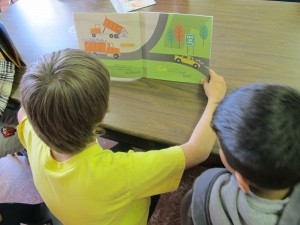
Now as I watch my students together with their little buddies, I am delighted to hear them trying out new things we’ve talked about. My eight year olds are encouraging choral reciting, asking little ones to guess, predict and turn the page to find out. There is reading, laughing, talking and much joy shared.

I have one student who won’t read to any adult who visits our class but he is a star in buddy reading. A little kindergarten girl who struggles a lot with managing her emotions in class and often needs breaks and extra supports makes a beeline for this boy every Wednesday afternoon. She sits engrossed in their book sharing for forty minutes. None of us can believe it. But of course we should. It is the magic of books doing their thing!
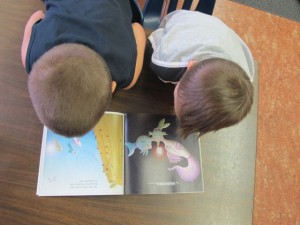
This boy in my class who shines as a buddy reader is reluctant to accept compliments. So I sneak them in casually but my feedback is specific. “Erich,” I say. “It is amazing to watch you read to Kayla. You involve her in the stories. You listen carefully to her questions. Reading with you is such a happy time for her.” Erich grins cautiously but his pride radiates. Now I am passing him books to take home and read to his younger siblings. “You are so great at this. It is such a wonderful thing to be able to share books.” He doesn’t tell me a lot about reading at home to his siblings but he brings the books back and he asks for more.

I know these Wednesday afternoons mean a lot to all of us. The little buddies and the big and the lucky teachers who witness it all. A love of reading starts between us and it spreads. Together my students and I are passing on the joy of reading. We are letting books work their magic. Books are the tickets to our future and we are loving every step of the journey!
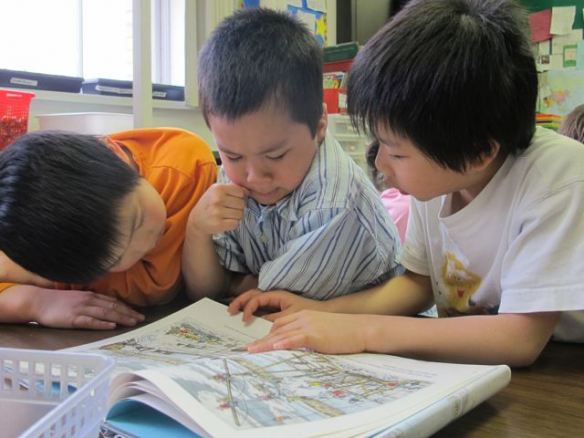
Read more here about some of the board books we love for buddy reading.

Hello Book. Pleased to Meet you.

Right now with my little reading group, it is all about adopting their new personas as competent, eager and avid Grade 2 readers. This is serious business because in Grade 1, the picture book was it. And the picture book is still “it,” highly valued in our reading world but we are beginning to branch out. We are exploring non-fiction texts and recognizing that not only do we find answers to questions we have about the world, we also think up more questions for future reading. We are enjoying comics and graphic novels. We are also finding our way around the chapter book. Recognizing that chapter books can range from illustrated early readers (think the Mercy Watson series) to longer more complex novels (like Magic Tree House Merlin Missions) helps us understand that we can approach chapter books anywhere on the continuum.
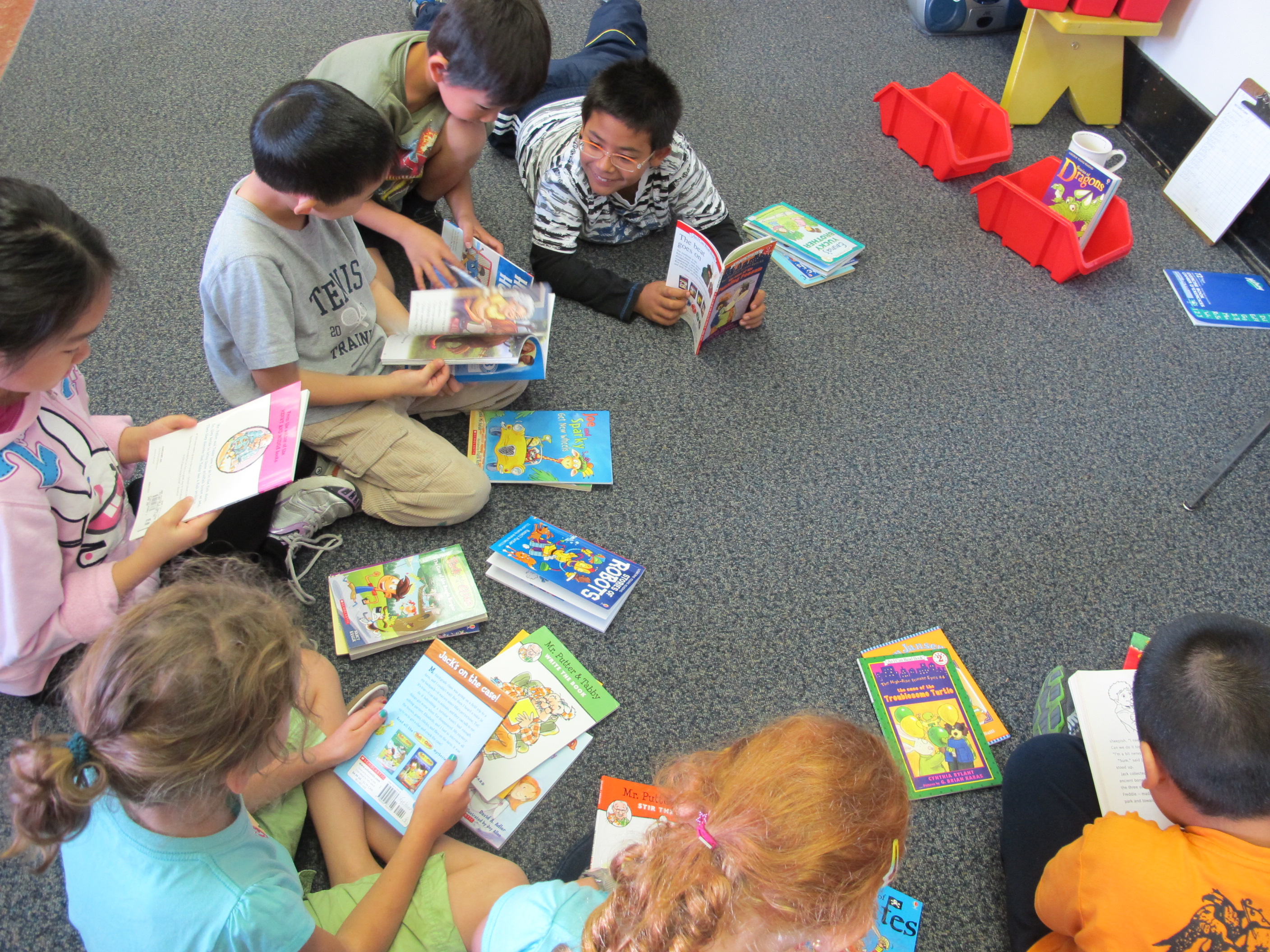
How are we getting to know chapter books? It’s basically a “Meet and Greetbook sharing circle concept.

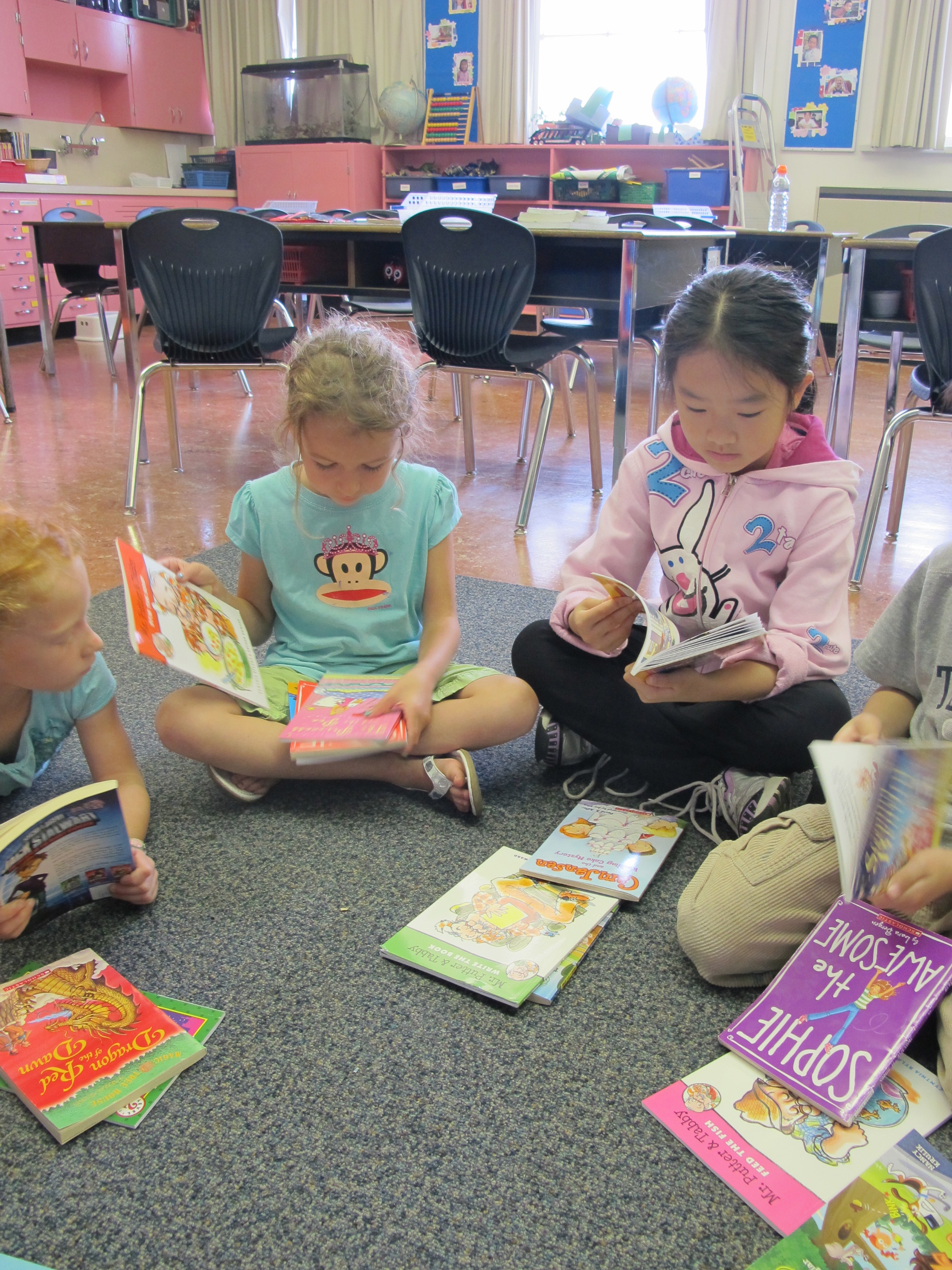
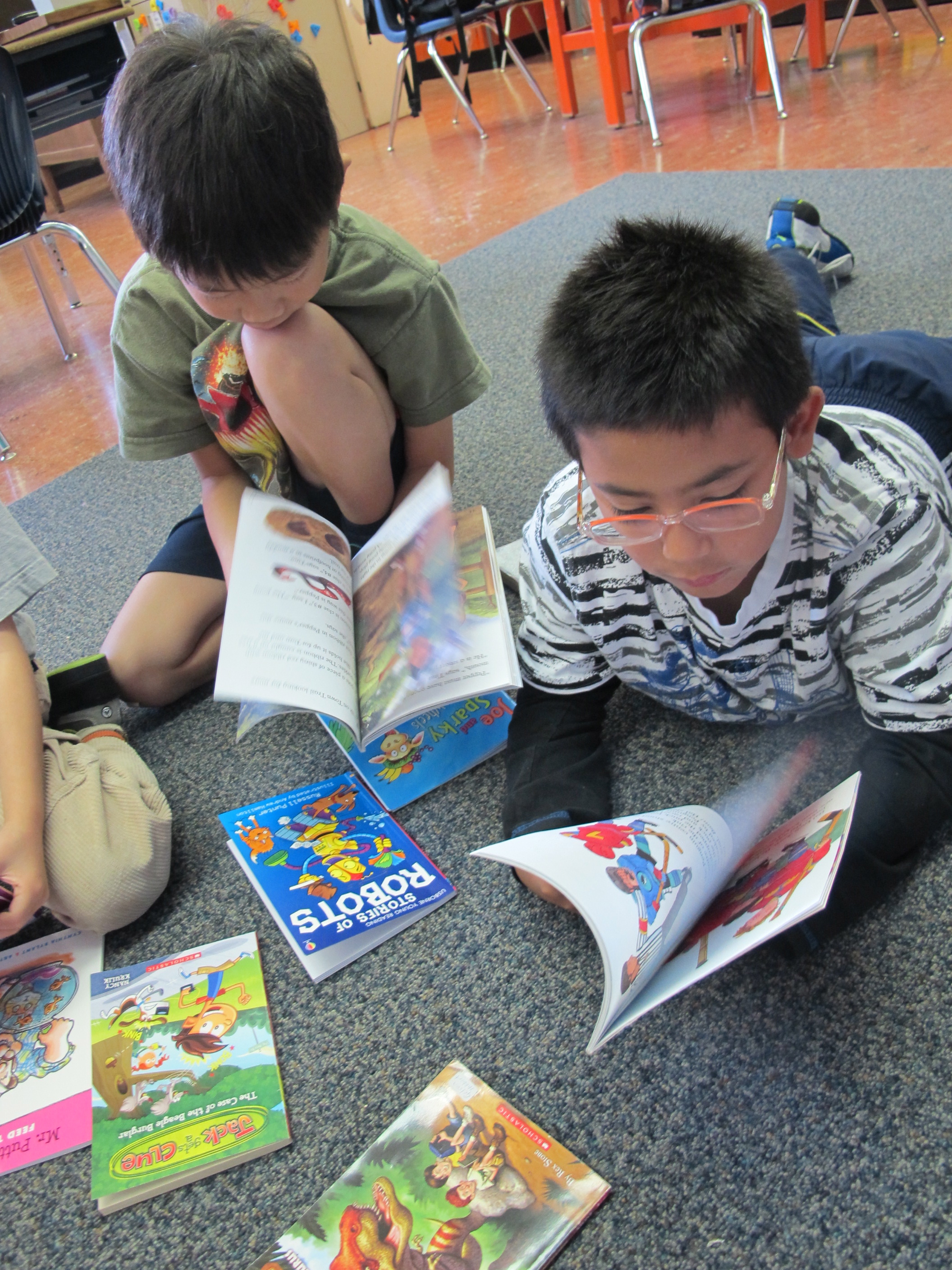
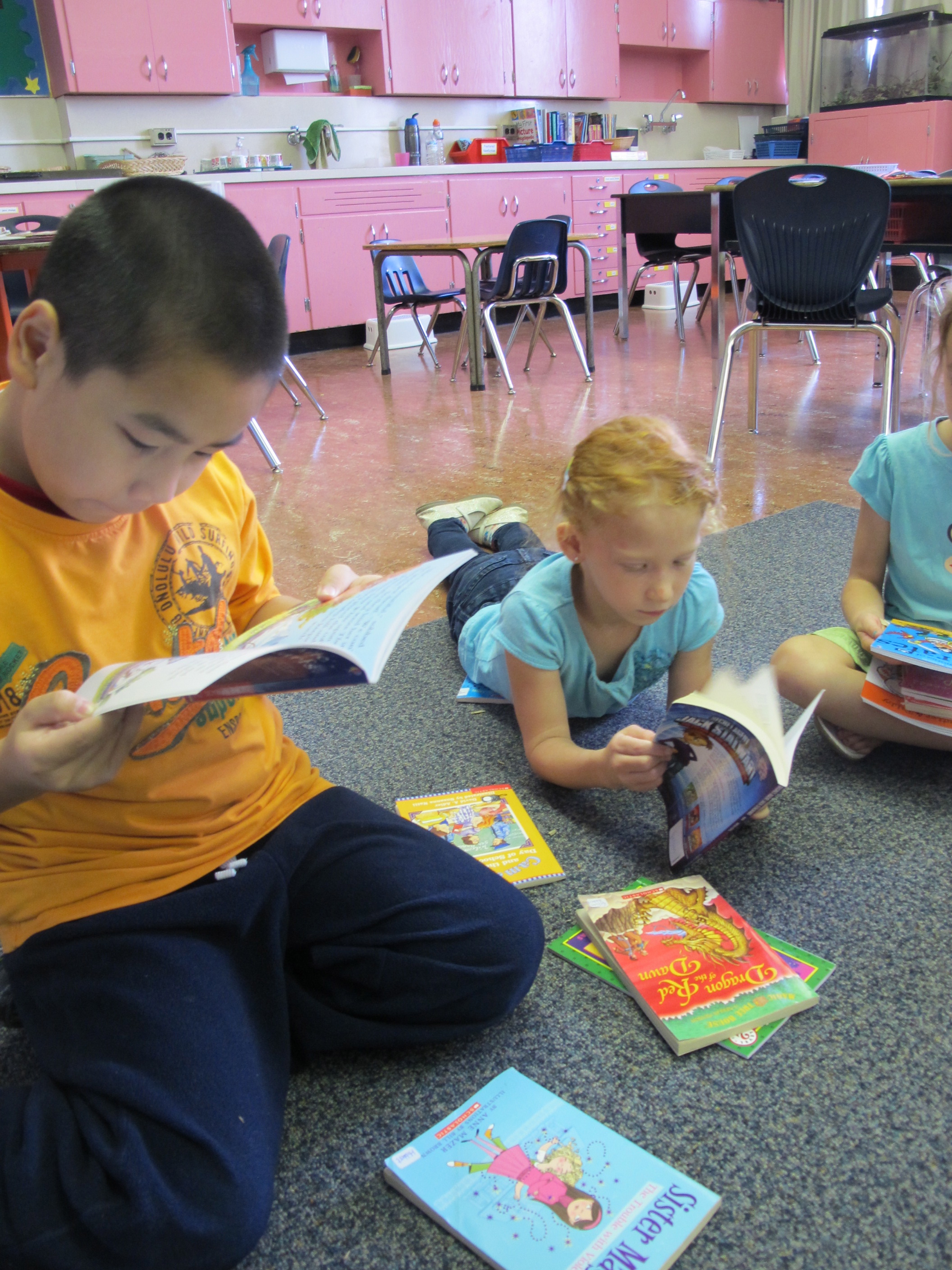
I preselect a number of early chapter books that students may or may not know but that will be in the range of appropriate reading and interest levels for the group. This week we looked at a number of books including some Mr. Putter and Tabby titles, Joe and Sparky books, Usborne Young Reading stories (fables, fairytales, etc) the Jack Stalwart series, some Cam Jansen mysteries and some of the Sophie titles written by Lara Bergen.

The students receive three or four books at a time and have two minutes to peruse them. We then pass them on to the next person and receive some new titles to look at. Before we begin the book passing, we discuss how to determine if a book is right for us. We talked about:

  • Is the cover appealing?
  • Do we know the author or illustrator and like his/her style?
  • After reading the summary on the back or inside flap, are we intrigued?
  • When we flip through the book, does it look good? This is where we need to look at illustrations, chapter length, read a paragraph and see if the reading level seems like a match, etc.
  • Is it part of a series I have read before and liked?
  • Is someone in the class recommending it to me?

Some students took this advice to heart and carefully skimmed each book. Others began by eliminating books from a mental “I would read this” list strictly by looking at the covers. “Nope. Nope. Nope. And nope.” I circulated and worked individually with these students. Often I just had to read the back cover and a “definitive nope” changed into a “possible maybe.” I would also read certain passages that were either funny, full of adventure or ended in a cliffhanger to pique interest. It gave me a chance to talk to students about their perceived “boy vs. girl” books. Yes, boys read books with main characters that are girls. Yes, girls are interested in spy books with boy main characters. No, pink on the cover does not mean only girls will like it. These are such important conversations. Books need to feel full of possibilities. The last thing I want is students who are making a limited reading “box” for themselves in terms of book choice at such a young age.

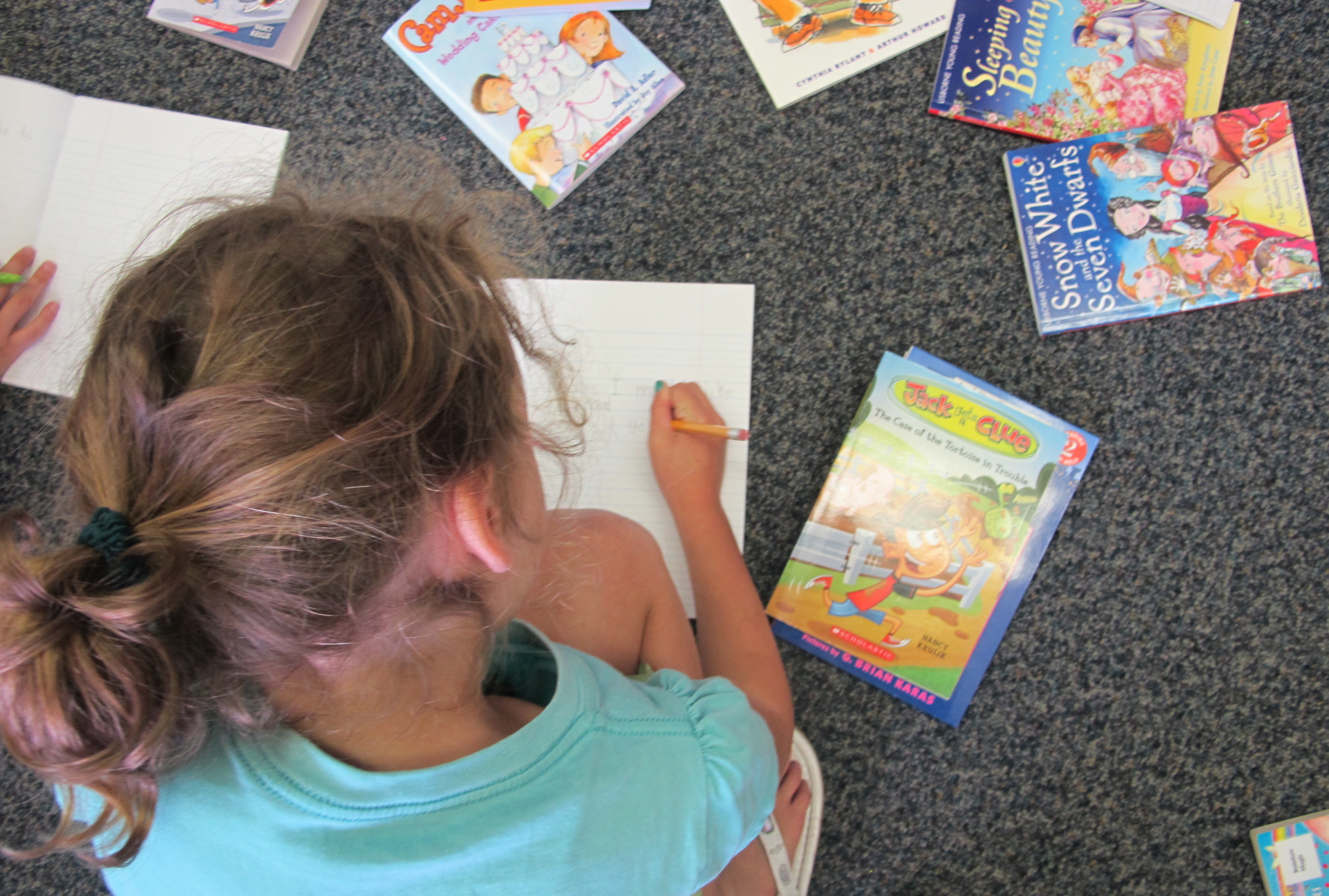
After we had looked at all of the books, we spread the books out  in the centre of the circle, grabbed our reading notebooks and noted down three titles that we might want to read in the future. And then it was off to do some quiet reading! We will do these sharing book circles often over the course of the year and students can add to their “want to read” lists. These lists are extremely helpful to refer to when choosing a new book to read.


How do you introduce new books in your primary classroom? Please share!

Getting down to the business of reading

Reading Groups started this week. Every morning I have the pleasure of working with a small group of eager Grade 2 students to help them develop their literacy skills: build reading fluency, learn new comprehension strategies, provide opportunities for meaningful responses to literature, learn how to navigate non-fiction texts, learn about genres, etc. That’s what I know I need to do. What did I tell these lovely, eager little students on our first meeting together? Not all of that! Nope. I explained that I was going to transform them into READING FANATICS! That they would be so excited about reading that they would choose books over candy, over chocolate cake, over roller coaster rides, over the latest movies. That they would eat, sleep and dream books. I went on for a while about this, trying to make sure my reading excitement was as contagious as those unblocked sneezes we all wince at. Their reaction? Fully in! “Can we have book parties?” “Can we take a book outside to read?” “Can we sometimes just sit and read and read and read?” My answers to all of these things? Yes. Yes. And yes!

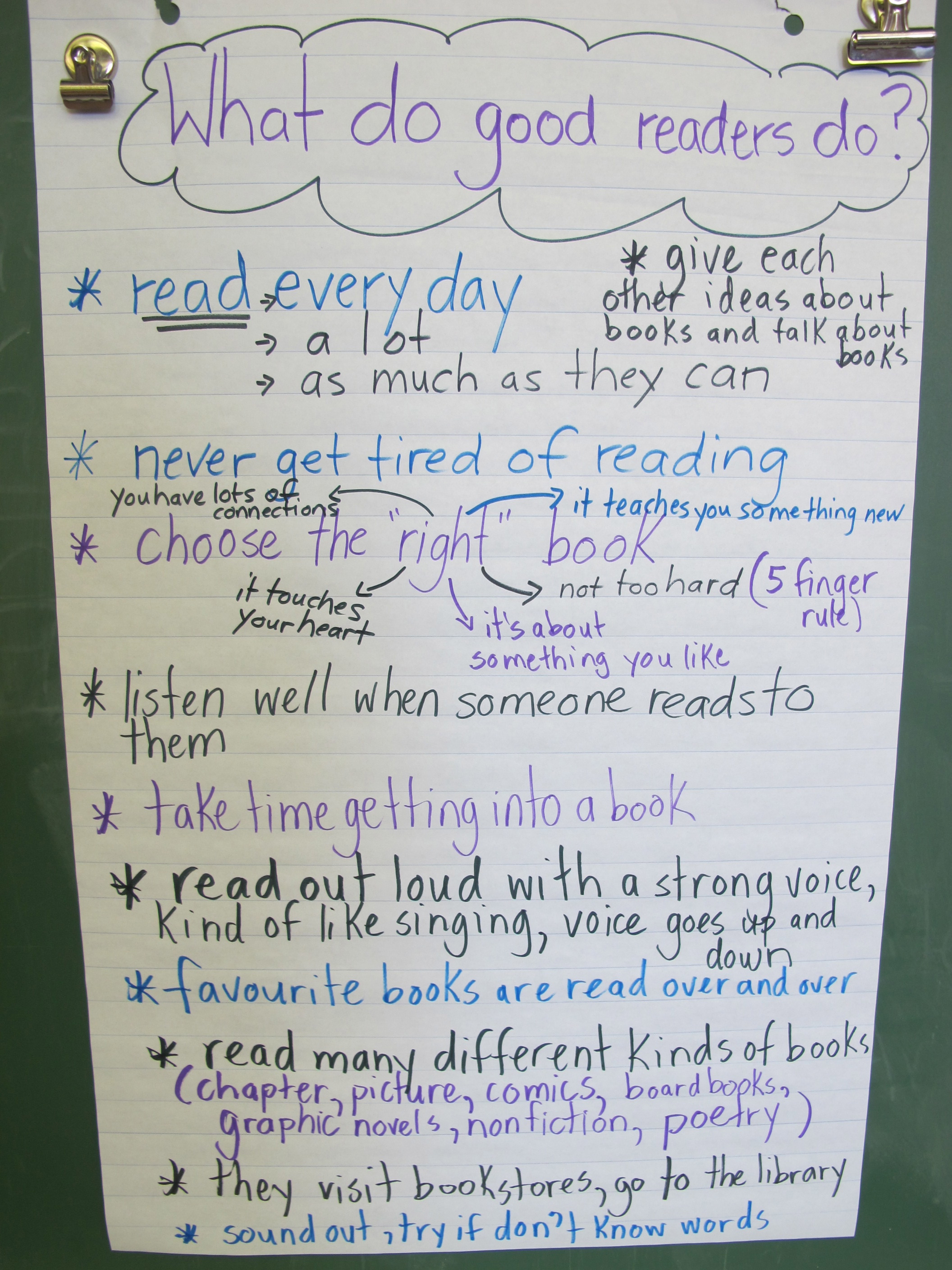
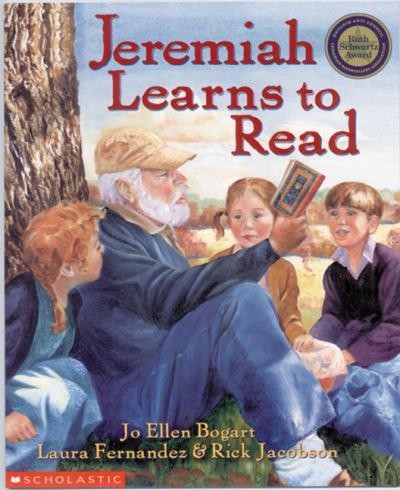
In our first two days together, we got busy. We tackled some big questions: What do good readers do? What is difficult about reading? We read for “get into your book” chunks of time. I read to them . . . a book that celebrates the gift of reading (Jeremiah Learns to Read).

We are on the road to becoming passionate readers, of, I am hoping, the lifelong kind!

Peek into our room for a taste . . .

The first big question I asked: What do good readers do? We charted our answers: I particularly loved the excitement and thoughtfulness that was expressed trying to explain to me what the “right book” might be. (see below)

Also important to note is that the immediate answer to my question: “What do good readers do?” was an exuberant, “They read!” Exactly! So simple. My job? Making sure there is time in the day to do this. Every day.

The next day we read Jeremiah Learns to Read written by Jo Ellen Bogart and illustrated by Laura Fernandez and Rick Jacobson.  In this story, we meet Jeremiah an old man who can do many things. Amazing and beautifully useful things like tap a maple tree, build a split rail fence and grow a vegetable garden. But Jeremiah has never learned to read. The students found this concept startling. Their comments and questions revealed their worries and bewilderment.

 “He can’t read? But he’s old.” “Oh . . . that would be so horrible.” “What if his kids asked him to read them a book?” “I really wish he could read.” “Were there no schools when he was little?” 

Jeremiah decides to attend school with the children in his neighbourhood and learns to read and write. One of the most lovely moments of the story is when he reads a poem aloud to his wife.

I read this book as a reminder that reading is a great gift we need to treasure. It also helped us start talking about how reading is not always easy.

I posed this question to the students: “ What is difficult about reading?” I like to ask this because it helps me understand where the group is with their learning.  What struggles do they identify? Do their ideas centre on the decoding of text? Or, have they moved into comprehension issues?

I noted down their ideas on a chart as we explored this question. This group are solid primary readers who are still developing their ability to read more complex texts and who are unfamiliar with some strategies to decode some longer multi-syllabic words. So it was natural that many of their worries focused on the actual being able to read/pronounce the words on the page. There was the beginning of a discussion about meaning and again a focus on what is the “right” book. This helps me to realize that we will need lots of instruction on genre, book selection, introduction to new authors, etc. We will revisit this chart as we move through the year and add to it as necessary as we learn and grow as readers.

What I value most about getting student ideas and input like this is that while that chart paper is still blank, I just have no idea what ideas we will end up listing. We are directing and shaping our learning together.

As we get down to the important business of reading, I couldn’t be more excited. We have a busy and book filled year ahead!

Getting ready for a year of reading

Reading in our classroom is hugely important! There is so much research that supports the benefits of reading in all of its forms: independent reading, buddy reading, shared reading, listening to read alouds, etc. How do we prepare our classroom community for a year of reading together? It’s not just filling the room with books and children that ensures we will create passionate readers. A few other things need to happen . . . .

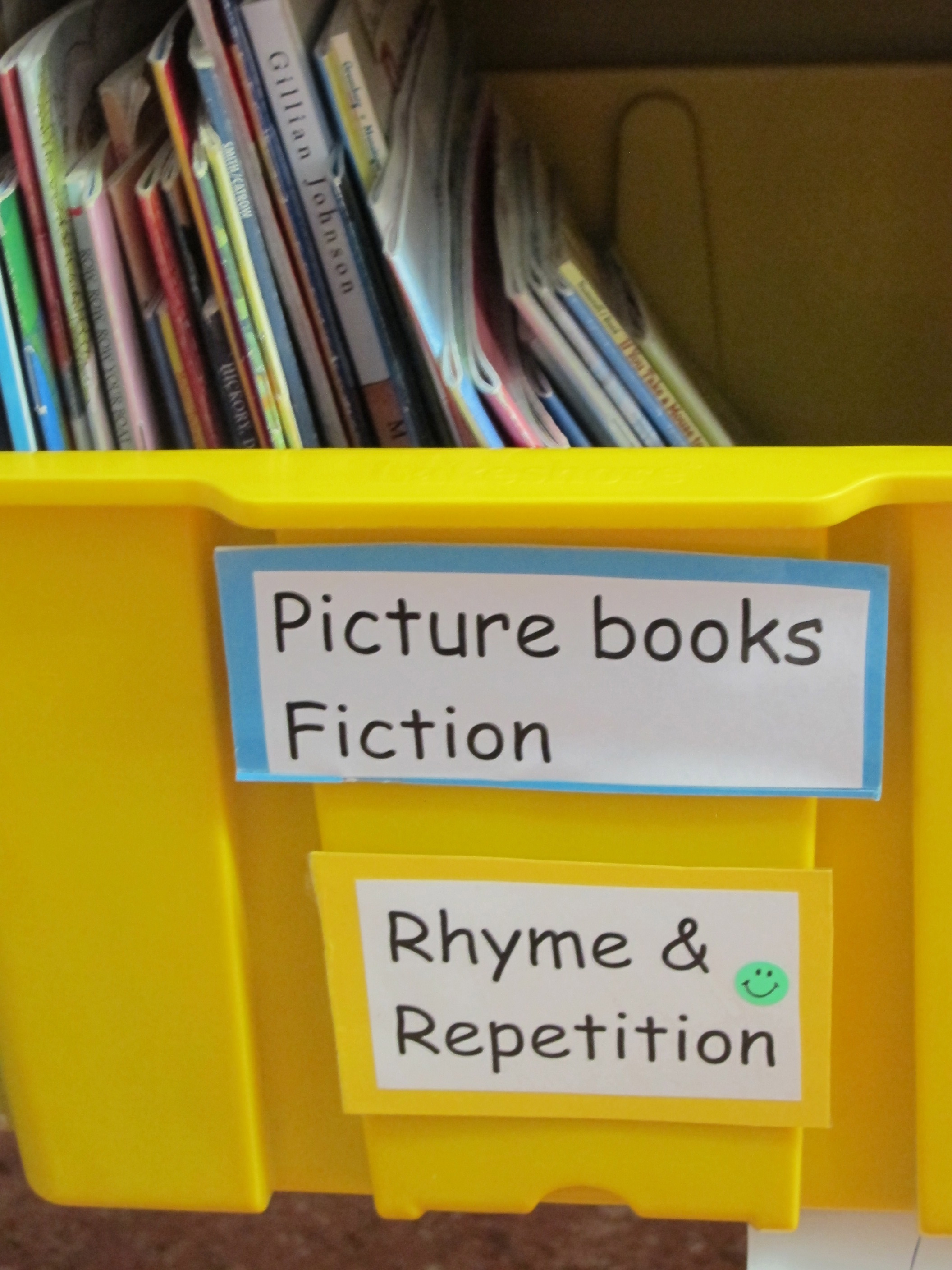
#1 Book Organization. Everywhere you look, there must be books! But, we need to be able to find what we are looking for. Accessible bins, clear labels and an organization that makes sense entice children to explore.

Getting Ready for a year of Reading: There's a Book for That!

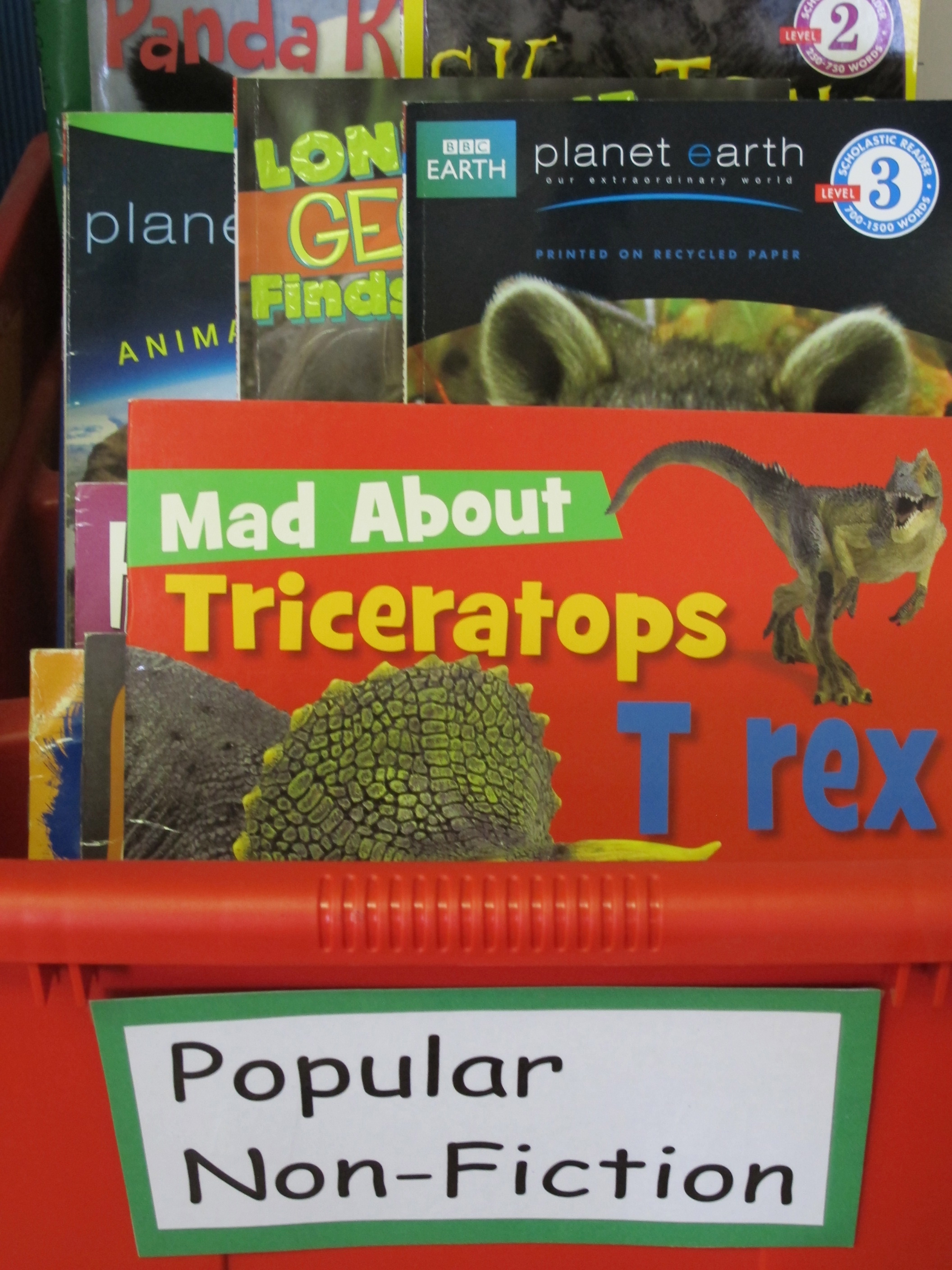
We have books labelled by genre (i.e. Adventure, Mystery, Rhyme and Repetition etc.), by favourite authors (Steve Jenkins, Mo Willems, Melanie Watt, etc.), by theme (Sea Creatures, Friendship, Folktales, etc.) and by popularity (i.e. Popular Graphics, Favourite Read Alouds, Recently Read). There are a lot of bins in our room! Books, books, books everywhere you look!

Getting Ready for a year of Reading: There's a Book for That!

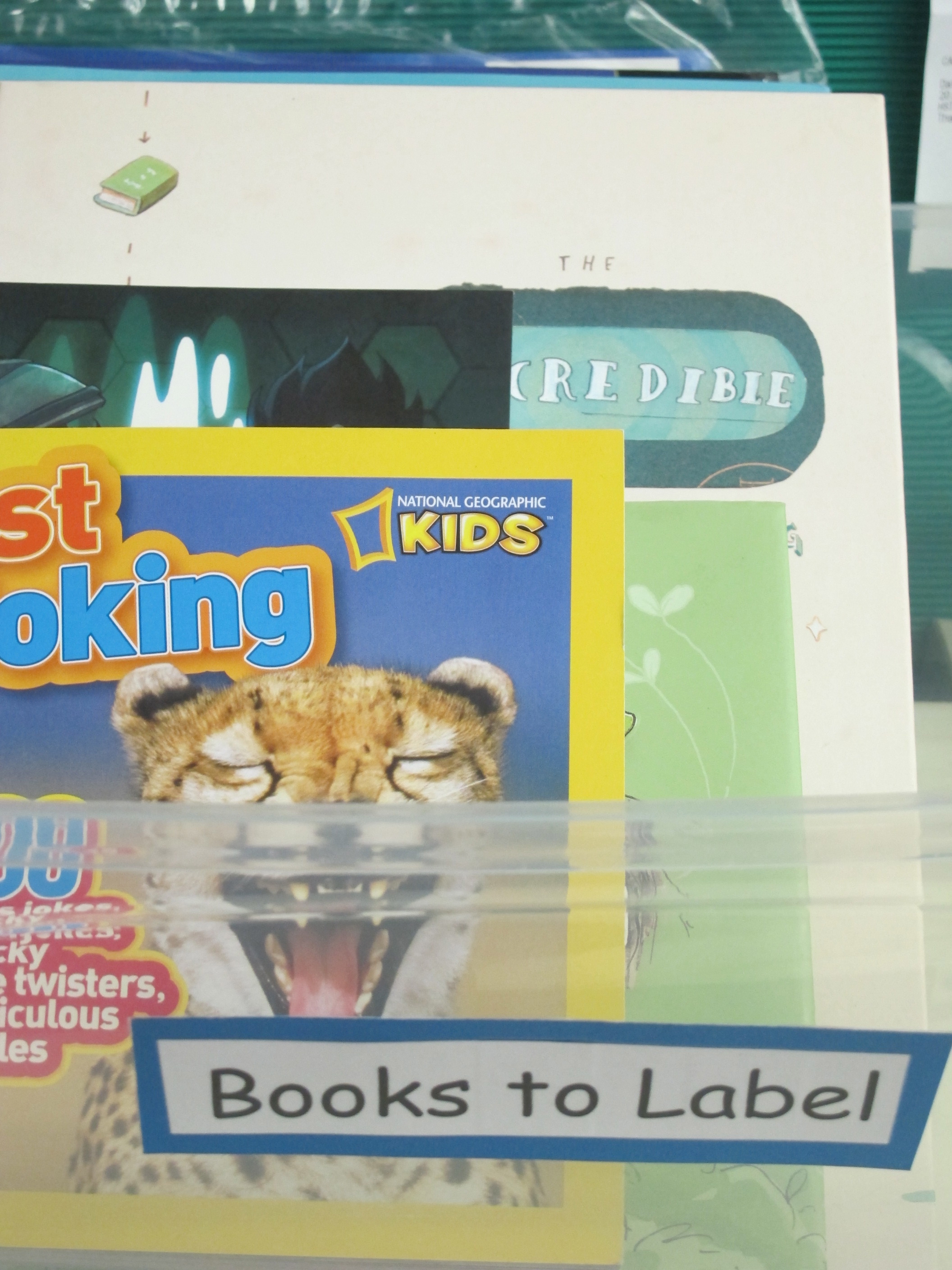
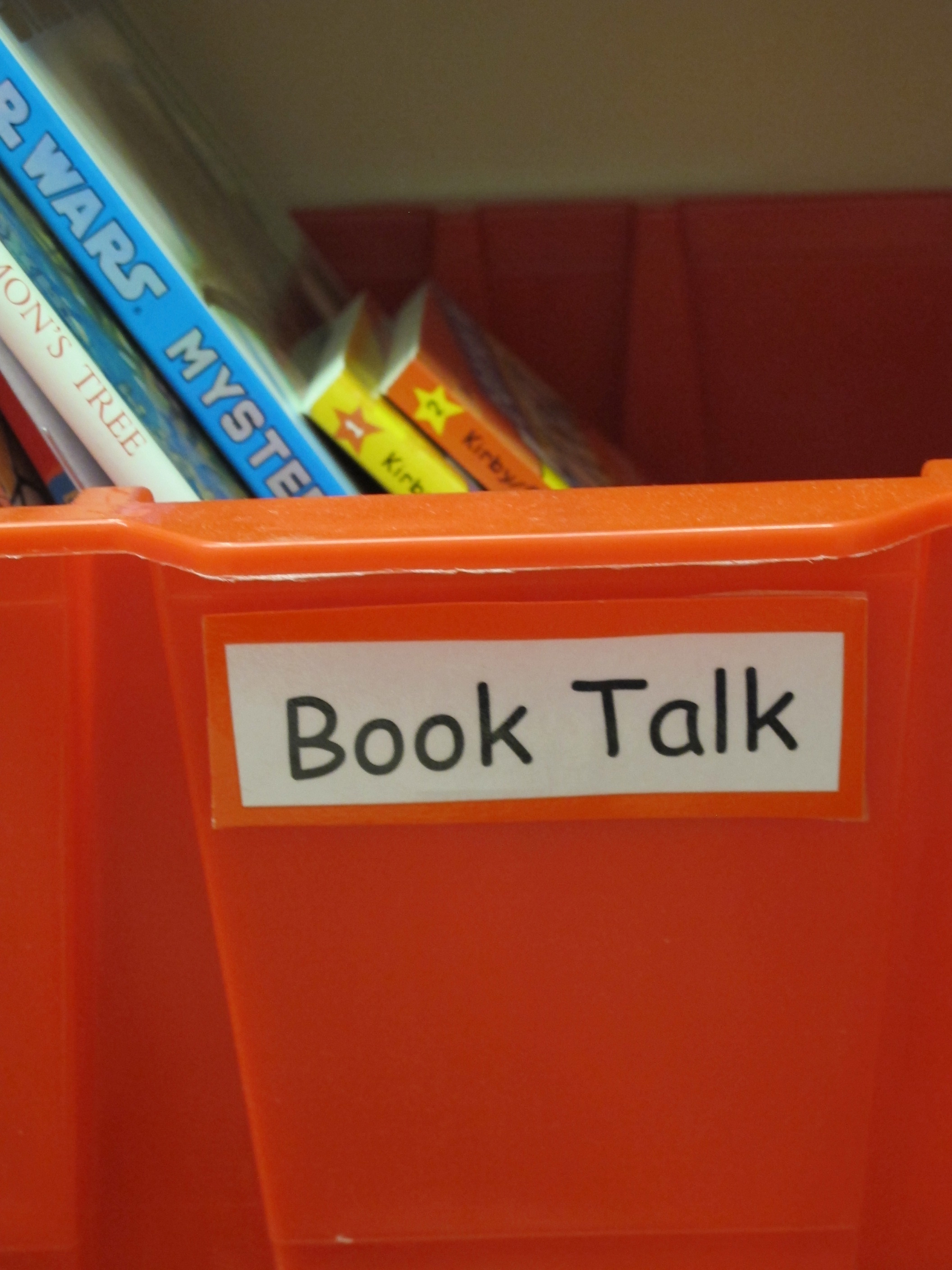
Important for me as the teacher – to have a system that helps get books out into bins and into the hands of students. So I have a bin for books that need to be labelled, bins of books to book talk, bins of read alouds for specific times of year/themes, etc.

Getting Ready for a year of Reading: There's a Book for That!

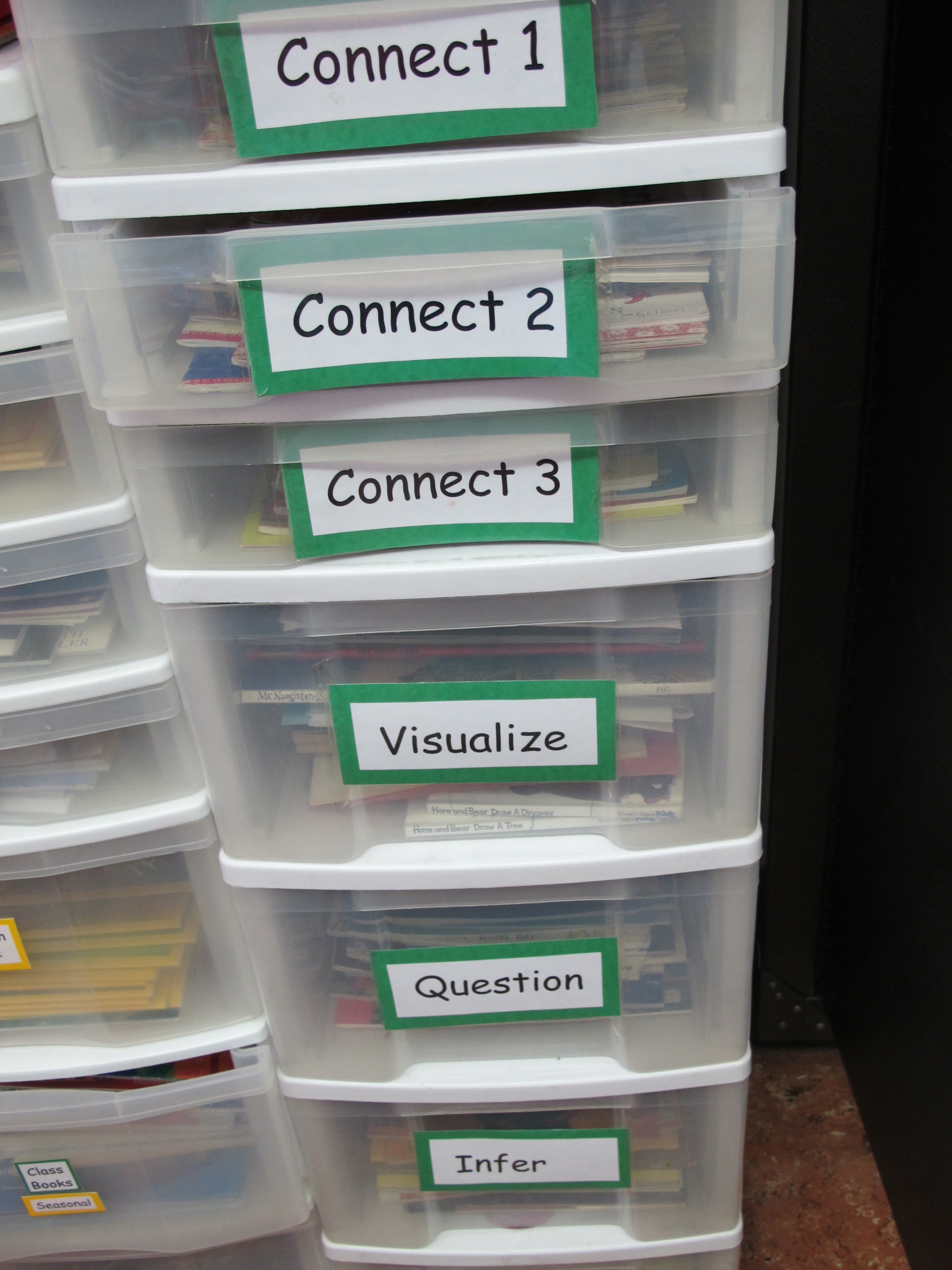
I also like to be able to access mentor texts, books we use for Reading Power, specific non-fiction titles easily so my teacher area has books organized for easy access. Below are all of the Reading Power titles (Connect split into early/mid/late, Visualize, Question, Infer, Transform).

Getting Ready for a year of Reading: There's a Book for That!

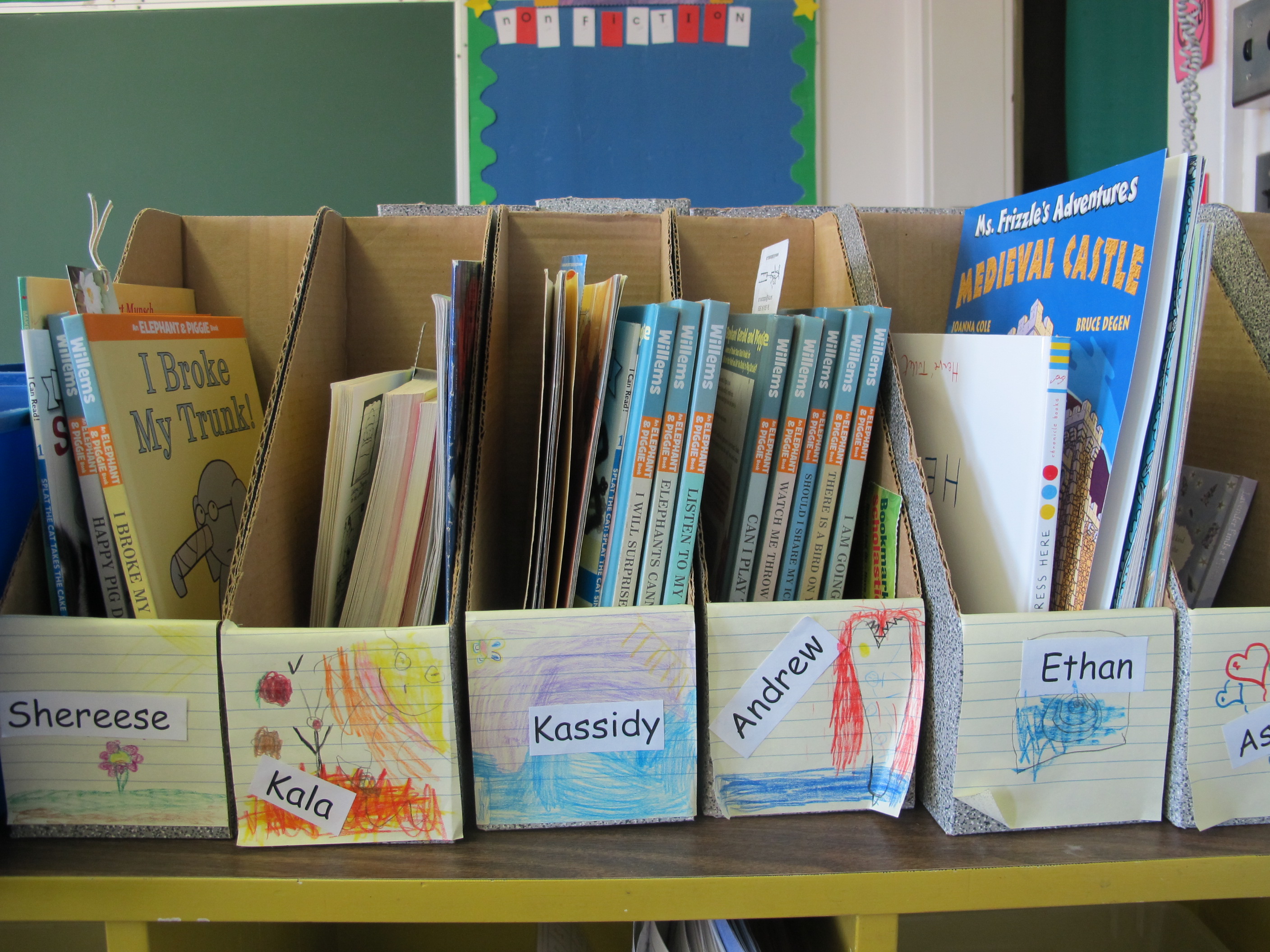
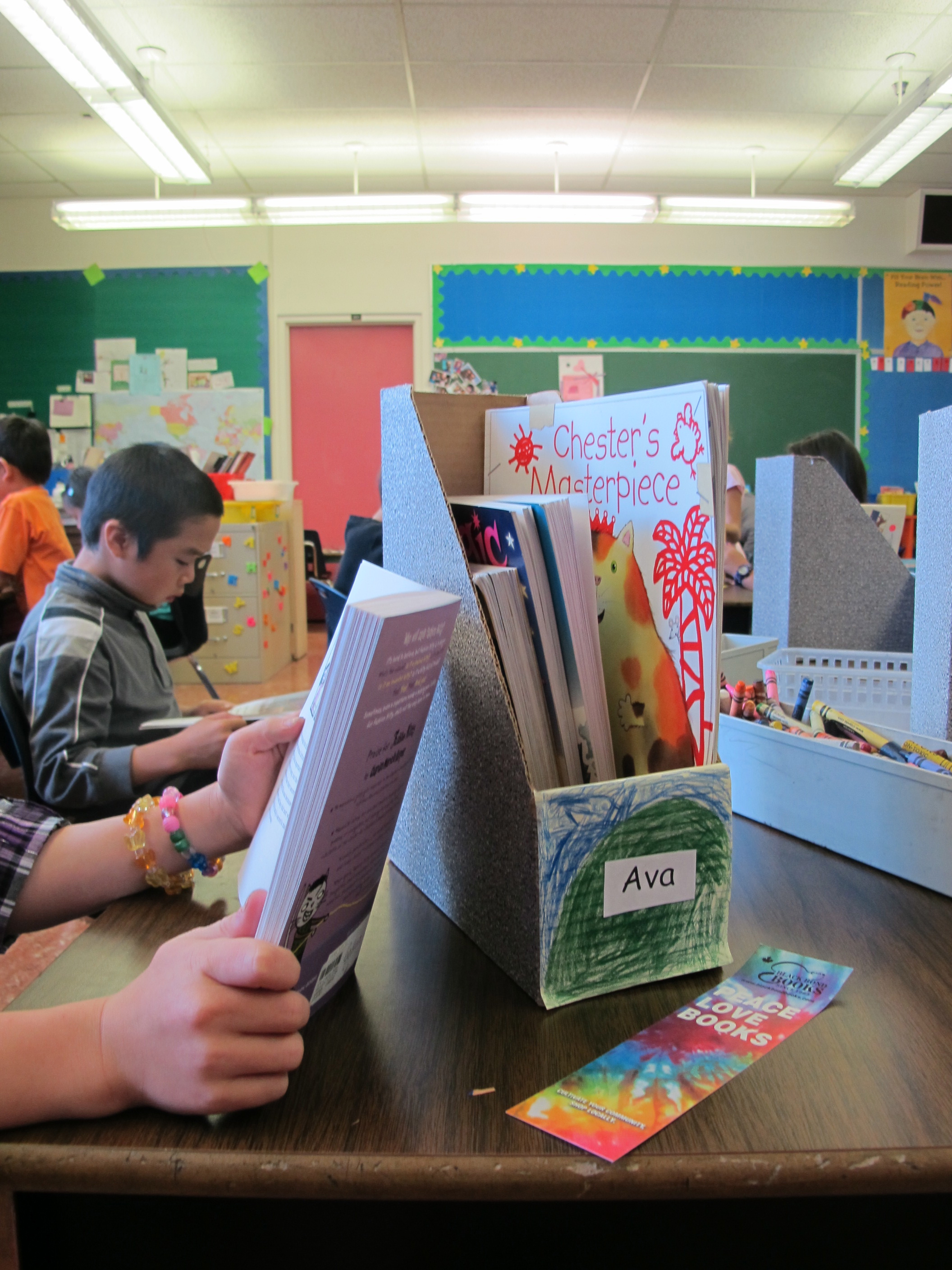
#2 Keeping Students Organized During independent reading, it is great to have “go to books” so that students can settle right into the reading rather than spend the whole time searching for books. Students  stash titles they want to read/are currently reading in their book boxes. Next week we will begin a schedule of adding new books to our boxes so that there isn’t a mad rush to exchange books during independent reading time. This is also time for the adults in the room to assist students with book selection, to introduce new genres, to set reading goals, etc. As you can see from the boxes below, Mo Willems is trending right now in our class!

Getting Ready for a year of Reading: There's a Book for That!

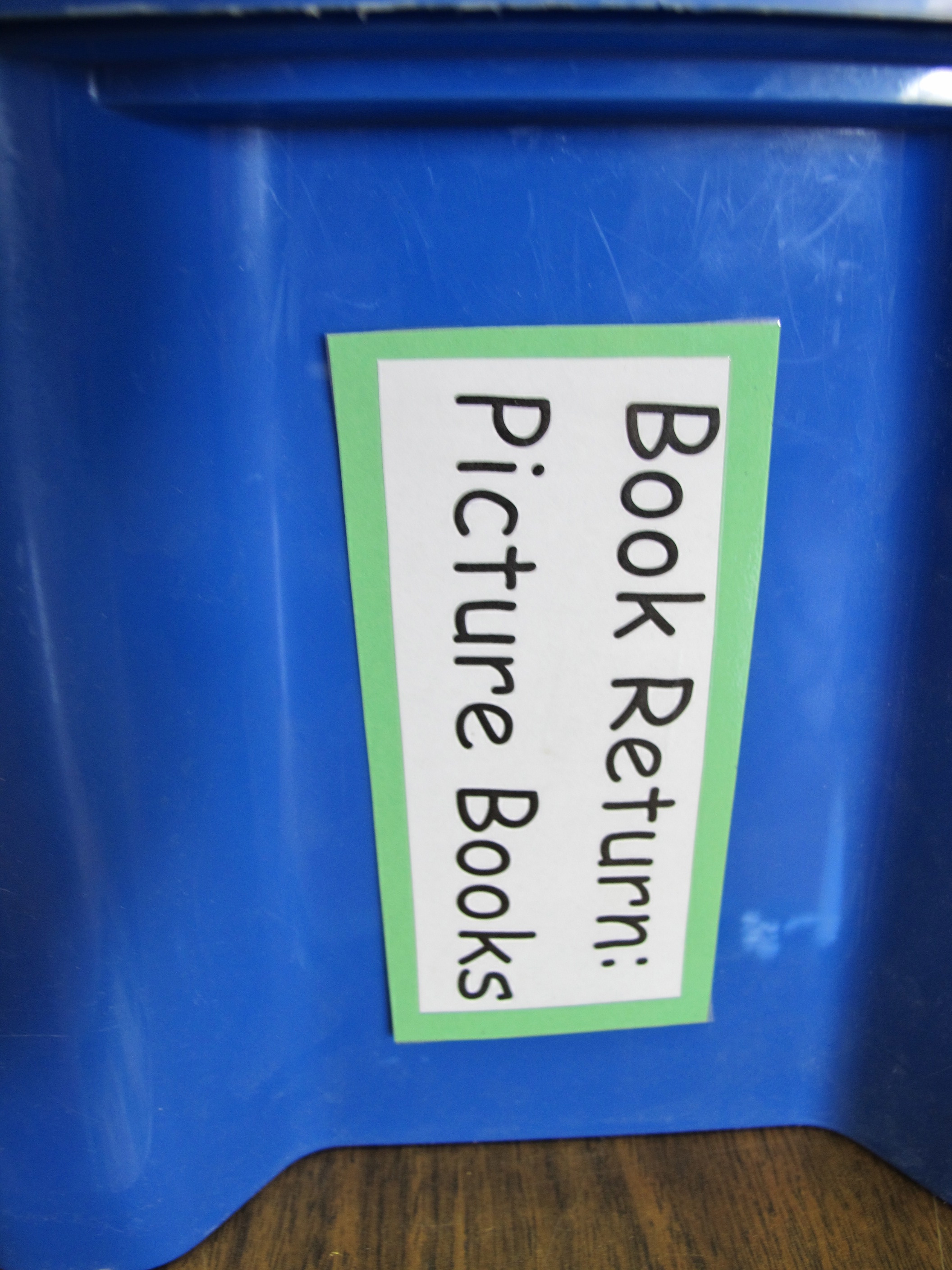
While most books have stickers on the back that correspond to specific bins or author bins that we are familiar with, I ask students to put books into “Book Return” bins if they are not sure where to return  them. I have a “Book Return: Picture Book” and a “Book Return: Chapter Book” bin for students to use. This ensures that books get back to their proper “homes” when the next person is looking for them!

Getting Ready for a year of Reading: There's a Book for That!

#3 Book Promotion Books are book talked daily in our room! Students  are often unfamiliar with both the book organization sytems and the wide variety of titles and authors we have in our classroom when they arrive in September. I  book talk books in our current collection, often highlighting specific book bins and we also book talk books new to our classroom, books from the library, books that have gone unnoticed, etc.  There is a bin in the teacher area specifically for books that need to be book talked but I also spontaneously highlight specific titles when interest in an author is there or when connections are made in our learning to specific books.

Getting Ready for a year of Reading: There's a Book for That!

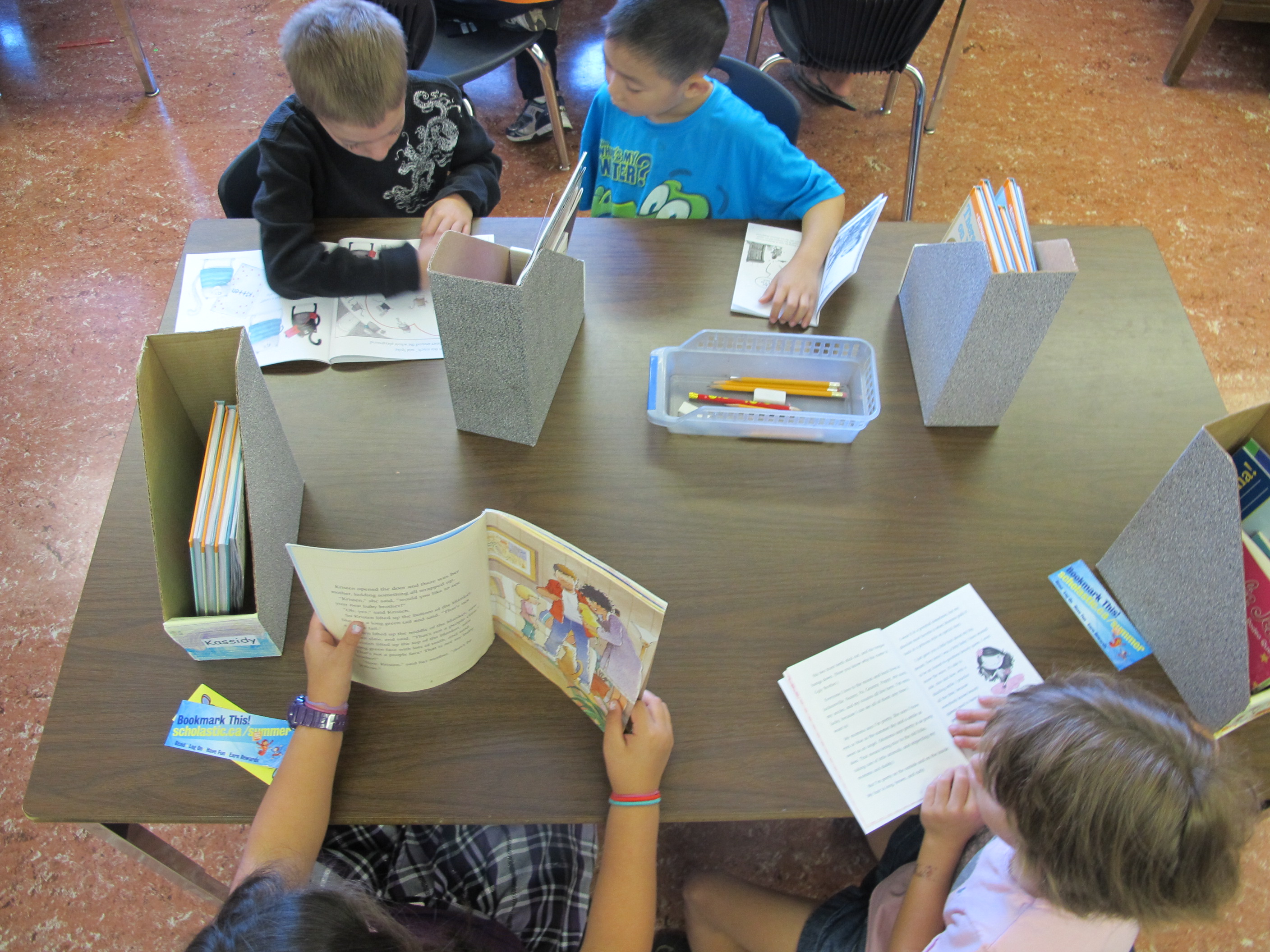
#4 Time for reading is paramount. Readers need to read. Readers of every level grow their skills best when they have time to read self selected titles that they are interested in! In our classroom, there is daily time dedicated to independent reading. Soon we will also begin buddy reading with our kindergarten buddies!

Getting Ready for a year of Reading: There's a Book for That!

At this age and stage of reading, independent reading often is interrupted by sharing of interesting parts, questions about what someone else is reading, or reading a part aloud to a neighbour. I encourage this as it helps build a “buzz” about different titles and encourages student recommendations. This is how we learn about new books and begin making talking about books an important conversation!

Getting Ready for a year of Reading: There's a Book for That!

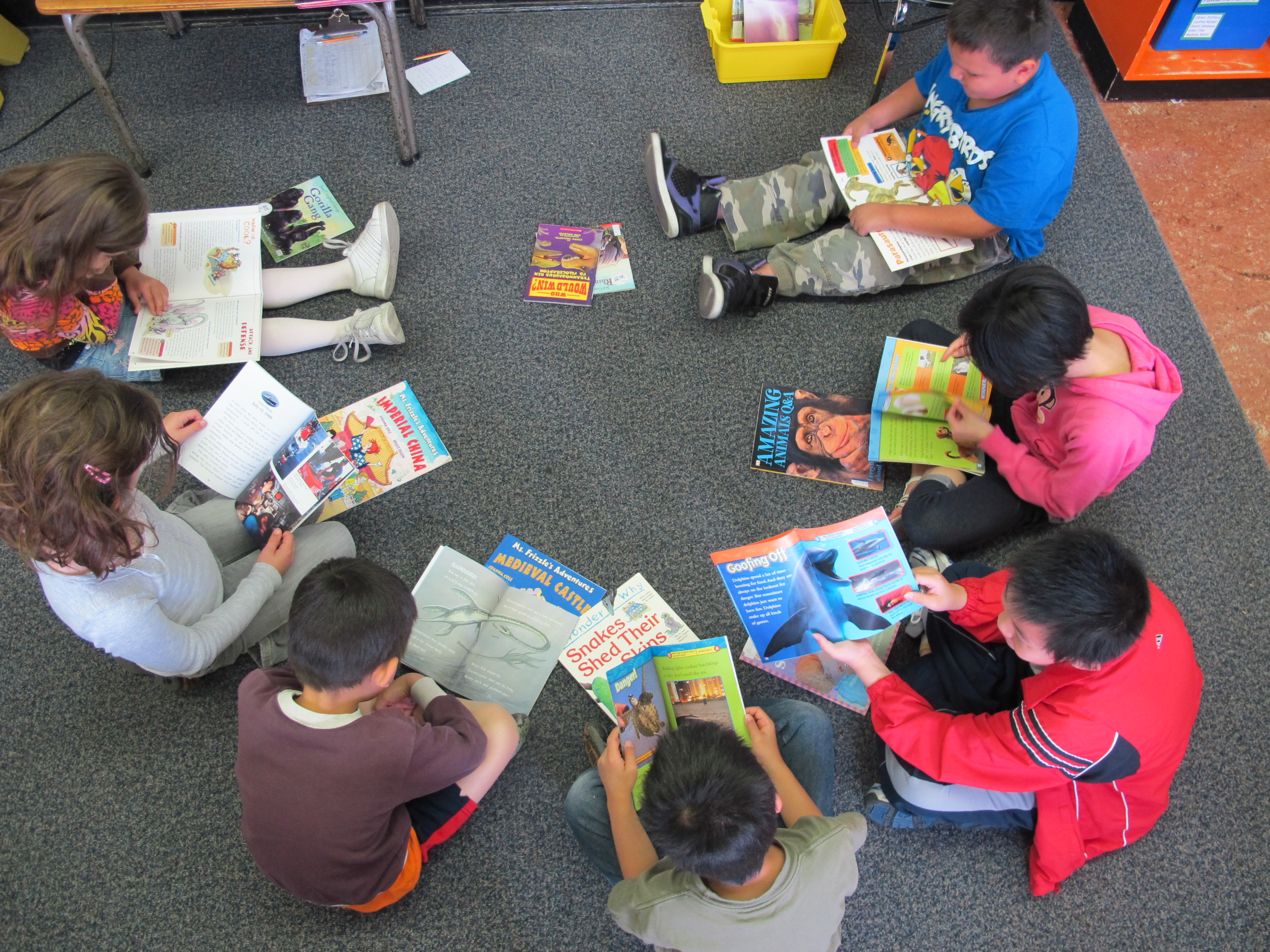
#5 Building stamina as readers: Currently, during part of every block of independent reading we are spending some time book talking, sharing titles, and exploring different book bins. It takes time to build up our ability to sit and read for an extended time period no matter how excited we are! Eventually, we will be able to read for longer sessions and for some of us, experience that lovely feeling of “falling into a book” and not even realizing that the bell has gone or that everyone has cleaned up to go for recess. A favourite activity to introduce new books at the beginning of a reading period is to do a book sharing circle. Every two minutes pass the two books you are looking at onto the next person and at the end of the sharing, read quietly on your own (maybe a new title you discovered or a book you had on the go). This activity is pictured below with my  reading group from last year who are exploring some non-fiction titles.

Getting Ready for a year of Reading: There's a Book for That!

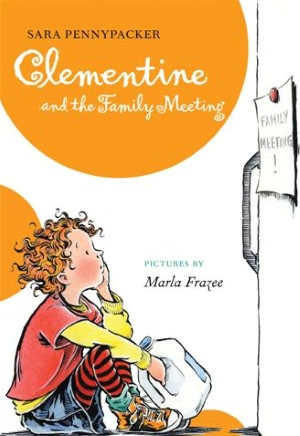
#6 Exposure to great titles! Along with our reading stamina, we are building up our listening stamina. Reading aloud happens in our room every day. We read poetry, excerpts from non-fiction texts, picture books, chapter books, etc. For many students in the class this year, listening to a chapter book is a new experience. Sara Pennypacker to the rescue! We have started our first classroom read aloud: Clementine and the Family Meeting (written by Sara Pennypacker and illustrated by Marla Frazee). We have only read Chapter One but we are very intrigued. Students are already wondering about Clementine’s friend Margaret and her germ phobias. They are worried about where the rat Eighteen has gone. And of course we are very curious about why a family meeting has been called in Clementine’s family. Reading aloud gives me wonderful opportunities to model my thinking aloud.

Of course, many other things go on in our room as part of reading instruction: direct instruction with phonemic awareness for those who are building decoding skills, fluency practice, reading comprehension strategies, opportunities to respond to what we read, etc. This post highlights book interaction and independent reading. 🙂

It is going to be a wonderful year of celebrating reading!  

How do you set up for reading success in your classroom?

Read aloud everyday – in practice

This week in a piece of writing, one of my students shared, “My teacher is a book maniac!” This not only made my day, it made my week. Because the love of books, the excitement over stories and the magic of reading are the gifts I never tire of giving and hope that I have gifted in abundance this year. Every week we share a lot of things. And books? Well, they are at the top of our list! Reading aloud on a daily basis is a priority. We find many reasons to read together.

What did Division 5 read this week? When you add it all up, it’s a lot! 

On Monday we read . . . 

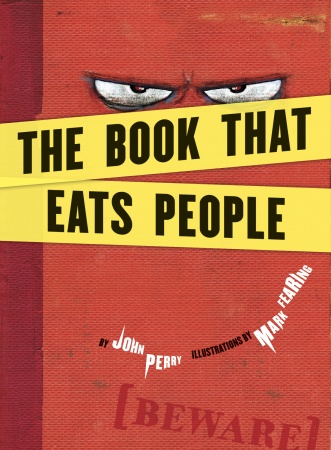
We often begin our mornings with a read aloud (or two or three). On Monday when we had five students absent, we began to wonder if this book might have been up to no good on Friday afternoon. Was is ravenous? Were some children devoured? We had to wait until the next few days to see who returned all in one piece! A fabulous book to humorously explore a little bit of fear . . . . The Book that Eats People is written by John Perry and illustrated by Mark Fearling.

We used Thank You Miss Doover to get us in the mood for writing an appreciative and personal thank you letter. Students learned a lot about writing and giggled through the how to train a puppy aspects of the story. Hint: there is paper and it is often yellow after a certain puppy stands on it. I was ordered to place this new book in the humour bin!

(Written by Robin Pulver and illustrated by Stephanie Roth Sisson)

On Tuesday we read . . .

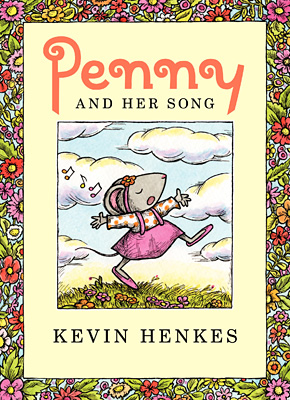
On Tuesday morning I shared some books that were brand new to our school library. When the students saw author Kevin Henkes on the cover of Penny and Her Song, they begged me to read the book aloud. Well, c’mon! Kevin Henkes? How could I say no?

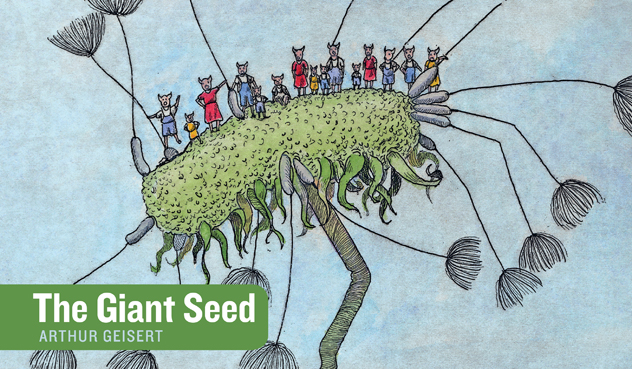
I then shared another new to the library title. The Giant Seed by Arthur Geisert is the sequel to the fabulous Ice that we read a few months ago. (The book that instantly made us Geisert fans). This new title lets us revisit the island with the industrious pigs and this time, the disaster they face is not a water shortage but a volcanic eruption. Evacuation via dandelion parachutes is absolutley delightful. Our class loves sharing wordless books!

Our Reading Group finished Hurricane, another fantastic information story book by Celia Godkin. Students had many questions about what happens during and after a hurricane. Just how destructive can it be? How do living things survive? This book allowed us to explore these questions and later students wrote about what they discovered. Our latest focus in our writing has been to include supporting details/ evidence. This book offered lots of great information on life in and around a mangrove swamp just before, during and after a hurricane. Writing was prolific!

In the afternoon we read A Butterfly is Patient  (an extension of our plants/seeds/garden theme) and students wrote about their new learning and their background knowledge. Read more here.

 On Wednesday we read . . . 

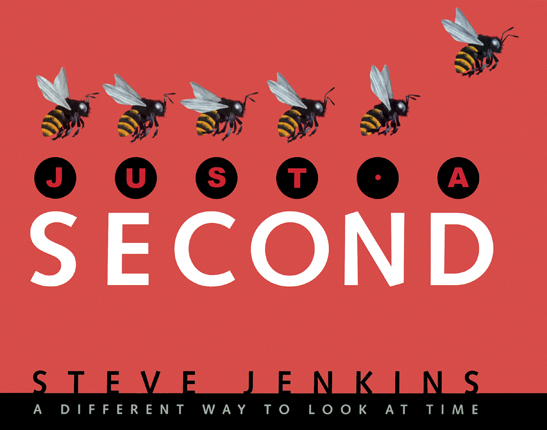
Wednesday mornings always begin with Just a Second by Steve Jenkins. This is a perfect book to read in little chunks as there is so much to discuss, ponder and dijest. We only have 15 minutes before Ms. S picks students up for their weekly book exchange so we love to share a few fascinating facts to turn on our brains and make us exclaim “Wow!”

 After recess we have one of our favourite events of the week. A reader from the BLG law firm comes to read to us and leaves us with a wonderful new book for our Seymour library collection. This week we listened to Crafty Chloe read by our BLG reader, Dan. Read more here in our latest BLG Reads this week post.

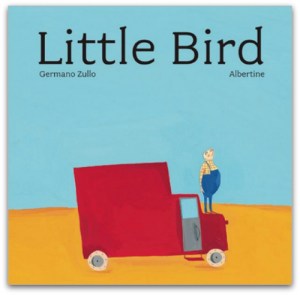
Every Wednesday afternoon, our three primary classes meet for our weekly Social Reponsibility Gathering. Often we share a book with a SR theme or a title that helps us extend our learning over concepts covered in the MindUp curriculum. This week I read the gorgeous Little Bird. A book that celebrates finding joy in the smallest of things. We learned that when we are mindful of our environment and those around us, real magic happens. A nearly wordless book so we were able to tell it together. Just lovely. Written by Germano Zullo and illustrated by Albertine (winner of  2011 Prix Sorcieres (the French Caldecott) for this title).

little-bird 12 for 2012


On Thursday we read . . .

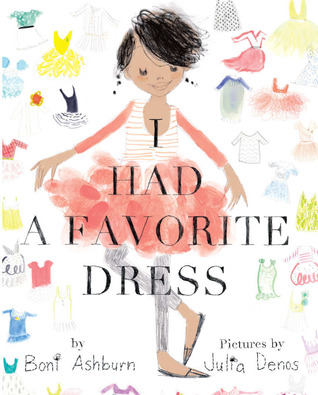
Crafty Chloe reminded me of the creative genius highlighted in I Had a Favourite Dress written by Boni Ashburn and illustrated by Julia Denos. So this new addition to Seymour’s library was our morning read aloud.

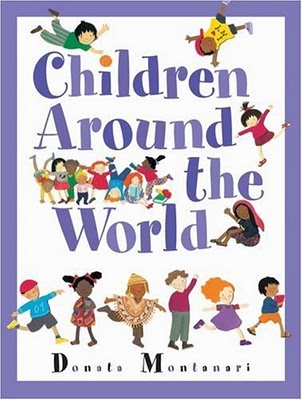
In the afternoon we shared stories from Donata Montanari‘s Children Around the World. We enjoyed reading about children’s lives in different countries: their school experiences, their homes, their traditions, the languages they speak, their parents’ jobs and tasks and their favourite pasttimes. This inspired our own writing where students shared information about themselves and their families thinking all the while about what a child somewhere else in the world might want to know. Lots of great writing and wonderful sharing!

Elementary teachers – What did you share in your classroom this week? Do you get a chance to read out loud every day? 

Mammoths

Our reading group has continued to practice strategies to handle unknown vocabulary in text. See the strategy list that we came up with earlier this month here. We spent part of a few reading classes with this great text: Wooly Mammoth by Mick Manning and Brita Granstrom. (A Natural History Museum Selection)

This book reads as an information story book: rhyming text accompanies the large pictures on each two page spread while black and white drawings and information reads in a column down one side of each page. You can read this book as just a storybook, concentrate primarily on the information or focus on both. Students enjoyed the mammoth time line at the end of the book and reviewing what they had learned by quizzing each other on the glossary words.

We then read Kali’s Song by Jeanette Winter.

We started by comparing the covers of Kali’s Song with a Wooly Mammoth. All year we have been talking about the different text features of fiction and non-fiction books. It would be interesting to see what we noticed when looking at Wooly Mammoth because it has both fiction and non-fiction elements (what we like to call an information story book). Students observed that even though both covers had illustrations rather than photographs, the mammoth on the cover of Wooly Mammoth looked more realistic. We talked about fur colour and the shape of the tusks. We also discussed how one mammoth was standing in the snow and another on grass/ground next to a little boy and a dog. “How could they stand so close?” someone wondered.

Before we began reading Kali’s Song, I asked the students, “Even though this is clearly a fiction text, do you think we will be able to link some of our learning from Wooly Mammoth to what we read?” We were ready to look for any text to text connections. Would our sense of the story be enhanced by our newly acquired background knowledge? (schema)

Immediately students were excited to see Kali’s mother painting animals on the cave’s wall. “We learned about how they did that in the other book! In the future some people might discover those paintings to see what animals looked like!” 

We also appreciated that a work of fiction had beautiful elements of story telling and images that a non-fiction book wouldn’t have. When Kali plays the bow string, Winter writes: The stars came close to listen. Such a wonderful image that makes the story more powerful. We liked how Kali’s Song challenged our imaginations and had us think about things differently.

Kali’s music lures the mammoths to him and fascinated, all of the other hunters lay down their weapons. Kali must be a shaman they decide. Winter leaves us wondering – do the hunters not kill any of the mammoths? Or do they eventually resume their hunt? In Wooly Mammoth we had learned that the people’s survival depended on the hunt and that they used all parts of the mammoth (meat, fur, tusks, bone) for things that they needed. Our discussion was intense. Kali had the skill to lure the animals and he seemed to love them. But he loved his people. Wouldn’t his skill help the hunt? What would he do? The students decided that Winter left us thinking on purpose. We would have to come to our own decisions.

Because the mammoths seemed so majestic and wonderful we wanted to think they wouldn’t be hunted but now that our knowledge included information about how people who lived thousands of years ago depended on the hunt, we had some different ideas about the outcome. Students were able to make text to text connections and this furthered their thinking.

Kali’s Song is a beautiful book. Highly recommended.

How do you help students make text to text connections? Recognize that their background knowledge influences their thinking? 

Meadowlands

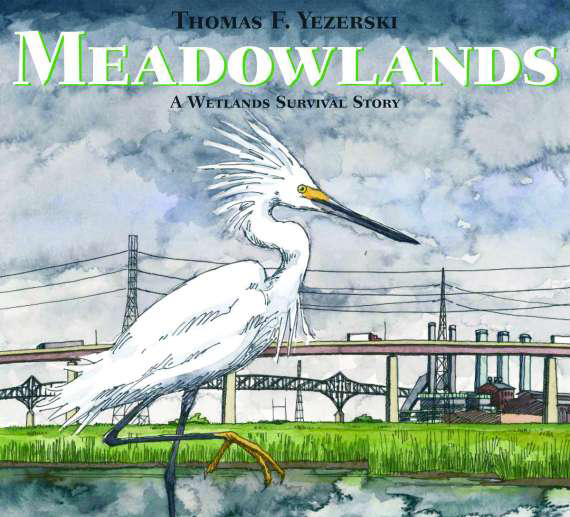
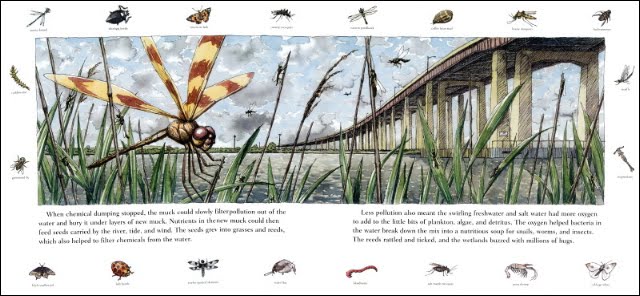
Have I mentioned lately how brilliant my little reading group happens to be? Or how much I enjoy our morning lessons? It is such a pleasure to learn along with these students! We have been working on strategies to use when we come across an unknown word or concept using the wonderful story by Thomas F Yezerski: Meadowlands – A Wetlands Survival Story.

This book takes us back in time hundreds of years to when the Meadowlands were 20,000 acres of swamps, marshes and bogs and home to many different plants and animals. Over time human interactions had a very detrimental effect on this wetland habitat. Much of the wildlife fled or disappeared. Pollution and gargbage threatened to destroy the area completely. In the 1960s only 11,000 acres of wetlands survived in the Meadowlands.

However, many things worked in the favour of this ecosystem: the daily meeting of the river and tide, laws that alterted chemical dumping, reintroduction of different insect, fish and bird species as the habitat improved, etc. In 2007, a young osprey was spotted taking flight from a nest built in the Meadowlands. This young bird of prey was a symbol of recovery and hope for this precious ecosystem.

As we read the text and came across a word we didn’t know, we collectively tried to figure it out and charted our thinking. We filled an entire chart paper with strategies!

An example might help. The text read:

The Meadowlands is an estuary where the Hackensack River empties into Newark Bay. Much of it is wetlands, with a mix of freshwater and salt water soaking the spongy ground.

We didn’t know what estuary meant. We needed to use some of the strategies listed below to determine what the word meant (especially reading on to the next sentence, inferring and referring to a reference page that included a map) We figured out that it probably meant a boggy, wet area where the fresh water mixed with the ocean water and that maybe it would support unique ecosystems.

What do you do when you come to an unknown word? 

The list the students came up with:

*hold a question in our head and read on to find out

*re-read a section and think carefully

*read the previous sentence or next sentence for clues

*does the word sound like another word? have a root that we recognize?

*check the reference pages like maps, glossary, pictures

*connect to other texts or our background knowledge

*use the reading power strategies like connect, visualize, question and infer

*think about whether you are understanding. This is worth it even if it might be slow going and very tiring!
*ask, “Does this make sense?” and then “Does what I am thinking make sense?”

So I did mention the brilliant aspect of these kids right? What was wonderful was that as we read, we found there were fewer unknown words or confusing concepts because we were gaining a deeper understanding of the subject matter. Now we can engage in this active engaged reading independently with various non-fiction texts. But, we continue to practice with a weekly book we can share together.


The Magic Beads

In our reading group we have been exploring different genres. Today was day three of looking at realistic fiction. Last week what kept coming up on our list of what makes a book realistic fiction was that many people would find things to connect to easily in the story. Today we read a story together and our writing focused on possible connections.

The story that we read today had a lot to it and our discussion and subsequent writing was rich. In fact, I don’t think I can think of a time all year where the group was so quietly engrossed in their writing. When I read notebooks at recess, I was blown away by the maturity and thought that was shared. The Magic Beads written by Susin Nielsen-Fernlund and illustrated by Genevieve Cote is an important story addressing the emotions of a young girl starting school while her life is full of change.
Lillian begins Grade 2 at a new school after she and her Mom have had to move to a shelter to escape her abusive father. They have left everything behind and Lillian is feeling a range of emotions from anxiety to anger. A part of her misses her father even though her memories of his bad moods are difficult to think about. She loves her Mom and knows why they had to leave but she also feels angry that her Mom was the one that took them away. When she is asked to share at Show and Tell on Friday, Lillian’s upset grows. She no longer has her pesonal possessions with her. What could she share? The butterflies in her tummy turn into grasshoppers, donkeys and eventually buffalos as Friday approaches and she has nothing to share.

Finally as she stands before the class on Friday, Lillian talks about her plastic beads, terming them magic beads and explaining that with just a little imagination, the beads can be all kinds of things. Lillian’s inventive imagination intrigues her classmates and provides a way for friendships to begin.

Student writing ranged from personal connections to ideas of what events or emotions readers might feel connected to in the story. Here are excerpts:

Carmen writes: Some people might connect to being sad because of leaving your Dad all alone since you might have played with your Dad and you might miss your favourite happiness. 

Truman shared: I connected to when I first went to this school and I felt scared and shy. Some people might connect to their feelings on the first day of school. I connected to when I didn’t bring my Chinese homework and felt nervous.

Catriona wrote: People could connect to being mad at a person when the person you’re really mad at isn’t there. 

Heman shared: When I first went to this school, I felt like I had a tummy ache just like Lillian. 

Khai made a list of possible connections: using your imagination to feel better, feeling anxious at school on the first day, having a Dad with some anger problems, having to move somewhere when you don’t really want to, . . .


Over and Under the Snow

Oh, how I have been waiting for snow to share this book with a group of children. So our temperamental Vancouver weather finally delivered some snow to city streets!  It was falling as I gathered our reading group together to read Over and Under the Snow written by the talented Kate Messner and illustrated (so beautifully) by Christopher Silas Neal. Reading the book I got to glance down at entranced little faces and look up to see snow swirling and whirling outside the windows. Magical.

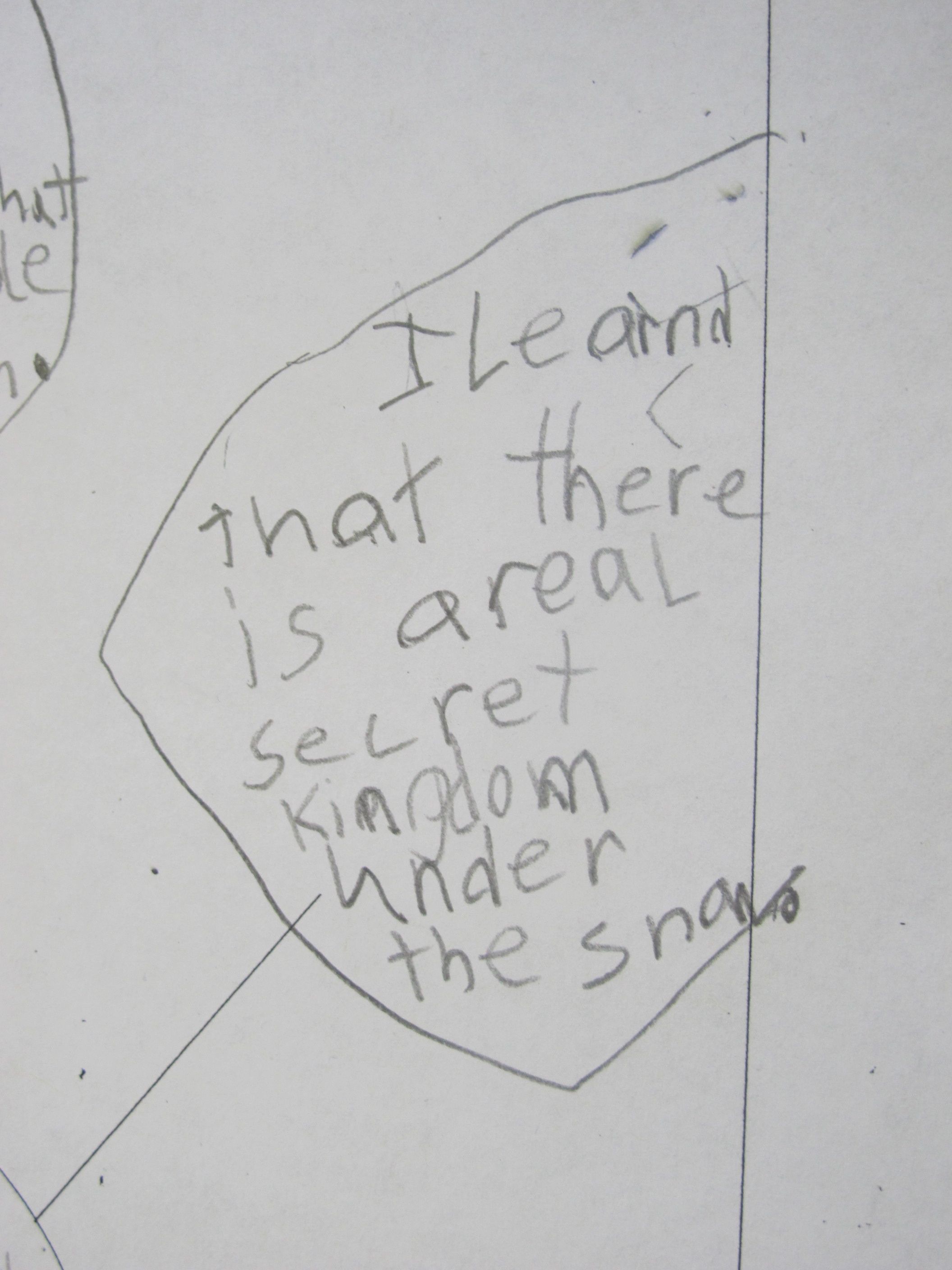
We loved the Author’s Note at the back of the book where we found out that this “secret kingdom under the snow” has a very impressive name: the subnivean zone (the small open spaces and tunnels between the snowpack and the ground). We also liked reading more information about each of the animals we had questions about in the back section that provided more details.

Students were asked to web out some of their new learning and eagerly sat down and got to work detailing what they had discovered.

Some fascinating new facts:

IMG_2333

This is a lovely image!

IMG_2324

Wow!

IMG_2318

The idea of a secret kingdom made every list! Such a magical image.

IMG_2322

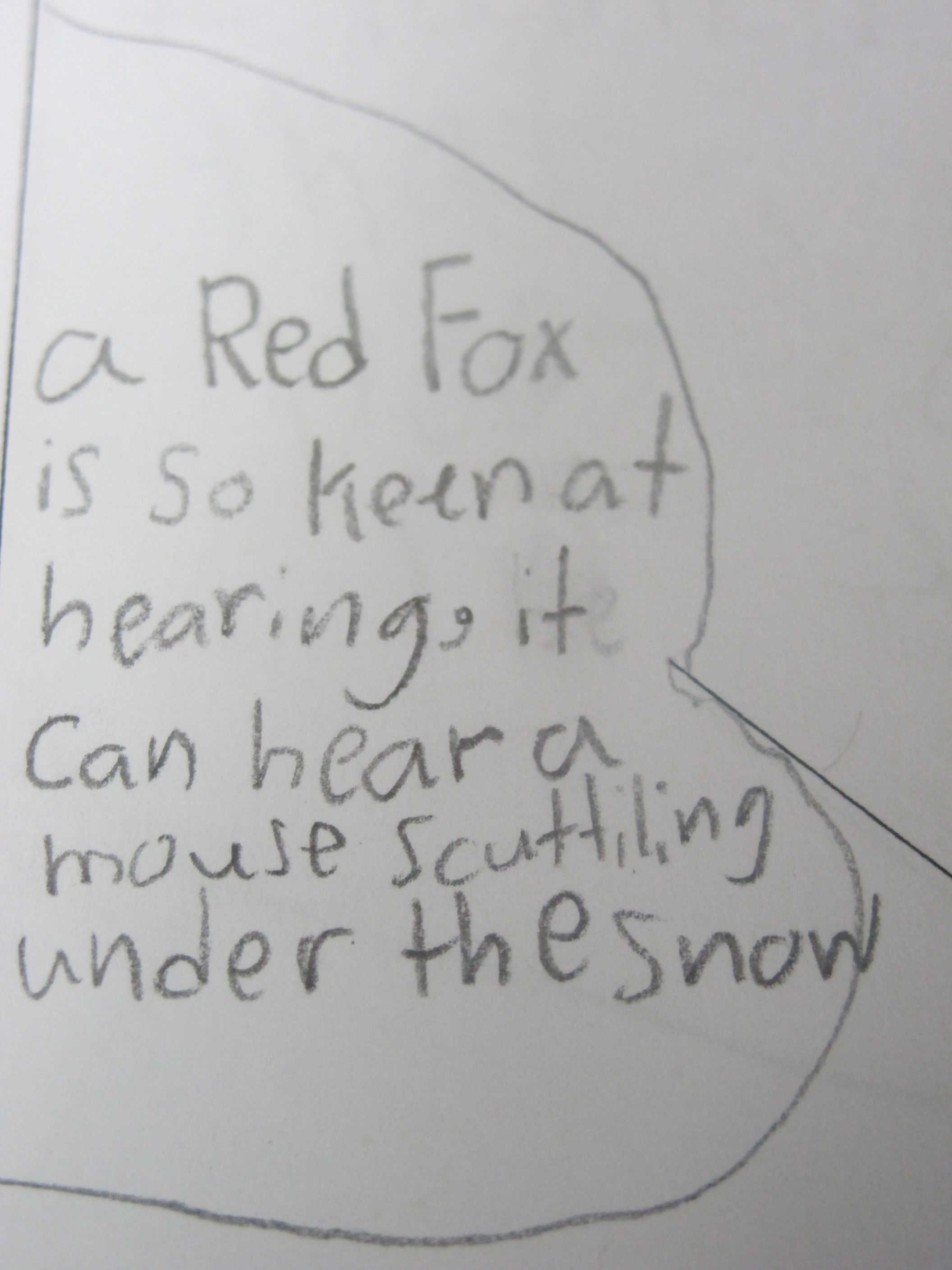
If you read the book, you might be most impressed as we were with the red fox and its keen hearing. Check out this link on Kate Messner’s blog where she shares a video of a real red fox listening for its prey under the snow.
The perfect book to share with city children who don’t get many opportunities to be out in a snowy world. Makes our upcoming field trip to go snowshoeing even more exciting! We now know what is happening under the snow! Wonderful how books really do open up new worlds but also allow us to look more intently at places that surround us that we don’t always get to explore.

Ermines? Huh? What are they?

Our reading group has continued to work on interacting with non-fiction text, making meaning together and determining importance. What this means? Talking, listening, sharing ideas, extending a thought, making and defending a position, and did we mention talking and listening? Because those things turn out to be the most important and most challenging skills we are working on!

Reading about Ermines

Today our task looked like this:

Step 1: List what we can predict about an ermine (Huh? A what? We had no idea what an ermine was!!) based on the limited information Ms. Gelson gave us: 1. Their fur is different colours depending on the time of year 2. They have very sharp claws 3. They live in the northern parts of the world.

One groups' predictions

The interesting thing about the discussion from the group that produced this chart above was their debate on whether or not questions could be predictions. In the end, it was decided that yes they could because they were linked to what information we were going to find out and made us want to read more. We were going to verify both predictions and answers to questions. Great thinking!

Predictions about ermines from another group

Step 2: Read the article in Chickadee Magazine about Ermines together

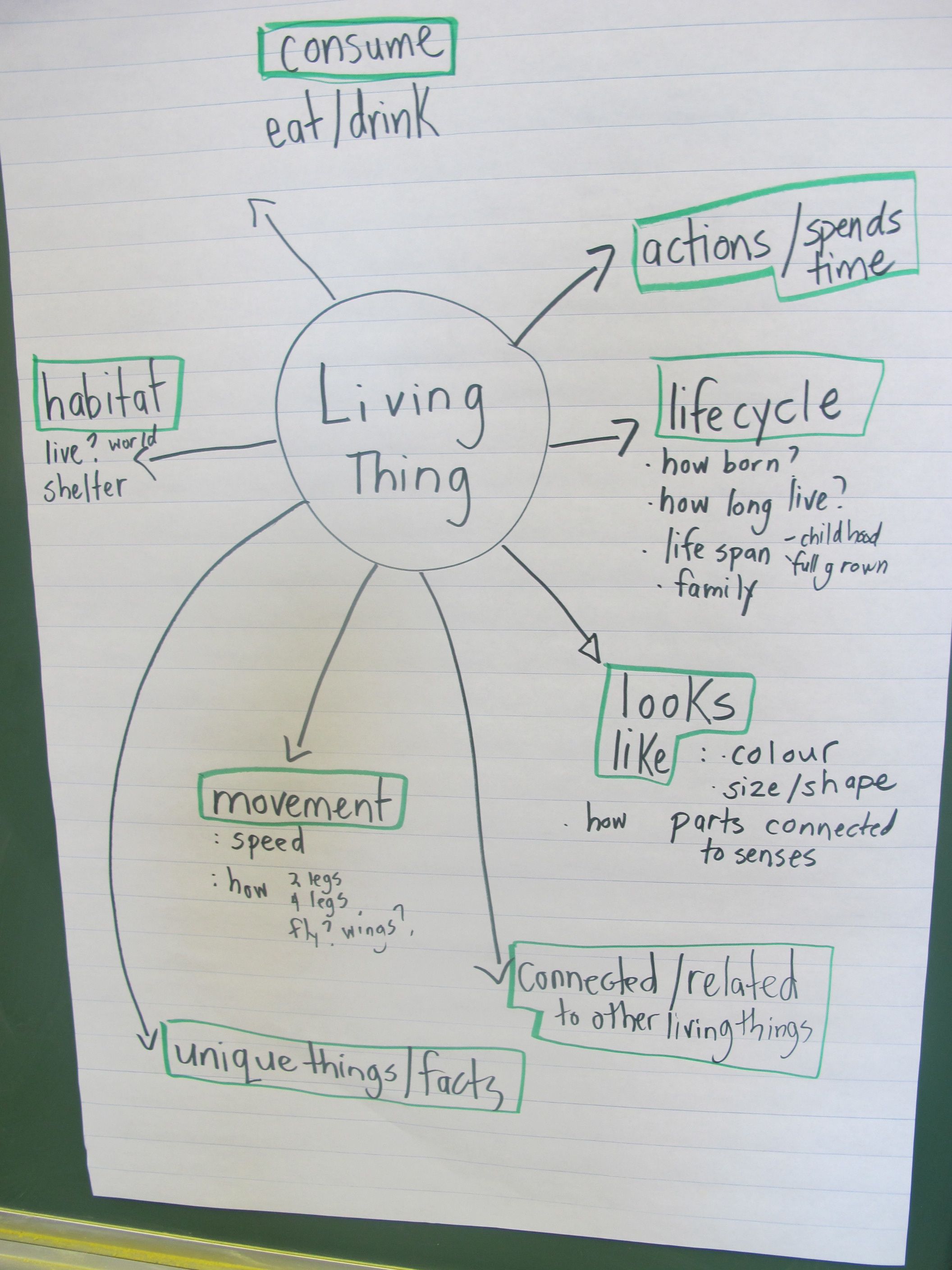
A chart we made together to help us determine what might be important when learning about a living thing

A chart we made together to help us determine what might be important when learning about a living thing

Step 3: Keeping in mind the chart we created (see above) decide on what are the 5 most important facts about ermines your group wants to include on your chart.

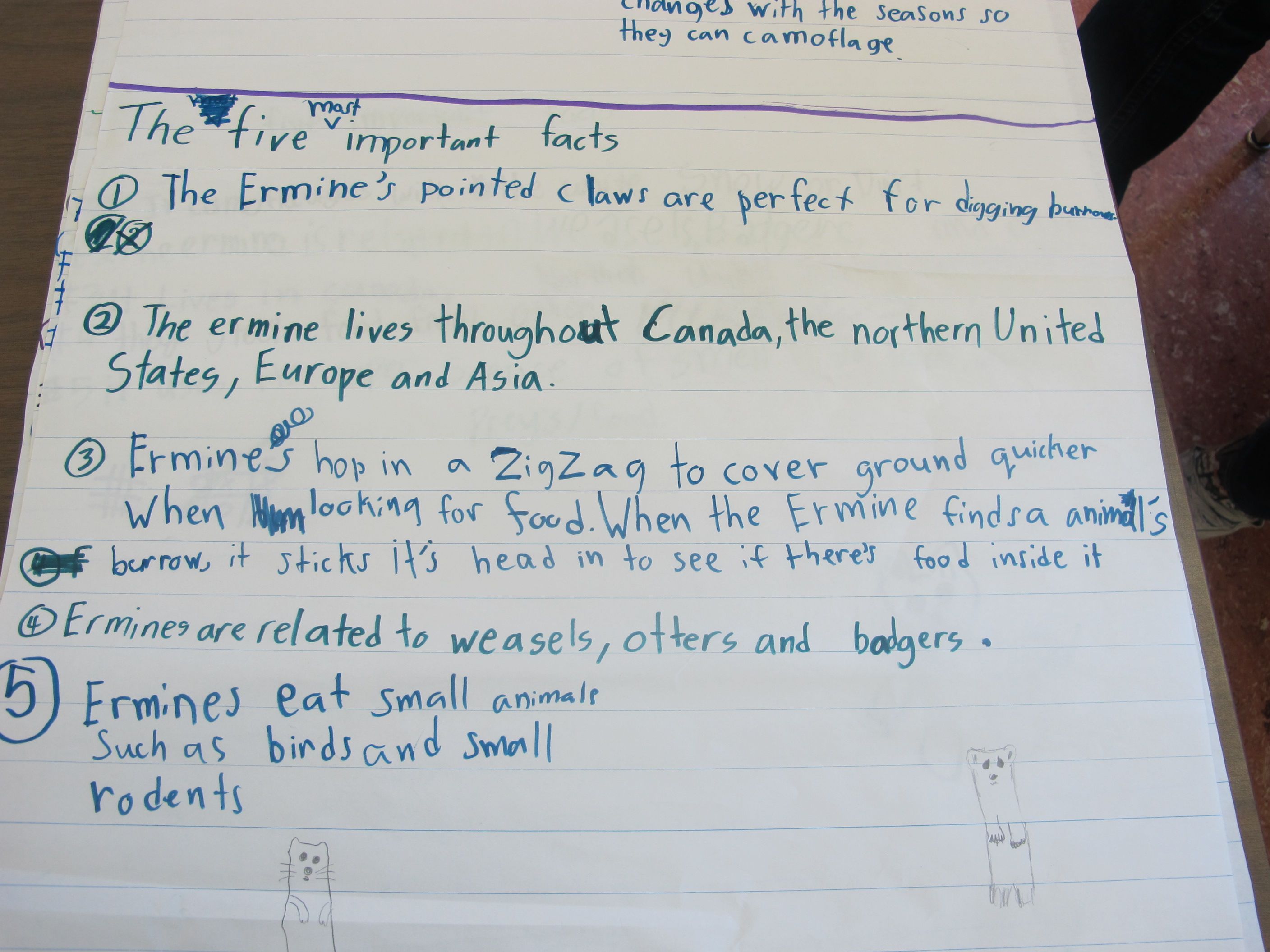
Important facts about Ermines

Important facts about Ermines

Not all groups included the same facts but all groups used the chart we made to help them make decisions.

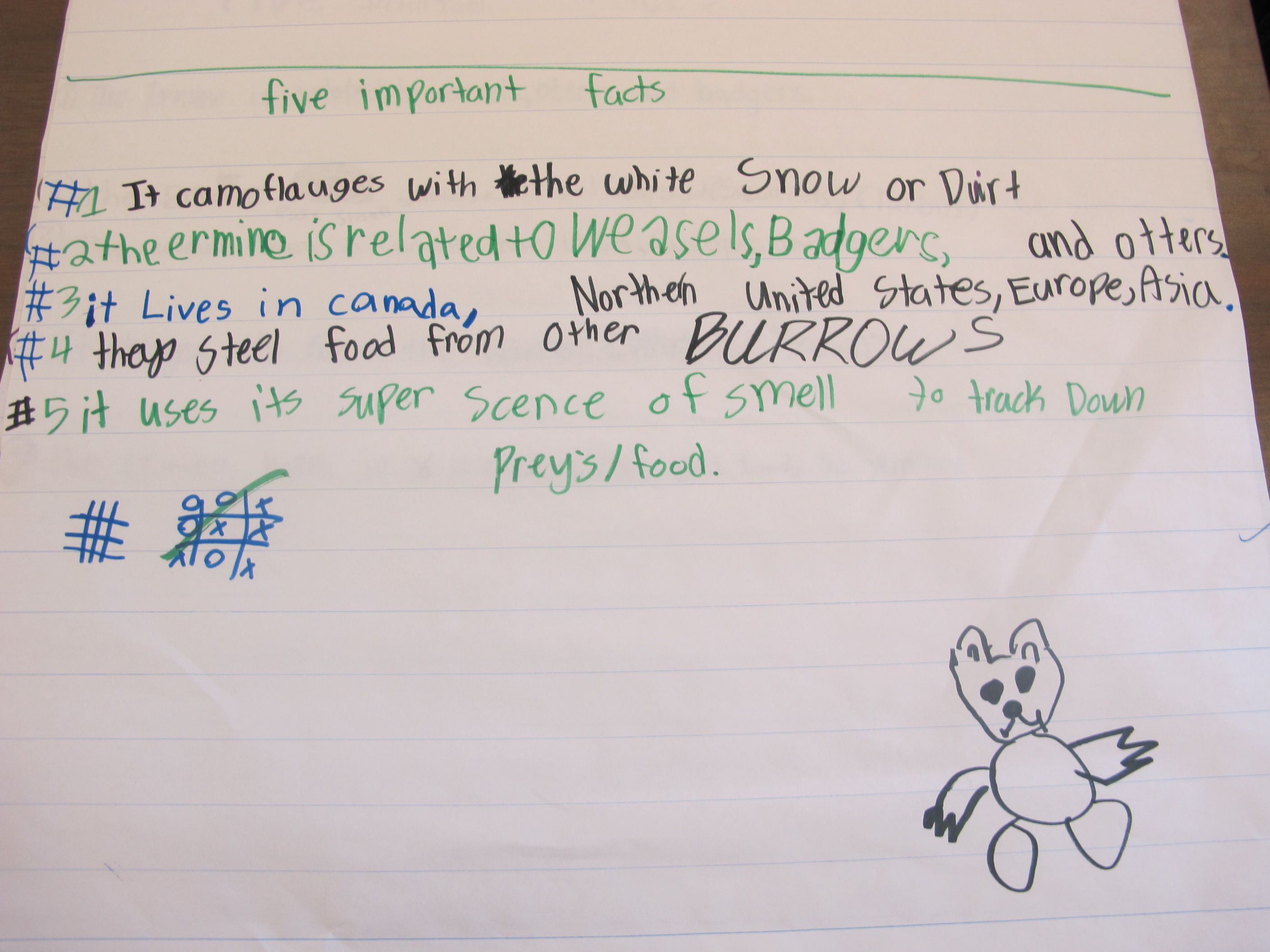
Another list of 5 important facts

Another list of 5 important facts

Final Group list

At this point, this task does require some guidance from adults (Thanks to my patient and encouraging volunteers Miles and Nicole!) but our role is always listening, reflecting back what we hear and refocussing the group. Students are making excellent progress on developing these skills! We just started on activities like this in late December. We are well on our way!

As a teacher, what I love about these sessions, is that it is students interacting with text and each other to determine what is important.