What do our little thinkers think of Little Ant Big Thinker?

I love when I have so many books in my “must read” pile, that when we have a spare 5 or 10 minutes, I know just the book to choose!  Today it was Little Ant Big Thinker or Where does the Ocean End? by Andre Usatschow and illustrated by Alexandra Junge.

little-ant-big-thinker

As we’ve been working on asking questions as we read, I thought this would be a great time to read this book about a little ant with some very big questions. The book begins with the little ant wondering if the ocean ever ends and if so, where? He begins to get anxious – how can he ever know, if he never can see the end? An elephant happens along and despite their attempts at peering out over the water on tiptoe and climbing a tree for a better view, the two of them cannot see the end of the ocean. A fish swims up and scoffs at their worry: “The ocean ends right here!” he explains. Okay, problem solved. Until of course the question pops into the ant’s head: “But where does the ocean begin?”

We quite liked this book.

Catriona, always summarizes so nicely: “It begins at the end and ends at the beginning!”

Alyson notes: “Wondering is a great thing. Little people can think big too!”

Jeremiah has his own question about the little ant: “What if his brain gets so big from all of that wondering, and he tips over?!”

Hmm, what if . . . ?
Picture Books we read this week


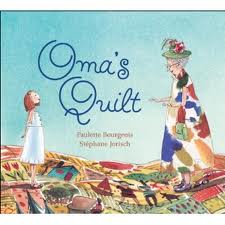
While searching through the library for interesting picture books, I came across Oma’s Quilt. I pulled it off the shelf because it is illustrated by Stephane Jorisch (who also illustrated Suki’s Kimono – one of my favourite books). Then I noticed it was written by Canadian author, Paulette Bourgeois (author of the Franklin books and Big Sarah’s Little Boots) This book was bound to be a good one!  I tried it out with our reading group.  The story:  Emily’s Oma (grandmother) has to move to a retirement home and she is very reluctant to do so.  What about her precious things? Her neighbours? Cooking apple strudel? Even the bowling alley at the home doesn’t change her mind (smelly shoes!) While Emily and her mother are sorting through Oma’s possessions, Emily has a wonderful idea. Why not make a memory quilt for Oma!? Some students made text to text connections to Eve Bunting‘s The Memory String.  This book received a big round of applause.  Look for it in the library!

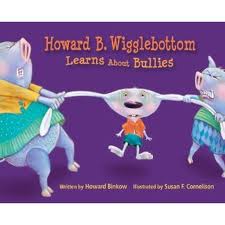
We have been reading a lot of Howard B Wigglebottom books to help us learn about ourselves and our relationships. Howard B. Wigglebottom Learns about Bullies teaches us about the importance of asking for help when bullying doesn’t stop. Howard has a little voice inside his head that tells him Be brave, Be bold, A teacher must be told. But it isn’t always easy to trust our intuition and Howard suffers many unpleasant interactions with the Snorton twins before he finally decides to report their behaviour. Finally, he can sleep easily, knowing that he was brave, he was bold when his teacher was finally told. “I am okay. I am safe.” he assures himself at the end.  Such an important book!

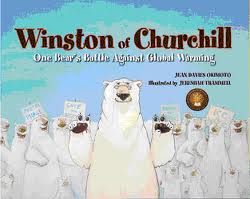
This book tells us about Winston, the bear from Churchill, Manitoba who decides to mobolize a group of polar bears to teach the tourists who come to see the polar bears about the effects of global warming on the melting ice in the Arctic.  “Ice is nice!” the bears chant during their protest march. We learn that we must all do our part to protect the Earth. “Recycle!”  “Walk, Bike, Ride!” “Solar Power!”  “Turn down the furnace!” Winston of Churchill by Jean Davies Okimoto was the winner of the Green Earth Book Award. This book is also in Seymour’s library.

Happy Reading!

Books about relationships help us explore strong feelings

Our reading group has been enjoying stories from our Connect book bin.  We found two books about friendship and sibling relationships that we could really relate to as the characters had feelings just like we do:  frustration, impatience, jealousy, regret and forgiveness.  All such normal feelings as we interact with friends and brothers and sisters.

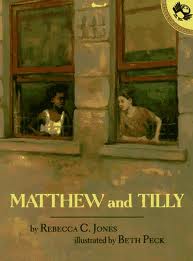
Matthew and Tilly, written by Rebecca C. Jones and illustrated by Beth Peck explores the feelings of friendship and forgiveness. This is a short but powerful story about best friends that argue, as friends do, but then find it easy to forgive each other when they realize that favourite activities are just not the same without a friend.  We discussed the story and wrote responses.

Lisa writes: “I think Ms. Gelson put the book in the Connect bin because everyone could have an argument but then after, we say sorry.”

Kevin explains: “The message of the story was: if you get mad at each other, take a break and you will feel better.”

Judy Blume‘s The Pain and The Great One is a humourous account of a brother and sister told from each perspective.  Each thinks the other is loved more by their parents and explains clearly why it is just not fair.  The Great One thinks her younger brother is a messy slowpoke who is super annoying – doing things to her like singing and dancing around her when she talks on the phone.  The Pain thinks his older sister is a bossy know-it-all who unfairly gets to do things that he can’t. like feed the cat just because she knows how to use the can opener.  Big issues in his little world!

Catriona summarizes the book clearly: “The Pain thought The Great One was a know-it- all. And the Great One thought The Pain didn’t know anything!”

The power of a lie!

Our reading group has been busy writing and talking about connections we have to the books we are reading. This title had big connecting power!

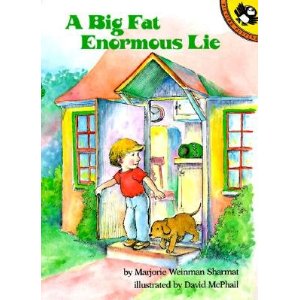
A Big, Fat Enormous Lie by Marjorie Weinman Sharmat and illustrated by David McPhail (one of my favourite illustrators!) is a book we can all relate to easily.  A little boy lies over one small thing and his lie comes alive in the form of a monster, following him everywhere, bothering him, sitting on his stomach. The monster keeps growing and growing and growing until it can only be escaped by . . . telling the truth. Phew! The relief! This little book sure inspired some powerful writing from our reading group. We all recognized that lies can be pretty powerful but not as powerful as the truth 🙂

Sergio writes: “When I lie, I get bad luck and I crash into everything and my stomach hurts. Oww! Oww! Oww! Ouch that hurts.”

Ricky explains: “Lying is a bad thing. If you lie, you will have bad feelings and your tummy will feel like it’s hurt. When you have a nap, it makes you feel better. But when you wake up, you still have to tell the truth. So if you tell the truth, everything will be okay.”

Annie summarizes the story, “The message of the book is that you should never lie to anyone. You have to admit it. When you don’t tell the truth, you’ll feel like the lie is lying in your stomach. After you tell the truth, the lie is gone.”

Lisa writes, “If you tell a lie, you feel guilty because you just want it to go away. If you did something wrong, you should tell, don’t lie. If you lie, you need to tell someone.  If you don’t tell, it is going to get bad, then worst. You feel guilty if you lie. It feels good if you tell the truth.”

Connecting Stories

Our reading group has been busy reading picture books and writing and drawing about their connections.  We love using this BLM Connecting Stories from Adrienne Gear‘s Reading Power book to help us explain how the story is connected to our own lives.

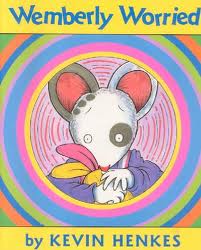
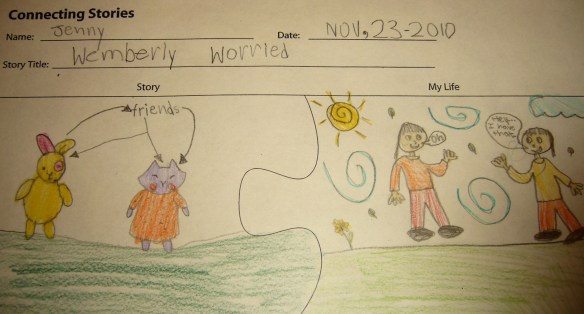
Jenny read Wemberly Worried by Kevin Henkes. This is a lovely book about Wemberly who worries about everything!  Now Wemberly is starting school.  This book helps us feel better about starting school, making new friends and growing up.  Jenny writes:

In the story, when Wemberly went to school, she saw someone else just like her. She had a stuffy and she was shy just like Wemberly.

This reminds me of when I had the first day of school. I was shy and then I met Maria. And then when Jocelyn came, we all became friends. And we all made other kids laugh.

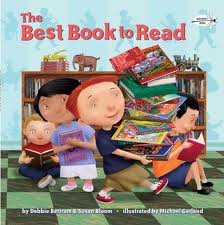
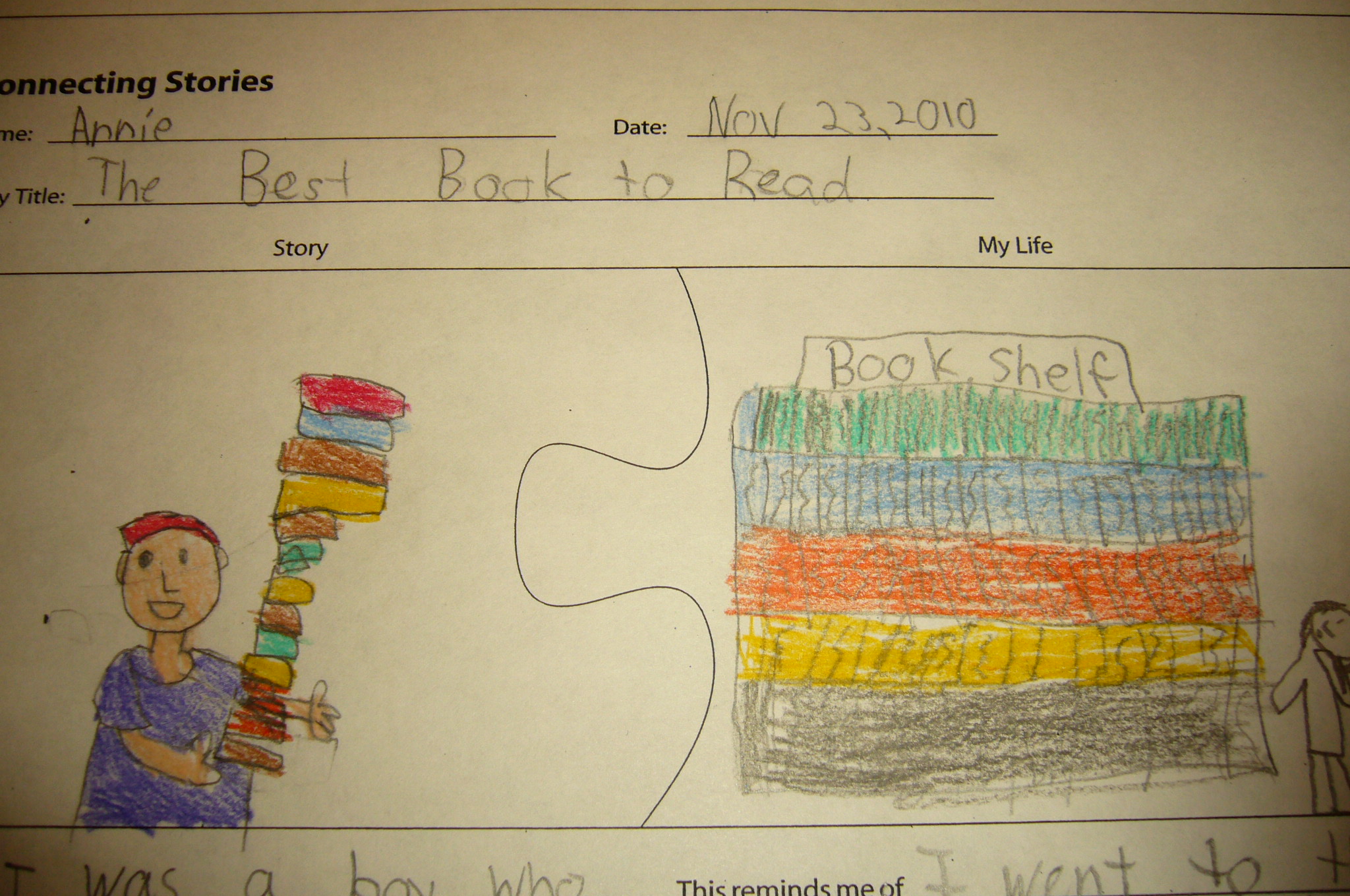
Annie read The Best Book to Read by Debbie Bertram.  The fun, rhyming text takes us  along on an adventure to the public library.  How to choose a book when so many are available?  Annie writes about her connection:

In the story, it was a boy who had a field trip to the library. He found lots of books that he wants but he can’t choose some.

This reminds me of  . . . I went to the library and I didn’t know what book to choose. I was confused about choosing books!

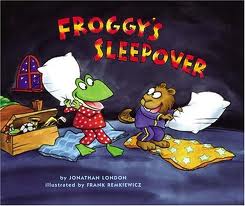
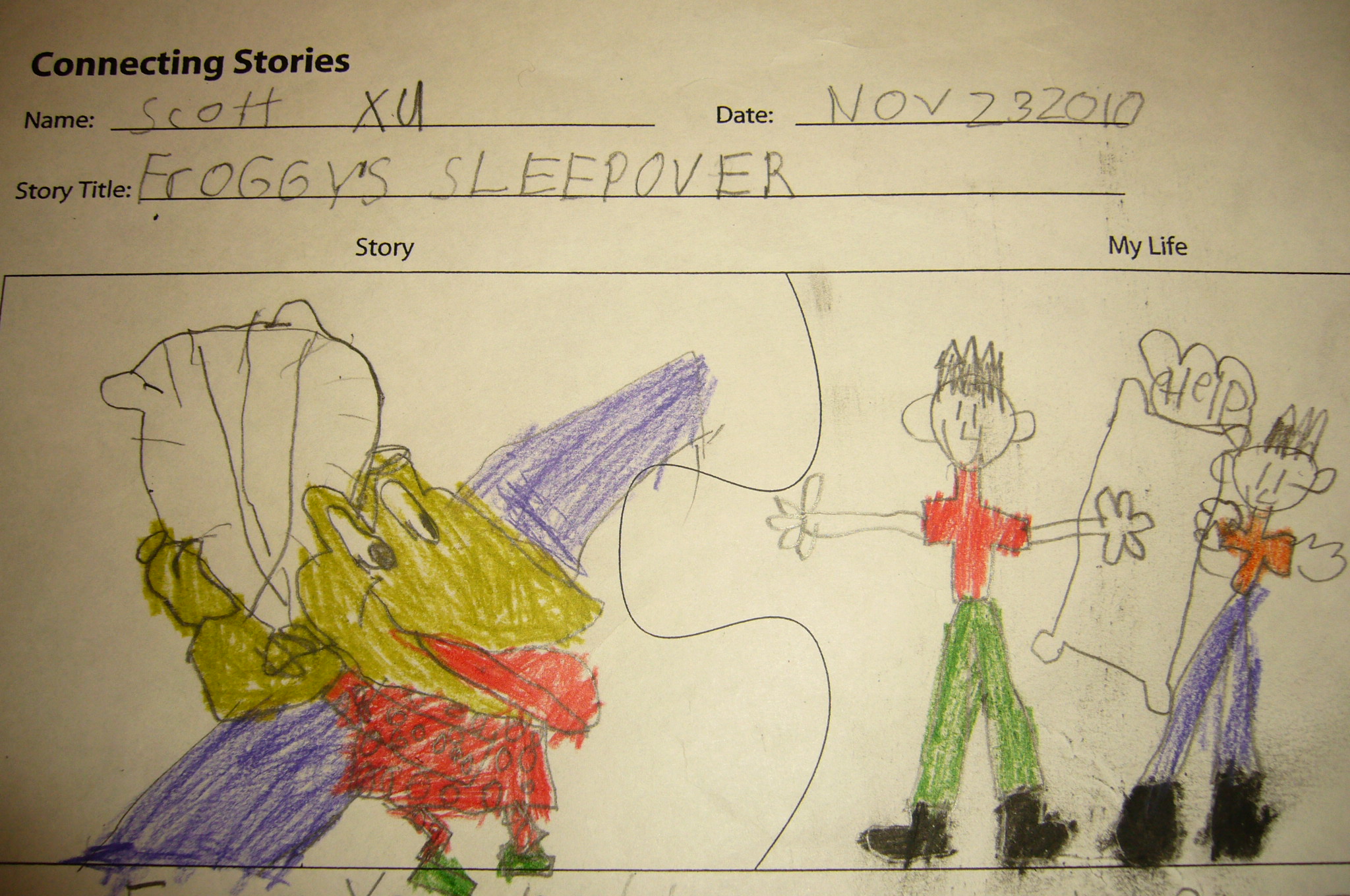
Scott chose to read Froggy’s Sleepover by Jonathan London. As expected, Froggy has all kinds of funny escapades on his sleepover at Max’s house.  Lots of giggling happens when someone reads this book about silly sleepover fun! Scott writes:

In the story, Froggy went to a sleepover with Max. They play pillow fight. I think Froggy was happy when they were play fighting.

This reminds me of when I went to a sleepover with my best friend. We play pillow fight too. I feel happy when I played. I connected to Froggy’s happy feelings.

Ms. Hong brought us a lot of books from the Connect bin in the library to add to our classroom collection so that we have many choices when we are choosing books to read. Thanks Ms. Hong!  Everyone is enjoying recognizing how they share feelings with the characters in these stories. This helps us to understand the story better.  We look forward to reading more of these books in the next few weeks.

Let’s Read and Find out Science Books

Our reading group has been exploring many books in the classroom.  This past week, they really enjoyed reading some of the books in the Let’s Read and Find out Science bin.  In pairs or on their own they selected a book, wrote down some questions before reading, took turns reading out loud to their partner and wrote down some of the most interesting facts in a web.  We all learned so much about a wide variety of topics.  Living things were a popular thing to study:  frogs and tadpoles, fireflies, night animals, and dolphins.  Others explored different science topics such as what makes a magnet, thunder and lightning and the sun. Check out some of our work!

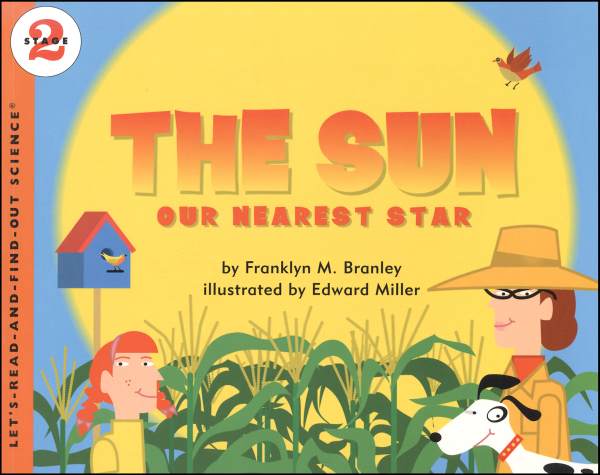
Josiah’s choice was The Sun, Our Nearest Star

sun

His questions before he read:

  • If you walk on the sun, will you crumble?
  • How far is the sun?
  • What is the sun made of?

Some of the interesting facts he included in his web:

  • Other stars are farther than the sun
  • A spaceship will turn into gasses if it gets too near the sun
  • It will take more than 3 years to reach the sun

Jenny and Scott chose to read this book:

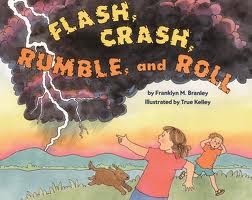
Jenny and Scott’s questions when they looked at the cover:

  • What is lightning made of?
  • When does lightning come?
  • What happens when lightning zaps you?

Some facts from their web:

  • People used to think lightning was the fiery finger of an angry God
  • Watch storms from a safe place
  • A car is safe because when lightning hits it, the electricity goes through the car and not through you

We have many more of the Let’s Read and Find out Science titles in our class and predict that they will be popular books to choose during independent reading time!

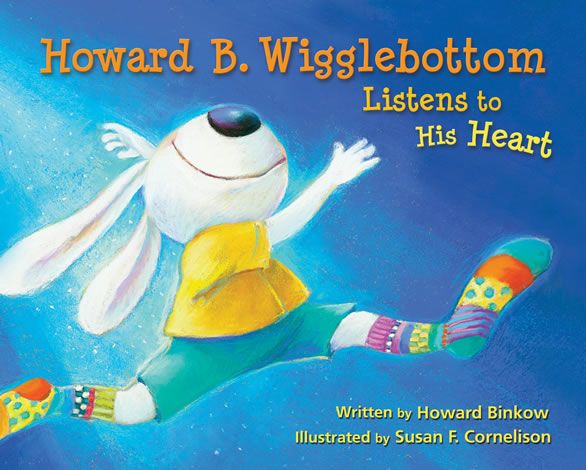
Howard B. Wigglebottom Listens to His Heart

Howard B. Wigglebottom Listens to His Heart written by Howard Binkow and illustrated by Susan F. Cornelison definitely spoke to us.

HBW2_FrontCov_2

In this story, Howard learns to do what makes him feel good about himself even though his friends made fun of him at first. Howard loves to dance and finds out from his grandfather that he comes from a long line of dancing Wigglebottoms. He practices and practices and wows all of his friends at the Sock Hop!

When Howard does what he loves – it makes his heart sing!

Students wrote responses to this story – writing about the message of the book and/or about an activity that makes them feel really happy and why.  From Howard, we learned that we can celebrate and be proud of who we are!

Jena: I think that the message of this book is that you should do what you want to do and it doesn’t matter what other people say. Just do what you want to do. I’m good at reading because when I read I start to fall into the book like I’m with the character. I feel great when I’m reading.

Alyson: The message in this book is do not listen to other people’s opinion. Listen to your own. My favourite sport is hockey and soccer when I’m playing with me Dad. And swimming!

Annie: I’m good at running and when I run, I feel like I can run around the world. When I was little I kept on practicing at running. Last year I got a little fast. Then I got faster and faster. Now I’m the third fastest runner.

Reading Out Loud Advice from our Reading Group

Our morning reading group has been practicing reading out loud to a partner.  Students have noticed that reading out loud is a skill that each of them can work on.  We’ve come up with some specific advice for being a great oral reader:

  • Take a breath/pause at the punctuation (. ! ?)
  • Use a loud enough voice to be heard
  • Read with a clear voice
  • Use good expression (no robot reading)
  • Read slowly so others can hear you clearly and understand what you are saying
  • You should kind of “act” when you are reading
  • When you get stuck, stop and reread/sound out/think about what you read
  • Change your voice when reading dialogue