Unknown's avatar

About carriegelson

Elementary teacher passionate about all things literacy.

Old Mother Bear inspires lots of questions

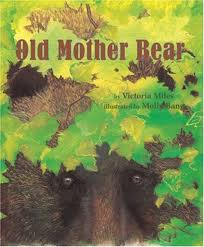
Division 5 has been practicing asking questions as we listen to a story.  Armed with our pencils and mini notebooks, we gather at the carpet to listen to great information story books like Old Mother Bear by Victoria Miles and illustrated by Molly Bang.

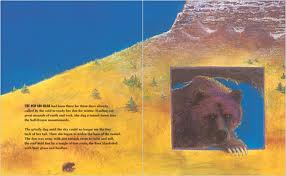
So far we have read about how the mother Grizzly tunnelled a den out of the mountainside to sleep through the winter and birth her cubs.  The cubs are born and nurse and snuggle with their mother until they all emerge from the den in the spring and begin searching for food.

A sample of the great questions we had (and who asked them) as we read the first half of the book:

How do bears dig the den? (Manny)

Does it hurt when the mother feeds? (Miami)

How do the mother bears make milk? (Hajhare)

How do they feed from their mother if they can’t see? (Josiah)

How many babies do they have at one time? (Lisa)

Where is the Dad? (Hailey)

When do they leave their Mom? (Jeremiah)

How do the cubs know not to hurt each other when they play fight? (Edwin)

How long can a bear survive without food? (Ricky)

We look forward to finishing the story this week!


Picture Books we read this week


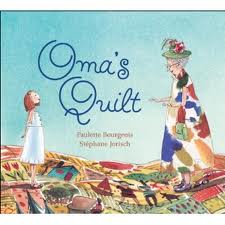
While searching through the library for interesting picture books, I came across Oma’s Quilt. I pulled it off the shelf because it is illustrated by Stephane Jorisch (who also illustrated Suki’s Kimono – one of my favourite books). Then I noticed it was written by Canadian author, Paulette Bourgeois (author of the Franklin books and Big Sarah’s Little Boots) This book was bound to be a good one!  I tried it out with our reading group.  The story:  Emily’s Oma (grandmother) has to move to a retirement home and she is very reluctant to do so.  What about her precious things? Her neighbours? Cooking apple strudel? Even the bowling alley at the home doesn’t change her mind (smelly shoes!) While Emily and her mother are sorting through Oma’s possessions, Emily has a wonderful idea. Why not make a memory quilt for Oma!? Some students made text to text connections to Eve Bunting‘s The Memory String.  This book received a big round of applause.  Look for it in the library!

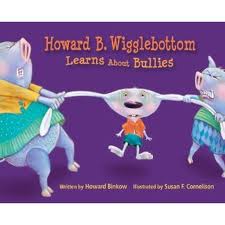
We have been reading a lot of Howard B Wigglebottom books to help us learn about ourselves and our relationships. Howard B. Wigglebottom Learns about Bullies teaches us about the importance of asking for help when bullying doesn’t stop. Howard has a little voice inside his head that tells him Be brave, Be bold, A teacher must be told. But it isn’t always easy to trust our intuition and Howard suffers many unpleasant interactions with the Snorton twins before he finally decides to report their behaviour. Finally, he can sleep easily, knowing that he was brave, he was bold when his teacher was finally told. “I am okay. I am safe.” he assures himself at the end.  Such an important book!

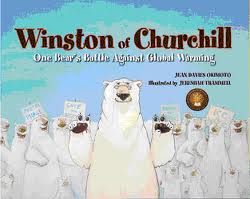
This book tells us about Winston, the bear from Churchill, Manitoba who decides to mobolize a group of polar bears to teach the tourists who come to see the polar bears about the effects of global warming on the melting ice in the Arctic.  “Ice is nice!” the bears chant during their protest march. We learn that we must all do our part to protect the Earth. “Recycle!”  “Walk, Bike, Ride!” “Solar Power!”  “Turn down the furnace!” Winston of Churchill by Jean Davies Okimoto was the winner of the Green Earth Book Award. This book is also in Seymour’s library.

Happy Reading!

January books at my house

January seems to be full of wet weather and cold days.  Perfect reasons to stay in and read a book or two! In fact, I have two read alouds going with my own children.  Some evenings we read from just one, other nights we read a bit of both.  Both are hard to put down!

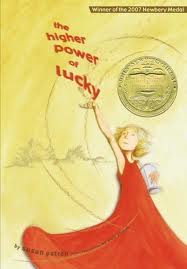
This is the third time I am reading Susan Patron‘s The Higher Power of Lucky and I continue to like it better each time.  The beauty of a book is simply by opening it up at the beginning, you can experience it again. This is one of those books that deserves many readings. I first discovered it when Ms. Hong popped it into my box with a sticky note attached:  “Think you will like this” I started reading it and finished it in one sitting. Last year this was a book club selection (so there are multiple copies in our school library!) Often we read really great sections out loud at our meetings – the trouble with this book, almost every sentence was so well written, it deserved to be read out loud! We shared many giggles and smiles over the text of this book.

Now I am enjoying introducing my children to Lucky – especially because there is a sequel Lucky Breaks sitting on our book shelf that I hope they will read on their own when we finish this book. This book won the Newbery Medal and many other prestigious book awards so it has many fans behind it.  Pick it up and meet Lucky, a ten year old girl who lives in Hard Pan,  California (population 43) with her French guardian Brigitte and her loyal dog, HMS Beagle.  Lucky manages to keep very busy in this small town – collecting bugs in specimen jars, writing about the terrible fate of the tarantula when it meets the tarantula hawk wasp, chasing snakes out of the clothes dryer and spending time with her quirky friends like Lincoln (destined to be president according to his Mom) who is obsessed with tying knots. But what occupies Lucky’s thoughts most of all is the worry that Brigitte may want to abandon her job as Lucky’s guardian and return to France because, unlike actual Moms, guardians can resign. Lucky hatches a plan to keep Brigitte in California and it all begins with running away in a red silk dress in the middle of a dust storm. We love this book!

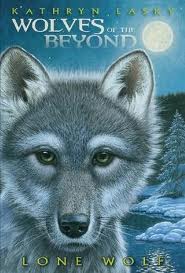
Kathyrn Lasky wrote the popular Guardians of Ga’Hoole series about a powerful war between the owls. This book Lone Wolf is the first in her new series Wolves of the Beyond. We started reading this book to see if my son may want to read it on his own but about 12 pages in and we realized that we all wanted to read the book and now! Who could read it first?  There was no fair way to decide so we are sharing it as a read aloud and are equally addicted to the dramatic story. Faolon, a newborn wolf pup is born with a twisted paw. The laws of the pack are that there can be no weaknesses and the little pup is abandoned to die on an icy riverbank.  He is swept down river and rescued by Thunderheart, a mother bear who has just lost her cub.  She decides to raise him! A big grizzly raising a wolf pup!  We are just on chapter seven and have already learned so much about wolves and bears and their survival.  But we feel the story has much more in store for us as many parts of the story hint at how special Faolan is and we suspect he is going to return to the world of wolves that rejected him.  This book is a fast paced adventure ideal for strong readers who like stories with lots of action and suspense.

Happy reading!

Books about relationships help us explore strong feelings

Our reading group has been enjoying stories from our Connect book bin.  We found two books about friendship and sibling relationships that we could really relate to as the characters had feelings just like we do:  frustration, impatience, jealousy, regret and forgiveness.  All such normal feelings as we interact with friends and brothers and sisters.

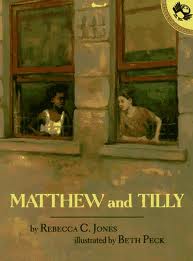
Matthew and Tilly, written by Rebecca C. Jones and illustrated by Beth Peck explores the feelings of friendship and forgiveness. This is a short but powerful story about best friends that argue, as friends do, but then find it easy to forgive each other when they realize that favourite activities are just not the same without a friend.  We discussed the story and wrote responses.

Lisa writes: “I think Ms. Gelson put the book in the Connect bin because everyone could have an argument but then after, we say sorry.”

Kevin explains: “The message of the story was: if you get mad at each other, take a break and you will feel better.”

Judy Blume‘s The Pain and The Great One is a humourous account of a brother and sister told from each perspective.  Each thinks the other is loved more by their parents and explains clearly why it is just not fair.  The Great One thinks her younger brother is a messy slowpoke who is super annoying – doing things to her like singing and dancing around her when she talks on the phone.  The Pain thinks his older sister is a bossy know-it-all who unfairly gets to do things that he can’t. like feed the cat just because she knows how to use the can opener.  Big issues in his little world!

Catriona summarizes the book clearly: “The Pain thought The Great One was a know-it- all. And the Great One thought The Pain didn’t know anything!”

The power of a lie!

Our reading group has been busy writing and talking about connections we have to the books we are reading. This title had big connecting power!

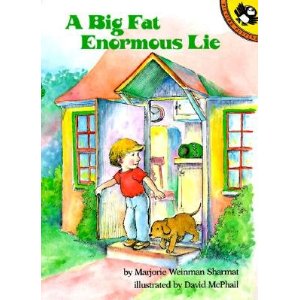
A Big, Fat Enormous Lie by Marjorie Weinman Sharmat and illustrated by David McPhail (one of my favourite illustrators!) is a book we can all relate to easily.  A little boy lies over one small thing and his lie comes alive in the form of a monster, following him everywhere, bothering him, sitting on his stomach. The monster keeps growing and growing and growing until it can only be escaped by . . . telling the truth. Phew! The relief! This little book sure inspired some powerful writing from our reading group. We all recognized that lies can be pretty powerful but not as powerful as the truth 🙂

Sergio writes: “When I lie, I get bad luck and I crash into everything and my stomach hurts. Oww! Oww! Oww! Ouch that hurts.”

Ricky explains: “Lying is a bad thing. If you lie, you will have bad feelings and your tummy will feel like it’s hurt. When you have a nap, it makes you feel better. But when you wake up, you still have to tell the truth. So if you tell the truth, everything will be okay.”

Annie summarizes the story, “The message of the book is that you should never lie to anyone. You have to admit it. When you don’t tell the truth, you’ll feel like the lie is lying in your stomach. After you tell the truth, the lie is gone.”

Lisa writes, “If you tell a lie, you feel guilty because you just want it to go away. If you did something wrong, you should tell, don’t lie. If you lie, you need to tell someone.  If you don’t tell, it is going to get bad, then worst. You feel guilty if you lie. It feels good if you tell the truth.”

Tales, Tails and Tadpoles

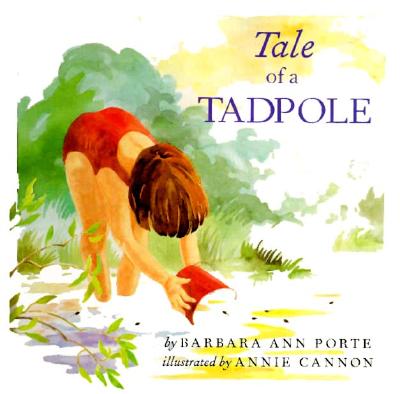
We read an interesting information story book called Tale of a Tadpole by Barbara Ann Porte. Illustrations by Annie Cannon.

Before we read, we peeked at some of the pictures and wrote some questions about tadpoles in our Wonder web:

Kevin wondered:

What do they eat? How fast can they swim? What are their predators? Do they have parasites?

Emily also had some questions:

Why is their tail so long? Why are they brown? How do they swim? Why are they so small?

Some other great questions from Jena:

How come they transform? Do they have gills? How do they get out of their eggs? Do they eat fish?

As we read, we asked more questions and read on to see if we could find out the answers. At the end of the story, we found out that we had learned a lot and everyone chose one of the key questions to answer in more detail. One surprise for everybody was that the tadpole in this story turned into a toad, not a frog. The grandfather in the story explained the differences between frogs and toads and we were all eager to discover what these were.

Many people explained some of the differences between frogs and toads in their writing. Jeremiah wrote: “Toads have bumps on their back but frogs don’t. Frogs have smooth skin.” Eddy explained, “Toads live in the woods and frogs live in ponds.”

Another topic that many people chose to write about was why the tadpole’s tail got smaller. Hajhare writes, “Frogs get energy from their tails.” Jenifer gave us a few more details: “All the nutrients from the tail go into the body, this makes the tail small.”

Information storybooks such as a Tale of a Tadpole are a great way to learn a lot of new information while enjoying a great story. We find that when we ask lots of questions before we read, we are even more eager to read and see what new information we can find out.


Connecting Stories

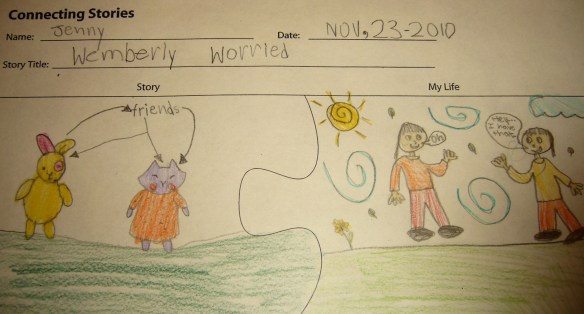
Our reading group has been busy reading picture books and writing and drawing about their connections.  We love using this BLM Connecting Stories from Adrienne Gear‘s Reading Power book to help us explain how the story is connected to our own lives.

Jenny read Wemberly Worried by Kevin Henkes. This is a lovely book about Wemberly who worries about everything!  Now Wemberly is starting school.  This book helps us feel better about starting school, making new friends and growing up.  Jenny writes:

In the story, when Wemberly went to school, she saw someone else just like her. She had a stuffy and she was shy just like Wemberly.

This reminds me of when I had the first day of school. I was shy and then I met Maria. And then when Jocelyn came, we all became friends. And we all made other kids laugh.

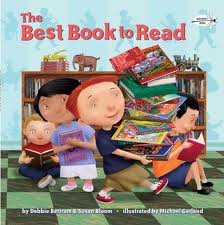
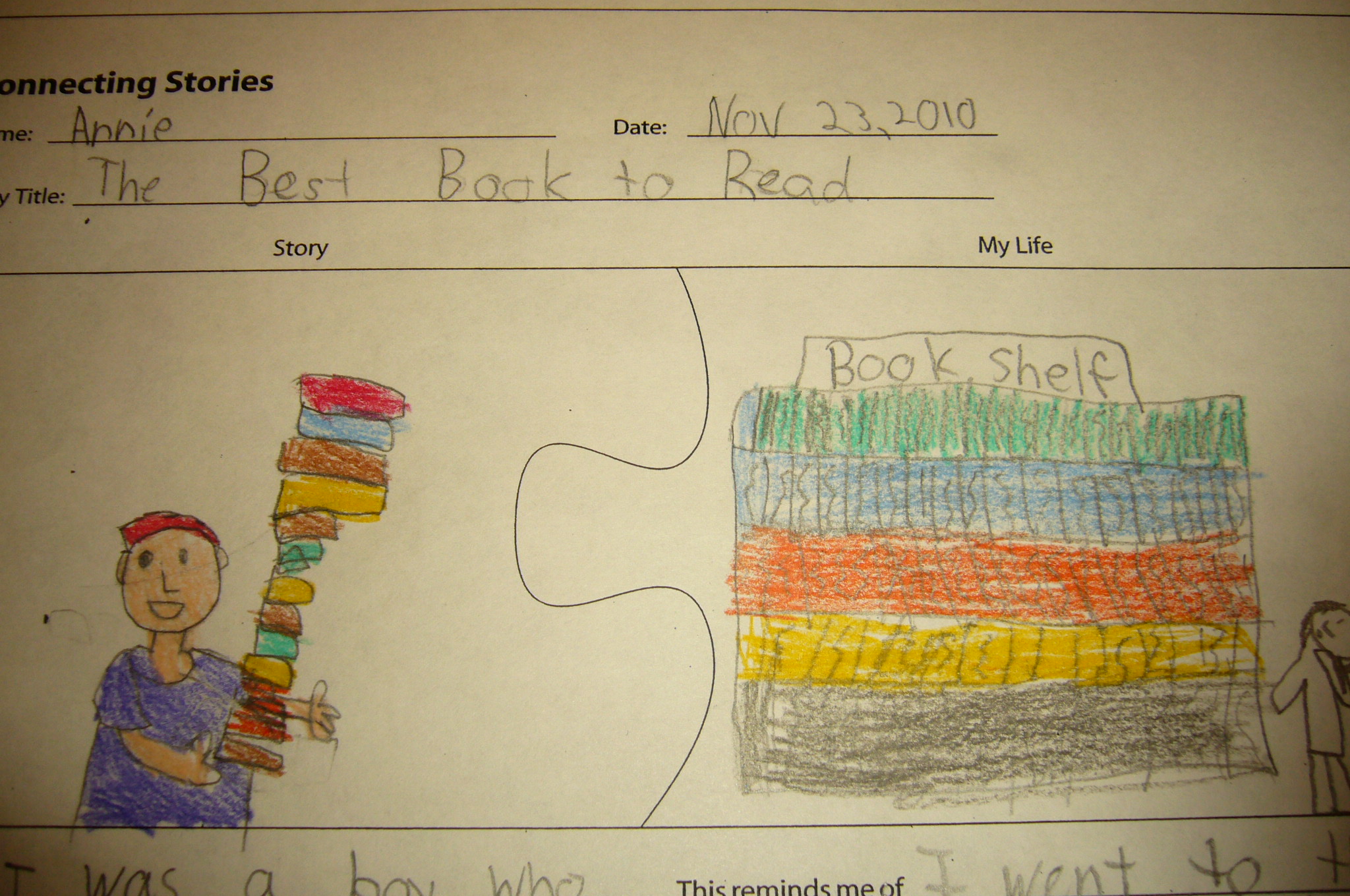
Annie read The Best Book to Read by Debbie Bertram.  The fun, rhyming text takes us  along on an adventure to the public library.  How to choose a book when so many are available?  Annie writes about her connection:

In the story, it was a boy who had a field trip to the library. He found lots of books that he wants but he can’t choose some.

This reminds me of  . . . I went to the library and I didn’t know what book to choose. I was confused about choosing books!

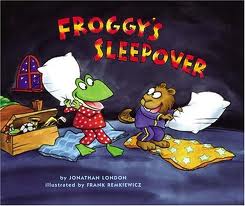
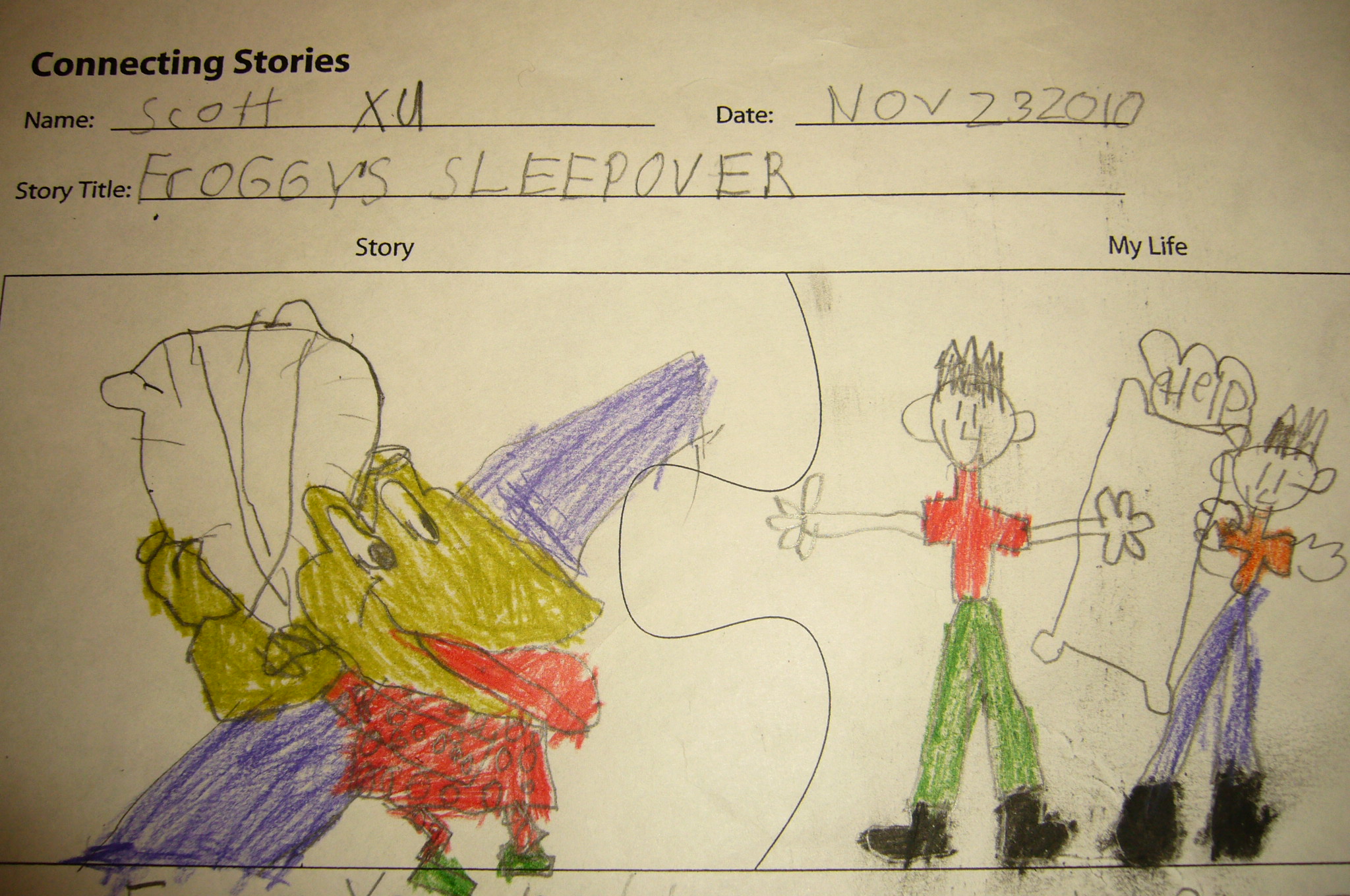
Scott chose to read Froggy’s Sleepover by Jonathan London. As expected, Froggy has all kinds of funny escapades on his sleepover at Max’s house.  Lots of giggling happens when someone reads this book about silly sleepover fun! Scott writes:

In the story, Froggy went to a sleepover with Max. They play pillow fight. I think Froggy was happy when they were play fighting.

This reminds me of when I went to a sleepover with my best friend. We play pillow fight too. I feel happy when I played. I connected to Froggy’s happy feelings.

Ms. Hong brought us a lot of books from the Connect bin in the library to add to our classroom collection so that we have many choices when we are choosing books to read. Thanks Ms. Hong!  Everyone is enjoying recognizing how they share feelings with the characters in these stories. This helps us to understand the story better.  We look forward to reading more of these books in the next few weeks.

Recent books I’ve read to my own children

Sometimes, I discover books to read to the class when I read great books with my own children – although they are in Grade 3 and love to read independently, I still read to them everyday!  Check out some of the books we’ve read this fall – maybe one will interest you!
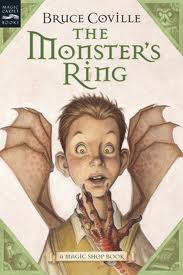
This is one of the Magic Shop Books by Bruce Coville. Last year I read Jeremy Thatcher Dragon Hatcher to my class and our book club read The Skull of Truth also engaging, hard to put down books in the Magic Shop series. In The Monster’s Ring, Russel Crannaker buys a “monster’s ring” from a strange magic shop he stumbles upon.  He follows the instructions that come with the ring – whispering a magic chant and twisting the ring on his finger.  All of a sudden, he is sprouting horns, growing claws and speaking in a husky, snarling voice. He realizes that with the ring, he has the power to turn back and forth between boy and monster.  Will he be cautious and follow the special instructions to not use it on the night of a full moon or will the urge to outpower Eddie, the school bully be too much for Russell? Every chapter ends in a cliff hanger urging you to read on.  If you dare . . .

Ms. Hong has many of the Magic Shop titles in our school library.

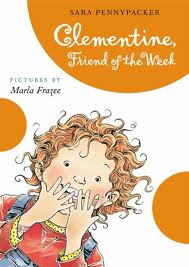
We love Sara Pennypacker’s Clementine books and delight in the fun illustrations by Marla Frazee. So when the latest Clementine book was released, we had to read it!  In Clementine, Friend of the Week, Clementine is thrilled to finally have her turn as Friend of the Week in her classroom.  She gets to do special jobs like be the line leader, feed the fish and collect the lunch money but what she is really excited about is the book her class is going to write about her.  But then, as she thinks about it, she begins to get a little nervous.  What will her classmates say?  How will she get everyone to say amazing things?  In typical Clementine fashion, she has some very interesting ideas about how to get the best Friend of the Week booklet ever.  But then, something happens that just might spoil her plans. . .

This book is in my collection at home but we have the other three Clementine books in our classroom collection.
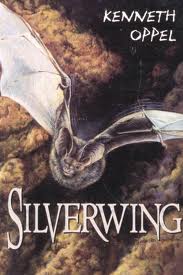
When I was pregnant with my children I read my Grade 3 class Silverwing. They loved it!  In fact, many went on to read the next book in the series Sunwing which was at the Scholastic Book fair that year.  I remember thinking – when my children are in Grade 3, I am going to read them Silverwing . . . So the night before the first day of this school year, we started.  And . . . they loved it too!  For me, it was just as great on the second reading.  The main characters are Shade, a young Silverwing bat and Marina, a Brightwing bat Shade befriends on his journey to find his colony after he was lost in a storm on the winter migration south to Hibernaculum. On their way they meet Goth and Throbb, two huge, bat eating,  jungle bats who threaten Shade’s chances of ever finding his colony again.  This book is an award winning fantasy that is impossible to put down.  Perfect for readers and listeners eight years old and up! And the first in a series – look for all of these books in the school library.
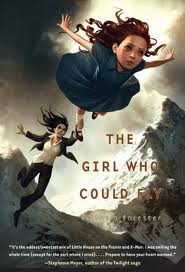
This is the book we have just started.  After reading the first chapter, we are hooked. In the first eighteen pages of this book,  Piper McCloud a nine year old girl who lives with her Ma and Pa on a farm, decides to take a running leap off of her roof and discovers that she can fly!  This isn’t a big surprise since she has been able to float and hover in the air all of her life. But actually flying is a whole new experience!  We can’t wait to find out what is going to happen next.

Happy reading!

A beautiful book to inspire hope on Remembrance Day

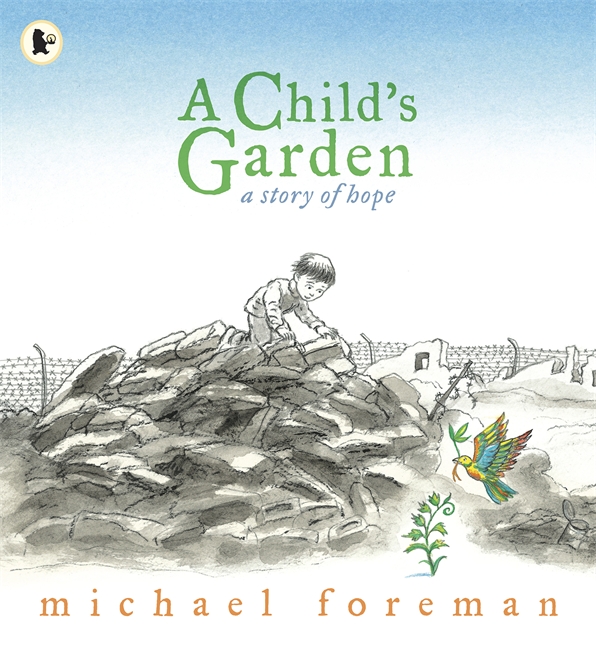
We read this beautiful book by Michael Foreman on the eve of Remembrance Day.

Both the text and illustrations are simple and beautiful.  As a read aloud, it is perfect. Each page brings exclamations, predictions, connections, sighs, expressions of joy and anger! The story? A boy finds a tiny plant in a pile of rubble next to a barbed wire fence – he nurtures it and it grows into a grape vine, spreading to cover the fence and bringing birds and butterflies and children to play.  Then the soldiers tear out the plant and throw it over the fence. “Huh? No! Why?” – the class erupted in outrage!

The boy is sad and troubled and suffers a miserable winter with his family in his war torn home.  Then in the spring he notices the vine is growing on the other side of the fence and soon seeds also sprout again on his side.  With more watering and care the vine soon grows and the green tendrils become entwined as they grow up either side of the fence to meet together at the top.  Again, the children have their beautiful garden.  This time on both sides of the fence. The subtitle of this book is A Story of Hope and it certainly is.  The discussion continued as we went for our afternoon walk outside.  Questions, connections and thoughts still to be shared.  How lucky we were to have a beautiful afternoon walk in the sunshine, talking about hope and peace and community.  Books like this work their magic! How do we talk about war and conflict with children? How do we honour peace?  Sometimes all we need is the perfect book to get us started.

Exploring unique animal relationships

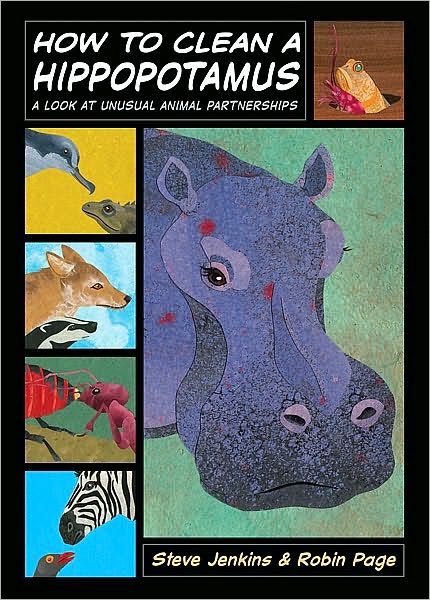
We have been reading this fantastic book by Steve Jenkins and Robin Page called How to Clean a Hippopotamus and are learning all about symbiotic relationships – today we read about the oxpecker, also known as a tickbird and how it hangs out with some pretty large animals doing a very important job.

We drew some pictures of what we learned today and tried to explain how all the animals in a symbiotic relationship benefit.

Gary explains: The giraffe lets the oxpecker on its back because the oxpecker eats the parasite  and the oxpecker warns the giraffe when the giraffe predator is near! The oxpecker likes to go on to the giraffe’s back because it eats the parasites.

Ricky writes: The oxpecker is a really nice bird.  It eats ticks from the giraffe.  Ticks are small small parasites that use your body as a home.  But ticks don’t go only on giraffes! They go on rhinos, buffalos, zebras, giraffes and deers.  So the oxpecker can have lots of food.  These animals can’t get the ticks out of their body because they’re not like us.  So the oxpecker can help by eating. These are African animals.

Scott explains: The oxpecker helps the giraffe by eating the parasites.  Also they scream and flap their wings to warn the giraffe so the giraffe could run away or kick predators with their legs.  Because the oxpecker loves eating parasites, it spends time on large animals.   Scott also provided some definitions: A parasite lives on a host.  They are annoying.  A tick is a parasite.  A predator means that they hunt animals.  They hunt them so they could eat them.

We can’t wait to read about more unique animal relationships in this book!