Unknown's avatar

About carriegelson

Elementary teacher passionate about all things literacy.

Simple Books, Little Treasures

It’s report card writing time: words, words and more words. At the library today I was drawn to books that didn’t contain many (words) at all! These fabulous little finds are all about simplicity – wordless or sparse text. Pages full of ideal illustrations, questions posed and left unanswered and inferences begging to be made. 🙂 South by Patrick McDonnell.
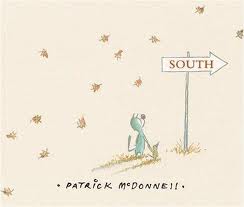
A last fall leaf lands on a lone little bird, asleep. His friends have all left for warmer places. Despair. Mooch, the cat, accompanies him on his journey south through falling snow, falling tears and developing adoration until they happen upon the beautiful sound of birdsong.
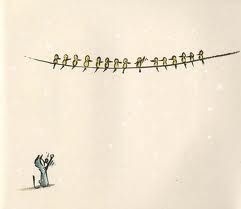
Old friends found but reluctant goodbyes to new friends made. South by Patrick McDonnell is a lovely wordless story about being lost and found and having someone sweet enough to help you on your journey to where you need to go.
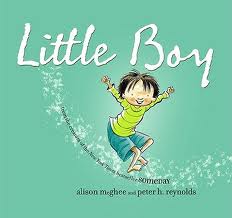
Aren’t we lucky to have children in our lives (like the little boy in this book in his star ship pyjamas and his important cardboard box) to remind us to appreciate the here and now? Kind of why it is great to be a parent and a teacher. My favourite line from Alison McGhee is the last line of the story: Little boy, you remind me how so much depends on days made of now. This book was inspired by the poem The Red Wheelbarrow by William Carlos Williams (a poem that also plays a starring role in Love that Dog by Sharon Creech) Little Boy is illustrated by Peter H. Reynolds.

I love books featuring birds, books that ask questions (and inspire more) and books by Caldecott Medalist Chris Raschka. This book was made for me!
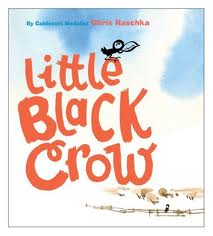
Little Black Crow where do you go?begins the questioning . . . 27 questions make up this book about a little boy wondering about the little black crow he sees in the sky.
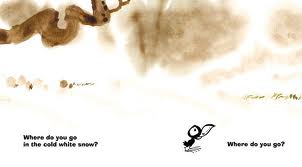
Haven’t you also wondered about those birds flying by? Hey! Birds! Are you never afraid? Do you wonder about the stars you see? Might you ever wonder about someone . . . like me?

Happy Reading!

Shades of People

Sometimes it is the quick little read alouds that deliver the biggest message and create the atmosphere for the most dialogue. Thank you to Ms. Hong who we went to visit at Strathcona Library yesterday for recommending Shades of People created by Shelley Rotner and Sheila M. Kelly.

shades_of_people

In this book, people are not described by their skin colour but rather the shade they come in – creamy, coffee, copper, almond, rose, bronze, brown . . . My favourite lines: Our skin is our covering, just like wrapping paper. And, you can’t tell what someone is like from the colour of their skin.

Snippets from our discussion:

“Everyone is not the same.”

“We have different skin, but the same inside like the heart, the brain, the bones.”

“We have the same emotions.”

“Our feelings come from the same place.”

Beautiful photographs capturing our diverse shades and simple text left us with lots to discuss and connect with.

Thanks Ms. Hong!

Grumpy Bears, Clever Mice and a good night’s sleep

Our BLG reader this week was Sam. He brought in an engrossing story by Bonny Becker and illustrated by Kady MacDonald Denton. A Bedtime for Bear is all about a very particular Bear who needs everything to be just so in order to get to sleep. His friend Mouse, who comes to spend the night is not very capable of being calm, quiet and quick to settle down. This aggravates Bear just a little (well actually a LOT).

A little bit of irony – this book was all about being quiet and my normally very noisy (in a charming sort of way 🙂 ) class sat silent and focussed during Sam’s reading except to giggle at how disruptive and annoying Mouse was to Bear.  Strangely quiet! But I wasn’t about to complain!

As the evening progresses in the story, we begin to realize that Bear wants Mouse up and about because he is a little nervous about a sound he heard.

Miami was on to him, “He doesn’t want the mouse to go to bed because he is scared!” she shouted.

When Bear told Mouse a story about Brave Strong Bear and the Very Frightened Little Mouse, Jeremiah quietly remarked, “That’s the opposite.”

Not much gets past us!

Our student reviewers report:

Lisa: My favourite part is when the bear asks the mouse to check his closet. I think he did that because he was actually scared there was someone that lived in the closet.

Kevin: My favourite part of the story is when they both fell asleep under the full moon.

Ricky: That was a great book you read Sam! It had good pictures and good characters.

Stories that came our way today

Our classroom read aloud mid morning was an information story book to practice asking questions and inferring from our background knowledge.

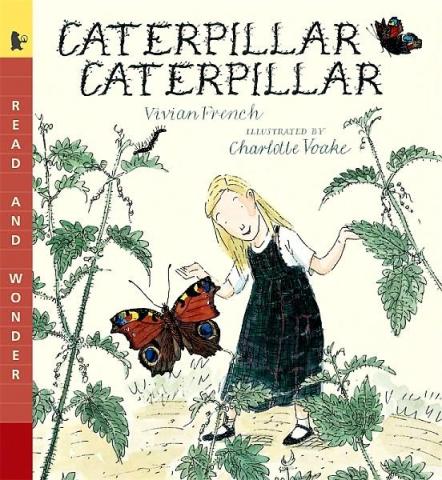
Caterpillar Caterpillar

Written by Vivian French (author of many favourite information story books) and illustrated by Charlotte Voake, Caterpillar Caterpillar is all about a little girl learning about the caterpillar’s development through the help of her patient and knowledgeable grandfather. We realized our background knowledge related to insects has really grown because of all of our research about walking sticks (our classroom pets). We had lots of questions about the caterpillars shedding their skin and wondered if like stick bugs, they ate their skin? Do they have suction cups on their legs to be able to travel on the underside of leaves? Are the butterfly eggs sticky to stay stuck to the leaves? They must be because they don’t fall off in the rain. But then somebody else pointed out that maybe the eggs are only laid on the underside of leaves to protect them. Can caterpillars spray a substance to keep enemies away like some stick bugs can? Great questions and discussion today!

In the afternoon, we walked to Strathcona Library to visit Ms. Hong and have a story time at our public library! What a great way to fit our daily 30 minutes of physical activity into the school day! And . . . what a wonderful story!

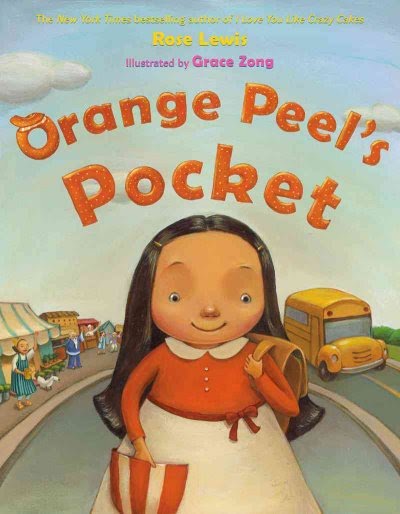
orange

Ms. Hong read us Orange Peel’s Pocket written by Rose Lewis and cheerfully illustrated by Grace Zong. Chang Ming goes in search of answers to the question – What is China like? by wandering into shops and businesses where she can learn more about her cultural heritage. Everyone slips something mysterious into her pocket (how fun to guess what each item might be when Ms. Hong read aloud!) – a poem, a peony, a recipe for noodle soup, etc. Now Orange Peel (Chang Ming) can share her heritage with her classmates.

A lovely end to our day. . . When we returned to class, Edwin shared a drum given to him by his grandfather and showed us a rattle carved from a special tree where eagles nested and gifted to him by his uncle. Sharing of his stories and culture – thank you Edwin!

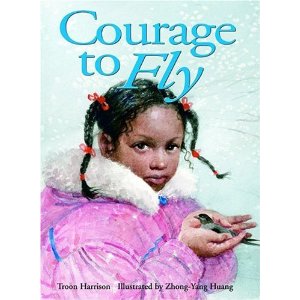
Courage to Fly

This week I read Troon Harrison’s picture book Courage to Fly to our Reading group. We continue to practice actively using the comprehension strategies we have been taught in Reading Power lessons: making connections, visualizing, asking questions and inferring while we listen to stories. Students loved this beautifully illustrated book (Zhong-Yang Huang is the illustrator) about Meg, an anxious and lonely little girl in a big city in a brand new country.

courage

Meg finds a tiny swallow that was brought down in a snowstorm. She nurses it back to health and then begins to wonder if she should set it free. She is reluctant to do so – but is encouraged to give the bird its chance to fly. Who really finds the courage to fly?  By the end of the book, we were convinced that Meg had been transformed by her experience and that after taking a risk to let the bird go free, could find the courage to open up her heart to new friendships.

Some thoughts from the students:

I think New York is not a great place for Meg (Ricky)

Why is Meg so shy? Is she lonely? Is she scared of the snow? (Truman)

I think the old man is also trying to tell Meg to find courage. (Jena)

I think the message of the book is to let things be free (Jenny)

Meg gets the courage to be free! (Josiah)

Birds and children must have been on my mind this week when I took my children to the public library – I found two more books involving a child and a hurt bird that needed to be cared for. So much learning happens from these experiences. Lovely stories that touch on the themes of hope, courage, relationships, perseverance, transformation, freedom . . .

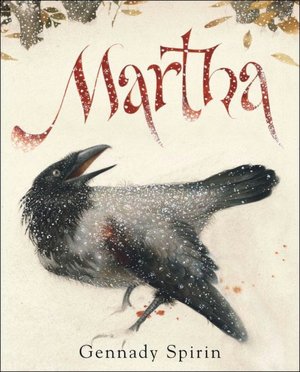
martha

Martha is Gennady Spirin’s story about his own son Ilya who discovered a crow with a broken wing. The veterinarian insisted the bird should be put to sleep as it would never fly. Ilya convinced his parents otherwise and the crow they named Martha made her home with the family. Eventually Martha surprised them all and flew again. Is she the bird that returns the next year and nests in their tree?

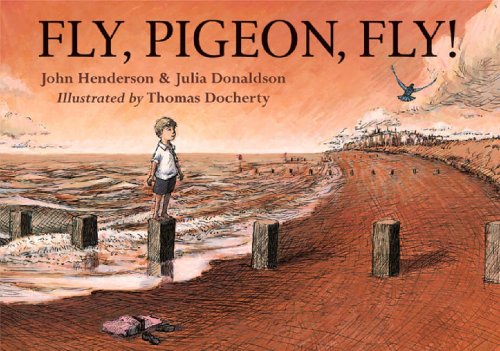
fly pigeon fly

Fly, Pigeon, Fly! is coauthored by John Henderson and Julia Donaldson and illustrated by Thomas Docherty. Set in Glasgow, this is the story of a young boy who discovers a half-starved pigeon in a run down warehouse and takes him home to care for him. The pigeon recovers but the boy cannot bear to set him free. The relationships between the boy and the bird and the boy and his Da are gently explored. In a lovely way, as the boy is able to let the pigeon go, his connection to his Da becomes stronger.

Canadian Railroad Trilogy

Our BLG reader Bill brought in an amazing book today!  Canadian Railroad Trilogy illustrated by award winning artist Ian Wallace is the illustrated version of Gordon Lightfoot’s song Canadian Railroad Trilogy. “We weren’t even born then!” the students exclaimed when told that this song was performed on New Years Day in 1967 in honour of Canada’s centennial.

CanadianRailroadTrilogy-cover-400

This is a physically heavy book – the song travels through each page of “striking, catch your breath, sigh” kind of art by Ian Wallace. It also contains the song lyrics, the music, the illustrator’s notes and a brief history of the Canadian Pacific Railway.

There was a time in this fair land when the railroad did not run . . .

Lightfoot wrote this classic song in just 3 days! Artist Ian Wallace took 21 months to complete the illustrations for this book and used a medium new to him – chalk pastels. We see the truly stunning Canadian landscapes and pictures of the many people involved in building the railroad.

But time has no beginnings and history has no bounds

Bill read us the story and then played us the song and flipped through the pages again following along.  The room was completely silent, all eyes on the book. A few little fingers skimming under the text. A magical few moments!  Thanks Bill for sharing this book with us today!

Our student reviewers report:

Ricky (who plays the piano :)): I like this book because the book is written by a special author – Gordon Lightfoot. He wrote a poem in the book and you can actually play it on the piano. The book has a piano song in it. The book also talks about the pictures of the book. That’s what I really like about the book.

Kevin: My favourite picture is page 21 and 22. I like that page because I like snow. It made me visualize me in the snow.

Jena: All the art in the book is too beautiful for me to choose which one is my favourite. Oh and one more thing to say: “I LOVE THIS BOOK!”

Edwin: The book was the calmest book I been read by a reader. It was special to me and the book had the beautiful pictures and the beautiful songs.

The Last Polar Bear

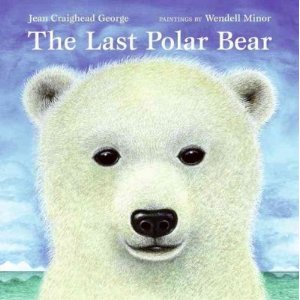
the last polar bear

Tigluk looks out his window and sees a polar bear in the distance. It is Nanuk. She looks straight at him and seems to speak to him “Follow me.” Tigluk and his grandmother paddle out in the ocean searching the ice floes for the bear. They discover, not Nanuk but her cub and Tigluk names him Pilluk (meaning to suvive). “With the melting of the ice, he is the last polar bear,” says Tigluk and cradles the bear in his arms.

This sad story by Jean Craighead George forces us to confront the serious issue of how climate change is affecting the polar bear habitat.

We used this powerful book to practice asking questions as we read and then looked at our questions critically – Did we find an answer in the text? By inferring, can we answer the question? Do we need to do more research? After discussing things, are we left with more questions?

Some of the questions we examined further:

How many bears are in the Arctic? Someone answered this quickly: “It was in the story: Just one left.” Then we talked further and realized we would have to do more research to find out the actual population. Questions were asked about whether polar bears are considered endangered?

If nobody found the polar bear, would he survive? Most people thought that we needed to do more research to answer questions like: How long do they nurse? What exactly do they need to survive? before we could infer because we don’t have enough background knowledge.

Why would the cub be all alone? To answer this question, we needed to use our own thinking and our background knowledge. Some students reminded us about what we had learned about polar bears in the book Winston of Churchill which was that polar bears could drown if the ice floes were too far apart. So we decided that maybe the mother had drowned while hunting for food because the ice was melting and she had too far to swim back to the ice floe where her cub was waiting.

Why did Nanuk choose a boy to look after her cub? For this question, we decided that we should infer. A suggestion was made that maybe Nanuk chose Tigluk because he was young and would have many years to care for the bear and maybe even help change things. Everyone thought that this made a lot of sense

Our questions and thoughts after discussing the book:

If there is only one bear, how will it mate? How will any more polar bears be born?

Is the world really getting too hot?

If the polar bear became used to humans and human food, could it ever go into the wild again?

How will the people in the village survive without polar bears? If other animals in the Arctic are also becoming endangered won’t this be hard on the people in the North who hunt them and use their furs and skins?

So much to wonder and think about from one very special book.


What is a real friend?

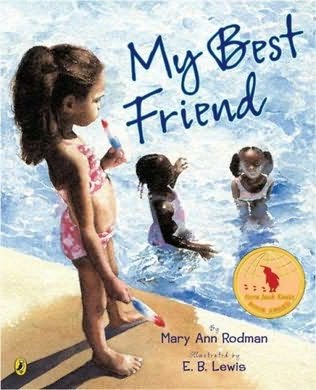
Today we read My Best Friend written by Mary Ann Rodman and illustrated by E. B. Lewis. What a fantastic friendship book!

my best friend

It is summertime and Wednesdays are spent at the pool. Lily has picked out her new best friend and it is Tamika. Tamika, though, already has a best friend and no matter what Lily does, Tamika is not impressed. Lily feels rejected and yet keeps trying to find something that will make Tamika take notice. Taunts by Tamika and her friend Shanice don’t seem to dissuade her from trying to get Tamika to like her best.

This book inspired us to ask: What really makes a friend?  Our discussion throughout the story centered on the choices we make when choosing friends. As soon as we looked at the cover, hands were up – making connections and predictions, sharing stories and asking questions.  The intensity of reactions lasted through each page and then everyone settled down with their Response and Ideas books and did some writing. As a teacher, I appreciated that this book allowed the children to come to their own conclusions. All of them deal with friendship issues daily and need chances to reflect on their choices and struggles. Students connected easily to the characters in this story and did some independent thinking on something that they regularly confront in their school and personal lives.

A sample of reactions:

Gary: Tamika was mean to Lily but not to Shanice.  When Shanice was away, Lily got to play with Tamika, but when Shanice was back, Tamika was mean again. When Lily learned to dive, Tamika wasn’t looking. Keesha was. Now Lily is Keesha’s best friend. A real friend doesn’t be mean or make fun of you.

Annie: A real friend is not insulting another person. Friendship is about giving compliments when someone does something. Don’t wear of do something just to make someone like you. Be friends with someone who is nice to you.

Jenny: A real friend would share with you, play with you and stand up for you. I think the message of the book is you can’t just pick a friend to be your friend without knowing them because they might be mean to you.

Jena: A real friend is somebody who likes you for who you are not somebody who uses you when they don’t have a friend. A real friend plays with you all of the time, not just sometimes. A real friend doesn’t stick their tongue out at you, they don’t ignore you and they don’t tell secrets behind your back. I think the message of this book is that friends are nice to you all the time and they like you for who you are.

Spooky suspense on Saturday afternoon

We did our weekly trip to the library and came back home with piles of books as usual.  Everyone is sick and wanting to be entertained so we pulled the blinds, turned on a little reading light and settled in with some scary books. All we needed was a tiny light in a dark room, a whisper voice used here and there, some well written suspense and dramatic illustrations and things got scary fast!

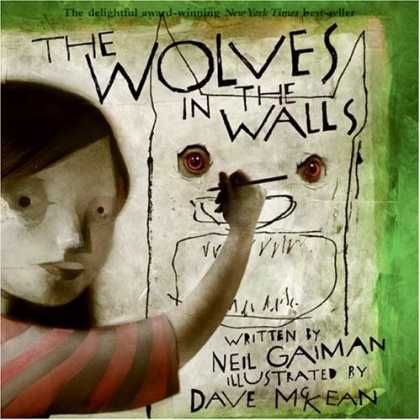
Wolves in the Walls

Neil Gaiman and illustrator Dave McKean teamed up again (they also brought us Coraline) to create this dramatic, quirky and quite scary tale.  Lucy heard noises . . . coming from inside the walls . . . and is sure there are wolves.

By the end of the book – some things change – Who lives where? Who scares who? Who is living in the walls now? It is quite the adventure to find out.

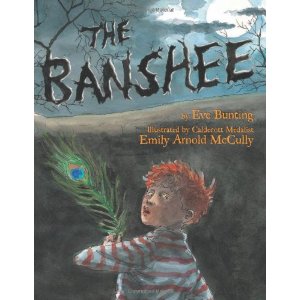
the banshee

Eve Bunting takes us on a “catch your breath, feel your heart beat faster” journey through the pages of The Banshee (spookily illustrated by Caldecott Medalist Emily Arnold McCully). What makes the “Scree  Scree” sound that wakes Terry in the middle of the night? Does he really have to go out into the garden to find out?

“I open the back door. The kitchen heat rushes out, and the night rushes in. I can’t go into that dark yard. Where she is. I can’t. I go.”

These two books allow us to explore some big questions in the minds of young readers:

What is it to be brave?

What is superstition? legend? folklore?

Do we believe what people tell us?

How do we confront our fears?

And the scariest one . . . “Is there really a . . . ?”

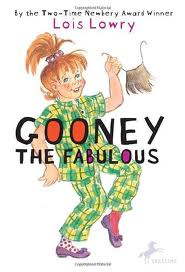
Gooney Bird Greene has plopped herself right smack in the middle of our read alouds!

We are currently reading Gooney Bird Greene by Newberry award winning author Lois Lowry. The class finds Gooney Bird hilarious with her story telling abilities and her penchant for being right smack in the middle of everything, she has become our newest favourite character!  This book is all about story telling – well the telling of absolutely true stories (as Gooney Bird so often clarifies). And we spend a lot of time laughing at the detail and drama in Gooney Bird’s stories as well as the funny reactions of her Grade 2 classmates at Watertower Elementary school.

Pick up this book to discover how Gooney Bird travelled on a flying carpet, how her cat was consumed by a cow, how she received her very unique name, etc.  I have the feeling we will be reading more Gooney Bird stories in the very near future!