Unknown's avatar

About carriegelson

Elementary teacher passionate about all things literacy.

Storm Boy

Ms. Hong (now at Strathcona Library) recommended this title when our reading group started reading Aboriginal Literature. Storm Boy by Paul Owen Lewis is a definite favourite that sparked lots of discussion, questions and great writing.

We loved how this book was so mysterious. We had as many questions at the end as we did throughout the pages, yet we seemed to know something more. Such a visually powerful book that has won many awards including Best Book of the Year from the Pacific Northwest Book Award. Storm Boy introduces us to the Killer Whale people who seem to inhabit an undersea world. This book follows the tradition of the people of the Pacific Northwest Coast (Haida, Tlingit and others). Stories from this area tell of individuals in parallel worlds where animals seem to live in human form.
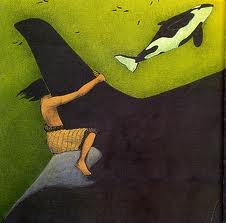
I provided some sentence starts to assist students in organizing their written responses. We had such a dramatic story to respond to!

  • I was impressed when . . .
  • I was shocked by . . .
  • I am still wondering . . .
  • It was incredible when . . .

Some excerpts from out written responses that needs to be shared:

Ricky: I was shocked when I saw the boy get carried by a storm. Then he was in a nation’s island. There were four killer whales. The chief one was big. They ate fish that weren’t cooked or cut. The killer whales could talk. Then the boy missed his original home. I was surprised because the killer whales knew that he missed his home.

Gary: I was impressed when he went on the whale to get back home and when he got back, his Mom said: “You’ve been gone a year!” Then they celebrated because of his return.

Catriona: I am still wondering if time goes slower in the Killer Whale people’s village.

Truman: I am wondering if the chief’s son can turn into an orca whale because he went to the orca people’s place
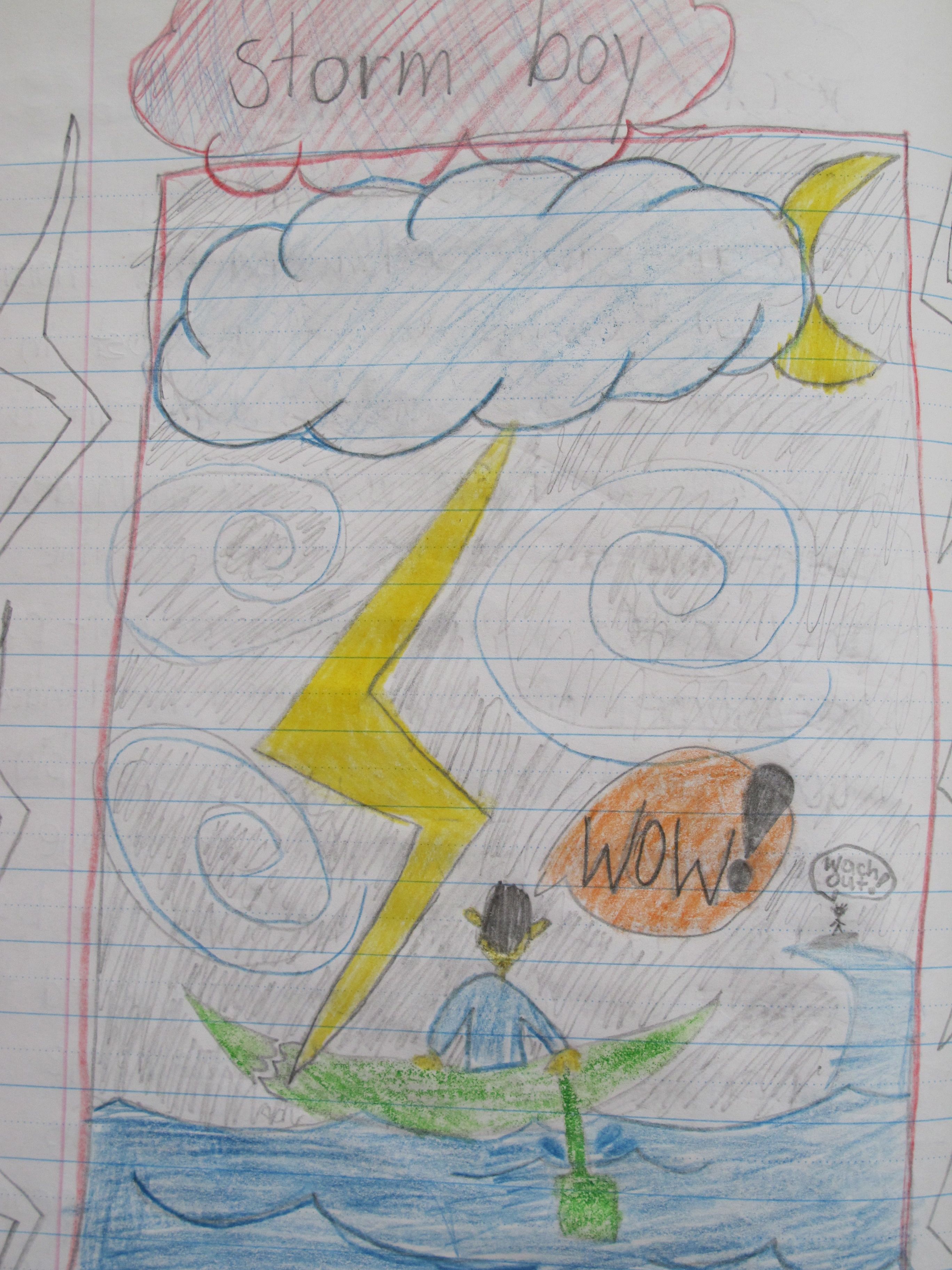
Storm Boy by Jenny

Jenny was inspired to draw this gorgeous picture.

She writes: “There was a boy that went fishing and then a storm came and hitted the boy and he got pushed away from his village. He landed in another village and he saw big people. They invited the boy and they danced around the fire and did their welcome song. Then the boy missed his mom and dad and the big people made the boy appear back in his village.”

Albert

Last night I read a really wonderful picture book to my children: Albert, written by Donna Jo Napoli (her first picture book after many award winning novels including one of my favourites The Prince of the Pond and illustrated by Jim La Marche.

Albert is an interesting man. Everyday, he eats his breakfast, reads the comics, gets dressed and thinks about going outside. Everyday, something convinces him it is not the day to venture out. It might be the damp weather. It might be the noises – the not good noises like arguing or rumbling garbage trucks. If we really want to call it, I think Albert experiences some quite serious anxiety about the outside world. Not an easy place to be.

The lovely thing about this book is that Napoli arranges the outside world to come to Albert.  In the form of a twig, that becomes a nest, that hosts little eggs and a perching cardinal all on his outstretched hand. For Albert, who finds the outside world too overwhelming, he is gently (but insistently) forced to get one foot firmly planted on the ground – in the form of a hand carefully suspended in the air. Albert keeps his hand with a bird’s nest on it stretched outside his window because . . .  how can he not? For days and days. Really! Of course my adult brain wonders how does he go to the bathroom? How does he not drop the nest when sleeping? How does he survive without food or drink? (This is addressed actually when father bird starts dropping berries in his mouth) My children though just got caught up in the magic of it. “He’s so kind!” my son exclaims. My daughter is a little worried. “Mama, Albert doesn’t have a job. How can he get money?”

In the end, the birds fly away and Albert who has been interacting (through the birds) with the outside world realizes that the world is a wonderful place – full of all kinds of noises and experiences. He puts on his hat and goes for a walk.

I asked: “What do you think the birds taught him?”

My daughter had lots to say: “Helping others helps youYou should go outside and fly your heart away!”

Yes, indeed.

Greetings from Nowhere

I love novels by Barbara O’Connor. How to Steal a Dog made my Top 10 Read Alouds list. And I am longing to read her newest: The Fantastic Secret of Owen Jester Now, that I’ve discovered her blog, I adore her all the more!

I picked up Greetings from Nowhere at the library the other day and read it in one luxurious sit down and read session.

Greetings from Nowhere

This book is about many things. Struggling parent/child relationships (Kirby and his Mom & Willow and her Dad) Moving on and letting go (Willow, Aggie, Clyde) Yearning for loved ones away or never really known (Willow’s Mom, Loretta’s Other Mother) Change (new homes, new schools, new lives) Memories. Love. So many things in such a well told story.

For me, what this book was about was something more – something related to the spilling your secrets to a stranger on the plane syndrome and then feeling in a tiny cramped space above the clouds like you have found a new friend. This book is all about how we are always collecting friendships. That a shared history is not necessary when things in common will do. Things like hard times, pinned hope, worry . . . The sharing of stories and the working towards one goal (fixing up the motel) forms new bonds and a connectedness that forms quick and solid.

I love the significance of the Great Smoky Mountains in this story. Many things can be lost and found, packed and revisited but these mountains are a constant. I also love Willow’s thinking on page 189 – how she gets to the place of knowing how to ask her Dad if Aggie can stay. So much love in the last bit of her plea “And Harold is in the tomato garden!”

Yes, this book is a work of fiction for children. And yes, I can’t wait to read this to a class of students but this book can have such a wide audience. My Mom would love this book. Because the friendships span generations, it is widely appealing.

Friends are where you find them and family is how you make it. Thank you Barbara O’Connor for delivering us this message in such a lovely book.

A week of reading

It’s nice to live in a house full of avid readers. All of this time off at Spring Break has provided lots of time to get lost in a book or two (or three. . .)

What have we read so far?

My daughter’s list:

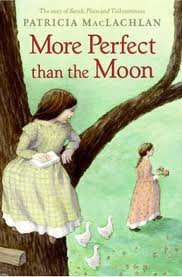
1. More Perfect than the Moon by Patricia MacLachlan

This is the fourth book in the Sarah Plain and Tall series. (Sarah Plain and Tall, Skylark, Caleb’s Story) In this story, Cassie, Sarah’s youngest child journals her feelings about her mother’s pregnancy. All four books were a gift at Christmas.

2. Dragon’s Slippers by Jessica Day George

This is the first book in a trilogy by Jessica Day George. Creel’s aunt plans to sacrifice her to a dragon. Creel takes her rescue into her own hands and walks into the King’s City ready to find her fortune. A pair of blue slippers that she wins in a bargain with a dragon hold more mystery and power than she could possibly realize. Not in any way a damsel in distress story!

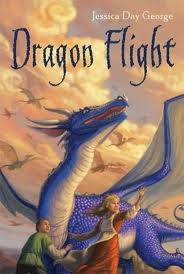
3. Dragon Flight by Jessica Day George

The Dragon Wars are now over. Settled into her life as a seamstress, Creel is finding life a little bit dull. When Prince Luka sends word of dragons being trained for an invasion, Creel is ready for another adventure! This means reuniting with her dragon friends and leading them into battle. A wonderful fantasy series full of suspense and adventure. The third book in this trilogy is Dragon Spear.

My son’s list

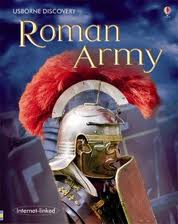
1. The Roman Army (an Usborne Discovery Book)

We have some obsession with Romans and battle in our house (just my son actually, but he is intrigued enough for all four of us!) This book has internet links to various websites on each page. All of the Roman heroes and leaders. Diagrams of battle plans, explanations of soldier life and training, siege tactics and much more. The perfect book to get lost in.

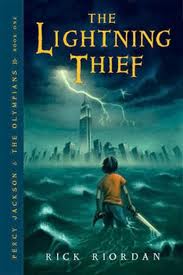
2. The Lightning Thief by Rick Riordan

The first book in the Percy Jackson & the Olympians series. Percy Jackson thinks he is just a boy. A boy who mixes up letters and can stay underwater for an unusually long time. A boy who always seems to find trouble and if not, it finds him. But still just a boy. But when Percy gets sent to Camp Half-Blood, he discovers that he is much more than an ordinary boy. Zeus (yes, that Zeus) is convinced that Percy has stolen his lightning bolt and he only has ten days to make things right. A wonderful merging of modern day and Greek mythology. My son didn’t come up for air.

3. The Sea of Monsters by Rick Riordan

Book 2 in the Percy Jackson & the Olympians series. The magical borders that protect the special camp for the demi-gods have been poisoned.  In order to save Camp Half-Blood, Percy and his friends must retrieve the Golden Fleece from the Sea of Monsters. Rick Riordan has much more adventure awaiting readers who love this series. This series is being quickly devoured in our house.

Last Night’s Story

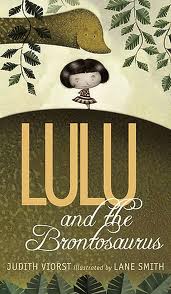
You know a book is an ideal read aloud when the reactions to it are as amusing as the story itself. Last night I read my children (8 years old x 2) Lulu and the Brontosaurus written by Judith Viorst and illustrated by Lane Smith. They easily could have read this book themselves but this book shines as a shared read aloud experience.

Judith Viorst writes books where characters have a very appealing voice – connectable, frank, amusing. In this book, it is not the main character Lulu that has the powerful voice (although her screeches are pretty loud) but rather the narrator, Viorst herself. As author of the book, she has taken certain liberties – yes, she knows that Lulu, a human girl couldn’t possibly go out into the forest to find a dinosaur (especially a brontosaurus that technically didn’t even ever exist as it has been renamed the apatosarus) but this is her story, so that’s just how it is going to be. Lulu decides that she wants a brontosaurus and when her parents refuse to give in (a rarity in and of itself) to her tantrums and pleas, she marches into the forest, with her small suitcase to find one herself.

Accompanying her are her Don’t mess with me attitude and her theme song:

I’m gonna, I’m gonna, I’m gonna, gonna get A bronto-bronto-bronto Brontosaurua for a pet. I’m gonna, I’m gonna, I’m gonna, gonna get A bronto-bronto-bronto Brontosaurua for a pet.

I got it! A brontosaurus!

Lulu faces down huge snakes, ferocious tigers and grumpy bears. She is a girl on a mission. She is going to find a brontosaurus. She trudges on, frequently singing her song until sleep overtakes her. After hearing this song about three times, my children leaped out of bed, grabbed board games off the shelf as make shift suitcases and marched around the room chanting “I’m gonna, I’m gonna, I’m gonna, gonna get A bronto-bronto-bronto Brontosaurua for a pet. . . ” Maybe not the best book to be reading before bed? More inspiring than calming!

When Lulu awakes, it is to a tree trunk with toes. A brontosaurus! The answer to her dreams. But it turns out, actually not! This brontosaurus is not going to take no for an answer to his dream – He wants Lulu for his pet! Pages and pages pass. He is not changing his mind. Lulu has no choice – she runs away! She makes her way back through the forest, encountering those very same creatures she challenged along the way. Something in Lulu seems to have changed. She has new strategies. Gift giving. Complimenting. Saying please! Lulu?! I won’t give any more of the story away. It’s hard to tell it to its end anyway because there are actually three endings to choose from. Depending on your style and your story ending needs. (We were unanimous – ending three got our vote) Very considerate of Ms. Viorst!

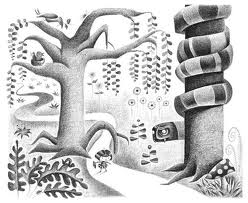
Lulu encountered a snake

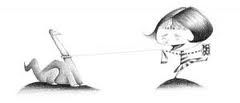
Lane Smith, is the author/illustrator or illustrator of many books. His art is unique. Quirky. Odd. Eerie. Hilarious. In this book, the drawings are done in pencil on pastel paper. Amazing shading. So much mood conveyed without a hint of colour. We loved Lulu in her stripy dress, her persnickety pout, her sleek little bob. . . This book is a visual treat, strangely shaped – long and narrow and polka dotted new chapter pages. Never too much text on a page. A book you want to own. And treasure.

When the book ended (at 113 pages, we were able to finish it in one sitting) My children were completely energized! “Awesome,” cried my daughter. “That book was all about friendship, good manners and how you don’t always get what you want.” “And Foo on you! ” squealed my son. (You will have to read the book to find out why this is absolutely hilarious to an eight year old!)

Love this book! Reading books by Judith Viorst is always a delightful experience.

Five Fantastic Fictional (mostly) Frogs

Lately I’ve had quite the thing for fictional frogs – not the frogs who turn into princes or have just been princes, although those guys are pretty great too.  But no, a thing for the hoppy, happy, stretchy, leapy unpredictable green frogs that make the books they jump into particularly delightful.

My top 5: Books about frogs

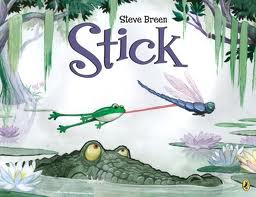
1. Stick by Steve Breen

I just found this book at my local library. Stick is Steve Breen’s first picture book (but his talent for words and visual images has not been missed – he won the Pulitzer Prize for his editorial cartoons twice!) How far can one little frog travel? And how? Find out what happens when little Stick happens to get his long tongue stuck to a dragonfly. Up, up and away . . . Silly, delightfully preposterous and gorgeous bird’s (in this case frog!) eye view of town, city and swamp.

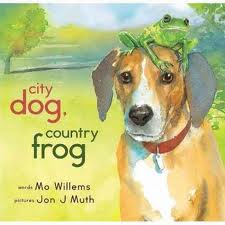
2. City Dog, Country Frog written by Mo Willems and illustrated by Jon J Muth

I kept eyeing this book at the library, noticing names Mo Willems and John J Muth and thinking to myself, “I have got to read this book.” Something about the cover picture spoke dog to me and I kept missing the frog, even when I eyed the title I saw dog instead of frog. Finally, I looked a little closer and spotted the frog so perfectly plopped on the dog’s head and I pulled the book off the shelf.  How could I have missed this? I was missing so much! Inside illustrations are mellow, gentle and ahh, what greens. Together with Willems’ simple text, pictures and words tell the tender story of  friendship, the passage of time, young curiousity and calm wisdom. To make up for the months I haven’t been reading this book, I need to read it over and over and over again.

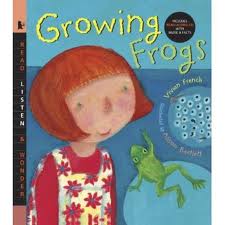
3. Growing Frogs written by Vivian French and illustrated by Alison Bartlett

Such an amazing book to teach about how frogs grow from tadpoles and how exciting this change can be to watch. I call a book like this an “information storybook” – a definite fictional story yet so much factual information it bridges into the non-fiction category. A little girl and her Mom collect frog spawn from the pond and carefully tend to the tadpoles, then frogs who grow. This book took me right back to my eight year old self and my ice cream bucket full of pond water and tadpoles. How I loved it and how sad I was to return my little frogs to their pond again. I love that French points out how carefully you must care for your growing frogs – always using pond water, changing it regularly etc. Allowing children to have important nature experiences respectfully.

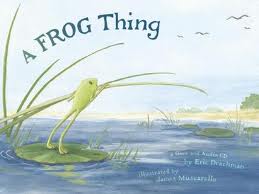
4. A Frog Thing written by Eric Drachman and illustrated by James Muscarello

frog thingI have a real soft spot for Frankie the frog in this story. Told by his parents that he can do anything, he sets his mind to flying. Ahem, darling, “that’s a bird thing” explain his parents. He does try very hard to soar through the air but to no avail. One day he sees a baby bird fall helplessly into the pond and swims to its rescue. The grateful mother demands – “How can I repay you?” Well . . . We soon see Freddy flying through the air clutching a twig held by two birds. Finally flying! Exciting, yes. But Freddy realizes that doing the frog thing will suffice for him after all. Beautifully illustrated. A wonderful read aloud to share.

5. Fine As We Are by Algy Craig Hall

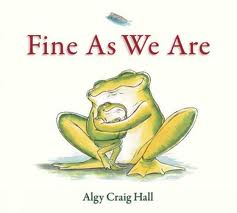
Wow, is it great to be a little frog. Having Mama frog all to yourself. Sigh. . . happiness. So what are all of these black spotted blogs in the water? Why do they have tails? Now legs? Oh my! Little frogs. All belonging to Mama. Life with many new siblings is quite the adjustment for our little frog. Annoying at first – how much leaping and tumbling about can these little frogs do? But then, oddly “just right.” The perfect book to explore how life changes when a new sibling (or siblings) arrives.

Jealousy is just a stage, right?

Hop through some frog books this Spring!


Why do you think you should never smile at a monkey?

Wow, did we enjoy interacting with Never Smile at a Monkey (*and 17 other Important Things to Remember) by Steve Jenkins.

never smile at a monkey

We used this book to practice questioning, predicting and inferring – when you encounter some of these creatures, what should you not do? And why exactly?

Jenkins explains that certain large creatures are “well known threats” – of course we aren’t going to get too close to tigers or crocodiles. Sharp teeth. No thanks! We also know to avoid “rattle snakes, black widow spiders, and piranhas” Their danger is well known. But what about the creatures we don’t know so much about. Creatures with “teeth, claws, spines and venom that can be deadly” That’s what this book is all about. A very clever idea brought to us with a combination of Jenkins’ gorgeous torn paper collage animals and just enough text to teach us new information related to this theme.

Jenkins organizes this book with a picture of a creature on each page or 2 page spread, Accompanying this is a Never . . . . warning in larger text and then an explanation of why. At the back of the book, more information is provided about each creature as well as a list of books for further reading. In the example here, we are warned to never collect a cone shell. Why not? Yikes. Well, a cone shell has poisoned barbs that it uses when hunting. They can be launched like harpoons. Potentially deadly if they stab you. Makes one think twice about collecting shells!

How did we use this book in the classroom?

Students brought notepads and pencils to the carpet to listen to the story. I would show them a picture and read the Never . . . warning without showing them the rest of the text. Students then wrote their prediction/inference about why we should never . . . We shared a few out loud and then I read the explanation provided in the book.

Some very funny conversation happened. Amazing predictions. Lots of arguing! “Not everything has venom you know!” “How could it bite you, it doesn’t even have teeth?” “What are you talking about? Be more specific!” My favourite line: “Ms Gelson I’m using my schema!”

So  . . . want to learn something new?

Why should you never smile at a monkey?

Our predictions:

  • it might scratch you when it gets excited
  • it will get really mad
  • it will yell at you and bite you with its sharp teeth
  • it will get loud, jump up and bite you

And the real reason. . .

“If you smile at a rhesus monkey it may interpret your show of teeth as an aggressive gesture and respond violently.”

Why should you never jostle a jellyfish?

Our predictions:

  • it can release venom that can kill you
  • it might shock you
  • it might pop
  • it will start to vibrate and kill you

And the real reason. . .

A box jelly fish is in a class by itself . . . even the smallest contact with its stinging tentacles causes intense pain . . . you can die very quickly.”

Later, students chose one creature, wrote their prediction and the real explanation and included a picture. Sometimes our thinking was very close – other times, not a bit. Which was great – real learning happened! We also liked celebrating when we did have background knowledge about a particular creature and could make an inference that made a lot of sense. At one point, as I was reading a little voice piped up. “This is so fun!

Love, love, love Steve Jenkins’ books! His website includes an interesting explanation of how he makes his books.

What a beautiful world!

Spring! Finally! In Vancouver, spring sunshine is often chased away by rain showers so all the more reason to delve into books which help transport us into nature and wonder with just a flip of a page, a beautiful illustration or a perfect written image. We found three perfect books which do just this on our library visit Saturday.

alltheworldcover-1-13

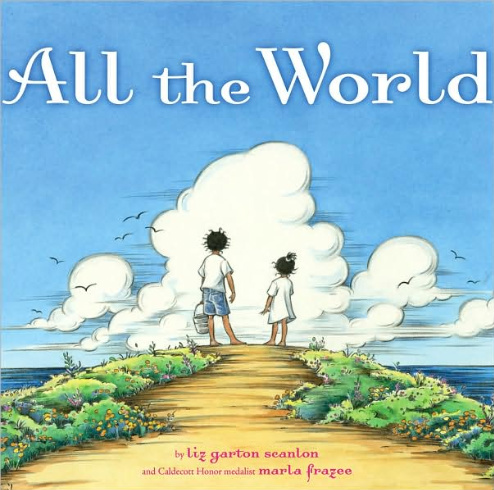
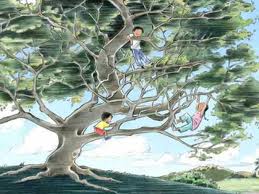
I adore this book. All the World is a Caldecott Honour Book illustrated by Marla Frazee and written by Liz Garton Scanton. Simple rhyming text pays tribute to the small simple things our world has to offer like a tomato blossom or a fire to take away a chill. But it also celebrates through Frazee’s absolutely gorgeous illustrations, the majestic purply sky at the edge of the ocean or a thunderous downpour that comes out of nowhere. The images are comforting, saturated with details and evoke our own memories attached to the experiences suggested by each picture. These pictures are so easy to connect to, I felt like I had taken a journey through some of my own most happiest of memories. Climbing a tree in childhood. Visiting a farmer’s market and eating plump berries with my children. Racing through a rainstorm on a summer’s day in search of shelter.

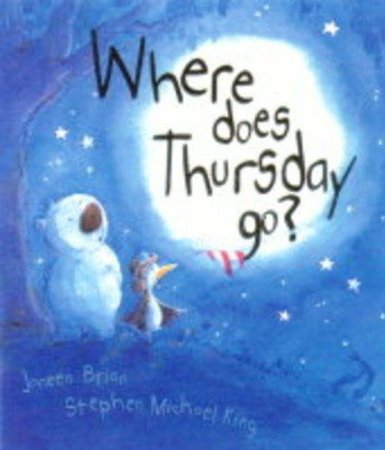
Janeen Brian and Stephen Michael King, the author and illustrator of Where does Thursday go? have created a lovely little tale of wonder and whimsy. An important question is posed, if Friday is coming, where does Thursday go? What happens to it during the night?

Where Thursday

Bruno doesn’t want his wonderful birthday day to end. He wants to say goodbye to it. He finds his friend Bert and they traipse through a blue star filled night looking for Thursday to say goodbye. When the moon rises up big, round and bright like Bruno’s birthday balloons, the two friends feel like they have found Thursday. They creep back into bed until the sun brings Friday. Sweet, illustrations on blue filled pages. Lovely. I especially like the image of the two friends on the beach at the edge of the sea where ocean and sky meet in swirly blues and whites.

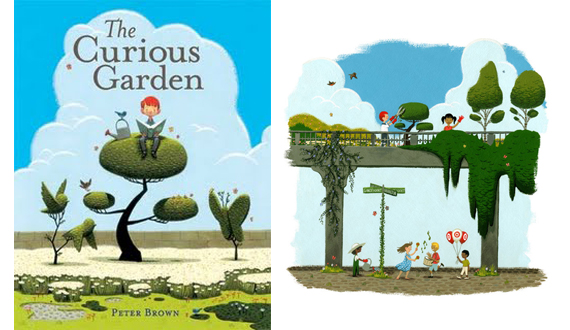
the_curious_gardenThis book appeals to the urgency I feel when spring flowers begin poking through the earth. Tend. Nurture. Clip back. Transplant. Compost. Appreciate. Wow, can I connect to the main character in this story who nurtures a struggling garden into a majestic green world.  Liam, the little boy in Peter Brown‘s The Curious Garden resides in a dreary city where everyone stays inside. Not Liam. On one of his rainy day walks he finds a few wildflowers and tiny plants on some abandoned railroad tracks. He cares for this garden over several seasons – appreciating its natural tendencies to spread and travel and helping it along a bit too (hooray for guerilla gardening). Years later he can appreciate an entire green city, tended by a multitude of gardeners.

Peter Brown includes an author’s note at the end of the story which explains his inspiration for the book.

Escape into Spring with a poking about walk to the library and discover all the places you can find signs of Spring.

Emily’s Art

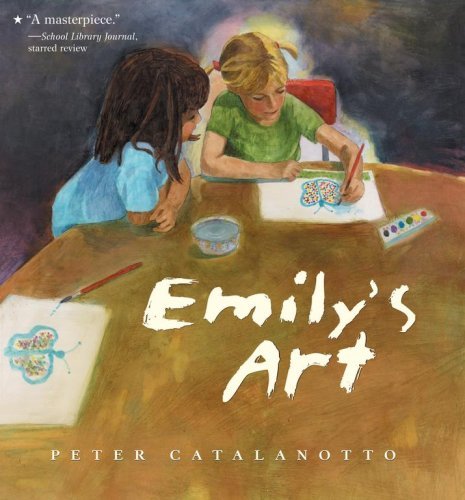
What a powerful book to read to children! I first read Emily’s Art written and illustrated by Peter Catalanotto with my daughter and she burst into tears part way through. We talked for a long time about the story events and how different characters acted and felt. I knew this was an important book to share in the classroom and the resulting discussion confirmed this and then some.

This book begins with a sneak peak into Emily’s classroom. Ms. Fair is explaining to the students about an upcoming art contest where a judge will decide the winner. Catalanotto does a fantastic job of portraying the open, honest and sometimes impulsive comments made by students in a class discussion. Students ask questions about the judge, winning and losing and how exactly things are decided. From Emily: “Does the judge know which is better?”

The story then skips ahead to the days leading up to the contest. Everyday students get painting time. We watch Emily painting and fielding questions about her pictures. Looking at her picture of her family having breakfast (where we see a mother cooking, eating, packing lunches and changing a lightbulb), Stephen asks, “Why do you have four mothers?” Emily explains that there is only one, “She’s just very busy.” Everyday Emily paints a different picture. Her best friend Kelly paints a butterfly day after day.

The night before the contest, Emily cannot settle. She has questions for her mother about which is best and all night she worries about what might be better. Winter or summer? Pink or purple? The sun or the moon? My students were reminded of other stories with characters being unable to sleep because of worries. “That’s like Wemberly Worried!” “Howard B. Wigglebottom!” “Seymour Slug Starts School!” We sure connect to those sleepless worrying nights!

At the contest, the judge is overwhelmed by Emily’s art: “What a gorgeous painting. What a beautiful rabbit!” When Ms. Fair explains that the picture is actually of a dog, everything changes. “A DOG??!!” screeched the Judge.”I was attacked by a dog once! I hate dogs.” She turns and awards the blue ribbon to Kelly’s butterfly.

“I love butterflies,” she announced.

Emily’s heart twisted. My class was irate! And deeply impacted.

Jena: “That judge is judging her painting by what she thinks about dogs.”

Alyson: “Maybe she shouldn’t be a judge! What does she know?”

Emily took her painting down and vowed to never paint again. Miami, now in Grade 3 shared a memory from kindergarten: “At my old school, my teacher was mean to me. She said “What is that?” when she looked at my picture. “You can draw better than that. I know you can.” I always felt sad when I was at home.”

Emily ends up going to the nurse’s room, needing to mend her broken heart. She falls asleep and when she wakes, Kelly is on the cot beside her.

I ask the students why Kelly might be there?

Scott: “She is so sad for Emily.”

Alyson: “She feels sad that Emily didn’t win. She would have won if the teacher hadn’t said it was a dog.”

Hajhare: “Kelly’s heart feels sad because she thinks that Emily must hate her.”

“Wow” Kelly whispered. “You’re a good artist.”

The girls begin talking and Kelly shares that she doesn’t know how to draw anything but butterflies. Because she won, everyone expects more of her. Can Emily show her how to draw a dinosaur? The girls feel better and head back to the classroom where they are having an art party to celebrate all of the wonderful work!

Kevin: “It’s a happy ending. But the middle was the sad part.”

Miami: “I’m connecting. Lots of movies have sad middles but then, happy endings.” The class agreed.

More reactions:

  • “She should know her own opinion of her drawing so she won’t be sad. Like positive thinking.” (Lisa)
  • “Don’t always agree with other opinions.” (Annie)
  • “It is emotional, because if you think of a time like that – like getting rejected, you connect to the sadness of it.” (Alyson)

We talked about how strong words can be.

  • “What the judge said was mean.” (Kevin)
  • “People should think before they speak” (Alyson)
  • “Words can be really strong- something mean said can make you feel like a punch in the stomach.” (Jena)
  • “Punches can hurt outside, but words hurt inside.” (Kevin)
  • “That’s clever Kevin.” (Hajhare)

For more ideas of how this book might be used in the classroom, check out these questions from Philosophy for Children. I just discovered this website and will certainly be revisiting it!

Fairy tales, Anthony Browne style

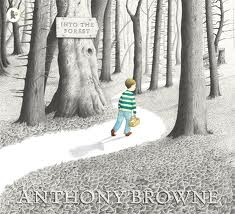
Recently I read our class Into the Forest by award winning author/illustrator Anthony Browne.

into the forest

A boy is awakened by a terrible sound and so some upsetting days begin. Dad is missing from the breakfast table, Grandma is sick and he must take a cake to her. “Don’t go into the forest,” his mother warns. But anxious not to miss his father’s return, the boy decides to take a shortcut through the forest and his strange adventures begin. We certainly connected to the anxiety and suspense along the way to Grandmother’s house. The students expressed feeling worried. Someone said that his tummy felt weird. There was a lot of gasping and held breath. Such suspense. As we came across oddly familiar fairy tale characters, students were eager to shout out their connections. “That must be Goldilocks!”, “That’s not that candy one where the witch takes them is it? It is?!” One student described the feeling the book gave her as a “tingling in your brain” because it seemed like we knew the story but we kept worrying about what might happen. Finally, all is well. Our happy ending finds Dad and a recovered Grandma and boy and father return home to Mom.

Watching the students connect, predict and infer, I was reminded about how important it is to develop rich story schema with our students. They need to know their fairy tales, fables, favourite rhymes and be exposed to literature from a variety of genres. When they bring this rich experience to “new to them” books, they are able to interact with the book on a much deeper level as they pick up on nuances, allusions and references to other stories. As parents and teachers, we must read, read read and then read some more!

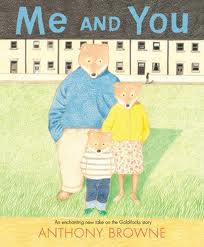
A few days later, I found another (new to me) Anthony Browne book at the public library – also giving a new twist to a well known fairy tale, Goldilocks and the Three Bears. Me and You does an amazing job of telling simultaneous stories, letting us into the world of Goldilocks while at the same time we revisit the familiar story about the bears.

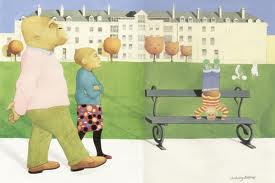
As we flip through this book, we find two stories. On the left, sepia images of the little girl, out on an errand with Mom and then suddenly, lost.

Her story is wordless, told just through the images. Lost. Afraid. Alone. Finding a cozy home, a snack, a warm bed. Being discovered and racing away. Walking through rain, empty streets and then finally, into the arms of a searching Mom.

On the right, we follow little bear and his Mummy and Daddy as they head out for a walk and then return home to find a stranger in their home. A version of the Goldilocks story that we are very familiar with. Full of comforting colours. Lots of happy yellow, soothing blues, calm greens. I love the last line of the book. Little bear looks out of his window, thinking about the girl. “I wonder what happened to her.” This story definitely blurs the absolutes of fairy tale right and wrong and introduces a lovely element of empathy.

I am a big, big fan of Anthony Browne!