Unknown's avatar

About carriegelson

Elementary teacher passionate about all things literacy.

Celebration: Different Days

celebrate link up

Celebration honoured. This is the loveliest of reasons to share. Join Ruth Ayres who shares a Celebration Link up on her blog each week.

This week I am celebrating different days. Each day this week had something out of the ordinary and it made for quite a lovely week with lots to be grateful for each day. Change brings new perspectives and insights. For this, I am grateful.

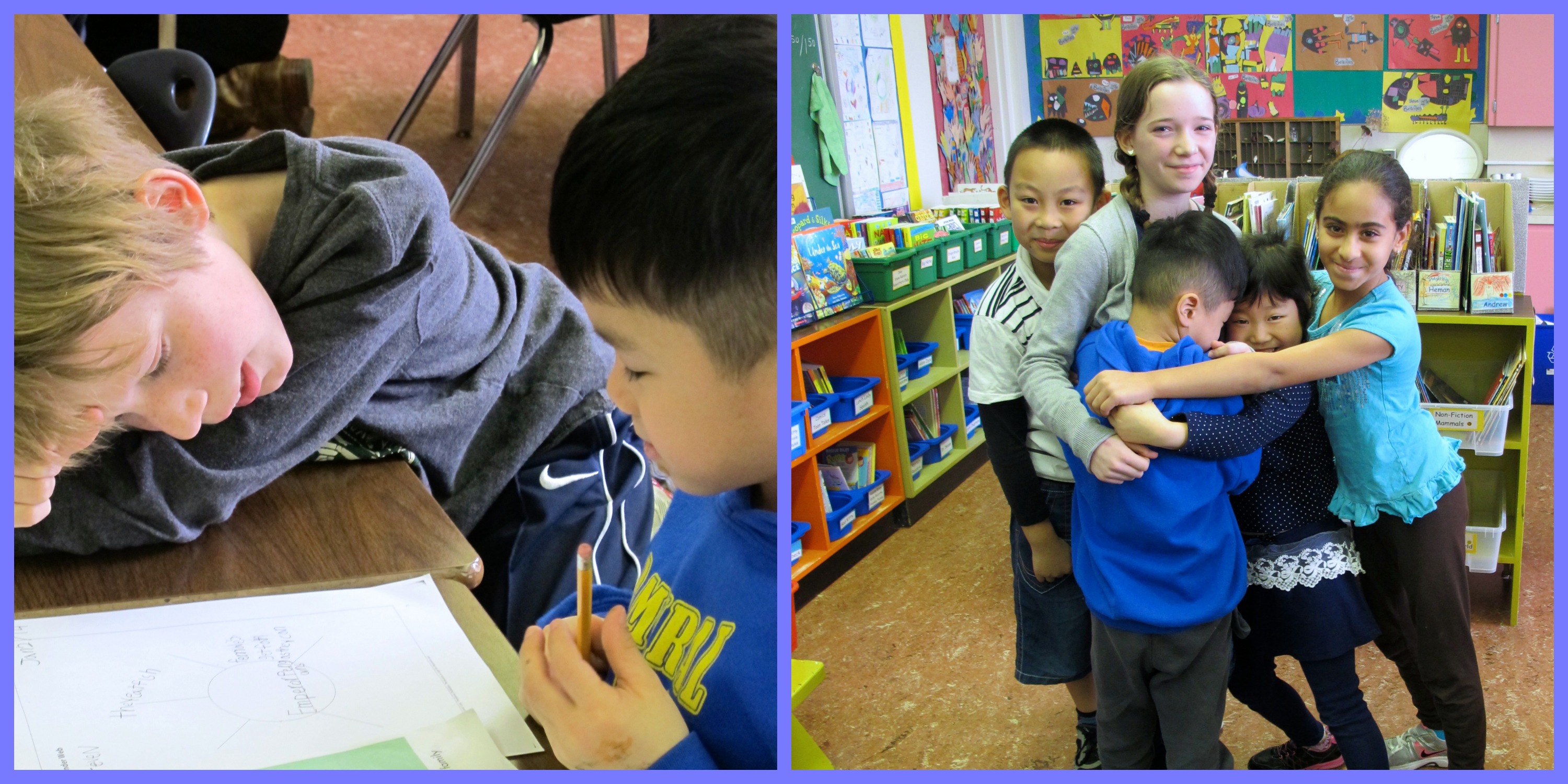
On Monday, which just so happened to be Family Literacy Day, my children came to school with me. They had a Professional Day at their school and wanted to come hang out in my classroom. They were involved in lots of literacy activities and did a wonderful job supporting and connecting with my students.
 Celebration: Different Days There's a Book for That

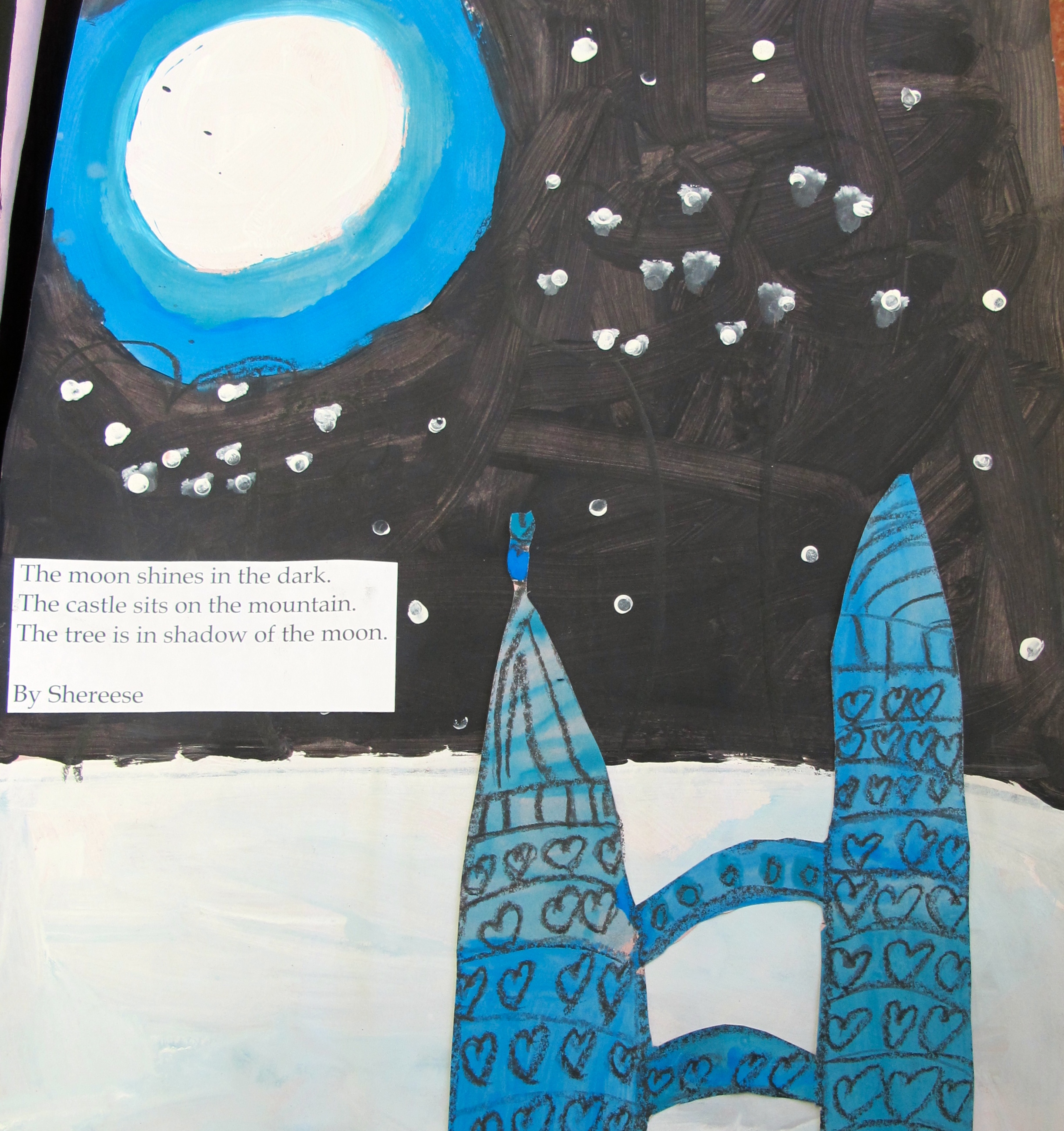
Tuesday afternoon is typically quite busy in my classroom. This week, we worked on having a very calm p.m. We finished art/writing projects and everyone felt very proud about getting all of our art up on the walls. A sample of student art work – gorgeous winter castles.
 Celebration: Different Days There's a Book for That

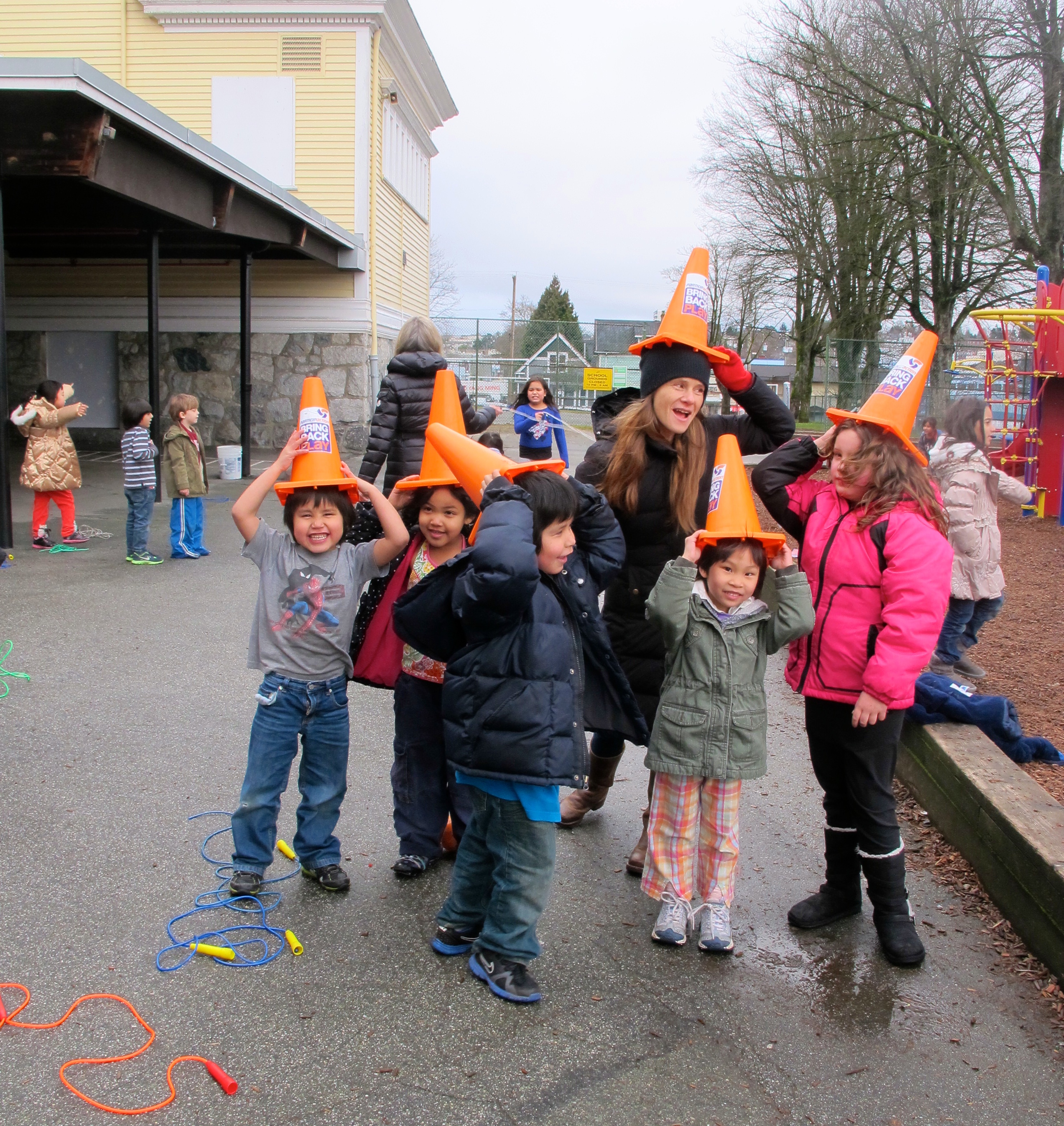
On Wednesday, we celebrated outside winter play with the FunMobile sponsored by Participaction.

What fun my class had playing outside with our little buddies from Mr. Blanchard’s K/1 class. Lots of activity, much laughter and some creativity with cones . . .
 Celebration: Different Days There's a Book for That

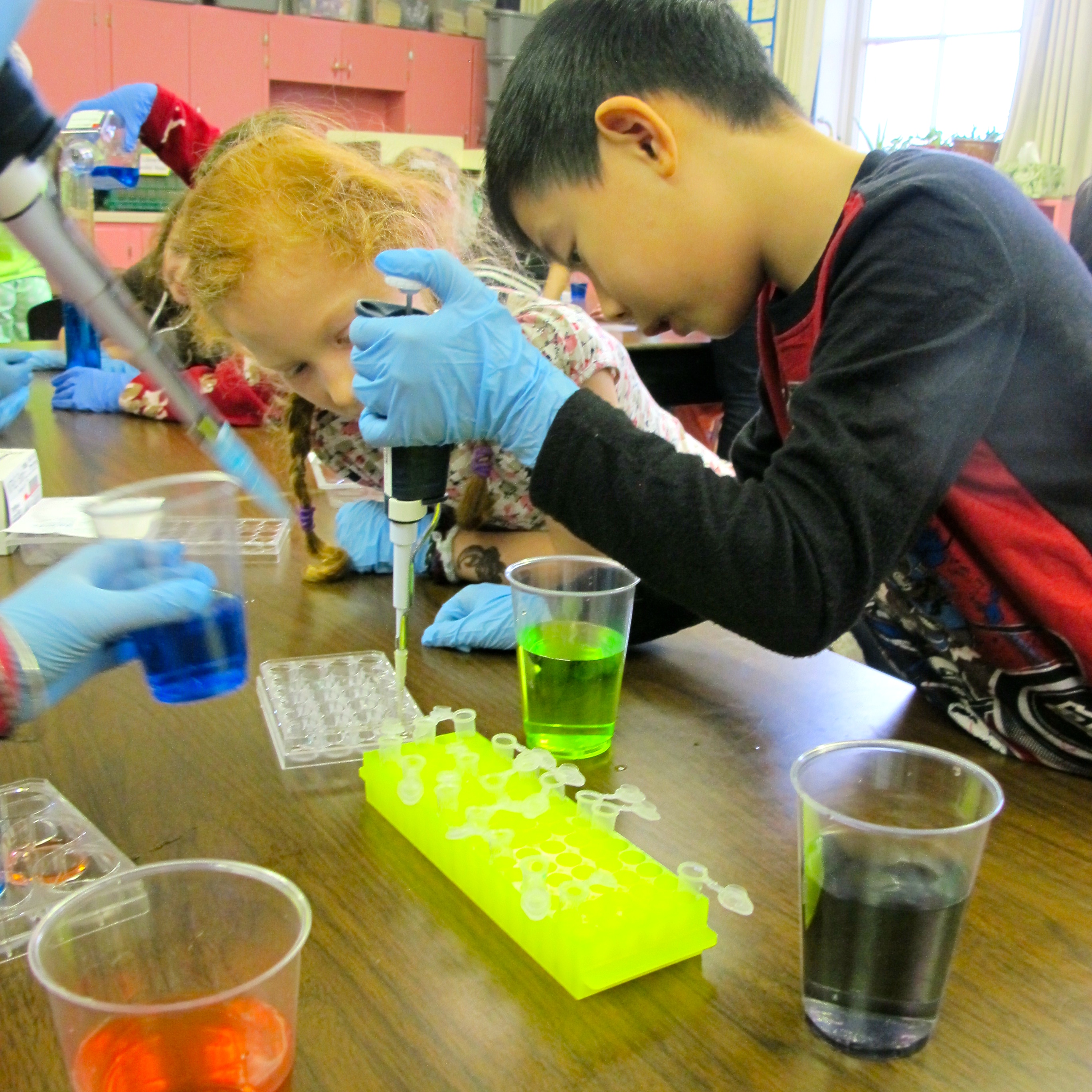
On Thursday we celebrated science with Lisa and Nelly, our amazing volunteer scientists from the Let’s Talk Science Program. Students learned how to use different equipment to measure liquids. Celebration: Different Days There's a Book for That
On Friday I had the opportunity to celebrate my own learning with an amazing Professional Development Day. Pat Johnson and Katie Keier authors of Catching Readers Before They Fall were in Vancouver for a full day of presentations and discussions.
catching readers

I could write a LOT about things I took away from this session but I am going to try and limit it to my top ten takeaway comments/ideas/questions/inspirations. Note – these come from sessions with both Pat and Katie.

1. If a child is struggling with a word when reading, don’t help by prompting with the same strategy – use a different one. (i.e. if child is sounding out and not getting word, don’t say “try the other vowel sound” – instead, use a meaning or syntax prompt)

2. Be careful about our language – not “This is what good readers do” but instead ” Readers . . . ” when we talk about the habits/strategies of readers.

3. Our assessment should focus on what it is the child does when stuck. What strategies does he/she have? Which does he/she need to learn?

4. Use Reader’s Statements with your students to communicate what readers do. For example: Readers think about what they read or listen to or Readers make sure what they read makes sense I am already thinking about what statements I want to highlight with my students and where to post these in the room. 

5. Think about the difference between heavy handed strategy teaching and “spotlighting” certain strategies. Integrate strategies because all readers need all of them. There shouldn’t be a continuum where certain comprehension strategies are taught at certain grades.

6. Don’t skip/rush the shared demonstrations. Children need the “do it with me” time. Some need more practice and explicit support linking back to these lessons as they are developing independence with the strategies.

7. The children who struggle (who don’t have a reading processing system happening) do not realize that other readers have all of these things going on while they read – make thinking explicit in modelled read alouds

8. Really think about what fluency means. It is not just speed and accuracy. It is also phrasing, flow, punctuation, expression, etc. Use text to show how punctuation “tells us how to read it”  in shared demonstrations to talk about fluency.

9. Effective literacy programs are anchored in best practices but responsive to today’s world. Think about  purposes for reading/writing when thinking about using new technologies i.e. blogging and sharing with school community, wider world, responding to comments, etc

10. When thinking about having children use technologies – think about a shift from children thinking about technology as a toy to using it as a tool. Is what we are teaching helping our students become literate? Help them be creators/producers and not just consumers.

I also loved that in Pat’s a.m. session she referred to one of my favourite blog posts on the Catching Readers blog: Signal Words This is a great post full of ideas about how to assist students learn how to read nonfiction texts.

Wishing everyone a wonderful week!
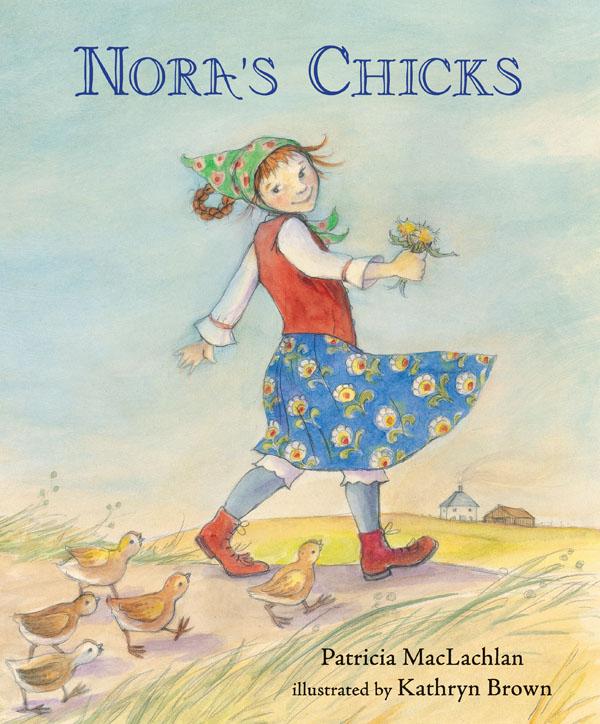
Nora’s Chicks

Our BLG book this week was Nora’s Chicks written by Patricia MacLachlan and illustrated by Kathryn Brown.

Nora's Chicks There's  a Book for That

What a wonderfully lovely title that could be used to talk about what it is like to move somewhere new, away from friends, family and country. Little Nora moves with her family to the prairies from Russia. Nothing looks or feels the same and she is desperately lonely. Some little chicks and two geese become her adopted companions and lead her to both friendship and joy. A wonderful historical fiction selection.

I loved how one of my little Junior Book Club members made a connection to Charlotte’s Web (our current novel). When Nora got some chicks that were all her own, she cried out, “That’s just like Fern – she got a little pig for all her own.”

Thanks to Magnus for sharing this title with us!

Student reviewers respond:

Hyo Min rates this book 10/5 and writes: How many chicks are there? Is it bright at a farm? Is a farm in Canada or not? There is a lot of weeds. Me and Nora are sad because we moved to a different country. Maybe she misses snow people like her Grandma and Grandpa. Maybe she misses her friends from Russia. This story reminds me when I moved to Canada. I felt sad. I missed my friends, the sun and the nature. I visit and stay for a few weeks.

Steven rates this book 5/5 and writes: I like the chicks. Nora feels sad because no tree, no friends and no hills. She had chicks and a dog. She had a new friend.

Arianne rates this book 4/5 and writes: Nora was sad because she had no one to play with until one day she got some chicks. How did they travel to America?

Brian rates this book 3/5 and writes: My favourite part was when nora found a dog. I think that dog lost its owners. Then Nora wanted to keep that dog but then Willie started playing with Milo. Then Nora’s Dad got some baby chicks. After that, she started having so much fun because they followed her everywhere. The chicks helped Nora make friends with Susannah. 

Ava rates this book 2/5 and writes: I have a connection. My Aunt is named Natasha like one of the chicks. I think it needs more action and it would improve it.

Kevin rates this book 5/5 and writes: The family is clean and has pretty cloth. First Nora was lonely. Then a friend showed up and then Nora was happy. It was a happy ending. At the end, she was happy because Susannah showed up. She missed her home. Susannah was shy to ask Nora out to play. Milo got a dog and Nora have a friend and lots of chicks. So it’s even. What did they do to get to America?

Joeli rates this book 4/5 and writes: I think Nora was a nice person. She kept the chicks alive and fed the dog. But she was still sad because Willie played with Milo. She does not have any friends. So finally she has a friend in the end and her name is Susannah. They became friends because of the chicks and the chickens.

Heman rates this book 3/5 and writes: My favourite part is when Nora found the dog. Nora named the dog Willie. Willie liked Milo more than Nora. Milo is Nora’s little brother. Nora was lonely. She wanted a friend. Nora’s dad gave her chicks and two geeses. Nora named all the chicks and geese. Nora once lived in Russia but she needed to go to live in a prairie in America. Nora was homesick. she didn’t like this place because there were no trees or mountains. Nora’s chicks followed Nora everywhere she went. Nora named the chicks Russian names. 

Kassidy rates this book 5/5 and writes: I love the book because she finds a new friend. Nora was sad because she was lonely and had no friends. Nora was shy when she first met Susannah. Susannah was shy too. Nora’s Dad wanted to eat the chicks but he doesn’t because he gives them to Nora. Nora loves the chicks but she was still lonely. Nora was homesick. Nora promises Susannah to give her some chicks.

Soleen rates this book 5/5 and writes: Nora had no friends and she was so sad. Now Nora has a friend and she is happy. She was homesick. Nora was very shy when she tried to talk to Susannah but it was hard for her. She names the chicks Susannah, Eva, Natasha, Friend, Galna, Ivan, Fritz, Polina, Wolfgang, Clacker and Hoots. She talked to Susannah and promised she will give some to her. That’s how they became friends. She lost a chicken and Susannah found it. 

Pheonix doesn’t rate the book but offers this comment: Those chickens look tasty.

🙂 This was a laugh out loud discovery in the pile of reviews!

Nonfiction Picture Book Wednesday: Jumping Penguins

It’s Nonfiction Picture Book Wednesday! NFPB 2014

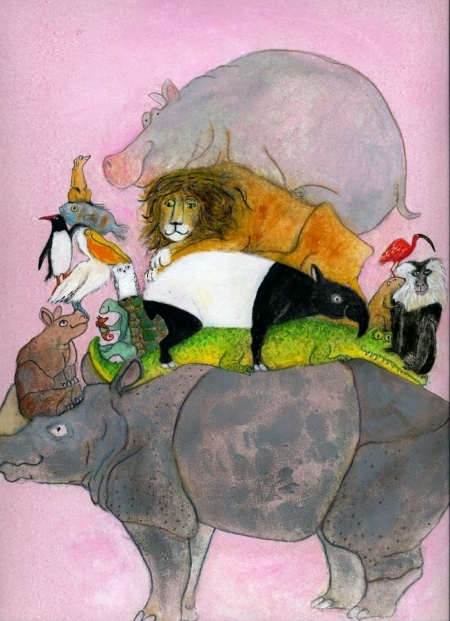
This title is difficult to categorize. It is definitely nonfiction. A fact book of sorts. A book of art. That too. Quirky, odd, fantastic. All of these things. Some of nature’s truths displayed a little more graphically and gruesome than one might usually find in children’s literature. . . Cannibalistic crocodiles munching each other for lunch. But also absolute charm conveyed through simple text and illustrations that go where our imaginations might.

A polar bear is left handed as are most artists.

This line is illustrated by a polar bear holding paints having just painted a self portrait.

What exactly is this book I am describing? A gorgeous animal concept book illustrated by Marije Tolman with text by Jesse Goossens: Jumping Penguins (published in 2013 by Lemniscaat) In the Netherlands this title is published under this title: Jumping Penguins and Laughing Hyenas.

Jumping Penguins: NFPB2014 There's a Book for That

There is an index in the back. It lists 27 animal names and the pages they are featured. That is about as far as a nod to typical organization of nonfiction texts might take us. Otherwise it is all whimsy. Wonder. Amazement.

Each fact is given some elaboration or not. But each one is illustrated not realistically but more in a what might/could this mean if we thought creatively about it. Penguins can leap six feet in the air? So . . . do they stand around and watch graceful leaps out of the freezing sea? The illustration suggests just that.

What were particular wow facts/illustrations for me?

  • An adult porcupine has 30,000 quills on its body which are replaced every year (the illustration shows us porcupines using discarded quills to erect a fence around their property)
  • The ribcage of a hippopotamus is so large, the average seven year old could stand inside of it.
  • Sumatran tigers do like water – in fact they have webbed toes and can swim more than fifteen miles.

Find the book and be delighted and informed in the most wonderful of ways. Amazing animals. Yes, truly.

Thanks to Alyson from Kid Lit Frenzy for the inspiration to read and share more nonfiction picture books in 2014! Follow the link to Alyson’s blog to read about more nonfiction titles.

My goal is to read 65 nonfiction picture books for 2014. Progress: 25/65 complete!

Monday January 27th, 2014

It’s Monday! What are you reading?

IMWAYR

Join Jen from Teach Mentor Texts and Kellee and Ricki from Unleashing Readers and share all of the reading you have done over the week from picture books to young adult novels. Follow the links to read about all of the amazing books the #IMWAYR community has read. One of the very best ways to discover what to read next!

My favourite picture books (both fiction and nonfiction) reads of the week:

A Splash of Red: The Life and Art of Horace Pippin written by Jen Bryant and illustrated by Melissa Sweet

Again, Sweet just slays me. Everything she does is vivid colours and spectacular details. This fascinating biography of artist Horace Pippin is an inspirational tale of an artist with everything stacked against him who makes art despite it all. Loved the back story of how Bryant and Sweet collaborated on the research to create this book.

A splash of red #IMWAYR There's a Book for That

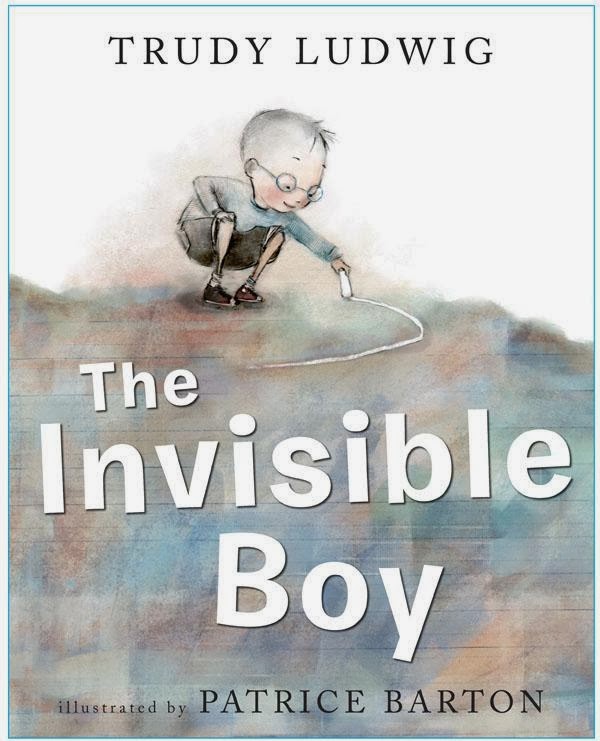
The Invisible Boy written by Trudy Ludwig and illustrated by Patrice Barton

This is such an important book with themes of exclusion, kindness and friendship. I shared what this book was like as a read aloud experience in my classroom in this post.

The Invisible Boy #IMWAYR There's a Book for That

Dream Boats written by Dan Bar-el  and illustrated by Kirsti Anne Wakelin

Lyrical text. Illustrations full of folklore, magic and dreams. Fall asleep and ride through dreams and history on a dream boat. A title that must be read, reread, examined and explored. It sails you through many legends and cultures around the world.

DreamBoats #IMWAYR There's a Book for That

Lost Cat by C. Roger Mader

Come and see the world from the perspective of a little lost cat, left behind when her owner moved. I shared my students’ reviews here.

lost cat #IMWAYR There's a Book for That

The Very Brave Bear by Nick Bland

Bear and Buffalo square off in a battle of bravery. I am completely charmed by the silly antics revealed in the illustrations. Not sure how much of the text I even paid attention to – the pictures are hilarious!

#IMWAYR There's a Book for That

Noisy Poems for a Busy Day written by Robert Heidbreder and illustrated by Lori Joy Smith

Busy, bustling poems perfect for the preschool set. Full of sounds, fun to say and lots of silly . . .

Twisty-Twiggle.

Jump-up jiggle.

Undies backward!

Wiggle-giggle.

Hee! Hee!

Noisy Poems #IMWAYR There's a Book for That

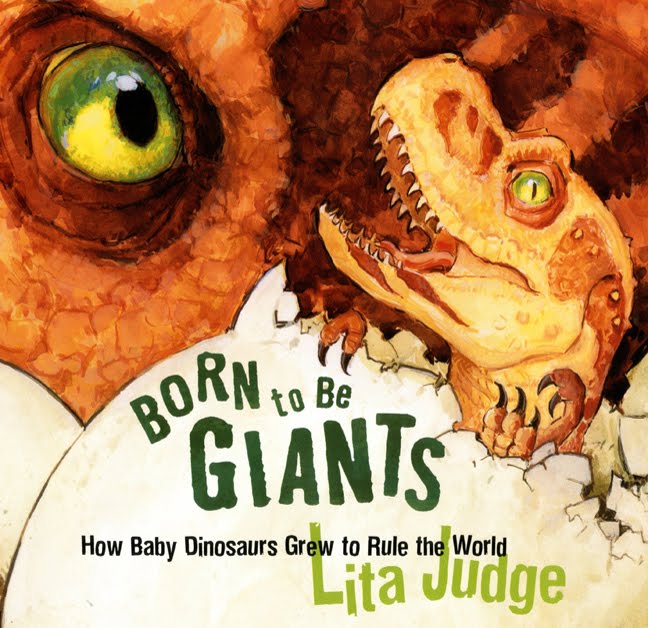
Born to Be Giants: How Baby Dinosaurs Grew to Rule the World by Lita Judge 

I learned an incredible amount about dinosaurs in this nonfiction title and thoroughly enjoyed all of the details and comparisons to modern day creatures. Amazing illustrations.

#IMWAYR There's a Book for That

I read some other fabulous nonfiction picture books which I shared in my Nonfiction Wednesday Post: Animal Stories

I also read:

Forgive me, Leonard Peacock written by Matthew Quick

A perfect book to sit down with when you don’t have to get up for hours. I found myself pulled quickly into the world of Leonard Peacock and not wanting to put the book down and abandon him for even a moment. Raw. Vulnerable. Hurting. What a character. This is the story of a teenage boy who begins his last day on Earth because by day’s end, he’s planning to be dead. How did he get to this place? He will tell you, unravelling details of his history and his pain. This was one of my #MustReadin2014 titles – the second Matthew Quick title I have read this month. Definitely YA.

#IMWAYR There's a Book for That

Next up? I am reading The Living by Matt de la Pena and then plan to read Marie Lu‘s The Champion to finish the trilogy.

Reading Goal updates:

2014 Chapter Book Challenge: 6/100 novels complete

Goodeads Challenge: 61/650 books read

#MustReadin2014: 4/30 complete

Nonfiction Picture Book Challenge: 24/65 complete

Happy Reading to all!

The Invisible Boy

I know when I read certain picture books that I have a powerful read aloud in my hands. Actually sharing the story with a classroom full of children can sometimes be so touching and illuminating, that I realize that I have underestimated the impact the story will have on listeners. Such was the case with this title:

The Invisible Boy written by Trudy Ludwig and illustrated by Patrice Barton is a story that needs to be shared and discussed. In my class, the comments, questions and insights brought tears to my eyes. Children need to talk about this book! Adults need to listen.

The invisible boy There's a Book for That

Before I even began reading this book, I asked children to predict from the cover and title. Here is what was said:

  • “Maybe people don’t treat him well so he doesn’t show himself.”
  • “Maybe people treat him like he’s invisible.”
  • “He might be ignored.”
  • “Maybe they don’t pay attention to him.”
  • “He might be lonely because people don’t be his friend.”

The story begins with Brian who isn’t noticed in a class full of big personalities that demand a lot of attention. Brian, we learn, doesn’t take up much space. He isn’t included in recess games. He isn’t invited to parties. He isn’t able to contribute to lunchtime conversation. Brian loves his art and escapes into his drawings.

At this point n our read aloud, we stopped to talk about what we had observed.

  • “He’s a really good drawer.”
  • “He looks sad when he doesn’t get to play. He’s always on his own.”
  • “Does drawing calm him down?”
  • “What if he told how he felt, would he get to play?”
  • “That teacher didn’t see him right beside her because the other kids are loud and noisy.”
  • “Maybe a new kid will come and they might have something in common?
  • “Yeah and then he could have a friend!”

Students were delighted that on the very next page, a new boy, Justin, arrives in Brian’s classroom. Some of the kids wondered should they be Justin’s friend. Was he cool enough? When kids laugh at Justin’s food in the lunchroom, Brian notices. He wonders “which is worse – being laughed at or feeling invisible.” Brian makes Justin an encouraging note about his lunch. We stopped again to talk and share our thinking:

  • “Maybe if the new boy fits in, Brian will have to draw a friend. He’ll still be alone.”
  • “Do you think he will ask Justin to be his friend?”
  • “They only want to play with cool kids?! That’s not fair!”
  • “Will Justin fit in? Will he still be nice?”
  • “Justin and Brian do have something in common because they are both teased.”

At this point, the question was posed: “What does it mean to be cool?”

  • “In this book it seems to mean all popular and kinda mean to people. But a cool person should be nice and kind and sharing to everyone.”
  • “Why do we need to be cool to be friends? Kids who show off don’t seem cool.”
  • “Cool means people are being mean and making fun.”

When it seems like Justin is beginning to be included and Brian continued to be excluded, Justin steps up and insists Brian be part of a classroom trio to work on a project. The illustrator has begun to add colour to the drawings of Brian. Children noticed this immediately: “He has colour now because he is noticed.” Brian’s smile as he begins to be part of a friendship group lights up the final page. We asked the students the very important question suggested in the back of the book.

“How many kids did it take in this story to help Brian begin to feel less invisible?”

It was completely quiet and then little fingers went up showing one (Justin) or two (Justin & Emilio). Nobody talked as the children looked at each other. Some started to nod. Some shook their heads. One little voice spoke for all of us:

“Oh. I get it.”

Some written responses that need to be shared: 

Joeli: Why does the teacher ignore him – even when the teacher can see where he is? Why did the popular kids tease Justin? They don’t know what he is even like. When that teacher was looking for Brian, why she did not look beside her or in front of her? I think she needs glasses.

Soleen: This book is interesting because it suggested that we can help others like ____________ because she is lonely.

Andrew: There was a boy named Brian who was invisible. Justin made Brian not invisible anymore.

Grace: This book inspired me to help kids in our school that feel the same way. Me and my friends are going to play with ________. I think she feels lonely. Even the tracher doesn’t notice Brian. My teacher would never do that. I noticed that when he was invisible, he was black and white. Then when Justin came along and they became friends, he had colour.

Sara: The kids think they are cool but why don’t they think they are all cool? He was invisible but when Justin came, they played together and he wasn’t invisible anymore, Maybe this book is trying to teach us treat others how you want to be treated.

Hyo Min: Brian was sad because no one can see him in his class. Justin and Emilio made friends with Brian. Why other kids need cool friends? I felt a little sad for Brian. Brian wanted to make friends. At the end of the story, he was happy with his new friends. I love the story.

Ibtihal: I learned that kids can make you feel better. When Justin and Emilio made friends with Brian, he turned into colours. The teacher didn’t see him because kids were being loud and noisy. The kids only played with the cool kids. The kids made fun of Justin’s food so Brian made a beautiful picture of his food and wrote “Yum!”

Pheonix: Brian, the invisible boy was gray at first. Then a different boy touched him and he got colour and he was not invisible anymore.

Brian: Justin had something in common with Brian because kids were teasing both of them. When Emilio started being their friends, Brian started to not be lonely anymore.

Heman: I noticed that Brian was feeling lonely. I noticed that Brian and Justin were both being teased at. The kids in Brian’s class only wants to be friends with cool people. Brian felt sad because he was left out. Justin made Brian feel better. Brian was a good drawer. Brian, Justin and Emilio made a story based on a picture and Brian drew the pictures.

Because there are children that don’t seem to take up space but actually have much to offer . . .

Because each child is important . . .

Because no one should feel alone in the middle of a classroom community . . .

Because each of us can make things different for someone else . . .

Share this book with your students.

Lost Cat

Our BLG book this week was Lost Cat by C. Roger Mader

 Lost Cat

Come and see the world from the perspective of a little lost cat, left behind when her owner moved. From a cat’s eye view, it’s all about the footwear! Every person this cat meets gets named according to what he/she is wearing on his/her feet. Slipper is looking carefully for a new owner. When she finally picks someone and follows her home, it turns out that she has made the perfect choice!

Reviewers certainly differed in opinions this week. Some students raved. Others were a little more reserved. But all agreed – these illustrations were incredible!

Student reviewers respond:

Hyo Min rates this book 5/5 and writes: I loved the book because there’s lots of details in the pages. How old is the girl with the shiny shoes? Why did the author make green eyes for the cat? This book was cool. How did the cat climb up the tree? Is Slipper (the cat) a boy or a girl? This book had a happy ending. It made me feel happy.

Pheonix couldn’t commit to a rating. He writes: I like this book because there was a motorcycle.

Soleen rates this book 5/5 and writes: Mr. Big Boots suggested to the cat that it should go to town and maybe he or she can find their owner. I like this book because it is interesting. The cat is really cute. I like the pictures. Is the cat a he or a she? Why does he/she call people by their shoes or boots? 

Giovanni rates this book 5/5 and writes: I gave the book 5/5 because I liked the picture that said lost. The reds and oranges are so nice.

Joeli rates this book 5/5 and writes: Why did all the people have their shoes, boots, sandals, heel shoes as their last name? Because if you change your shoes, you will have to change your name. So you will have to wear them forever! Why did Slipper try to catch up? Because what happens if he does catch up but there is no pets allowed in there? Slipper should stay at home. When Slipper went to a guy with a snake on his boots, why did Slipper think that it is real? Look at the difference: the one on the boot is coloured yellow. Is Mrs. Fluffy Slippers a Grandma or a Woman? Why did the person with a motorcycle put Slipper inside a basket? Slipper might move a lot and he will fall down. This story has a happy ending.

Vicky rates this book 5/5 and writes: My favourite part was when the cat followed the girl home and then when she got home, she showed her grandma who followed her home. How old was the cat? How old was the little girl? Maybe he will write another book that has an answer.

Calvin rates this book 3/5 and writes: I like the part when the cat meets a man on a motorcycle and the cat jumped on a motorcycle. The man was riding and the cat jumped off. then the cat met a man with a semi.

Sara rates this book 8/5 and writes: My favourite part was when Mrs.Fluffy Slippers was reunited with Slippers. I gave the book an 8 because it has a happy ending and it was funny. I loved the book because it was fun to read. I thought the pictures were well illustrated. 

Kevin rates this book 5/5 and writes: The cat’s eyes are creepy. If I had a cat, I will be excited and call her Mrs. Fluffy Slippers. The cat found a good owner. Does the cat like shiny shoes? I think why they call her Mrs.Fluffy Slippers is because she loves slippers. The cat had a reason to choose a right owner. She doesn’t like boots or shoes. She only wants slippers and shiny shoes. 

Heman rates this book 3/5 and writes: My favourite part is when Slippers found an owner. I liked the cowboy boot with the snake on it. I liked the part when Slippers was riding on a motorcycle. Slippers got lost because Mrs. Fluffy Slippers forgot him when she went to live with her daughter. I liked the pictures. The pictures show only the shoes. 

Grace rates this book 2/5 and writes: The picture with the fire and the cat was very powerful. The kitty cat looked very realistic. My cat kind of looks like that. This book is very cute. It is okay. It was nice but not that exciting. the problem is too easily solved. I would like to read a story with not a really happy ending sometimes.

Celebrating readers and writers

celebrate link up

Celebration honoured. This is the loveliest of reasons to share. Join Ruth Ayres who shares a Celebration Link up on her blog each week.

This week I am celebrating my young readers and writers. They are learning to express opinions, celebrating writing they love and savouring reading experiences. Sharing a few moments here:

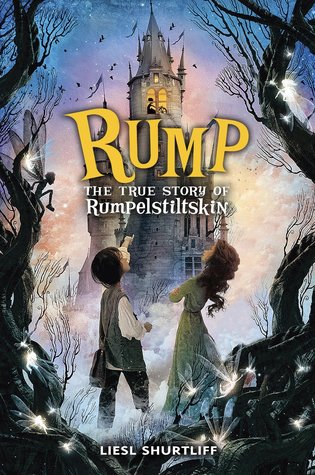
1. I am currently reading Rump by Liesl Shurtliff to my students. Students adore this book wholly and completely.

Proof #1: I have to reread parts aloud to students at recess, after school, during playtime, etc. if someone happened to be out of the room when we read aloud that day.

“I missed the last part of the chapter when my Mom picked me up early, can you read it to me this morning?”

Proof #2: I finished our chapter seconds before the 3:00 bell the other day and one child grabbed the book to her chest. “Please can I hug it now?!” she swooned.

Proof #3: Very little can cause silence in my classroom. When I start reading this book aloud, magical silence descends.

 Rump Celebrating Readers and Writers There's a Book for That

2. We often talk about what happens when we put the the right book in the hands of a reader. I realized this week that sometimes this magic also happens when we match the right readers together to share some great books. Every week, we have buddy reading with the K/1 class. While we assign buddies for the day, they might be different each week. This little moment captured in the photo below made me realize that sometimes, we can also find the right buddy match. I think I will be making this match again.

Celebrating Readers and Writers There's a Book for That

3. I often ask students for perspective statements when I know that anxiety might rise around regular things that happen throughout the day. Often when I booktalk new books, many children decide that their day will be ruined if they do not get to be the first one to read a particular book. When you are seven, eight and nine, big drama happens over many things. While I appreciate the book love, the upset does nothing for classroom climate or individual well being. So now I ask for perspective statements. It goes something like this.

Me: “Not everyone can be first to read these new books. Can anyone share a perspective statement?”

Student responses:

“Maybe you can be the one to read it next?”

“I can ask to read it after.”
“We have a room full of books.”

“We’ve got a whole year left to read everything we want.”

I smile with each little share. Students also do this to facilitate solving things:

Celebrating Readers and Writers There's a Book for That

4. I have a some major Shel Silverstein fans in my classroom. They have bookmarked favourite poems and read aloud to each other in Reading Workshop. I haven’t been sharing much poetry lately and certainly haven’t read Silverstein aloud more than twice all year. This is all about independently discovering great writing, being inspired and sharing the #booklove.

Celebrating Readers and Writers There's a Book for That

5. I read The Invisible Boy by Trudy Ludwig to my class this week. I am working on a blog post to try and capture the insightful comments and the writing shared. It was a pretty powerful read aloud session. This picture below says a lot.

“Can I read it to myself now?”

Celebrating Readers and Writers There's a Book for That6. Every week we write book reviews for new books that weekly guest readers bring in to share with us. We rate the books out of 5 and share our thinking. One of my little writers gave a book a 2/5 and told me she didn’t have much to say. I asked her to explain her lower than average rating and she gave me a little look like I had just given her permission for something she thought she wasn’t allowed to do. Here is what she then added to her review:

It was nice but not that exciting. The problem is too easily solved. I would like to read a story with not a really happy ending sometimes.

I feel lucky every week to be in a room of readers and writers that are growing in amazing ways.

Wishing everyone a wonderful week!
Nonfiction Picture Book Wednesday: Animal Stories

It’s Nonfiction Picture Book Wednesday! 

NFPB 2014

I love nonfiction titles that read like a story ( I refer to them as information storybooks) and am always on the lookout for titles to read aloud to my students. Some of these titles read just like fiction, others are lyrical or full of rich, descriptive language. Facts and information are woven through the text.

This week, three titles stood out for me as engaging animal stories where the language and story are as rich and powerful as the learning.

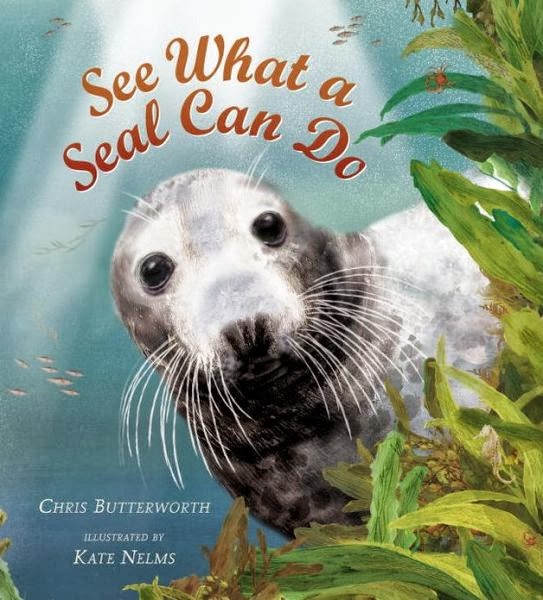
See What a Seal Can Do written by Chris Butterworth and illustrated by Kate Nelms (published in 2013)

This story begins:

If you’re down by the sea one day, you might spot a seal, lying around like a fat sunbather or flumping along the sand.

The reader is then invited into the world of seals. Learn all about gray seals – how they move (their movement on land is described as a flump – a cross between a flop and a jump), how they hunt and how their body is perfectly suited to their ocean home.

Fascinating facts for me:

  • gray seals molt or shed their fur every year which helps to keep their coat waterproof
  • when a seal dives deep, he can slow his heartbeat down to only four beats a minute in order to use less oxygen
  • when a seal opens his mouth, his jaw closes so he won’t swallow water

Visually this book is an absolute treat: seriously gorgeous illustrations throughout and beautiful black and white drawings of different seals in the end pages of this book. 

See What A Seal Can Do  Animal Stories #NFPB2014 There's a Book for That

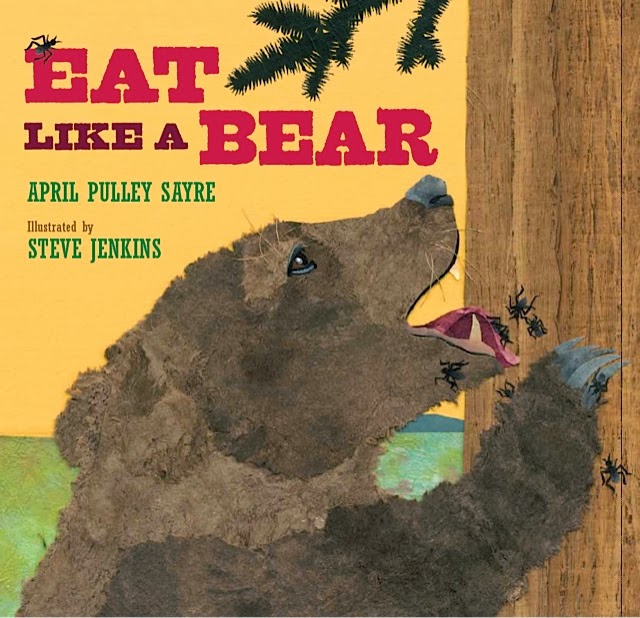
Eat Like a Bear written by April Pulley Sayre and illustrated by Steve Jenkins (published in 2013)

This title invites the reader to eat like a bear over the course of the four seasons. How does bear find food in early spring? How does she prepare for winter? How does a mother bear nourish her babies during her winter slumber?

This title is full of poetic language, beautiful to read and reread aloud. It is descriptive and full of alliteration:

Bushes? Bare. No berries there.

Dig in. Dig down. Paw and claw and pull. Find . . .

A spruce, a shrub, an early-skunk.

The book ends with a two page spread full of additional information about bears with titles like Do Bears Really Hibernate? Bear Food, Not People Food and Grizzly Bear Future

Eat Like A Bear  Animal Stories #NFPB2014 There's a Book for That

Little Lost Bat written by Sandra Markle and illustrated by Alan Marks (published in 2006)

This is an emotional read for young listeners/readers. Through the story of a little Mexican free-tailed bat living with its mother in a colony in Texas, we learn much about bats’ hunting habits, their predators and how they raise their young. It is a tender and important relationship described between mother bat and baby as they nurse, snuggle and cry out to communicate with each other in a nursery full of babies. While mothers are out hunting, babies are vulnerable to predators like snakes. Although – they are safer in a large group huddled together. Mother bats must hunt every night for insects to feed themselves and produce milk for their babies. Some bats are eaten by owls. What if a mother bat has lost her baby to a snake? Will she “adopt” an orphaned baby whose mother doesn’t return from hunting? Eventually we come to this question in Little Lost Bat.

I can imagine this would have many children on the edge of their seats and needing to talk about the dramatic balance between safety and survival in nature.

 Animal Stories #NFPB2014 There's a Book for That

Thanks to Alyson from Kid Lit Frenzy for the inspiration to read and share more nonfiction picture books in 2014! Follow the link to Alyson’s blog to read about more nonfiction titles.

My goal is to read 65 nonfiction picture books for 2014. Progress: 19/65 complete!

Monday January 20th, 2014

It’s Monday! What are you reading?

IMWAYR

Join Jen from Teach Mentor Texts and Kellee and Ricki from Unleashing Readers and share all of the reading you have done over the week from picture books to young adult novels. Follow the links to read about all of the amazing books the #IMWAYR community has read. One of the very best ways to discover what to read next!

This week I had serious plans to read a number of novels. These plan got put on hold when I went to the library Tuesday evening and came home with stacks and stacks of nonfiction picture books. I fell into a kind of nonfiction reading marathon. I share some of these titles here and some I will share on Wednesday for Nonfiction Picture Book Wednesday hosted by KidLit Frenzy.

Here are the picture books (fiction and nonfiction) that I loved this week: 

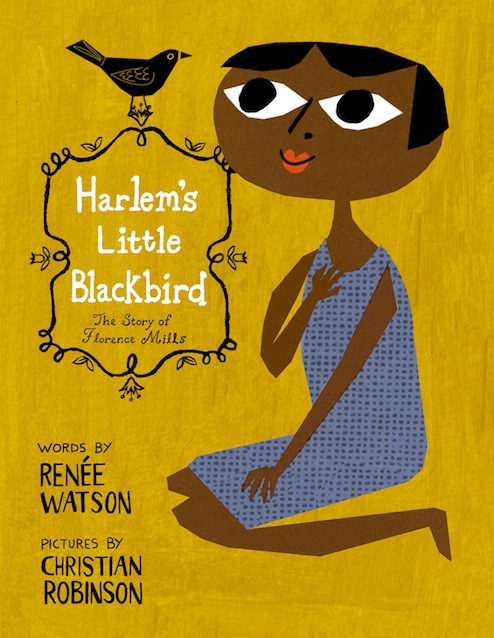
Harlem’s Little Blackbird: The Story of Florence Mills written by Renee Watson and illustrated by Christian Robinson

Not only a glimpse into the life of Harlem Renaissance singer Florence Mills but a story of courage, commitment and the power to make change. Really enjoyed this picture book biography.

 Harlem's Little Blackbird #IMWAYR There's a Book for That

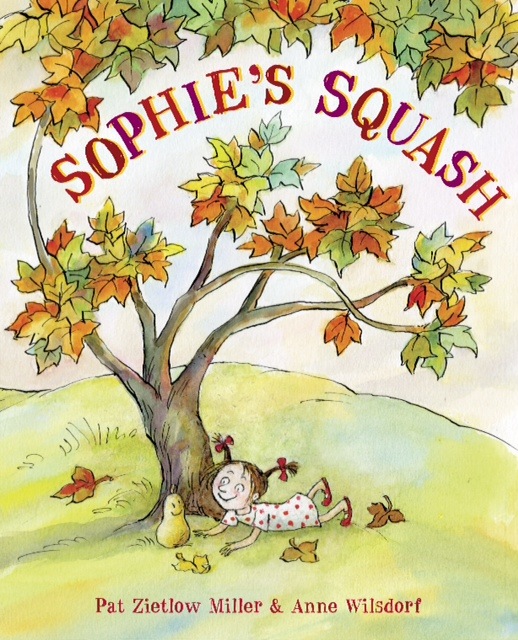
Sophie’s Squash written by Pat Zietlow Miller and illustrated by Anne Wilsdorf

This book passed the “it’s so funny/charming I can’t help giggling” test when I read it aloud to my son. Cute, cute, cute. Charming and then some. A beautiful story about a child who does things a little differently. Not enough books celebrate persistence, creativity and passion in children so well. And whoa . . . the ending! LOVE.

Sophie's Squash #IMWAYR There's a Book for That

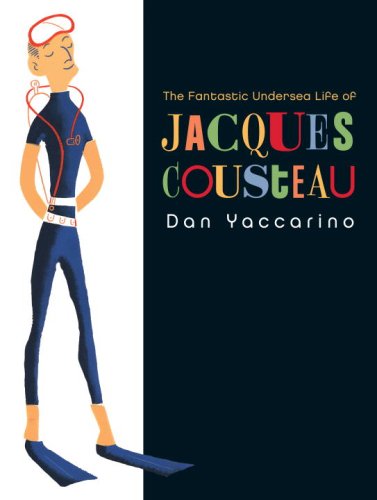
The Fantastic Undersea Life of Jaques Cousteau by Dan Yaccarino

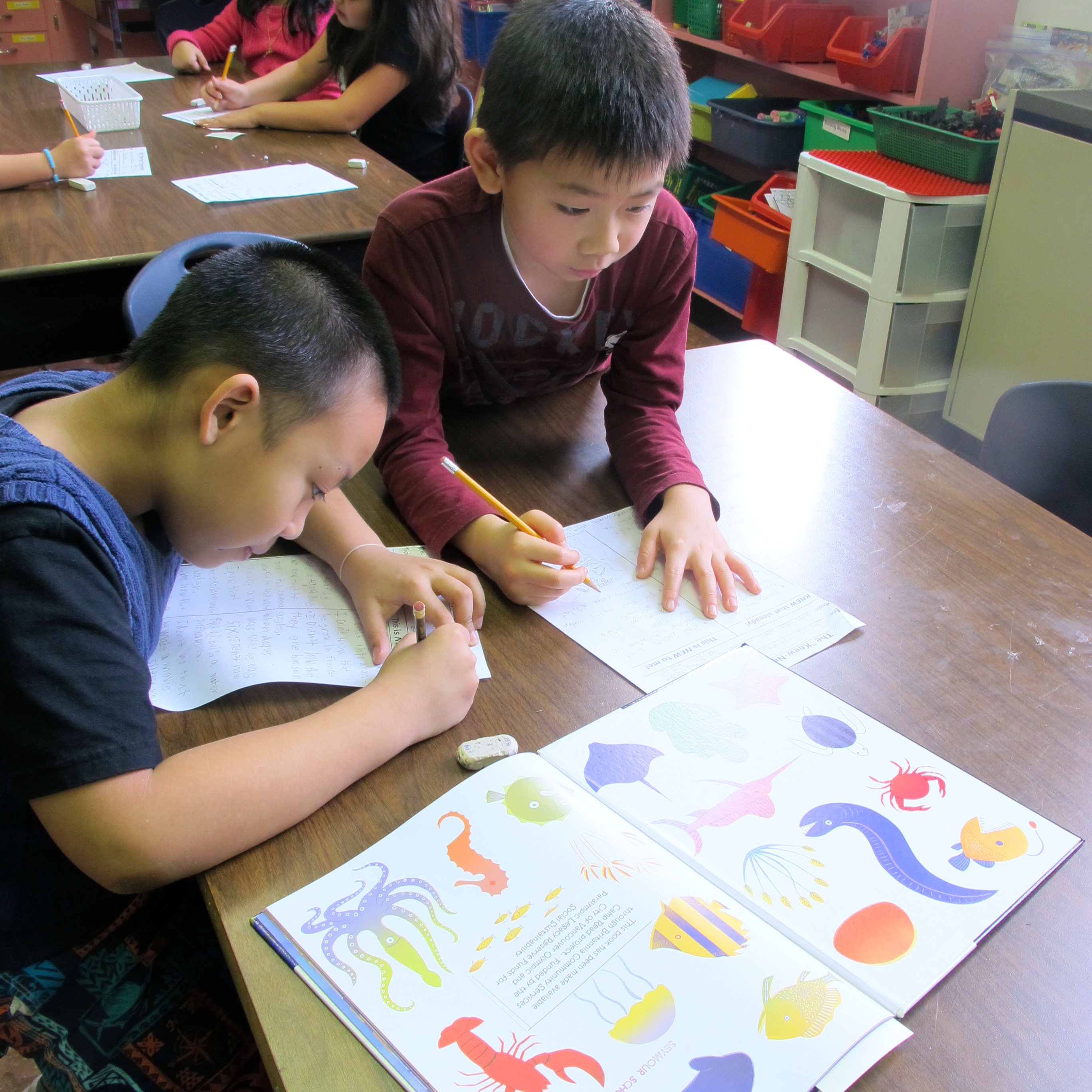
After reading Manfish to my class, I had to read this title! We spent Friday afternoon reading this book and filling out a Knew/New sheet to reflect our learning. (Thanks Adrienne Gear! Love all of the BLMs for reflecting about thinking/learning) Another fantastic picture book biography sharing the life of the inspiring Jacques Cousteau.

The Fantastic Undersea Life of Jaques Cousteau by Dan Yaccarino #IMWAYR There's a Book for That

My students adding some pictures to their thinking:

#IMWAYR

This is the Rope: A Story from the Great Migration written by Jaqueline Woodson and illustrated by James Ransome

Lyrical and lovely. A story of family across generations as they move to the big city from the South. The Great Migration represented the movement of African Americans from rural Southern towns to the cities in the North. This migration was inspired by the hope and promise of better treatment, better opportunities and better education. This story weaves a rope through one family’s experience and tells a beautiful story of connection, love and new beginnings.

 This is the Rope #IMWAYR There's a Book for That

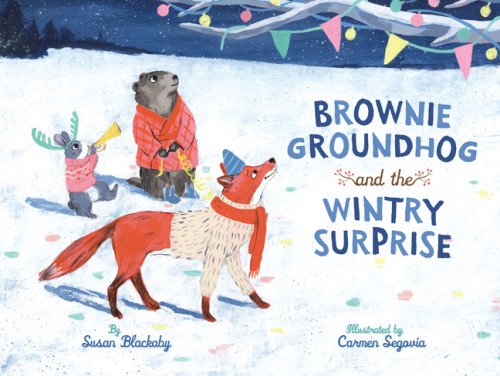
Brownie Groundhog and the Wintry Surprise written by Susan Blackaby and illustrated by Carmen Segovia

A delightful winter story – full of humour, charm and spectacular surprises. Read my students’ reviews here. The illustrations are absolutely stunning.

 Brownie Groundhog and the Wintry Surprise #IMWAYR There's a Book for That

The Raven and the Loon written by Rachel and Sean Qitsualik-Tinsley and illustrated by Kim Smith

In the time of before, both raven and loon had all white feathers. They decide to make beautiful coats for each other. The process and the result does not play out perfectly smoothly. An energetic and entertaining Inuit tale.

The raven and the loon #IMWAYR There's a Book for That

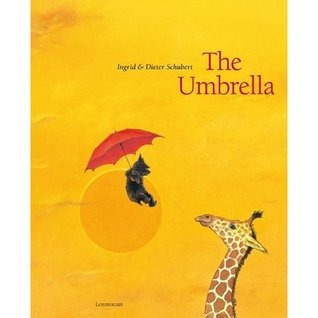
The Umbrella by Ingrid and Dieter Shubert 

I adored this wordless fantasy title. A little bit of fear, a big bit of adventure and the largest bit of flying over stunning landscapes all over the world. I want my own copy of this book . . . Or at least a red umbrella that can take me travelling!

#IMWAYR There's a Book for That

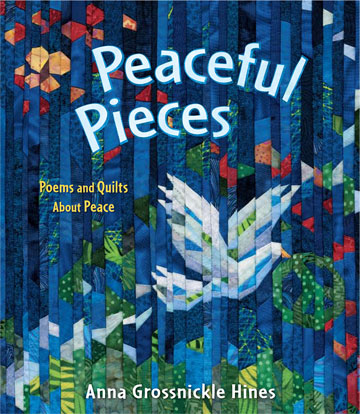
Peaceful Pieces: Poems and Quilts About Peace by Anna Grossnickle Hines 

Well to begin with – these illustrations are vibrant, saturated with colour and interesting design. I read a few poems, really liked some, kept reading and soon realized, I liked a lot of these poems. And the why is the important part. They aren’t generally preachy and unrelated to the everyday. They are about the here and now. There are poems that reflect mindfulness (being in the moment), poems that talk about anger, poems that talk about PTS after experiencing war. A lot in this little book of poetry. Some of my favourite lines?

I have never fired a gun

but have shouted words

that pierced and stung.

#IMWAYR There's a Book for That

Boot and Shoe by Marla Frazee

How have I not read this book sooner than this? I adore Marla Frazee. Adore. So I’m not sure how I had yet to pick this title up. Now it is heading off to school with me tomorrow to provide some Monday morning giggles for my students! Let’s just say when a “pee tree” is the cause for a happy ending, this title is guaranteed to have high levels of kid appeal.

 Boot and Shoe #IMWAYR There's a Book for That

Jemmy Button by Jennifer Uman and Valerio Vidali

Quite a title. The whole process of creating this book between two illustrators who didn’t share a language and talked via an online translator was fascinating to my students. The images are powerful and full of symbolism at every turn. This title is inspired by the true story of Orundellico (named Jemmy Button) who was taken from his home in Tierra del Fuego to England to experience “civilization.” I think this book is so well done and don’t want to say anymore – go into it with eyes wide open

 Jemmy Button #IMWAYR There's a Book for That

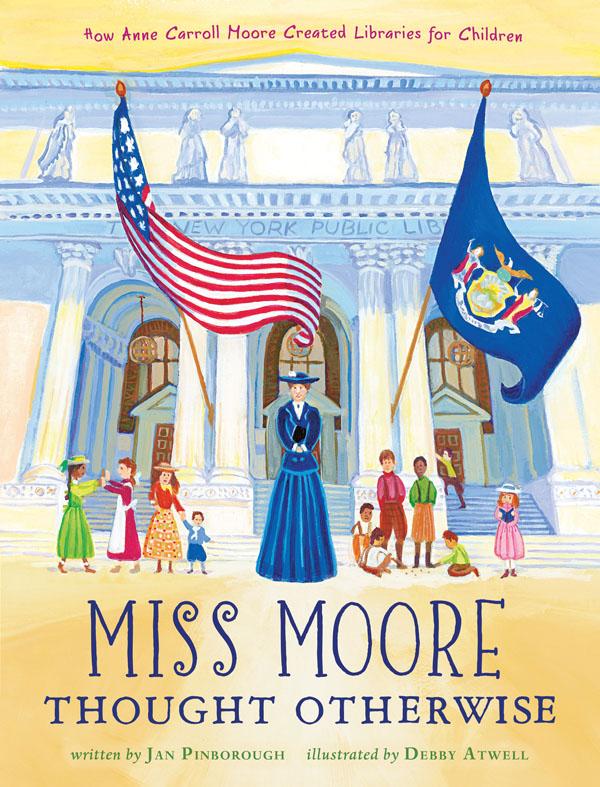
Miss Moore Thought Otherwise: How Anne Carroll Moore created Libraries for Children written by Jan Pinborough and illustrated by Debby Atwell

Well. . . Anne Carroll Moore now has superhero status as far as I am concerned. Loved this story of how one woman acted as a champion for children’s access to books, libraries and beautiful spaces.

Miss Moore Thought Otherwise #IMWAYR There's a Book for That

I also finished one novel:

Prodigy by Marie Lu

I am quite hooked into this fast paced dystopian tale. Drama. Psychological twists and turns. Unexpected outcomes. I plan to read the final book in this trilogy during the next few weeks.

 Prodigy #IMWAYR There's a Book for That

What’s next? I think I will return to my list of novels from last week that I need to get to – Forgive Me, Leonard Peacock by Matthew Quick and The Disenchantments by Nina LaCour. 

Reading Goal updates:

2014 Chapter Book Challenge: 5/100 novels complete

Goodeads Challenge: 46/650 books read

#MustReadin2014: 3/30 complete

Nonfiction Picture Book Challenge: 17/65 complete

Happy Reading everyone!

Brownie Groundhog and the Wintry Surprise

Our BLG book this week was Brownie Groundhog and the Wintry Surprise written by Susan Blackaby and illustrated by Carmen Segovia

Brownie Groundhog and the Wintry Surprise = There's a Book for That


What a delightful winter story – full of humour, charm and spectacular surprises. These characters are irresistibly wonderful and it is difficult to judge even possible mischievous intentions when the friends arrange such a special surprise for Brownie Groundhog. She simply must be woken from her winter sleep to witness it! Poor Brownie eventually gets back to her long slumber. But first there are lights, feasting and pie. Makes one want to set out to a snowy meadow for an enchanting winter party similar to the one beautifully depicted in this story.

For more story details, read these student reviews.

Student reviewers respond:

Grace rates this book 5/5 and writes: My favourite part was when Brownie said to Fox, “Don’t eat Bunny, she’s company.” I loved the illustrations. They were so good. My favourite pie is lemon meringue – it’s so yummy. My favourite character was Brownie but I also liked all of the personalities. The tree was colourful and full of light. It was a fantastic book. 

Ibtihal rates this book 5/5 and writes: I liked the part when they did the big feast. It was funny when Brownie was grumbling. The tree has a lot of decorations. There were so many good characters in the book. The author did an amazing job with the book. My favourite character is the rabbit because she is responsible and funny and cute. 

Joeli rates this book 4/5 and writes: Why fox did not make his own house instead of just stealing? Or just cut his tail and make it to a coat? Or he can just cut all his fur including his tail to make a very fluffy coat. My favourite character is the bunny because he is tiny.

Andrew rates this book 3/5 and writes: I like the tree. I like pie. My favourite part was the pie. They made a big surprise for Brownie. They had a good feast. My favourite character is the fox. I like the fox because he’s funny. The bunny was honest and nice. The fox was stealing Brownie’s stuff but he was creative. 

Soleen rates this book 5/5 and writes: I enjoyed the book because it was funny. I liked the characters because the bunny was so responsible. I liked the surprise because it was so beautiful. 

Kevin rates this book 5/5 and writes: I noticed that they eat a picnic in the park. My favourite pie is all the pie. I like the sign is called “Do Not Disturb!” They work hard on the tree and the tree looks full of light. The fox is really sneaky. The bunny was really honest and nice. Brownie is a groundhog and when he was sleeping, he was grumbling, mumbling and saying words.

Vicky rates this book 5/5 and writes: The fox is a thief. He did not understand what Brownie said. But when he made the tree, it was a big surprise. My favourite pie is apple pie. My favourite characters are Fox and Bunny because the fox thought Brownie let him use everything but Bunny said no, it’s not that. In the end, Brownie forgave them because it was a surprise and it was sweet. 

Jerry rates this book 4/5 and writes: The big surprise for Brownie is a big decorated tree. Fox and Bunny set it up for Brownie because Fox wanted to make Brownie happy. They they had a party and some crackers. The the party was done. Brownie went to bed and Bunny said, “That was fun” and Bunny gave Fox a cake. Then they all ate together. 

Hyo Min rates this book 5/5 and writes: My favourite part was Brownie was talking funny. I love when Fox and Rabbit made a surprise. It was a great book. Why did they make a surprise? I loved the book. My favourite character was Rabbit because he said no to the fox. Bunny was more responsible than Fox. Maybe it was a winter party.

Heman rates this book 4/5 and writes: My favourite part is when the fox, the Rabbit and Brownie were eating pie. I liked when Brownie saw the winter surprise. I think the Bunny was responsible and I think the fox was creative (when he decorated the tree). Brownie was sleeping and the fox asked “Can we borrow the ladder?” Brownie said in a very mumbly voice, “Goey wave slop blubbering bee” and he thought she said, “You can use whatever you want.” Bunny thought she said, “Go away, stop bothering me.” What is the bunny and fox’s names? I wonder why the author didn’t give them names.

We reviewed another title by this author/illustrator team here: Brownie Groundhog and the February Fox.