Unknown's avatar

About carriegelson

Elementary teacher passionate about all things literacy.

Not a day for writing: Slice of Life #20

 Not a day for writing #sol16

Today is not a day for writing.

It’s a day to marvel.

A day to feel lured by the water.

To sit in a chair by the window.

To chase away intrusive worries.

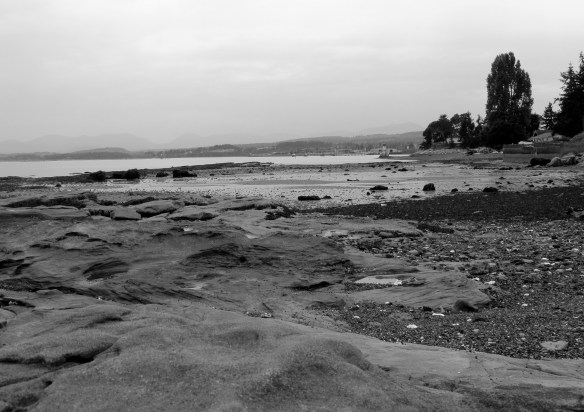
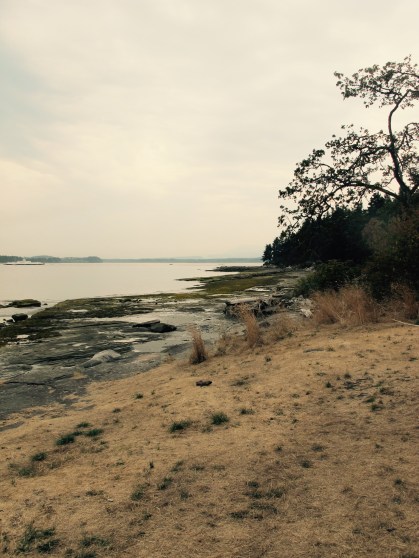
To notice that in certain light, those mountains in the distance don’t look like solid rock and earth but rather like layers of blue stretched down from the sky or pulled up from the water.

To imagine that every dark spot on the water is something worth noticing.

To see shapes and grace as the trees move in the wind.

To admire the vast distance where those sea birds fly.

To feel the weight of a heavy cloud filled sky.

Today is not a day for writing.

It is a day where images rule, the beauty of a sliver of the world captivates and words mostly don’t come.

In this chair, by a window, with water all around, I declare, today is not a day for writing.

Bad Irony: Slice of Life

I am participating in the Slice of Life challenge to write and publish a post every day in March.

Slice of Life is hosted by Two Writing Teachers. I thank them for the community they provide. Read more slices here.

Books, books, books, everywhere you look: Celebration and Slice of Life #19

Books, books, books, everywhere you look

My classroom is a library. You can’t miss this from the moment you step in the door. There are books everywhere. One child observed the other day, “No matter where I am sitting, I can see books.” This is intentional. I want our classroom to be a place where students immerse themselves in stories, in information, in any text that is going to enrich their learning and their thinking.

If you are a student in our classroom, you are a part of our reading community and you really know what all of these books mean. These books are yours. You have complete access. Everywhere you look, you see possibilities, opportunities, stories you love and stories you want to love. “It’s pretty easy to be a reader in this room,” a student told me recently. Yes. The books are here. The time to read them is made. The excitement is consistent. But it doesn’t happen by pure osmosis. We work on being readers. And sometimes the work is hard. But we become readers, surrounded by books.

I read Pernille Ripp‘s recent post about classroom libraries this morning: On the Need for Classroom Libraries for All Ages. She makes excellent points about the difference a classroom library makes for her Grade 7 students. It made me want to celebrate my classroom library because I believe pretty passionately in its existence. But some of the comments also compelled me to want to address how vital classroom libraries are – not in place of a school library, but as a complement. I wish, really, that the conversation wasn’t necessary but I know from comments I have heard over the years that some people believe that classroom libraries aren’t overly important. Or that they actually interfere or compete with a school library. The arguments include statements like these: classroom libraries are not all that well stocked, the books aren’t selected by a qualified Teacher Librarian, teachers don’t know how to weed, there isn’t enough diversity. Or the big concern: classroom libraries will mean less interest in the school library making school libraries unnecessary.

Books, books, books, everywhere you look

I would argue that the very people who have extensive, well-loved classroom libraries, are the very people who know there are never enough books and never enough expertise. We are the champions of well-funded school libraries. We revere our Teacher Librarians and seek out their recommendations and knowledge often, We ensure that our students get frequent time in the school library. We take out bins and bins of books and bring them into our classroom collections. We can’t imagine a school without a library. Just like we can’t imagine a classroom without a library. Just like we can’t imagine a reader without a book.

Classroom libraries mean each child is steps away from a book at all times. These libraries mean that we can get up when our mood switches – put down our novel and pick up a book of poems. We can immerse ourselves in a nonfiction text and come up for air five minutes before the bell rings to read a picture book. We can pass the book to the child next to us without any signing in, signing out time spent.

Classroom libraries are like a living, breathing, ever-changing creature. They reflect the interests, the questions and the passions of the readers in the room. Highlighted books will include favourite authors or illustrators, themes of study, books to inspire writing on a particular theme. In my classroom, we have a recently read shelf for both fiction and nonfiction books. If we read it, they can find it and quick. Often children want to visit those stories we have shared together again and again. A classroom library is an extension of its readers. It is their mirror. The bright shiny button on their favourite jacket. The delicious cookie in the jar almost, but not quite, out of reach.

There is an intimacy to a classroom. As teachers, we know our students. If we also know our books and have plenty to choose from, we can make those essential matches happen. My daughter wisely pointed out: “The teacher who owns the books knows you and so they know which book to recommend to you.” Of course, librarians know students too. Often very well. But remember this is not an argument for one library over the other. We are celebrating readers and access to books here.

I also think that those not in full support of classroom libraries, may not understand how workshop classrooms work. They may assume that reading happens during a silent reading block and then again in a reading period where the teacher supplies the material – a novel, an article, a reader. During silent reading, it is assumed, that students can easily be reading a book that they have taken out from a school library. During the reading lesson, students will be provided with reading material. While yes, this might be the case in some classrooms, it is not the way a Reading Workshop classroom works. During reading conferences, we leap up and make book recommendations, we help students select titles, we provide time to “book shop” in the collection. Peers recommend books to each other. We book talk titles and students make lists of what to read in the future. There is time to buddy read. There is permission to get up and abandon a book. All of this means books need to be available and organized – accessible in the moment for readers on an important reading journey.

This is hardly the first time I have talked about classroom libraries and it is unlikely to be the last. My classroom library is always changing because it needs to meet the needs of the students who use it. I keep writing about it and reading avidly all the while, because I want to offer my students the very best literacy experiences I can provide.

Today, I celebrate classroom libraries. I celebrate teachers who invest time, money and love into creating reading environments for the readers in their rooms. I know these teachers know books, know kids and keep reading and learning so that they can always learn more.  I celebrate those that invest in classroom libraries because they know how important that one book might be for that one child and that means many books for the many children who will pass through a room. I also celebrate the children who have classrooms that honour them as readers. Classroom libraries mean something. Something big.

If you, like me, are in the mood to celebrate classroom libraries, I include links to some of these other posts here.

Talking Classroom Libraries

How to Organize a Classroom Library: 20 points to consider

My Classroom Library: Beyond the books, ten important features

Nonfiction Picture Book Wednesday: A room full of nonfiction

Literary Nest Building 101


Bad Irony: Slice of Life

I am participating in the Slice of Life challenge to write and publish a post every day in March.

Slice of Life is hosted by Two Writing Teachers. I thank them for the community they provide. Read more slices here.

This is also a celebration post.

Thank you to Ruth Ayres and the #celebratelu community!

Being part of a community that regularly shares gratitude and celebrations truly transforms my weeks.

celebrate-link-up

An almost story of sea lions: Slice of Life #18

Sea lions #sol18

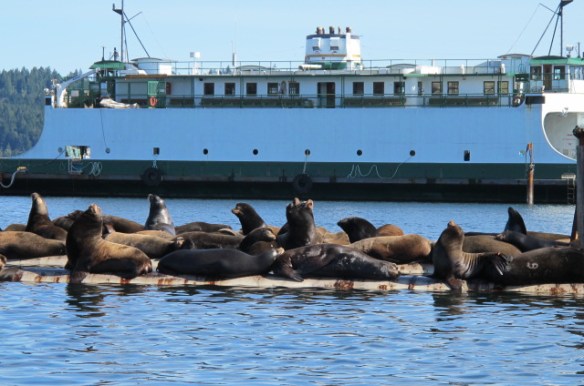
Yesterday, we drove 40 minutes to see sea lions. I packed snacks, a camera and my writer’s notebook. On the drive, I gathered ocean views through the trees, wondered how each inhabited spot looked like it belonged to a different decade and marveled at how few cars were on the road on this old island highway.

I thought about needing to write many more Slice of Life posts and felt comforted by new inspiration all around me. Lately, I have been listening to writers speak not just as a reader but also as a “need-to-be-writing learner.” Certain advice speaks particular truth and wisdom: write daily, omit unnecessary words, gather every small detail.

As we sat on the fishing dock watching sea lions and being amused by their bellows, I asked myself: how hard can that be?. Details, details, details. I could do this. Write all that I noticed.

Sixty plus sea lions sunning themselves on a barge is all about noise. What words went with all of that noise? Bellows wasn’t quite the one. It was more like wails. Or barks. Honks? More like squeaky honks. No, croaks. But hardly like a frog. Maybe a monstrous frog with a bad cough? Burps. Burps sounds offensive. Yet, all of this noise is kind of offensive. After 5 minutes or so, I am convinced that most of their communication is about telling each other off. “Move.” “You move.” “Get your head off my behind.” I know, I know, they don’t really have behinds. This is why writers do research. But I had a notebook, not a computer, so all I could know is what I could see. I made a list: honks, growls, sneezes, sputters, squawks, gurgles, howls. And then another: like honking geese, wailing cows, purring donkeys (yes, I know donkeys don’t purr but neither do these guys)

“They’re noisy bloody things,” remarked one guy. Maybe he had it. Captured it in few words. Except he sounded annoyed. I was completely entertained. In rare moments of silence, I held my breath waiting for it all to begin again.

Time to move beyond the noise. This is hard to do. They are glossy just out of the water, like wet patterned stone. All graceful and sleek. More bellows. They look like long-necked bears rolling about jostling for position. Squawk. Honk. Roar.

Eventually, I gave up. Packed away the notebook. Put away the camera. Sat back in the sunshine and smiled at all of the ruckus.

Sure this could be a story. But I won’t be telling it. I am more content just to sit beside the ocean on an island not far from home, completely delighted that I can’t capture in words this barrage of sound from these sea creatures I am so lucky to see.

It is not about searching for stories in the details. The stories find us. We gather details so that they can come alive for others when and if we choose to tell them.

Bad Irony: Slice of Life

I am participating in the Slice of Life challenge to write and publish a post every day in March.

Slice of Life is hosted by Two Writing Teachers. I thank them for the community they provide. Read more slices here.

Book Buying Resistance: Slice of Life #17


Book Buying Resistance #sol16

This post is all about how I resist spending a lot of money on picture books.

Run far and hide your eyes if you think this will help you save money. It won’t.

Confession #1 I am terrible at not buying books.

Confession #2 I will actually likely use this post to try to influence your book spending (costing you, not saving you money, to be clear)

Confession #3 I have absolutely no advice on how to not buy books.

Confession #4 I lured you here under false pretenses with that title

Confession #5 This post isn’t about that at all

Is this where I should be having people sign a waiver?

I will now stop numbering the confessions as I reveal a lot of things about my relationship with book ownership. You might start to think about some particular adjectives: compulsive, addicted, hopeless, done for. That’s okay. I am not in any kind of denial about this.

To begin, I often dream about books. There are days where I wake up and think, I really need a bookstore visit. The craving gets worse if I ignore it. It is often fuelled by strong coffee. There is a bookstore that takes me 14 minutes to walk to and I pass a number of coffee places along the way. I am sure you know how that ends.

There is also a dedicated children’s book store in Vancouver called Kidsbooks. As you might imagine, I love it. It takes me longer to get to than 14 minutes. Thankfully, I can’t walk. Well, at least not walk home with a bag full of newly acquired books. When I enter this bookstore, I walk around the store a few times before I let myself touch any book. I need to absorb it all. I will be here for a while. This circling lets me plan my browsing. Then I begin to gather a pile. Before I sit to read and make choices, I consult a list (of course I have a list – I have a book of lists!) to make sure I haven’t missed anything. Then I begin to read. Usually, I get up many more times because I have remembered some other “must look at” title. Yes, a visit here always takes a while. A wonderful while.

Certain book lists and blogs do me in. Travis Jonker (of 100 Scope Notes) does preview posts by publishers and seasons. I resist opening these emails. To call my resistance futile, big understatement. Dylan Teut (who blogs at Mile High Reading) just completed Part 5 of 2016 picture book releases. You realize that means there are four other lists! He actually alerts me on twitter every time he publishes a new part! It is rare that I can read reviews by Margie Myers-Culver of Librarian’s Quest or Donna McKinnon of 32 pages and not come away wanting at least one book. Minh Le of Bottom Shelf Books shares a best of the year post every year. I always check to see what I might have missed. His lists are amazing! Alyson Beecher sends me “Have you see this one?” tweets – usually beautiful new or soon to be released nonfiction titles. Almost always, I am convinced that they should soon be mine.

I also have specific rationales which I use to collect more books. These seem absolutely convincing. At least, they convince me every time. I am doing a Mock Caldecott unit? I really should own most of the titles. Books that make us laugh? Every classroom library needs more of these. Friendship themes? My students constantly ask for more. A title that gently tackles an important issue? Irresistable. Nonfiction is the worst. Sadly, too many of these books go out of print too quickly. If I like it and imagine using it with a class, I buy it. I am at a conference where the author or illustrator is signing? Do I really even need to explain this one?

Yes, yes, I do try all of those things others suggest. Those money saving things. They all backfire.

There is this one: Go to the public library. After all, those books are free. I do. I bring home stacks and stacks of books. I stalk the new releases display. I don’t even feel guilty when I empty most of it into my bag. We bring library books back after all. The thing is, when certain books are in my house for a while, I become certain, that I actually need them to reside there permanently. This means book shopping ahead.

How about: Read a number of titles while at the bookstore. It isn’t necessary to buy them all. This too, I do. And yes, of course, it helps shrink the list of “books that should probably be mine” but. . . Some books, when I leave them at the bookstore, call to me. I shouldn’t have left them. My advice on this is firm: when you fall in love, take them home or they will haunt you. Marilyn’s Monster did this to me. So did Sidewalk Flowers, Herman and Rosie, The Dog that Nino Didn’t Have, The Tea Party in the Woods . . . I remember the pull. I couldn’t fight it.

The “for the price of that book, you could have bought . . . ” strategy is completely ridiculous to me. Most things I might buy instead will be gone or wear out: coffee, dinner, new shoes, another pair of black jeans . . . Not much has the staying power of a picture book.

Sometimes, publishers send me books. This should mean I shop less. Books into my classroom = less shopping. Nope. I soon manipulate the logic. My thinking goes something like this: “I didn’t have to spend the time or money getting those books so I have more time or money to get these other books.” Books + more books = lots of books! See? Hopeless.

But this is the thing: every book that comes into my collection is shared. Sometimes, multiple times. I own each one because I love it. I have multiple reasons to read it or put it in the hands of a reader. I use each one to grow readers, to spread book love, to share an incredible story, to wow with a beautiful illustration, to create community. Books, in my world, the world of children, change everything. Picture books don’t cost me. They enrich my life and the life of my students in countless ways.

Book buying resistance? Thankfully, I have none.

Bad Irony: Slice of Life

I am participating in the Slice of Life challenge to write and publish a post every day in March.

Slice of Life is hosted by Two Writing Teachers. I thank them for the community they provide. Read more slices here.

If I lived in a house by the sea: Slice of Life #16

If I lived in a house by the sea #sol16

Every year my family comes to stay in a house on the ocean. Sometimes in the spring. Sometimes in the summer. When we are lucky, it is more than once. It’s strange that it feels like such an other place because I could easily visit the ocean every day – we live a 15 minute drive away from a beach. But in these ocean houses, it is different. It is as if everything is about the water. Like the rhythmic pull of the tide, I am slowly pulled from my other, every day life.

I watch the ocean all day. Wake up to it throughout the night. The stars are brighter. The skies are more dramatic. The world is lonelier.The constant movement is soothing and terrifying all at once. I watch the surface looking for sightings of all things I wish desperately to see: whales, dolphins, beautiful birds of the sea.

I walk along the shore and think about what life would be like if I lived here. If I knew this shore. Each rock, each possible sunrise, the patterns of the tides.

I think about small moments of a different life. A life that might be mine if I lived in a house by the sea.

I would have a large dog and every day we would walk away from the water and into the forest, breathing deep the moist, earthy air, noticing anything that broke through the quiet: bird song, footfalls, wind whistles.

Morning coffee would be sipped early in the morning on a rock overlooking the ocean. A warm jacket would wait on the same hook for me each day. I would step into boots in the winter, sandals in the summer, worn so often they could walk themselves down our path.

Storms would find me in my favourite chair by the window spellbound by the ferocity of the wind, the angry dark tones of the sky and the pounding of water from both clouds and sea.

I would add carefully to my collections. Jars and jars of sea glass.  Bowls of smooth stones. Shells, bones and wood that caught my eye.

Every whale I saw would delight and sadden me. Oh, that I was at the right spot and looked up just when. But what if it never happened again? My luck would feel so precious that my eyes would fill with tears each and every time.

I would think differently about blue and grey and white. Rocks would tell me stories. The sun’s rise and fall at the horizon would never fail to hold my attention.

If I lived in a house by the sea.

Bad Irony: Slice of Life

I am participating in the Slice of Life challenge to write and publish a post every day in March.

Slice of Life is hosted by Two Writing Teachers. I thank them for the community they provide. Read more slices here.


Sad books: Slice of Life #15

Be warned, I am about to rant a little. Yikes and oh my, I think we need to be so careful with how we talk about books we don’t like.

I just read a comment about how books about grief are boring. Okay, sure, not every reader loves every kind of book. Personal preference reigns supreme in the literary world. I just don’t understand why some people bash emotional books. If a book explores death, grief, sickness, pain or suffering, it is painted with a wide sloppy brush saturated in black paint: too dark, too sad, too depressing, to be avoided.

It is “too easy to write about grief” the criticism continued. Grief seems, to me, one of the most complicated things to write about. At least to write well. It is comprised of such a range of feelings: anger, sadness, guilt, confusion, pain. To hit all of these things correctly for a character. Believably. Honestly. This is not easy.

Grief and hope are intertwined. When a character stands balanced precariously between them, that is when the reader feels the most. Achieving that balance in life or in words, is not even close to easy.  But it is truly beautiful.

Sad Books #sol16

Readers seek out what they need. When we find books that allow us to experience emotions we can explore vicariously and from a distance, a book can really be the right book at the right time.

Stories let us choose our vantage point: witness, companion, fully immersed. That choice keeps us safe. That choice lets us have the experience we need.

I know I have avoided highly emotional books out of fear of my own strong reactions. Books that especially scare me? Books where children die, go missing or contract an incurable disease. But honestly, when I finally pick up emotional titles and let myself be surrounded by the story, it is here, where I feel the most human. Sometimes, turned inside out and raw but sharp and clear and wiser.

Not that I am an advocate for only sad books. Hardly! Different readers want different experiences and they seek out books looking for a myriad of things: adventure, action, humour, drama, escape, high fantasy, etc. No one genre makes us more or less of a reader.

For a while I thought amusing stories were fun but kind of forgettable. Then I began sharing silly, funny and absurd stories with my students. There is nothing like the amused joy of a room full of children sharing a story together! Laughing deep and contagiously? It doesn’t get much better.

Lots of books. Lots of genres. Available for lots of readers. This is how it should be. If we are in the business of helping books land in the hands of readers, we should not be painting any genre with a dismissive sweep. Instead, we should be polishing the shelves and helping them all shine.

And since I feel the current need to be champion for highly emotional stories (of the middle grade/young adult variety), I am going to share ten of my favourites.

Read one or all ten.

Cry a little and feel big.

The older I get, the more I realize that every time your heart breaks a little, it heals a little stronger with room for more.

The One and Only Ivan by Katherine Applegate

The Thing about Jellyfish by Ali Benjamin

Bird written by Crystal Chan

Nest by Esther Ehrlich

The Honest Truth by Dan Gemeinhart

See you at Harry’s by Jo Knowles

The Summer of Letting Go written by Gae Polisner

The Boy in the Black Suit written by Jason Reynolds

Orbiting Jupiter by Gary D. Schmidt

Each Little Bird That Sings written by Deborah Wiles

Bad Irony: Slice of Life

I am participating in the Slice of Life challenge to write and publish a post every day in March.

Slice of Life is hosted by Two Writing Teachers. I thank them for the community they provide. Read more slices here.

Monday March 14th, 2016

It’s Monday! What are you reading?

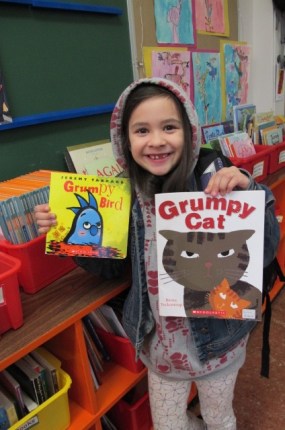
Each week I share a reading photo of the week. This week I had a morning visitor who told me after looking through the shelves: “Wow, animals sure are grumpy!” She has a point!

IMG_0762 (1)

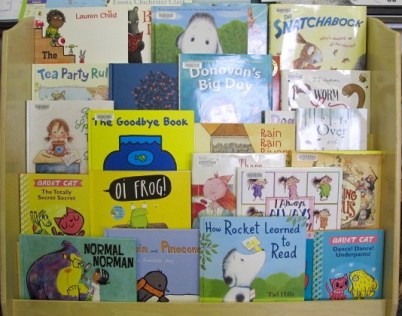
Books we have recently read:

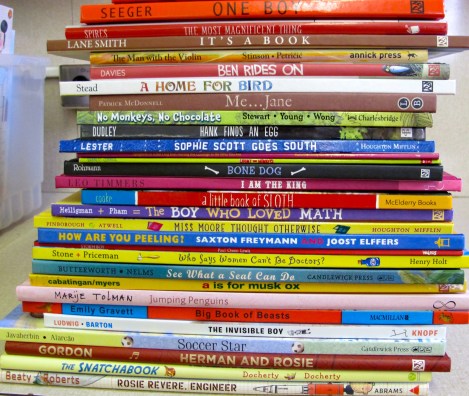
IMG_0923

Join Jen from Teach Mentor Texts and Kellee and Ricki from Unleashing Readers and share all of the reading you have done over the week from picture books to young adult novels. Follow the links to read about all of the amazing books the #IMWAYR community has read. It’s the best way to discover what to read next.

IMWAYR 2015

On the blog:

A celebration post: Now Here

Daily Slice of Life posts:

Collections from a Day

When the day starts with a pop up heart

Other Things

Let’s talk about this child: written after 2 nights of parent/teacher conferences

The Reading Warrior

Writing Truth – the comments on this post are so interesting

The season of dreams

Books I enjoyed:

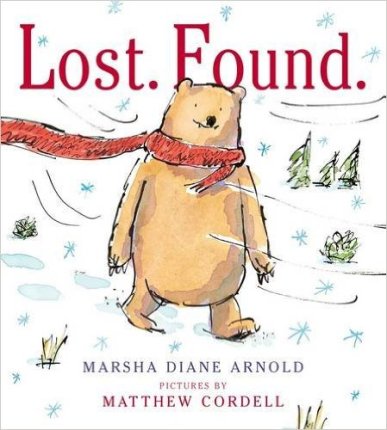
Lost. Found. written by Marsha Diane Arnold and illustrated by Matthew Cordell

Every book I read illustrated by Matthew Cordell makes me love him more. This is a perfect book to prove that images can carry a story with just a few repeated words. My only complaint? I loved it too much. I need my own copy.

Lost. Found.

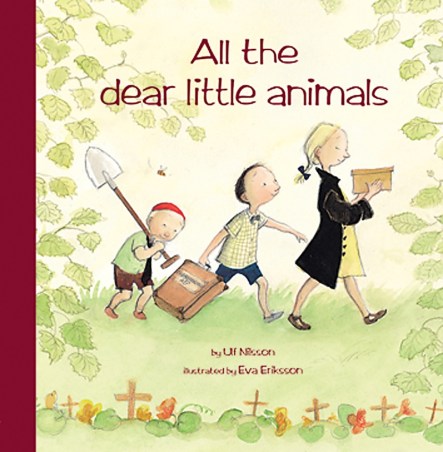
All the Dear Little Animals written by Swedish author Ulf Nilsson and illustrated by award winning Eva Eriksson. Translated by Julia Marshall.

This book is about three children: Esther, the boy who is our narrator and Esther’s little brother Puttie. Esther finds a dead bee and decides to dig it a little grave. Our narrator confesses that he is afraid of everything, especially of dying but after a few disparaging comments from Esther, decides that he can write things, like about how horrible death is. Off they go, shovel, poem and little coffin in hand to bury the bee. “Poor little bee”, says Esther, “but life must go on.” Then a plan hatches. There must be dead things everywhere – shouldn’t they find these things and bury them all? The children’s idea grows into an idea for a business. They call it Funerals Ltd.

I read this book years ago but shared it with this class after the scene in The Year of Billy Miller where the bird flies into the window and dies. I believe that we need to allow children to explore books about death and books like this make the cycle of life not so scary. Highly recommended.

9781903458945

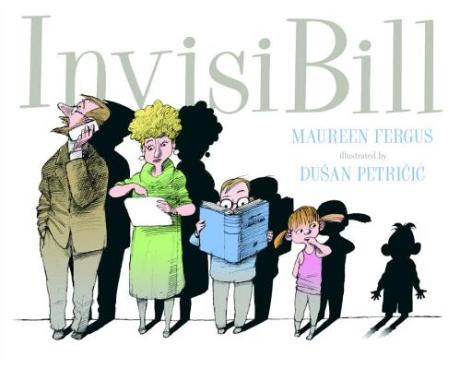
InvisiBill written by Maureen Fergus and illustrated by Dušan Petričić 

Busy, busy, busy. Everyone is busy. Too busy it seems to notice what happens when you are not well . . . noticed. Charming and kind of hilarious. My class loved this one!

Invisibill

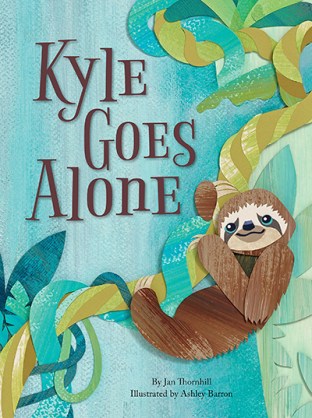
Kyle Goes Alone written by Jan Thornhill and illustrated by Ashley Barron

Goes meaning “gotta go” as in to-the-bathroom. So you can imagine how fun this will be for kids! Layer upon layer of rainforest in these rich illustrations and information about sloths and camouflage in the back of the book.

Kyle-Goes-Alone

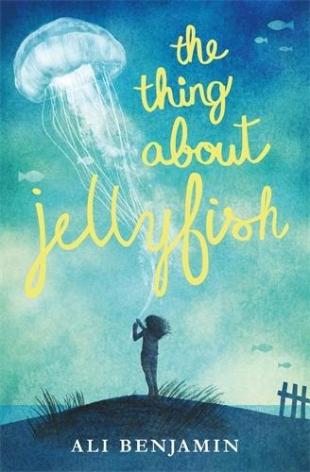
The Thing about Jellyfish by Ali Benjamin

Such an intriguing book. I spent part of it terrified by jellyfish (a new phobia I think) and other parts immersed in Suzy’s grief. A story of courage and confusion and the deep, hard work that is navigating grief. The science included here was fantastic.

The Thing about Jellyfish by Ali Benjamin

Reading Progress updates:

2016 Chapter Book Challenge: 8/75 complete

Goodreads Challenge: 71/400 books read

#MustReadin2016: 6/30 complete

Nonfiction Picture Book Challenge: 13/100 titles

Diverse Books in 2016: 8/50 books read

Up next? I have packed a lot of novels for a week away on the coast. Can’t wait to share a week from now (or possibly in two depending when we are back) First up? Some Kind of Courage by Dan Gemeinhart

The season of dreams: Slice of Life #14

 The Season of Dreams #sol16

I am entering the season of dreams. I know this is true. I know the reasons why.

Change ahead. Time off. Decisions to make. Uncertainty.

In the early morning hours, just released from dreams, I am bewitched by possible prophecy. Intrigued by the clarity that rises to the surface. Frightened by an anxious vision I had not ever considered.

How far can I follow the path my dreams mapped out before I am lost? Dreams live in a different land of memories. They are made up of images that drift, not tethered to any actual event. But yet, they tell a story and unraveling that is our key to making sense of the strong images we can recall.

I search for direction in the land of dreams. I believe in their wisdom. I am both soothed and surprised by their revelations.

This is the season of dreams.

I am trying to be wide awake as I sleep deeply.

Bad Irony: Slice of Life

I am participating in the Slice of Life challenge to write and publish a post every day in March.

Slice of Life is hosted by Two Writing Teachers. I thank them for the community they provide. Read more slices here.
Writing Truth: Slice of Life #13

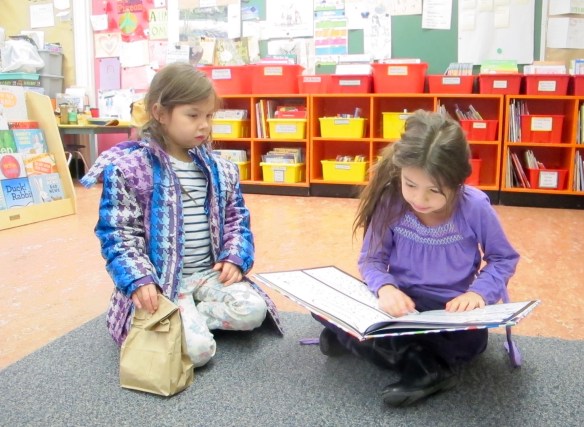
IMG_0479

The act of writing is fascinating. With words we can strip experiences down to their bare bones truth. Or, we can dress up our reality to be almost unrecognizable. The truth quotient? Sometimes even the writer cannot accurately measure it.

In our stories, we are selective with details. What do we choose to leave out? What doesn’t make the cut? What do we emphasize? How does this impact our truth?

Where do we spin things away from what really happened? No matter what the intentions, we do it. To highlight something essential. To add drama. To protect privacy. When we are not brave.

Sometimes we write around what we should not share. We leave hints that likely, only we, ourselves could figure out. Other times, we nudge things a little closer to actually being exposed. But, because we are so very precise in what we do and don’t say, we are still playing it safe.

There are stories that unravel almost exactly as they occurred. Simply changing a defining detail, leaving out a name, not identifying a gender and we keep our subject hidden. If we so choose. Sometimes, there is no reason to be secretive.

Some stories keep rising to the surface, asking to be told. Some emotions can only be soothed when we tell their story. How can we reconcile this with what is permitted? The truths with free passes are often quite quiet. The truths that must not be shared wail and whine.

When we write daily, it is not about not enough choices, it is about too many. Immediately, many are eliminated because they are not to be shared. Or they are not ready. Or we misunderstand them. We don’t yet know the words.

I have particular truths that are desperate to be released. They are the stories that haunt me. I would like to literally fasten them to the page and set them free. No, that is not true. I would like to walk away and set myself free.

I long to write them with the truth quotient turned up high.

But I don’t yet dare.

Bad Irony: Slice of Life

I am participating in the Slice of Life challenge to write and publish a post every day in March.

Slice of Life is hosted by Two Writing Teachers. I thank them for the community they provide. Read more slices here.
 

Celebration: Now Here

Celebration: Now Here There's a Book for That

This post is a follow up to a post I wrote in the fall titled: From Here. For it to make sense, it is important to visit the original post. But I will summarize all the same.

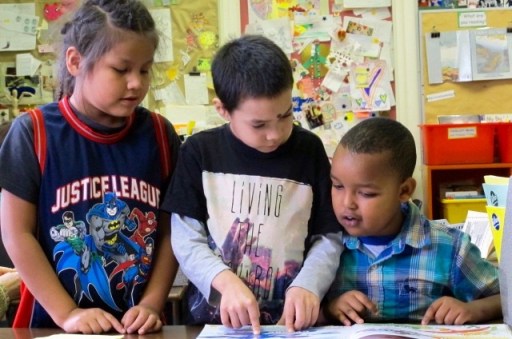
In September, with my new class Grade 2/3s, I very quickly realized that we had a huge mountain to climb. A mountain of words and stories that needed to become our own.

From the original post:

“And . . . (I am not going to write but) many children (more than half) in my new classroom are not reading even close to grade level “expectations.” This, I was not fully prepared for. Not to this extent, not so many children.”

I named what I observed:

  • They aren’t independent.
  • They desperately want to be.
  • They don’t identify as readers.
  • They can’t self select titles that correspond to their levels.
  • They need to be reading and they aren’t and this is not okay.

I felt a lot of things.

“I feel angry and I am not going to elaborate on what I know has gone wrong. I feel worried. I feel little moments of desperate. This isn’t grade 1 where my task is to grow readers from non readers. This is grade 2 and 3 where I must now grow readers and play all kinds of catch up. I feel responsible. But most importantly, I feel urgent. And this is what I celebrate – the urgency of my task. The advocacy that needs to happen. My determination. It is fierce. My fear. It is motivating. My breath. It keeps me grounded. Somehow, someway, we are going to change things for these children.”

And then yesterday I published this post: The Reading Warrior, It describes a determined little reader in my room. This same child was one of the many I so worried about in September and although I had plans and determination, I didn’t know if I was going to be able to help.

You see, in my room, I am not just playing catch up. It is not just about imparting skills. It is not simply about good teaching. Or about my mantra: “A room full of books and time to read them.” It is all of these things, yes. But it is also about helping to find calm. Confidence. Belief in one’s self. It is about trust. It is about serious routines and expectations. It is about cheerleading each small step. It is about helping each child own his/her own journey. And it is about all of the amazing people who help me make sure all of these things are in play. Growing readers is a team effort. And my team is incredible.

Are we all now where we should be? No. But some of us who weren’t, are. Some of us are well on our way. A few of us have finally stepped on to the path. And one or two are not ready to begin but I am pretty sure they know we are there rooting for them when they want to take that first step.

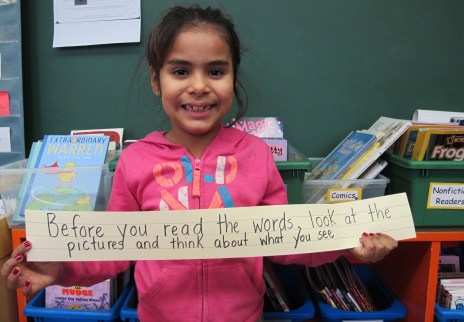
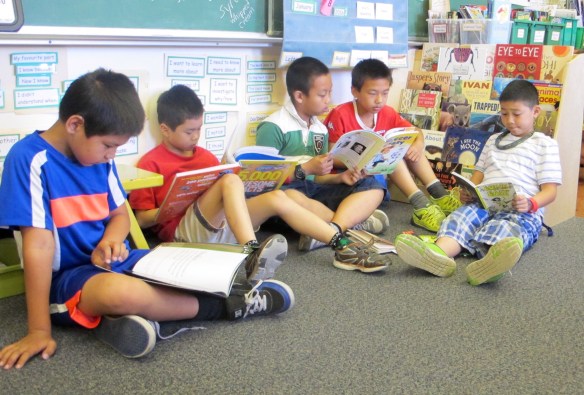
Now we find reader’s statements that must be shared in our conferences.

Celebration: Now Here There's a Book for That

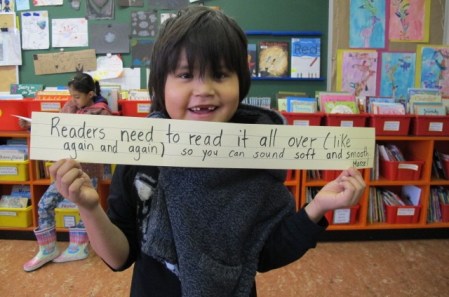
We know it is about effort (again and again) and results (soft and smooth).

Celebration: Now Here There's a Book for That

We have uncovered Reading Warriors.

Celebration: Now Here There's a Book for That

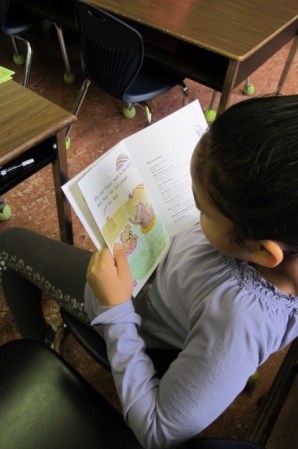
We are, now here, a room full of readers.

Thank you to Ruth Ayres and the #celebratelu community!

Being part of a community that regularly shares gratitude and celebrations truly transforms my weeks.

celebrate-link-up