The power of a lie!

Our reading group has been busy writing and talking about connections we have to the books we are reading. This title had big connecting power!
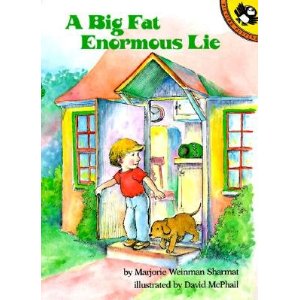
A Big, Fat Enormous Lie by Marjorie Weinman Sharmat and illustrated by David McPhail (one of my favourite illustrators!) is a book we can all relate to easily.  A little boy lies over one small thing and his lie comes alive in the form of a monster, following him everywhere, bothering him, sitting on his stomach. The monster keeps growing and growing and growing until it can only be escaped by . . . telling the truth. Phew! The relief! This little book sure inspired some powerful writing from our reading group. We all recognized that lies can be pretty powerful but not as powerful as the truth 🙂

Sergio writes: “When I lie, I get bad luck and I crash into everything and my stomach hurts. Oww! Oww! Oww! Ouch that hurts.”

Ricky explains: “Lying is a bad thing. If you lie, you will have bad feelings and your tummy will feel like it’s hurt. When you have a nap, it makes you feel better. But when you wake up, you still have to tell the truth. So if you tell the truth, everything will be okay.”

Annie summarizes the story, “The message of the book is that you should never lie to anyone. You have to admit it. When you don’t tell the truth, you’ll feel like the lie is lying in your stomach. After you tell the truth, the lie is gone.”

Lisa writes, “If you tell a lie, you feel guilty because you just want it to go away. If you did something wrong, you should tell, don’t lie. If you lie, you need to tell someone.  If you don’t tell, it is going to get bad, then worst. You feel guilty if you lie. It feels good if you tell the truth.”
Tales, Tails and Tadpoles

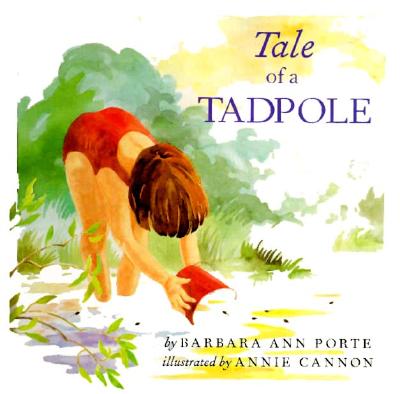
We read an interesting information story book called Tale of a Tadpole by Barbara Ann Porte. Illustrations by Annie Cannon.

Before we read, we peeked at some of the pictures and wrote some questions about tadpoles in our Wonder web:

Kevin wondered:

What do they eat? How fast can they swim? What are their predators? Do they have parasites?

Emily also had some questions:

Why is their tail so long? Why are they brown? How do they swim? Why are they so small?

Some other great questions from Jena:

How come they transform? Do they have gills? How do they get out of their eggs? Do they eat fish?

As we read, we asked more questions and read on to see if we could find out the answers. At the end of the story, we found out that we had learned a lot and everyone chose one of the key questions to answer in more detail. One surprise for everybody was that the tadpole in this story turned into a toad, not a frog. The grandfather in the story explained the differences between frogs and toads and we were all eager to discover what these were.

Many people explained some of the differences between frogs and toads in their writing. Jeremiah wrote: “Toads have bumps on their back but frogs don’t. Frogs have smooth skin.” Eddy explained, “Toads live in the woods and frogs live in ponds.”

Another topic that many people chose to write about was why the tadpole’s tail got smaller. Hajhare writes, “Frogs get energy from their tails.” Jenifer gave us a few more details: “All the nutrients from the tail go into the body, this makes the tail small.”

Information storybooks such as a Tale of a Tadpole are a great way to learn a lot of new information while enjoying a great story. We find that when we ask lots of questions before we read, we are even more eager to read and see what new information we can find out.