Stuck

Picture Book Love #5: Celebrating picture books that are just too good not to gush over.
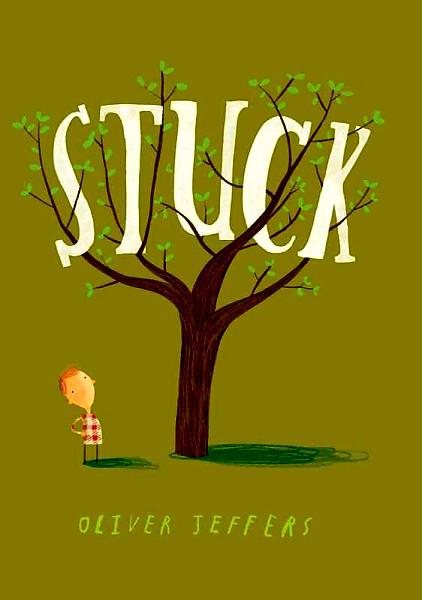
“Ms. Gelson have you blogged about that book yet?” I am asked this question about six times a day. I have been asked this question since last week. I am asked this question everyday at least a half a dozen times because it is basically the class consensus that I am holding the book Stuck by Oliver Jeffers hostage. I have the book at home to blog about it and share how much we absolutely adored it. Therefore, I am preventing it from being on our “New Books” stand in the classroom where it could be fought over daily so that children could relive their joy independently or in small groups (I’m pretty sure this book is one of those books that has a child magnet in it – no child can be within 2 meters of it without being lured closer and closer). All of my excuses do not suffice. I have extreme guilt. I have been busy but I know that doesn’t count because this book needs to return to our classroom NOW so we can give it the love it deserves! So here we go:

WE LOVE THIS BOOK. LOVE OF THE “READ IT AGAIN” CHANT KIND. LOVE AS IN WE LAUGHED, WE CRIED, WE ALMOST DIED. LOVE. LOVE LOVE.

Why? It’s not because we are already Oliver Jeffers fans.  (Even though we are) It’s not because this book is about some fantastically amazing creature or place. No monsters. No wild beasts. No magic. It is beautifully simple really. Just a boy. A kite. And a tree. But Jeffers weaves little boy logic with the right dose of the absurd and creates a picture book that sends children into laughing mania. Beautiful shout out laughter that makes you laugh even more when shared. This book read aloud in a classroom of book lovers is a force to be reckoned with.

The plot? Floyd gets his kite stuck in a tree. He can’t pull it down so he throws his shoe at it. It also gets stuck. So he throws his other shoe. Stuck. Up went Mitch the cat. (He was tossed. He didn’t amble up of his own accord in case you might be wondering) Again, stuck. When Floyd fetches a ladder and ends up tossing it into the tree in the attempt to dislodge everything, a few students fell over. Really! “Why would he throw it? Oh man!” This tossing of items up the tree continues. When the kitchen sink goes up, we really were losing it. “He’s crazy!” “My God!” “At least it’s just a kitchen sink!” More things end up in the tree. Much larger and seemingly impossible things. The absurdity did us in. We were bowled over by giggles. I heard a few, “Please. Make it stop,” requests. Almost as if I was tickling each child without mercy. But no, I was just reading the book!

When Floyd finds the saw . . . Well let’s just say that his decision completely put us over the edge. The laughter engulfed us. Nobody could get a word out. When the book ended and the breathing slowly returned to normal, the unsolicited reviews began:

“That’s the best book ever! A 10 out of 5!”

“That book was awesome. The most awesome. The best book in the world!”

“I loved it infinity and beyond!”

So mission accomplished. Book is blogged. It is going in my bag to return to the classroom tomorrow. My prediction? I will be begged to read it immediately again and then it will travel from desk to desk spreading picture book joy.


Meadowlands

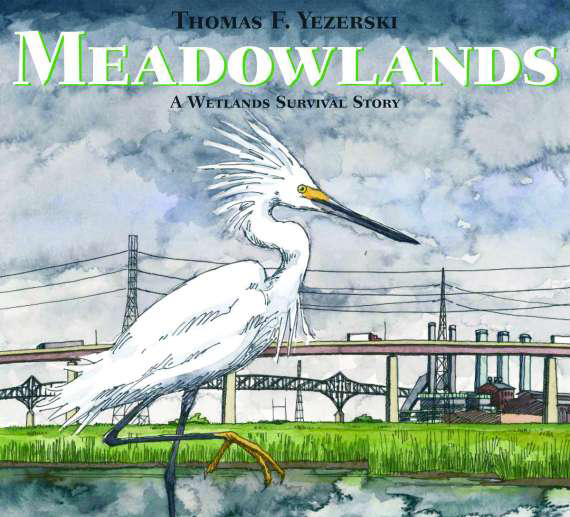
Have I mentioned lately how brilliant my little reading group happens to be? Or how much I enjoy our morning lessons? It is such a pleasure to learn along with these students! We have been working on strategies to use when we come across an unknown word or concept using the wonderful story by Thomas F Yezerski: Meadowlands – A Wetlands Survival Story.

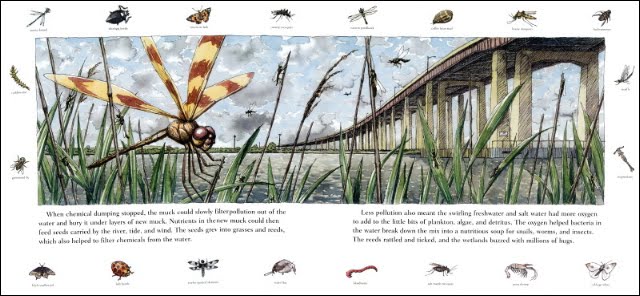
This book takes us back in time hundreds of years to when the Meadowlands were 20,000 acres of swamps, marshes and bogs and home to many different plants and animals. Over time human interactions had a very detrimental effect on this wetland habitat. Much of the wildlife fled or disappeared. Pollution and gargbage threatened to destroy the area completely. In the 1960s only 11,000 acres of wetlands survived in the Meadowlands.

However, many things worked in the favour of this ecosystem: the daily meeting of the river and tide, laws that alterted chemical dumping, reintroduction of different insect, fish and bird species as the habitat improved, etc. In 2007, a young osprey was spotted taking flight from a nest built in the Meadowlands. This young bird of prey was a symbol of recovery and hope for this precious ecosystem.

As we read the text and came across a word we didn’t know, we collectively tried to figure it out and charted our thinking. We filled an entire chart paper with strategies!

An example might help. The text read:

The Meadowlands is an estuary where the Hackensack River empties into Newark Bay. Much of it is wetlands, with a mix of freshwater and salt water soaking the spongy ground.

We didn’t know what estuary meant. We needed to use some of the strategies listed below to determine what the word meant (especially reading on to the next sentence, inferring and referring to a reference page that included a map) We figured out that it probably meant a boggy, wet area where the fresh water mixed with the ocean water and that maybe it would support unique ecosystems.

What do you do when you come to an unknown word? 

The list the students came up with:

*hold a question in our head and read on to find out

*re-read a section and think carefully

*read the previous sentence or next sentence for clues

*does the word sound like another word? have a root that we recognize?

*check the reference pages like maps, glossary, pictures

*connect to other texts or our background knowledge

*use the reading power strategies like connect, visualize, question and infer

*think about whether you are understanding. This is worth it even if it might be slow going and very tiring!

*ask, “Does this make sense?” and then “Does what I am thinking make sense?”

So I did mention the brilliant aspect of these kids right? What was wonderful was that as we read, we found there were fewer unknown words or confusing concepts because we were gaining a deeper understanding of the subject matter. Now we can engage in this active engaged reading independently with various non-fiction texts. But, we continue to practice with a weekly book we can share together.


When Randolph Turned Rotten

Today we started reading books that help us to address the bully/bullied/bystander dynamic. When Randolph Turned Rotten by Charise Mericle Harper was our first book.

Many would not categorize this as a book about bullying. It would more likely be labelled a book about feelings, friendship or forgiveness. While it does teach us about all of those things, I also think it is the ideal book to introduce the concept of how our feelings translate into our actions. Quite simply here: rotten feelings = nasty actions.  We are going to learn a lot in this unit. To start, why does someone act like bully/engage in bully behaviour? Next, what does being bullied feel like? What emotions does someone go through? Third, what about when there are bystanders? What are their roles? And finally, how does all of this work together? What happens when bullying begins and isn’t stopped?

In When Randolph Turned Rotten, we gain insight to what made Randolph go from being a good friend to a guy with “stinky rotten insides” that wishes ill on his best friend. In Randolph’s case, he is impacted by envy. His lovely best friend Ivy is invited to a birthday party. An all girl birthday party. A birthday party that Ivy is super duper excited about and that Randolph is NOT invited to attend. Randolph wishes he could go. He wishes Ivy would not go. He wishes he wasn’t going to be left alone. Then his wishes get mean. He hopes Ivy will have a horrible time and he devises a plan to ensure it. Randolph turns into nasty Randolph (Harper creates the perfect labelled diagram complete with mad hands – we all practiced trying to smile with clenched fists like that and it was close to impossible!) Mean thoughts invade his brain.

Randolph does a number of things to try and mess up Ivy’s trip – many of them focussed  on getting her to pack ridiculous items in her bag and scaring her about potential beach hazards like the awful beach bears that she will need a poiny stick to ward off! This book has  very interesting twist when Ivy arrives at the party. The geese (Ivy happens to be a goose!) get locked out of the house and must spend the night on the beach. All of the items Randolph inist Ivy pack turn out to be incredibly useful. Instead of ruining the party, Randolph is a hero! But, not to himself. Randolph, once alone with just time to contend with, feels guilty for what he has done. He apologizes. Ivy forgives him. They are best friends as always. But, we the readers, learned a lot. When we let our upset feelings take over and take us from thinking to acting in mean ways, we are engaging in bully behaviour. Wanting others to feel as bad as we do is a normal feeling but not one that we want to allow to cloud our judgement. It helped us understand why someone might do and say cruel things. It allowed us to start having those conversations about why someone might bully.

We are looking forward to reading more titles on this theme and the conversations that they might inspire.

Garden themed Books

Division 5 is participating in the Growing Chefs program and learning all about growing plants, urban agriculture and the wonder of vegetables! Our windowsills are full of seedlings and we are indulging in many garden themed read alouds to learn more about the magic of gardens, growing and green. The following is a list of books that will be part of our reading:

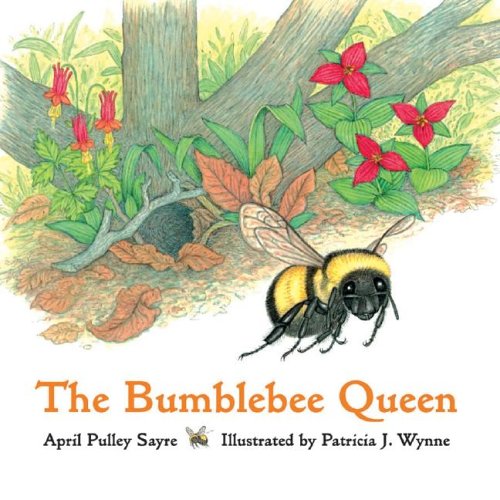
The Bumblebee Queen by April Pulley Sayre and illustrated by Patricia J. Wynne

An informative information story book that details the lifecycle of the Queen bee. Touches on hive life, pollination and human behaviour towards bees.

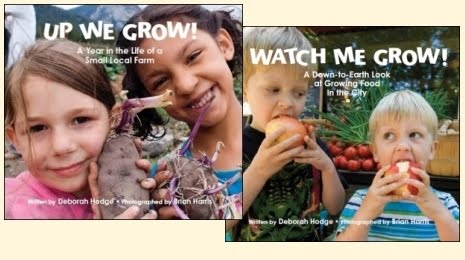
Deborah Hodge‘s Watch me Grow and Up we Grow (photographs by Brian Harris)

These books have special meaning as Deborah Hodge gifted them to our class when she visited in the fall! These books immerse us in the world of gardening and growing! One focuses on life on a small farm and the other looks at growing food in the city.

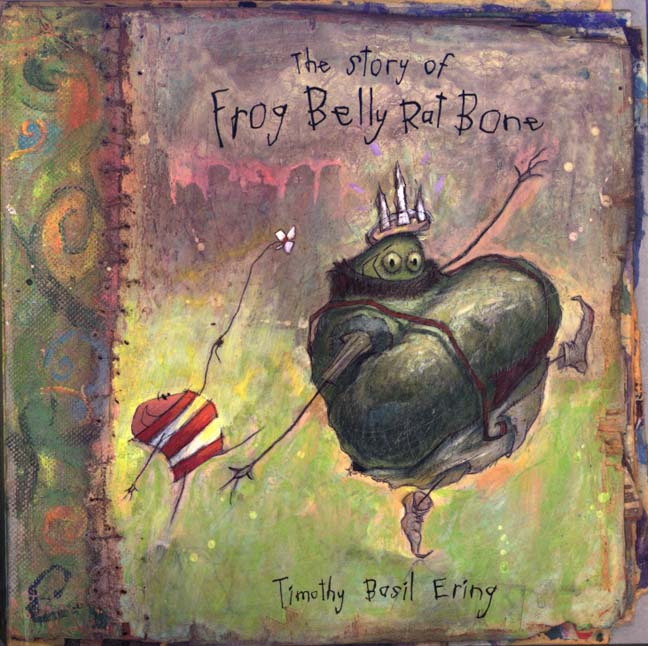
The Story of Frog Belly Rat Bone by Timothy Basil Ering

 In Cement Land, the promise of a packet of seeds is huge admist the gray drab world. Highlights the magic of watching seeds transform into plants!

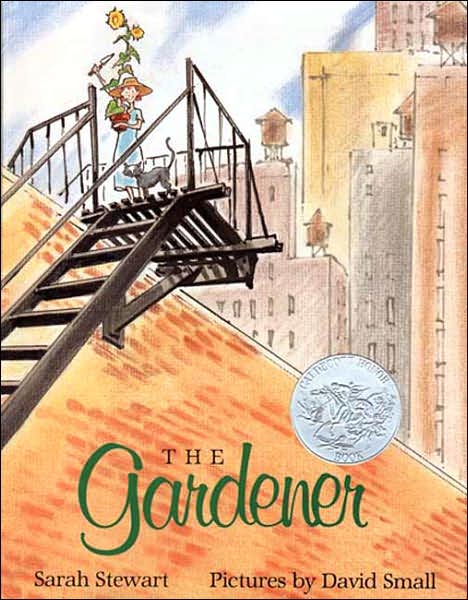
The Gardener by Sarah Stewart and illustrated by David Small

Can a package of flower seeds bring happiness and beauty to a family during the Great Depression?

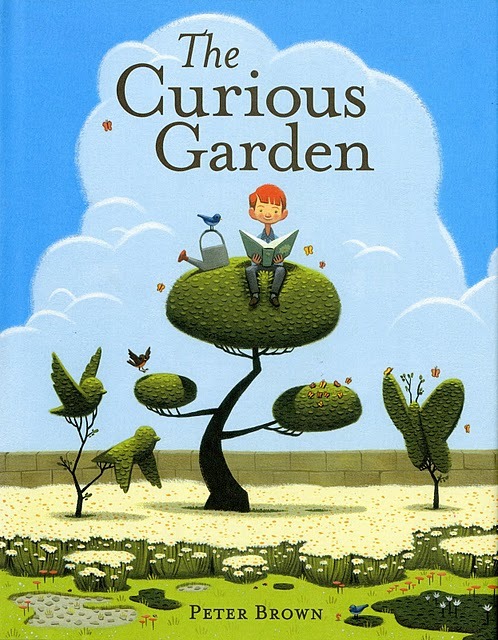
The Curious Garden by Peter Brown

Liam lives in the city and nurtures a struggling garden into a majestic green world. The power of a garden to invade (in the best of ways) stark city life.

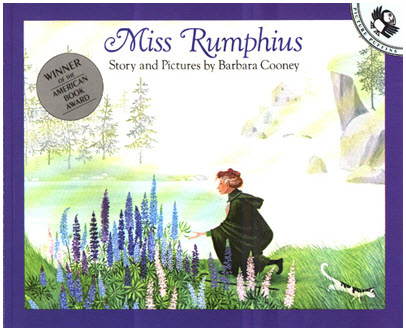
Miss Rumphius by Barbara Cooney

We each need to do something to make the world a more beautiful place. Miss Rumphius spreads lupine seeds throughout the countryside and the resulting flowers have a transformative effect on everyone who stumbles upon them.

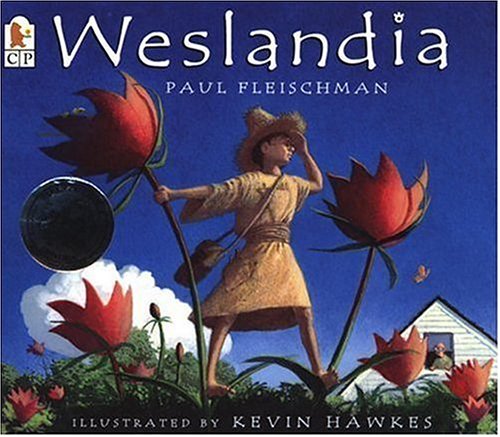
Westlandia written by Paul Fleischman and illustrated by Kevin Hawkes

Wesley creates Weslandia, his own civilization using the plants he grows from some mysterious seeds and the products he makes from them.

A Seed is Sleepy by Dianna Aston and Sylvia Long

Poetic text and beautifully detailed illustrations introduce us to the wonder of both familiar and unfamiliar seeds.

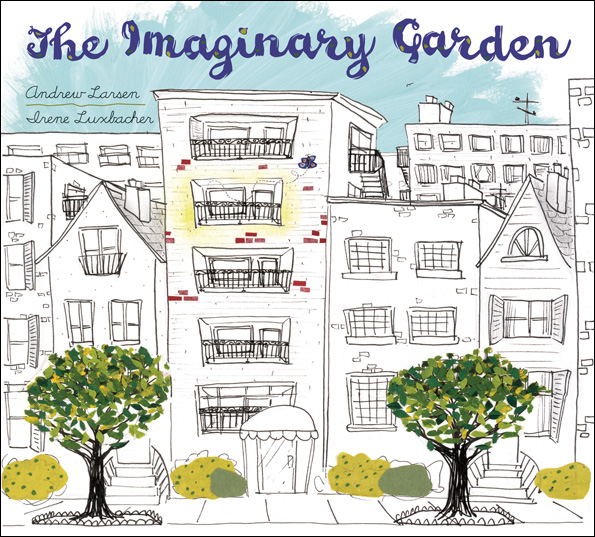
The Imaginary Garden by Andrew Larsen and illustrated by Irene Luxbacher

When Theodora’s Grandfather must leave his beloved garden when he moves to an apartment, granddaughter and grandfather create a beautiful garden from seed to flower through the power of art and love.

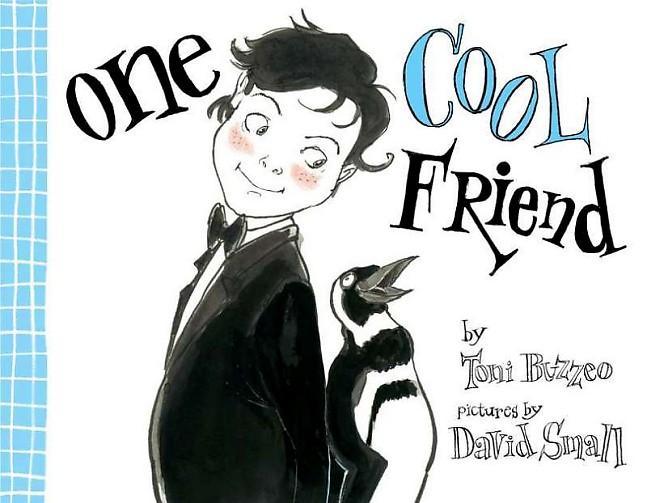
One Cool Friend

Dan, our BLG reader this week, brought us One Cool Friend written by Toni Buzzeo and illustrated by David Small. It was the first time all year that some of the students had seen a BLG book before (I had read this title (borrowed from our VP) to a group about 2 months ago). Well, this book really proved that some books truly improve with re-reading!

First of all, Elliot, the main character of this delightful book, is one dapper young man. And we took note. We liked his tuxedo. His pink cheeks. The smattering of freckles. And his prance about shiny black shoes. And my, oh my, did he have polite manners. This is a boy to keep an eye on. Keep an eye we did, as Elliot moved through the pages finding himself at the penguin display at the Aquarium where he was quite delighted to discover a number of penguins who looked quite a bit like him – proper in black and white with an air of importance. He decided that he needed a penguin of his own and his father obliviously agrees. So Elliot heads home from the Aquarium with his new friend Magellan the penguin in his backpack. How wonderful!


Life with a penguin means adjusting your routines some. Air conditioners need to work at maximum power. Ice rinks need to be fashioned. Frozen seafood should be rationed! And the bathtub often needs to be a swimming pool for diving practice. When Elliot’s father discovers Magellan, Elliot discovers that his eccentric father has his own secrets!

Please read and then reread this book. Many times. On the first run through one might miss how the clever illustrations hint at a very interesting ending. But it all begins to make sense when we notice these details. Like pj patterns. Colour schemes. Foot rests. A must own book!

Our student reviewers report: (spoiler alert!)

Khai: I like how Elliot was dressed like the penguins when he got him (from the Aquarium).

Catriona: It’s very funny at the end when the father has a strange pet too!

Truman: I like the book because the Dad really had a real tortoise and Elliot thought it was a fake!

Book Magic

Often I have much to say on the magic of a book. Today I cheat and literally let a picture tell a thousand. And then I’ll just add a few . . .

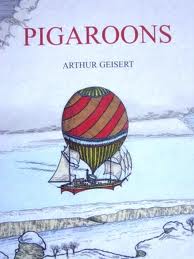
Buddy Reading with the K/1 class happens every Wednesday afternoon. There is real joy in watching my Grade 2/3s bring the magic of books alive for their younger buddies. The boys above are sharing the story of Pigaroons by Arthur Geisert that I read to the class yesterday. Ice sculpting. Air ships. Popcorn balls. Pirate Pigs. Thwarting sabotage attempts. Adventure. Wit. It really couldn’t be much better.

Reading. Talking. Questions. Sharing. Engagement. Not much better at all!

Extra Yarn

Our BLG reader Bill walked in with two books today and gave me a look that asked,  “Which one?” I had already spotted Extra Yarn written by Mac Barnett and illustrated by Jon Klassen in his hand. That other book, whatever it was (and it might have been wonderful) didn’t stand a chance. Extra Yarn delighted us!

This story is set in a dreary little town. Cold invades and everything is black with soot or white with snow. When Annabelle finds a box filled with multi-coloured yarn, she is quite inspired. Soon she has knit herself and her dog Mars cozy sweaters perfect for brisk walks outside.

Strangely, there is still extra yarn. so Annabelle begins to outfit her whole town, even the naysayers (like Nate who turned out to be jealous until he possessed a knitted sweater of his own). “Wow,” someone commented. “They sure look warm to me!” Somebody else sugested Nate would look good if Annabelle knit him skinny pants. Maybe . . . ? But Annabelle had turned her attention to her classmates and teacher. When she had knit a sweater for everyone, there was still extra yarn. The pictures began to illicit many comments.

Oh my gosh they kind of do look ridiculous. But I like it.”

“Hey they are all stringed together. They need to snip!”

“Little Louis! He really is little!”

The yarn supply did not diminish and neither did Annabelle’s creativity. She knit sweaters for the animals. And sweaters for things that might seem to not need sweters. Birdhouses. Trees. Mailboxes. This was incredible!

What . . . .?”

“Oh my gosh! Even a bear? Even a house? That’s a lot of yarn!”

“I think she’s getting a little carried away!”

When an archduke from far across the sea sailed to Annabelle’s shore and offered Annabelle millions for her box of yarn, she politely but assertively refused.

“Oh! Oh! She’s making a mistake! What if her family is poor? She should take the money and run!”

But the archduke had his ways. He sent in three robbers to steal the box of yarn and bring it to him. When he opened the box on the other side of the ocean, it was empty. He was furious! He cursed Annabelle! “Little girl, I curse you with my family’s curse! You will never be happy again!” Students leaped up, caught in the excitement and quoted him! But we weren’t worried.

“Curses are not for real!”

In the end, the box of yarn ends up where it is supposed to be and . . . not empty at all.

Our student reviewers report:

Truman:I like the part when the Archduke didn’t get any yarn. But when it got back to Annabelle, it still had more.

Isa: This book was so good I have to write about it. That pirate guy (the Archduke) said, “You’re never going to be happy again.” But that actually didn’t happen. The curse didn’t work. She was sewing sweaters for everything in the town. That was so funny! She couldn’t make it for ice cream though. It would melt!

Carmen: I can’t believe that this little girl Annabelle knitted a sweater and house, tree, sweaters for everyone except Mr. Crabtree. He wears shorts with snow up to his knees and never wears sweaters. So Annabelle knitted him a hat.

Khai: I like how she filled the whole city with yarn. It was cool.

Using Wordless Books in the Classroom

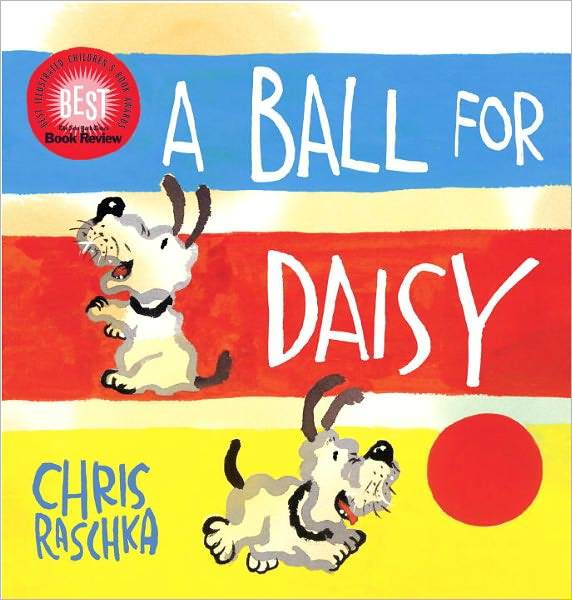
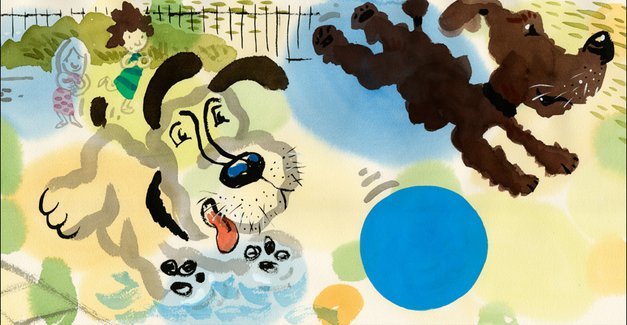
I have been using wordless books with a lot of success in my primary classroom this month. The next book I plan to share with the class is A Ball for Daisy which won Chris Raschka the 2012 Caldecott Medal.

How are wordless books used in our classroom?

Every morning we start our day at the carpet and “read” a wordless book together. Of course there is no text so we tell the story as a group as we turn the pages. Before we begin, we review our strategies for reading wordless books. This is what students typically share:

“We need to infer.”

“We look at the pictures for clues.”

“We pretend that we are the author/illustrator and think like he/she does.”

“We have to use what we already know about stories.”

“We use our background knowledge.”

As we turn the pages, students share their observations. I find this is such a fantastic opportunity to build oral language skills. Students need to listen to others and build on ideas. They have the chance to disagree and offer alternative suggestions. They extend their thinking as the class offers sugestions. My role is different from what it usually is as I sit with a book in my hand and children at my feet. I am completely guided by their pace. I repeat specific statements and ask for more thinking. I ask probing questions like, “What made you think that?” “Do you see something on the page that made you suggest . . .?” I also rephrase certain comments so as to correct grammar, extend vocabulary and provide positive feedback. Many childen that don’t often share in discussions about books have been avidly participating. It has been a very exciting and creative process.

I then leave the wordless book of the day on display with other recent ones we have shared. This is what I see at different points of the day:

*Books are shared when reading volunteers come in to listen to children read. Children who have often asked the volunteers to read to them, choose a wordless book and “tell” the story. Volunteers have made comments to me about the child’s confidence, his/her use of interesting vocabulary and about the engagement with the story.

*Wordless books are selected when our little K/1 buddies come up to read with us on Wednesday afternoons. Because our Grade 2/3 class has more students than the K/1 class, often two of my students read with one little buddy. This week I saw a little boy in kindergarten sandwiched between two of my Grade 3 boys and all of them took turns talking about and telling the story as they turned the pages. My boys were even modelling my questions, i.e. “So why do you think he’s sad?”

*Children are choosing wordless books off the shelf during quiet time and sitting with a classmate and whispering as they turn the pages. I see lots of flipping back and forth as they turn back looking for a specific picture, verify information and then resume the story. Also during quiet time I have two girls who are making their own wordless book. They sit side by side drawing pictures and talking about their story.

*There is also a transfer of “attentiveness to detail” as we read other picture books in class. Many comments and questions are about the illustrations and details noticed in the pictures.

As we celebrate illustrations and study them for additional information, I am reminded of a blog post by author Shannon Hale called Let them Eat Pictures. Hale stated:

“Our world is full of visual cues. Illustrations are symbols, just like letters are symbols. We look, we read to understand, to decode the world. Literacy, I think, is the ability to glean understanding from printed information. In order to navigate this world successfully, kids (and adults) will need to be literate in words and pictures.”

Wordless books give us the opportunity to practice inferring and looking for evidence to support an idea – comprehension strategies that we use with any kind of book – from picture books to novels.  I am excited to continue using this beautiful genre of books in my room.

For more wordless picture book titles, check out more posts on this blog.

Wonders of Wordless Magic and Few Words on Five Wordless Books

The Magic Beads

In our reading group we have been exploring different genres. Today was day three of looking at realistic fiction. Last week what kept coming up on our list of what makes a book realistic fiction was that many people would find things to connect to easily in the story. Today we read a story together and our writing focused on possible connections.

The story that we read today had a lot to it and our discussion and subsequent writing was rich. In fact, I don’t think I can think of a time all year where the group was so quietly engrossed in their writing. When I read notebooks at recess, I was blown away by the maturity and thought that was shared. The Magic Beads written by Susin Nielsen-Fernlund and illustrated by Genevieve Cote is an important story addressing the emotions of a young girl starting school while her life is full of change.

Lillian begins Grade 2 at a new school after she and her Mom have had to move to a shelter to escape her abusive father. They have left everything behind and Lillian is feeling a range of emotions from anxiety to anger. A part of her misses her father even though her memories of his bad moods are difficult to think about. She loves her Mom and knows why they had to leave but she also feels angry that her Mom was the one that took them away. When she is asked to share at Show and Tell on Friday, Lillian’s upset grows. She no longer has her pesonal possessions with her. What could she share? The butterflies in her tummy turn into grasshoppers, donkeys and eventually buffalos as Friday approaches and she has nothing to share.

Finally as she stands before the class on Friday, Lillian talks about her plastic beads, terming them magic beads and explaining that with just a little imagination, the beads can be all kinds of things. Lillian’s inventive imagination intrigues her classmates and provides a way for friendships to begin.

Student writing ranged from personal connections to ideas of what events or emotions readers might feel connected to in the story. Here are excerpts:

Carmen writes: Some people might connect to being sad because of leaving your Dad all alone since you might have played with your Dad and you might miss your favourite happiness. 

Truman shared: I connected to when I first went to this school and I felt scared and shy. Some people might connect to their feelings on the first day of school. I connected to when I didn’t bring my Chinese homework and felt nervous.

Catriona wrote: People could connect to being mad at a person when the person you’re really mad at isn’t there. 

Heman shared: When I first went to this school, I felt like I had a tummy ache just like Lillian. 

Khai made a list of possible connections: using your imagination to feel better, feeling anxious at school on the first day, having a Dad with some anger problems, having to move somewhere when you don’t really want to, . . .


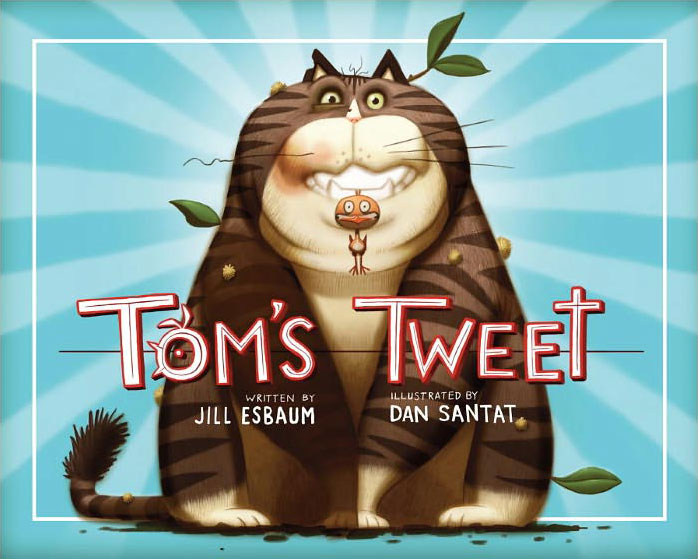
Tom’s Tweet

Maria, our BLG reader brought us a very funny story this week. When we spied a cat on the back cover, the shouting started, “It’s Chester!” “No, Splat!” Obviously we have a thing for quirky cat characters. And with Tom’s Tweet, written by Jill Esbaum and illustrated by Dan Santat, we have a new feline to add to our list of endearing, funny cats!

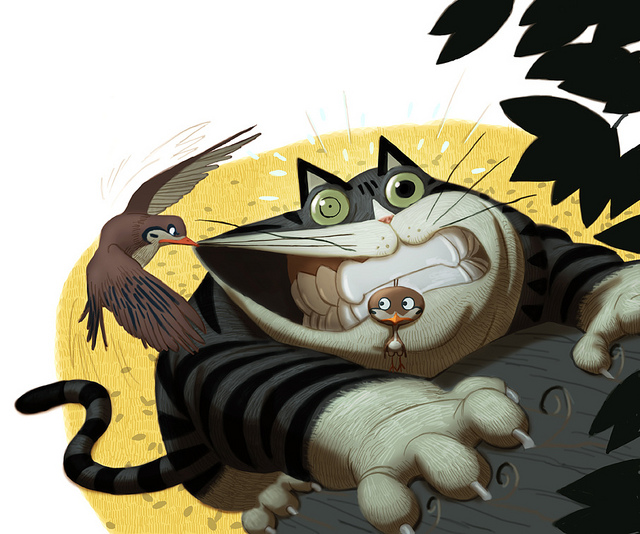
What’s a poor cat to do when a potential treat turns out to be a shivering tweet? He can’t in good conscious eat a little thing that is just “feather and bone” even if it is a bird and he is a cat . . . And how exactly did Tom end up with a tweet between his lips on route to return it to its nest while being pecked at by an angry Mama Bird? Could this cat have a soft spot for the little Tweet? It seems so. And it makes for quite a hilarious story.

One of my students kept whispering to me as Maria read, “It will be about kindness.” “It’s going to be about kindness.” “Really, just wait, this will be a kindness book!” We have been reading many picture books on this theme and he saw through Tom the Cat’s bravado early on in the story. This cat was a goner for the little Tweet. There is even snuggling! Even though Tom insists he is “not that kind of cat.” In the end, even Mama Tweet realizes Tom’s true nature and emplys him to do some “tweety -sitting.” Dan Santat’s illustrations are superbly animated and our read aloud was full of giggles and smiles. A wonderful book for happy sharing!

Our student reviewers report:

Truman: I really like the illustrations and the part where Tom gets pecked! Funny!

Isa: I liked the part when Tom was dreaming about the birds. He couldn’t help it. That was so funny.

Khai: It was funny when Tom had to babysit the tweets!