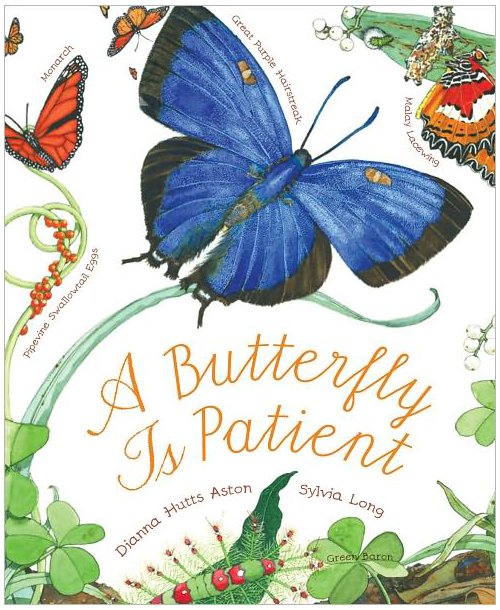
A Butterfly is Patient

The amazing team of  Dianna Aston and Sylvia Long deliver another picture book masterpiece with their third book A Butterfly is Patient.
This year we have shared An Egg is Quiet (as part of our learning about birds) and A Seed is Sleepy (to supplement our plants/seeds/gardens learning) With both titles we used a modified version of Adrienne Gear‘s Knew-New Connections from her Non-Fiction Reading Power book to represent our learning.

Students were excited to share this book as many had learned about butterflies or even hatched butterflies in their Kindergarten or Grade 1 years and so they had a lot of prior knowledge to connect to their new learning and they were able to represent all of this background knowledge under “I KNEW this already!

A butterfly is helpful (fantastic pollinators)

What is lovely about representing our knowledge on a sheet like this is that it is very open ended. It allows students to document their own learning from exactly where they start. There are no “right” answers. Some facts ended up on “This is NEW to me!” and for others, these same facts were included on, “I KNEW this already!” Being familiar with the sheet allowed students to start organizing their thinking as we read. There were comments like, “Wow. I didn’t know that!” or “Hey that is what we learned last year. Remember how we talked about . . . ” When it came time to write, everyone had lots to say!

Describing prior knowledge and new learning.

IMG_4023

Another student example of all the new things he learned today.
IMG_4018

Some other student examples from “I KNEW this already!”

*Butterflies help plants make new plants (pollinate)

*I knew that some butterflies have spots that look like eyes on their wings

*They molt (shed their skin)

*I knew they started out as an egg

*Butterflies make chrysalises. They don’t make cocoons

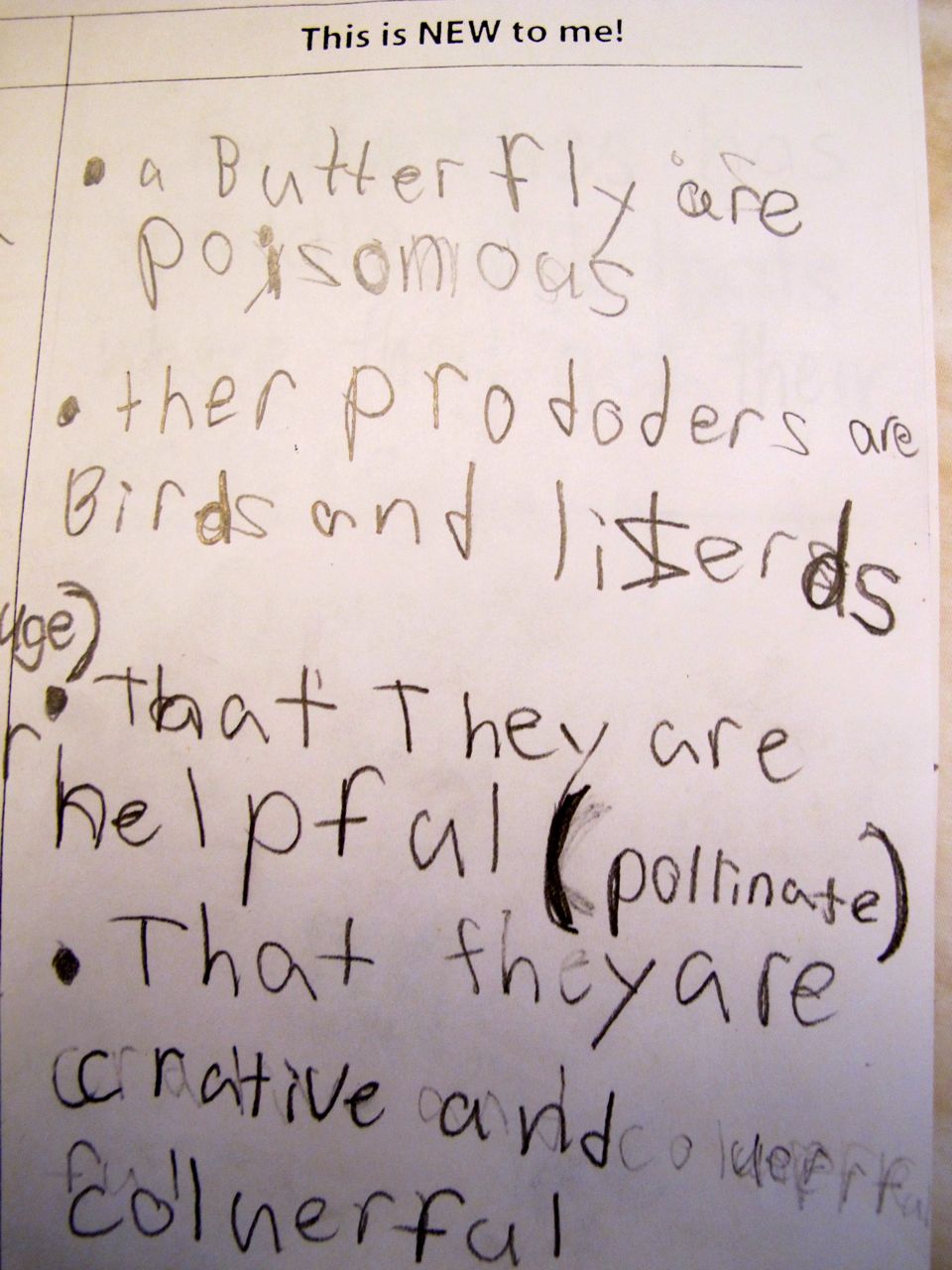
Information shared for “This is NEW to me!”

* I found out that they taste with their feet

*I did not know that butterflies can be poisonous

*I didn’t know that a peacock butterfly can make a hissing sound by rubbing its wings

* I discovered that they drink water from mud puddles

* I didn’t know that butterflies could get water from wet soil
Garden themed Books

Division 5 is participating in the Growing Chefs program and learning all about growing plants, urban agriculture and the wonder of vegetables! Our windowsills are full of seedlings and we are indulging in many garden themed read alouds to learn more about the magic of gardens, growing and green. The following is a list of books that will be part of our reading:

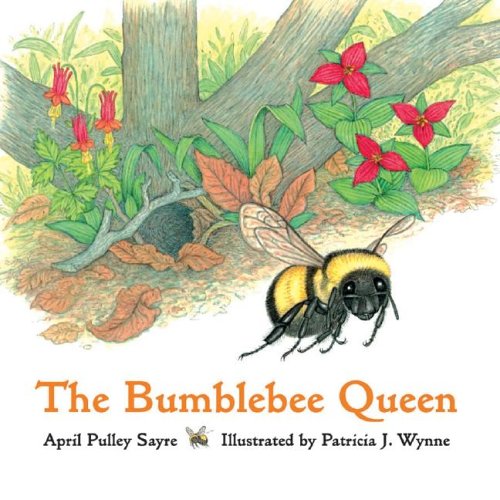
The Bumblebee Queen by April Pulley Sayre and illustrated by Patricia J. Wynne

An informative information story book that details the lifecycle of the Queen bee. Touches on hive life, pollination and human behaviour towards bees.

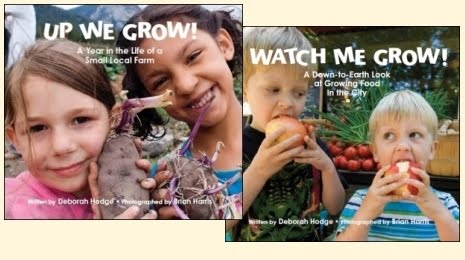
Deborah Hodge‘s Watch me Grow and Up we Grow (photographs by Brian Harris)

These books have special meaning as Deborah Hodge gifted them to our class when she visited in the fall! These books immerse us in the world of gardening and growing! One focuses on life on a small farm and the other looks at growing food in the city.

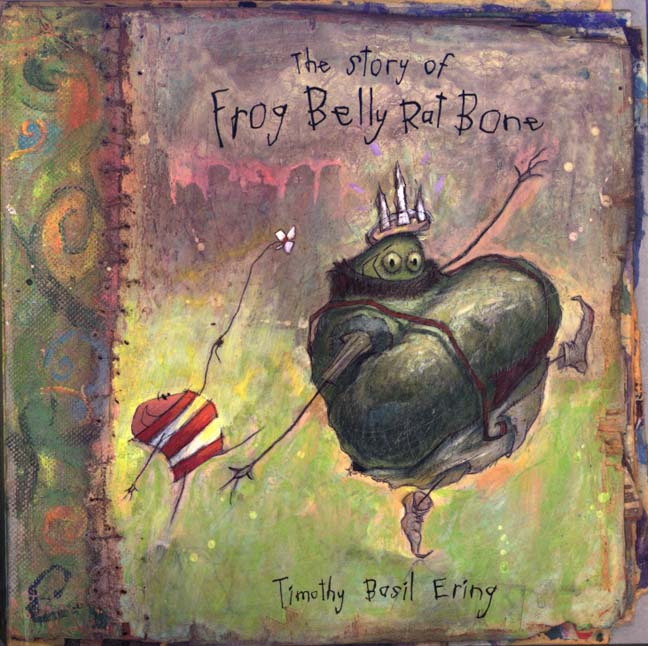
The Story of Frog Belly Rat Bone by Timothy Basil Ering

 In Cement Land, the promise of a packet of seeds is huge admist the gray drab world. Highlights the magic of watching seeds transform into plants!

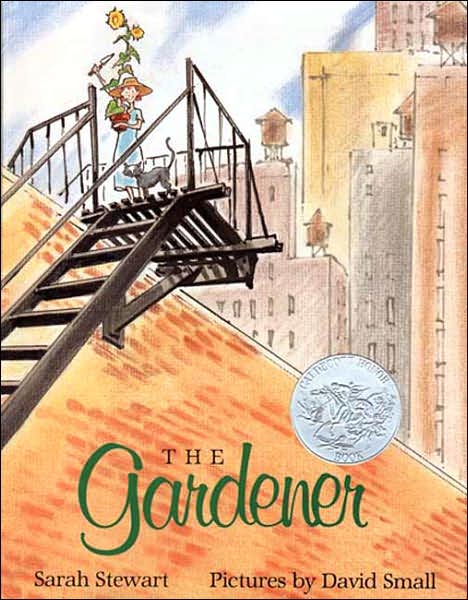
The Gardener by Sarah Stewart and illustrated by David Small

Can a package of flower seeds bring happiness and beauty to a family during the Great Depression?

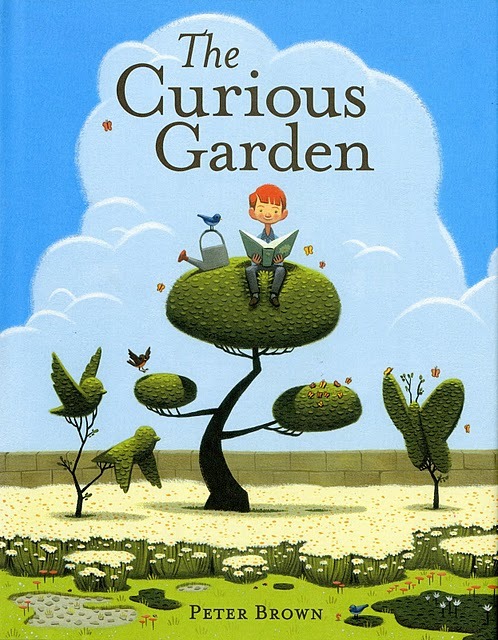
The Curious Garden by Peter Brown

Liam lives in the city and nurtures a struggling garden into a majestic green world. The power of a garden to invade (in the best of ways) stark city life.

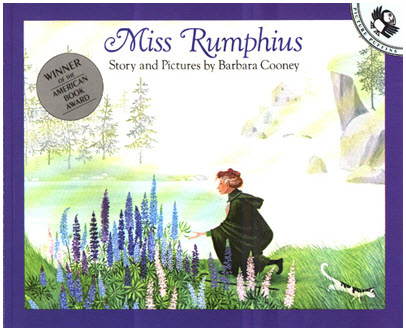
Miss Rumphius by Barbara Cooney

We each need to do something to make the world a more beautiful place. Miss Rumphius spreads lupine seeds throughout the countryside and the resulting flowers have a transformative effect on everyone who stumbles upon them.

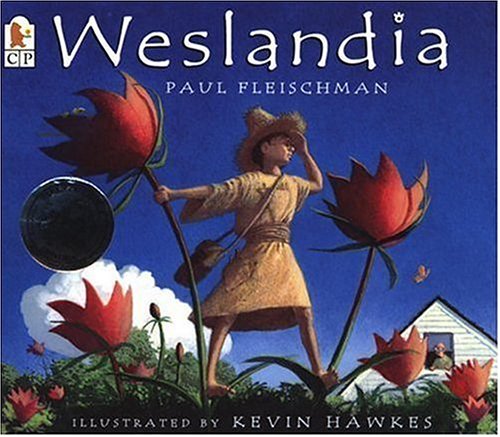
Westlandia written by Paul Fleischman and illustrated by Kevin Hawkes

Wesley creates Weslandia, his own civilization using the plants he grows from some mysterious seeds and the products he makes from them.

A Seed is Sleepy by Dianna Aston and Sylvia Long

Poetic text and beautifully detailed illustrations introduce us to the wonder of both familiar and unfamiliar seeds.

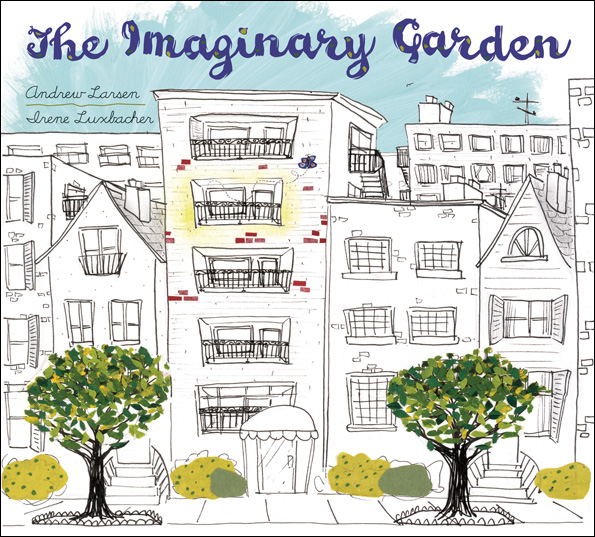
The Imaginary Garden by Andrew Larsen and illustrated by Irene Luxbacher

When Theodora’s Grandfather must leave his beloved garden when he moves to an apartment, granddaughter and grandfather create a beautiful garden from seed to flower through the power of art and love.

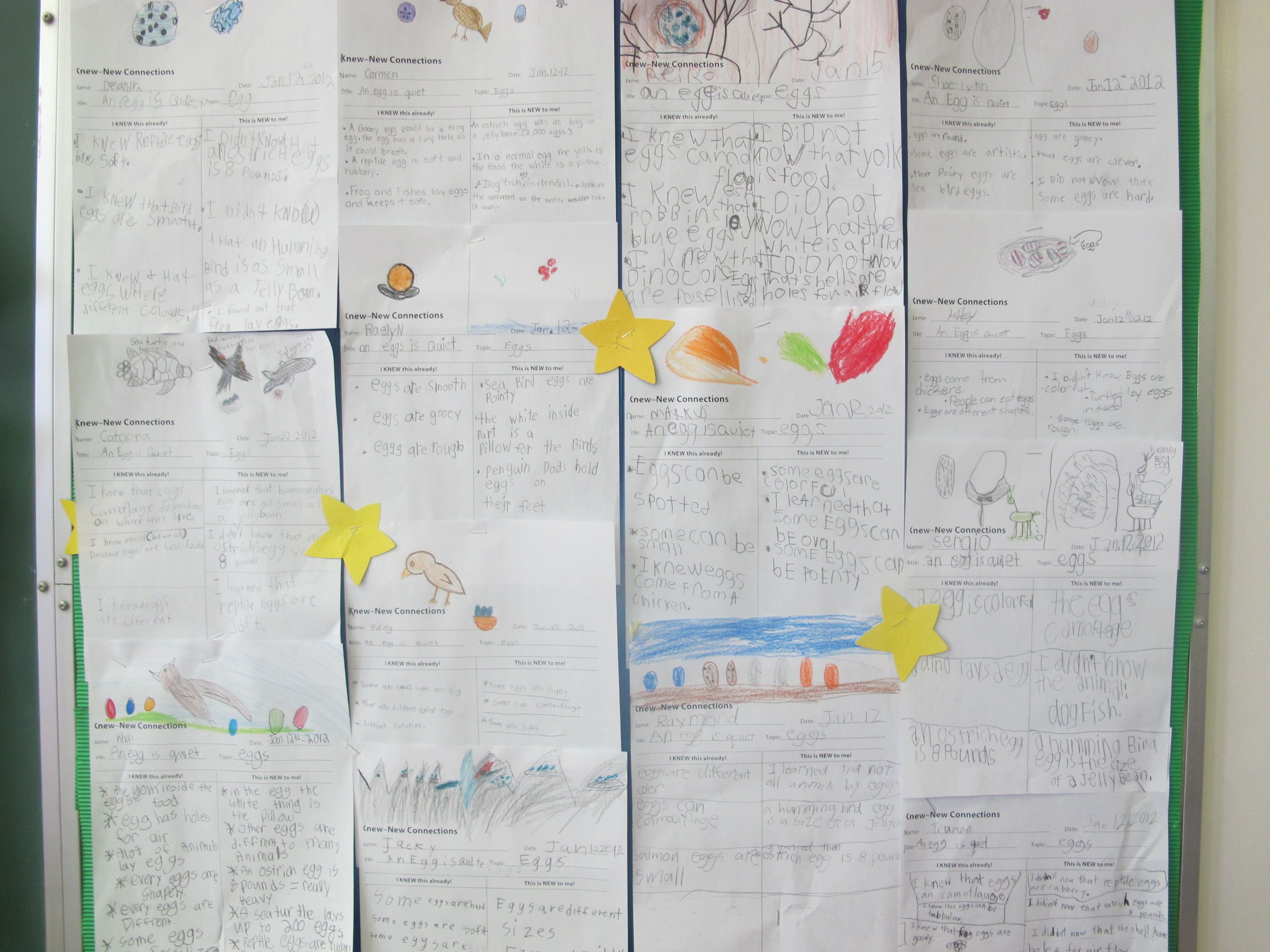
An Egg is Quiet and so Much More

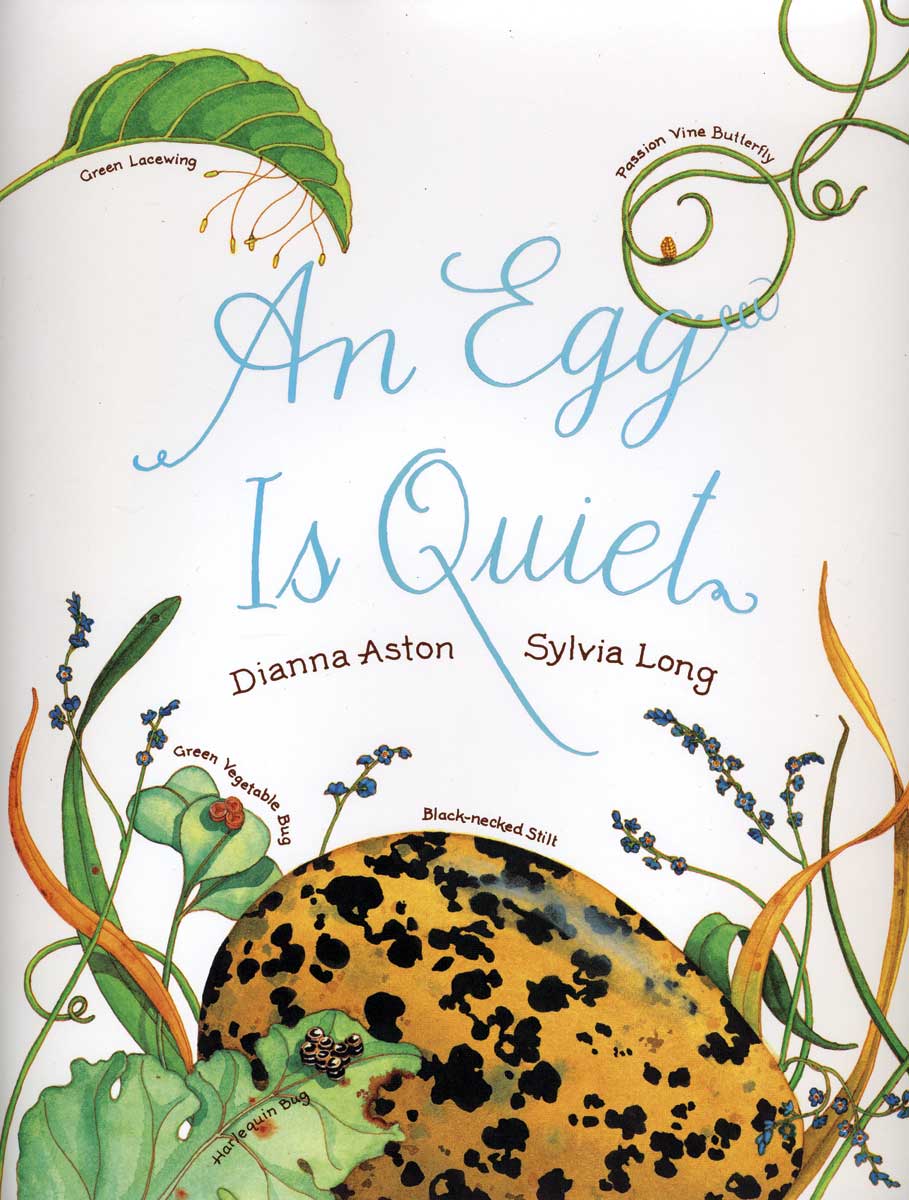
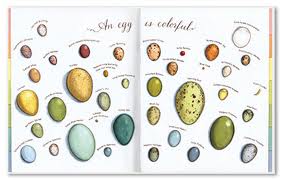
We are studying birds but I am very mindful of student interest as we decide on what to learn more about. Last week we read a book about birds and their nests and students were fascinated by the stunning blue of a robin’s egg. Most students wrote about it when asked to write about something new they had learned. So. . . I decided that Dianna Aston and Sylvia Long‘s exquisite book An Egg is Quiet was a must read.

AnEggIsQuiet

Students were fascinated to learn many new things about eggs – including that many creatures hatch out of an egg, not just birds (reptiles, insects, fish, etc). Sylvia Long’s gorgeous illustrations had everyone mesmerized. With many pages we just gazed at the pictures and chatted to our neighbour about our observations and questions. Sharing was fascinating and we all learned to look at eggs a little differently from each other.

Colours, specks, stripes! Eggs can be so different! We saw eggs that looked like chocolate (a paradise riflebird), eggs that looked like they were covered with sand (a scarlet tanager), eggs that shone (Atlantic salmon) & eggs that looked to be entwined in vines (a common murre). Then . . . fossilized eggs and tubular eggs and eggs that are perfectly round (Kemp’s Ridley Sea Turtle).

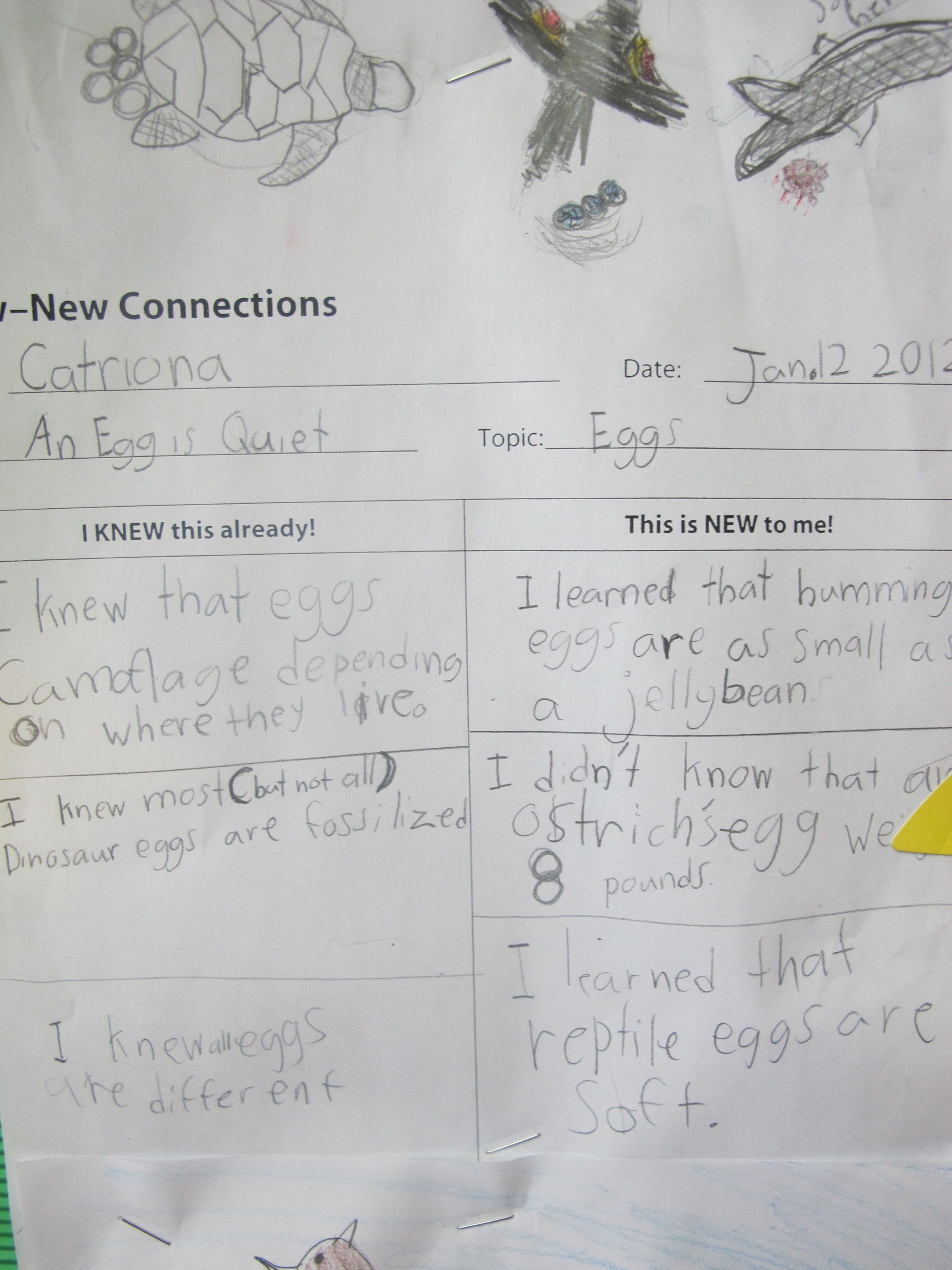
After sharing the book together, students completed a modified sheet from Adrienne Gear‘s Reading Power Non-Fiction book: connecting new learning to what they already knew (New-Knew Connections)

This is Catriona‘s completed sheet:

IMG_2314

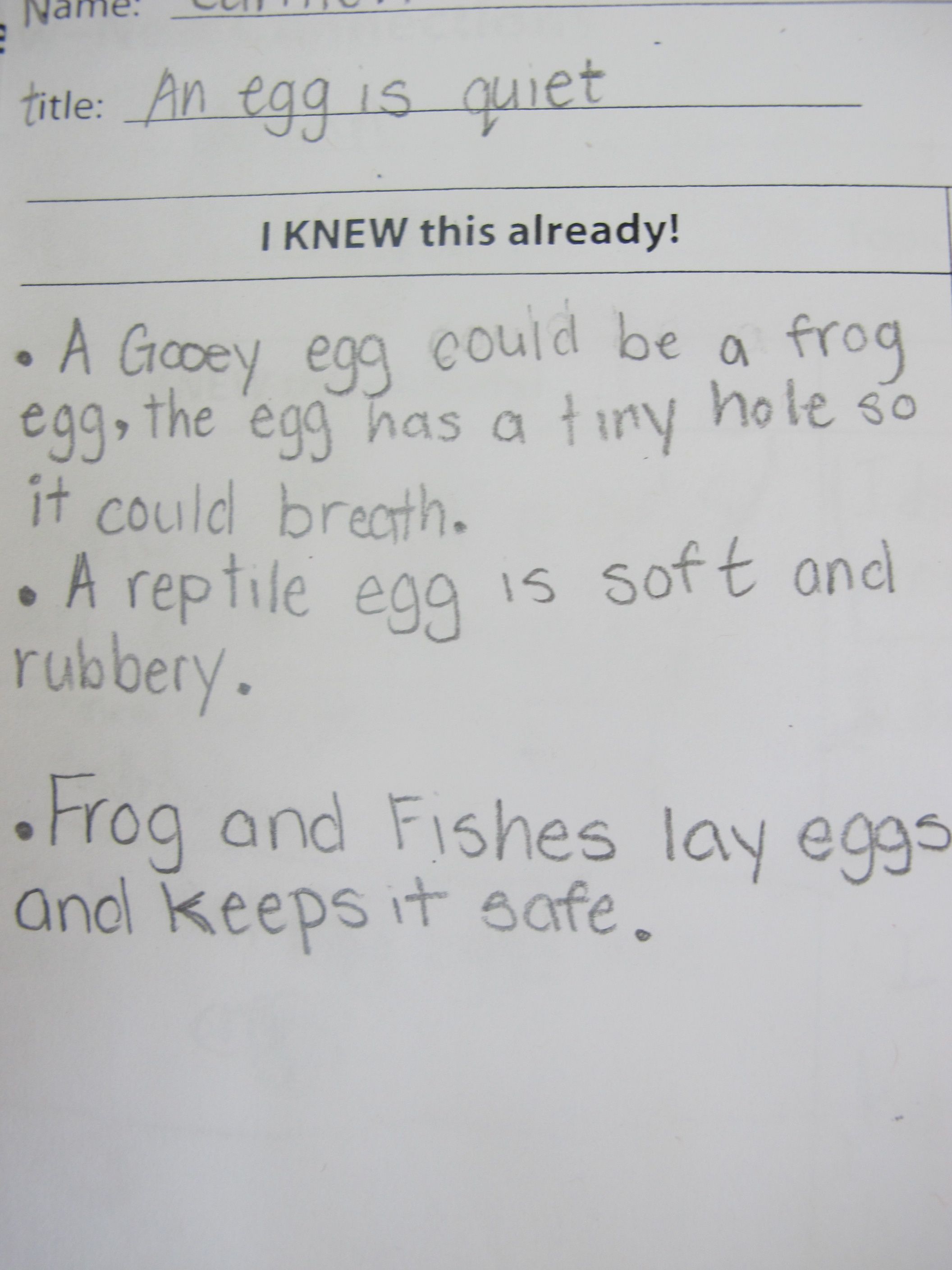
Carmen shared what she already knew.

IMG_2302

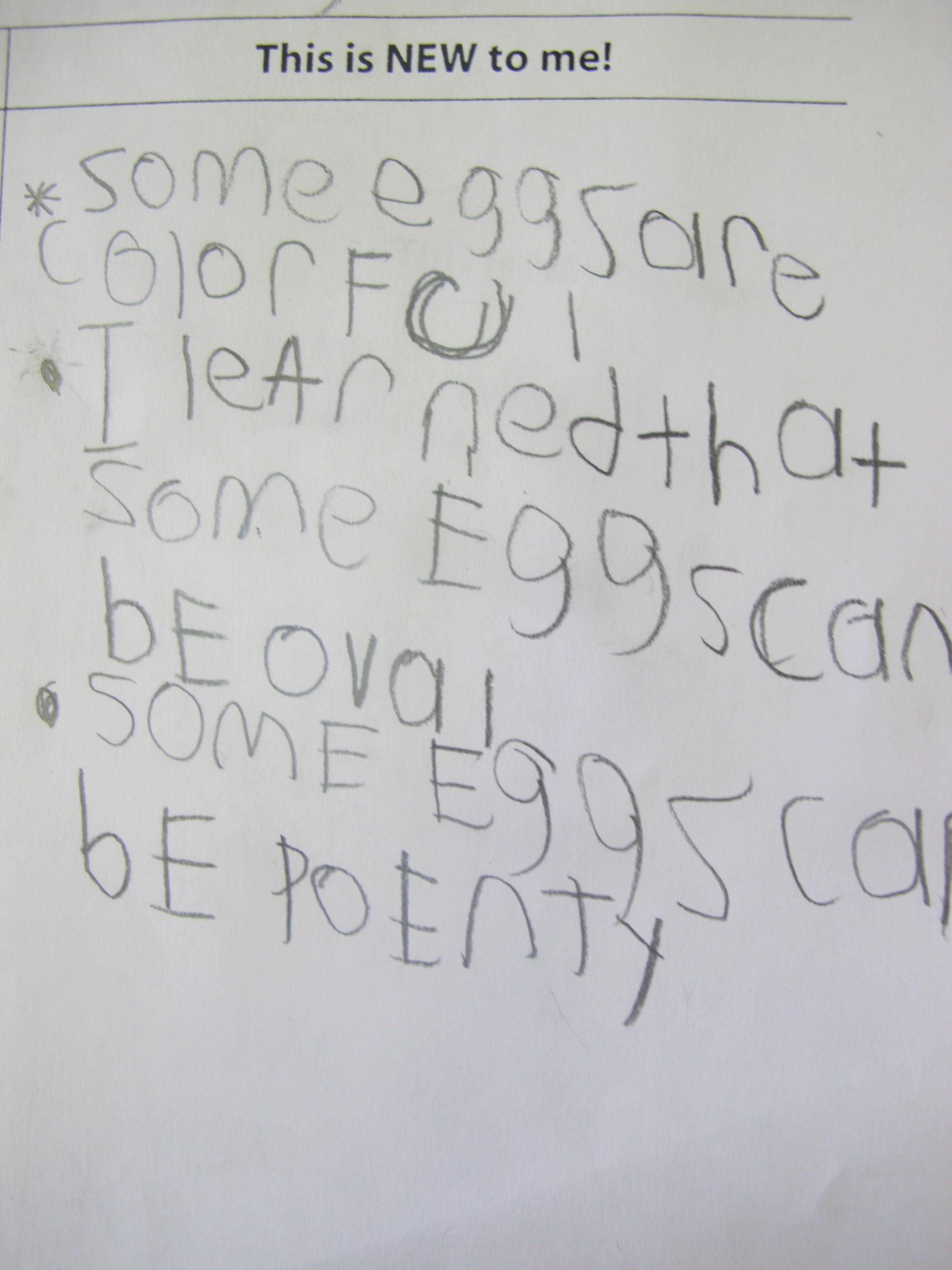
Markus shared his new learning:

IMG_2306

What I love about this activity is that sharing on the Knew/New sheet allows students to honour prior knowledge, acknowledge new knowledge and start from anywhere. There are no right answers or essential facts – just a sharing of a knowledge base being extended. We spent over an hour with this book and doing our writing and everyone was very engaged. Later, I saw students reading the sheets posted up on the bulletin board and talking about what other students had chosen to highlight. An exciting afternoon learning about how unique, beautiful and fascinating eggs can be!

A wall of learning shared!

A wall of learning shared!