
I am excited to once again highlight a recent title shared in my classroom and how we structured our read aloud experience. I am trying to share more of how these nonfiction books come alive in the classroom with kids!
The #nfpb2015 challenge is a great way to learn more about what nonfiction titles others are reading.
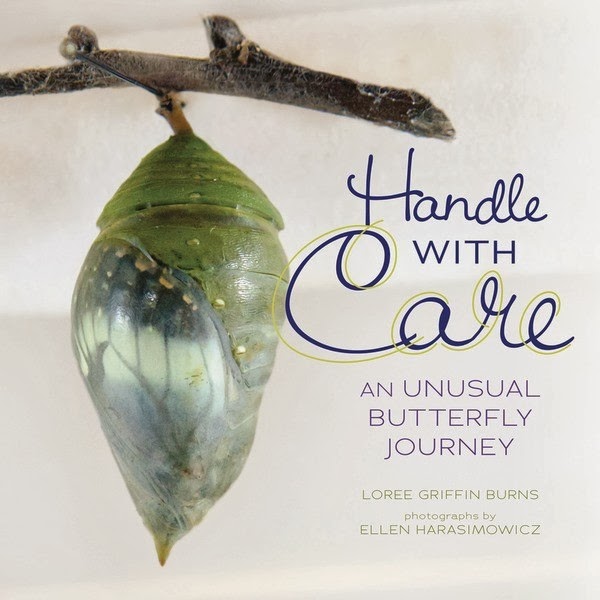
During the past week we have been reading Handle with Care: An Unusual Butterfly Journey written by Loree Griffin Burns with photographs by Ellen Harasimowicz (March 2014)
This title shares with the reader how a butterfly farm in Costa Rica prepares butterfly pupae for the journey to various museums and science centers in the north. It answers questions about how the farm functions, the connection to the rain forest habitat and how pupae are prepared for the long journey. Can you imagine getting a package of butterfly pupae in the mail?
My students wanted to begin making special orders immediately! 🙂
Photographs by Ellen Harasimowicz are stunning and help tell a story that many students would never have imagined. I have some students that just wanted to gaze at the end pages with photographs detailing various pupae. Students really appreciated the close up photography. One child commented:
“Human eyes wouldn’t even be able to see that (eggs on a leaf). But the camera zoomed up close so we can all look carefully.”
There is a detailed glossary at the back of the book and we appreciated the helpful hints provided about visiting a live butterfly exhibit. Many students in my classroom have been to the Vancouver Aquarium on a field trip with our school and had the opportunity to visit an area with live butterflies fluttering about. So this book had particular meaning.
Note: I am currently reading Perfect Pairs: Using Fiction and Nonfiction Picture Books to Teach Life Science , K-2 by Melissa Stewart and Nancy Chesley I have been inspired by the way many lessons begin with a Wonder Statement and include writing, responding and drawing in a Wonder Journal. We already have a Wonder book that we write in regularly but I am trying to use it more often with our nonfiction read alouds.
Before I introduced Handle with Care, I asked the students to respond to this wonder statement:
“I wonder how butterflies get to Science Centers and museums all over the world.”
Students discussed this statement in Turn and Talk partners and then had an opportunity to share out. They then wrote about their thinking in their wonder notebooks.
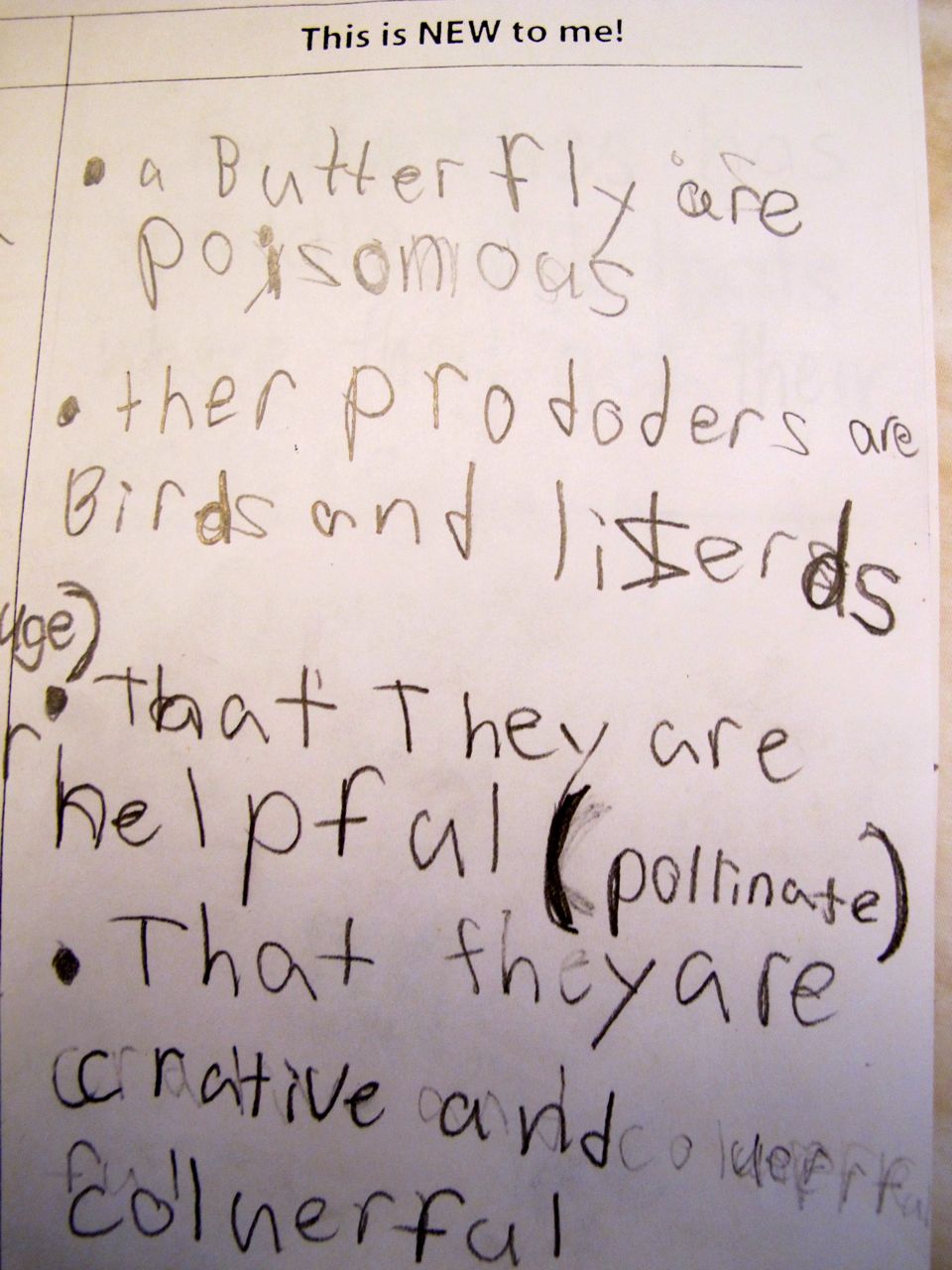
Some samples:
“I think that some people found a butterfly in Brazil. They probably took them while they are in caterpillar form. They might catch them in a cage. Do they use a potion to lure them into the cage?”
“I think that they get special food to attract them or catch them as caterpillars and take them back. They would have to research butterflies to study the rare ones and the almost extinct ones. They would live in places that are hot and have nice rainforests.”
“I think they take a big truck and drive to California and catch the butterflies in a big cage and then drive to the airport and go on the plane with the caged butterflies with them and drop them off to the science centers. Maybe they get the science workers to do it. Perhaps they lure them into the cage with fruit and honey.”
“I think they catch the butterflies when they are eggs and grow them like that.”
When we learned on the first page that the pupae are sent in a mysterious package to the museums, students were hooked. They had all kinds of questions like:
- How do they know they won’t transform into butterflies before they get there?
- How do you touch the pupa without harming it?
- Where do they get all of the pupae?
- Are some of them damaged from the travel?
- How much does it cost to order them?
- How do they know about how to make a home for them when they arrive?
We continued reading throughout the day and by the afternoon, students were ready to summarize their learning about the important jobs of the butterfly farm workers in Costa Rica.
Some written summaries:
“Farm workers must help adult butterflies be healthy. The farm workers get trees for the butterflies. They crush bananas to feed them.”
“Farm workers have to look out for predators. In the green house, there is the butterfly larva, eating. Farm workers need to protect the greenhouse.”
“Farm workers must: fix holes in the screens so grasshoppers don’t eat food for the larva, go hunting for fresh leaves and trees, protect the larva and the butterflies from frogs, birds and snakes and put out sugar water everyday.”
“They have to keep all of those predators out of the greenhouse like grasshoppers, frogs, birds and snakes. They have to pick a herd of caterpillars off of an empty branch of leaves that they have eaten and move them to a different branch of leaves.”
So much learning in this book. Lots of discussion. Big questions and connections. I love that it allowed students to explore a question that they had never really considered. One of our bookshelves is now full of butterfly books and students are busy learning more about butterflies during independent reading.
Thanks to Alyson from Kid Lit Frenzy for the inspiration to read and share more nonfiction picture books in 2015. Follow the link to Alyson’s blog to read about more nonfiction books you need to read!


 There's a Book for That