
It’s Nonfiction Picture Book Wednesday!

In my classroom right now we are reading many nonfiction books connected to a general ocean theme. Here are three titles that I read in the past week that I think are great read alouds for the primary/early intermediate classroom.
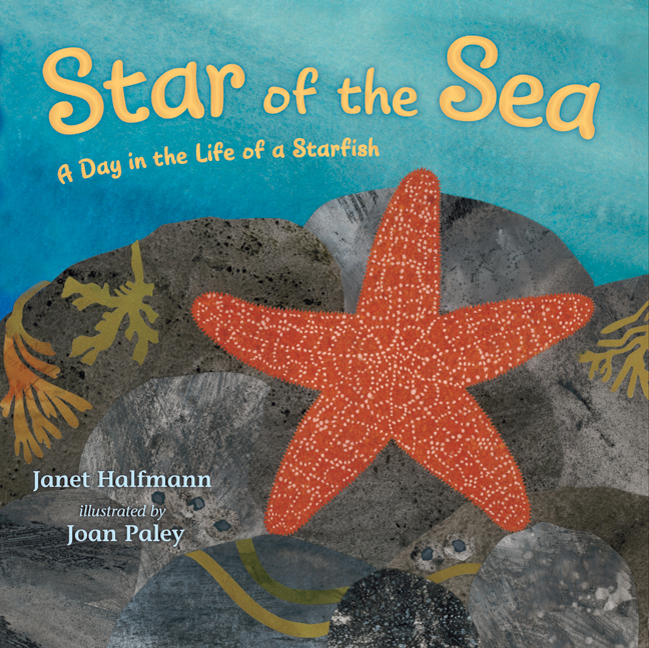
Star of the Sea: A Day in the Life of a Starfish written by Janet Halfmann and illustrated by Joan Paley (published in 2011)
I learned so much about starfish in this title and appreciated the extra information included in the back of the book with titles like: Tube Feet and a Traveling Stomach, Swimming Babies and Lost Ray? No Problem.
The book itself reads like a story – we learn about how sea stars hunt for food, how they eat (by extending a stomach out through the mouth) and how they are vulnerable when the tide goes out to being eaten by seabirds
I had no idea that if a sea star loses one of its rays (arms) that it will grow back – although it may take up to a year. Sea stars can also regrow tube feet and other body parts. There is a great labelled diagram from both the bottom and top views of the ochre sea star in the final pages.
Down, Down, Down: A Journey to the Bottom of the Sea by Steve Jenkins (published in 2009)
I know this title has been around for a few years but I finally read it cover to cover and wow . . . Just amazing how much we do not know about life in the ocean way down deep. I found it fascinating to explore various layers of the ocean as Jenkins took us on a journey farther and farther into the deep. How can we not be intrigued at the idea that we may only have encountered half of the large animals living in the sea? Like many Jenkins titles, this book has more detailed information in the back pages. I am reading this book aloud to my class – one page every morning. Students are spellbound. Some facts that stood out for me:
- In the Sunlit Zone (100 m down) the pressure is ten times what it is at the surface. Many sea creatures are filled with fluid so they don’t have much problem with pressure. Jellyfish – soft bodied and transparent – are common here.
- Sperm whales and Giant Squids engage in battles in the Dark Zone (13, 048 m down) These whales must return to the surface to breathe. A sperm whale can hold its breath for up to 2 hours! A live giant squid had never been sighted until 2004! (spotted from a Japanese submarine)

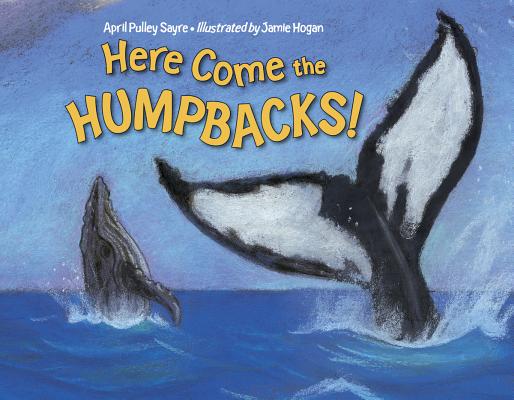
Here Come the Humpbacks written by April Pulley Sayre and illustrated by Jamie Hogan (published in 2013)
Just to picture walk this book is quite spectacular. These whales are incredible and Hogan has highlighted their grandeur and grace. Follow the humpback migration from warm Caribbean waters where baby humpbacks are born to summer feeding grounds near New England and back again. While humpback whales live in every ocean, this book focuses on whales that migrate in the Atlantic Ocean.
Through a story of a mother whale and her calf’s migratory journey, we are able to learn many things about humpback whales including:
- what happens when a baby whale is born
- details of when/why male humpback whales sing
- challenges along the migration route
- how ocean pollution impacts whales
- how orcas pursue the humpback calves
- information about the feeding grounds in the Gulf of Maine
More details about migration routes, studying whales and the endangered status of humpbacks are included in the final pages.
Thanks to Alyson from Kid Lit Frenzy for the inspiration to read and share more nonfiction picture books in 2014! Follow the link to Alyson’s blog to read about more nonfiction titles.
My goal is to read 65 nonfiction picture books for 2014. Progress: 31/65 complete!



















 There's a Book for That