Normal Norman: Questions and Answers with Tara Lazar

Normal Norman written by Tara Lazar with illustrations by S. britt (published by Sterling Children’s Books on March 1st, 2016) 

Norman is a normal (not!) purple orangutan, an ideal specimen to highlight all things normal . . . Of course, our young narrator scientist does not have an easy time in this in depth research process. Norman teaches her a thing or two about self-expression in this delightful, humorous story!

Normal Norman: Questions and Answers with Tara Lazar

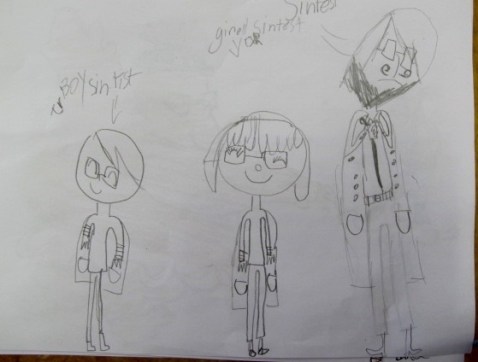
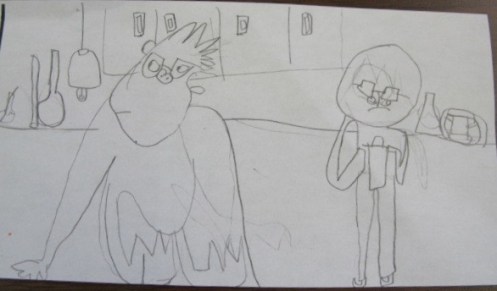
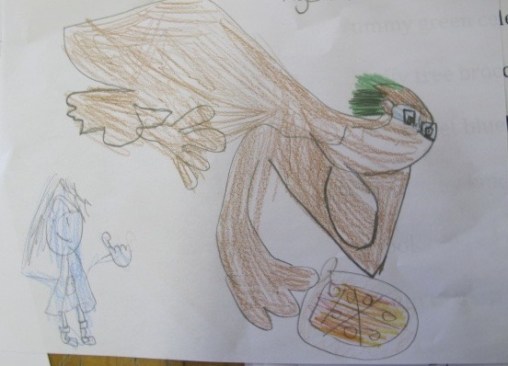
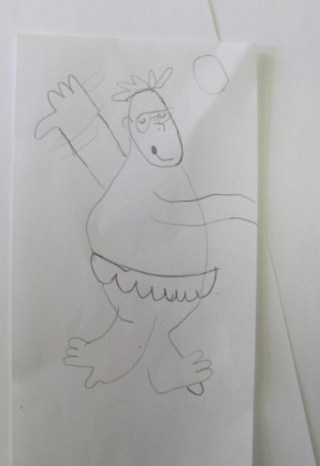
My students adored this book and found Norman to be quite amusing and inspiring. We spent an afternoon sketching him and our favourite little scientist.

In the lab . .  .

Normal Norman: Questions and Answers with Tara Lazar

A study of research scientists.

Normal Norman: Questions and Answers with Tara Lazar

Norman in the lab.

Normal Norman: Questions and Answers with Tara Lazar

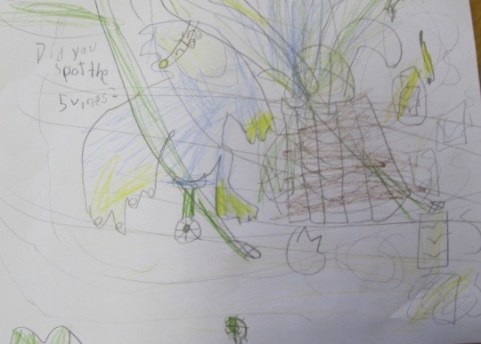
One student issued a challenge:  Did you spot the 5 vines?
Normal Norman: Questions and Answers with Tara Lazar

Pizza anyone?

Normal Norman: Questions and Answers with Tara Lazar

Norman, the dancer.

Normal Norman: Questions and Answers with Tara Lazar

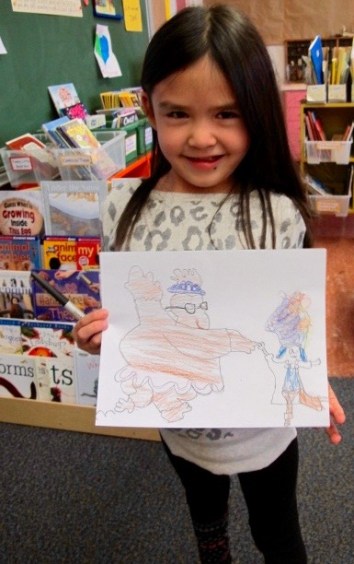
Little artist with her inspired drawing.
Normal Norman: Questions and Answers with Tara Lazar

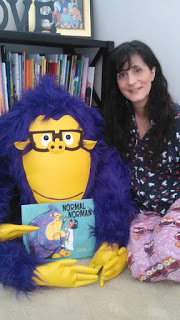
Tara Lazar & Norman - Author Pic

My students had many questions for Tara!

Story questions.

Writing questions.

Personal questions.

She was game to respond to all of them!

Thank you Tara!

Student questions are in bold and Tara’s answers are below.


Part way through, she should have switched him (Norman) for a tiger, don’t you think?

Tiger? You mean a double-headed donkey, right?

Is your message that all animals don’t need to do the same thing?

If that’s what you think, sure.

Or is your message “You don’t have to be normal”? That would be good because you don’t have to be like other people. Or other orangutans.

Another wonderful interpretation. We should not all be like other orangutans.

Did you give the illustrator the idea to have all the animals riding and driving things?

No, that was totally Stephan (which is the full first name of “S.britt.” Although I’m not sure if I’m supposed to divulge that top-secret information. I hope the book police don’t come after me.)

At the end, when the narrator wasn’t normal, she seemed happier. Was that your plan the whole time?

I don’t know. WAS IT?

Do you feel really protective about fruit? 

Not particularly. I’m far more protective of vegetables. Hey, watch it with those carrots!

What kind of not normal things do you do? Are they fun?

I write books for kids—while wearing my pyjamas. That is most certainly not normal. And also tons of fun.

Did you look at different animals and think what’s the opposite?

I looked at Norman and wanted him to NOT do what everyone expected him to do.

Do you write on a computer or with a pencil first?

Well, it really depends upon where you believe the story started. Most new ideas I jot down on paper very quickly. And usually with a pen. (Writing with a pencil gives me the chills.) But when I sit down to really write the story, to get past that initial spark, I do so on a computer. When I get stuck, that’s when I’ll pull out a notebook and start doodling and writing questions I have to answer and drawing arrows to possible solutions.

Do you write in the afternoon?

You can find me writing just about any time of day. I’m an equal-clockortunity writer.

When you can’t think of something to write do you go outside to look for ideas?

No, I usually take a shower. That is, if I’m dirty and out of ideas. If I’m clean and out of ideas, then I might go for a walk.

Check out the other amazing posts about Normal Norman – some still to come and some already published!

Normal Norman Blog Schedule

**Thank you to Josh from Sterling books for providing a copy for review!!

Eyes on the corner: Slice of Life March challenge #6

I live in a strange city. It is framed by mountains. Edged by ocean. Cleansed by frequent rains. It is stunningly beautiful and increasingly inaccessible. Too expensive for almost everyone. It has definite boundaries. Not so much a rich/poor division. But absolute areas of wealth and privilege. And areas of absolute not. This used to be a pure east, west divide but that has blurred. Everywhere is expensive and the gentrification has pushed into areas once ignored and avoided.

Now there are small pockets. Pieces of the city where addiction, pain and damage reign supreme. Places where you either don’t look or you don’t know. Places where many don’t go if they don’t have to. Places we pretend aren’t there.

One intersection is infamous. Main and Hastings. Pick a corner and you can find lots of things; many you don’t want to find. Of course you see what you perceive. Some see addicts and crime and various unsavoury elements of the human condition. A place of fear and danger. Others see addiction and pain and vulnerability. A place of inequity and need. Some people avert their eyes. Others stare in disbelief.

Every time I pass, I search. I look for what I never want to see: past students now on the streets. Current students in unsafe situations. This corner is not far from where I teach. It is the not too distant past of many of our families. If has lures still faintly planted in dangerous and precarious ways.

This morning, I went by on the bus before 7:30 a.m. on the way to a literacy conference. Much of the city was still quiet and empty. Not here. There were people everywhere. As usual, I scanned the corners, the streets and nearby alleys, focussed on what I didn’t want to find. Quickly relieved, I allowed myself to absorb the details of what I saw. To just notice.

What I found was not what I expected. I worried about danger and risk but I saw gentle and kind and tenderness.

An old grandpa walked steadily behind his young grandson who ran in circles ahead and back. He had his grandfather’s cane and he waved it wildly through the air giggling. He roared into circles of pecking pigeons, scattering them briefly before they settled down again. He garnered smiles from a toothless woman teetering against a building. His grandpa engaged him in chatter and reprimands. He smiled big and bright, spreading morning sunshine as he ran.

An old man was supported by a younger woman hardly steadier or stronger to walk down the street. They leaned into each other, needing to stop but carrying on. Her right arm stretched out to balance them as she teetered on too high heels. Too high for morning. Too high for walking. Just fine for helping.

Three figures huddled around a doorway where someone had camped out, still partially prone under a sleeping bag. Shopping bags filled with belongings were stashed against a wall. The four of them spoke intently and I watched ever so briefly as 2 coffee cups were passed back and forth, steam still rising.

I looked to see what I didn’t want to see. I found what I didn’t expect. Of course, it’s there. The connection, the care, the living. My fear occupies such a large space, it wasn’t allowing me to see it.

But eyes on the corner, judgement to the side, I was humbled.

Bad Irony: Slice of Life

I am participating in the Slice of Life challenge to write and publish a post every day in March.

Slice of Life is hosted by Two Writing Teachers. I thank them for the community they provide. Read more slices here.


Writing happens here: Celebration & Slice of Life March challenge #5

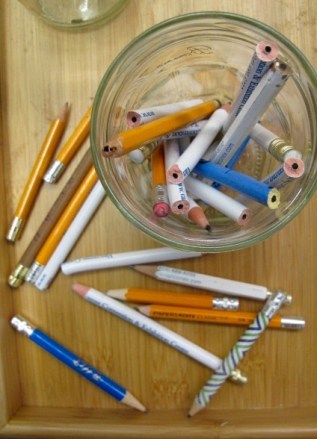
In the fall, my classroom was not filled with writers. Offer up writing materials and time and the only thing guaranteed would be snapped in two pencils. Ripped up papers. Whining. Slumps. Quitting. Not even starting. Helpless, hopeless frustration.

 Writing happens here

There were lots of reasons. Lack of skills was a big one. Letter formation was hard. Most children couldn’t spell much more than their own names and maybe a few high frequency words. Many asked me how to spell every word they wanted to write. Every single one. In a class of 21 children, you can imagine how this quickly swirled into a frustration tornado that ripped through our room in a matter of minutes.

It was also about trust. Trust we didn’t yet have. Writing is about being brave. And vulnerable. And hardly ever perfect. It’s about mistake after mistake after mistake until something comes out that sounds right. Who wants to do that in front of other people? Other people feeling just as unsure as you are. Who are likely to bite before being bitten. Until we had community, no real writing could happen.

We also lacked stamina. Again for many reasons. The minimal skills meant maximum exhaustion. A title and a date on the page? A small miracle. On lucky days, also a picture. A sentence? That was pushing it. We came to school tired. We stayed tired for a lot of the day. We would rather be eating, playing, sleeping than working. Writing was just too much to ask.

And . . . we didn’t know we had stories inside of us. We needed to be read to. We needed a room full of books. We needed to sit and read together. Recite poetry in a group. Sing songs. Words needed to be all around us. So that they could live inside of us. So that we could use them to share who we are.

Now, writing happens in my room. We have the confidence to make choices from a variety of ideas. We can share and support. We make attempts at words, asking “Is this how you spell. . . ?” When I answer, “almost” – we go with it. Perfectionism is not our go to place. Writing flow is. We want to tell a story. Our story.

Every child, every day? No. But many on most days? Yes. And the more it happens, the more it spreads.

Writing happens here.

  Writing happens here

Bad Irony: Slice of Life

I am participating in the Slice of Life challenge to write and publish a post every day in March.

Slice of Life is hosted by Two Writing Teachers. I thank them for the community they provide. Read more slices here.

This is also a celebration post.

Thank you to Ruth Ayres and the #celebratelu community!

Being part of a community that regularly shares gratitude and celebrations truly transforms my weeks.

celebrate-link-up

A Mom theme: Slice of Life March challenge #4

There’s been a bit of a theme as I’ve listened in these past few weeks. A Mom theme.

“Where is your real Mom?”

“How many Moms do you have?”

“My Mom is visiting a guy. I don’t know when she’s coming back.”

“I have 2 Moms. And 2 Dads I guess. But I don’t know one of the Dads.”

“I miss my Mom.”

“I don’t know where my Mom is.”

“Do you live with your Mom?”

“She’s sad I think because she wants to see her Mom.”

“I want to make a card for my Mom. But how will I give it to her?”

“My Mom got married and she moved to a new place.”

Absent Moms. Back and forth Moms. Not quite ready Moms. Dead Moms.

This is the Mom theme in my room.

I am a Mom. I am their teacher. And I am really, really human. So often, I want to step in and be the Mom. I am fully qualified. I can give snuggles, establish bedtimes, bake muffins, walk hand in hand. I can read bedtime stories, match socks, clap the loudest at soccer games and dance performances. I can love large and unconditionally. I can treat for lice and stay up half the night when illness happens. I can beam with pride and deliver huge hugs. I can take good care.

But I have to have boundaries. They need me to be their teacher. I can’t take them all home.

Sometimes, when I see Mom touches, it’s really emotional. Because so much of what I see are signs of missing Moms. The freshly braided hair. The carefully packed snack. The collared shirt under the sweater. Clipped fingernails. Little, tiny signs. Mom presence.

There is no judgement. It’s just how it is.

But this Mom theme, it gets me big.

Bad Irony: Slice of Life

I am participating in the Slice of Life challenge to write and publish a post every day in March.

Slice of Life is hosted by Two Writing Teachers. I thank them for the community they provide. Read more slices here.

Freedom Arms: Slice of Life March challenge #3

 Freedom Arms

I take an adult dance class on Tuesday evenings. We follow a ballet class of five and six year olds all in pink leotards, white tights, high buns with straggly pieces. They leap and prance out of the class and rush into the waiting arms of the Mom or Dad who has come to get them. There are probably six of them. Add their ages together and you would not even reach forty years combined. Take two and a bit of us adults and you would hit one hundred easy. We are old. And not all that talented. But we make up for it with our earnest effort, our absolute enthusiasm and our ability to cheerlead for each other.

We attend these classes for a variety of reasons. Many of us have children who belong to the studio and we adore the instructor almost as deeply as our children love her. We wanted in on the fun! It’s also exercise. And a mental workout. Inexpensive therapy. Risk taking. A source of entertainment.

Each week our teacher demonstrates a few steps and then turns around to look at us. She takes in our confusion and slows it all down to take us through it count by count. Often, she starts with the feet and then adds the arms in later. Sometimes, we kind of get the arms or she sees enough potential that she believes that we might. Other times, she just tells us “freedom arms!” Let the music and the steps inform you. Let your arms move and swing in your own way.

She counts us though.

1 and 2. 3, 4. 5, 6 and 7 and 8.

She makes up hilarious sounds to match the movement.

5, 6, boom, boom cha.

We giggle. We shake our heads. We muddle through. She occasionally cheers, “Yes! You’re getting it!” Sometimes she pushes, “Give me something. Let me see it in your faces. Look up!”

I love Tuesday nights.

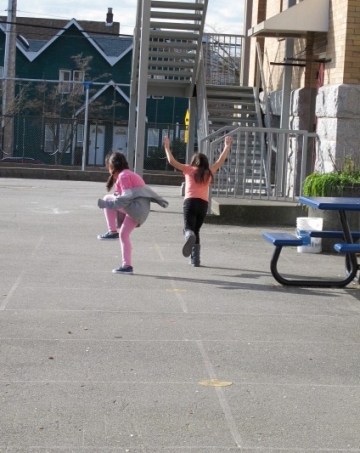
Last week, I taught some of my students some dance steps I had learned the night before. We had gone outside for a walk in the afternoon. The sun was shining. We weren’t going to go back in anytime soon. I demonstrated and a few girls were captivated. I instantly saw in them why I go to dance every week. The reckless. The happy. The joy of movement.

They drew dance paths with sidewalk chalk. The practiced again and again. They taught other kids. A few repeated steps with some bounces and jumps was a gift they could keep on giving.

The air filled up around us like a happiness bubble one of us drew on the pavement.

 Freedom Arms

These girls taught me with their giggly leaps down the fluorescent pink chalk lines that it’s not about what you look like, it’s about how you feel.

When the dancing takes over, when you are moving and smiling and sailing through space. When you dance with your friends. When there is no judgement.

Freedom arms!

Bad Irony: Slice of Life

I am participating in the Slice of Life challenge to write and publish a post every day in March.

Slice of Life is hosted by Two Writing Teachers. I thank them for the community they provide. Read more slices here.


Nonfiction Picture Book Wednesday: The Way to School

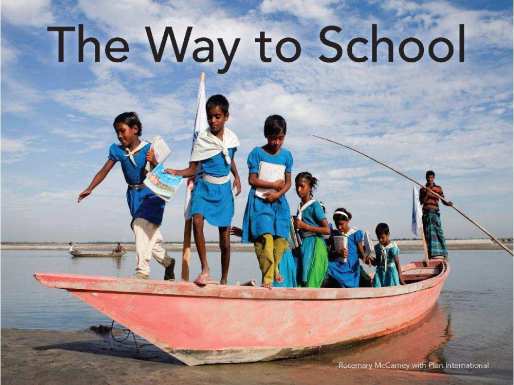
The Way to School

I walk to school (which is also my work) everyday. One of our school engineers, now retired, used to ask me the same question every time the weather was miserable. “Today? Even today you walked?” My answer always sounded the same as well: “Yes, sunshine, rain, sleet, snow, I walk.”

I walk for exercise, for my mental health, for the chance to be outside and experience the world. Yes, my way to school could be faster if I drove or took transit, but I treasure this daily walk and feel fortunate that I have the opportunity to make it each day. Thirty-five minutes that is all mine.

Not all walks to school are so pleasurable or welcome. But they are necessary. Each step speaks to serious intent and commitment to education. That is what this book of sparse text and wonderful full colour photographs depicts.

The Way to School by Rosemary McCarney with Plan International was published in September 2015 by Second Story Press. Its message is important – what matters most is that you get there. School is necessary. School is transformative. School is non-negotiable. If children have the opportunity to go to school, they will go to great lengths: wading through rivers, balancing on collapsed bridges, trailing down a mountain path . . .

This book allows us to open up some meaningful conversations with our students and ask key questions.

  • Do children all over the world attend school?
  • Can every child in a community attend?
  • Are there countries where some children go to school and others don’t? Why?
  • What might prevent them from attending?
  • What is the daily commute like?
  • If the journey is long, what can’t fit in a child’s day?
  • Are there dangers on a daily walk to school?
  • Why is education so important?
  • Does this make you think about school in new ways?

Proceeds form the sale of this book are donated to the I am a Girl Fund. I took this book out from the library but will be buying my own copy.

Thanks to Alyson from Kid Lit Frenzy for the inspiration to read and share more nonfiction picture books in 2016. Follow the link to Alyson’s blog to read about more nonfiction books you need to read!

nfpb2016logo

Those Everyday People: Slice of Life March challenge #2

 Those Everyday People

I walk by my everyday people each morning. I know their stories well. Not really. Really, I have completely made them up. Yet, I mostly believe them. When I tell them to myself so often, my truth is stronger than the actual one I do not know.

There is the older man all in brown. Brown pants. Brown coat. Brown hat. He is gentle and smiley. He moves quietly and sure footed. If he walked in the forest, his footsteps wouldn’t make a sound. He always says good morning and returns my smile. I am sure he is a man of routine. His shoes have an exact spot on a rack. He never kicks them off. He walks at the same time, shops at the same time, rests at the same time. His wife is tired. She rarely joins him but they share morning coffee every day, each sipping and looking elsewhere. When he walks, he thinks of what must be done. Sometimes, he surprises himself and remembers things he thought he had forgotten. His route is long. His morning walk takes time. He never misses a day.

There is the gangly boy. A teenager actually. He has two siblings. An older brother, a more serious and wiry version of him. A younger sister, energetic and bouncy, clearly a girl in a boy’s house. Most concerned about being seen, being heard, not missing anything. Sometimes these siblings walk together. There is easy banter and comfortable silence. Usually, though, my boy is alone. He gives me sideways smiles, acknowledgement that he sees me often. I wonder about his school day. I am sure his mind is often elsewhere – happy daydreams, not teenage melancholy. I think about his parents. I am convinced that their mornings are full of bustle and busy. My boy looks happy to be walking in his own space, in the big world, with no rush around him that he needs to acknowledge. He looks like he knows the freedom a simple walk alone affords him. I imagine his Mom and Dad, lugging overstuffed bags, spilling full travel mugs of coffee, arguing over who remembered and who forgot the daily things that must be attended to. Their son, meanwhile, lopes along, quite carefree, open to a new day.

There is the lady in the pink raincoat. It’s Vancouver. She wears it often. Her boots are practical. She always has an umbrella even if it just hints of rain. I don’t really think about where she is going or what she might do there. Her pace is determined but she carries with her an aura of where she has been. She lives in an apartment she has had for years. It is plain and dull on the outside. Inside it is tiny and hers. There are windows of succulents. Shelves full of books. A kitchen full of tea and spices and bowls of oranges. She has favourite chairs at different times of day. She sits in the kitchen in the morning, drinking hot tea and making lists. Her evenings are spent curled up on her couch reading, thinking, studying. If she is home in the day, she sits in her window and watches people walk by, noticing their movements more than their faces. This is not her forever city. She is here to get something done. Soon, she will return to a place full of sisters and neighbours and friends. When she walks down the street there, she will always say hello.

These are my everyday people. I know who they might be.

Bad Irony: Slice of Life

I am participating in the Slice of Life challenge to write and publish a post every day in March.

Slice of Life is hosted by Two Writing Teachers. I thank them for the community they provide. Read more slices here.