Blue horses, orange elephants and pink ducks!

We read and were inspired by Eric Carle‘s The Artist who Painted a Blue Horse.
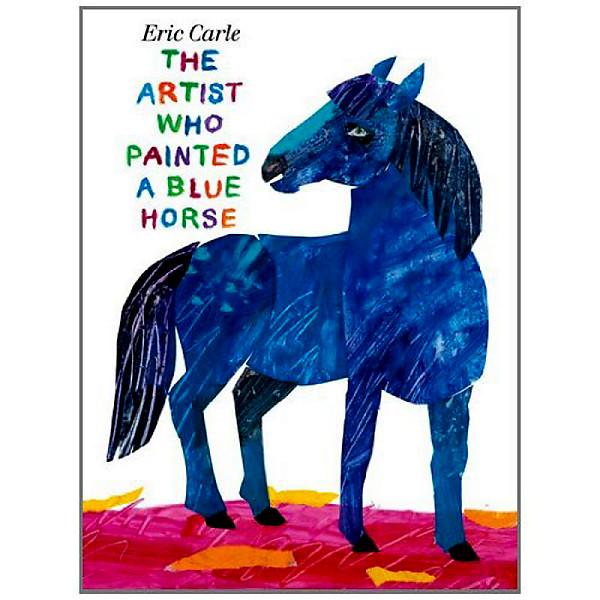
This book takes us through page after page of vibrantly painted animals. Rich colours, perhaps not quite how we might have imagined them. Then again . . . A yellow cow under a deep blue sky. A purple fox trotting through the mud. A black polar bear roaming across the ice. All gorgeous as all Eric Carle art is! At the back of the book Carle explains that he was inspired by an art teacher in Germany who showed him Franz Marc’s Blue Horse painted in 1911. This painting, unrealistic in colour was forbidden during the repressive Nazi regime, but Carle’s teacher felt the freedom of the painting would speak to him. Carle claims that his colourful animals, often painted in the “wrong” colours were “really born that day seventy years ago,” when he was shown Marc’s work.

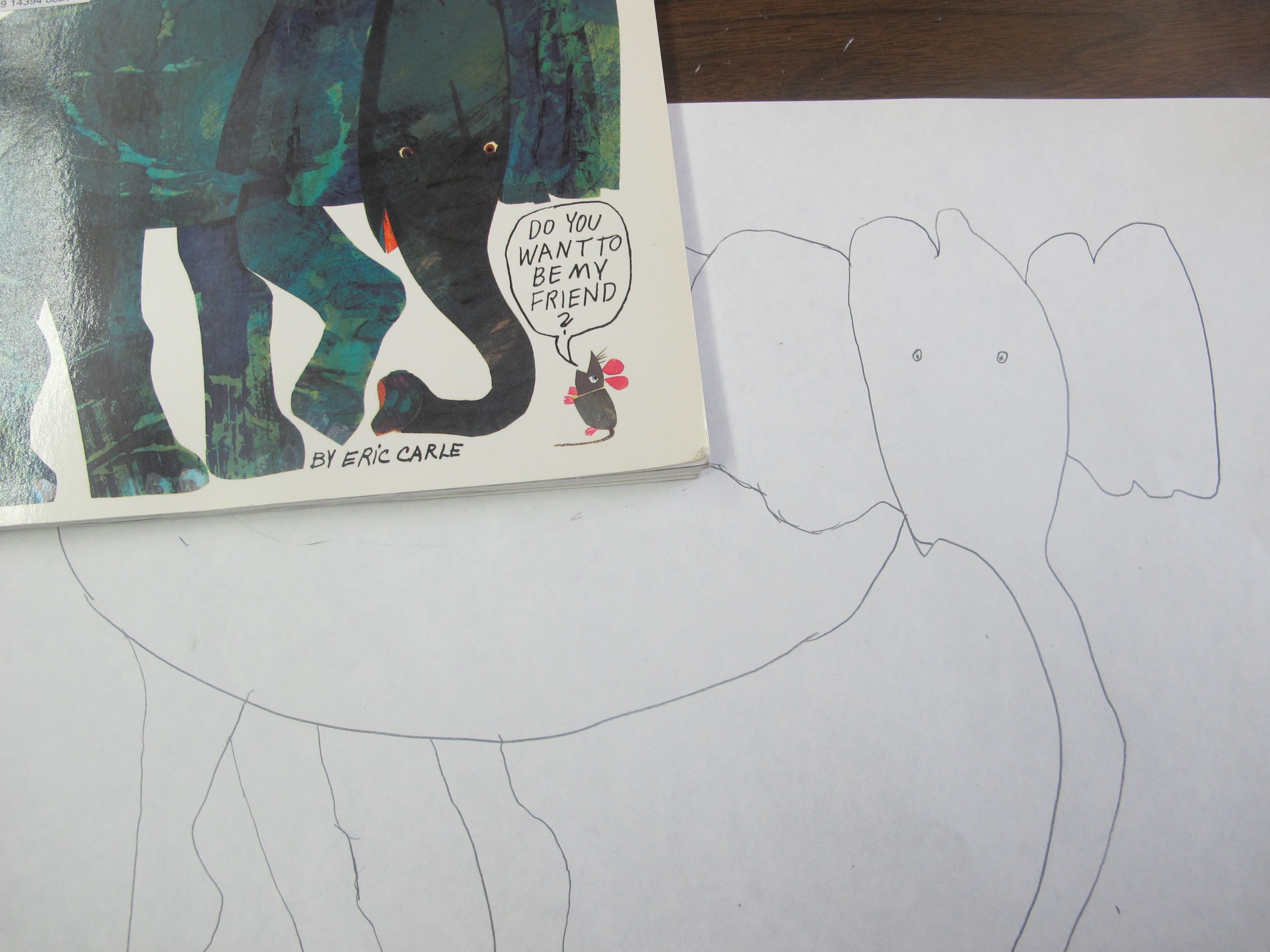
We pulled all the Eric Carle books from the library and started sketching animals. Here is Khai drawing an elephant.
IMG_2411

Deandra draws a cat.

IMG_2415

Students then began to outline their animals in pastel. Purity outlines her purple dolphin.

IMG_2417

And then we got out the paint! Catriona paints a green horse with a wonderful looseness and freedom.

IMG_2470

Quack. Quack. A pink duck with a green beak by Hailey.

IMG_2472

Here is Khai‘s completed orange elephant.

IMG_2494

Carmen painted a gorgeous orange dolphin swimming through vibrant blue ocean.

IMG_2482

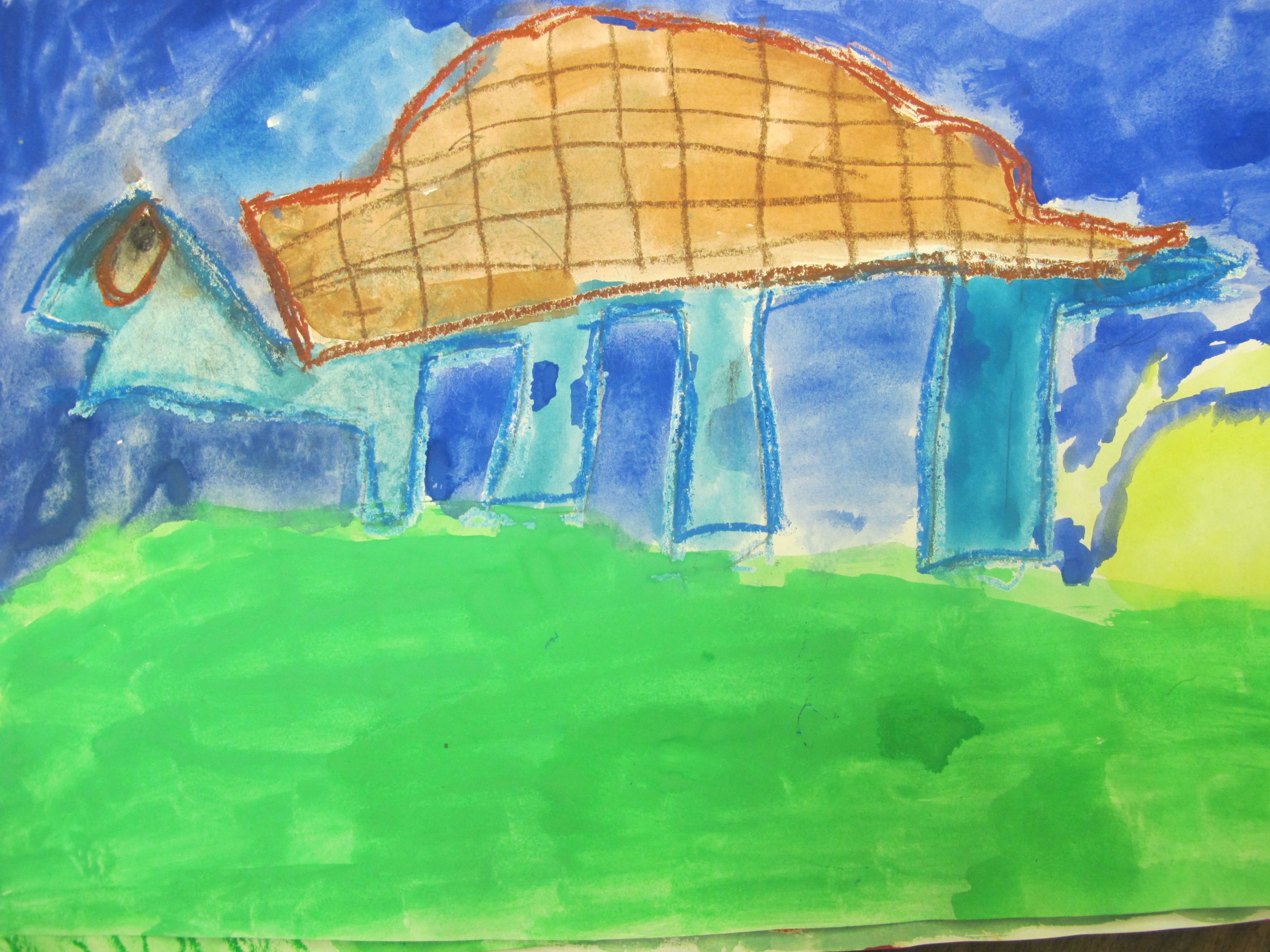
And who can resist Jacky‘s blue turtle ambling across the page carrying his brown shell?
IMG_2492

Few words on five wordless books

Because the creators of wordless books can say so much with no words at all, I decided to use sparse words to express my awe for each of these titles and let their gorgeous covers invite you in.

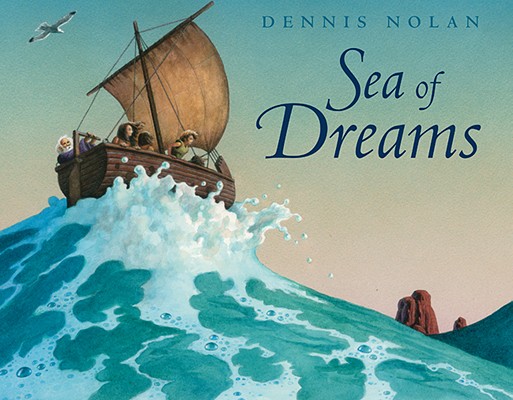
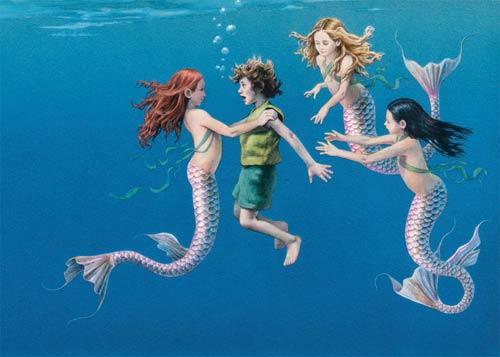
#1 Sea of Dreams by Dennis Nolan

Adventure over and under the sea . . .

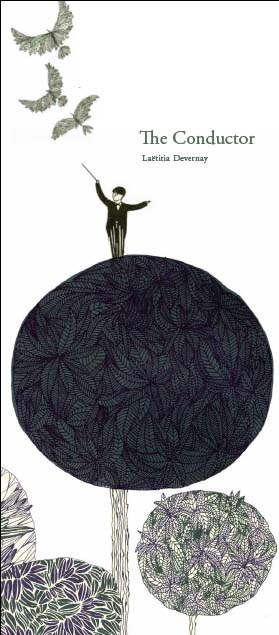
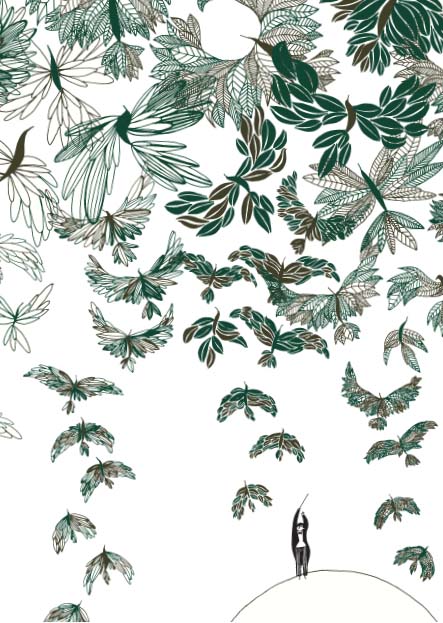
#2 The Conductor by Laetitia Devarney

Swirl, whirl, leaves take flight . . .

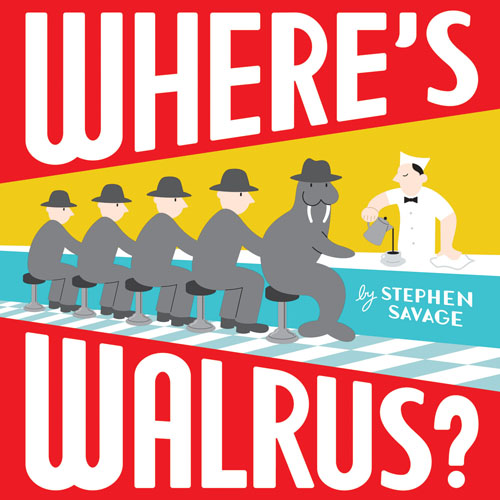
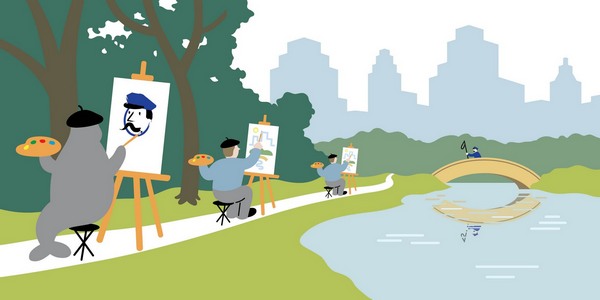
#3 Where’s Walrus by Stephen Savage

Where is that wacky walrus?

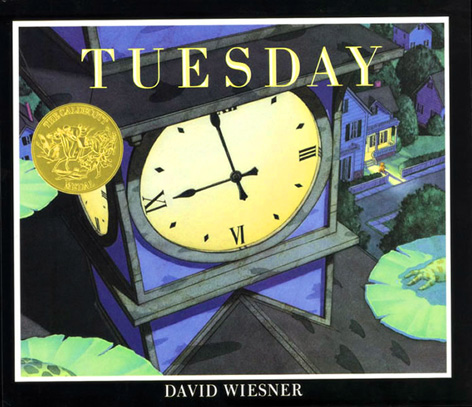
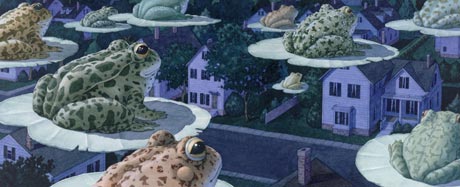
#4 Tuesday by David Wiesner

And what if frogs floated by?

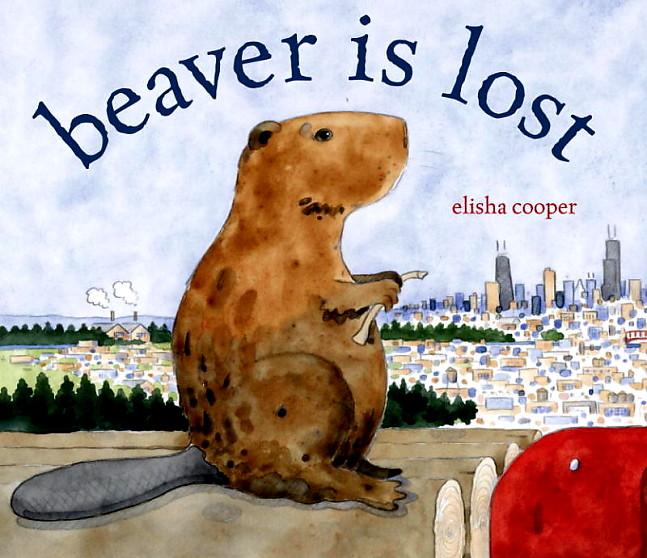
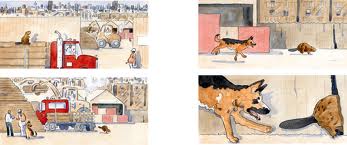
#5 Beaver is Lost by Elisha Cooper

Beaver travels to a bustling city and back.

Thanks to Adopt a School Funds which purchased #1 and #2 for our classroom wordless (or nearly) collection. Wordless books allow us to practice using picture clues and background knowledge to infer meaning. They are also lovely to share together or to ponder over alone.


A House in the Woods

Our BLG reader this week was Dan. He brought in A House in the Woods by Inga Moore to share with us! I was delighted as this book was on my “must have” list and now we have a copy for our library! Thank you BLG!

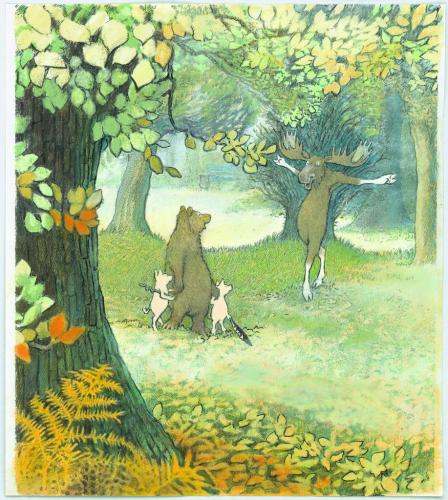
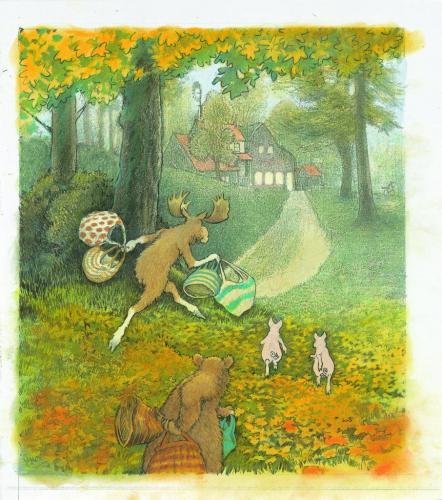
This is such a soothing, beautiful book to fall into. The lush woods. Industrious animals. A calm lake. A warm fire. A simple kitchen where you prepare and enjoy meals together. So lovely. The illustrations force you to read extra slowly to savour all the details. This is a book that should not be rushed. After reading this book to the class, Dan observed (talking about Inga Moore) “I think she wrote the book just so she could draw these pictures.” Indeed!

The story is one that initially surprises. It starts with two little pigs, one who had made a den and the other a hut. Clever readers expect to turn the page and discover a third little pig, another type of house and a wicked wolf lurking behind a tree. But, the next few pages instead reveal that a bear and a moose, both friendly instead of frightening, have attempted to move in and share the pigs’ homes. Unfortunately the sheer size of these creatures does irreparable damage to the den and the hut. The animals share a bench and some thinking time. This was a pickle. It really was.

Moose then has a brilliant idea! Why not build a large house for all of them to live in together? Yes! But they would need help with such an ambitious project. So, they enlist the assistance of the Beaver Builders! They fell timbers, erect walls, put on the roof, help the animals shop for furniture and curtains, etc. And all they want in return? Peanut butter sandwiches. The house gets finished and the animals rush to the store to shop for the needed bread and peanut butter.

After delivering the stacks of sandwiches to the beaver lodge on the lake, the friends settle into their first night in their new home. They enjoy a meal, tidy up, tell some stories around the fire and then climb the stairs to bed. A deep sleep in their new beds surrounded by a quiet night and occasional snores from Bear.

My students adored this book and pored over the pictures. Quite a few funny comments were made as Dan read aloud.

“Pigs don’t live in the woods!”

“Yes, some do.”

“Hey this could be the three little pigs in the woods!”

Much talk also about eating.

“I ate a moose.”

“Sorry but that’s kind of gross to me.”

“How come those beavers are eating the trees? They are going to get sandwiches!”

We were also a little suspicious that animals would actually build a house, shop in a store and sleep in beds.

“There are no grocery stores in the woods! And definitely not ones that are managed by donkeys!”

“Well, it is make believe,” Dan gently reminded.

Our student reviewer reports:

Khai: I liked the book because the illustrations were so nice. The book was funny too. One of the funny parts was the moose – it even made a sandwich!

Chicken Cheeks

Today during free time, I had a student complain about another’s students poor language. He spelled out a word he had overheard and the two of us agreed, not a great choice to express one’s self in the context of a classroom. It’s much more fun to play with language, so that it makes us laugh. Not so great when it offends us.

In one of our morning stories, we laughed a lot. And with the request, “Read it again!” we got to engage in a whole bunch of giggling all over again!

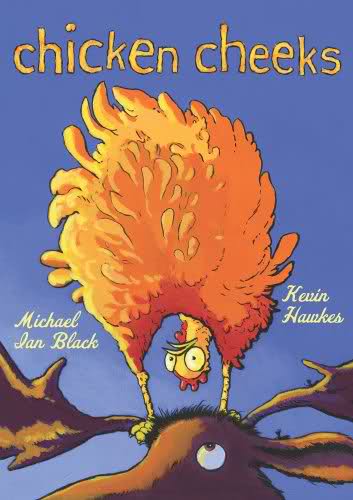
Chicken Cheeks, written by Michael Ian Black and written by Kevin Hawkes, is a hilarious book all about animal rear ends. Yep, you heard correctly. Behinds. Of animals. And all the different names they have. Chicken cheeks. Turkey tushy. Rhinoceros rump. My favourite to say: Penguin patootie. The one we recited as a class multiple times: Duck-billed platypus gluteus maximus.

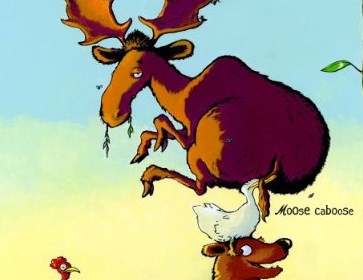
Moose Caboose

Each page has a picture of an animal’s wazoo (that’s another one!) and a descriptor: Hound dog heinie, for example. Lots of fun in and of itself. But, as you flip to the final pages you realize something else is going on. These animals are boosting each other up trying to reach a honeycomb. Seems like they are in luck until the attack of . . . Bumblebee bums!

The joy of words and the fun they have when we roll them around in our mouth!